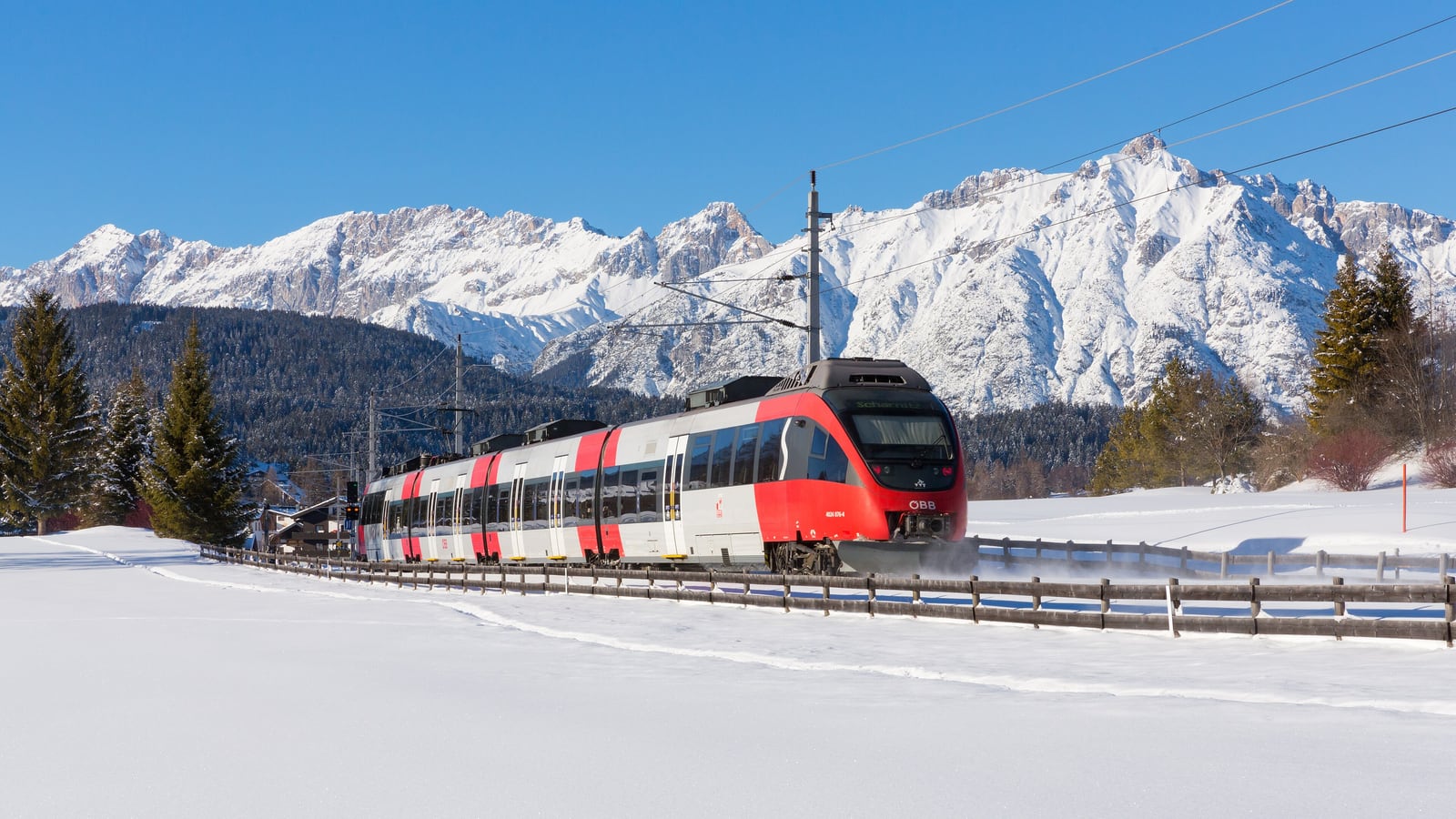
The Mittenwaldbahn — Garmisch-Partenkirchen to Innsbruck
Liberaler Humanist / Wikimedia Commons · CC BY-SA 3.0
- Distance56 km (Innsbruck Westbahnhof–Garmisch-Partenkirchen)
- Duration1 hour 21 minutes southbound, 1 hour 19–22 northbound
- Best seasonAll year — the through trains run every day, and the plateau is under snow from December
Introduction
Between Garmisch-Partenkirchen and Innsbruck there is a railway that spends fifty-six kilometres doing something no sensible surveyor would attempt. From the floor of the Inn valley at Hötting, 580 metres up, it has 19.2 kilometres in which to reach the Seefelder Sattel at 1,185 metres. It gets there on a gradient of 38 per mille — steeper than the Arlberg line's 31, steeper than the Brenner's 26 — on a single track that never once doubles, through sixteen tunnels, around curves of 200 metres radius, and along a shelf cut into the face of the Martinswand with the valley a long way below.
It was built in about two years, from March 1910, and it opened in 1912. The Austrian half was not a state project at all: two engineer-contractors, Josef Riehl and Wilhelm Carl von Doderer, built it through a company of their own for a fixed, not-to-exceed price of 24,401,700 Kronen, which meant that every overrun came out of their pockets rather than the treasury's. They were also required to deliver everything the railway needed to run — the trackbed, the land, the rolling stock, the electrical plant and a hydro station on the Ruetz to power it.
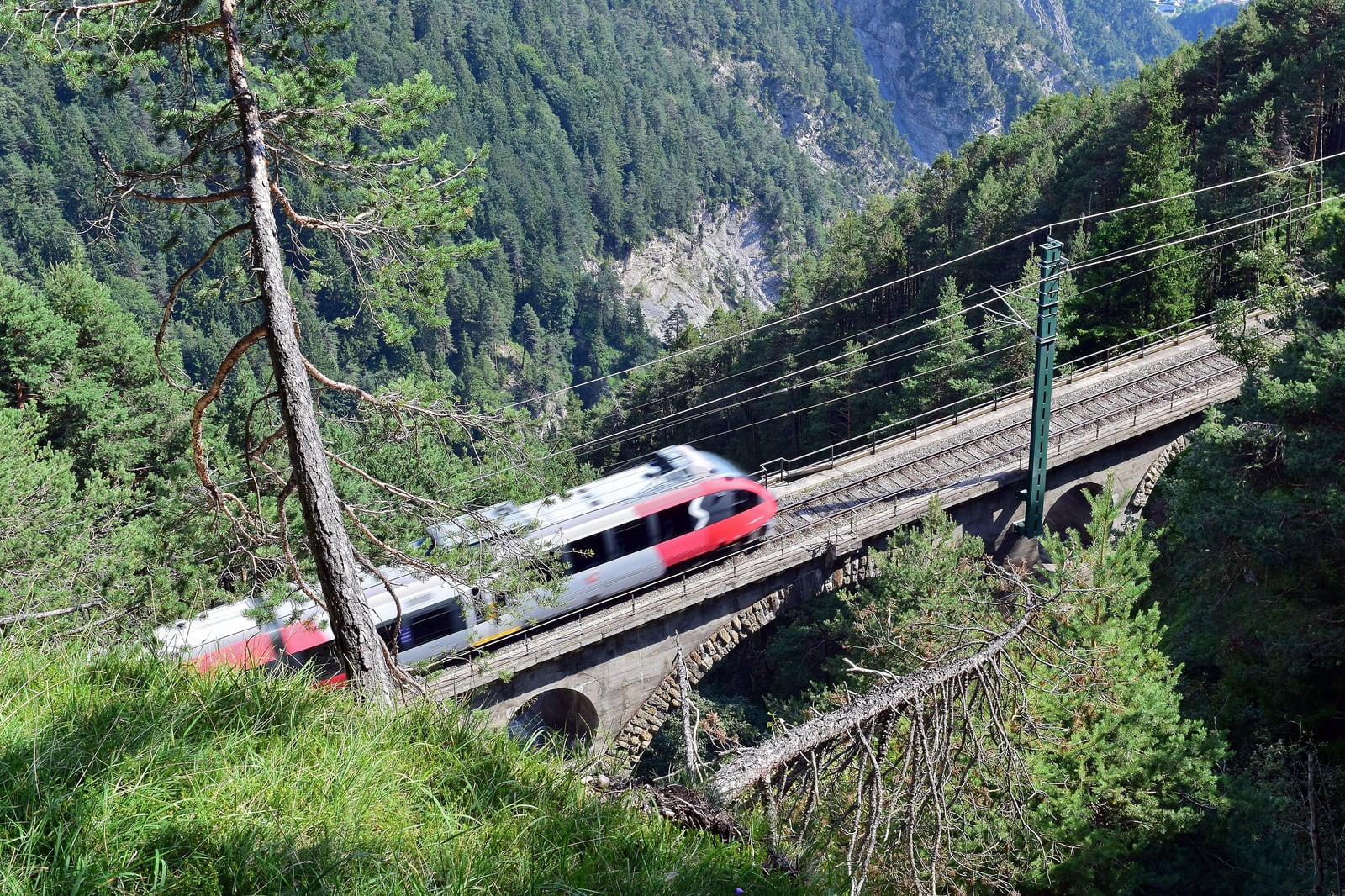
That last item is why the line matters far beyond Tirol. It was planned from the start for electric working, and it became the first electric main line in Austria and one of the earliest anywhere to run on high-voltage single-phase alternating current. The standards worked out on this railway went on to shape electric railway practice across central Europe. The wire above the train today carries 15,000 volts at 16.7 hertz, and the reason Germany, Austria and Switzerland all settled on that system runs back through lines like this one.
What actually runs on it now
Here is the part a brochure would leave out. Until the timetable change of 13 December 2025 the railway still had a long-distance train: the ICE Wetterstein, which came down from Hamburg by way of Munich to Innsbruck from Friday to Sunday and called at Seefeld in Tirol on the way. It went at that timetable change, and the Seefeld stop went with it. Deutsche Bahn's reason, reported in September 2025, was rising track access charges. Seefeld's own tourist board called the loss "sehr schade" — a great pity — and the passenger association pro Bahn agreed.
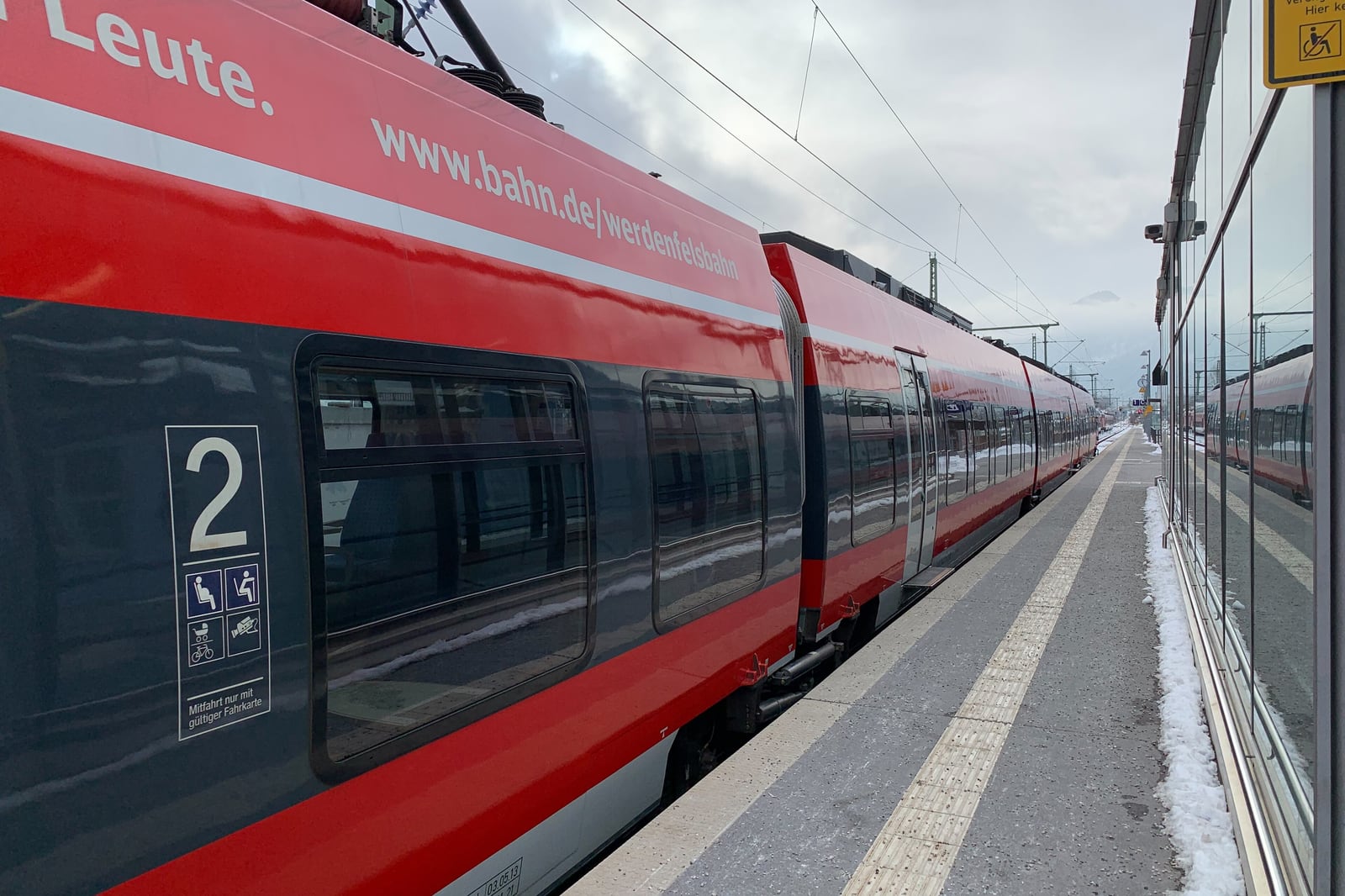
The timetable for any day in August 2026 is unambiguous: not one long-distance train calls at Seefeld or at Mittenwald. What crosses the border is a regional train, every two hours, taking about an hour and twenty minutes end to end.
This page is not going to pretend that is a tragedy. The scenery has not moved. The regional train calls at twelve intermediate stations rather than one, which means you can get out at Hochzirl below the Martinswand, or at Scharnitz on the border, or at Klais among the Buckelwiesen, and pick up the next one two hours later; it costs a fraction of what an express seat cost; and a day ticket covering the whole run from Munich to Innsbruck and back is €38 for one person and €17 for each companion. The express was the quicker way to see this line. The stopping train is the better one.
The Journey
Taken from Garmisch-Partenkirchen the ride is a long, gentle build followed by a spectacular unravelling. Taken from Innsbruck it is the other way round: the hard work comes first, in the first twenty minutes, and by the time you have caught your breath you are on a high plateau looking at meadows.
Out of Garmisch the train turns south and climbs steadily over a terrace above the Kankerbach to Klais, which sits on the watershed between the Kranzbach and the Köchelgraben. This is the gentlest stretch of the whole line and also one of the loveliest: the Buckelwiesen, a landscape of humped glacial meadows left over from the ice, with the Wetterstein on one side and the Karwendel on the other. From Klais the line takes a short cut across the high terrace of the Isar rather than following the river, drops to Mittenwald, crosses the Isar into the town, and then runs up the valley through the narrows at Scharnitz. The frontier is here, in a defile that has been a gateway since Roman times, and there is no ceremony about it at all — a lineside signal marks the point where DB InfraGO's track becomes ÖBB-Infrastruktur's, and the train carries on.
The twenty minutes that cost the money
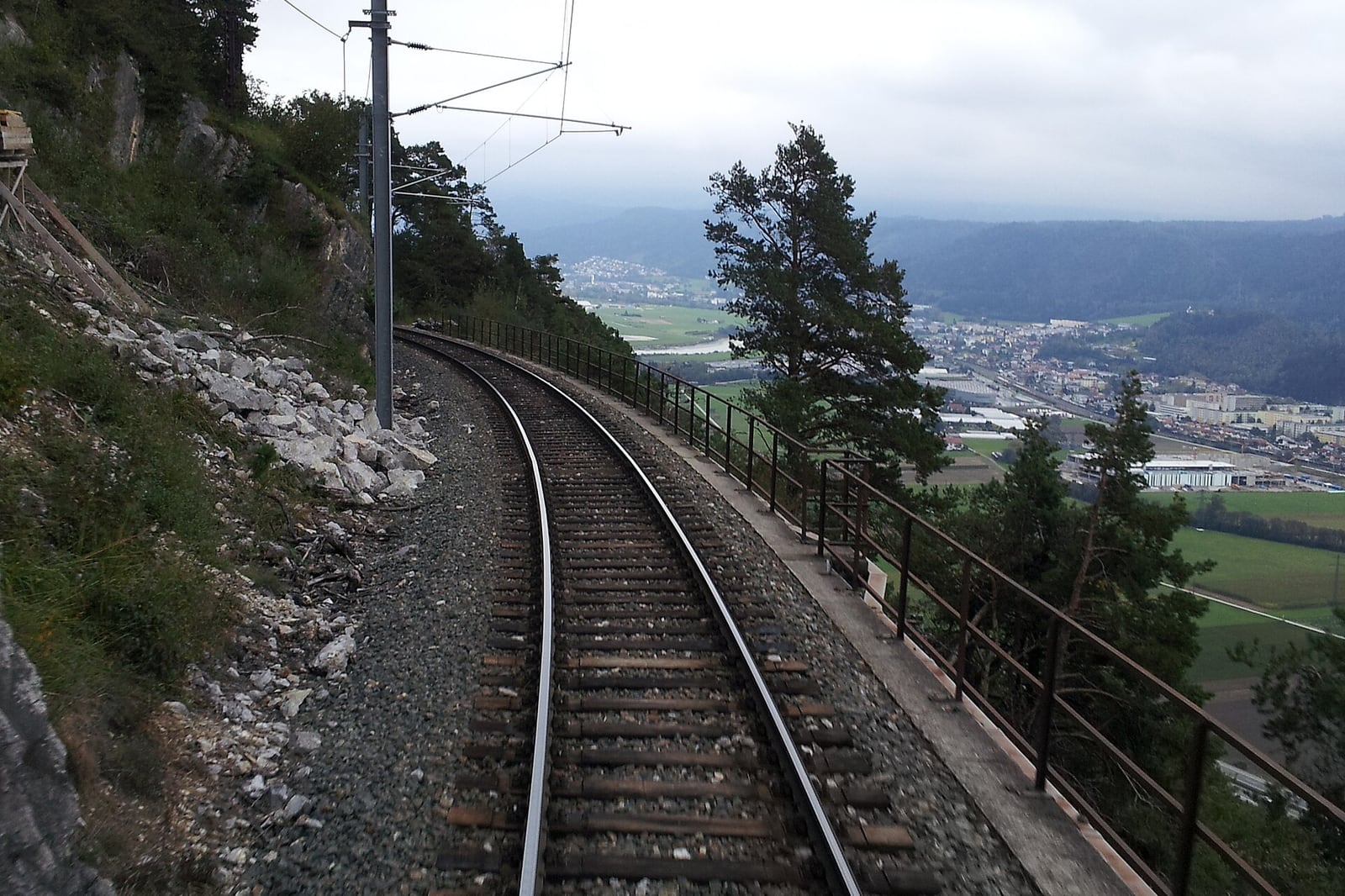
South of Seefeld the railway has to get down 600 metres to the Inn, and this is where the money went in 1910. It clings to the western flank of the Seefelder Joch, works round the head of the Schlossbachgraben on a long loop of bridges and tunnels, and comes out on the sheer wall of the Martinswand for a stretch of hanging shelf that is the reason the line was expensive.
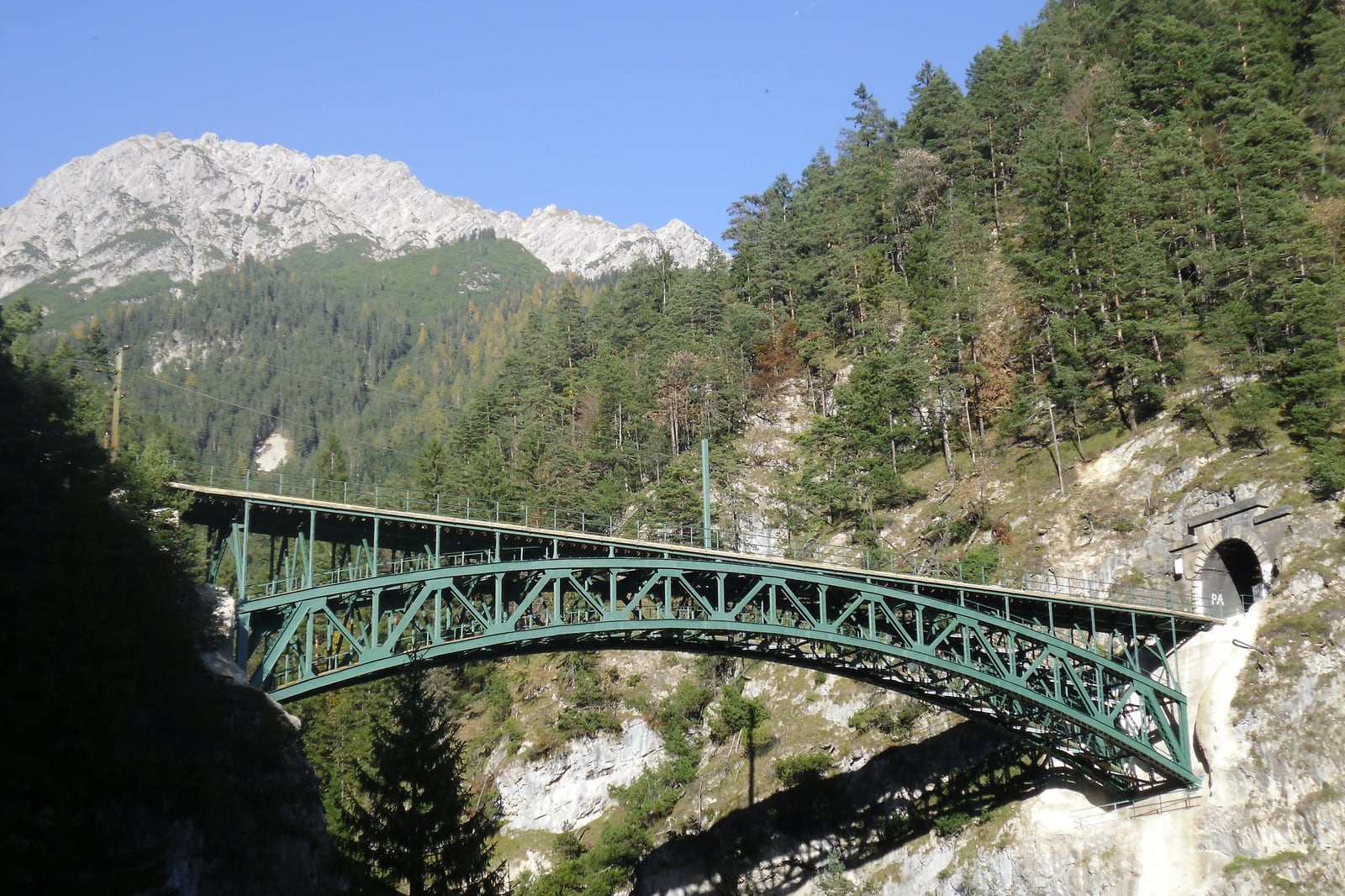
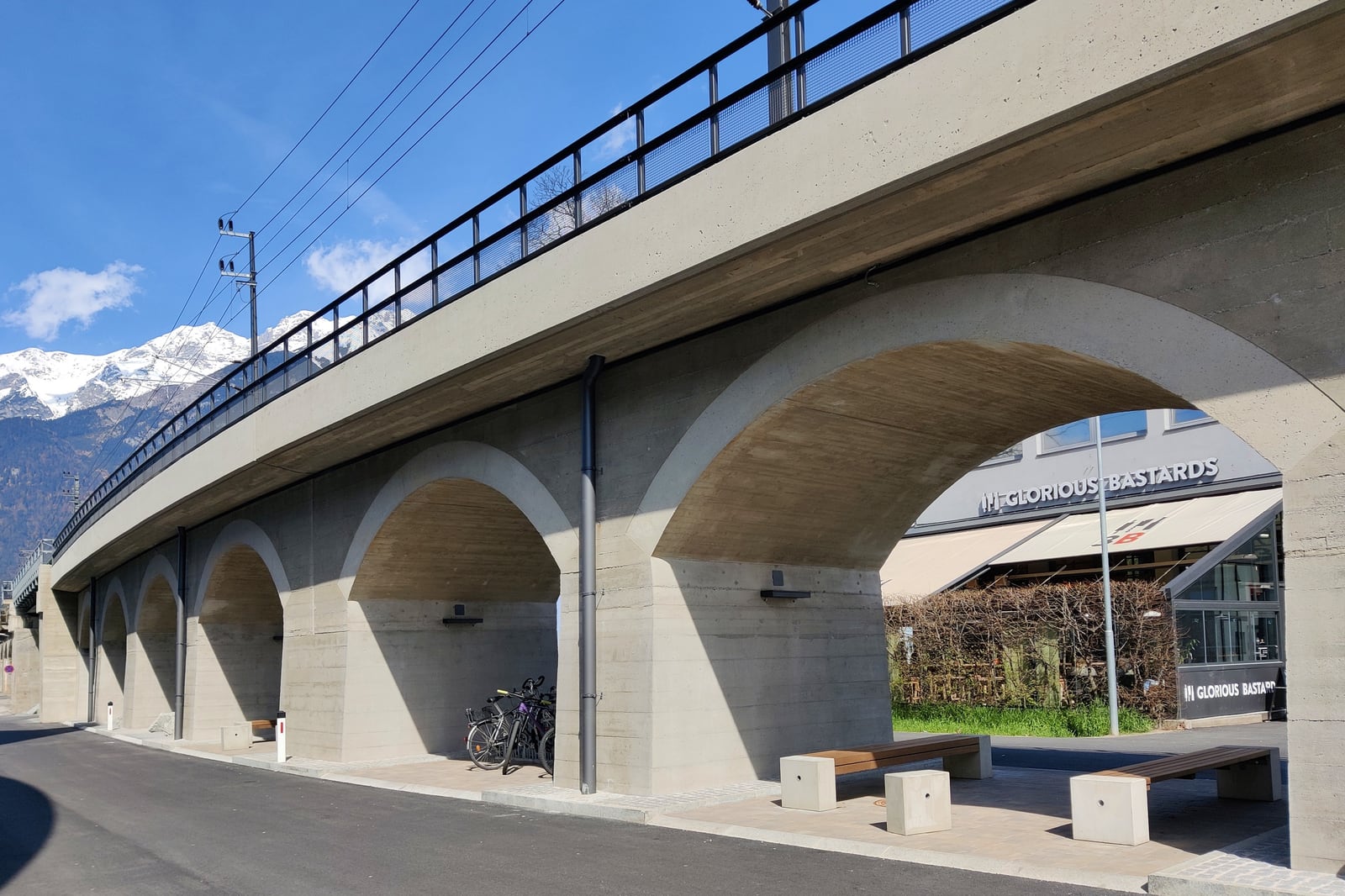
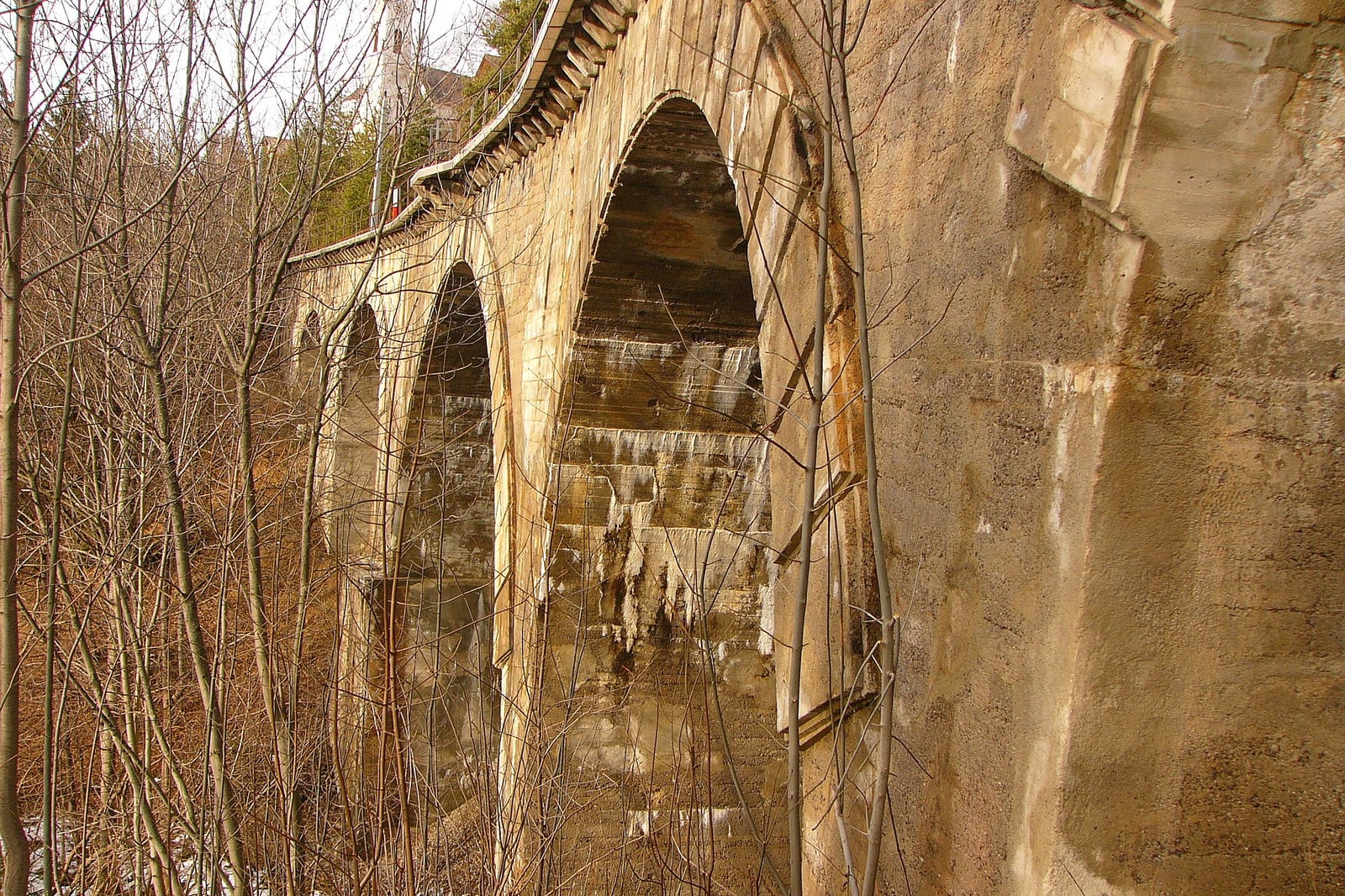
The structures come one after another. The Schlossbachgraben bridge is an iron arch of about 66 metres spanning a ravine some 60 metres deep, and it is the one piece of steel among a family of concrete. Everything else — the Vorberg viaduct, the Kaiserstand viaduct under the ruined castle of Fragenstein, the Gurglbach viaduct at Reith, the Finstertal viaduct, the thirty-five arches carrying the line across the floor of Innsbruck — is unreinforced tamped concrete, cast in circular arches of up to 22 metres. The engineers would have preferred stone; the Albula line in Switzerland, which these bridges resemble in their dimensions, had good building stone to hand. Tirol did not, so they poured concrete instead, and restricted themselves to a few standard radii so the same falsework could be moved from one arch to the next. Even the tunnel vaults had to be concreted, because the rock shattered when it was cut.
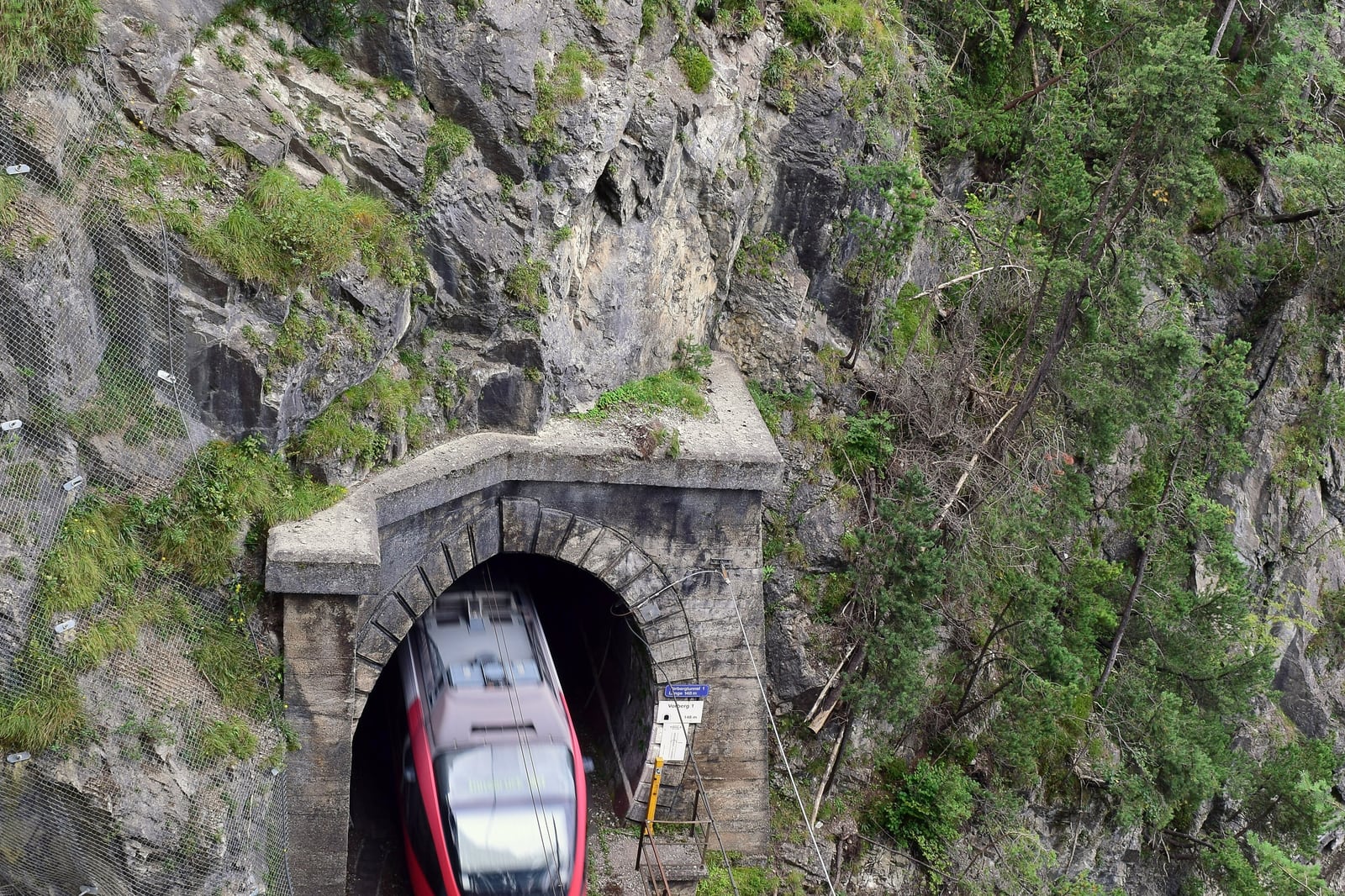
The Martinswand tunnel, 1,810 metres, is the longest of the sixteen. Driving it in 1910–11 meant first building an inclined hoist 250 metres up the cliff simply to get men and material to the tunnel mouth, and stringing a 17-kilometre power line from Innsbruck's Sill works so that electric jackhammers could replace hand tools. It was holed through on 16 May 1911, about fourteen months after the first blow.
The mountain has not finished
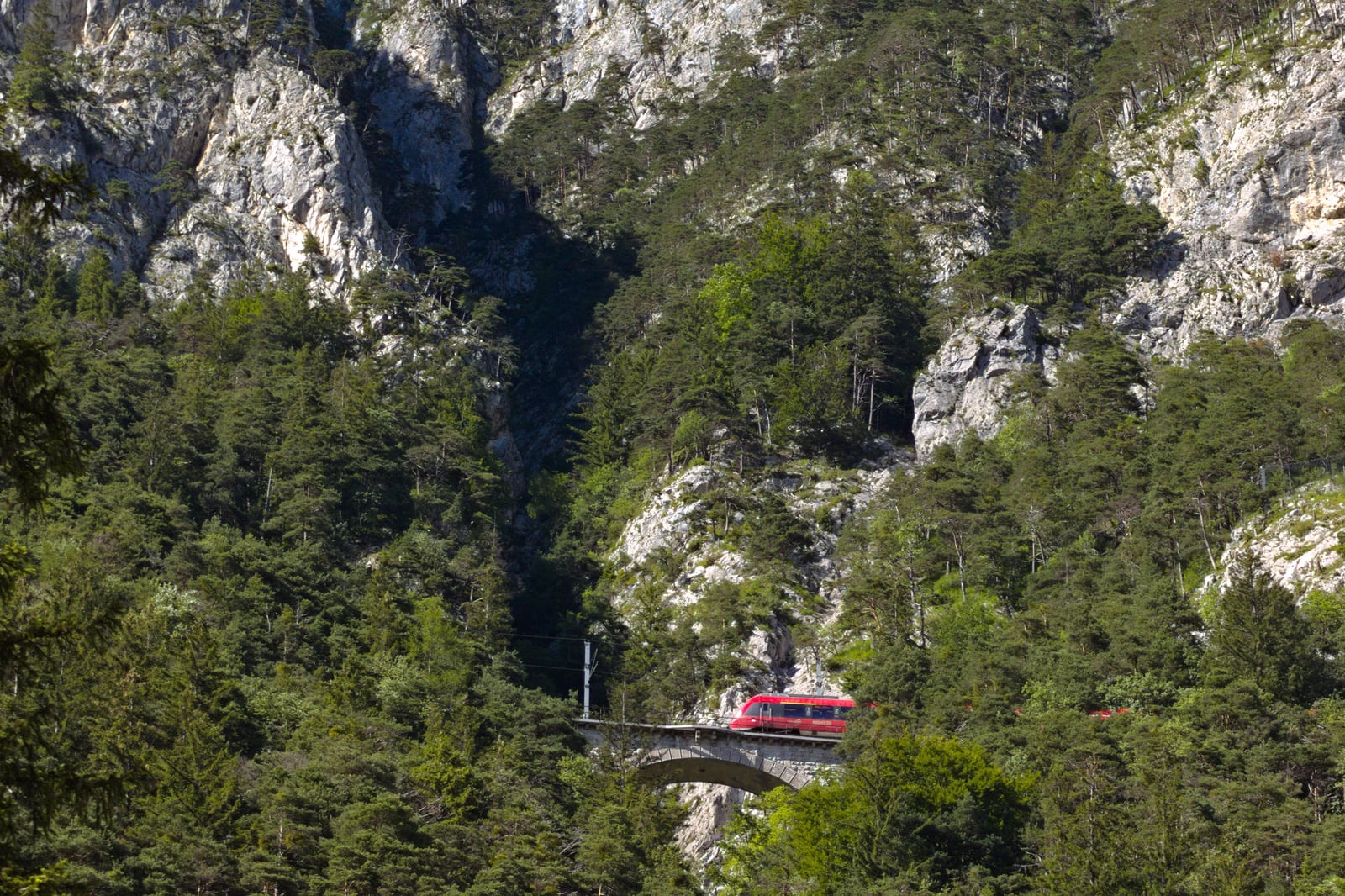
Out on that shelf the line is protected by a rockfall gallery of 1939–40 and an avalanche roof of 1968, and neither is decoration. An avalanche buried a locomotive at the Martinswand loop in January 1951. A mudslide derailed the leading cars of an ICE there in June 2011. In September 2023 a slide 250 metres wide came down north of Seefeld and put a train off the rails — it stayed upright and nobody was hurt. In August 2024 thunderstorms brought several slides down between Innsbruck and Seefeld in one evening; about twenty passengers were taken off one train by the fire brigade, and the line reopened on 2 September after 23,000 tonnes of debris had been cleared.
That is a fair thing to know before travelling in a summer storm, and it is also the honest character of the railway. Riehl's engineers did not defeat this hillside in 1910. They negotiated with it, and the negotiation is still going on.
Along the route
Simon Legner / Wikimedia Commons · CC BY-SA 3.0The line that helped settle how Europe electrifies
Designed for electric working from the outset, it opened in 1912 as the first electric main line in Austria and one of the earliest anywhere on high-voltage single-phase AC. The wire now carries 15,000 volts at 16.7 hertz — the system Germany, Austria and Switzerland still share.Alletto / Wikimedia Commons · CC BY-SA 3.0 ATTwo contractors, one fixed price, all the risk
The Austrian half was not built by the state. Josef Riehl and Wilhelm Carl von Doderer built it for a lump sum they were not allowed to exceed, so every overrun came out of their own pockets — land, trackbed, rolling stock and a hydro station included. They finished in about two years.Haeferl / Wikimedia Commons · CC BY-SA 3.0 ATA gallery, a snow roof, and the mountain still winning
The shelf under the Martinswand has a rockfall gallery of 1939 and an avalanche roof of 1968, and both earn their keep. A slide put a train off the rails north of Seefeld in 2023, and storms in 2024 shut the line for three weeks while 23,000 tonnes of debris were cleared.A bit of history
Culture & experiences along the way
Liberaler Humanist / Wikimedia Commons · CC BY-SA 3.0Break the journey — that is what a stopping train is for
The express used to run this line in one go with a single stop on the way. The regional train calls at twelve, which is the compensation for losing it. Hochzirl sits at the foot of the Martinswand, Klais stands almost alone among the Buckelwiesen, and Scharnitz has a ruined fortress in the woods above it. Trains come every two hours, and a day ticket costs the same however many times you get off.Burkhard Mücke / Wikimedia Commons · CC BY 4.0Ride it in winter, when the plateau is at its best
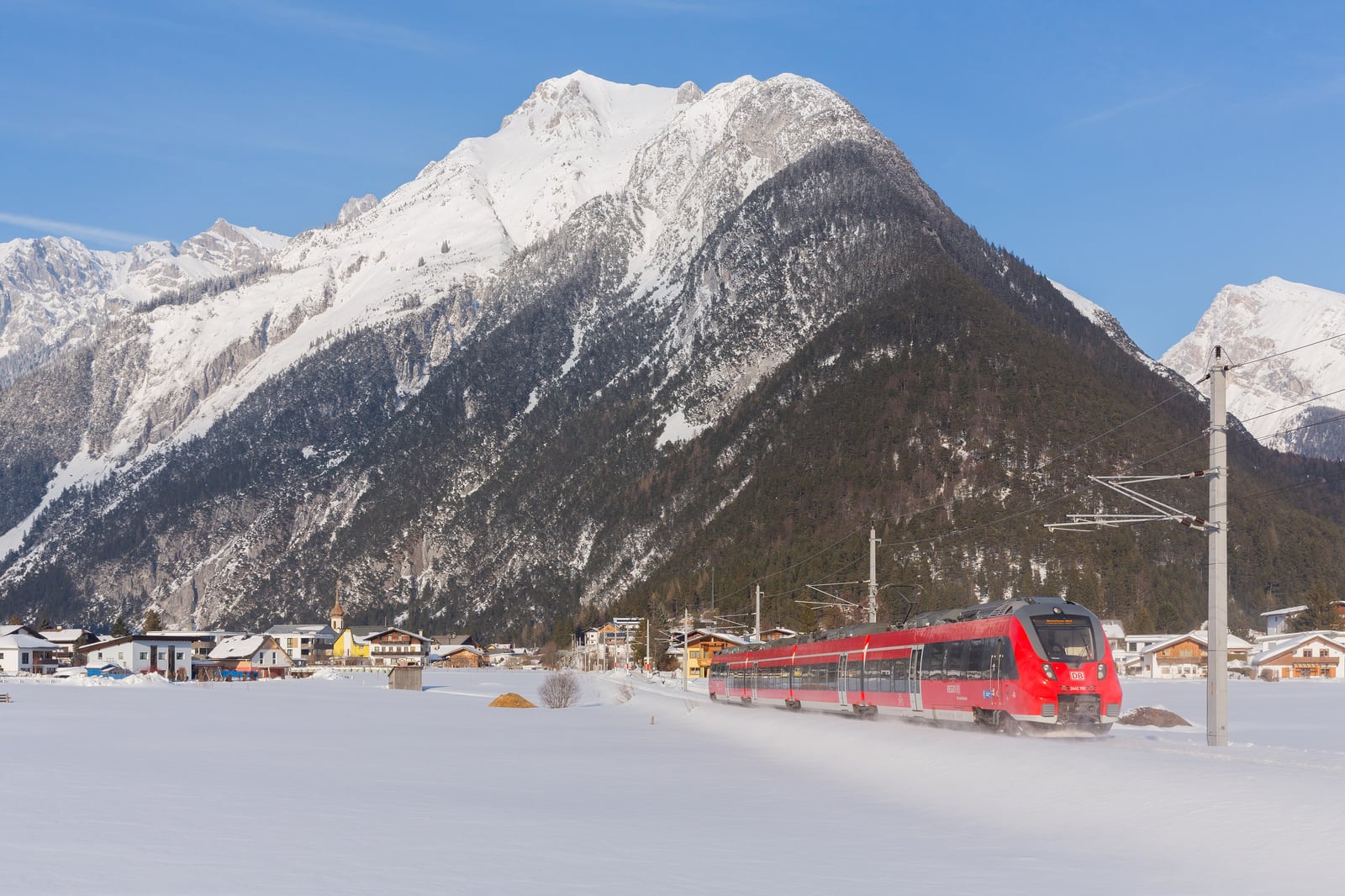
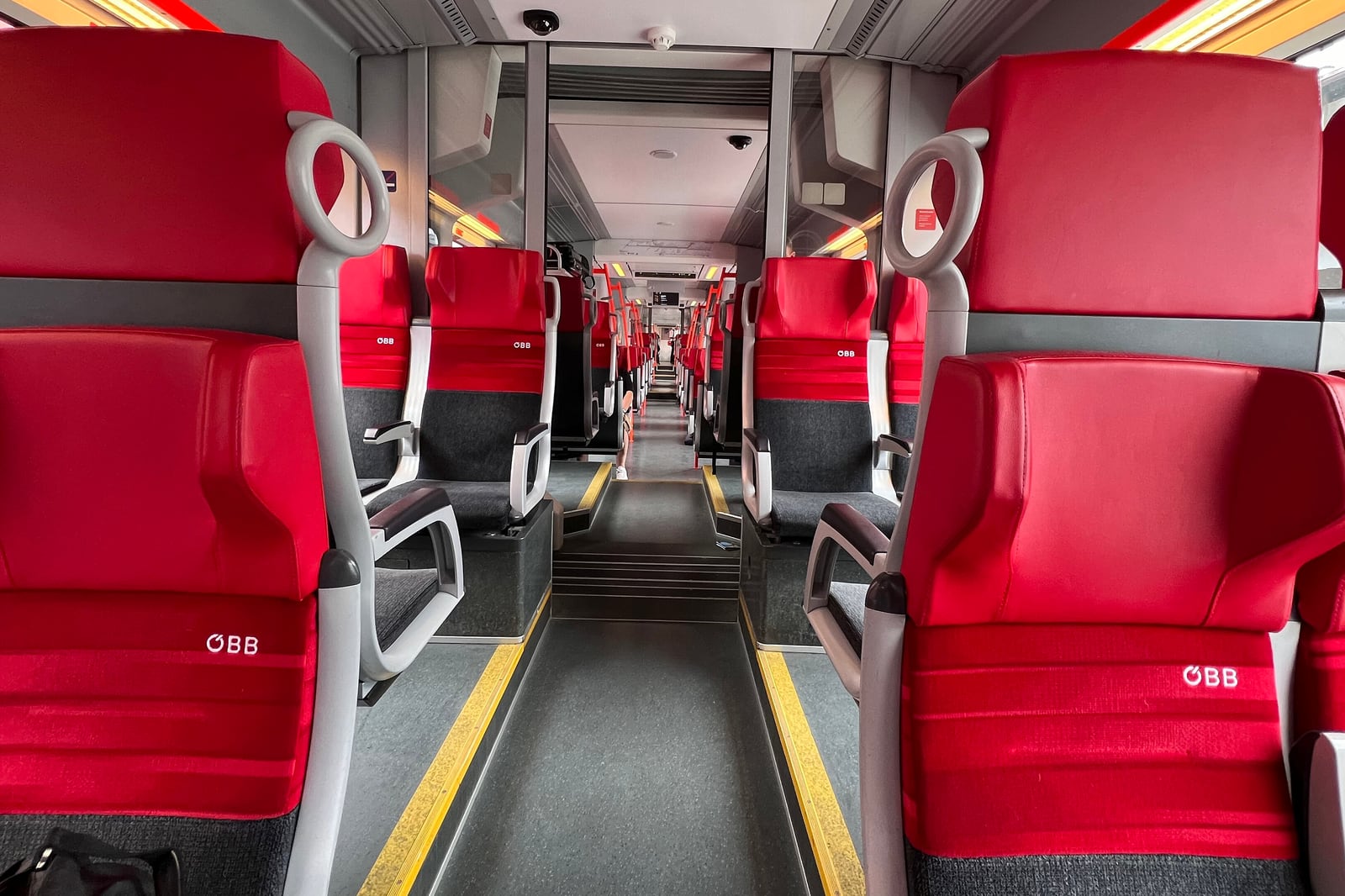
The service is identical all year, which is unusual for an Alpine line and worth taking advantage of. The summit at the Seefelder Sattel is 1,185 metres, high enough for the snow to lie for months, and the meadows around Klais are laid with cross-country tracks that begin within sight of the station. The train is heated and the windows are large. The Wetterstein under snow from a warm carriage is the argument in one view.Simon Legner / Wikimedia Commons · CC BY-SA 4.0Take it as the slow way from Munich to Innsbruck
Fast trains between the two cities go the other way round, by Rosenheim and Kufstein, and a Railjet does it in about 1 hour 55 without a change. This route needs roughly three hours and a connection at Garmisch-Partenkirchen. What the extra hour buys is the Buckelwiesen, the Scharnitz defile, the Martinswand shelf and the drop into the Inn valley — and the €38 day ticket covers the whole of it, including the way home.Timetables
The service is the same on weekdays and at weekends, and it runs all year. All times below were read from the timetable on 12 August 2026 and are given as of August 2026; DB and ÖBB revise the timetable each December.
The through trains, Garmisch-Partenkirchen to Innsbruck
Eight trains a day run the whole way without a change, every two hours, taking 1 hour 21 minutes.
Southbound they leave Garmisch-Partenkirchen at 06:32, 08:02, 10:02, 12:02, 14:02, 16:02, 18:02 and 20:02.
Northbound they leave Innsbruck Hbf at 06:38, 08:38, 10:38, 12:38, 14:38, 16:38, 18:38 and 20:38, taking 1 hour 19 to 1 hour 22.
A typical southbound run, the 10:02 from Garmisch-Partenkirchen, calls at Klais 10:15, Mittenwald 10:23, Scharnitz 10:32, Gießenbach 10:36, Seefeld in Tirol 10:45, Reith 10:50, Leithen 10:53, Hochzirl 10:58, Kranebitten 11:08, Innsbruck Allerheiligenhöfe 11:11, Innsbruck Hötting 11:14, Innsbruck Westbahnhof 11:19 and Innsbruck Hbf 11:23. Northbound, the 10:38 from Innsbruck reaches Seefeld at 11:14, Scharnitz at 11:27, Mittenwald at 11:35 and Garmisch-Partenkirchen at 11:57.
The hours in between
On the odd hours the pattern breaks in the middle. A train still leaves Garmisch — 09:06, 15:02 and 19:02 are examples — but it terminates at Seefeld, where an ÖBB S6 takes over for Innsbruck. The journey then takes about 1 hour 48 rather than 1 hour 21, and it is a change across a platform rather than a wait in a strange place.
The two halves also have their own local services. On the Austrian side the S6 runs hourly between Innsbruck and Seefeld, with roughly every second train continuing to Scharnitz. On the German side regional trains run hourly from Munich through Garmisch-Partenkirchen to Mittenwald, and it is every second one of those that carries on across the border.
Getting to the start
From München Hbf the RB6 leaves from platforms 27–36 at 28 minutes past each hour and reaches Garmisch-Partenkirchen in 1 hour 27, arriving at 55 minutes past — which connects into the through train to Innsbruck seven minutes later. Later in the afternoon a faster RE61 does the same run in 1 hour 10 to 1 hour 19.
One caveat for the rest of this summer: during engineering work in August 2026 those Munich trains start from München-Pasing rather than München Hbf, so the journey begins with an S-Bahn ride out to Pasing. The direct departures from München Hbf are back in the timetable from late October.
At the other end, Innsbruck Hbf is on the main line from Munich via Kufstein, on the Arlberg line to Zurich, and on the Brenner route to Italy, so the ride can be a leg of something longer in either direction.
Before you set out in a storm
This is a mountain line on a steep hillside, and summer thunderstorms have closed it more than once — for several days in September 2023, and for three weeks in August 2024 after mudslides between Innsbruck and Seefeld. Both operators publish live disruption notices, and a look at them on the morning of a wet day is time well spent.
Tickets
This is a cross-border journey on two national networks, so the ticket question has a right answer and several expensive wrong ones. The right one is the Regio-Ticket Werdenfels + Innsbruck, a day ticket covering regional trains all the way from München Hbf through Mittenwald to Innsbruck Hbf, ÖBB services included: €38.00 for the first person and €17.00 for each of up to four companions, valid from midnight until 03:00 the next morning, any day of the week. Up to three children aged six to fourteen travel free.
The trap is the Bayern-Ticket, which most visitors already know and which looks cheaper. Its Austrian extensions are listed by name and Scharnitz, Seefeld and Innsbruck are not among them, so on this route it takes you as far as Mittenwald and no further. The Deutschlandticket stops at the same place. Prices read from the operators' own pages on 12 August 2026.
Book your tickets
Regio-Ticket Werdenfels + Innsbruck
€38.00 first person · €17.00 each companion, up to four
The day ticket that actually covers the whole run, Munich to Innsbruck and back.
Book Tickets (opens in a new tab, on bahnland-bayern.de)via bahnland-bayern.deBayern-Ticket
The familiar one, and the wrong one here
It stops at Mittenwald — this crossing is not one of its named Austrian extensions.
Book Tickets (opens in a new tab, on bahnland-bayern.de)via bahnland-bayern.deVVT single tickets
For a journey that stays on the Austrian side
Zone-based singles from the Verkehrsverbund Tirol, good for Innsbruck out to Seefeld or Scharnitz.
Book Tickets (opens in a new tab, on vvt.at)via vvt.atRail Passes
Both halves of this railway are ordinary parts of the German and Austrian national networks, which makes the pass position simple: an Interrail or Eurail pass is valid on the whole run, on both the DB and the ÖBB trains, and no reservation is needed or possible. You board and sit down. Crossing from Germany into Austria uses no extra day and needs no supplement, because it is one journey on one travel day.
Whether a pass is worth using here is a different question, and for most people the answer is no.
The Regio-Ticket Werdenfels + Innsbruck covers the same ground for €38.00, and covers the run out from Munich and back again as well. Spending a whole pass travel day on a ride of an hour and twenty minutes rarely comes out ahead of that unless the day already has other long legs in it — Munich to Innsbruck and onward to Verona, for instance, or a day that begins on the Arlberg line. If your itinerary is built around this journey rather than passing through it, buy the day ticket and keep the pass day.
The passes that do not help are worth naming, so that nobody buys one on the strength of a half-memory:
- The Deutschlandticket is a German product and stops at the border. It covers Munich to Mittenwald and no further.
- The Bayern-Ticket likewise ends at Mittenwald on this line. Its cross-border validity into Austria is limited to named sections that do not include this one.
- The KlimaTicket Tirol, the Verkehrsverbund Tirol's own season ticket, is a Tirol network product: it works on the Austrian side, up to the frontier, and not beyond it.
- The Euregio tickets cover Tirol, South Tyrol and Trentino — that is, southwards over the Brenner. They do nothing for a journey north into Bavaria.
The one free ride available is not a pass at all: guests staying in the Region Seefeld get the PlateauCard with their accommodation, and it includes the train between Seefeld and Scharnitz along with the local buses.
Pass and ticket conditions were checked against the operators' own pages in August 2026.
Places to Visit
The stopping train is what makes this line worth a day rather than an hour and twenty minutes. Every place below is a station on the route, and the two-hourly through service — with the hourly local trains filling in on each side — means a stop costs you a couple of hours rather than an afternoon.
The seven that follow are given in the order a southbound train reaches them, from Garmisch-Partenkirchen to Innsbruck. Two of them are not villages at all: the Buckelwiesen around Klais and the Martinswand above Hochzirl are landscapes you get off the train to walk in, and both have a station standing more or less alone in them.
 Flocci Nivis / Wikimedia Commons · CC BY 4.0 · cropped
The Partnachklamm
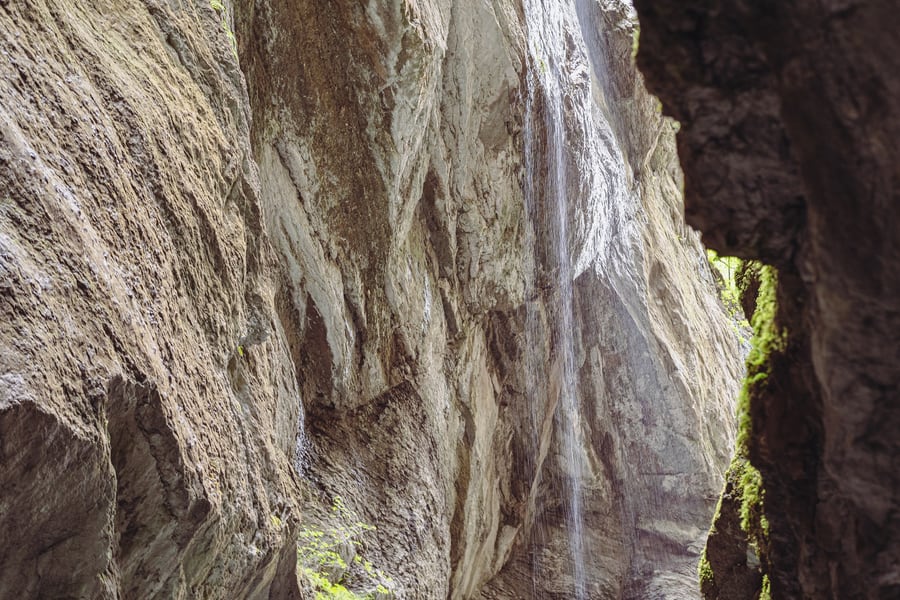
The Partnach has cut a gorge seven hundred metres long and in places more than eighty metres deep into the rock south of the town. A path was blasted through it in 1912 — the same year the railway opened — and it has been a protected natural monument ever since. It is walkable all year for a small charge, with very little climbing involved, and it closes now and then during the spring melt or after heavy weather.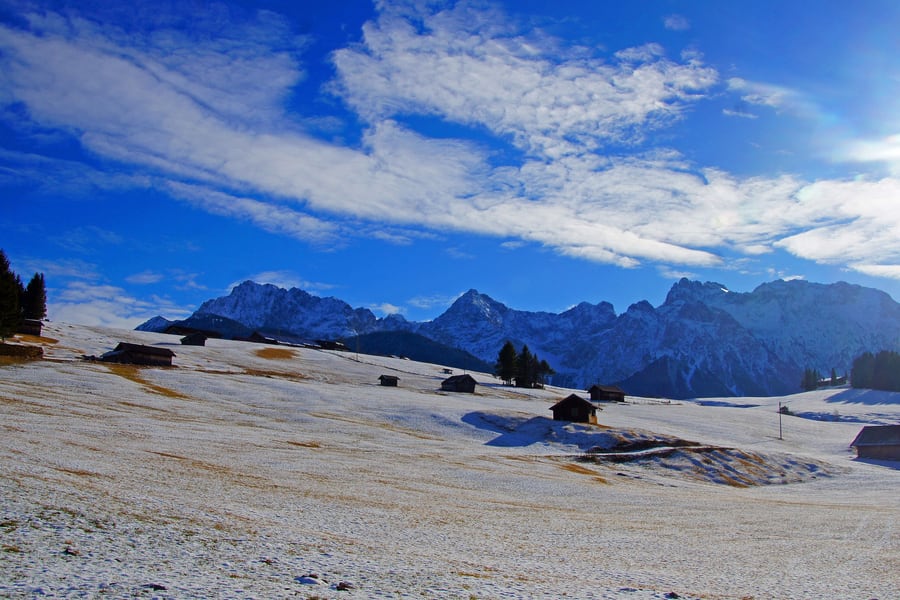 Jürgen Hamann / Wikimedia Commons · CC BY-SA 4.0 · cropped
The Buckelwiesen, and a sign that was rewritten
Klais is the highest Bavarian station on a standard-gauge line, and it stands among the Buckelwiesen — humped meadows left by the Isar glacier, carrying over two hundred plant species. Bavaria had 63,000 hectares of them in the 1920s and has about 1,200 now, most of them here. Scheduled Intercity trains called until 2007, and the building carried a sign claiming the title of Germany's highest Intercity station. Today's sign gives the altitude and nothing else.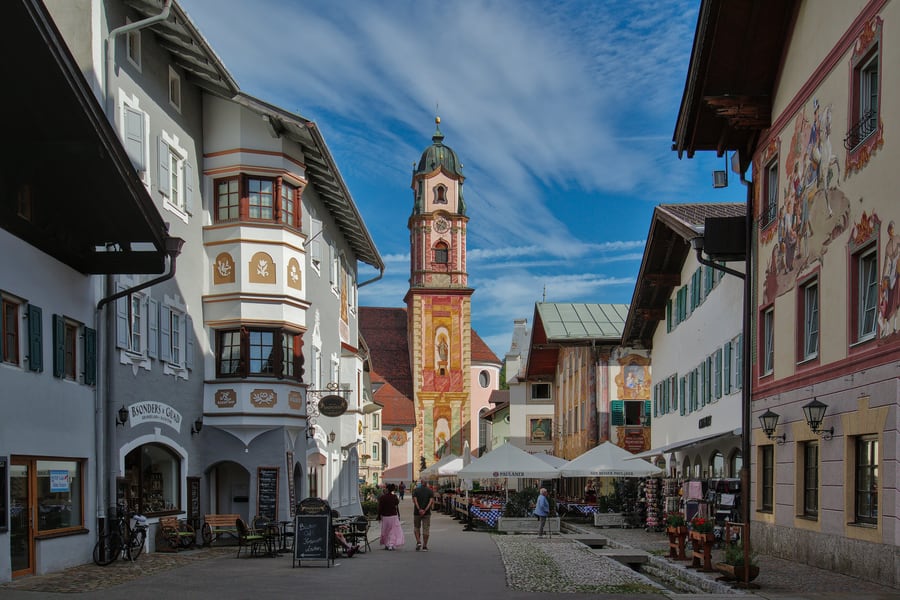 Jan Czeczotka / Wikimedia Commons · CC BY-SA 4.0 · cropped
Mittenwald and its violins
Matthias Klotz began making violins here in 1689, and the trade never left: about ten independent master makers still work in the town, and the state school of instrument making, founded in 1858, teaches around forty-five students violin, bow and woodwind building. The Geigenbaumuseum in the Ballenhausgasse tells the story. The painted façades along the Obermarkt are the other reason people stop.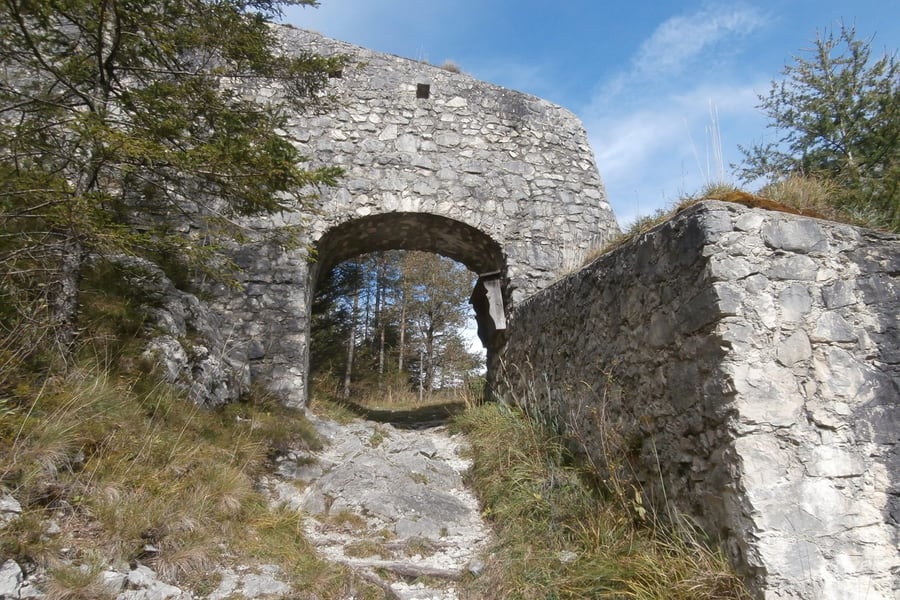 Sarang / Wikimedia Commons · CC BY-SA 4.0 · cropped
The Porta Claudia
The defile the railway threads has been the gate between Bavaria and Tirol since Roman times, and in 1632 Claudia de' Medici, then ruling Tirol, fortified it. The Porta Claudia was extended in 1648 and again in 1670, and it held until 4 November 1805, when local guides took Marshal Ney's troops over a mountain path around it. Walls up to six metres high survive in the woods above the village, under monument protection.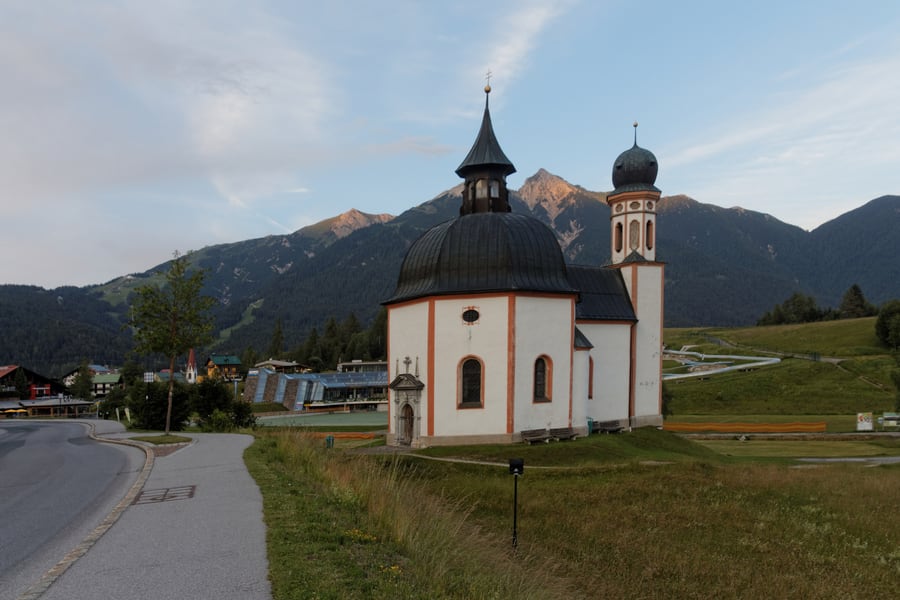 Pelz / Wikimedia Commons · CC BY-SA 3.0 · cropped
The Seekirchl
The little octagonal church standing alone in the meadow is the Seekirche Heiliges Kreuz, begun in 1629 for Archduke Leopold V and finished in 1666 to a design by the Innsbruck court architect Christoph Gumpp the Younger. A high-baroque domed octagon is a rare thing in Tirol. It is called the Seekirchl because it once stood by a lake — the Kreuzsee, dug in the fifteenth century and drained in 1808. The name outlasted the water.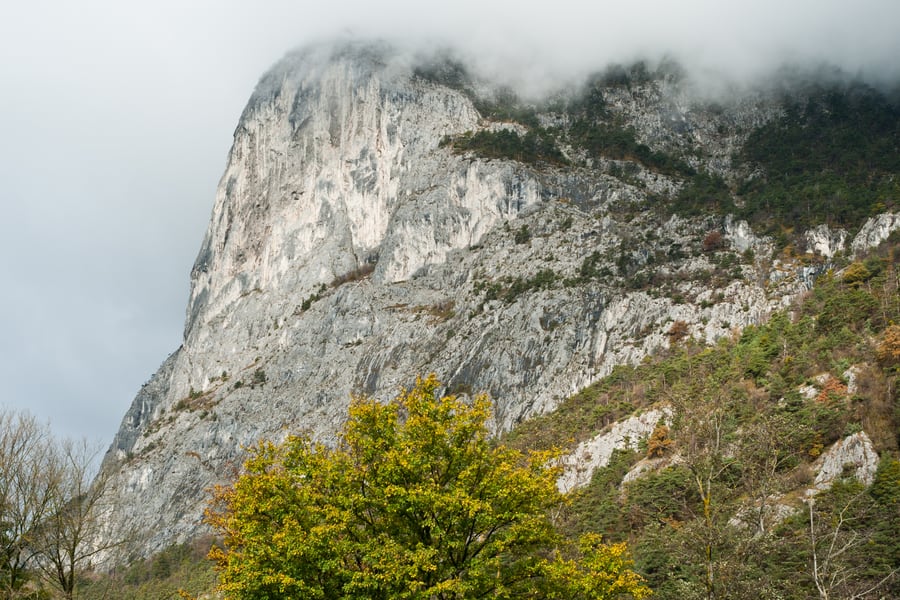 Hermann Hammer / Wikimedia Commons · CC0 · cropped
The Martinswand
The wall the railway tunnels through is a clean six-hundred-metre drop from the Kleiner Wandkopf, with its upper edge at about 1,200 metres. In a half-cave near its western end, the story goes, Emperor Maximilian I was stranded while hunting chamois in 1484 and brought down by a peasant boy. There is a demanding via ferrata in two stages and a set of climbing gardens; the face and its surroundings are a nature reserve of 54 hectares.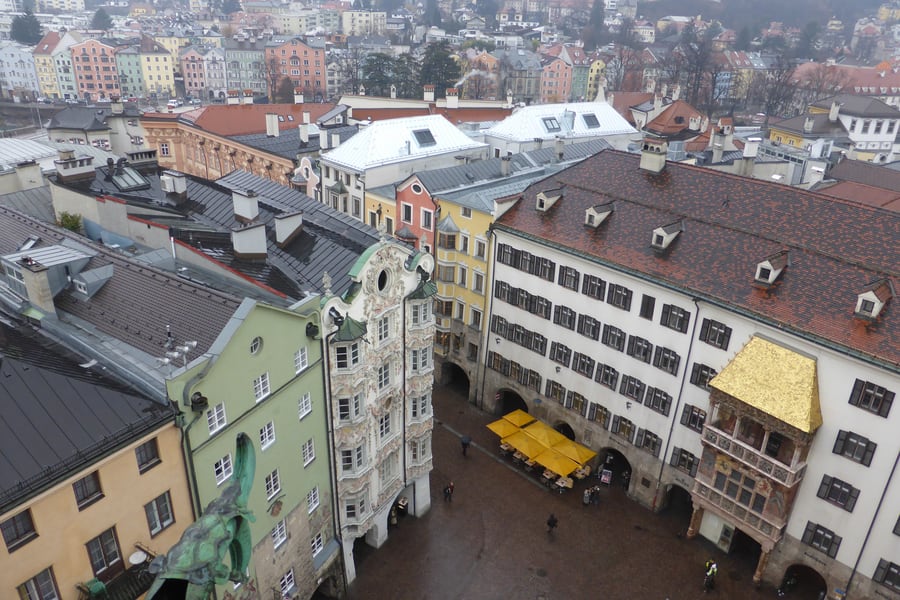 Andrew Bone / Wikimedia Commons · CC BY 2.0 · cropped
The Goldenes Dachl and the old town
A walk from the Hauptbahnhof, the old town closes into a street of arcaded, gabled houses, and at the end of it is the balcony Maximilian I had added between 1497 and 1500 to a residence of 1420: 2,657 fire-gilded copper shingles over an oriel window, built so that the court could watch the square below. There is a museum inside it now, and since 2003 the permanent secretariat of the Alpine Convention.Where to Sleep
The journey is short enough to do from either end without staying anywhere, so the reason to book a bed on this line is to have longer in one of the places along it — or to start early from the Bavarian end without a dawn train out of Munich.
Three houses are listed below, one at each end and one halfway. All three were opened and read in a browser on 12 August 2026, and everything said about them comes from what they publish themselves. There are no prices, ratings or star counts here, because we have not verified any.
What the three have in common is that they are old buildings standing on a street in the middle of town, rather than resort hotels out beyond it — each is a walk from its station rather than a drive.
Where to stay
 Tiia Monto / Wikimedia Commons · CC BY-SA 4.0 · cropped
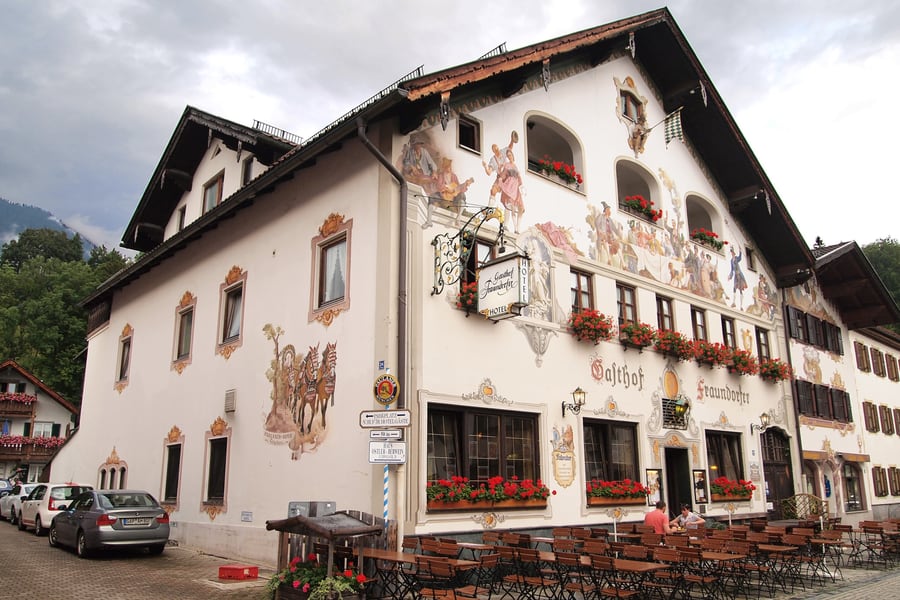
Hotel & Gasthof Fraundorfer
Partenkirchen, at the Bavarian end
A painted house in the old street of Partenkirchen with thirty-one rooms, many with balconies, and family rooms taking up to five. Its own site lists five room categories, and live music and Schuhplattler dancing in the restaurant from seven in the evening, Thursday to Monday — the kitchen runs to nine, and Tuesday and Wednesday are rest days.
Check Availability (opens in a new tab, on gasthof-fraundorfer.de)via gasthof-fraundorfer.de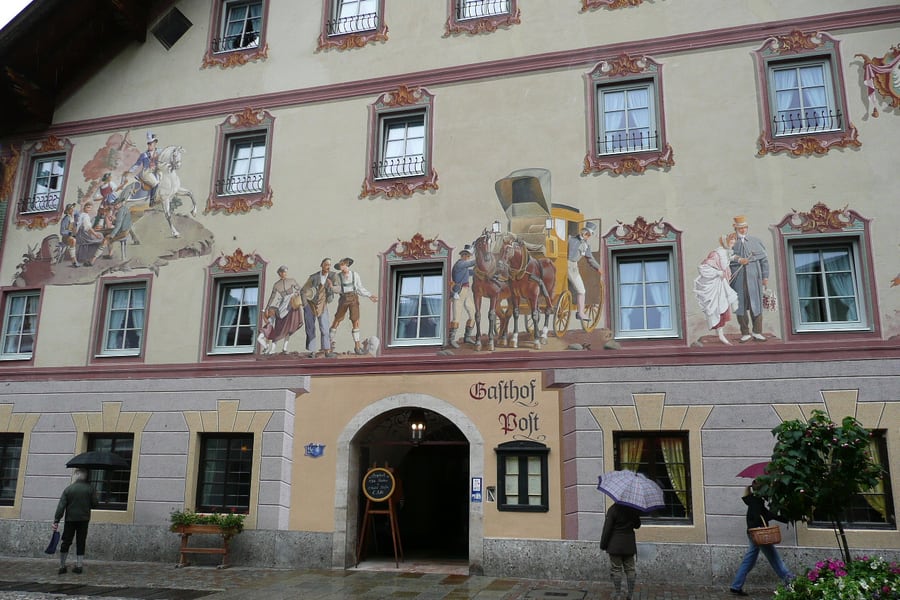 Jacquesverlaeken / Wikimedia Commons · CC BY-SA 3.0 · cropped
Post Hotel Mittenwald
On the Obermarkt, halfway along the line
The Gasthof Post stands on Mittenwald's painted main street, a few minutes from the station. The house divides its rooms into five kinds — alpine, Jugendstil, rustic, country-house and corner rooms, with Jugendstil suites above them — and runs a Bavarian restaurant of its own along with a day spa and a massage list. It is kept by the Rademacher family.
Check Availability (opens in a new tab, on posthotel-mittenwald.de)via posthotel-mittenwald.de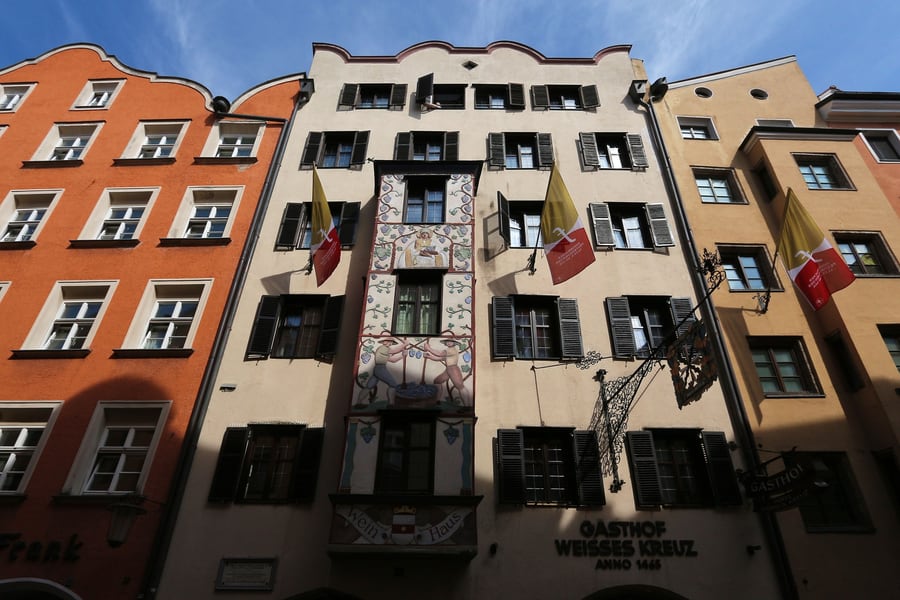 Simon Legner / Wikimedia Commons · CC BY-SA 4.0 · cropped
Gasthof Weisses Kreuz
Innsbruck old town, by the Goldenes Dachl
An inn on Herzog-Friedrich-Straße since 1465, in the pedestrian street a few doors from the Goldenes Dachl. It reopened after a rebuild with forty-eight rooms — the house calls them Kammern — and a bar on the sixth floor. The room names are a running joke about the address: a Mozart suite, a Golden Roof suite, and the smallest double called the Besenkammer, the broom cupboard.
Check Availability (opens in a new tab, on weisseskreuz.at)via weisseskreuz.atQuestions or corrections
Planning this trip and stuck on something, or spotted a time, fare or detail that has changed? Send us a message about The Mittenwaldbahn — Garmisch-Partenkirchen to Innsbruck. We read every one, and we update this page when something has changed.