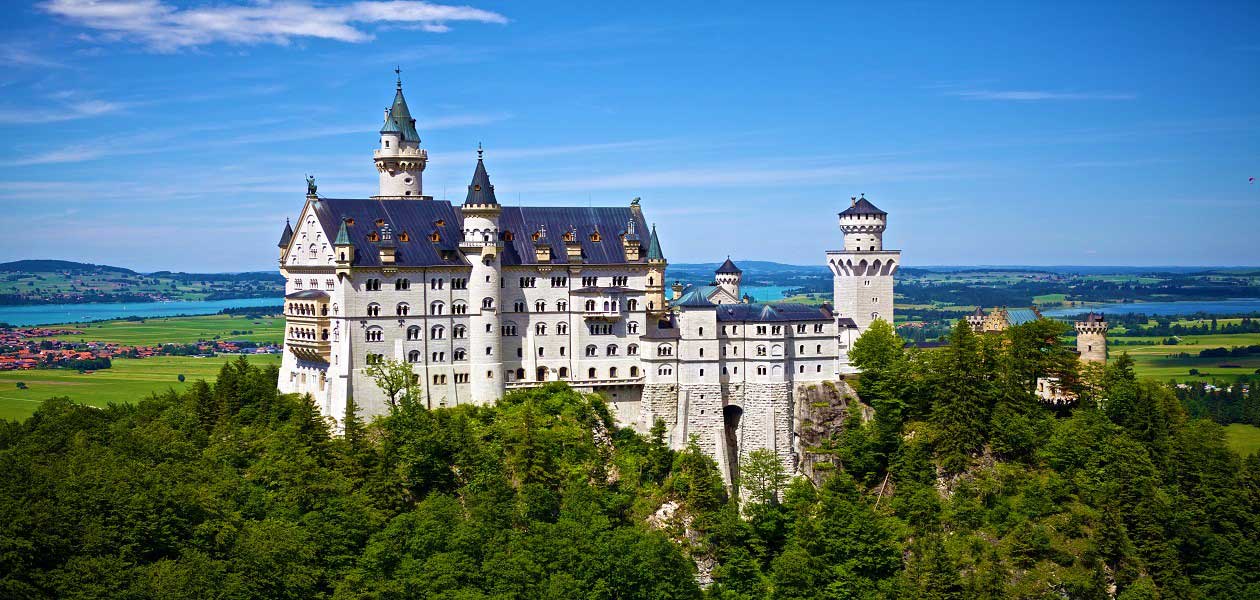
Germany
Germany covers about 357,600 square kilometres between the North Sea and the Baltic in the north and the Alps in the south, and holds some 83.6 million people — the largest population in the European Union. It borders nine countries: Denmark to the north, Poland and Czechia to the east, Austria and Switzerland to the south, and France, Luxembourg, Belgium and the Netherlands to the west. Berlin is the capital, Frankfurt the financial centre and the Ruhr the largest built-up area. Sixteen federal states divide the country, and that federal structure reaches all the way into the railway.
The main network runs to roughly 33,400 route kilometres, about 20,500 of them electrified, and carries around 2.9 billion passenger journeys a year. What surprises visitors is how plural it is: more than 450 railway undertakings are registered, and regional services are not run centrally at all but specified and put out to tender by the individual states — which is why the train across one state border may be a different colour and a different company. A single monthly ticket, the Deutschlandticket at €63, covers every regional train, bus, tram and S-Bahn in the country, which makes improvised travel unusually cheap.
Rail journeys in Germany
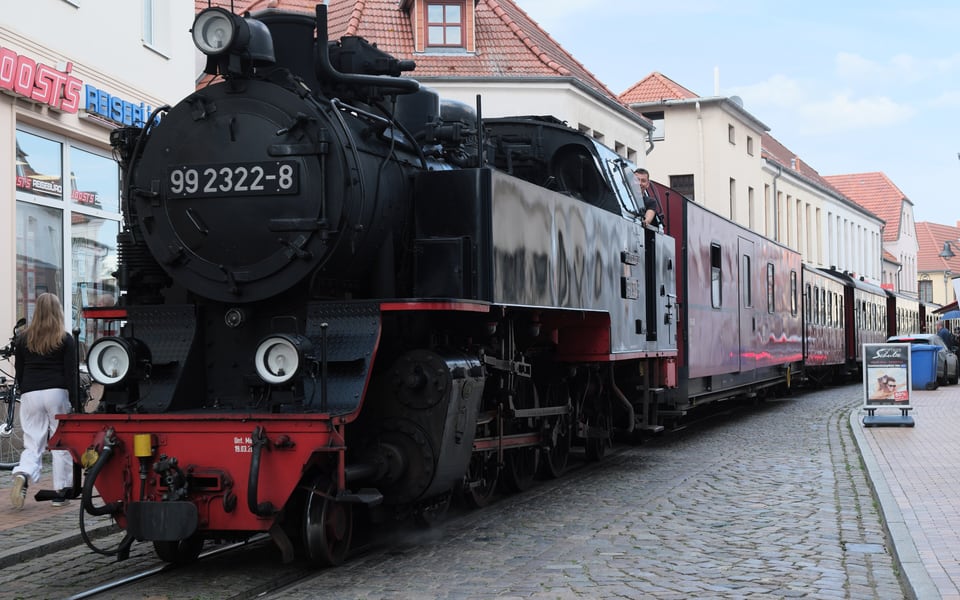
The Bäderbahn Molli to the Baltic
A 900-millimetre steam railway that is not a heritage line but the local train — line RB 31, running down the middle of a Bad Doberan shopping street.
View journey →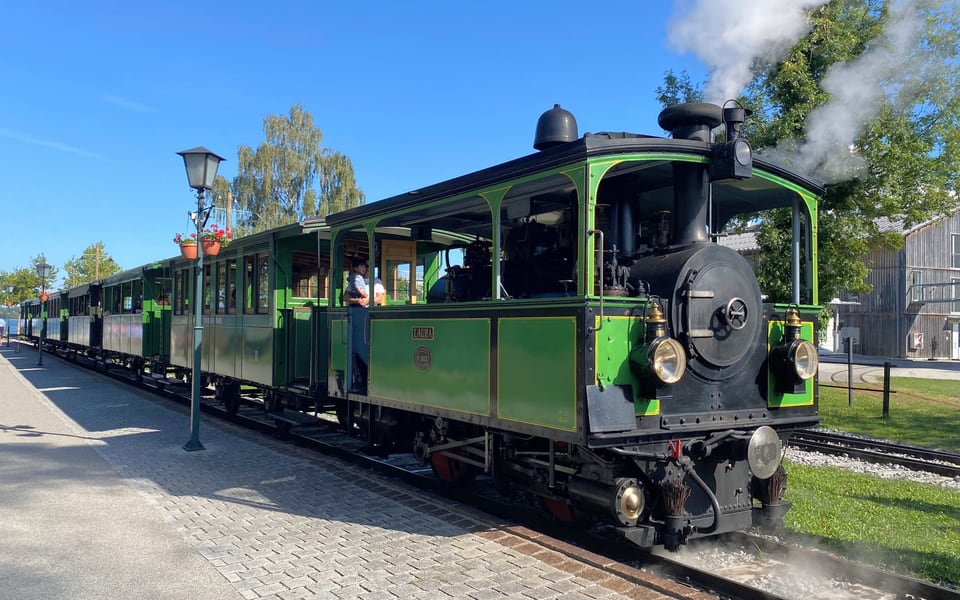
The Chiemsee-Bahn to the Lake Steamers
A metre-gauge steam tramway built in seventy days in 1887 to carry visitors from Prien station to the boat for Ludwig II's unfinished island palace.
View journey →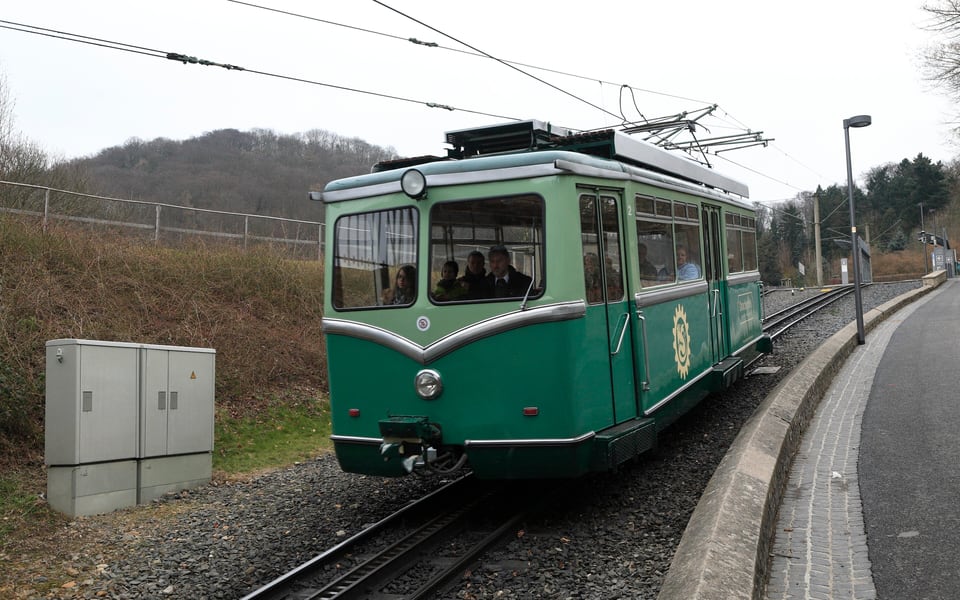
The Drachenfelsbahn to the Drachenfels
Germany's oldest working rack railway: eight minutes and 220 metres up a Rhine hill quarried for building stone until it undermined the castle on top.
View journey →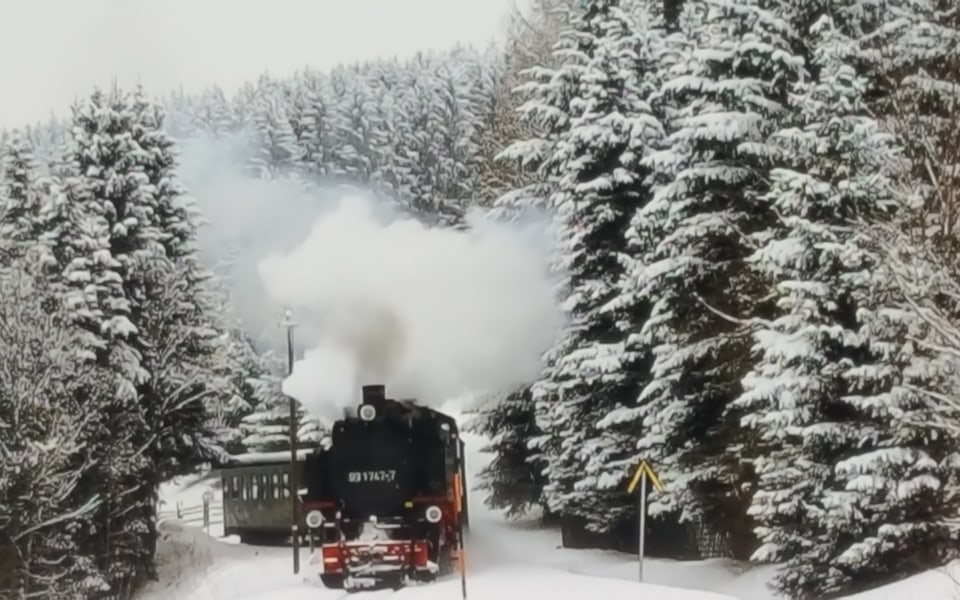
The Fichtelbergbahn to Oberwiesenthal
Seventeen kilometres of 750-millimetre track behind a working steam locomotive, four times a day and every day of the year, up to the highest town in Germany.
View journey →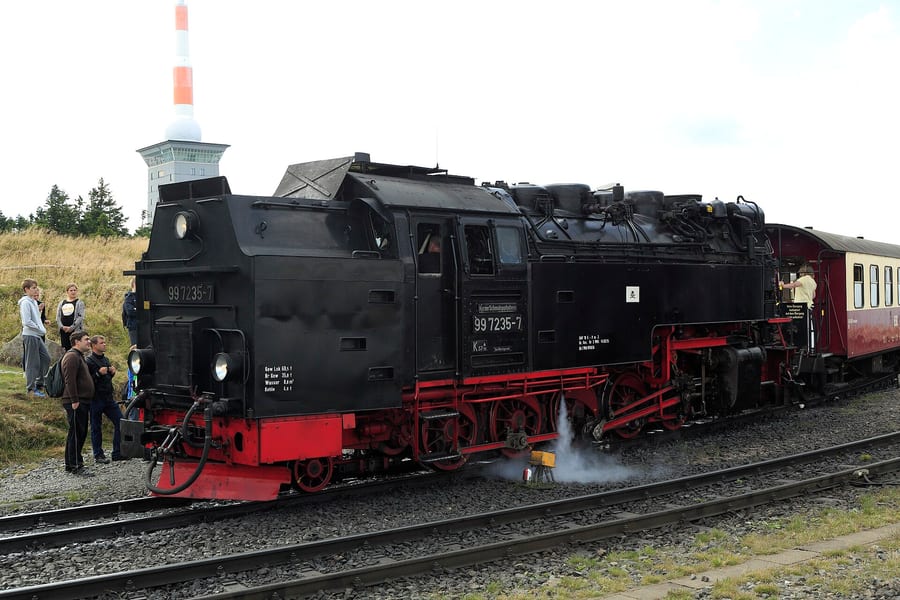
Harz Steam Railway
Germany's largest steam railway — narrow-gauge locomotives working hard up through the Harz forests to the cloud-wrapped, witch-haunted summit of the Brocken.
View journey →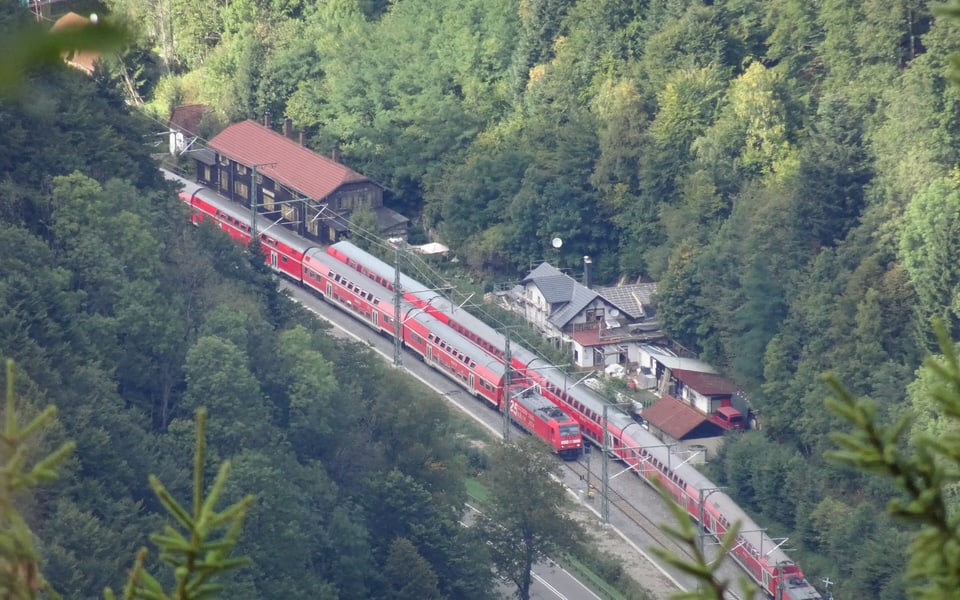
Höllentalbahn
The steepest main line in Germany — an everyday S-Bahn that hauls itself 430 metres out of the Hell Valley in twelve kilometres, over a gorge on a high viaduct.
View journey →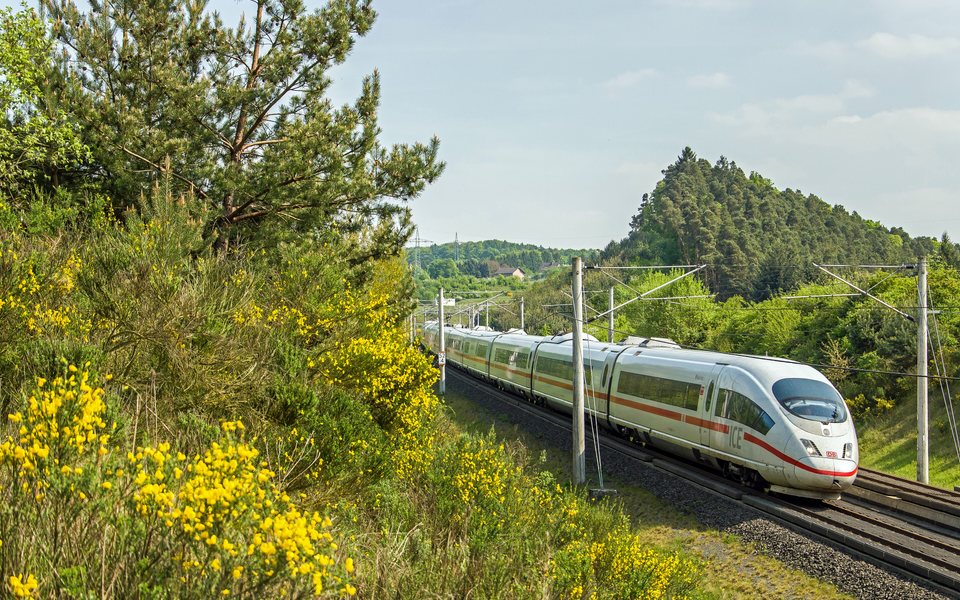
The ICE from Cologne to Frankfurt
Germany's fastest railway: 180 kilometres at 300 km/h on gradients of one in twenty-five, through thirty tunnels, sold on fifty-eight minutes.
View journey →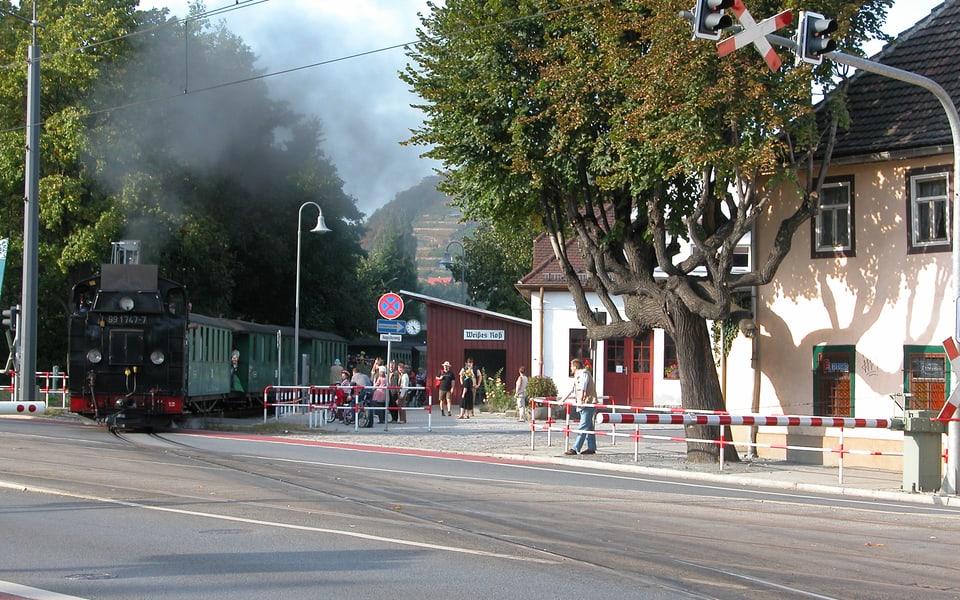
The Lößnitzgrundbahn to Moritzburg and Radeburg
A 750-millimetre steam railway that crosses a Dresden tramway on the level and climbs a wooded valley to a baroque hunting lodge on an island.
View journey →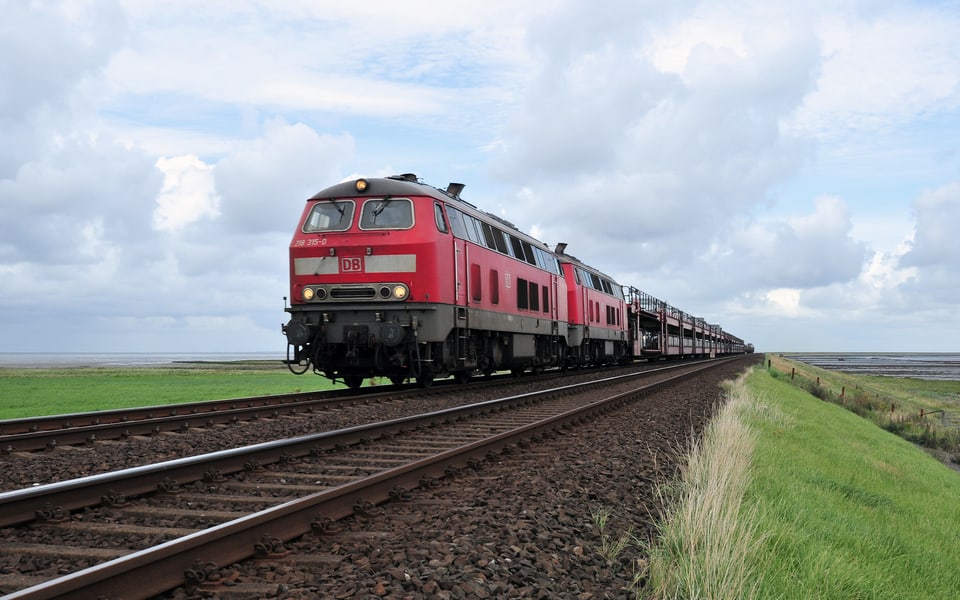
The Marschbahn to Sylt
Three hours north from Hamburg across the Schleswig-Holstein marshes, then eleven minutes out over the open Wadden Sea on the 1927 embankment to Sylt.
View journey →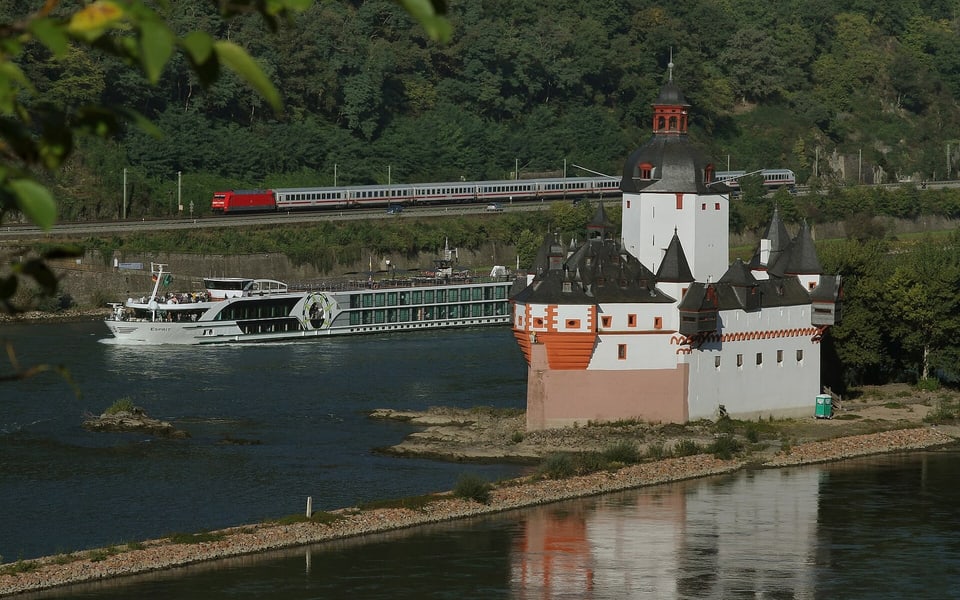
The Middle Rhine
An hourly regional train through the Rhine gorge — 61 kilometres from Koblenz to Bingen past terraced vineyards, a castle on almost every crag, and the Loreley.
View journey →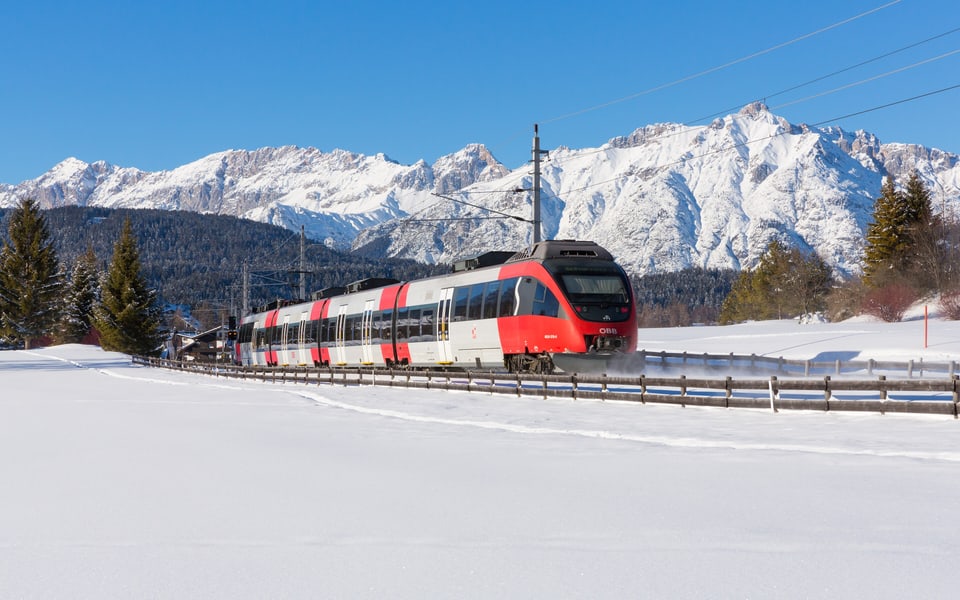
The Mittenwaldbahn — Garmisch-Partenkirchen to Innsbruck
Austria's first electric main line climbs 600 metres out of the Inn valley on a shelf cut into the Martinswand, and is worked today by a regional train.
View journey →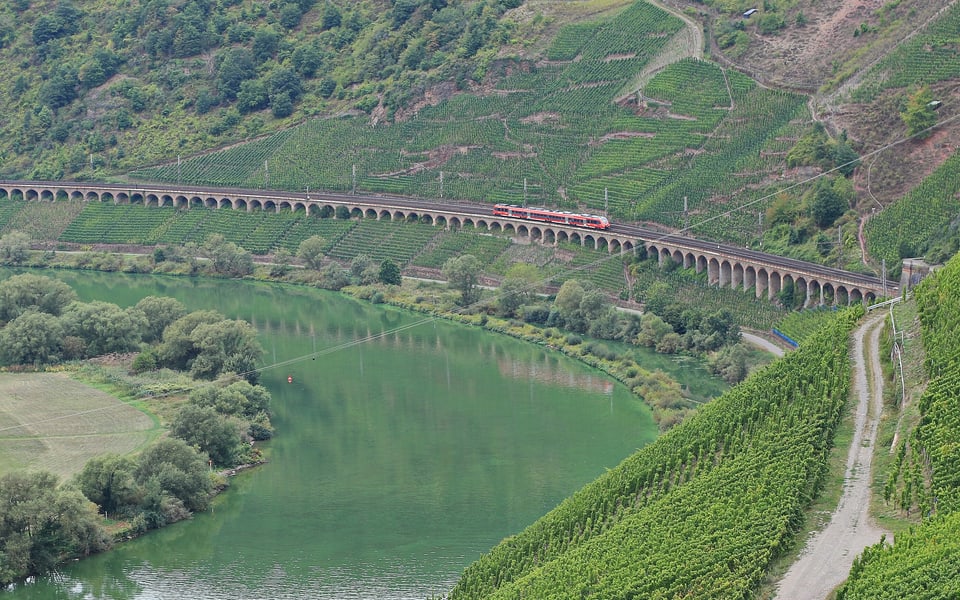
The Moselle Line
An hourly regional train from Koblenz to Roman Trier — 112 kilometres of terraced Riesling slopes, a castle over Cochem and Germany's longest hillside viaduct.
View journey →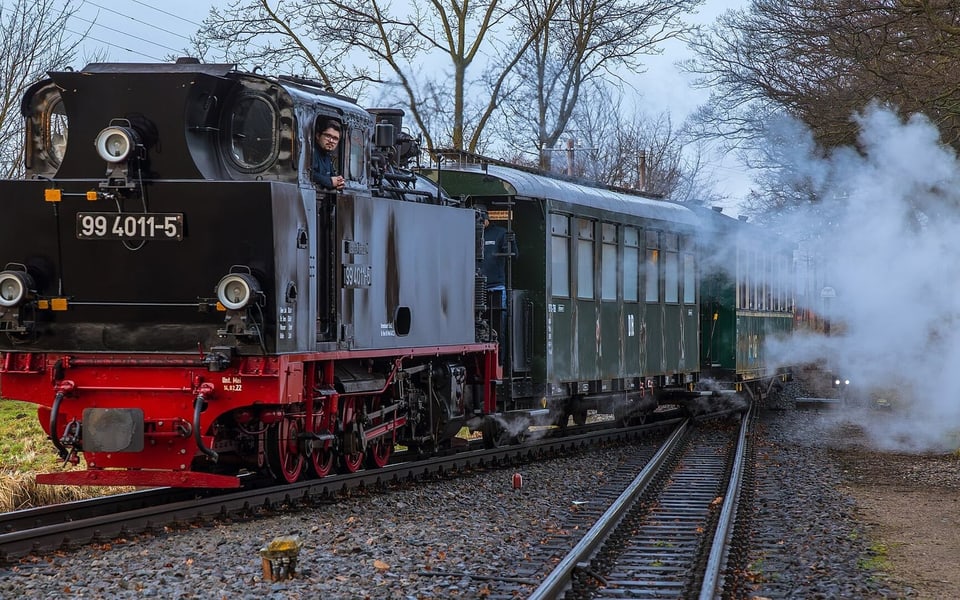
Rasender Roland
A 750-millimetre steam railway that has carried holidaymakers along Rügen's south-east coast since 1895 — green coaches and working steam, all year round.
View journey →
The Sauschwänzlebahn through the Wutach Valley
Twenty-five kilometres of loops, spirals and viaducts to cover nine and a half in a straight line — built to carry siege guns to a war that never came.
View journey →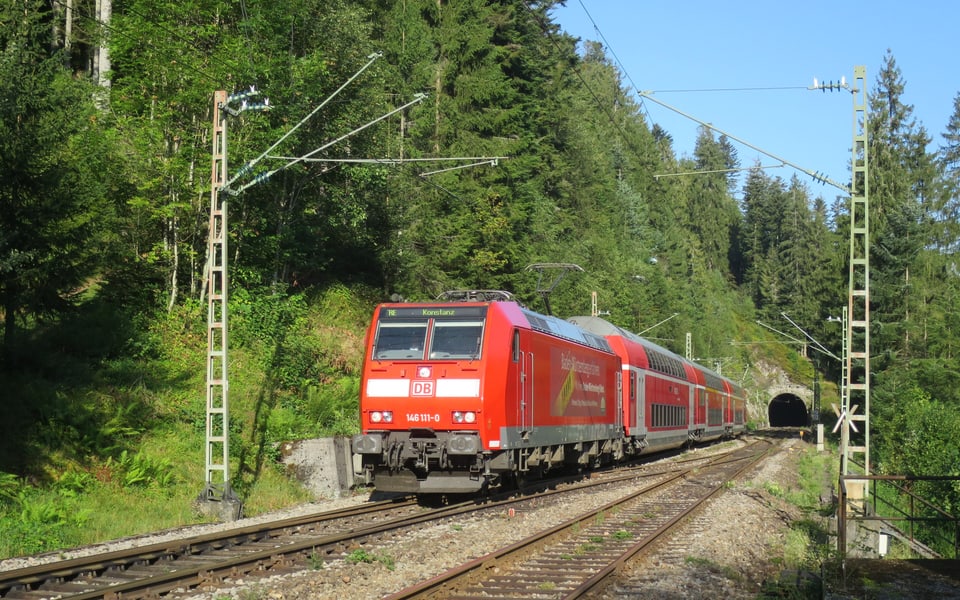
Schwarzwaldbahn
Robert Gerwig's 1873 masterpiece through the Black Forest — 39 tunnels and two great double spirals, worked today by an ordinary hourly express.
View journey →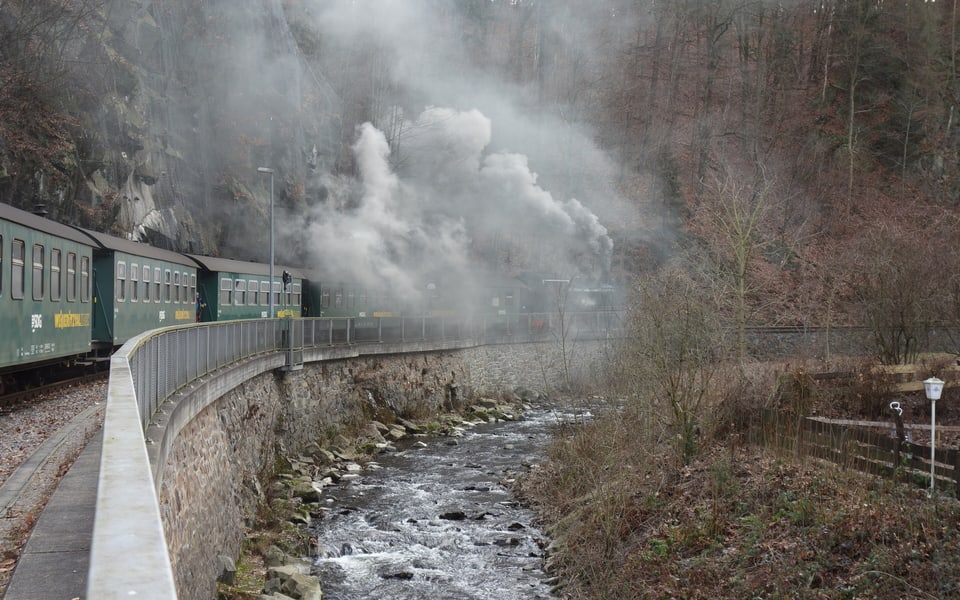
The Weißeritztalbahn to Kurort Kipsdorf
Germany's longest-serving public narrow-gauge railway climbs a gorge no road follows — destroyed by its own river in 1897 and again in 2002, and rebuilt twice.
View journey →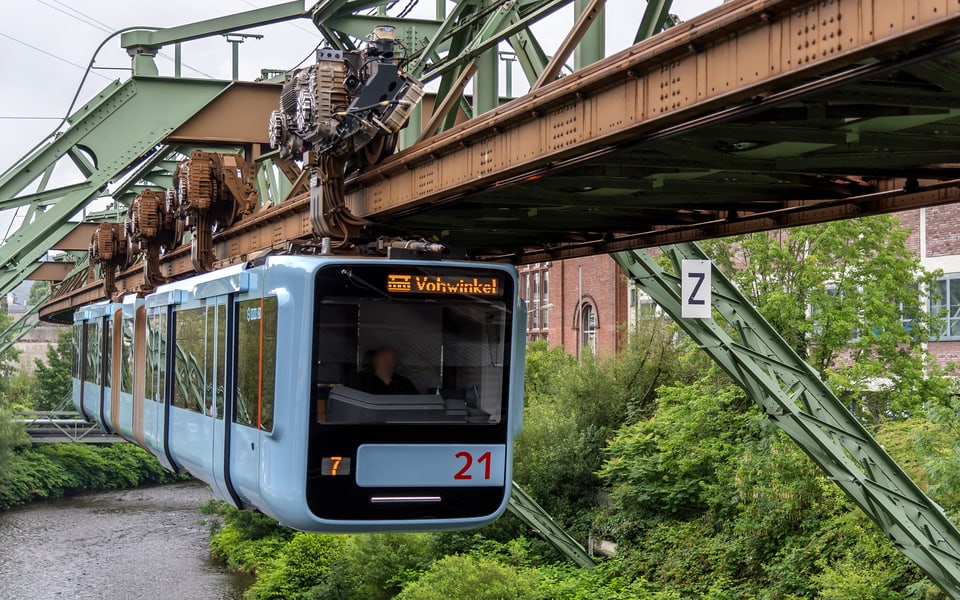
The Wuppertal Schwebebahn
Thirteen kilometres of carriages hanging from a green steel lattice above a river and a shopping street — a 125-year-old idea run as a commuter railway.
View journey →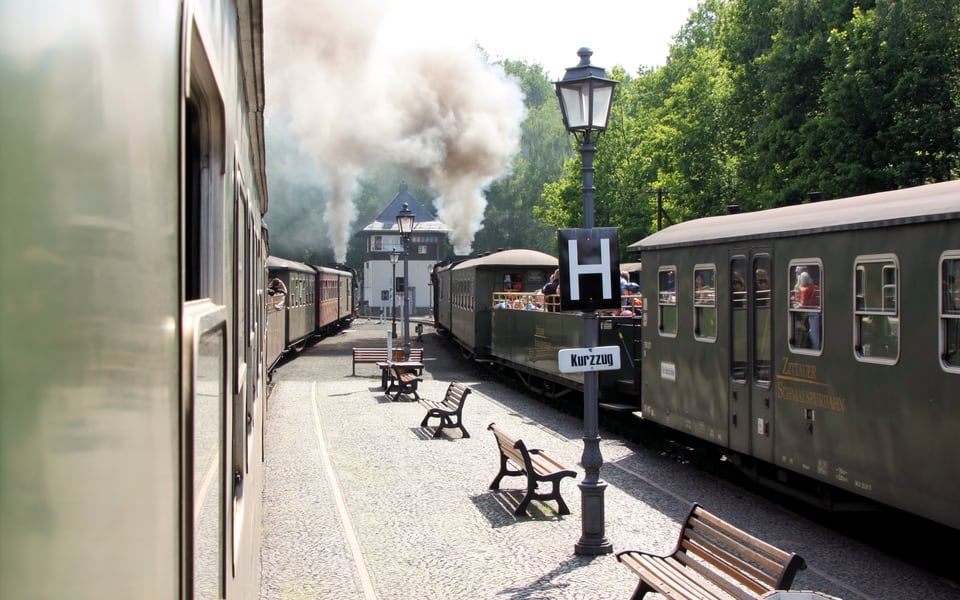
The Zittauer Schmalspurbahn to Oybin and Jonsdorf
A 750-millimetre steam railway formally scheduled to die in 1990 so a lignite mine could be dug over it — and which now runs past the lake filling that hole.
View journey →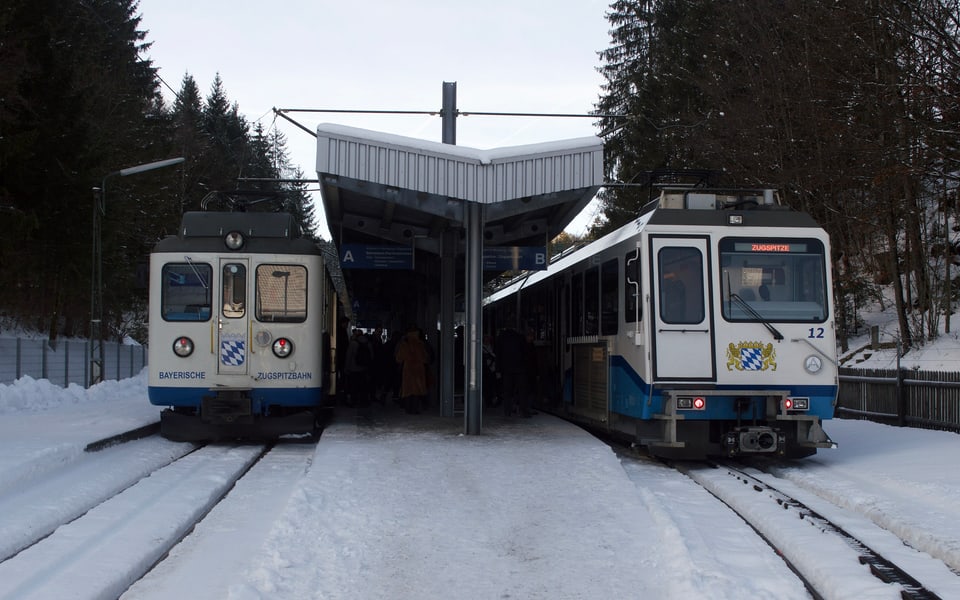
Bayerische Zugspitzbahn
Germany's highest railway — a metre-gauge rack line to a glacier basin at 2,588 metres, the last four kilometres bored upward inside the Zugspitze itself.
View journey →Good to know
Is Germany easy to explore by train?
Very. Deutsche Bahn runs one of the densest networks in Europe: ICE high-speed trains connect the big cities in a few hours, and frequent regional trains reach almost everywhere else. Value fares like the country-wide Deutschland-Ticket and various rail passes make it cheap to roam, and connections are generally frequent and well signposted.
What are Germany's most scenic rail journeys?
The classics are the castle-lined Middle Rhine between Mainz and Koblenz (a UNESCO landscape), the Black Forest lines such as the Schwarzwaldbahn and Höllentalbahn, the run up to the Bavarian Alps at Garmisch, and — best of all for railway lovers — the Harz narrow-gauge steam railways that climb to the Brocken.
What is the Harz, and its famous steam railway?
The Harz is a low, forested mountain range in the middle of Germany. Threading through it is the Harzer Schmalspurbahnen (HSB), the country's largest steam-worked narrow-gauge network, whose Brocken Railway hauls vintage steam trains up to the 1,141 m summit of the Brocken.
When is the best time to travel Germany by rail?
Year-round. Late spring to autumn is best for scenery, river valleys and hiking; December brings the famous Christmas markets in almost every town; and winter is magical in the Harz, where the steam trains keep climbing the Brocken through the snow.