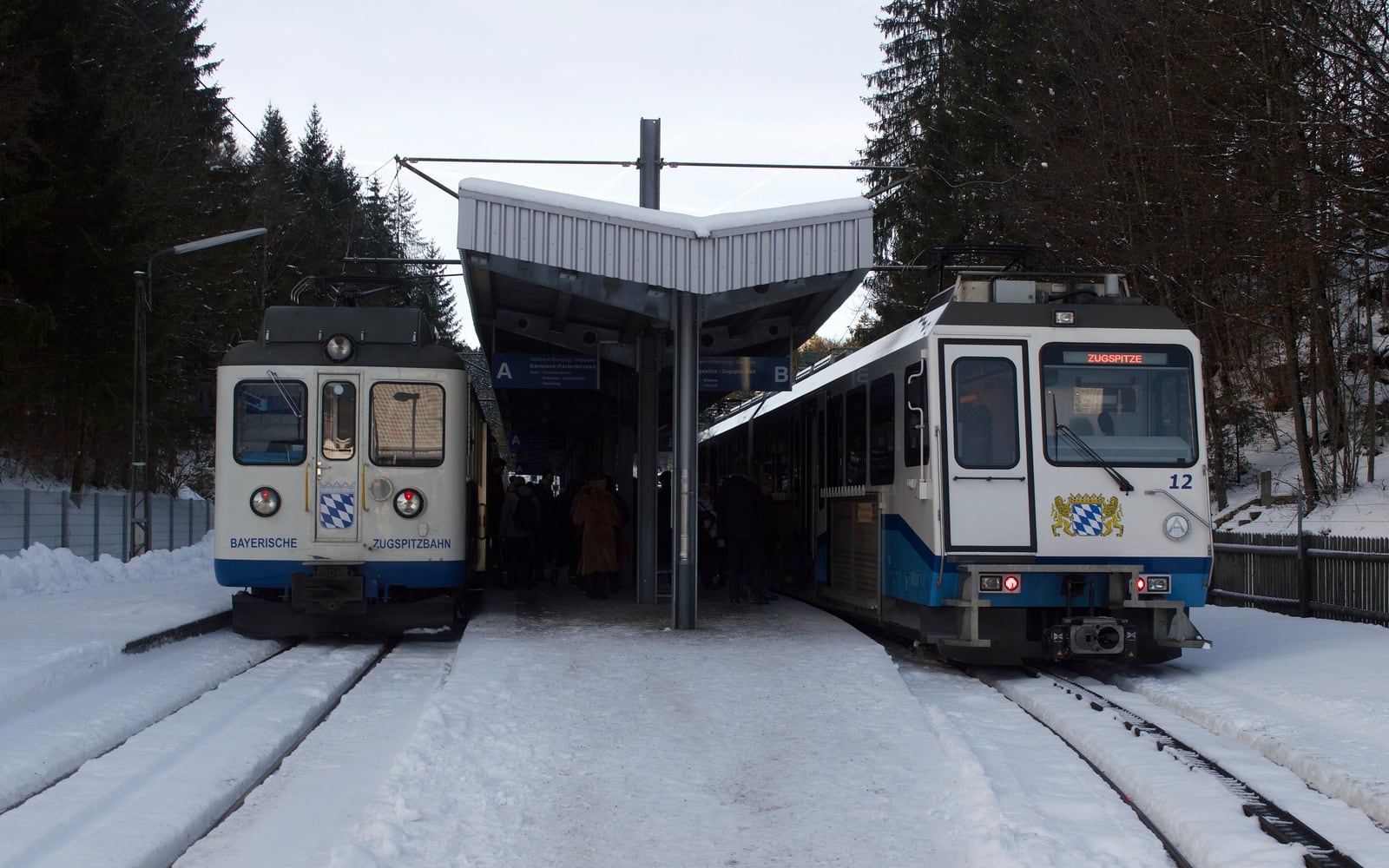
Bayerische Zugspitzbahn
Phil Richards / Wikimedia Commons · CC BY-SA 2.0
- Distance19.5 km (Garmisch-Partenkirchen–Zugspitzplatt)
- DurationAbout 1 hour 15 minutes
- Best seasonYear-round
Introduction
The Bayerische Zugspitzbahn is the highest railway in Germany, and it climbs to the foot of the country's highest mountain — mostly through the inside of it.
From Garmisch-Partenkirchen at 705 metres the line runs 19.5 km to the Zugspitzplatt at 2,588 metres, a rocky glacier basin under the summit ridge. The first stretch, out to Grainau, is an ordinary metre-gauge tramway across the valley floor. Then the rack rail begins, the mountain closes in, and from the Riffelriß the railway spends most of the rest of the climb inside the 4.2-kilometre Zugspitz tunnel, boring upwards through the limestone at gradients of up to 250 per mille — one in four.
One thing to be clear about before you book: the train does not go to the top. The summit of the Zugspitze is 2,962 metres; the railway stops 374 metres below it, on the plateau. To stand on the summit you change at Zugspitzplatt onto the Gletscherbahn cable car, four minutes to the top. Plenty of operators and guidebooks blur this. The Zugspitzbahn is a magnificent piece of railway, but it is not a train to the summit of Germany.
It was built fast and at the end of an era: Grainau–Eibsee opened on 19 February 1929, Garmisch–Grainau that December, and the top section to the old Schneefernerhaus on 8 July 1930. In 1987 the summit end was rerouted through the new 975-metre Rosi tunnel to the present Zugspitzplatt terminus, and the original route to the Schneefernerhaus has not been routinely worked since November 1992.
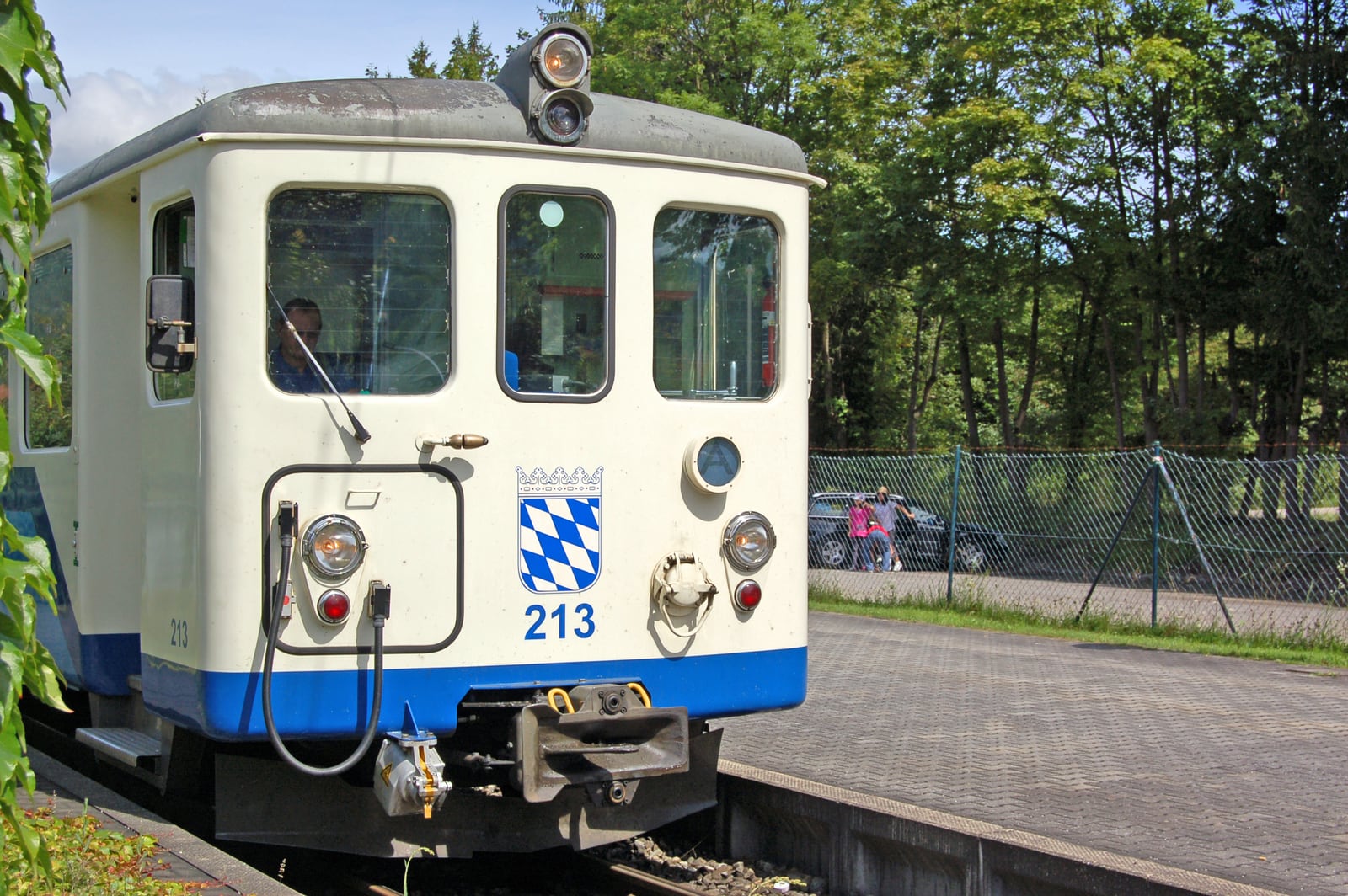
The result is a mountain railway of the classic Alpine kind — Riggenbach rack, metre gauge, blue-and-white railcars carrying the Bavarian lozenge — running to a published timetable all year round, up to a glacier basin where snow lies into August and the last of Germany's ice is quietly disappearing.
The Journey
Three quite different railways are joined end to end here: a valley tramway, an open mountain rack line, and a tunnel railway boring up inside the Zugspitze.
Across the valley: Garmisch-Partenkirchen to Grainau
The Zugspitzbahn has its own station beside the main-line one in Garmisch-Partenkirchen (705 m), and leaves on street-level metre-gauge track across the flat valley floor. This first section is worked by adhesion like an ordinary railway, calling at Hausberg, Kreuzeck-/Alpspitzbahn and Hammersbach — all request stops, served only when someone wants them — before reaching Grainau, a village of onion-domed church and Bavarian farmhouses with the Zugspitze massif filling the sky behind it.
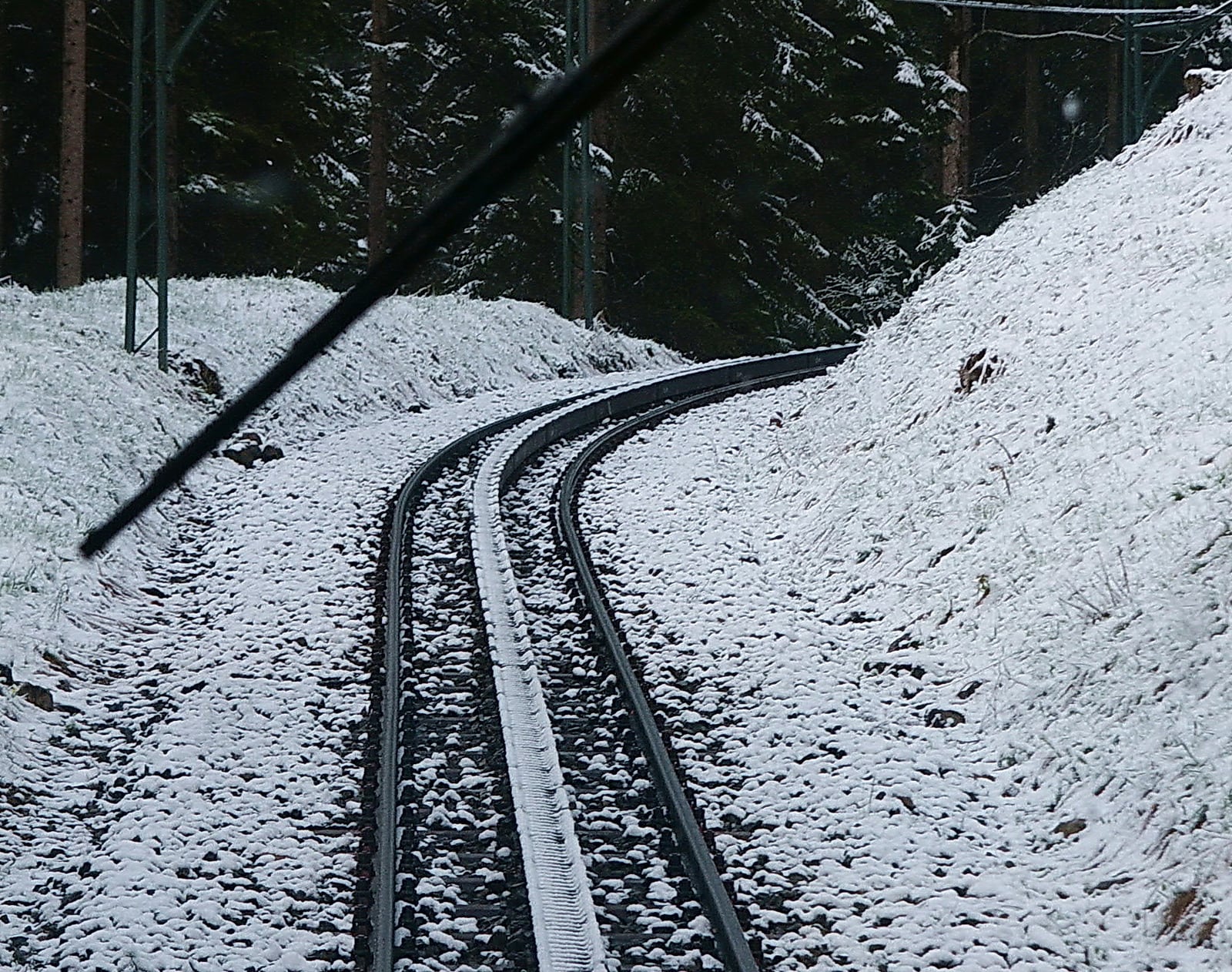
Grainau is where the mountain railway proper begins. From here the rack rail runs in the middle of the track, and the locomotive's cog engages it for the rest of the climb.
The rack: Grainau to Riffelriß
The line swings up into the forest and starts to climb hard. Eibsee is the stop that most day visitors use — not for the railway but for the lake, a startlingly clear green tarn directly beneath the north face, and for the Seilbahn Zugspitze, the aerial cable car that runs from here to the summit in ten minutes. If your only goal is the top, this is where you get off.
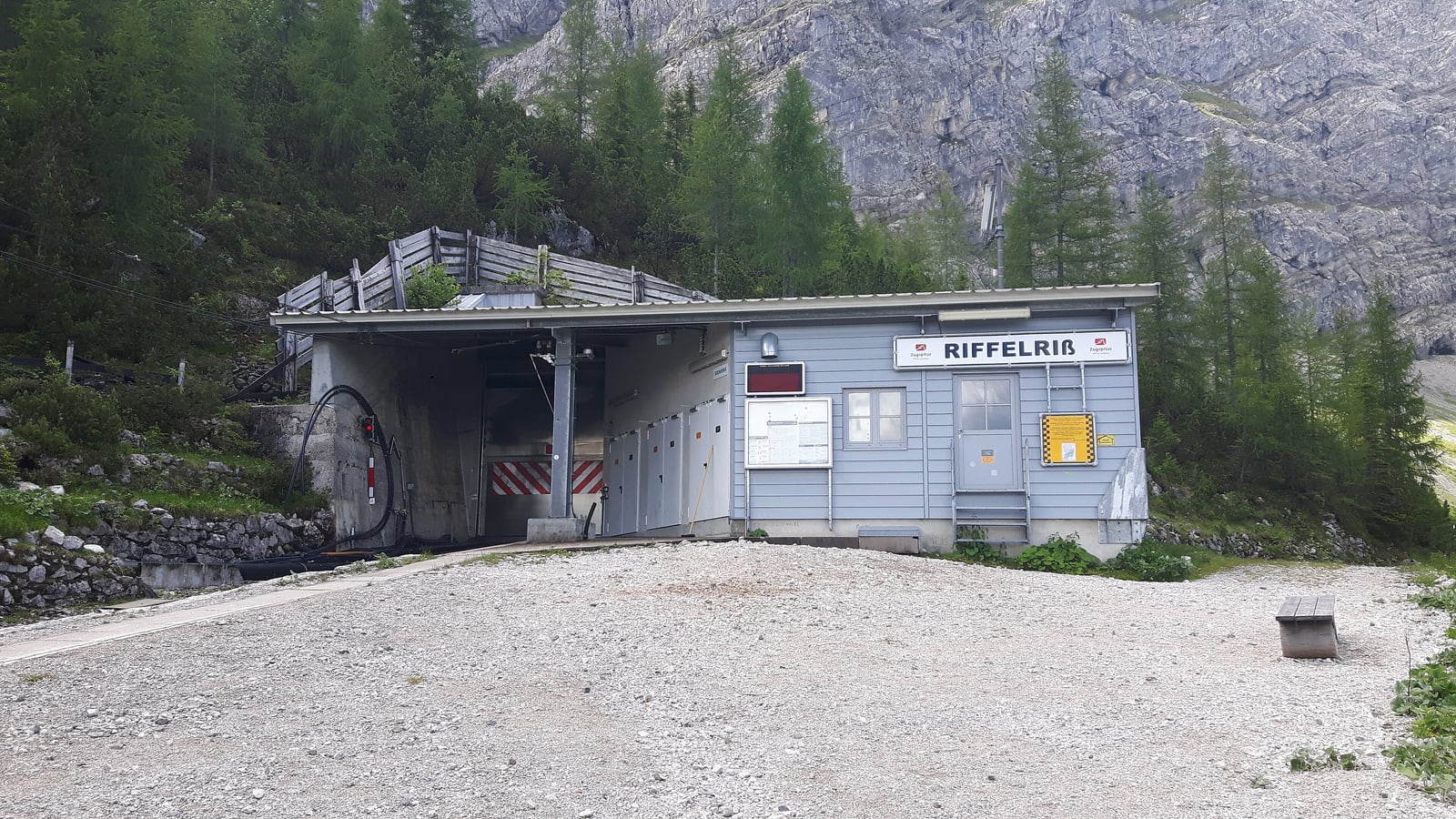
Above the Eibsee the railway keeps climbing to Riffelriß, the last stop in daylight: a small halt of grey buildings and larches on a shelf of rock, with a tunnel mouth beside the platform. Everything above it is underground.
Inside the mountain: the Zugspitz tunnel
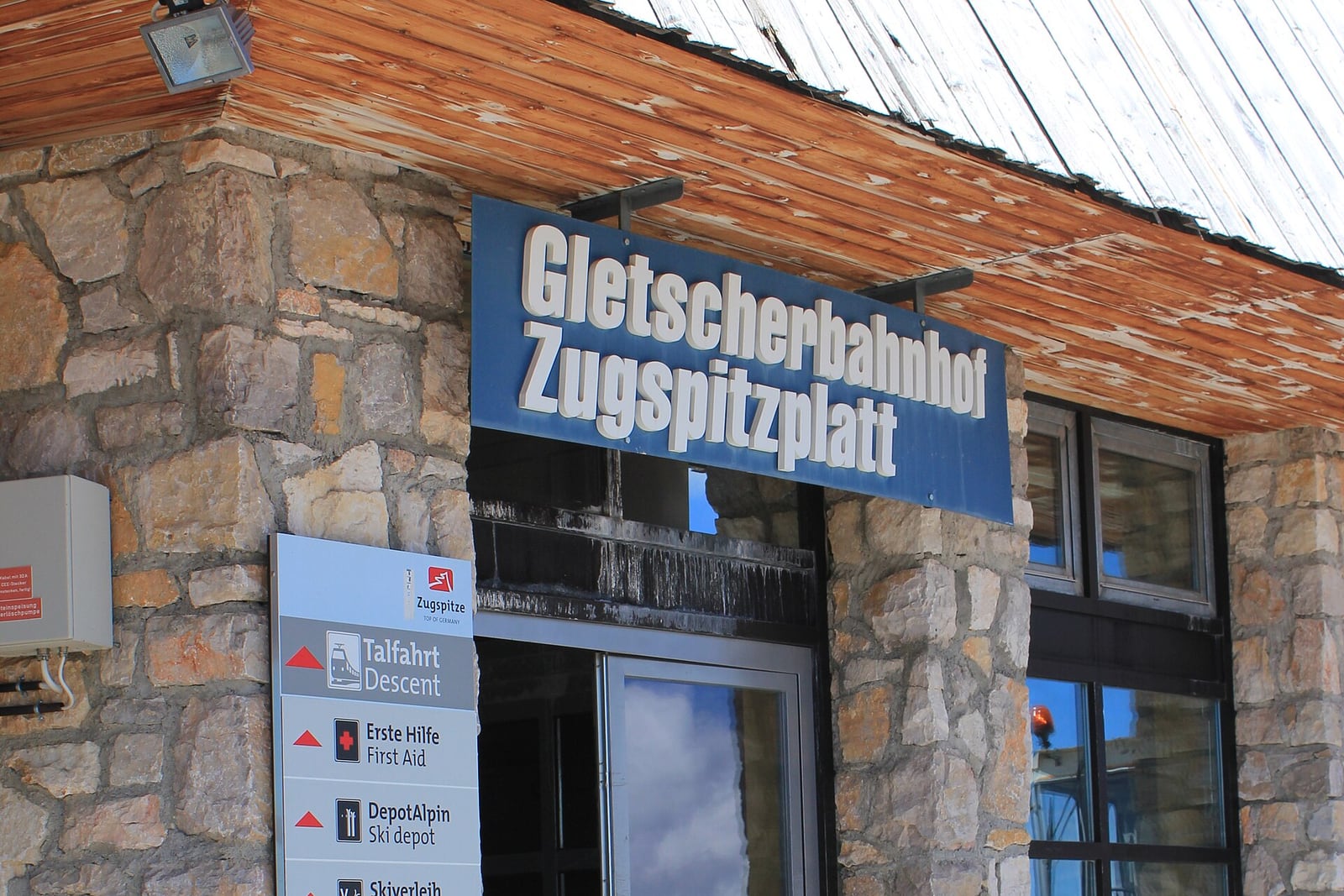
From Riffelriß the line enters the Zugspitz tunnel and stays there for 4.2 kilometres, spiralling upward inside the limestone at gradients touching 250 per mille. There is nothing to see — this is the part of the journey people remember for the noise of the rack and the pressure in their ears — until the train runs out at the Gletscherbahnhof Zugspitzplatt, 2,588 metres up.
The Platt is a wide, stony cirque hemmed by the summit ridge, holding the remains of the Schneeferner, one of the last glaciers in Germany, and patched with old snow well into the summer. It is a bleak, magnificent place, and visibly a shrinking one.
The last 374 metres
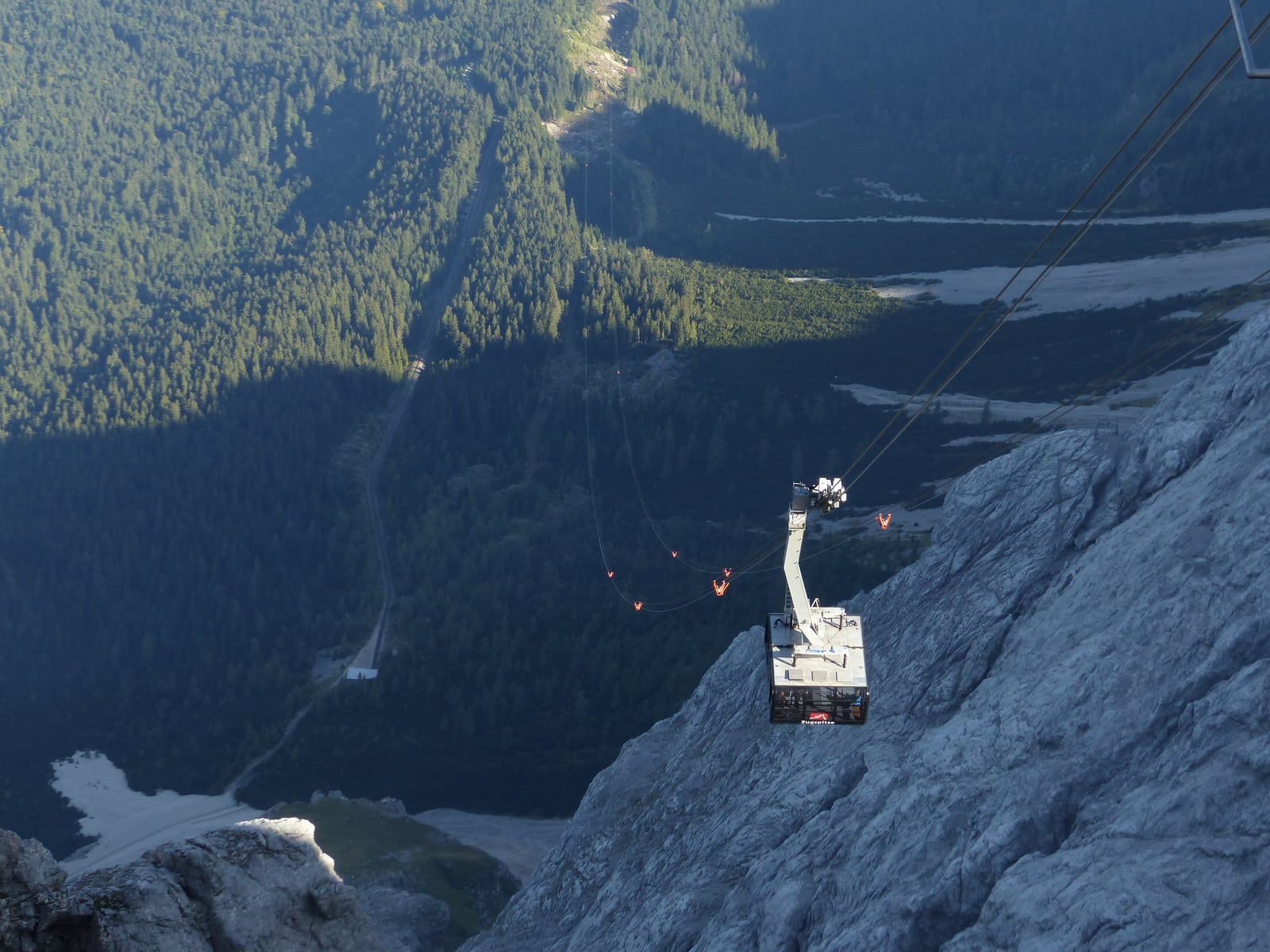
The summit is not here. It stands 374 metres higher, at 2,962 metres, and to reach it you change at Zugspitzplatt onto the Gletscherbahn — a cable car that lifts you to the top in four minutes and runs every ten. Up there you find the summit cross on its rock, a viewing platform, and the Austrian border running across the ridge; the Tyrolean cable car arrives from the far side.
The usual way to do it is a round trip: up by train through the tunnel, across by cable car to the summit, and down by the Seilbahn Zugspitze to the Eibsee, which turns the journey into a circle and gives you the mountain from three directions.
Along the route
Galaxylady1110 / Wikimedia Commons · CC BY-SA 3.0 deFour kilometres inside the mountain
Above Riffelriß the railway disappears into the Zugspitz tunnel and stays there, spiralling upward through the limestone for 4.2 kilometres at gradients touching 250 per mille — one in four. There is nothing to see; it is the part everyone remembers anyway, for the sound of the rack and the pressure in their ears.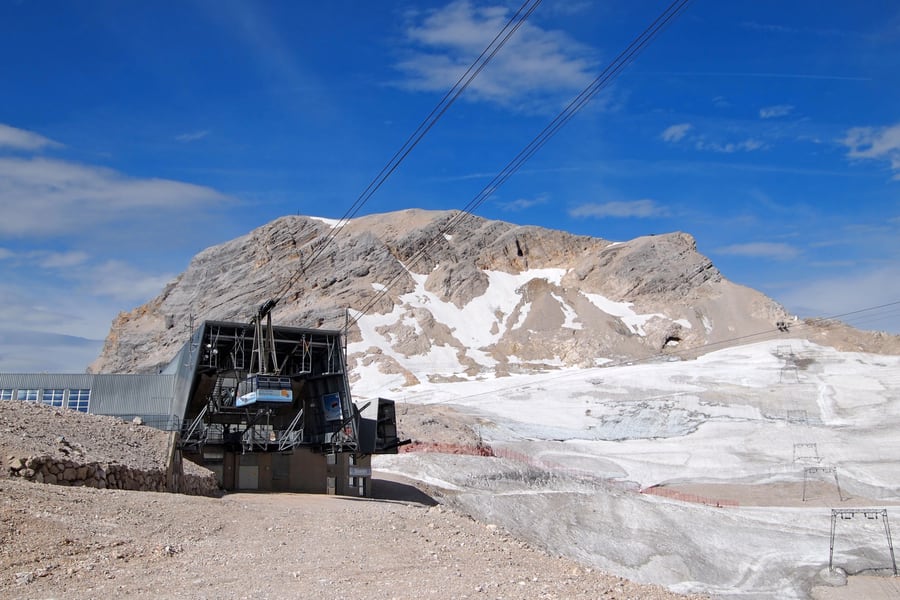 Tiia Monto / Wikimedia Commons · CC BY-SA 3.0 · cropped
The highest railway in Germany
The Zugspitzbahn tops out higher than any other railway in the country, delivering its passengers to a glacier basin at 2,588 metres where old snow lies into August and the remains of the Schneeferner — one of Germany's last glaciers — are visibly retreating.Whgler / Wikimedia Commons · CC BY-SA 4.0It does not go to the top
Worth knowing before you book: the summit is 2,962 metres and the railway stops 374 metres below it. To stand on the peak you change at Zugspitzplatt onto the cable car. Plenty of descriptions blur this — it is not a train to the summit of Germany.A bit of history
Culture & experiences along the way
 Michael J. Zirbes / Wikimedia Commons · CC BY-SA 3.0 de · cropped
Make it a circle
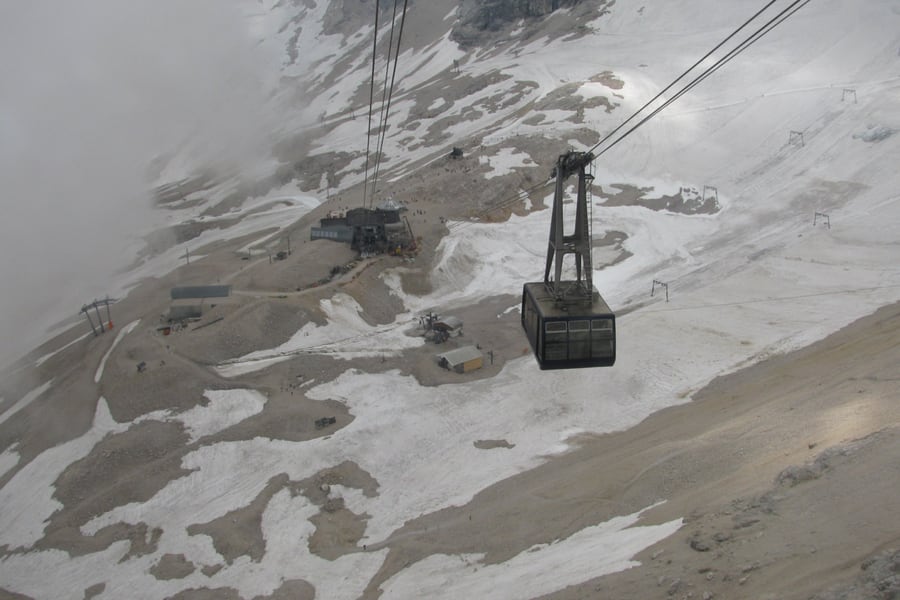
The standard round trip goes up by cogwheel train through the tunnel, across by Gletscherbahn to the summit, and back down by the Seilbahn Zugspitze to the Eibsee. Three different machines, three different views of the same mountain, and no backtracking.lienyuan lee / Wikimedia Commons · CC BY 3.0Watch the rack engage
At Grainau the line changes character: the toothed rail begins in the middle of the track, the locomotive's cog drops into it, and the ordinary valley tramway becomes a mountain railway. It is the moment the journey actually starts.Peatala36 / Wikimedia Commons · CC BY-SA 4.0Get off at the Eibsee
The stop below the rack section opens onto one of the clearest lakes in the Alps, directly beneath the north face. It is a destination rather than a waypoint — and on days when the summit is buried in cloud, it is the better half of the ticket.Timetables
The cogwheel train runs to a published timetable all year, but the mountain section has far fewer trains than the valley section, and the last ascent is early.
Trains to the Zugspitzplatt leave Garmisch-Partenkirchen at :15 past the hour, hourly from 08:15 to 14:15, and take about 75 minutes:
| Station | Height | Time |
|---|---|---|
| Garmisch-Partenkirchen | 705 m | :15 (depart) |
| Hausberg · request stop | — | :17 |
| Kreuzeck-/Alpspitzbahn · request stop | — | :24 |
| Hammersbach · request stop | — | :27 |
| Grainau | — | :30 |
| Eibsee | — | :45 |
| Riffelriß · request stop | — | :00 |
| Zugspitzplatt | 2,588 m | :28 (arrive) |
So the 08:15 from Garmisch reaches the Zugspitzplatt at 09:28, and the last train up — 14:15, arriving 15:28 — is the one to plan around. Turn up at three in the afternoon and the mountain railway has finished climbing for the day.
Coming down, trains leave Zugspitzplatt at :30, hourly from 09:30 to 16:30, reaching Garmisch-Partenkirchen at :50 — about 80 minutes.
Good to know:
- ⚠️ Last ascent is 14:15 from Garmisch-Partenkirchen, last descent 16:30 from Zugspitzplatt. These are the two times that decide whether a day out works.
- Later departures from Garmisch only run down the valley. Trains continue leaving at :15 until 18:15, but beyond the middle of the afternoon they go no further than Grainau or the Eibsee.
- The cable cars keep their own hours. The Gletscherbahn (Zugspitzplatt to the summit, 4 minutes, every 10 minutes) runs 08:45–16:25 from September to June and 08:15–17:25 in July and August. The Seilbahn Zugspitze (Eibsee to the summit, 10 minutes, at least half-hourly) runs 08:30–16:45 September to June and 08:00–17:45 in July and August, with the last ascent 30 minutes before closing.
- ⚠️ The whole mountain shuts for maintenance in November. In 2026 the Zugspitze is closed 9–13, 16–20 and 23–26 November, and the mountain section of the railway from Grainau is closed 9–13 and 16–26 November. The ski season is expected to run from 27 November 2026 to 2 May 2027.
- A few trains are seasonal. The late evening workings to Grainau and the Eibsee run only from 1 July to 31 August, and the earliest morning train runs only in the winter season, at weekends, on public holidays and in the Bavarian school holidays.
Times and operating hours from the operator, Bayerische Zugspitzbahn Bergbahn AG — its published cogwheel timetable, cross-checked against its own operating-hours page, both read in August 2026. Weather closes the cable cars at short notice; check on the day before travelling.
Tickets
The Zugspitze is a privately operated mountain railway, not part of the German regional fare system, so the cheap day tickets that cover the rest of Bavaria will not carry you up it. You buy from the operator, and the ticket you almost certainly want is a round trip, not a single: the standard Zugspitze ticket covers the cogwheel train, the Gletscherbahn to the summit and the cable car down to the Eibsee, so you go up one way and come down the other. Doing the circle is the point.
The valley section is a different animal — Garmisch-Partenkirchen to Grainau is numbered as regional line RB 64 and runs far more often, so if the Eibsee rather than the summit is the plan, check what an ordinary regional ticket covers first. ⚠️ Check the weather and the maintenance calendar before you commit: the cable cars close in high wind, and the mountain shuts for several weeks each November.
Book your tickets
The Zugspitze round trip
Train up, cable car down
The standard ticket for the mountain: cogwheel train from Garmisch-Partenkirchen to the Zugspitzplatt, Gletscherbahn to the summit, and the Seilbahn Zugspitze back down to the Eibsee — or the same circle in reverse.
Book Tickets (opens in a new tab, on Bayerische Zugspitzbahn Bergbahn AG)via Bayerische Zugspitzbahn Bergbahn AGJust the valley section
Garmisch-Partenkirchen ⇄ Grainau · Eibsee
The lower, adhesion-worked section runs far more often than the mountain trains and is numbered as a regional line, RB 64. If the Eibsee rather than the summit is the plan, it is worth checking what an ordinary regional ticket covers.
Book Tickets (opens in a new tab, on Bayerische Zugspitzbahn Bergbahn AG)via Bayerische Zugspitzbahn Bergbahn AGRail Passes
No rail pass takes you up the mountain. The Bayerische Zugspitzbahn is a private mountain railway with its own fares, and Interrail, Eurail and the Deutschland-Ticket all stop short of the summit. But almost every one of them earns you something, and the operator publishes exactly what.
On the Interrail side the reason is a simple absence. Its coverage table for Germany names DB and the regional carriers, then defers everything else to a closed roster of companies inside the national tariff — and Bayerische Zugspitzbahn Bergbahn AG is not on it. What follows is therefore about discounts, not validity.
The discount for arriving by train
This is the useful part, and it is easy to miss. In the operator's own words:
Guests arriving by train will receive a discount on the mountain railway ticket on presentation of a valid DB ticket at our ticket counters.
That applies to ordinary singles and returns, the Bayern-Ticket, the EU-RAIL pass, Interrail tickets, the Werdenfels-Ticket, the Schönes-Wochenende-Ticket and the BahnCard 100. So an Interrail pass does not carry you to the Zugspitzplatt — but it does take money off the ticket that will, provided you show it at the counter rather than buying online.
The Deutschland-Ticket: as far as Grainau, and no further
⚠️ The Deutschland-Ticket is valid only on the valley section, Garmisch-Partenkirchen to Grainau. That is the first ten minutes of the climb, before the rack begins.
- To carry on to the Eibsee or the Zugspitzplatt, you buy a separate ticket.
- It is not valid in the cable cars at all — neither the Gletscherbahn to the summit nor the Seilbahn Zugspitze down to the lake.
- ⚠️ It earns you no discount either. The reduction above is for DB tickets and passes; the Deutschland-Ticket is explicitly excluded from it.
- Carriage on the cogwheel train with a Deutschland-Ticket is offered "only if the number of guests allows it" — on a busy day, paying passengers come first.
Coming from Munich: the combined tickets
If the mountain is a day trip from Munich, the operator sells combinations with DB Regio that bundle the train and the mountain railway. The MVV Garmischer Sommerticket, sold at Munich S-Bahn machines and service centres, covers the return train from München Hbf plus a mountain ticket:
| 2026 | Adults (15+) | Children (6–14) | Available |
|---|---|---|---|
| Garmischer Sommerticket Classic | €60.50 | €8.00 | 14 May – 8 Nov 2026 |
| Garmischer Sommerticket Zugspitze | €94.50 | €12.50 | 4 May – 8 Nov 2026 |
The mountain ticket is included in the price and is redeemed at the valley-station counters on presentation.
Is a pass worth it for this journey?
Not for the mountain. Buy the Zugspitze round trip from the operator. But if you are reaching Garmisch-Partenkirchen by train anyway — and on a pass you probably are — carry the pass to the counter, because that is the difference between the full price and the reduced one.
Discounts, Deutschland-Ticket conditions and Sommerticket prices from the operator, Bayerische Zugspitzbahn Bergbahn AG, and pass coverage from Interrail's published list of railway companies, on 20 August 2026.
Places to Visit
This is a short line with an unusually high ratio of things worth stopping for, because everything on it sits under the biggest mountain in the country.
The stops divide simply. Garmisch-Partenkirchen is the base — two old market villages fused into one resort town, with the Partnach gorge behind it. Grainau and the Eibsee are the valley approach, and the Eibsee in particular is a destination in its own right rather than a stop on the way to one. Zugspitzplatt and the summit are the top of the journey, and are best treated as two separate places: the glacier basin where the train arrives, and the peak 374 metres above it that you reach by cable car.
If you have a single day, ride up through the tunnel, take the Gletscherbahn to the summit, and come down by cable car to the Eibsee — the circle shows you the mountain from inside, above and below. If the summit is clouded in, and it often is, get off at the Eibsee instead and walk round the lake — it sits far enough below the summit ridge to be clear on days when the top is not.
 Pixelteufel / Wikimedia Commons · CC BY 2.0 · cropped
Garmisch-Partenkirchen
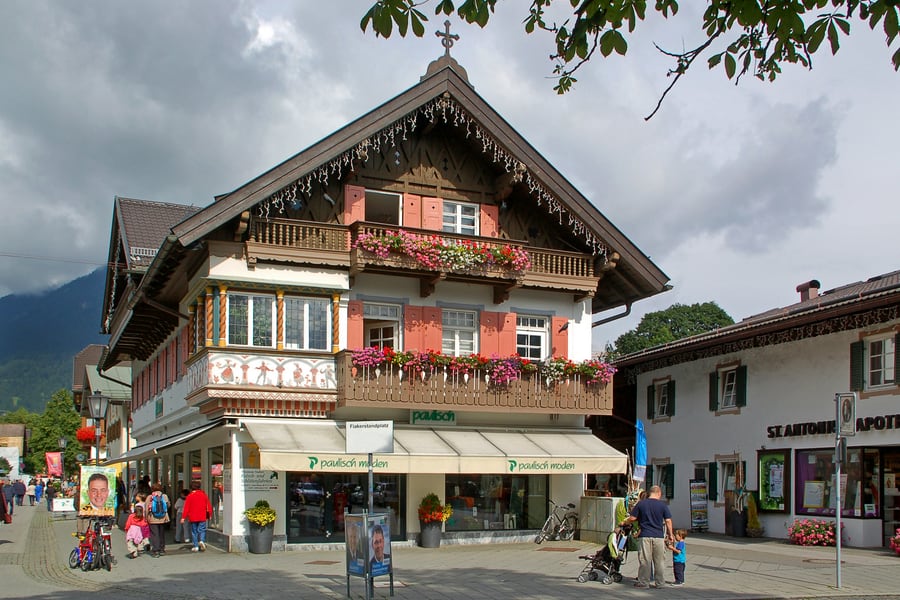
Two old market villages — Garmisch and Partenkirchen — pushed together into one resort for the 1936 Winter Olympics and still not entirely reconciled to it. The older streets carry painted Lüftlmalerei facades and deep carved eaves, and the town sits at the meeting of enough valleys and cable cars to fill a week without ever boarding the mountain railway.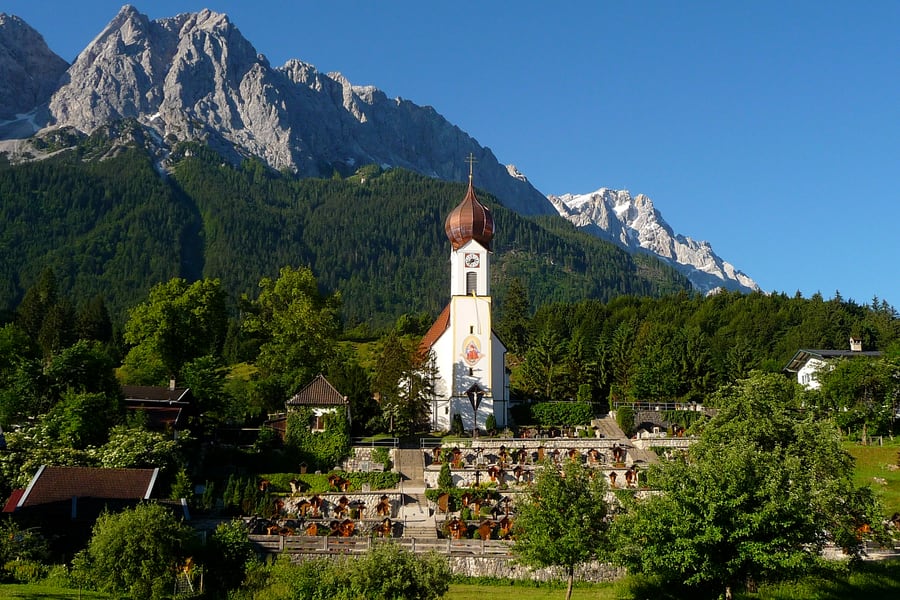 Octagon / Wikimedia Commons · CC BY 3.0 · cropped
Grainau
The village where the rack begins: onion-domed church, walled graveyard, Bavarian farmhouses — and behind all of it the north wall of the Wetterstein filling the sky. It is quieter than Garmisch, ten minutes further from the shops and considerably closer to the reason you came, with walking routes running straight up into the Höllental and round to the Eibsee. The mountain trains all call here, so nothing is harder to reach for staying.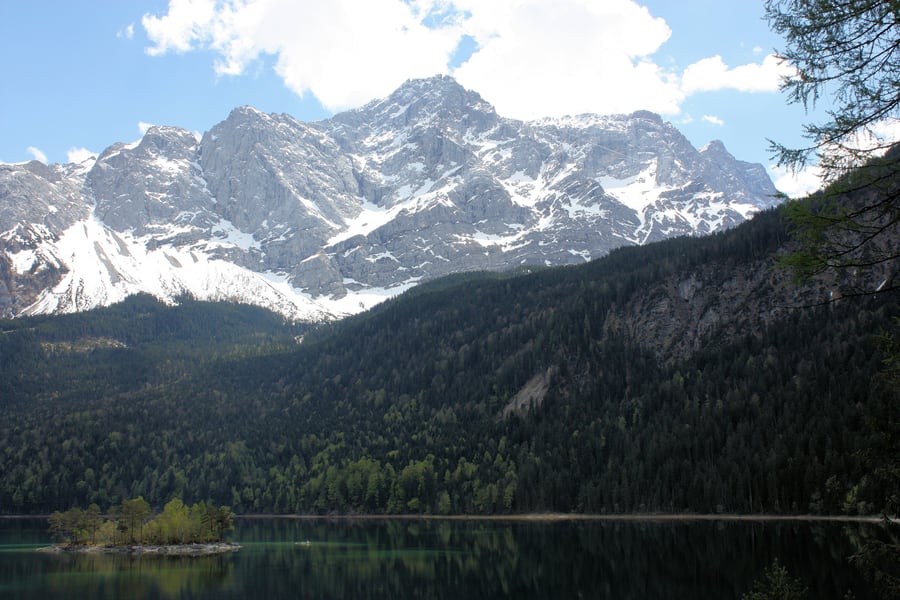 Dguendel / Wikimedia Commons · CC BY 4.0 · cropped
The Eibsee
A startlingly clear green lake directly beneath the Zugspitze's north face, ringed by a path that takes a couple of hours to walk and dotted with small wooded islands. Rowing boats in summer, and the Seilbahn Zugspitze lifting off the shore towards the summit. On a clouded day it is the best thing on the line.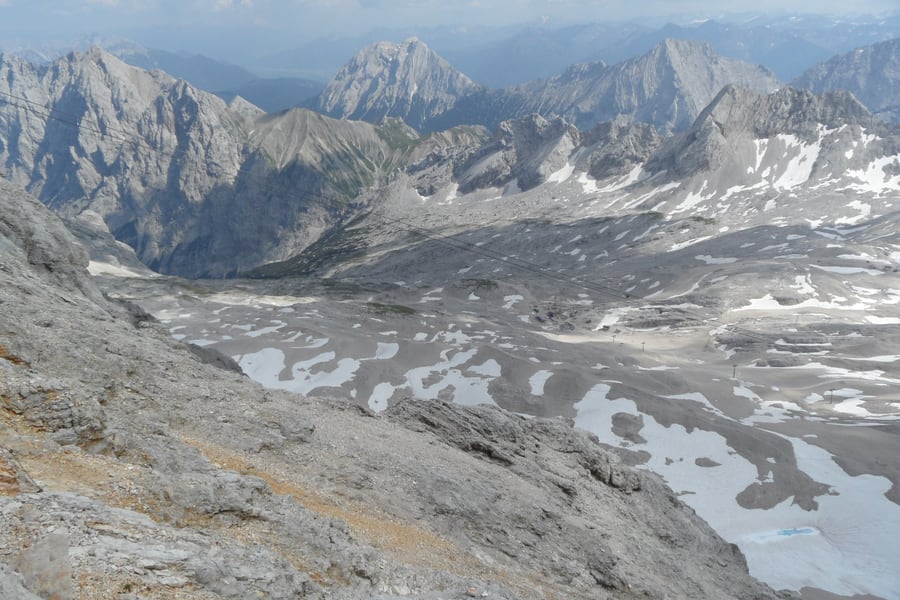 Pueblodelapablo / Wikimedia Commons · CC BY-SA 4.0 · cropped
The Zugspitzplatt
A wide stony cirque at 2,588 metres, hemmed by the summit ridge and holding what is left of the Schneeferner, one of the last glaciers in Germany. Snow lies in the hollows into August; ski lifts work the basin in winter. This is the railway's terminus — and, as the bare rock makes plain, a landscape in the middle of losing its ice.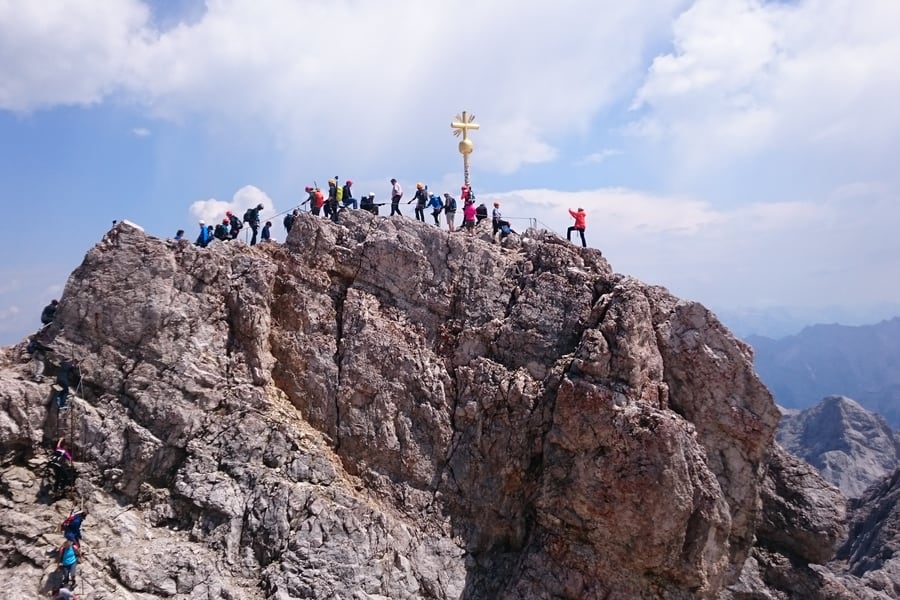 Treeem / Wikimedia Commons · CC BY-SA 4.0 · cropped
The summit
At 2,962 metres the highest point in Germany, reached from the Zugspitzplatt by the four-minute Gletscherbahn — not by train. The gilded summit cross stands on a rock scramble above the viewing terraces, the Austrian border runs along the ridge, and on a clear day the view takes in four countries. Expect company: this is the most visited summit in the country.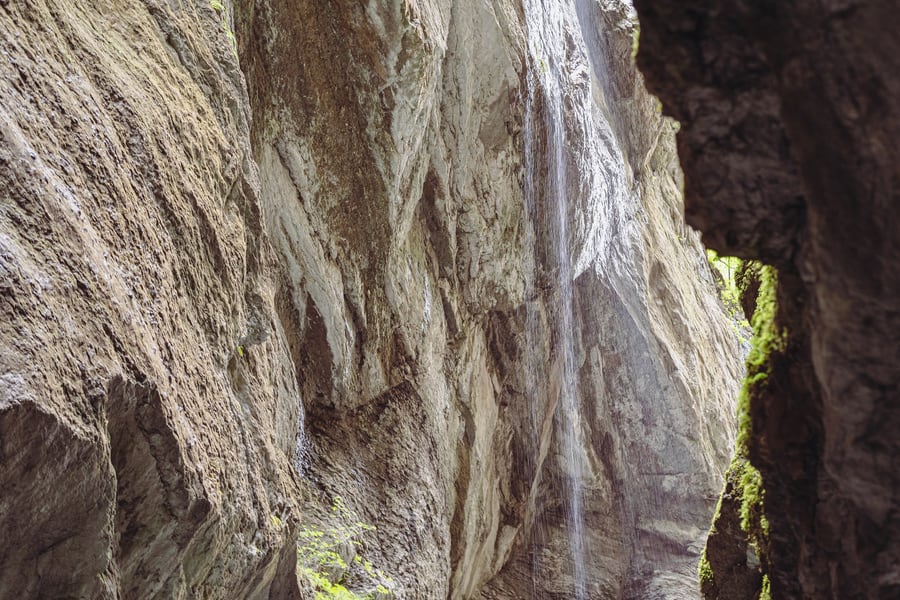 Flocci Nivis / Wikimedia Commons · CC BY 4.0 · cropped
The Partnachklamm
A gorge cut so deep and narrow by the Partnach that the path is hacked into the rock wall and tunnelled through it, with water falling past your shoulder for most of the way. It is a short walk from Garmisch-Partenkirchen, starting behind the Olympic ski stadium, and it stays open year-round — in hard winters the walls hang with ice and the whole gorge turns into something closer to a cave. Expect to get wet whatever the season.Where to Sleep
Nobody sleeps at the top of this line any more. The Schneefernerhaus, built as a hotel beside the railway's original 1930 terminus at 2,656 metres, closed its hotel and restaurant on 14 January 1992; since 1999 it has been the Umweltforschungsstation Schneefernerhaus, the highest research station in Germany. There is no hotel at the present Zugspitzplatt terminus either.
So you sleep in the valley, and the choice is essentially between town and lake.
Garmisch-Partenkirchen is the practical base. It has the range — everything from guesthouses to grand hotels — plus restaurants, the main-line station for onward travel, and the Partnachklamm and the Kreuzeck and Alpspitze cable cars on its doorstep. It is also the place to be if the weather turns and the mountain closes, because there is plenty else to do.
Grainau and the Eibsee are quieter and closer to the climb. Grainau is a proper Bavarian village with the massif standing over it, and the Eibsee is about as dramatic a place to wake up as Germany offers — though correspondingly limited in choice, and busy with day visitors from mid-morning.
One planning note worth repeating: the last train up leaves Garmisch at 14:15. If you arrive in the afternoon, the mountain is a tomorrow job — which is an argument for sleeping here rather than day-tripping from Munich.
Where to stay
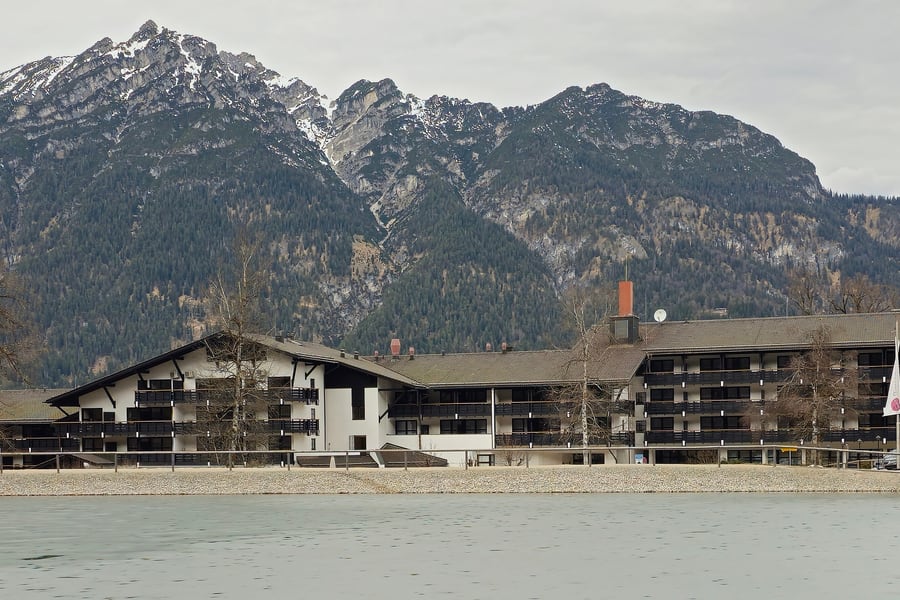
Riessersee Hotel
Above Garmisch-Partenkirchen, on its own lake
A long house on the shore of the Riessersee, a small lake in the hills just above the town with the Wetterstein range across the water. Far enough out to be quiet, close enough to walk back into Garmisch for dinner.
via riessersee-hotel.de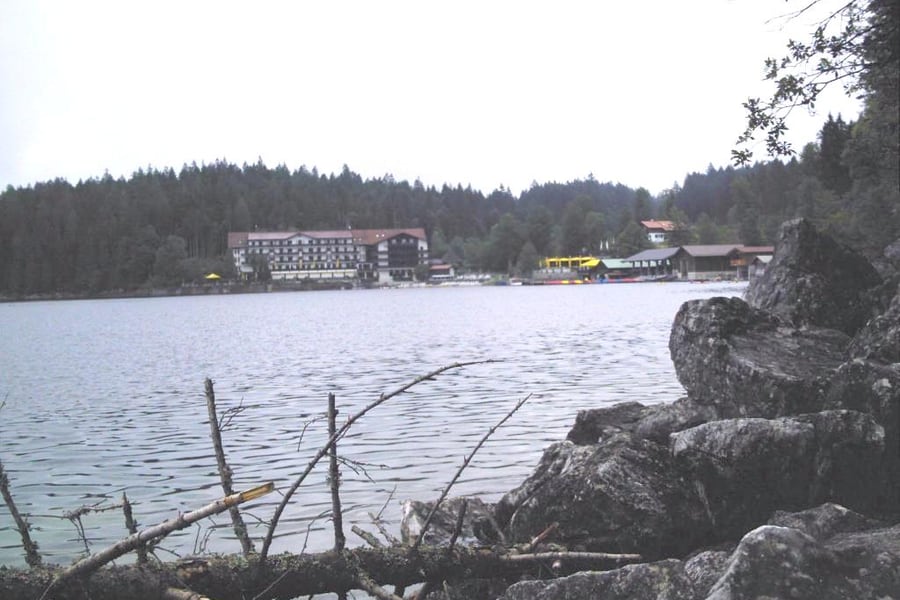
Eibsee Hotel
On the shore of the Eibsee, below the north face
The only hotel on the lake, set back among the trees on the quiet side of the water, with the Zugspitze standing directly above it and the cable car station a few minutes away. Day visitors leave in the evening and the lake goes silent.
via eibsee-hotel.deQuestions or corrections
Planning this trip and stuck on something, or spotted a time, fare or detail that has changed? Send us a message about Bayerische Zugspitzbahn. We read every one, and we update this page when something has changed.