The Wangerooge Island Railway
Fabian0981 / Wikimedia Commons · free use · cropped
- DistanceAbout 4 km by train, after the ferry from Harlesiel
- DurationAbout 90 minutes, ship and train together
- Best seasonMay to September for the beach · all year, with up to seven crossings a day in summer
Introduction
The Wangerooge island railway has no fixed timetable. Its trains leave when the ferry from Harlesiel is in, and the ferry can only cross the shallows of the Wadden Sea in a window of about six hours around high water; for the six hours after that there is too little water under the keel. High water comes about an hour later every day, so the departures move with it, and the operator prints the times for every date of the year. In the week of 9 November 2026 the first ferry from Harlesiel leaves at 09:15 on the Monday, at 11:15 on the Thursday, and on the Saturday there is only one, at 15:15.
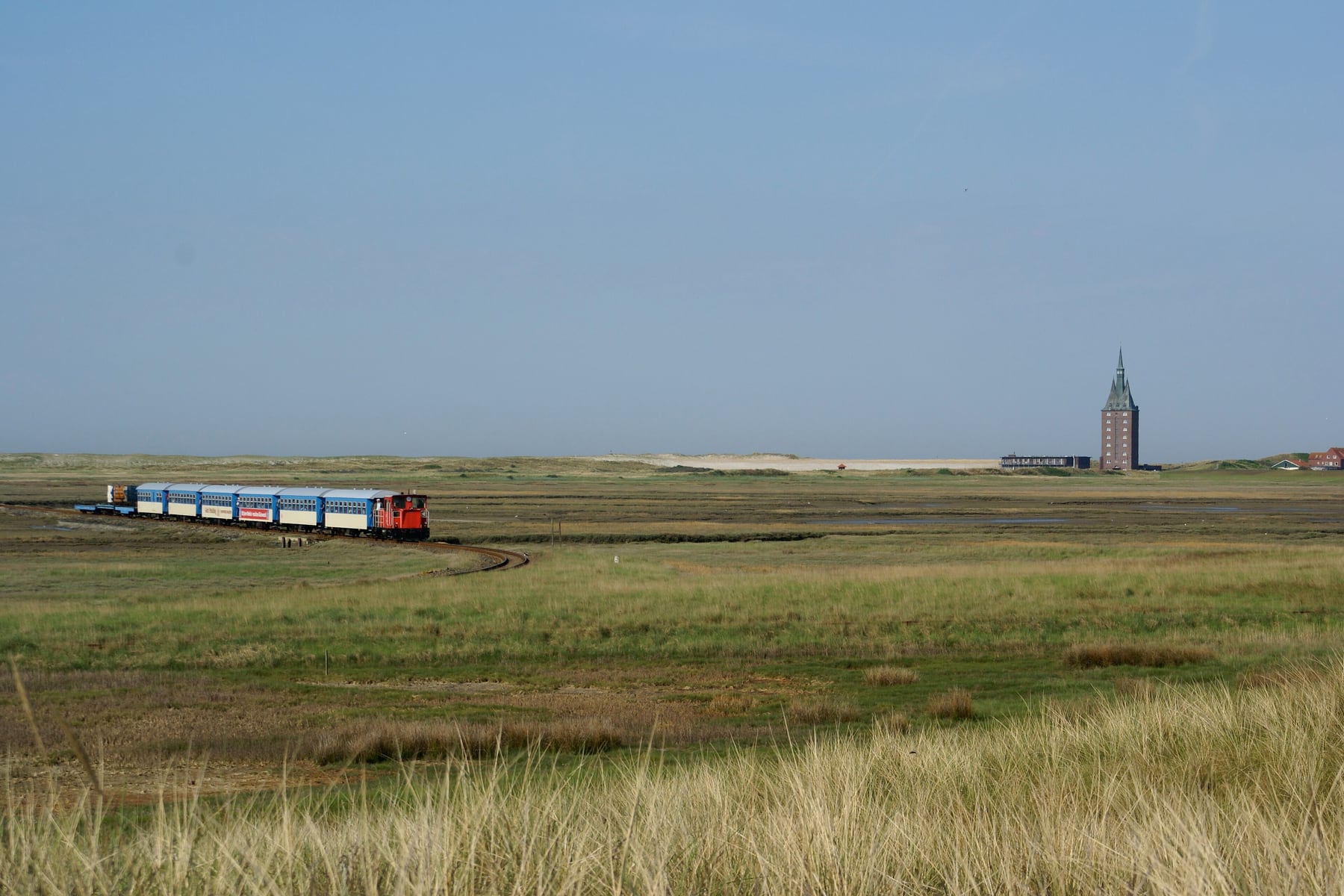
The journey has two halves. The ferry takes about an hour across the mudflats to the island's harbour on its south side, and there a metre-gauge train is waiting on the pier. It runs about four kilometres at 20 km/h on an embankment through the salt meadows of the national park, with the Westturm on the skyline, to a red-brick station of 1906 in the middle of the car-free village. Ship and train together take about 90 minutes. The line has run since 1897, and it is the only metre-gauge railway Deutsche Bahn operates.
One ticket covers the ferry and the train, and seats on both are unreserved. Large luggage is checked in at Harlesiel and travels in containers that are craned off the ship onto the train's flat wagons.
The Journey
The journey starts at the ferry quay at Harlesiel, on the East Frisian coast, where luggage is checked in and cars are left behind on the mainland. The ferries Wangerooge and Harlingerland were built for these waters, with a draught of only 1.20 metres and a crane on the foredeck for the luggage containers. They cross the Wadden Sea, a UNESCO World Heritage Site since 2009, in about an hour. Since June 2022 the smaller Watt Sprinter has added faster sailings of about twenty minutes; it draws less water, so it is less tied to the tide.
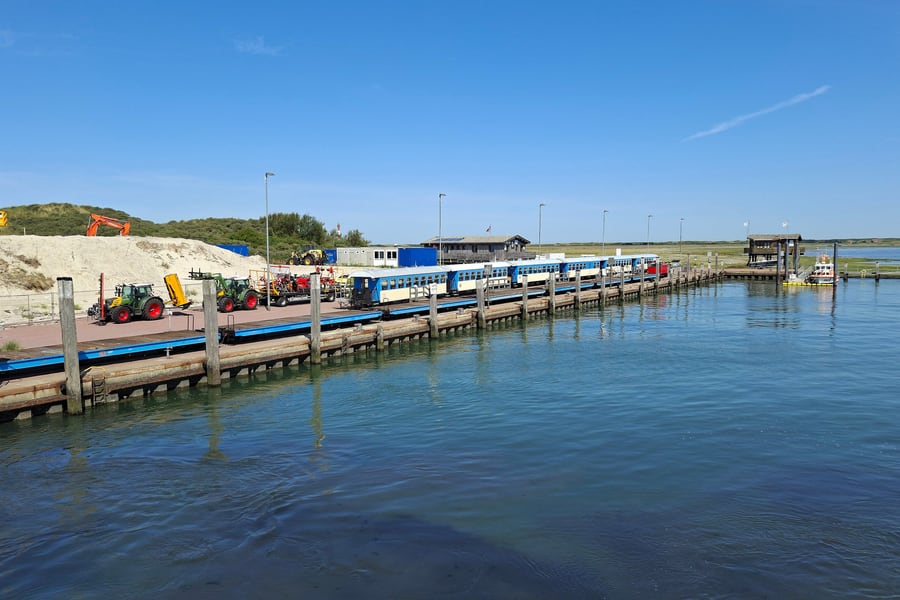
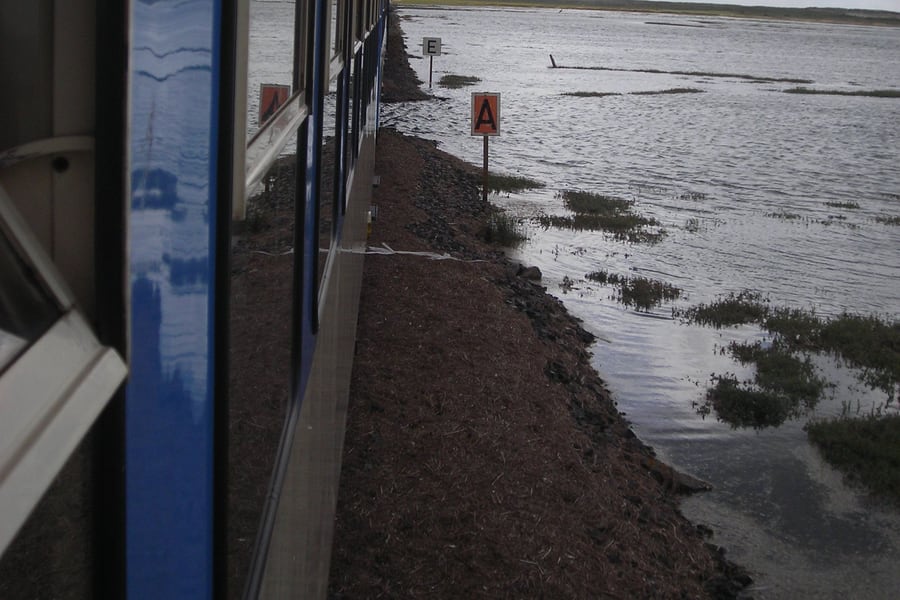
At the island's harbour the train waits on the pier, and trains pass each other right in front of the landing stage. Most trains are seven carriages with about 500 seats, plus flat wagons for the luggage; on busy days two trains meet each ship. The line then runs on a stone embankment through the salt meadows at the west lagoon, in the strictest protection zone of the national park, and the ride to the village takes about fifteen minutes. Halfway, at Saline, a branch of about two kilometres goes off to the west end of the island; trains run on it when they are needed, mostly for the school-camp hostels there.
The wind matters as much as the tide. An east wind blows the water out of the channel, leaving the ferries too little depth; a strong west wind pushes it up until the island's landing stage is under water, and then the train cannot run between the pier and the station. Storm surges can wash over the embankment, and only heavy ice or a severe storm surge cuts the island off for a while.
Built in three months
The Grand Duchy of Oldenburg ordered the railway in March 1897, after the island's improvement society had asked for a better way of landing visitors, and its state railways built a pier and a narrow-gauge line into the village in three months. It opened on 3 July 1897, worked by steam from the start. In 1904 a second pier was built at the east end, with a 5.4-kilometre line partly laid on a timber trestle across the mudflats, and the present village station followed in 1906. The navy added a branch to the west in 1901, a new west pier followed in 1912, and as the island was made a fortress, sidings reached its military sites. An air raid on 25 April 1945 destroyed the line between Saline and the village and the station's train shed; both were rebuilt.
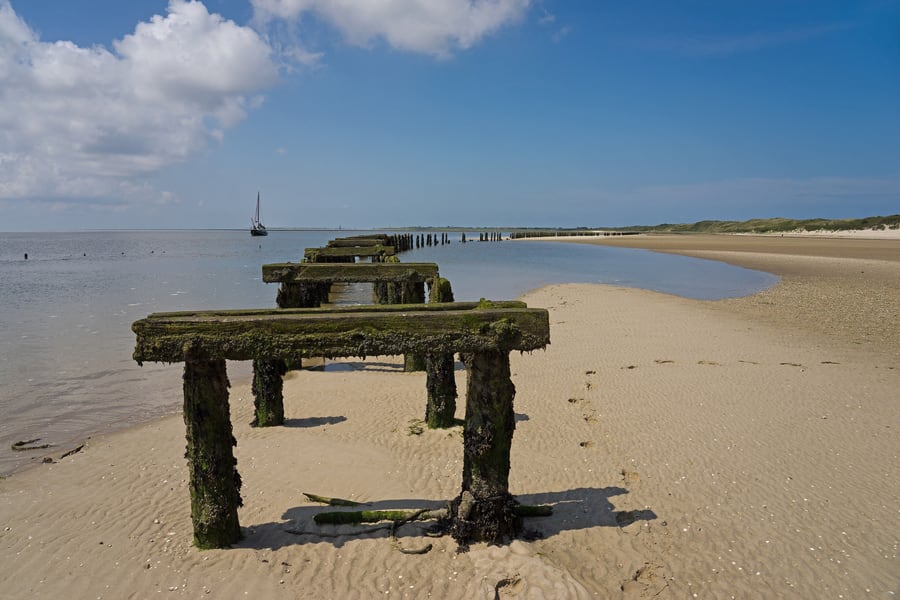
Diesel locomotives arrived from 1952, and steam ended in 1957. The east pier lost most of its traffic once Heligoland, until then occupied by the British, could again be visited from 1952, and it was taken down together with its railway in 1958. Its piles still stand on the beach.
The trains today
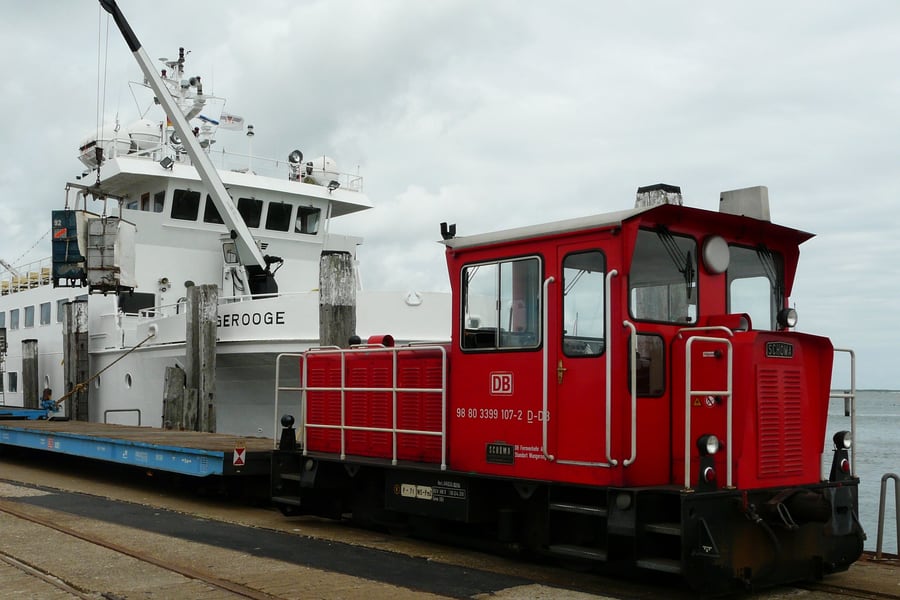
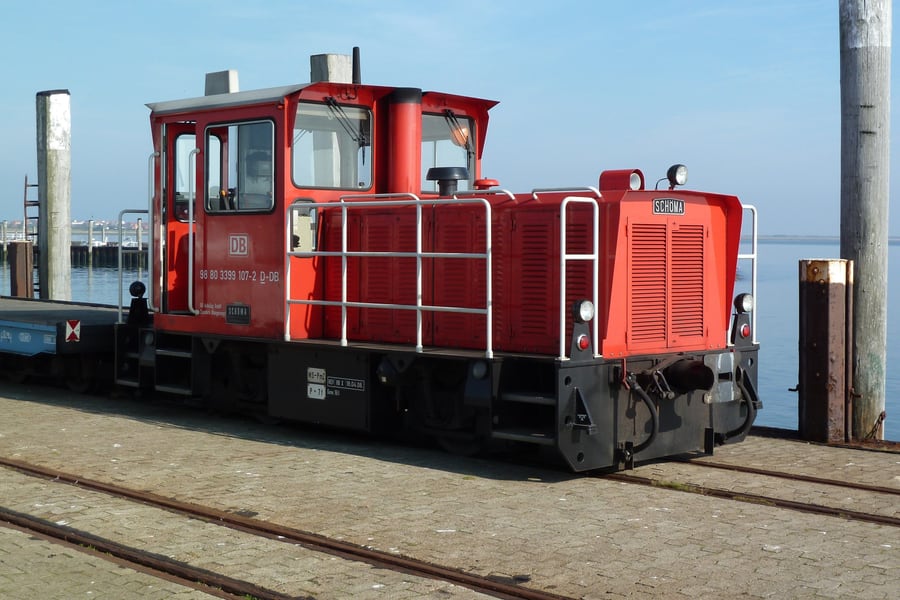
The island has four diesel locomotives of 180 to 280 hp, and two built by Schöma in 1999, numbered 399 107 and 399 108, haul most passenger trains. The fourteen four-axle carriages were built in 1992 and 1993 at the railway works in Wittenberge; most have 70 seats, and the multi-purpose cars have room for wheelchairs and pushchairs. Fifteen goods wagons carry luggage, post, heating oil, building materials and food, because almost everything the island needs comes this way. In 2022 the platforms at Wangerooge and at the west end were raised by 90 centimetres for step-free boarding.
The railway and the ferries are run by Schifffahrt und Inselbahn Wangerooge, part of DB Fernverkehr; together they carry some 200,000 passengers a year, and up to 3,000 on the busiest days.
Along the route
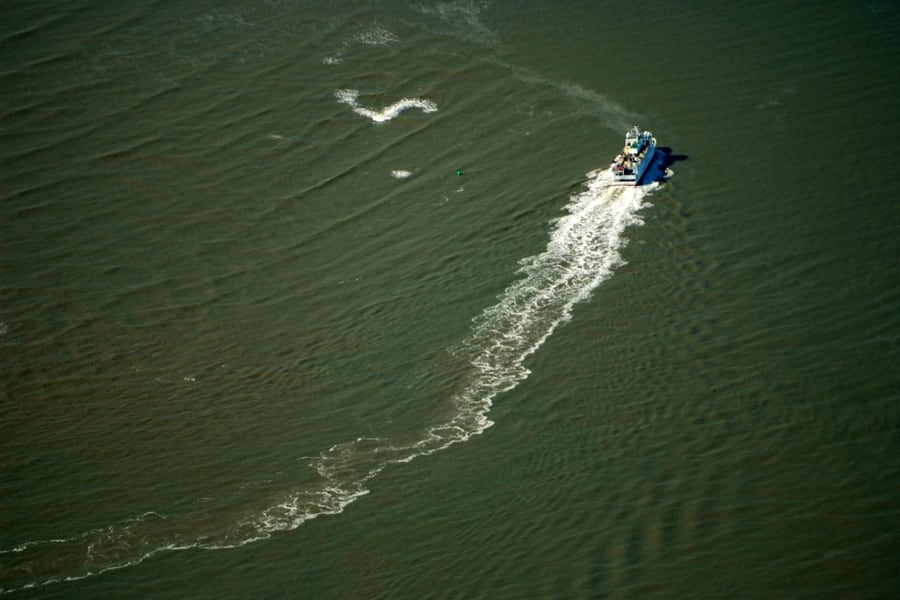 Foto: Martina Nolte / Wikimedia Commons · CC BY-SA 3.0 de · cropped
Across the Wadden Sea
The crossing from Harlesiel takes about an hour on the ferries Wangerooge of 1985 and Harlingerland of 1979, both built for the shallows with a draught of 1.20 metres. The small Watt Sprinter, added in 2022, does it in about twenty minutes.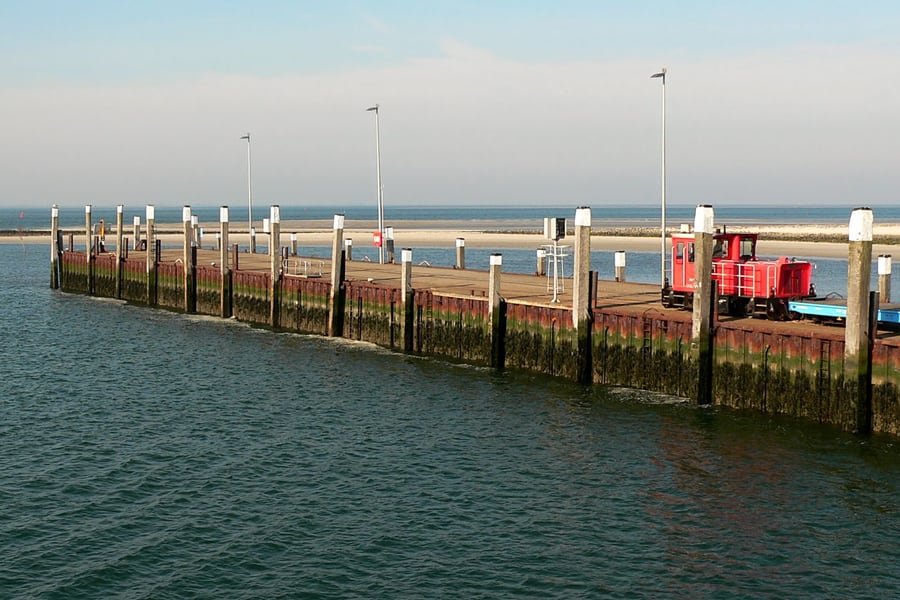 Axel Hindemith / Wikimedia Commons · CC BY-SA 3.0 · cropped
The harbour station
The train waits on the pier at the island's harbour, where trains pass each other right in front of the landing stage. At busy times two trains meet each ship, and the luggage containers come off the ferry onto flat wagons behind the carriages.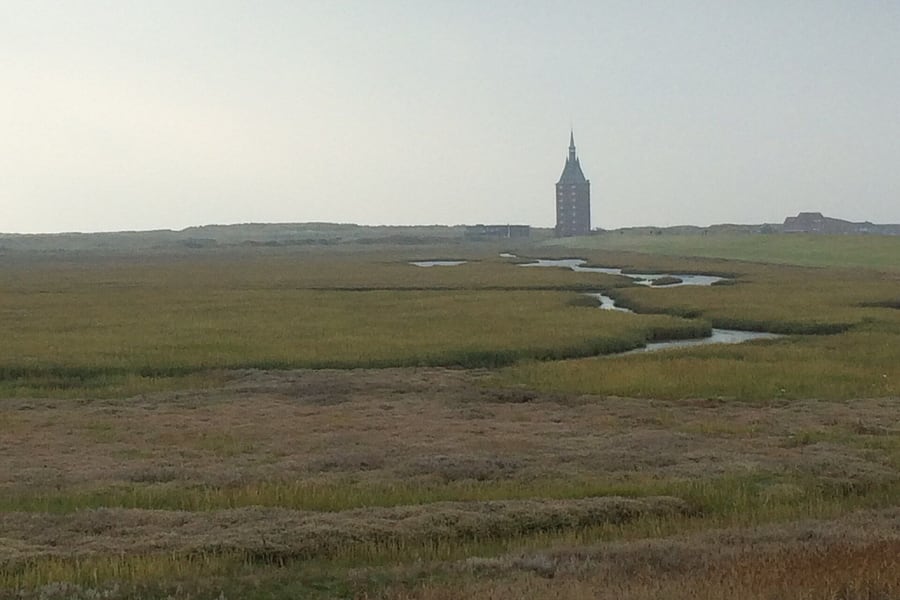 Wooge / Wikimedia Commons · CC BY-SA 4.0 · cropped
Through the salt meadows
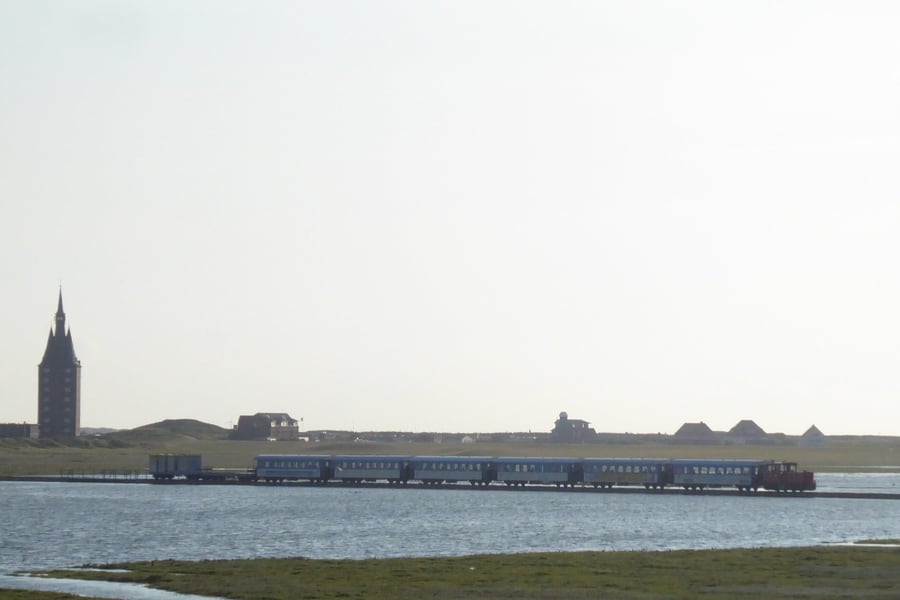
From the harbour the line runs on a stone embankment through the salt meadows of the west lagoon, in the strictest protection zone of the national park, at 20 km/h. A storm surge can wash over the embankment and stop the trains for a while.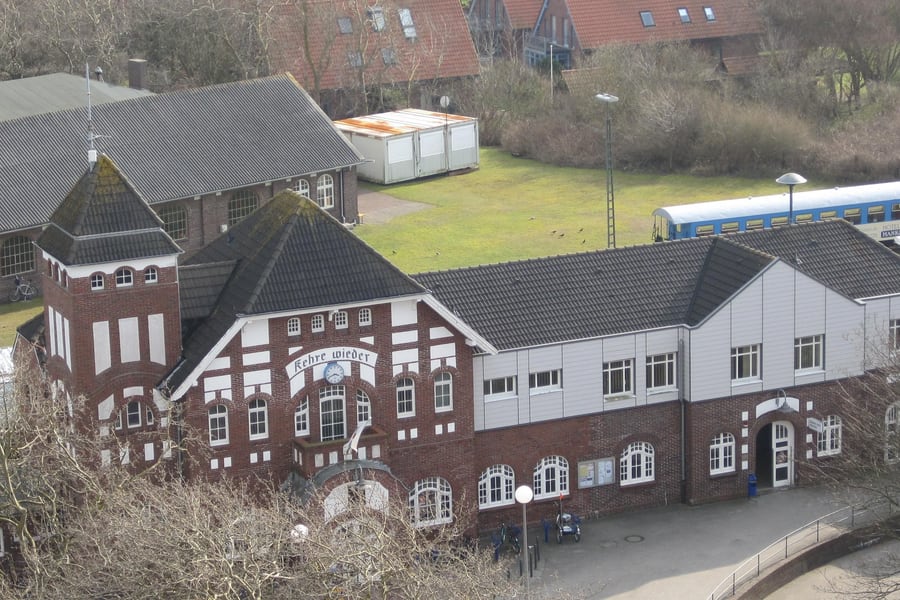 Stefan Flöper / Wikimedia Commons · CC BY-SA 4.0 · cropped
Wangerooge station
The red-brick station of 1906, with its clock tower and the words Kehre wieder, "come back again", on its front, stands in the middle of the village. It is a listed building, restored in 2003, and the ticket check for the way home is at its gates.A bit of history
Culture & experiences along the way
 Rhetos / Wikimedia Commons · CC0 · cropped
Out to the seal banks
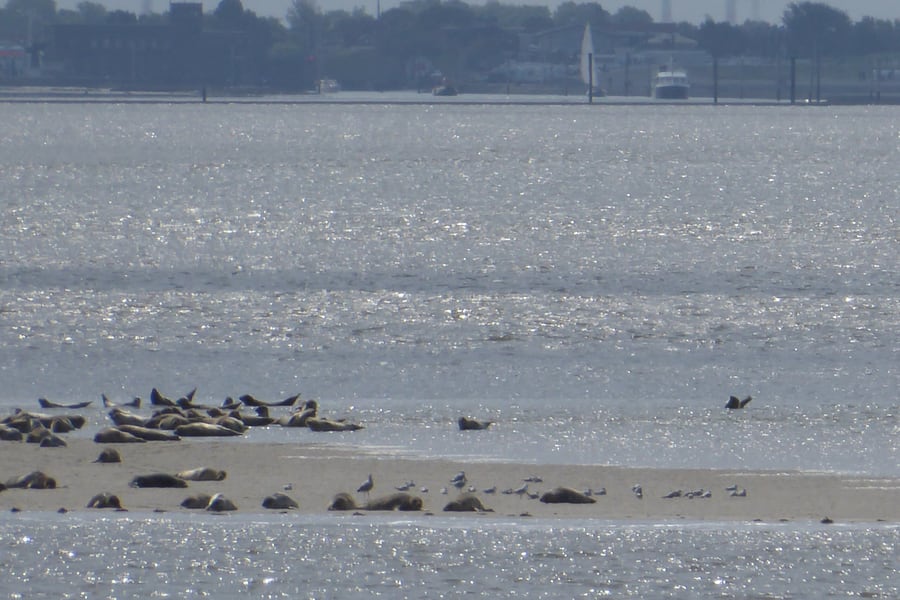
From Harlesiel the excursion ship Jens Albrecht III runs two-hour trips, called "Seehund in Sicht", to the sandbanks towards Spiekeroog, where common seals and sometimes grey seals haul out. Guides from the national park centre at Carolinensiel come along. Adults pay €21.50 in 2026.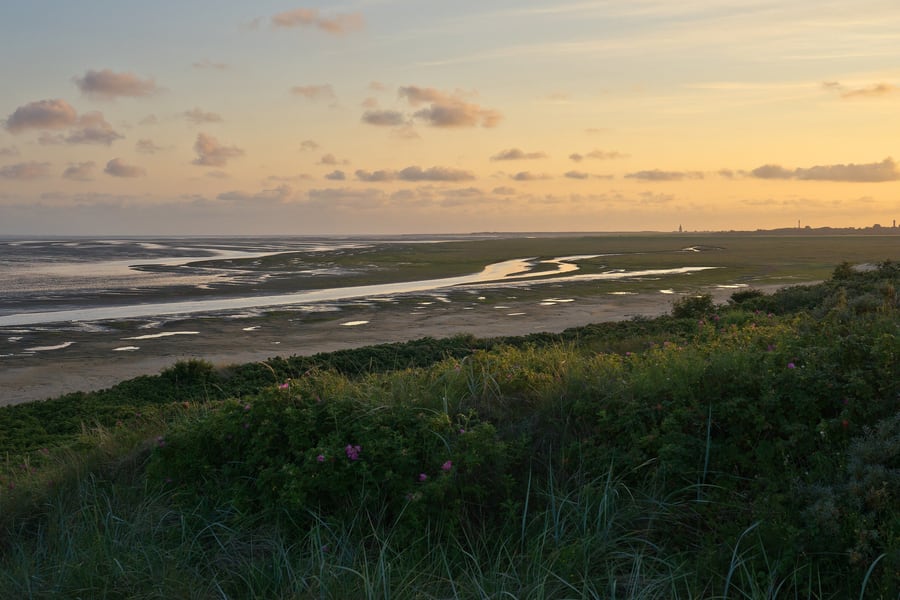 Jörg Braukmann / Wikimedia Commons · CC BY-SA 4.0 · cropped
A walk on the mudflats
At low tide the Wadden Sea behind the island becomes ground you can walk on. Certified guides from Wangerooge's Nationalpark-Haus lead mudflat walks all year: a short one of about an hour and a half, suitable for all ages, or a longer one of two to three hours. Never set out onto the mudflats alone.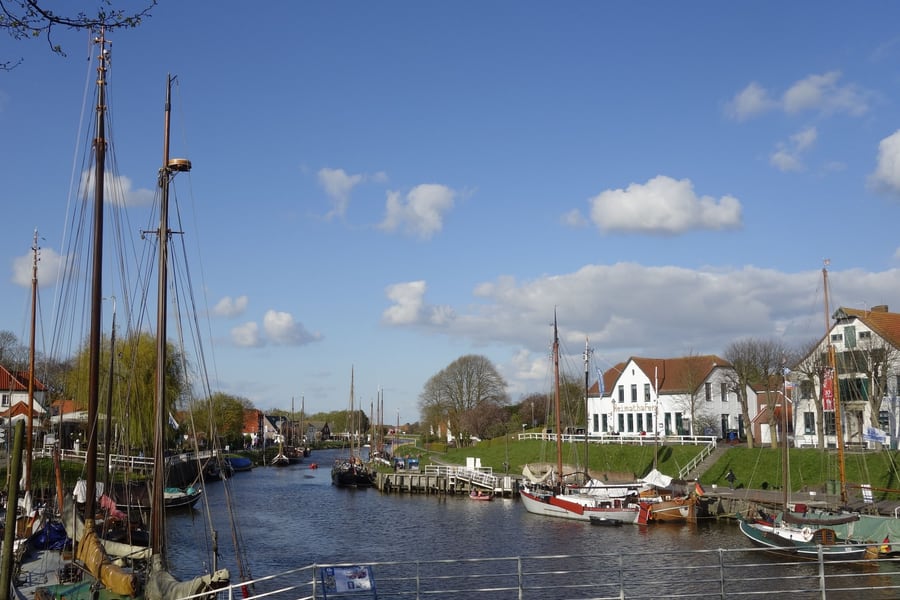 Der Schwager / Wikimedia Commons · CC BY-SA 4.0 · cropped
Carolinensiel's museum harbour
A short way inland from the ferry, the Deutsches Sielhafenmuseum fills four historic buildings around Carolinensiel's old harbour, where traditional sailing ships and the museum cutter Gebrüder are moored. It tells the story of the small sluice ports whose sailors travelled the whole world in the 19th century.Timetables
The ferry and the train run every day of the year, but never at the same times two days running. Departures follow high water, which comes about an hour later each day, so a winter day may have one or two sailings each way and a summer day up to four, with up to seven crossings a day in high season. The times below are the ferry's departure from Harlesiel and the train's departure from Wangerooge station; the train on the island is timed to the ship, and ship and train together take about 90 minutes.
Times are from the operator's timetable for 2026, read in October 2026. The wind can still move a sailing, so the operator asks passengers to check their times the day before at siw-wangerooge.de (opens in a new tab). Bookings for 2027 open on 1 November 2026, from January to July first and for the whole year by mid-November.
A week in November 2026
| Day | From Harlesiel (ship) | From Wangerooge station (train) |
|---|---|---|
| Mon 9 Nov | 09:15 · 12:15 | 10:00 · 13:00 |
| Tue 10 Nov | 09:15 · 12:15 | 10:00 · 13:00 |
| Wed 11 Nov | 10:15 · 13:15 | 11:00 · 14:00 |
| Thu 12 Nov | 11:15 · 15:30 | 12:00 |
| Fri 13 Nov | 11:30 · 16:00 | 09:30 · 14:00 |
| Sat 14 Nov | 15:15 | 10:30 · 16:00 |
| Sun 15 Nov | 12:15 · 15:15 | 13:00 · 16:00 |
A summer Saturday
On Saturday 1 August 2026 ships left Harlesiel at 12:00, 13:00, 15:00 and 16:30, and trains left Wangerooge station for the ferry at 10:30, 13:00, 14:00 and 16:00.
The fast boat
The Watt Sprinter sails at its own times, published month by month, and the island train meets it at the harbour. On days with no fast-boat departures shown in the booking system, it is not running.
Getting to Harlesiel
There is no railway to Harlesiel. Passengers coming by train change at Sande, on the line from Oldenburg, onto a connecting bus to the ferry, or at Norden onto the K1 coastal bus. Through tickets from any German station to Wangerooge, ferry and island train included, are sold by Deutsche Bahn.
Tickets
One ticket covers the ferry and the island train. Under the 2026 fares, Harlesiel to Wangerooge station costs €27 single and €46 return, with children aged 6 to 14 paying €17 and €28, and children under 6 travelling free. A day return, including the island's guest contribution, is €35. The Watt Sprinter costs €39 each way. Dogs pay the child fare, and BahnCard discounts do not apply. Seats cannot be reserved, but each ticket is booked for one sailing.
Large luggage must be checked in, at €5.70 a piece each way or €9.50 return, and a bicycle costs €30 return. Staying guests pay the island's guest contribution on Wangerooge; it is loaded onto the ticket, and both are checked at the station gates before the train back to the ferry.
Book your tickets
Return ticket
Harlesiel to Wangerooge station and back
Ferry and island railway together; children aged 6 to 14 pay €28, under-6s travel free.
Book Tickets (opens in a new tab, on siw-wangerooge.de)via siw-wangerooge.deDay return
There and back on the same day
Ship and train both ways on one day, with the island's guest contribution included.
Book Tickets (opens in a new tab, on siw-wangerooge.de)via siw-wangerooge.deWatt Sprinter
The fast boat, with the train connection
A crossing of about twenty minutes on the 54-seat fast boat, with one suitcase carried free.
Book Tickets (opens in a new tab, on siw-wangerooge.de)via siw-wangerooge.deRail Passes
Interrail and Eurail passes cover the train to the coast but not the crossing. Interrail's table of German operators includes regional trains (RB and RE) run by DB "and all other Regional carriers", so the trains to Sande and Norden are covered. Schifffahrt und Inselbahn Wangerooge is not on the pass's list of included companies, so the ferry and the island railway have to be paid for in full. The operator's own fares do not accept even the BahnCard 100.
For this journey a pass is not worth buying. The ferry and the island railway are the journey, and they are paid separately whatever ticket you hold.
Pass conditions checked against Interrail's railway-companies page, last updated 21 October 2026, and the Wangerooge fares valid from 14 December 2025. The pass issuer's page is the one that binds.
Places to Visit
Wangerooge is small enough to cross on foot, and the station is in the middle of it. The village and its lighthouse are around the station, the beach runs along the whole north shore, and the Westturm and its youth hostel stand at the quieter west end, where the railway's branch goes.
 Walter Rademacher / Wikipedia · CC BY-SA 3.0 · cropped
The village and the Old Lighthouse
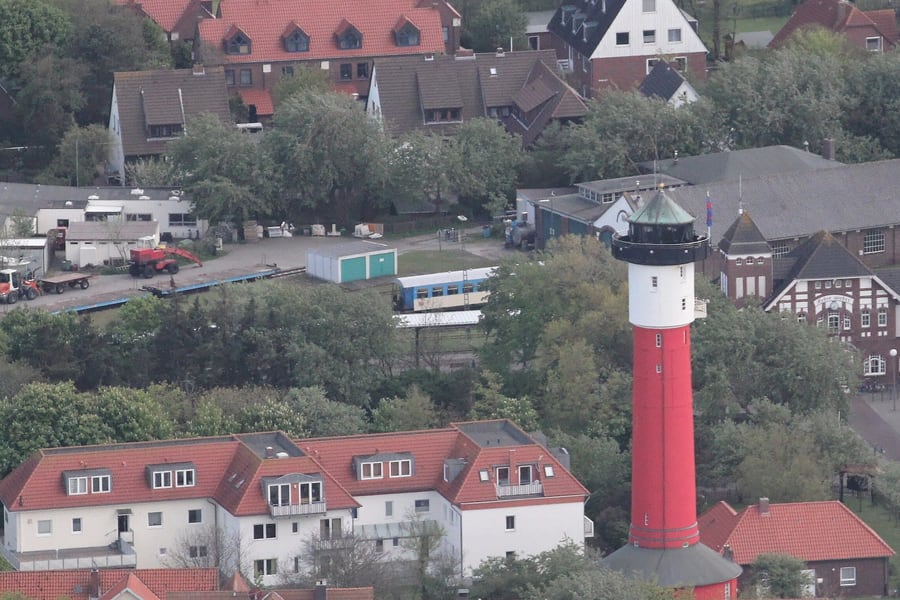
The island village, home to about 1,300 people, is almost car-free: apart from emergency and refuse vehicles only electric vehicles move about, and most people get around on one of about a thousand hire bicycles. The red-and-white Old Lighthouse stands close to the station; the island museum inside it is closed for restoration.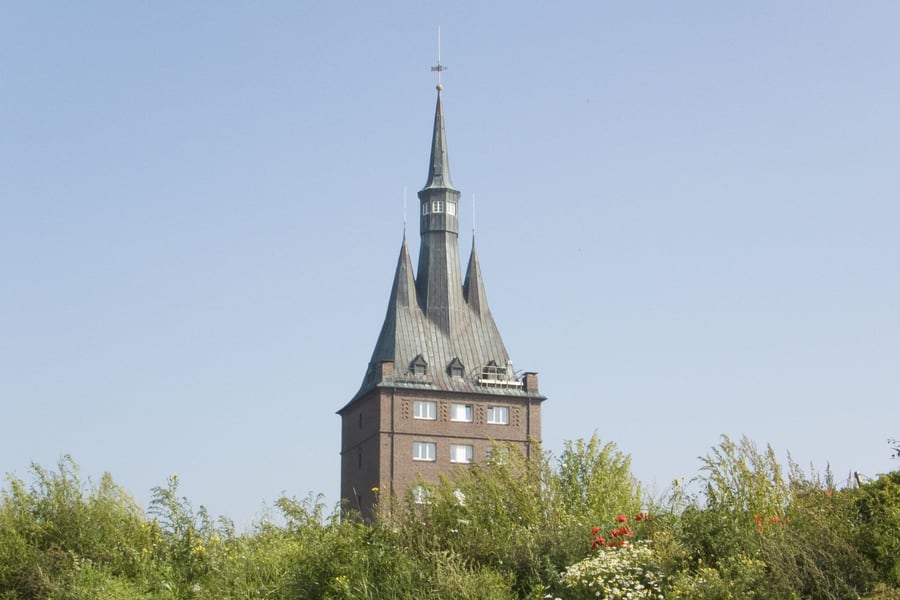 Gunnar Klack / Wikimedia Commons · CC BY-SA 4.0 · cropped
The Westturm and the west end
The tall brick Westturm on the west of the island rises over the salt meadows the train crosses, and it is now part of the island's youth hostel, with rooms on seven floors. It stands beside a bird sanctuary, with views over the island, the mudflats and the sea. The railway's branch to the west end is worked when groups need it.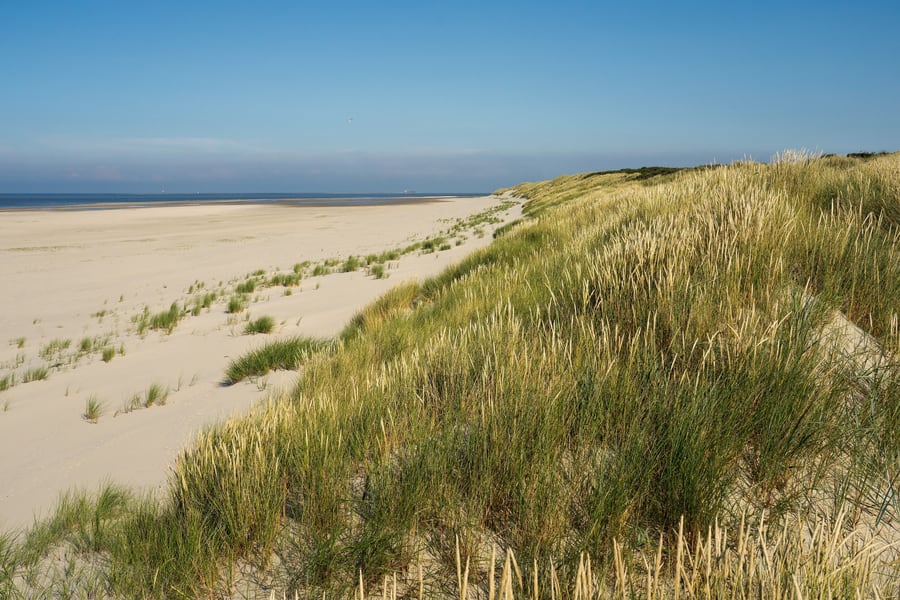 Jörg Braukmann / Wikimedia Commons · CC BY-SA 4.0 · cropped
The beach
A sand beach runs the whole length of the island's north side, widest at low tide, with the sea always in sight. The bathing beach lies just below the promenade, the surfing beach further west and a beach for dogs at the eastern end; beyond them, quiet stretches to the east and west are for walking.Where to Sleep
On some days the last train to the ferry leaves the island around midday, so staying overnight is the easy way to see it. Hotels in the village are a short walk from the station, and the youth hostel at the west end is a walk of about 45 minutes from the village.
The places below keep their own websites and take direct bookings.
Where to stay
Hotel Hanken
In the village, a minute from the beach
Run by the Hanken family since 1904, open all year, near the main bathing beach and the seawater pool.
Check Availability (opens in a new tab, on hotel-hanken.de)via hotel-hanken.deStrandhotel Gerken
On the beach promenade
Directly on the promenade, with rooms looking out over the North Sea or the mudflats, a restaurant and a sauna.
Check Availability (opens in a new tab, on strandhotel-gerken.de)via strandhotel-gerken.de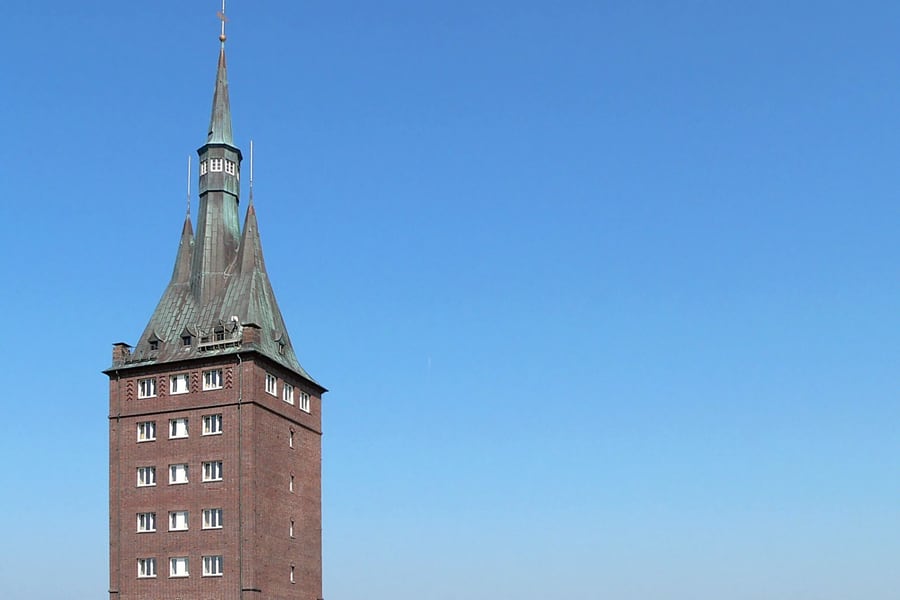 Axel Hindemith / Wikimedia Commons · CC BY-SA 3.0 · cropped
Wangerooge Youth Hostel
In the Westturm and its new wing
Rooms in the seven-storey Westturm or the building beside it, at the west end, with a bistro and bicycle hire.
Check Availability (opens in a new tab, on jugendherberge.de)via jugendherberge.deQuestions or corrections
Planning this trip and stuck on something, or spotted a time, fare or detail that has changed? Send us a message about The Wangerooge Island Railway. We read every one, and we update this page when something has changed.