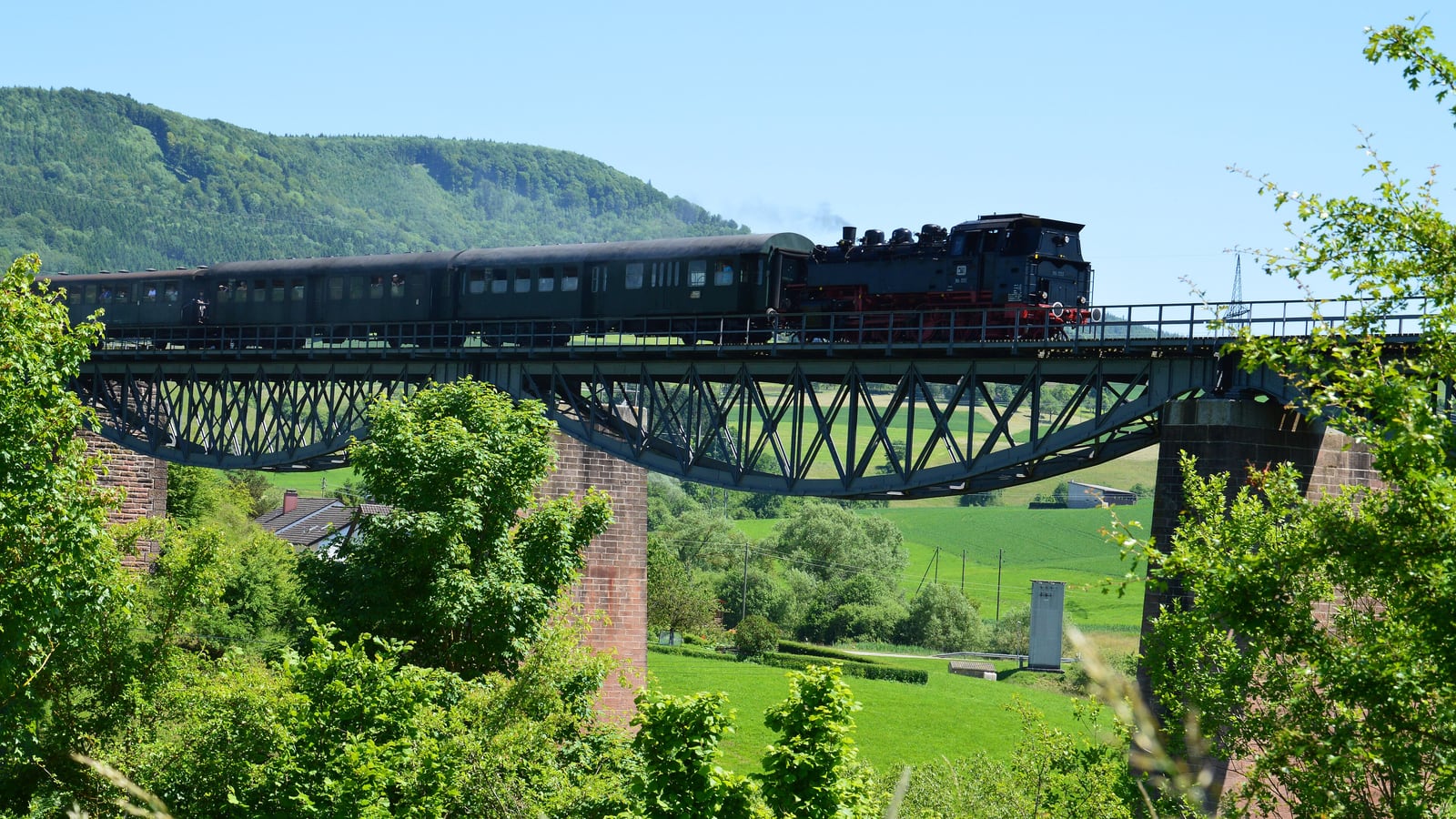
The Sauschwänzlebahn through the Wutach Valley
Schermuuser / Wikimedia Commons · CC BY-SA 3.0
- Distance25.6 km (Blumberg-Zollhaus–Weizen)
- Duration57–58 minutes down, 63 minutes back up
- Best seasonLate April to late October — the tunnels are a protected bat roost from November
Introduction
In the far south-east of the Black Forest, a railway climbs out of the Wutach valley by turning a complete circle inside a hill. It crosses five viaducts, threads six tunnels, doubles back on itself twice in the open air, and takes twenty-five kilometres to cover a distance that is nine and a half kilometres in a straight line. Nothing about it is proportionate to the villages it serves, and nothing about it was ever meant to be.
The Sauschwänzlebahn was built as a strategische Bahn — a strategic railway. When the German general staff looked at the south-west in the 1880s, it saw a problem. The obvious route from the fortress at Ulm to a possible French front in Alsace ran along the Rhine, and the Rhine line crossed Swiss territory twice, at Schaffhausen and again at Basel. A treaty with Switzerland expressly excluded German military traffic from it. So a chain of new lines was drawn to go around the Swiss border altogether, and the unfinished railway up the Wutach valley was the missing link in the middle. Construction of the hard section restarted in 1887, and on 20 May 1890 the line opened throughout.
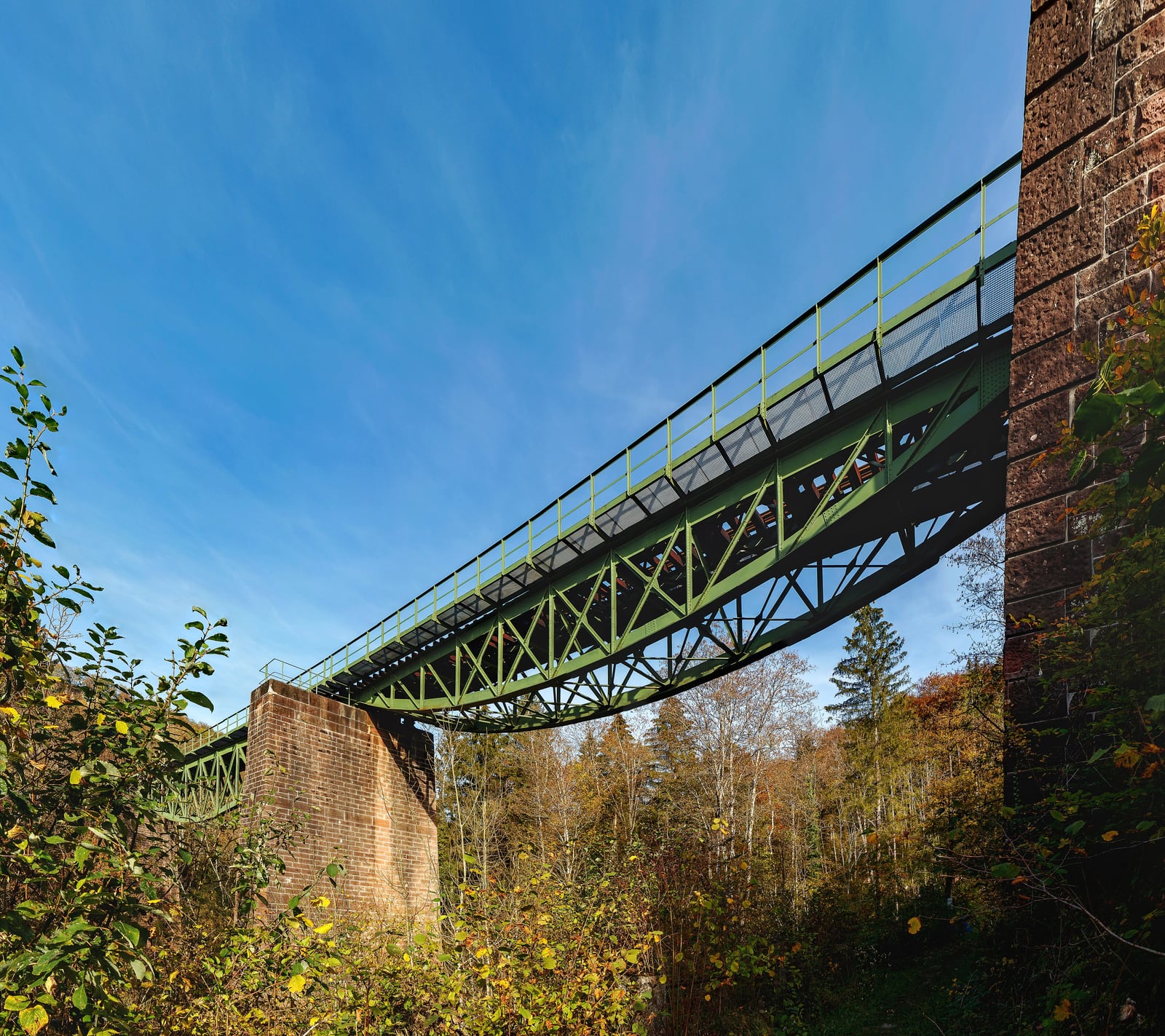
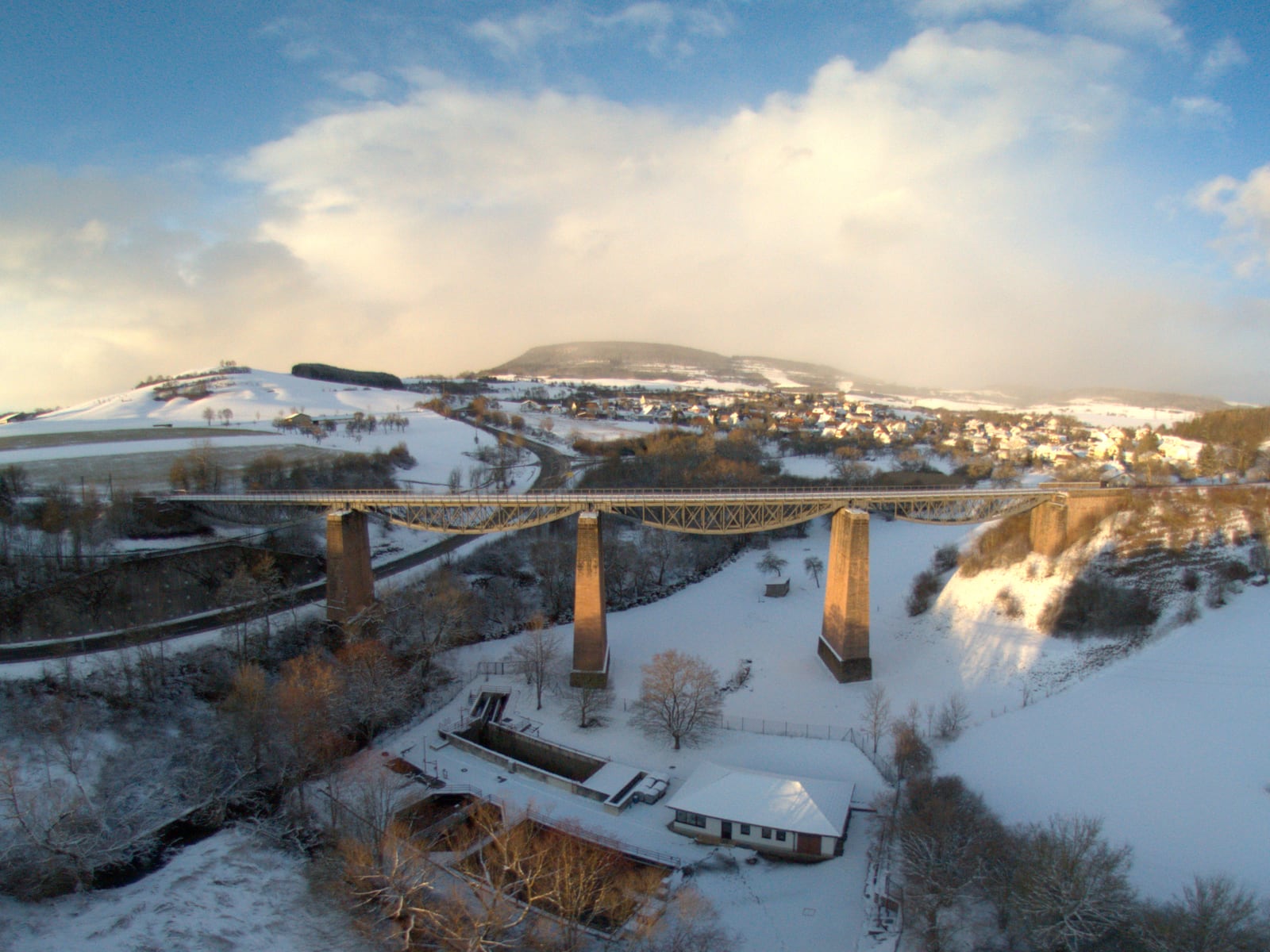
Everything expensive about it follows from that decision. A strategic railway was not permitted to climb more than one in ninety-eight, so the surveyors could not simply attack the hillside — they had to buy height with distance, which is where the loops and the spiral come from. Stations were placed roughly every eight kilometres, with passing loops longer than any civilian traffic would need, so that military trains could cross each other. Bridge piers, abutments and tunnel bores were all built wide enough for a second track, which was never laid. And the strength of the viaducts was not calculated against locomotives at all: the engineers sized them against the heaviest gun Krupp was then building, a piece weighing 140 tonnes.
The war it was built for went somewhere else
It never carried that gun, or anything like it. Military trains did use the line in both world wars, but the army was never actually dependent on it, and the railway's own history page adds a detail that lands harder than any of the engineering: in the Second World War the Allies found it zu unscheinbar — too inconspicuous — to be worth bombing properly. A line laid out at enormous cost to be strategically decisive turned out to be beneath notice.
What happened afterwards is stranger still. Traffic was always thin — the timetables never showed more than five passenger trains and one goods train a day — and the artificial length that had been forced on the route made every ticket and every tonne of freight dearer than it should have been. In May 1955 the Bundesbahn gave up running through the middle section altogether and put the passengers on buses. Then, between 1962 and 1965, NATO paid for the whole line to be overhauled: tunnels resealed against water, signalling renewed, millions of marks spent. The defence ministry went on paying an annual subsidy to keep it maintained until 1974. After all of that, no scheduled train ever ran over the middle section again. It closed formally on 1 January 1976.
A local society took it on the following year, and the first museum train ran on 21 May 1977. It was a success from the start, which is the part nobody planned: the over-engineering that made the line a strategic embarrassment — the loops, the spiral, the viaducts built for artillery — is exactly what makes it worth an hour of anybody's afternoon now. In 2014 the German chamber of engineers named it a historic landmark of engineering. The people who bored a circle through the Stockhalde for the sake of a war would probably not have minded.
There is a final turn to the story, and it fits. The tunnels that were driven wide enough for two tracks of troop trains have become the best bat roost in the region: a count on 27 January 2015 found 357 barbastelles wintering in them, the largest known winter quarters for that species in Baden-Württemberg. After a decade of argument and two court rulings, the railway and the conservation authorities settled on protection periods, and the line now stops running at the beginning of November. A railway built for an army it never carried spends its winters housing something else entirely.
The Journey
Trains start from Blumberg-Zollhaus, the upper terminus, which sits at 702 metres on the watershed between the Rhine and the Danube — rain falling on one side of the station yard ends up in the North Sea and on the other in the Black Sea. The line runs downhill from here to Weizen at 472 metres, and the whole of the engineering is about managing those 230 metres gently enough for a military timetable.
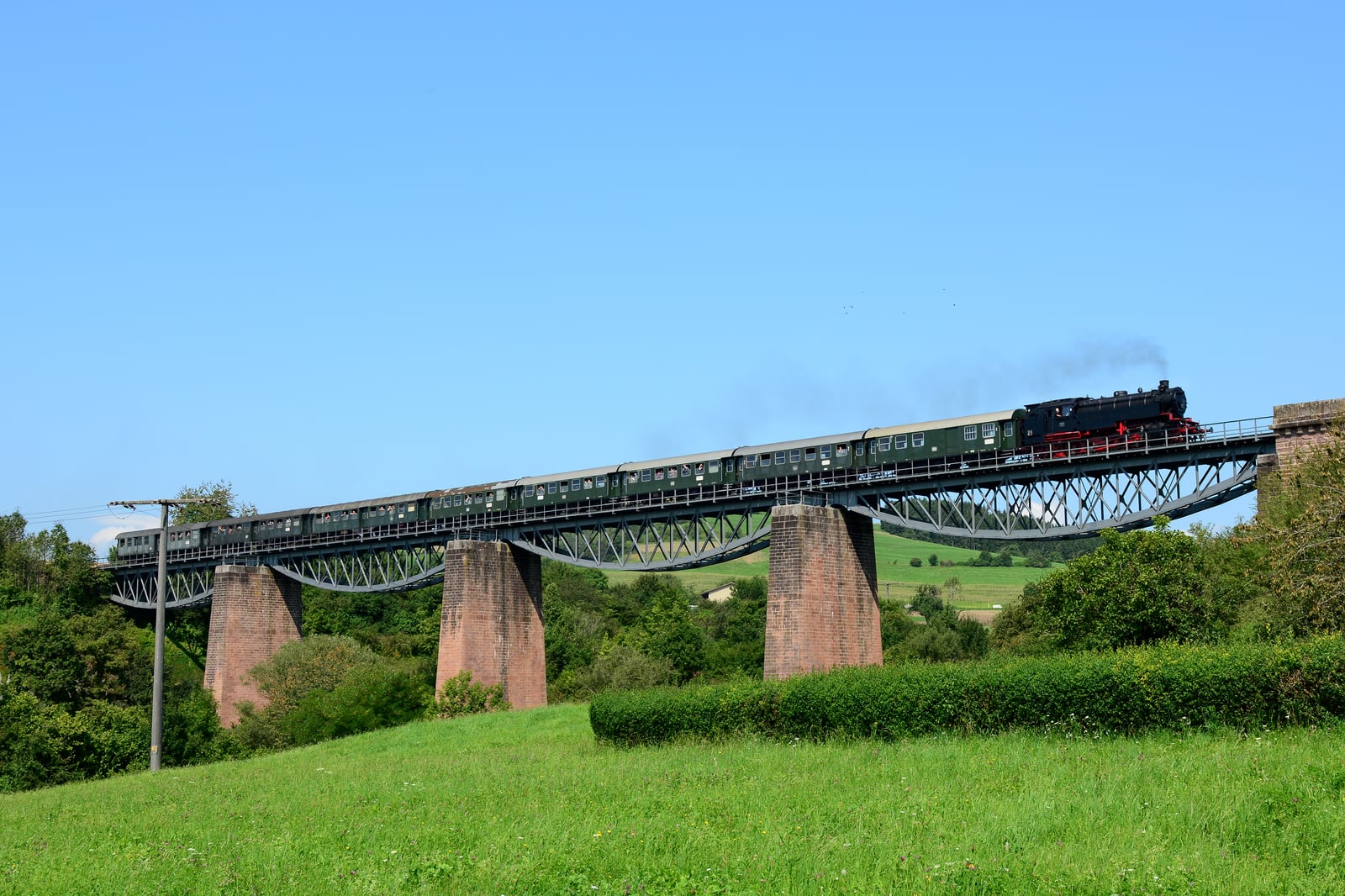
Leaving the station the train drops into the Buchberg tunnel, 805 metres bored under the divide itself — the only one of the six that is a true through-the-mountain tunnel rather than a device for gaining or losing height. Out the other side the line swings round the head of a side valley and onto the Biesenbach viaduct, 252 metres of fish-belly girders on a curve of 360-metre radius, and then the Epfenhofen viaduct: 264 metres long, 34 metres high, eight spans on seven iron piers, striding straight over the roofs of the village it is named after. The village stop is just beyond it.
The loops, and then the circle
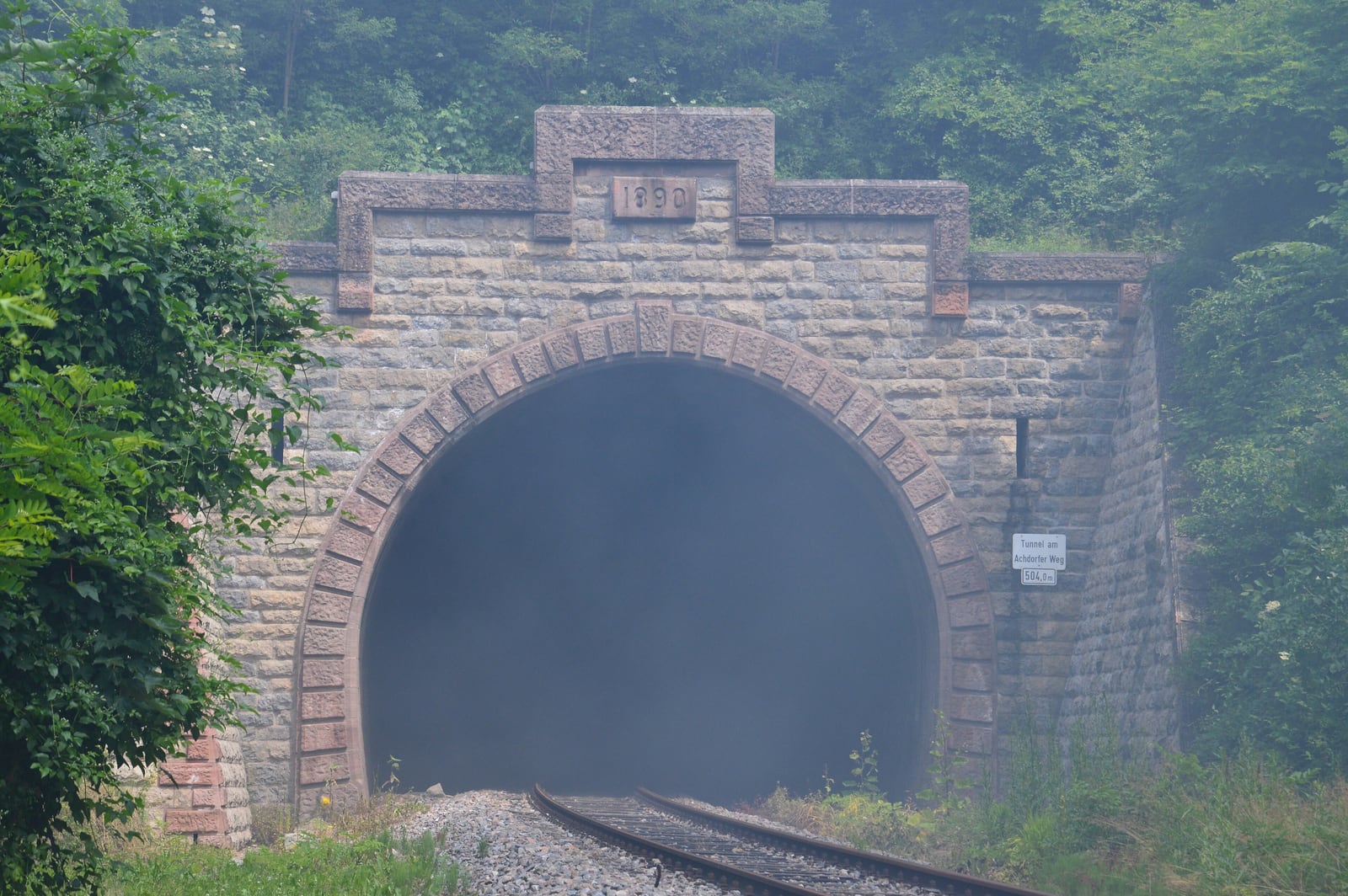
Below Epfenhofen the railway starts doing the thing it is famous for. It runs out into the Komm valley and comes back, crosses the Fützen valley on four spans of thirty-seven and a half metres — 153 metres of deck, twenty-eight metres of air — then loops out and back again to lose more height without steepening. The halt at Wutachblick, which the museum railway added and the working railway never had, sits at the mouth of the 540-metre tunnel at the Achdorfer Weg, with the pale cliffs of the lower Wutach gorge opposite.
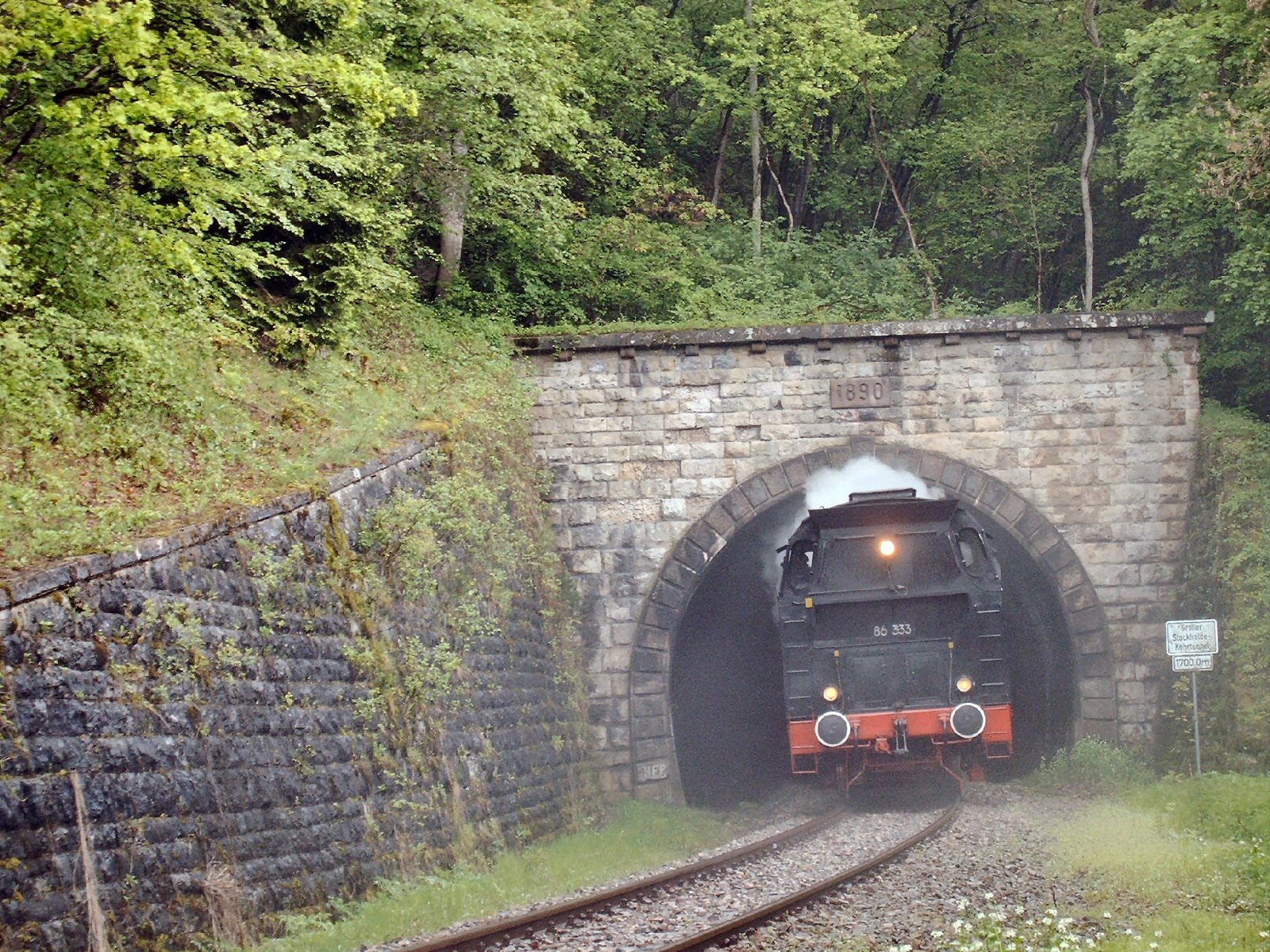
Past Fützen and its long military passing loop the line reaches the Stockhalde, and here it simply gives up on going anywhere. The Große Stockhalde tunnel turns the track through a full 360 degrees underground, in a circle roughly seven hundred metres across, and delivers it back into daylight 1,700 metres later and fifteen and a half metres higher than it went in. The railway's own literature calls it the only tunnel of its type in Germany. It is also the reason for the name: a line that coils like that was said to look like a pig's tail, a Sauschwänzle, and the nickname stuck to the whole railway.
Then comes the second trick. Between Grimmelshofen and Lausheim-Blumegg the route needs to change valleys — out of the Mühlbach and into the Wutach — and does it inside the 1,205-metre Kehrtunnel at Im Weiler, swinging through 180 degrees in the dark before emerging to cross the Wutach itself on a 107-metre bridge of three parabolic trusses. That crossing is the only place on the entire line where the railway meets the river it is named after. From Lausheim-Blumegg the last few kilometres are ordinary, down the valley floor to Weizen.
What you are actually looking at
The through run takes 58 minutes downhill and 63 back up, and the extra five minutes are audible: climbing, the engine works every curve it coasted round on the way down. Much of the interest is architectural rather than scenic. The piers are visibly too wide for what stands on them, because they were built for a second track; inside the tunnels the single line was originally laid off-centre for the same reason, and only moved to the middle in the 1960s, during the NATO overhaul, to make room for a larger loading gauge.
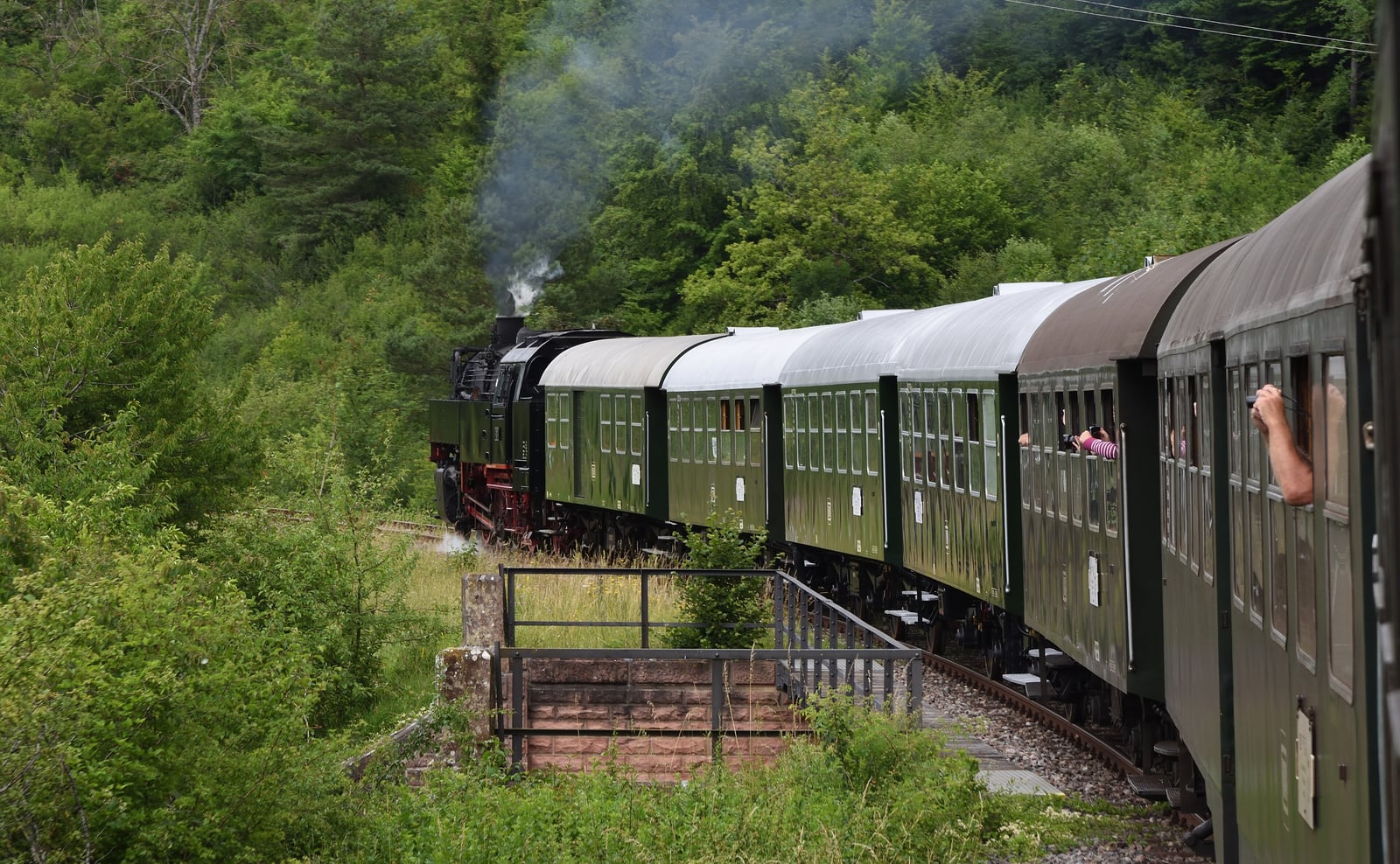
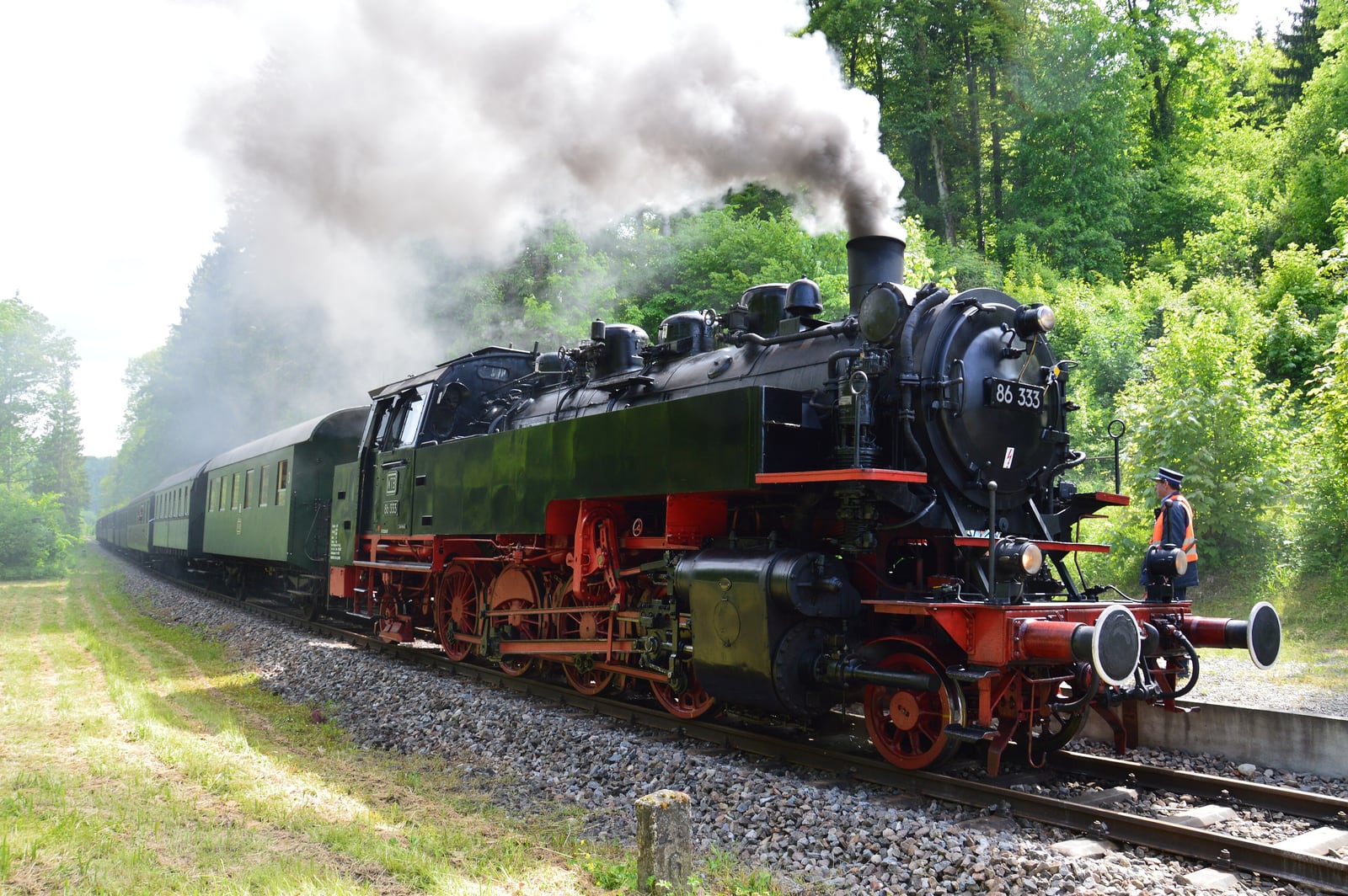
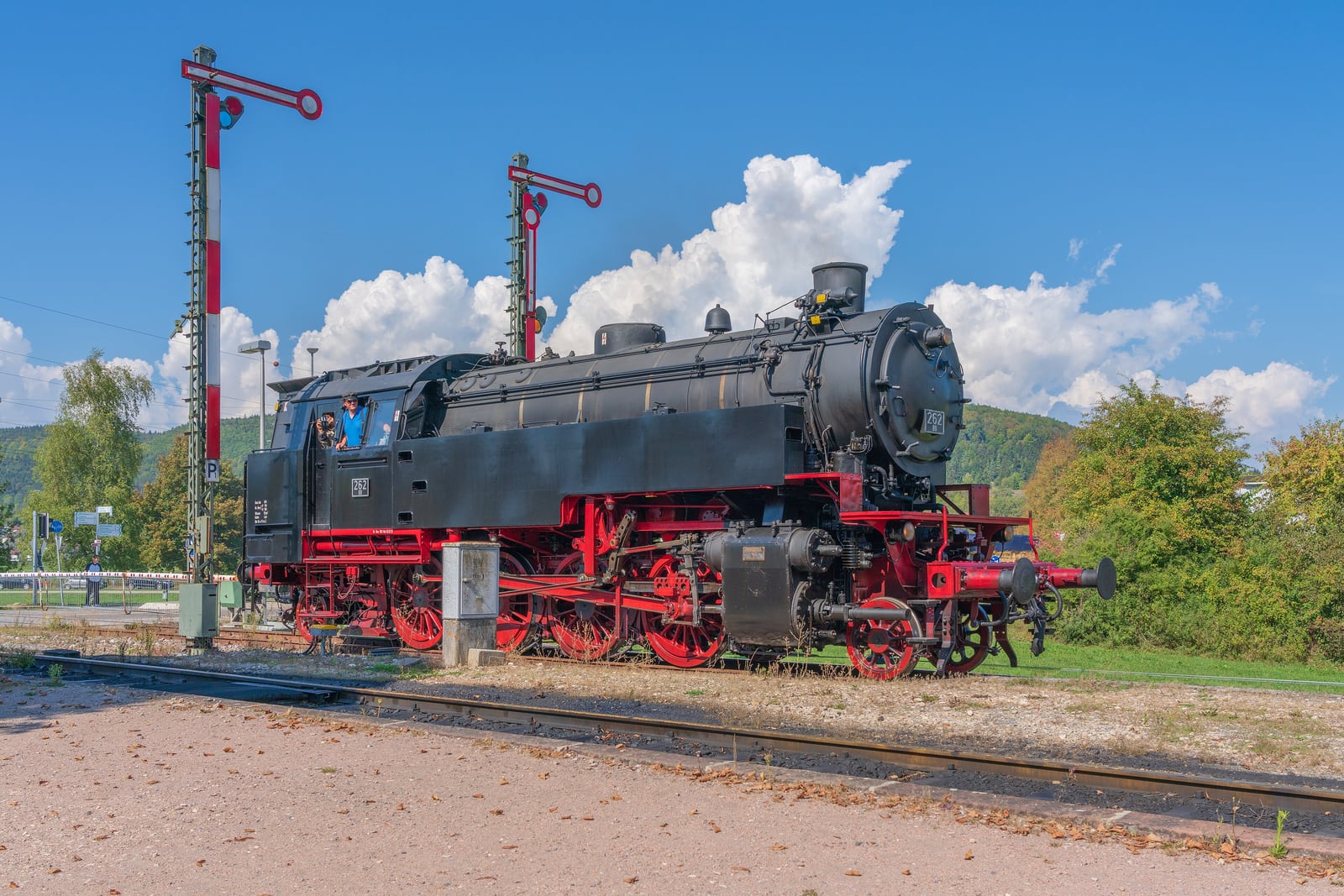
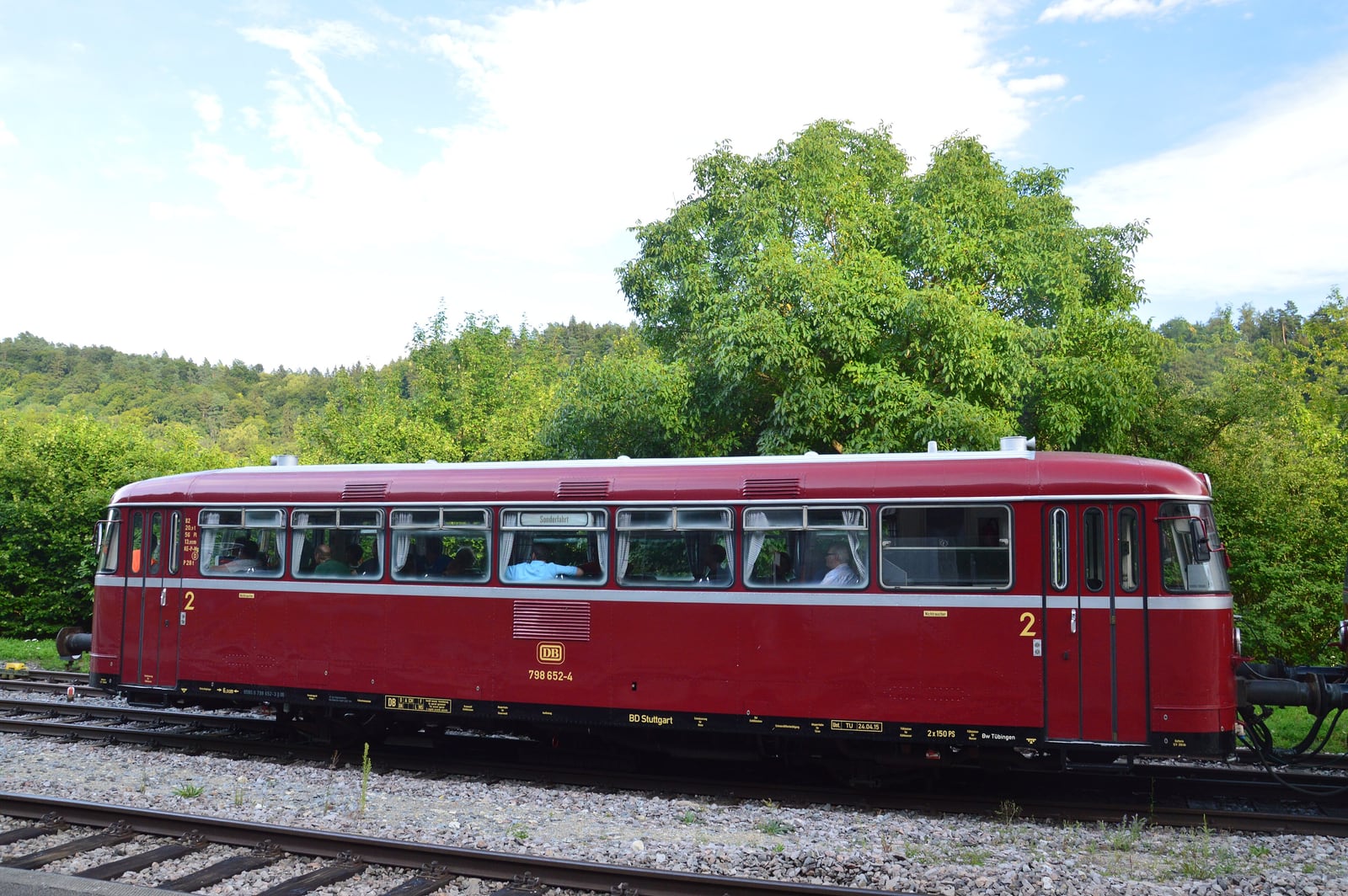
Traction is worth knowing about in advance. Most departures are hauled by diesel — a V100 of 1965 or a V36 of 1939, both historic in their own right, and both a surprise to passengers expecting smoke. Steam appears on a small number of advertised weekends behind 50 2988, built in 1942, and carries a separate and dearer fare. The operator marks every running day in its calendar as either Dampfbetrieb or Dieselbetrieb, so it is a matter of checking rather than hoping.
Carriages are ex-Bundesbahn Umbauwagen and older stock, second class throughout, with the high steps of their period. The railway states plainly that step-free access cannot be guaranteed; staff will help, and wheelchairs and rollators can be carried with notice, while prams travel in the luggage van rather than in the saloon.
Along the route
Nelso Silva / Wikimedia Commons · CC BY-SA 2.0A railway built for a war that went elsewhere
The existing route along the Rhine crossed Swiss soil twice, and a treaty barred German military use of it. The general staff wanted a way to the Alsace front that stayed in Germany. It was costed as permanently loss-making before a sleeper was laid, and the army never actually needed it.Schermuuser / Wikimedia Commons · CC BY-SA 3.0Twenty-five kilometres to cover nine and a half
A strategic railway could not climb more than one in ninety-eight, so the surveyors bought the difference in distance: two open loops into side valleys, a horseshoe tunnel that turns the line through 180 degrees, and a spiral that crosses over itself underground.H. Zell / Wikimedia Commons · CC BY-SA 3.0Bridges measured against a 140-tonne gun
What fixed the viaducts' strength was not traffic but artillery: the engineers sized them against the heaviest cannon Krupp then built. They are wide enough for a double track that was never laid, so the single line sits visibly off-centre.A bit of history
Culture & experiences along the way
Mussklprozz / Wikimedia Commons · CC BY-SA 4.0Take the whole return, not the single
The line reads differently in each direction. Going down from Blumberg-Zollhaus you watch the loops unwind below you; coming back up you feel the engine work every one of them, and the run takes five minutes longer for exactly that reason. There is nothing at the Weizen end to fill an afternoon, and a return fare is only a third more than a single, so most passengers stay aboard and treat the two hours as one ride.PantaRhei / Wikimedia Commons · CC BY-SA 4.0Check the calendar for a steam day
Most departures are diesel-hauled, by a V100 of 1965 or a V36 of 1939 — both genuinely historic, and neither what people picture. Steam runs on a handful of weekends a season behind 50 2988, a 1942 locomotive, and it costs about eleven euros more. The operator marks every running day in its calendar as either Dampfbetrieb or Dieselbetrieb, so which one you get is knowable in advance rather than a matter of luck.Schermuuser / Wikimedia Commons · CC BY-SA 3.0Walk one leg on the railway trail
A nineteen-kilometre waymarked path shadows the line the whole way, dropping about three hundred metres and taking in the Vierbahnenblick, the vantage point from which four separate levels of the same railway are visible at once. Tickets are sold for single sections, so walking down and riding back up is both possible and cheap, and the operator runs guided walks on some Saturdays that do exactly that.Timetables
The Sauschwänzlebahn runs to a fixed timetable on advertised days between late April and late October, plus six afternoons in Advent. The 2026 season opened on 25 April and the last ordinary running day is 25 October. All times below are the operator's own, as of August 2026.
The daily pattern
There are two round trips on a full running day, and they are the same times all season:
| Blumberg-Zollhaus → Weizen | Weizen → Blumberg-Zollhaus | |
|---|---|---|
| Morning | dep 10:10, arr 11:08 | dep 11:35, arr 12:38 |
| Afternoon | dep 14:10, arr 15:07 | dep 15:35, arr 16:38 |
Downhill takes about 57 minutes and the climb back 63, which is the clearest single sign of what the gradient is doing. Fridays are the exception in the calendar as published for the rest of this season: only the afternoon pair runs, leaving Blumberg-Zollhaus at 14:10 and Weizen at 15:35.
Intermediate stops are Epfenhofen, Wutachblick, Fützen, Grimmelshofen and Lausheim-Blumegg, and the operator publishes a separate departure sheet for each. Two of the intermediate running times are useful for anyone combining the train with a walk: Fützen to Blumberg-Zollhaus takes 28 minutes, and Epfenhofen to Blumberg-Zollhaus just 10.
Which days, and which have steam
The season runs on Saturdays, Sundays and public holidays throughout, with Thursdays and Fridays added from June until late September. Steam is the exception rather than the rule. Every remaining running day of the 2026 season was checked against the operator's calendar on 12 August 2026, and steam is advertised on eight of them:
- Saturday 5 and Sunday 6 September
- Saturday 19 and Sunday 20 September
- Saturday 3 and Sunday 4 October
- Saturday 17 and Sunday 18 October
Every other day between mid-August and the end of the season is marked Dieselbetrieb. Steam days are charged at a separate, higher tariff, so the distinction shows up on the fare as well as on the front of the train.
The Advent trains, and the closed months
In December the railway runs Nikolausfahrten on 28 and 29 November and on 5, 6, 12 and 13 December 2026 — but only over the upper half of the line, between Fützen and Blumberg-Zollhaus. Fützen departures are at 14:30 and 16:50, calling at Epfenhofen and reaching Blumberg-Zollhaus 29 minutes later; the return trips leave Blumberg-Zollhaus at 15:30 and 17:50.
Nothing at all runs between the beginning of November and the end of March over the tunnelled section, and the reason is unusual. The tunnels are a winter roost for the barbastelle bat, a strictly protected species: a count on 27 January 2015 found 357 of them, which the Freiburg administrative court described as the largest known winter quarters for the species in Baden-Württemberg and the second largest in Germany. The district authority prohibited rail operation in the tunnels from 1 November to 31 March, the ban was upheld in 2015, overturned on appeal in 2018, and settled in October 2018 as an agreement on restricted operation and protection periods. It is why the season ends when it does, and why the Advent trains keep to the half of the line north of Fützen.
Getting there without a car
Blumberg-Zollhaus is on the national network. The RB43 Ringzug, run by Hohenzollerische Landesbahn, calls there from Rottweil, Tuttlingen and Immendingen, and at weekends from May to October some workings run through from Sigmaringen as the Naturpark-Express. On a Saturday or Sunday the 09:38 arrival from Rottweil gives a comfortable half hour before the 10:10 museum train, and the 13:58 from Sigmaringen connects into the 14:10 with twelve minutes. Coming back, there are departures at 16:56 towards Sigmaringen and 17:50 towards Immendingen, which pick up the 16:38 arrival.
Weizen is a different matter. No scheduled train serves the lower terminus — a HAFAS query for 22 August 2026 returns no arrivals or departures there at all — and the connection from the Hochrhein line is a bus: route F from Waldshut, reaching Weizen at 11:09, in time for the 11:35 back up the hill. For anyone travelling by public transport, the Blumberg end is much the easier one to start from.
Times and running days are as published by Bahnbetriebe Blumberg in August 2026; the operator's timetable and running-day calendar (opens in a new tab) is updated for each season.
Tickets
The Sauschwänzlebahn sells its own tickets under its own tariff, valid only on its own trains between Weizen and Blumberg-Zollhaus. The fare depends on what is on the front: an adult return is €28.00 behind a diesel and €39.00 behind steam, and the steam tariff belongs to the day rather than to the train, so a steam weekend has no cheaper option on it. Dogs and bicycles are €6.00 each. There is no senior discount, but the DreiWeltenCard and the AlbCard carry their holders free — claimed at the counter, since online booking cannot apply it.
One condition catches people out: a ticket is valid for a single journey and breaking it is not permitted. A return covers the trip down and the trip back, not an afternoon of hopping on and off, so anyone planning to get out along the way buys section tickets instead. Fares as published by Bahnbetriebe Blumberg, August 2026.
Book your tickets
Diesel return
€28.00 adult · €14.00 child · €58.00 family
The ordinary fare on most running days, over the whole line and back.
Book Tickets (opens in a new tab, on Bahnbetriebe Blumberg)via Bahnbetriebe BlumbergSteam return
€39.00 adult · €19.50 child · €85.00 family
A separate, dearer tariff on the eight days 50 2988 is out.
Book Tickets (opens in a new tab, on Bahnbetriebe Blumberg)via Bahnbetriebe BlumbergPart-route and group fares
Section tickets, and one free place in fifteen
A single section between adjacent stops, which is what makes walking one leg and riding the other affordable.
Book Tickets (opens in a new tab, on Bahnbetriebe Blumberg)via Bahnbetriebe BlumbergRail Passes
No national rail pass is valid on the Sauschwänzlebahn, and the reason is structural rather than awkward: this is not part of the German passenger network. It is a museum railway operated by Bahnbetriebe Blumberg, a company owned by the town of Blumberg, over infrastructure the town also owns. Its tariff conditions open by stating that the tariff applies on the railway's own vehicles between Weizen and Blumberg-Zollhaus, and its tickets are the only ones it sells.
What that means in practice
An Interrail or Eurail pass covers Deutsche Bahn and a long list of private operators running scheduled services. That list is not a figure of speech: Interrail's coverage table for Germany links it, it runs to some fifty companies, and everything the table has not otherwise named stands or falls by whether it appears. Bahnbetriebe Blumberg does not appear. So a pass buys nothing here — no free travel and no advertised discount.
The Deutschlandticket is in the same position. It is a season ticket for local and regional public transport, and a heritage operation charging its own museum fare sits outside that. Unlike some German heritage railways, this one publishes no Deutschlandticket supplement either: the discounts page lists exactly which outside cards it honours, and no national ticket appears on it.
A BahnCard makes no difference to the fare.
What does save money
The two things that genuinely reduce the price are regional rather than national.
- The DreiWeltenCard and the AlbCard carry their holders free over the whole line. Both are guest cards issued through participating accommodation in their regions, so this is a benefit of where you happen to be staying rather than something that can be bought for the day. It has to be claimed at the ticket counter — the online booking system cannot apply it.
- Local guest cards from Blumberg, Hüfingen, Bräunlingen, Donaueschingen and Bad Dürrheim reduce the fare to the group rate, which takes an adult diesel return from €28.00 to €24.00.
Neither can be combined with the other or with any further reduction. For a visitor spending a night in Blumberg or one of its neighbours, asking the hotel about the guest card is the single most useful money question on this page.
Where a pass does still work
Getting to the railway is a different matter. The RB43 Ringzug that serves Blumberg-Zollhaus from Rottweil, Tuttlingen and Immendingen is ordinary regional public transport, run by Hohenzollerische Landesbahn within the Verkehrsverbund Schwarzwald-Baar-Heuberg. An Interrail pass and a Deutschlandticket both work on it, as do the Verbund's own tickets.
So the sensible shape of a day is a pass or a Deutschlandticket as far as Blumberg-Zollhaus, and the railway's own ticket from there — which is also the arrangement that avoids the one real trap at the other end, where Weizen has no train service at all.
Pass conditions checked on 20 August 2026 against the operator's own tariff conditions (opens in a new tab), its list of accepted discounts (opens in a new tab), and Interrail's published list of railway companies.
Places to Visit
This is a short line through thinly populated country, and the honest summary is that the railway is the attraction. The villages along it are small — several of them got stations only because the military wanted somewhere for troop trains to pass — and none of them holds a museum or a monument that would draw anyone on its own. What they hold instead is the engineering, and a landscape that the line was built to get through rather than to show off.
The stops below are in the order a train from Blumberg-Zollhaus reaches them.
Two things worth planning around
The first is the railway trail, a nineteen-kilometre waymarked path that shadows the line for its whole length and drops about three hundred metres doing it. Its best-known vantage point is the Vierbahnenblick, where four separate levels of the same railway are in view at once — the clearest possible demonstration of what "artificial lengthening" means. Because the operator sells tickets for single sections, walking one leg and riding the other is straightforward: Epfenhofen back up to Blumberg-Zollhaus is a ten-minute train ride, Fützen twenty-eight.
The second is the Wutach gorge. The lower gorge, the Wutachflühen, is what the halt at Wutachblick exists for, and its limestone cliffs and pinnacles are the reason the original plan to carry the railway all the way up the Wutach was abandoned as impossible. The paths through it start from the line, and there is nothing at the halt itself except the view and the mouth of a tunnel.
A note on the museum
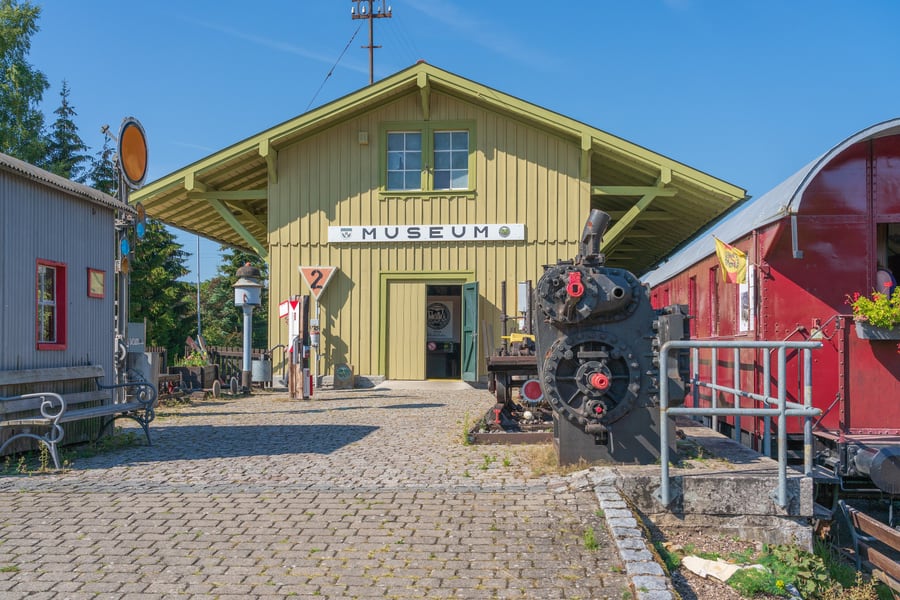
The line's own museum has occupied the goods shed at Blumberg-Zollhaus since 1992. It is run by volunteers and opens for a few hours on running days only, which makes it a thing to catch before or between trains rather than a destination in itself. Beside it stands the Reiterstellwerk, a signal box carried out over the track on legs — worth the walk along the platform whether or not the museum is open.
 PantaRhei / Wikimedia Commons · CC BY-SA 4.0 · cropped
The Wutachtalbahn museum, Blumberg-Zollhaus
The goods shed at the top station has held the line's own museum since 1992, run by volunteers and open for a few hours on running days. Outside it stands the Reiterstellwerk, a signal box built out on stilts straddling the track — the mechanical frame that once worked this end of the railway, and an oddity worth the few minutes before departure. The station itself sits at 702 metres on the divide between the Rhine and the Danube.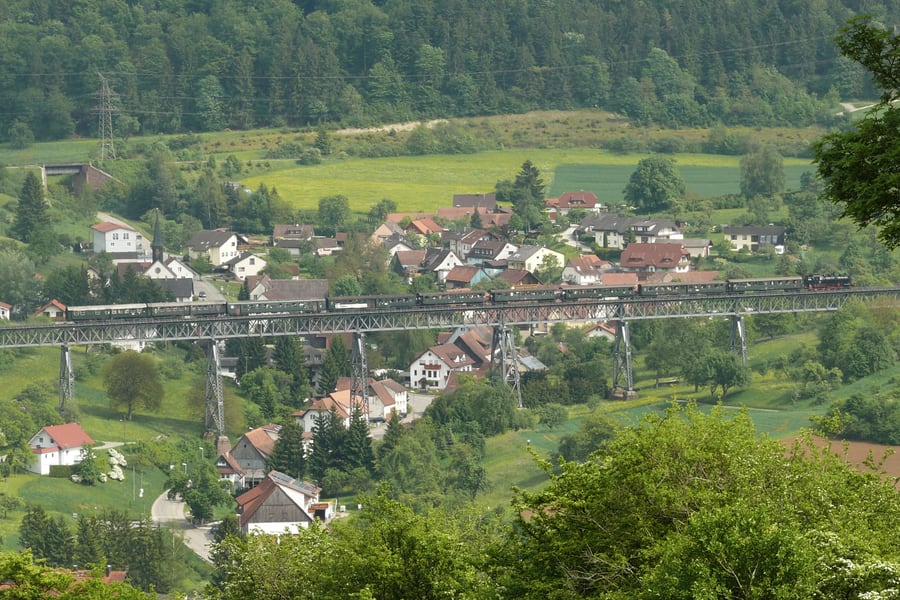 BerndH / Wikimedia Commons · CC BY-SA 3.0 · cropped
Epfenhofen and its viaduct
The village is best known for the thing that goes over it. The Epfenhofen viaduct is 264 metres long and 34 metres high, eight openings of thirty to thirty-six metres carried on seven iron piers standing on stone footings, and it was put up between November 1888 and November 1889. From the lanes below, the railway passes above the roofs on legs that look far too slender for it.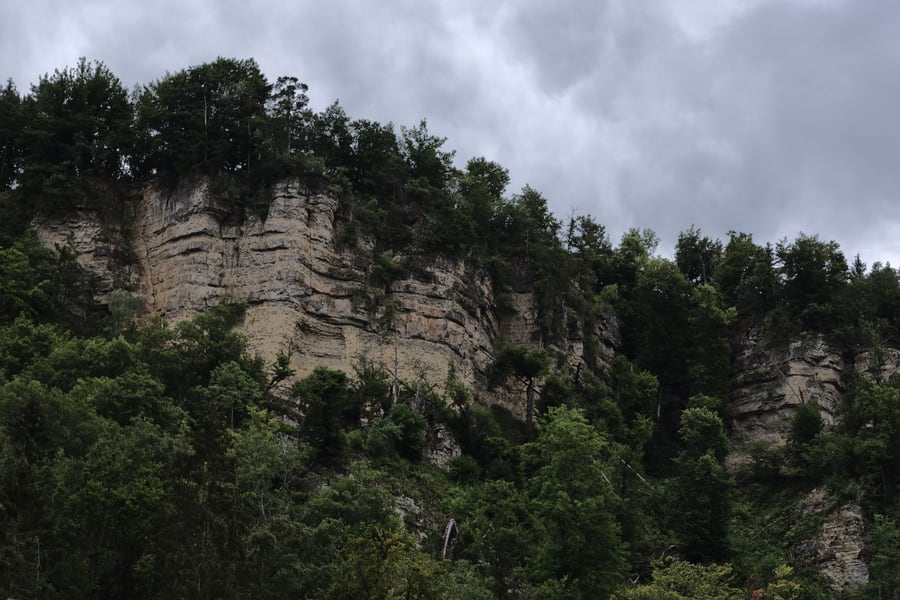 Mussklprozz / Wikimedia Commons · CC BY-SA 4.0 · cropped
The Wutach gorge from the Wutachblick halt
This stop did not exist in the line's working life; it was added in the museum era because of what is beside it. The lower Wutach gorge cuts through the Muschelkalk in pale cliffs and pinnacles, and the halt sits right at the south portal of the Achdorfer Weg tunnel. Walkers get off here more than anyone else — the gorge paths run below, and there is nothing else at the station at all.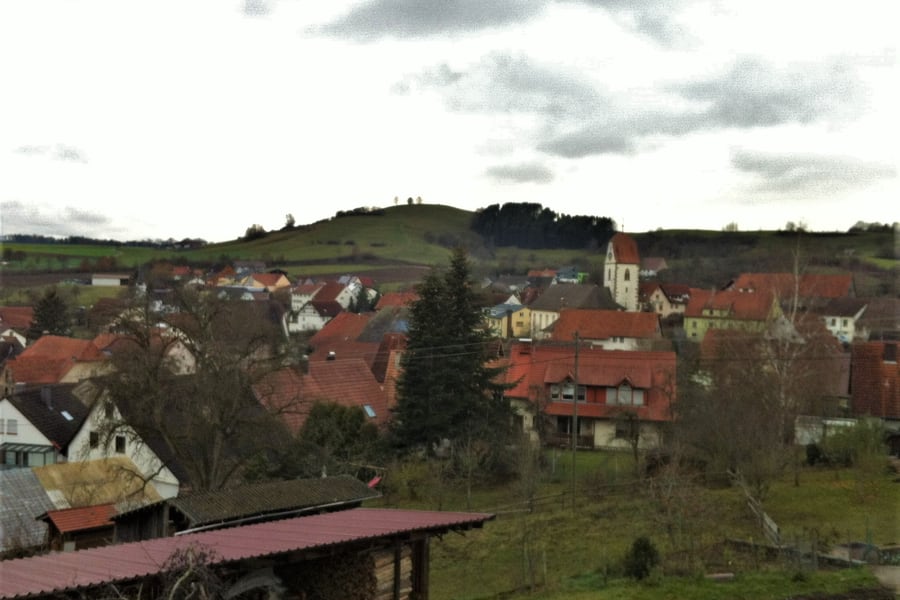 GerhardSchuhmacher / Wikimedia Commons · CC BY-SA 4.0 · cropped
Fützen
Fützen was given a proper station with a long passing loop because the military wanted somewhere every eight kilometres for troop trains to cross, not because a village of this size needed one. It kept its building and its loop when others lost theirs. The valley crossing just outside is 153 metres of fish-belly girder on stone piers, four spans of thirty-seven and a half metres, twenty-eight metres up.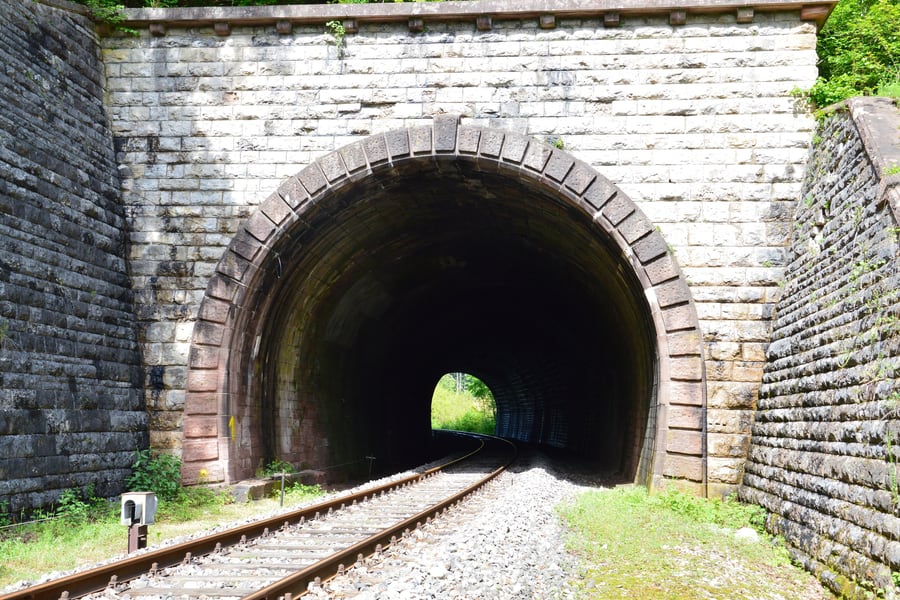 Schermuuser / Wikimedia Commons · CC BY-SA 4.0 · cropped
Grimmelshofen and the circle in the hill
Just beyond the station the line disappears into the Große Stockhalde tunnel, turns a complete 360-degree circle roughly seven hundred metres across, and comes out 15.5 metres higher than it went in. The operator calls it the only tunnel of its kind in Germany. The station itself has a quieter distinction: it stood so far from the village that from 1923 the locals stopped using it and walked to the next one instead.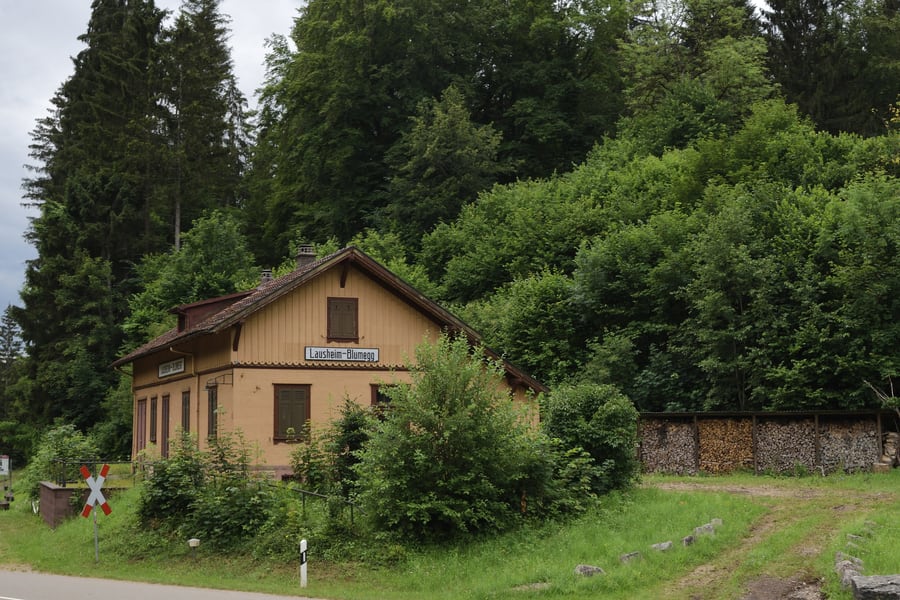 Mussklprozz / Wikimedia Commons · CC BY-SA 4.0 · cropped
Lausheim-Blumegg
Opened on 1 August 1899 under the name Im Weiler, this halt exists because Grimmelshofen's station was too far away to be any use and the people of the valley said so. The wooden building is still there, and the village sits above it on the green shoulder of the Wutach valley. The horseshoe tunnel that swings the line through 180 degrees begins a few hundred metres beyond the platform.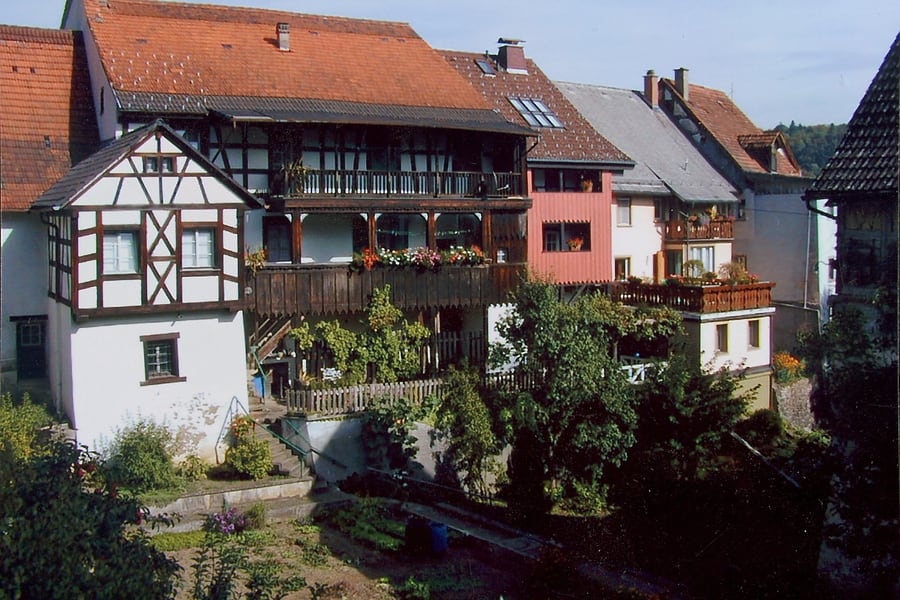 GerhardSchuhmacher / Wikimedia Commons · CC BY-SA 4.0 · cropped
Stühlingen, above the Weizen terminus
Weizen itself is a hamlet with a station and a large works. The town is Stühlingen, three kilometres down the valley: a small walled place on the Swiss border with a half-timbered old quarter, a castle above it and the Klettgau spreading out beyond. It is also where the line's own southern half began in 1875, fifteen years before the military finished the rest of it.Where to Sleep
Most people ride the Sauschwänzlebahn as an afternoon out of Donaueschingen, Schaffhausen or the Bodensee and do not stay anywhere near it. Anyone who does stay locally is choosing between village inns rather than hotels: this is farming country on the Swiss border, and the accommodation reflects that.
There is one practical reason to stay over. The railway runs two round trips a day and the morning one leaves Blumberg-Zollhaus at 10:10, which is early for anybody arriving from a distance on a Saturday. A night in Blumberg or one of its neighbours also brings the local guest card into play, and that reduces the fare to the group rate — or, with the DreiWeltenCard, to nothing at all.
The three houses below are all on the railway's own list of hosts. Each links to its own website; none has a price or a rating here, because neither has been verified.
For the Weizen end, it is worth remembering that the lower terminus has no train service of its own. Staying down there means arriving by bus from Waldshut or by car, and it suits walkers doing the railway trail in one direction more than it suits anyone else.
Where to stay
Hotel-Gasthof Kranz
Blumberg-Riedböhringen, near the upper terminus
A family-run village inn with rooms above the restaurant, on the Blumberg side of the line. Its own site sets out half-board served between five and half past seven, check-in windows either side of the kitchen's afternoon break, and Monday as the rest day. It is the nearest bed to the operating base and the museum.
Check Availability (opens in a new tab, on hotel-gasthof-kranz.de)via hotel-gasthof-kranz.de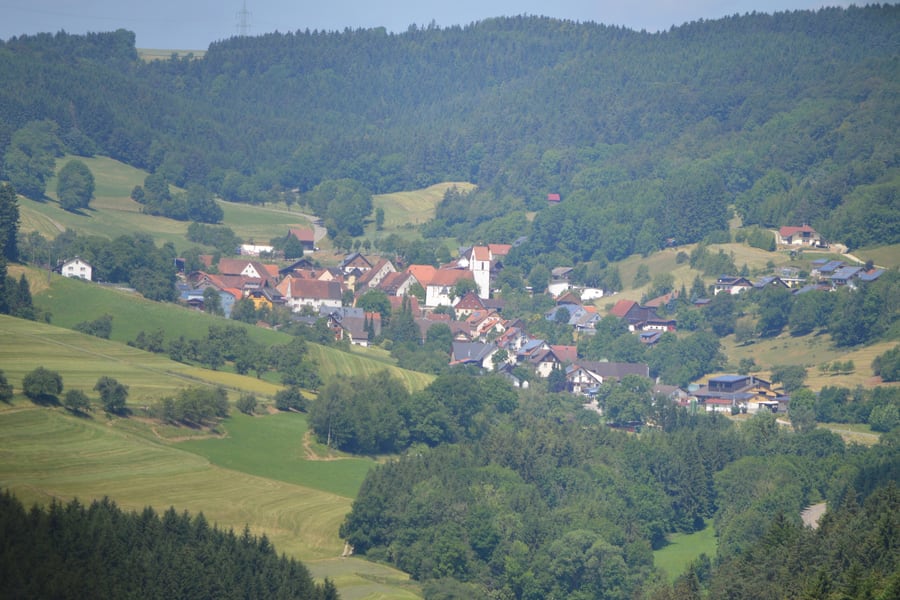 Schermuuser / Wikimedia Commons · CC BY-SA 4.0 · cropped
Gasthaus Kranz
Stühlingen-Lausheim, at the halt halfway down
A family-run Landgasthof at Lausheim, the village above the Lausheim-Blumegg halt, with apartments on the second floor and its restaurant on the first — both reached by lift, which its own site makes a point of, and which is worth knowing given that the train itself has high steps and no step-free access. Three dining rooms seat up to 160.
Check Availability (opens in a new tab, on gasthaus-kranz.de)via gasthaus-kranz.deGasthaus Kreuz
Weizen, a few minutes from the lower terminus
One of the oldest farmhouses in Weizen, converted over the years into a guesthouse with seventeen rooms, a Black Forest parlour and function rooms taking up to a hundred. It is the only place to stay at the bottom end of the line, and since Weizen has no train service of its own, it is a useful base for anyone arriving by bus or on foot.
Check Availability (opens in a new tab, on gasthaus-kreuz.de)via gasthaus-kreuz.deQuestions or corrections
Planning this trip and stuck on something, or spotted a time, fare or detail that has changed? Send us a message about The Sauschwänzlebahn through the Wutach Valley. We read every one, and we update this page when something has changed.