The Moçâmedes Railway — Lubango to Menongue
Mr Data Angola / Wikimedia Commons · CC BY-SA 4.0 · cropped
- DistanceJust over 500 km
- DurationAbout 8 hours by the express
- Best seasonWeekly, all year · May to September is the dry season
Introduction
The Moçâmedes Railway is the southernmost of Angola's three lines, and like the others it runs from the Atlantic inland and stops. It starts at the port of Moçâmedes, climbs the escarpment onto the Huíla plateau at Lubango, and then runs east across the high country to Menongue, the capital of Cubango province. The operator, Empresa do Caminho de Ferro de Moçâmedes-E.P. (CFM), counts 806 km of line and carried more than 600,000 passengers in 2025.
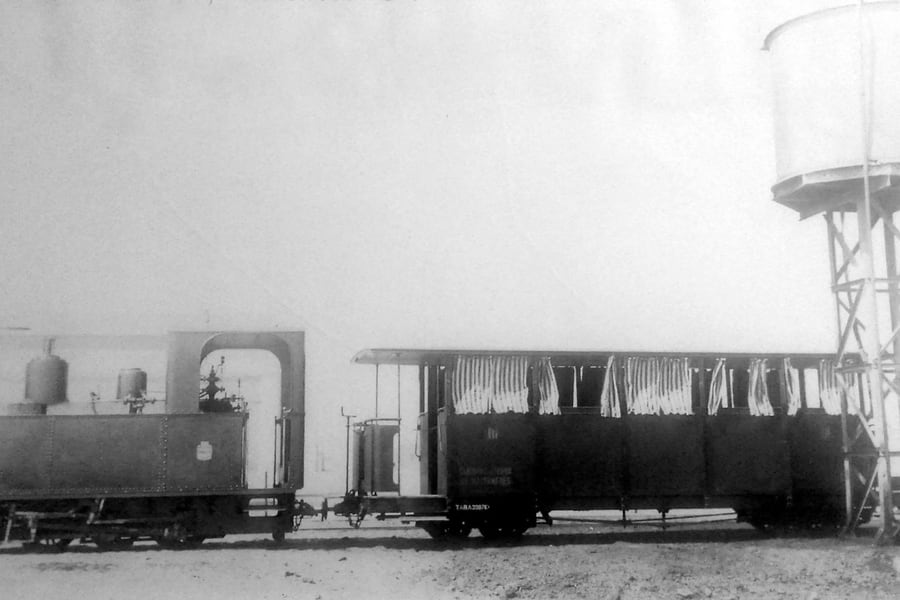
It took almost sixty years to build. The first ten kilometres opened out of Moçâmedes on 29 September 1905, on 600 mm track; the rails reached Lubango in 1923, were re-laid to Cape gauge in 1950, reached Matala on the Kunene in 1955 and arrived at Menongue — then Serpa Pinto — in the early 1960s. The civil war wrecked most of it, and Chinese-led reconstruction finished in 2015.
Since 9 April 2026 CFM has run an express over the eastern half of the line, Lubango to Menongue, once a week on a trial basis: air-conditioned carriages, five intermediate stops and about eight hours, against ten on the everyday mixed train. This page follows that express.
The Journey
The express leaves Lubango Central at seven in the morning. Lubango sits in a valley of the Huíla plateau at 1,760 metres, ringed by hills, and the station yards lie along the floor of it; the westbound line drops off the far side of those hills towards the coast, but the express turns the other way and heads east across the top of the plateau.
Across the plateau
The first stops are the municipal towns of Chicungo and Quipungo. Matala comes next, on the Kunene at about 1,300 metres, where a dam and hydro-electric station completed in 1954 hold back the river; it is the second market town of Huíla after Lubango, and the railway reached it in 1955. Beyond Matala the iron-ore branch to Jamba and Chamutete leaves the main line at Entroncamento, a junction station rebuilt well away from any town.
Into Cubango
After Cuvango and Cuchi the line runs on into Cubango province and arrives at Menongue in the afternoon, due at three. Menongue, called Serpa Pinto in colonial times after the Portuguese explorer, is the end of the line and the capital of Cubango, a province created when Cuando Cubango was divided in 2024.
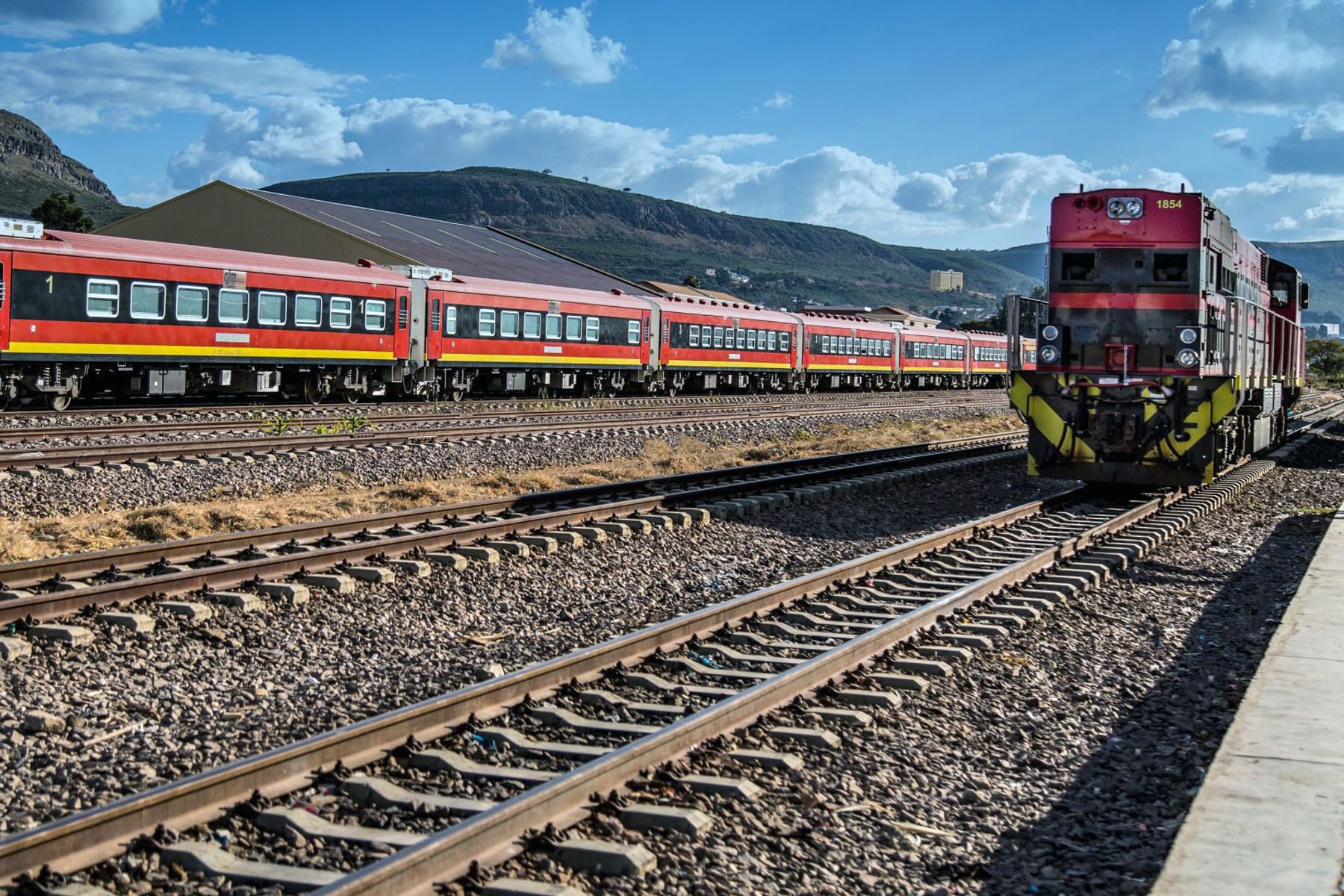
The traction is diesel: CFM's share of Angola's order for 100 General Electric C30ACi locomotives, the last of which were landed at Namibe in November 2020. Number 1854, at the top of this page, stands beside a rake of CFM passenger carriages at Lubango.
Along the route
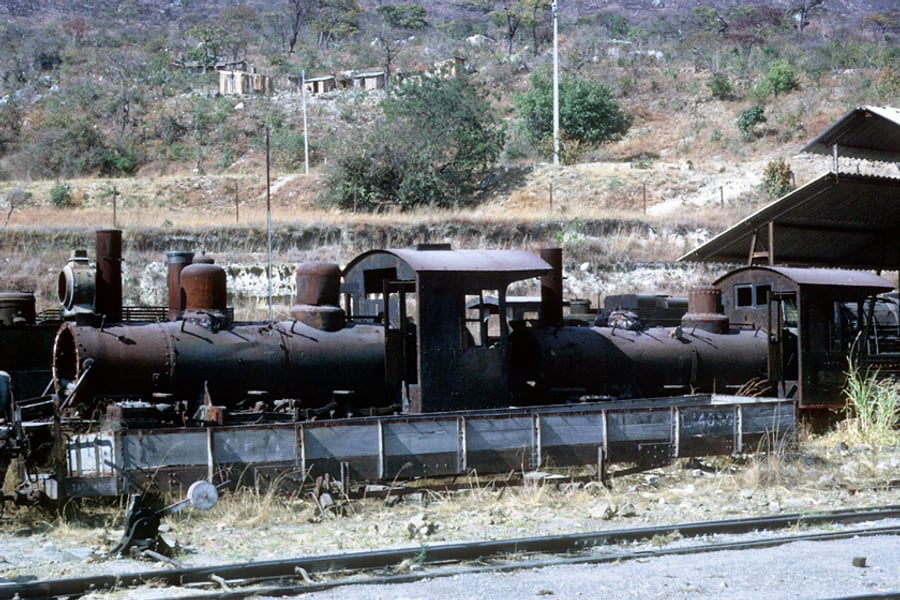 Peter Bagshawe / Wikimedia Commons · CC BY-SA 3.0 · 1972 · cropped
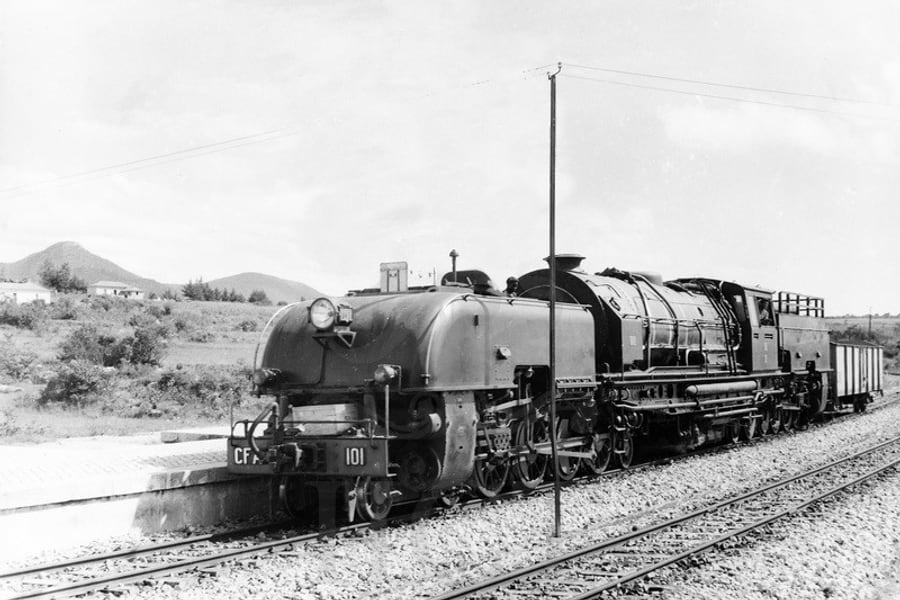
The workshops at Sá da Bandeira
Lubango was Sá da Bandeira until independence, and the railway's workshops were here. In 1972 they still held narrow-gauge steam: two ex-South African Class NG9 locomotives.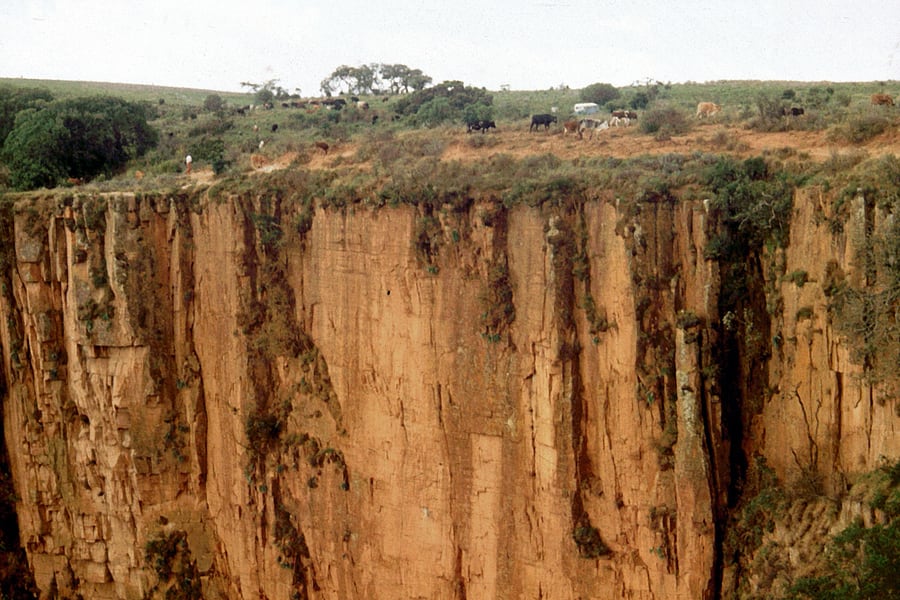 Dguendel / Wikimedia Commons · CC BY 3.0 · 1984 · cropped
The edge of the plateau
West of Lubango the Huíla plateau ends in sheer cliffs above 2,000 m. The line from the coast took until 1923 to climb them; the express runs east, across the top.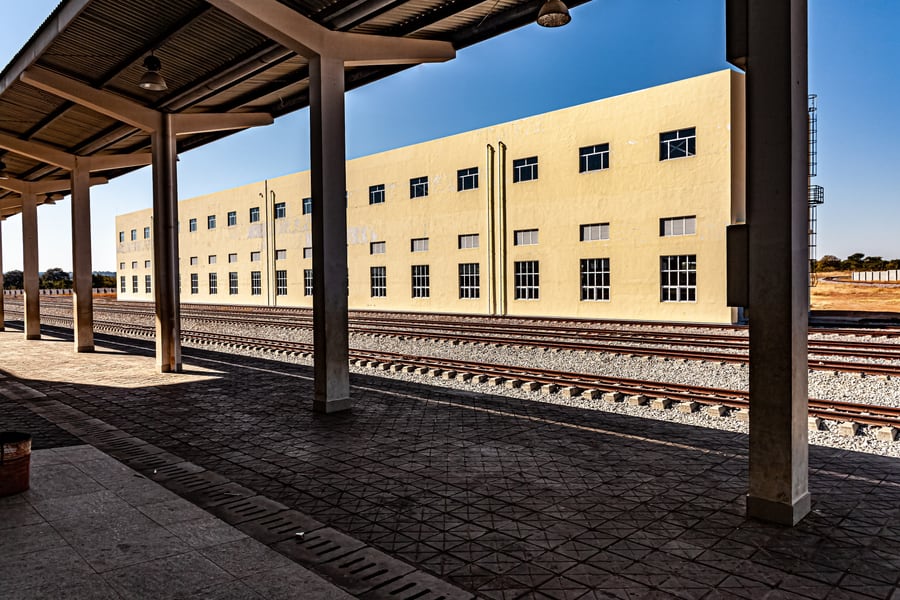 Edward Middleton / Wikimedia Commons · CC BY-SA 4.0 · 2019 · cropped
A junction in open country
Between Matala and Cuvango the branch to the Jamba and Chamutete iron mines leaves the main line at Entroncamento, whose rebuilt station stands well outside any town.A bit of history
Timetables
The express runs once a week in each direction. These are the times CFM announced when it relaunched the service on Thursday 9 April 2026, on a trial basis.
| Direction | Day | Departs | Arrives |
|---|---|---|---|
| Lubango → Menongue | Thursday | 07:00 | 15:00 |
| Menongue → Lubango | Friday | not announced | — |
CFM gave the return only as "the following day" and published no time for it. The express calls at Chicungo, Quipungo, Matala, Cuvango and Cuchi and nowhere else, and is planned at about eight hours.
Alongside it the ordinary mixed passenger-and-freight train makes three trips a week over the same route and takes about ten hours, calling at the stations the express passes.
Delays are real. The first relaunched express was stoned at Matala, which broke windows in two carriages and brought it into Menongue after 21:00 instead of 15:00; floods and landslides have closed the line for days or months more than once. CFM publishes no timetable online, so confirm at Lubango Central before travelling.
Times as announced in April 2026; checked November 2026.
Tickets
Tickets are sold at the station; CFM sells nothing online and publishes no fare table. When the express was relaunched in April 2026 its first-class fare was 9,000 kwanzas. The second-class fare was reported as 7,500 kwanzas by Ver Angola and as 7,000 by Estamos Juntos, so expect one or the other at the counter.
The everyday mixed train is cheaper and slower: 4,500 kwanzas in third class from Lubango to Menongue, the fare CFM set in May 2025. Both fares are modest for a journey of more than 500 km.
Fares as of April 2026; checked November 2026.
Book your tickets
Express, first class
Lubango to Menongue
The first-class fare CFM announced for the express when it was relaunched in April 2026.
via cfm.co.aoExpress, second class
Lubango to Menongue
Reported at 7,500 Kz by Ver Angola and at 7,000 Kz by Estamos Juntos in April 2026.
via cfm.co.aoMixed train, third class
Lubango to Menongue
The slower everyday train, at the fare CFM set in May 2025.
via cfm.co.aoRail Passes
No rail pass covers Angola, and CFM sells no pass of its own. Tickets are bought singly at the station, and at 9,000 kwanzas or less for the whole run there would be little for a pass to save.
The Moçâmedes Railway connects to no other line: neither the Benguela Railway to the north nor any neighbouring country's network can be reached by rail, so no through ticket exists either.
Checked November 2026.
Places to Visit
The express starts in a city and ends in a provincial town, with five small stops between them. Lubango is where to spend time: Angola's second city, 1,760 metres up, and the base for the plateau edge west of it.
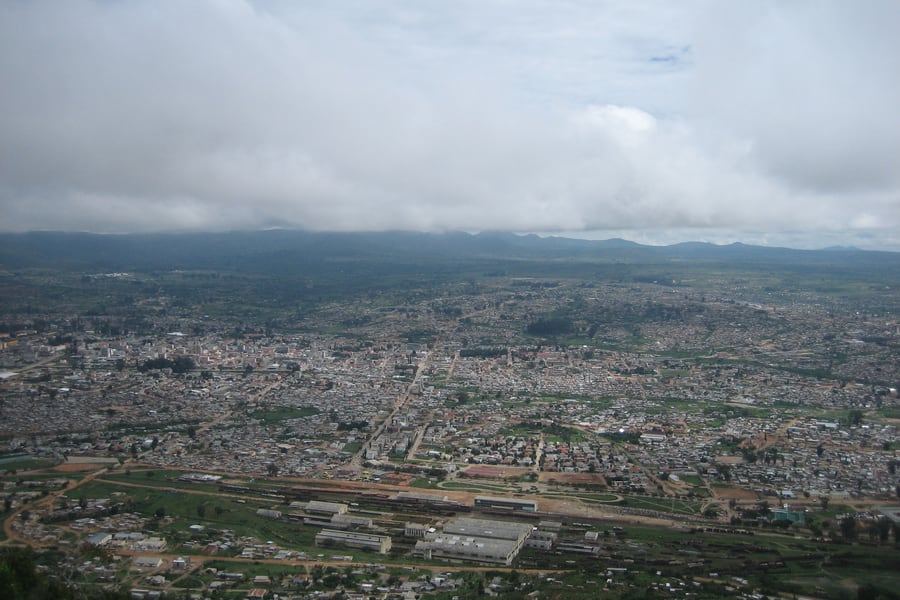
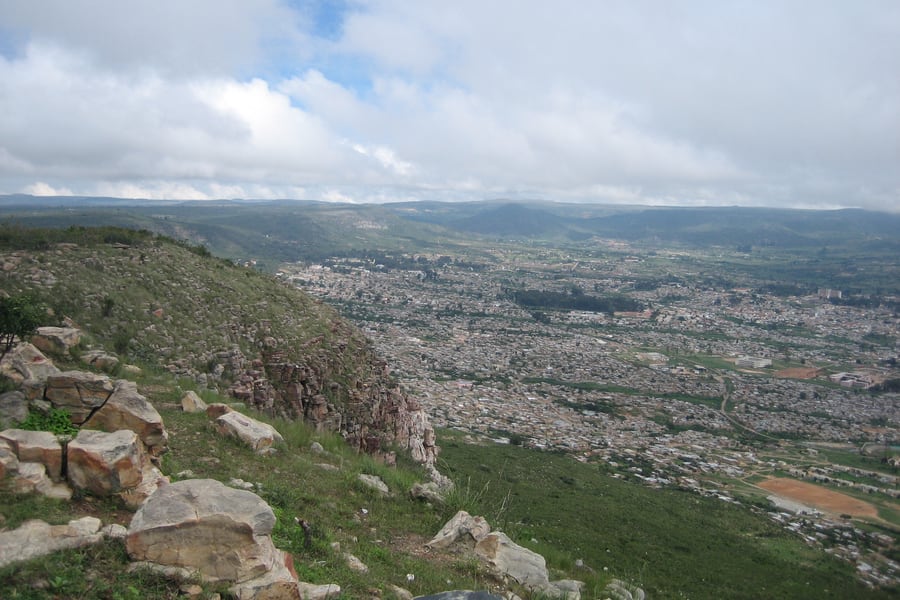 Erik Kristensen / Wikimedia Commons · CC BY 2.0 · 2006 · cropped
Lubango
Capital of Huíla and Angola's second city, 890,384 people at the 2024 census, in a valley of the plateau at 1,760 m. It was settled in the 1880s by farmers from Madeira, reached by the railway in 1923 and renamed Sá da Bandeira, a name it kept until independence. It grew into the south's farming and transport centre, with the railway's main maintenance works, and the hills that ring the valley give the view over it seen here.Where to Sleep
The express leaves Lubango at seven in the morning, so a night in the city beforehand is part of the trip. The iu Hotel group, an Angolan chain with houses in most provincial capitals, has one in Lubango.
Menongue has a handful of hotels and lodges, but none that we could find has a website of its own to book through; arrange a room there before you travel.
Where to stay
iu Hotel Lubango
Bairro Comandante Cowboy, Lubango
A business hotel with 24-hour reception, a restaurant, bar, meeting rooms and private parking, near the Senhora do Monte pool.
Check Availability (opens in a new tab, on one-hotel-angola.e-gds.com)via one-hotel-angola.e-gds.comQuestions or corrections
Planning this trip and stuck on something, or spotted a time, fare or detail that has changed? Send us a message about The Moçâmedes Railway — Lubango to Menongue. We read every one, and we update this page when something has changed.