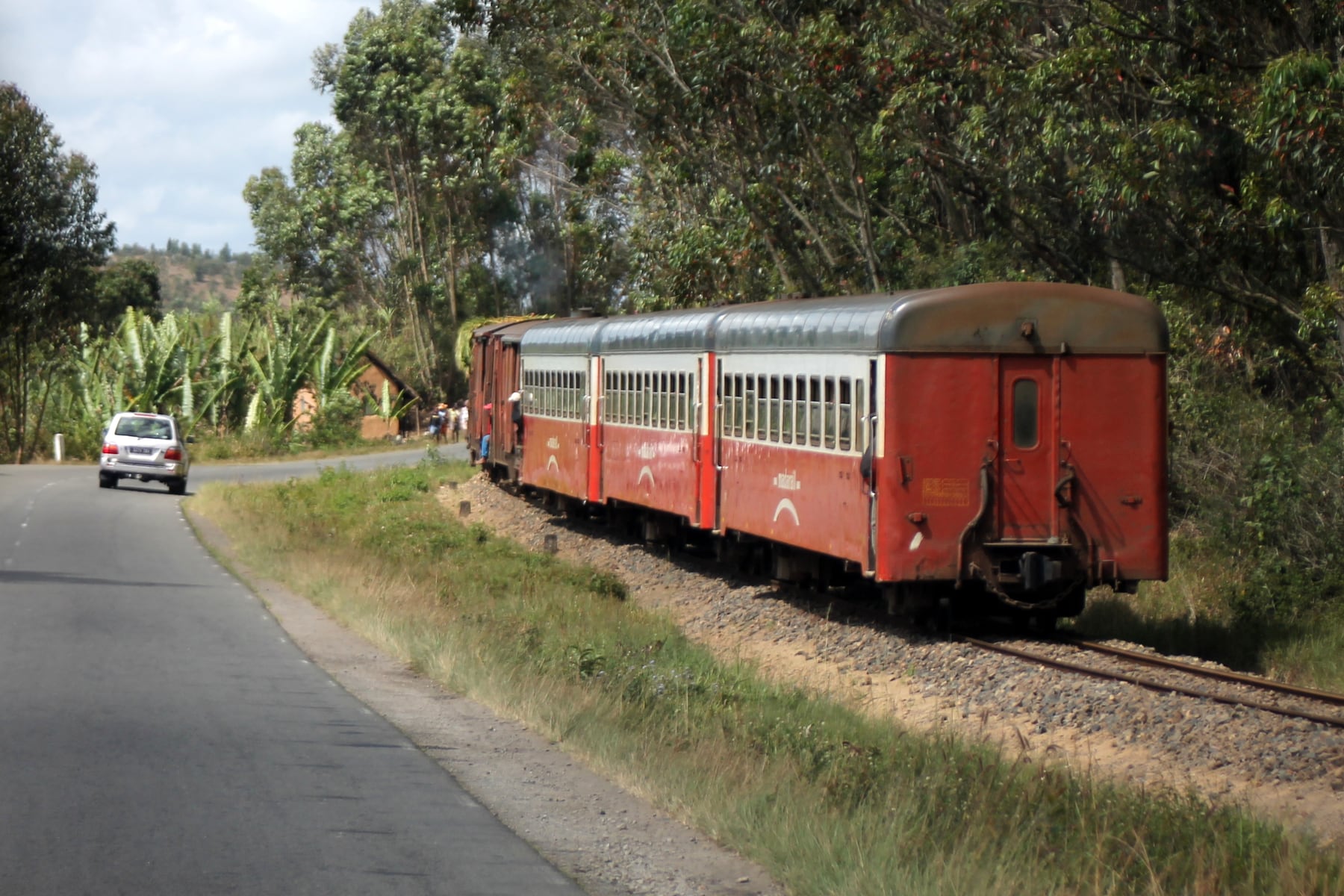
Moramanga to Ambila-Lemaitso
Heinonlein / Wikimedia Commons · CC BY-SA 4.0 · 2015 · cropped
- DistanceMoramanga to Ambila-Lemaitso · 163 km by rail, PK 122.1 to PK 284.7
- DurationNine hours booked, 07:00 to 16:00 — an average of about 18 km/h
- Best seasonMay to October, the dry months · cyclones cut the line between December and March
Introduction
Four mornings a week a single train stands at Moramanga, a highland market town on the road east from Antananarivo, and at seven o'clock it starts down the escarpment towards the sea. Nine hours later it is at Ambila-Lemaitso, a village of sand and screw pines held between the Canal des Pangalanes and the Indian Ocean. Between the two lie 163 kilometres of metre gauge, the rainforest of Andasibe, the valley of the Vohitra, and a string of halts — An'ala, Ambatovola, Andekaleka, Lohariandava, Fanasana, Razanaka — that the national road never reaches. Madarail, which runs the line, describes the service in one flat sentence: it exists "exclusively for carrying people in the isolated zones". The train is called the Dia Soa, which is Malagasy for a good journey.
It is the surviving passenger service on the Tananarive–Côte Est, the first railway built in Madagascar and still the only one that reaches the country's main port. Passenger trains stopped here in 1996 and stayed stopped for a quarter of a century; a first attempt to bring them back in 2021 was cut short by cyclone damage to the formation, and the trains ran again from 1 June 2023. What runs today is two coaches of eighty-eight seats and two vans for the luggage, hauled by one of Madarail's diesels through country where the freight — chromite, fuel, cement, rice — pays for the railway and the passengers ride on the margin of it. It is slow, it is not comfortable, and for the villages along the Vohitra it is the difference between a market and no market.
The Journey
Moramanga sits at kilometre 122 of the Tananarive–Côte Est, where the line from the capital meets the branch north to Lake Alaotra. It is a junction town of some fifty-seven thousand people, and it carries one of the heaviest memories in the country: on the night of 29 March 1947 the military camp here was among the first places attacked in the rising against French rule, and the cemetery of the victims is still one of the stops Malagasy travellers make.
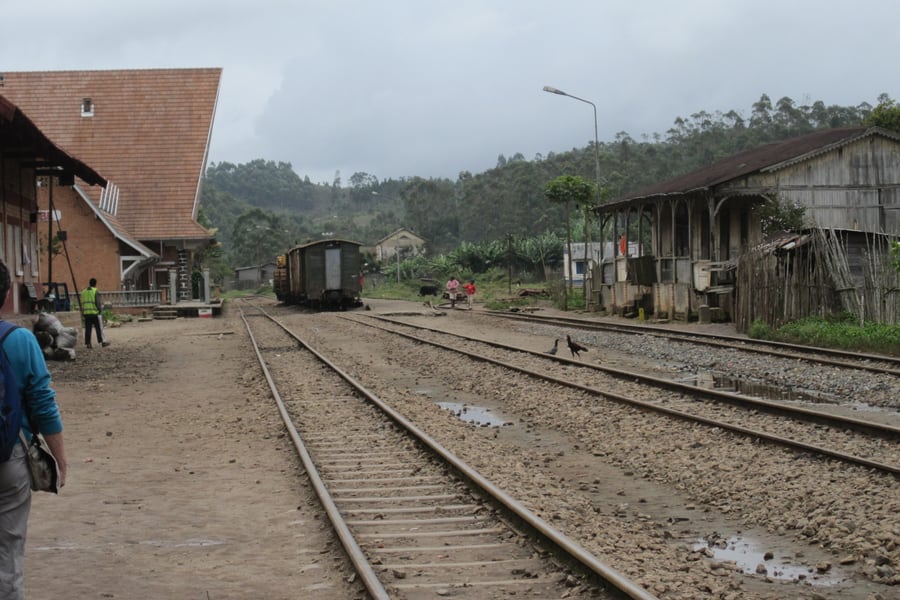
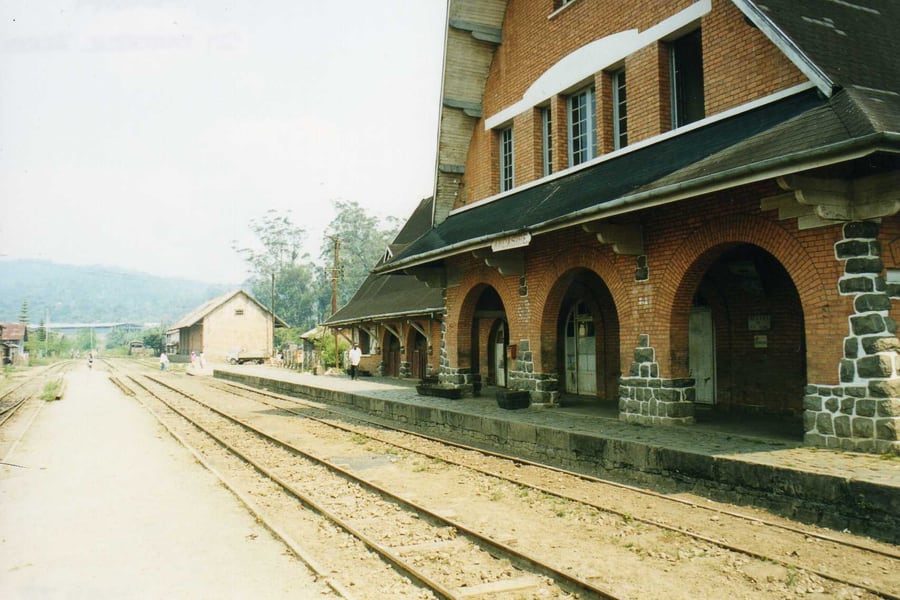
From the station the train turns east and begins to lose height. Twenty-six kilometres out it calls at Andasibe, the old Périnet, where the rainforest closes over both sides of the track and the station buildings — brick, stone arcades, a steep tin roof — are the smartest thing on the line by some distance. Below Andasibe the railway takes to the valley of the Vohitra and follows it down the escarpment through An'ala, Fanovana, Ambatovola and Andekaleka, crossing and recrossing a river that runs brown after rain and clear when it has not rained for a week. This is the section with no road worth the name. It is also the section the cyclones take out: the forest at Andasibe takes 1,700 mm of rain a year on 210 days of it, and when the formation goes the villages between the halts have nothing.
Down to the coast
At Anivorano, kilometre 255, the train passes the place where the first rails in Madagascar were laid, in April 1901, by thousands of Malagasy labourers the colonial administration called volunteers and conscripted as forced labour. By then the country has opened, the palms have started, and the last of the highland cool is gone. Two stops later comes Brickaville — Vohibinany on the timetable, kilometre 271 — a sugar town on the Rianila where the river widens into an inland harbour and the pirogues load. Here the line divides: north to Toamasina and the port, or the fourteen kilometres east that the Dia Soa takes, out onto the sandbar.
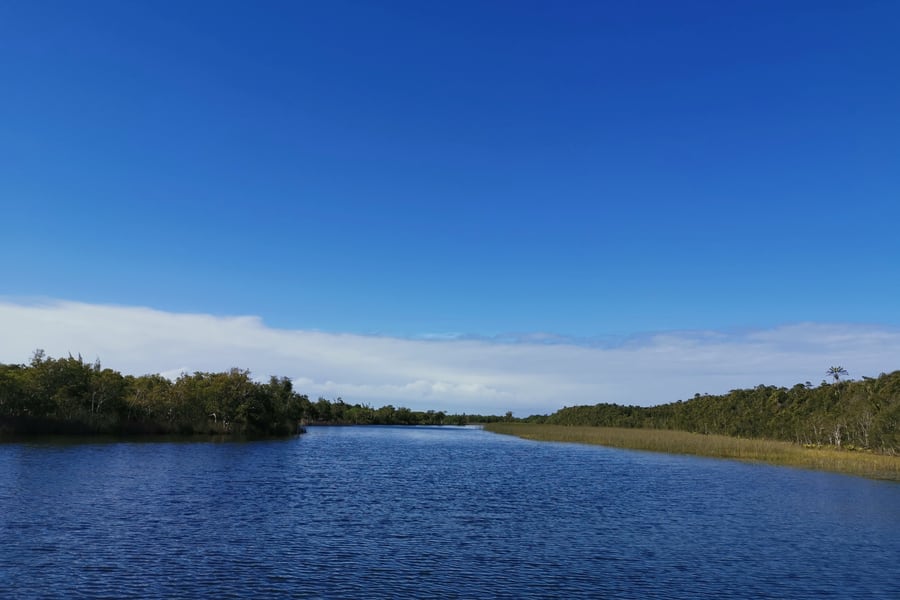
That last stretch is the one people remember. The track threads the strip of land between the Canal des Pangalanes — the chain of lagoons and cuts that runs some 700 kilometres down this coast from Farafangana to Toamasina — and the open Indian Ocean, close enough that both are in the same window. Ambila-Lemaitso means, near enough, "Ambila the green"; vila are the wooden fish traps staked out across the canal, and they are the first thing a passenger sees on the water. The train stops. The road in from Brickaville runs out at the bank, and the last stage of any other way here is a ferry.
What hauls it, and what it looks like
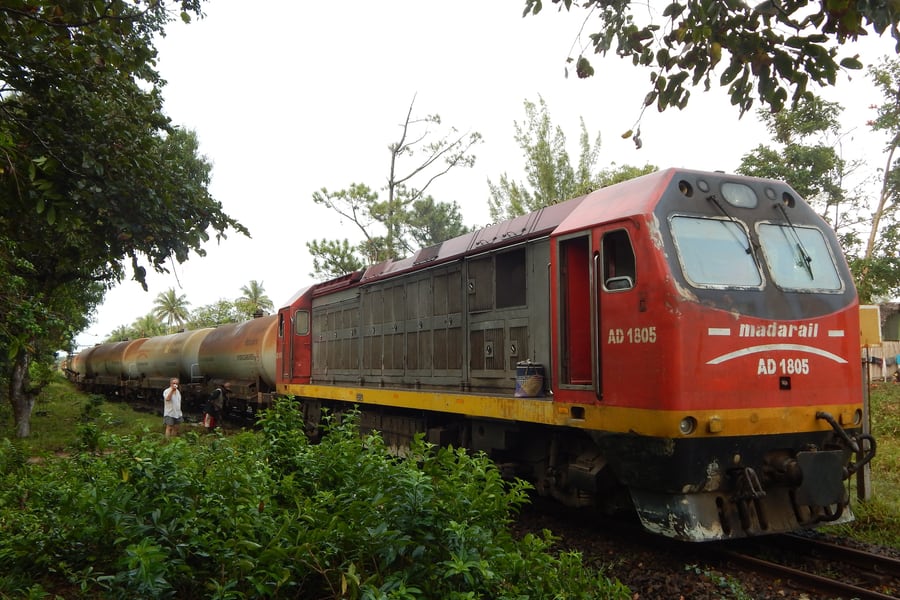
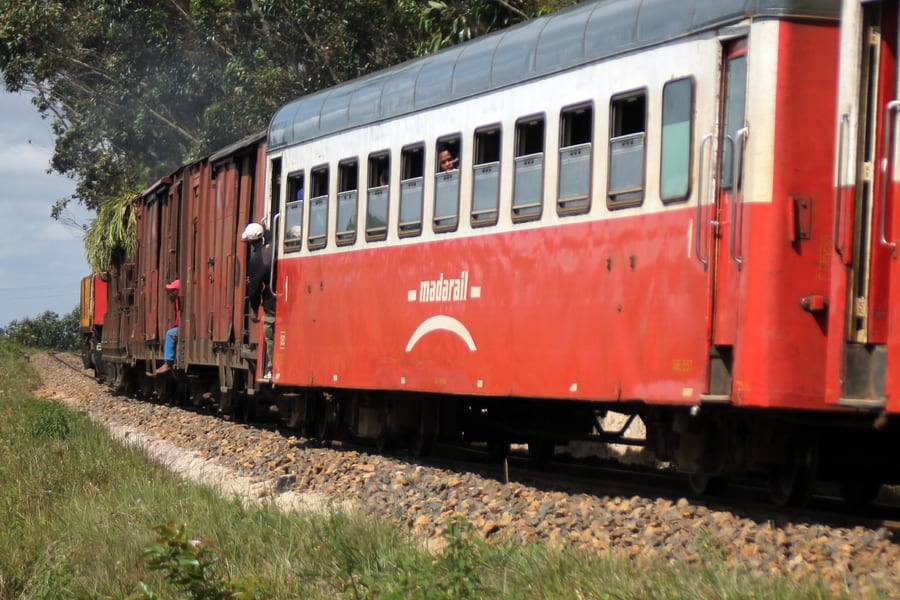
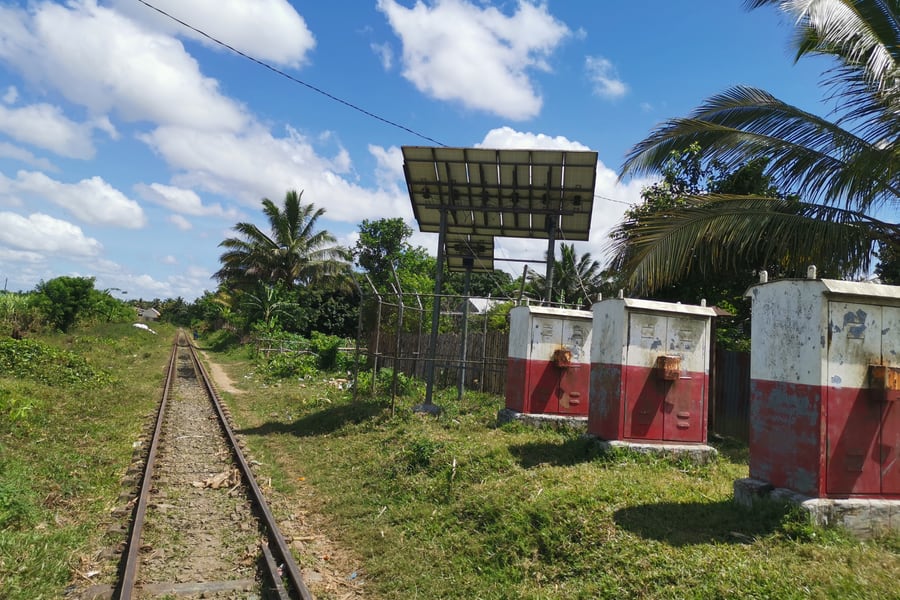
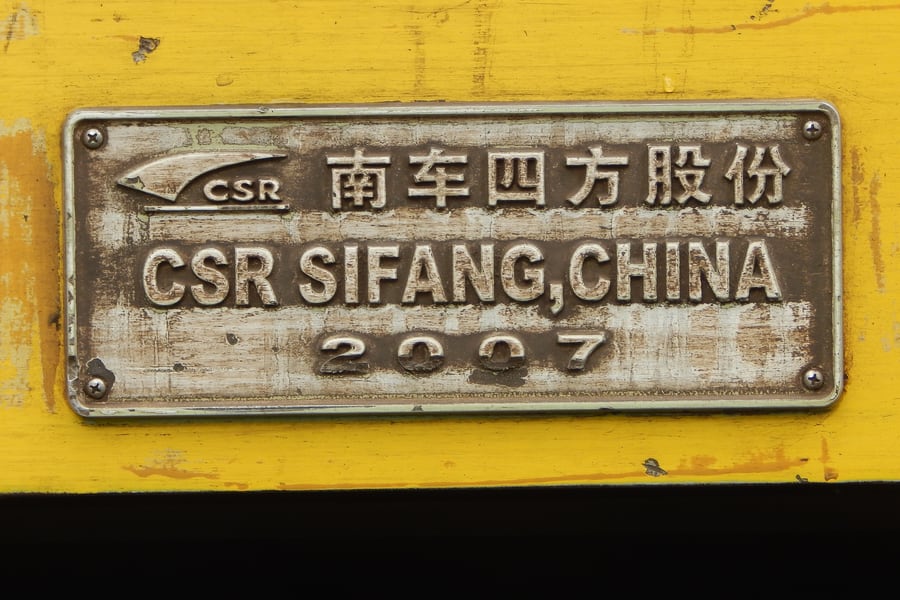
The diesels are plainly lettered — red cab, yellow band, the operator's name in a white swash and a running number such as AD 1805 on the flank; the builder's plates on this railway's newer metal read CSR Sifang, China. Behind the locomotive, four days a week, go two saloons in the same red livery, eighty-eight seats apiece, and two vans that take whatever will not fit under a seat: rice, charcoal, fruit, poultry, timber. On the other days the same metals carry the traffic that actually pays the bills — hydrocarbons in tank wagons, chromite off the Lake Alaotra branch, cement, iron, rice and cereals.
The average over the run is about eighteen kilometres an hour. Nobody on board treats that as a fault. The train stops where there are people, and where it stops a market forms alongside the coaches for as long as it stands there — which is most of the reason the schedule allows nine hours for a distance that a car, if there were a road, would do in three.
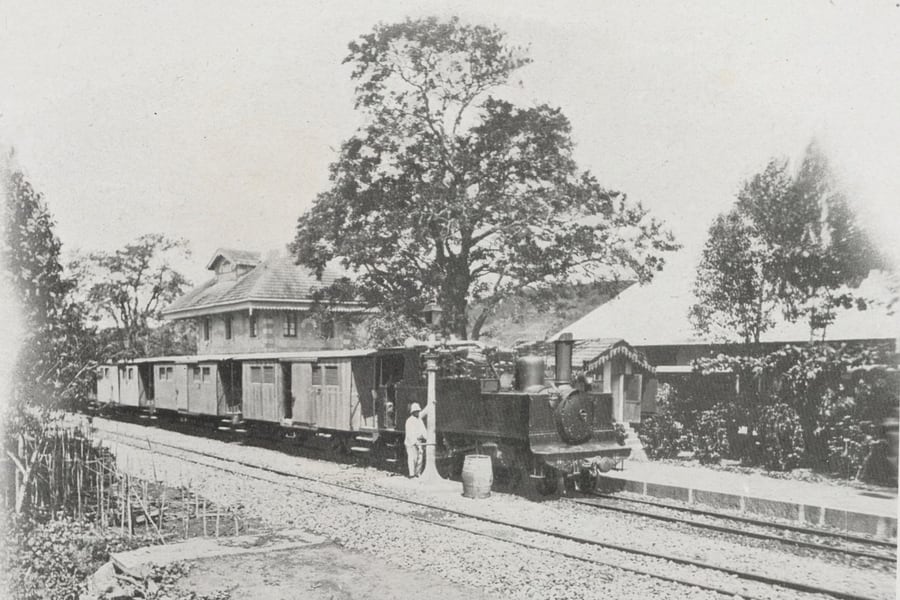
Along the route
 Andopascalou / Wikimedia Commons · CC0 · 2018 · cropped
Plates in Chinese
The newer metal on this railway carries builder's plates reading CSR Sifang, China. Look for a running number in white on a red flank — AD 1805 works the coast section — and for the yellow band along the frame.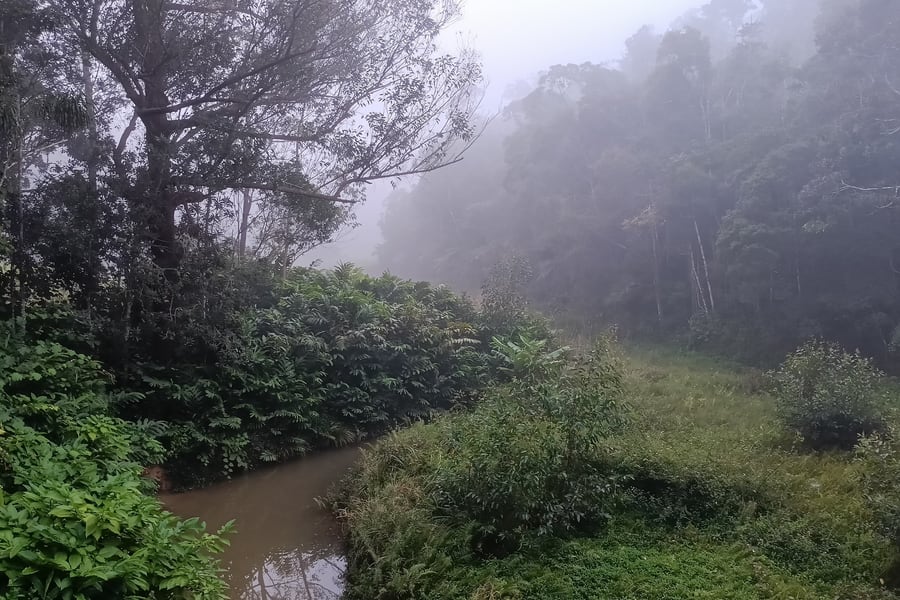 Zoubl / Wikimedia Commons · CC BY-SA 4.0 · 2024 · cropped
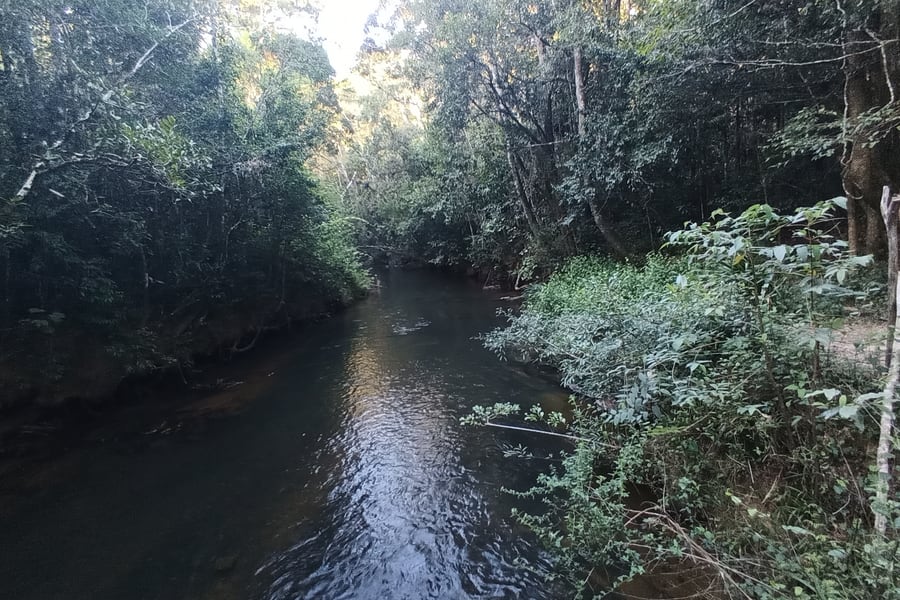
Rain on 210 days a year
The forest at Andasibe takes 1,700 mm of it, and the line runs through the middle. Mist off the ridges for the first two hours, and the reason the middle of the route has no road and no alternative.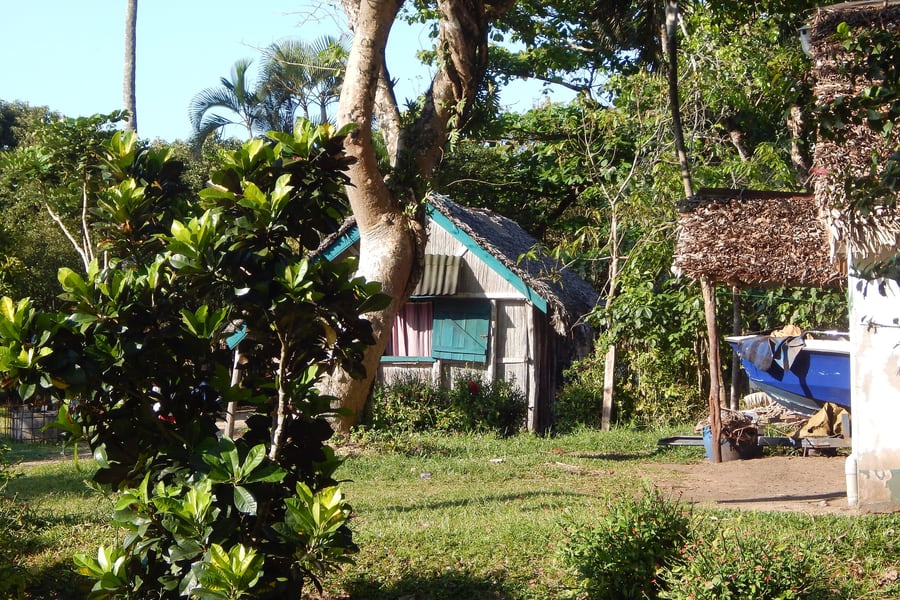 Andopascalou / Wikimedia Commons · CC BY-SA 4.0 · 2018 · cropped
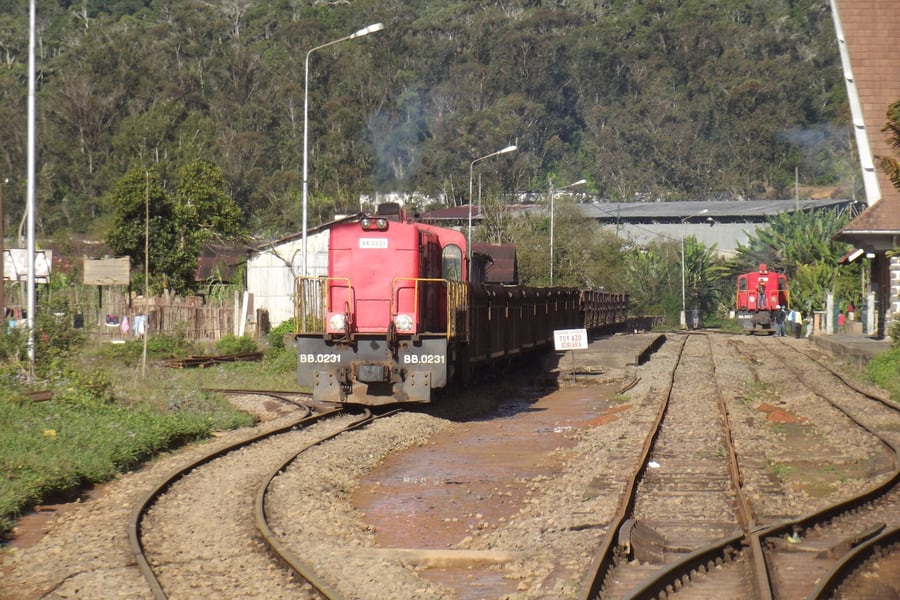
The last fourteen kilometres
Past Brickaville the country turns to sand, coconut and screw pine, and the houses are plank and thatch on stilts. Canal on one side, ocean on the other, and the train between them.A bit of history
Culture & experiences along the way
 Leonora Enking / Wikimedia Commons · CC BY-SA 2.0 · 2000 · cropped
The Buffet de la Gare at Andasibe
When this was the road to the coast, everyone bound for Tamatave broke the journey at Andasibe station, and the railway's buffet fed them. Madarail's own account of the house names Prince Philip, Presidents Houphouët-Boigny and Tsiranana and a delegation from the Emperor of Japan among those who stayed. It is being rebuilt as the Relais du Rail, and is not open yet.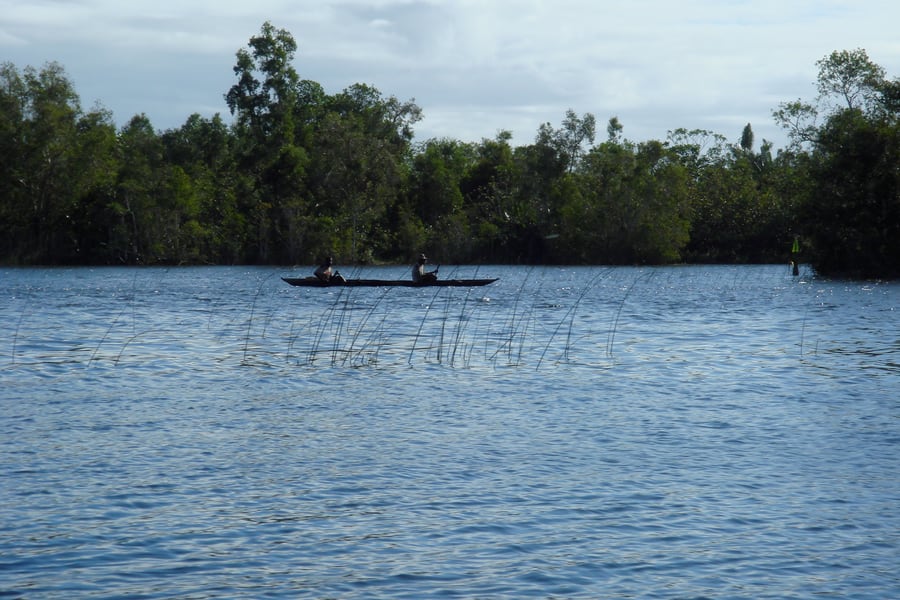 Olivier Lejade / Wikimedia Commons · CC BY-SA 2.0 · 2008 · cropped
Where the vila are
Ambila is named for the vila, the wooden fish traps staked in rows across the canal; lemaitso is "the green". The women of the village weave sobika, the tight baskets that carry fish and rice, and the clove plantations inland scent the whole walk. Pirogues do the work a road would do elsewhere.Timetables
The Dia Soa runs four days a week, out to the coast on Sundays and Thursdays and back inland on Tuesdays and Saturdays. Every working leaves at 07:00 and is booked into its destination at 16:00 — nine hours for 163 kilometres. There is one train each way on each of those days and nothing on Mondays, Wednesdays or Fridays.
| Day | Departure | Arrival |
|---|---|---|
| Sunday | Moramanga 07:00 | Ambila-Lemaitso 16:00 |
| Tuesday | Ambila-Lemaitso 07:00 | Moramanga 16:00 |
| Thursday | Moramanga 07:00 | Ambila-Lemaitso 16:00 |
| Saturday | Ambila-Lemaitso 07:00 | Moramanga 16:00 |
The intermediate halts — Andasibe, Andekaleka, Lohariandava, Fanasana, Razanaka, Anivorano, Brickaville and the rest — are not published with individual times, and in practice the train reaches them when the loading at the previous one is finished. Treat 16:00 as an intention rather than a promise: nine hours is the booked time, and the run has no margin built into it for a fallen branch, a washout or a long stop.
Season matters more here than the day of the week. The dry months, roughly May to October, are when the line is most reliable. Between December and March the cyclones come, and this railway has a long record of being cut by them — the 2021 attempt to restart passenger trains ended that way, with the track blocked by storm damage before the service had established itself. If you are planning around the Dia Soa in the wet season, plan a way out that is not the Dia Soa.
Times as of September 2026, from Madarail's own passenger-train page: madarail.mg (opens in a new tab). The operator publishes no telephone booking and no online sale; the commercial department takes enquiries on +261 20 22 345 99.
Tickets
There is no online sale and no agency. Tickets are written out at the station, in cash, in ariary: Madarail runs the passenger train in partnership with the communes along the line, and it is the communes that sell the seats and manage the platforms. Expect a name and an identity number to go into a ledger as well as onto the ticket, so carry a passport.
Madarail has published no tariff for Moramanga to Ambila-Lemaitso. The only fares it announced when the service reopened were on the Toamasina workings — 7,000 ariary second class, 15,000 first, for the full run out of Moramanga — which give the scale rather than a quotation. What runs today is two 88-seat saloons; the six coaches Madarail has bought since, four second class and two first, were still being commissioned when it last said so.
Book your tickets
Second class
Bench seating, bought at the station in cash
What the line travels in, and where the trading through the windows happens.
via MadarailFirst class
A smaller saloon, when one is running
Madarail has two 88-seat coaches in traffic and six newer ones still being commissioned.
via MadarailRail Passes
No rail pass covers Madagascar, and none would be worth carrying if one did. The country has two metre-gauge systems that do not touch each other — Madarail's in the north-east, the Fianarantsoa–Côte Est far to the south — and between them they run a handful of scheduled passenger workings a week. There is no through ticketing, no network map to spend a pass across and no multi-journey product of any kind.
Tickets are bought singly, at the station, for the train you are taking. Budget for the fare in cash and for the far larger cost of the days either side of it, because the Dia Soa only runs on four of them.
Places to Visit
The line's great advantage is that it puts the rainforest and the coast on the same ticket. Andasibe is twenty-six kilometres out of Moramanga and is the reason most visitors come to this side of Madagascar at all; Ambila-Lemaitso, nine hours further on, is where the island runs out into the Indian Ocean. Everything below is within reach of a station on the run.
 Heinonlein / Wikimedia Commons · CC BY-SA 4.0 · 2015 · cropped
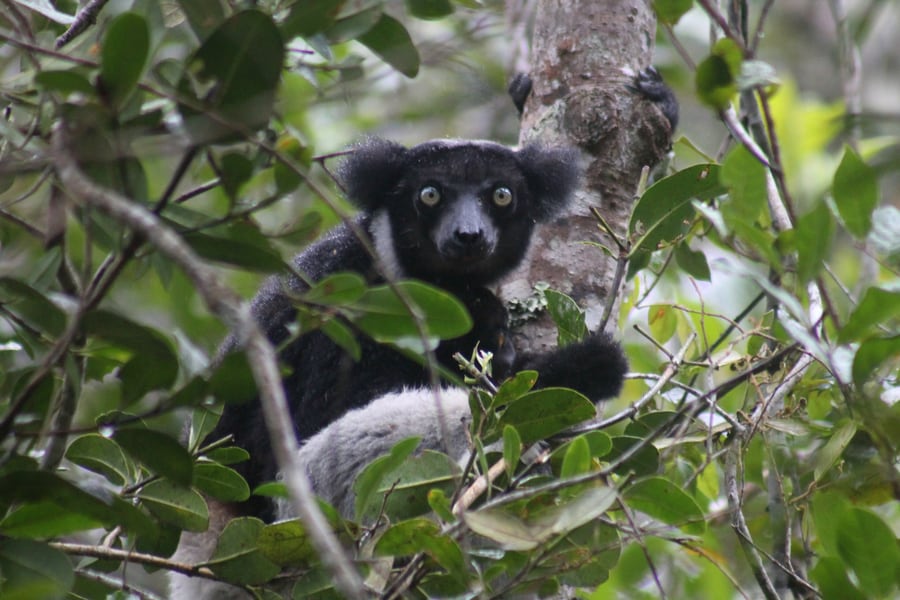
Analamazaotra, and the animal that sings
The reserve beside Andasibe station is half of Andasibe-Mantadia National Park, 155 km² of primary rainforest between 800 and 1,260 metres, and it is where people come to hear the indri — the largest lemur alive, black and white, 6 to 9.5 kg, which holds itself upright in the canopy and communicates with other family groups by singing across the valley. Eleven lemur species live in the park. A guide is compulsory.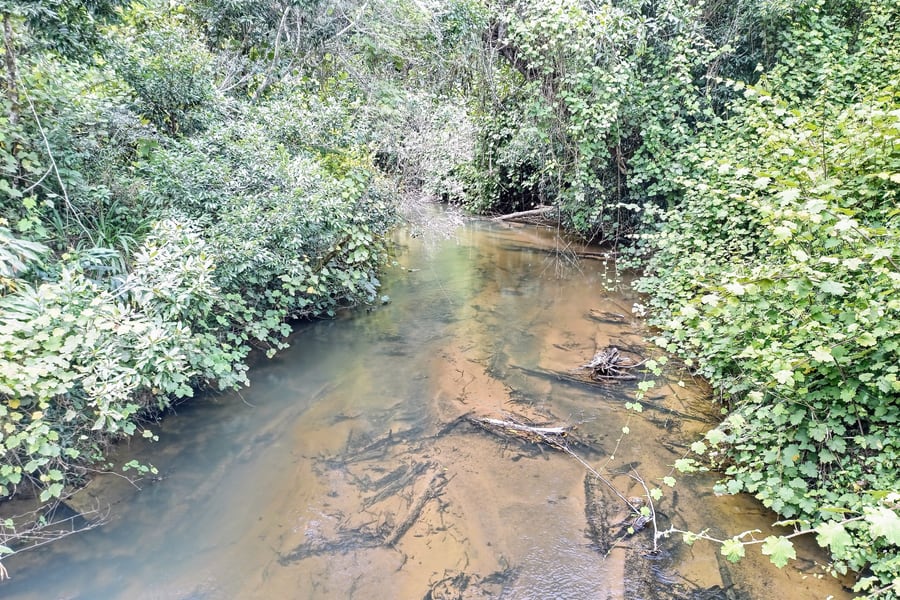 Anai171 / Wikimedia Commons · CC BY-SA 4.0 · 2025 · cropped
The Vohitra, and the country with no road
Below Andasibe the line drops into the valley of the Vohitra and stays with it through An'ala, Fanovana, Ambatovola and Andekaleka. There is no through road here and no way to see this stretch except from the train or on foot: rainforest to the ballast edge, a river the colour of tea after rain, and villages whose market is whatever comes down the line twice a week.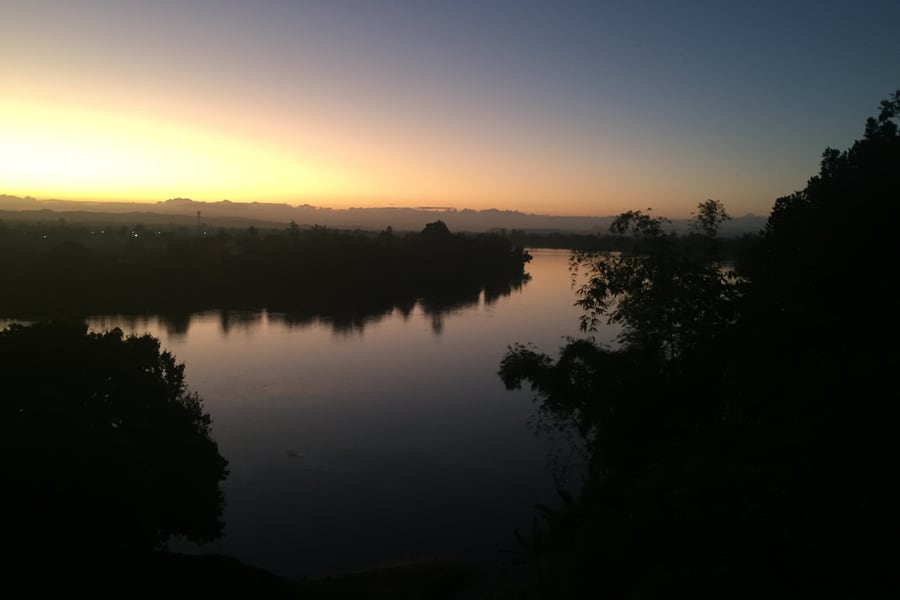 Eldascar24 / Wikimedia Commons · CC BY-SA 4.0 · 2023 · cropped
Brickaville on the Rianila
Vohibinany on the timetable and Brickaville on every signboard, this is the junction where the line splits for Toamasina and for the coast, and a sugar town besides. The Rianila widens below it into an inland harbour where pirogues and small motor boats load for the canal. It is also the last place on the route with shops, a bank and a hotel.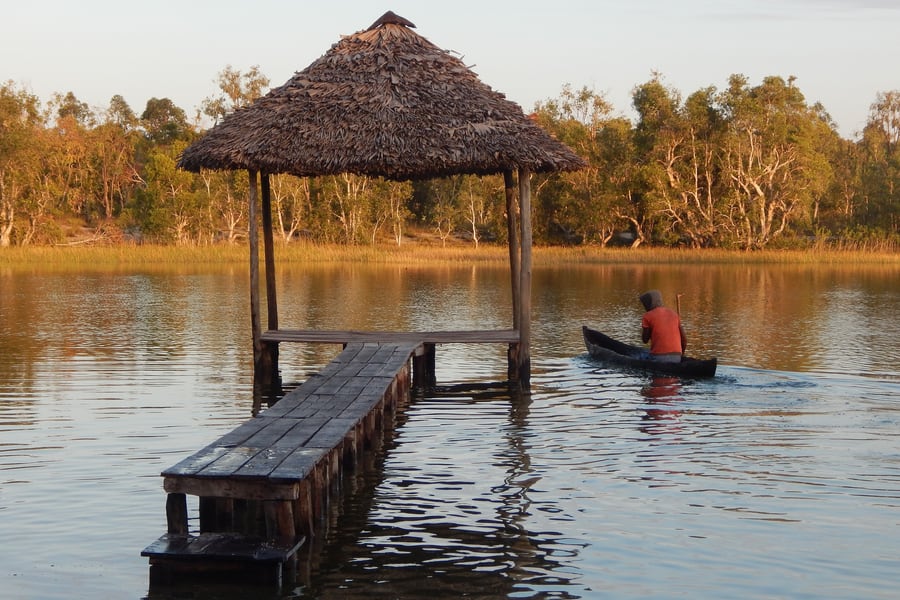 Andopascalou / Wikimedia Commons · CC BY-SA 4.0 · 2018 · cropped
Ambila-Lemaitso, between the canal and the sea
The end of the line: a sandbar village with the Canal des Pangalanes on one side and the Indian Ocean on the other, reached from the north only by water. What people do here is take a pirogue or a motor boat out on the canal, swim in fresh water and salt on the same afternoon, and walk inland through the clove trees. The nearest villages — Anjanaborona, Andovovao, Ambodiampaly — are all approached along the canal.Where to Sleep
Sleep at the ends and in the middle. Moramanga is where the train starts and the only town on the run with a range of rooms; Andasibe, twenty-six kilometres down the line, is where the lodges are, because the national park brings the visitors. Between Andasibe and the coast there is nothing that takes bookings.
At the far end, Ambila-Lemaitso does have places to stay — bungalows on the sand and on the canal — but none of them keeps a website of its own, only entries in directories we cannot vouch for, so there is no card for the arrival end here. Ask at Brickaville or arrange it through whoever takes you across the water.
Where to stay
Mangoro Hotel
At the entrance to Moramanga, where the train starts
Opened in 2023, with a 25-metre outdoor pool, a restaurant, a bar and a walled garden.
Check Availability (opens in a new tab, on mangorohotel-moramanga.com)via mangorohotel-moramanga.comVakôna Forest Lodge
In the forest at Andasibe, twenty-six kilometres down the line
Bungalows scattered through primary forest, with a restaurant, a pool and a private reserve; open since 1994.
Check Availability (opens in a new tab, on vakonahotel.com)via vakonahotel.comMantadia Lodge
Above the valley at Perinet II, Andasibe
Rooms looking out over the forest, a restaurant and a spa working with Malagasy essential oils.
Check Availability (opens in a new tab, on mantadialodge.com)via mantadialodge.comPractical Information
Getting to the start. Moramanga is on the RN2 east of Antananarivo, three to four hours by road, and every taxi-brousse heading for Toamasina passes through it. The station is in the town.
Getting back. The train is the only reason to be at Ambila-Lemaitso if you have not planned the return, and the next one inland leaves two or three days later. The alternative is the ferry across the canal and a rough eighteen kilometres of track to the RN2 near Brickaville, where the buses run.
Money and language. Ariary, cash, small notes. French is the working language of the railway; Malagasy is what is spoken on the platform, and English will not get far.
What to take. Water and food for the whole nine hours, though there is plenty sold at the halts. Something dust-proof for a bag. The saloons have bench seating and no catering, and the two vans behind them are where anything large travels.
Questions or corrections
Planning this trip and stuck on something, or spotted a time, fare or detail that has changed? Send us a message about Moramanga to Ambila-Lemaitso. We read every one, and we update this page when something has changed.