The Nyahururu Safari Train
Caligula / Wikimedia Commons · CC BY 2.0 · 2011 · cropped
- DistanceAbout 219 km
- Duration7 hr 50 min
- Best seasonTwice weekly · from 12 Nov 2026 Gilgil–Nyahururu only
Introduction
Where this train stands, November 2026. From 12 November 2026 Kenya Railways runs the Nyahururu Safari Train between Gilgil and Nyahururu only, while engineers work on the line through Kibera to Talanta in Nairobi. The notice gives no date for the through train from Nairobi to return. The timetable section has both patterns.
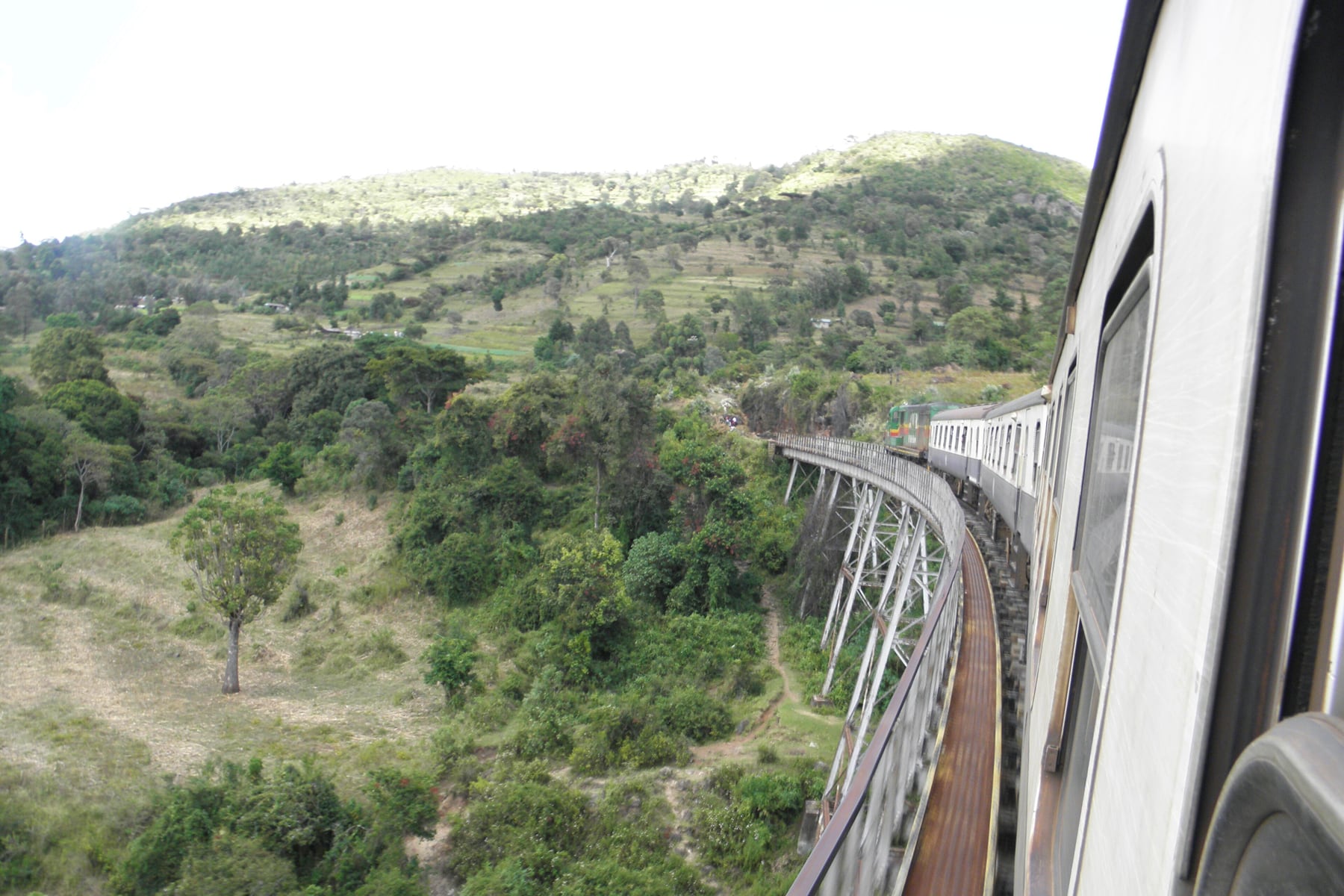
This train goes down into the Great Rift Valley to climb out the other side higher than it went in. It leaves Nairobi westwards, crosses the highlands at Limuru and goes over the edge at Kijabe, at about 2,200 metres, on curves and viaducts down the valley wall. It runs along the floor past Mount Longonot and Lake Naivasha, 1,884 metres above the sea, and at Gilgil it turns off up a branch line that ends beside Thomson's Falls, at 2,360 metres.
That branch is the story. It opened in 1929, carried farm produce, livestock, timber and passengers from the Aberdare country for half a century, and fell out of use in the early 1980s. Kenya Railways rebuilt its 77.8 kilometres from 2021, and on 1 June 2026 the first passenger train in forty-six years left Nairobi for Nyahururu. Kenya Railways sells it as the Nyahururu Safari Train; the line is still commonly known as the Thomson's Falls railway, after the town's old name.
It is an ordinary two-class train, twice a week each way, and a day long: seven hours and fifty minutes from end to end, for KES 600 in economy.
The Journey
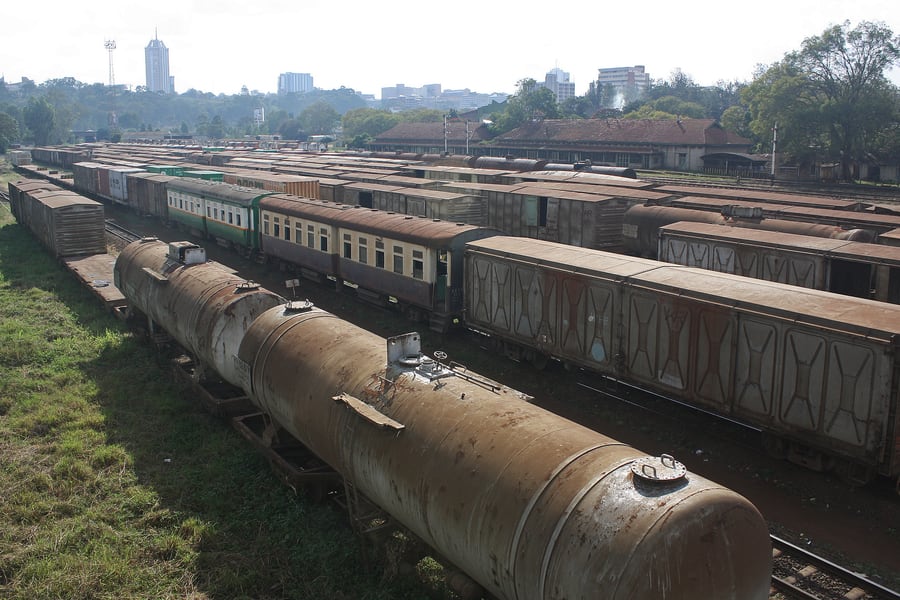
The train leaves at 10:00 from Nairobi's old station in the city centre, the metre-gauge terminus, not the standard-gauge Nairobi Terminus out at Syokimau. It heads west out of the city through Kibera, Satellite and Lenana, then climbs through Dagoretti, Kikuyu and Muguga to Limuru. Nairobi itself stands at 1,795 metres; the line climbs from there to the rim of the Rift.
Down the wall of the Rift
Beyond Uplands and Matathia the line reaches the edge of the Rift Valley. This is the old Uganda Railway main line, and it goes down the eastern wall in a series of curves and steel viaducts past Kijabe, where the valley floor opens out below. The section was washed out by the rains of 2024; Kenya Railways rebuilt the embankments, bridges and drainage and ran its test train over it on 19 January 2026.
On the floor the train calls at Longonot, under the volcano of the same name, then Suswa, Munyu and Naivasha, close to the lake. Morendat and Ilkek follow, and the train reaches Gilgil at 14:00, four hours out of Nairobi.
Up the branch
At Gilgil the train stands for a quarter of an hour, then leaves the main line and turns north onto the branch. This is the 77.8 kilometres that were rebuilt between 2021 and 2026. It climbs out of the valley onto the Nyandarua plateau west of the Aberdare range, reaching Ol Kalou, the county capital, at 16:15, and Nyahururu at 17:50.
On board
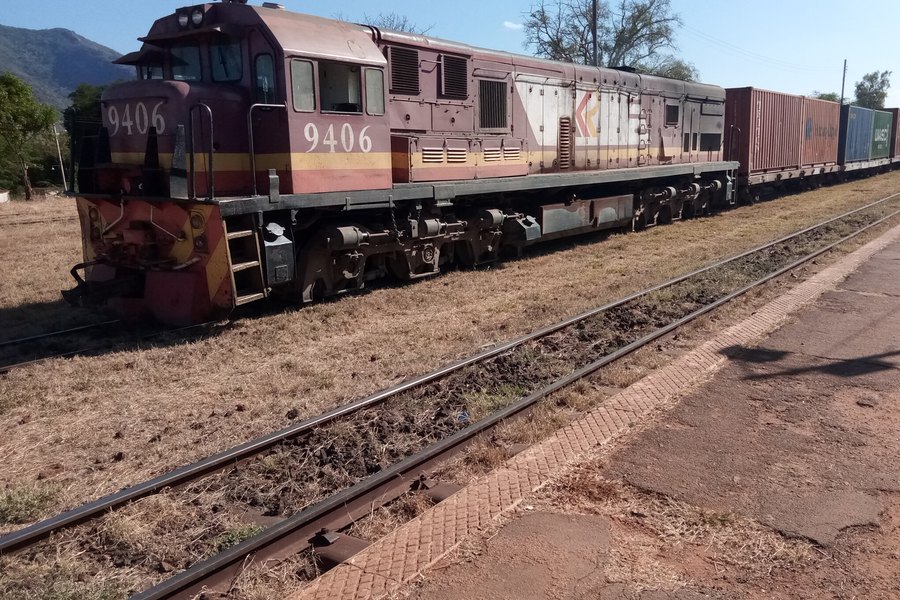
This is a working train, not a tourist one. It carries economy and first class, and the line also carries freight: the first train on the reopened branch, on 31 May 2026, was a load of government fertiliser for the cereal depots at Ol Kalou and Nyahururu. Kenya Railways does not publish which locomotive works the passenger train; its launch photographs show locomotive 7504 at the head of it. Bring food and water for the day.
The return leaves Nyahururu at 10:00 on Wednesday and Sunday and reaches Nairobi at 17:50.
Along the route
 Brendansoloughlin / Wikimedia Commons · CC BY 4.0 · 2021 · cropped
Over the rim at Kijabe
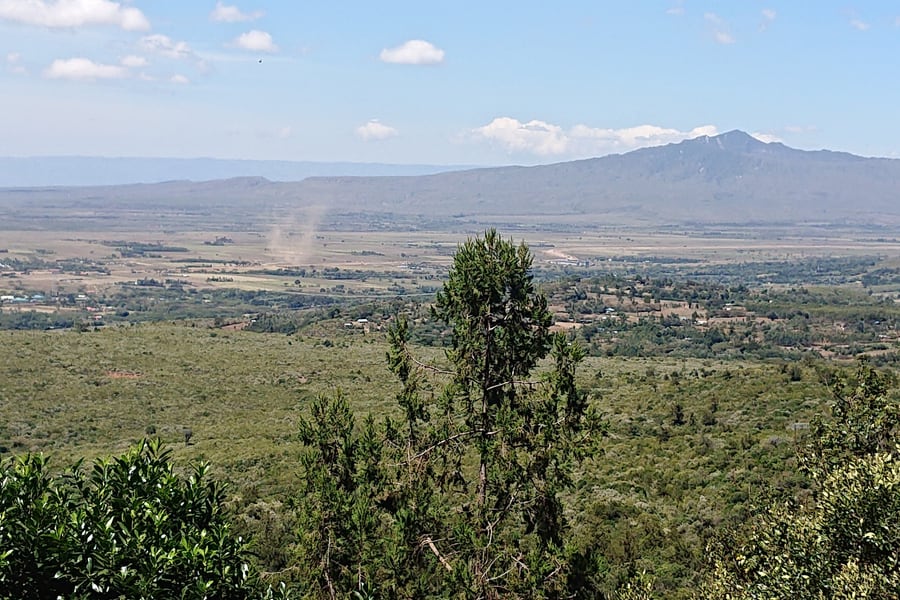
Past Limuru and Uplands the line reaches the edge of the Rift Valley and goes down its eastern wall on curves and viaducts. Kijabe sits at about 2,200 metres, and the valley floor opens out below, with Mount Longonot in the middle of it.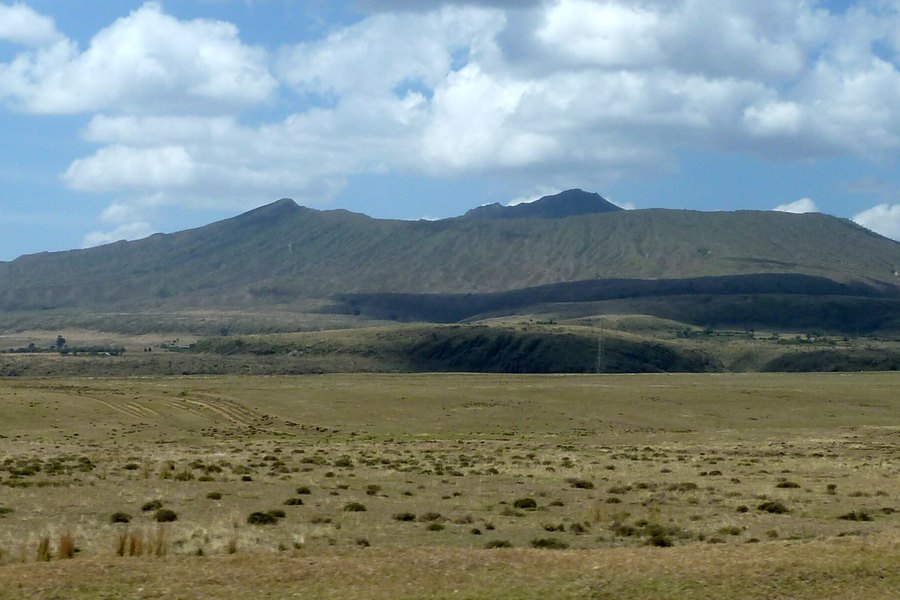 Николай Максимович / Wikimedia Commons · CC BY 3.0 · 2011 · cropped
Mount Longonot
The volcano the train passes at Longonot station last erupted in the 1860s. Its summit is 2,776 metres high, and a 7.2-kilometre path runs right round the rim of its crater, which has a small forest growing inside it.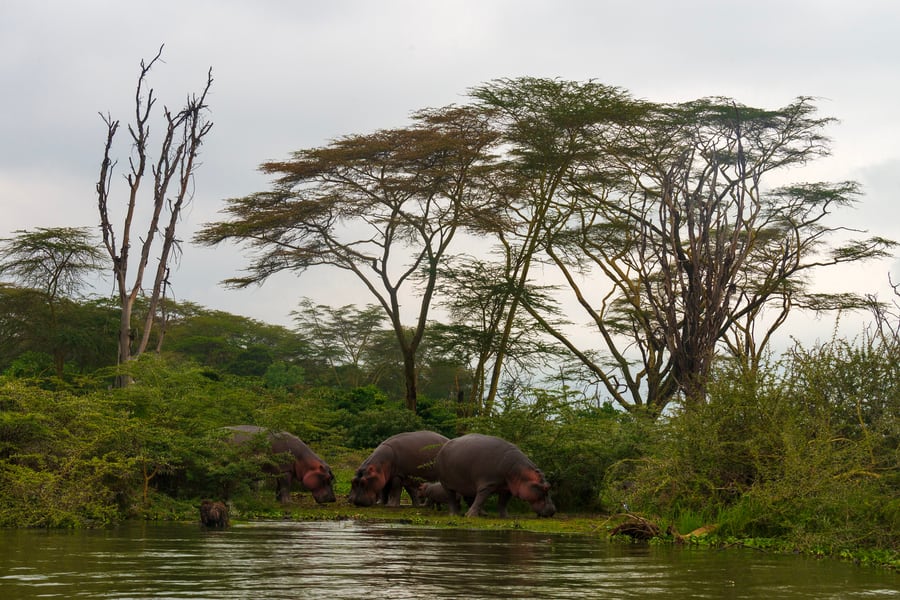 Daniel Case / Wikimedia Commons · CC BY-SA 4.0 · 2025 · cropped
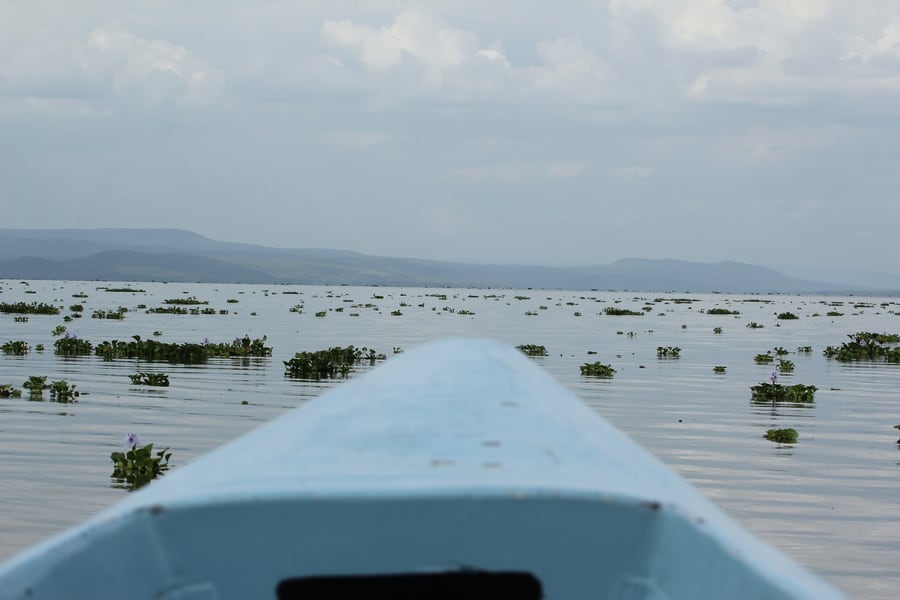
Lake Naivasha
The lake lies at 1,884 metres, well below the rim at Kijabe. It is fresh water with no visible outlet, more than 400 kinds of bird and a sizeable population of hippos, which graze its shores under the acacias.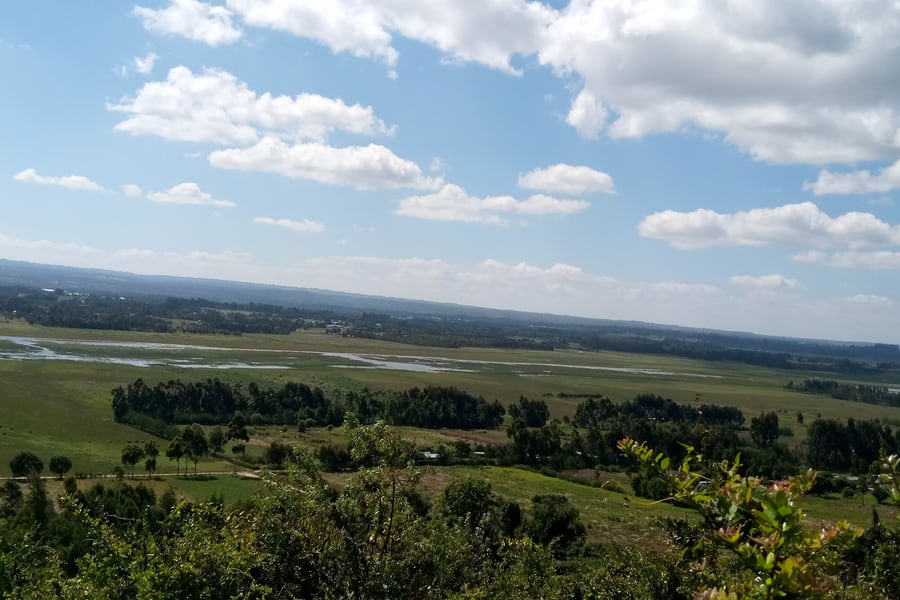 WAKABADENIS / Wikimedia Commons · CC BY-SA 4.0 · 2020 · cropped
Up onto the plateau
At Gilgil the train leaves the main line and turns north up the 1929 branch, past Ol Kalou, the capital of Nyandarua County, towards the Aberdare foothills. Lake Ol Bolossat lies a few kilometres from Thomson's Falls.A bit of history
Culture & experiences along the way
 giannip46 / Wikimedia Commons · CC BY-SA 3.0 · 2005 · cropped
The chapel the prisoners built
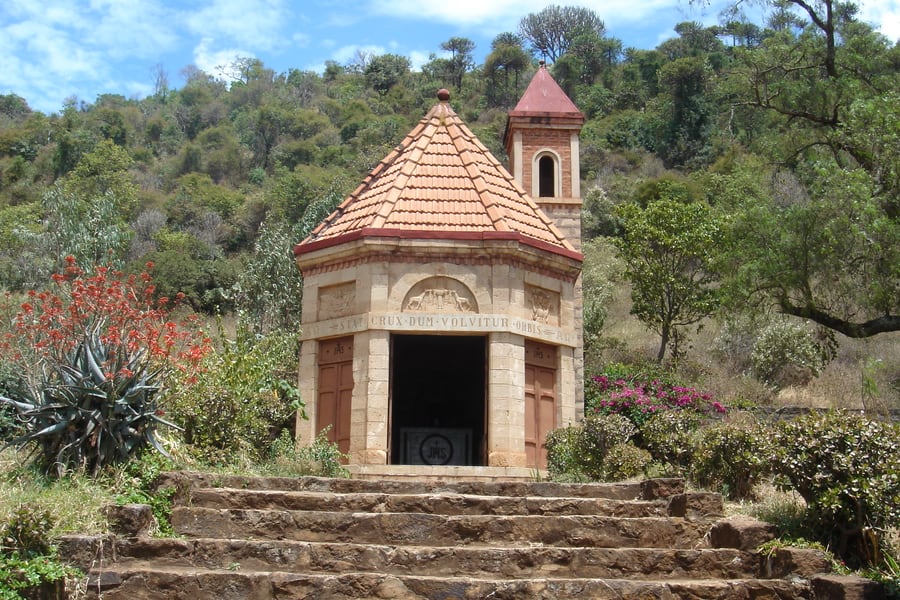
At the foot of the escarpment near Mai Mahiu stands a tiny pentagonal Catholic chapel, finished at the end of 1942 by Italian prisoners of war who were building the road down the Rift. Four wooden pews seat twelve, and it is described as the smallest church in East Africa.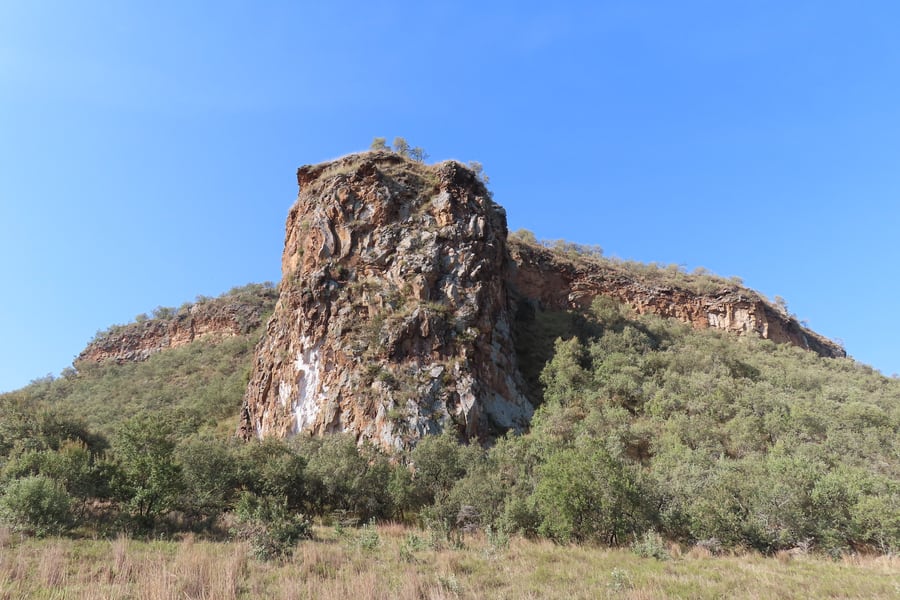 Superchilum / Wikimedia Commons · CC BY-SA 4.0 · 2025 · cropped
Through Hell's Gate on foot
Near Lake Naivasha, Hell's Gate National Park runs through a gorge of red cliffs and two volcanic plugs, Fischer's Tower and Central Tower. The gorge was named in 1883 by Gustav Fischer and by Joseph Thomson — the same Thomson whose falls are at the end of the line.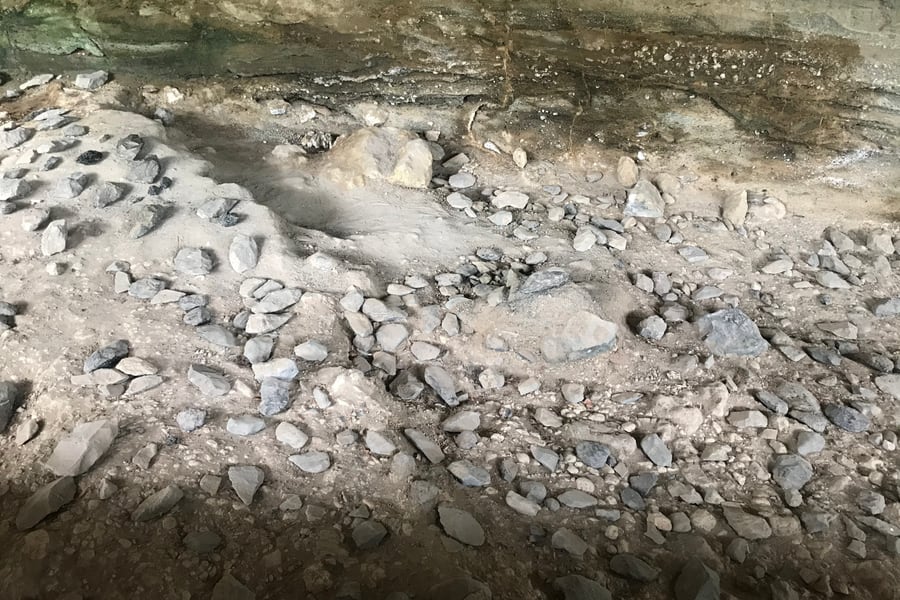 Xmd5a / Wikimedia Commons · CC BY-SA 4.0 · 2020 · cropped
Hand axes at Kariandusi
Near Gilgil, the Kariandusi prehistoric site shows Acheulean hand axes where they were found, most of them of obsidian. Louis Leakey's expedition of 1928–29 discovered it, and the National Museums of Kenya date it to between 700,000 and a million years old.Timetables
From 12 November 2026 the train runs between Gilgil and Nyahururu only, for engineering works on the Nairobi–Kibera–Talanta section, with no end date announced. Press reports of Kenya Railways' notice give these times; they differ on the days, one listing Tuesday, Friday and Sunday and another every day, so confirm with Kenya Railways before travelling.
Gilgil–Nyahururu Gilgil depart 08:00 Nyahururu arrive 11:50 Nyahururu depart 15:00 Gilgil arrive 18:35
The full service, when it runs from Nairobi, is twice a week each way: Nairobi to Nyahururu on Tuesday and Friday, Nyahururu to Nairobi on Wednesday and Sunday, both leaving at 10:00. Kenya Railways confirmed the twice-weekly pattern in June and July 2026.
| Station | Tue & Fri, to Nyahururu | Wed & Sun, to Nairobi |
|---|---|---|
| Nairobi | 10:00 | 17:50 |
| Gilgil | 14:00 – 14:15 | 13:35 – 13:50 |
| Ol Kalou | 16:15 – 16:20 | 11:30 – 11:35 |
| Nyahururu | 17:50 | 10:00 |
Read the return column from the bottom up. Both directions take seven hours and fifty minutes. The train also calls at the stations between Nairobi and Gilgil — Kibera, Kikuyu, Limuru, Kijabe, Longonot, Naivasha and others — for which Kenya Railways publishes fares but not times.
Times as published by Kenya Railways in June 2026, read November 2026. Changes are posted as public notices: Kenya Railways · Services (opens in a new tab).
Tickets
Tickets are sold at Nairobi Central Station and through Kenya Railways' own booking channels. Fares are fixed by station pair and class: the full run from Nairobi to Nyahururu is KES 600 in economy and KES 1,300 in first. While the train is cut back, Gilgil to Nyahururu is KES 150 in economy.
The cheapest ticket on the line is KES 50, Ol Kalou to Nyahururu, which says what the train is for: a local service for the towns it reconnects. Fares as published by Kenya Railways, June 2026, read November 2026.
Book your tickets
Bharat / Wikimedia Commons · CC BY 2.0 · 2012 · croppedNairobi to Nyahururu, economy
KES 600 one way · Tuesday and Friday out
The full run in economy; from Nairobi it is KES 450 to Gilgil and KES 550 to Ol Kalou.
Book Tickets (opens in a new tab, on krc.co.ke)via krc.co.keTTC dude / Wikimedia Commons · CC BY-SA 4.0 · 2021 · croppedNairobi to Nyahururu, first class
KES 1,300 one way
First class from Nairobi is KES 960 to Gilgil and KES 1,160 to Ol Kalou.
Book Tickets (opens in a new tab, on krc.co.ke)via krc.co.keVinniescent / Wikimedia Commons · CC BY-SA 4.0 · 2020 · croppedGilgil to Nyahururu, economy
KES 150 one way · the section running from 12 November 2026
Gilgil to Ol Kalou is KES 100 and Ol Kalou to Nyahururu KES 50; first class on the full branch is KES 350.
Book Tickets (opens in a new tab, on krc.co.ke)via krc.co.keRail Passes
No rail pass covers Kenya. The country belongs to no international scheme and sells no national multi-journey ticket, so every trip to Nyahururu is a single bought from Kenya Railways.
A pass would have nothing to save in any case. The full run costs KES 600 in economy and KES 1,300 in first, and the branch alone KES 150. What is scarce is the train, not the money: two a week each way, so plan around the days, not the fare.
Places to Visit
With two trains a week each way, a stop on the way means a few days off the train or a road connection onward. Naivasha is the stop for the lake, Hell's Gate and Crescent Island; Gilgil is the junction, close to Lake Elmenteita and the hand axes at Kariandusi. Nyahururu, at the end, is a night or two at the falls: the train arrives at ten to six and does not leave again until ten the next morning or later in the week.
 Benh LIEU SONG / Wikimedia Commons · CC BY-SA 2.0 · 2012 · cropped
Naivasha
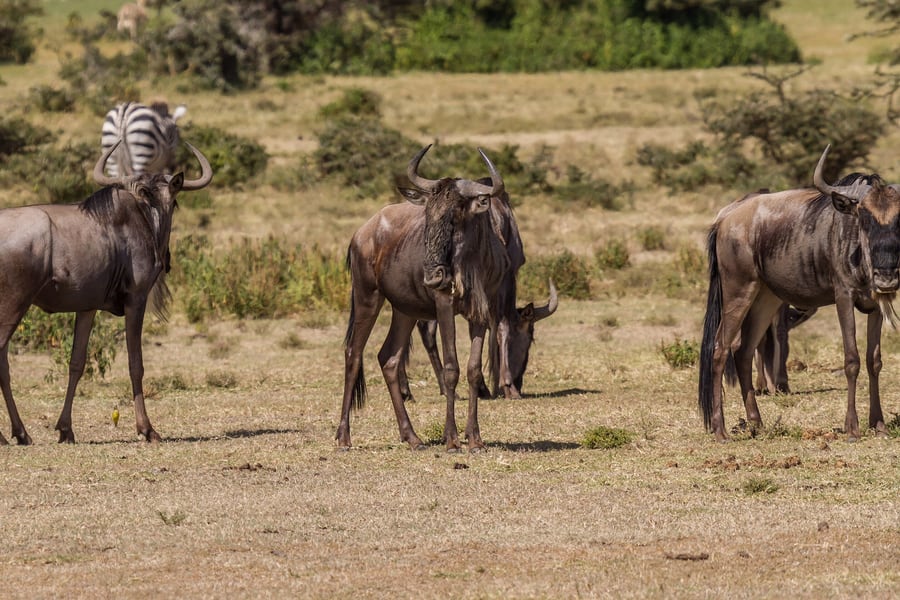
The town on the north-eastern shore of the lake, 92.8 kilometres from Nairobi by road. The lake's Maasai name means "that which heaves", for the waves the wind raises on it. Between 1937 and 1950 Imperial Airways flying boats landed here on the route from Southampton to South Africa. Boats go out to the hippos and to Crescent Island.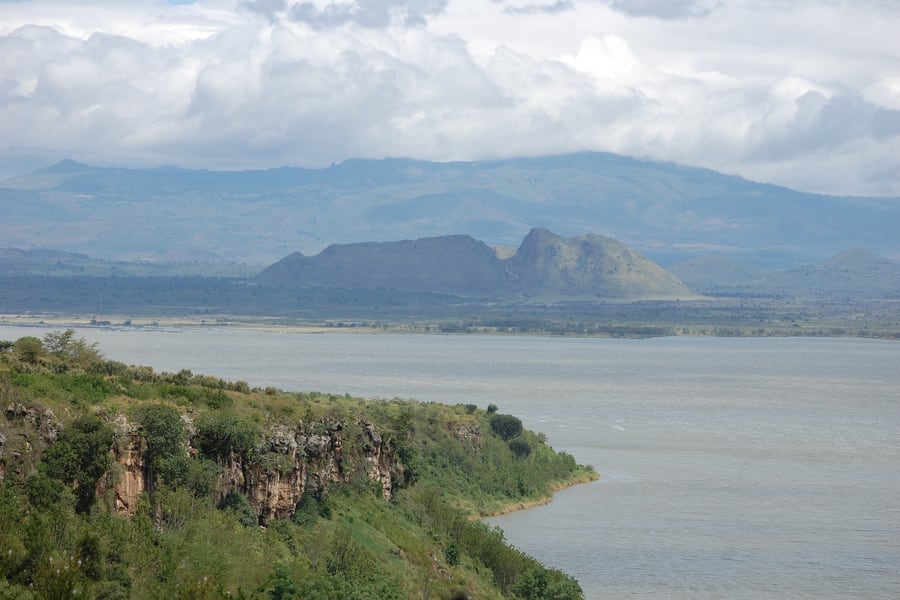 Katie Hunt / Wikimedia Commons · CC BY 2.0 · 2012 · cropped
Gilgil
A town between Naivasha and Nakuru where the branch to Nyahururu leaves the main line. Lake Elmenteita, a soda lake named from the Maasai for "dust place", lies close by; with Lakes Nakuru and Bogoria it is a UNESCO World Heritage Site, and a Ramsar wetland since 2005. In the 1920s to 1940s members of the Happy Valley set lived in Gilgil.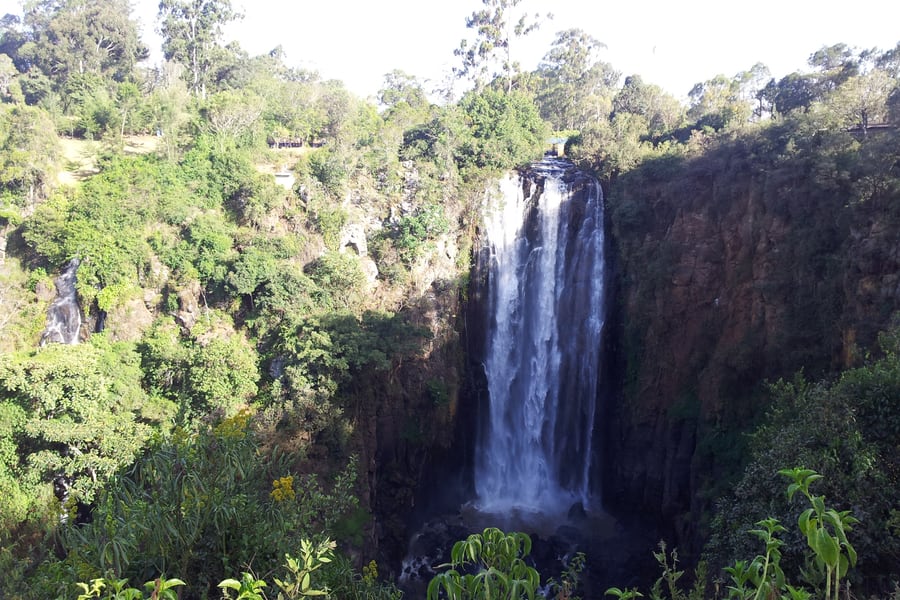 Raidarmax / Wikimedia Commons · CC BY-SA 3.0 · 2012 · cropped
Nyahururu
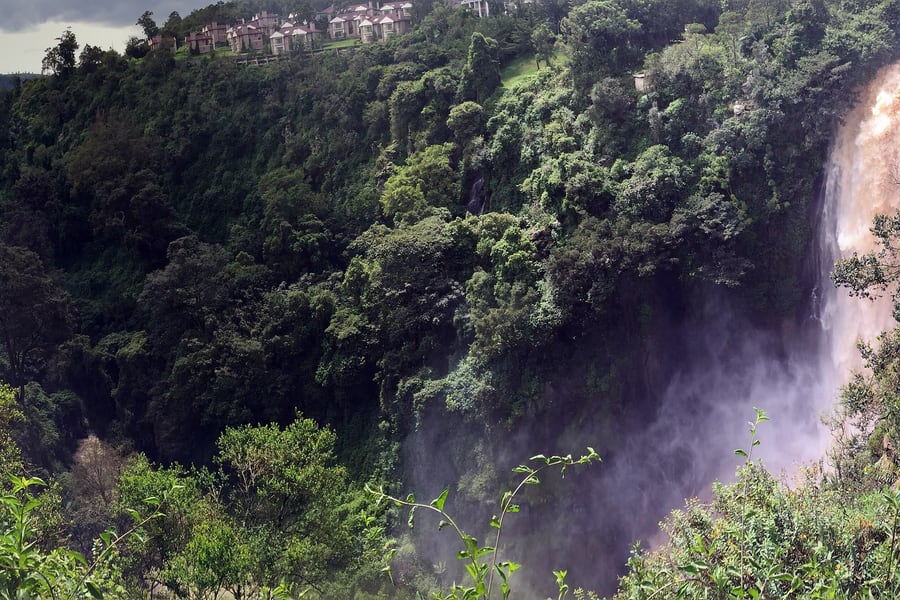
A town of about 36,000, founded as Thomson's Falls and named after the 74-metre waterfall on the Ewaso Narok, three kilometres away at 2,360 metres. Joseph Thomson reached it in 1883 and named it for his father. The altitude draws marathon runners to train here; the Olympic champion Samuel Wanjiru called it home.Where to Sleep
The train reaches Nyahururu at ten to six in the evening and the next one back leaves at ten the following morning, so a night at the top of the line is part of the trip. The lodge below faces the falls.
No prices, grades or ratings are given below, because none have been verified. The card says where the house stands and what it says about itself.
Where to stay
 Raidarmax / Wikimedia Commons · CC BY-SA 4.0 · 2017 · cropped
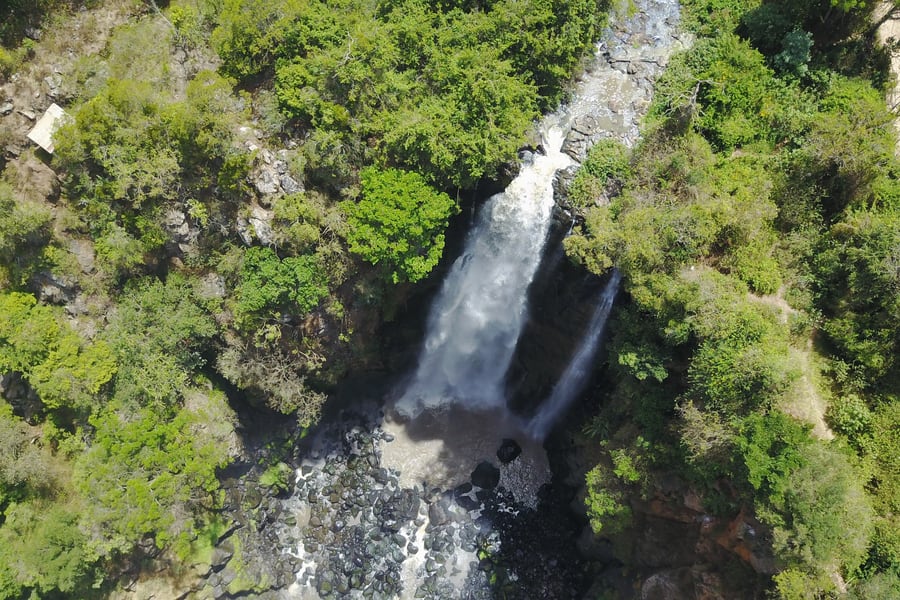
Thomson's Falls Lodge
Nyahururu, opposite the falls
The lodge's own site lists 36 rooms and cottages, each with an open log fireplace, immediately opposite the falls on the Ewaso Narok at about 7,800 feet.
Check Availability (opens in a new tab, on thomsonsfallslodge.co.ke)via thomsonsfallslodge.co.keQuestions or corrections
Planning this trip and stuck on something, or spotted a time, fare or detail that has changed? Send us a message about The Nyahururu Safari Train. We read every one, and we update this page when something has changed.