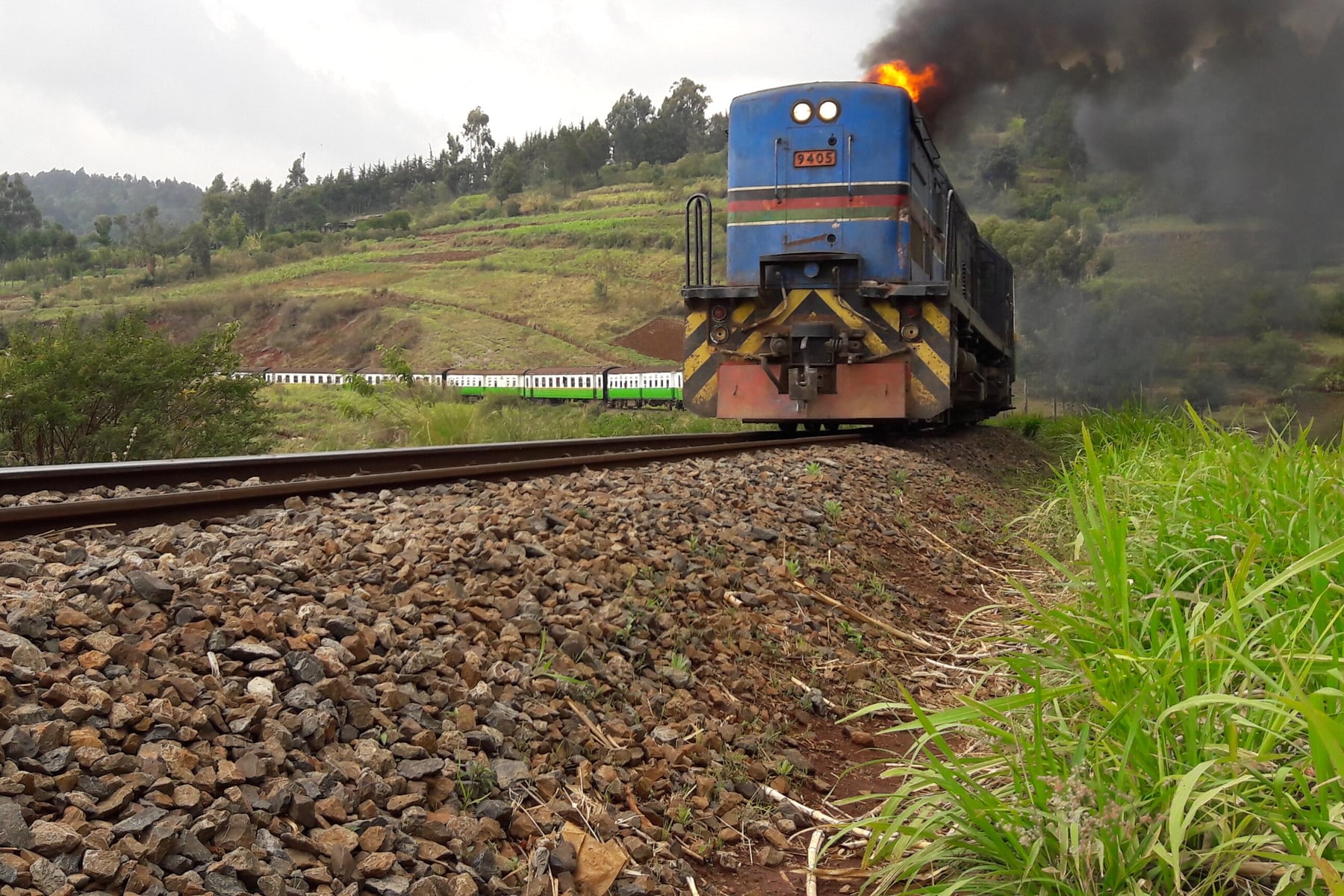
The Nanyuki Safari Train
Sambaza2 / Wikimedia Commons · CC BY-SA 4.0 · 2017 · cropped
- Distance177 km
- Duration7 hr 49 min
- Best seasonWeekly, all year · out Friday, back Sunday
Introduction
There is one train to Nanyuki a week, and its timetable is a weekend. It leaves Nairobi at nine on Friday morning, reaches the foot of Mount Kenya just before five, and does not come back until nine on Sunday. Nobody rides it as a day trip, because the timetable will not let them: whoever takes it up has two nights in the highlands, whether they planned for them or not.
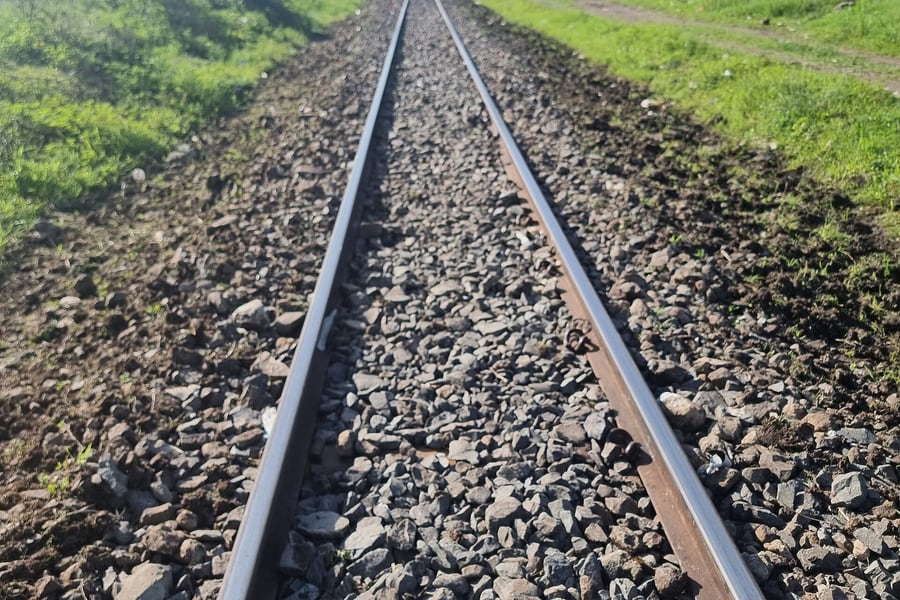
The railway it runs on is a metre-gauge branch built north from Nairobi in three stages — to Thika by 1913, Naro Moru by 1927 and Nanyuki by 1931 — through six of Kenya's counties. Passenger trains stopped in the late 1990s. The line was rebuilt for about three billion shillings, freight came back in August 2020, and on 11 December 2020 the first passenger train in more than twenty years left Nairobi for Nanyuki.
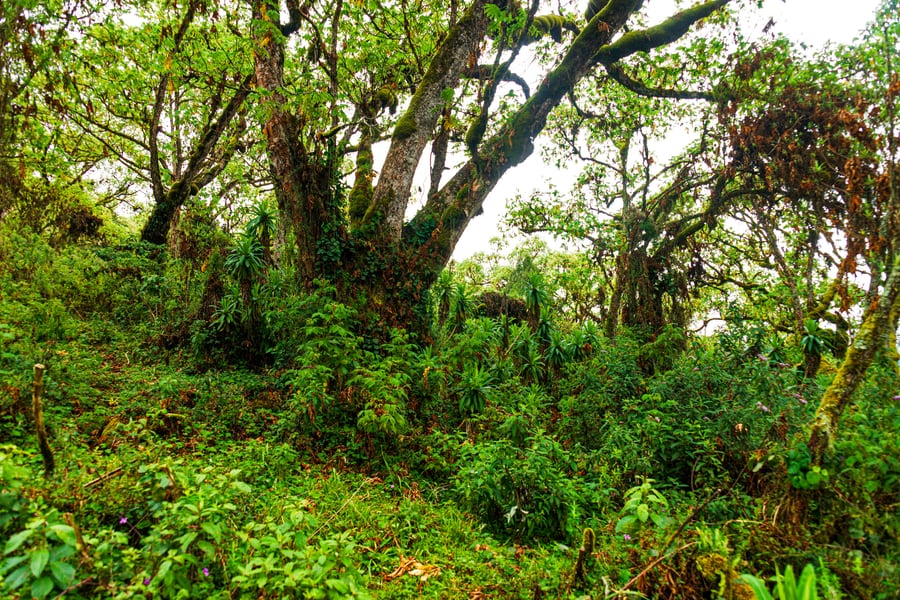
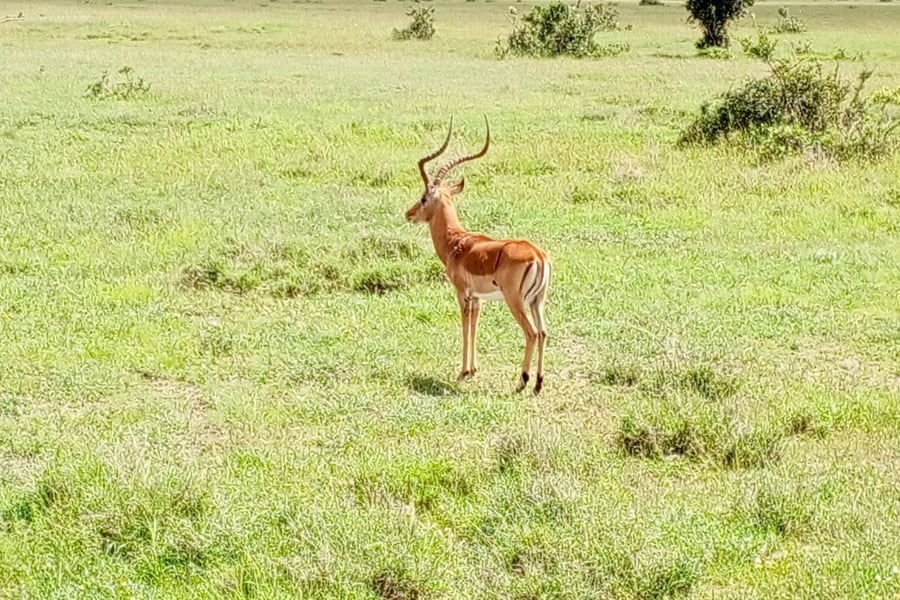
Kenya Railways sells it as a safari train, and the name is fair about the destination rather than the ride. The train is an ordinary metre-gauge service of economy and first-class coaches, calling at seventeen stations in 177 kilometres. What lies at the end is Laikipia: Ol Pejeta's rhinos and chimpanzees, the trailheads up Mount Kenya, and a town that sits just north of the equator.
The Journey
The train leaves from the old Nairobi station, the metre-gauge terminus in the city centre, not from the standard-gauge Nairobi Terminus out at Syokimau. For its first hour and a half it is a suburban train in all but name. It calls at Makadara, Dandora, Mwiki, Githurai, Kahawa and Ruiru, all inside the city's spread. Thika comes at 11:14, and with it the end of Nairobi.
North of Thika the line crosses into Murang'a County and climbs steadily. Makuyu, Maragua and Murang'a follow about half an hour apart, then Sagana at 13:40, on the river of the same name and at the southern foot of Mount Kenya. From here the mountain is the landmark for the rest of the afternoon. The line keeps to its western side, so northbound it stands on the right: Batian, the summit, is 5,199 metres high and the second-highest point in Africa.
Up to the equator
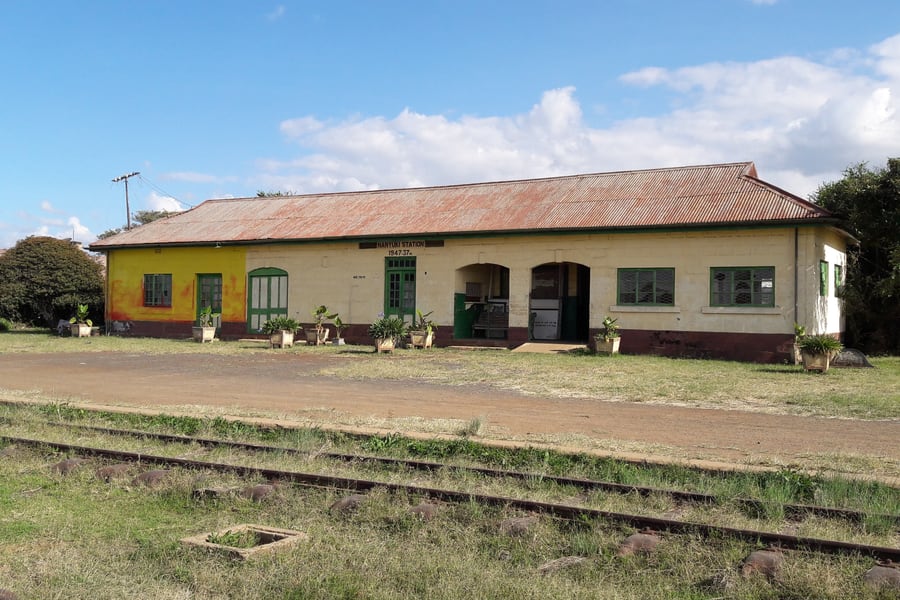
Karatina, at 14:39, is a market town at 1,868 metres whose open-air market is reckoned the largest in Kenya. Kiganjo follows, then Naro Moru at 16:08, a trailhead town at about 2,200 metres and one of the two classic starting points for climbing the mountain. The equator runs between Naro Moru and Nanyuki, so the train passes into the northern hemisphere in its last forty minutes. It reaches Nanyuki at 16:49, seven hours and forty-nine minutes after leaving Nairobi; the board on the station building puts the end of the line at 1,947 metres.
What it is like on board
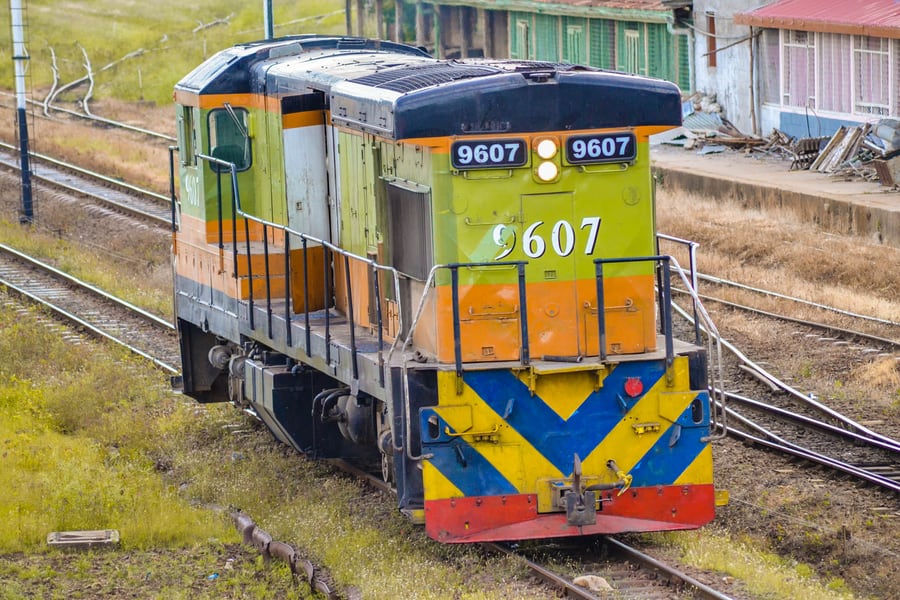
This is an ordinary passenger train, not a tourist one. It has two classes, economy and first, and the operator's fare table prices both between every pair of stations. Kenya Railways does not publish which locomotive works the train; its metre-gauge passenger services are diesel-hauled, by General Electric locomotives of the 94 and 96 classes among others. The trip is slow because the line is old, and fifteen stops in 177 kilometres is a local train's pattern. The operator has said in the past that a private firm caters on board, but the safer plan is to bring food and water for the day.
Sunday's return runs the same stations in reverse, leaving Nanyuki at 09:00 and reaching Nairobi at 16:46.
Along the route
 Tall Black / Wikimedia Commons · CC BY-SA 4.0 · 2023 · cropped
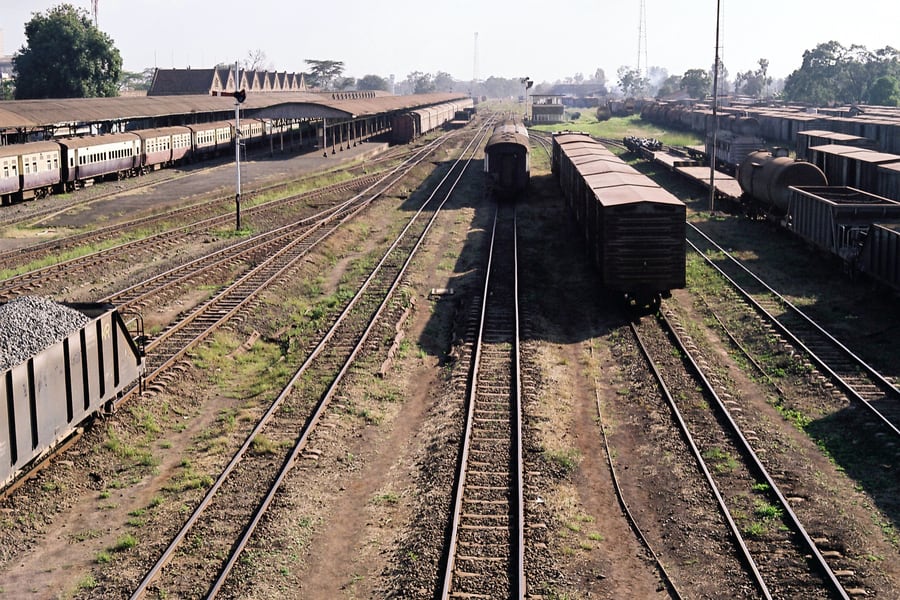
Out through Nairobi's eastern estates
The first hour is a commuter railway. The train calls at Makadara, Dandora, Mwiki, Githurai, Kahawa and Ruiru, all inside the city's spread, and only beyond Ruiru does it leave Nairobi behind on the way to Thika.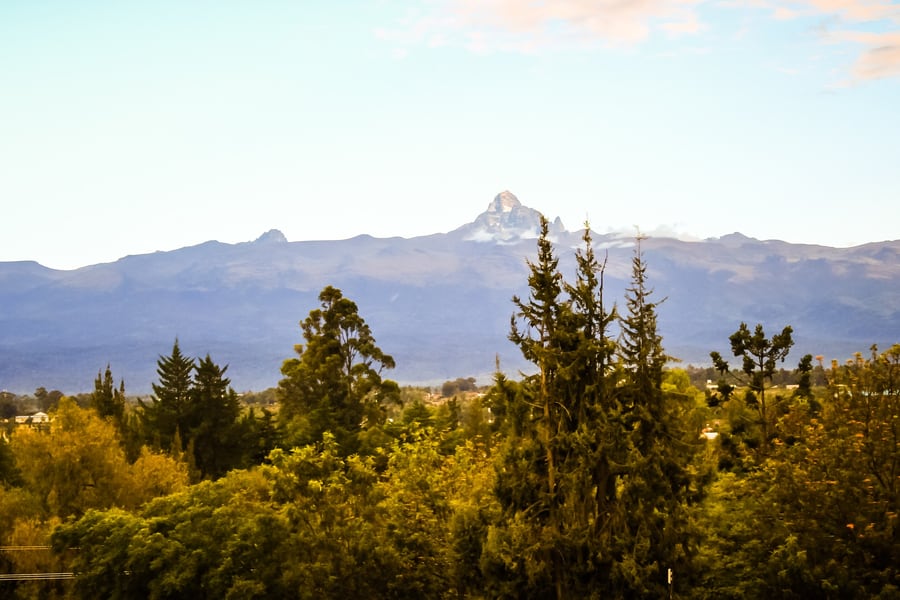 Don Elvis Muraya / Wikimedia Commons · CC BY-SA 4.0 · 2016 · cropped
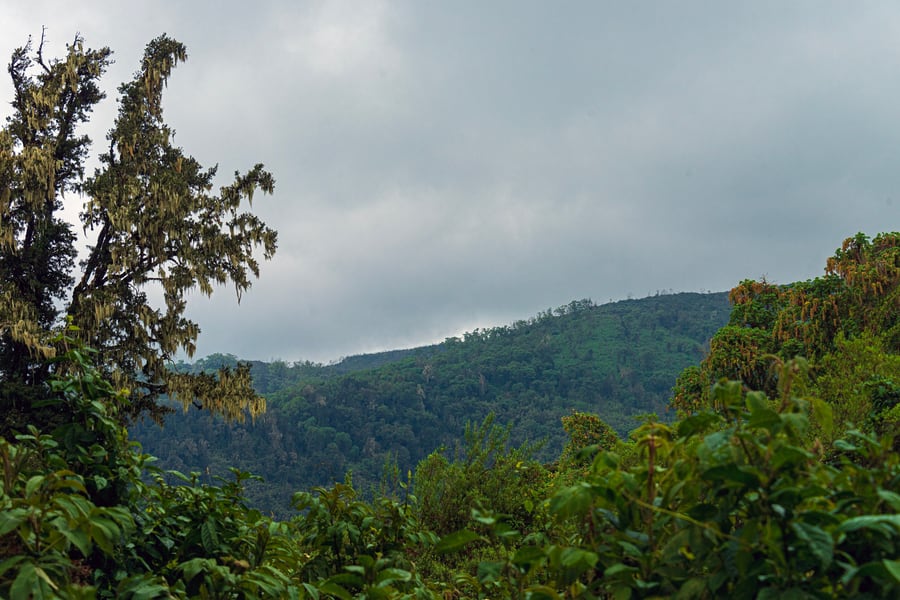
Mount Kenya, on the right
After Sagana the line runs along the western foot of Mount Kenya, the second-highest mountain in Africa, whose summit, Batian, stands at 5,199 metres. Northbound, it is on the right-hand side.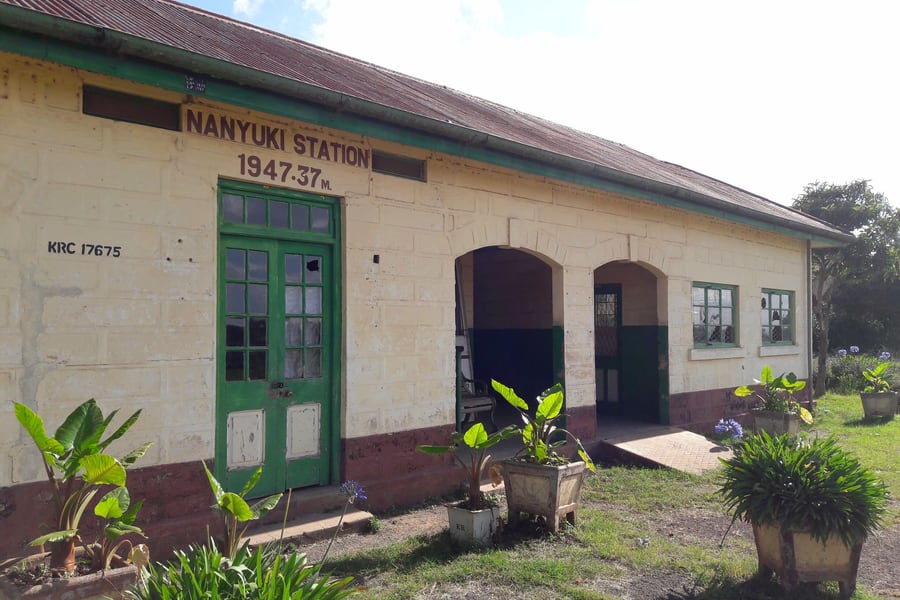 Macabe5387 / Wikimedia Commons · CC BY-SA 4.0 · 2018 · cropped
Across the equator, then the buffers
Nanyuki lies just north of the equator, at 0° 01′ N, and Naro Moru lies south of it, so the line crosses into the northern hemisphere in its last few minutes. The station board gives the altitude at the end of the line as 1,947 metres.A bit of history
Culture & experiences along the way
 Daniel Case / Wikimedia Commons · CC BY-SA 4.0 · 2025 · cropped
Lunch in a fig tree at the Trout Tree
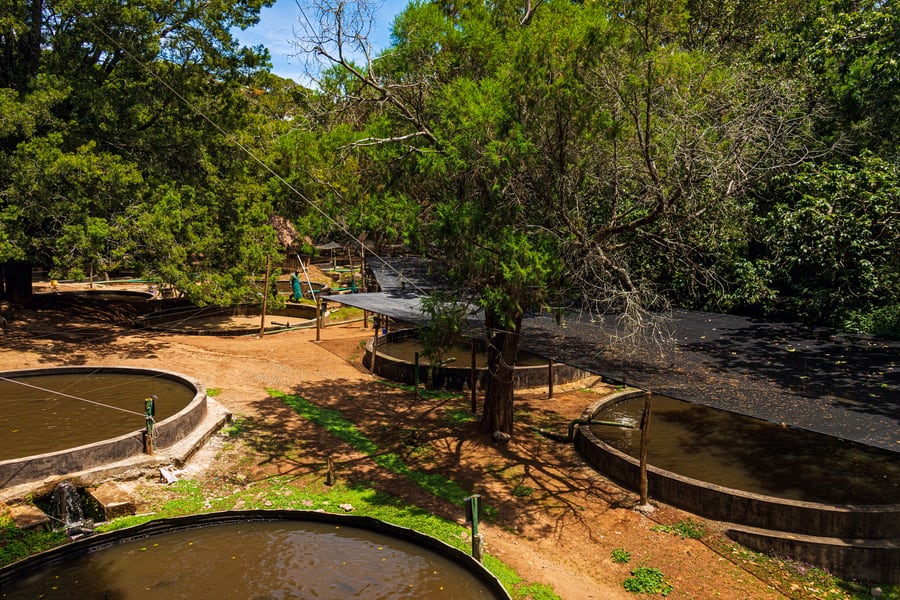
South of Nanyuki, just off the Kiganjo road, a restaurant is built into a huge sacred fig — a mugumo — over the Burguret River. The trout comes from the ponds below, a farm started in 1978 and described as the largest commercial trout farm in East Africa. Colobus monkeys and tree hyraxes live in the branches, and it opens by day only.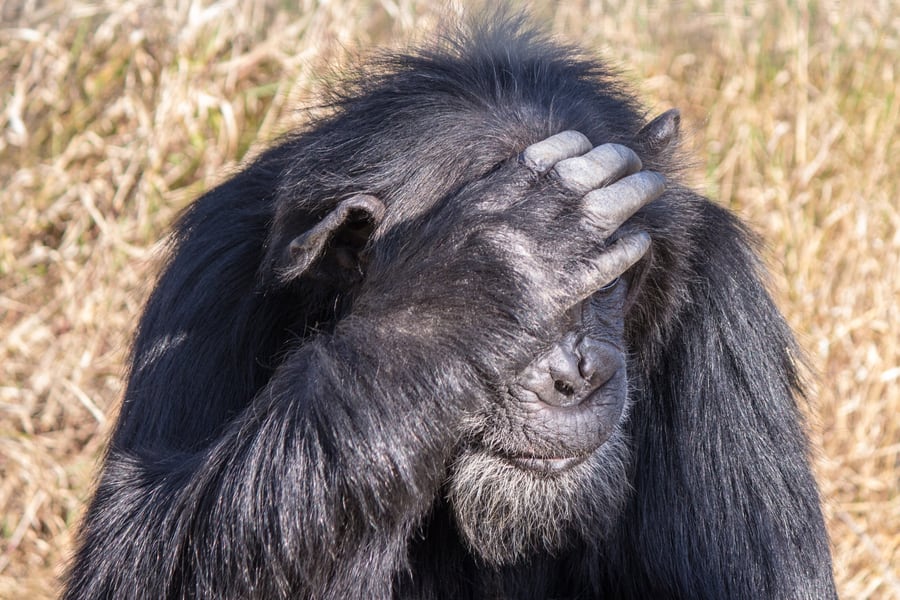 Ray in Manila / Wikimedia Commons · CC BY 2.0 · 2018 · cropped
The only chimpanzees in Kenya
The Sweetwaters Chimpanzee Sanctuary inside Ol Pejeta is the only place in Kenya where chimpanzees can be seen. It is a refuge for orphaned, abandoned and rescued animals rather than a zoo, and visits are booked in advance, in a morning or an afternoon slot.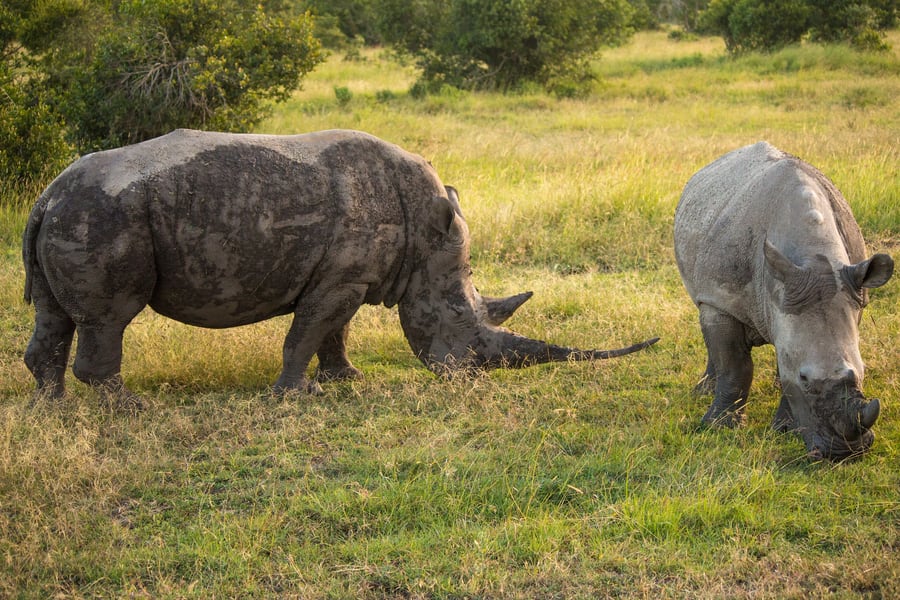 Ray in Manila / Wikimedia Commons · CC BY 2.0 · 2018 · cropped
The last two northern white rhinos
Ol Pejeta holds East Africa's largest black rhino sanctuary and the last two northern white rhinos alive, both female, brought from Dvůr Králové Zoo in the Czech Republic — the last of their kind. The pair in the photograph are southern white rhinos, grazing on the conservancy's open plains.Timetables
One train a week in each direction: Nairobi to Nanyuki on Friday, Nanyuki to Nairobi on Sunday, both leaving at 09:00. It runs all year. Over the Christmas season of 2025 Kenya Railways added daily trips; outside the holidays, plan on the weekly pattern.
The times below are the operator's own published schedule, read from krc.co.ke in November 2026.
| Station | Friday northbound | Sunday southbound |
|---|---|---|
| Nairobi | 09:00 | 16:46 |
| Makadara | 09:13 | 16:31 |
| Dandora | 09:36 | 16:08 |
| Mwiki | 09:58 | 15:48 |
| Githurai | 10:08 | 15:38 |
| Kahawa | 10:18 | 15:26 |
| Ruiru | 10:32 | 15:12 |
| Thika | 11:14 | 14:30 |
| Mitubiri | 11:44 | 14:00 |
| Makuyu | 12:16 | 13:28 |
| Maragua | 12:38 | 13:06 |
| Murang'a | 13:10 | 12:41 |
| Sagana | 13:40 | 12:17 |
| Karatina | 14:39 | 11:18 |
| Kiganjo | 15:24 | 10:33 |
| Naro Moru | 16:08 | 09:49 |
| Nanyuki | 16:49 | 09:00 |
Read the southbound column from the bottom up. The trip takes seven hours and forty-nine minutes north and seven hours forty-six south, and the train waits a minute or two at most stations.
Kenya Railways posts changes and cancellations as public notices; check before travelling: Kenya Railways · Nairobi to Nanyuki (opens in a new tab).
Tickets
Tickets are sold by Kenya Railways at the stations on the line, and its ticket examiners also sell them on board. Fares are fixed by station pair and class: the full run from Nairobi to Nanyuki is KES 400 in economy and KES 1,000 in first. Children of three to eleven travelling with an adult pay half, older children pay the full fare, and under-threes travel free.
The operator asks passengers to arrive an hour before departure, and on a busy weekend that is worth doing. Fares as published by the operator, March 2025, read November 2026.
Book your tickets
Xiaojun Deng / Wikimedia Commons · CC BY 2.0 · 2010 · croppedNairobi to Nanyuki, economy
KES 400 one way · Friday out, Sunday back
The full run in economy, bought at the station; Nairobi to Thika is KES 150, children of three to eleven with an adult pay half, and under-threes travel free.
Book Tickets (opens in a new tab, on krc.co.ke)via krc.co.keErasmus Kamugisha / Wikimedia Commons · CC BY-SA 4.0 · 2017 · croppedNairobi to Nanyuki, first class
KES 1,000 one way
From Nairobi, first class is KES 500 as far as Sagana and KES 1,000 from Karatina onwards, so it costs the same to Karatina as to the end of the line.
Book Tickets (opens in a new tab, on krc.co.ke)via krc.co.keRail Passes
No rail pass covers Kenya. The country belongs to no international scheme and sells no national multi-journey ticket, so every trip on the Nanyuki line is a single bought at the station.
A pass would have nothing to save in any case. The full Friday run costs KES 400 in economy and KES 1,000 in first, and the return on Sunday the same again. The thing in short supply is the train, not the money: there is one each way a week, so the useful planning is around the dates, not the fare.
Places to Visit
The train's timetable decides how these get visited. Going north on Friday it reaches Nanyuki just before five and does not return until Sunday morning, so the Saturday in between is the day for Laikipia: Ol Pejeta, the Trout Tree, or the lower trails on Mount Kenya. The stations on the way — Thika, Sagana, Naro Moru — are for travellers prepared to leave the train and come back on a later Friday or Sunday, or to finish the trip by road.
Naro Moru and Nanyuki are the two classic bases for Mount Kenya, and the train reaches both.
 Galkey / Wikimedia Commons · CC BY-SA 4.0 · 2011 · cropped
Thika
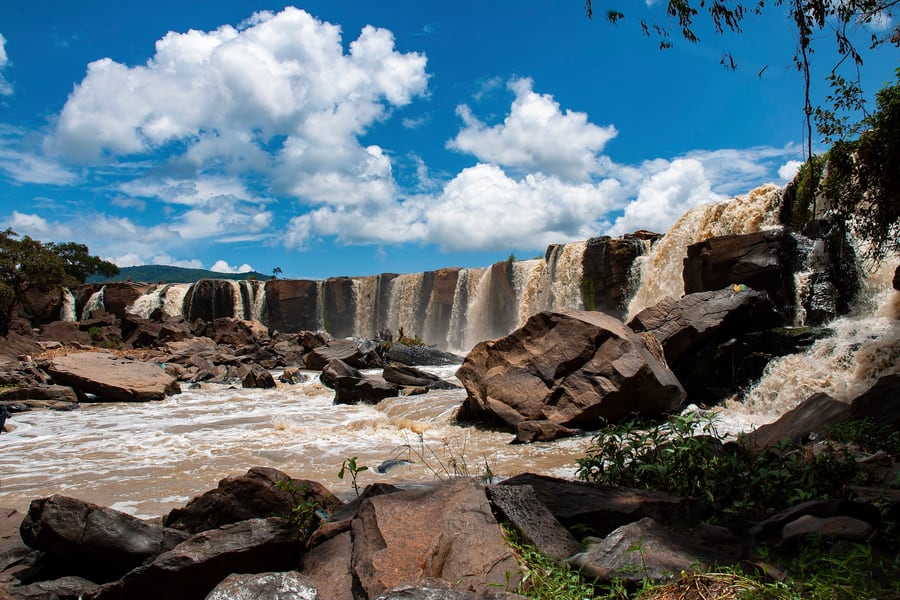
An industrial town of 279,429 people at the meeting of the Thika and Chania rivers, and the setting of Elspeth Huxley's memoir The Flame Trees of Thika. Its two waterfalls are the reason to stop: Chania Falls in the town, and Fourteen Falls on the Athi, a broad ledge of separate cascades, with Ol Donyo Sabuk National Park beyond it to the southeast.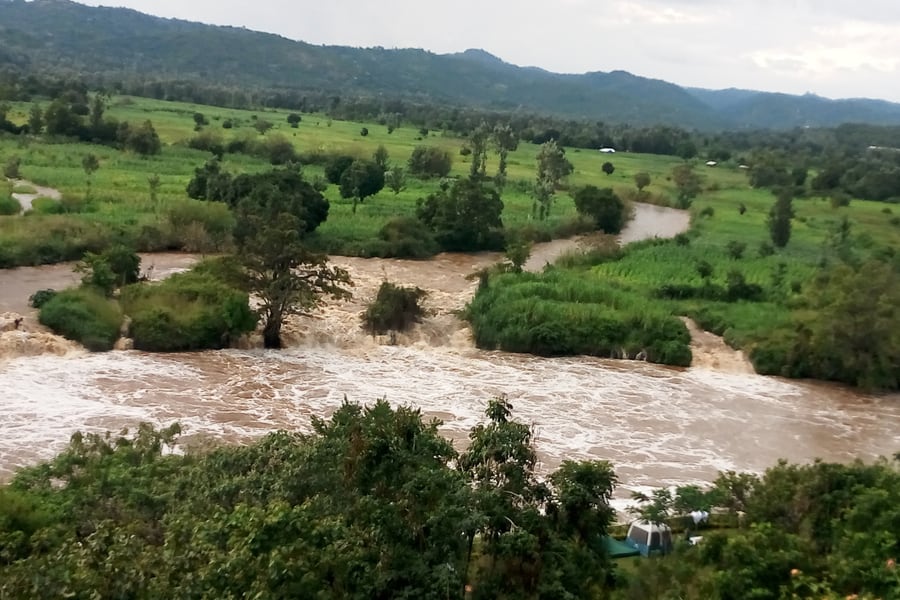 Pmaina515 / Wikimedia Commons · CC BY-SA 4.0 · 2019 · cropped
Sagana
A small town about a hundred kilometres north of Nairobi, named for the Sagana River — the Thagana — that it stands beside. The station was once the only one in Kirinyaga district. The riverbanks are where the visitors go: cottages, campsites and water sports have grown up along the rapids at the southern foot of Mount Kenya.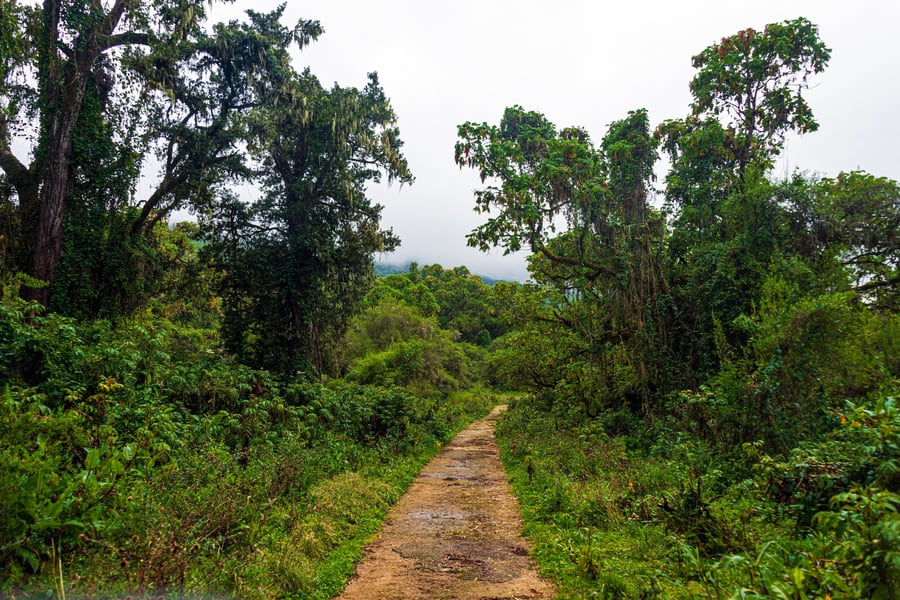 Daniel Case / Wikimedia Commons · CC BY-SA 4.0 · 2025 · cropped
Naro Moru
A market town at about 2,200 metres on the Naro Moru River, 21.8 kilometres short of Nanyuki, and one of the two classic bases for climbing Mount Kenya. The trail from here runs up the river valley through montane forest into the national park, established in 1949 and a UNESCO World Heritage Site with its forest reserve since 1997.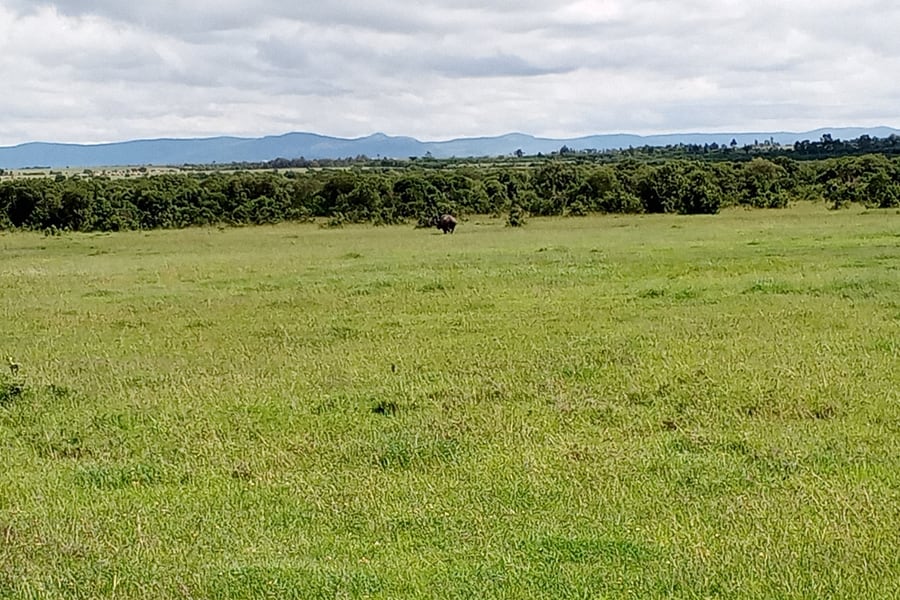 Kibengado / Wikimedia Commons · CC0 · 2023 · cropped
Nanyuki
A market town of 72,813 people in Laikipia, settled by British immigrants from 1907 and still the base for climbers on the Sirimon and Naro Moru routes. West of town, Ol Pejeta Conservancy covers 360 square kilometres on the equator between the Aberdares and Mount Kenya, with the Big Five and East Africa's largest black rhino sanctuary.Where to Sleep
Two nights at the top of the line are built into the timetable: arrive Friday evening, leave Sunday morning. Nanyuki has the range, from town hotels to the Mount Kenya Safari Club outside it, and the camps inside Ol Pejeta put the conservancy on the doorstep for the Saturday.
No prices, grades or ratings are given below, because none have been verified. Each card says where the house stands and what it says about itself.
Where to stay
 John Hickey-Fry / Wikimedia Commons · CC BY 2.0 · cropped
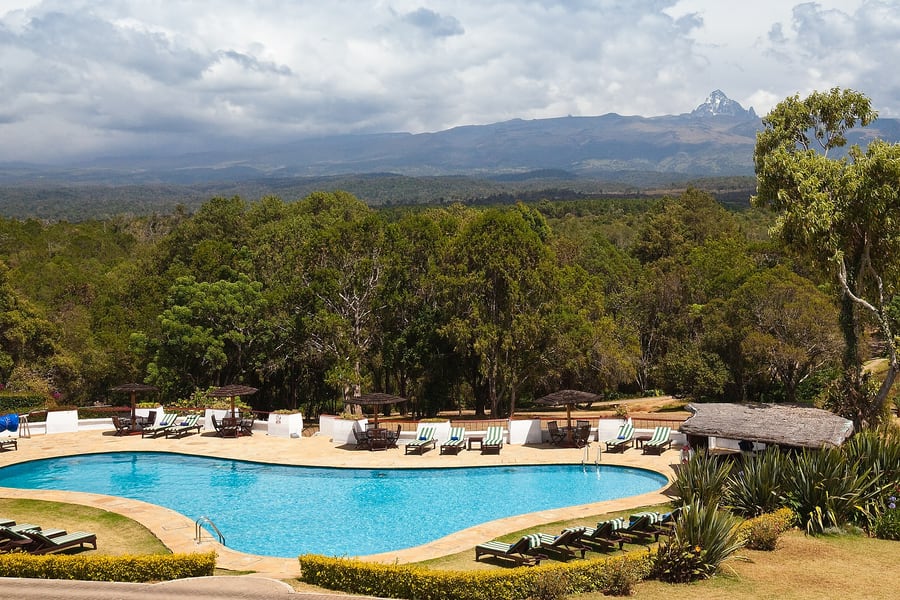
Fairmont Mount Kenya Safari Club
Nanyuki, facing Mount Kenya
The hotel's own site lists rooms, suites, cottages and villas with views of the mountain, a heated outdoor pool, a golf course, a spa, horse riding, nature walks and its own animal orphanage.
Check Availability (opens in a new tab, on fairmont.com)via fairmont.com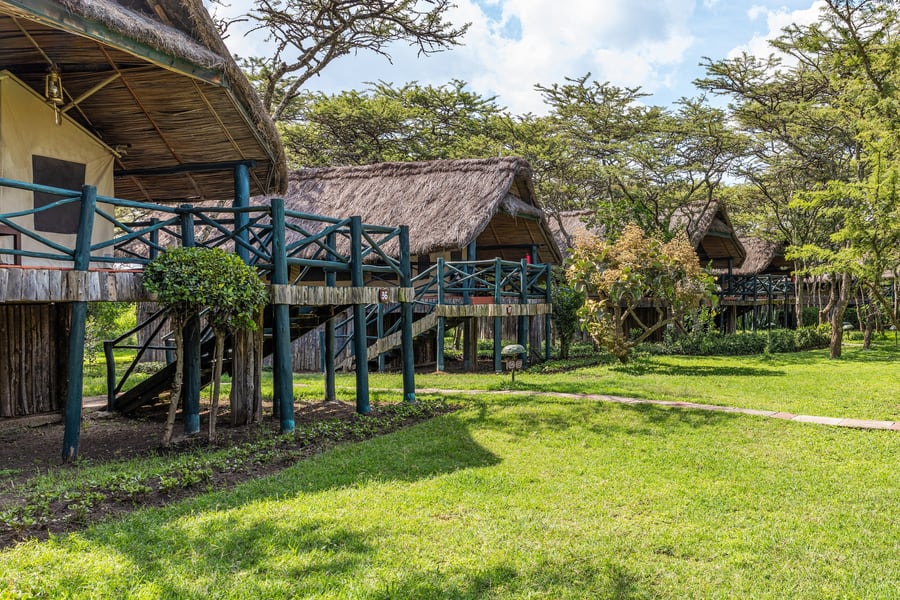 Ninara / Wikimedia Commons · CC BY 2.0 · cropped
Sweetwaters Serena Camp
Inside Ol Pejeta Conservancy, west of Nanyuki
The camp's own site describes 56 en-suite tents under acacias, some of them facing a waterhole, inside the conservancy that holds the last two northern white rhinos and the chimpanzee sanctuary.
Check Availability (opens in a new tab, on serenahotels.com)via serenahotels.comQuestions or corrections
Planning this trip and stuck on something, or spotted a time, fare or detail that has changed? Send us a message about The Nanyuki Safari Train. We read every one, and we update this page when something has changed.