The Summer Night Train — Osijek to Split
Argo Navis / Wikimedia Commons · CC BY-SA 4.0 · cropped
- Duration14 h 05 southbound · 14 h 38 coming back
- Best seasonNine weeks only · 27 June to 28 August 2026, and nothing outside them
Introduction
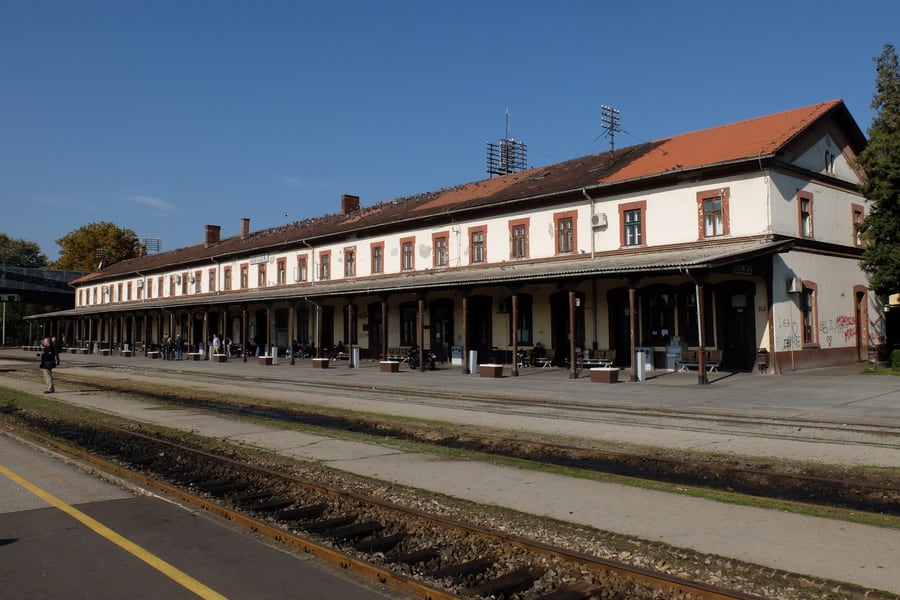
Croatia's far east is its flattest, quietest corner. Slavonia is the black-earth plain between the Drava and the Sava — maize and sunflowers to the horizon, oak woods that were felled for Venetian ships and Hungarian railway sleepers, storks on the chimneys of villages strung along a single street. At 18:44 on a summer evening a train leaves Osijek, the city on the Drava twenty-five kilometres upstream of the Danube, and spends the last of the light crossing it: Bizovac, Našice, Đurđenovac, with the wooded ridge of Papuk standing off to the south, then Slatina and Virovitica and the long run west through Pitomača and Kloštar in the dark.
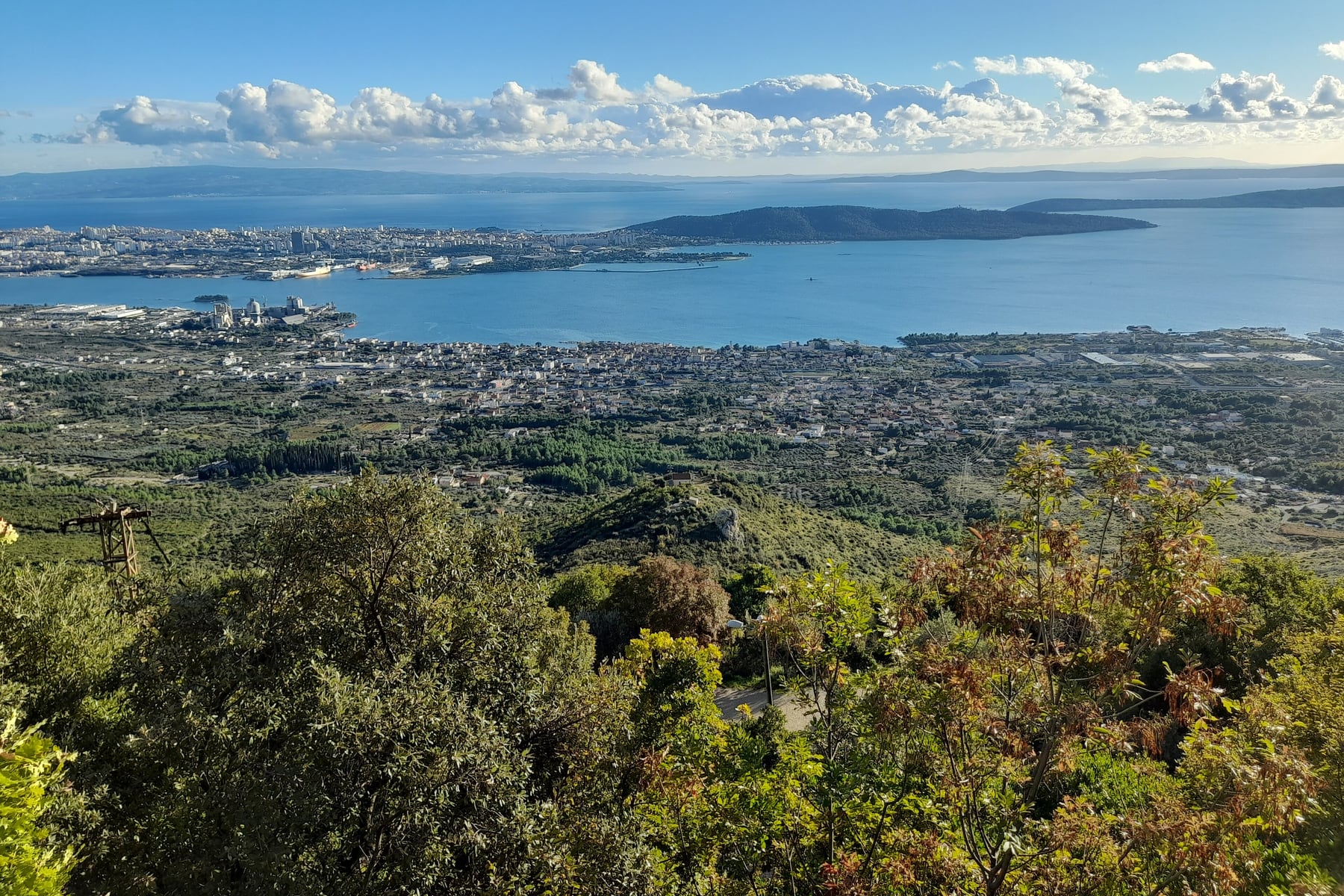
Twelve hours later the windows show something else entirely. The train comes down out of the Dalmatian hinterland at first light, past Knin and Perković, and turns along the bay of Kaštela — seven old villages on the waterline, the Kozjak ridge behind them, the Adriatic opening to the south — and stops at Split at 08:49, a few minutes' walk from Diocletian's palace and the ferry berths. Fourteen hours and five minutes, one seat, no changes: the plain at dusk and the sea at breakfast.
The country joins up for nine weeks a year
This is a train that exists for a season and then stops existing. In the 2026 timetable it runs from Saturday 27 June to Friday 28 August southbound, and from Sunday 28 June to Saturday 29 August coming back. That is sixty-three days — nine weeks exactly — and for the other forty-three weeks of the year there is no through train between eastern Slavonia and the Adriatic at all. The journey is still possible, on an ordinary ticket with a change at Zagreb, but the single seat from one end of the country to the other is a summer thing.
It is also a fairly recent thing. HŽPP brought the through train back for the summer of 2022; the operator's president, Željko Ukić, said at the time that the last direct Osijek–Split train had run "back in the nineties", and that the point of the project was to connect continental Croatia to the coast again. Before that, Slavonian passengers travelled in through carriages attached to the Zagreb night train — the Croatian transport ministry's seasonal announcement for 2013 lists exactly that, direct cars from Osijek and from Vinkovci inside a Zagreb–Split working.
What happens at Zagreb at a quarter to one
The train is not one train for its whole length. The portion from Osijek runs west through Bjelovar; a second portion leaves Vukovar at the same minute, 18:44, and comes up through Vinkovci and Slavonski Brod on the main line. Both reach Zagreb Glavni kolodvor around midnight, the carriages from the two are joined into one train there, and at 00:46 it leaves for the coast. It is the same arrangement in reverse in the morning: out of Split at 21:37, divided at Zagreb after breakfast, and away to two different corners of Slavonia.
The Journey
The first half of this journey is the half nobody photographs. Between Osijek and Zagreb the train crosses Podravina — the Drava country — on a railway that is single track, unelectrified and, for most of its length, laid out for a world of timber yards and sugar beet rather than holidaymakers. It is worth knowing what it is made of, because the six hours before Zagreb pass over four separate generations of railway building, and the newest of them opened in 2019.
Four railways, one night
From Osijek to Virovitica the train runs on the Podravska magistrala, the Varaždin–Dalj line: 250 kilometres end to end, opened in pieces as the money appeared — Osijek to Dalj in 1870, Virovitica to Slatina in 1885, Slatina to Osijek in 1895, and the Koprivnica end not until 1912. West of Virovitica, at Pitomača and Kloštar, the train is still on that alignment.
Then it turns south for Bjelovar, and this is the interesting part. The Bjelovar–Kloštar line opened in two bites, Bjelovar to Mišulinovac on 1 September 1899 and Mišulinovac through Kloštar to Virovitica on 4 May 1900, and it paid: in 1908 it carried 342,634 passengers and 125,759 tonnes of freight. Freight drifted away to the Koprivnica route after 1946, passenger trains stopped on 30 June 1968 for want of custom, and in 1980 the rails were lifted. It stayed a line on old maps for a decade and a half. Then it was rebuilt, at a cost of more than three million German marks, and trains ran again from 5 October 1995 — a railway taken up and put back within one working lifetime.
The last stretch into Zagreb uses something newer still. Between Gradec and Sveti Ivan Žabno there are 12.2 kilometres of railway that did not exist when this century began: a single unelectrified track laid for 120 km/h, built by a Spanish and German joint venture for €34.4 million of European regional and cohesion money, with three new stations at Lubena, Remetinec Križevački and Hagnje. Work started in December 2015 and it went into service on 15 December 2019. It is the newest piece of railway the train touches, and it is what lets a Bjelovar train reach Zagreb without going the long way round by Križevci.
A locomotive built where the journey starts
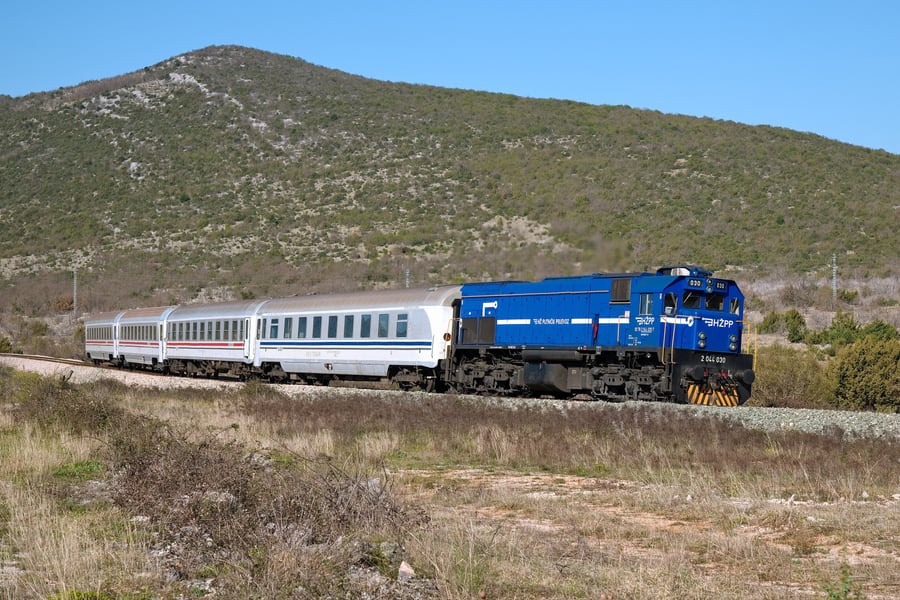
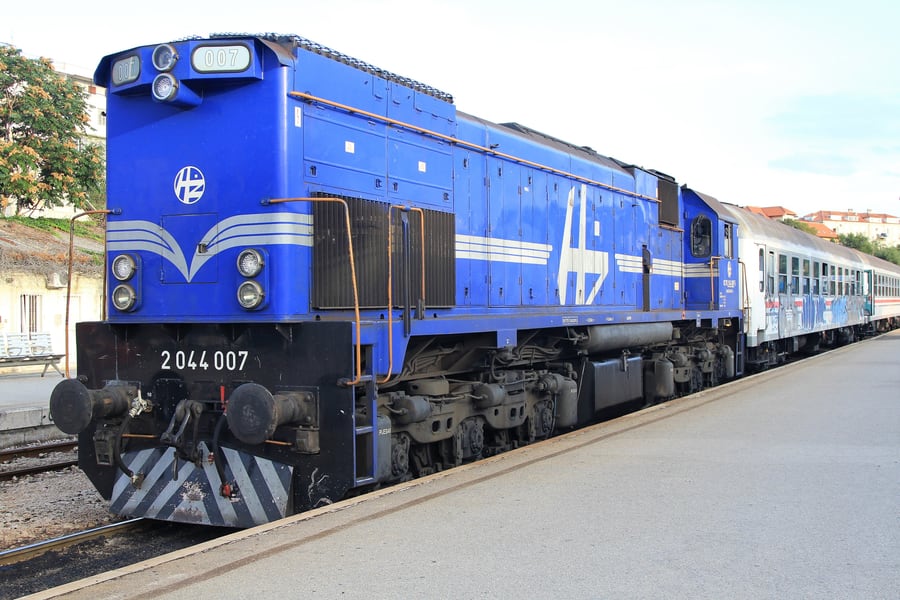
The engine on the front for much of this run is an HŽ class 2044 — originally JŽ series 645, an EMD GT22HW-2 built under General Motors licence by Đuro Đaković at Slavonski Brod, in Slavonia, in the early 1980s. It is 1,845 kW, good for 124 km/h, and HŽPP now uses the class on passenger work only, on the Koprivnica–Osijek line and on Ogulin–Knin–Split. That is both halves of this journey, worked by a machine built in the same province the train sets off from.
Croatian enginemen gave the class two names. One is Džems — James. The other is Mala karavela, the little caravel, which is a strange thing to call a locomotive until you have watched one bring a train down to the Adriatic at seven in the morning.
The night, and what you sleep in
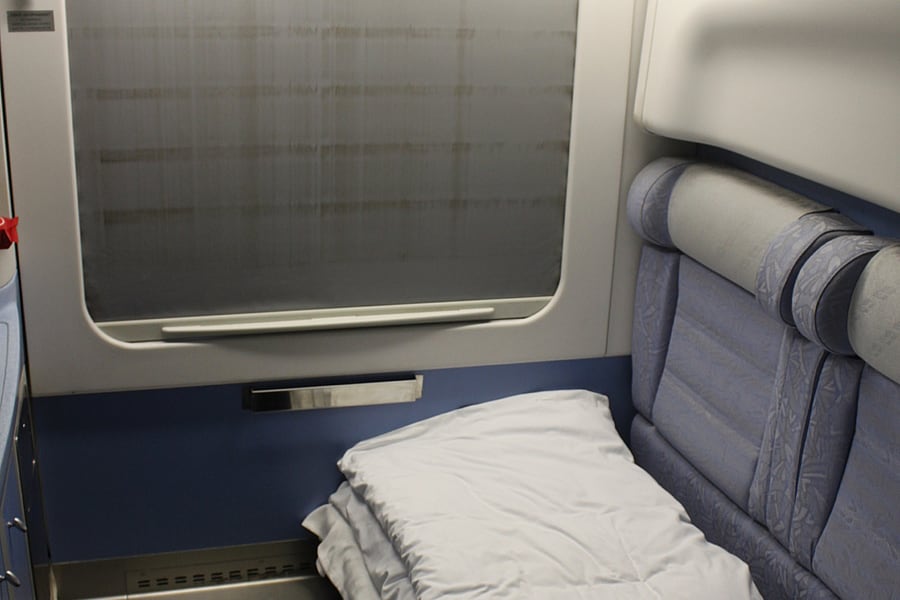
South of Zagreb the train is on the Lika railway, the line over the karst to Dalmatia that took twelve years to build and was finished in 1925, and it climbs away from Karlovac while most of the train is asleep. HŽPP runs both sleeping cars and ordinary seated carriages on it. A berth is charged on top of the ticket and the price depends on how much of the compartment is yours: €9 in a three-berth, €13 in a two-berth, €25 to have it to yourself. The sleepers are the operator's own WLee cars — a narrow compartment, grey and blue, and a bed made up along the window wall.
The wake-up is worth staying up for in the other direction. Southbound the train is at Gračac at 05:19 with eleven minutes to stand, at Knin at 06:34 under the Dinara, and then it works down through Drniš and Perković at 07:31 into the country of stone walls and scrub oak. The last half hour is the good one: down to the water at Kaštel Stari at 08:17, then along the northern shore of the Kaštela bay with Split across the water and the islands beyond it, into the terminus at 08:49.
Along the route
Petr Štefek / Wikimedia Commons · CC BY-SA 3.0 cz · croppedNine weeks, and then nothing
The two trains run daily from late June to late August — sixty-three days each way, nine weeks exactly — and for the remaining forty-three weeks there is no through train between eastern Slavonia and the Adriatic. The single seat from one corner of Croatia to the other is a summer arrangement.Rob Hodgkins / Wikimedia Commons · CC BY-SA 2.0 · croppedAssembled on a Zagreb platform after midnight
The train is two trains until Zagreb. One portion leaves Osijek at 18:44 and another leaves Vukovar at the same minute; both are in Zagreb around midnight, the carriages are joined, and at 00:46 it leaves for the coast.Fraxinus / Wikimedia Commons · CC BY-SA 3.0 · croppedA line lifted, and put back
The Bjelovar–Kloštar section opened in 1899 and carried 342,634 passengers in 1908 alone. Traffic drained away, the trains stopped in 1968, and in 1980 the rails were taken up. It was rebuilt and reopened in 1995. The night train crosses it in the dark.A bit of history
Culture & experiences along the way
NAC / Wikimedia Commons · CC BY-SA 4.0 · croppedThe berth is the cheap part
A place in a sleeping car costs €9 in a compartment for three, €13 in one for two, and €25 with the compartment to yourself — charged on top of an ordinary ticket that already carries the operator's 40 per cent seaside reduction. Seated carriages run in the same train for anyone who would rather not pay it. A seat or berth reservation is compulsory either way, at €1.06.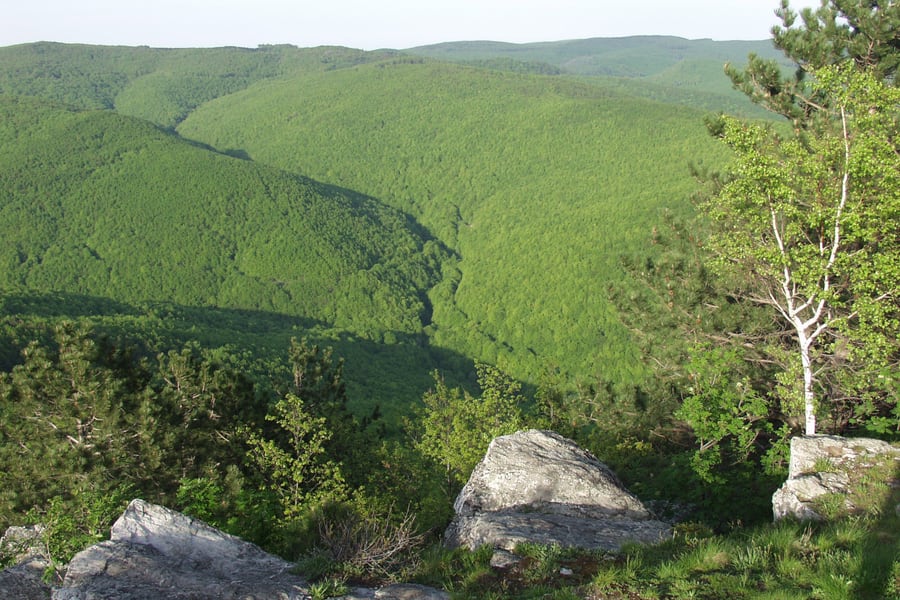 Gpavic / Wikimedia Commons · CC BY-SA 3.0 · cropped
Which direction is the better ride
Southbound gives the Slavonian plain at dusk and the Dalmatian coast at breakfast, which is the order most people want. Northbound has a hidden advantage: after Zagreb at 06:39 the whole Slavonian leg runs in daylight — Bjelovar at 08:13, Virovitica at 09:22, Našice at 11:09 — so the half of the route that southbound passengers sleep through is the half northbound passengers actually see.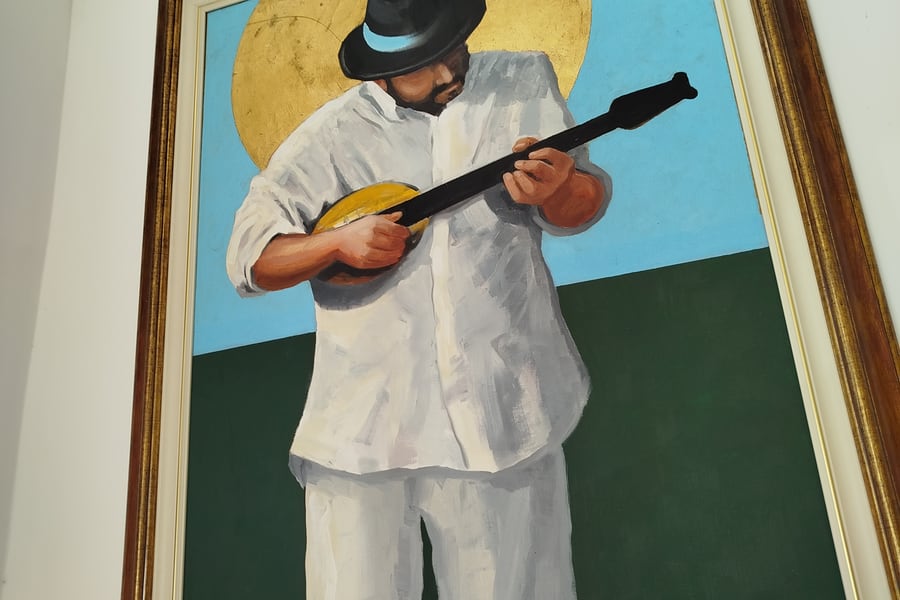 Adjusn / Wikimedia Commons · CC BY-SA 4.0 · cropped
The tambura, and the sound of Slavonia
Slavonia's music is played on the tamburica — a family of long-necked lutes from the bisernica up to the double-bass berde, played in orchestras of a dozen or more. Osijek and the villages the train leaves in the evening are where the tradition is strongest, and no wedding, harvest or town fair happens there without one.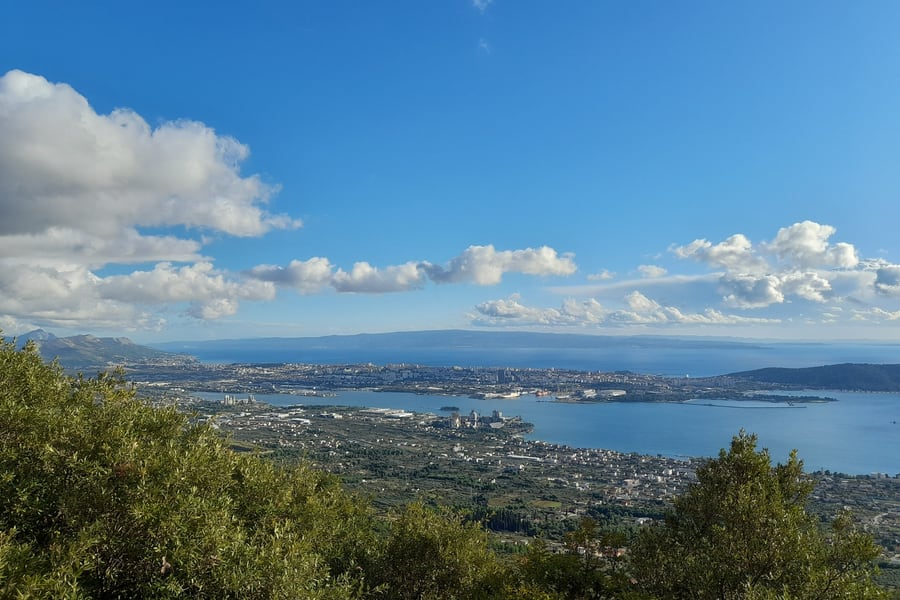 Argo Navis / Wikimedia Commons · CC BY-SA 4.0 · cropped
The last half hour
The good part of the morning starts when the train drops out of the hills to the water at Kaštel Stari at 08:17. From there it runs the northern shore of the bay of Kaštela — the seven fortress villages on one side, the Kozjak ridge above, Split and its islands across the water — and finishes at 08:49, ten minutes' walk from Diocletian's palace and about the same from the ferries.Manfred Kopka / Wikimedia Commons · CC BY-SA 4.0 · croppedRead the notices board before you go
The Slavonian end of this route is being renewed a section at a time, and HŽPP closes stretches of it for weeks at a stretch, mostly in summer and mostly by day, with buses standing in. The night trains usually fall outside the hours affected — but the operator edits its notices board most weeks, so it is worth a look on the morning of travel.Timetables
Every time below is read from HŽPP's own GTFS timetable feed, downloaded on 16 August 2026, and checked against the operator's published seaside-trains page and its live traffic notices of the same week. The timetable period runs from 14 December 2025 to 12 December 2026; the third set of amendments came into force on 14 June 2026.
The season is nine weeks. Southbound, train 1880 runs daily from Saturday 27 June to Friday 28 August 2026. Northbound, train 1881 runs daily from Sunday 28 June to Saturday 29 August 2026. Outside those dates neither train exists.
Osijek to Split — train 1880
| Stop | Departs | Stop | Departs | |
|---|---|---|---|---|
| Osijek | 18:44 | Zagreb Glavni kolodvor | 00:46 | |
| Bizovac | 19:18 | Karlovac | 01:48 | |
| Našice | 19:56 | Oštarije | 02:42 | |
| Đurđenovac | 20:12 | Gospić | 04:43 | |
| Čačinci | 20:57 | Gračac | 05:30 | |
| Slatina | 21:21 | Knin | 06:35 | |
| Virovitica | 22:00 | Drniš | 06:59 | |
| Pitomača | 22:18 | Perković | 07:31 | |
| Kloštar | 22:26 | Kaštel Stari | 08:22 | |
| Bjelovar | 23:06 | Split Predgrađe | 08:44 | |
| Vrbovec | 23:40 | Split | 08:49 |
Fourteen hours and five minutes, twenty-three stops. The stand at Zagreb Glavni kolodvor is twenty-six minutes, 00:20 to 00:46, and it is not idle time — that is where the train is put together.
Split to Osijek — train 1881
| Stop | Departs | Stop | Departs | |
|---|---|---|---|---|
| Split | 21:37 | Zagreb Glavni kolodvor | 06:39 | |
| Split Predgrađe | 21:47 | Vrbovec | 07:22 | |
| Kaštel Stari | 22:15 | Bjelovar | 08:13 | |
| Perković | 23:03 | Kloštar | 08:54 | |
| Drniš | 23:38 | Pitomača | 09:03 | |
| Knin | 00:01 | Virovitica | 09:22 | |
| Gračac | 01:15 | Slatina | 10:01 | |
| Gospić | 02:01 | Čačinci | 10:26 | |
| Oštarije | 03:50 | Našice | 11:09 | |
| Duga Resa | 04:30 | Bizovac | 11:48 | |
| Karlovac | 04:44 | Osijek | 12:15 |
Fourteen hours and thirty-eight minutes. The northbound stand at Zagreb is longer — fifty-two minutes, 05:47 to 06:39 — because the train is being taken apart rather than assembled, and because the Slavonian legs then run in daylight.
The other half of the same train — Vukovar
A second portion works the eastern Slavonian main line through Vinkovci and Slavonski Brod, and joins the Osijek carriages at Zagreb.
| Train | Runs | Vukovar | Vinkovci | Slavonski Brod | Zagreb GK | Split |
|---|---|---|---|---|---|---|
| 1840 | Mon–Sat | 18:44 | 19:19 | 20:15 | 00:46 | 08:49 |
| 748 | Sundays, to 23 Aug | 16:37 | 17:10 | 18:06 | 00:46 | 08:49 |
748 is the Sunday arrangement and it is a different shape: it leaves Vukovar nearly five hours earlier at 16:37, is into Zagreb at 21:53, and its carriages then wait almost three hours for the night train to be made up.
Northbound, the Vukovar carriages leave Split with the rest at 21:37 and run on from Zagreb as train 741 — away at 06:04, Slavonski Brod 09:40, Vinkovci 10:29, Vukovar 10:49.
Outside the nine weeks
The journey remains possible with a change at Zagreb, though not in one day. Train 780 leaves Osijek at 16:18 and reaches Zagreb at 22:10, daily, all year; train 523 leaves Zagreb at 13:49 the following afternoon and is in Split at 21:47, also daily and all year. Coming the other way, 781 runs Zagreb 06:39 to Osijek 12:16 every day of the year — the same path the night train's Slavonian leg uses in the morning.
Engineering work in August 2026
The Osijek–Bizovac section, the first half-hour out of Osijek, is closed for track renewal on weekdays from 3 to 31 August 2026 — Monday to Thursday from 05:50 to 14:50, Fridays to 14:30, with 5 August and weekends excepted. Buses replace trains between Bizovac and Osijek in those hours. The operator's published list of substituted services names four trains — 6011, 6071, 6073 and the daytime 983 — and the night trains are not on it. The notices board is edited most weeks and is worth a look on the morning of travel.
Tickets
This is an ordinary domestic ticket on Croatia's national operator, with no premium for the fact that it runs overnight — but a small stack of extras on top, all published. A reservation is compulsory at €1.06, and it applies to everyone, including the passengers HŽPP carries free on a smart card. A sleeping-car berth is charged separately: €9 in a three-berth compartment, €13 in a two-berth, €25 for sole occupancy. Seated carriages run in the same train for anyone who would rather not.
Two discounts both apply here. The seaside offer takes 40 per cent off fares to the coast and this train is named on the page that carries it; separately, buying online rather than at a window is 10 per cent cheaper. The operator publishes no fixed route fare, because it depends which reductions the passenger qualifies for.
Book your tickets
NAC / Wikimedia Commons · CC BY-SA 4.0 · croppedA seat, or a bed, across the country
Osijek to Split, reservation compulsory
An ordinary HŽPP domestic ticket with a compulsory reservation at €1.06 and an optional berth from €9. The operator sells online more cheaply than at the counter, and the same site carries the live traffic notices worth checking on the day. Because the season is nine weeks long and the sleeping cars are a fixed size, the berths are the part that goes first.
Book Tickets (opens in a new tab, on hzpp.hr)via hzpp.hrManfred Kopka / Wikimedia Commons · CC BY-SA 4.0 · croppedThe seaside reduction
40% off fares to the coast, and this train is on the list
HŽPP's "to the seaside by rail" offer takes 40 per cent off tickets to coastal destinations, and the page that carries it is the same page that publishes this train's times. Children, pupils, students, pensioners, people over 65 and people with disabilities travel free on a smart card, though everyone pays the €1.06 reservation. A bicycle is €1.99.
Book Tickets (opens in a new tab, on hzpp.hr)via hzpp.hrRail Passes
This train is covered by Interrail and Eurail passes. Interrail's own Croatia page lists the country's domestic night trains among the services a pass is valid on, and names the summer Split–Zagreb–Osijek working specifically, alongside the daytime InterCity routes from Zagreb to Split, Rijeka and Osijek.
What the pass does not cover
Two things are charged on top, and between them they are most of what this journey costs beyond the fare:
- The reservation. Interrail lists reservations as required on Croatia's night trains, and HŽPP charges €1.06 for one. There is no way to travel on this train without it.
- The berth. A place in a sleeping car is a separate charge of €9, €13 or €25 depending on how many share the compartment. A pass covers the journey, not the bed.
Whether it is worth buying one for this
For this journey alone, no. The cheapest Interrail Croatia Pass is €67 for an adult — three travel days within a month, second class — or €50 for a traveller aged 12 to 27, read from Interrail's own checkout in August 2026. HŽPP's ordinary fares to the coast are already discounted by 40 per cent in season, with a further 10 per cent off for booking online. A single crossing of the country, even with a berth, does not come close to the price of the cheapest pass.
The arithmetic changes if Croatia is a fortnight rather than a night. The country is long and its railways are slow, which is exactly the shape a country pass suits: Osijek to Split overnight, a few days on the coast, back up to Zagreb on the Lika line, over Gorski kotar to Rijeka, and out to Istria — that is four long journeys, and a pass covering all of them stops the fares mounting up. The Croatia Pass also carries a 20 per cent discount on the Split–Ancona ferry, which is useful if the Adriatic is a stepping stone to Italy rather than the destination.
One practical note
Because the reservation is compulsory and the train is a seasonal one with a fixed number of berths, a pass does not remove the need to book the specific night in advance through the operator. Pass holders reserve the same way everyone else does, and in high summer the sleeping cars on a train that only runs for nine weeks are the part that goes first.
Pass conditions checked against Interrail's own Croatia page and HŽPP's published supplements, August 2026.
Places to Visit
Most of what this train passes in Slavonia, it passes in the dark. That is an argument for breaking the journey rather than for skipping it: the same rails carry daytime trains, and the towns strung along the Podravina line — Našice, Slatina, Virovitica, Bjelovar — are places almost no visitor to Croatia sees, with baroque castles, a Habsburg garrison grid and a mountain nature park among them.
The stops below run in the order the southbound train reaches them, from the Drava to the Adriatic. Two of them, Kopački rit and Papuk, are reached from stations on the line rather than from the platform itself, and both repay a day. The last is the one the train delivers at breakfast: the bay of Kaštela, seven villages and their fortresses on the waterline, which the train runs along for its final half hour before it stops at Split.
 Roko Poljak / Wikimedia Commons · CC BY-SA 4.0 · cropped
Tvrđa, and the city on the Drava
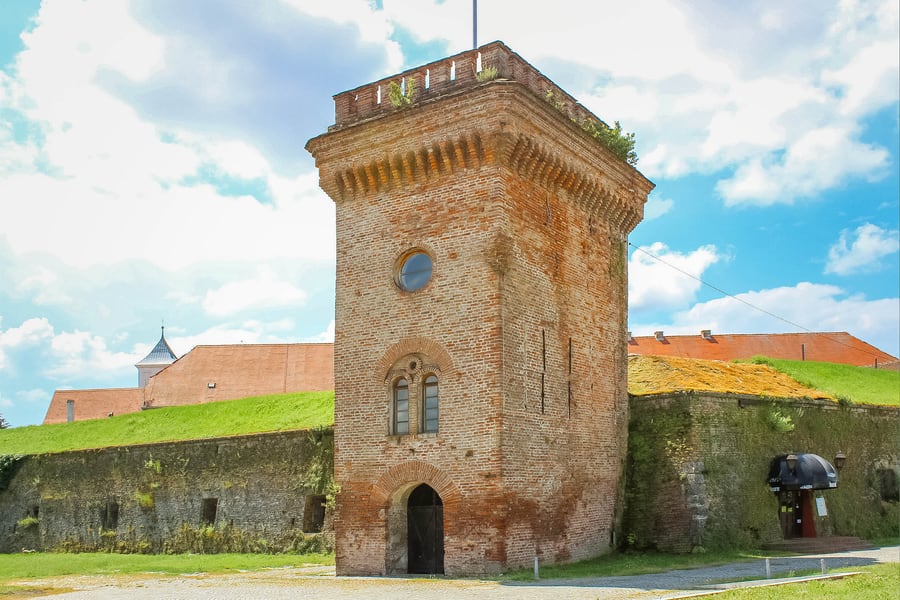
Croatia's fourth-largest city, 96,313 people at the 2021 census, on the Drava twenty-five kilometres above its meeting with the Danube. The Romans had Mursa here, made a colony by Hadrian in 133 AD. The old town, Tvrđa, is a Habsburg fortress of 1712–1715 by Maximilian Gosseau de Henef — a baroque grid of barracks and gates. Trams have run outside it since 1884, and a pedestrian suspension bridge crosses the Drava to Baranja.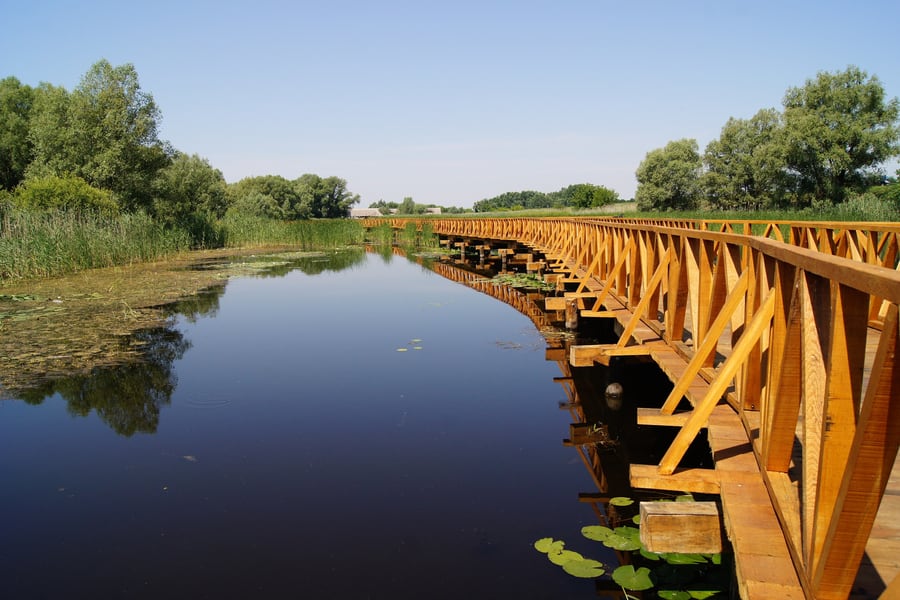 MirNA butterfly / Wikimedia Commons · CC BY-SA 4.0 · cropped
Kopački rit, where the Drava meets the Danube
One of the largest surviving wetlands in Europe: 177 square kilometres of backwaters, reed and flooded oak forest at the confluence, a nature park since 1976 and a Ramsar site since 2 March 1993. Around 260 bird species breed here — white and black storks, white-tailed eagles, great white egrets — and red deer, wild boar, wildcat, pine marten and otter live in it. Boat trips, boardwalks and horse-drawn wagons run from the visitor centre, close enough to Osijek for a half-day.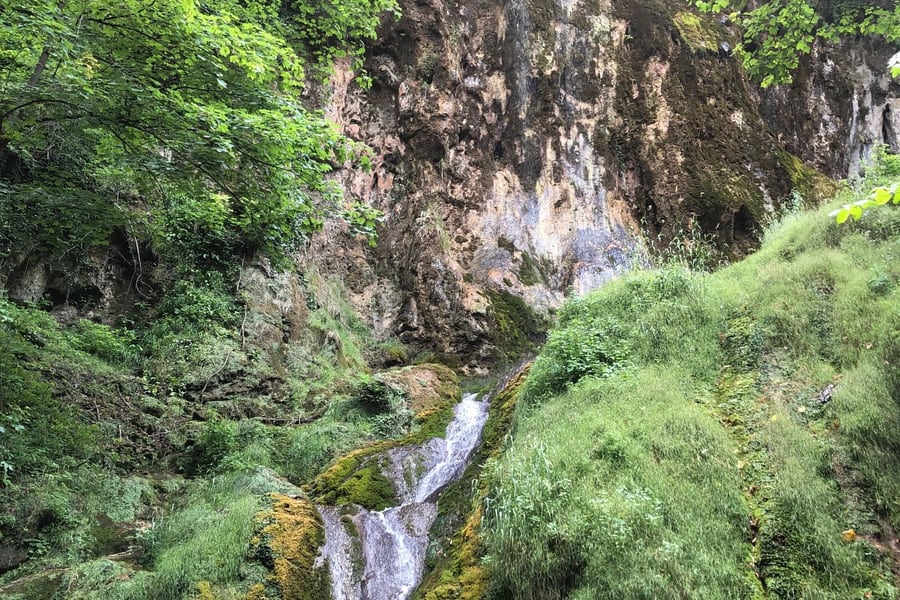 Nikola / Wikimedia Commons · CC BY-SA 4.0 · cropped
Papuk, the first Croatian geopark
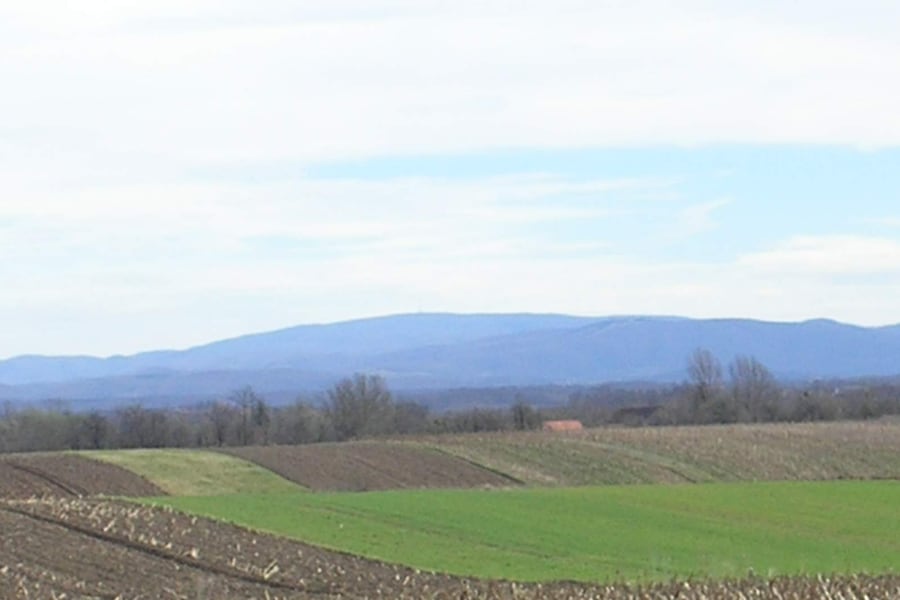
The wooded mountain that stands over the first two hours of the journey, topping out at 953 metres. In September 2007 it became the first geopark in Croatia and the thirtieth member of the European and UNESCO Global Geoparks Network, relicensed in 2011, covering 33,600 hectares across two counties. At Jankovac, high in the beech forest, a stream falls over a limestone lip into a pair of small lakes — the walk most people come for.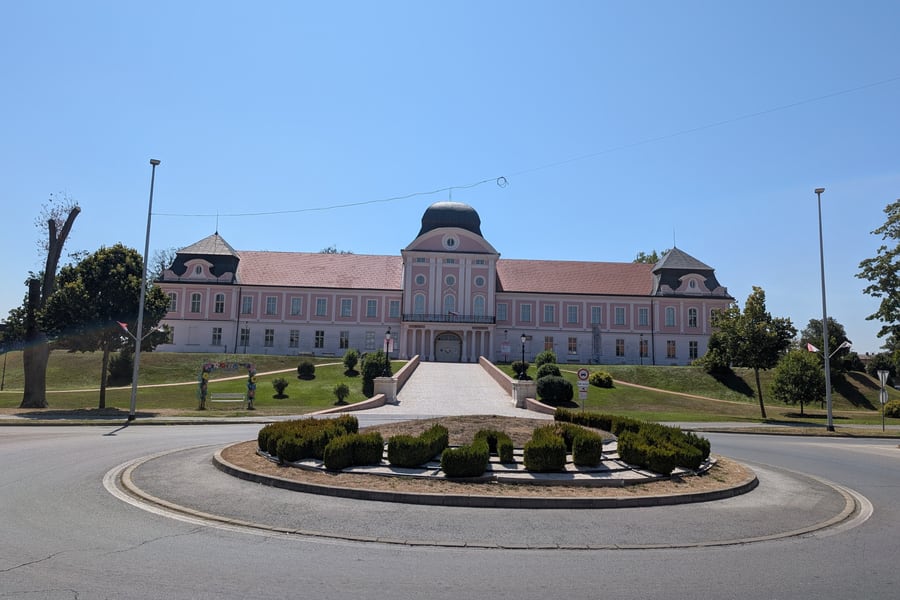 Андрей Романенко / Wikimedia Commons · CC BY-SA 4.0 · cropped
The Pejačević castle at Virovitica
A medieval Wasserburg stood on this spot and was ruined in the Ottoman wars. Between 1800 and 1804 the Pejačević family built over it: a long single-storey palace of about 88 by 13 metres in baroque classicism, to designs by the Viennese architect N. Roth. Antun I. Pejačević, who began it, died in 1802 and never lived in it. A brick bridge of barrel vaults still crosses the old moat, and the building has housed the City Museum since 1984.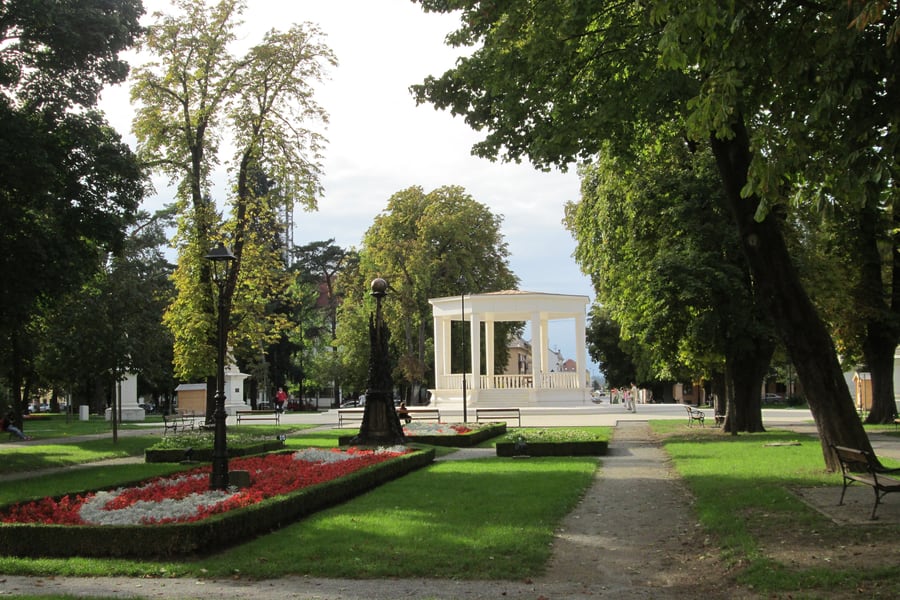 Fraxinus / Wikimedia Commons · CC BY-SA 4.0 · cropped
Bjelovar, a town drawn before it was built
Bjelovar exists because the army needed a headquarters. Founded in 1756 under Baron Philipp Lewin von Beck as the seat of the Varaždin Generalate on the Military Frontier, it was laid out as a grid on open ground and settled with soldiers and imported Czech and Croatian farmers. Maria Theresa confirmed it as a privileged Krajina city in 1771; the church of St Teresa of Ávila was finished in 1772; it became a free royal town in 1874. 36,316 people live there now.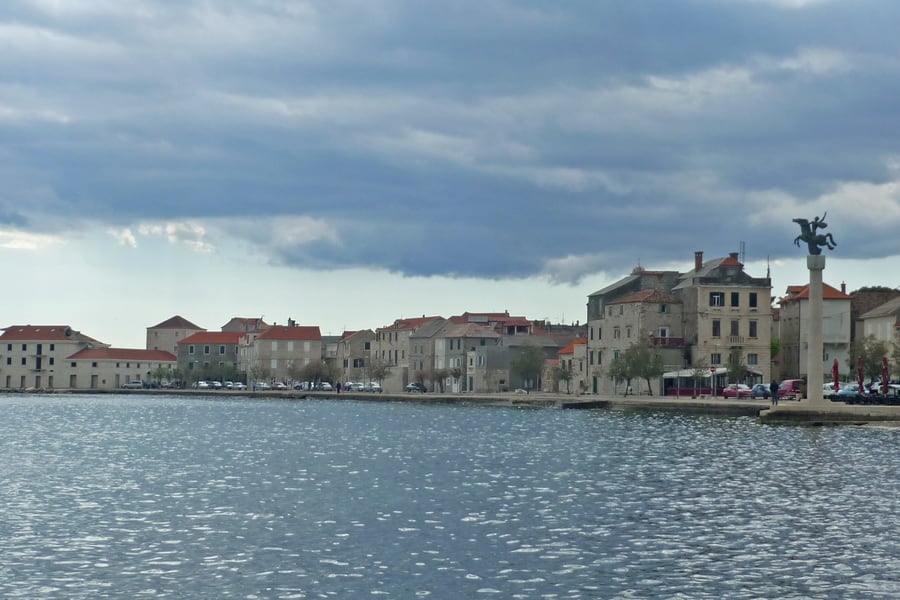 SchiDD / Wikimedia Commons · CC BY-SA 4.0 · cropped
The seven castles of Kaštela
From the end of the fourteenth century, nobles from Split and Trogir put up sixteen fortress-palaces along this shore against the Ottomans, and settlements grew around seven of them: Štafilić, Novi, Stari, Lukšić, Kambelovac, Gomilica and Sućurac. They run for about twenty kilometres of coast between Trogir and Solin, with the Kozjak ridge behind, and 37,794 people live in them. The train calls at Kaštel Stari and then runs the waterline into Split.Where to Sleep
A night train removes the need for one hotel and creates the need for two others — somewhere in Osijek before an evening departure, and somewhere in Split for the day the train delivers you into. Both ends are well served, and the Slavonian end is the cheaper and the quieter of the two.
Osijek repays an extra night at the start. The train leaves at 18:44, which means a whole day in the city is available to anyone who arrives the day before: Tvrđa in the morning, the Drava promenade and the suspension bridge over to Baranja in the afternoon, and dinner before the walk to the station. Both the hotels below are in the centre, within easy reach of it.
At the other end, the train is into Split at 08:49, which is several hours before any hotel will hand over a room. The practical answer is a hotel that will hold luggage from breakfast time — worth asking when booking — leaving the morning free for the palace and the Riva while the room is made up.
The cards below carry no prices, star counts or ratings. Each description says only what that hotel states about itself on its own website, and every link was opened and read before it was published.
Where to stay
Hotel Osijek
On the Drava, in the middle of the city
A large city hotel standing on the river, with 146 rooms and apartments looking either over Osijek or over the Drava and the Baranja plain beyond it. Guests have free use of the wellness and fitness centre, whose own description makes a point of the view over the river; there is room service, a laundry service, rooms adapted for guests with disabilities, cots for children, and the hotel takes dogs. Booking is handled directly on its own site.
Check Availability (opens in a new tab, on hotelosijek.hr)via hotelosijek.hrHotel Waldinger
Sixteen rooms in a protected Secession building
A small family hotel in the centre of Osijek at Županijska ulica 8, in a protected Secession building with high ceilings and the proportions that go with them. There are sixteen rooms in the hotel itself and a further seven in the Pansion, in the garden behind, where breakfast and use of the wellness are included in the rate. The restaurant describes itself as modern cooking with a traditional soul, and there is a French patisserie counter attached.
Check Availability (opens in a new tab, on waldinger.hr)via waldinger.hrHotel Park Split
Under Marjan, beside Bačvice beach
Open since 1921, when it began as the Hotel Imperial in the former Villa Dvornik — a building designed by Vjekoslav Ivanišević and Fabijan Kaliterna, one of them a founder of Hajduk Split. It was extended in 1938 and has carried its present name since. There are 72 rooms, a restaurant and bar, wellness and fitness, a winter garden and an outdoor pool on the terrace, and the hotel is a few minutes from Bačvice beach and the old town. Its own account makes much of that sea-facing terrace, where the poet Tin Ujević wrote.
Check Availability (opens in a new tab, on hotelparksplit.com)via hotelparksplit.comQuestions or corrections
Planning this trip and stuck on something, or spotted a time, fare or detail that has changed? Send us a message about The Summer Night Train — Osijek to Split. We read every one, and we update this page when something has changed.