
Croatia
fjaka / Wikimedia Commons · CC0 · cropped
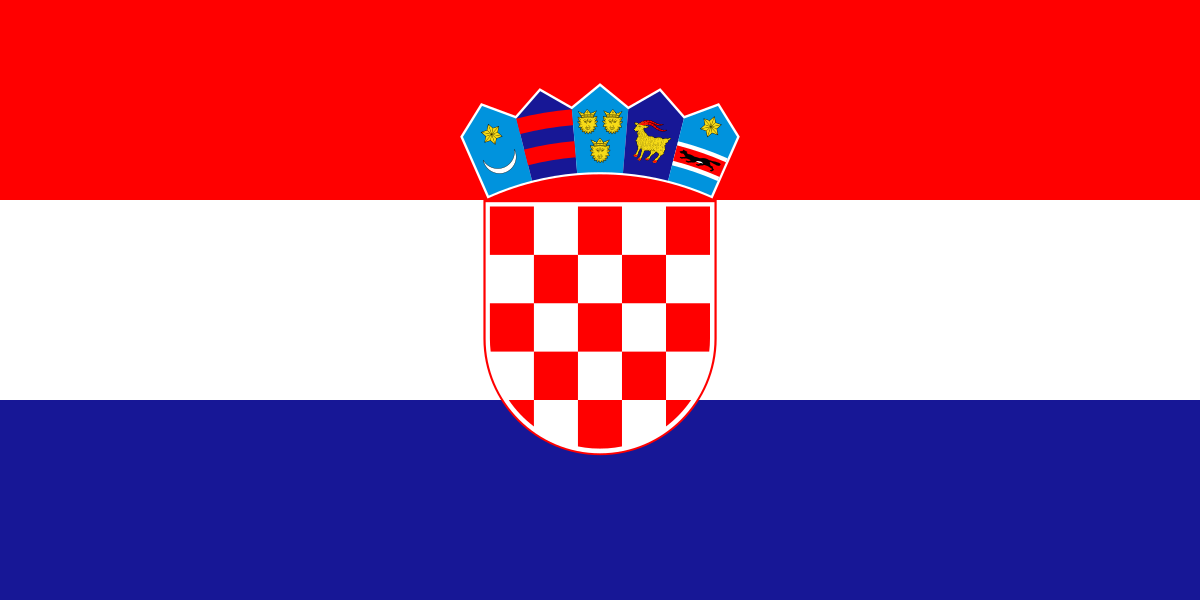
Croatia is a crescent of 56,594 square kilometres wrapped around the north-eastern Adriatic, with 3.87 million people at the 2021 census. It borders Slovenia, Hungary, Serbia, Bosnia and Herzegovina and Montenegro, and faces Italy across the water. It is really three countries in one: the Pannonian plain of Slavonia in the east, the limestone spine of the Dinaric mountains down the middle, and a coast strung with more than a thousand islands and islets. Zagreb, the capital and largest city, sits inland in the north, with Split, Rijeka and Osijek holding the other three corners.
Rail travel here is inexpensive, unhurried and radial — almost everything runs to or from Zagreb, and the map thins as it goes south. The seaside lines fill for a few weeks each summer, when the operator takes 40 per cent off fares to the coast and puts on night trains from the eastern plains. Beyond Split the network gives out: the southernmost stations in the operator's own timetable are Ploče and Metković, and Dubrovnik has no railway at all, so the last stretch of coast is reached by bus or boat. What the network is for is joining the regions to the capital, which is why its best journeys are the long ones.
Rail journeys in Croatia
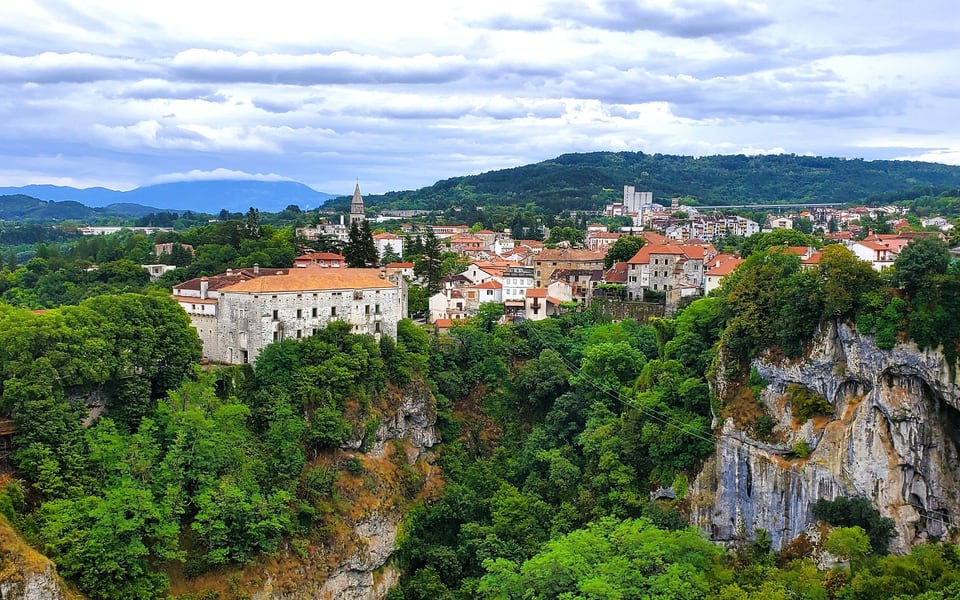
The Istrian Line — Pula to Buzet
One railway threads the hill towns of Istria, from a Roman amphitheatre by the water to a town perched over a chasm — and it meets no other Croatian line.
View journey →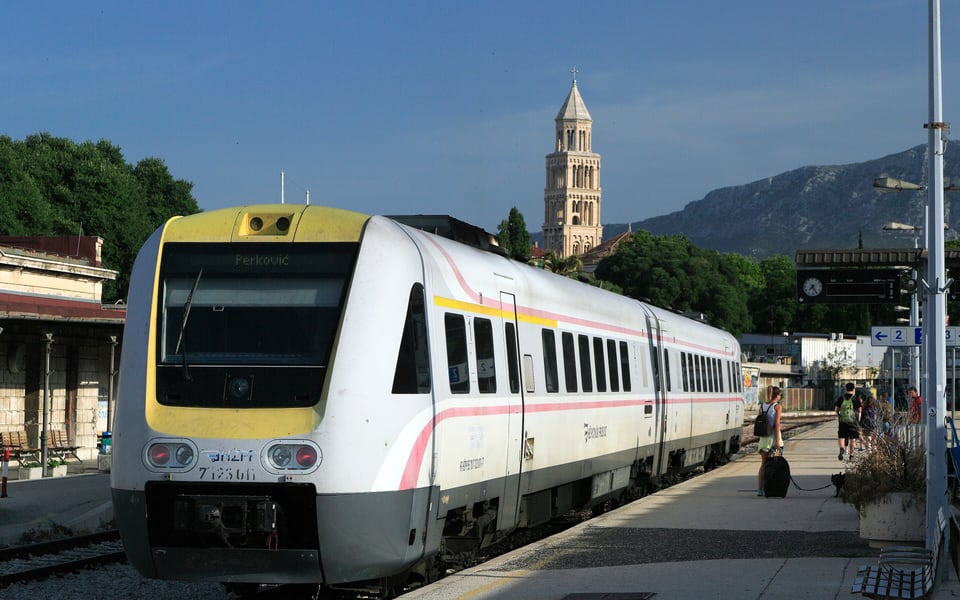
The Lika Railway — Zagreb to Split
Begun by Austria-Hungary in 1913 and finished twelve years and one world war later by a different country — 429 kilometres from Zagreb to the Adriatic.
View journey →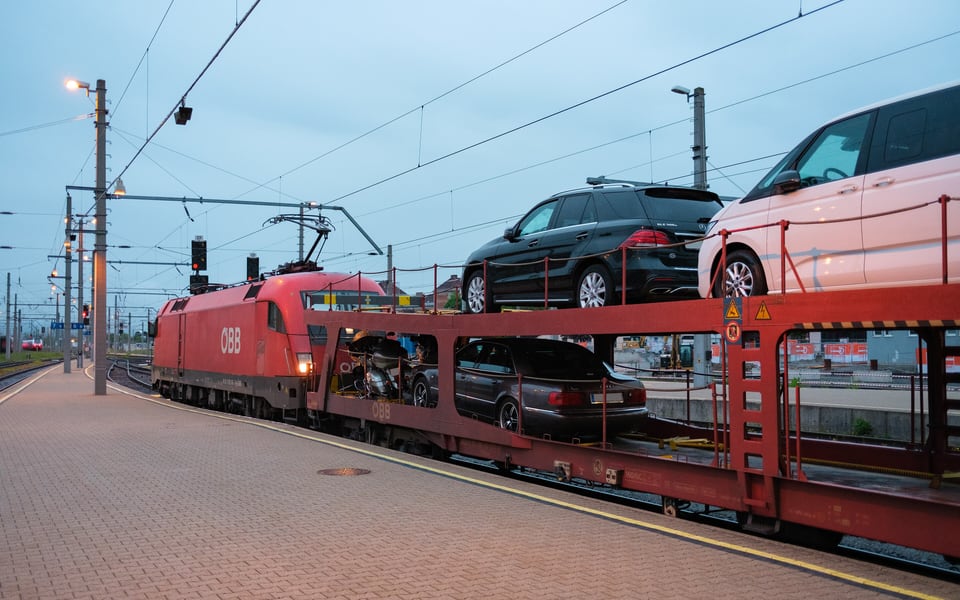
The Car Sleeper — Vienna to Split
Three nights a week for barely three months a year, one train carries you and your car from Vienna to the Dalmatian coast while you sleep.
View journey →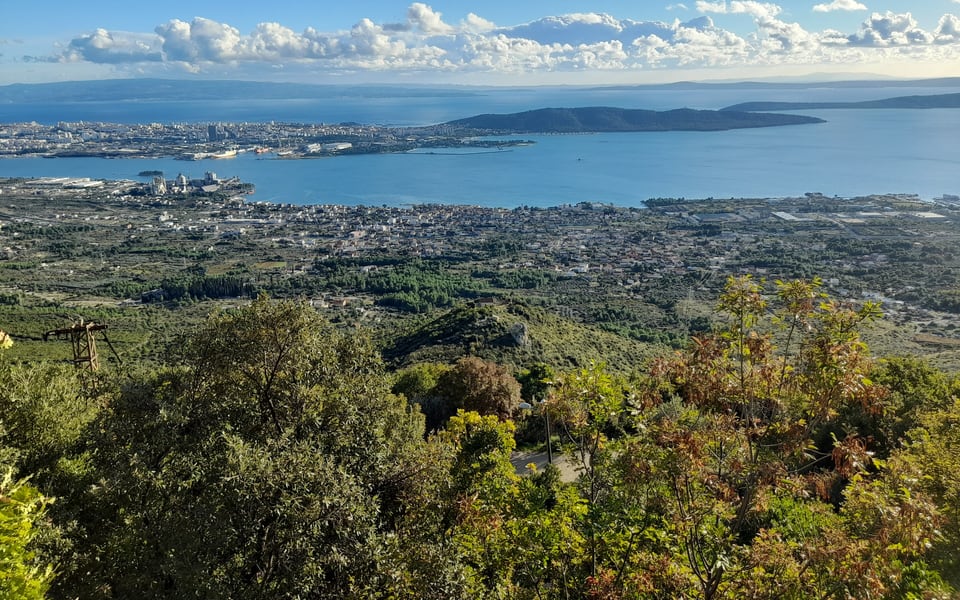
The Summer Night Train — Osijek to Split
For nine weeks a year, one train joins the two far ends of Croatia: fourteen hours from the Drava to the bay of Kaštela, and a berth for nine euros.
View journey →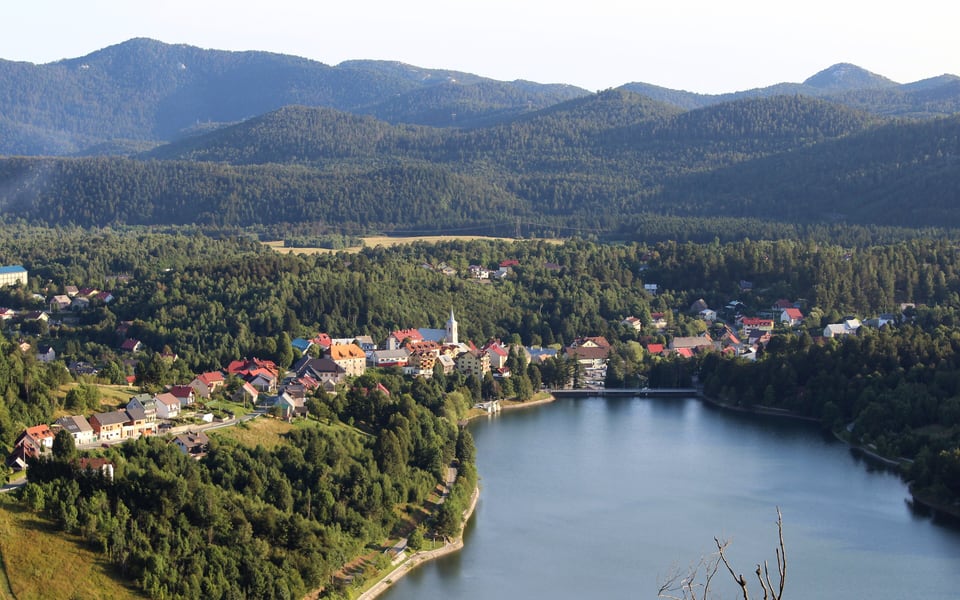
Over Gorski kotar — Zagreb to Rijeka
Four hours from the capital to the Adriatic, over the fir-forested karst of Gorski kotar, then down to Rijeka on ledges cut into the mountain.
View journey →Good to know
Is it practical to get around Croatia by train?
For the north and the interior, yes — and cheaply. HŽ Putnički prijevoz runs a 2,617-kilometre network that radiates from Zagreb, so journeys between the capital and the regions are straightforward while journeys between two regions usually mean changing there. The trains are slow by western European standards: nothing is permitted above 160 km/h and most of the scenic lines are single track. South of Split there is no railway at all, and Dubrovnik has never had a station, so the southern Dalmatian coast is bus or ferry territory.
Do you need to book Croatian trains in advance, and are rail passes worth it?
Most domestic trains take an ordinary walk-up ticket. A seat reservation costs €1.06 and is compulsory on the Zagreb–Split day trains and the seasonal night trains, where berths in a sleeping car are charged separately from €9. Buying on hzpp.hr is about 10 per cent cheaper than at the ticket window. Interrail and Eurail passes are valid on the network, but with fares this low a pass rarely pays for a single journey — it earns its keep only across a longer trip taking in several of the long lines.
When is the best time to travel by train in Croatia?
Late June to the end of August is when the railway is at its most interesting: the operator cuts fares to the coast by 40 per cent, puts extra day trains on to Split, and runs seasonal night trains from the eastern plains that exist for about nine weeks and then stop. Outside that window the mountain and coastal main lines still run every day of the year, and they are quieter and often better for it — Gorski kotar under snow is a different journey from Gorski kotar in August.
What are the best train journeys in Croatia?
The Lika Railway from Zagreb to Split is the classic — a line begun by Austria-Hungary and finished after it had ceased to exist, crossing the karst to Dalmatia. Over Gorski kotar to Rijeka is the great mountain crossing, and the Istrian line is the oddity — a Croatian railway reachable from Croatia only through Slovenia. For something that exists only in high summer, the night train from Osijek to Split joins the two far ends of the country, and the ÖBB car sleeper from Vienna arrives with its passengers' cars on the back.