The Dalmatian Railway — Split to Šibenik
Falk2 / Wikimedia Commons · CC BY-SA 4.0
- DistanceSplit–Šibenik · about 71 km · 49 to Perković, then 22 on the branch
- Duration1 h 46 at best · up to 3 h with a long wait at Perković
- Best seasonAll year · travel Monday to Friday, when five connections run each way
Introduction
In 1877 the authority building the first railway in Dalmatia put a young engineer called Vjekoslav Meichsner in charge of its stations — every building between Siverić and Split, and on the branch from Perković down to Šibenik. The line opened on 4 October 1877. Meichsner did not leave. He settled in Šibenik, married there, became the town's chief architect, and in 1878–79 built it a waterworks, with the state railway investing in it, that brought running water to the town from the Krka falls for the first time in its history.
The water led to the light. Working at the falls had shown him what the river could do, and on 28 August 1895 a power station he built beside them, Jaruga, switched on Šibenik's street lamps over an 11.5-kilometre line — one of the first complete alternating-current systems anywhere, from generator to street corner. Croatia's national power company still dates its own origin to that evening.
The railway that brought him is still running. It takes about two hours from the harbour at Split: along the bay of Kaštela, up onto the karst, a change at the junction of Perković onto a single railcar, and then twenty-two kilometres down to a stone station of 1877 on Šibenik's waterfront, below an old town whose cathedral is built entirely of stone.
The Journey
The train leaves Split from the station on the harbour front, beside the bus station and the ferry quays, and runs out through the suburbs to Solin. From there it follows the shore of the Kaštela bay through Kaštel Sućurac, Kaštel Gomilica and Kaštel Kambelovac to Kaštel Stari, where the railway turns its back on the sea.
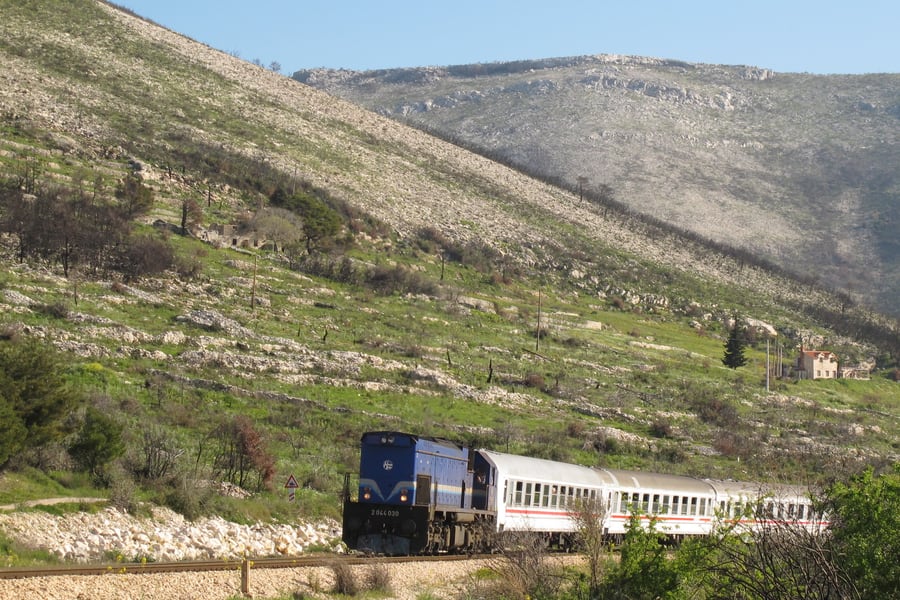
The climb that follows is the scenic half of the trip. Through Sadine, Labin Dalmatinski and Primorski Dolac the line works up onto the stony upland behind the coast, and the bay drops away below. It is forty-nine kilometres from Split to Perković. Every train from Zagreb comes down this way at the end of its run; on this journey Perković is where you get off.
The junction
Perković is a junction first and a place second. The law that authorised the railway in the 1870s named the station after the village of Perković, the surveyors then built it on the land of neighbouring Sitno Donje, and the name has stuck to everything around it since — the post office, the parish, the houses by the line. The village it is named after is more than a kilometre away.
This is where you change. Šibenik has its own railcar, which meets the trains from Split and Knin; on the best connections the change takes a few minutes, and on others it can take more than an hour. Only one train a day runs through without a change, the 05:21 from Šibenik, on weekdays.
Down to Šibenik
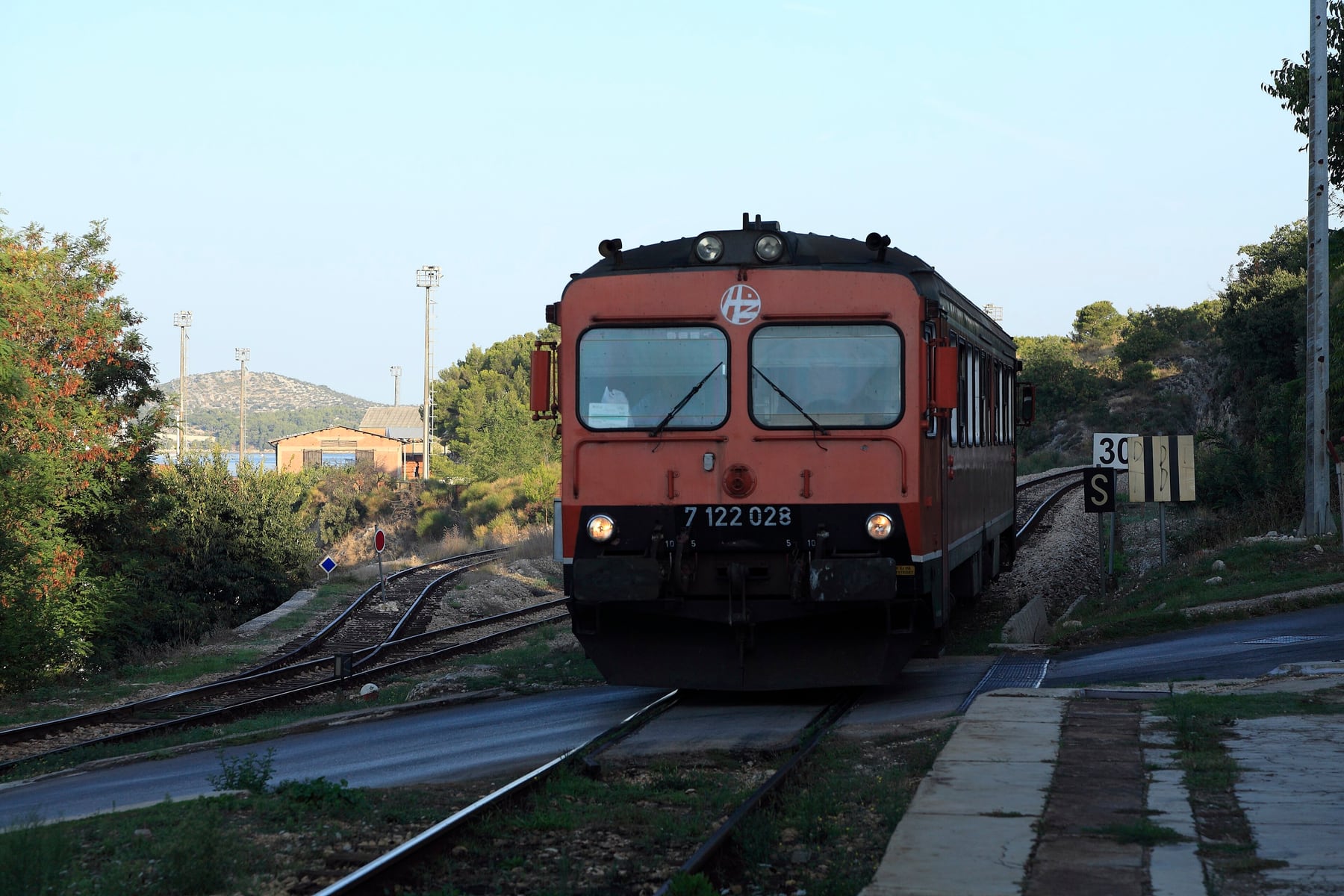
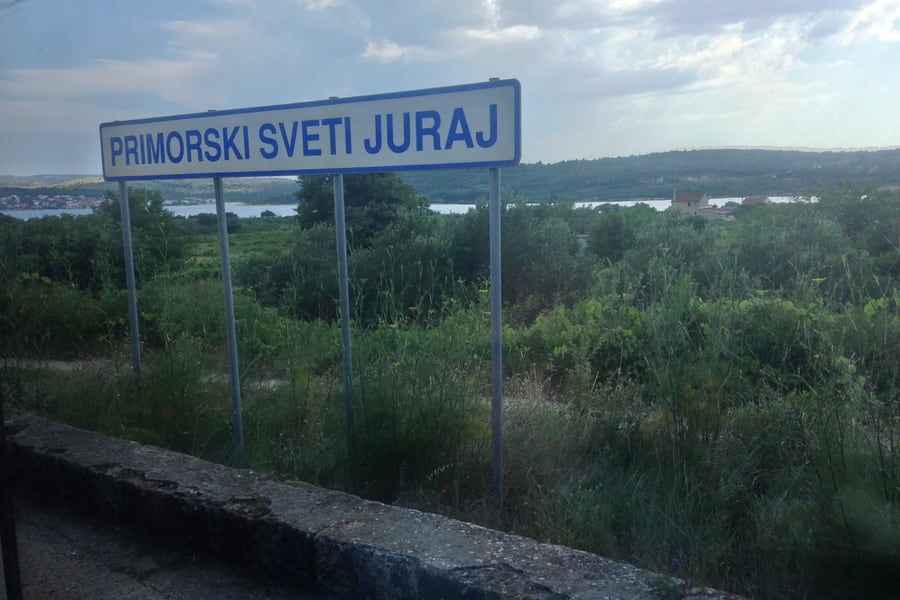
The branch is 22 kilometres long, single track and unelectrified. It runs west through Ripište, Dabar and Primorsko Vrpolje, through dry hinterland, and near Primorski Sveti Juraj the coast comes back into view. After Ražine and Mandalina the line runs into Šibenik and stops on the waterfront, by the port, in the same stone station it opened with in 1877. The first timetable allowed 87 minutes from Perković; the railcar now takes half an hour.
What the line was built for
Not for passengers. The Siverić coal mines inland had been worked since 1834, and in 1873 they were bought by a Turin company, Monte Promina, which asked to build a railway to carry the coal to the sea. What the state built instead was a public line from Siverić to Split with this branch to Šibenik, and for its first half-century it was joined to nothing else: the extension to Knin came in 1888, but there was no connection to the rest of the network until the Lika line arrived in 1925. The Siverić mine closed in 1971. The railway outlived it.
What runs on it
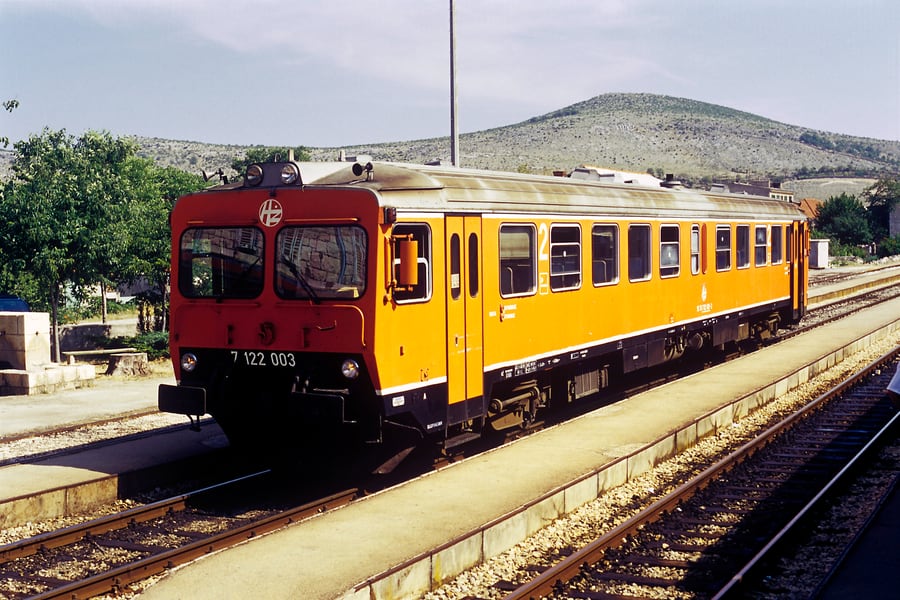
The branch is worked by HŽ class 7122, single-car diesel railcars built in 1980–81 by Kalmar Verkstad and Fiat for Sweden, where they were class Y1. Croatia bought them second-hand in 1996, and they are known as Šveđanin — the Swede. Each has a cab at both ends and 68 seats, which is all a twenty-two-kilometre branch needs. Many now carry graffiti along their sides.
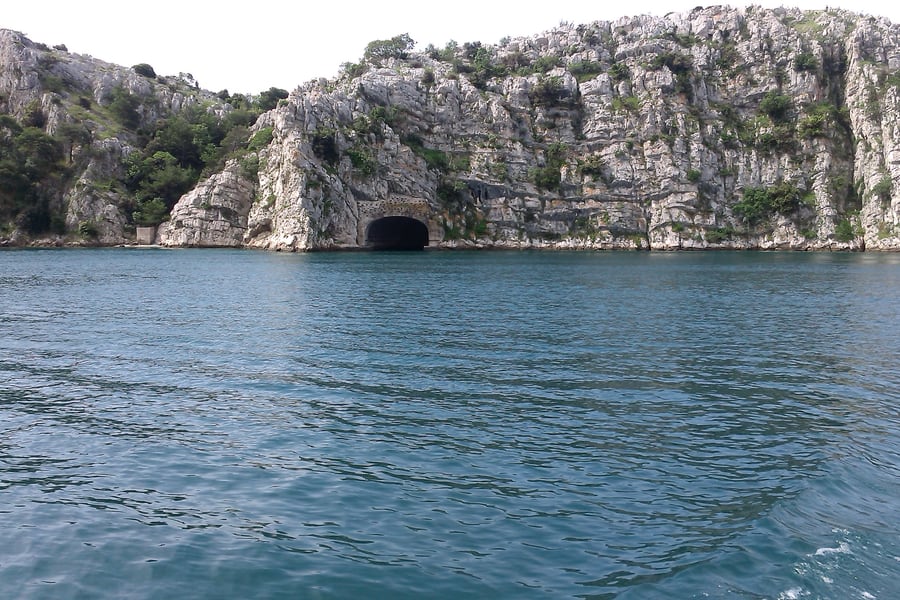
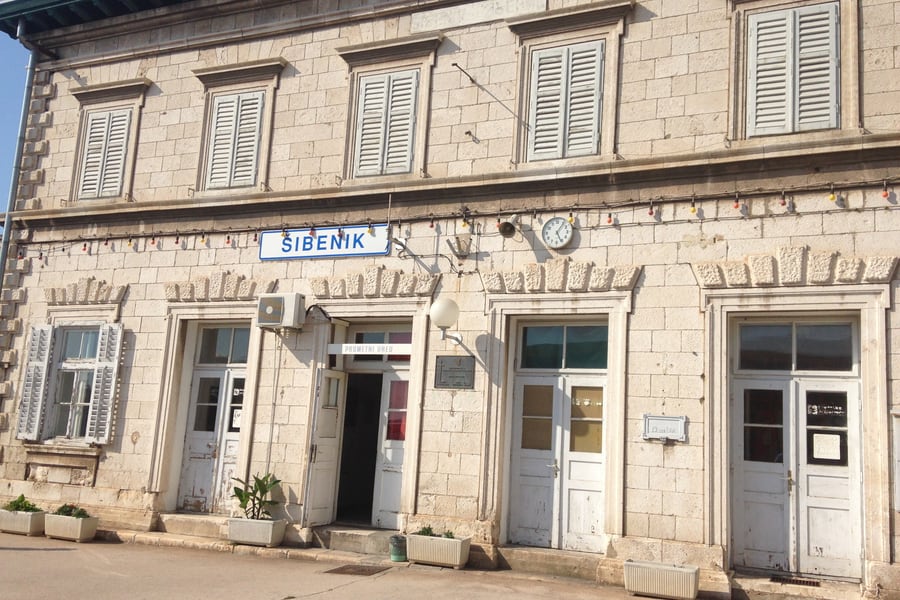
Along the route
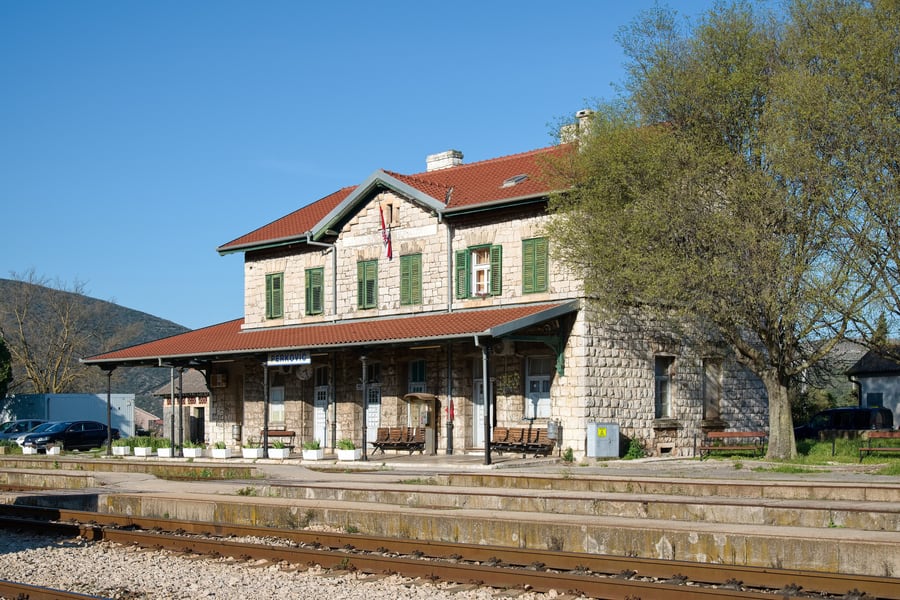 Petr Štefek / Wikimedia Commons · CC BY-SA 3.0 cz · cropped
A station named by a law
The law that authorised the line named the junction Perković. The surveyors then moved the alignment onto the land of neighbouring Sitno Donje, but the name stayed — and the post office, the parish and the houses round the station have answered to it ever since.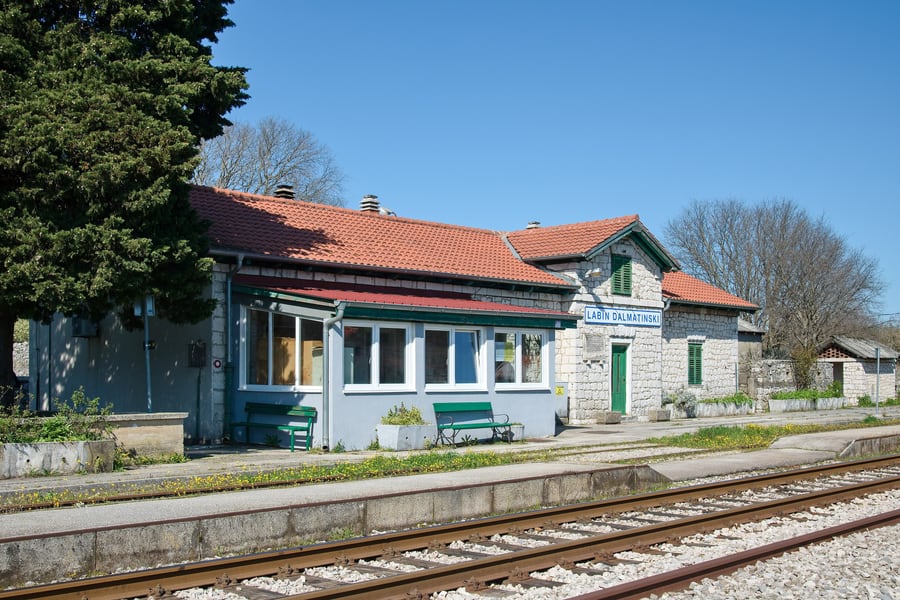 Petr Štefek / Wikimedia Commons · CC BY-SA 3.0 cz · cropped
Up out of Kaštela
Leaving Split the line runs along the bay of Kaštela, then turns inland after Kaštel Stari and climbs through Labin Dalmatinski and Primorski Dolac to the junction at Perković, with the bay falling away behind.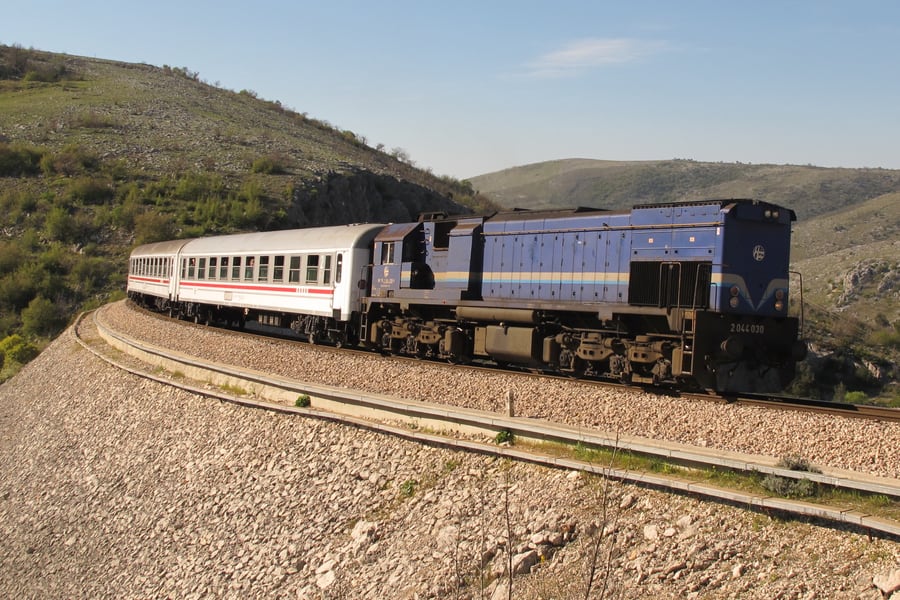 Manfred Kopka / Wikimedia Commons · CC BY-SA 4.0 · cropped
Why almost everyone changes
Šibenik has its own railcar, and it meets the Split trains at Perković. Only one train a day goes through without a change — the 05:21 from Šibenik, Monday to Friday — and nothing runs through in the other direction.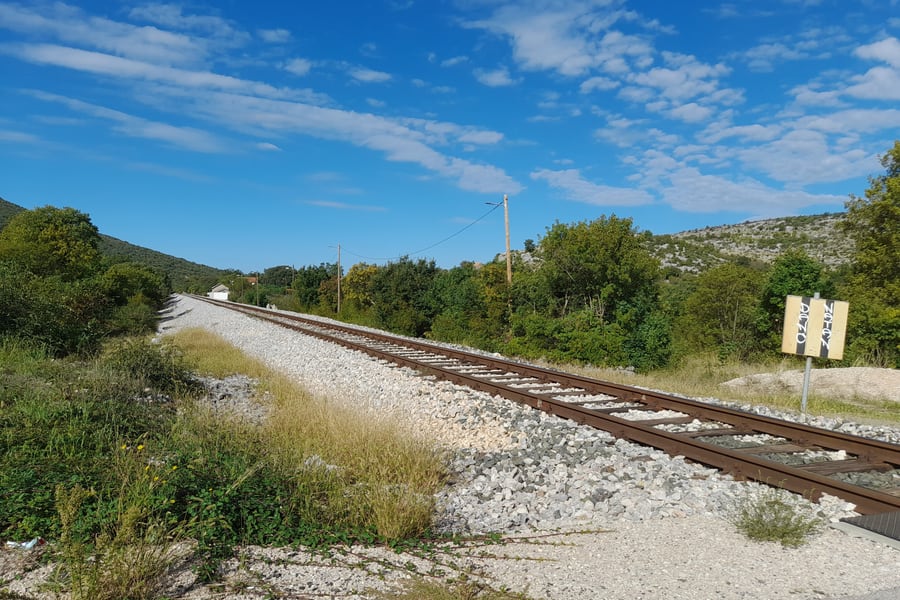 Argo Navis / Wikimedia Commons · CC BY-SA 4.0 · cropped
Twenty-two kilometres to the sea
From Perković the branch turns west through Ripište, Dabar and Primorsko Vrpolje and comes down towards the coast. The first timetable of 1877 allowed 87 minutes for it; today the railcar takes half an hour.A bit of history
Culture & experiences along the way
 Mnalis / Wikimedia Commons · CC BY 4.0 · cropped
The flying man of Prvić
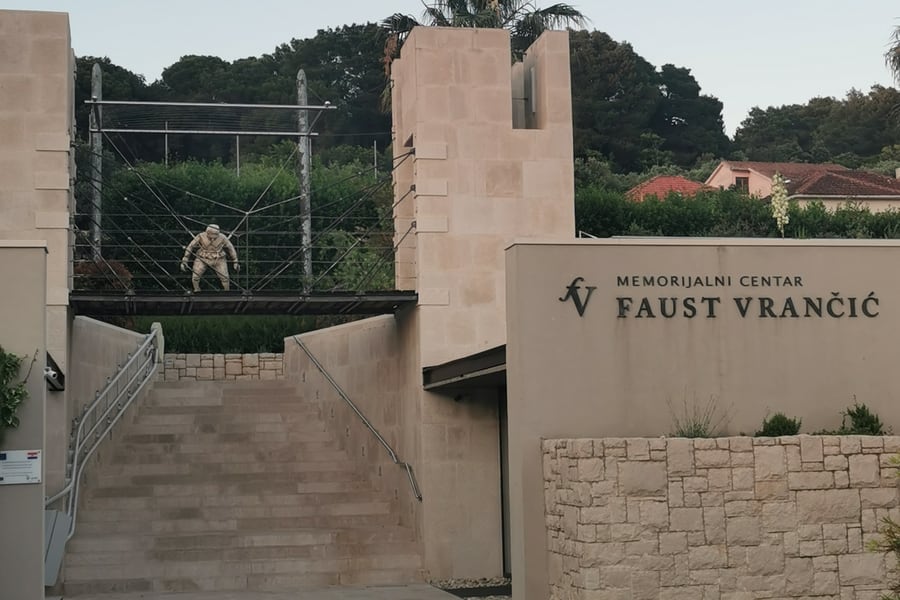
Faust Vrančić, born in Šibenik around 1551, published Machinae Novae in Venice in 1615 or 1616 — 56 machines, among them Homo Volans, a forerunner of the parachute. He is buried on the island of Prvić, and the memorial centre a few metres from his tomb shows about fifty hand-made models of his inventions.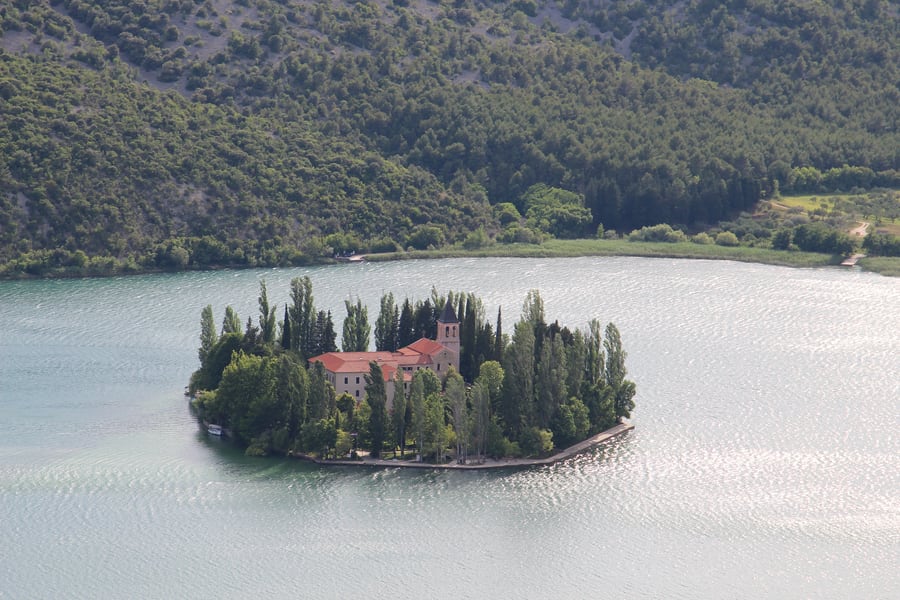 Marko Jukić -Majkl / Wikimedia Commons · CC BY-SA 4.0 · cropped
The monastery on an island in the Krka
Visovac is an islet about 170 metres long in the middle of the Krka, reached only by boat. Augustinians built here in the fourteenth century; Franciscans took it over in 1445, and their library keeps a 1487 Brescia edition of Aesop printed by Dobrić Dobričević of Lastovo.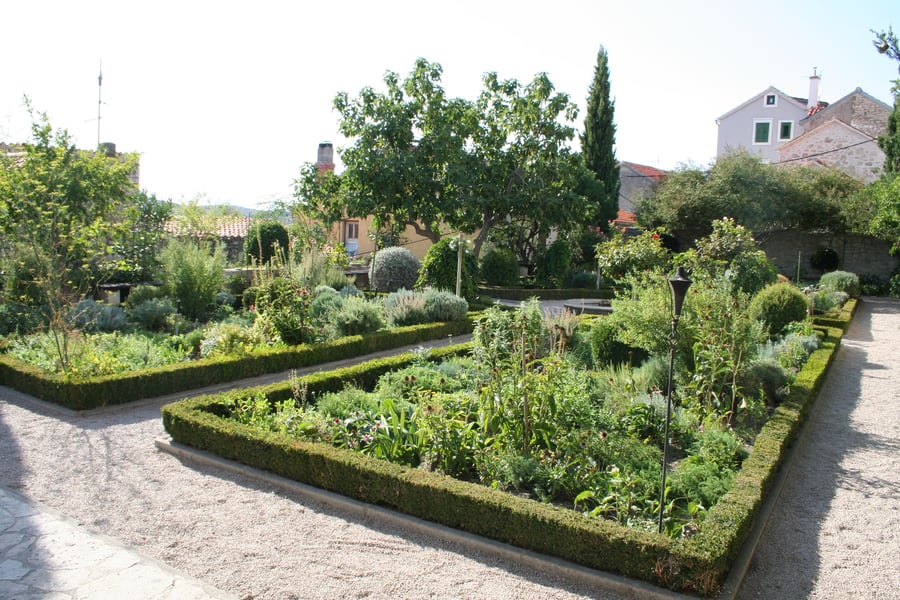 Tromber / Wikimedia Commons · CC BY-SA 4.0 · cropped
A medieval herb garden at the top of the steps
At the head of Strme stube, beside the bell tower of St Lawrence, the Franciscans' garden was rescued from neglect in 2007 to a design by the landscape architect Dragutin Kiš: a cross of paths, four beds of medicinal and aromatic herbs, a small fountain in the middle, and capers growing out of the walls.Timetables
Times below are read from HŽPP's own published GTFS feed, downloaded on 3 November 2026, and apply until the timetable change on 13 December 2026. Every journey except one involves a change at Perković.
Split to Šibenik, Monday to Friday
| Trains | Split | Perković arr. | Perković dep. | Šibenik |
|---|---|---|---|---|
| 5502 / 5803 | 07:08 | 08:21 | 09:04 | 09:34 |
| 5504 / 5823 | 10:32 | 11:41 | 13:01 | 13:31 |
| 5506 / 5825 | 14:01 | 15:10 | 15:18 | 15:47 |
| 5508 / 5805 | 15:26 | 16:35 | 16:42 | 17:12 |
| 5510 / 5807 | 19:47 | 20:58 | 21:02 | 21:32 |
Šibenik to Split, Monday to Friday
| Trains | Šibenik | Perković arr. | Perković dep. | Split |
|---|---|---|---|---|
| 5800 / 5501 | 04:48 | 05:17 | 05:19 | 06:27 |
| 5503, direct | 05:21 | — | — | 07:07 |
| 5802 / 5505 | 08:31 | 09:00 | 09:18 | 10:26 |
| 5822 / 5507 | 11:10 | 11:39 | 12:18 | 13:26 |
| 5824 / 5509 | 14:27 | 14:56 | 15:43 | 16:58 |
| 5804 / 5511 | 16:03 | 16:32 | 16:44 | 17:52 |
| 5806 / 5513 | 20:31 | 21:00 | 21:10 | 22:21 |
Weekends
The service is much thinner on Saturdays and Sundays:
| Day | Split to Šibenik | Šibenik to Split |
|---|---|---|
| Saturday | 15:26 → 17:12 · 19:47 → 21:32 | 08:31 → 10:26 · 20:31 → 22:21 |
| Sunday | 14:10 → 15:47 · 15:26 → 17:12 · 21:03 → 23:01 | 08:31 → 10:26 · 14:27 → 17:52 |
On Sundays the 14:10 from Split is train 522, a daytime Split–Zagreb train on which HŽPP makes a seat reservation compulsory, at €1.06. The 21:03 is the overnight train to Zagreb.
What that means in practice
The quick connections take 1 hour 46 minutes; the slow ones close to three hours, most of it spent on the platform at Perković. On a weekday the 14:01 and the 15:26 from Split are the ones to aim for, and the 05:21 is the only train that runs straight through.
The live timetable and ticket sales are at prodaja.hzpp.hr (opens in a new tab), and HŽPP's downloadable timetables are linked from hzpp.hr (opens in a new tab).
Tickets
Both trains are run by HŽ Putnički prijevoz, and one ticket covers the whole journey, change and all. HŽPP sells online, in its app and at the station counters, and its own terms make the online ticket 10% cheaper than the counter price, while a ticket bought on board is 10% dearer. The conductor takes cash and contactless cards.
The one exception is a Sunday journey on the 14:10 from Split, which is a Zagreb day train: HŽPP makes a seat reservation compulsory on those, at €1.06 on top of the fare, so book it ahead rather than at the window.
Book your tickets
Falk2 / Wikimedia Commons · CC BY-SA 4.0 · croppedSplit – Šibenik, with the change at Perković
Second class, one ticket for both trains
HŽPP sells the whole journey as a single ticket online, in its app and at station counters; its own terms make the online ticket 10% cheaper than the counter, and a ticket bought on board 10% dearer.
Book Tickets (opens in a new tab, on HŽ Putnički prijevoz)via HŽ Putnički prijevozRail Passes
The pass that covers this line is the Interrail Croatia Pass, a flexi pass giving a set number of travel days within one month. Prices read from Interrail's own site on 3 November 2026, adult second class:
| Travel days | Adult, 2nd class |
|---|---|
| 3 days within 1 month | €67 |
| 4 days within 1 month | €84 |
| 5 days within 1 month | €100 |
| 6 days within 1 month | €118 |
| 8 days within 1 month | €150 |
Youth passes, for travellers aged 12 to 27, start at €50 for three days. A travel day runs until 23:59 local time.
Whether it is worth buying
For this journey, no. It is a short regional trip on a single domestic ticket, and a pass will not pay for it on its own. A pass only earns its keep if Split–Šibenik is one day among several long ones — Zagreb to Split, Split back to Zagreb, Zagreb to Rijeka or Osijek.
Two conditions matter more than the price. Reservation fees are not included, which matters here only on the Sunday 14:10 from Split. And the Croatia Pass does not cross a border, so a trip that also takes in Slovenia or Bosnia and Herzegovina needs a Global Pass instead. Passes cannot be bought for your country of residence.
Places to Visit
Almost everything worth seeing on this journey is at the far end. Šibenik is a hill town of steps and alleys built round a harbour, with two UNESCO listings — and the station, the bus station and the ferry port all sit together on the waterfront below the old town.
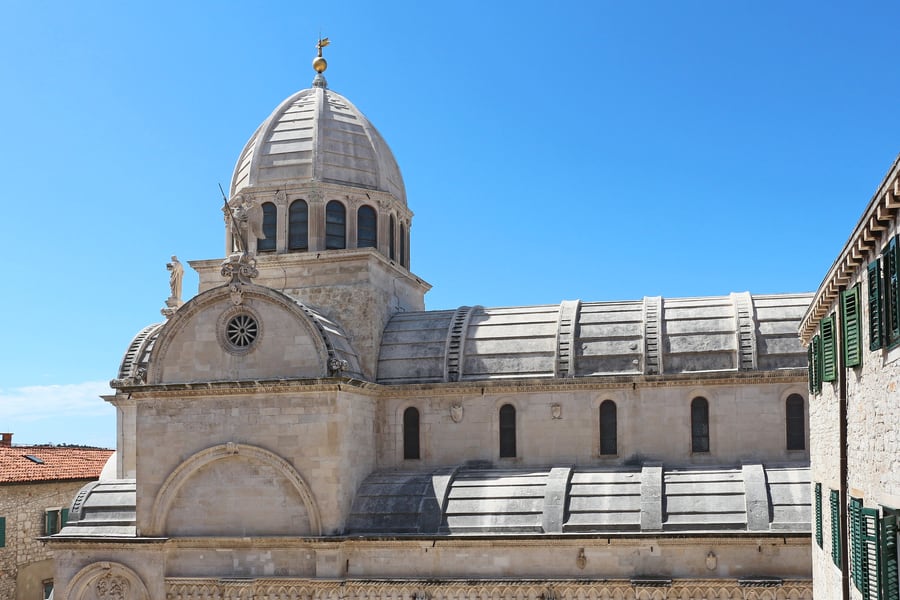
The Cathedral of St James is the reason most visitors come, a Renaissance church built entirely of stone over a century, with its frieze of carved heads round the apse. Above the old town, St Michael's Fortress stands on the hill where the city began, and out at the mouth of the channel St Nicholas Fortress guards the approach from the sea.
The one excursion that needs a little planning is up the Krka. The river's lowest falls, Skradinski buk, are inside the national park a short way upriver, and beside them are the restored foundations of the power station that lit Šibenik in 1895 — the end of the story this railway began.
 Bernard Gagnon / Wikimedia Commons · CC BY-SA 4.0 · cropped
The Cathedral of St James
Built between 1431 and 1536 entirely of stone, by masters who included Juraj Dalmatinac and Nikola Firentinac, with a frieze of 71 carved heads running round the outside of the apse and a stone dome over the crossing. It went onto the UNESCO World Heritage list in 2000, and the interlocking stone slabs of its roof, damaged by shelling in 1991, have since been repaired.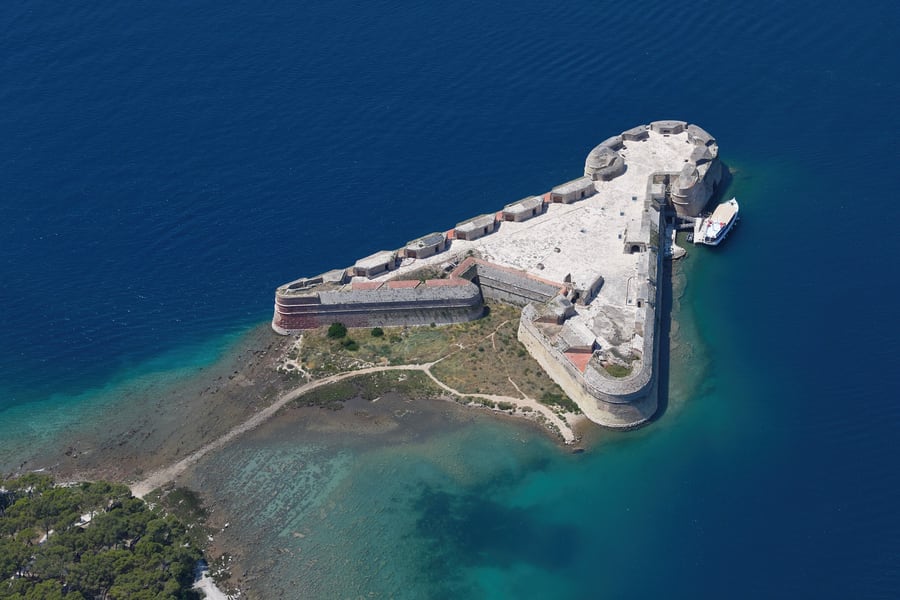 Carsten Steger / Wikimedia Commons · CC BY-SA 4.0 · cropped
St Nicholas Fortress
The only one of Šibenik's four fortresses that stands in the sea, on the islet of Ljuljevac at the entrance to the channel. Venice ordered it on 30 April 1525, at the townspeople's request, and demolished a Benedictine monastery to make room. It joined the UNESCO list in 2017 with the Venetian Works of Defence, and reopened to visitors in July 2019.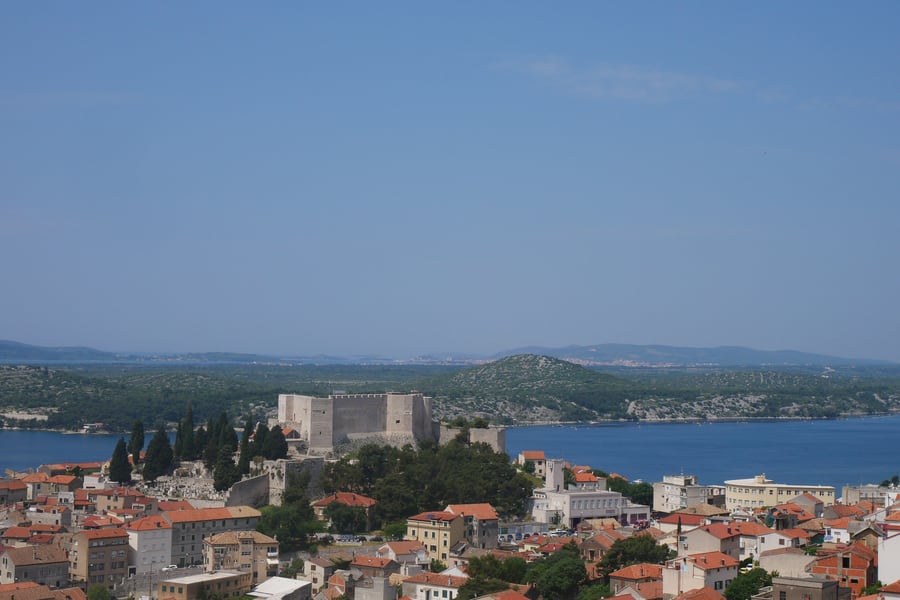 Zvone00 / Wikimedia Commons · CC BY-SA 4.0 · cropped
St Michael's Fortress
The oldest of the city's fortresses, on the hill where Šibenik began and first mentioned in 1066. It was built to watch the lagoon and the mouth of the Krka, and its walls now enclose an open-air stage of 1,077 seats. Seen here from Barone, the fortress on the next hill, with the channel and the islands behind.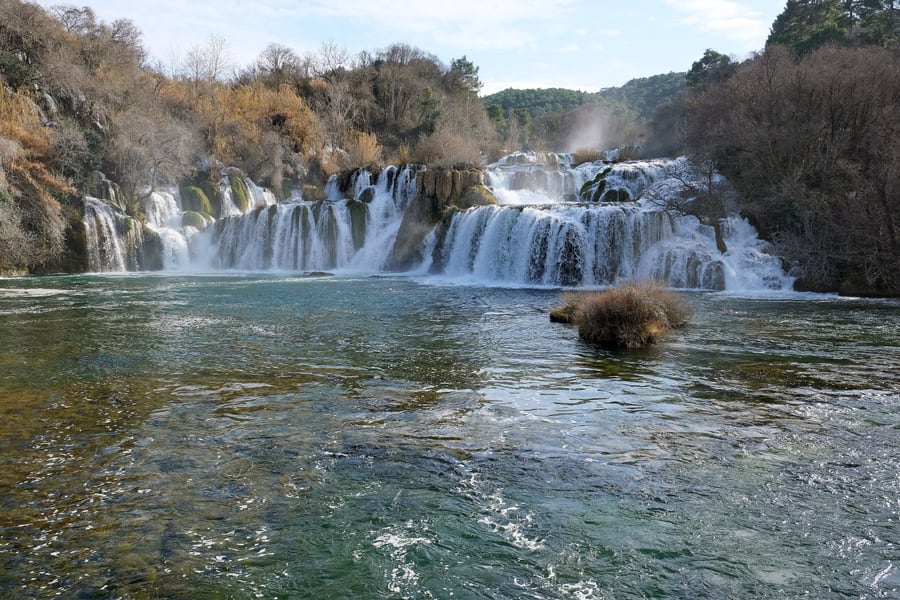 kallerna / Wikimedia Commons · CC BY-SA 4.0 · cropped
Skradinski buk
The lowest of the Krka's three sets of falls and the park's best-known sight: 17 waterfalls in a stretch 400 metres long, dropping 47.7 metres in all over barriers of travertine. Sea water reaches right to its foot up the drowned river mouth below. The Krka was declared a national park in 1985.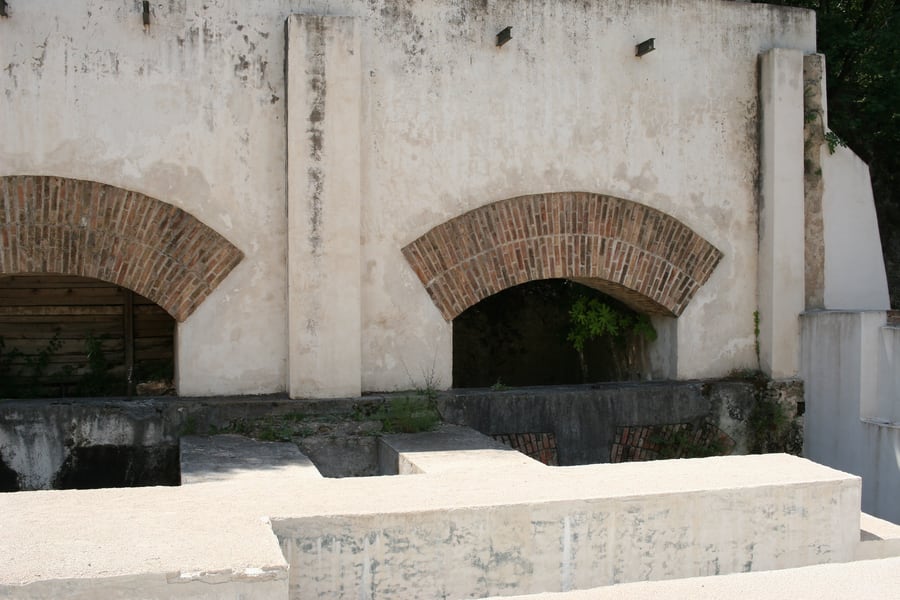 Smeichsner / Wikimedia Commons · CC0 · cropped
Where Šibenik's light came from
The foundations of Jaruga 1, the power station that lit Šibenik on 28 August 1895 over an 11.5-kilometre line on 360 wooden poles. It closed in 1913 and the army melted its copper in the First World War; the foundations have been restored, the original turbine is on display, and an IEEE Milestone plaque has marked the site since 2013.Where to Sleep
This is an easy journey to do as a day trip from Split, but Šibenik repays a night, and the evening trains back are few.
The old town is the obvious place to stay. The Armerun sits on the waterfront below the walls, and the same company runs Palace Divnić, eight rooms in a historic palace on Medulić Square at the heart of the old town. The station is down on the harbour with the bus station and the ferries.
For something larger, D-Resort Šibenik is on the Mandalina peninsula, beside the marina — Mandalina is also the name of the last halt the train calls at before Šibenik.
In July and August the Dalmatian coast fills completely, and rooms go well before seats on the train do.
Where to stay
Armerun Heritage Hotel & Residences
On the waterfront, under the old walls
The hotel's own account puts it beneath Šibenik's old city walls, overlooking the channel where the Krka meets the Adriatic, with rooms and larger residences and breakfast served until noon.
Check Availability (opens in a new tab, on armerun.com)via armerun.com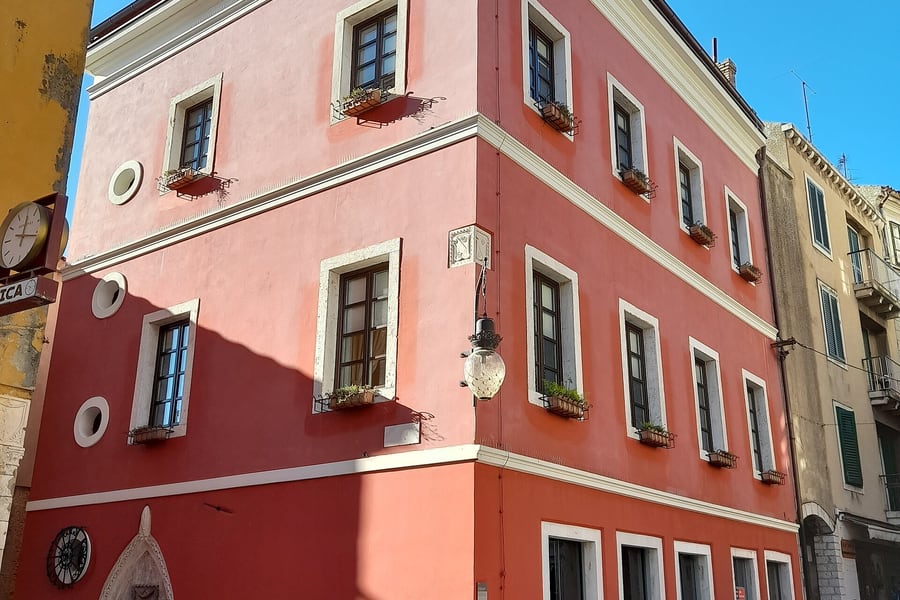 Argo Navis / Wikimedia Commons · CC BY-SA 4.0 · cropped
Palace Divnić
Eight rooms on Medulić Square
A historic palace at the heart of the old town, run by the same company as the Armerun, with eight individually designed rooms looking over the square, the rooftops and the sea.
Check Availability (opens in a new tab, on armerun.com)via armerun.comD-Resort Šibenik
On the Mandalina peninsula, by the marina
A resort whose building follows the curve of the Mandalina peninsula, with 63 rooms, six suites and three villas, balconies over the marina or the city, a spa and a fitness area.
Check Availability (opens in a new tab, on dresortsibenik.com)via dresortsibenik.comQuestions or corrections
Planning this trip and stuck on something, or spotted a time, fare or detail that has changed? Send us a message about The Dalmatian Railway — Split to Šibenik. We read every one, and we update this page when something has changed.