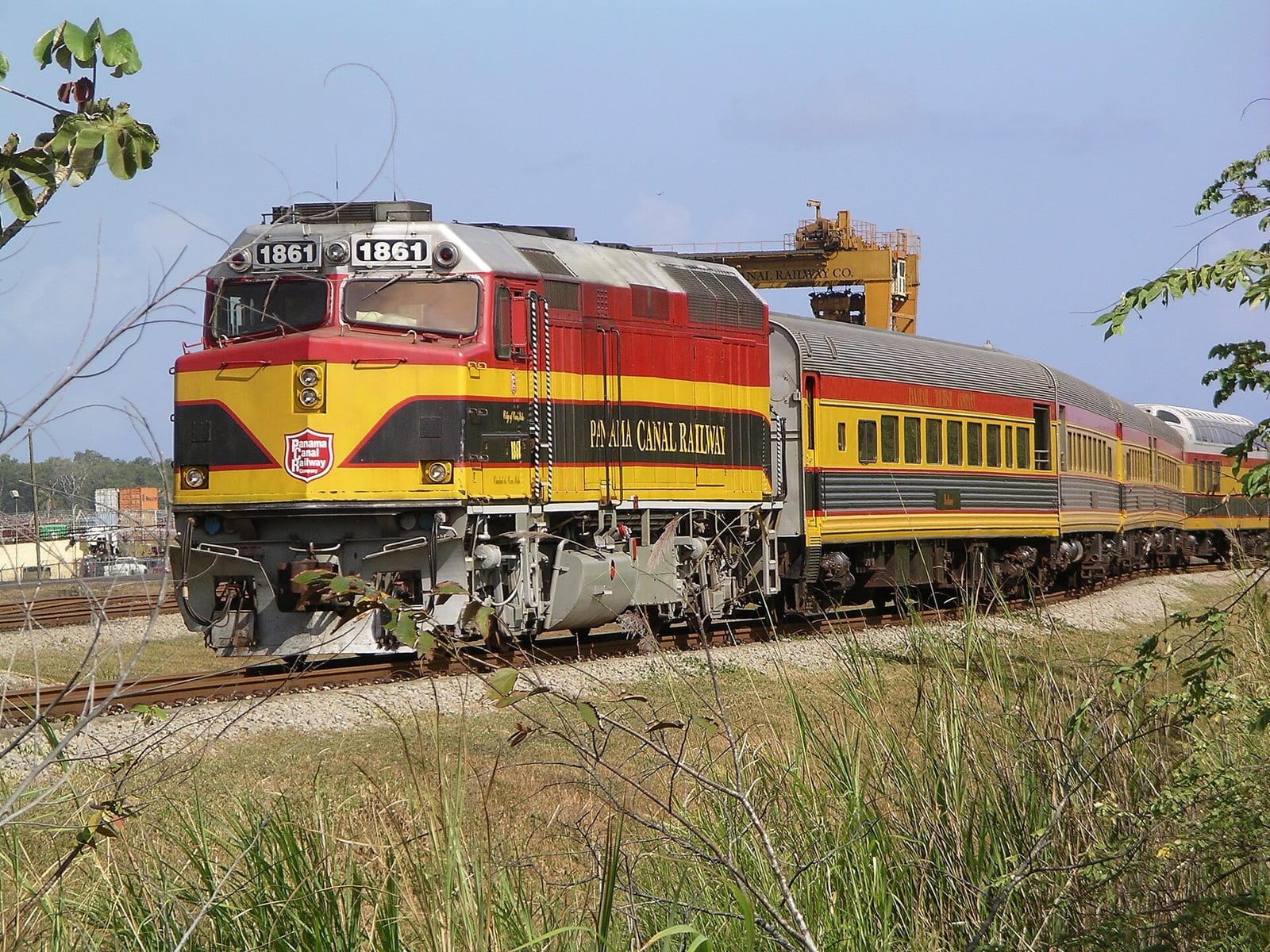
The Panama Canal Railway
Nils Öberg / Wikimedia Commons · CC BY-SA 3.0
- DistanceCorozal–Colón · 76.6 km / 47.6 miles
- DurationAbout 1 hour
- Best seasonDecember–April, the dry season · it rains hard the rest of the year
Introduction
You leave the Pacific after breakfast and you are on the Atlantic before eleven.
That is the whole point of the Panama Canal Railway, and it has been the point since 28 January 1855, when the first train ran the full width of the isthmus. Seventy-six kilometres. Ocean to ocean. About an hour.
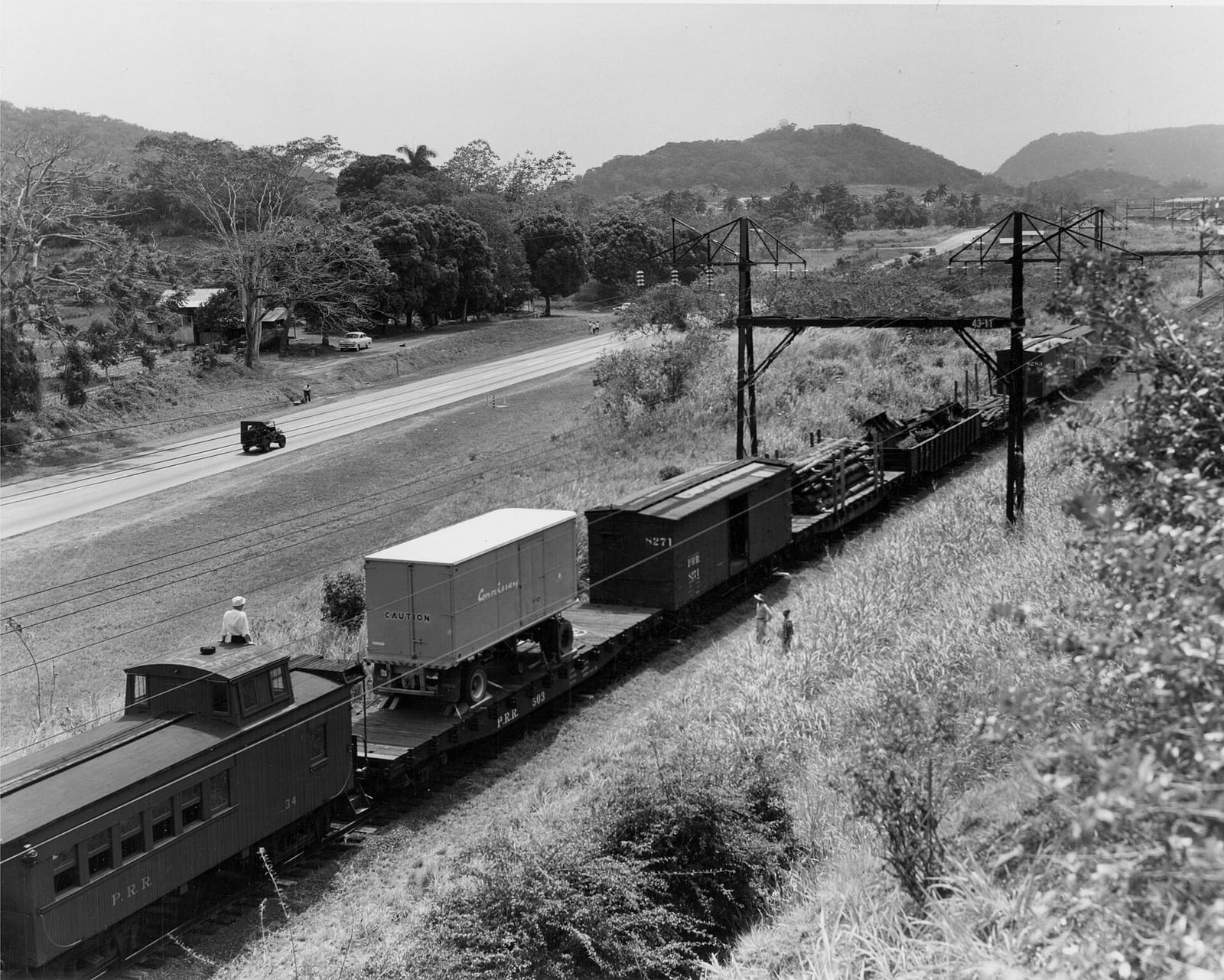
It is worth pausing on the date. This railway joined the Atlantic to the Pacific fourteen years before the Americans finished their own transcontinental line at Promontory Summit in 1869, and sixty years before the Panama Canal opened in 1914. For more than a decade in the middle of the nineteenth century, the fastest way from New York to San Francisco was to sail to Colón, cross Panama on this train, and sail on — and an extraordinary proportion of the wealth of the California gold rush came home that way.
What it cost
Somewhere between five thousand and ten thousand people died building it.
Nobody knows the number, because the railway company kept no official count. Cholera, malaria and yellow fever went through the work camps in a swamp on the equator, year after year, for five years. The dead came from the United States, Europe, Colombia, China and the islands of the Caribbean, and some of them were enslaved Africans. Many had arrived in Panama chasing the same fortune as everyone else, carrying no papers, and the record notes that they died with no known next of kin, no permanent address, and in many cases not even a known surname.
The line was a triumph of engineering and finance. Between 1855 and 1867, by the company's own reckoning, more than $700 million in gold crossed on it without the loss of a single dollar. Both of those things are true at once, and a page about a lovely train ride through the rainforest ought to say so.
What happened next
The American transcontinental railway opened in 1869 and the traffic disappeared almost overnight. By 1877 the stock had fallen from $369 to $52. The French came to dig a canal and failed; the Americans came and succeeded, and the railway spent the canal-building years hauling spoil out of the Culebra Cut, being relocated wholesale as the diggings widened and Gatún Lake filled up behind its new dam.
Then it settled into a long, quiet decline as a Canal Zone branch line, and by the 1990s it was more or less derelict.
The line you ride today
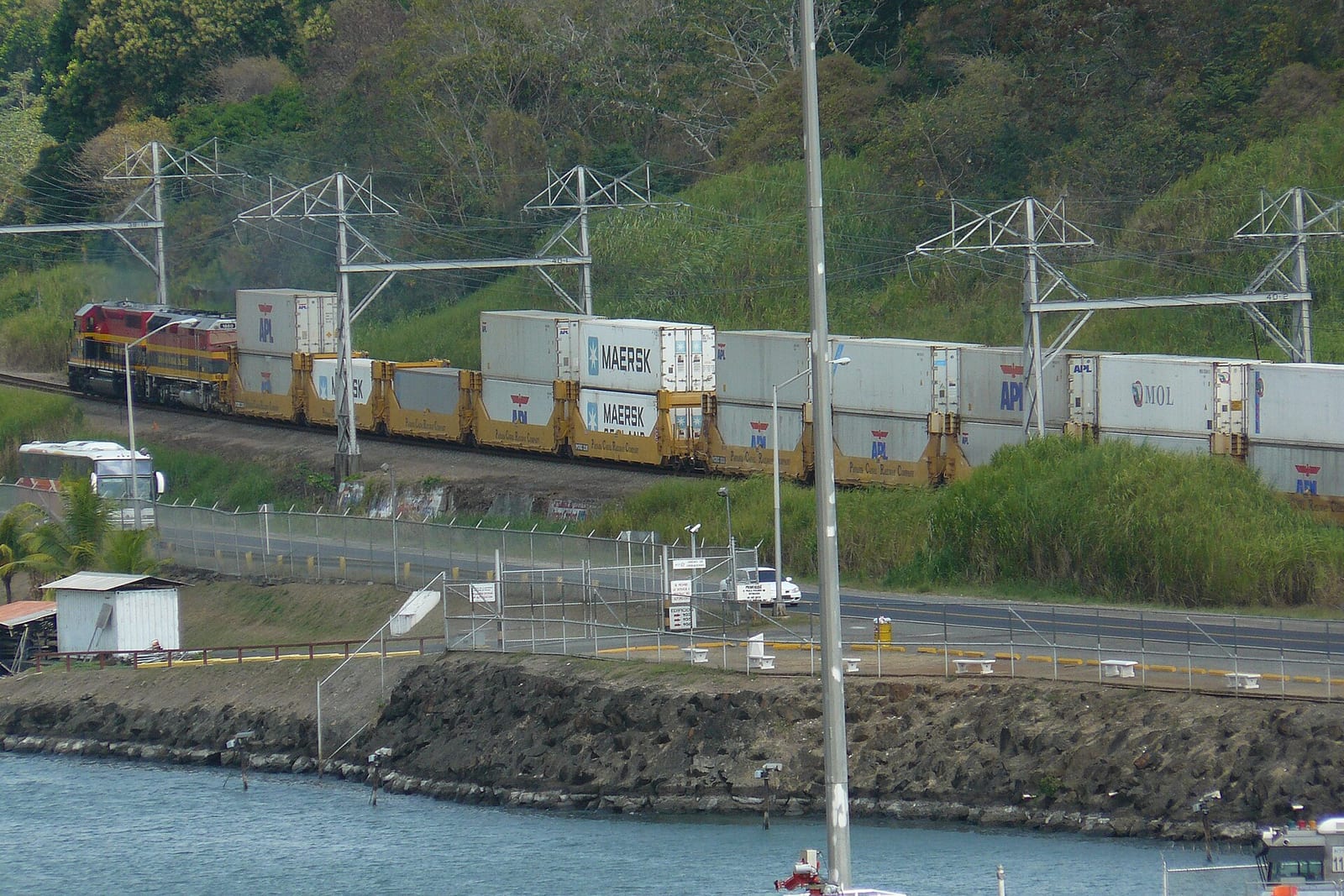
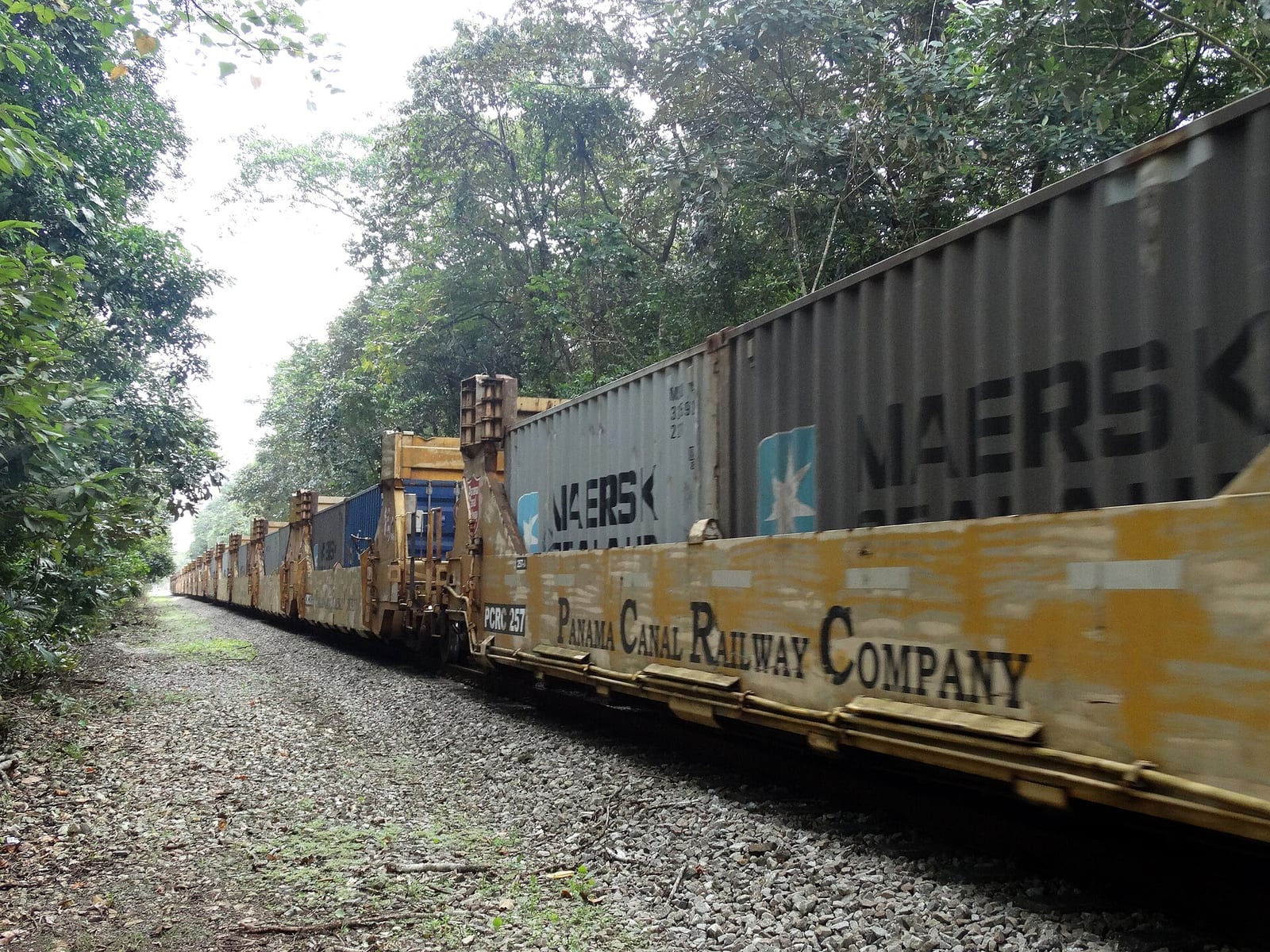
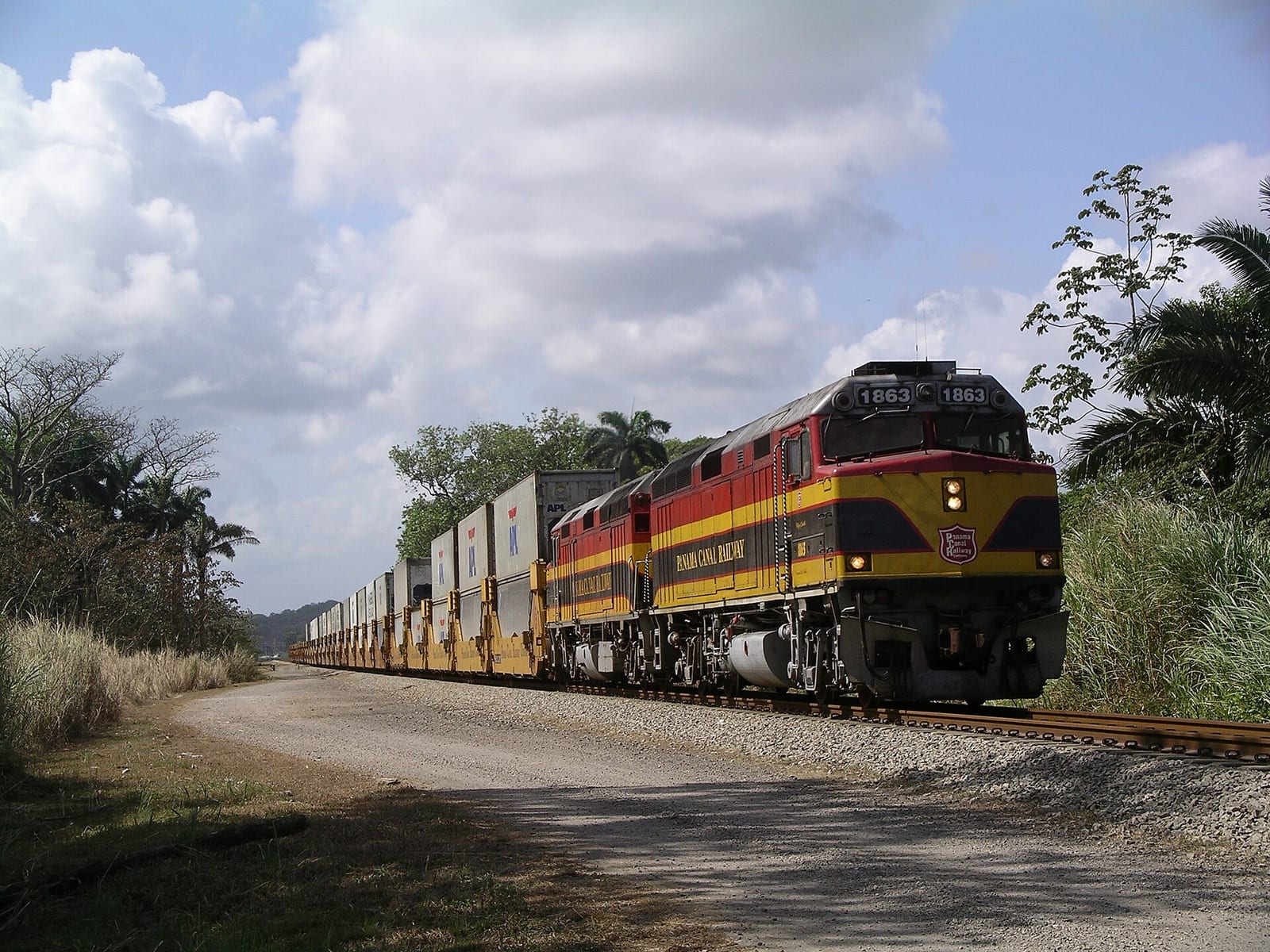
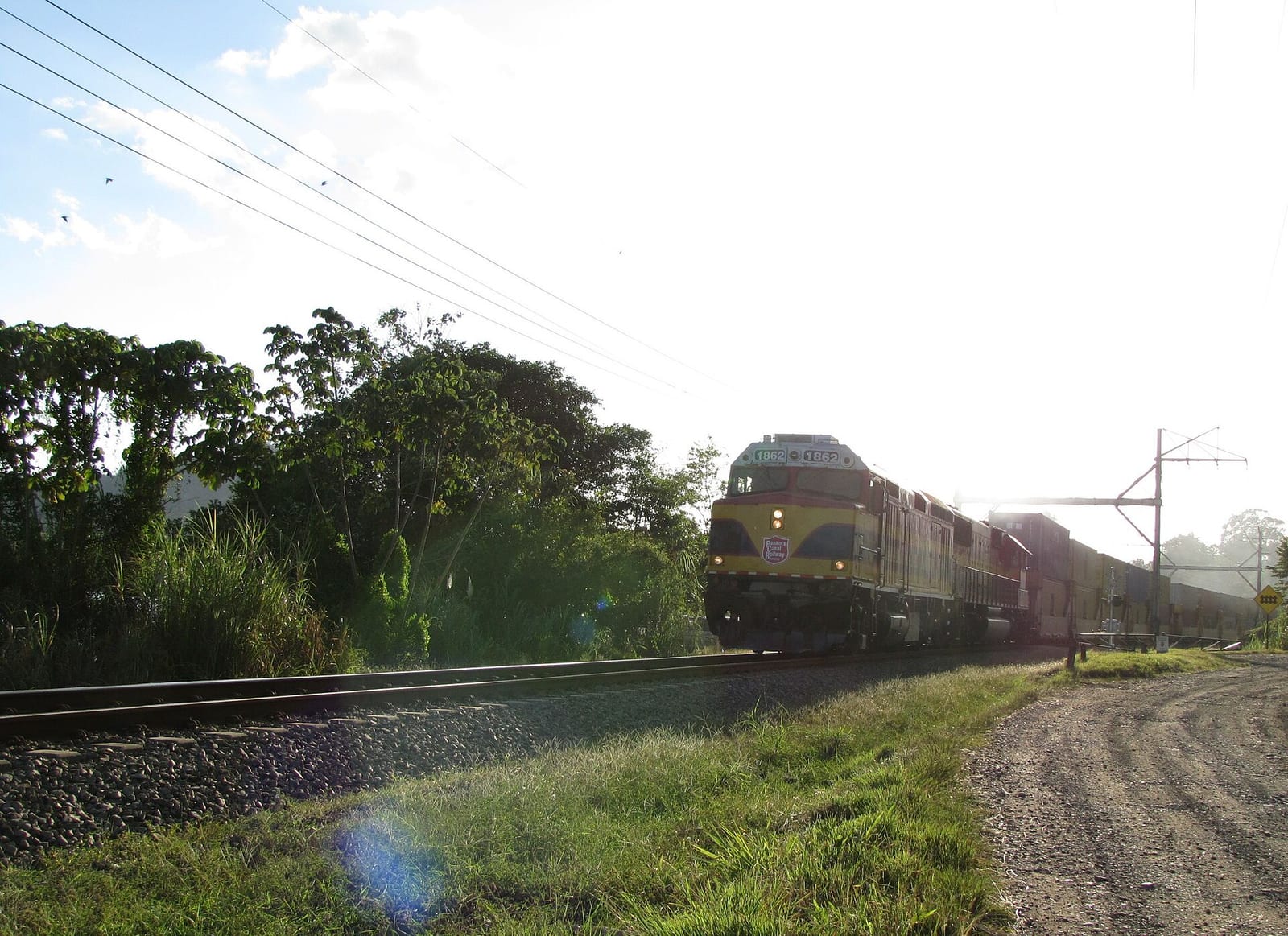
In February 1998 a joint venture between Kansas City Southern and Mi-Jack Products won a fifty-year concession to rebuild it, and spent $80 million doing so. They regauged it from five feet to standard gauge, relaid it with continuously welded rail shipped from Nova Scotia, put it on concrete sleepers so the termites could not eat them, lowered the floor of the Miraflores Tunnel to clear double-stacked containers, and reopened it as a freight railway shifting boxes between the Pacific and Atlantic ports — a dry-land shortcut for cargo that does not want to wait for a canal slot.
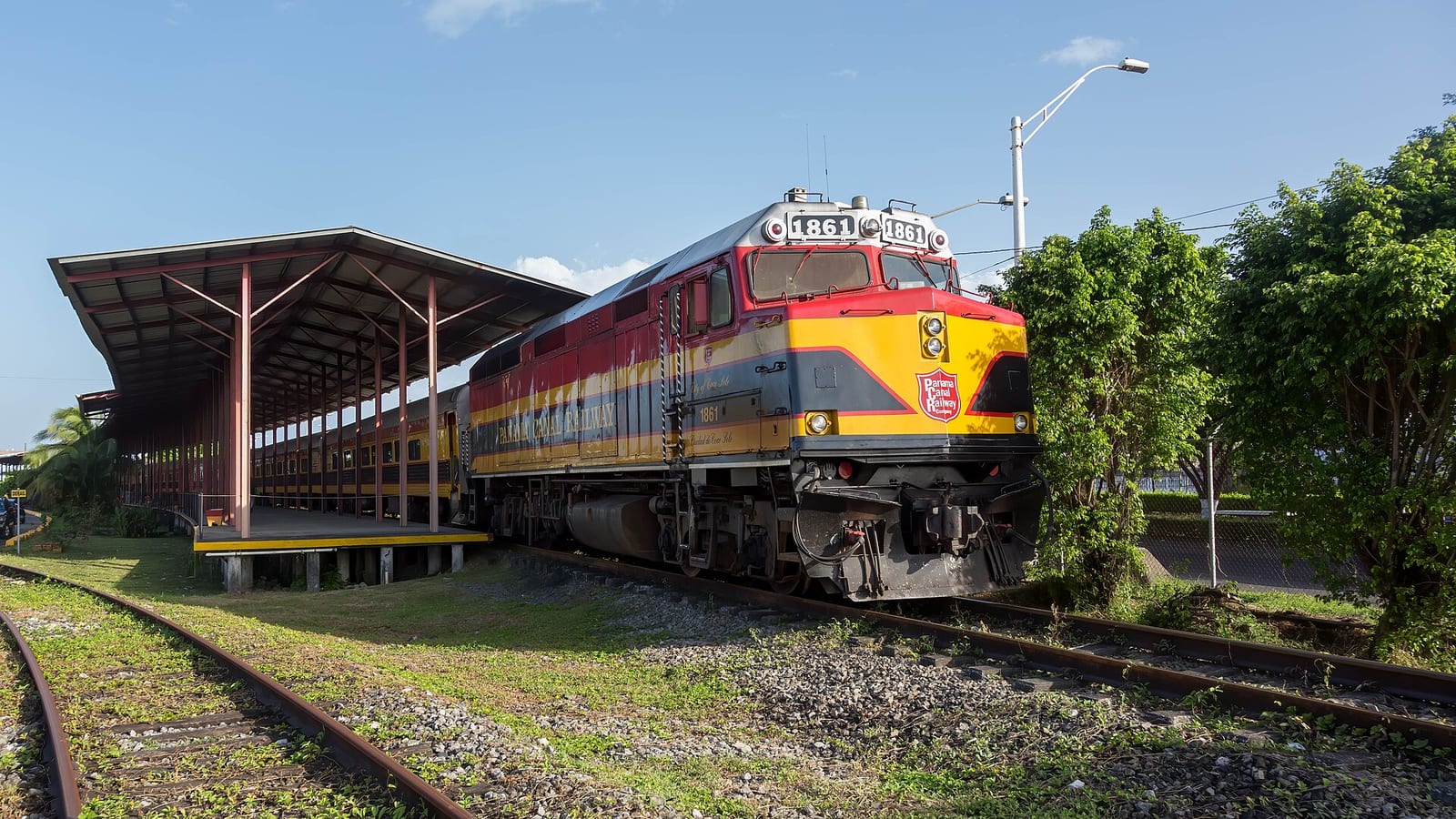
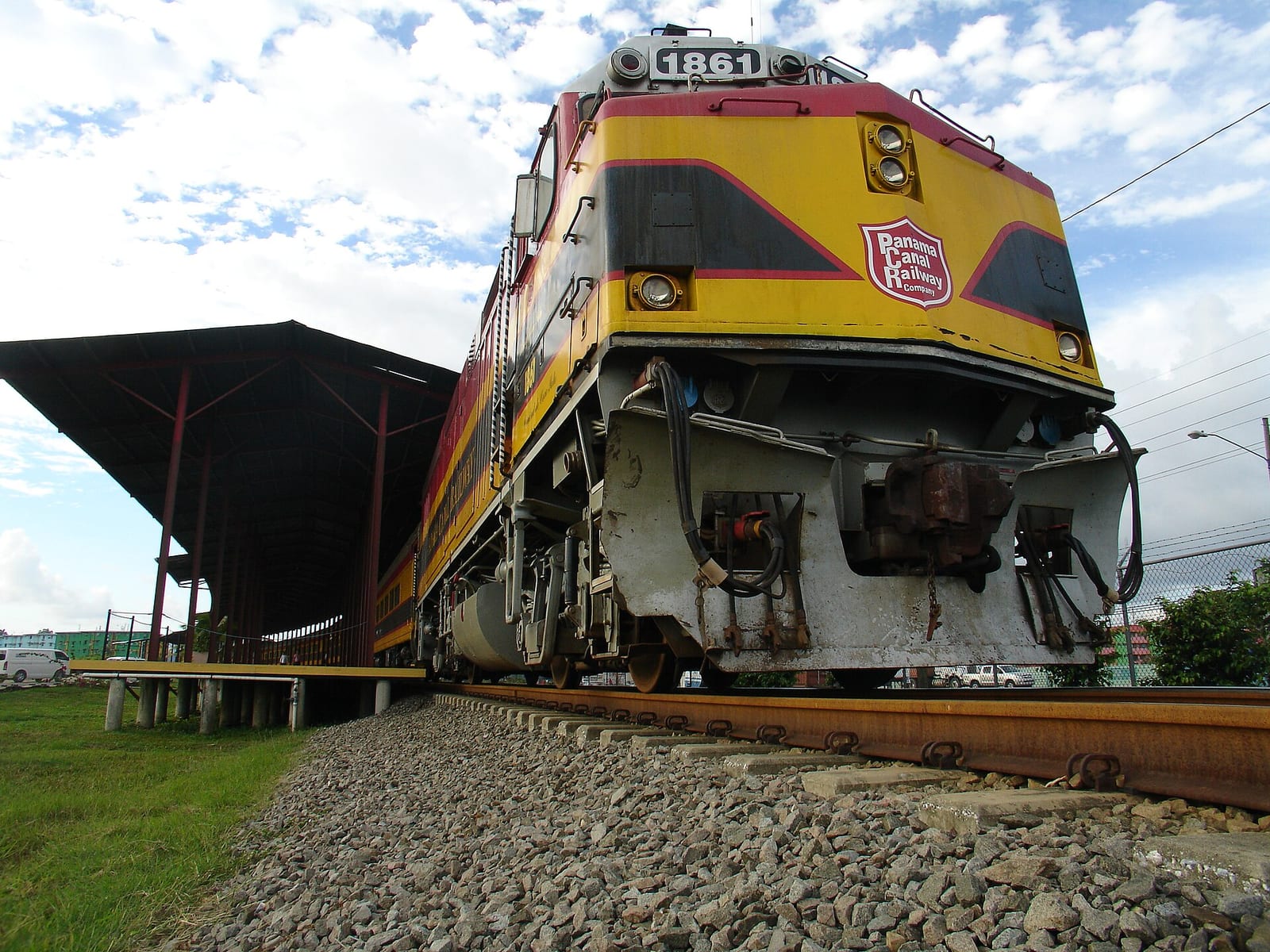
Passenger service came back in June 2001, and it is a genuinely odd and wonderful survivor: a handful of restored dome cars with glass roofs, wood panelling, a bar and open outdoor platforms, running once a day each way through the rainforest beside one of the great engineering works of the world.
The railway describes itself, without much modesty, as "one of the great train rides of the world". On this occasion the marketing department is right.
One thing to sort out before you go
The operator does not publish a timetable. Not on its website, not anywhere — and the schedule reported by third parties is inconsistent, because the commuter working and the cruise-excursion working run at quite different times, and the service has been thin at points in recent years. It also changed hands in April 2025, when it was sold to APM Terminals.
Phone or email the railway before you build a day around it. Both are published, and the details are in the timetable section below.
The Journey
The Pacific end is at Corozal, a few minutes from Albrook in Panama City — not a grand terminus, just a platform, a canopy and a train sitting in the wet heat with its engine running. The Atlantic end is at Mount Hope, on the edge of Colón. Between them is one hour and the whole width of a continent, at its narrowest point.
Out of Corozal
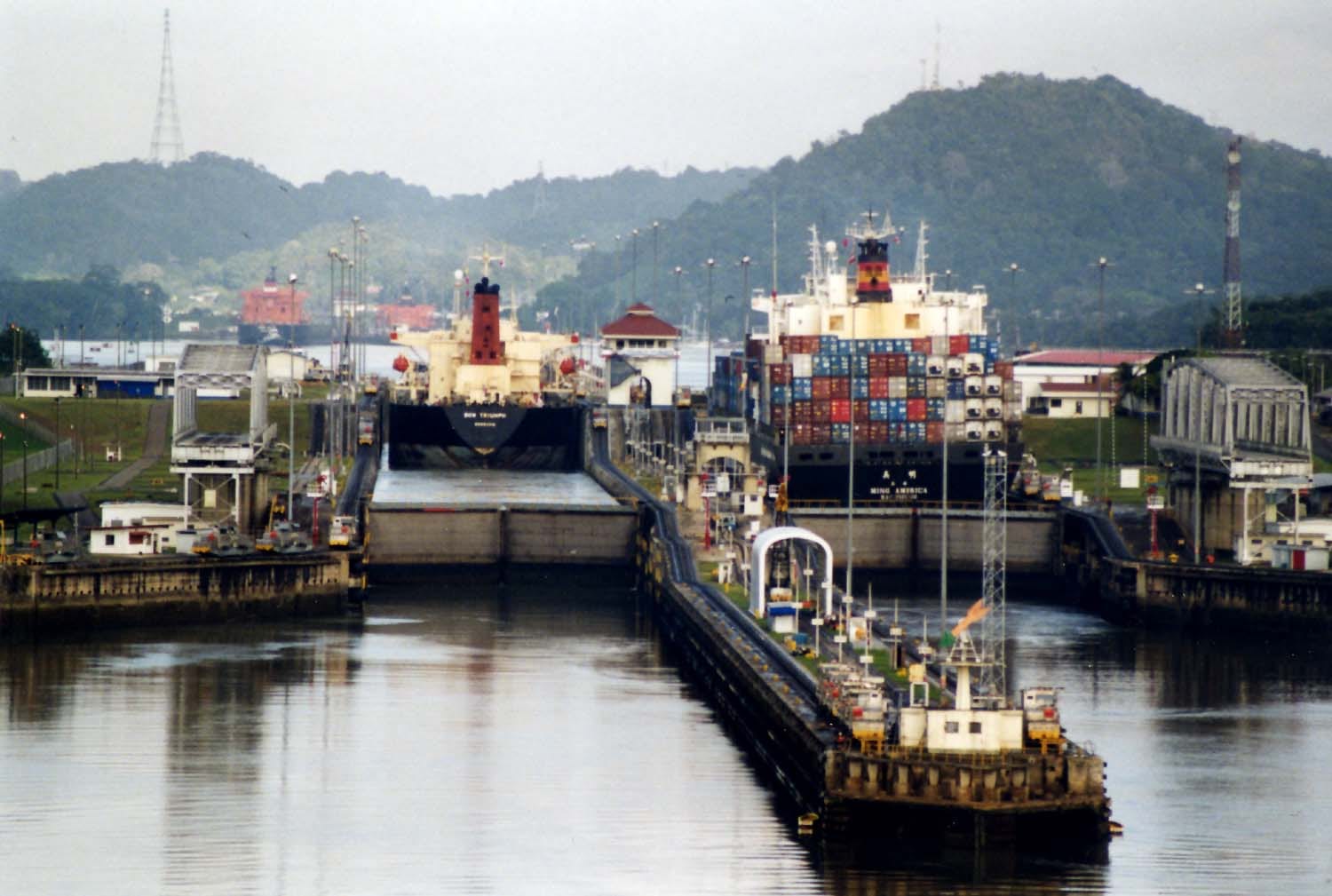
The train pulls away and almost immediately you are running beside water. On the left, in gaps between the trees, is the Panama Canal itself — first the approach channel from the Pacific, then the Miraflores locks, where a ship may be sitting in a chamber being lifted twenty-odd metres while you roll past it at forty miles an hour.
This is the strange, permanent condition of the journey: for most of its length the railway and the canal are a few metres apart, sometimes with a strip of jungle between them and sometimes with nothing at all. You are travelling a route that ships pay small fortunes to use, and you are doing it in an hour, with a coffee.
The Gaillard Cut
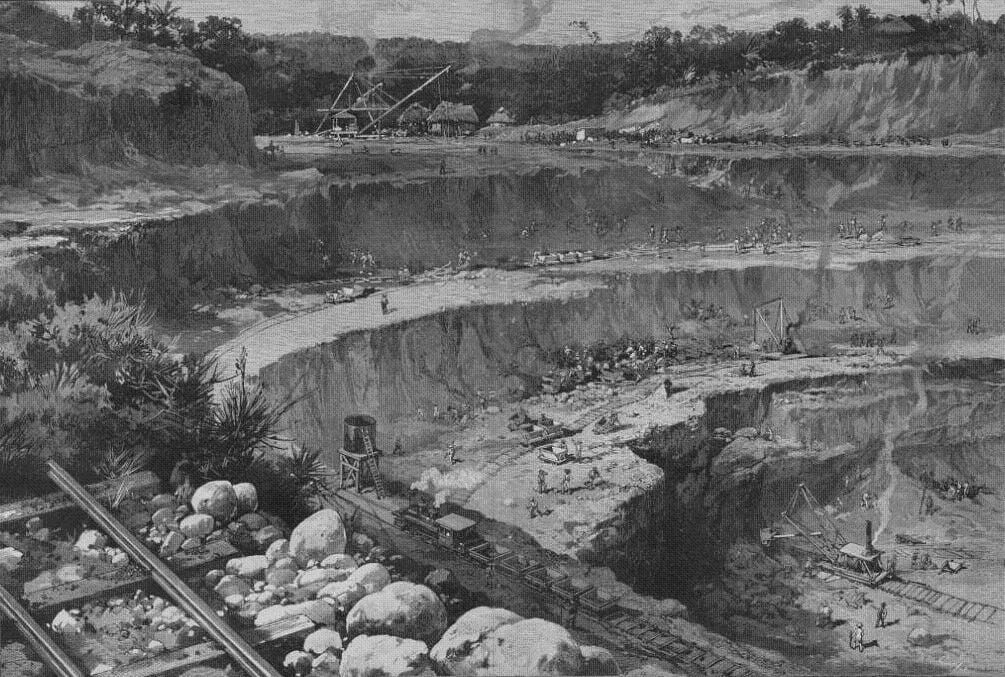
The line climbs gently to the continental divide and runs along the edge of the Gaillard Cut — the Culebra Cut, as it was known while they were digging it, and the hardest thing anyone did in Panama. This is the artificial canyon carved through the spine of the Americas so that ships could pass: a trench that swallowed men and machinery for years and kept sliding back in on itself.
Today it is a green-walled channel with ships filling it end to end. From the train you look down into it.
Gamboa and the Chagres
At Gamboa, halfway across, the railway crosses the Chagres River — the river that made all of this possible and nearly made it impossible. Dammed at Gatún, it created the lake that floats the ships; unrestrained, it used to flood the works away.
The bridge here has its own recent history. On 23 June 2020 a bulk carrier called the Bluebill struck it, badly damaging the structure and cutting the railway clean in half. The line was severed for three months and reopened only in late September. It is a good reminder of what this railway lives beside.
Across Gatún Lake
Then comes the best part.
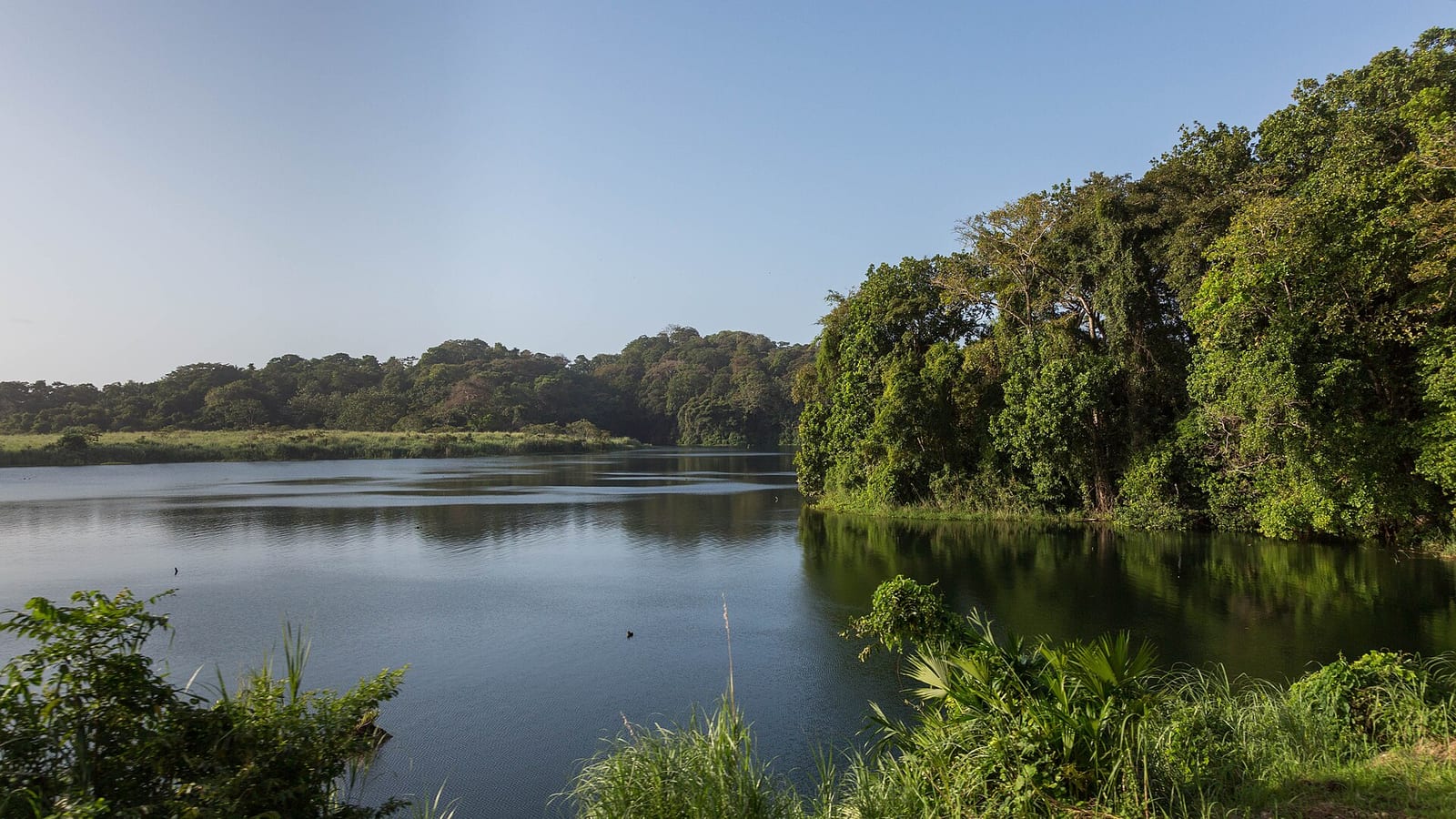
North of Gamboa the train runs out onto Gatún Lake — not around it, across it, on narrow causeways with water lapping on both sides and the bleached trunks of drowned trees still standing out in the shallows. This was a forested river valley until the canal dam flooded it, and it still looks like one that has been submerged rather than one that was always a lake.
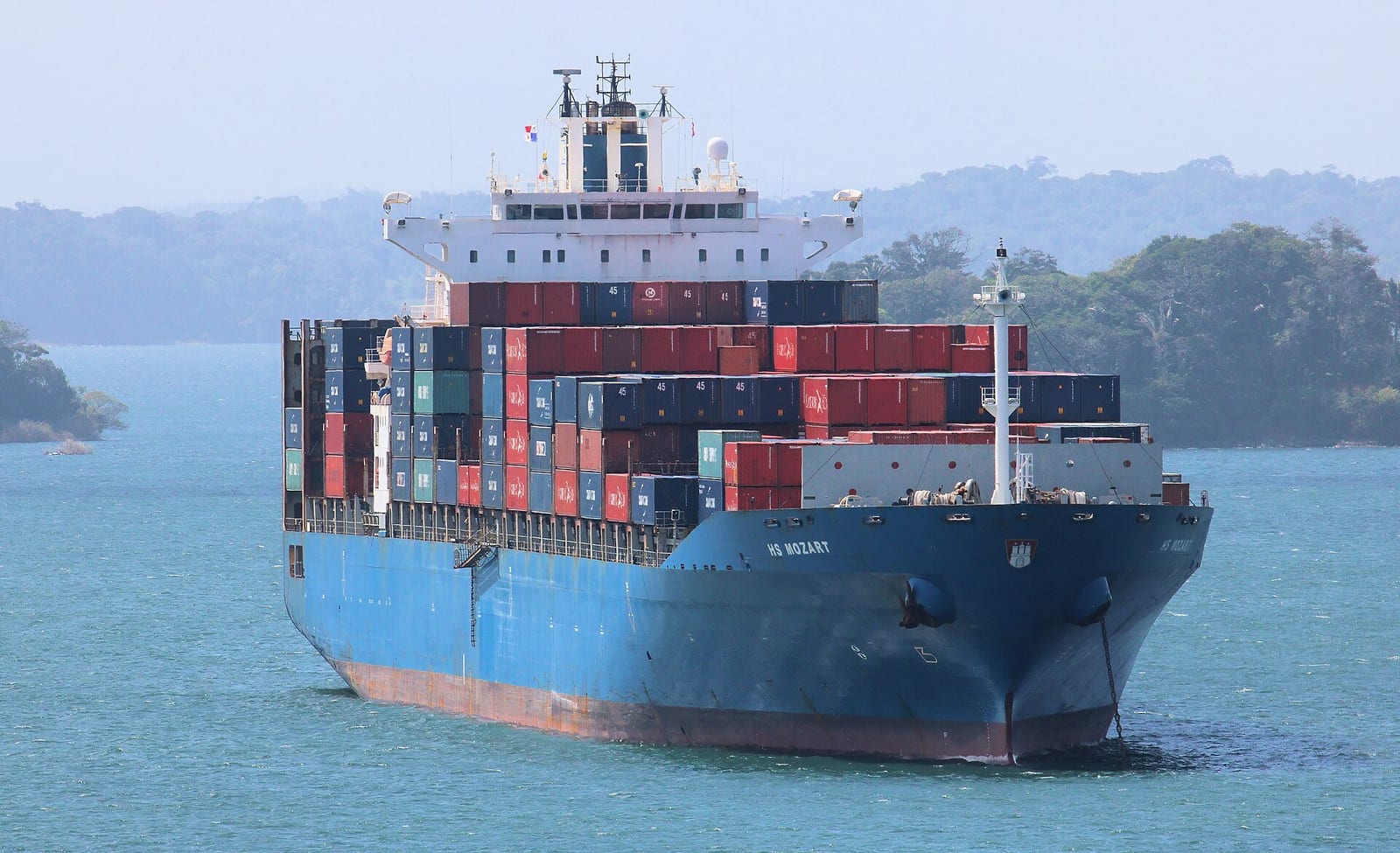
And on that water there are ships. Full-size, ocean-going container vessels and bulk carriers, moving slowly across the middle distance, apparently sailing through the jungle. There is no other railway in the world where you look out of the window at a Panamax freighter passing behind the trees.
The railway's own description of this stretch — "gliding over slender causeways in Gatun Lake" — is, unusually for operator prose, exactly accurate.
Into Colón
The forest closes in again for the last stretch, the line skirts the Gatún locks on the shortcut built during the 2001 rebuild, and the train runs down to Mount Hope past container stacks and portal cranes. Colón is a hard city — a duty-free trade zone of enormous wealth wrapped around a town of considerable poverty, and not a place to wander at random — but the cruise terminal, the fortresses and the Atlantic locks are all within reach.
Then you are at the Caribbean, and it is not yet lunchtime.
On board
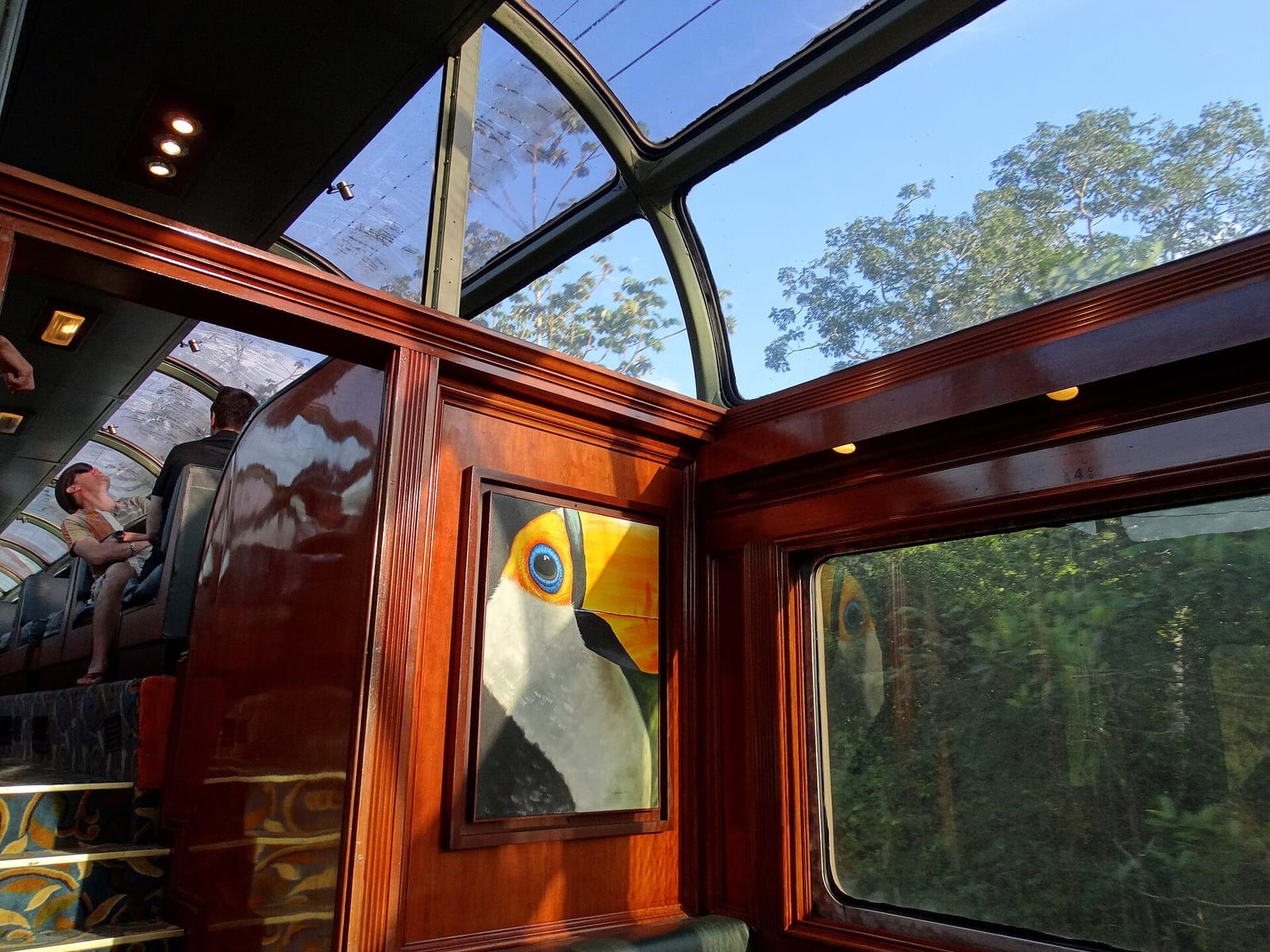
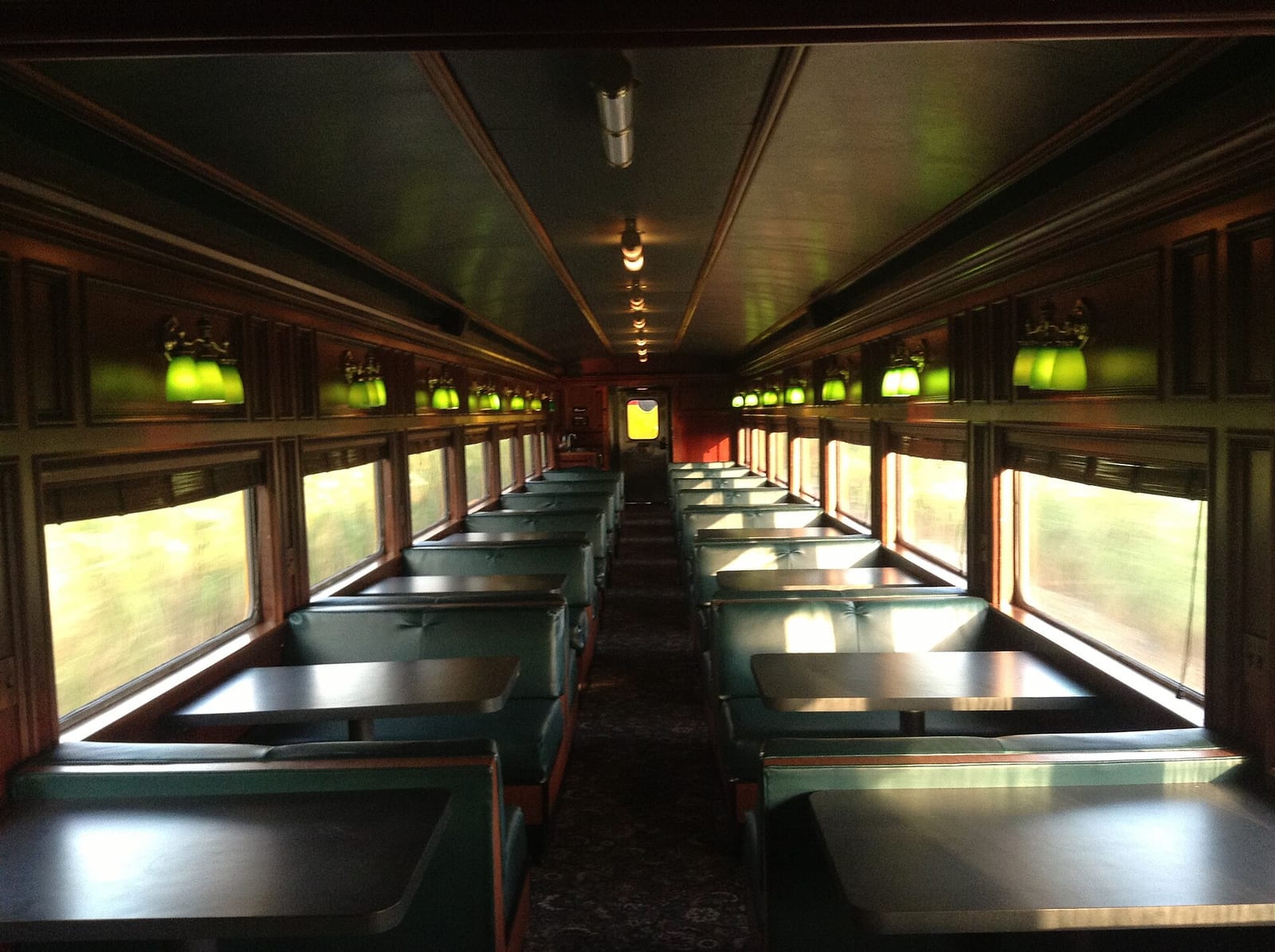
The passenger stock is the other reason to come. The rebuild bought bi-level dome cars — glass roofs, wood panelling, brass and dark upholstery, bar service, upper viewing decks — restored in the manner of an American train of the 1930s. It is done seriously rather than kitschily, and there is even a toucan painted on one of the bulkheads.
Best of all, the carriages have open outdoor platforms at the ends. You are allowed to stand out there for the whole journey if you like, holding the rail, in the noise and the heat, watching a rainforest go past at speed. Do that. The dome is comfortable; the platform is the trip.
Practical notes
- Sit on the left going north (Panama City to Colón) for the canal, the locks and the Cut.
- It is hot and extremely humid. The cars are air-conditioned; the platforms emphatically are not.
- Take a passport or copy. You are crossing between provinces past secure port areas.
- Colón needs care. Arrange your onward transport before you arrive rather than after.
Along the route
Records of the Panama Canal / Wikimedia Commons · Public domainIt beat the transcontinental by fourteen years
The company was incorporated in New York in April 1849, days after the California gold rush began, and the first train crossed the isthmus in January 1855 — fourteen years before Promontory Summit and sixty before the canal. For a decade it was the fastest link between the two American coasts.Charles Graham / Wikimedia Commons · Public domainNobody counted the dead
Estimates run from 5,000 to 10,000 deaths in five years of construction, and the company kept no official count, so the real figure never will be known. Many died with no known next of kin, no permanent address, and not even a known surname.Adam Jones / Wikimedia Commons · CC BY-SA 2.0Seven hundred million dollars in gold
For twelve years this was the most profitable railway on earth: more than $700 million in gold crossed the isthmus on it without the loss of a single dollar. Then the American transcontinental opened in 1869 and the stock fell from $369 to $52 in eight years.A bit of history
Culture & experiences along the way
Adam Jones / Wikimedia Commons · CC BY-SA 2.0Stand on the open platform
The passenger stock is built for looking: bi-level dome cars with glass roofs, wood panelling, bar service, upper viewing decks and — best of all — open outdoor platforms at the car ends. Go and stand out there. The air is hot and wet, the rainforest is a few feet away, and every so often the trees part and there is a container ship apparently sailing through the jungle.ImagePerson / Wikimedia Commons · CC BY 4.0Cross Gatún Lake on the causeways
The middle of the journey runs out across Gatún Lake — the drowned valley of the Chagres, made when the river was dammed for the canal — on narrow causeways with water on both sides and dead trees still standing in it. This is the stretch the railway's own description calls "gliding over slender causeways", and it is exactly right. Ships pass within sight of the windows.Vonderjase / Wikimedia Commons · CC BY-SA 3.0Ride it with the commuters, not the cruise passengers
Two crowds use this train: cruise passengers on a half-day excursion from the terminals at Colón, and Panamanians who live in the capital and work at the Atlantic end. The commuter working is the better ride — earlier, emptier, and full of people for whom a transoceanic railway is simply the way to get to the office. Check which one you are booking, because they run at very different times.Timetables
Read this before you plan anything around this train.
The Panama Canal Railway Company does not publish a timetable. There is no schedule page on panarail.com — the passenger section describes the ride and the route but gives no times, and the site's own schedule URL returns a 404. Nor is there a published fare table.
And as of August 2026 the website itself is unreachable. panarail.com serves a security certificate belonging to an unrelated domain, so browsers will refuse to open it and show a warning page instead; over plain http it returns an error. We have removed the links to it from the ticket cards below rather than send you into a browser security warning. The railway's email and telephone still work, and they are what to use.
That is unusual for a railway of this profile, and it means every time you will find quoted online — including the ones below — comes from a third party rather than from the operator.
What is reported, and where the reports disagree
Two quite different patterns are described, and they are probably two different products.
The commuter working — the long-standing pattern, and the one most sources give:
| Panama City (Corozal) → Colón | 07:15 |
| Colón → Panama City (Corozal) | 17:15 |
| Days | Monday to Friday |
| Journey time | About 1 hour |
| Reported fare | Around $25 one way, adult · $15 child 2–12 |
The tourist round trip — reported by Panamanian press, and clearly aimed at visitors rather than commuters:
| Departs Corozal | around 09:15 |
| Departs Colón to return | around 10:30, straight back |
| Reported fares | $50 adult panoramic car · $40 adult standard · seniors $35 / $28 · children 2–12 $25 / $20 · under 2 free |
A weekend "Family Train" round trip has also been advertised at around $40 per adult.
Do not treat any of this as authoritative. The patterns conflict, the fares conflict, the service has been reduced at points in recent years, and the railway changed owners in April 2025 when it was sold to APM Terminals.
What to actually do
Contact the railway. Unlike its timetable, its contact details are published:
- Email: info@panarail.com
- Phone: (507) 317-6070
- Address: Bldg. T-376, Corozal West, Balboa–Ancón, Panama
Ask three things: whether the train runs on your date, what time it leaves, and what it costs. Get it in writing if you can. Hotels in Panama City are used to this question and can often book it for you.
If you are arriving by cruise ship, the round trip is normally sold as a shore excursion through the cruise line, departing from the Colón 2000 cruise terminal, the Gatún Yacht Club or Pier 6 at Cristóbal — in which case the timing is handled for you, though you will pay more than the walk-up fare.
Getting to the station
Corozal Passenger Station is on the Pacific side, near Albrook — the domestic airport and the big bus terminal, which is also the western terminus of the Panama Metro. Take the metro to Albrook and a short taxi from there. There is no walk-up public transport to the platform itself, and the morning departure is early enough that you should arrange the taxi the night before.
At the Colón end the station is at Mount Hope, outside the city. Arrange your onward transport in advance rather than looking for it on arrival.
Freight, which is the real business
For context on why this line exists at all in 2026: it runs up to 10 freight trains in each direction every 24 hours, and the layout could support 32. A train carries around 75 containers, and the railway handles roughly 1,500 containers a day — against the canal's 33,500. The passenger service is one train, once, each way. It survives on goodwill and tourism, which is precisely why you should confirm it before you go.
Operator: Panama Canal Railway Company — panarail.com, though see the warning above: the site is not currently reachable, and the email and phone are the way in. Position as of August 2026.
Tickets
There is no online booking engine, no published fare table and no printed timetable. Buying a seat means contacting the railway — info@panarail.com or (507) 317-6070 — and asking for the departure time and the fare on your date, in writing. That is the cheapest route and the only one that gets the walk-up price. Panama City hotels book this train constantly and will arrange it, including the taxi out to Corozal, for a modest markup.
Two products run on the same train: the dome cars, with the glass roof and upper deck, and standard carriages, which still have wood panelling and table lamps. The dome costs meaningfully more, and both have access to the open platforms at the car ends — which is where you will want to be for much of the hour anyway. The train does not stop at the locks; see those separately.
Book your tickets
Panama City to Colón · one way
Ocean to ocean in an hour
The scheduled passenger working between Corozal, on the Pacific side by Albrook, and the Atlantic station at Mount Hope outside Colón. Dome cars, bar service and open platforms. The railway publishes no timetable or fare online, so contact it directly to confirm the departure and the price before you travel.
via Panama Canal Railway CompanyRound trip from the cruise terminals
The half-day excursion
Passengers arriving at the Colón 2000 cruise terminal, the Gatún Yacht Club or Pier 6 at Cristóbal are the railway's other market, and there are round-trip workings timed for them. Usually sold as a shore excursion through the cruise line rather than direct — worth comparing, as the ride is the same.
via Panama Canal Railway CompanyRail Passes
No rail pass covers the Panama Canal Railway. Interrail and Eurail are European schemes, and Panama is not among the 33 countries in Interrail's list of covered railway companies (opens in a new tab). Seats are bought by contacting the railway, or through a Panama City hotel.
Checked October 2026 against Interrail's list of covered railway companies (opens in a new tab).
Places to Visit
The railway runs the length of the Canal Zone, and almost everything worth seeing in Panama outside the beaches and the islands is within a few kilometres of the track.
Miraflores locks, the Pacific staircase, are twenty minutes from Panama City and close to the railway's start. The visitor centre has terraces directly above a lock chamber, so you can watch a ship rise or fall the full twenty-odd metres while the electric "mules" hold it off the walls; check the times when large vessels are transiting, because an empty lock is much less interesting. Further north the train runs alongside the Gaillard Cut, the great trench through the continental divide, with a viewpoint at Gold Hill near Paraíso — this is where the digging was hardest, where the landslides kept filling the works back in, and where most of the canal's dead are commemorated.
Barro Colorado Island, a hilltop left above water when the valley flooded, is run by the Smithsonian Tropical Research Institute as one of the longest-studied patches of tropical forest anywhere. Day visits are possible but must be arranged well ahead, and places are limited.
At the Pacific end, the old city and the colonial quarter are both reachable on the Panama Metro.
 Mario Roberto Durán Ortiz / Wikimedia Commons · CC BY-SA 4.0 · cropped
Agua Clara locks
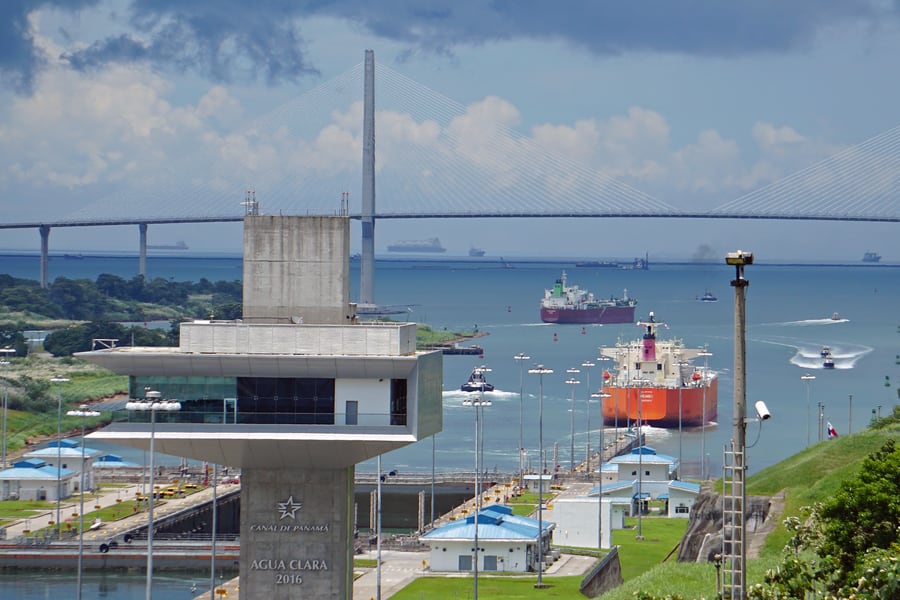
The expanded canal opened on 26 June 2016, and this is its Atlantic end. The new chambers are 427 m long, 55 m wide and 18.3 m deep against 320 by 34 by 12.6 for the originals, which lifted the share of the world's cargo ships able to transit from 45% to about 79%. Each chamber has three side basins that recycle its water and cut consumption by roughly 60%. The visitor centre overlooks both the locks and Gatún Lake.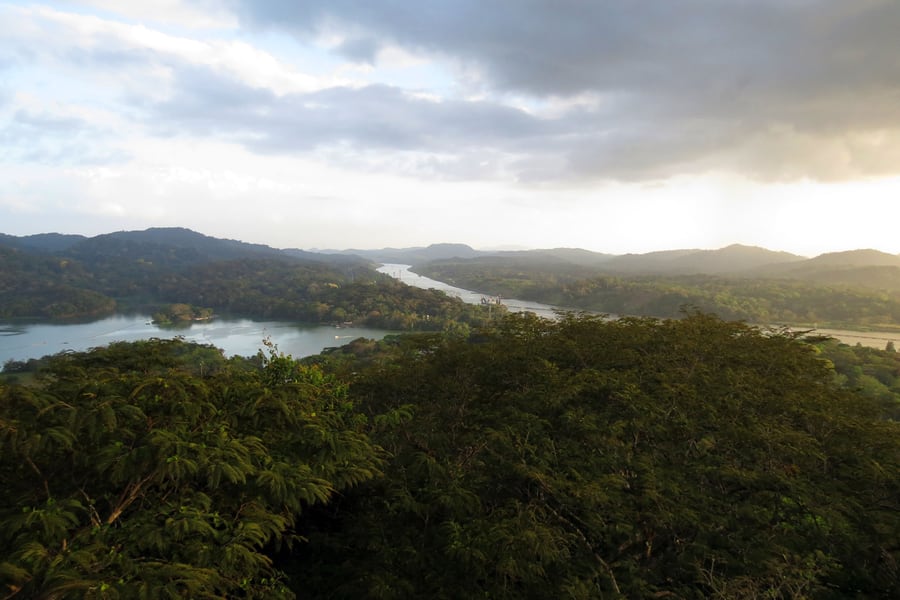 Katja Schulz / Wikimedia Commons · CC BY 2.0 · cropped
Gamboa
Halfway across the isthmus, at the point where the Chagres — the river that was dammed to make the whole thing possible — runs into the waterway. It is a small, quiet company-built settlement with a road and rail bridge, and it is the jumping-off point for everything green in the middle of the canal: boat trips onto Gatún Lake, the aerial tram, and the trailheads into Soberanía.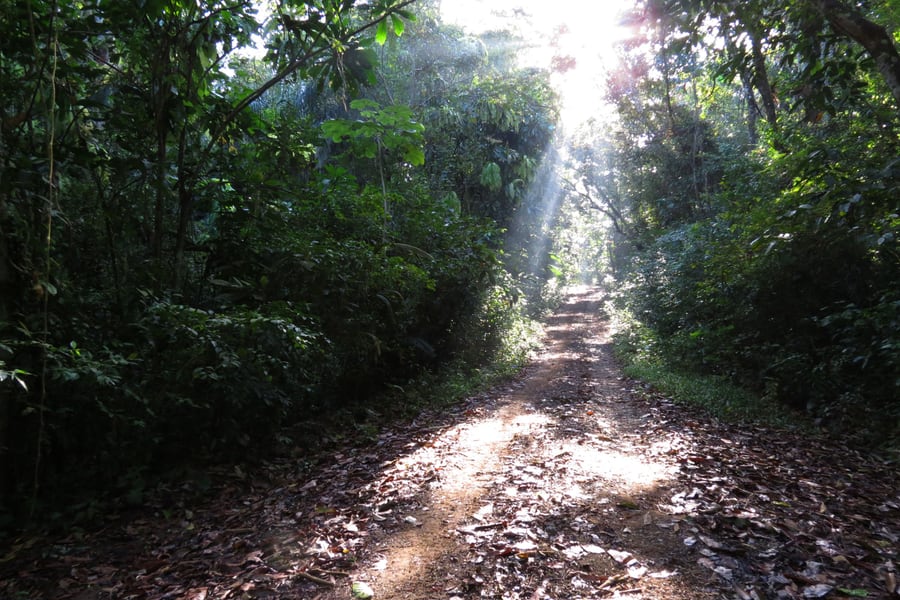 Katja Schulz / Wikimedia Commons · CC BY 2.0 · cropped
Pipeline Road
A 17.5 km forest track running north through Soberanía National Park (220 km²), and one of the most famous pieces of birding ground on earth: over 400 species have been recorded on the road itself, out of some 525 in the park. It is old-growth and secondary forest right up against the canal, flat, and walkable straight from Gamboa. If you want to see the jungle the train runs through, get out here.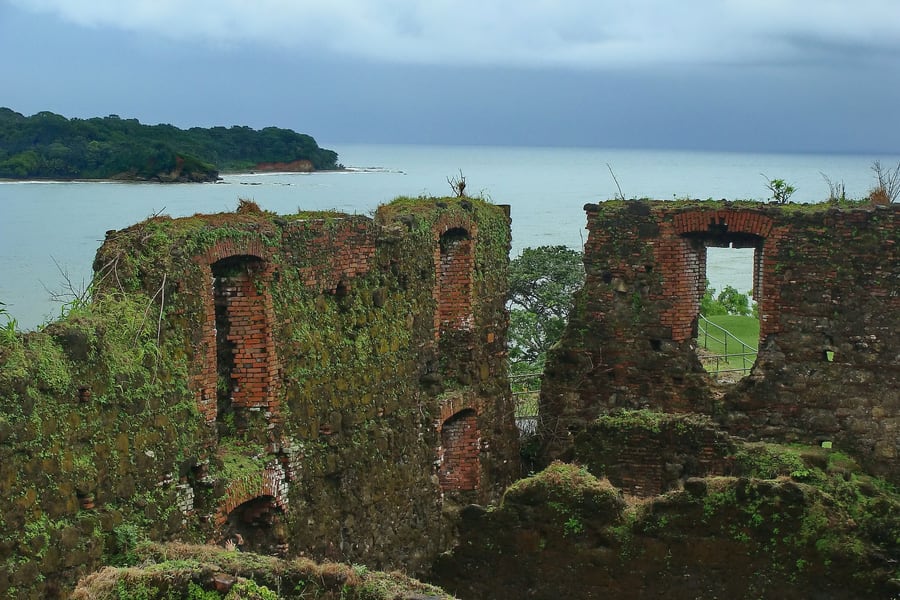 Editorpana / Wikimedia Commons · CC BY-SA 3.0 · cropped
Fuerte San Lorenzo
On a promontory above the mouth of the Chagres, 13 km west of Colón. The first fort went up between 1598 and 1601 to a design by the Italian engineer Baptist Antonelli; Henry Morgan destroyed it in 1670 on his way to Panamá Viejo, and what you walk through today is largely the 1750s rebuild, cannon still pointing out to sea and vegetation taking the walls back. UNESCO-listed in 1980.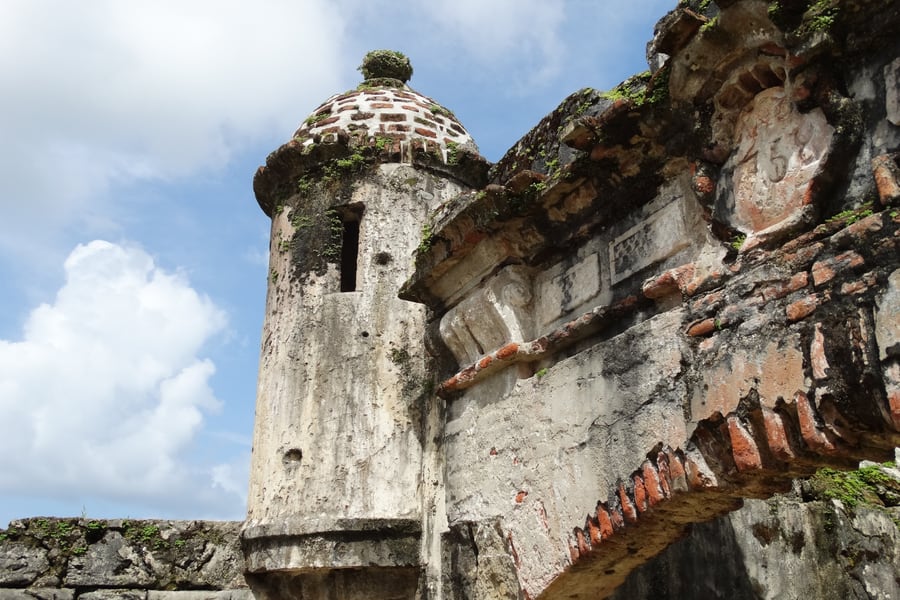 Adam Jones / Wikimedia Commons · CC BY-SA 3.0 · cropped
Portobelo
Founded in 1597, and for a century and a half the Atlantic end of the route that carried Peruvian silver to Spain — which is why it was sacked so often: William Parker in 1601, Henry Morgan for fourteen days in 1668, John Coxon in 1680, Admiral Vernon in 1739. Francis Drake was buried at sea in a lead coffin off the bay in 1596. ⚠️ The forts are UNESCO-listed but have been on the World Heritage in Danger list since 2012.Where to Sleep
Almost everyone stays in Panama City and treats the railway as a day out. That is the right call — the capital has by far the best choice, and the Atlantic end is not a place most visitors want to spend a night.
Casco Viejo, Panama City
The most rewarding base. The old colonial quarter has been steadily restored over the last two decades and is now full of boutique hotels in eighteenth- and nineteenth-century houses — courtyards, tiled floors, rooftop terraces looking across the bay at the skyline. It is walkable, full of restaurants and bars, and it feels like somewhere rather than anywhere.
It is a fifteen-minute taxi from Corozal station, which matters for an early departure.
The banking district
If you want a large international hotel with a pool and a view of the skyscrapers, this is where they are — around Punta Paitilla, Marbella and the Cinta Costera. Efficient, comfortable, entirely characterless, and often good value. Well connected to the metro.
Albrook and Amador
Closest to the railway. Albrook, on the site of the old US airbase, is next to the domestic airport, the main bus terminal and the metro's western terminus, a few minutes from Corozal station — practical rather than charming. The Amador Causeway, built from spoil dug out of the canal, runs out into the Pacific on a chain of islands and has hotels, marinas and the Frank Gehry-designed Biomuseo, with the whole city skyline across the water.
Gamboa
Halfway across the isthmus, in the rainforest, where the Chagres meets the canal. There is a large resort here on the site of the old Canal Zone township, surrounded by Soberanía National Park, with an aerial tram and some of the best birdwatching in the Americas. It is the one place on the route where you can sleep in the jungle the train runs through, and wake up to howler monkeys.
Portobelo and the Caribbean coast
If you want to make the crossing count, carry on east from Colón to the Caribbean coast — Portobelo and the beaches around it, and beyond them the boats out to Guna Yala (the San Blas islands). Accommodation is simple and the atmosphere is entirely different from the Pacific side.
A word about Colón
Colón itself has serious poverty and a poor reputation for street crime, and the usual advice is not to walk around it. The cruise terminal, the Free Trade Zone and the Atlantic locks are all fine with transport arranged. Plan to be met at Mount Hope station rather than to find a taxi on arrival, and there is no particular reason to stay the night.
Questions or corrections
Planning this trip and stuck on something, or spotted a time, fare or detail that has changed? Send us a message about The Panama Canal Railway. We read every one, and we update this page when something has changed.