The Hel Peninsula Railway
MOs810 / Wikimedia Commons · CC BY-SA 4.0 · cropped
- Distance62 km Reda to Hel · single track
- DurationAbout 1 hour 30 from Gdynia to Hel
- Best seasonMay to September, the trains fullest in July and August
Introduction
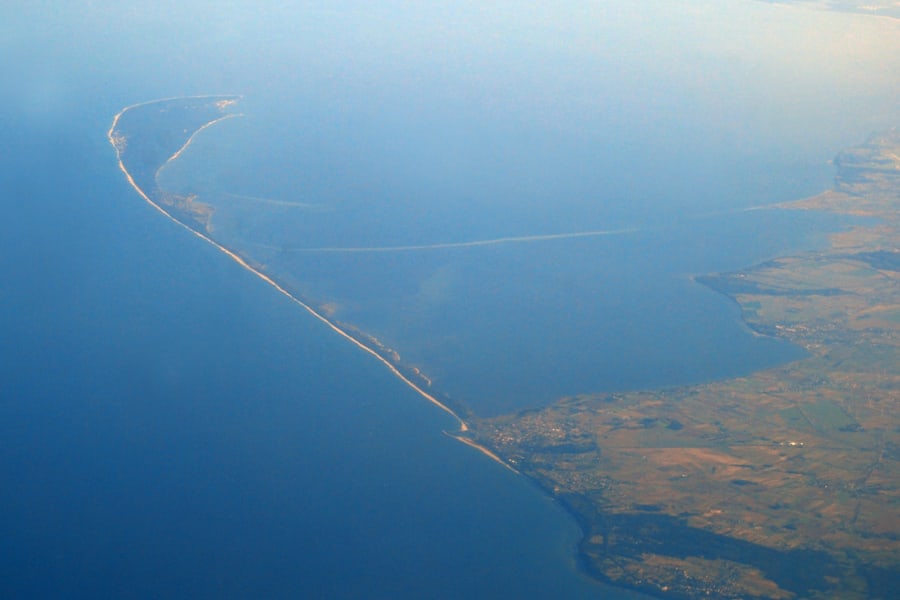
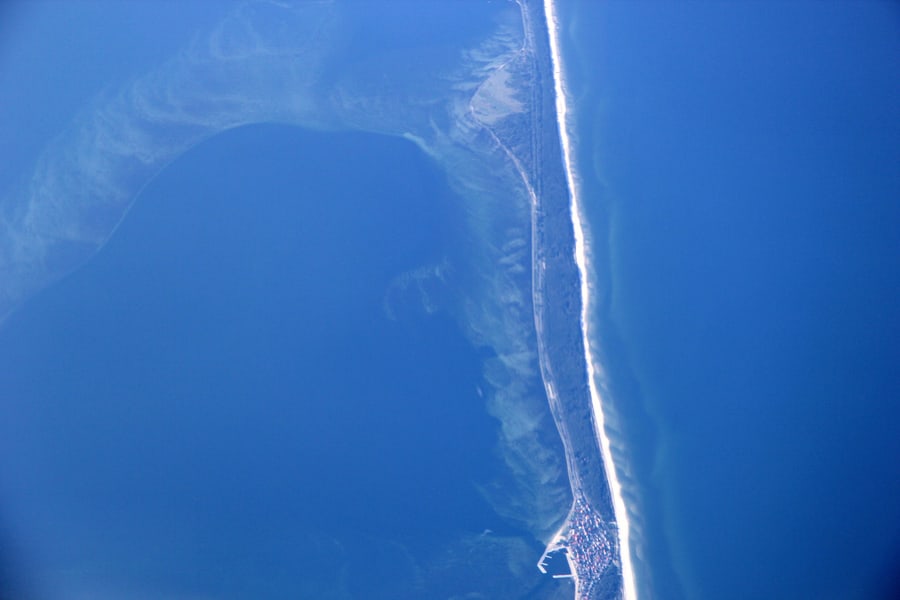
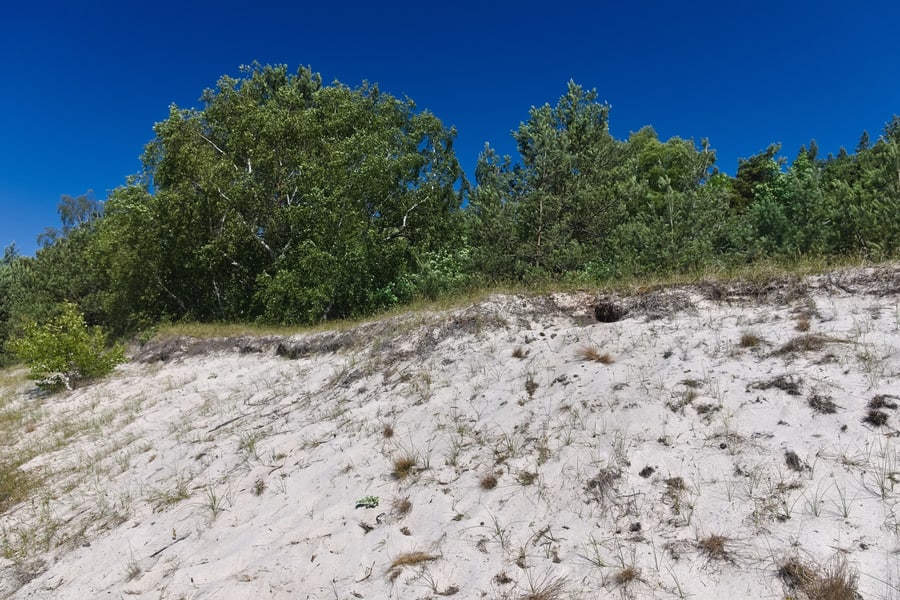
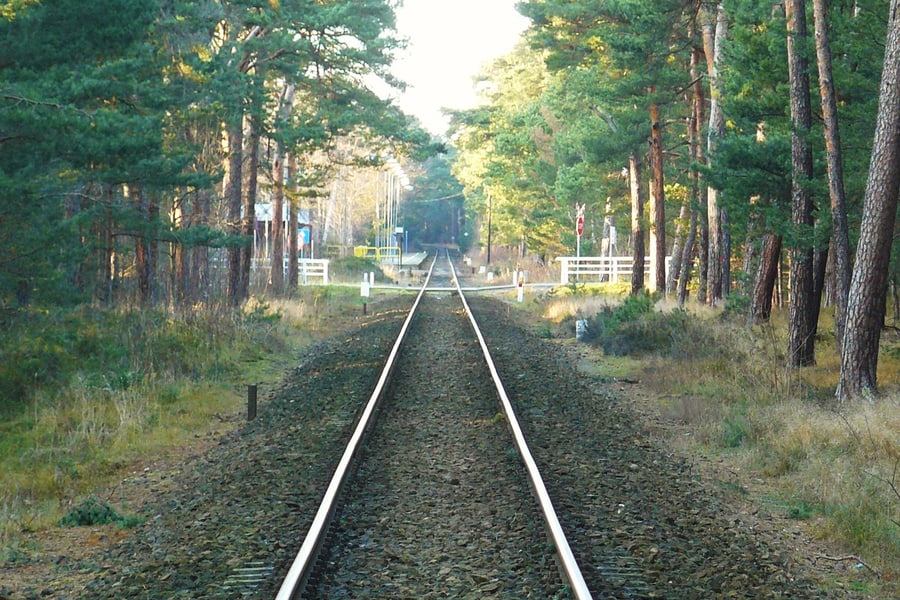
Beyond Władysławowo the train leaves the mainland and runs out along a sand spit about 35 kilometres long, with the open Baltic on one side and the Bay of Puck on the other. Between Kuźnica and Jastarnia the strip is less than 200 metres wide, and a single railway track shares it with a road, a cycle path and the dunes.
The ground there is looked after. Storms in 1988 and 1989 threatened the spit at its root and along its middle, and between 1989 and 1995 about 8.34 million cubic metres of sand were placed on selected stretches, rebuilding beaches and dunes along 13.8 kilometres. Top-ups have been made ever since, sized to the rate of loss, and 135 groynes now run along 12 kilometres of shore from Władysławowo to Kuźnica. In 2024 the Maritime Office in Gdynia was again widening beaches between Władysławowo and Jurata with sand pumped ashore as a slurry.
The railway got here in 1922, built in nine months the year before, soon after Poland regained a coast. It runs today from Reda, where it leaves the main line, to the town of Hel at the tip, 62 kilometres in all. In summer every train the single track can hold is timetabled, and through trains run as far as Kraków and Bohumin. In winter it is a quiet regional branch, with eleven trains a day each way.
The Journey
Most trains start at Gdynia Główna and call at Rumia before reaching Reda, where the branch leaves the main line to Słupsk. It heads north through Kashubia to Puck, where Poland's "wedding to the sea" was held on 10 February 1920, with a platinum ring thrown into the bay. Swarzewo, a few minutes further on, was once the junction for a line to Krokowa, closed in 1991.
The sand begins
Władysławowo stands at the root of the peninsula. From Władysławowo Port the line runs along the spit itself. Chałupy, Kuźnica and Jastarnia follow, with the water of the bay visible through the trees on one side and the dunes rising on the other. Between Kuźnica and Jastarnia the strip is at its narrowest.
In late September 1939 this was where Polish engineers set off torpedo warheads to cut the peninsula and keep the Germans out of Hel. Accounts differ on the date and on how well it worked, but the blast wrecked the railway. The garrison at the tip held out for 32 days and surrendered on 2 October.
Pines to the end of the line
Beyond Jastarnia the spit widens and the track runs through pine forest to Jurata, a resort founded in 1928. A station at Hel Bór has stood unused since 1979, and the line ends at Hel, 62 kilometres from Reda, in a half-timbered station rebuilt in 2015. An extension into the port, added in 1928, was later dismantled.
The trains
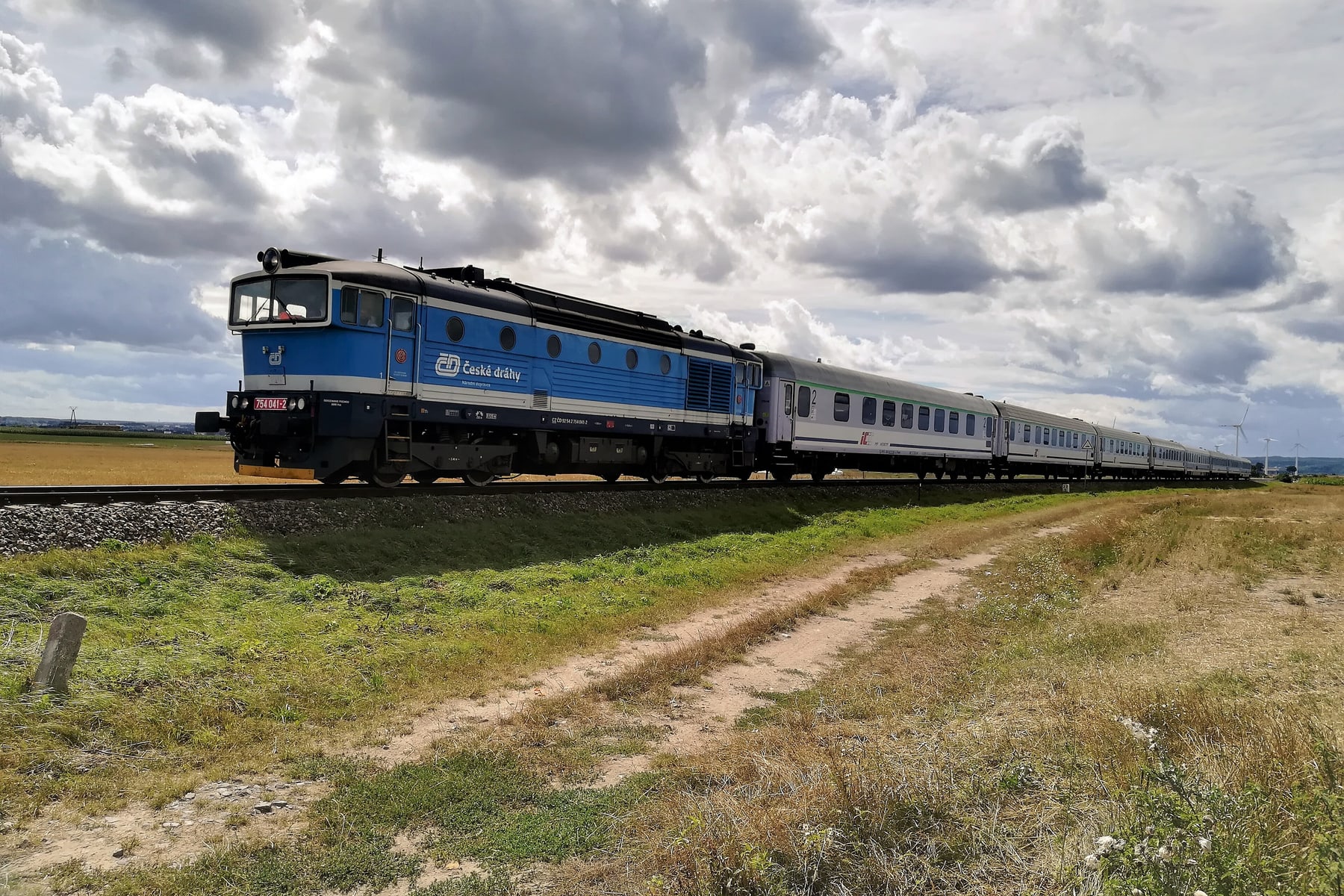
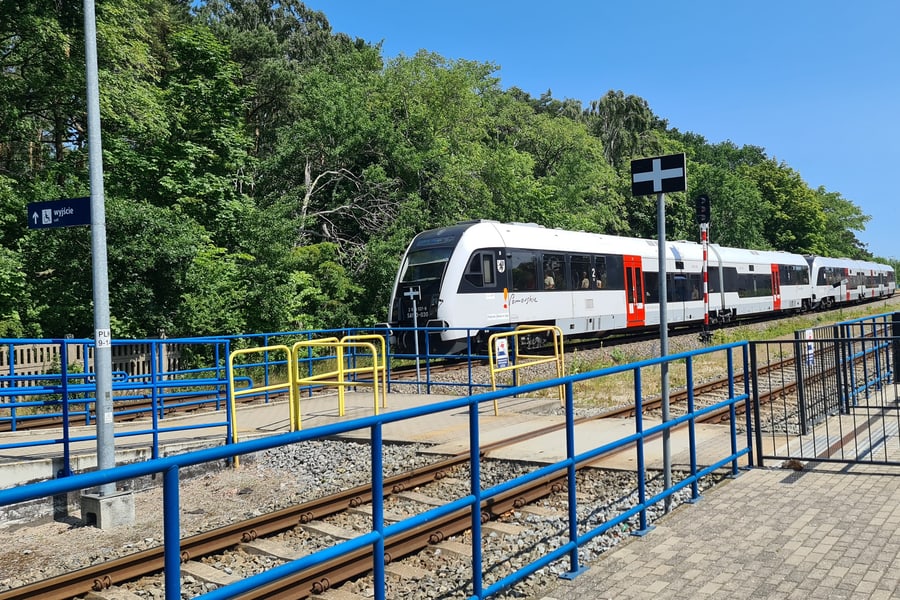
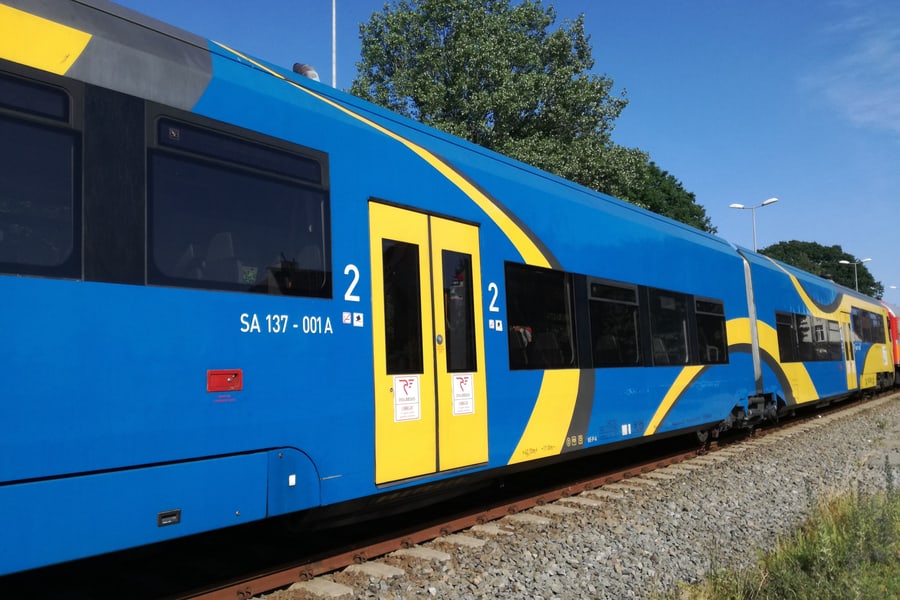
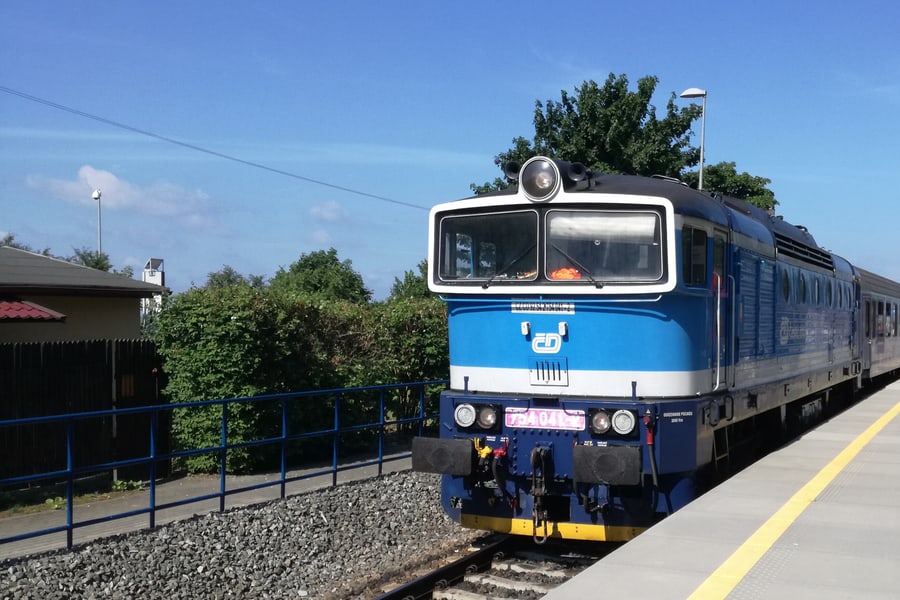
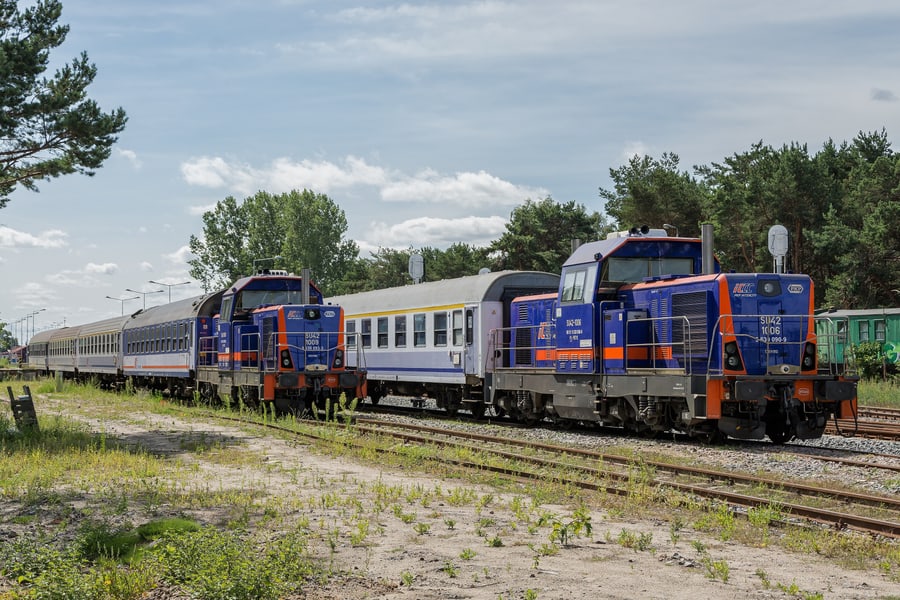
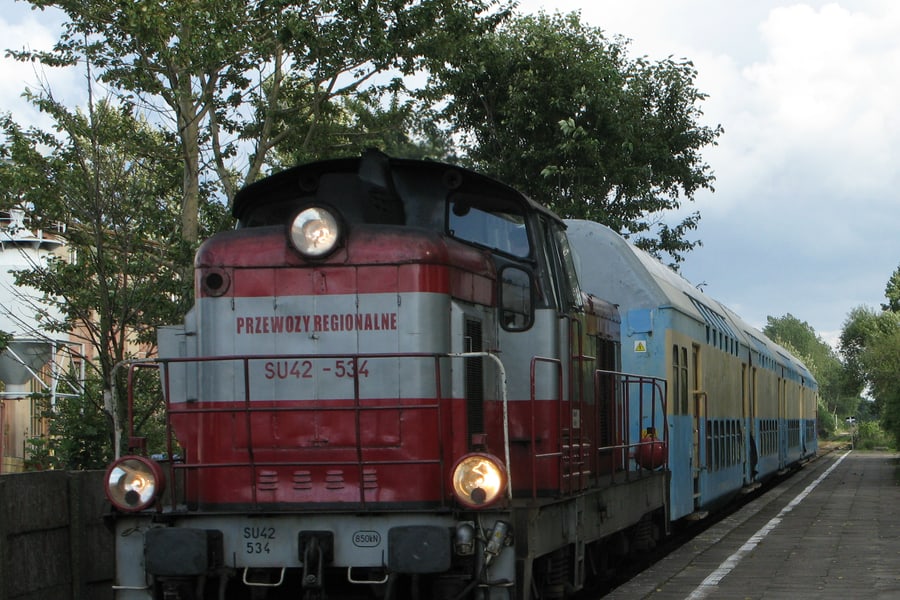
POLREGIO, the regional operator, runs the year-round service. Newag SA137 and SA138 diesel railcars, bought by the Pomeranian voivodeship in 2010 and 2011, have long carried it, and recently bought LINT diesel units are joining them. In high summer it also runs longer loco-hauled sets, and PKP Intercity sends through trains to Warsaw, Kraków, Łódź and Bielsko-Biała. These have to be hauled by diesels over the unelectrified branch, and in recent years that has included Czech class 754 locomotives.
A full railway
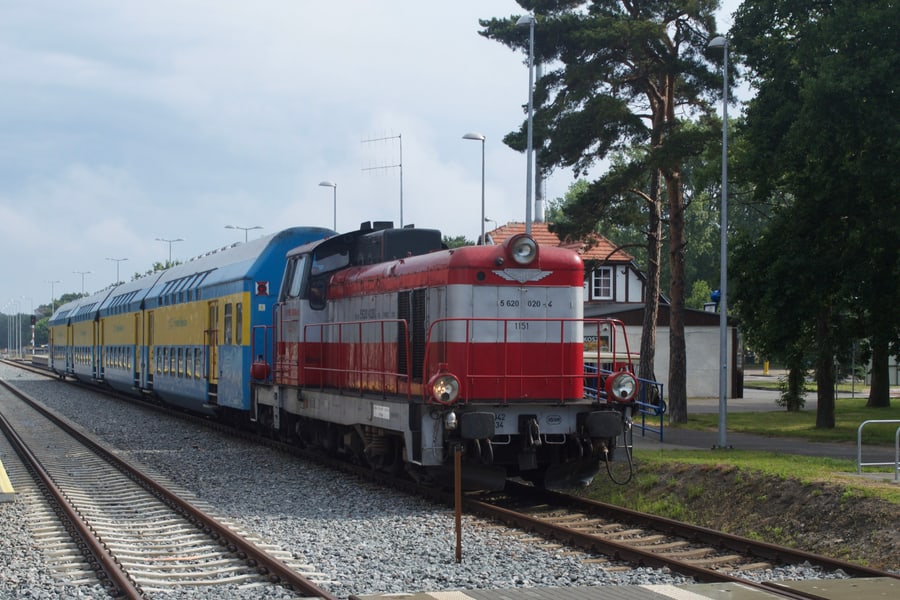
Trains can pass each other at only five places: Mrzezino, Puck, Władysławowo, Kuźnica and Jastarnia. Platforms limit a train to 125 metres. POLREGIO told parliament in July 2026 that the line's capacity is used up in summer, and that double-deck carriages are the only way left to add seats. Designs are under way for extra passing places at Chałupy and Hel Bór, with electrification considered later. A proposal for a second track on the narrowest stretch, between Kuźnica and Jastarnia, has been opposed by residents of Kuźnica.
Along the route
 Crusier / Wikimedia Commons · CC BY-SA 3.0 · cropped
Władysławowo
The land ends here and the spit begins. Trains that have followed the Bay of Puck from Reda turn out along the sand, and Władysławowo Port is the last halt before the narrow section.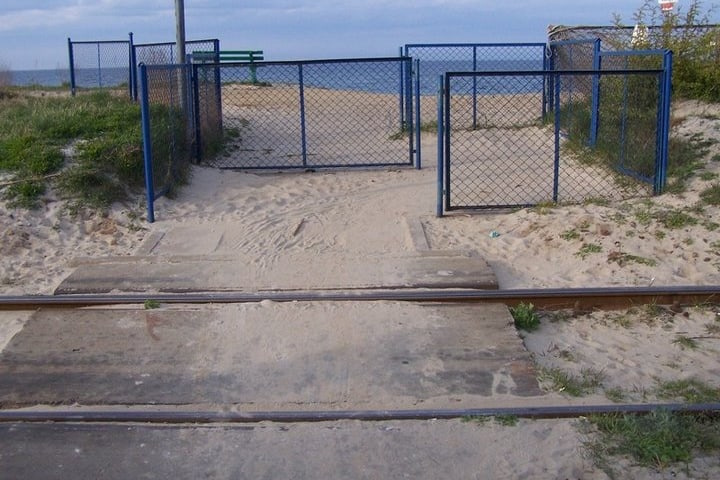 Remik82 / Wikimedia Commons · CC BY-SA 4.0
Kuźnica
Here the track comes closest to the sea, with sand drifting over the rails at the beach crossing. Just beyond is the narrowest part of the peninsula, under 200 metres from Baltic to bay, and a station where trains can pass.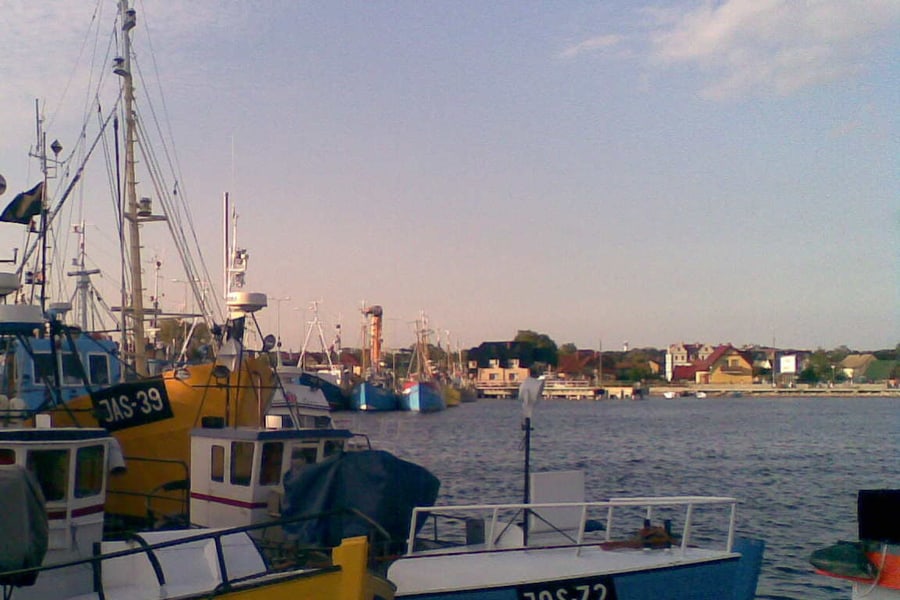 Olaf / Wikimedia Commons · Public domain · cropped
Jastarnia
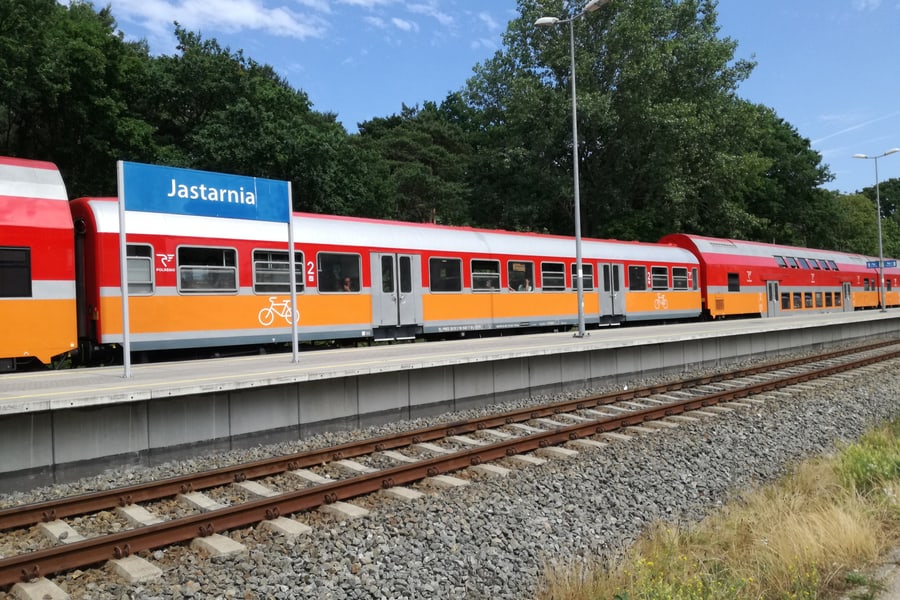
A small fishing port and resort, with town rights since 1973 and boats carrying the letters JAS in the harbour on the bay side. It is the last place on the line where trains can cross.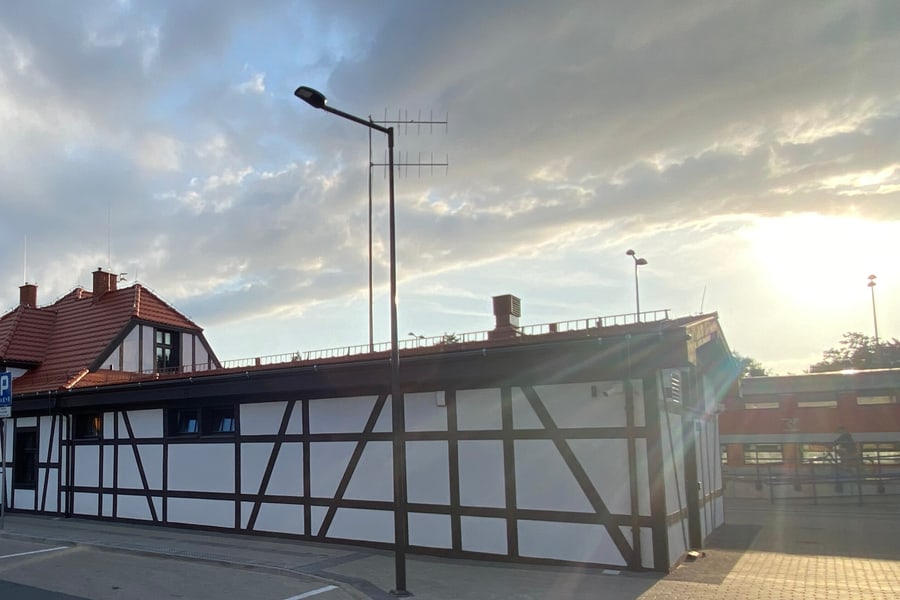 Lopatalopez / Wikimedia Commons · CC0 · cropped
Hel
The end of the line since 1922. The half-timbered station was rebuilt in 2015, and the town, the port and the seal sanctuary are all a short walk away.A bit of history
Culture & experiences along the way
 Krzysztof / Wikimedia Commons · CC BY-SA 3.0
The fishermen's pilgrimage to Puck
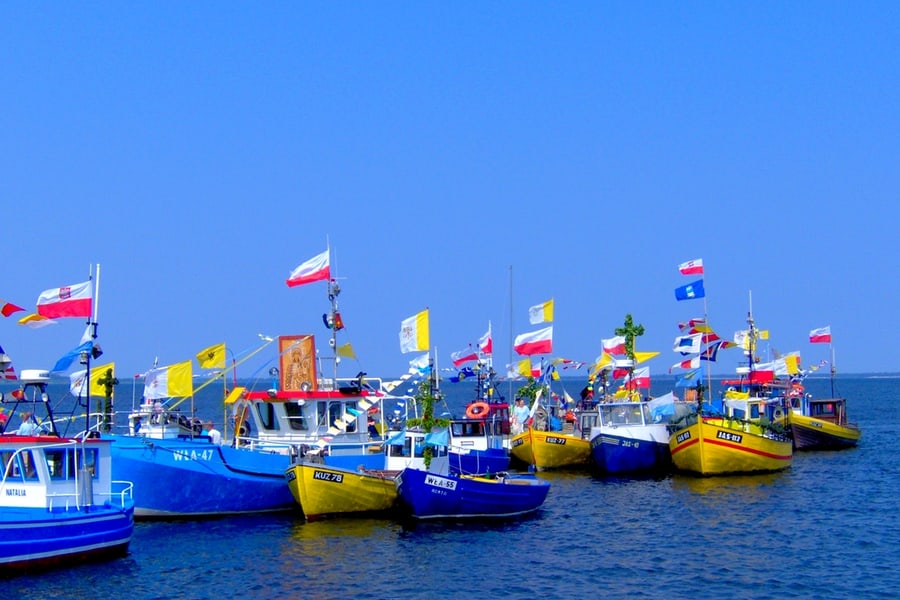
Around the feast of Saints Peter and Paul, boats and trawlers from Kuźnica, Władysławowo, Jastarnia, Chałupy, Jurata and Hel set out, meet on the Bay of Puck and tie up together to pray for fishermen who have died. They then sail on to Puck for Mass at the foot of the parish church, a custom kept for more than 800 years.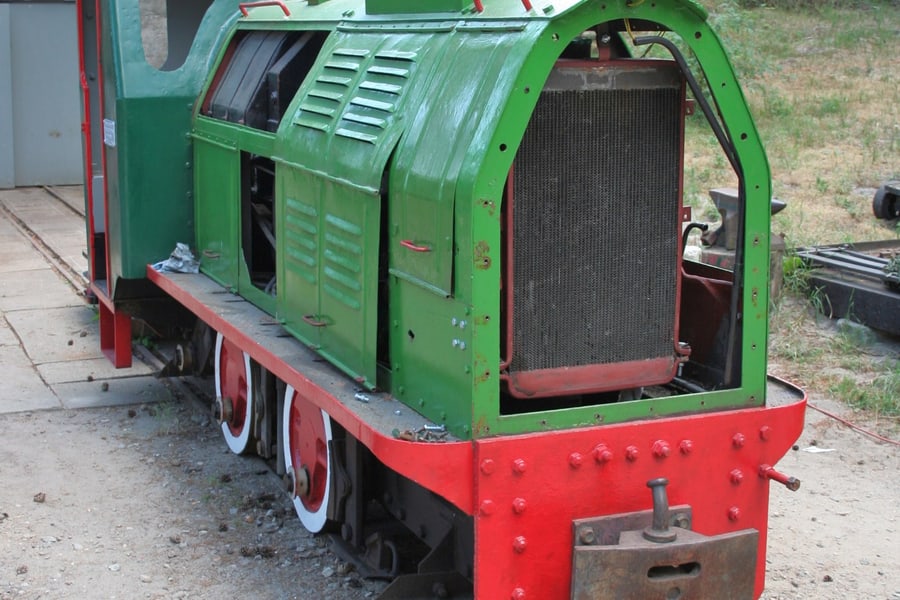 Yarl / Wikimedia Commons · CC BY-SA 3.0 · cropped
The railway museum in a gun battery
In a concrete ammunition magazine of the German Schleswig-Holstein battery, the Hel Railways Museum tells the story of the standard-gauge line built in nine months in 1921 and of the military narrow-gauge network laid among the pines. A narrow-gauge line carries visitors there, and rescued rolling stock stands outside.Timetables
POLREGIO runs the regional trains all year, and the trip from Gdynia to Hel takes between 1 hour 24 minutes and 1 hour 35 minutes. Seats are not reserved. From late June to the end of August PKP Intercity adds through trains from further afield.
Winter timetable, 25 October to 12 December 2026
| Gdynia Główna | Hel | Hel | Gdynia Główna | |
|---|---|---|---|---|
| 04:52 | 06:20 | 04:27 | 06:03 | |
| 07:01 | 08:32 | 05:32 | 07:02 | |
| 08:50 | 10:18 | 06:35 | 08:05 | |
| 10:51 | 12:18 | 09:02 | 10:32 | |
| 12:40 | 14:04 | 10:37 | 12:08 | |
| 14:28 | 15:58 | 13:32 | 15:08 | |
| 15:36 | 17:04 | 14:40 | 16:12 | |
| 16:58 | 18:33 | 16:18 | 17:55 | |
| 19:14 | 20:43 | 17:20 | 18:46 | |
| 20:35 | 21:59 | 18:46 | 20:10 | |
| 22:50 | 00:14 | 21:11 | 22:41 |
Trains run daily. A 23:52 from Gdynia goes only as far as Władysławowo. Between 1 and 8 December the 10:51 leaves at 10:47. The new timetable year starts on 13 December 2026.
Summer
POLREGIO's 2026 summer timetable ran 21 trains each way, 42 a day, on weekends from 14 June, on every day from 27 June to 31 August, and on weekends in September. Long-distance trains joined them from late June, leaving Hel for:
| Departs Hel | Train | To |
|---|---|---|
| 08:05 | IC 5442/3 Artus | Poznań, Wrocław, Bielsko-Biała |
| 08:45 | IC 5144/5 Żeglarz | Warsaw, Łódź |
| 14:06 | EIC 5340/1 Neptun | Warsaw, Kraków |
| 16:20 | EIC 5140/1 Jantar | Warsaw |
| 19:23 | TLK 55170 Wydmy | Katowice, Bohumin |
| 21:12 | TLK 55190/1 Korsarz | Częstochowa, Kraków |
As of November 2026, from POLREGIO's timetables (opens in a new tab), its statement to the Sejm of 7 July 2026, and PKP Intercity's station list for Hel, valid 14 June to 29 August. Details for summer 2027 are not yet published.
Tickets
Regional tickets are POLREGIO's own and are priced by distance, with no seat reserved. Trains can be very full in July and August, so an early departure is the better bet if a seat matters. A bicycle costs 8.50 zł and a dog 5.50 zł.
PKP Intercity sells its summer through trains on its own site. From POLREGIO's fare tables, as of November 2026.
Book your tickets
Gdynia to Hel, single
27.90 zł · REGIO, second class
POLREGIO's ordinary distance fare for a one-way trip the length of the line.
Book Tickets (opens in a new tab, on POLREGIO)via POLREGIOWeekend ticket
59 zł · mini version on POLREGIO alone, 48 zł
Unlimited REGIO travel from 18:00 before a weekend or holiday until 06:00 on the next working day.
Book Tickets (opens in a new tab, on POLREGIO)via POLREGIOSummer through train
PKP Intercity, late June to late August
The long-distance summer trains to Hel, priced by distance on PKP Intercity's own site.
Book Tickets (opens in a new tab, on PKP Intercity)via PKP IntercityRail Passes
Interrail and Eurail passes are valid on POLREGIO's Hel trains, on a Global Pass or a Poland Pass, and they need no reservation. Interrail's table of railway companies lists POLREGIO's Regio, interRegio and superRegio trains as covered.
PKP Intercity's summer trains to Hel are covered too. Some IC trains have mandatory reservations and others optional ones, so check the train before travelling; Interrail strongly recommends reserving where it is optional.
For this trip alone a pass is not worth buying: the regional fare from Gdynia is 27.90 zł. It pays only when Hel is one stop on a longer journey through Poland.
Checked November 2026 against Interrail's table of railway companies (opens in a new tab), last updated 21 October 2026.
Places to Visit
Almost everything worth a stop is within walking distance of a station on the spit, and the town of Hel at the end has enough for a full day.
 Karol Szejner / Wikimedia Commons · CC BY-SA 4.0
Hel Lighthouse
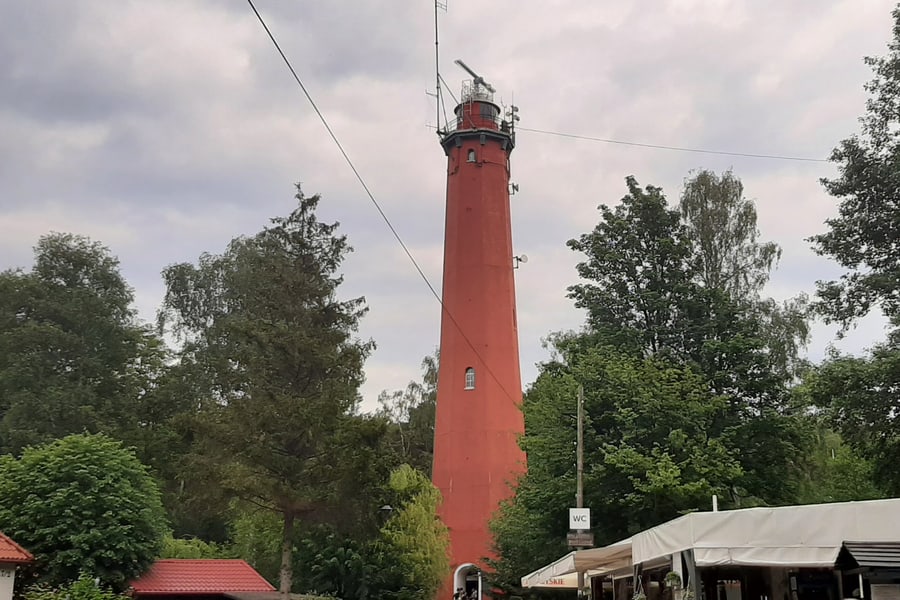
A red tower about 41 metres high, built in 1942 on the orders of the German occupiers, and still in service. Earlier lights on this point go back to the seventeenth century. Visitors can climb it in summer for the view over the tip of the spit.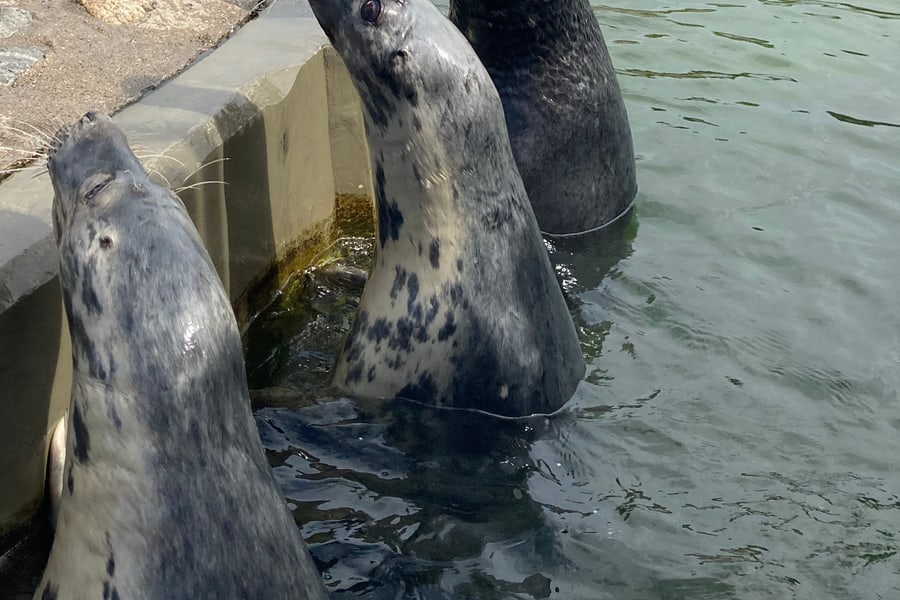 Volha Palkhouskaya / Wikimedia Commons · CC BY-SA 4.0 · cropped
The seal sanctuary
The University of Gdańsk's marine station at Hel, founded in 1977, is Poland's centre for research on Baltic marine mammals, and its work prepares for the breeding and return of grey seals to the Gulf of Gdańsk. The pools of its fokarium, on Morska street, are the part visitors come to see.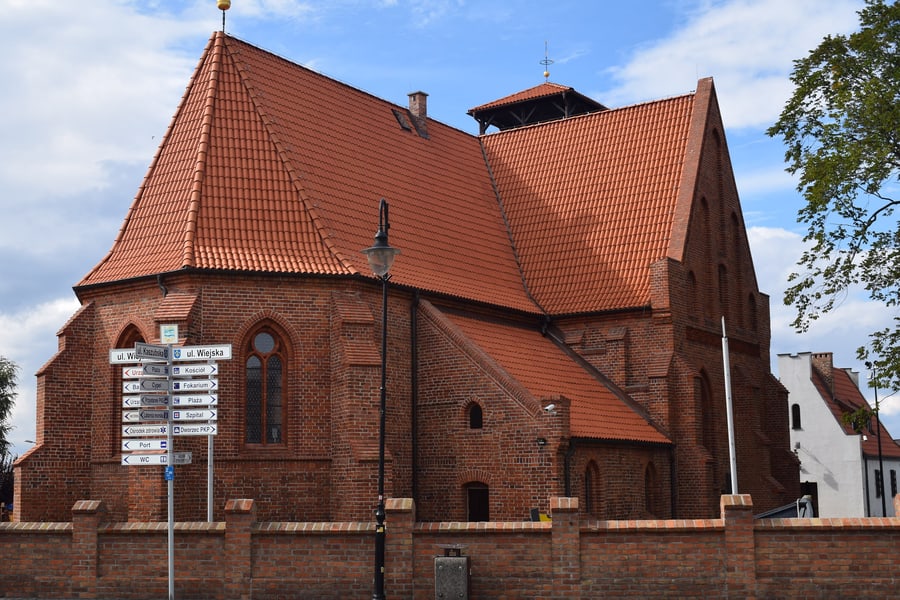 JackHerer / Wikimedia Commons · CC BY-SA 3.0 PL · cropped
The Museum of Fishery
Hel's fifteenth-century brick church of Saints Peter and Paul became a museum in 1972, the first branch of what is now the National Maritime Museum in Gdańsk. Exhibits cover fishing on the bay and the history of the peninsula, including a pine-log dugout found near Jastarnia, and traditional boats stand outside.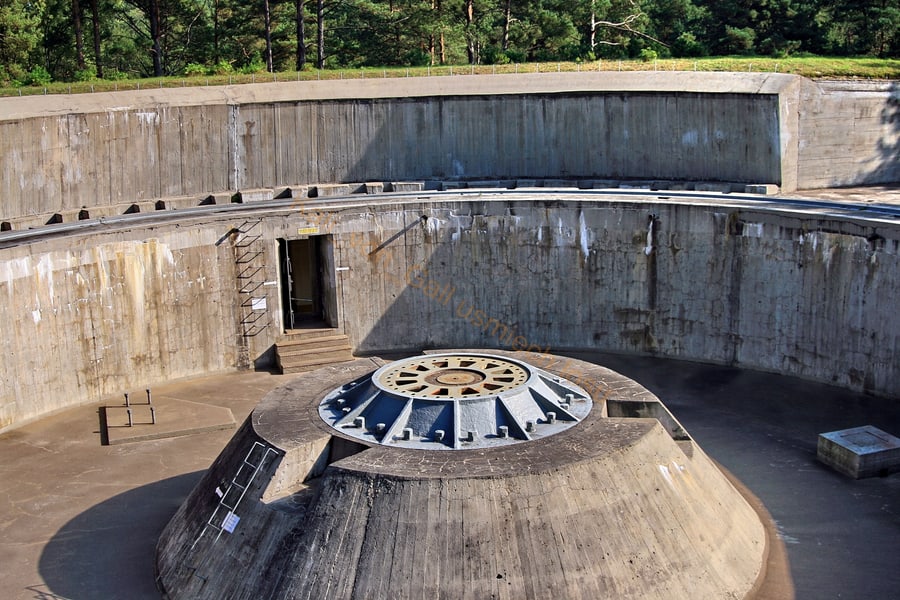 KalivonGall / Wikimedia Commons · CC BY-SA 3.0
The Museum of Coastal Defence
Set up in the buildings of a former German coastal battery and opened in May 2006, this museum covers the military history of Hel and of the Polish Navy, and the 32 days the peninsula held out in the autumn of 1939. The battery's concrete gun pits survive in the forest around it.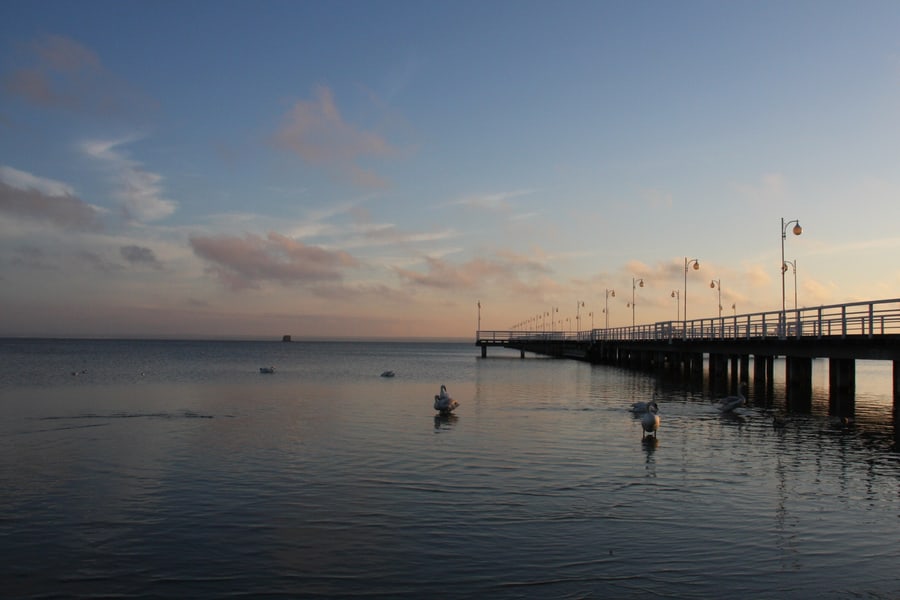 Marcin Joachim Grzegorczyk / Wikimedia Commons · CC BY-SA 3.0 · cropped
Jurata Pier
Founded in 1928 and sharing its name with a Lithuanian goddess of the Baltic, Jurata soon became a favourite of artists. Its wooden pier, built in the 1970s and 320 metres long, runs out into the Bay of Puck from the Międzymorze promenade.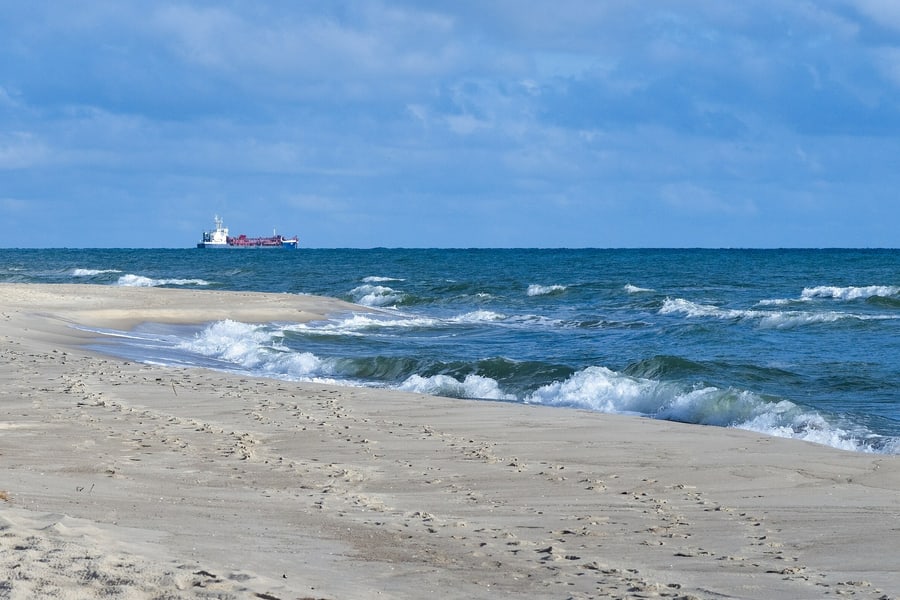 Adrian Tync / Wikimedia Commons · CC BY-SA 4.0 · cropped
The Baltic beach at Jastarnia
From Jastarnia station a short walk crosses the peninsula to the open-sea side, where a wide sand beach faces the Baltic. Jastarnia is a resort and small fishing port recorded since 1379, and the beaches along this coast are part of the shore that is regularly rebuilt with sand.Where to Sleep
Jastarnia and Jurata are the places to stay, on the same line of the timetable as Hel and a shorter ride back to Gdynia.
Where to stay
Hotel Bryza Resort & Spa
Jurata, on the seafront
A hotel at ul. Międzymorze 2 in Jurata, directly by the beach with its own stretch of sand and a spa.
Check Availability (opens in a new tab, on bryza.pl)via bryza.plHotel Jastarnia
Jastarnia, near the harbour
In the centre of Jastarnia, about 200 metres from the fishing port and 600 metres from the sea.
Check Availability (opens in a new tab, on hoteljastarnia.com.pl)via hoteljastarnia.com.plQuestions or corrections
Planning this trip and stuck on something, or spotted a time, fare or detail that has changed? Send us a message about The Hel Peninsula Railway. We read every one, and we update this page when something has changed.