Riga to Jūrmala — the beach line
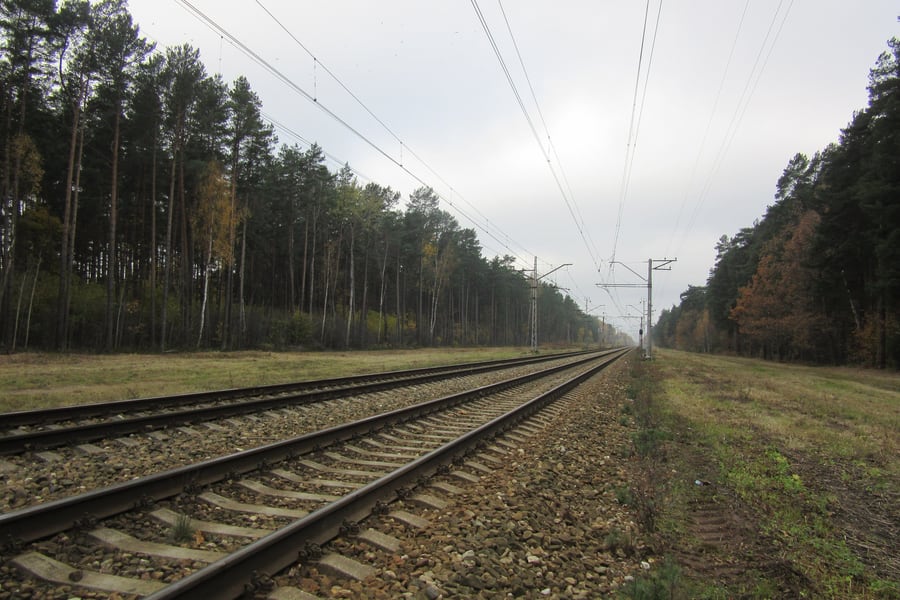
Smiley.toerist / Wikimedia Commons · CC BY-SA 4.0 · 2025
- Distance68 km to Tukums II · broad gauge, electric
- Duration24–31 min to Majori · 1 hr 8 – 1 hr 23 min to Tukums II
- Best seasonEvery half hour, all year
Introduction
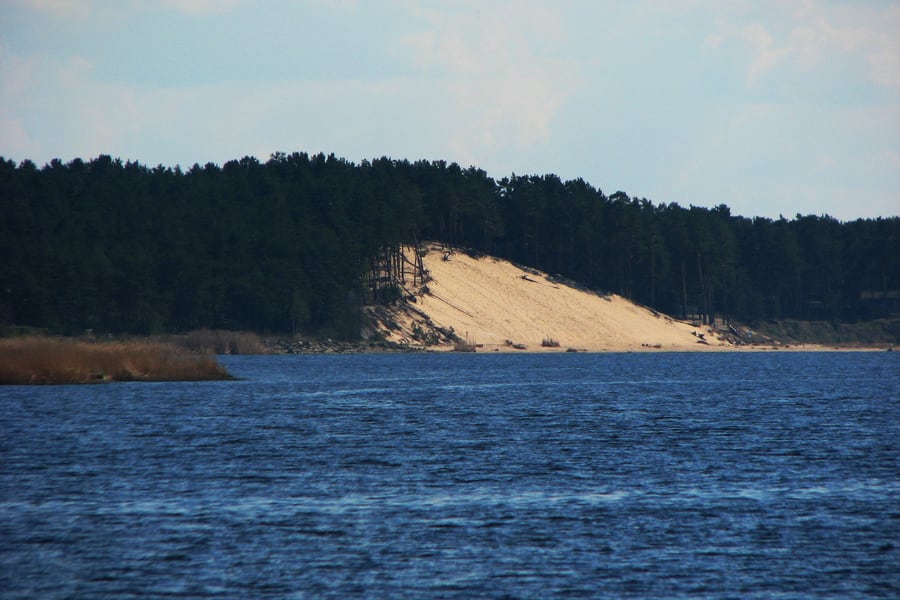
Riga's beach is a train ride away. The line west out of the city opened on 21 September 1877 to Tukums, in Courland, and on the way it ran through a string of fishing villages and landowners' summer houses between the Gulf of Riga and the River Lielupe. The railway made them a resort. Today they are one city, Jūrmala, "seaside", with a beach of white sand 33 kilometres long, and its stations come one after another: Lielupe, Bulduri, Dzintari, Majori, Dubulti.
The trains run every half hour, and Majori, the middle of the resort, is 31 minutes from Riga. Beyond it the line keeps to the narrow strip between river and sea as far as Sloka, then turns inland through the pines to Ķemeri, the old spa of sulphur springs and bog mud, and on to Tukums, 68 kilometres from Riga.
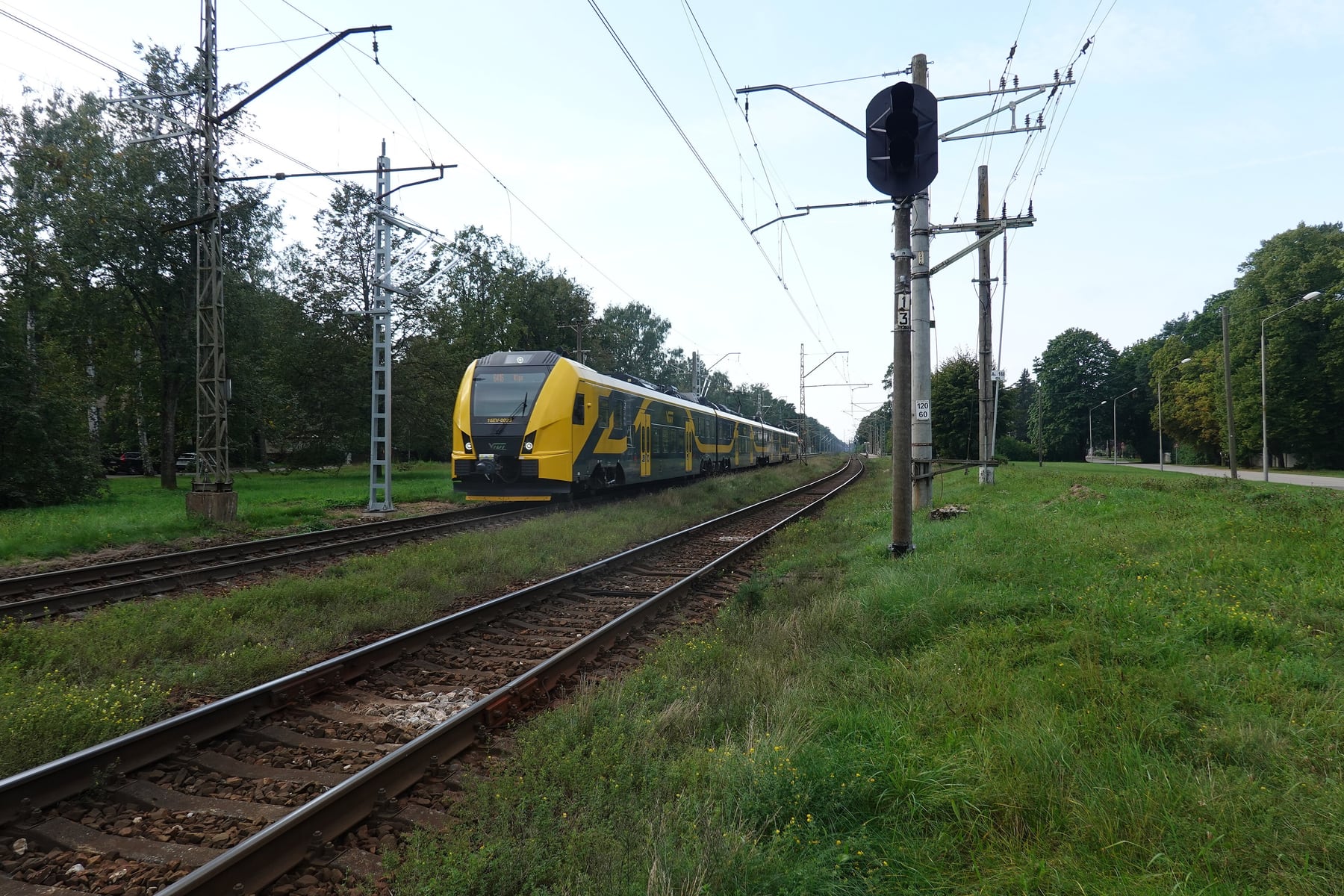
This was the first electric railway in Latvia, in 1950, and since December 2023 it has been worked by Vivi's yellow and grey Škoda trains. It is an everyday commuter line, and that is the pleasure of it: no booking, a ticket for a couple of euros, and in under an hour and a half you have gone from the capital past the beach and the spa to a castle town of the Livonian Order.
The Journey
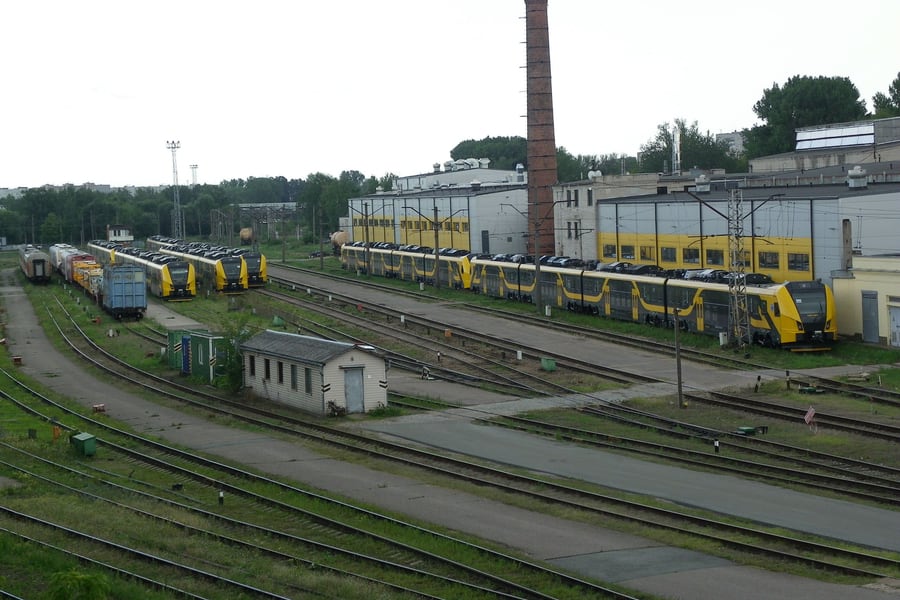
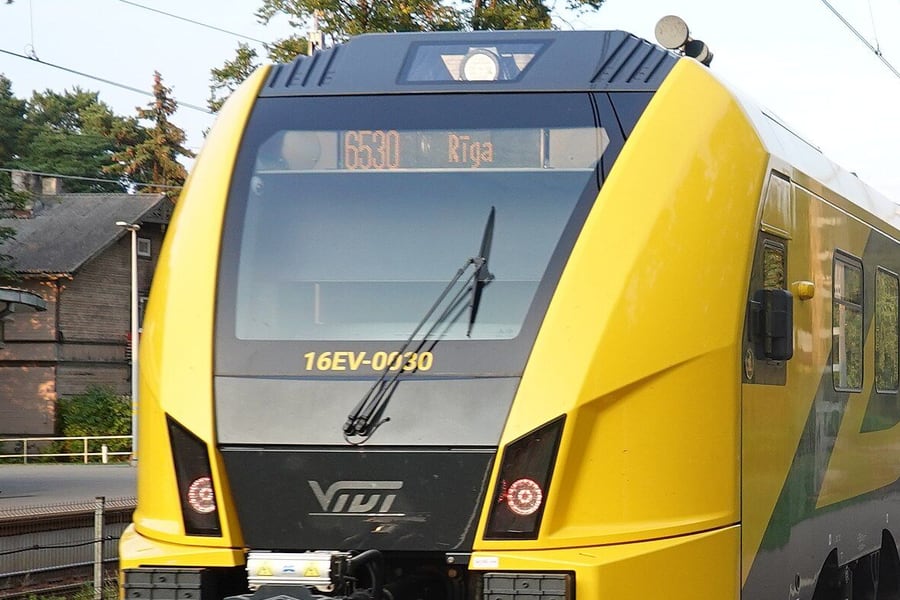
Every train on the line is a Škoda 16Ev, a low-floor electric unit built in Ostrava for Vivi and painted in its signal yellow, anthracite and dark grey. The first went into service on 15 December 2023, and its first run, at 10:59 from Riga's central station, was to Dubulti. By September 2024 all 32 had been delivered, and they replaced the ER2 family of electric trains, built at the Riga Carriage Works from 1962. The number on the nose, 16EV-0025 and so on, is the unit; the display above the windscreen gives the train number and where it is going.
Out of Riga
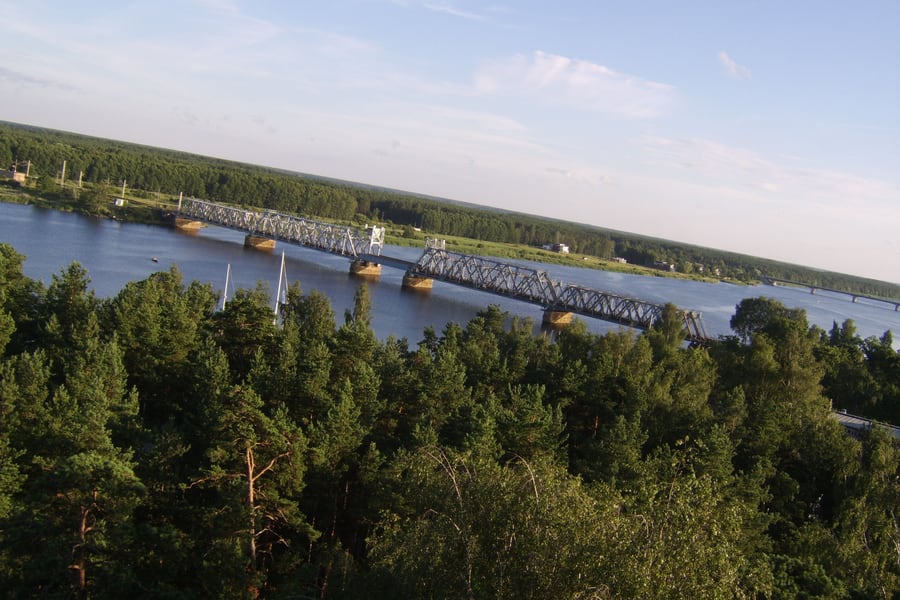
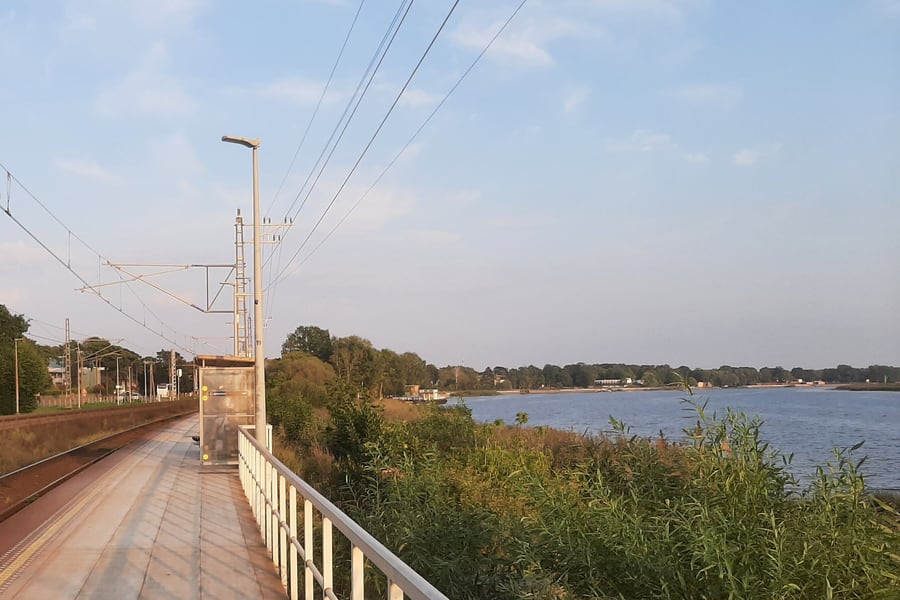
Trains leave from Rīga-Pasažieru, the central station, cross the Daugava and call at Torņakalns, on the left bank. The line then runs west through Riga's suburbs — Zasulauks, Zolitūde, Imanta — to Babīte, and crosses the Lielupe into Jūrmala. The bridge has been here since the line was built and has been destroyed twice, in the First World War and again in the Second; when it was rebuilt it was moved slightly, which is why Lielupe's wooden station building now stands well back from the track.
The resort
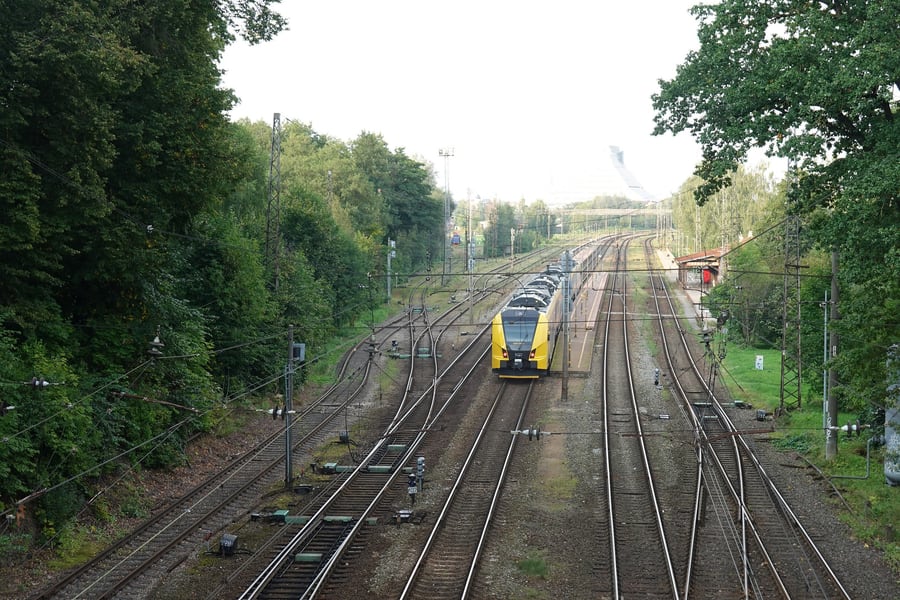
From Priedaine to Sloka the stations come every two or three minutes, and each has its own resort behind it. Bulduri opened with the line as Bilderingshof; Dzintari was Edinburgh until 1929; Majori, the centre, was Majorenhof, and its platform runs along the river bank. Most were given their Latvian names in 1919. Dubulti, the oldest part of Jūrmala, is where the first electric trains in Latvia terminated in 1950, and some peak-hour trains still turn there. Its station, built in 1977, was designed to recall a sea wave.
After Jaundubulti, Pumpuri, Melluži, Asari and Vaivari comes Sloka, whose station building is the original of 1877. Many trains end here.
Ķemeri and Tukums
The hourly Tukums trains, and two a day that end at Ķemeri, turn inland here through pine forest to Ķemeri, the spa, 44 kilometres from Riga. Its station was destroyed in the First World War and the present one was built in 1922. Before that war there were through trains from here to Moscow, and a tram ran from the station to the beach. The line then runs on to Tukums, which has two stations: Tukums I, the terminus of 1877, then called the East station, and Tukums II, opened in 1901 on the line to Ventspils, where the trains end.
Between 16:45 and 18:45 on weekdays three trains run as expresses, calling only at Torņakalns, Zasulauks, Zolitūde, Imanta, Bulduri, Dzintari, Majori, Dubulti, Sloka and every stop after it, and take 24 minutes to Majori.
Along the route
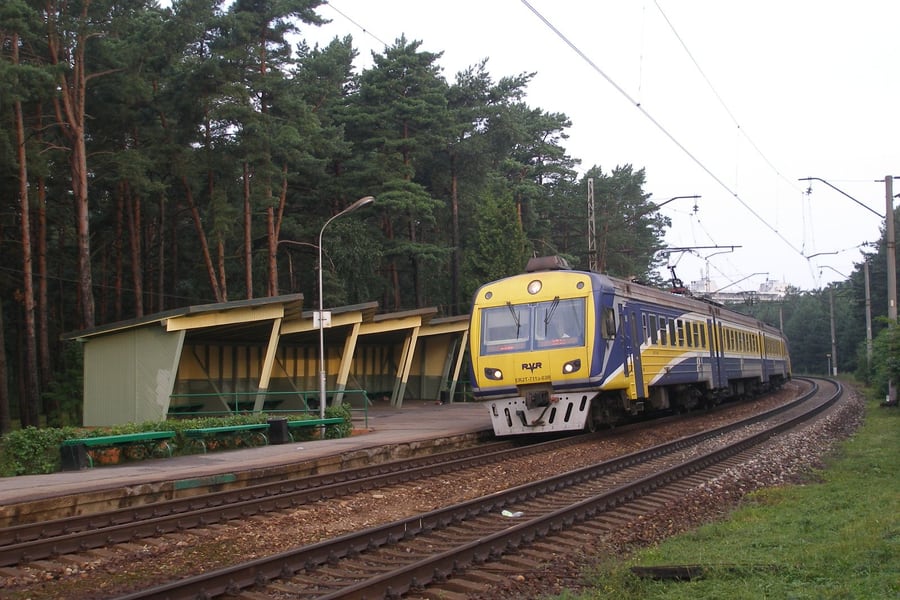 ScAvenger (Jānis Vilniņš) / Wikimedia Commons · CC BY-SA 3.0 · 2011 · cropped
The first wires in Latvia
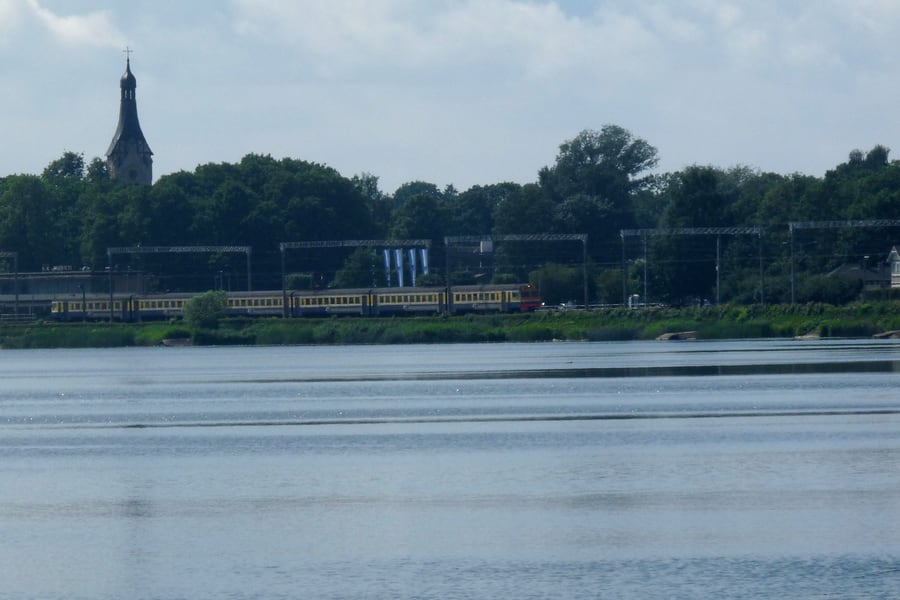
Riga to Dubulti was the first electrified railway in Latvia, in 1950, and the wires reached Ķemeri a few years later. The photograph is an ER2T at Lielupe in 2011, one of the electric trains the Riga Carriage Works built for lines like this one from 1962.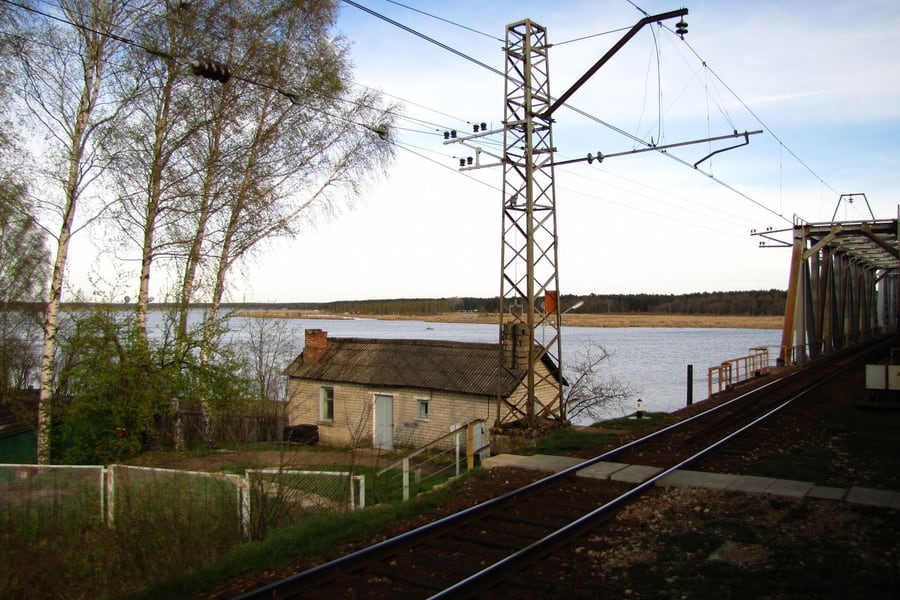 Dmitrijs Purgalvis / Wikimedia Commons · CC BY 3.0 · 2011 · cropped
Signals for a swinging bridge
The Lielupe bridge was wrecked in the First World War, rebuilt in 1922 and wrecked again in the Second. When Priedaine got its new station in 1938, it came with interlocking for the bridge's swing span and the first colour-light signals on Latvia's railways.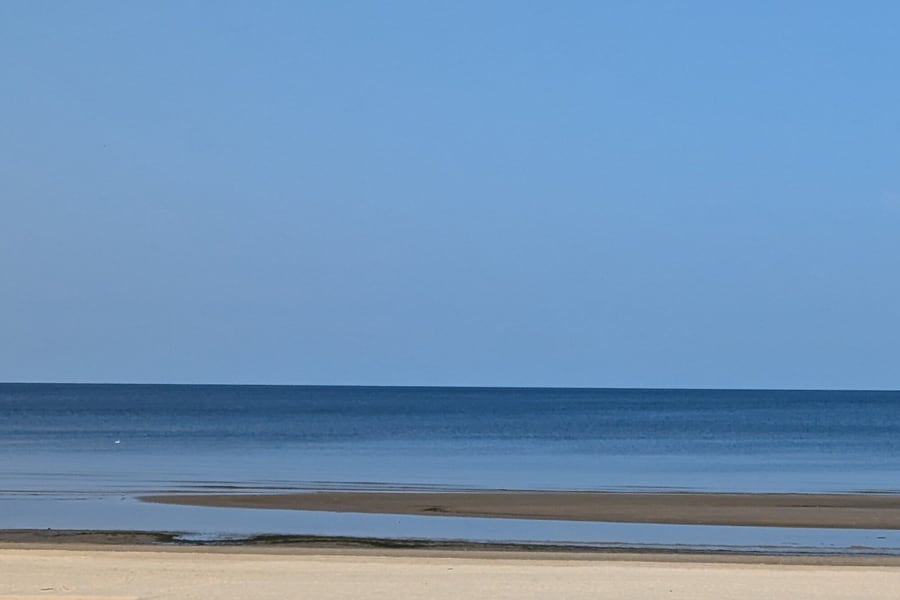 AleWi / Wikimedia Commons · CC BY-SA 4.0 · 2024 · cropped
Edinburgh on the Gulf
Dzintari station opened in 1877 as Edinburgh, after Grand Duchess Maria, daughter of Alexander II, who had married the Duke of Edinburgh. It became Edinburgh II in 1907, when a new stop was added next to it, and has been Dzintari, "amber", since 1929.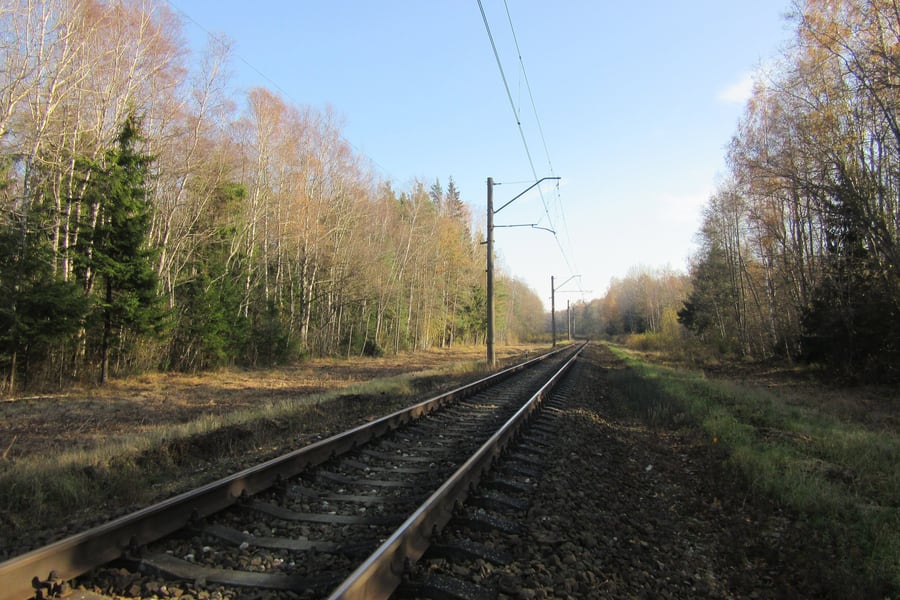 Titāns / Wikimedia Commons · CC BY-SA 4.0 · 2021 · cropped
A tram to the beach
From 1912 to 1915 a metre-gauge electric tram ran from Ķemeri station to the beach at Jaunķemeri. When the First World War began its rails and cars were evacuated to Staraya Russa; after it, diesel tramcars ran over an army supply line instead, until the rails were lifted in 1933.A bit of history
Culture & experiences along the way
 Paul Berzinn / Wikimedia Commons · CC BY-SA 3.0 · 2007 · cropped
Mud from the bog
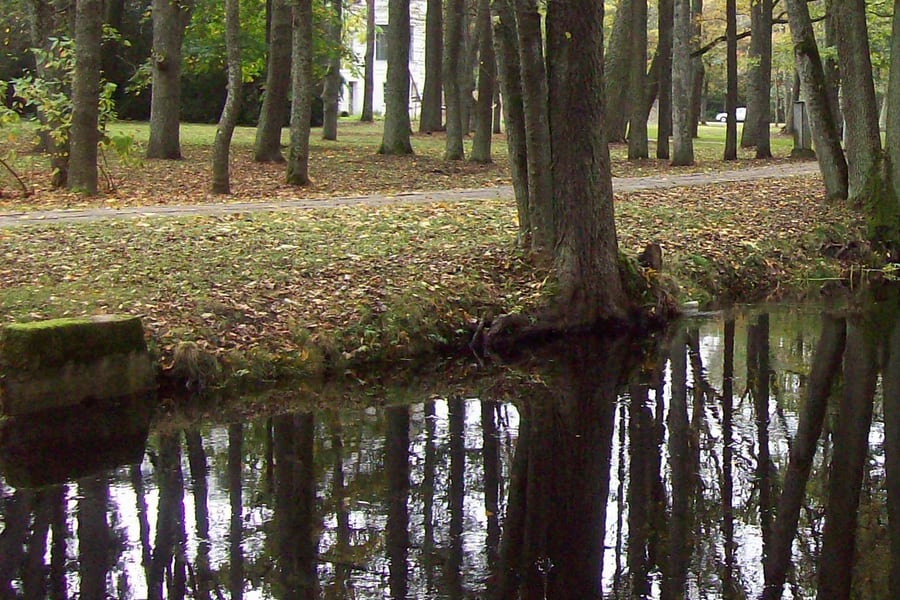
Ķemeri's springs were known for their cure by 1796, and in 1838 Nicholas I gave land for the first bath-house. In 1924 a new building fed patients hot mud by machine and pumped it back to the bog afterwards. The resort's hotel, the "White Ship", opened in 1936 and can be seen from its gardens.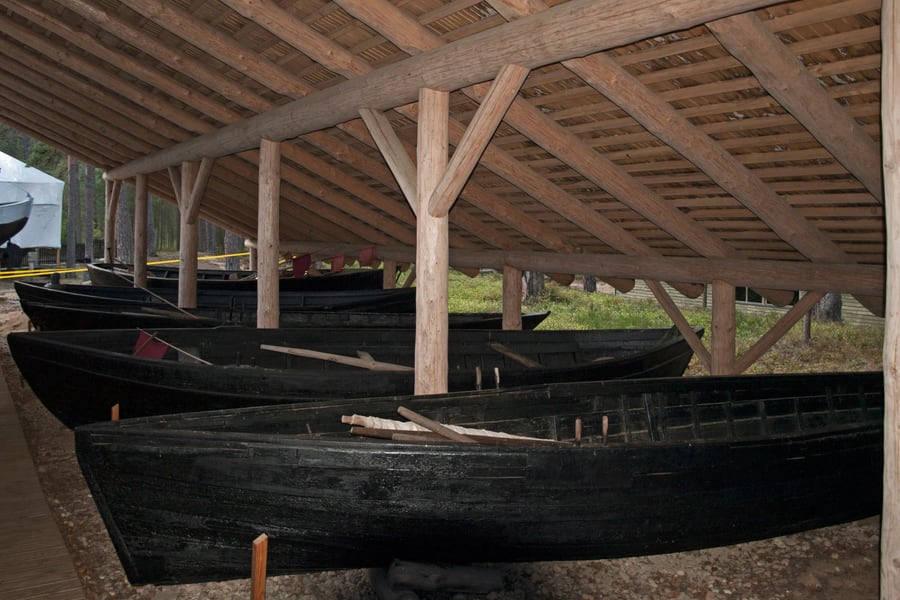 Ymblanter / Wikimedia Commons · CC BY-SA 4.0 · 2018 · cropped
The fishermen's coast
The open-air museum at Buļļuciems is about the people who fished this shore. It keeps a coastal fisherman's farmstead of around 1900, with its house, net shed, granary and fish smokehouse, a collection of wooden boats and anchors, and days when fish are smoked, nets made and rope twisted the old way.Timetables
Trains leave Riga for Jūrmala every half hour from 05:15 to 23:45, every day. Most of those on the half hour go through to Tukums II; the ones on the hour turn back at Sloka; on weekdays extra trains to Dubulti run at the morning and evening peaks. No seat is reserved and none needs to be. The times below were read from Vivi's own journey planner in October 2026, for Wednesday 4 November; Sunday 1 and Saturday 7 November ran to the same half-hourly pattern without the extras.
Riga to Tukums
| Train | Riga | Majori | Dubulti | Sloka | Ķemeri | Tukums II | Journey |
|---|---|---|---|---|---|---|---|
| 6501 | 05:15 | 05:44 | 05:47 | 06:03 | 06:12 | 06:34 | 1 hr 19 |
| 6503 | 06:30 | 07:00 | 07:03 | 07:19 | 07:28 | 07:53 | 1 hr 23 |
| 6513 | 11:30 | 12:01 | 12:04 | 12:20 | 12:29 | 12:53 | 1 hr 23 |
| …and every hour at :30… | |||||||
| 6525 · express, Mon–Fri | 16:45 | 17:09 | 17:12 | 17:23 | 17:31 | 17:53 | 1 hr 8 |
| 6537 | 20:30 | 21:00 | 21:03 | 21:19 | 21:28 | 21:53 | 1 hr 23 |
| 6547 | 23:45 | 00:15 | 00:18 | 00:33 | 00:43 | 01:04 | 1 hr 19 |
The Sloka trains leave Riga on the hour from 06:00 and take 31 minutes to Majori. The 6529 at 17:45 and the 6533 at 18:45 are expresses too, on weekdays.
Tukums to Riga
| Train | Tukums II | Ķemeri | Sloka | Dubulti | Majori | Riga | Journey |
|---|---|---|---|---|---|---|---|
| 6502 | 04:39 | 05:00 | 05:08 | 05:23 | 05:26 | 05:59 | 1 hr 20 |
| 6512 | 07:09 | 07:30 | 07:38 | 07:53 | 07:56 | 08:29 | 1 hr 20 |
| 6520 | 11:09 | 11:30 | 11:38 | 11:53 | 11:56 | 12:29 | 1 hr 20 |
| …and about every hour at :09… | |||||||
| 6538 | 20:09 | 20:30 | 20:38 | 20:53 | 20:56 | 21:29 | 1 hr 20 |
| 6542 | 22:09 | 22:30 | 22:38 | 22:53 | 22:56 | 23:29 | 1 hr 20 |
Making a day of it
For the beach, any train will do: there are two an hour each way, and the last from Majori back to Riga leaves at 22:57. For Ķemeri and the bog, the 11:30 from Riga is there at 12:29, and trains back leave Ķemeri at about half past each hour until 22:30.
Times are published by the operator: Vivi · journey planner (opens in a new tab).
Tickets
Vivi's fares are low and fixed by distance. Riga to Majori, in the middle of Jūrmala, is €2.30, Riga to Ķemeri €2.80 and the whole way to Tukums €3.30. A 1-day ticket, good for as many rides as you like on the day, costs three single fares: €6.90 to Majori, so it pays only if you get off and on again. Tickets are sold on Vivi's site and app, at station ticket offices and on the train, where €1 more is charged if the station's ticket office was open. ⚠️ A ticket has to be registered as soon as you board, at a validator or with the conductor.
There are no reservations or supplements on this line. Checked against Vivi's planner and fare table, October 2026.
Book your tickets
Riga to Majori, Vivi
€2.30 each way · €6.90 for a day
The beach at the centre of Jūrmala, on any train, registered at a validator as you board.
Book Tickets (opens in a new tab, on vivi.lv)via vivi.lvRiga to Ķemeri, Vivi
€2.80 each way · €8.40 for a day
The spa and the bog at the western end of Jūrmala, about an hour from Riga.
Book Tickets (opens in a new tab, on vivi.lv)via vivi.lvRiga to Tukums, Vivi
€3.30 each way · €9.90 for a day
The whole line, to the old Courland town at its end.
Book Tickets (opens in a new tab, on vivi.lv)via vivi.lvRail Passes
A pass covers this line, and for it alone a pass never pays.
Interrail's table of the companies a pass is valid with in Latvia — checked in October 2026, when it carried a last updated 21 October 2026 stamp — lists Vivi as covered by both the Global Pass and the One Country Pass, with no reservation needed. Every train on this line is Vivi's, so a pass takes you all the way to Tukums.
The arithmetic is the problem. An adult Interrail Latvia Pass in second class costs €67 for three travel days within a month, €84 for four, €100 for five, €118 for six and €150 for eight; youth prices, for travellers aged 12 to 27, are €50, €63, €75, €89 and €113. A Riga–Majori return is €4.60, and even the whole line to Tukums and back is €6.60. A Vivi 1-day ticket does the same job as a pass travel day on this line for €6.90.
Hold a pass for Jūrmala only if you already carry one for a longer journey across the Baltic states; then the beach costs nothing extra.
Prices and conditions read on interrail.com (opens in a new tab) in October 2026.
Places to Visit
Everything below is reached from a station on the line, and the times given are taken from the 11:30 from Riga, which is at Majori by 12:01, Dubulti by 12:04, Ķemeri by 12:29 and Tukums I by 12:48. With a train back every half hour from Jūrmala and every hour from Ķemeri and Tukums, any of them can be a morning or an afternoon.
They come in the order the railway meets them: the beach at Majori, the church at Dubulti, the bog beyond Ķemeri and the castle tower at Tukums.
 Pibwl / Wikimedia Commons · CC BY-SA 4.0 · 2023 · cropped
Majori and the beach
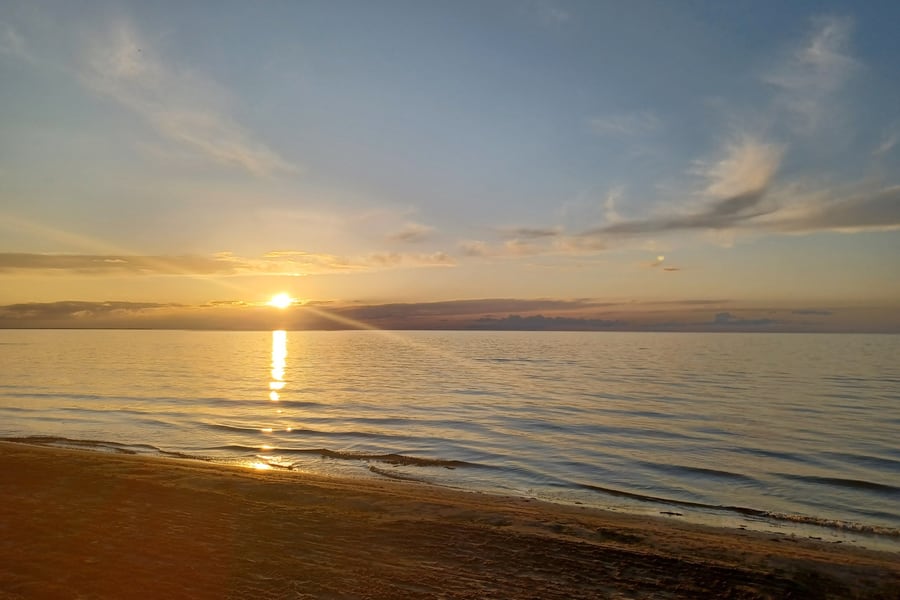
The centre of Jūrmala, and the station the resort grew around: it opened as Majorenhof with the line in 1877. A short walk leads to Jomas iela, the pedestrian street of craft shops, restaurants and hotels, and beyond it to the beach, part of a 33-kilometre strand of white quartz sand that flies the Blue Flag here. In spring and autumn amber turns up on the sand.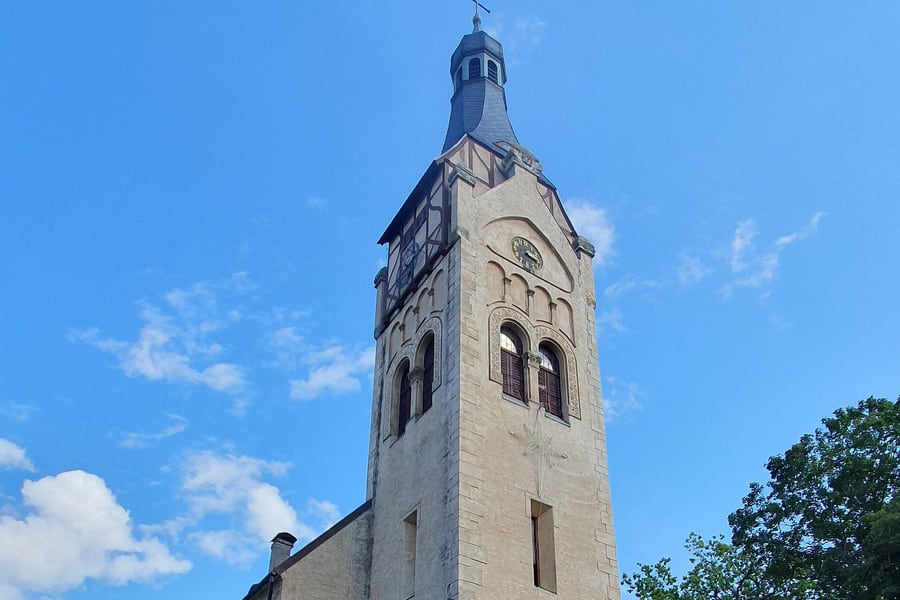 Aleksandrs Čaičics / Wikimedia Commons · CC BY 4.0 · 2026 · cropped
Dubulti Lutheran Church
Dubulti is the oldest part of Jūrmala, on a neck of land only 300 metres wide where a loop of the Lielupe comes close to the sea. Its Lutheran church is the largest Art Nouveau masonry church in Latvia, designed by Wilhelm Bockslaff and Edgar Friesendorff, begun in 1905 and consecrated on 3 October 1909; its tower clock was a gift of the shipowner Jēkabs Putniņš.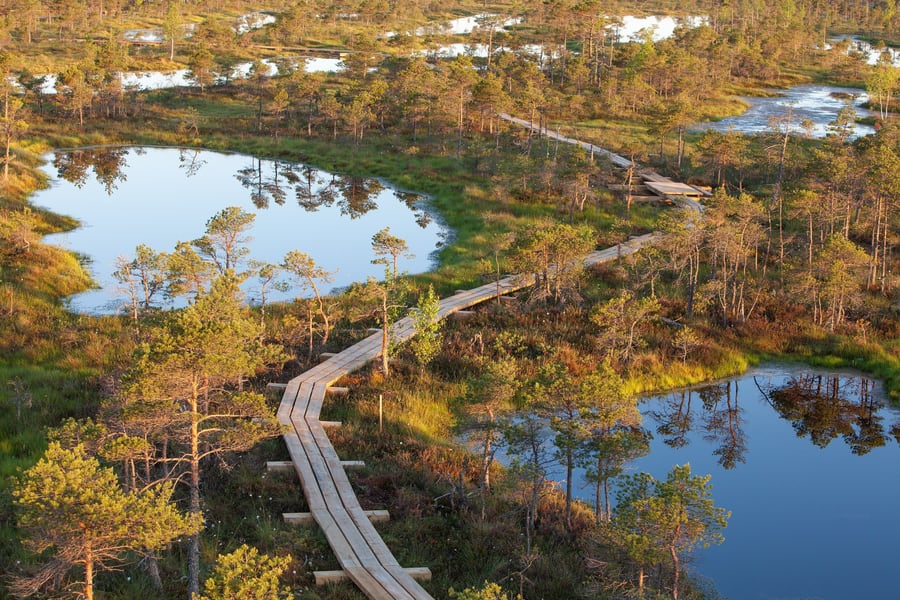 Karlis Ustups / Wikimedia Commons · CC BY-SA 4.0 · 2013
The Great Ķemeri Bog
A raised bog of 6,192 hectares in Ķemeri National Park, full of small dark lakes and stunted pines, and a resting place for cranes on migration. A wooden boardwalk, rebuilt in 2013, loops 3.7 kilometres through it past an observation tower, with a shorter 1.5 km arc; it is free and open all year, and signposted from Ķemeri station across the line.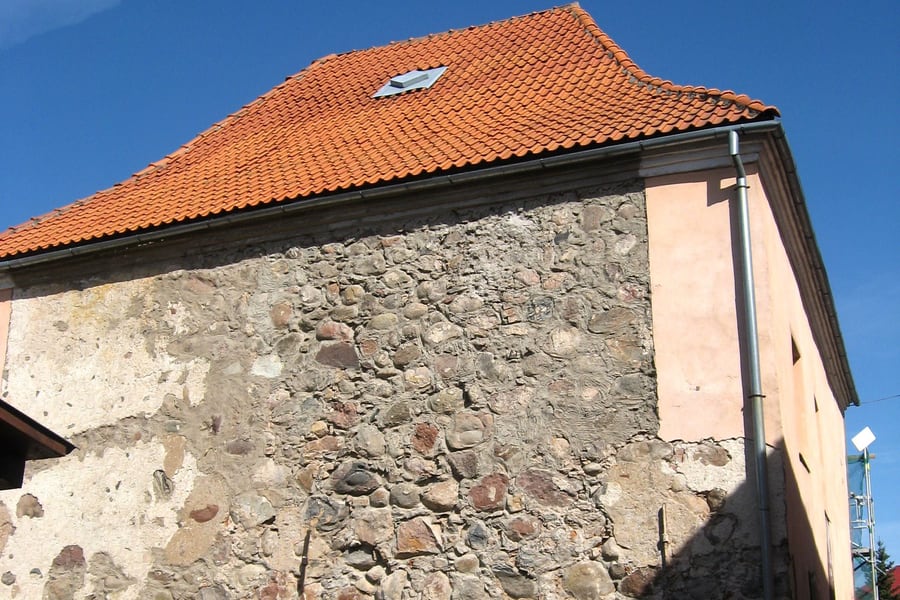 Dezidor / Wikimedia Commons · CC BY 3.0 · 2008 · cropped
Tukums castle tower
The Livonian Order built a stone castle here early in the fourteenth century, on the old road from Riga to Kuldīga and Prussia, and called the place the gate of Courland. One corner of it was rebuilt in the eighteenth century as a two-storey tower, eleven and a half metres square with walls 1.6 metres thick, and it now holds the town's history museum.Where to Sleep
Jūrmala is half an hour from Riga, so the line is easily a day out; the two houses below are for staying by the sea instead, both in Majori. Everything described is what each says about itself on its own site, read in October 2026. No prices, grades or star counts appear here, because none have been verified.
Where to stay
 Olgerts V / Wikimedia Commons · CC BY-SA 4.0 · 2021 · cropped
Villa Joma
Jomas iela 90, in Majori
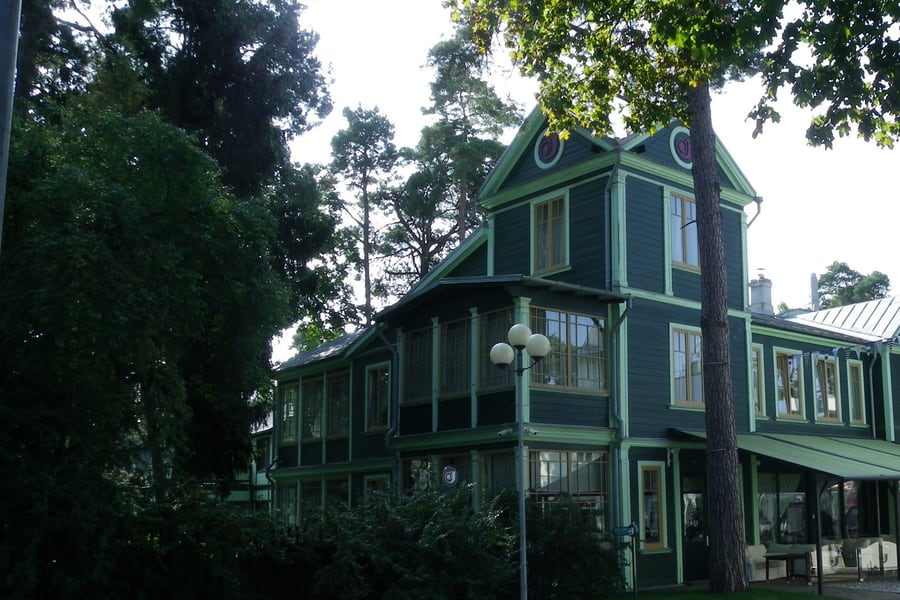
A wooden house from the end of the nineteenth century that was a small hotel from the start, restored, on Jomas iela a few minutes' walk from the sea and the Dzintari concert hall, with a restaurant with two fireplaces and a summer terrace.
Check Availability (opens in a new tab, on villajoma.lv)via villajoma.lvBaltic Beach Hotel & SPA
Jūras iela 23/25, on the beach at Majori
A hotel on the seafront with rooms and suites looking over the sea or the park, a spa that uses sea water all year, and seafood and grill restaurants.
Check Availability (opens in a new tab, on balticbeach.lv)via balticbeach.lvQuestions or corrections
Planning this trip and stuck on something, or spotted a time, fare or detail that has changed? Send us a message about Riga to Jūrmala — the beach line. We read every one, and we update this page when something has changed.