The Sahel Metro · Sousse to Mahdia
Kabelleger / David Gubler / Wikimedia Commons · CC BY-SA 4.0 · cropped
- DistanceSousse Bab Jedid–Mahdia · 73 km · 30 stations
- DurationAbout 2 hours end to end
- Best seasonAll year · seventeen trains a day each way
Introduction
Most people who land at Monastir airport take a taxi to their hotel. A few walk to the station called L'Aéroport and wait for the train.
It comes roughly once an hour. The Sahel Metro, the Métro du Sahel, is SNCFT's electric suburban line along Tunisia's central coast: 73 kilometres of metre-gauge track from Sousse to Mahdia, with a spur into Monastir, and thirty stations on the way. Seventeen trains a day run the line in each direction, from twenty past five in the morning until after ten at night, and the whole run takes about two hours. It is a commuter railway first: in 2009 it carried 8.6 million passengers, more than six in ten of them pupils and students.
Three old towns on one line
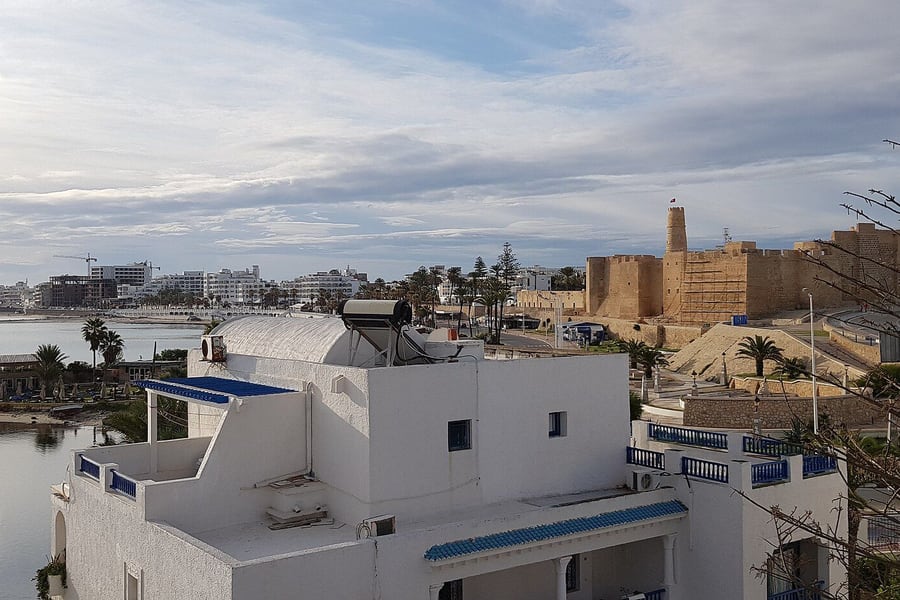
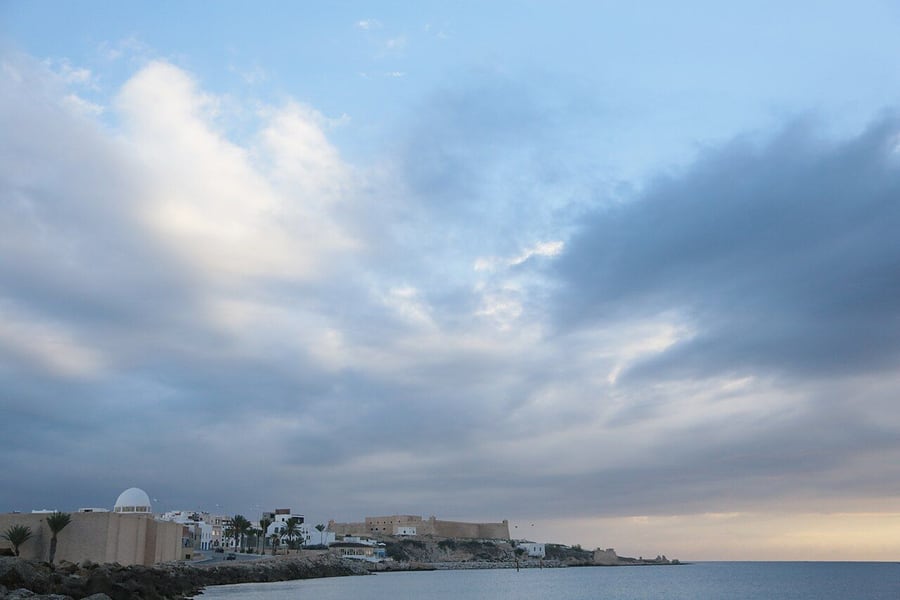
What makes it worth riding is where it goes. Sousse is the start, a walled medina and a port. Monastir, forty minutes on, has a ribat founded in 796 and counted the oldest in the Maghreb, and the gilded tomb of Habib Bourguiba, the president who was born there. Mahdia, at the end, was built from 916 on a narrow peninsula as the capital of the Fatimid caliphs, and its gate, its mosque and its fort still stand.
Between them the line crosses the salt pans of Sahline, calls at the airport, then runs south through Lamta, Ksar Hellal and Moknine, the textile towns of the Sahel.
A young line on an old coast
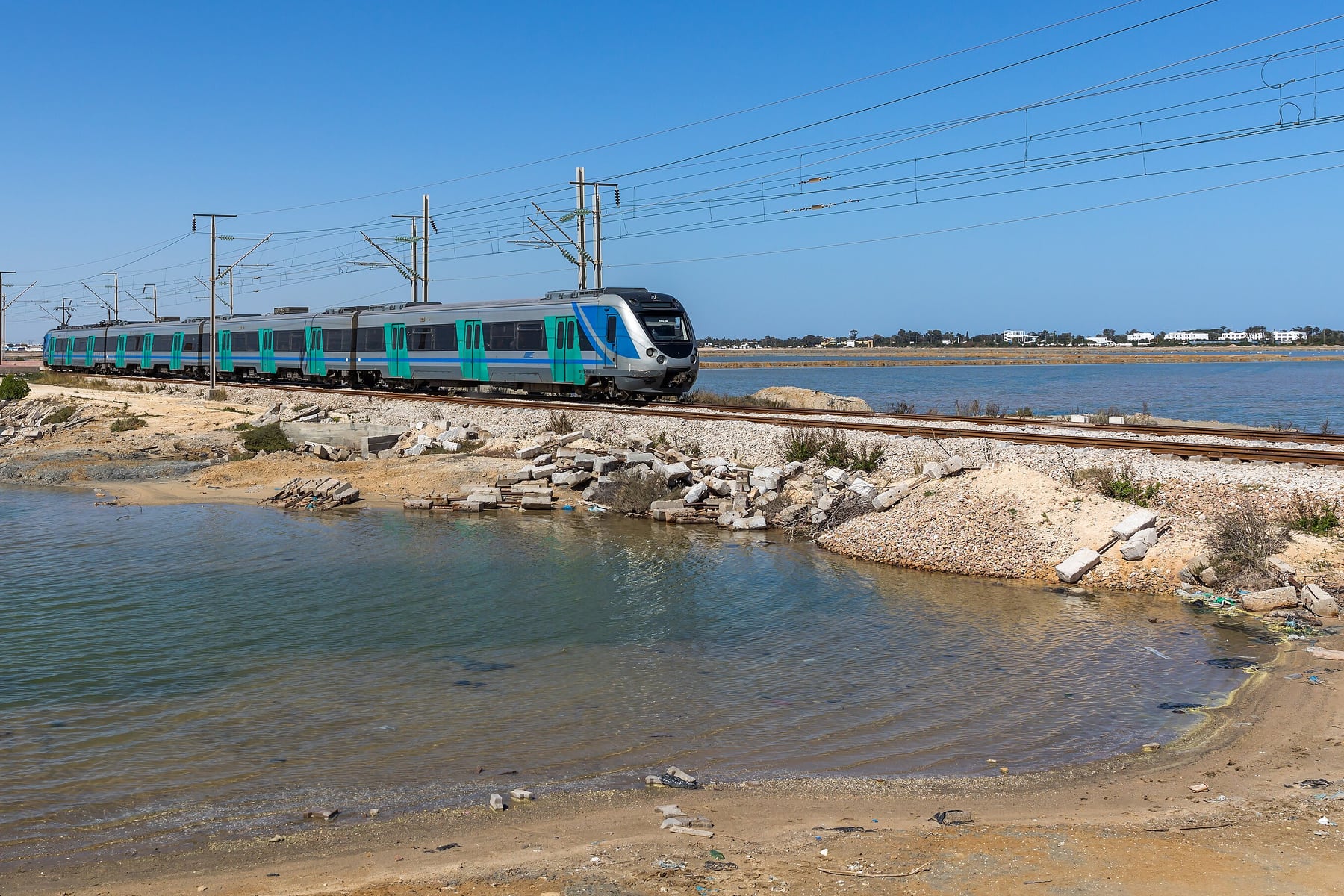
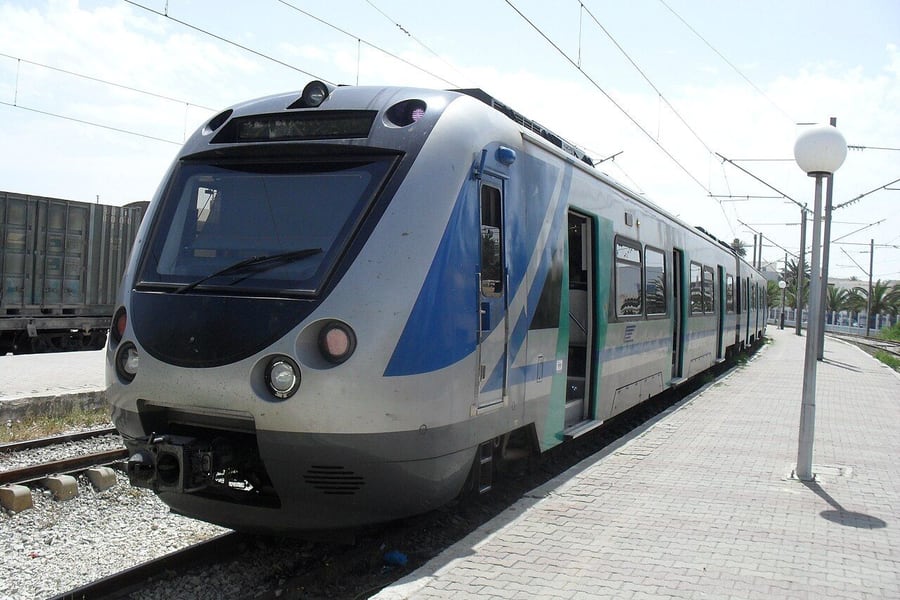
The railway is newer than it looks. SNCFT opened Sousse to Monastir in 1983, as double track, electrified from the start, and doubled the line on to Moknine in 1987. Beyond Moknine it is still single track with passing loops, all the way to Mahdia. Its first trains were replaced in August 2010 by South Korean electric units built by Hyundai Rotem, the silver and turquoise trains in the photographs on this page.
The Journey
The line starts at Sousse Bab Jedid. The first train, 501, leaves at 05:20; the last, 533, at 20:15. They call at almost everything, so a stop every few minutes is normal.
Out of Sousse and across the salt pans
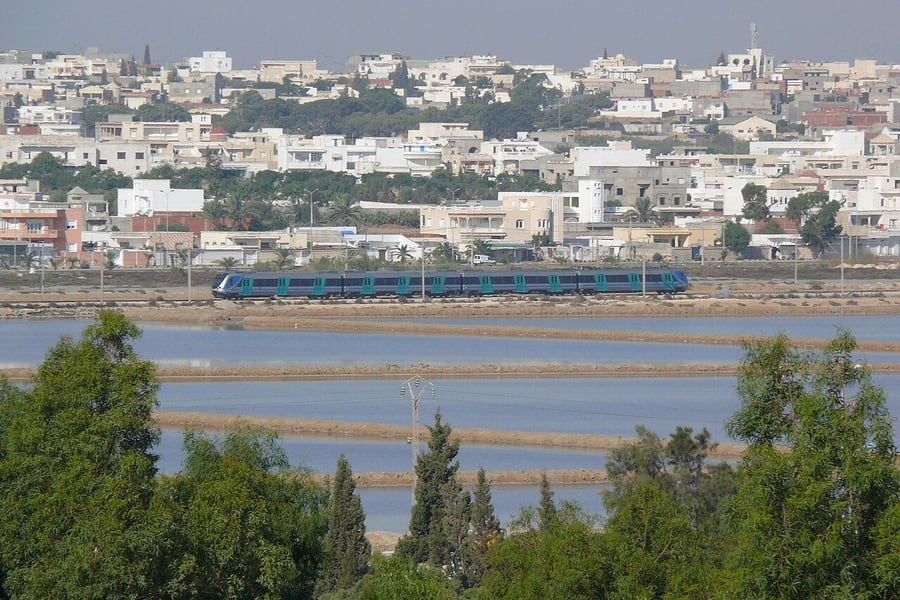
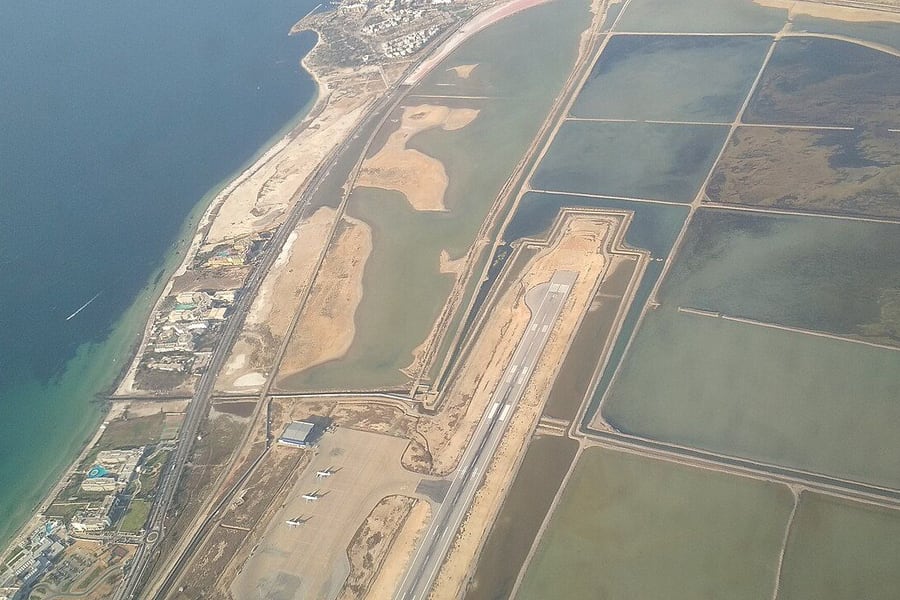
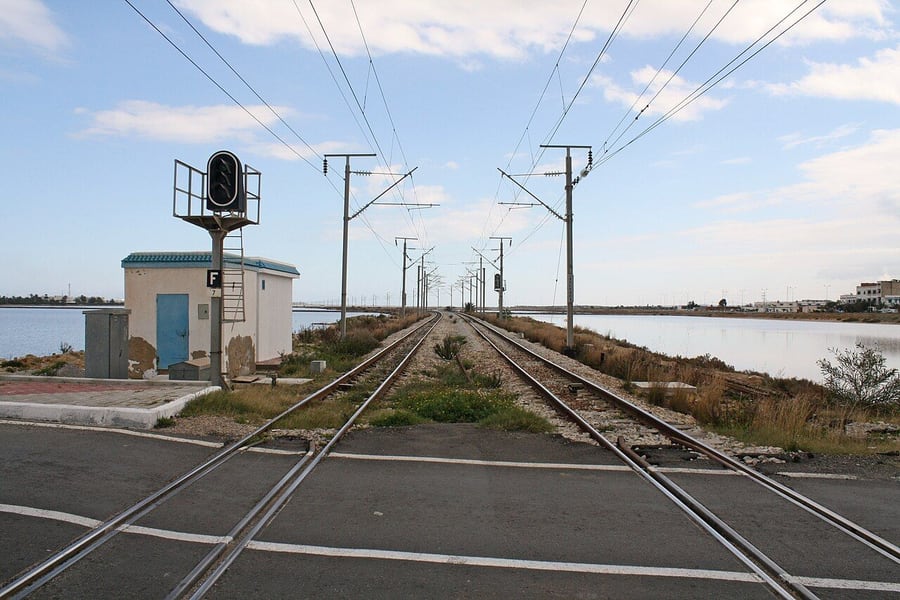
Four stops take the train through the southern side of Sousse, past Sousse Mohamed V, Sousse Sud and the industrial zone. Then the town gives out and the line runs onto the flats at Sahline, where salt pans spread between the town and the resort of Skanès. The train runs on a low bank with shallow water on both sides; Sahline Sebkha, the station in the middle of it, is where the photograph at the top of this page was taken.
The airport, and the turn into Monastir
Les Hôtels comes next, then L'Aéroport, twenty-three minutes from Sousse on train 501, for Monastir Habib Bourguiba International Airport, which mainly serves holidaymakers bound for Monastir and Sousse.
Monastir itself is on a spur. Trains call at La Faculté, run into Monastir, the town's main station, and come back out through La Faculté a second time before heading south, which is why the timetable lists La Faculté twice. The station is named for Habib Bourguiba, and a plaque records that he inaugurated it on 25 August 1984.
South through the Sahel towns
Below Monastir the line runs south through the towns of the Sahel. Lamta was the Phoenician and Roman port of Leptiminus, where Hannibal is said to have landed on his return from Italy. Ksar Hellal is a textile town, and the place where Bourguiba and his allies held the congress of 2 March 1934 that founded the Neo-Destour, his party. Moknine, known for its pottery, has a large station with several platforms.
After Moknine the double track ends. The line goes on single through Téboulba and Bekalta, with trains waiting for each other in the passing loops, to Mahdia Zone Touristique, where two trains a day turn back, and on past Sidi Messaoud and Ezzahra to Mahdia.
Mahdia
The old city is on the peninsula. You walk in through Skifa el Kahla, the gate built when the Fatimids founded the city between 916 and 921, past the Great Mosque to the fort of Borj el Kebir and the white sea cemetery at Cap Afrique, where the land runs out.
The trains
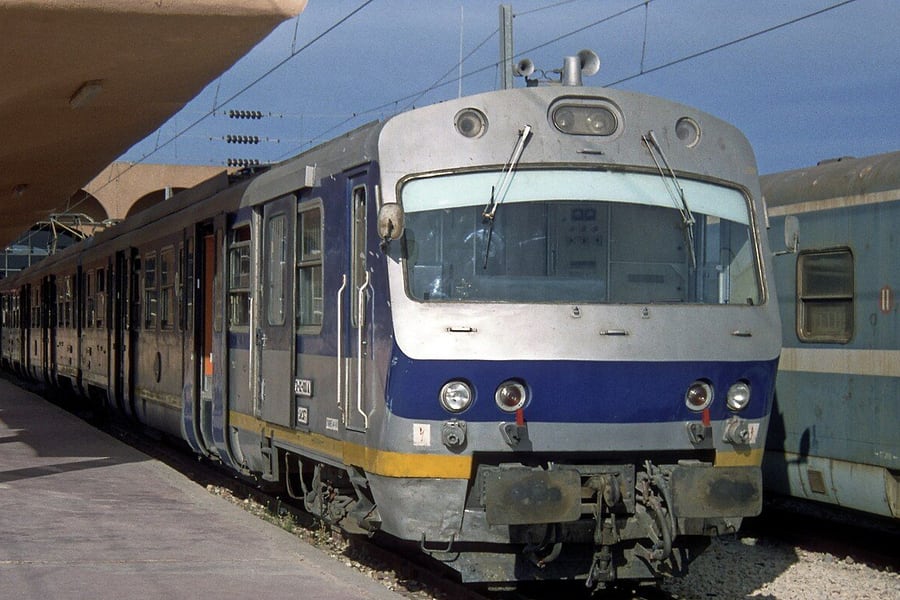
Since 17 August 2010 the line has been worked by South Korean electric multiple units built by Hyundai Rotem: silver, with turquoise doors and a blue stripe. They replaced the line's first electric trains, silver and blue three-car units; one is in the gallery, photographed at Monastir in 1995. The overhead wires carry 25,000 volts, and the track is metre gauge, like the rest of the southern network.
Practical notes for the ride
- Every train calls at L'Aéroport, so arriving by air and riding straight on to Monastir or Mahdia is easy.
- Two trains a day stop short. Trains 509 and 517 end at Mahdia Zone Touristique, four stops short of Mahdia.
- From Tunis there is one through train a day to Mahdia, an SNCFT railcar that comes in by way of Monastir; see the timetable.
Along the route
 Andrew Skudder / Wikimedia Commons · CC BY-SA 2.0
Across the Sahline salt pans
South of Sousse the line runs out onto the salt flats of Sahline, on a low bank with shallow water on both sides. The station in the middle is called Sahline Sebkha, after the sebkha, the salt flat itself.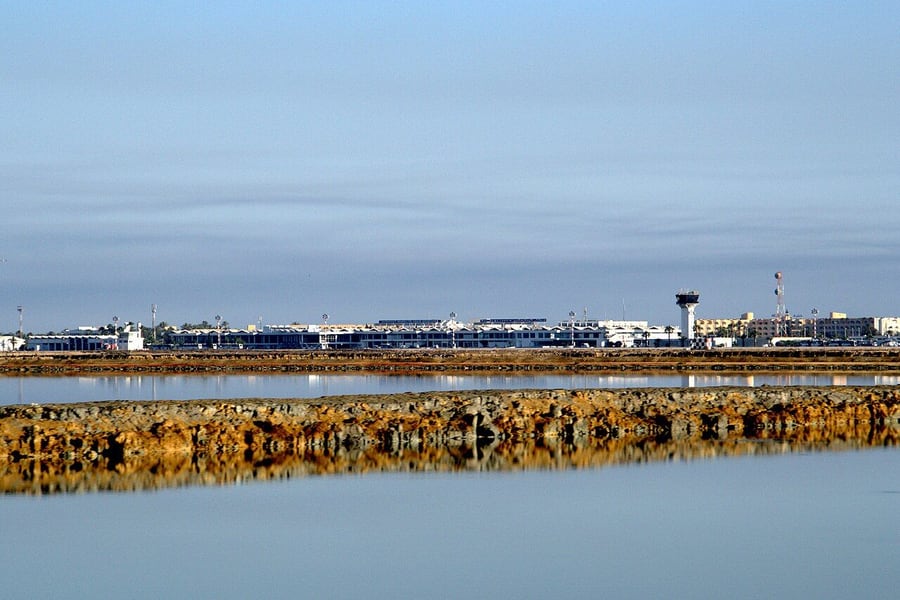 Habib M'henni / Wikimedia Commons · CC BY-SA 3.0
A station for the airport
L'Aéroport is twenty-three minutes from Sousse on the first train of the day, and every train stops there. Monastir Habib Bourguiba International Airport, named for the president born in the town, mainly serves holidaymakers.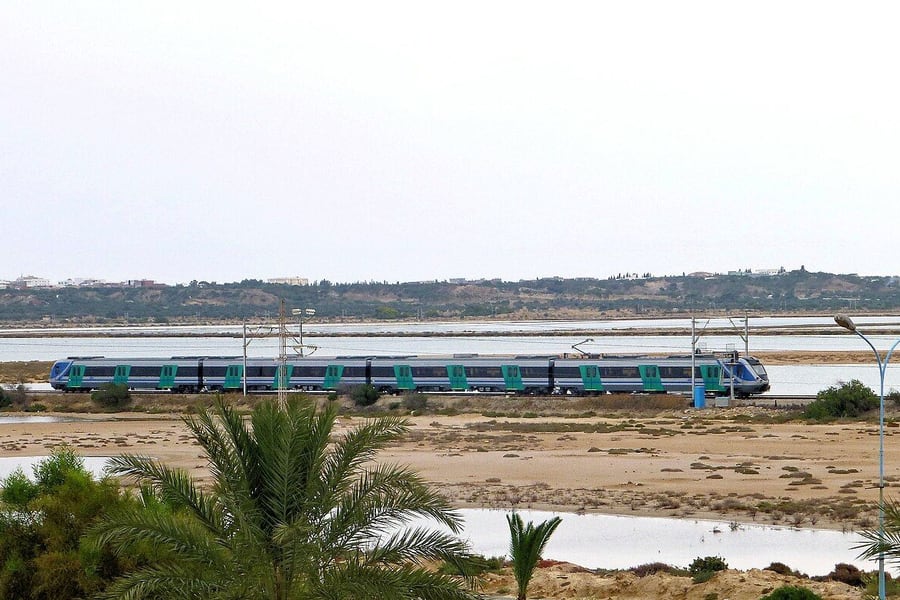 Mietek Ł / Wikimedia Commons · CC BY-SA 3.0 · cropped
Into Monastir and out again
Monastir sits on a spur. Trains call at La Faculté, run into the town's station and come back out through La Faculté before heading south. Habib Bourguiba inaugurated the station on 25 August 1984.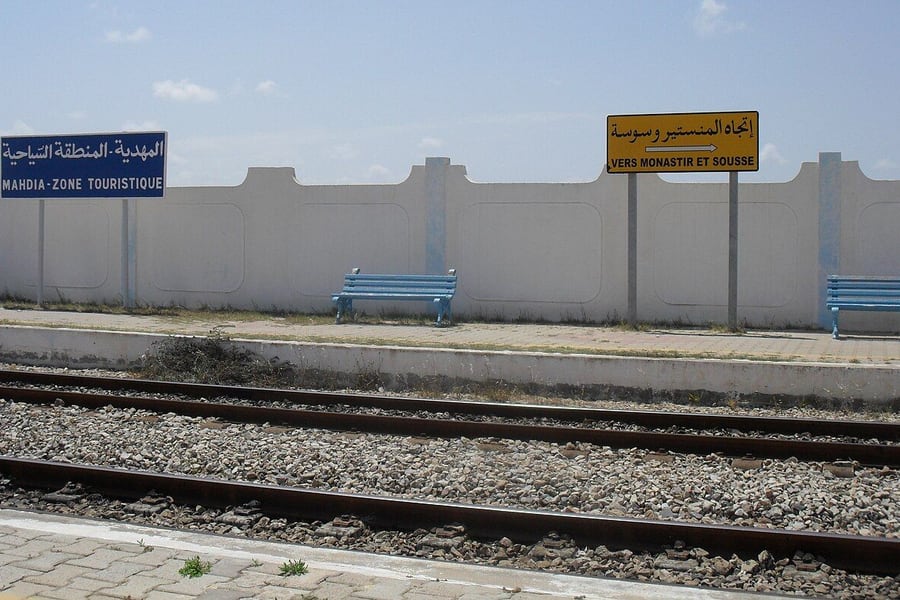 Visem / Wikimedia Commons · CC BY-SA 3.0 · cropped
Single track to Mahdia
South of Moknine the double track ends, and trains wait for each other in passing loops at stations such as Téboulba and Mahdia Zone Touristique, where two trains a day turn back.A bit of history
Culture & experiences along the way
 Meriem Mach / Wikimedia Commons · CC BY-SA 4.0 · cropped
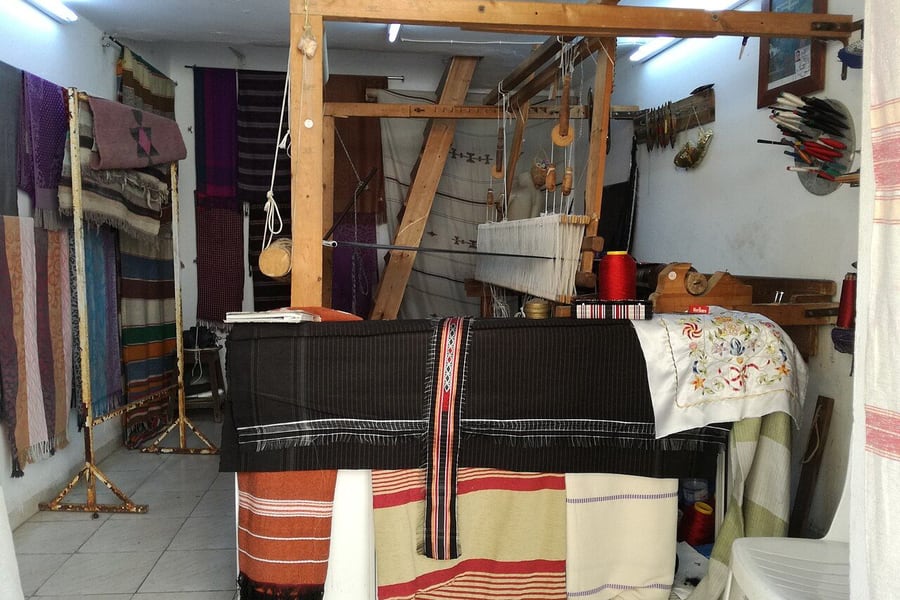
Silk on the looms of Mahdia
Mahdia is known for its weaving in silk and wool, done on wooden hand looms in small workshops like the one above. Since 2019 the town has had a crafts village where weavers and other artisans of the region are trained and sell their work.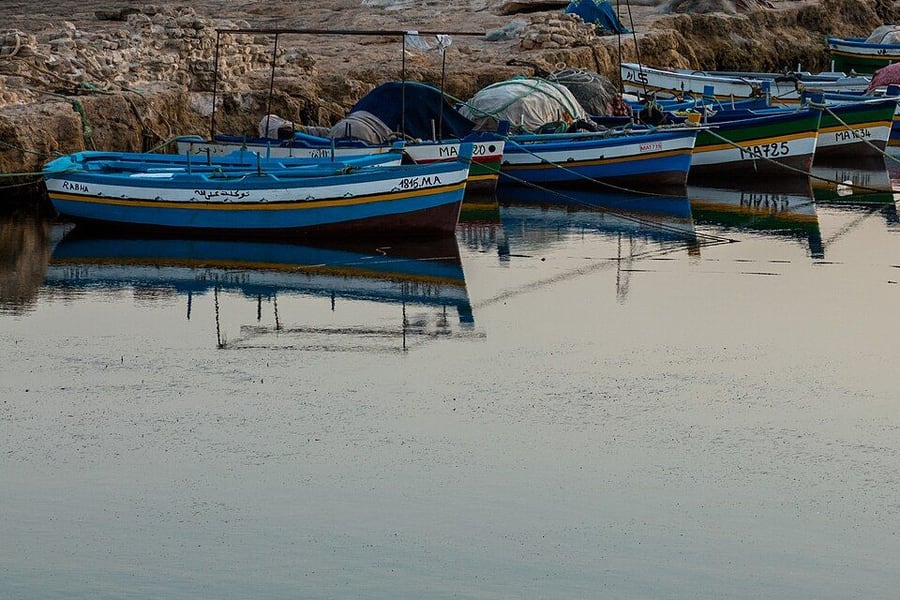 Diego Delso / Wikimedia Commons · CC BY-SA 4.0 · cropped
Mahdia's fishing boats
Mahdia is one of Tunisia's leading fishing ports. The port is lively at certain hours, its trawlers are rigged for lamparo, fishing at night with lamps, and it has its own canneries for blue fish. Small painted boats lie in the old port.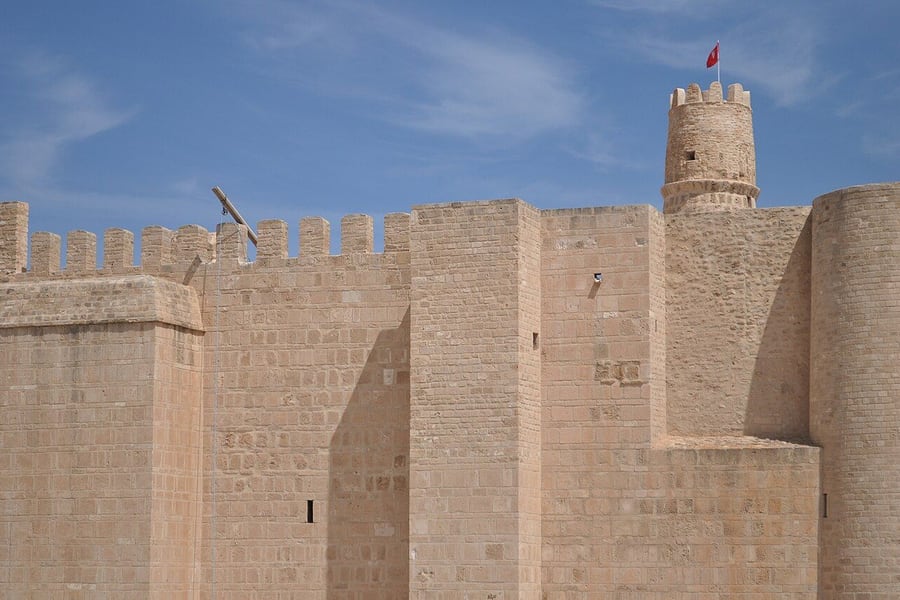 Noomen9 / Wikimedia Commons · CC BY-SA 4.0 · cropped
Where Life of Brian was filmed
The ribat of Monastir was a location for Monty Python's Life of Brian. According to Michael Palin, the first scene shot there was the stoning, filmed along the outside wall. Walk round the ribat to see the walls the film used.Timetables
The times below are SNCFT's own, from its Banlieue du Sahel poster for winter 2026–2027, Horaires des trains Mahdia–Monastir–Sousse. Seventeen trains run each way, every day; the poster marks no day-of-week exceptions. There is no reservation: buy a ticket and board.
Sousse to Mahdia — a selection
| Train | Sousse Bab Jedid | L'Aéroport | Monastir | Moknine | Mahdia |
|---|---|---|---|---|---|
| 501 | 05:20 | 05:43 | 06:00 | 06:36 | 07:23 |
| 505 | 07:20 | 07:44 | 08:05 | 08:45 | 09:28 |
| 511 | 09:55 | 10:17 | 10:35 | 11:09 | 11:51 |
| 515 | 12:25 | 12:49 | 13:05 | 13:40 | 14:21 |
| 521 | 14:15 | 14:39 | 14:55 | 15:29 | 16:15 |
| 525 | 16:45 | 17:07 | 17:25 | 17:59 | 18:41 |
| 529 | 18:20 | 18:43 | 19:00 | 19:36 | 20:18 |
| 533 | 20:15 | 20:38 | 21:00 | 21:37 | 22:14 |
All departures from Sousse Bab Jedid: 05:20, 06:30, 07:20, 08:15, 09:10*, 09:55, 11:05, 12:25, 13:10*, 13:35, 14:15, 15:35, 16:45, 17:25, 18:20, 19:35, 20:15. * Trains 509 and 517 end at Mahdia Zone Touristique (10:59 and 14:48).
Mahdia to Sousse — a selection
| Train | Mahdia | Moknine | Monastir | L'Aéroport | Sousse Bab Jedid |
|---|---|---|---|---|---|
| 506 | 05:10 | 05:53 | 06:35 | 06:47 | 07:11 |
| 510 | 06:25 | 07:13 | 07:55 | 08:06 | 08:30 |
| 516 | 09:50 | 10:33 | 11:20 | 11:31 | 11:55 |
| 522 | 12:05 | 12:51 | 13:30 | 13:41 | 14:05 |
| 526 | 14:35 | 15:24 | 16:05 | 16:16 | 16:40 |
| 532 | 17:00 | 17:46 | 18:30 | 18:41 | 19:05 |
| 538 | 19:45 | 20:23 | 21:10 | 21:21 | 21:45 |
All departures from Mahdia: 05:10, 05:50, 06:25, 07:40, 08:55, 09:50, 10:55, 12:05, 13:25, 14:35, 15:45, 17:00, 17:45, 18:50, 19:45. Trains 520 and 528 start at Mahdia Zone Touristique at 11:45 and 15:30.
About two hours end to end; Sousse to Monastir about 40 minutes, Monastir to Mahdia about 1 hour 20.
Through trains from Tunis
SNCFT's main-line poster for 1 September 2026 to 30 June 2027 (outside Ramadan) has one railcar each way between Tunis and Mahdia, by way of Monastir:
| Train | From | To |
|---|---|---|
| 5-22/85 | Tunis Ville 16:45 | Monastir 19:45 · Mahdia 20:53 |
| 22-5/54 | Mahdia 04:45 · Monastir 05:55 | Tunis Ville 09:29 |
Operator: SNCFT — timetables at sncft.com.tn (opens in a new tab). Times above as of November 2026.
Tickets
Tickets are sold by SNCFT at station windows, in Tunisian dinars, and there is nothing to book: buy before boarding and take the next train. SNCFT prices fares by distance and class, and its indicative table gives Sousse to Monastir at 3 dinars in first class and 2 in second. It publishes no figure for the whole run to Mahdia, so ask at the window.
Keep small change for the ticket office. The dinar is a closed currency, so change money on arrival before your first train.
Book your tickets
Sousse to Mahdia · the Sahel Metro
Seventeen trains a day each way
From Sousse Bab Jedid at 05:20 until 20:15, about two hours to Mahdia, with a station for Monastir airport.
Book Tickets (opens in a new tab, on SNCFT)via SNCFTTunis to Mahdia · the through railcar
Once a day each way
Leaves Tunis Ville at 16:45 and reaches Mahdia at 20:53 by way of Monastir; the return leaves Mahdia at 04:45.
Book Tickets (opens in a new tab, on SNCFT)via SNCFTRail Passes
No rail pass covers this line. SNCFT sells point-to-point tickets at its stations, and the fares are low.
Checked November 2026.
Places to Visit
Two towns hold almost everything, and the train links them in about an hour and twenty minutes. Monastir has the ribat and the Bourguiba mausoleum; Mahdia has the Fatimid city on its peninsula, a gate, a mosque, a fort and a cemetery at the edge of the sea. Ride out in the morning, spend the day in Mahdia and come back on the evening train.
 Habib M'henni / Wikimedia Commons · CC BY-SA 3.0 · cropped
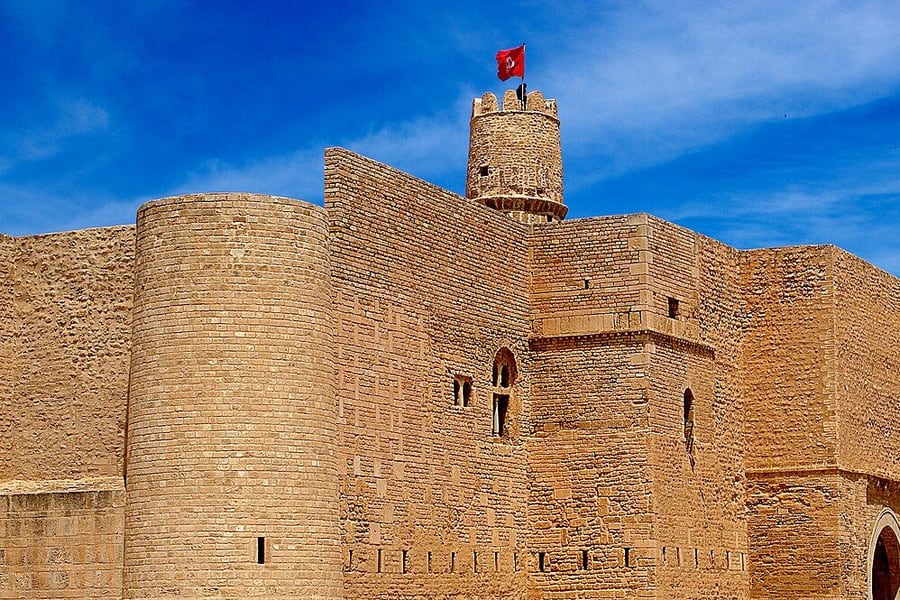
The ribat of Monastir
The Abbasid governor Harthama ibn A'yan founded this fortified monastery by the sea in 796, and it is counted the oldest ribat in the Maghreb. The Aghlabids and Fatimids enlarged it, the Hafsids took it to 4,200 square metres around 1424, and later rulers added bastions for artillery. A spiral stair of about a hundred steps climbs the watchtower, with views over the town and beach.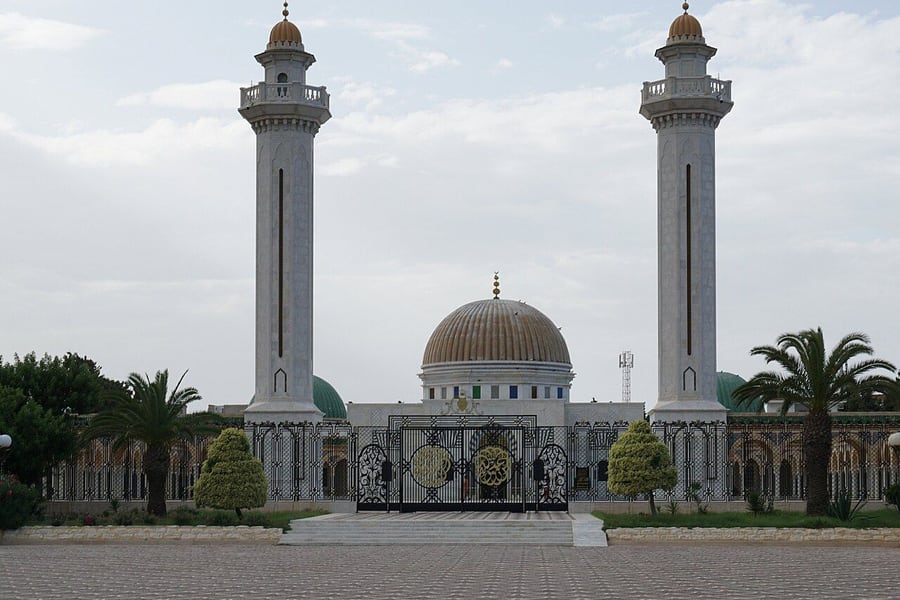 Runtinger / Wikimedia Commons · CC0 · cropped
The Bourguiba mausoleum
Habib Bourguiba, the father of Tunisian independence, had his tomb built in his home town in 1963, at the end of a 200-metre avenue in the Sidi El Mézeri cemetery: a gilded dome between two green cupolas, flanked by two minarets 25 metres tall. He was buried here in April 2000. A small museum inside keeps his desk, pens, glasses and clothes.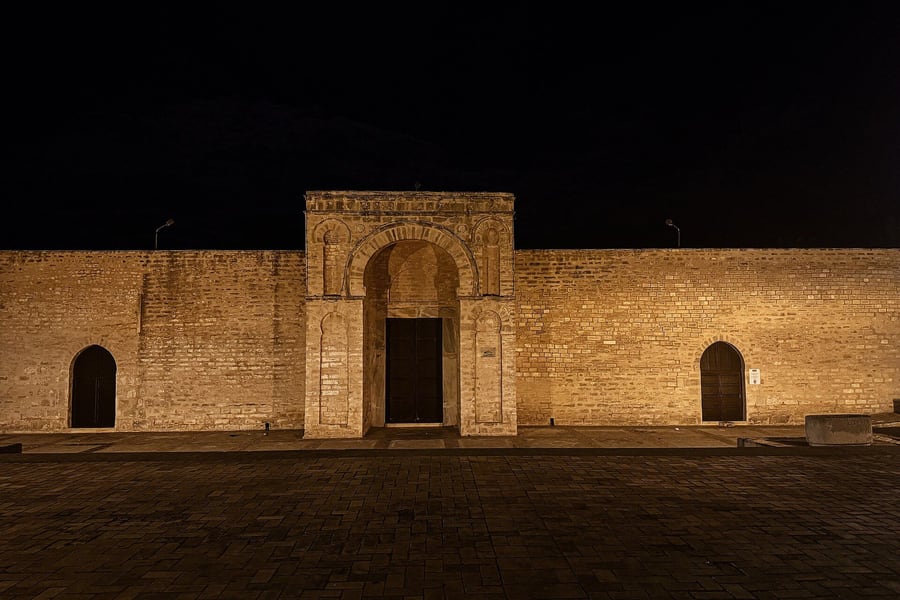 Wildtunis / Wikimedia Commons · CC BY-SA 4.0 · cropped
The Great Mosque of Mahdia
Built in 916, when the Fatimids founded the city, on a platform won from the sea. It looks like a fortress, with massive blind walls and two square corner towers that were in fact cisterns, and it probably never had a minaret. Restorers rebuilt most of it in 1961–65; the monumental portal and the north portico are original. Enter the old city through the Skifa el Kahla gate.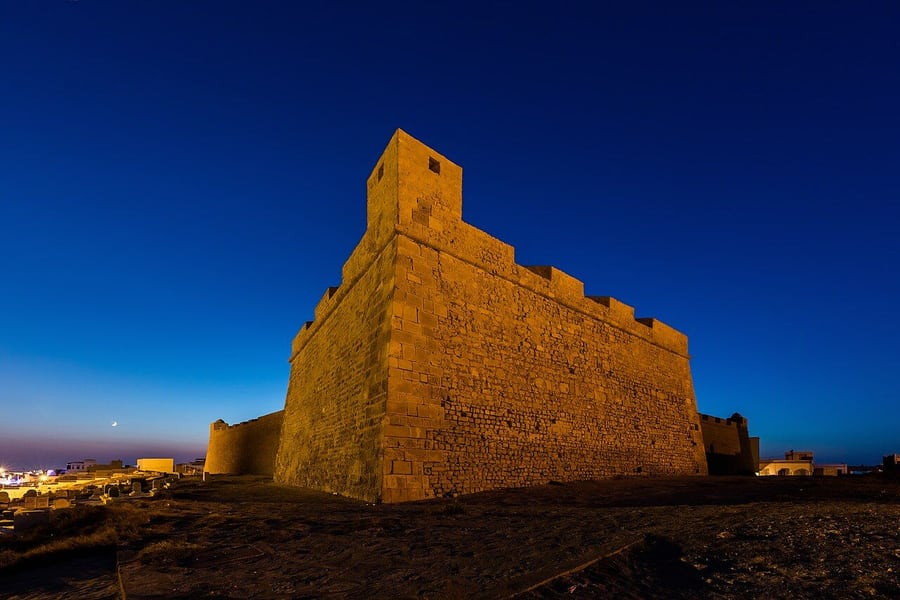 Diego Delso / Wikimedia Commons · CC BY-SA 4.0 · cropped
Borj el Kebir
The great fort has watched over the point of Cap Afrique since 1595. A vaulted, bent passage leads into a large courtyard, and the walls look out over the sea and the white graves of the cemetery beside it. The Spanish held Mahdia in 1550–53 and dismantled its walls before they left.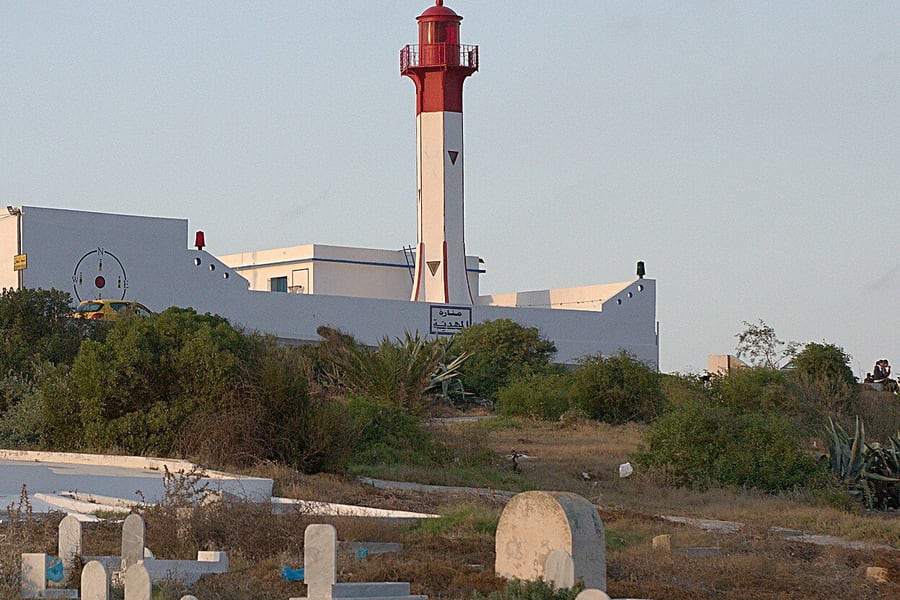 Habib M'henni / Wikimedia Commons · CC BY 4.0 · cropped
Cap Afrique and the sea cemetery
At the very end of the peninsula, white graves spread across the rock to the edge of the sea, below a red-and-white lighthouse. The Romans called the town Africa, and the cape keeps the name. About six kilometres offshore, the Mahdia shipwreck was found around 1907: a ship of the first century BC, loaded with Athenian works of art.Where to Sleep
The line is short and the trains are frequent, so you can stay in any of the three towns and ride to the others for the day.
Monastir
The handiest base if you fly in: the airport has its own station, the next stop up the line, Les Hôtels, is named for the beach hotels around it, and Monastir station is a quarter of an hour the other way.
Mahdia
Stay here to see the peninsula early or late, when the gate, the fort and the sea cemetery are at their quietest. Mahdia Zone Touristique, the stop for the hotel zone, is four stops before the terminus, and two trains a day turn back there.
Sousse
The biggest of the three, with the widest choice, and the start of the line at Sousse Bab Jedid.
Questions or corrections
Planning this trip and stuck on something, or spotted a time, fare or detail that has changed? Send us a message about The Sahel Metro · Sousse to Mahdia. We read every one, and we update this page when something has changed.