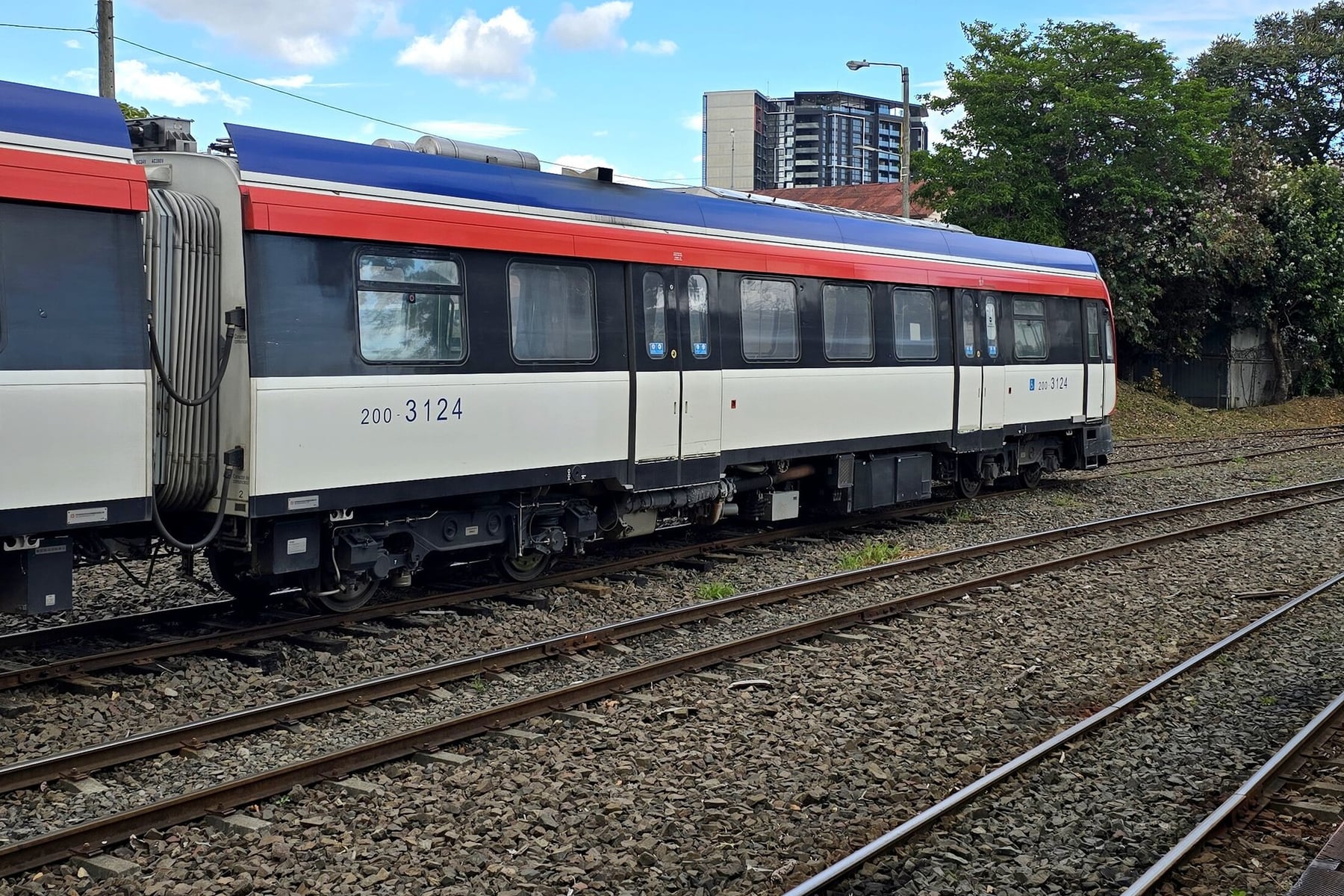
San José to Cartago — what is left of the Jungle Train
kitmasterbloke / Wikimedia Commons · CC BY 2.0 · 2025 · cropped
- DistanceAbout 20.5 km, Estación del Atlántico to Cartago
- Duration41 to 53 min each way
- Best seasonMondays to Fridays all year; no service at weekends
Introduction
The railway Costa Rica is famous for is the one you cannot ride. The Ferrocarril al Atlántico, begun in 1871 and opened through to Limón on the Caribbean on 7 December 1890, is the line every older guidebook calls the Jungle Train; an earthquake damaged it in 1991 and INCOFER's operations were suspended in 1995. What survives, and what this journey is, is its first twenty kilometres: a weekday commuter train from San José up the Valle Central to Cartago, the colonial capital, on 1,067 mm narrow gauge.
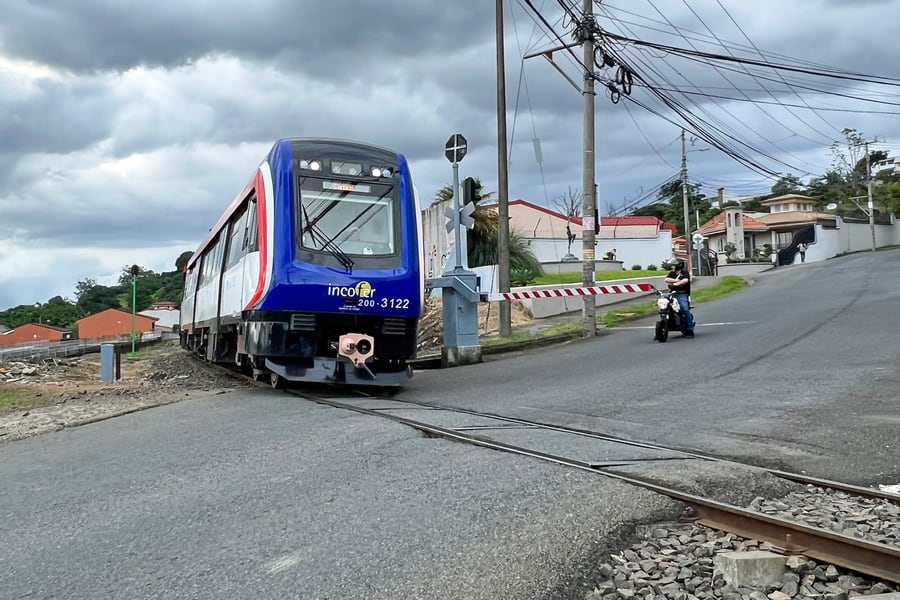
It is not a scenic express and the page would be lying if it said otherwise. Fourteen trains run each way, Mondays to Fridays only, the first out of the Estación del Atlántico at 06:01 and the last at 19:40, with a gap in the middle of the day when nothing runs at all. The fare is a flat ₡710 — about a pound — and anyone aged 65 or over travels free. What makes it worth an hour of a traveller's time is the character of the thing: single track laid down the middle of ordinary streets, barriers dropped across junctions, houses a metre from the rail, and a climb of 275 metres over the Ochomogo pass from San José at 1,161 metres to Cartago at 1,435. At the far end are the ruins of Santiago Apóstol, the country's principal pilgrimage church, and the road up Irazú. The train is worked by eight two-car sets built in China and seven second-hand Spanish railcars. Nothing can be reserved and each train takes a fixed number of people, which is why INCOFER asks passengers to be on the platform fifteen minutes before departure.
The Journey
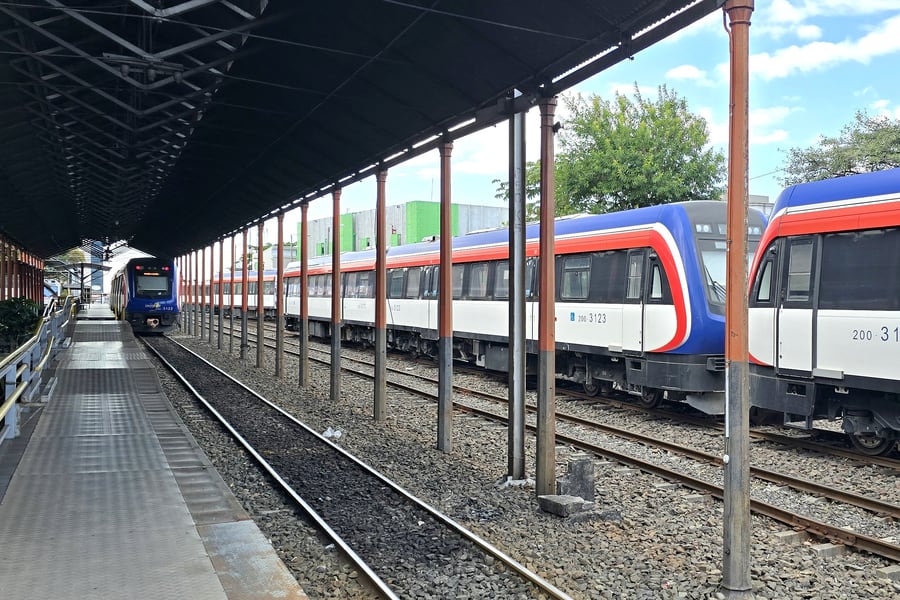
Trains leave from the Estación del Atlántico, built in 1908 as the San José end of the Caribbean railway, closed with the rest of the system in 1996 and restored in 2011 for the commuter service. It is a Victorian-neoclassical pile declared part of Costa Rica's architectural heritage in 1980, and it is one of only two staffed stations on the route — Cartago is the other, and everything between them is a bare platform.
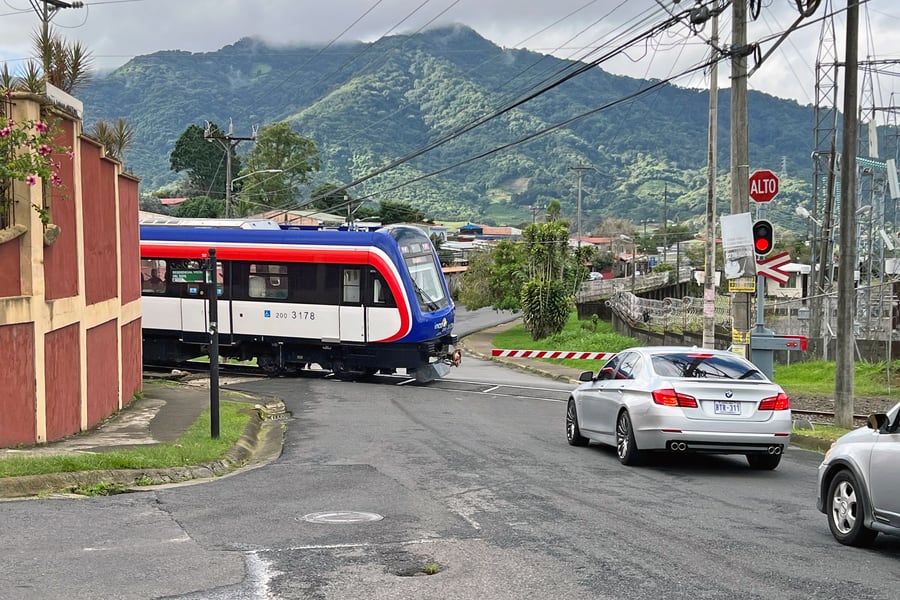
The first three stops come up almost at once — UCR at 1.94 km and ULatina at 2.88 km, both serving universities in San Pedro, then CFIA at 3.78 km in Curridabat. Between them the train is running on street track, threading suburban junctions with a barrier dropped by hand and traffic waiting either side. UACA at 5.72 km is the last of the city halts.
The climb to the old capital
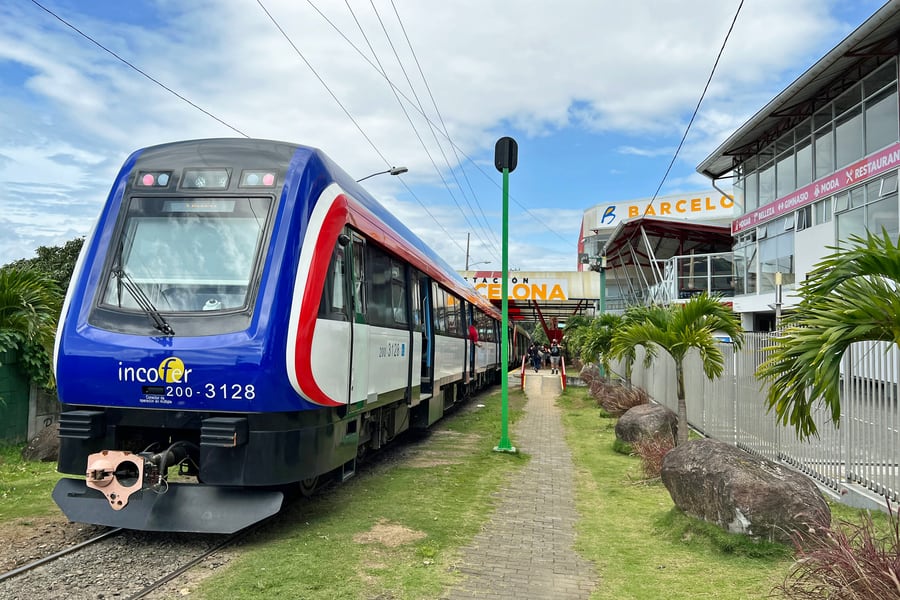
From Curridabat the line begins to lift towards Tres Ríos, 10.21 km out and the half-way point, where it crosses the road at the CNFL electricity substation and picks up the Barcelona halt. Beyond it the track climbs the Ochomogo pass, the watershed the Atlantic railway's builders chose over a route closer to Irazú, and drops into Cartago at 20.52 km. The old capital sits at 1,435 metres, 275 above San José, and the difference is in the air when you step off.
Half the service ends there. Seven of the fourteen carry on to Los Ángeles, the halt beside the basilica; five of those reach Oreamuno; and the 17:01 and 17:35 run the whole way to Plaza Paraíso, seven kilometres beyond Cartago, for the same ₡710. Once a year the pattern is thrown away completely: for the Romería on 1 and 2 August, when the country walks to the basilica, INCOFER runs the train for twenty-seven hours without stopping, hourly by day and every thirty-five minutes through the night.
A line being rebuilt around the service
Track and structures are the weak point, and the work shows. In July 2026 the whole route closed for a fortnight while bridges judged to be at imminent risk were rebuilt, reopening on Monday 20 July; on 27 August INCOFER signed off thirteen completed structures on this line and the San José approaches — among them the Río Reventado bridge at Taras, the Oreamuno bridge and the Calderón tunnel — under the PROERI programme, at a cost of about two million dollars. A larger change is coming: the electric train planned for the Valle Central is due to close the Cartago route entirely from the middle of 2029 until early 2031.
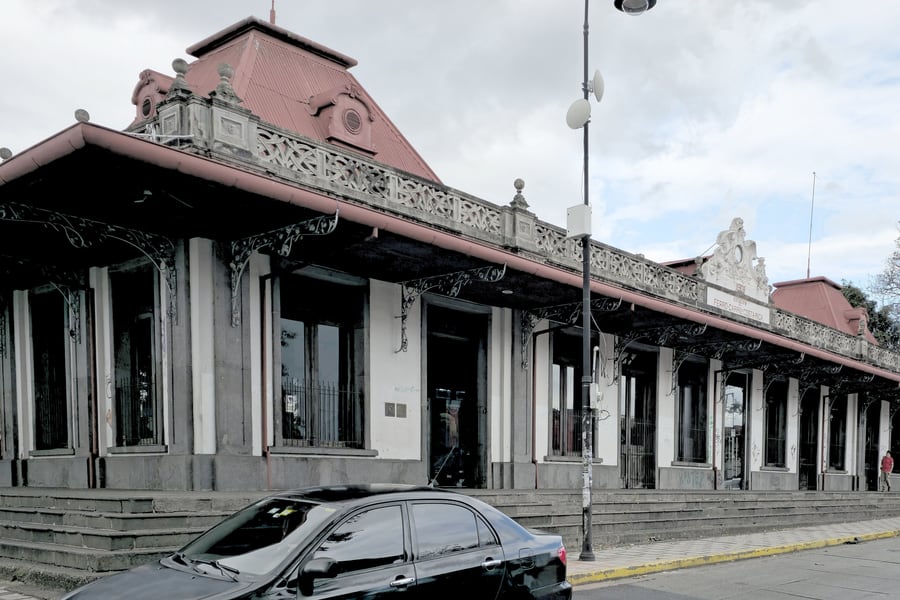
Along the route
 kitmasterbloke / Wikimedia Commons · CC BY 2.0 · 2025 · cropped
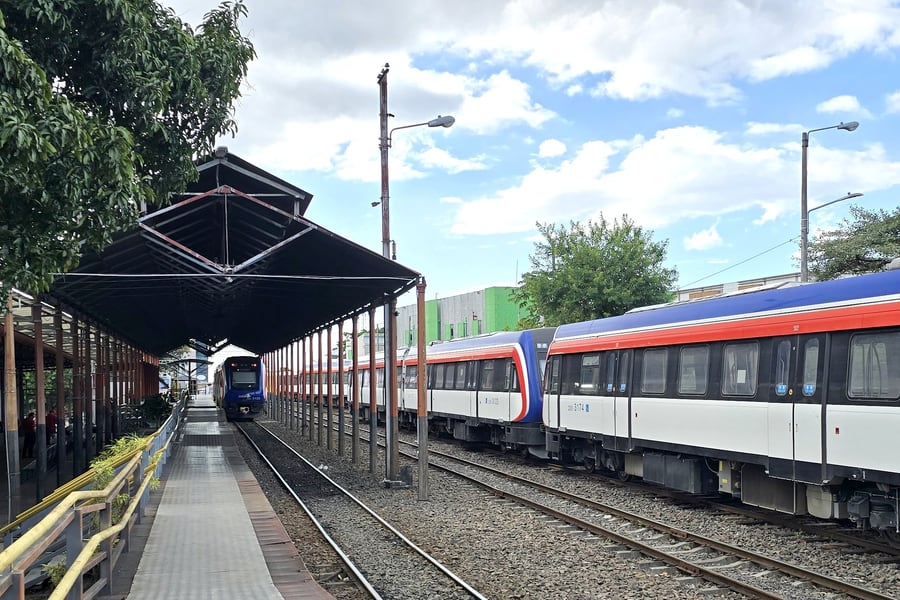
Out of the Estación del Atlántico
Fourteen departures a day from the 1908 terminus of the Caribbean railway, the first at 06:01 and the last at 19:40. The university halts at UCR and ULatina come up within three minutes of leaving.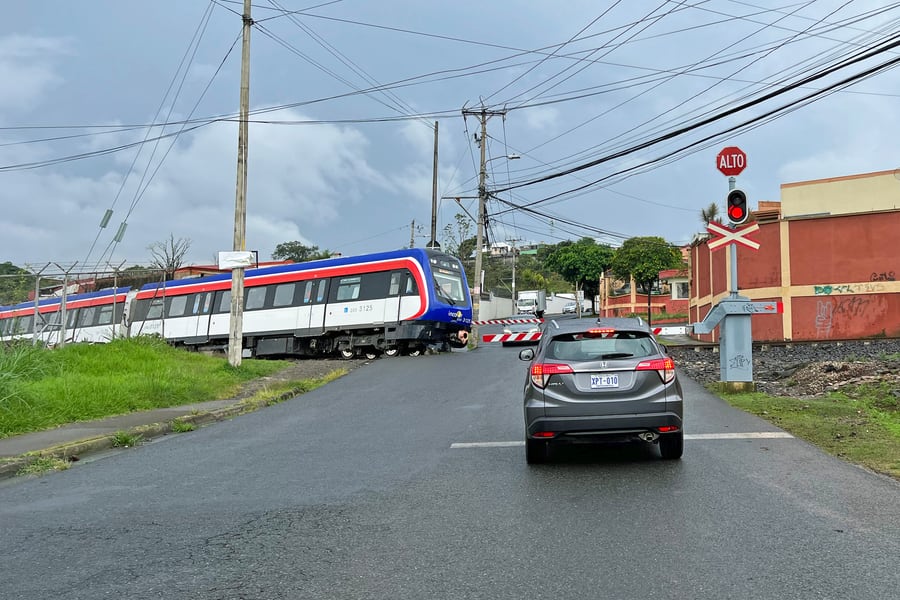 Mariordo (Mario Roberto Durán Ortiz) / Wikimedia Commons · CC BY-SA 4.0 · 2022 · cropped
Street running to Tres Ríos
Past Curridabat the track shares the road, crossing junctions on sight with the traffic held by a barrier. Tres Ríos, 10.2 km out, is the half-way point and the start of the climb.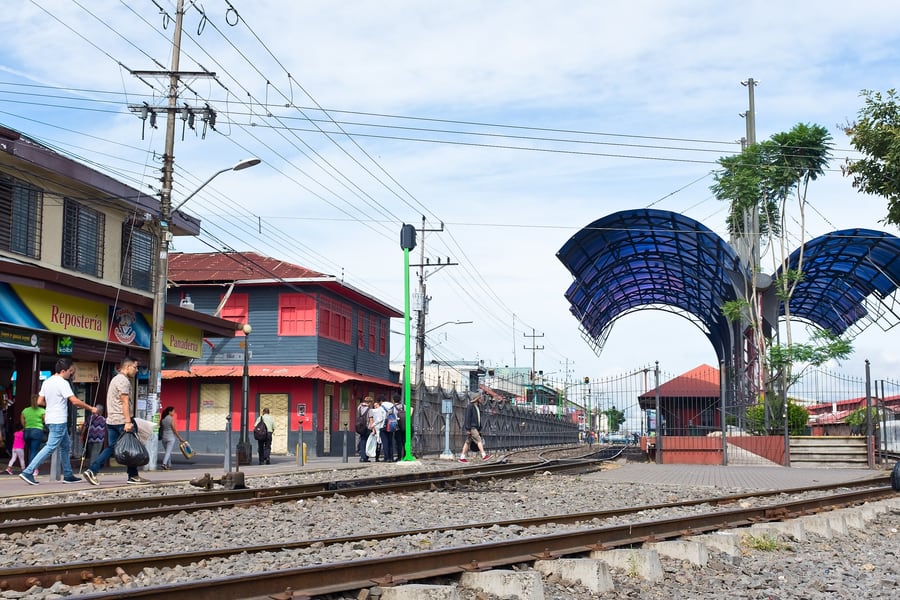 Ll1324 / Wikimedia Commons · CC0 · cropped
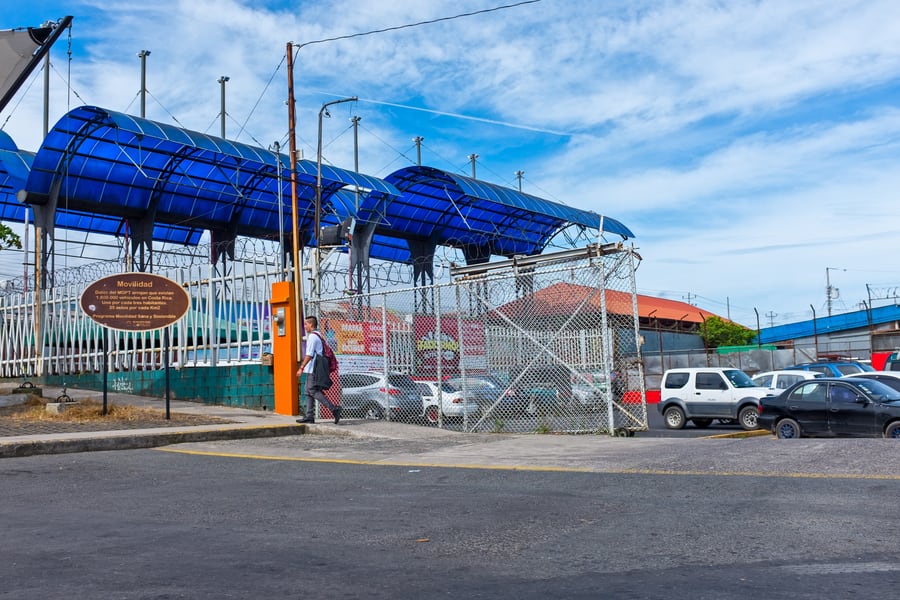
Into Cartago, 275 metres higher
The last ten kilometres cross the Ochomogo pass to the old capital at 1,435 metres. Some trains run on to the basilica, Oreamuno and Plaza Paraíso for the same fare.A bit of history
Culture & experiences along the way
 Tarrazu / Wikimedia Commons · public domain · cropped
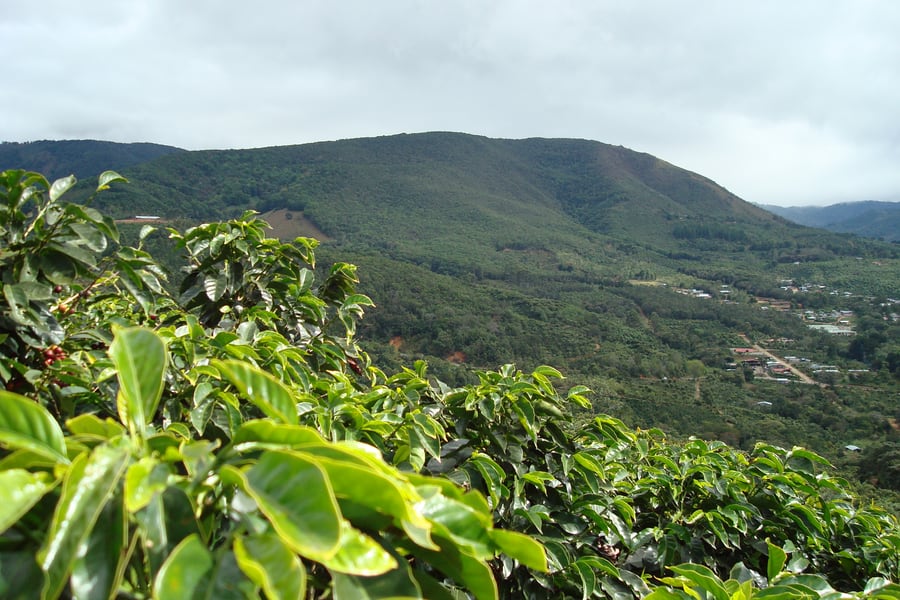
The coffee that built the line
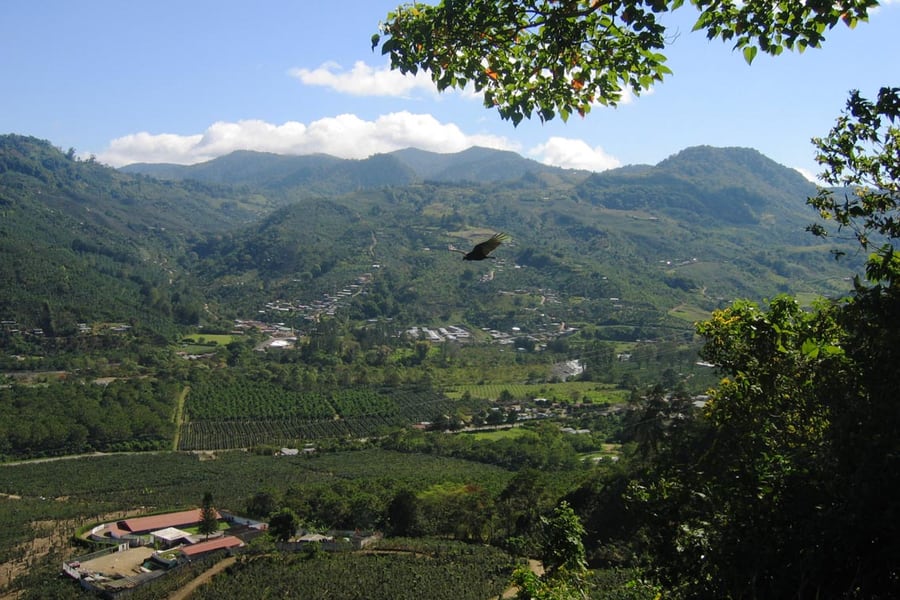
This railway exists because of coffee: the beans of the Central Valley were what the first Costa Rican lines were laid to move. The slopes either side of Cartago still grow it, the harvest runs from about November to March, and several fincas within half an hour of the city will walk you through picking, drying and a cup at the end.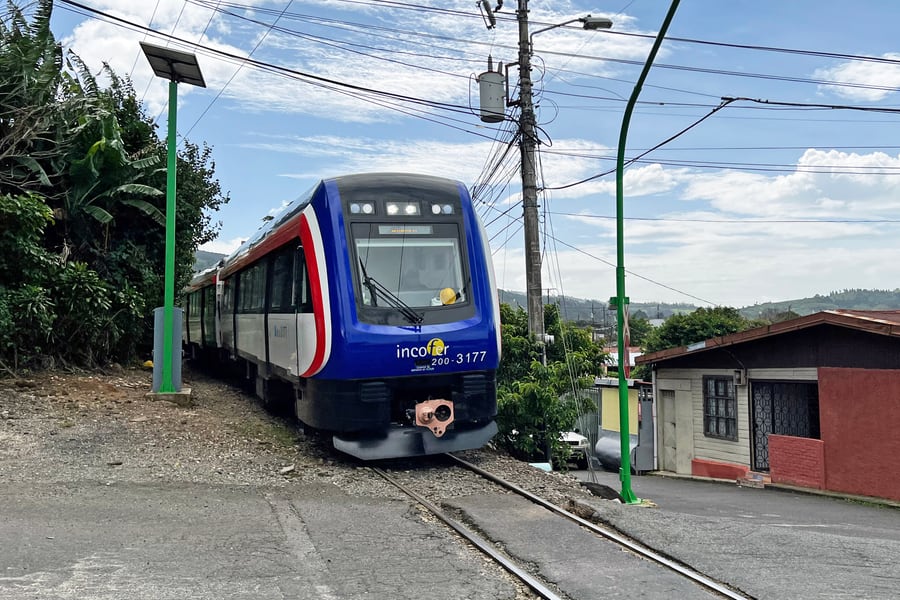 Mariordo (Mario Roberto Durán Ortiz) / Wikimedia Commons · CC BY-SA 4.0 · 2022 · cropped
A railway that shares the street
Much of the run is single track laid down the middle of ordinary roads, with houses a metre from the rail and no fencing at all. Crossings are worked by barriers and by the driver's horn, and the train moves at the pace that implies. It is the clearest reason the journey takes fifty minutes to cover twenty kilometres.Timetables
Fourteen trains run each way, Mondays to Fridays only, in two blocks — an early one that finishes by about ten in the morning and an afternoon one that starts at three. Nothing runs at weekends. The times below are INCOFER's own boards, published on the route page in June 2026 and in force after the line reopened from bridge works on 20 July 2026. Intermediate columns have been left out to keep the tables readable; UCR and ULatina are within a minute of each other, as are CFIA and UACA.
San José to Cartago
| Atlántico | UCR | CFIA | Tres Ríos | Cartago |
|---|---|---|---|---|
| 06:01 | 06:05 | 06:10 | 06:24 | 06:42 |
| 06:35 | 06:42 | 06:46 | 07:04 | 07:28 |
| 07:20 | 07:25 | 07:29 | 07:45 | 08:08 |
| 08:05 | 08:10 | 08:17 | 08:34 | 08:56 |
| 15:01 | 15:05 | 15:10 | 15:23 | 15:45 |
| 15:35 | 15:39 | 15:44 | 15:57 | 16:20 |
| 16:10 | 16:14 | 16:19 | 16:36 | 17:02 |
| 16:45 | 16:49 | 16:54 | 17:07 | 17:33 |
| 17:01 | 17:05 | 17:14 | 17:28 | 17:50 |
| 17:35 | 17:39 | 17:44 | 17:57 | 18:19 |
| 18:05 | 18:09 | 18:14 | 18:27 | 18:49 |
| 18:45 | 18:50 | 18:54 | 19:14 | 19:36 |
| 19:15 | 19:19 | 19:27 | 19:41 | 20:03 |
| 19:40 | 19:44 | 19:49 | 20:02 | 20:25 |
Seven of them go beyond Cartago. The 06:01 and 06:35 reach Los Ángeles, the halt for the basilica, at 06:47 and 07:31; the 15:35, 16:45 and 18:05 carry on to Oreamuno at 16:25, 17:38 and 18:55; and the 17:01 and 17:35 run to Plaza Paraíso, the end of the line, at 18:01 and 18:30.
Cartago to San José
| Cartago | Tres Ríos | UACA | UCR | Atlántico |
|---|---|---|---|---|
| 05:30 | 05:53 | 06:02 | 06:14 | 06:19 |
| 06:01 | 06:24 | 06:33 | 06:42 | 06:47 |
| 06:20 | 06:43 | 06:52 | 07:05 | 07:10 |
| 07:01 | 07:24 | 07:33 | 07:43 | 07:47 |
| 07:40 | 08:03 | 08:12 | 08:22 | 08:27 |
| 08:11 | 08:34 | 08:43 | 08:52 | 08:57 |
| 09:01 | 09:24 | 09:33 | 09:43 | 09:47 |
| 15:50 | 16:15 | 16:24 | 16:34 | 16:38 |
| 16:36 | 16:58 | 17:09 | 17:19 | 17:23 |
| 17:05 | 17:28 | 17:37 | 17:48 | 17:53 |
| 17:50 | 18:15 | 18:28 | 18:38 | 18:42 |
| 18:22 | 18:45 | 18:54 | 19:04 | 19:09 |
| 18:50 | 19:13 | 19:22 | 19:32 | 19:36 |
| 19:08 | 19:32 | 19:42 | 19:54 | 19:58 |
Nine of these start from beyond Cartago, four of them at Plaza Paraíso — the first away at 06:05 and the last at 18:58. End to end the run takes 41 to 53 minutes in either direction.
Before you go
⚠️ Public holidays are not normal days. INCOFER's own guidance is that the trains do not run on national holidays, but it makes exceptions and announces them late: for Monday 31 August 2026, the first such holiday to fall on a weekday, it ran the San José–Cartago route on a reduced special timetable. Whole-route closures for engineering also happen, most recently for a fortnight in July 2026.
Since August 2026 the line's live departures and arrivals are published to Google Maps, where it appears as Línea 2 in blue, so the running position of a train can be checked before leaving for the station. The boards themselves are at incofer.go.cr (opens in a new tab).
As of September 2026.
Tickets
There is no online sale, no reservation and no booking office outside the two main stations: the fare is collected at the platform gate or on board, one class, walk on and sit down. INCOFER runs electronic validators alongside cash, and each train carries a fixed number of passengers, which is why the operator asks people to be there fifteen minutes before departure.
The fare is flat — ₡710 from the Estación del Atlántico to Cartago, and the same to Plaza Paraíso seven kilometres further on. It rose from ₡705 on 1 July 2026, not because anything got dearer but because the Banco Central is withdrawing the ₡5 coin and the regulator rounded every rail fare to the nearest ₡10; before that the fares had stood since January 2023. Anyone aged 65 or over travels free on production of a cédula, with priority boarding and reserved seats.
Book your tickets
Single, Atlántico to Cartago
The whole 20.5 kilometres
INCOFER's flat fare for the route, set by ARESEP and in force since 1 July 2026.
Book Tickets (opens in a new tab, on incofer.go.cr)via incofer.go.crSingle, Atlántico to Plaza Paraíso
Seven kilometres further, for the same money
The two evening trains that run beyond Cartago charge the same flat fare to the end of the line.
Book Tickets (opens in a new tab, on incofer.go.cr)via incofer.go.crRail Passes
No rail pass covers this journey, and none exists that could. Interrail and Eurail are European products; there is no Central American equivalent, and INCOFER sells no period ticket, rover or tourist card of its own. The single fare, set by the regulator ARESEP, is the entire commercial offer for the line.
That costs the traveller nothing. A single from San José to Cartago is ₡710 — roughly a pound, or a little over a dollar — and it is the same price whether you get off at Cartago or ride the extra seven kilometres to Plaza Paraíso. The only concession INCOFER makes is the one that matters most locally: passengers aged 65 and over ride free, every day the trains run, on production of an identity card.
Checked against INCOFER's own route and fares pages, September 2026.
Places to Visit
Cartago repays the fifty minutes. The basilica and the ruins are both within a few blocks of the station, and the valley beyond it — Irazú above the town, the orchid garden on the Paraíso road, the coffee slopes around Orosí — is what the Valle Central looks like once the suburbs of San José stop. Nothing here needs a car from the station except the volcano.
The Basílica de Nuestra Señora de los Ángeles
Costa Rica's principal pilgrimage church stands two blocks from the Los Ángeles halt, a Byzantine-styled building begun in 1912 and finished about 1930 over the rock where the Virgin is said to have appeared in 1635. On 1 and 2 August the Romería brings walkers from all over the country to it, and INCOFER runs the train continuously for twenty-seven hours to carry them — hourly by day, every thirty-five minutes overnight.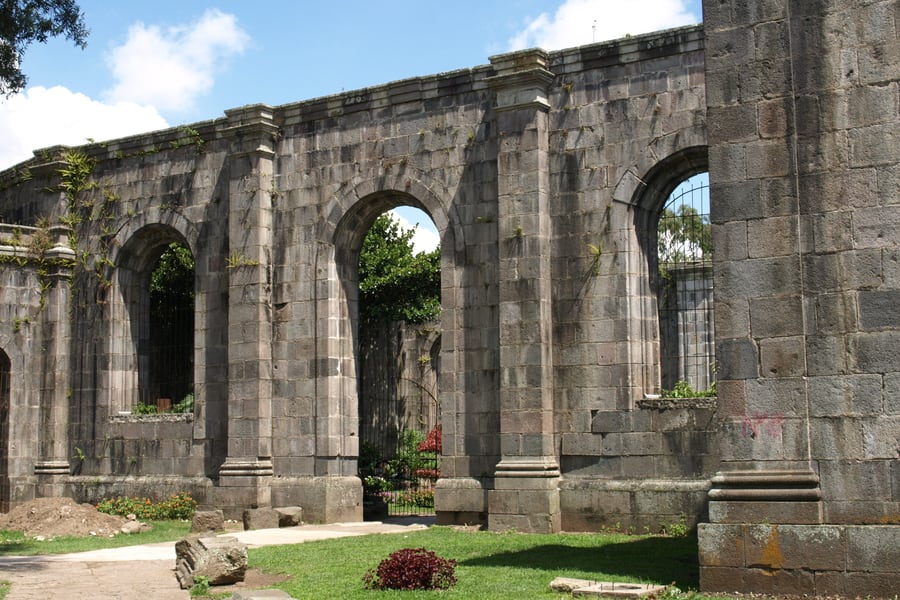 Daniel32708 - Daniel Vargas / Wikimedia Commons · CC BY-SA 3.0 · cropped
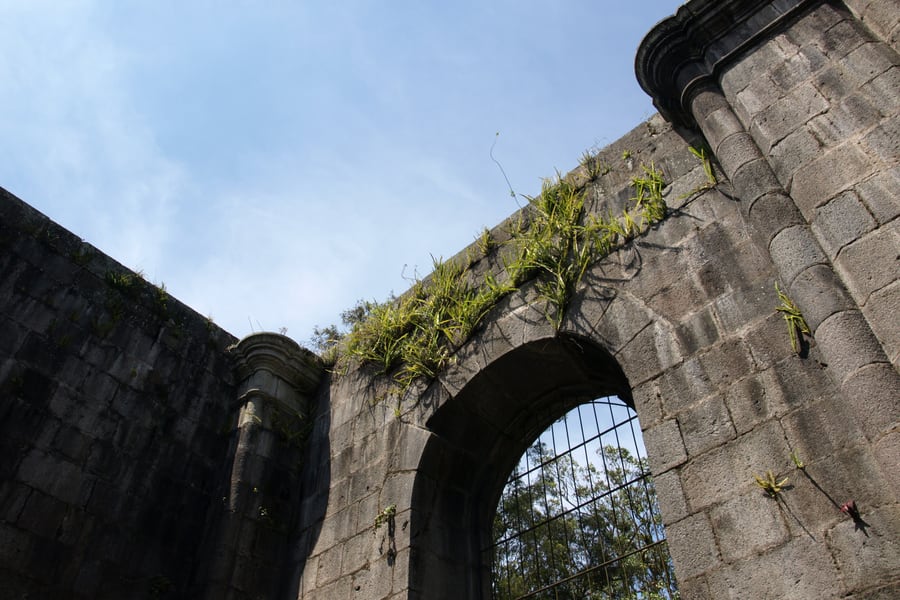
The ruins of Santiago Apóstol
A few blocks from Cartago station stand the roofless stone arcades of a church that was never finished. The parish dates from about 1575 and was flattened by earthquakes more than once; the neoclassical building whose walls survive was begun in 1870 and stopped for good by the earthquake of 4 May 1910. Declared cultural heritage in 1982, the shell is now a public garden with a fountain in it, in the middle of the city.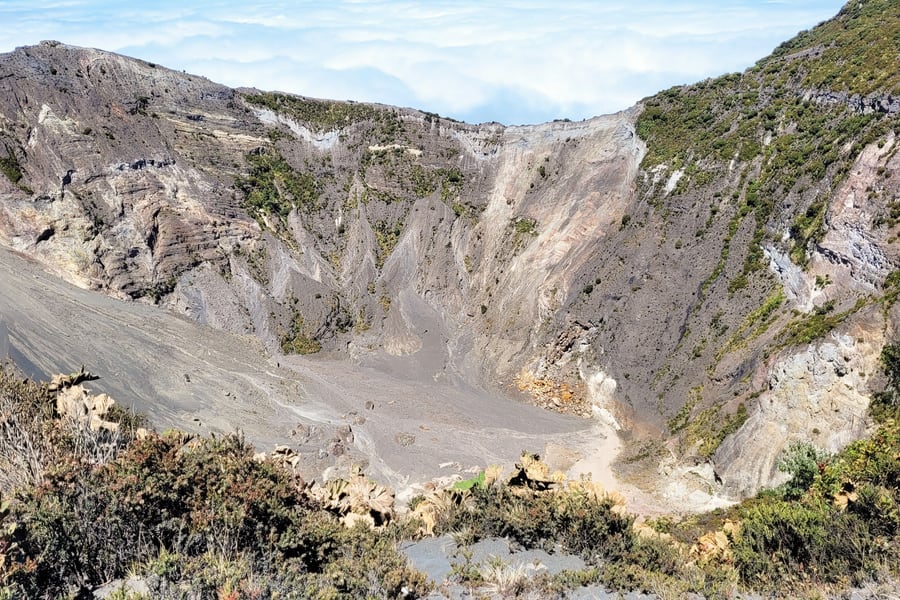 Bernard Gagnon / Wikimedia Commons · CC0 · cropped
Irazú, the volcano above the town
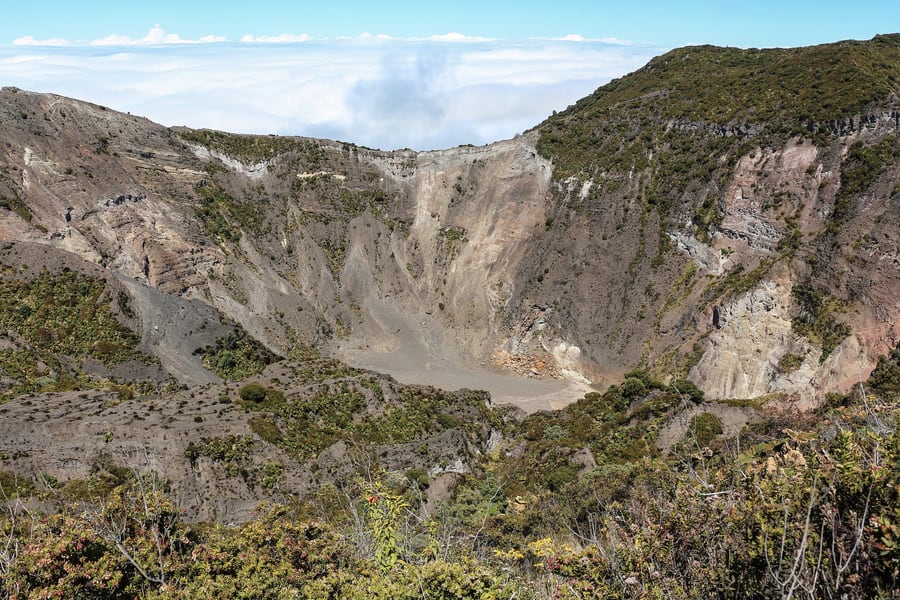
At 3,432 metres Irazú is the highest active volcano in Costa Rica, and the one that buried San José in ash for two years from March 1963. A road from Cartago climbs to the summit craters inside a national park; one of them, Diego de la Haya, holds a green lake whose depth comes and goes. On a clear morning both oceans are visible, and clear mornings are the rare ones.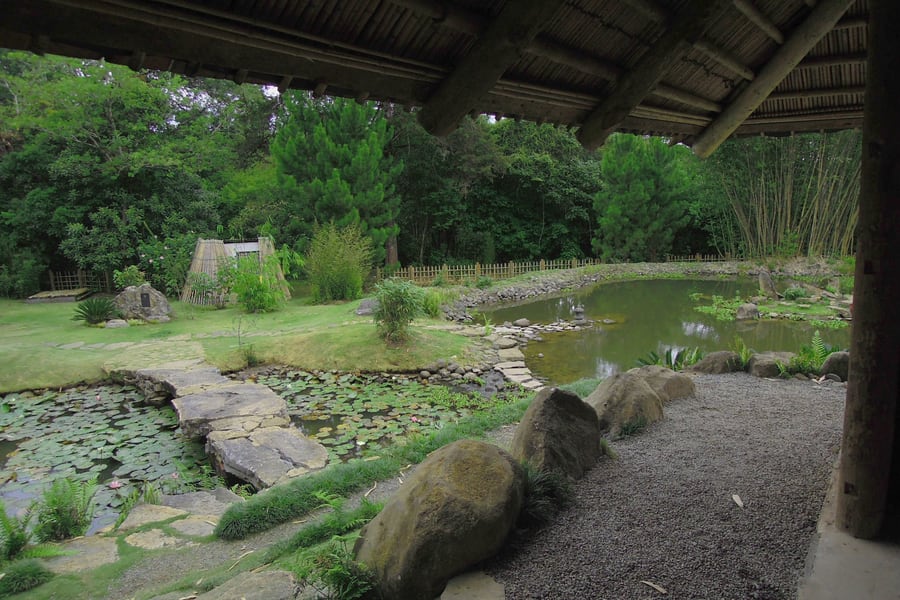 Rquesada / Wikimedia Commons · CC BY-SA 4.0 · 2013 · cropped
The Lankester botanical garden
Charles Lankester, an Englishman who came out to Costa Rica in 1910 and collected orchids for Kew, bought a coffee farm outside Cartago in 1924 and kept one corner of it wild for his plants. His daughter sold the ground to the University of Costa Rica in 1973, which runs it as one of Central America's main orchid research centres and opens it to visitors, Japanese garden and all. It is a few minutes from the line beyond Cartago.Where to Sleep
This is a commuter line and almost nobody sleeps at either end because of it, so the choice is between staying in San José and using the train as a day out, or staying above Cartago and coming down into the city on it.
In San José the walkable option is Barrio Amón, the old coffee-money quarter immediately north of the Estación del Atlántico, where several of the surviving mansions are now small hotels. Above Cartago the ground rises fast towards Irazú, and the places to stay are cabins and country restaurants strung along the volcano road at Cot and Oreamuno — cool at 1,800 metres, and within reach of the Oreamuno halt that some evening trains run to. Neither of the two below is a resort; both are family-run and both are open.
Where to stay
Hotel Santo Tomás
In Barrio Amón, a few streets from the Estación del Atlántico
A 1908 coffee-planter's house kept as a small hotel, with a pool, a courtyard and cooked breakfast included.
Check Availability (opens in a new tab, on hotelsantotomas.com)via hotelsantotomas.comGrandPas Hotel y Restaurante
At Cot de Oreamuno, on the road up Irazú
Wooden cabins at 1,850 metres above Cartago, with a Victorian-style timber house as the restaurant.
Check Availability (opens in a new tab, on grandpashotel.com)via grandpashotel.comQuestions or corrections
Planning this trip and stuck on something, or spotted a time, fare or detail that has changed? Send us a message about San José to Cartago — what is left of the Jungle Train. We read every one, and we update this page when something has changed.