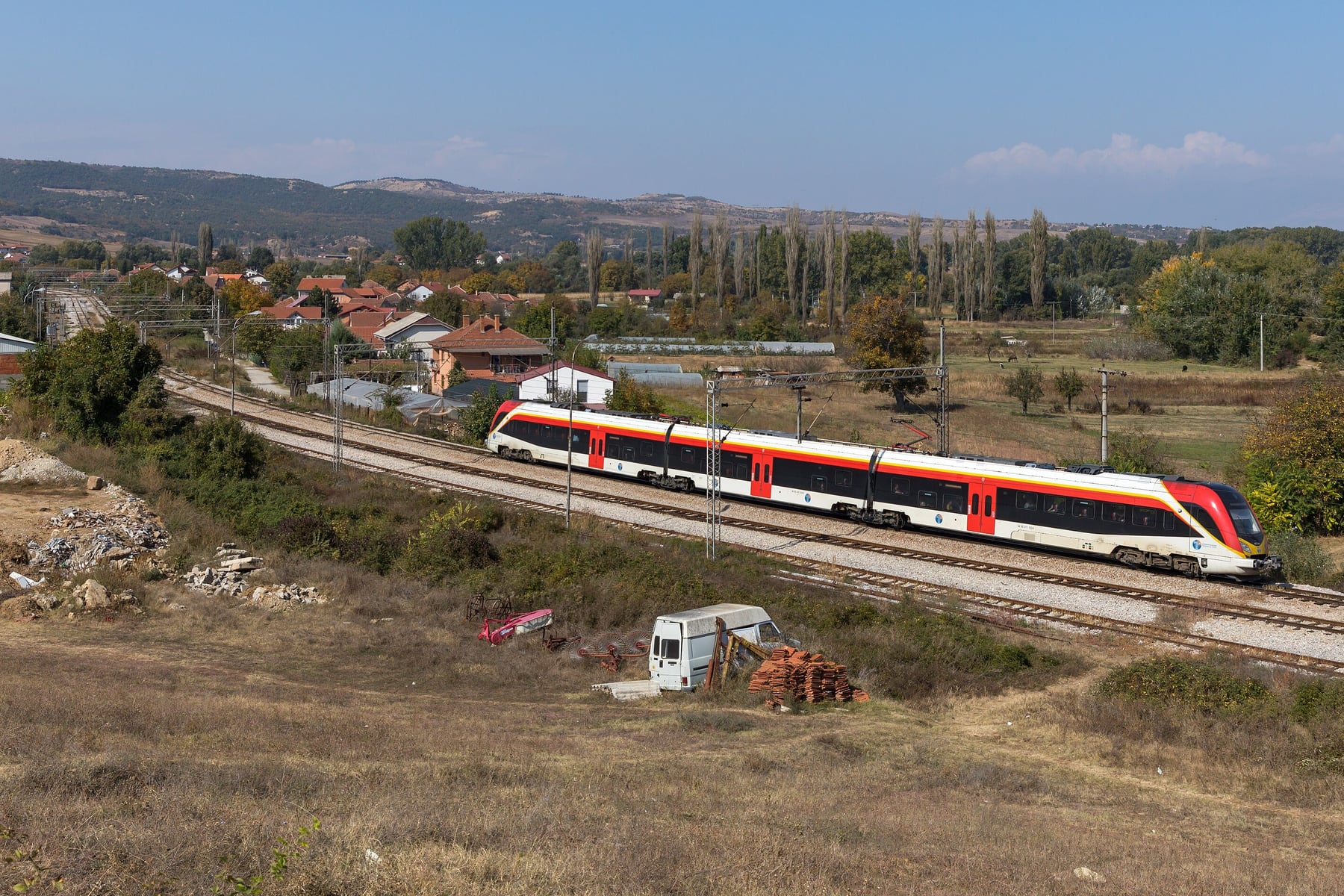
Skopje to Gevgelija — through the Iron Gate
Kabelleger / David Gubler / Wikimedia Commons · CC BY-SA 4.0 · 2018 · cropped
- DistanceAbout 164 km, Skopje to Gevgelija
- Duration2 hr 31 min to 2 hr 39 min
- Best seasonTwo trains a day each way, all year
Introduction
This is the oldest railway in North Macedonia. The line up the Vardar from Ottoman Salonica reached Veles on 9 April 1873, the first train to arrive anywhere in what is now the country, and Skopje on 9 August 1873. For most of the century and a half since, it has been the road from central Europe to the Aegean — the line a train from Belgrade took to reach Thessaloniki, and the reason Gevgelija has a station at all.
Today the passenger train stops at Gevgelija. The rails carry on to the Greek frontier and over it to Idomeni, but no passenger service crosses: neither ŽRSM's current timetable nor Hellenic Train's northern network has a train between the two countries. What runs is a domestic train, twice a day each way, about 164 km down the Vardar in two and a half hours. It passes the Roman city of Stobi, the vineyards of Tikveš and the limestone cliffs of Demir Kapija, the Iron Gate, where the river and the railway squeeze through the same gorge. A single for the whole run costs 277 denari.
The Journey
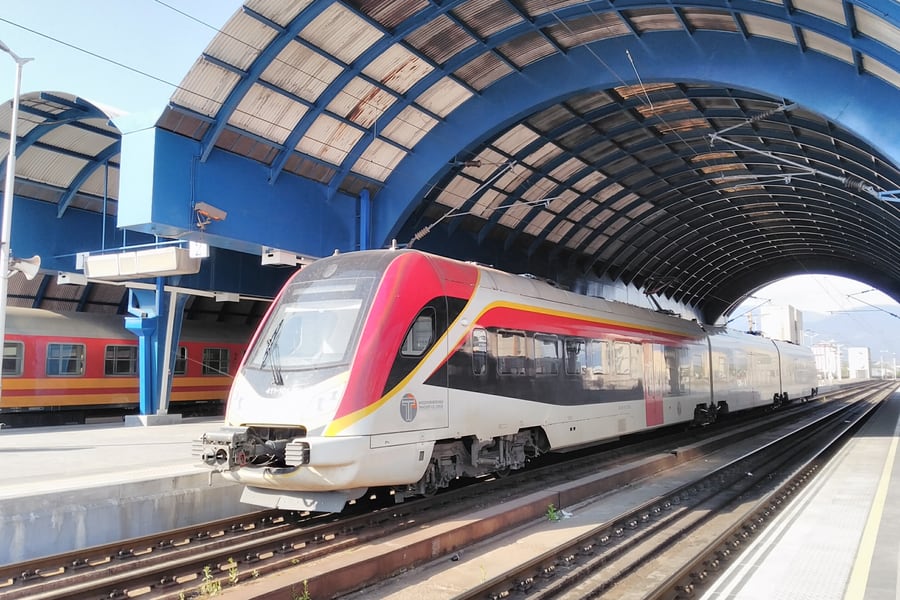
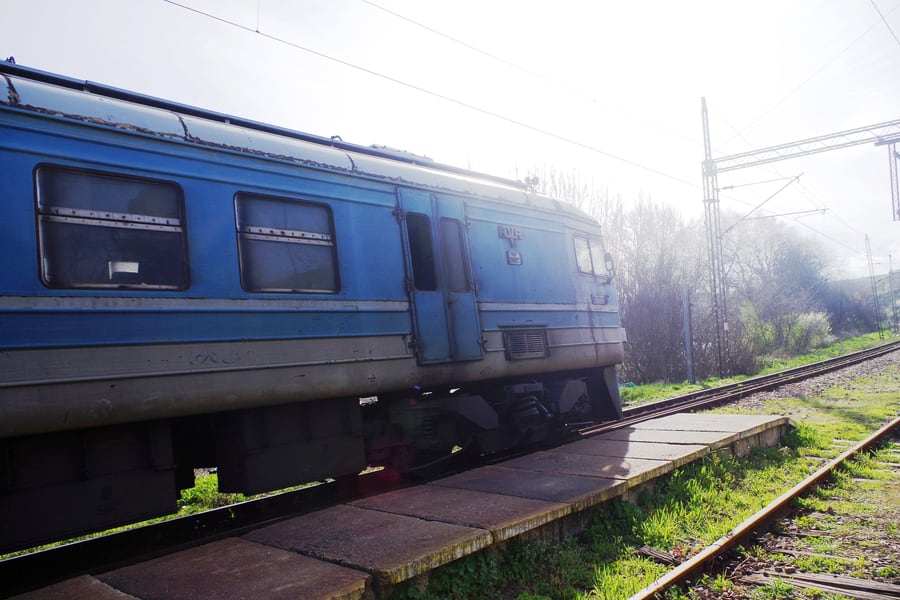
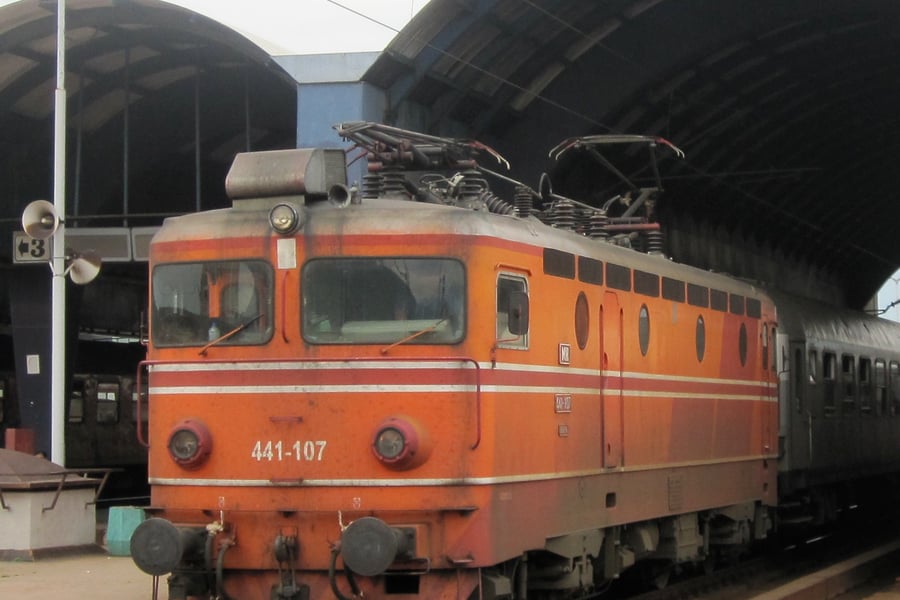
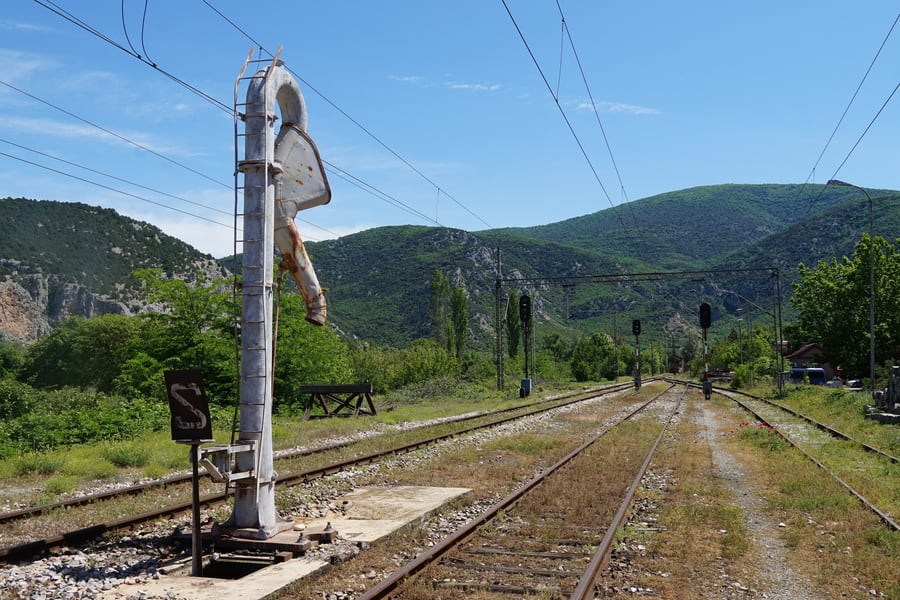
The train leaves from the upper level of the Transport Centre, Skopje's concrete station on its long viaduct, built after the 1963 earthquake wrecked the old one. The whole line is under wires. The trains on it range from the class 411 electric units built by CRRC in China, red, yellow and white, to the older blue Yugoslav-era multiple units still in service alongside them.
For the first forty kilometres the train shares its track with the Bitola service. It runs out through the suburban halts of Lisiče, Dračevo and Jane Sandanski, then down the Vardar past Zelenikovo and Pčinja, where the valley narrows, and into Veles, an hour from Skopje. The town climbs both banks of the river in terraces of red roofs. The Bitola line leaves here; this train stays with the Vardar and keeps going south.
Stobi and Tikveš
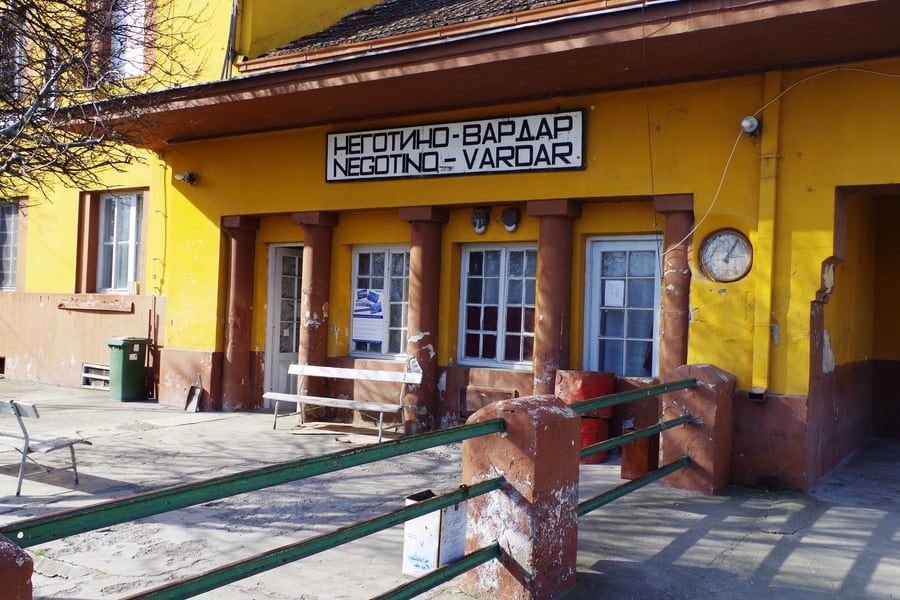
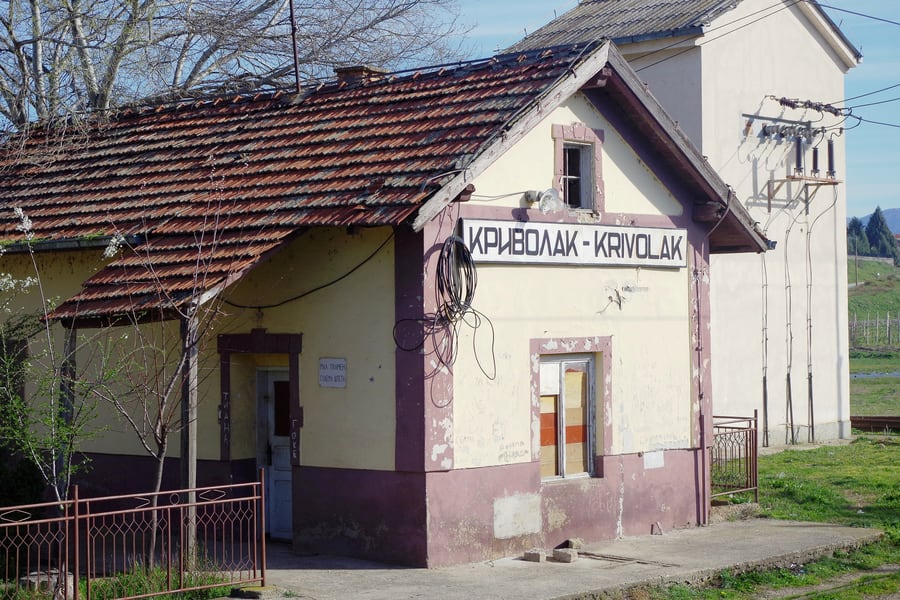
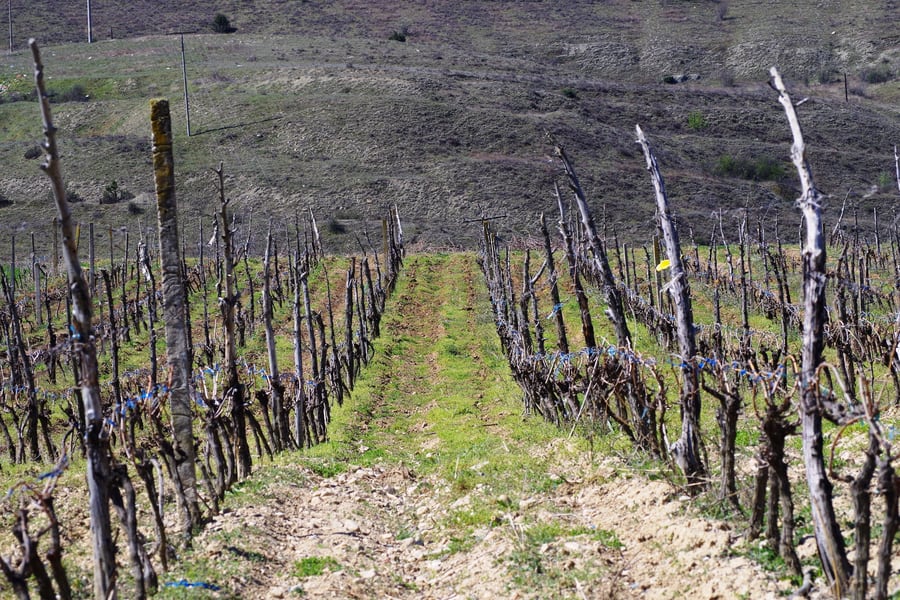
Below Veles the valley opens. At Gradsko the Crna Reka comes in from the west, and on the terrace where the two rivers meet are the ruins of Stobi, a Paeonian town that became the capital of a Roman province. The line runs on through Crveni Bregovi and Krivolak into Tikveš, the country's wine district. The slopes either side of Negotino-Vardar are planted in vines, and in winter they stand in bare, pruned rows.
The Iron Gate
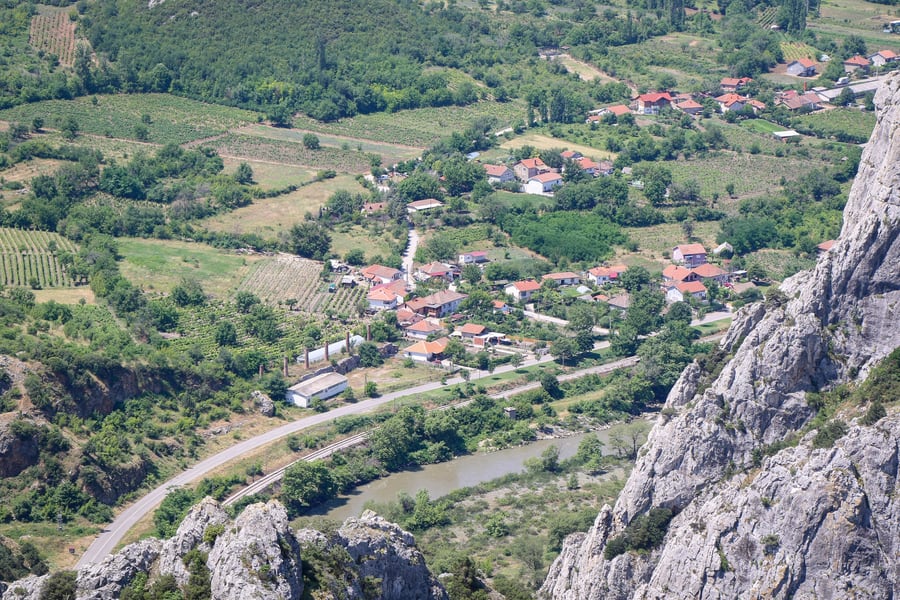
Fifteen minutes later the valley closes up again. Demir Kapija is Turkish for Iron Gate. The Greeks knew the place as Stenae, the narrows. The Vardar cuts through a wall of limestone here, and the railway, the river and the old road all have to share the gap. From the platform at Demir Kapija the cliffs stand over the station yard, and in low winter sun the grey limestone turns orange.
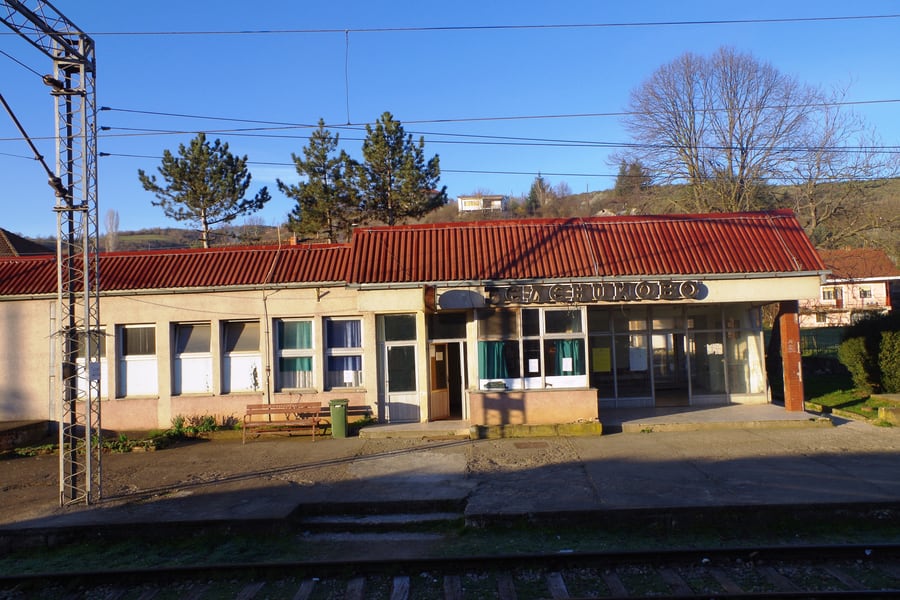
Below the gorge the valley widens into the warm south-east corner of the country, where the climate is Mediterranean. The train calls at Miravci and Prdejci, then comes into Gevgelija, a yellow station building with arched windows on the eastern edge of town. It is the last station in North Macedonia and has its own customs post, from the years when trains crossed. The track carries on south to Idomeni and Thessaloniki; the passengers do not.
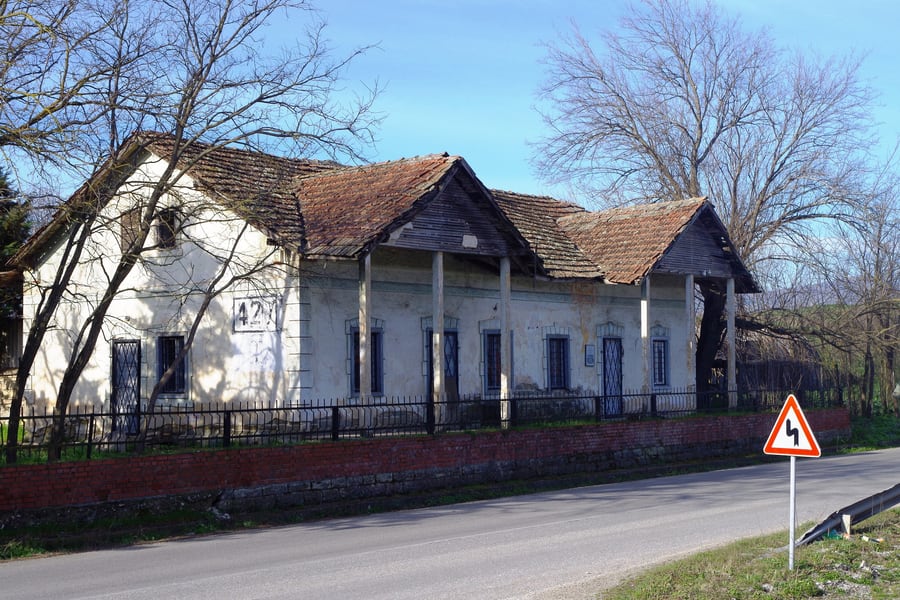
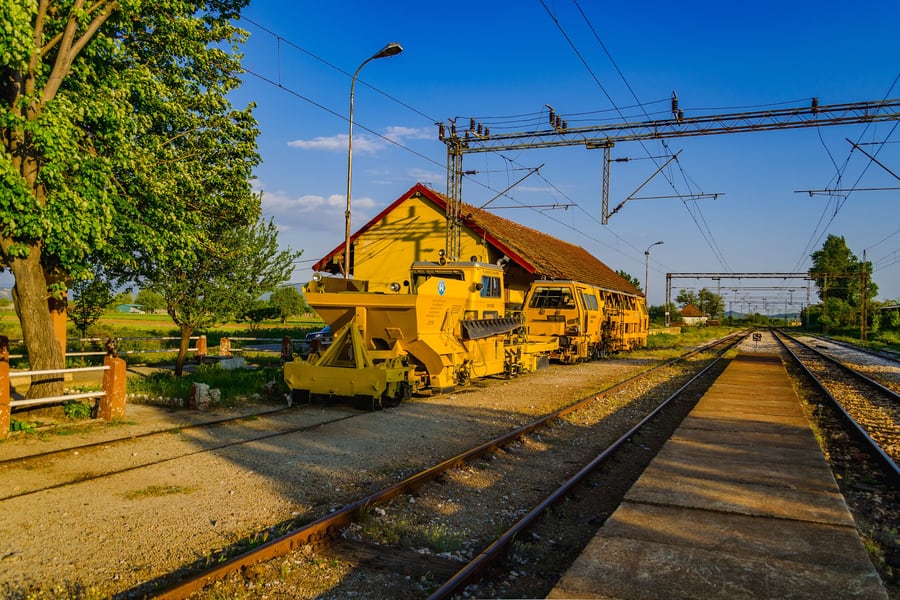
Along the route
 Cibrev / Wikimedia Commons · CC BY-SA 4.0 · 2015 · cropped
Down the Vardar to Veles
The first hour is shared with the Bitola train, through Skopje's suburbs and village halts like Zelenikovo to Veles, where the Bitola line turns west and this one keeps south.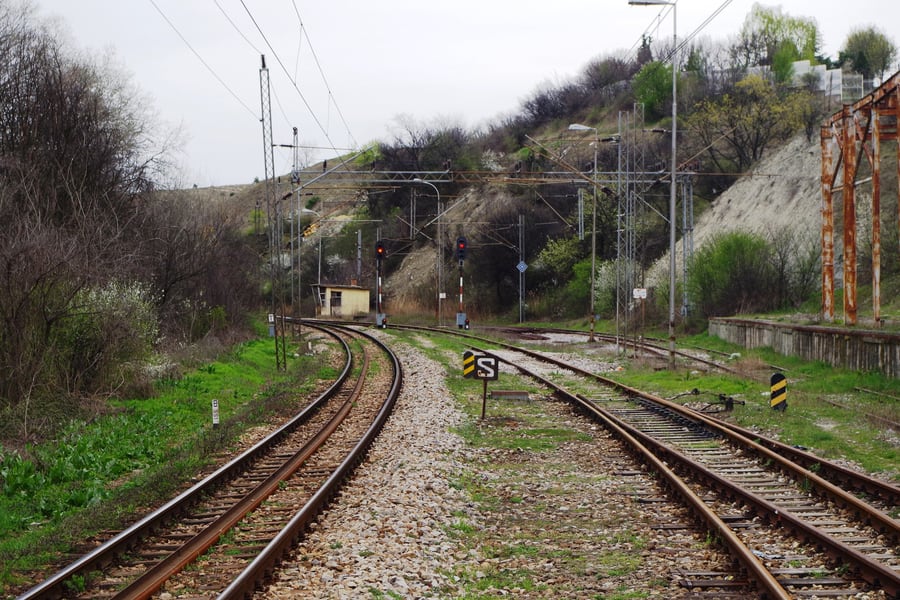 Cibrev / Wikimedia Commons · CC BY-SA 4.0 · 2013 · cropped
Into the Tikveš vineyards
Past Gradsko and the ruins of Stobi the valley opens into Tikveš, the wine district, and the line runs between vineyards into Negotino-Vardar.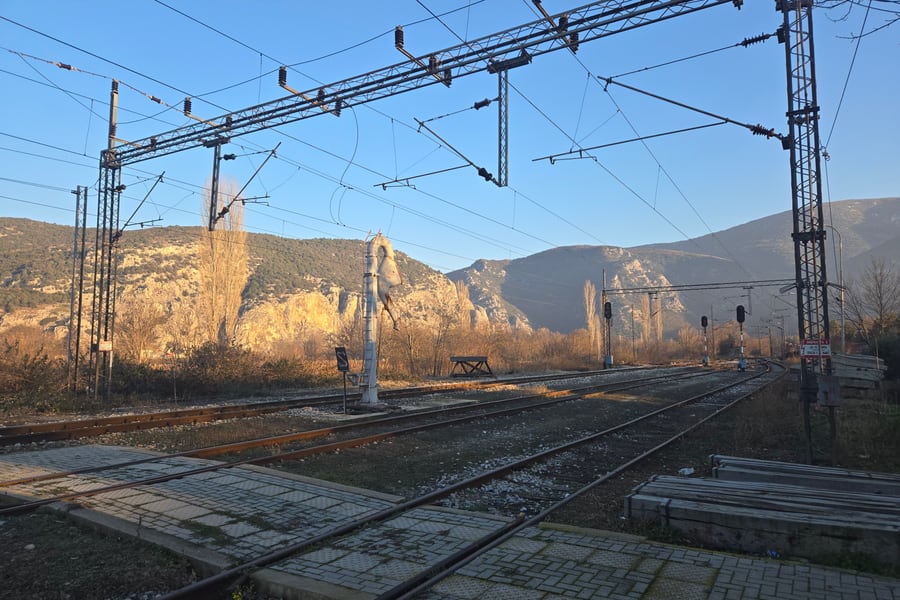 Tormotx / Wikimedia Commons · CC0 · 2024 · cropped
Through the Iron Gate
At Demir Kapija the Vardar cuts through a wall of limestone, and the river, the railway and the road share the gap. The cliffs stand right over the station.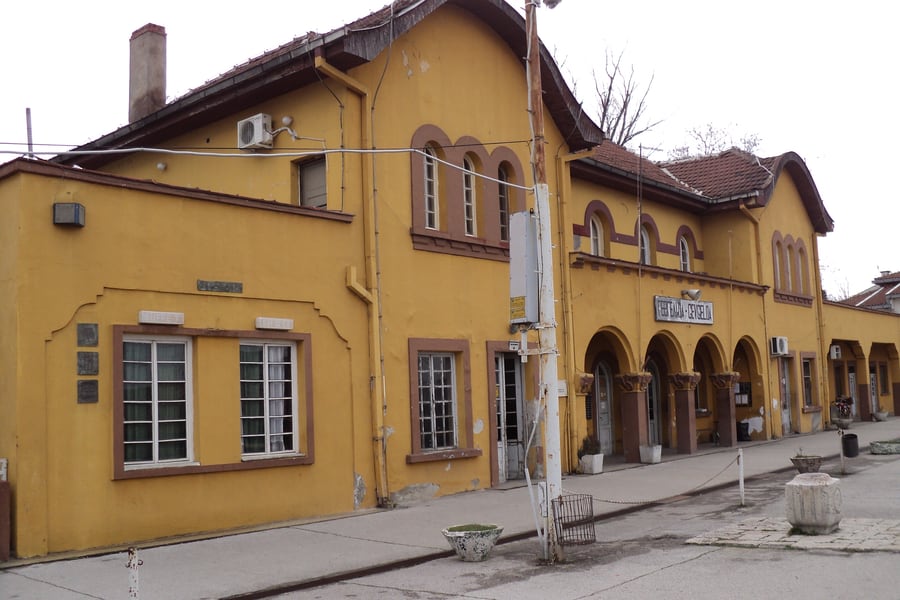 Hip.Hop_MKD / Wikimedia Commons · CC BY-SA 3.0 · 2011 · cropped
The end of the line at Gevgelija
The last station in North Macedonia, with arched windows and a customs post. The rails go on to Greece; no passenger train follows them today.A bit of history
Culture & experiences along the way
 Cibrev / Wikimedia Commons · CC BY-SA 4.0 · 2013 · cropped
The wine of Tikveš
The vineyards around Negotino and Demir Kapija are North Macedonia's wine country. King Aleksandar of Yugoslavia built a summer house and a winery at Demir Kapija, and it still makes wine. Newer estates such as Popova Kula grow local grapes like Stanušina alongside international varieties.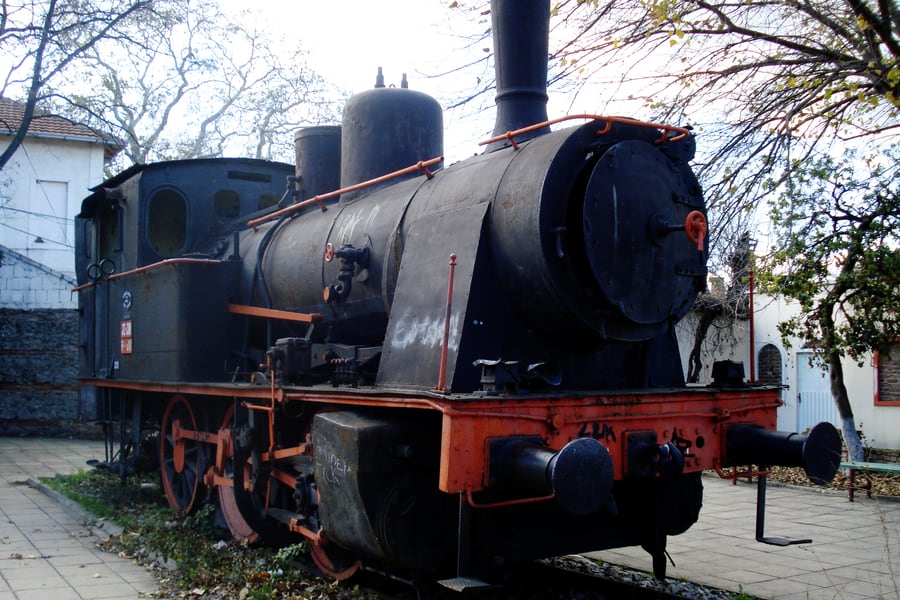 Цветанка Ристова / Wikimedia Commons · CC BY-SA 3.0 · 2013 · cropped
The steam engine by Gevgelija station
A small black tank engine, JŽ 61-011, stands on a short length of track next to the station at Gevgelija. It is a reminder that this was a steam railway for most of its life. It sits in the open, so anyone waiting for the evening train back to Skopje can walk over and look at it.Timetables
Two trains a day run in each direction, every day of the week. Both are Interregional (IR) trains, and they are the only passenger trains south of Veles. Times below are from the extract of the working timetable published by ŽRSM Infrastruktura, valid 9 November to 12 December 2026.
Skopje to Gevgelija
| Station | 611 | 631 |
|---|---|---|
| Skopje | 06:20 | 16:55 |
| Veles | 07:22 | 17:47 |
| Gradsko | 07:47 | 18:16 |
| Negotino-Vardar | 08:07 | 18:36 |
| Demir Kapija | 08:23 | 18:52 |
| Miravci | 08:42 | 19:11 |
| Gevgelija | 08:59 | 19:28 |
Gevgelija to Skopje
| Station | 630 | 632 |
|---|---|---|
| Gevgelija | 04:30 | 17:02 |
| Miravci | 04:48 | 17:20 |
| Demir Kapija | 05:07 | 17:39 |
| Negotino-Vardar | 05:23 | 17:55 |
| Gradsko | 05:43 | 18:15 |
| Veles | 06:09 | 18:40 |
| Skopje | 07:01 | 19:36 |
The run takes between 2 h 31 min and 2 h 39 min. The trains also call at the smaller halts between these stations, among them Dračevo, Zelenikovo, Krivolak, Dubrovo and Prdejci.
No train into Greece
There is no passenger train between North Macedonia and Greece. The current extract ends every southbound train at Gevgelija, Hellenic Train lists no service north of Thessaloniki towards Idomeni, and Interrail's own country page says international trains are not running to Thessaloniki or Belgrade. The crossing has to be made by road.
Before you go
⚠️ Check the times before travelling. The extract above runs to 12 December 2026, and a new annual timetable starts on 13 December. The infrastructure manager posts each new extract at mzi.mk (opens in a new tab), and that is the document to trust. The operator's own web board has carried rows for trains that no longer run.
As of November 2026.
Tickets
Tickets are bought at the station booking office, and there is no online sale for domestic journeys. There is one class, no reservation and no supplement. A single is valid for two days on a journey this long, and a return for thirty.
ŽRSM Transport publishes its domestic fares as one table of prices out of Skopje. Concessions are claimed at the window: half fare up to 27 with a K-13b card or an ISIC, half for children aged 4 to 12 and free travel under 4, and 30 % off at 60 and over. A folding bicycle carried as hand luggage costs 177 denari.
Book your tickets
Single, Skopje to Gevgelija
The whole run, one class
The operator's published fare for the full 164 kilometres, bought at the booking office.
via ŽRSM TransportReturn, Skopje to Gevgelija
Valid for thirty days
Cheaper than two singles, and the morning and evening trains make it a day out.
via ŽRSM TransportSingle, Skopje to Demir Kapija
Two hours, for the Iron Gate
The station for the gorge and the wineries, three stops short of Gevgelija.
via ŽRSM TransportRail Passes
Interrail sells a One Country Pass for North Macedonia, and it covers this journey. Interrail's country page lists Skopje–Veles–Gevgelija among the main domestic links, and reservations are not needed on any train in North Macedonia, so a pass holder walks to the platform and boards.
It is rarely worth buying for this trip. A single from Skopje to Gevgelija is 277 denari and a return 444, so a pass has to be earning its keep elsewhere in Europe first. And because no train crosses into Greece, a pass cannot carry you on to Thessaloniki from here.
Checked against Interrail's North Macedonia page, November 2026.
Places to Visit
The line passes a Roman provincial capital, a wine district and a limestone gorge, and it starts and ends at two very different stations. Skopje's old station is a museum with its clock stopped at the minute of the 1963 earthquake. Gevgelija is a border town with a customs post that no passenger train uses.
Stobi lies near Gradsko station, and Demir Kapija's station is in the town itself.
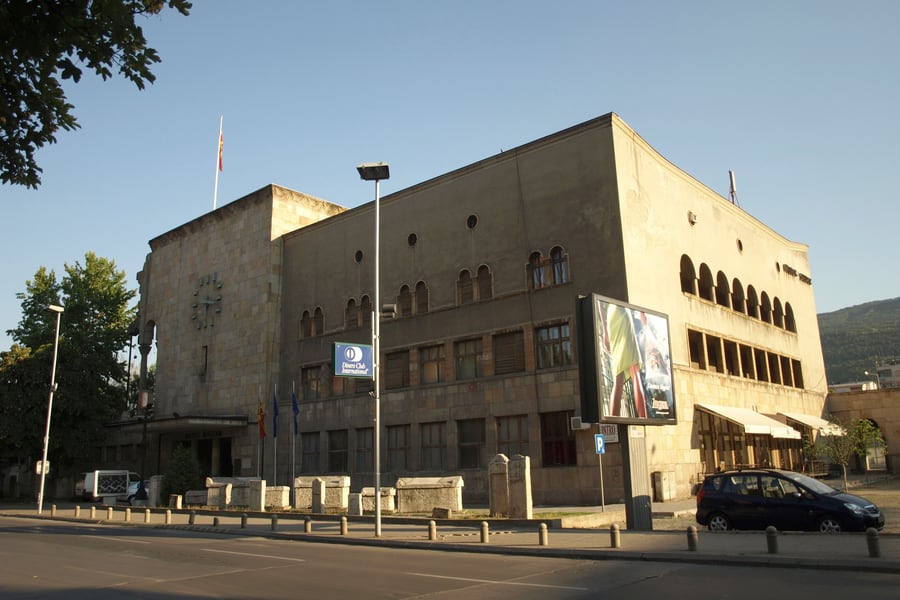 Mazbln / Wikimedia Commons · CC BY-SA 3.0 · 2008 · cropped
Skopje's old railway station
The earthquake of 26 July 1963 destroyed much of Skopje, including the station, and the clock on the surviving third of the building was left stopped at 5:17, the moment it struck. Since 1970 that fragment has housed the Museum of the City of Skopje, with exhibitions that trace the city from its first settlements around 3000 BC to the present.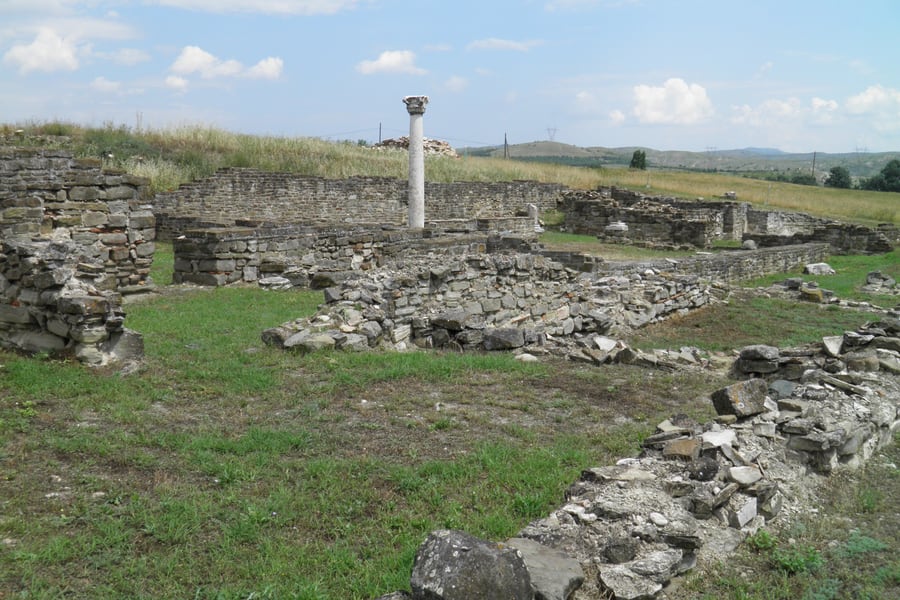 Carole Raddato / Wikimedia Commons · CC BY-SA 2.0 · 2012 · cropped
Stobi
Near Gradsko, where the Crna Reka joins the Vardar, a Paeonian settlement grew into a Roman municipium that minted its own coins and later became the capital of the province of Macedonia Salutaris. Theodosius I stayed here in 388. The Ostrogoths sacked it in 479 and an earthquake struck in 518. What remains is an open field of walls, streets and columns.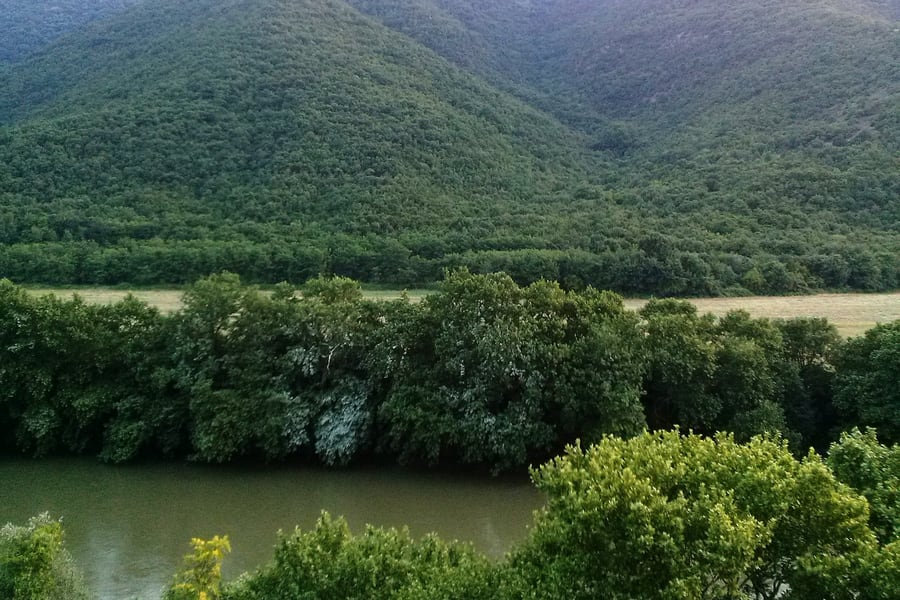 Cibrev / Wikimedia Commons · CC BY-SA 4.0 · 2015 · cropped
The Demir Kapija gorge
The Iron Gate was the Stenae of classical writers, and a Paeonian fortress on Ramnište hill above it is one of only three known Paeonian structures in the country. In the Middle Ages the stronghold here was called Prosek. Today the gorge draws climbers, walkers and kayakers, and the town has trails up to the fortress ruins.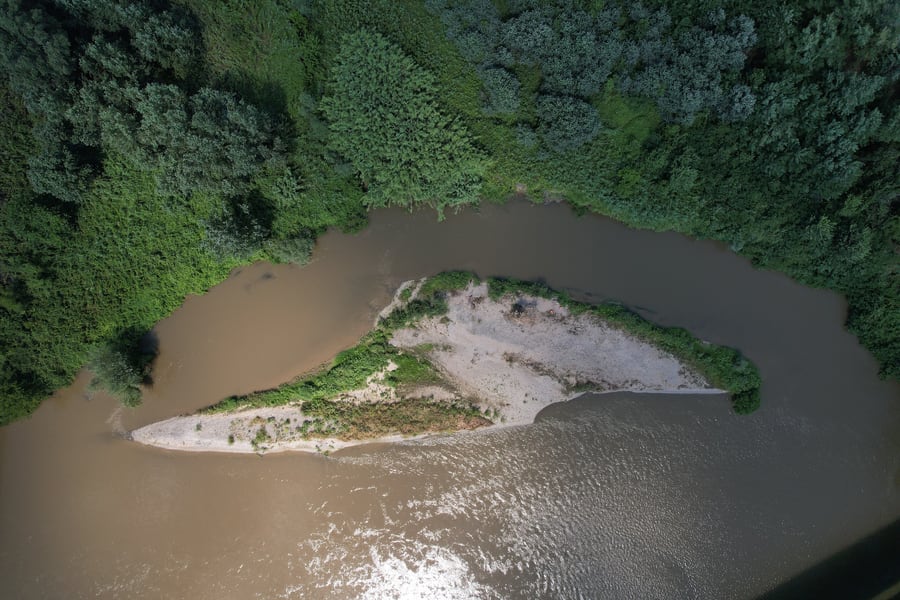 Dean Lazarevski / Wikimedia Commons · CC BY-SA 4.0 · 2022 · cropped
Gevgelija and the lower Vardar
Gevgelija lies on the Vardar between the Kožuf and Pajak mountains, about 70 kilometres from Thessaloniki, and has a warm Mediterranean climate. Near the town the river spreads around low gravel islands. The station is on the eastern edge of town, and as the last station before Greece it still has its own border and customs post, from the years when passenger trains ran through to Thessaloniki.Where to Sleep
The 06:20 from Skopje is in Gevgelija before nine, and the 17:02 back is in Skopje by half past seven, so the whole line works as a day out from the capital. The better plan is to break the journey at Demir Kapija: off the morning train at 08:23, a day in the gorge and the vineyards, and the 17:39 back to Skopje the same evening, or a night among the vines and the morning train onward.
Skopje's hotels cluster around the old bazaar and the Stone Bridge, a twenty-minute walk from the Transport Centre.
Where to stay
Stonebridge Hotel
Beside the Stone Bridge in Skopje
A hotel on the Vardar next to the fifteenth-century bridge, at the edge of the old bazaar.
Check Availability (opens in a new tab, on stonebridge-hotel.com)via stonebridge-hotel.com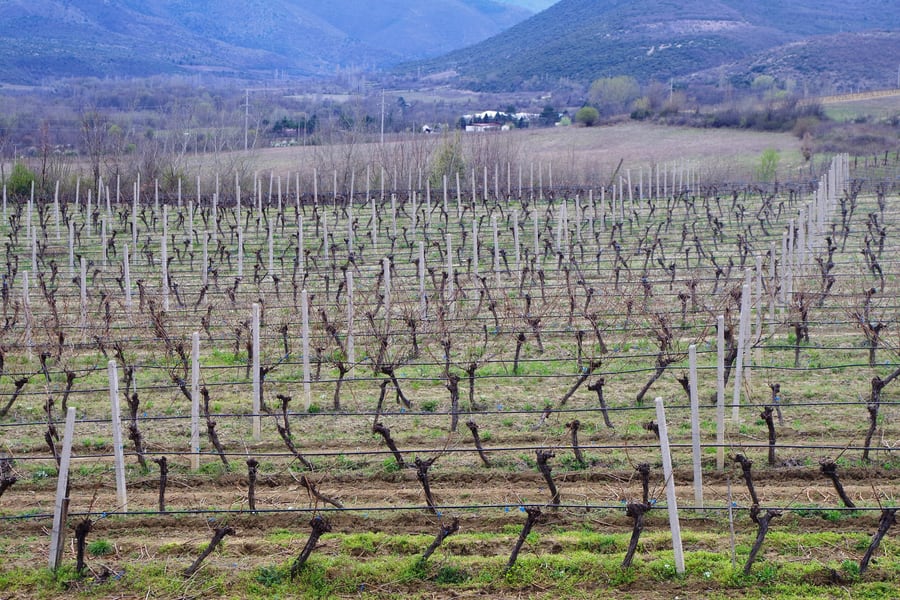 Cibrev / Wikimedia Commons · CC BY-SA 4.0 · 2015 · cropped
Popova Kula
A winery with rooms at Demir Kapija
A working winery with a 33-room hotel and a restaurant terrace among its own vineyards.
Check Availability (opens in a new tab, on popovakula.com.mk)via popovakula.com.mkQuestions or corrections
Planning this trip and stuck on something, or spotted a time, fare or detail that has changed? Send us a message about Skopje to Gevgelija — through the Iron Gate. We read every one, and we update this page when something has changed.