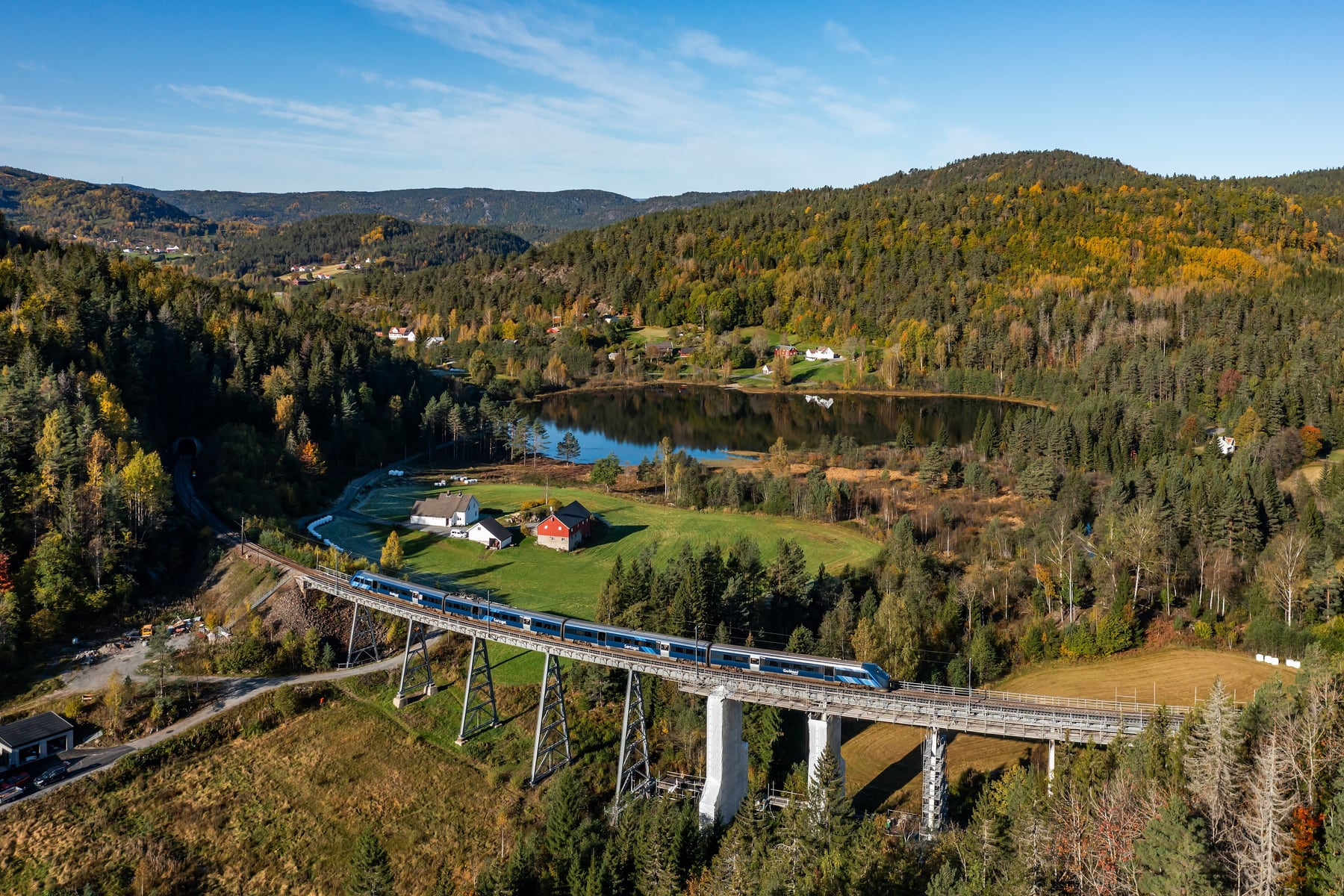
The Sørlandet Line
Kabelleger / David Gubler / Wikimedia Commons · CC BY-SA 4.0
- DistanceOslo S–Stavanger · 585 km
- Duration7 hours 38 minutes to 8 hours 24 by day · about 9 hours by night
- Best seasonAll year; May to September for the canal boats, the silver mine and the long evenings
Introduction
The Sørlandet Line runs 585 kilometres from Oslo to Stavanger by way of Kristiansand, and for most of the way it keeps its distance from the coast it is named after. When the route was chosen, the southern towns were already well served by ships, and the valleys behind them had little. So the railway went inland, with branch lines down to the sea. West of Kristiansand that meant crossing the grain of the land: the valleys run north to south, the line runs west, and it goes straight through the ridges between them.
It took more than seventy years to join up. The first piece, to Kongsberg, opened in 1871; the Jæren Line from Stavanger to Egersund followed in 1878. Until 1913 the whole scheme was called the Vestlandet Line; that year the Storting voted, 83 to 40, to rename it the Sørlandet Line. Before it was finished, the way from Oslo to Stavanger was a train to Brevik, a ship to Flekkefjord and a train again. The last link, through the heaths west of Kristiansand, was completed under the German occupation, and the line opened throughout on 1 May 1944.
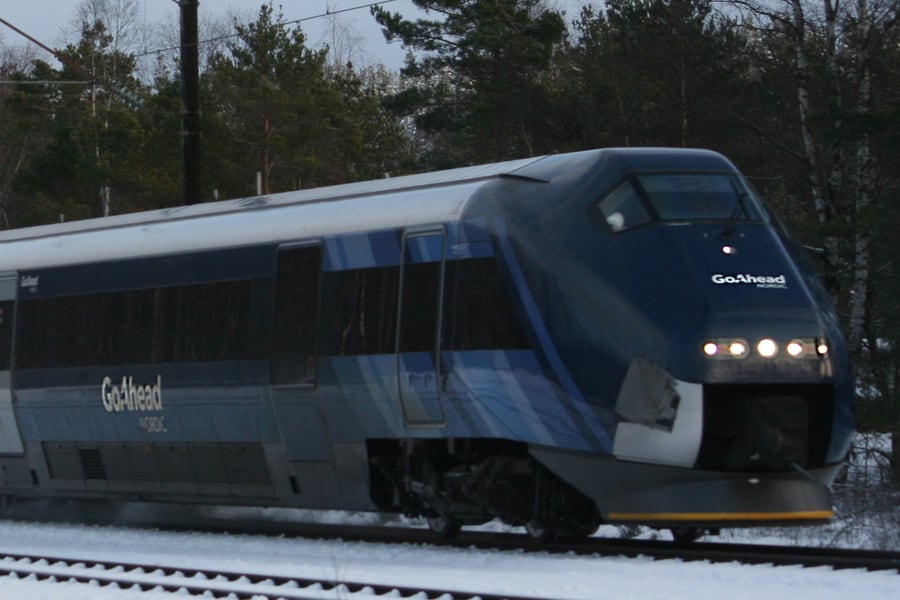
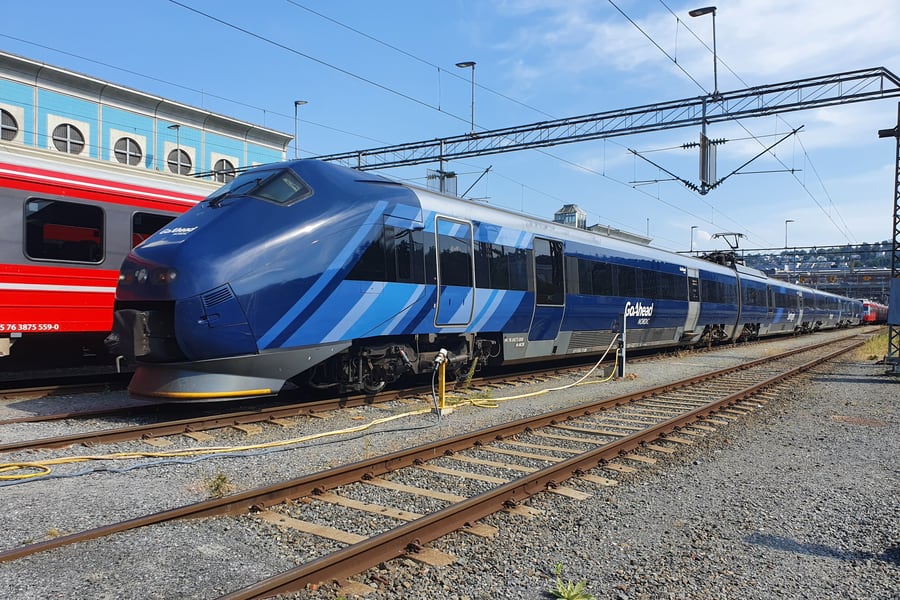
Since December 2019 the trains have been run by Go-Ahead as Sørtoget, the South Train: five through trains each way on weekdays, and a night train with sleeping cabins.
The Journey
The train leaves Oslo S westward under the city, calls at Lysaker and Asker, and reaches Drammen at the head of its fjord in half an hour. From there it turns inland, up the valley to Kongsberg, the old silver town, then loops round past Saggrenda and over the watershed into Telemark. It crosses the Telemark Canal at Lunde, passes Bø and runs south through forest and past lakes by Drangedal and Gjerstad to Nelaug, where the branch leaves for Arendal.
Kristiansand
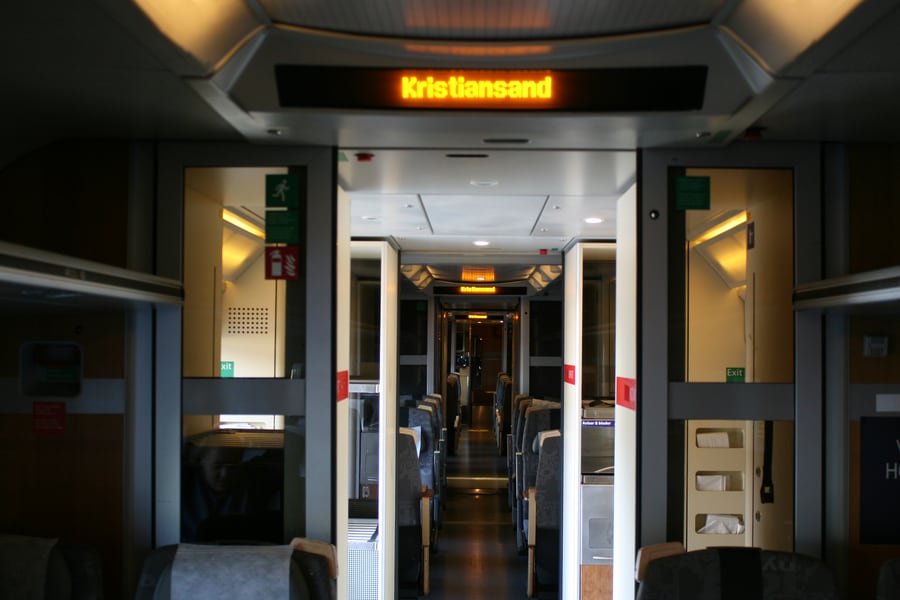
After Vennesla the line passes Grovane, start of the Setesdalsbanen museum railway, and comes down to Kristiansand. The station is a terminus, so every train reverses here and waits between eight and sixteen minutes: time to step onto the platform.
Across the grain
West of Kristiansand the line turns inland again and begins to cut across the valleys of Agder, partly over the heaths between them and partly through tunnels. Store norske leksikon counts 72 tunnels between Kristiansand and Egersund. The two longest, both opened in 1943, are the Hægebostad Tunnel, 8,474 metres, and the Kvineshei Tunnel, 9,065 metres, which holds the longest straight on the Norwegian railway network. Snartemo station lies between the two; beyond come Storekvina and Gyland, each a glimpse of a valley before the next dark. At Sira the old line to Flekkefjord branches off; after Moi the railway comes down to Egersund.
Jæren
The last hour or so is the oldest part of the line, the Jæren Line of 1878. The hills fall away and the train runs across Jæren, open farmland of stone walls and wind towards the North Sea, through Bryne and Sandnes to Stavanger.
The trains
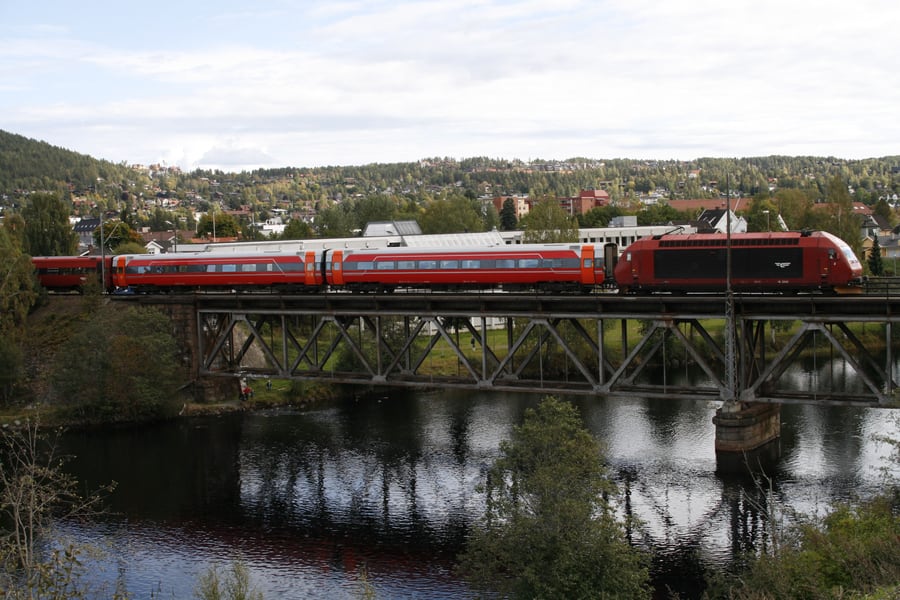
The day trains are Type 73 electric units or El 18 electric locomotives hauling coaches. Seats are in Standard, in the quieter Ekstra carriage at one end of the train, or in Hvile, where the seats recline. There is a family carriage with a playroom and a café on board; the night train adds sleeping cabins.
Along the route
 Morten Nærbøe / Wikimedia Commons · CC BY-SA 3.0
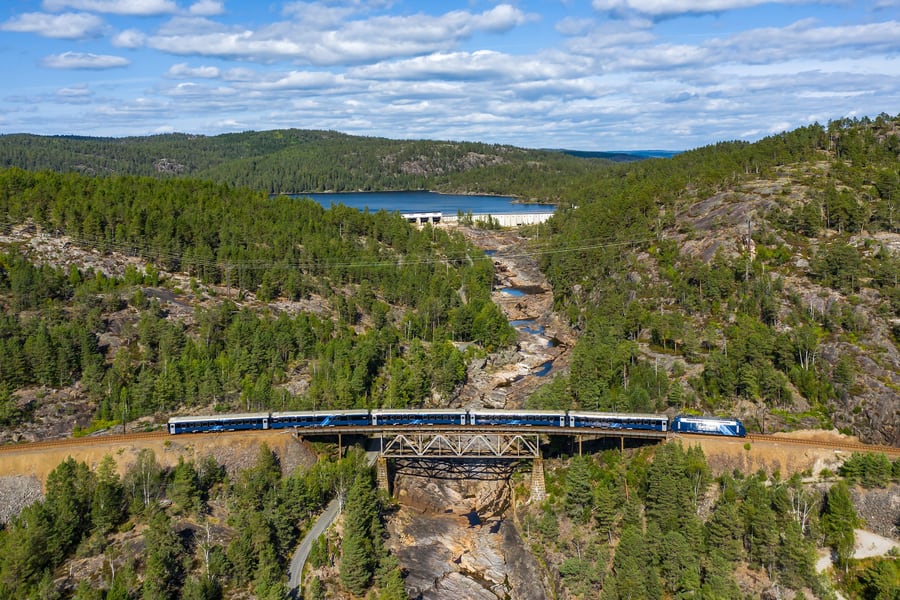
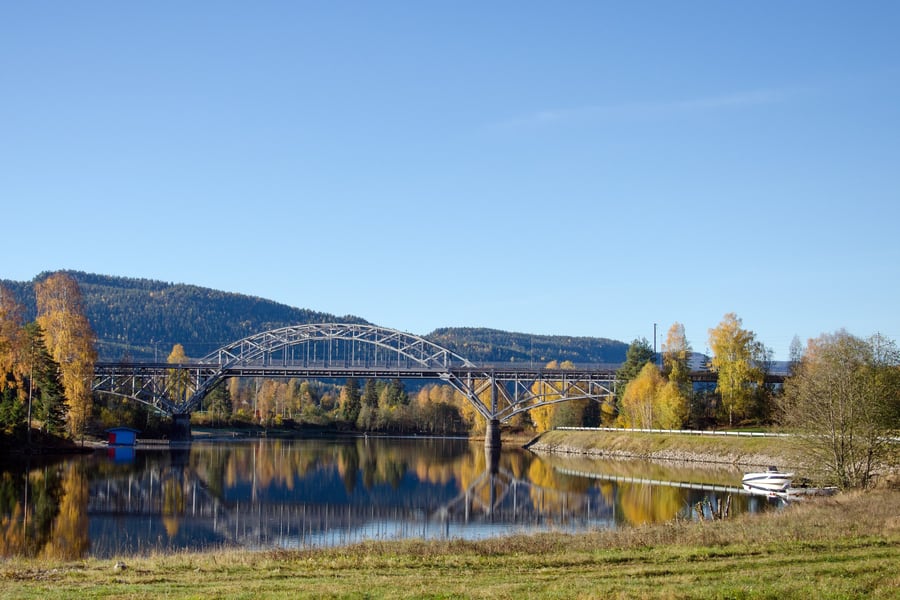
Over the canal at Lunde
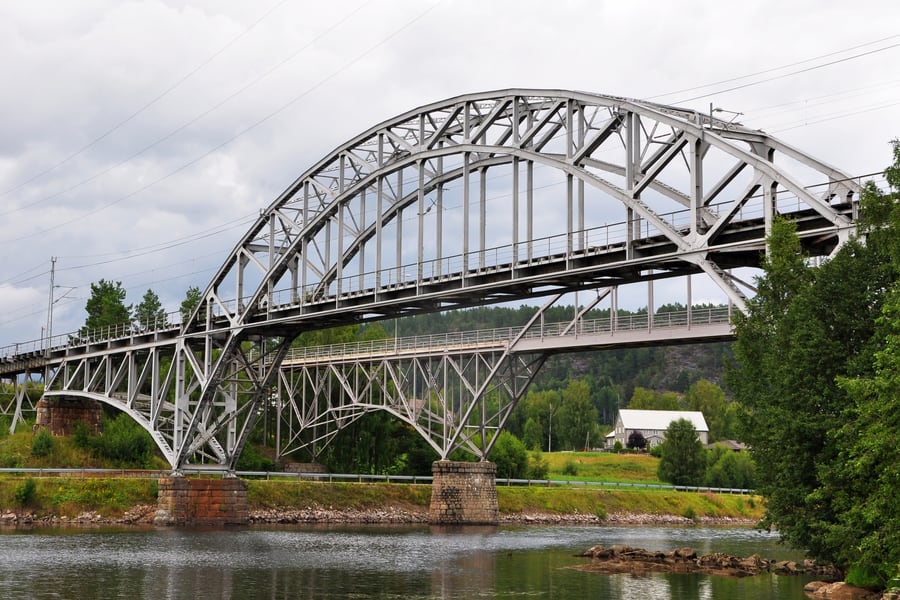
At Lunde the line crosses the Telemark Canal on a steel arch beside the road bridge. The canal's boats call here on their way between Skien and Dalen, and some trains stop at Lunde station.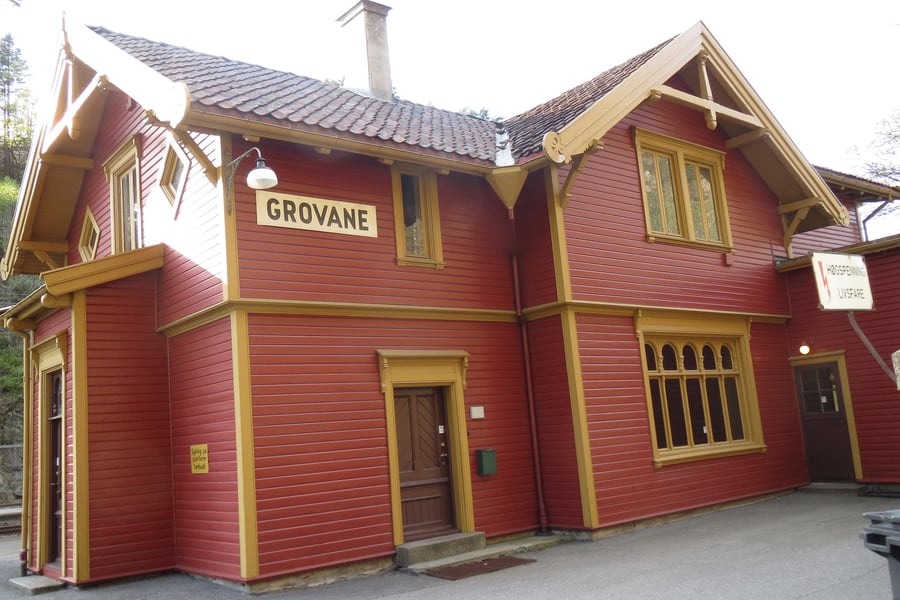 Carsten R D / Wikimedia Commons · CC BY-SA 3.0
Grovane
North of Kristiansand the train passes Grovane, where the narrow-gauge Setesdal Line met the main line from 1938. Its last stretch is now a museum railway, the Setesdalsbanen, which starts from this station.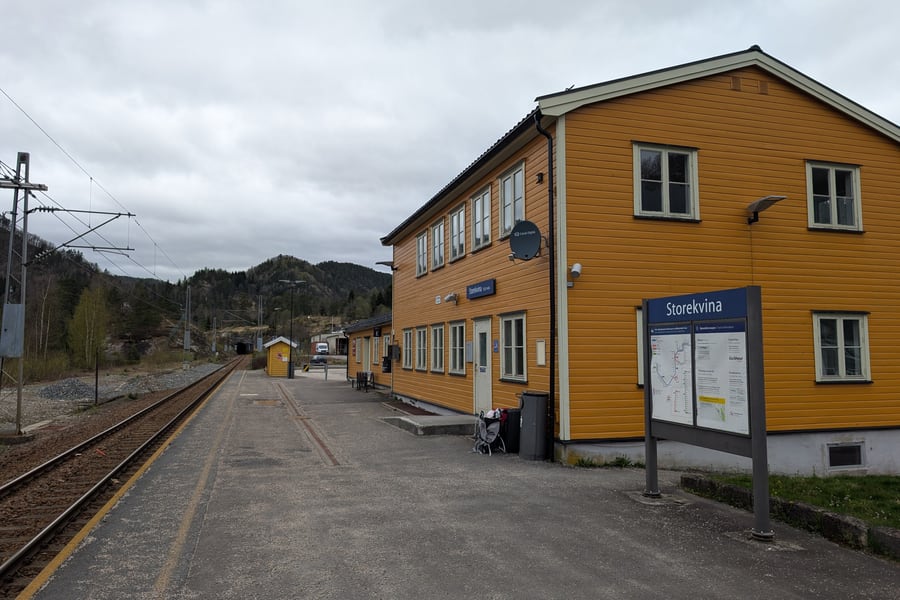 Rudiend / Wikimedia Commons · CC BY-SA 4.0
Across the grain
West of Kristiansand the valleys run north to south and the railway runs west, so it goes through the ridges between them. The Kvineshei Tunnel, 9,065 metres, holds the longest straight on Norway's railways: 9,020 metres.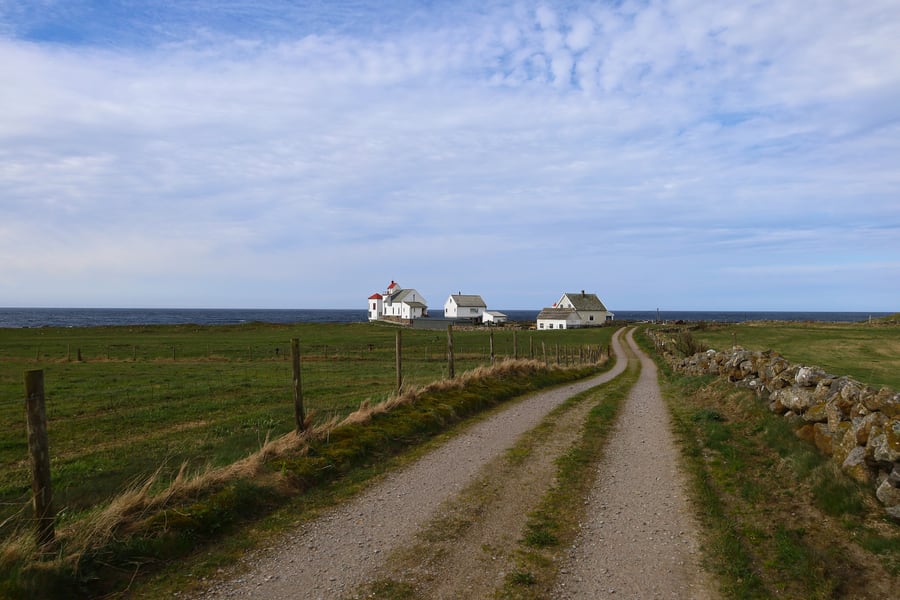 Karl Ragnar Gjertsen / Wikimedia Commons · CC BY-SA 4.0
Out onto Jæren
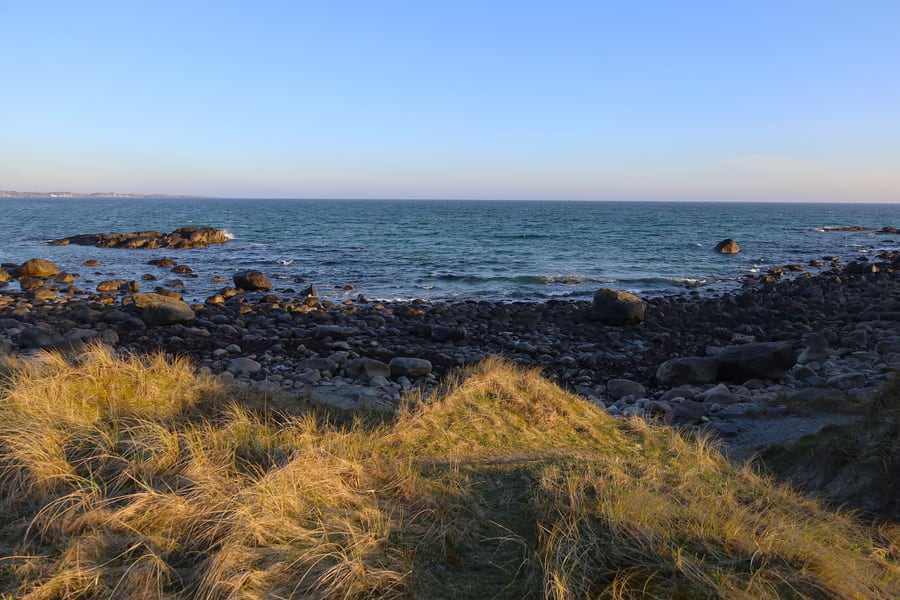
Beyond Egersund the forest gives way to Jæren, a plain 60 to 70 kilometres long and the main farming district of Western Norway. Its name comes from the Old Norse jaðarr, the edge: the edge against the sea.A bit of history
Culture & experiences along the way
 Kjetil Bjørnsrud / Wikimedia Commons · CC BY-SA 3.0
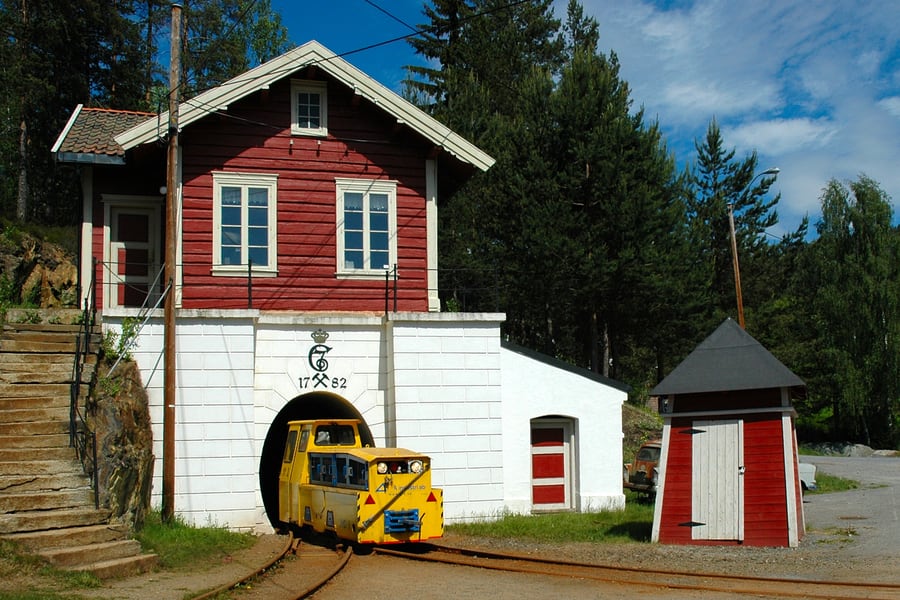
Into the King's Mine
Eight kilometres from Kongsberg, at Saggrenda, a mine train runs 2,300 metres into the mountain to the King's Mine, 342 metres below the surface, which produced almost half the silver of the Kongsberg works. The guided walk inside lasts about an hour, at 6 °C; tours run in the summer season.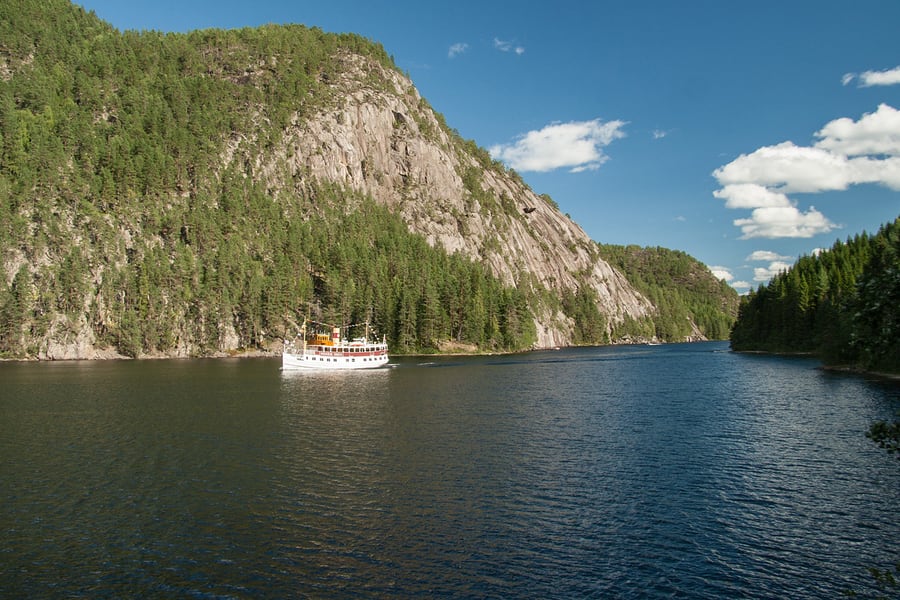 Øyvind Berg / Wikimedia Commons · CC BY-SA 4.0
A boat on the Telemark Canal
The canal climbs 72 metres through 18 lock chambers on its 105 kilometres from Skien to Dalen; when its western section opened in 1892, European guidebooks called it the eighth wonder of the world. In summer the canal boats Victoria and Henrik Ibsen call at Lunde.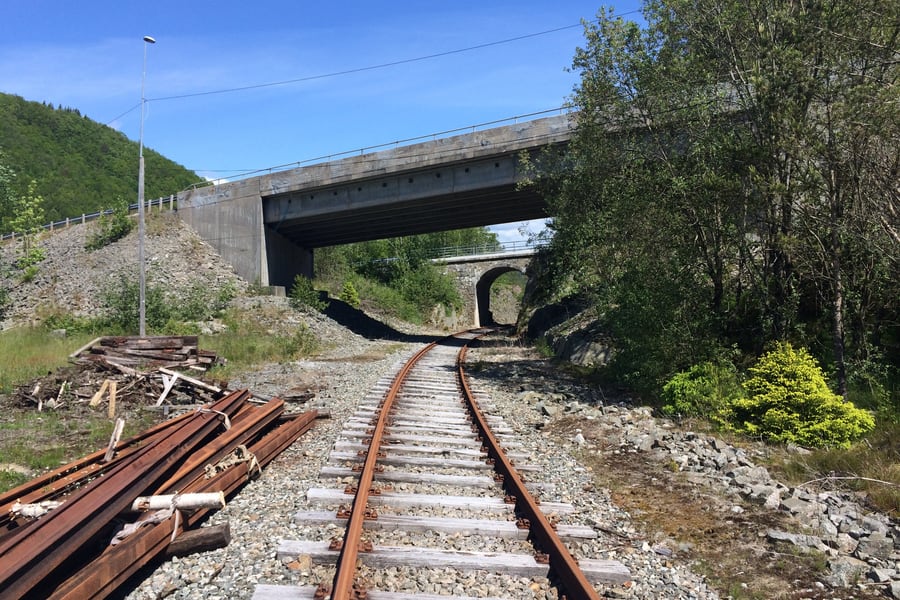 Winifred / Wikimedia Commons · CC BY-SA 2.0
Rail-biking the Flekkefjord Line
The branch that once left this line at Sira for Flekkefjord is long closed to trains, but its rails are protected and still there. From Flekkefjord you pedal your own rail bike along them, through 17 tunnels, on a trip of about three and a half hours, from April to September.Timetables
Go-Ahead runs the Sørlandet Line as line F5, Sørtoget: five through trains each way from Monday to Friday, four or five at the weekend, and a night train every night except Saturday. Every seat is reserved.
Oslo to Stavanger
| Train | Runs | Oslo S | Drammen | Kongsberg | Bø | Nelaug | Kristiansand | Egersund | Stavanger |
|---|---|---|---|---|---|---|---|---|---|
| 707 | Daily | 07:25 | 08:00 | 08:36 | 09:24 | 10:52 | 12:00 | 14:07 | 15:18 |
| 709 | Not Sun | 09:25 | 10:00 | 10:36 | 11:25 | 12:55 | 14:14 | 16:35 | 17:49 |
| 711 | Not Sat | 11:25 | 12:00 | 12:36 | 13:27 | 14:55 | 16:06 | 18:14 | 19:19 |
| 713 | Daily | 13:25 | 14:00 | 14:36 | 15:27 | 16:56 | 18:01 | 20:07 | 21:15 |
| 715 | Daily | 15:23 | 16:00 | 16:36 | 17:26 | 18:54 | 19:59 | 22:09 | 23:14 |
| 725 (night) | Not Sat | 22:25 | 23:00 | 23:43 | 00:37 | 02:17 | 03:45 | 06:03 | 07:21 |
Stavanger to Oslo
| Train | Runs | Stavanger | Egersund | Kristiansand | Nelaug | Bø | Kongsberg | Drammen | Oslo S |
|---|---|---|---|---|---|---|---|---|---|
| 706 | Daily | 06:32 | 07:41 | 09:54 | 10:53 | 12:26 | 13:17 | 13:53 | 14:25 |
| 708 | Daily | 08:47 | 09:43 | 11:55 | 12:54 | 14:27 | 15:17 | 15:53 | 16:25 |
| 710 | Daily | 10:16 | 11:18 | 13:46 | 14:56 | 16:28 | 17:18 | 17:53 | 18:25 |
| 712 | Daily | 12:34 | 13:40 | 15:56 | 16:55 | 18:27 | 19:17 | 19:53 | 20:25 |
| 716 | Daily | 16:04 | 17:17 | 19:52 | 20:53 | 22:22 | 23:17 | 23:54 | 00:25 |
| 726 (night) | Not Sat | 22:15 | 23:18 | 02:17 | 03:32 | 05:11 | 06:11 | 06:52 | 07:25 |
Kristiansand times are departures; trains arrive eight to sixteen minutes earlier and reverse there. On Sundays train 706 starts at Kristiansand, and an extra train leaves Stavanger at 14:04 for Oslo, arriving 22:45; on Saturdays train 716 runs only as far as Kristiansand. A 17:25 from Oslo runs to Kristiansand every day, and on weekdays short trains link Kristiansand and Stavanger early and late. Every train also calls at Lysaker, Asker, Vennesla, Bryne, Sandnes and each station between Kristiansand and Egersund but Breland; most at Nordagutu, Drangedal, Neslandsvatn, Gjerstad and Vegårshei, and some at Lunde.
On weekdays until 20 November 2026 train 708, the 08:47 from Stavanger, does not run. On some dates in January 2027 the trains leave Oslo two minutes earlier.
Times as of October 2026, from Entur's journey planner, checked for dates from 19 October 2026 to 9 February 2027. Check your date on Entur (opens in a new tab) or with Go-Ahead (opens in a new tab).
Tickets
Tickets are sold by Go-Ahead on its website and app, through Entur, Norway's national journey planner, at ticket machines at the main stations and on the train, up to 90 days ahead. Every ticket includes a seat reservation and three pieces of luggage. Lavpris is the cheapest and cannot be changed or refunded; Fleks can be changed or refunded free until 24 hours before departure.
There are four ways to travel: Standard; Ekstra, a quieter carriage with free coffee and tea; Hvile, a reclining seat, on the night train and selected day trains; and Sove, a sleeping cabin on the night train. Go-Ahead does not publish fares; Entur quotes them for your date. Checked October 2026.
Book your tickets
Nokkvi / Flickr · CC BY 2.0Standard
A reserved seat, every train
Your choice of seat, wifi and power, with a café on board; Lavpris is cheapest, Fleks can be changed or refunded.
Book Tickets (opens in a new tab, on Go-Ahead)via Go-AheadKolbkorr / Wikimedia Commons · CC BY-SA 4.0Ekstra
A quieter carriage at one end
Free coffee and tea, a snack bar and blankets, in a carriage at the front or back of the train with little through traffic.
Book Tickets (opens in a new tab, on Go-Ahead)via Go-AheadNokkvi / Flickr · CC BY 2.0Hvile
A reclining seat, on the night train and selected day trains
A seat that reclines to 45 degrees, with a reading light, a table and a socket, and everything Ekstra includes.
Book Tickets (opens in a new tab, on Go-Ahead)via Go-Ahead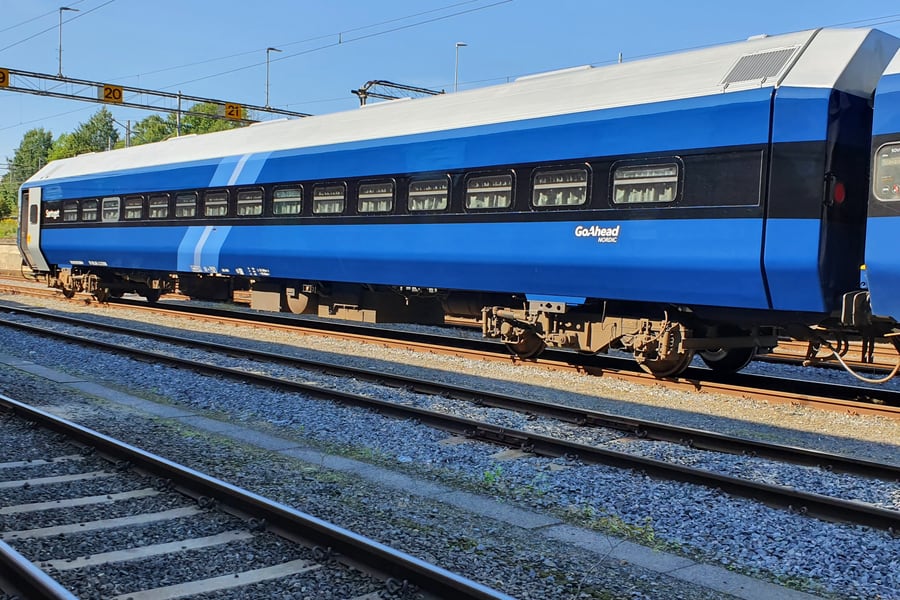 Kolbkorr / Wikimedia Commons · CC BY-SA 4.0
Sove
A sleeping cabin on the night train
A cabin with two beds, for one traveller or two from the same party, and up to two children under six sharing.
Book Tickets (opens in a new tab, on Go-Ahead)via Go-AheadRail Passes
Interrail and Eurail passes are valid, with a compulsory reservation. Interrail's table of railway companies lists Go-Ahead Nordic's regional trains and night train in both the Global Pass and the One Country Pass for Norway, with reservation mandatory. Go-Ahead lets pass holders reserve Standard, Ekstra, Hvile and Sove on Entur. Interrail lists Go-Ahead's fees as €4.30 for a Standard seat in second class, €22–26.50 to upgrade to its Premium class, €43 for a reclining seat and €86–107 for a sleeping cabin; first-class pass holders reserve Premium free.
A pass pays for this journey if Norway is part of a longer trip. For Oslo to Stavanger alone, compare a travel day of the pass, plus the reservation, with the fare Entur quotes for your date.
Checked October 2026 against Interrail's table of railway companies (opens in a new tab), its reservation fees (opens in a new tab) and night-train fees (opens in a new tab), and Go-Ahead's Interrail page (opens in a new tab).
Places to Visit
With five through trains a day each way on weekdays, a stop on the way costs a few hours, not a day. Every place below has a station that all trains call at, except Arendal, a short ride on the local train from Nelaug.
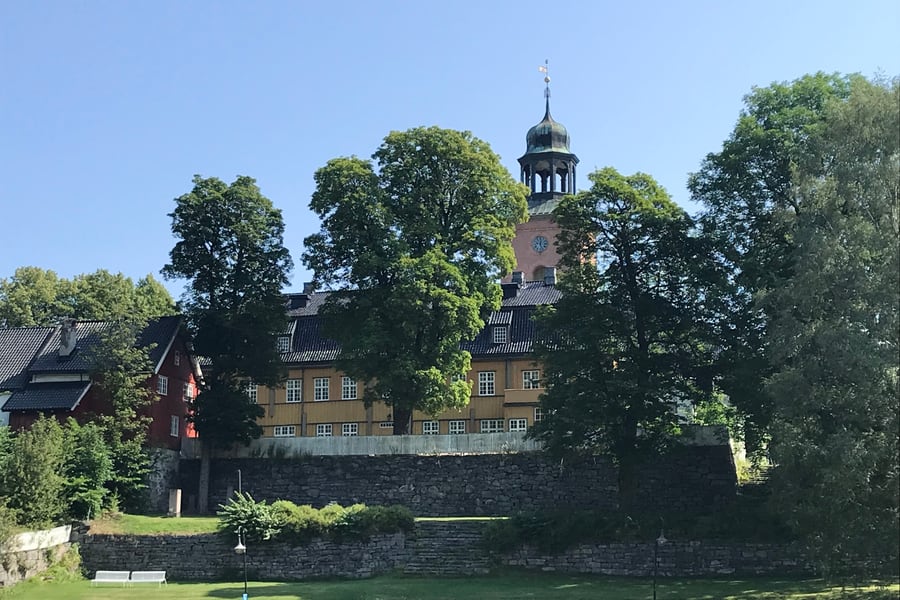 Schokifaktor / Wikimedia Commons · CC BY-SA 4.0
Kongsberg
The town grew up around the silver works, founded in 1623 and worked until 1958. Its church, built of red brick from 1740 to 1761, is the largest baroque church in Norway, with 2,400 seats as built and a rococo interior whose seating followed the mining town's strict order of rank, the royal box set opposite the pulpit.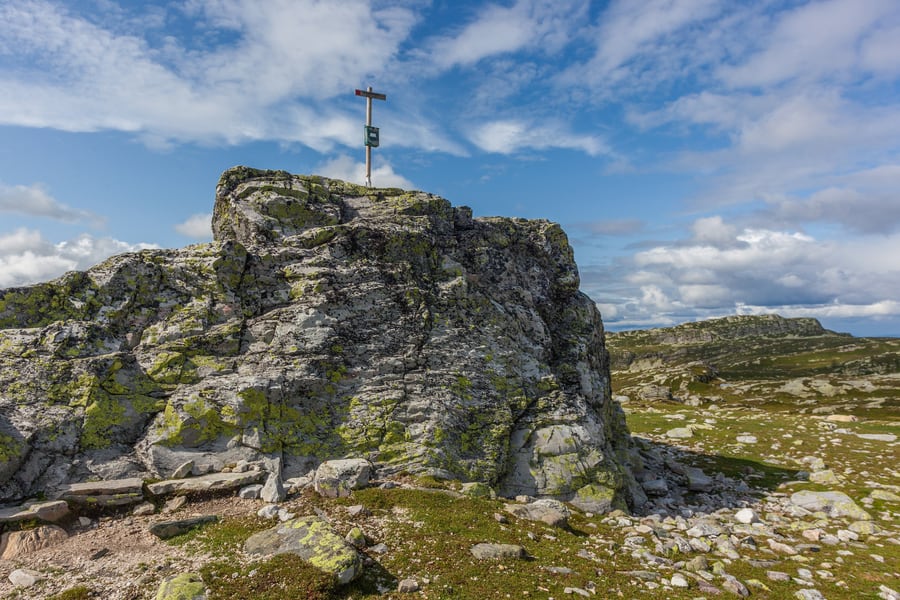 Tadeáš Bednarz / Wikimedia Commons · CC BY-SA 4.0
Bø
A college village in Midt-Telemark, known for its folk music, folk dress, fiddle-making and silversmithing, with the Telemark Festival of folk music every July. Above it rises Lifjell, a mountain plateau for walking in summer and skiing in winter, and below it the Bø Sommarland water park.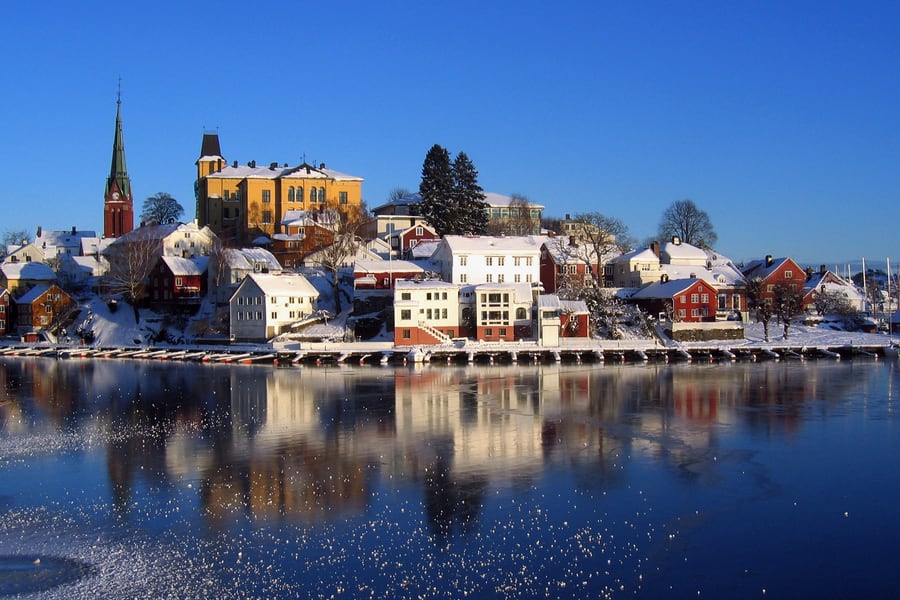 Karl Ragnar Gjertsen / Wikimedia Commons · CC BY-SA 4.0
Arendal
At Nelaug a local train leaves for Arendal on the coast. Its oldest quarter, Tyholmen, is a former islet whose wooden merchants' houses were spared by the fires that swept the town in the 1800s; their restoration won the Europa Nostra prize in 1991. The old town hall was once counted among Norway's largest timber buildings.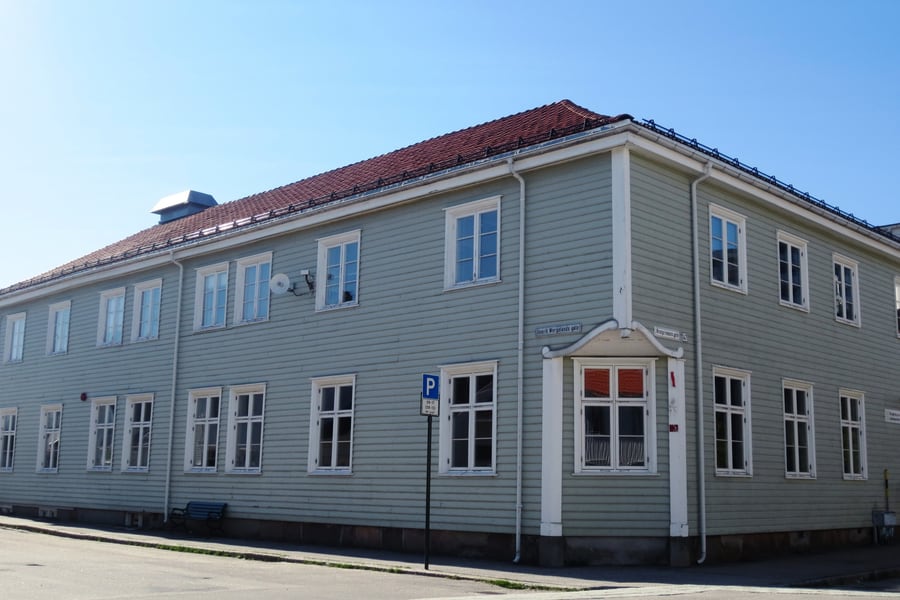 Bjoertvedt / Wikimedia Commons · CC BY-SA 3.0 no
Kristiansand
Most of the city was rebuilt in brick after the great fire of 1892. Posebyen is the part that survived: low wooden houses in the old street grid, now protected, where soldiers from the fortresses were once lodged — which may be where the name comes from, the French repos, a resting place.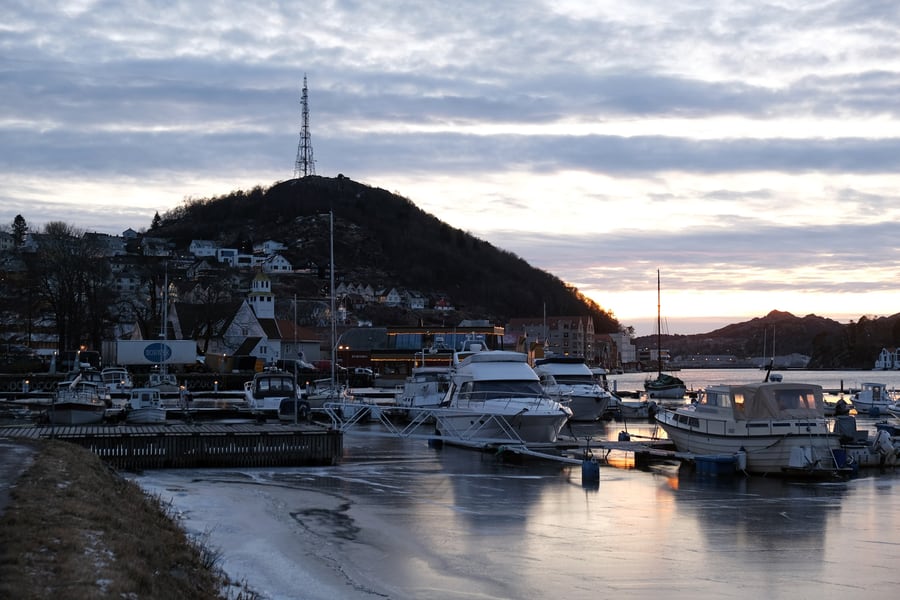 kallerna / Wikimedia Commons · CC BY-SA 4.0
Egersund
A harbour town between the heaths and Jæren, and the end of Western Norway's first railway, opened from Stavanger in 1878. Its faience factory, founded in 1847 by Johan Feyer, became Norway's largest maker of stoneware; it closed in 1979, and its museum now stands on the old factory site.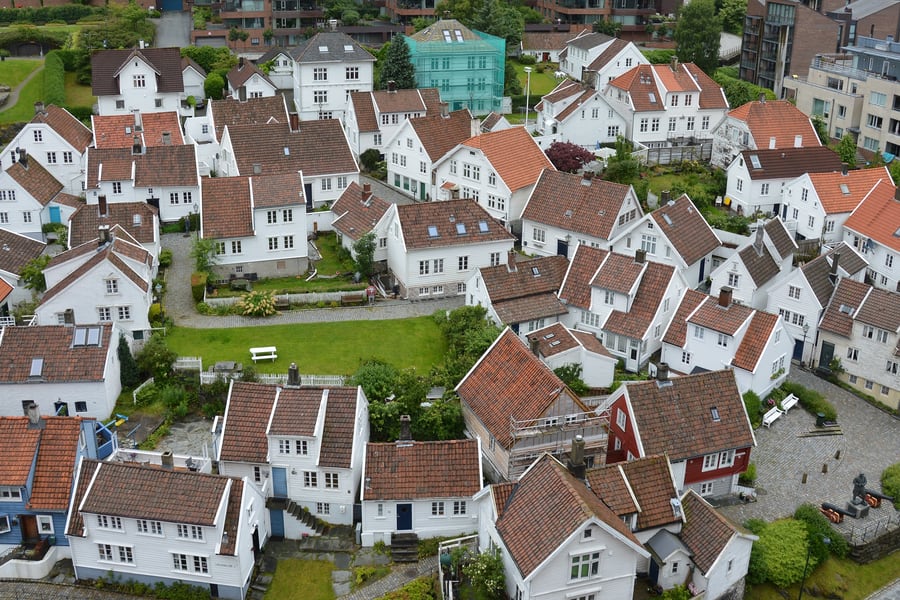 Olaf Meister / Wikimedia Commons · CC BY-SA 4.0
Stavanger
Above the harbour, Gamle Stavanger is 173 protected and restored wooden houses, most of them white, built in the late 1700s and the 1800s, when the herring fishery and shipping took the town from 2,500 people to 20,000. It is often called the best-preserved wooden-house settlement in Northern Europe.Where to Sleep
The journey fits in a day, and the night train saves a hotel altogether. At the western end, the old harbour of Stavanger is a short walk from the station, with Gamle Stavanger above it.
Where to stay
 Godot13 / Wikimedia Commons · CC BY-SA 4.0 · cropped
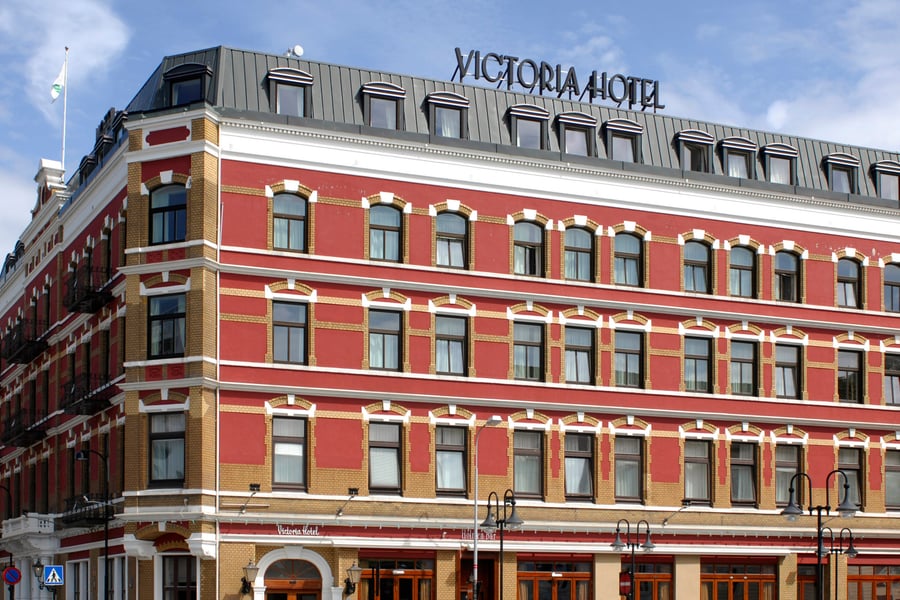
Hotel Victoria
On the harbour in Stavanger
Part of Stavanger for generations, with many rooms looking out over the harbour and a French brasserie downstairs.
Check Availability (opens in a new tab, on hotel-victoria.no)via hotel-victoria.noQuestions or corrections
Planning this trip and stuck on something, or spotted a time, fare or detail that has changed? Send us a message about The Sørlandet Line. We read every one, and we update this page when something has changed.