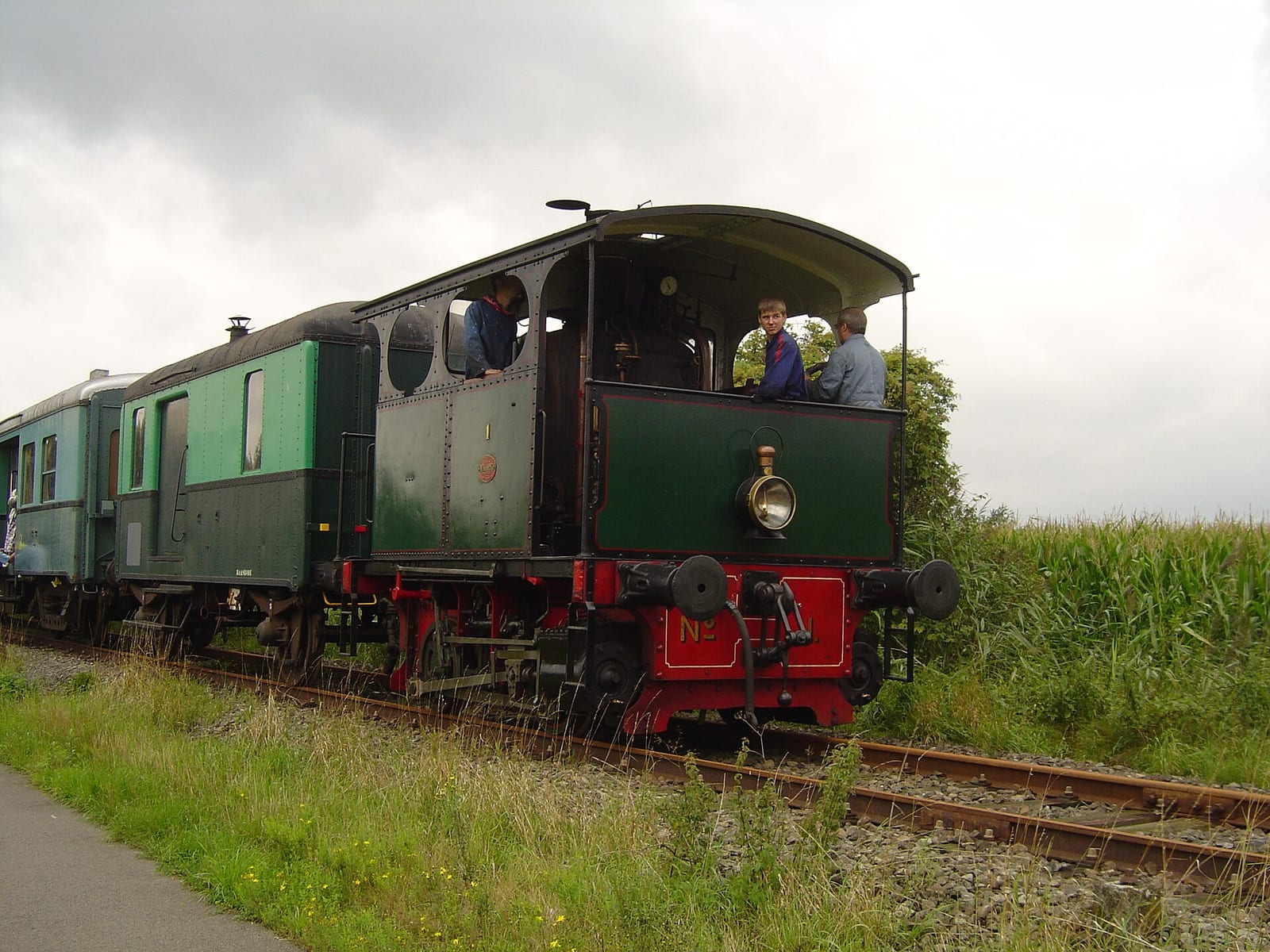
Stoomtrein Dendermonde-Puurs
Voice of Clam / Wikimedia Commons · Public domain
- Distance14 km · Dendermonde–Puurs
- DurationLeisurely heritage pace
- Best seasonSundays, Jul–Sep + events
Introduction
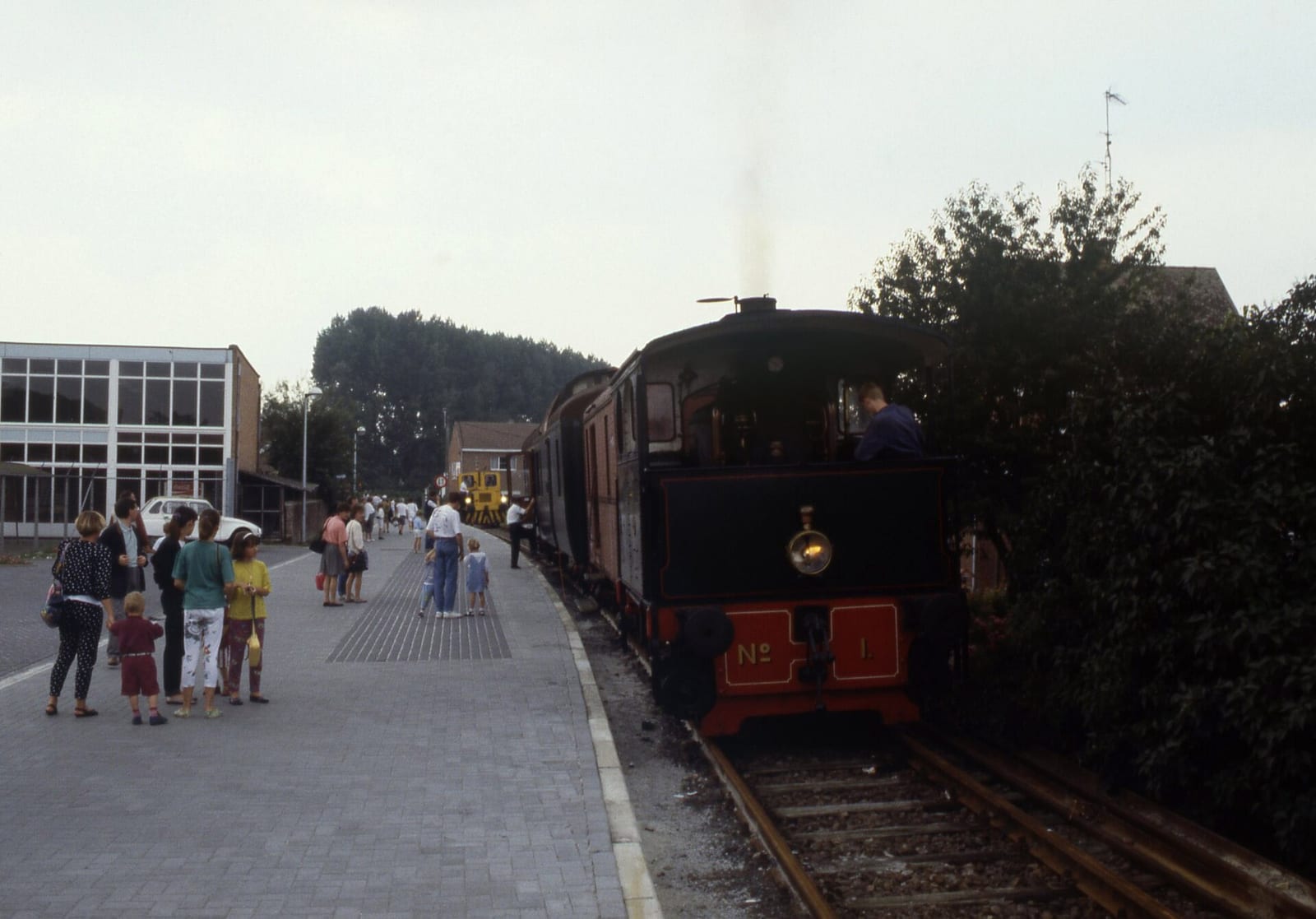
In the flat, green heart of Flanders, along a bend of the river Scheldt, a steam railway still runs the way railways used to — slowly, on Sundays, at the patient pace of a coal fire.
The Stoomtrein Dendermonde-Puurs is a 14-kilometre heritage line between the towns of Dendermonde and Puurs, in the watery country the Flemish call the Scheldeland. It is run entirely by volunteers, under a society founded in 1977 as the Belgische Vrienden van de Stoomlocomotief — the Belgian Friends of the Steam Locomotive — who took the line on and have kept steam alive here since 1986.
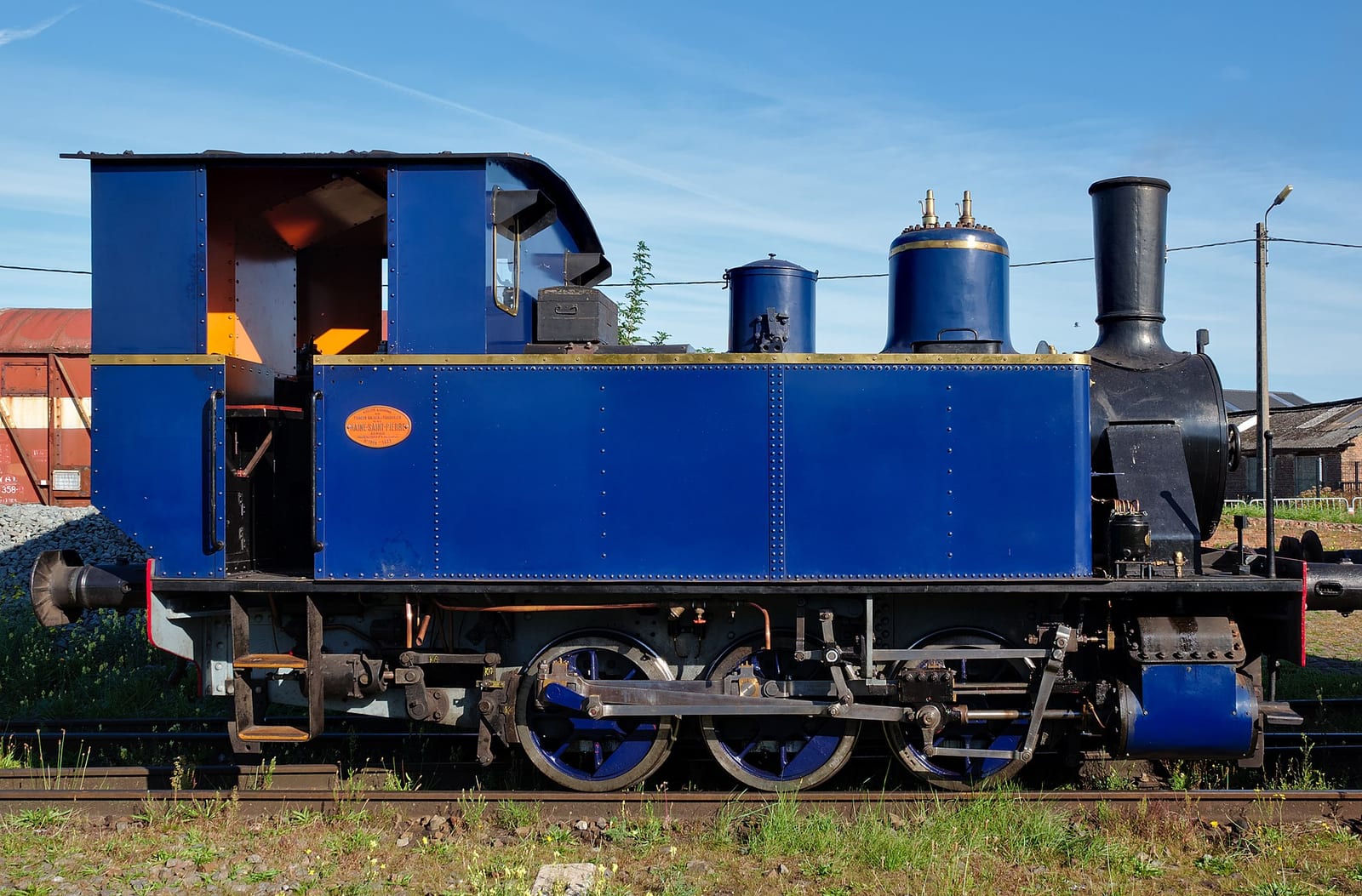
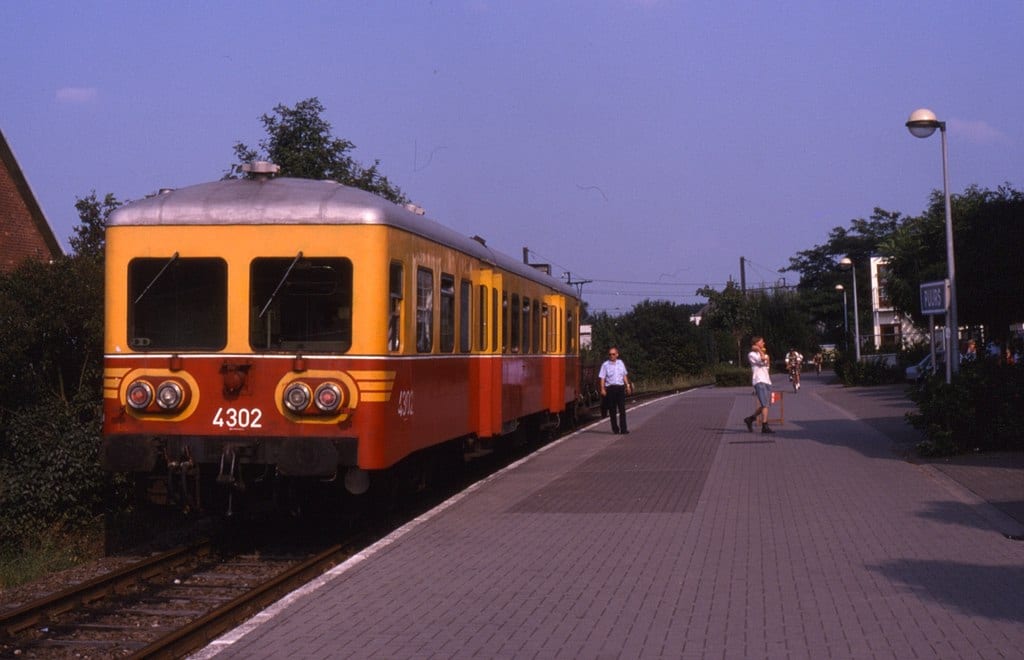
What makes this railway special is its fleet. The society keeps eleven steam locomotives, built between 1859 and 1948 — the oldest of them reaching back to the middle of the 19th century — alongside vintage diesels and railcars. Among them are a Cockerill of 1907 and a Haine-Saint-Pierre of 1922, machines that would be museum pieces almost anywhere else and here are fired up and put to work.
The line itself has real history under it. It is part of the old Line 52, and the Dendermonde–Puurs section opened on 22 July 1880. Regular trains ran until 1980, and it was into that gap that the preservationists stepped, turning a closed branch into one of Flanders' best-loved steam railways.
Ride it and you get the gentlest of journeys: green polders and willow-lined water, the villages of Baasrode, Sint-Amands and Oppuurs, and the whistle of a real steam engine drifting across the Scheldt on a summer Sunday.
The Journey
The line branches off the national network just a few hundred metres from Dendermonde station, so you can arrive on an ordinary NMBS train and step almost straight onto a vintage one. From there the heritage railway strikes out north toward the Scheldt.
First comes Baasrode-Noord, less than five kilometres out — the railway's depot and workshops, and its true home. This is where the locomotives are stored, coaled and rebuilt, and on a running day the sheds and yard are as much a part of the visit as the ride itself.
Beyond Baasrode the train rolls on through Sint-Amands, a riverside village on a broad, beautiful bend of the Scheldt, then Oppuurs, and finally into Puurs, fourteen kilometres from the start. It is flat, quiet country — polders, willows, wide skies and water — and the railway crosses it at a pace that leaves you plenty of time to look.
The history beneath the ride is straightforward and rather moving. The route is part of Line 52, built by the Belgian State railways, with the Dendermonde–Puurs stretch opening on 22 July 1880. It served the towns and the river trade for a century until regular passenger and freight services ended in 1980. Rather than let the rails be lifted, the newly formed Belgian Friends of the Steam Locomotive took the line on, and from 1986 brought steam back to it.
If the scenery feels faintly familiar, there may be a reason: several scenes of Jaco Van Dormael's acclaimed 1991 film "Toto le Héros" were shot on this very railway — a small piece of cinema history rolling quietly through the Flemish fields.
Along the route
Voice of Clam / Wikimedia Commons · Public domainSteam along the Scheldt
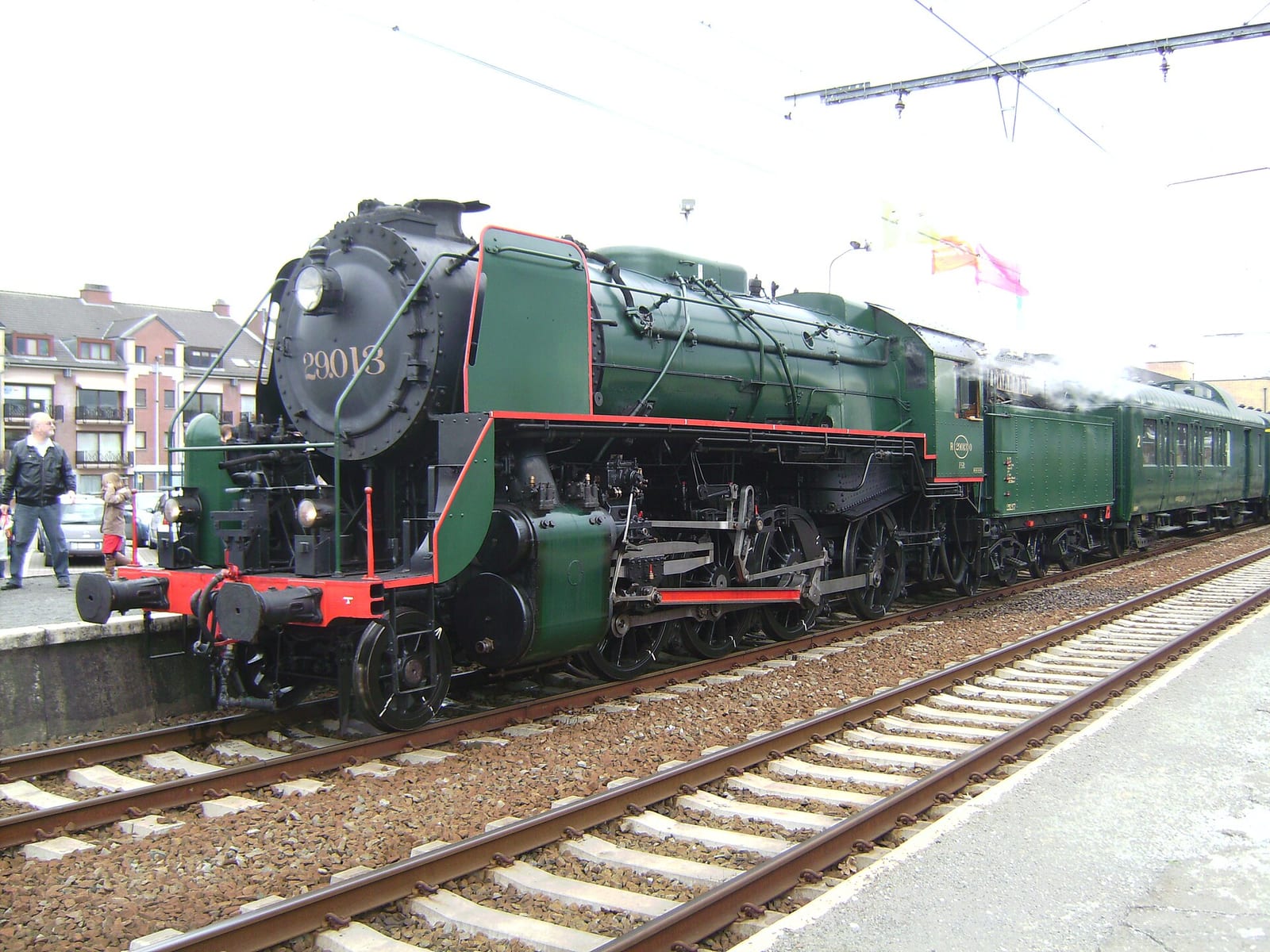
The line runs 14 flat kilometres through the Scheldeland and Klein-Brabant, following the great river Scheldt past polders, willows and riverside villages. It is gentle, green Flanders at the pace of a coal-fired locomotive.Vitaly Volkov / Wikimedia Commons · CC BY 2.0A fleet with real age
The society keeps eleven steam locomotives built between 1859 and 1948 — the oldest reaching back to the mid-19th century — alongside vintage diesels and railcars. Among them are a Cockerill of 1907 and a Haine-Saint-Pierre of 1922, all preserved by volunteers.Phil Richards / Wikimedia Commons · CC BY-SA 2.0Saved from closure
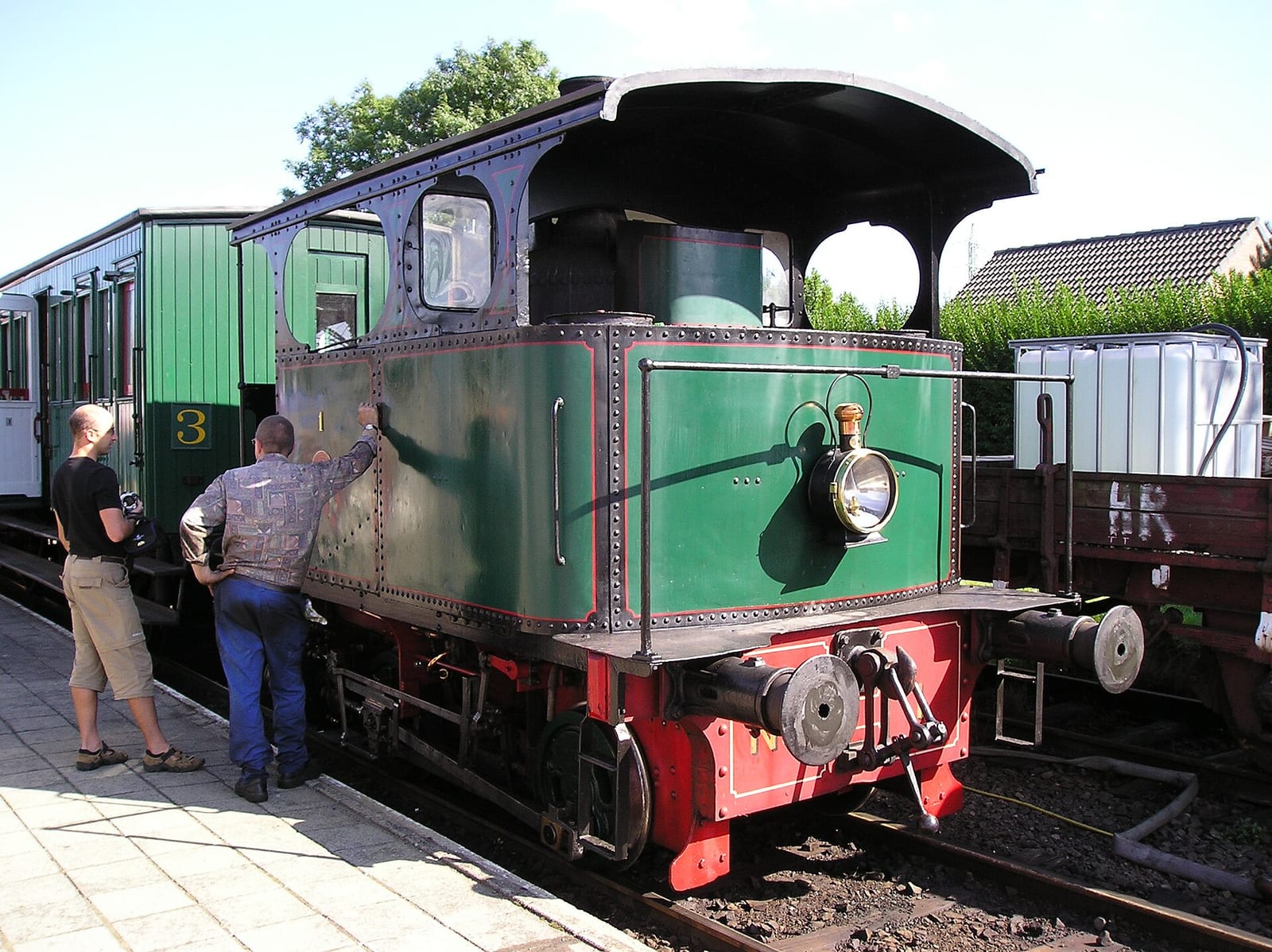
When the Dendermonde–Puurs line lost its trains in 1980, a preservation society — the Belgian Friends of the Steam Locomotive, founded in 1977 — stepped in, and has run it as a heritage railway since 1986. Their depot and workshops at Baasrode-Noord are the living museum behind it all.A bit of history
Culture & experiences along the way
Vitaly Volkov / Wikimedia Commons · CC BY 2.0Ride behind steam to Puurs
Board a vintage carriage and roll out along the Scheldt from Dendermonde, through Baasrode-Noord, Sint-Amands and Oppuurs to Puurs — every summer Sunday, at the unhurried pace a heritage railway is meant to run.Trougnouf (Benoit Brummer) / Wikimedia Commons · CC BY 4.0The Baasrode-Noord depot
The railway's home station at Baasrode-Noord is where the locomotives are kept, coaled and rebuilt. Wander the yard and sheds, watch the volunteers at work, and see the collection that keeps the line alive.Smiley.toerist / Wikimedia Commons · CC BY-SA 4.0Festival and December trains
Time your visit for the "Scheldeland in Stoom" steam festival in early July, when the fleet turns out in force, or the festive December services that bring a bit of magic to the darkest month. These are the railway's set-piece days.Timetables
Like all volunteer railways, this one runs to its own calendar rather than every day — so the schedule is the thing to check before setting out.
The pattern:
| When | What runs |
|---|---|
| Every Sunday, July–September | The regular summer steam service, Dendermonde–Puurs |
| Early July | The "Scheldeland in Stoom" steam festival |
| December | Festive winter services |
| Other dates | Occasional special events through the year |
Good to know:
- Summer Sundays are the core service. From July to September the train runs each Sunday; outside that window, you are relying on special-event dates, so always check first.
- The calendar lives on the operator's site. Running days, times and any changes are published at stoomtrein.be — confirm before you travel.
- Join along the line. The train calls at Baasrode-Noord, Sint-Amands and Oppuurs as well as the two ends, so you can start or finish partway if it suits your day.
- Build in time at Baasrode-Noord. The depot is the most interesting stop for anyone who likes machinery — allow time to see the sheds and the collection.
- The festival is the big one. For the fullest turnout of locomotives, aim for Scheldeland in Stoom (in 2026, 4–5 July — a special edition marking 40 years of the museum line); it is busier, so plan ahead.
Running days as of the 2026 season. Confirm current dates and times with the operator — see the Tickets section below.
Tickets
Tickets are sold by the railway, and it is refreshingly simple: a return ride behind steam along the Scheldt on the days the train runs, boarding at either end or at the stops between. The Sunday service runs from July to September; the Scheldeland in Stoom festival in early July and the December festive trains run to their own timetables and are the best days to see much of the fleet in steam. Fares change, so the operator publishes the current prices and any family tickets.
Confirm the running day first — outside the summer Sundays the train only runs on special dates, so do not turn up on spec. Arrive by train if you can: the heritage line meets the national network right by Dendermonde station. And know where the money goes — this is a non-profit run by volunteers, and the fares buy coal and restoration.
Book your tickets
Steam train return ticket
Dendermonde–Puurs
A return ride behind steam along the Scheldt. The train runs every Sunday from July to September, plus special-event dates; check the operator's calendar and buy through the railway. You can join or leave at the stops along the line.
Book Tickets (opens in a new tab, on Stoomtrein Dendermonde-Puurs)via Stoomtrein Dendermonde-PuursFestival & December services
Scheldeland in Stoom · winter trains
The railway's biggest days — the Scheldeland in Stoom festival in early July and its December festive trains — run to special timetables and are the best time to see much of the fleet in steam. Check dates and book ahead.
Book Tickets (opens in a new tab, on Stoomtrein Dendermonde-Puurs)via Stoomtrein Dendermonde-PuursRail Passes
No rail pass is valid on the steam train. The Stoomtrein Dendermonde-Puurs is run by a volunteer association on its own preserved line rather than by SNCB/NMBS, so Interrail, Eurail and SNCB's own products have no standing on it. The society sells its own tickets.
They are, though, the natural way to arrive — and this is one of the easiest heritage railways in Belgium to reach without a car.
Using a pass to reach the line
Interrail and Eurail Global Passes are valid on SNCB/NMBS services, with no reservation and no supplement on Belgian domestic trains. Both ends of this line sit beside national-network stations: Dendermonde is a junction on the Ghent–Mechelen and Brussels routes, and Puurs is on the Antwerp–Brussels corridor.
That makes the obvious plan a simple one — arrive at Dendermonde on your pass, walk the few hundred metres to the heritage platform, ride to Puurs and back, and continue on the national network afterwards. Few preserved railways anywhere are this well connected.
If you are not on a pass
SNCB's ordinary fares reach both ends easily: Youth (under 26), Senior (65+) and Child (under 12) bands, the Train+ subscription if you are travelling often, and mini-group fares from four people for a family outing. None of them affect the heritage railway's own fare, which you buy on the day.
SNCB products: belgiantrain.be (opens in a new tab). Correct as of August 2026.
Places to Visit
The railway threads the Scheldeland and Klein-Brabant, an easygoing region of river, polder and small brick towns between Antwerp, Ghent and Brussels. Since 13 October 2023 the whole of it has been Nationaal Park Scheldevallei, one of the four national parks of Flanders, stretching along the Scheldt from Ghent to Antwerp.
One word of warning about Dendermonde's most famous possession. The Ros Beiaard, the great wooden horse carried by twelve bearers with four armoured brothers on its back, comes out for its procession only once every ten years — the last time was in 2022, itself postponed from 2020 by the pandemic, and the city is restoring the horse for the next one, due in 2030. Between processions it stays stabled in the Hollandse Kazerne, so do not plan a trip around seeing it.
Otherwise this is perfect country for pairing the train with a day of gentle exploring, and the signposted cycle routes along the dykes make it easy — plenty of people ride out along the river and take the steam train back.
 Kris Vandevorst / Wikimedia Commons · CC BY 4.0 · cropped
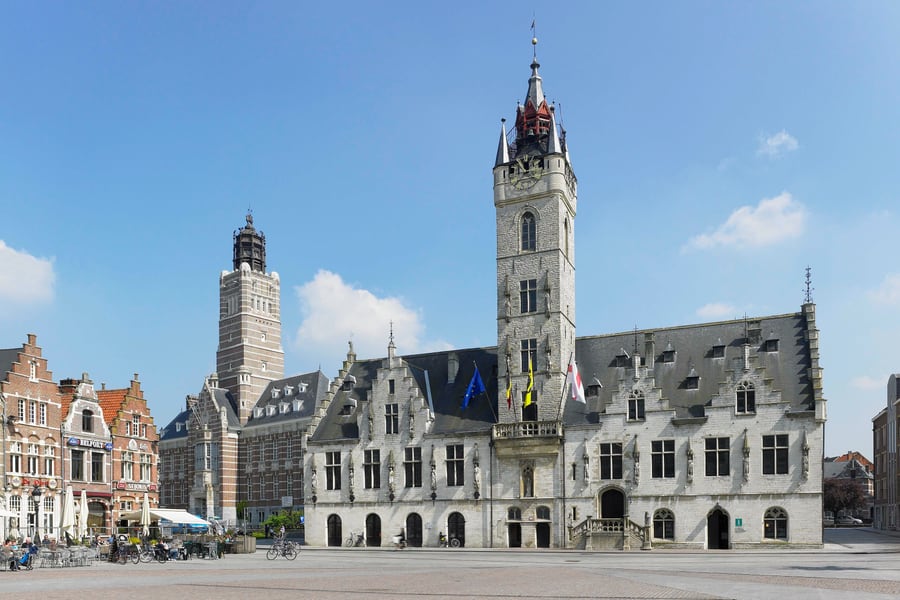
Dendermonde
The western terminus town has one of the great market squares of Flanders, closed by a cloth hall begun in 1337 with its belfry of 1377, a UNESCO World Heritage site since 1999. Look twice, though: German shelling on 17 September 1914 brought the spire and its forty bells down and burned the city archive, so what stands was rebuilt in 1925–26. The carillon now runs to 49 bells.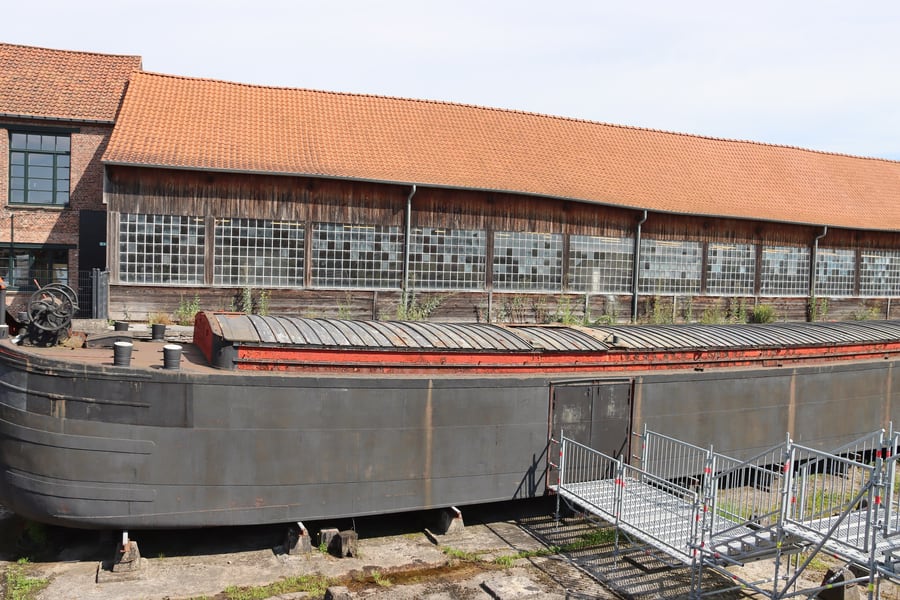 FrDr / Wikimedia Commons · CC BY-SA 4.0 · cropped
Baasrode
The railway's own depot is at Baasrode-Noord, but the village's real story is down on the river. Ships were built here from the 15th century, the trade peaked in the 1800s, and the last hull went down the slip in 1972. The final yard closed in 1986, the very year the steam trains began running — and three of the yards are now a heritage site holding more than 3,000 shipbuilders' plans.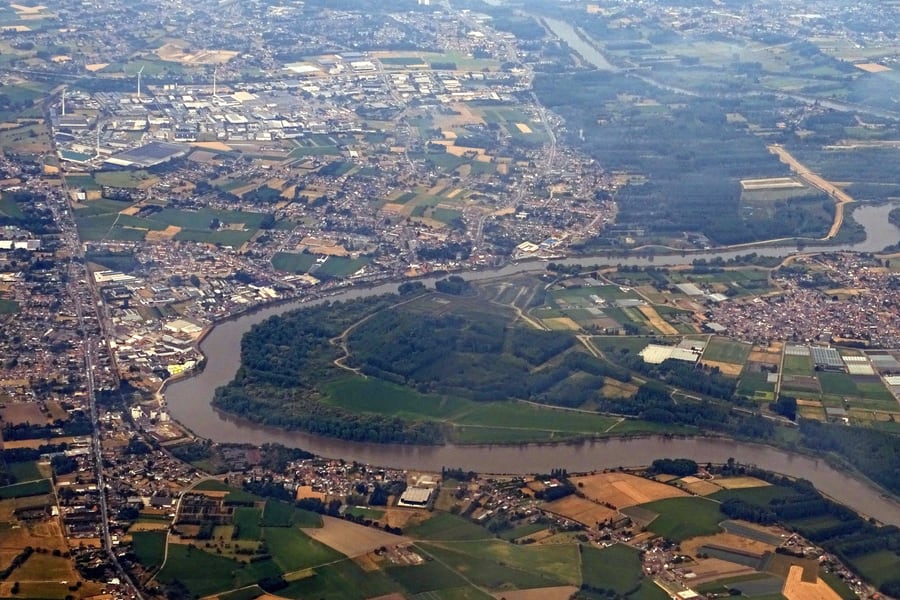 Ad Meskens / Wikimedia Commons · CC BY-SA 4.0 · cropped
Sint-Amands
Halfway along the line the Scheldt swings through an enormous loop, and the village sits on the outside of it with the whole sweep of water in front — the best view on the route. The poet Émile Verhaeren (1855–1916) is buried on the bank beside the church, and a museum in the village is given over to him. A small ferry still crosses to Mariekerke. Since 2019 the commune has been Puurs-Sint-Amands.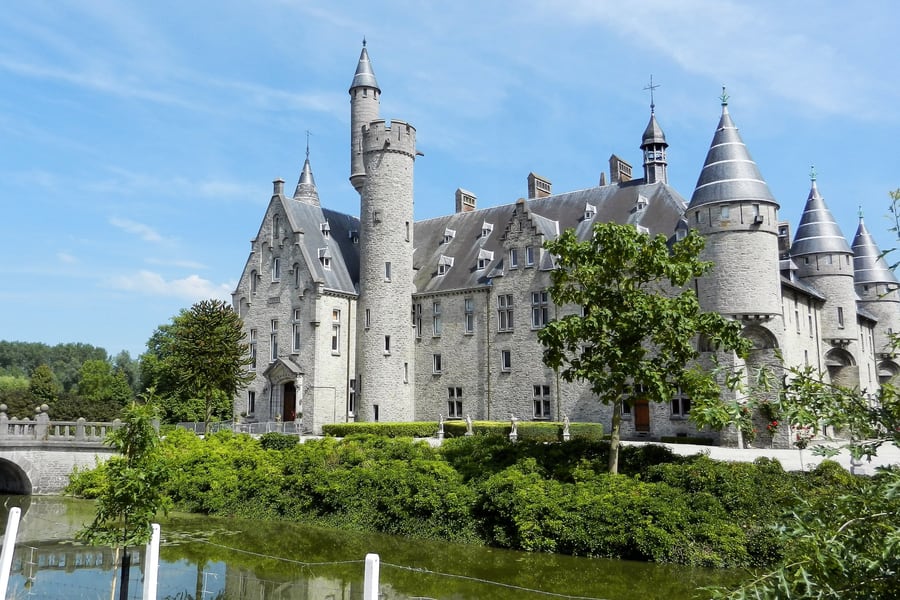 Luc.T / Wikimedia Commons · CC BY 2.0 · cropped
Bornem Castle
Turrets and grey stone standing in their own water on an old arm of the Scheldt, near the eastern end of the line. The Marnix family have held the estate for more than two centuries, but the building you see is a neo-Gothic rebuild of about 1890 by Hendrik Beyaert, not a medieval one. It holds the largest private collection of Pieter Bruegel the Elder etchings anywhere. Castle and gardens are guided visits only.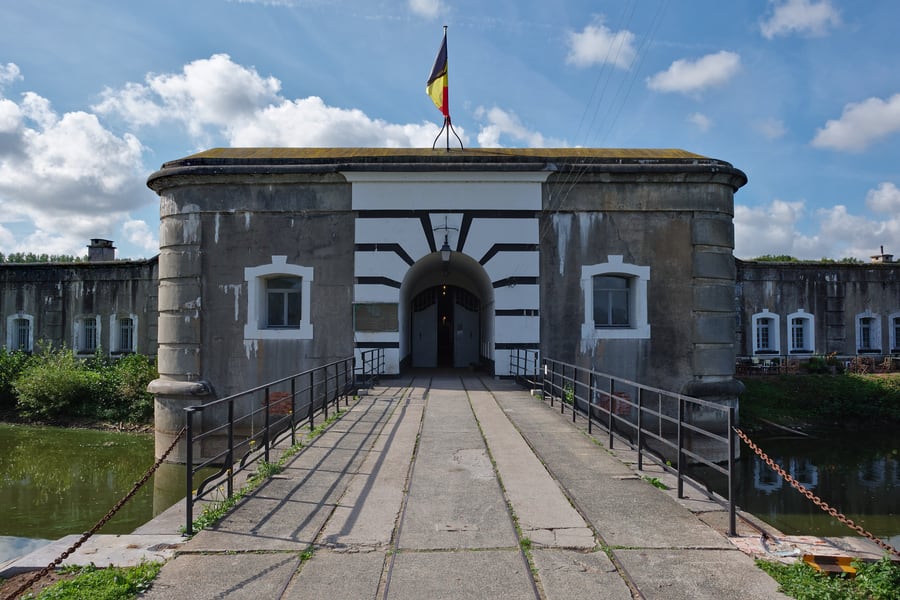 Trougnouf (Benoit Brummer) / Wikimedia Commons · CC BY 4.0 · cropped
Fort van Liezele
A few kilometres from Puurs stands one of the concrete forts of the outer ring around Antwerp, begun in May 1908. Left isolated when the ring collapsed, it held out alone and capitulated on 10 October 1914, then spent four years under German occupation. It is a museum now, run by volunteers and reopened after refurbishment in 2023 — cold concrete corridors, gun positions and a moat full of water.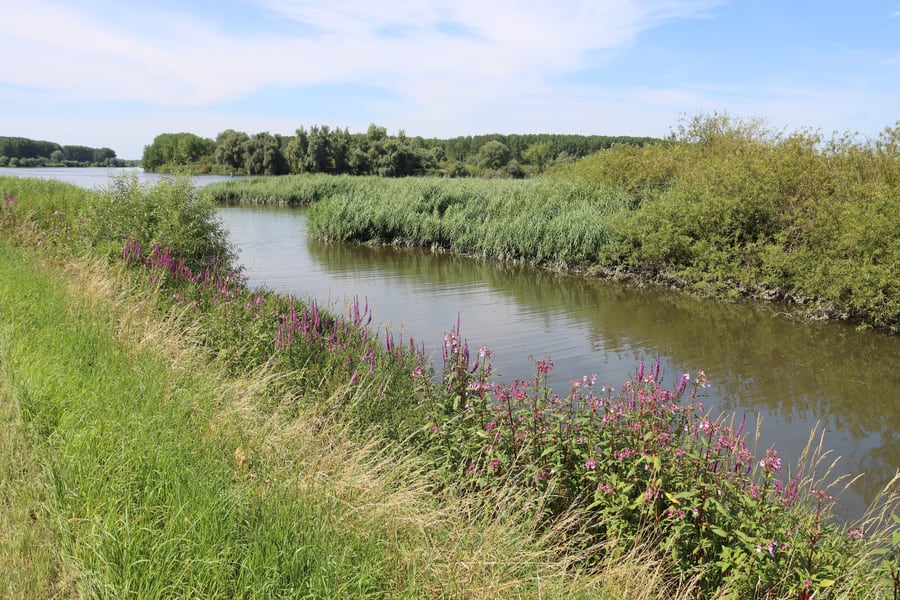 FrDr / Wikimedia Commons · CC BY-SA 4.0 · cropped
Nationaal Park Scheldevallei
The flat green country the train crosses became a national park on 13 October 2023, one of three named that day when Flanders went from one national park to four. It follows the Scheldt from Ghent to Antwerp across 22 municipalities — Dendermonde, Bornem and Puurs-Sint-Amands among them. Reed bed, polder and tidal creek, with beavers, purple herons and, since the water cleaned up, some fifty species of fish.Where to Sleep
This is a comfortable corner of central Flanders, well connected and easy to base yourself in — whether you want a town, a riverside village or somewhere out among the cycle routes.
- In Dendermonde. The town at the western end has hotels, B&Bs and guesthouses and is the most convenient base, with its own NMBS station right by the start of the heritage line.
- Riverside villages. For something quieter, look to Sint-Amands, Bornem and the villages of Klein-Brabant, where small B&Bs and guesthouses put you on the Scheldt and its cycle paths.
- City nearby. Because the region sits between Antwerp, Ghent and Brussels — each well under an hour away by train — you can just as easily stay in a city and come out for the day.
- For cyclists and walkers. The Scheldeland has plenty of rural guesthouses, holiday rentals and campsites geared to people exploring the dykes and rivers under their own steam.
However you do it, the appeal is the same: a slow river, flat green country, and the sound of a steam whistle carrying across the polders on a Sunday.
Questions or corrections
Planning this trip and stuck on something, or spotted a time, fare or detail that has changed? Send us a message about Stoomtrein Dendermonde-Puurs. We read every one, and we update this page when something has changed.