Tábor to Bechyně
Jan Beránek / Wikimedia Commons · CC BY-SA 3.0 · cropped
- DistanceTábor–Bechyně · 24 km
- Duration46 to 51 minutes each way
- Best seasonDaily all year · the 1903 railcar on summer Saturdays
Introduction
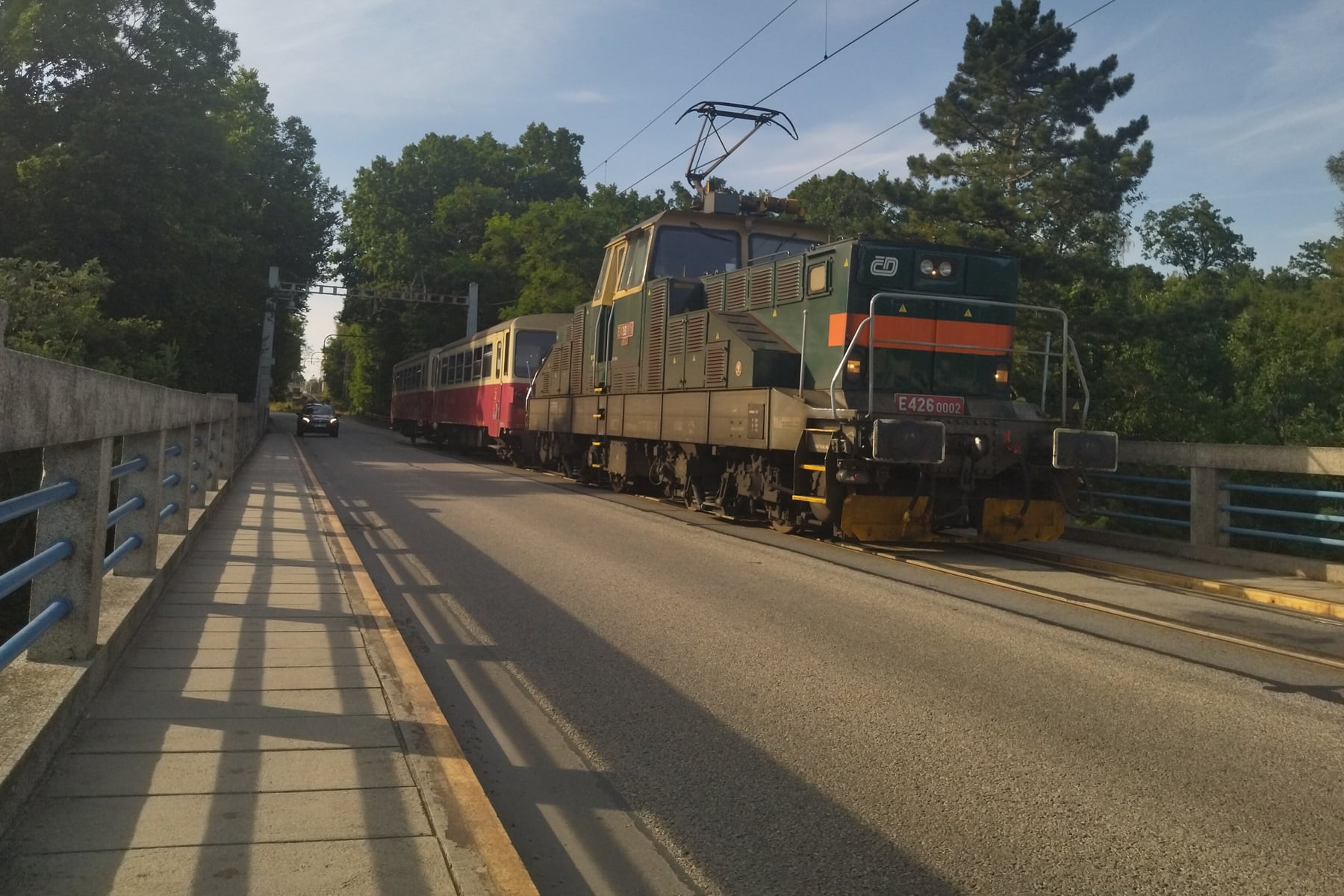
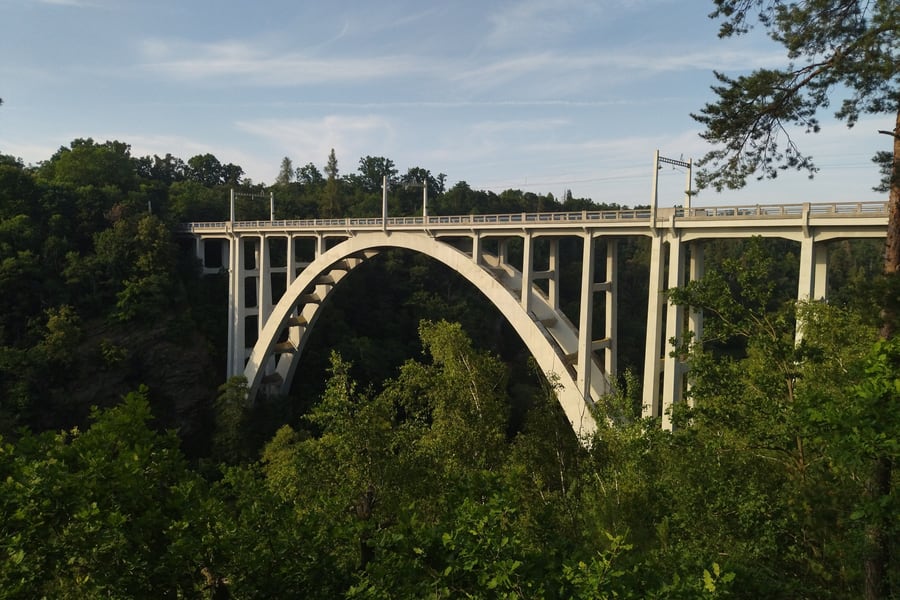
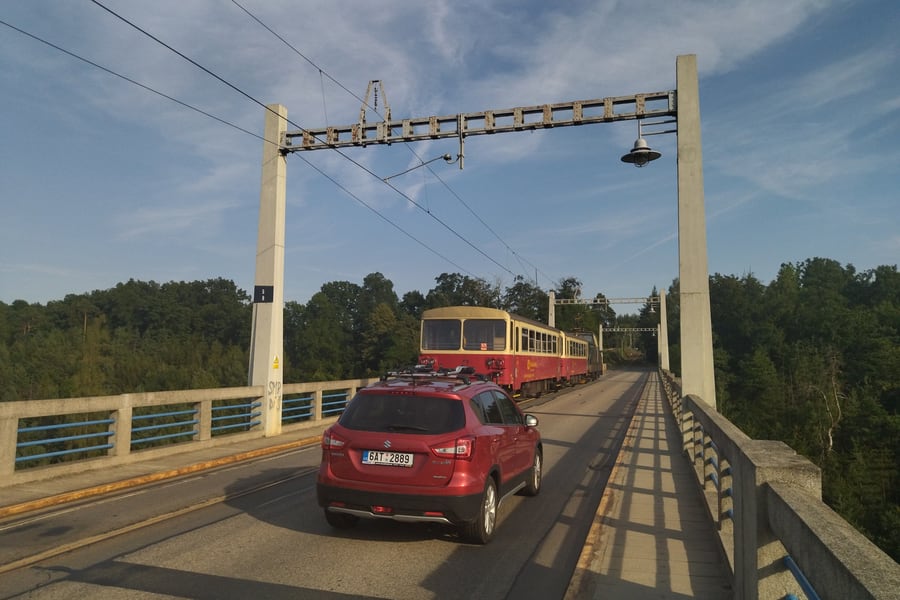
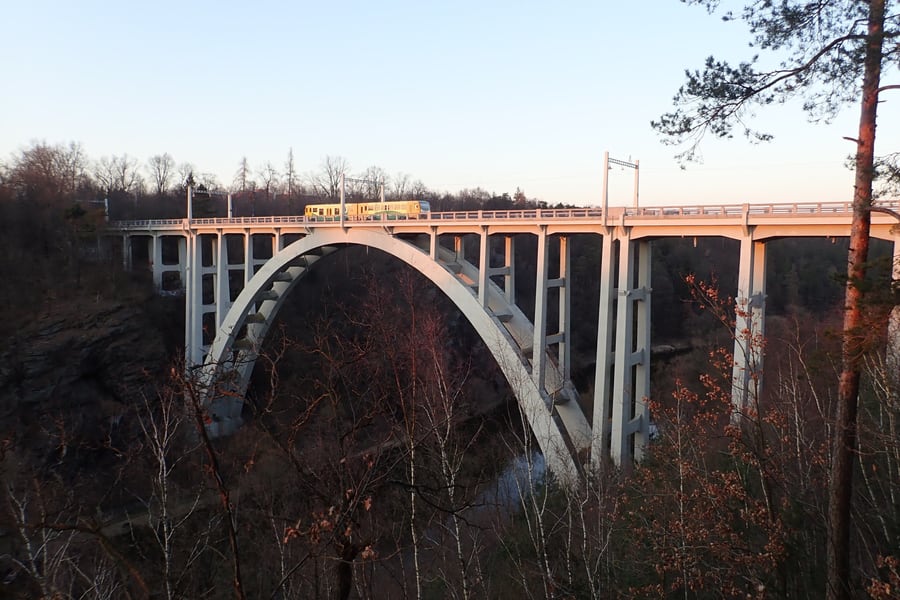
At the end of this line the train goes out onto a bridge and joins the traffic. The Bechyně Rainbow carries a road and the railway on one deck, high above the Lužnice, with the track laid along the edge of the carriageway. When a train comes, a signal stops the cars heading into Bechyně and the train runs across in their lane, while the cars going the other way carry on past it. The bridge was opened on 28 October 1928, the tenth anniversary of Czechoslovakia, and it has been a national cultural monument since 2014.
The railway it carries is older, and more of a pioneer. František Křižík, the electrical engineer whose works built it, opened the line from Tábor on 21 June 1903 as an electric railway from the start, the first in what is now Czechia. It still runs on electricity, at 1,500 volts direct current, a system no other line in the country uses. The state has chosen to keep it: in 2025 the wires began to be renewed at the same voltage.
The ride is 24 kilometres and about fifty minutes, through the farmland and woods of South Bohemia, on curves so tight that the trains slow to walking pace. Most trains are hauled by Žehlička, the "flat iron", a small Škoda locomotive built in 1973 for the 1,500-volt lines. On summer Saturdays the 1903 railcar comes out of the museum and does the trip again.
The Journey
Trains for Bechyně leave from their own platform at Tábor, set apart from the main-line tracks beside the station forecourt. Soon after leaving, the line is out over the Lužnice on Křižík's steel bridge, with the old power station that once fed it standing by the river below. Then it climbs away from the valley through Horky u Tábora to Slapy, the first station after Tábor.
Across the plateau
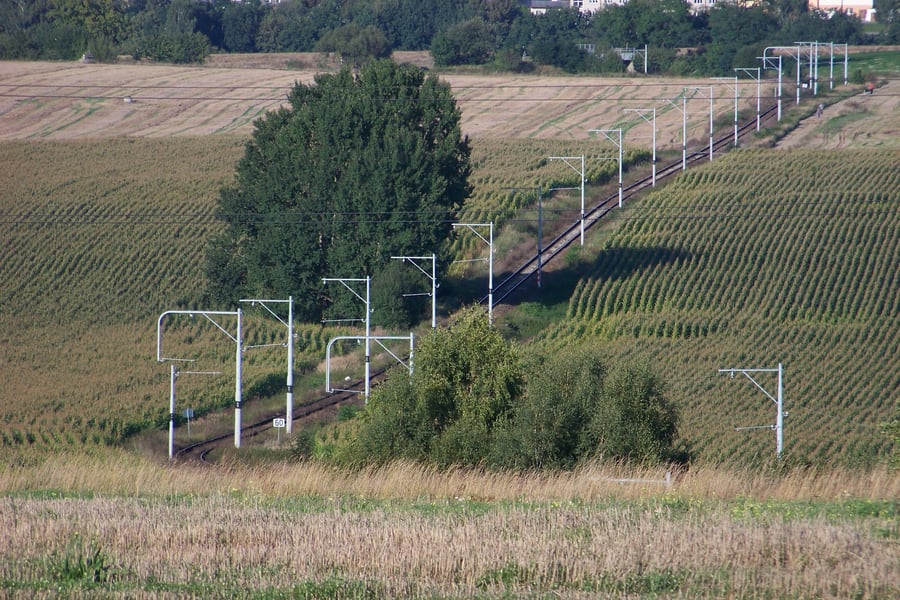
The middle of the line crosses open farmland and woods by way of Libějice, Malšice, Čenkov u Malšic, Třebelice and Všechlapy. It was built cheaply. Rather than cutting through the ground, it follows it, which gives it gradients of up to 36 per mille and curves as tight as 125 metres. On those the speed limit is 10 km/h, and the train creeps round them at walking pace. Elsewhere it may run at 60.
Beyond Bechyňská Smoleč a siding once turned off to the military airfield at Bechyně, and at Sudoměřice u Bechyně, the last station before the end, the line starts down towards the river. It runs through woods past Bežerovice to Bechyně zastávka, a halt on the left bank.
Over the gorge and into the road
For its first twenty-five years the railway ended on this bank, on the wrong side of the Lužnice from the town it was named for. Passengers walked two or three kilometres down into the valley, crossed the river on a footbridge two metres wide, and climbed up again into Bechyně. In 1928 the Bechyně Rainbow closed the gap: a reinforced-concrete arch of 90 metres, designed by Eduard Viktora, built for road and railway together. The new station on the town side opened on 15 May 1929, and the old terminus became a timber yard.
The bridge is the reason to ride the line. The train leaves the woods, comes out onto the deck, and runs along the edge of the road, with the gorge falling away on both sides. A signal holds the traffic heading into Bechyně; traffic the other way keeps moving. Less than a kilometre on, the line ends at Bechyně station, on the edge of the town.
The power, then and now
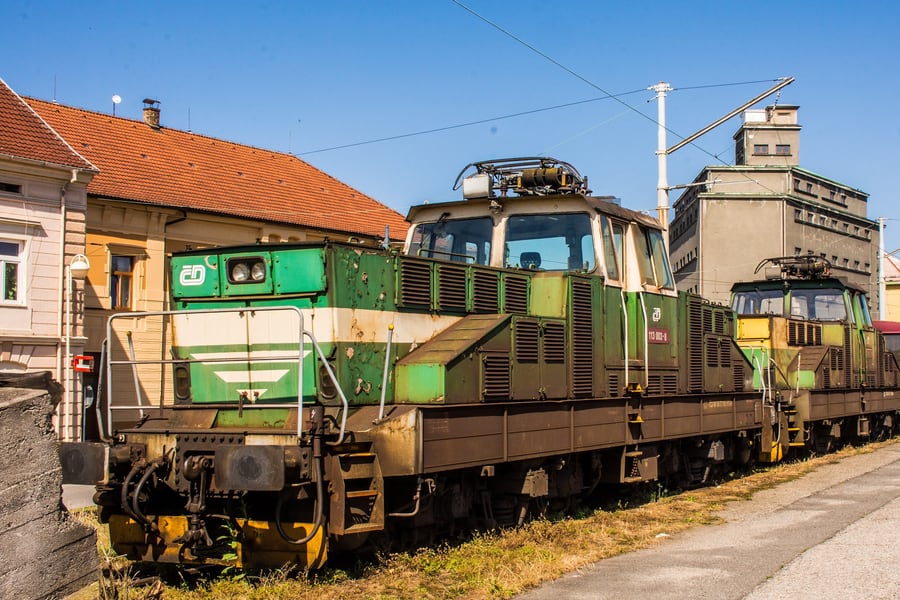
The line was fed from a power station that Křižík's works built in Tábor, where three steam-driven dynamos produced current at 2 × 700 volts, carried by two overhead wires of opposite polarity, with the rail as the middle conductor. The same station lit Tábor's new street lamps. In 1938 the line was rebuilt for 1,500 volts on a single contact wire, and that is what it still uses. Czechia's main lines run at 3,000 volts DC or 25,000 volts AC, so this one has kept its own locomotives: the class 113, of which Škoda built six in 1973 for the 1,500-volt lines. Three are kept here, and each hauls a short rake of coaches.
There have been several attempts to change it. In 2020 the region wanted the line converted to 25,000 volts so that modern trains could run, and a RegioPanter unit was tested on the curves that autumn. The trials failed on the curves, and in 2023 a full rebuild of the overhead line was cancelled. In 2025 the infrastructure manager began renewing the wires and masts at the existing voltage, section by section, to be finished in 2027. Diesel Regionova railcars cover some trains.
Along the route
 Donald Judge / Wikimedia Commons · CC BY 2.0 · cropped
Křižík's bridge at Tábor
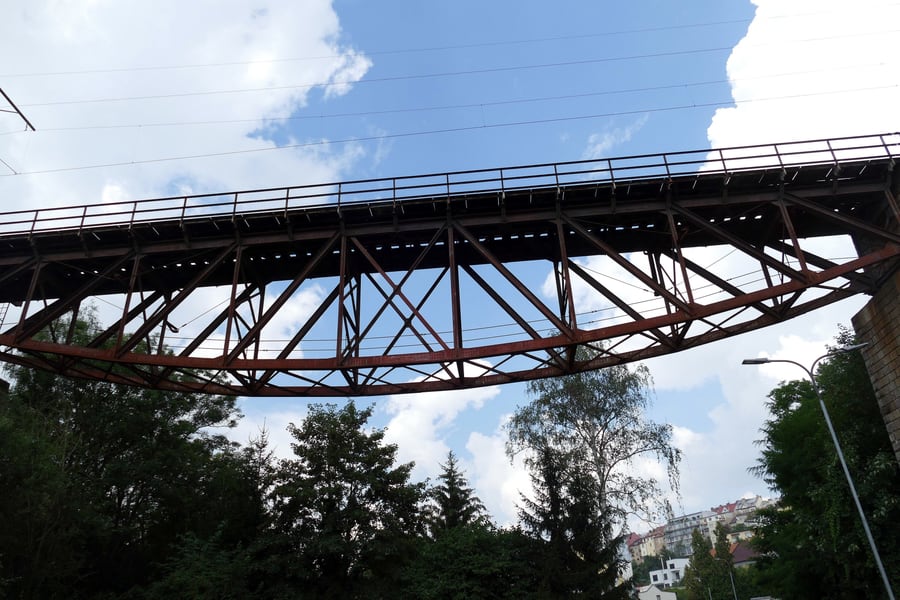
Just outside Tábor the line crosses the Lužnice on a steel bridge 174 metres long and 20 metres above the water, designed by Křižík. In 2025 its steelwork was replaced with an exact copy. It has been a protected monument since 1958.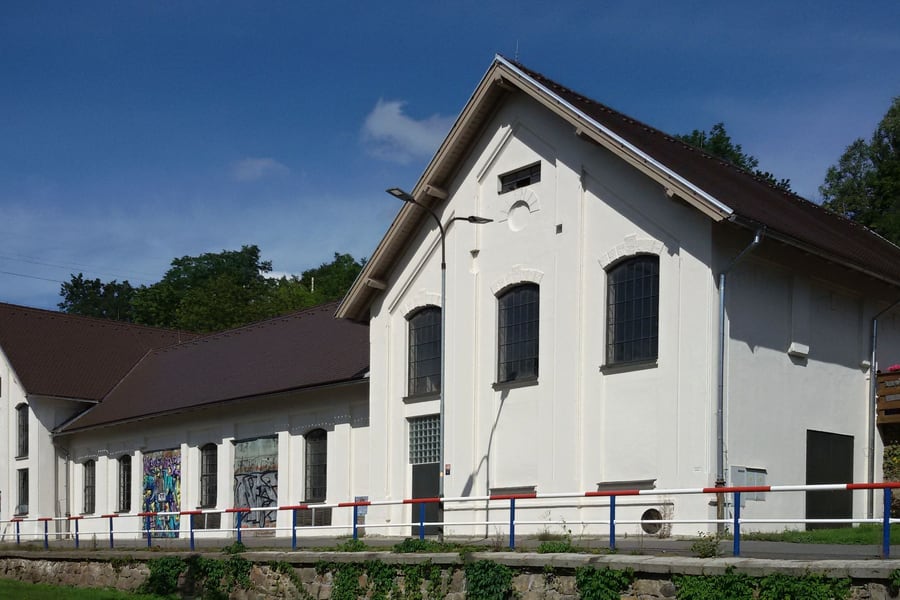 Anaj7 / Wikimedia Commons · CC BY-SA 3.0 · cropped
The power station by the river
Beside the bridge stands the station built in 1902–03 to drive the trains, with three steam-driven dynamos. It also lit Tábor's new street lamps. It stopped generating around 1959 and has been a protected monument since 2015.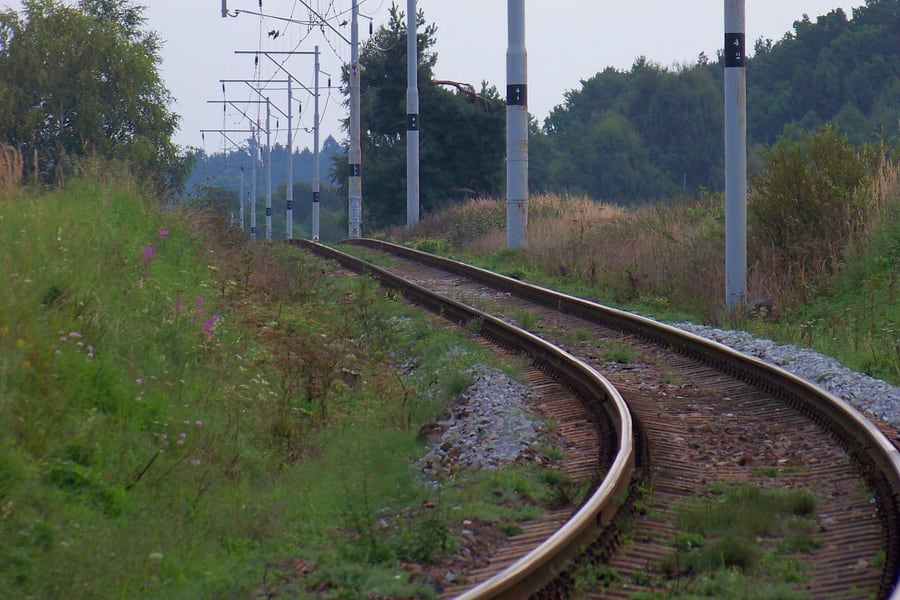 ŠJů / Wikimedia Commons · CC BY-SA 3.0 · cropped
Curves at walking pace
The line follows the ground rather than cutting through it, with gradients up to 36 per mille and curves as tight as 125 metres. Its 1902 licence allowed tighter curves than other local lines; on them the trains still slow to 10 km/h.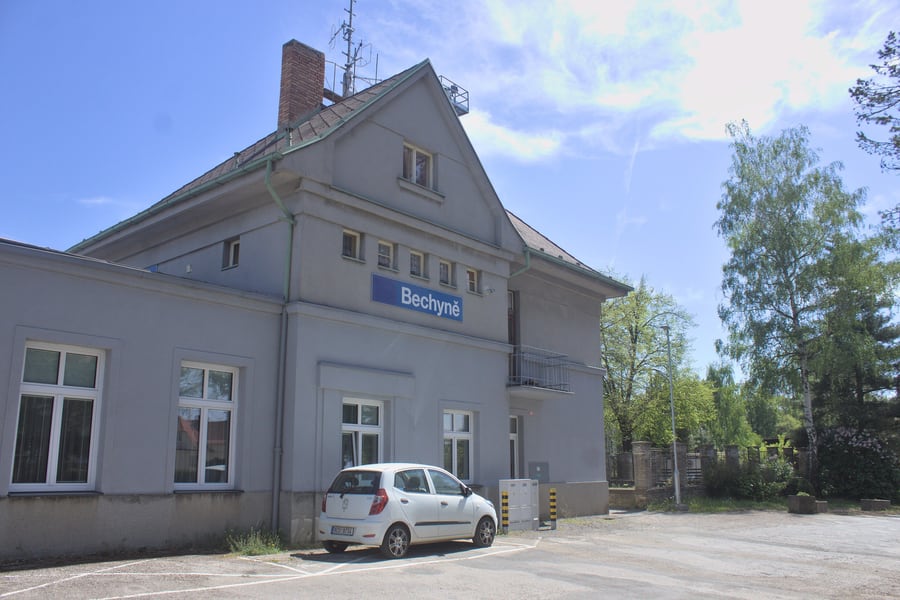 Aktron / Wikimedia Commons · CC BY-SA 4.0 · cropped
A station on the right bank
Bechyně station opened on 15 May 1929, on the town side of the river. Until then the line stopped on the far bank, and passengers walked down into the valley and over a footbridge two metres wide. The old terminus became a timber yard.A bit of history
Culture & experiences along the way
 VitVit / Wikimedia Commons · CC BY-SA 4.0 · cropped
The ceramics town
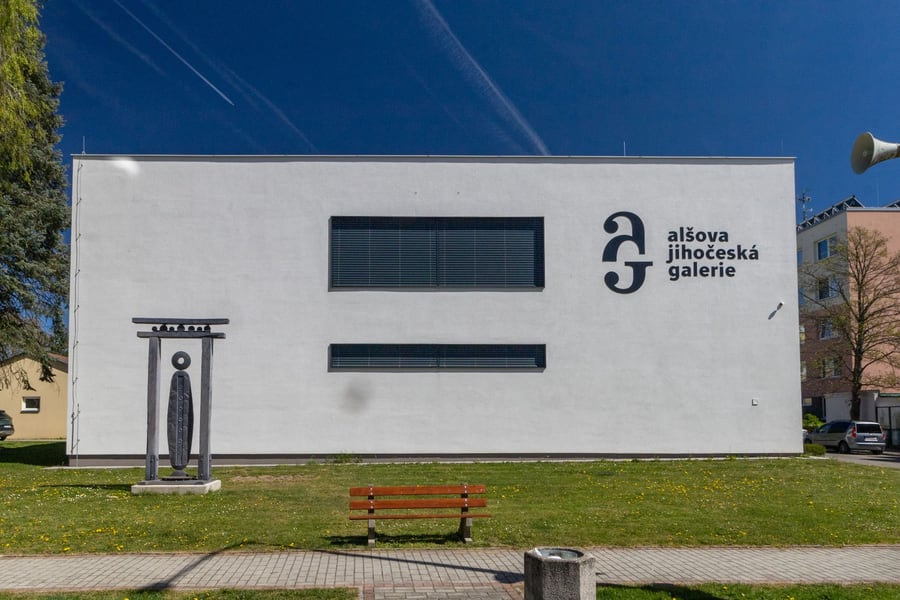
Bechyně has made pottery since the sixteenth century, and in 1884 it opened the oldest ceramics school in Bohemia, which still teaches. The Alšova jihočeská galerie runs its International Museum of Ceramics here, in a converted building on Novodvorská since 2022. It reopens with a new exhibition on 15 November 2026.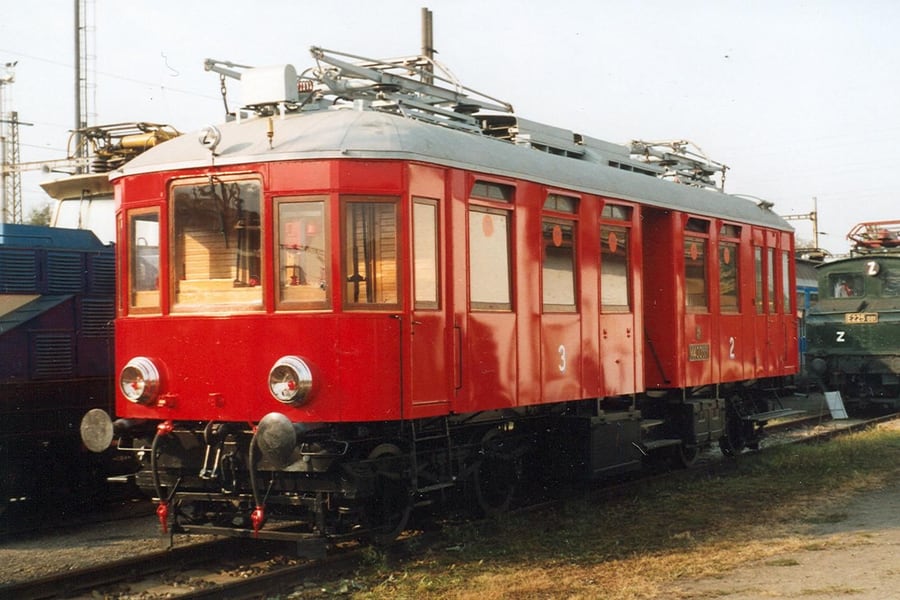 Rainerhaufe / Wikimedia Commons · CC BY-SA 3.0 · cropped
Elinka, the 1903 railcar
One of the line's original electric railcars, M 400.001, survives as a working exhibit of the National Technical Museum, and on summer Saturdays it runs specials: from Tábor at 9:18 and 13:18, back from Bechyně at 11:25 and 15:25. In 2026 the season ran from 4 July to 29 August.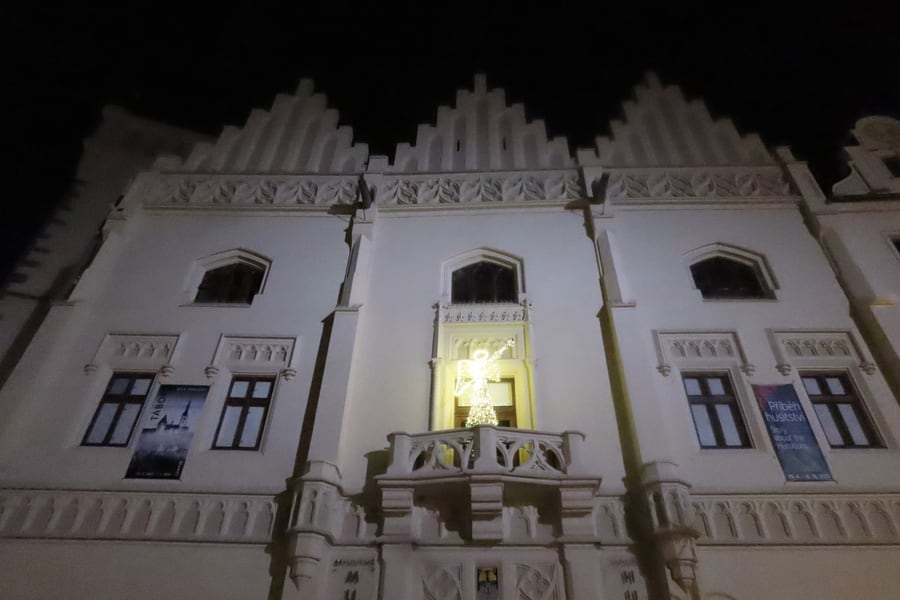 Donald Judge / Wikimedia Commons · CC BY 2.0 · cropped
The Hussite town
Tábor was founded by the Hussites in the spring of 1420 and named after the biblical Mount Tabor. The Hussite Museum's main exhibition is in the Old Town Hall on Žižkovo náměstí, whose great hall was vaulted in 1521, and from it a tour leads into the medieval cellars dug beneath the town.Timetables
Line 202 is worked by České dráhy every day of the year. The basic pattern is a train every two hours in each direction, filled in to roughly hourly on weekdays. No reservation is needed. The run takes 46 to 51 minutes.
Times below are from the timetable published by Správa železnic for 2026, valid from 14 June to 12 December 2026, read in October 2026. Check departures at cd.cz (opens in a new tab).
Tábor to Bechyně
| Tábor | Bechyně | Runs |
|---|---|---|
| 04:40 | 05:28 | Mon–Fri |
| 05:43 | 06:32 | Mon–Fri |
| 06:48 | 07:38 | Mon–Fri |
| 07:05 | 07:51 | Sat, Sun |
| 09:06 | 09:51 | Daily |
| 11:05 | 11:51 | Daily |
| 13:05 | 13:51 | Daily |
| 15:05 | 15:51 | Daily |
| 17:07 | 17:53 | Daily |
| 19:07 | 19:55 | Daily |
| 22:46 | 23:33 | Daily |
On weekdays further trains leave Tábor at 14:06, 16:07, 18:08 and 20:09.
Bechyně to Tábor
| Bechyně | Tábor | Runs |
|---|---|---|
| 04:33 | 05:21 | Mon–Fri |
| 05:37 | 06:25 | Daily |
| 06:42 | 07:30 | Mon–Fri |
| 08:00 | 08:46 | Daily |
| 10:00 | 10:46 | Daily |
| 12:00 | 12:46 | Daily |
| 14:00 | 14:46 | Daily |
| 16:01 | 16:47 | Daily |
| 18:02 | 18:48 | Daily |
| 20:04 | 20:50 | Daily |
On weekdays further trains leave Bechyně at 15:00, 17:02, 19:03 and 21:06.
Summer
Until mid-October the timetable is fuller: the weekday afternoon trains run every day until 16 October, and extra morning trains run at weekends until 11 October. A train in each direction around midday runs on Fridays and Sundays through the autumn as well.
Elinka
On Saturdays from 4 July to 29 August 2026 the 1903 railcar ran two return trips: from Tábor at 09:18 and 13:18, arriving in Bechyně at 10:27 and 14:27, and back from Bechyně at 11:25 and 15:25. These are historic trains on their own fare. Dates for 2027 had not been published when this page was checked.
Tickets
The trains on line 202 are ordinary České dráhy regional trains, so the fare is an ordinary ČD fare and no reservation is needed. Tickets can be bought in advance in the ČD e-shop or the Můj vlak app, or at the station in Tábor before you board.
The Elinka specials on summer Saturdays are the exception. They are historic trains, and the timetable marks them as running on a fare of their own rather than the normal tariff, so a standard ticket or pass is not the way to ride them.
Book your tickets
Tábor to Bechyně
České dráhy · line 202, daily
An ordinary ČD fare with no reservation, sold in the ČD e-shop and the Můj vlak app.
Book Tickets (opens in a new tab, on cd.cz)via cd.czElinka on summer Saturdays
České dráhy · July and August
Two return trips each summer Saturday in the 1903 railcar, sold at a special fare of their own.
Book Tickets (opens in a new tab, on cd.cz)via cd.czRail Passes
Interrail and Eurail passes cover the regular trains on this line. They are České dráhy Osobní (Os) trains, which Interrail's list of Czech operators includes for both the Global Pass and the One Country Pass, with no reservation needed.
That does not make a pass worth buying for this journey alone: it is a short regional ride on an ordinary fare. It is worth having if you are already travelling in Czechia on a pass, since Tábor is on the main line from Prague. The summer Elinka specials run on a fare of their own and are not part of the pass.
Pass conditions checked against Interrail's railway-companies page, last updated 21 October 2026. Conditions change with each season, and the pass issuer's page is the one that binds.
Places to Visit
Both ends of the line are old towns worth time of their own, and the Lužnice valley around Bechyně has a castle ruin on its banks. The places below run from Tábor to Bechyně and beyond.
Tábor's old town is a short walk up from the station, and Kotnov stands at its south-west corner. In Bechyně the château and the monastery garden are a walk from the station, and Dobronice is about seven kilometres away.
 ŠJů / Wikimedia Commons · CC BY-SA 3.0 · cropped
A town above a fifteenth-century reservoir
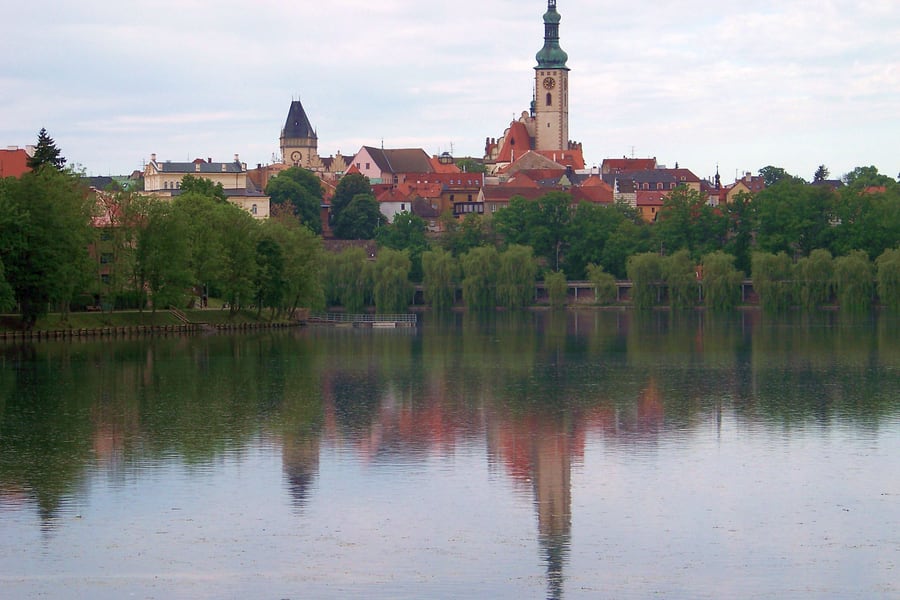
Tábor's old town stands above the Jordán, a 51-hectare reservoir made in 1492 by damming a brook to give the town drinking water. It is the oldest dam reservoir in Czechia. The earth dam is 20 metres high and 284 metres long, with an 18-metre waterfall just below it, and the reservoir has been a protected monument since 1992.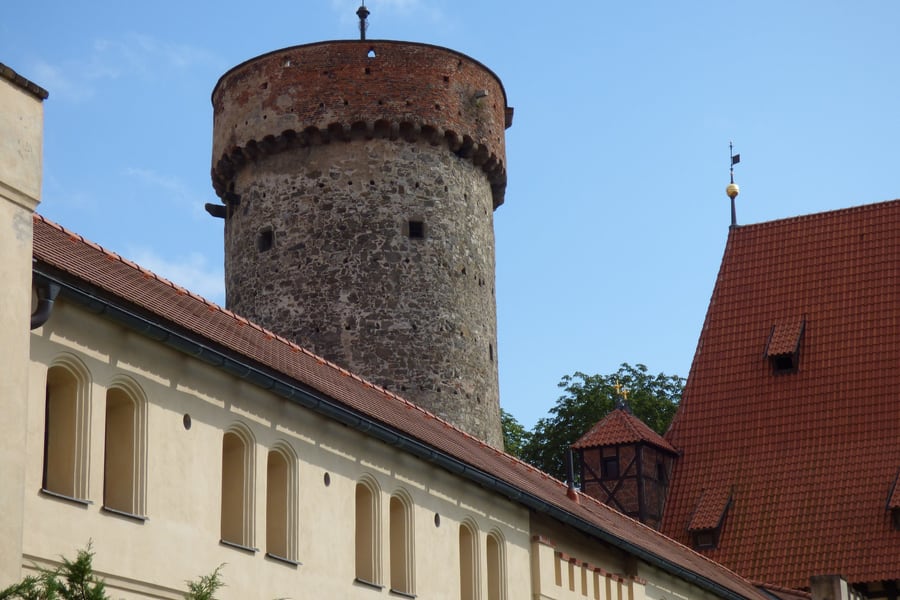 Jiří Bernard / Wikimedia Commons · CC BY-SA 3.0 · cropped
Kotnov tower and the Bechyně Gate
Kotnov was a royal castle on the end of Tábor's ridge before the Hussites took the site into their walls. After a fire in 1532 it became a brewery, and its round battery tower is what remains. With the neighbouring Bechyně Gate it has been a national cultural monument since 1962, and the tower is now a lookout with an exhibition on Tábor as a fortress town.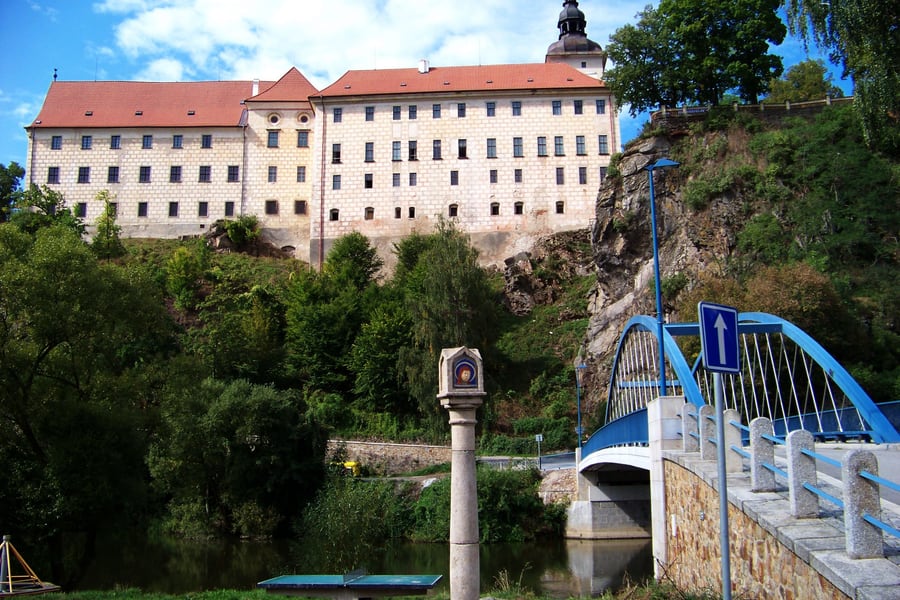 ŠJů / Wikimedia Commons · CC BY-SA 3.0 · cropped
A royal castle above the river
Přemysl Otakar II built a castle on the spur above the Lužnice in 1268. Petr Vok of Rožmberk had it rebuilt as a Renaissance château in 1581–84, to designs by Baldassare Maggi, and the Paar family held it until 1948. It has been a protected monument since 1963 and stands over the Zářečí bridge, best seen from the far bank.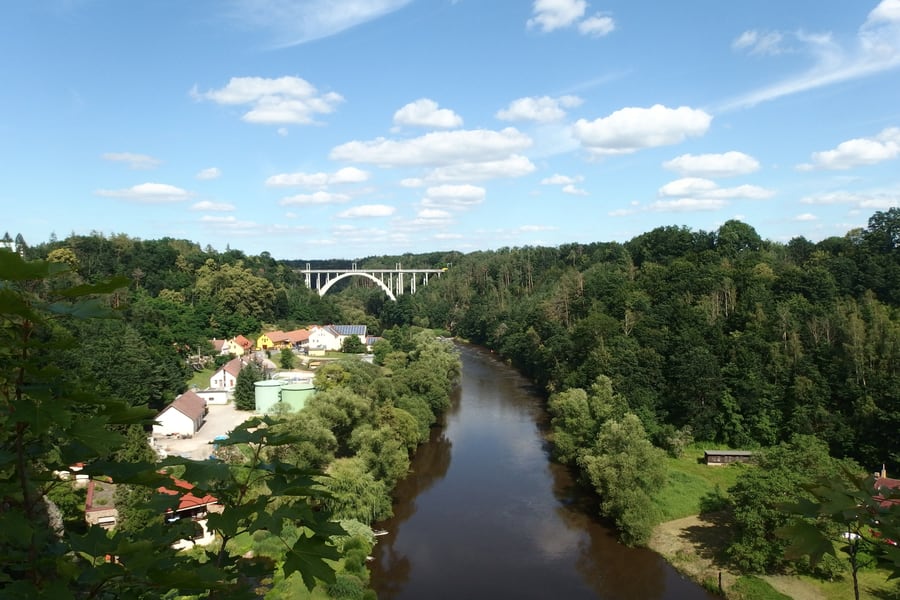 Palickap / Wikimedia Commons · CC BY-SA 4.0 · cropped
The monastery garden
The Franciscans settled in Bechyně in 1281, and their church of the Assumption was built on the rock over the Lužnice in 1491. The monastery's terraced gardens look down the valley to the arch of the railway bridge, and since 1992 they have held an open-air summer theatre, Divadlo v trávě.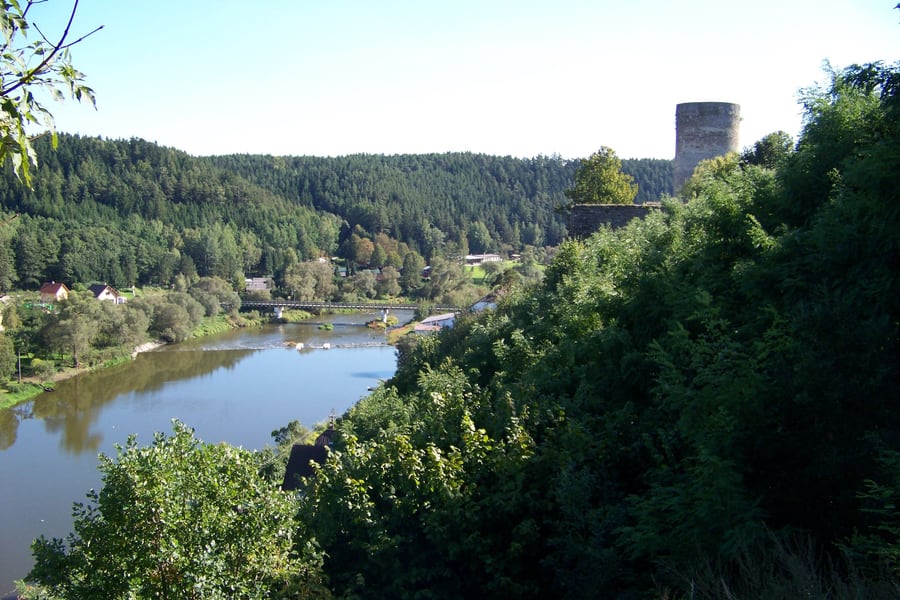 ŠJů / Wikimedia Commons · CC BY-SA 3.0 · cropped
A ruin over the Lužnice
The ruined castle of Dobronice stands on a spur above the Lužnice. It was built in stone around 1320; the Jesuits bought it in 1691 and used it as a summer residence, then moved the estate office to Opařany in 1727 and left it empty. A tower and walls survive, and it has been a protected monument since 1963.Where to Sleep
The line is under an hour end to end, with trains from early morning until nearly midnight, so it is easy to ride as a day out from Tábor.
Tábor is the better base. It is on the main line from Prague to České Budějovice, and its historic centre on Žižkovo náměstí is worth an evening of its own. The hotel below keeps its own website and takes direct bookings.
Where to stay
Hotel Nautilus
On Žižkovo náměstí, Tábor
A 22-room hotel on the main square of Tábor's old town, with its own restaurant and wellness centre.
Check Availability (opens in a new tab, on hotelnautilus.cz)via hotelnautilus.czQuestions or corrections
Planning this trip and stuck on something, or spotted a time, fare or detail that has changed? Send us a message about Tábor to Bechyně. We read every one, and we update this page when something has changed.