Tallinn to Narva — Estonia's first railway
Nenea hartia / Wikimedia Commons · CC BY-SA 4.0 · 2023 · cropped
- Distance209.6 km
- Duration2 hr 28 min (express) – 2 hr 59 min
- Best seasonFive trains each way, every day of the year
Introduction
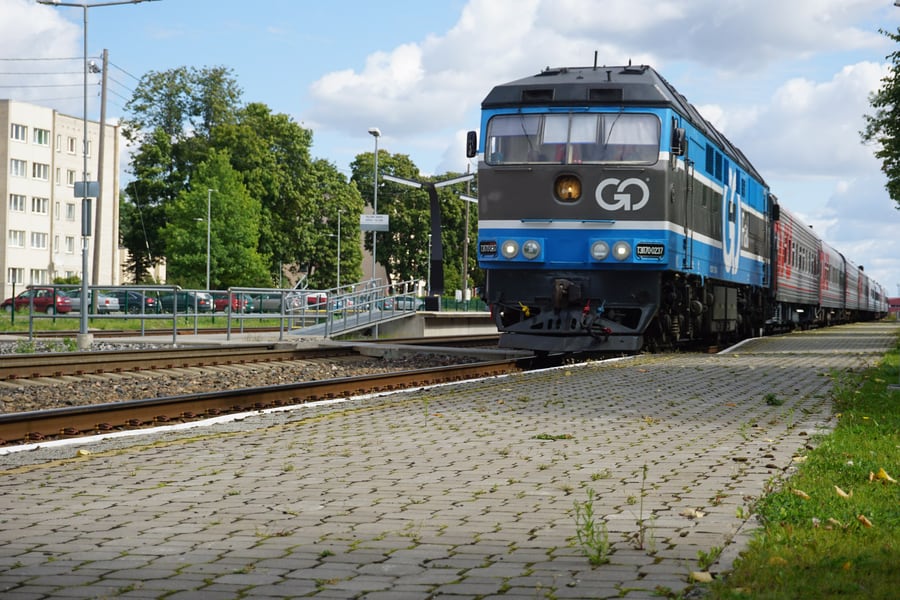
Estonia's first railway was opened on 5 November 1870, when a train from Tallinn and a train from Tosno, south of St Petersburg, met at Narva on the border of two Russian governorates. What they completed was not a line between two Estonian towns but the middle of a longer one: the Baltic Railway ran from the ice-free port of Paldiski through Tallinn and Narva to the imperial capital, and Tallinn to St Petersburg took about twelve hours at an average of forty kilometres an hour. The 209.6 kilometres from Tallinn to Narva are still there, still 1,520 mm Russian gauge, double track as far as Tapa and single beyond it. The through trains are not. GO Rail's services to Moscow and St Petersburg stopped in 2020 and have not come back, so a railway that was once a stage of a journey now runs to a stop.
Five trains a day cover it in each direction, and the ride divides into three countries. For the first hour it is commuter Estonia — Ülemiste, Kehra, the suburbs thinning into pine — and then, past Aegviidu, the forest and bog of Kõrvemaa close in and the line runs for kilometres with nothing beside it. Tapa is the junction where the Tartu trains turn away and where the overhead wires now end. After Rakvere the train crosses into Ida-Virumaa, the oil-shale country, where the spoil heaps stand above the trees and industrial railways cross the main line on their own viaducts. Then Narva: a platform a few hundred metres from a castle that has been looking across the river at another castle since the fifteenth century, with the European Union's eastern edge running down the water between them.
The Journey
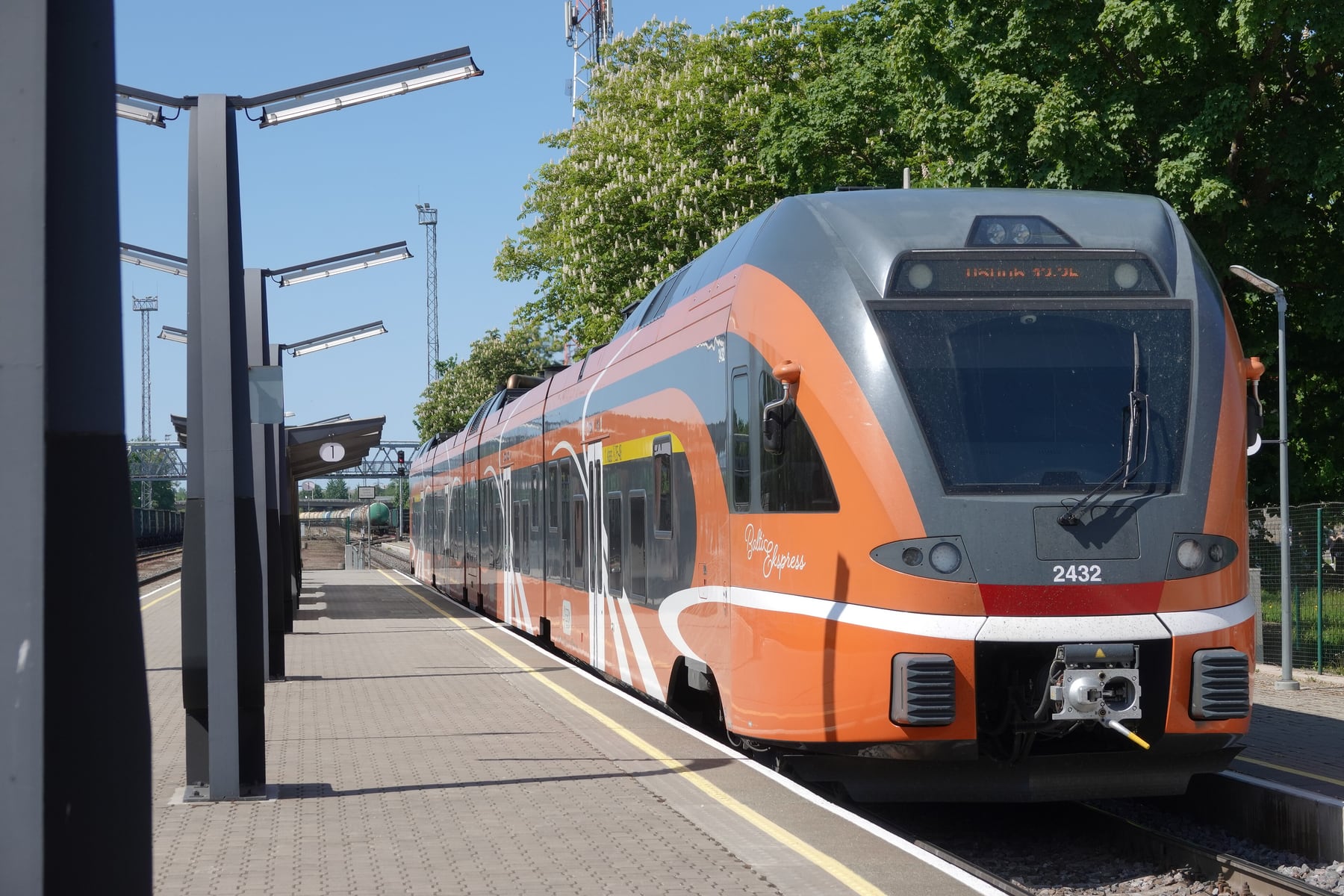
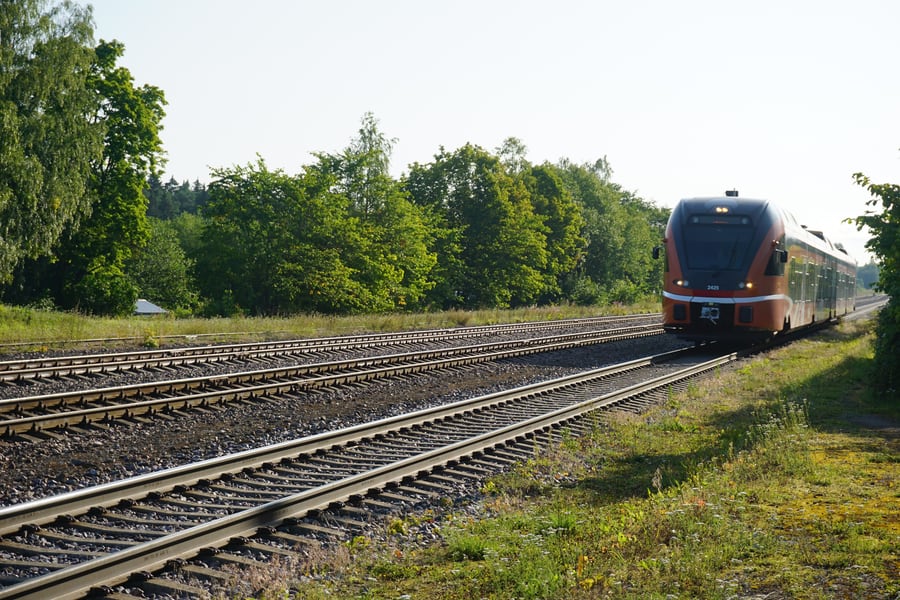
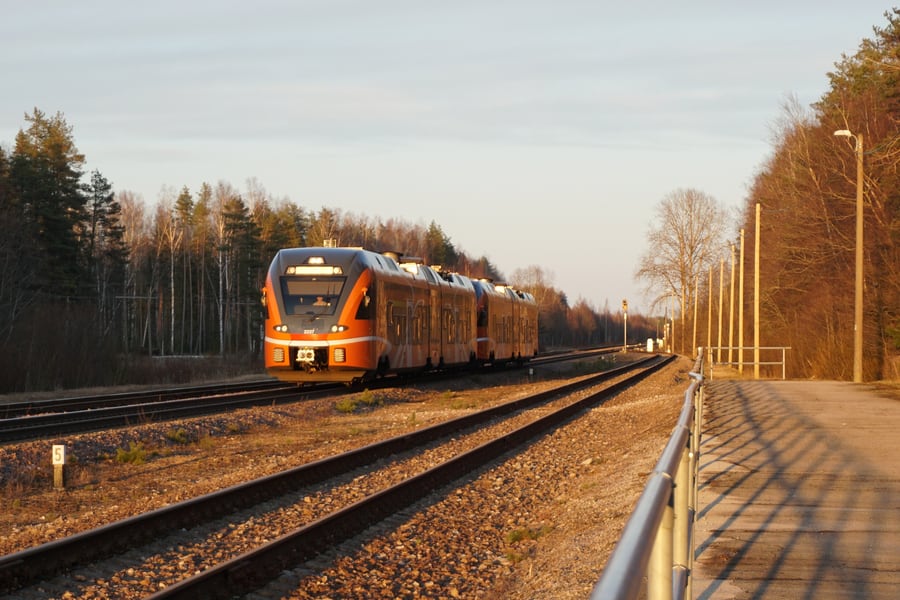
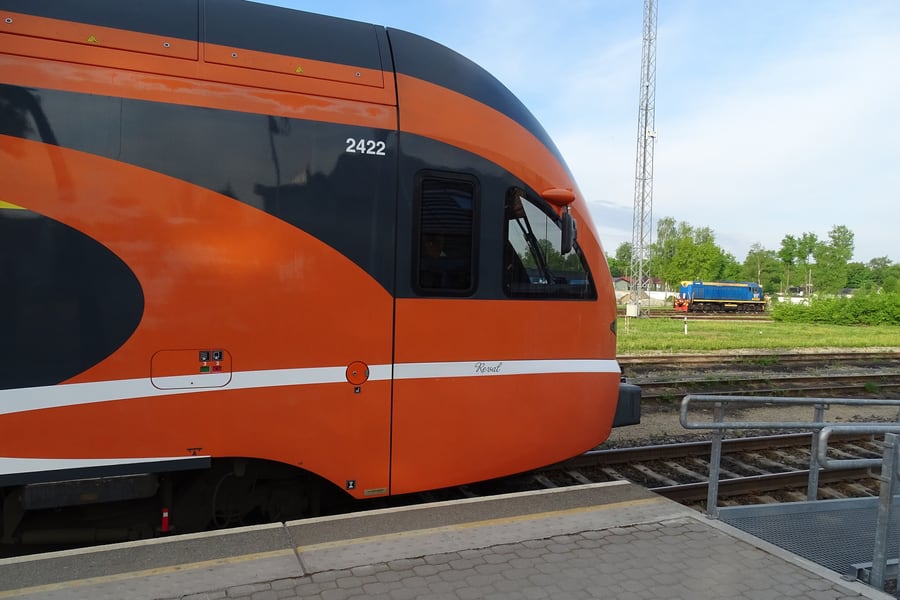
Everything Elron runs to Narva is a Stadler FLIRT diesel multiple unit, in the orange, grey and white the operator has used since the fleet arrived. Its own list counts twenty diesel sets and eighteen electric ones, in two, three and four-car formations, and every single one carries a name painted in script on the flank. They are not decorative names. 2404 is Pahlen, after Alexander von der Pahlen, who chaired the Baltic Railway Company that built this line in 1868; 2432 is Balti Ekspress; 2422 is Reval and 2425 is Dorpat, the German names of Tallinn and Tartu. Among the electric units are Kegel and Charlottenhof — Keila and Aegviidu, two stations on the railways they work.
Out of Tallinn
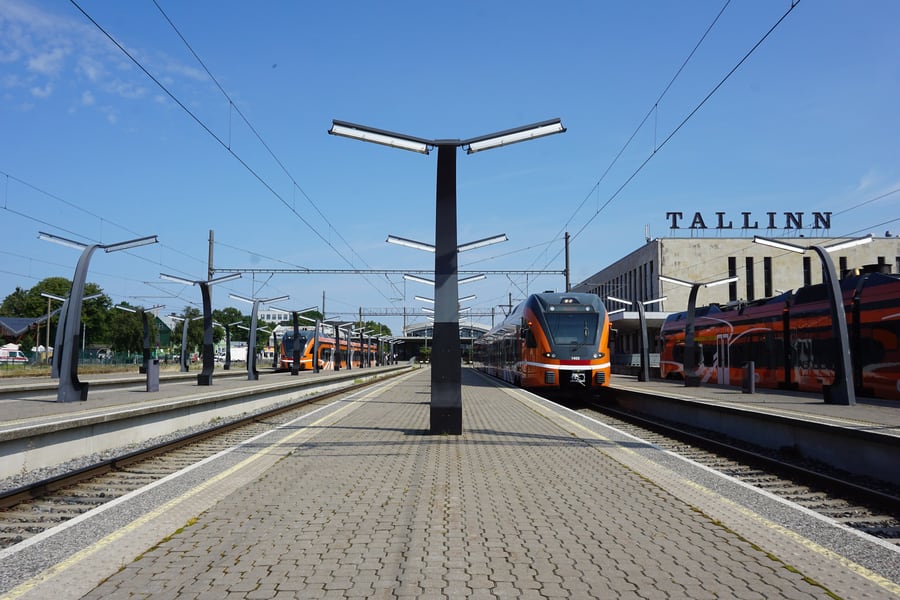
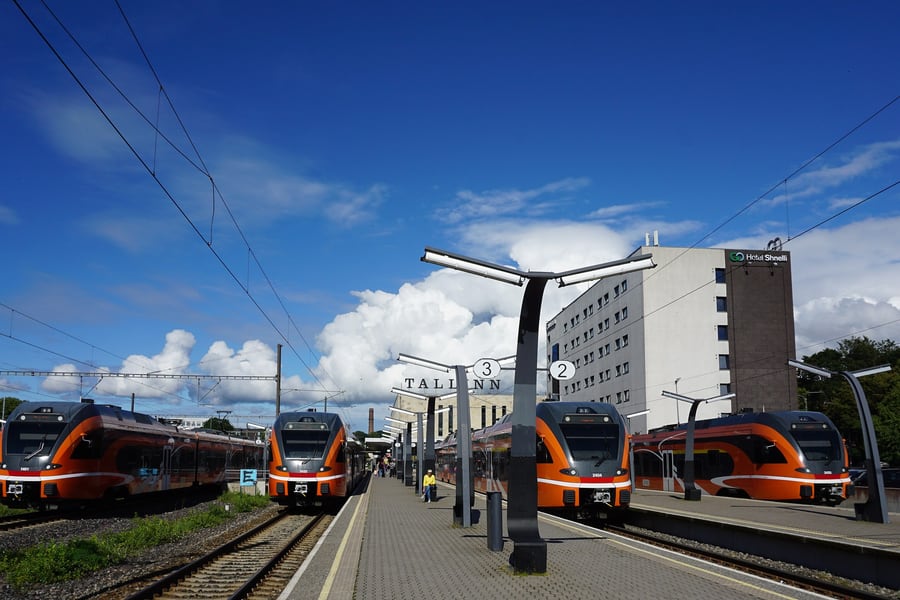
Balti jaam sits immediately north-west of the old town, close enough that the walk to the medieval walls takes a few minutes. The first station opened here with the railway in 1870; the building behind the platforms is the reconstruction of 1960–66, renewed again in 2005, and it now has nine platforms with the long-distance trains using three of them off to one side. The Narva train leaves under wire and stays under it for an hour, which is a recent change: the catenary reached Kehra on 29 December 1973 and Aegviidu on 3 August 1978, and then stopped for nearly half a century. The Soviet plan had been to carry it through to Tapa. High platforms were built as far as Lehtse and some of the mast footings were laid, and the scheme was abandoned there.
It was finished in January 2026. Elron gives the completion of the catenary between Aegviidu and Tapa as the reason it could open a new line at all, and on 5 January 2026 a Tallinn–Tapa electric service began, worked by the first of sixteen new Škoda units bought for €146.8 million. The Narva train has no use for any of it. It runs on diesel the whole way, under wires as far as Tapa and then out from under them.
Kõrvemaa and Tapa
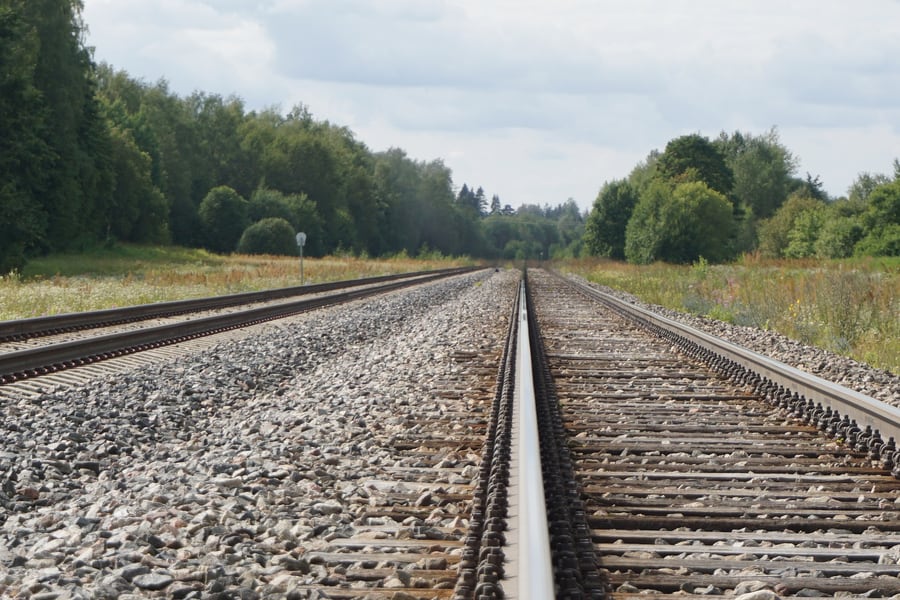
Past Aegviidu the country empties. This is Kõrvemaa, the northern end of a forested and thinly peopled belt that runs diagonally across Estonia, and the line crosses it on long straights between walls of spruce and birch. Aegviidu was Charlottenhof on the imperial maps and is the terminus of the electric service; it is one of the stations given the standard two-storey wooden design of 1870, along with Paldiski, Keila and Kabala. Several of that family are gone — Püssi's and Vaivara's in the Second World War, Raasiku's and Toila's demolished later.
Tapa was a fourth-class station on the original line and became a second-class junction when the branch to Tartu opened in the 1870s, gathering a depot, repair shops and a railway town around it. A grander stone station was built for it afterwards, in a style borrowed from the St Petersburg termini. It is where the Tartu trains part company and where, until 2020, the sleeper from Moscow called in the small hours.
Rakvere and the oil-shale country
Rakvere — Wesenberg — is the largest town between the two ends, and the effect of the railway on it is not a matter of opinion: its population roughly doubled in the years after the line arrived. The castle ruins stand on a green hill above the town, a little over a kilometre from the station.
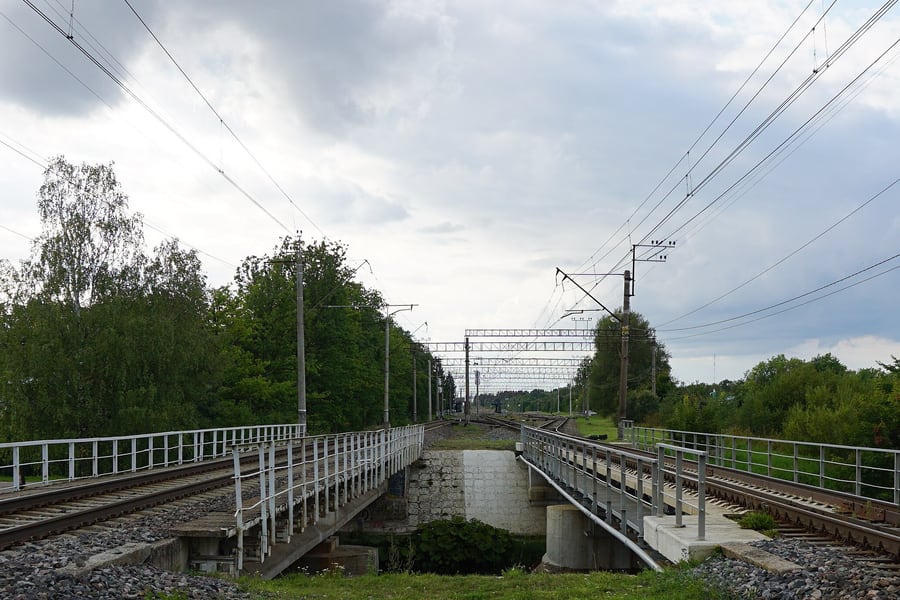
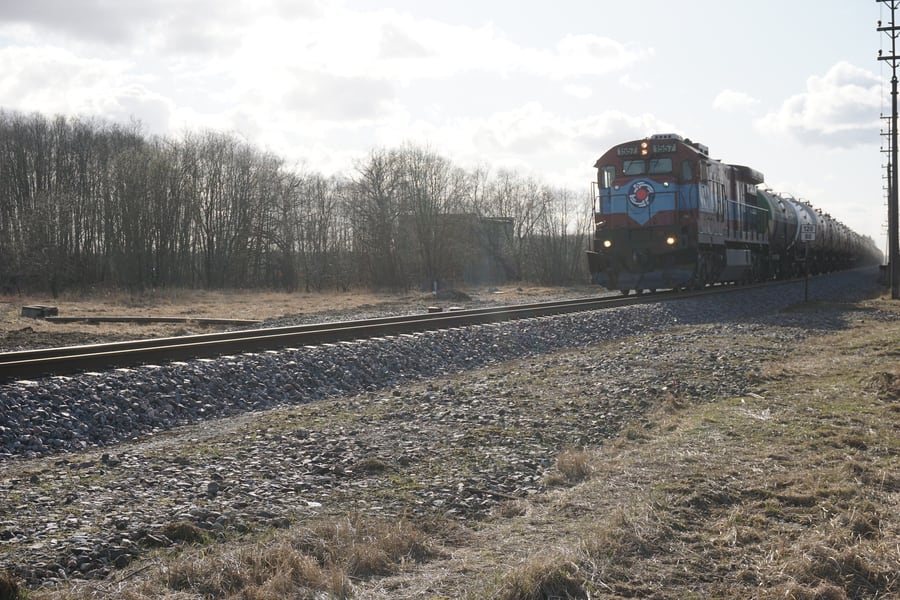
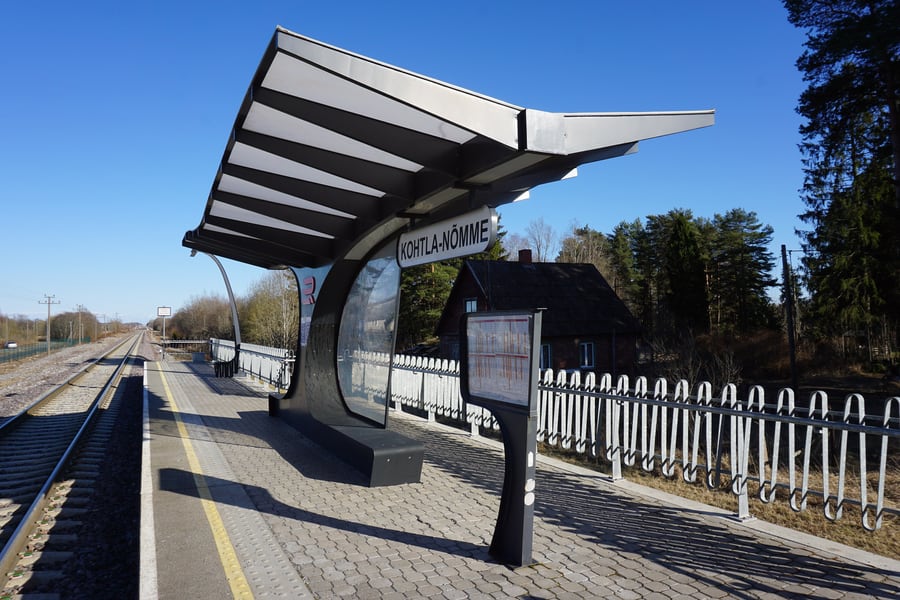
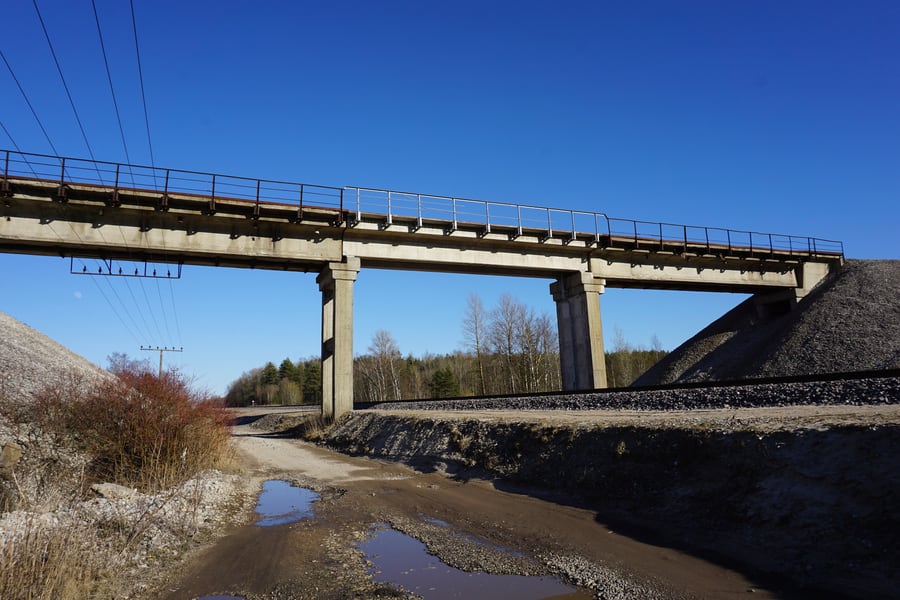
East of Kadrina the train enters Ida-Virumaa. Kabala, Sonda, Kiviõli, Püssi, Kohtla-Nõmme: the stops come from a landscape built on oil shale, and it shows from the window in flat-topped spoil heaps rising above the forest and in the private industrial railway that crosses the main line east of Kohtla-Nõmme on its own multi-level junction. Kohtla-Nõmme itself is the newest stop on the railway, opened on 16 December 2014, and it is a short walk from the mine that is now a museum. Freight was the line's other business — oil trains out of Russia bound for the ports at Muuga, Tallinn and Paldiski — and most of that traffic disappeared after 2022.
The end of the line
After Jõhvi the railway runs close to the coast for its last half-hour, through Oru and Vaivara, and the platforms empty out. Narva is Estonia's third city, about 52,500 people, and its station is the easternmost in the country. The building is a post-war neoclassical replacement: the first station was destroyed in the War of Independence in 1919, the second, of 1922, in the Second World War. Passport control and customs offices are still in it, open when trains to and from Russia come and go, and none do.
The walk from the platform ends at the river. Hermann Castle was begun around 1256 under Danish rule and bought by the Livonian branch of the Teutonic Order in 1346; directly opposite, on the far bank, stands the fifteenth-century Russian fortress of Ivangorod. The frontier runs between them. Trains from Tallinn have been arriving here since 1870, and for a hundred and fifty of those years most of them went further.
Along the route
 Ad Meskens / Wikimedia Commons · CC BY-SA 4.0 · 2018 · cropped
The Orange Railway
The 1868 scheme had opponents, whose argument was that Estonia had nothing worth sending to St Petersburg — what would come back, they said, was fruit. The nickname stuck: Apelsini raudtee, the Orange Railway. That the trains on it are now painted orange is a coincidence, and a good one.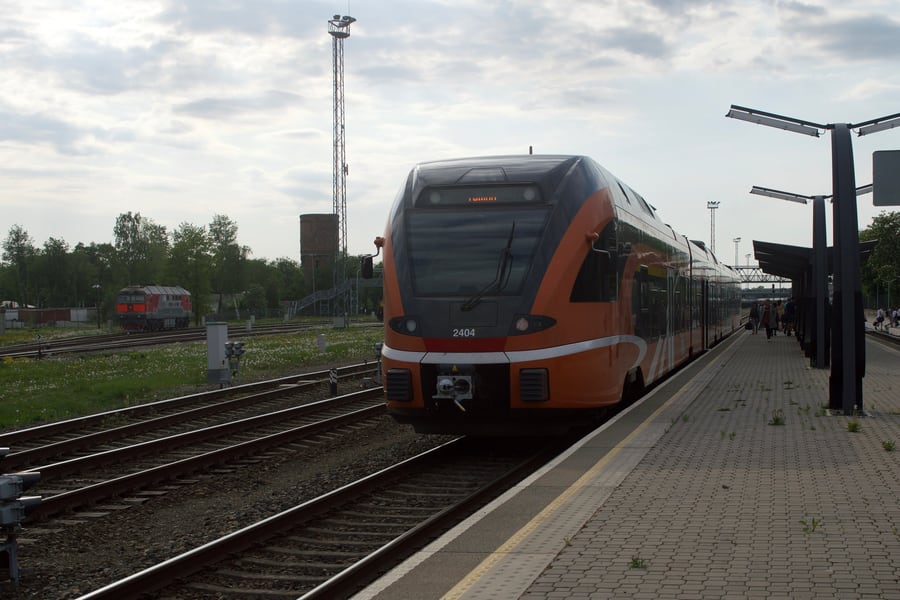 Phil Richards / Wikimedia Commons · CC BY-SA 2.0 · 2019 · cropped
Every train has a name
Elron's whole fleet carries names painted in script on the flank, and the names are the railway's own history: Pahlen for the chairman of the company that built this line, Balti Ekspress, and Reval and Dorpat, the German names of Tallinn and Tartu. Which one turns up is a lottery.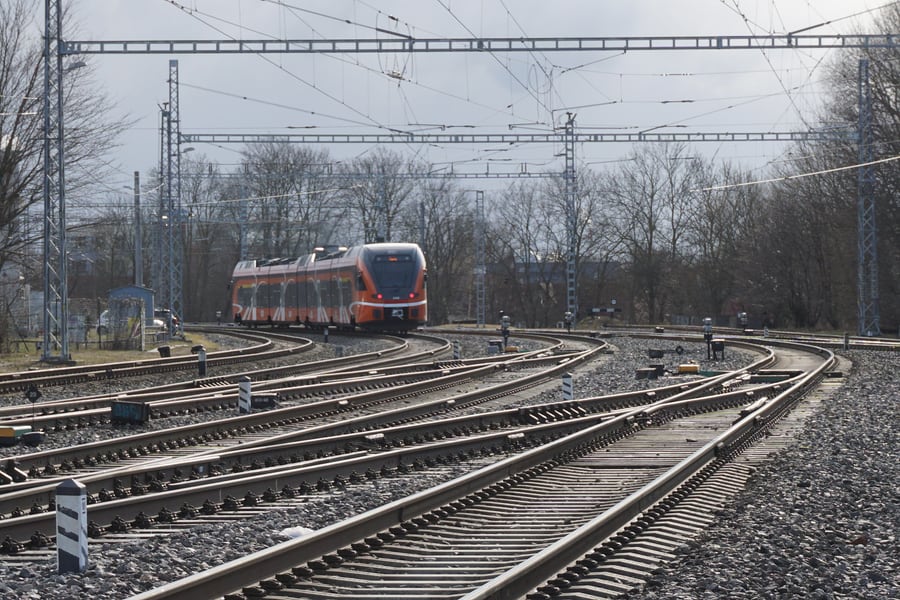 Tibukonn / Wikimedia Commons · CC BY-SA 4.0 · 2020 · cropped
The wires stop at Tapa
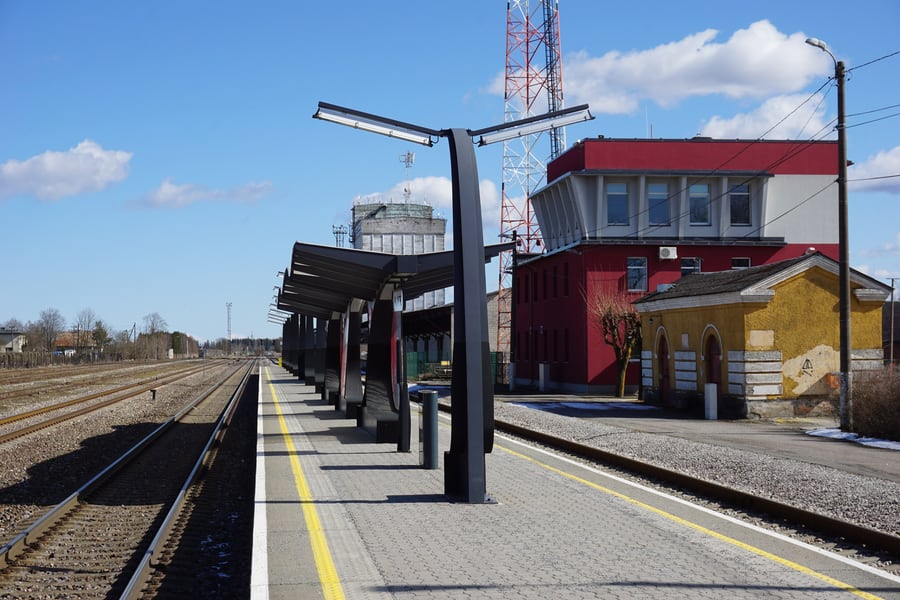
Electrification crept east from Tallinn, reached Aegviidu in 1978 and then stopped for nearly half a century. It was finished to Tapa in January 2026. The Narva train uses none of it: a diesel set runs under the wires as far as Tapa and then out from under them.A bit of history
Culture & experiences along the way
 Tibukonn / Wikimedia Commons · CC BY-SA 4.0 · 2022 · cropped
Five trains, and two of them are faster
The service is thin but it is honest: five departures each way, every day, with no seasonal timetable and no weekend variation. Three call at all twenty stops and take about two hours fifty-five; the two expresses keep to Kitseküla, Ülemiste, Tapa, Rakvere, Kiviõli and Jõhvi and take about two hours thirty. The gap of twenty-odd minutes costs €4.50 more each way, which is the whole argument for and against.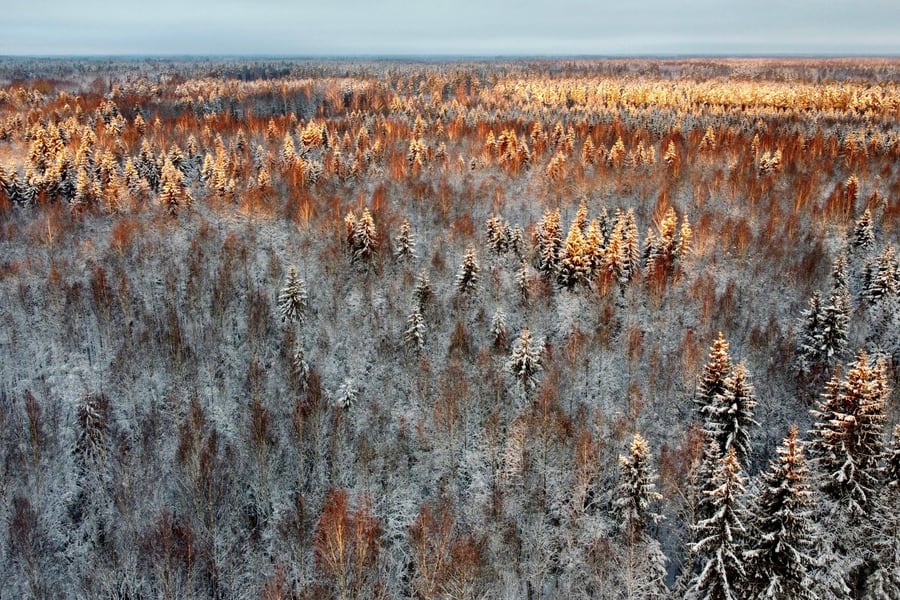 Sillerkiil / Wikimedia Commons · CC BY-SA 4.0 · 2022 · cropped
The forest starts at the platform
Aegviidu is forty-two minutes out of Tallinn and it is the railhead for Kõrvemaa, the northern end of the forested belt that runs diagonally across Estonia. Põhja-Kõrvemaa Nature Reserve begins a few kilometres away: 130.9 square kilometres of forest, bog and lake, the third largest reserve in the country, and for forty years before 1991 the biggest Soviet military training ground in Estonia, which is why so little was ever built on it.Timetables
Five trains run each way, every day, with no seasonal or weekend variation on this route. The times below are Elron's own winter timetable for the eastern and southern directions, in force from 31 August 2026 and read from the operator's published sheet in August 2026. Trains 20, 21 and 22 are marked as express workings and call at four intermediate stops; 23 calls at the same four. The other three stop everywhere.
Tallinn to Narva
| Stop | 220 | 20 · express | 222 | 22 · express | 224 |
|---|---|---|---|---|---|
| Tallinn | 06:31 | 10:35 | 12:59 | 16:32 | 19:11 |
| Kitseküla | 06:35 | 10:39 | 13:03 | 16:36 | 19:15 |
| Ülemiste | 06:39 | 10:43 | 13:07 | 16:40 | 19:19 |
| Kehra | 07:01 | – | 13:29 | – | 19:41 |
| Aegviidu | 07:13 | – | 13:41 | – | 19:53 |
| Nelijärve | 07:16 | – | 13:44 | – | 19:56 |
| Jäneda | 07:20 | – | 13:48 | – | 20:00 |
| Lehtse | 07:25 | – | 13:53 | – | 20:05 |
| Tapa | 07:35 | 11:27 | 14:03 | 17:27 | 20:14 |
| Kadrina | 07:44 | – | 14:12 | – | 20:23 |
| Rakvere | 07:53 | 11:46 | 14:20 | 17:42 | 20:31 |
| Kabala | 08:04 | – | 14:32 | – | 20:42 |
| Sonda | 08:12 | – | 14:39 | – | 20:50 |
| Kiviõli | 08:21 | 12:10 | 14:48 | 18:06 | 20:59 |
| Püssi | 08:26 | – | 14:53 | – | 21:04 |
| Kohtla-Nõmme | 08:32 | – | 14:59 | – | 21:10 |
| Jõhvi | 08:43 | 12:30 | 15:10 | 18:26 | 21:23 |
| Oru | 08:51 | – | 15:18 | – | 21:31 |
| Vaivara | 09:00 | – | 15:27 | – | 21:40 |
| Narva | 09:25 | 13:08 | 15:52 | 19:04 | 22:04 |
| Journey | 2 hr 54 | 2 hr 33 | 2 hr 53 | 2 hr 32 | 2 hr 53 |
Train 20 waits at Tapa: it arrives at 11:27 and leaves at 11:31.
Narva to Tallinn
| Stop | 223 | 21 · express | 225 | 227 | 23 |
|---|---|---|---|---|---|
| Narva | 06:20 | 09:55 | 13:26 | 17:44 | 20:45 |
| Vaivara | 06:44 | – | 13:50 | 18:08 | – |
| Oru | 06:53 | – | 13:59 | 18:17 | – |
| Jõhvi | 07:01 | 10:32 | 14:07 | 18:26 | 21:22 |
| Kohtla-Nõmme | 07:12 | – | 14:18 | 18:37 | – |
| Püssi | 07:20 | – | 14:26 | 18:45 | – |
| Kiviõli | 07:25 | 10:51 | 14:31 | 18:50 | 21:41 |
| Sonda | 07:32 | – | 14:40 | 18:57 | – |
| Kabala | 07:40 | – | 14:48 | 19:05 | – |
| Rakvere | 07:52 | 11:14 | 15:01 | 19:18 | 22:04 |
| Kadrina | 08:00 | – | 15:09 | 19:26 | – |
| Tapa | 08:11 | 11:31 | 15:22 | 19:37 | 22:22 |
| Lehtse | 08:18 | – | 15:29 | 19:44 | – |
| Jäneda | 08:23 | – | 15:34 | 19:49 | – |
| Nelijärve | 08:28 | – | 15:39 | 19:54 | – |
| Aegviidu | 08:32 | – | 15:43 | 19:58 | – |
| Kehra | 08:43 | – | 15:54 | 20:09 | – |
| Ülemiste | 09:10 | 12:15 | 16:17 | 20:32 | 23:06 |
| Kitseküla | 09:14 | 12:19 | 16:21 | 20:36 | 23:10 |
| Tallinn | 09:19 | 12:23 | 16:25 | 20:40 | 23:14 |
| Journey | 2 hr 59 | 2 hr 28 | 2 hr 59 | 2 hr 56 | 2 hr 29 |
Train 223 is the only one of the five that also calls at Raasiku (08:49), Aruküla (08:53) and Lagedi (09:00) on its way in.
Making a day of it
The two expresses make a day return from Tallinn work without hurrying: out on the 10:35, into Narva at 13:08, and back on the 17:44, which is the last stopping train and reaches Tallinn at 20:40. That leaves four and a half hours in Narva, enough for the castle and the promenade along the river. The 20:45 stretches it to seven and a half hours and gets back at 23:14.
Going the other way, from Narva, the 06:20 reaches Tallinn at 09:19 and the 19:11 back gets home at 22:04 — nearly ten hours in the capital.
Times are published by the operator: Elron · East- and Southbound timetable from 31 August 2026 (opens in a new tab).
Tickets
Elron prints two fare tables for this route, and the difference between them is the difference between the stopping train and the express: Tallinn to Narva is €15.00 in standard class on an ordinary train and €19.50 on the express, with first class €18.00 and €23.50. Shorter journeys are charged by the pair of stations. Tickets are sold online, from machines, from the on-board staff and at the Balti jaam and Tartu offices; advance sales close five minutes before departure for standard class and thirty for first.
⚠️ A standard-class ticket does not guarantee a seat, and the operator's own advice to anyone who wants one is to buy first class — which on a three-hour run is what the extra three or four euros buys. A bicycle needs its own ticket from April to October, at half the fare. Checked against Elron, August 2026.
Book your tickets
Tallinn to Narva, standard class
€15.00 on an ordinary train · €19.50 on the express
The whole line, though a standard ticket does not guarantee a seat.
Book Tickets (opens in a new tab, on elron.ee)via elron.eeTallinn to Narva, first class
€18.00 on an ordinary train · €23.50 on the express
The operator's own answer to anyone who wants to be certain of sitting down.
Book Tickets (opens in a new tab, on elron.ee)via elron.eeFamily ticket
2.5 times the full fare, for up to two adults and four children
Reserves one of the two marked five-seat family areas, sold only through Elron's site.
Book Tickets (opens in a new tab, on elron.ee)via elron.eeRail Passes
A pass covers this train, and for this train alone it does not pay.
Interrail's table of the companies a pass is valid with in Estonia — checked in August 2026, when the page carried a last updated 28 August 2026 stamp — lists Elron for both commuter and express trains, and the Tallinn–Valga–Riga–Vilnius through service under Elron and its partners. The excluded trains column is empty, so nothing on the Narva line falls outside the pass.
The arithmetic is the problem. An adult Interrail Estonia Pass in second class costs €105 for three travel days within a month, €129 for four, €152 for five, €175 for six and €216 for eight; youth prices, for travellers aged 12 to 27, are €79, €97, €114, €131 and €162. A Tallinn–Narva return is €30 on the ordinary trains and €39 on the express. Even the cheapest youth pass would have to be doing the work of two and a half such returns before it broke even, and Estonia's network is small enough that filling three travel days with journeys of that value takes planning rather than travelling.
Two conditions are worth knowing before buying one. A One Country Pass cannot be bought for the country you live in, and it cannot be used to travel into or out of that country — so it covers the day in Narva but not the crossing that used to continue from it.
Where a pass does earn its keep is on a longer Baltic run. The same Interrail table covers the coordinated Tallinn–Tartu–Valga–Riga–Vilnius service, which since January 2025 has been bookable end to end with one change, and a Global Pass carries the ferries to Helsinki and Stockholm at a discount with Tallink Silja, Viking Line and Eckerö Line. On a trip that is only Estonia, ordinary tickets are cheaper.
Prices and conditions read on interrail.com (opens in a new tab) in August 2026.
Places to Visit
Everything below is reached from a platform on the line, and the times given are taken from the first stopping train of the day out of Tallinn — the 06:31, which is at Aegviidu by 07:13 and Narva by 09:25. Most of it is a walk from the stop; only the Toila coast needs anything else.
The five fall into the order the railway meets them: forest first, then a market town with a castle above it, then the mining country, then the coast, then the border.
 Aleksandr Abrosimov / Wikimedia Commons · CC BY-SA 4.0 · 2014 · cropped
Aegviidu and Kõrvemaa
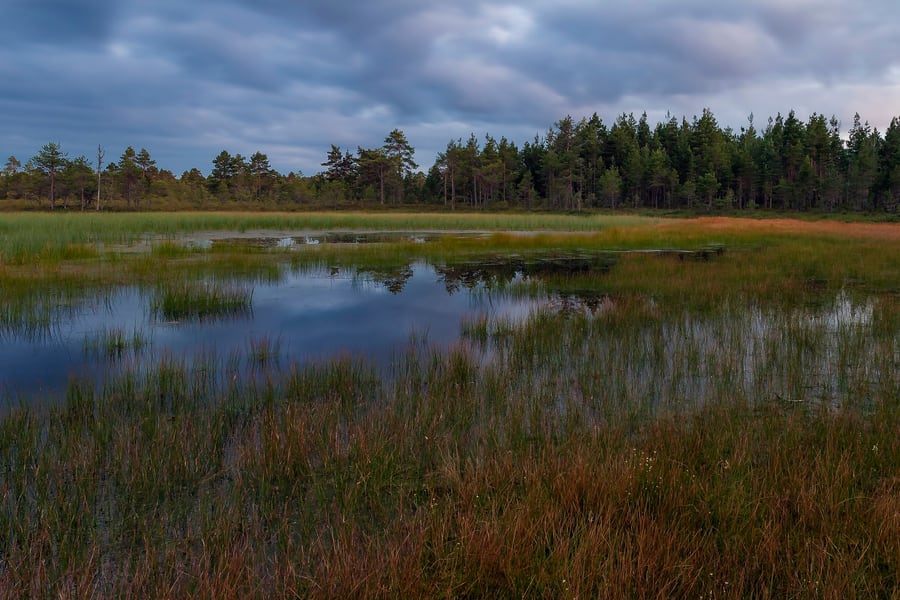
The stop where commuter Estonia ends. Aegviidu was Charlottenhof on the imperial maps and is the terminus of the electric trains from Tallinn. What it is worth getting off for is the country behind it: Põhja-Kõrvemaa Nature Reserve, 130.9 square kilometres of spruce, birch, bog and lake about fifty kilometres east of the capital, established at the end of 1991 on what had been the largest Soviet proving ground in Estonia. The army damaged perhaps a tenth of it and left the rest alone.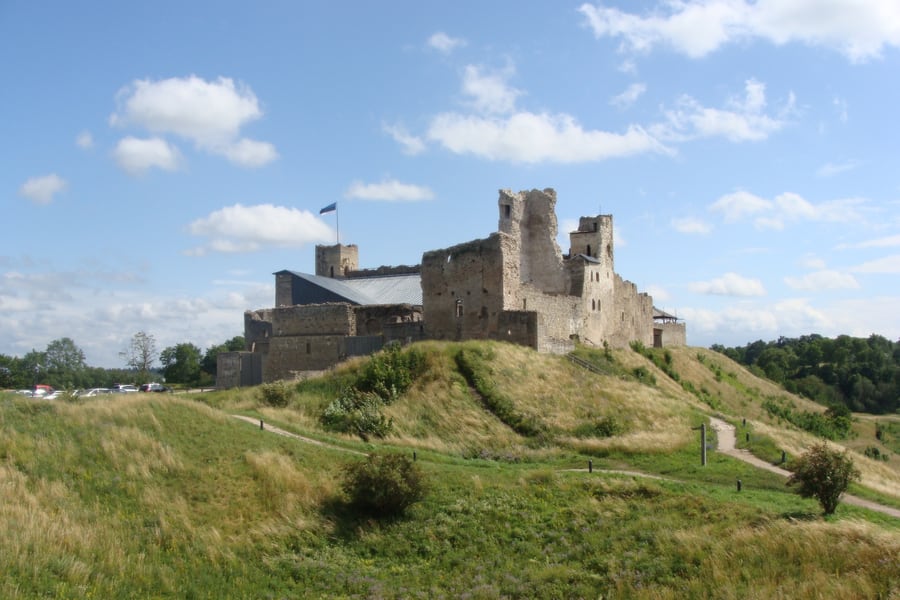 Janek A / Wikimedia Commons · CC BY 3.0 · 2011 · cropped
Rakvere
Wesenberg to the Baltic Germans, and the largest town on the line. The ruins of the order's castle stand on a green hill above the roofs, the Estonian flag on the keep, about 1.3 kilometres from the platform. Virumaa Muuseumid runs it as a museum, open Tuesday to Sunday from 10:00 to 18:00; a full ticket is €13, a concession €10 and a family ticket €27. Rakvere's population roughly doubled in the years after the railway reached it — the shortest way to say what this line did to the towns on it.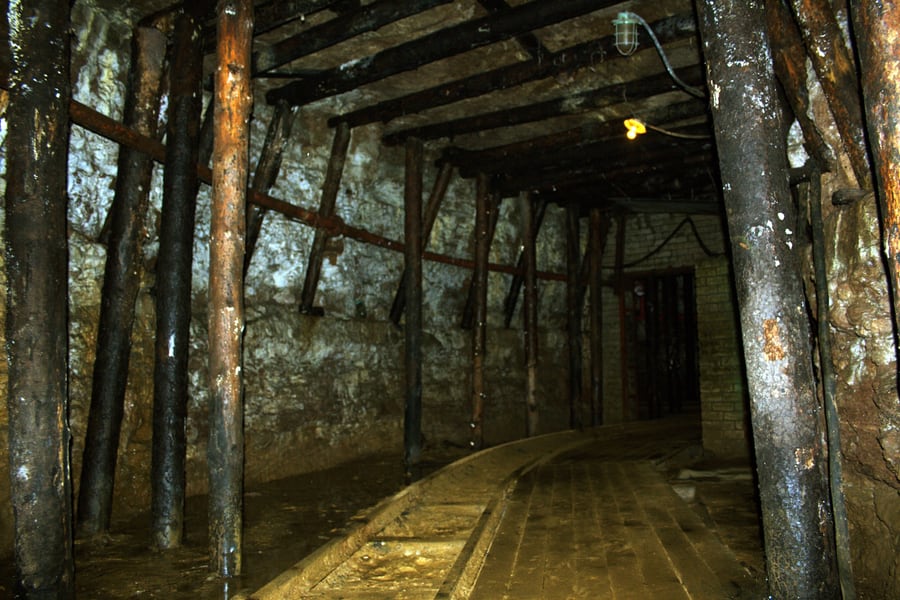 Tauno Erik / Wikimedia Commons · CC BY-SA 3.0 · 2011 · cropped
The Estonian Mining Museum
Ida-Virumaa runs on oil shale, and at Kohtla-Nõmme a mine that closed has been turned into the museum of it. Visitors go underground into the real galleries — timbered roof, mine tubs, drilling rigs, the working faces left as they were — and the surface site keeps the enrichment plant, mining machinery and a spoil heap that can be walked up for the view over the country. Mine safaris and underground tours run, and the museum asks to be booked before arrival rather than turned up at.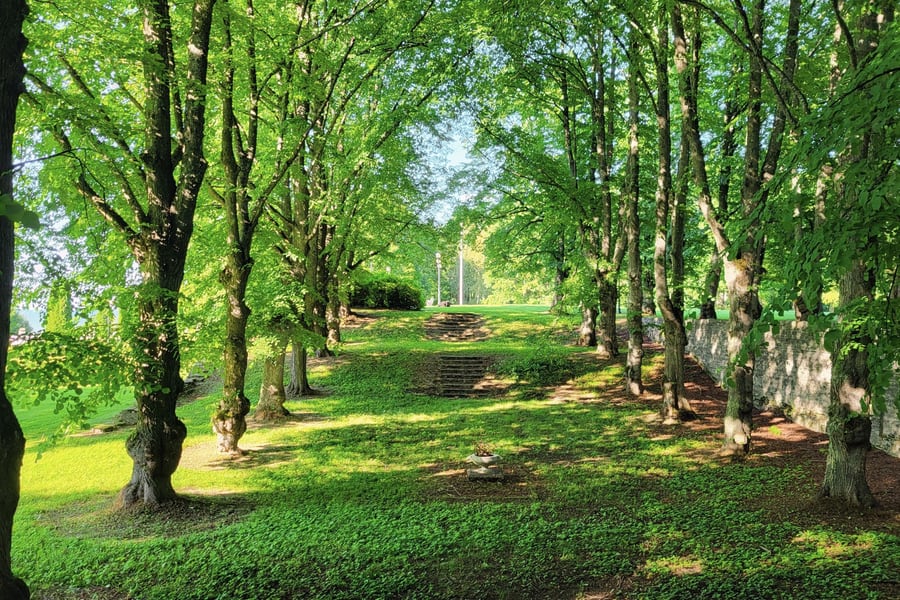 Hei1972 / Wikimedia Commons · CC BY-SA 4.0 · 2025 · cropped
Toila-Oru Park
Oru is the stop for the coast, and six kilometres from it is the park Georg Kuphaldt laid out in 1899 around a palace that no longer exists. Oru Palace was built in the Italian Renaissance style for the St Petersburg merchant Grigori Jelissejev — 57 rooms, riding stables and a manège, descending in terraces to the river. After 1935 it was President Konstantin Päts's summer residence, and retreating Soviet forces burned it on 13 August 1941. The park is protected; the terraces are still legible.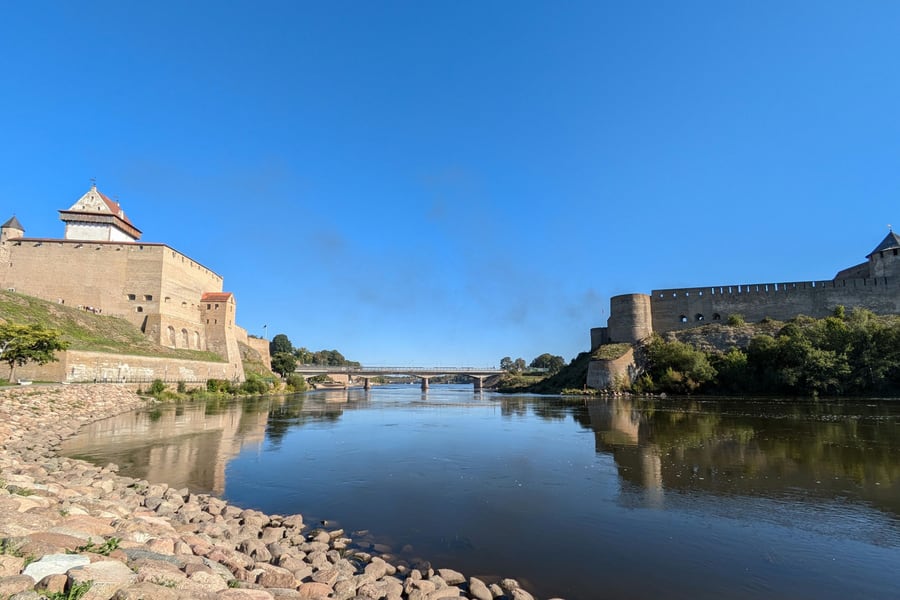 Vicky Brock / Wikimedia Commons · CC BY-SA 2.0 · 2024 · cropped
Narva and Ivangorod
Two castles a few hundred metres apart with an international border in the water between them. Hermann Castle was begun around 1256, when the area belonged to the Danish crown, and bought by the Livonian branch of the Teutonic Order in August 1346; facing it from the Russian bank is the fifteenth-century fortress of Ivangorod. Narva Muuseum runs the castle and, from 31 August 2026, opens it Wednesday to Saturday 10:00–18:00 and Sunday 10:00–16:00.Where to Sleep
The journey is short enough to be a day return from either end, so the three houses below are for people breaking it rather than people who have to. One is at the departure platform, one is halfway, and one is at the far end.
Estonian copyright law withholds commercial use of photographs whose main subject is a building in a public place, so none of these cards carries a picture of the hotel. Everything described is what each house says about itself on its own site, read in August 2026. No prices, grades or star counts appear here, because none have been verified.
Where to stay
Go Hotel Shnelli
Immediately beside Balti jaam, Tallinn
The hotel next to the departure platform, on the far side of the station from the old town, which its own site puts within a short walk along with the Balti Jaama market and the Telliskivi Creative City. Three room classes, a seminar area, a private sauna and the Shnelli Resto with a breakfast buffet and an à la carte menu. It says it was the first hotel in Estonia to be given the international Ecostars eco-label; all its public areas are wheelchair-accessible and it keeps adapted rooms. Parking is in front of the door, free for motorcycles, with electric-car charging, and pets are welcome.
Check Availability (opens in a new tab, on gohotels.ee)via gohotels.eeAqva Hotel & Spa
Rakvere, halfway along the line
A spa hotel in Rakvere, the natural place to break the journey. The room rate includes unlimited use of the water and sauna centre for the length of the stay and breakfast at the Parqali resto & grill. The centre has six pools and eight saunas with sauna rituals; the spa menu covers massages, treatments and beauty services and is open 09:00–20:00 Sunday to Thursday and 09:00–21:00 on Friday and Saturday. The castle hill is a short walk away.
Check Availability (opens in a new tab, on aqvahotels.ee)via aqvahotels.eeNarva Hotell
Aleksander Puškini 6, a few minutes from the station
The first hotel in the city, in a building put up in 1959 and repeatedly rebuilt since, which its own site treats as the point: the history of the place with modern fittings inside it. Fifty rooms, all of them including the buffet breakfast in the restaurant M.Chagall, and rooms facing either the architectural monuments on one side or the town on the other. There is a private spa with three jacuzzis, four saunas, a relaxation area and a bar, a fireplace room with medieval decor for events, and a conference room for up to fifty.
Check Availability (opens in a new tab, on narvahotell.ee)via narvahotell.eeQuestions or corrections
Planning this trip and stuck on something, or spotted a time, fare or detail that has changed? Send us a message about Tallinn to Narva — Estonia's first railway. We read every one, and we update this page when something has changed.