Estonia

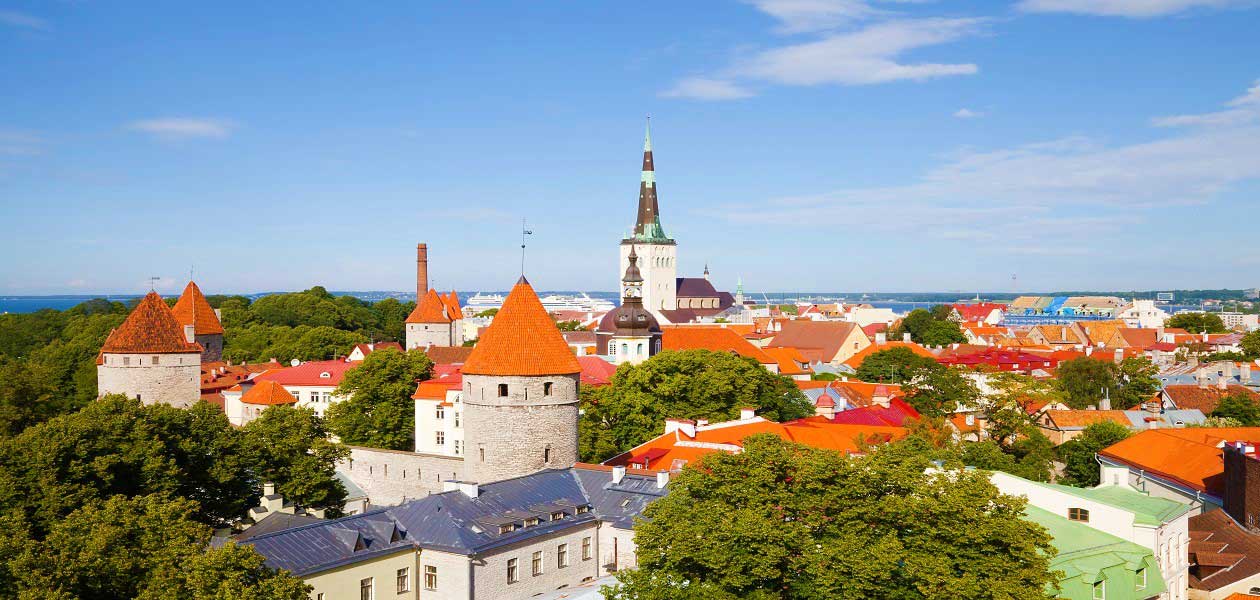
Estonia is the northernmost of the three Baltic states, a country of about 1.37 million people in 45,339 km², with Tallinn on the Gulf of Finland as its capital. It looks north across that gulf to Finland and west across the Baltic to Sweden; Latvia lies to the south and Russia to the east. The territory is not only mainland — more than two thousand islands belong to it, and the land behind the coast is low, lake-strewn and heavily forested rather than dramatic.
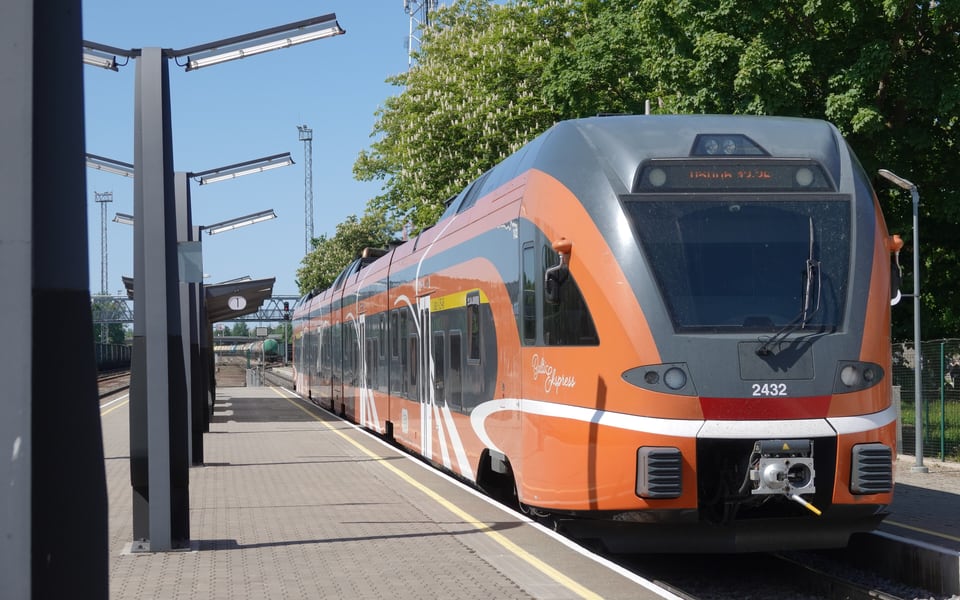
The railway is compact and in the middle of being rebuilt. Roughly 1,200 km of line exists and about 900 km of it is in public use, all of it 1,520 mm Russian gauge — the same as Latvia, Lithuania, Russia and Belarus, and close enough to Finland's 1,524 mm to share equipment. Passenger traffic is the point of it: 8.3 million journeys in 2019, almost all worked by Elron and radiating from Tallinn. Only 133 km was electrified, and that is changing fast, with new Škoda electric units arriving and wires being strung towards Tartu and beyond.
Rail journeys in Estonia
Good to know
What is the longest train journey you can make inside Estonia?
Tallinn to Narva, 209.6 km east across the whole north of the country to the Russian border. It is Estonia's oldest railway, opened in 1870 as part of the Baltic Railway from Paldiski through Tallinn to St Petersburg, and five trains a day cover it in each direction in between two and a half and three hours. Two of the five are express workings. The through trains to Moscow and St Petersburg stopped in 2020, so the line now ends at Narva.
Why is Estonia's railway a different gauge from most of Europe?
Estonia's public network is 1,520 mm, the Russian gauge it inherited from the imperial and Soviet periods, rather than the 1,435 mm standard gauge used across most of the European Union. It is shared with Latvia, Lithuania, Russia and Belarus, and it is compatible with Finland's 1,524 mm, so rolling stock can move between them. That is why Rail Baltica — the new standard-gauge line being built towards Poland — is a separate railway rather than an upgrade of the existing one.
Can you travel between Estonia, Latvia and Lithuania by train?
Yes, though it takes patience. Trains run from Tallinn to Valga on the Latvian border, where connections continue to Riga and on to Vilnius. Since January 2025 the timetables have been coordinated so the whole Tallinn–Riga–Vilnius run can be booked on one ticket with a single change at Valga. It is considerably slower than the bus, which is worth knowing before choosing it.
Is an Interrail or Eurail pass worth it in Estonia?
Interrail does sell a one-country pass for Estonia, but the honest answer for most visitors is that it is hard to justify. The network is small, the distances are short and ordinary fares are low, so a few point-to-point tickets usually cost less than a pass. A pass makes more sense if Estonia is one leg of a longer Baltic or European trip.
What is Rail Baltica, and does it affect travel today?
Rail Baltica is a new standard-gauge line being built to link the Baltic states to Poland and the wider European network, designed for passenger speeds of up to 249 km/h. It is a European Union priority project and it is not finished — nothing about it is rideable yet. It matters for planning only in that it will eventually give Estonia a second, faster railway alongside the broad-gauge one.