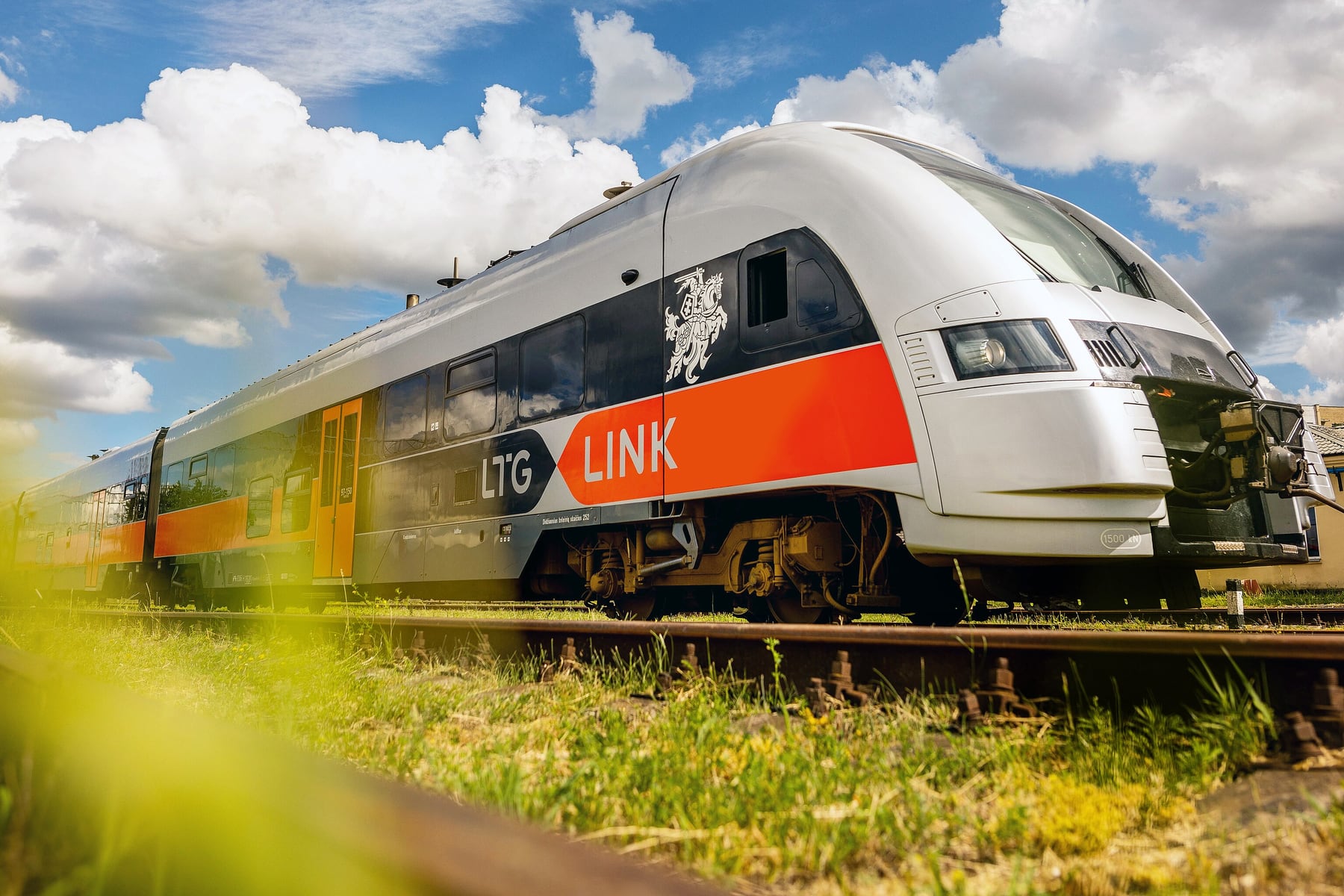
Vilnius to Riga
LTG Link / Wikimedia Commons · CC0
- Distance348 km · broad gauge
- Duration4 hr 30 min – 4 hr 33 min
- Best seasonOne train a day each way, all year
Introduction
At Riga, the passengers going on to Estonia do not change trains. The three-car diesel that left Vilnius at 07:04 stands at the platform for nineteen minutes, Latvian staff from the operator Vivi take over on board, and at 11:53 it leaves again as a Latvian train, for Sigulda, Cēsis, Valmiera and Valga on the Estonian border. On the 43 kilometres into Riga from Jelgava it is the other way round: LTG Link sells no ticket between the two, so the Lithuanian train carries nobody who boarded in Latvia until it has reached the capital.
A direct train between Vilnius and Riga last ran in January 2004. LTG Link brought one back on 27 December 2023, when the first departure left Vilnius full, with Lithuania's prime minister and transport minister aboard, and about 62,000 people travelled on it in its first year. In December 2024 Vivi retimed its Riga–Valga train to meet it, in January 2025 Elron's train from Valga to Tartu and Tallinn followed, and since February 2025 the same unit has run through from Vilnius to Valga.
Today there is one train a day each way, 348 kilometres in about four and a half hours, by way of Šiauliai and Jelgava. A single ticket on LTG Link's site covers the whole run to Tallinn, with one change, across the platform at Valga.
The Journey
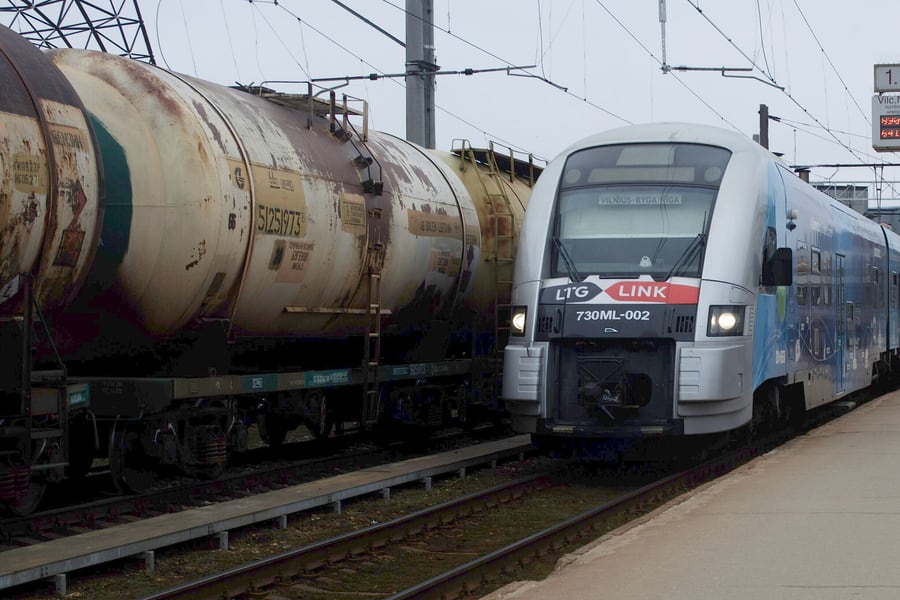
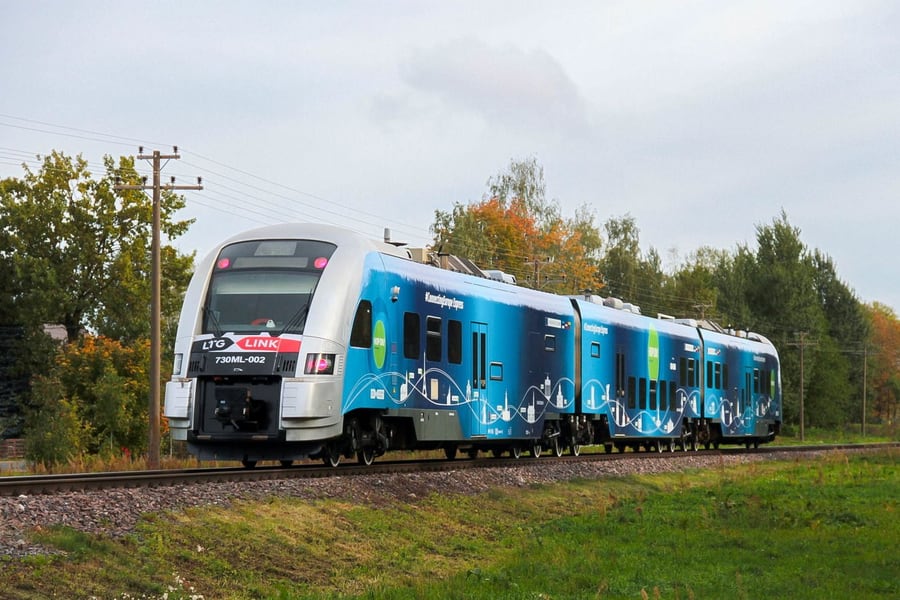
The train is a PESA 730ML, a three-car diesel unit from the Polish builder Pesa of Bydgoszcz. Lithuania bought seven, delivered from 2016, and each carries a name: Birutė, Vytis, Jonas Karolis Chodkevičius, Jogaila, Žygimantas Augustas, Karalius Mindaugas, and Baltijos kelias, the Baltic Way. There are first and second class, Wi-Fi, air-conditioning, a quiet zone and spaces for bicycles, and every seat is reserved as far as Riga.
Vilnius to Šiauliai
For its first 212 kilometres the train follows the main line to the coast, the same way as the trains from Vilnius to Klaipėda: out to Kaišiadorys, then north through Jonava and Kėdainiai, stops added after the service began, to Radviliškis and Šiauliai, reached at 09:45.
Across the border
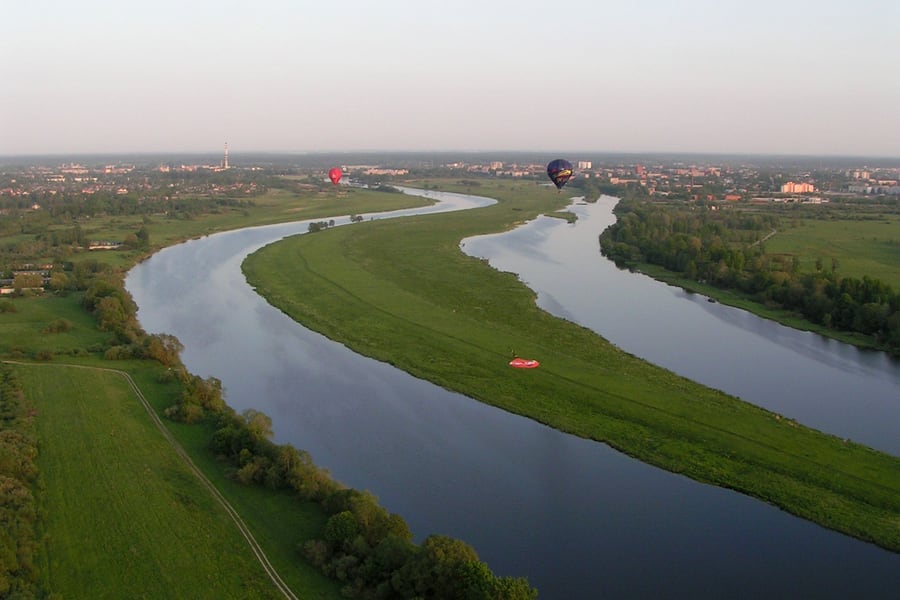
North of Šiauliai the line to Latvia is a railway the German army built in 1916, during the First World War, to join Šiauliai to Jelgava, then called Mitau. Russian prisoners of war and local people laid it, across twenty bridges with a combined length of 2.1 kilometres. After the war 59 kilometres of it fell in Lithuania and 33 in Latvia. Joniškis, the last stop in Lithuania, became a border station, and from February 1921 an international train ran this way from Riga to Kaunas and on to Berlin, under the name Nord Express from 1932.
On the Latvian side the train runs without stopping through Meitene, Latvia's border station. Its building opened on 15 December 1923, with two wall paintings of 1935 by Kārlis Melbārzdis, The Gauja Valley and Latvian Fields. Soviet bombing wrecked the building in 1944; it was rebuilt only in part in 1950, and in 1952 an artist sent from Leningrad repainted the valley as a Siberian river with young pioneers and added a collective farm to the fields.
Jelgava and Riga
Jelgava is the first stop in Latvia, 43 kilometres short of Riga. Its station was built in 1868 with the line from Riga, opened on 21 November that year by a private company, and it is the second-largest station building in Latvia. The last stretch crosses the Daugava on the Railway Bridge of 1914 into Rīga-Pasažieru, the central station.
On to Valga, Tartu and Tallinn
Passengers for Estonia stay in their seats. The train leaves Riga at 11:53 as Vivi's 874, calls at Sigulda, Cēsis and Valmiera — the line described in Riga to Sigulda and Valga — and reaches Valga at 14:13. There Elron's train waits on the same platform for Tartu, at 15:40, and on to Tallinn, at 18:15. Coming south, Elron's 10:22 from Tallinn leaves Tartu at 13:05 and meets Vivi's 873, which leaves Valga at 14:25 and becomes the 16:55 from Riga to Vilnius.
Along the route
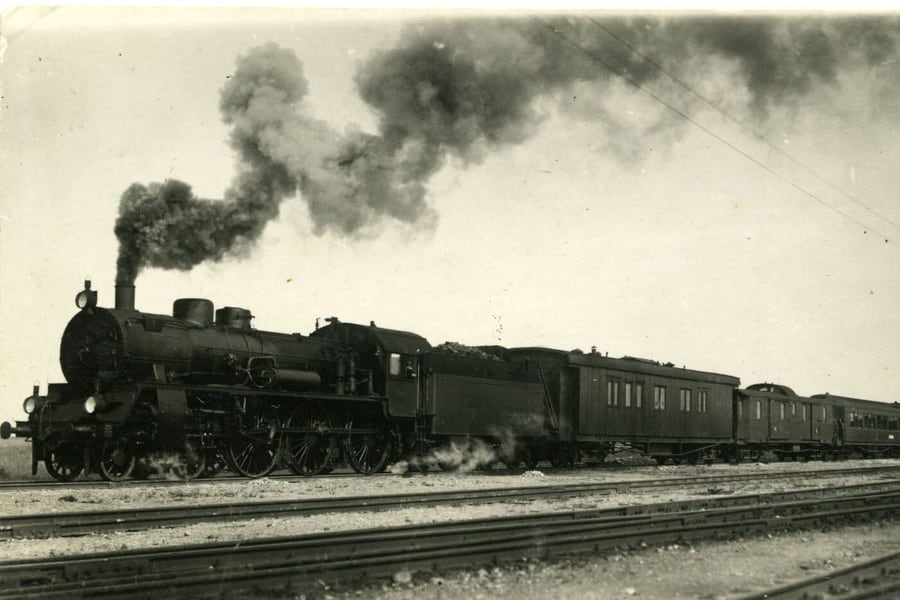 Unknown photographer / Wikimedia Commons · Public domain · c. 1930 · cropped
The way to Berlin
From February 1921 an international train ran from Riga through Jelgava and Joniškis to Kaunas, and on to Berlin; from 1932 it carried the name Nord Express. This postcard shows the Riga–Kaunas train at Joniškis around 1930.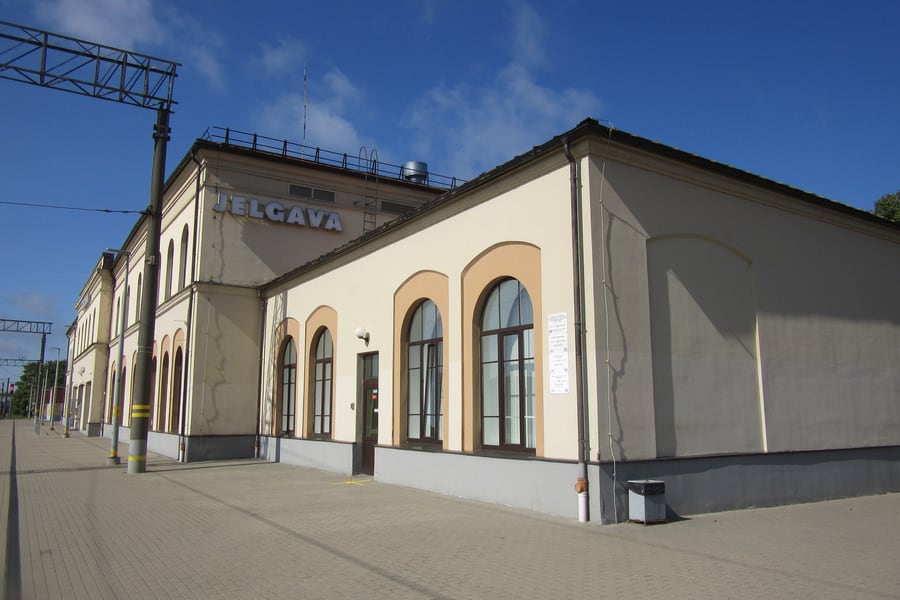 Titāns / Wikimedia Commons · CC BY-SA 4.0 · 2021 · cropped
Mitau's station
Jelgava, once Mitau, got its station in 1868 with the railway from Riga, built to a design by Otto Dietze. It survived both world wars, badly damaged, and is the second-largest station building in Latvia. The Vilnius trains call here.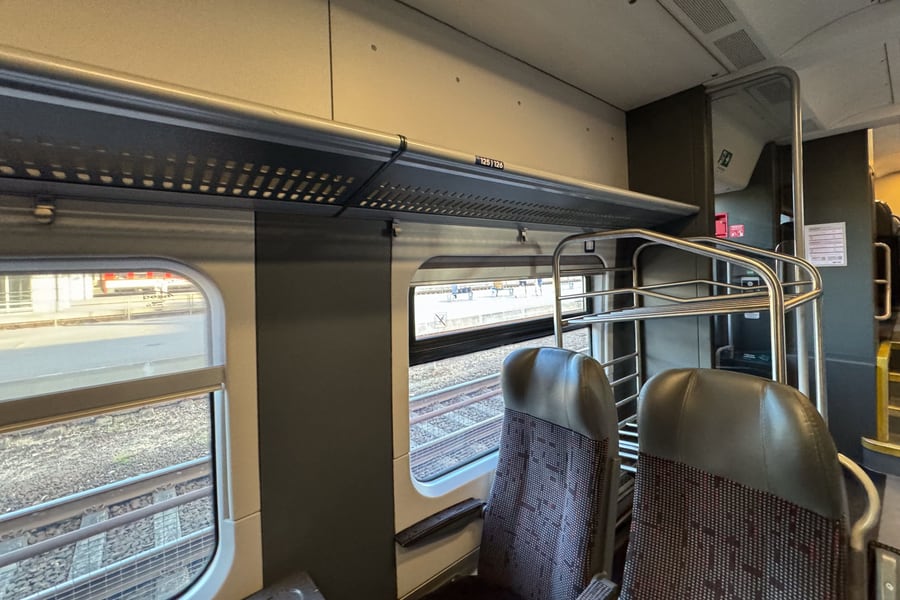 Tony Webster / Wikimedia Commons · CC BY-SA 4.0 · 2024 · cropped
Stay in your seat
Since February 2025 the 730ML from Vilnius has run on from Riga to the Estonian border as a Latvian train, with Vivi's staff taking over on board. At Valga, Elron's train for Tartu and Tallinn waits across the platform.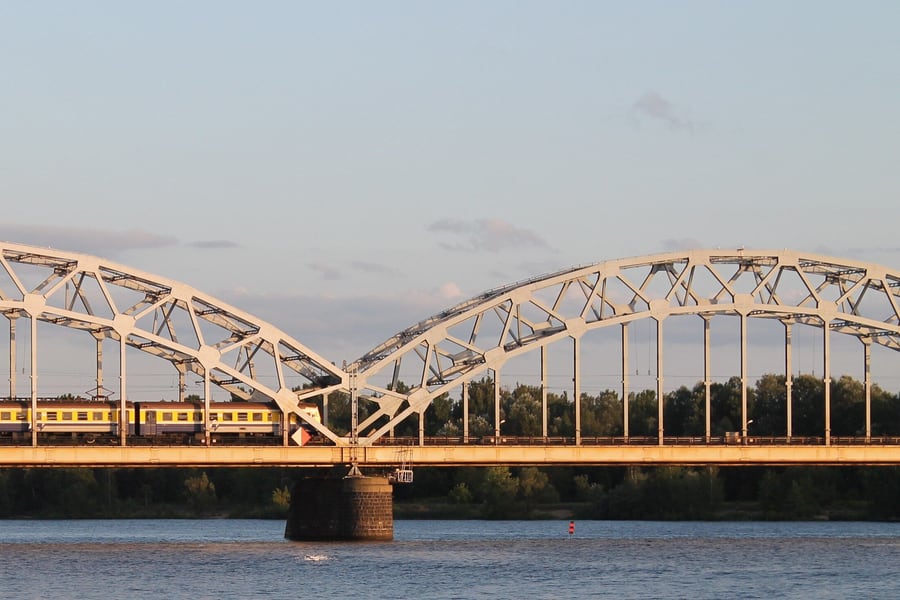 John Samuel / Wikimedia Commons · CC BY-SA 4.0 · 2019 · cropped
Over the Daugava
The last kilometres into Riga cross the Daugava on the Railway Bridge of 1914. Retreating armies blew it up in 1917 and in 1944, and it was fully restored only in 1955; Rail Baltica's new bridge has been rising beside it since 2024.A bit of history
Culture & experiences along the way
 Sven Teschke / Wikimedia Commons · CC BY-SA 3.0 DE · 2011 · cropped
The tree cake
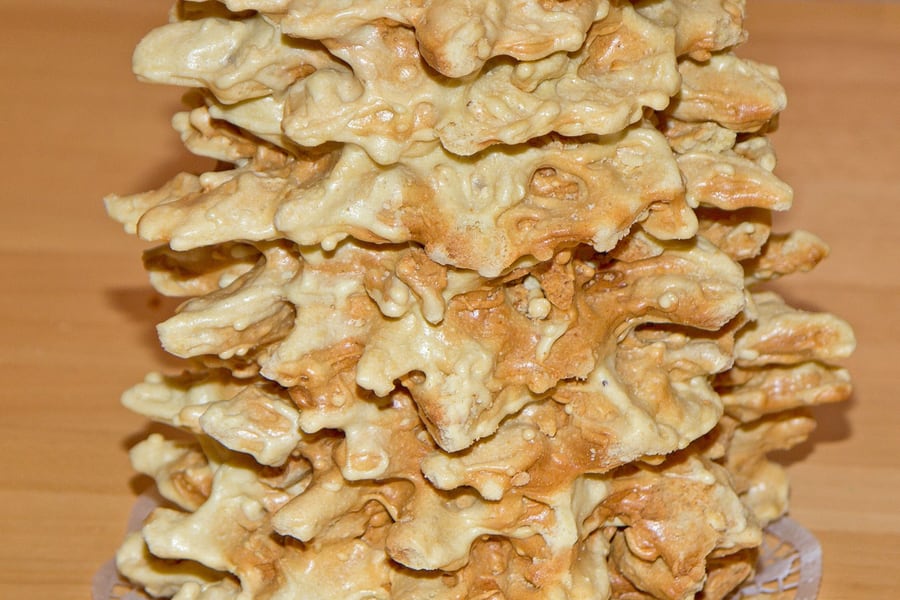
Šakotis is baked by painting batter, layer upon layer, onto a spit turning in an oven or over an open fire, so that it sets in drips like the branches of a fir. The first recipe in the region was printed in Vilnius in 1830, and it is still the cake of Lithuanian weddings, Easter and Christmas. Evaldas Liutkus / Wikimedia Commons · CC BY 2.0 · 2010 · cropped
Palms of dried flowers
The speciality of the Kaziukas fair, held in Vilnius around the Sunday nearest to 4 March since the early 17th century, is the verba: a palm of dried wild flowers and herbs, as many as 150 kinds, bound around a wooden stick and carried to church on Palm Sunday. Krists Luhaers / Wikimedia Commons · CC BY 2.0 · 2015 · cropped
A trifle of rye bread
Latvia's rupjmaizes kārtojums is made of dark rye bread, grated and toasted with cinnamon and sugar, then layered in a glass with blackcurrant or lingonberry jam and whipped cream and finished with grated chocolate. Latvia chose it for the Café Europe initiative on Europe Day 2006.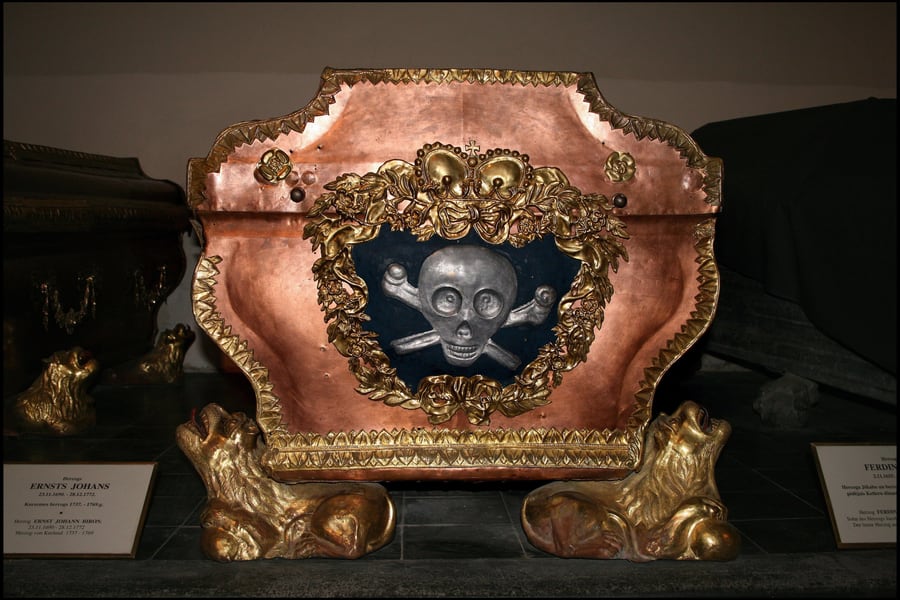 Laima Gūtmane / Wikimedia Commons · CC BY-SA 3.0 · 2008 · cropped
The dukes' vault
In the cellars of Jelgava Palace lie 21 metal sarcophagi and nine wooden coffins of the Kettler and Biron dukes of Courland and their families, buried between 1569 and 1791. Looted in 1705 and again in 1919, the vault was restored and is shown by the Rundāle Palace Museum.Timetables
One train runs each way every day, with no weekend variation, and every seat between Vilnius and Riga is reserved. The times below were read from LTG Link's own booking system in October 2026, for travel in November.
Vilnius to Riga
| Train | Vilnius | Kaišiadorys | Kėdainiai | Šiauliai | Joniškis | Jelgava | Riga |
|---|---|---|---|---|---|---|---|
| 889 | 07:04 | 07:47 | 08:34 | 09:46 | 10:23 | 11:00 | 11:34 |
From 1 December the train leaves Vilnius at 07:00 and still reaches Riga at 11:34, and the return reaches Vilnius at 21:26. Dates from 13 December were not yet on sale when the times were read.
Riga to Vilnius
| Train | Riga | Jelgava | Joniškis | Šiauliai | Kėdainiai | Kaišiadorys | Vilnius |
|---|---|---|---|---|---|---|---|
| 891 | 16:55 | 17:30 | 18:03 | 18:41 | 19:53 | 20:46 | 21:28 |
Both trains also call at Jonava and Radviliškis. The journey takes 4 hours 30 minutes north and 4 hours 33 minutes south. No tickets are sold between Jelgava and Riga.
Through to Tallinn
| Northbound | Southbound | ||
|---|---|---|---|
| Vilnius | 07:04 | Tallinn | 10:22 |
| Riga | 11:34 / 11:53 | Tartu | 13:05 |
| Valga | 14:13 | Valga | 14:25 |
| Tartu | 15:40 | Riga | 16:44 / 16:55 |
| Tallinn | 18:15 | Vilnius | 21:28 |
The northbound train stays the same as far as Valga, where Elron's train waits across the platform; southbound it is the other way round. The through tickets are a small allocation in second class and can sell out days ahead.
Times are published by the operator: LTG Link · tickets and timetables (opens in a new tab).
Tickets
Vilnius to Riga costs €24 in second class and €34 in first. That is the international fare, the same as on the first day in December 2023: the half fares LTG Link is charging until 31 December 2026 apply to domestic journeys only, so a ticket to a Lithuanian stop on the way, such as Šiauliai at €9.10, is halved and a ticket into Latvia is not. Children from 6 to 16 pay half; one child under 6 per adult travels free without a seat of its own. A bicycle costs €10.
A through ticket from Vilnius to Tallinn costs €39, to Tartu €28.20, second class only, with the change at Valga included. Tickets are sold on ltglink.lt and the LTG Link app, at ticket machines in Lithuanian stations, and on board. Checked against LTG Link, October 2026.
Book your tickets
Vilnius to Riga, LTG Link
€24 second class · €34 first
A reserved seat on the daily 730ML between the two capitals, at the international fare.
Book Tickets (opens in a new tab, on ltglink.lt)via ltglink.ltVilnius to Tallinn, one ticket
€39 second class, change at Valga
LTG Link, Vivi and Elron on a single ticket, with one change across the platform at Valga.
Book Tickets (opens in a new tab, on ltglink.lt)via ltglink.ltRail Passes
A pass covers this train, but it does not pay for this journey alone.
Interrail's table of the companies a pass is valid with — checked in October 2026, when it carried a last updated 21 October 2026 stamp — lists LTG Link's Riga–Vilnius–Valga train under Latvia as covered by a Global Pass, and by a Latvia One Country Pass for its domestic part only, with a reservation compulsory. Under Estonia it lists the whole Tallinn–Valga–Riga–Vilnius service, again for a Global Pass, and for an Estonia pass on its domestic part. LTG Link's own page for pass holders names Vilnius–Riga as a route where a pass holder must book a seat, in first or second class, for €5.
An adult Interrail Global Pass in second class costs €283 for four travel days within a month, €318 for five and €381 for seven; for travellers aged 12 to 27 it is €212, €239 and €286. A second-class Vilnius–Riga return costs €48, and the through ticket to Tallinn €39 each way.
Hold a pass for this train only as part of a longer trip across the Baltic states and beyond, where a Global Pass is the one to carry.
Prices and conditions read on interrail.com (opens in a new tab) and ltglink.lt (opens in a new tab) in October 2026.
Places to Visit
The times below are taken from the 07:04 from Vilnius, train 889, which is at Joniškis by 10:22, Jelgava by 10:57 and Riga by 11:34.
They come in the order the railway meets them: the old town the train leaves from, two synagogues on the market square of the last town in Lithuania, the Dukes of Courland's palace at Jelgava, and at the end of the line the cathedral of Old Riga and the Art Nouveau streets beyond it.
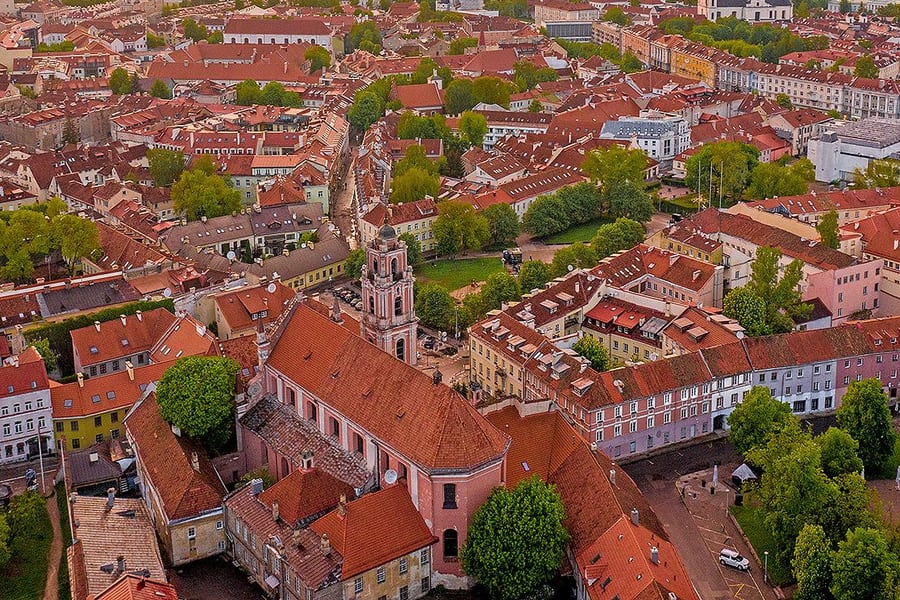 Augustas Didzgalvis / Wikimedia Commons · CC BY-SA 4.0 · 2021 · cropped
Vilnius Old Town
One of the largest surviving medieval old towns in Northern Europe, 3.59 square kilometres of streets where Gothic, Renaissance, Baroque and Neoclassical buildings stand side by side, among Catholic, Lutheran and Orthodox churches. Jogaila granted the town Magdeburg rights in 1387, and the Old Town has been on UNESCO's World Heritage List since 1994.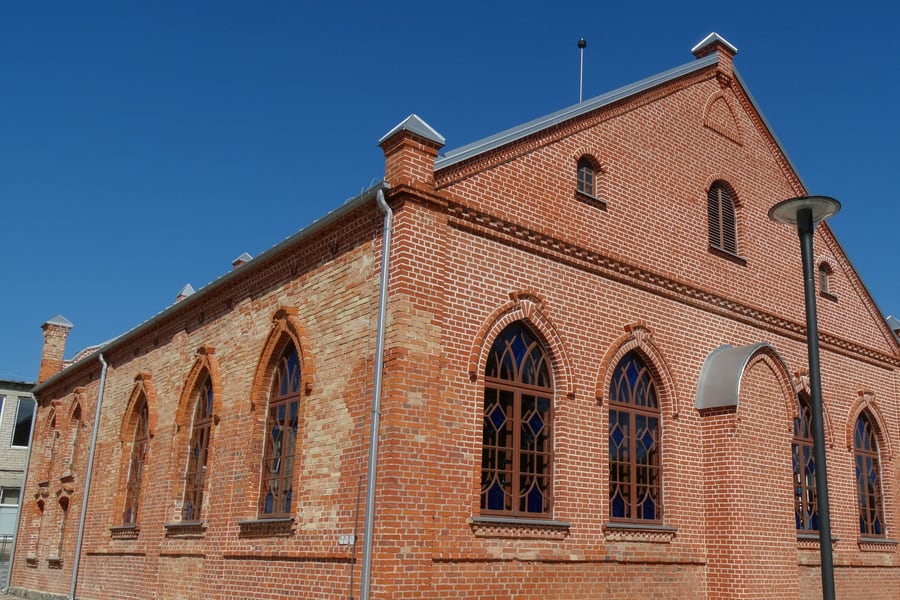 Vilensija / Wikimedia Commons · CC BY-SA 3.0 · 2015 · cropped
The synagogues of Joniškis
On the market square of Joniškis, 14 km short of the Latvian border, two synagogues stand side by side: the White, or summer, synagogue of 1823 and the Red, or winter, synagogue of 1865, rebuilt after a fire in 1911. Both were devastated in 1941 and later served as warehouses and a gym; restored from 2011, they are now a cultural centre and a Jewish museum.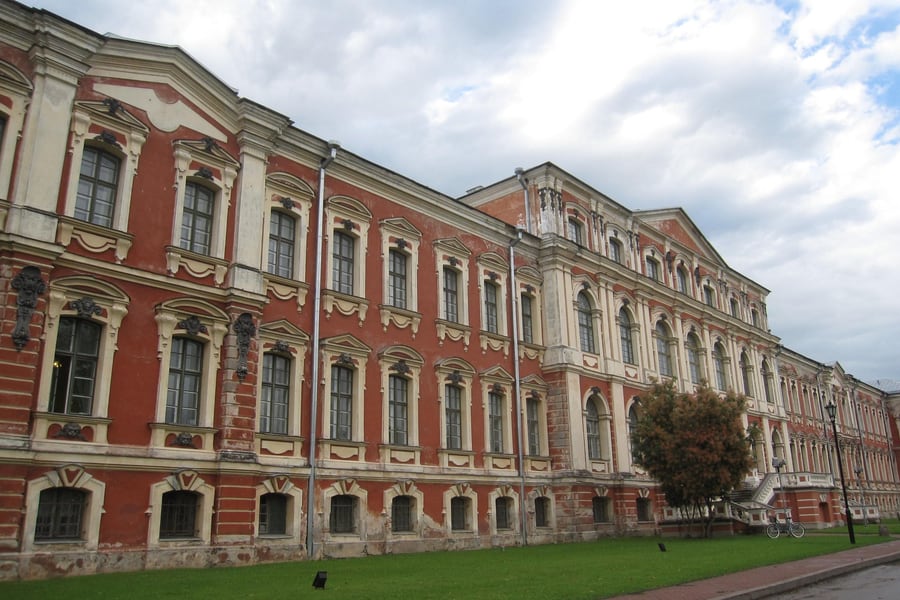 Yakikaki / Wikimedia Commons · CC BY-SA 3.0 · 2012 · cropped
Jelgava Palace
Begun in 1738 to Bartolomeo Rastrelli's design for Ernst Johann von Biron, Duke of Courland, the largest Baroque palace in the Baltic states stood unfinished through his exile and was completed in 1772. Louis XVIII of France lived here in exile in 1798–1800. Burned in 1919 and almost destroyed in 1944, its exterior was restored in 1956–64, and a university occupies it today.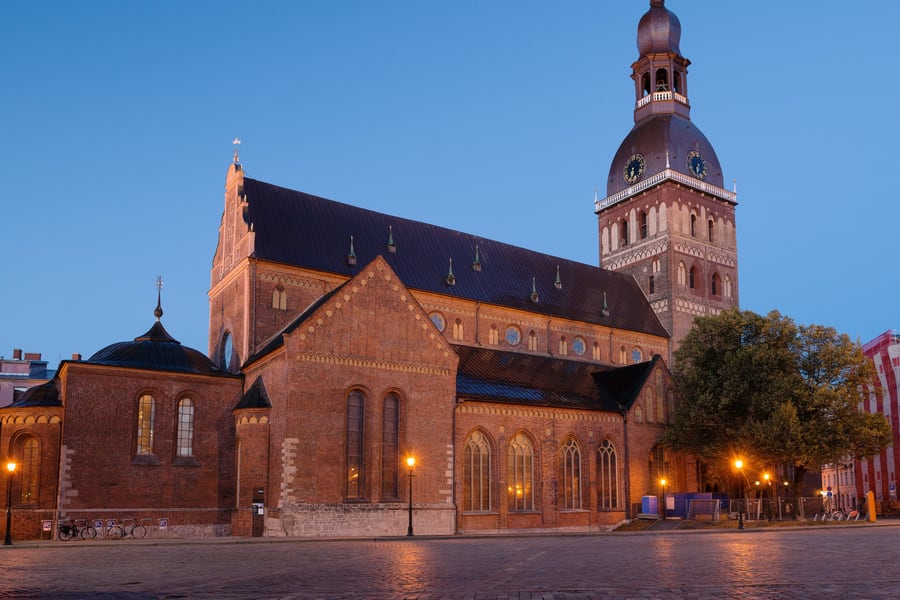 Ryzhkov Sergey / Wikimedia Commons · CC BY-SA 4.0 · 2018 · cropped
Riga Cathedral
Bishop Albert of Riga founded the cathedral by the Daugava in 1211, and it is considered the largest medieval church in the Baltic states. Its Walcker organ, inaugurated in 1884, has 6,718 pipes. Under Soviet rule the cathedral was a concert hall, and services returned in 1991. Around it, Vecrīga, the old town, keeps the churches of St James and St Peter.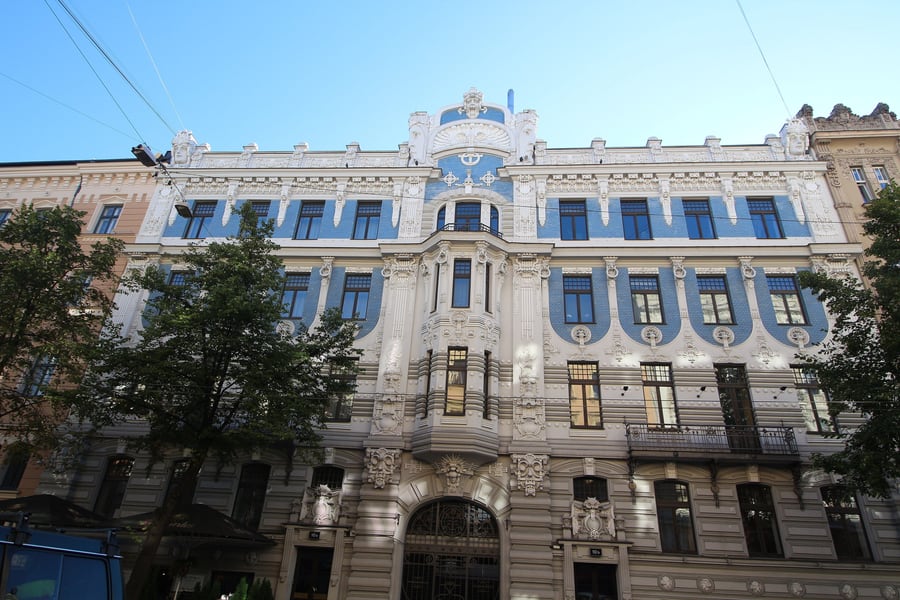 Agnete / Wikimedia Commons · CC BY-SA 4.0 · 2015
Riga's Art Nouveau
About a third of the buildings in central Riga are Art Nouveau, most of them built between 1904 and 1914. Mikhail Eisenstein, father of the film director Sergei Eisenstein, designed many of the best known between 1901 and 1906, around Alberta iela and Elizabetes iela; the facade of Elizabetes iela 10b drew on patterns published by two Leipzig architects.Where to Sleep
The train reaches Riga at 11:34, early enough for an afternoon in the old town, and the return leaves at 16:55, so the house below is for a night at the far end, a few streets from the cathedral. Everything described is what it says about itself on its own site, read in October 2026. No price, grade or star count appears here, because none has been verified.
Where to stay
Neiburgs
Jauniela 25/27, in Old Riga
A family-owned hotel of 55 rooms in an Art Nouveau building in the old town, with views of the cathedral or the medieval streets, a restaurant and a spa.
Check Availability (opens in a new tab, on neiburgs.com)via neiburgs.comQuestions or corrections
Planning this trip and stuck on something, or spotted a time, fare or detail that has changed? Send us a message about Vilnius to Riga. We read every one, and we update this page when something has changed.