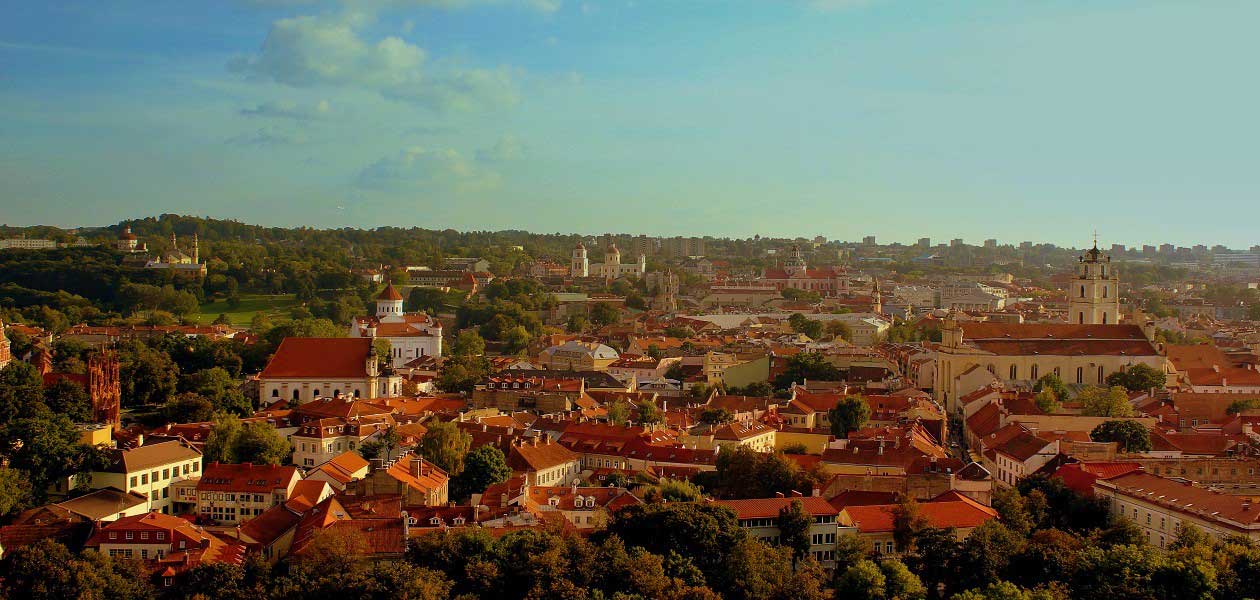
Lithuania

Lithuania is the largest and most populous of the Baltic states, 65,300 km² holding about 2.86 million people, with Vilnius in the south-east close to the Belarusian border. Latvia lies to the north, Belarus to the east and south, Poland to the south, and the Russian exclave of Kaliningrad to the south-west. The Baltic coast is short — barely ninety kilometres — and half of it is the Curonian Spit, a dune barrier that shelters a lagoon from the open sea.
The main network runs to about 1,869 km of 1,520 mm broad gauge, operated by Lietuvos geležinkeliai through its passenger arm LTG Link, linking Vilnius with Kaunas, Klaipėda on the coast and, since December 2023, Riga again. Alongside it survives something rarer: the Aukštaitija narrow-gauge railway, 68.4 km of 750 mm track from Panevėžys to Rubikiai that Lithuania protected in 1996 as a cultural heritage object — not only the trains, but the stations, the water towers and a viaduct.
Rail journeys in Lithuania
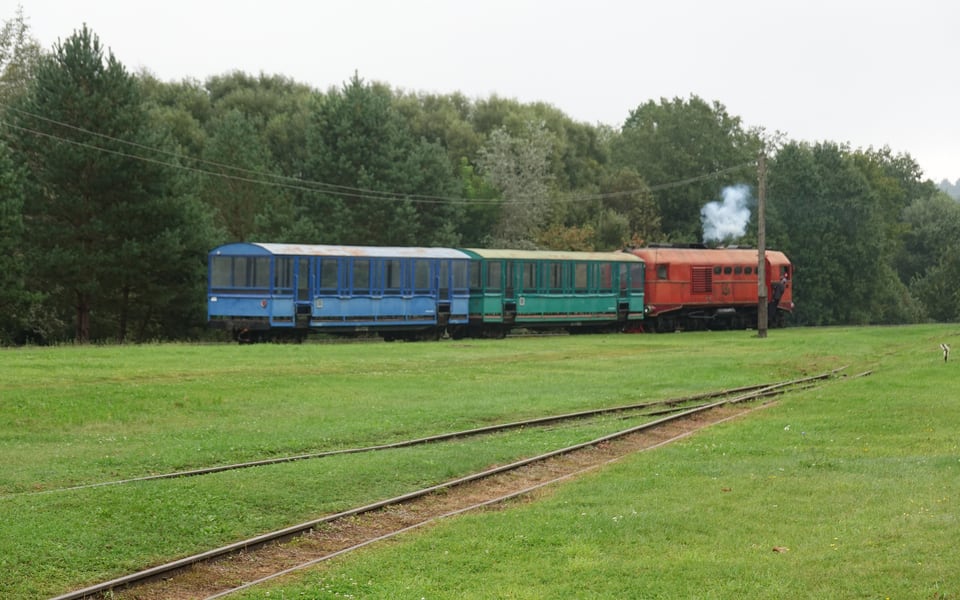
The Aukštaitija Narrow Gauge — Anykščiai to Rubikiai
Twelve kilometres of 750 mm track from a listed wooden station to a lake with seventeen islands, behind the only heritage railway Lithuania has.
View journey →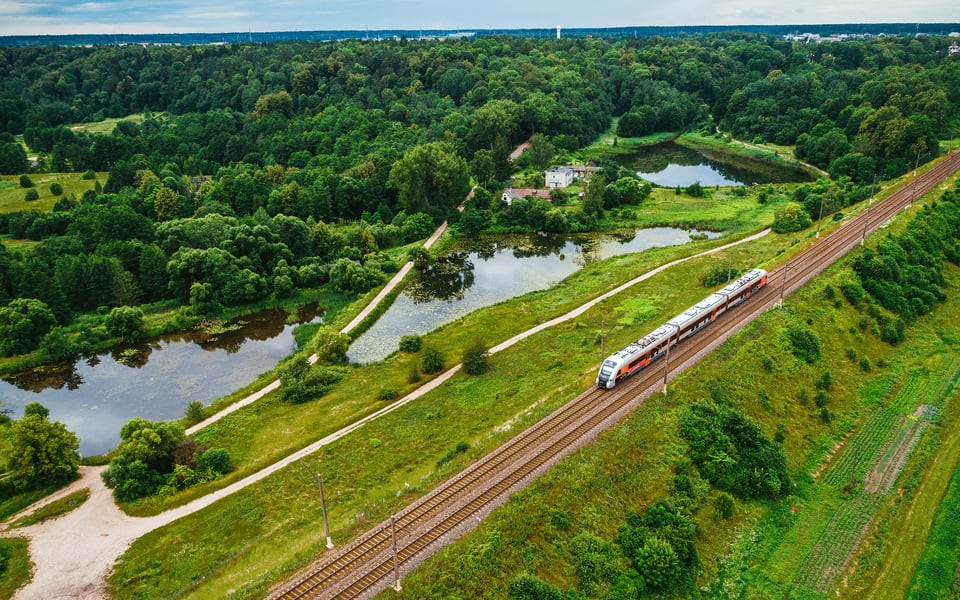
Vilnius to Klaipėda — across Samogitia to the sea
Lithuania's busiest line, 376 km from the capital to its only seaport, finished in 1932 so trains to the coast no longer had to run through Latvia.
View journey →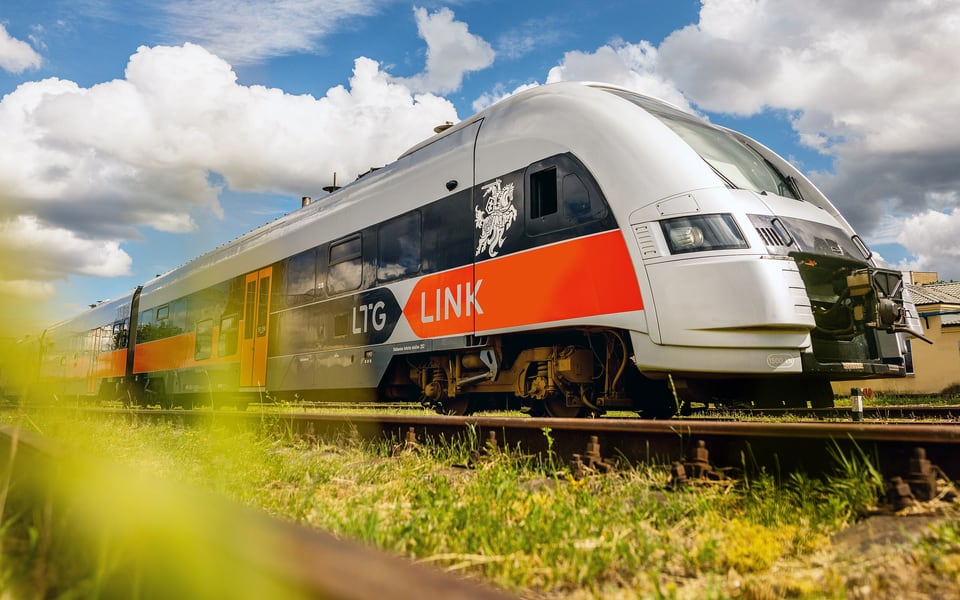
Vilnius to Riga
Lithuania's one daily train to Riga runs 348 km in four and a half hours, and at Riga anyone bound for Estonia simply stays in their seat.
View journey →Good to know
What is the Aukštaitija narrow-gauge railway?
A 68.4 km line of 750 mm gauge running from Panevėžys through Anykščiai to Rubikiai, built from 1891 and carrying regular traffic from 1899. Ordinary services ended in the 1990s and it now runs for visitors behind TU2 diesel locomotives. Lithuania listed it as a cultural heritage object in 1996 and gave individual protection in 2003 to the trackbed, the Panevėžys depot and viaduct, and the station buildings along it — it is protected as architecture as much as as a railway. The part with a public timetable is the eastern end, Anykščiai to Rubikiai, at weekends from May to October; the rest of the line runs by charter.
Is an Interrail or Eurail pass worth it in Lithuania?
Interrail sells a one-country pass for Lithuania. Whether it pays depends on how much ground you cover: fares on LTG Link are inexpensive and the country is not large, so a handful of ordinary tickets is often cheaper. The pass makes more sense across several countries. Do not assume it covers the narrow gauge, which is run as a separate visitor operation.
Can you get to Latvia and Poland by train?
A direct Vilnius–Riga service resumed on 27 December 2023, having last run in January 2004: one train a day each way, about four and a half hours. Since February 2025 the same train runs on from Riga to Valga, where one ticket continues to Tartu and Tallinn. The page for Vilnius to Riga has the times and fares. Southwards towards Poland the picture is more awkward, because the gauge changes at the border — which is precisely the gap the Rail Baltica project exists to close.
How long does the train take from Vilnius to Klaipėda?
Between 4 hours 17 minutes and 4 hours 44 minutes for the 376 km, on five through trains a day each way. The western half of the route is a line Lithuania built across Samogitia between 1924 and 1932, so that trains to its port no longer had to pass through Latvia. The page for Vilnius to Klaipėda has the timetable and fares.
How do you reach the Curonian Spit?
Not directly by rail. Trains run to Klaipėda, Lithuania's only seaport and the western end of the main line from Vilnius; the spit itself is reached from there by ferry across the narrow strait to Smiltynė. The railway gets you to the coast, and the last stage is a boat.