Tallinn to Tartu — the university line
Tibukonn / Wikimedia Commons · CC BY-SA 4.0 · 2021 · cropped
- DistanceAbout 190 km · 1,520 mm gauge
- Duration2 hr 19 min (express) – 3 hr 6 min
- Best seasonTen trains a day, all year
Introduction
Tartu was meant to have its railway from Rakvere. When the branch from the Tallinn–St Petersburg main line was surveyed in the 1870s, the junction was drawn at the market town of Wesenberg — and then moved, because a line south from there would have had to climb the Pandivere upland, and the earthworks would have cost a fortune. The surveyors chose Tapa, a village nobody had heard of, and the first passenger train from it reached Tartu at seven in the evening on 21 August 1876, to the cheers of thousands. For years afterwards a passenger from Tallinn changed trains at Tapa. Today none do: the trains run through, about 190 kilometres from the Baltic Station to the wooden terminus in Tartu, on the 1,520 mm Russian gauge, in a little under two and a half hours by express.
It is the railway that ties the north of Estonia to the south, and Elron runs ten trains a day along it in each direction, six of them expresses. The country it crosses is not dramatic. The first hour is the commuter belt and the forest of Kõrvemaa; after Tapa the line runs south over the low country of central Estonia, past lime works and grain towns, open fields and small wooden stations, to the valley of the Emajõgi and the second city — Tartu, about 97,000 people, the University of Tartu's city and, for six centuries, Dorpat on every map. The line is also halfway through a change. Wires reached Tapa in January 2026, the first electric test train ran beyond them in September, and the new Škoda units built for this route — with a café on board — are waiting for the signalling south of Tamsalu to be finished. Until then it is diesel all the way.
The Journey
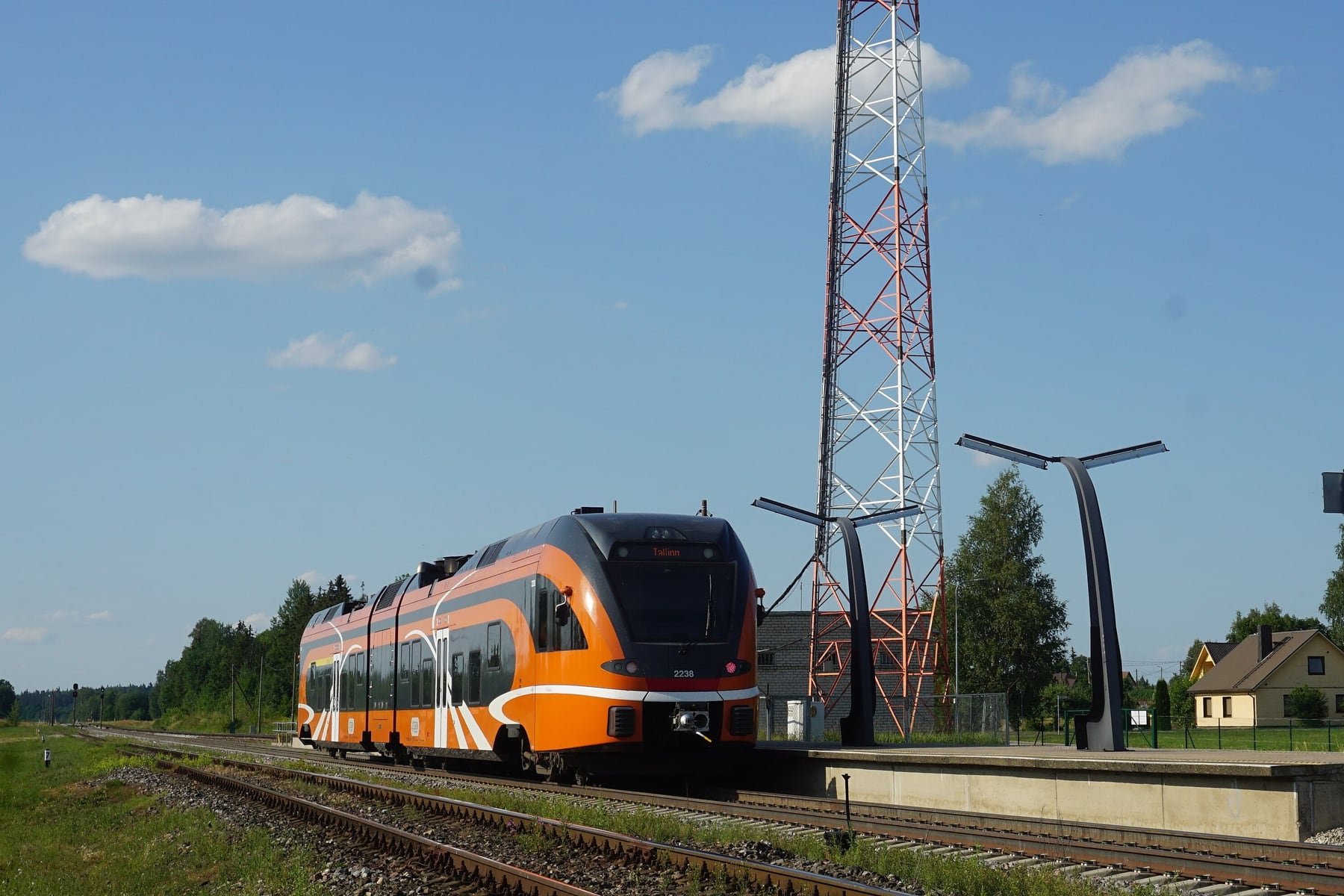
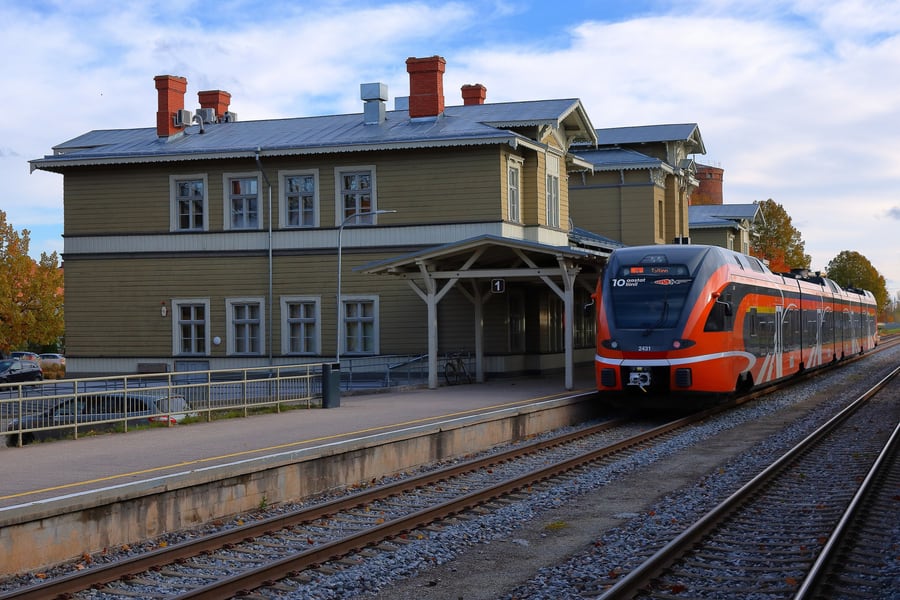
There are two ways to ride this line, and the timetable decides which. The expresses call at five places between the termini and cover the distance in two hours nineteen to two hours thirty-five; the stopping trains call at nearly every halt and take nearer three. Either way the train is an orange Stadler FLIRT diesel unit. The one at the top of this page is 2238, at Tabivere's island platform; another, 2425, carries the name Dorpat, the German name Tartu went by for six hundred years.
Out of Tallinn
For its first hour the Tartu train is a Narva train. Both leave Balti jaam on the double-track main line east, through Kitseküla and Ülemiste, and both run under the overhead wires that were finally carried through to Tapa on 5 January 2026 — wires the diesel has no use for. The expresses call at nothing else and reach Tapa in 47 minutes. The stopping trains take the hour, calling at Kehra and Aegviidu and then at the halts of Nelijärve, Jäneda and Lehtse.
Tapa, and the turn south
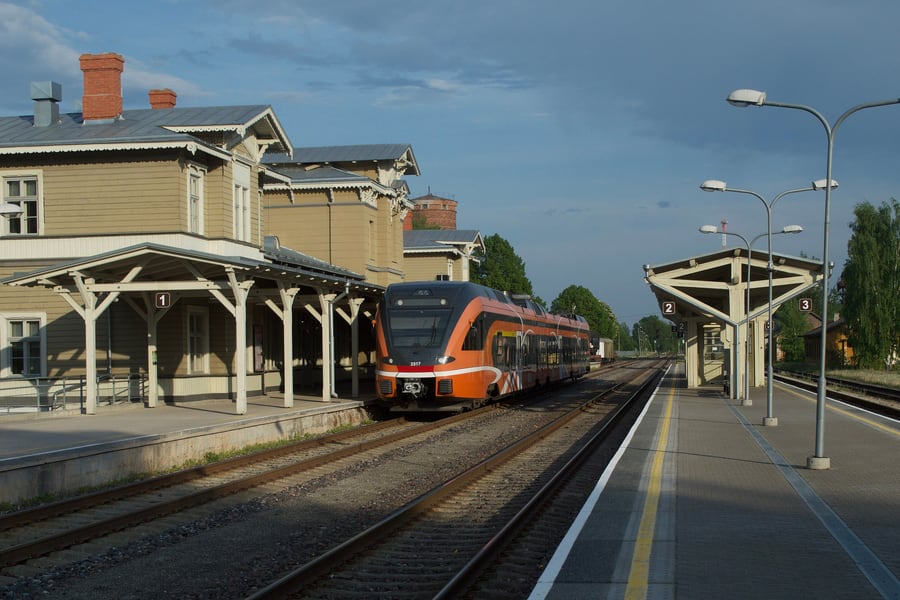
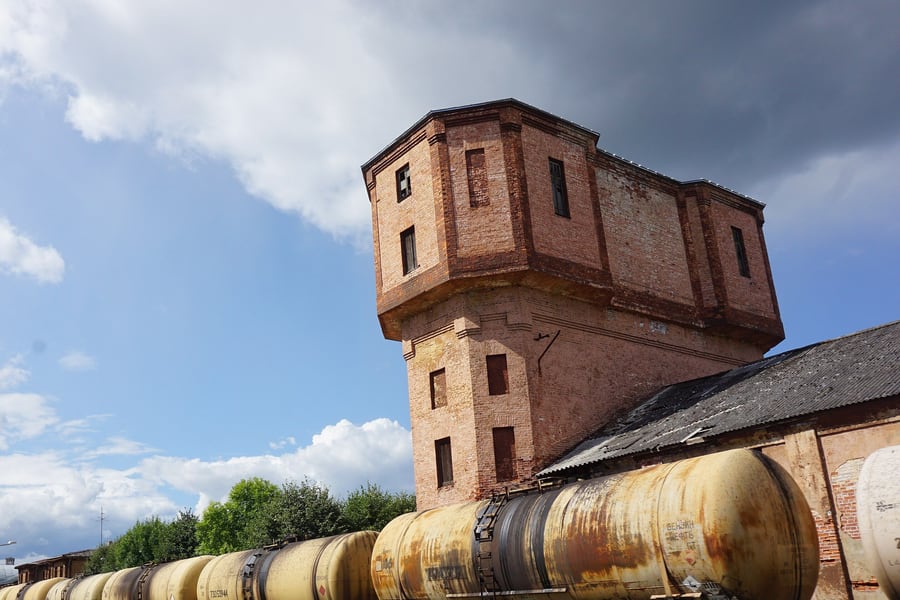
Tapa is the reason the line exists in the shape it does. It was a fourth-class station on the 1870 main line, three tracks in a spruce forest, until the Tartu branch was routed through it; then it became a second-class junction, gained a depot, workshops and a second platform, and grew into a railway town. Its stone station, built later to a special design that recalls the old St Petersburg termini, stands between the two platforms with its water tower beside it: Narva trains use one face, Tartu trains the other.
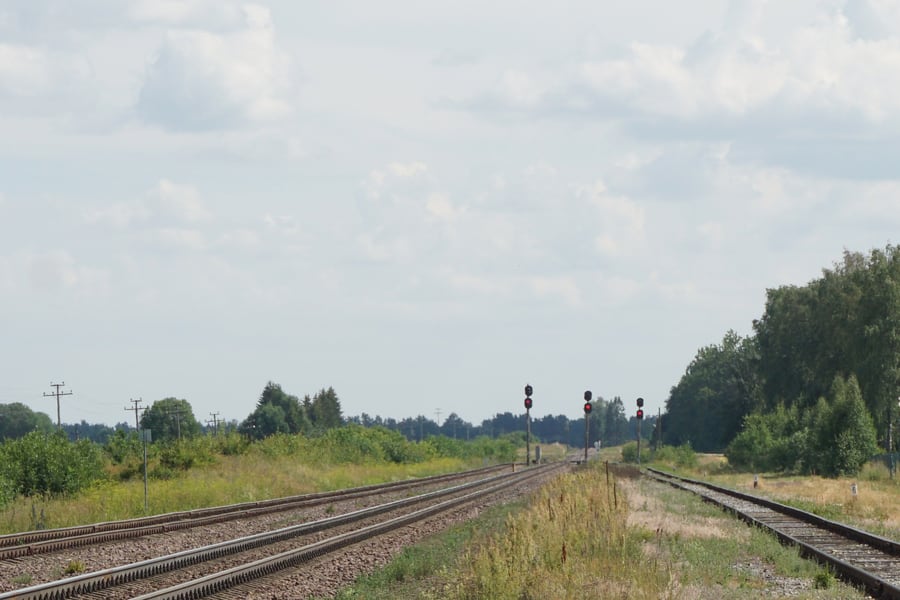
South of the junction the country changes. The first station, Nõmmküla, has not seen a passenger stop since 2001; the trains run straight through. Tamsalu comes next, and it is the current frontier of the wires — Elron's first Škoda electric test runs reached it at night at the end of September 2026. After it the stopping trains work down a string of small places: Kiltsi, Rakke with its lime works beside the track, Vägeva, Pedja. The forest thins and the fields open out.
Jõgeva and Vooremaa
Jõgeva is the main stop of the middle section, and the expresses' only call between Tamsalu and Tartu. It was Laisholm when the first train stopped here on 21 August 1876, and the town grew out of the station's trade in grain, flour, flax and livestock. It holds a less comfortable distinction too: on 17 January 1940 Jõgeva recorded −43.5 °C, the coldest temperature ever measured in Estonia. The poet Betti Alver came from here, and the town has kept a museum to her since 2006.
Below Jõgeva the line runs into Vooremaa, the lake country north of Tartu. Tabivere is on the shore of the largest of its lakes, Saadjärv. Its station was called Voldi until 1925, and in the War of Independence it was fought over: Estonian armoured trains took it on 13 January 1919 and captured nearly sixty Red Army wagons. The odd little station building of 1877, with steep gables in the old Russian wooden style, survived all of that and was demolished in April 2025.
Over the Emajõgi into Tartu
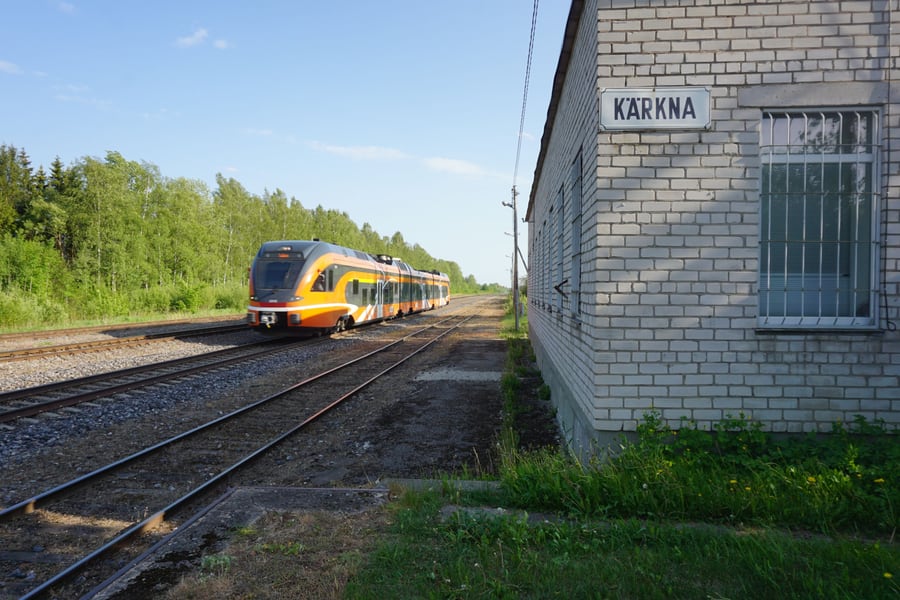
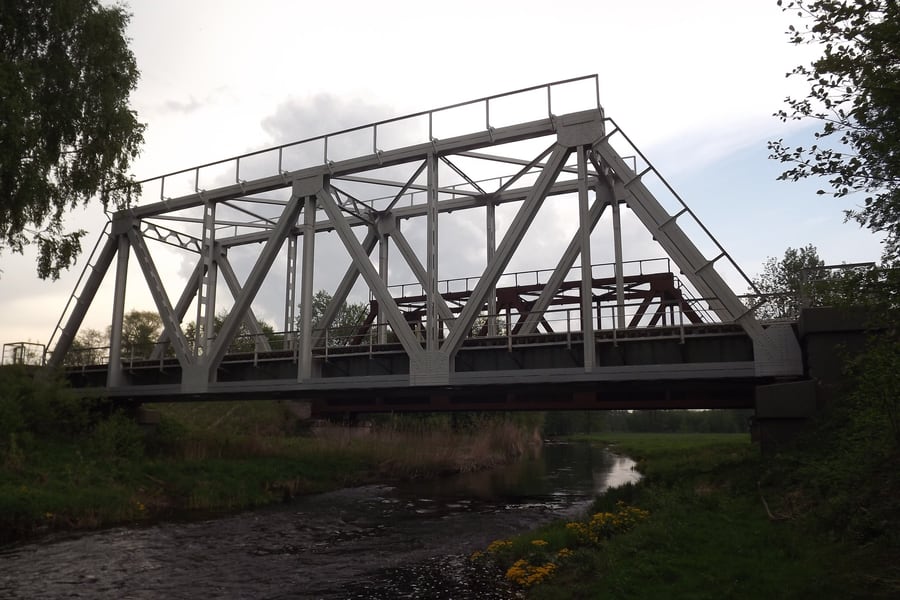
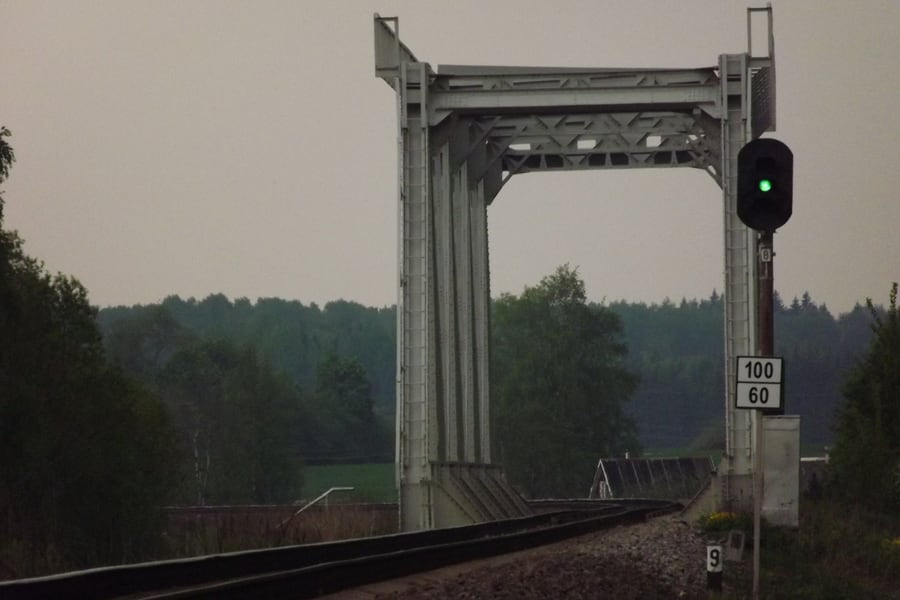
After Kärkna, the last stop, the train crosses the Amme and then the Emajõgi on the Jänese bridge. The first one, a 44.9-metre steel span, opened with the line in 1876; the retreating Red Army blew it up in July 1941, and the rebuilding of 1959 was one of the lowest bridges on the river. In August 2021 a new bridge opened beside it on a straightened alignment, so trains no longer need to slow for the curve.
Tartu station sits west of the centre, on what was manor land when it was built in 1875–77. It is protected as an outstanding example of nineteenth-century wooden architecture, kept with its original rooms, carved timber and platform canopy, and a tunnel of 1933 links its platforms. The railway goes on from here — south to Valga and the Latvian border, and south-east to Koidula — and one express a day, the 14:31 from Tallinn, runs through to Riga without a change.
The next change will be inside the train. Elron's sixteen new Škoda units include eleven long-distance sets meant for this line, and when they take over, the operator will open train cafés on board, supplied by the chef Joel Ostrat: hot and cold drinks, sandwiches, salads, desserts and snacks. Until the last of the signalling is finished south of Tamsalu, it is still the diesels, and the names.
Along the route
 Tibukonn / Wikimedia Commons · CC BY-SA 4.0 · 2021 · cropped
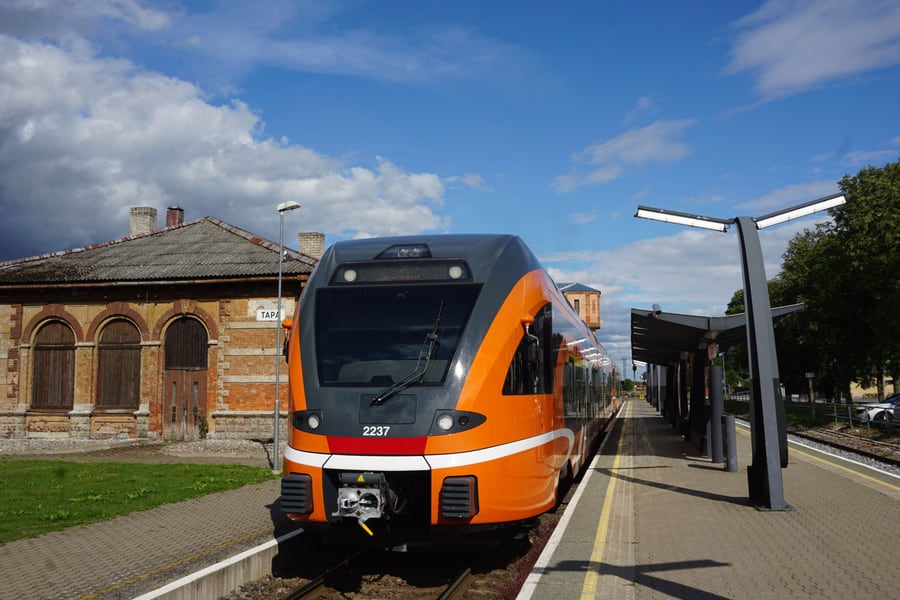
The junction nobody planned
The branch was meant to leave the main line at Rakvere. The Pandivere upland was in the way, and the earthworks would have been enormous, so the surveyors chose Tapa instead — then an unimportant village. The railway made it a second-class junction, with a depot, workshops and a town.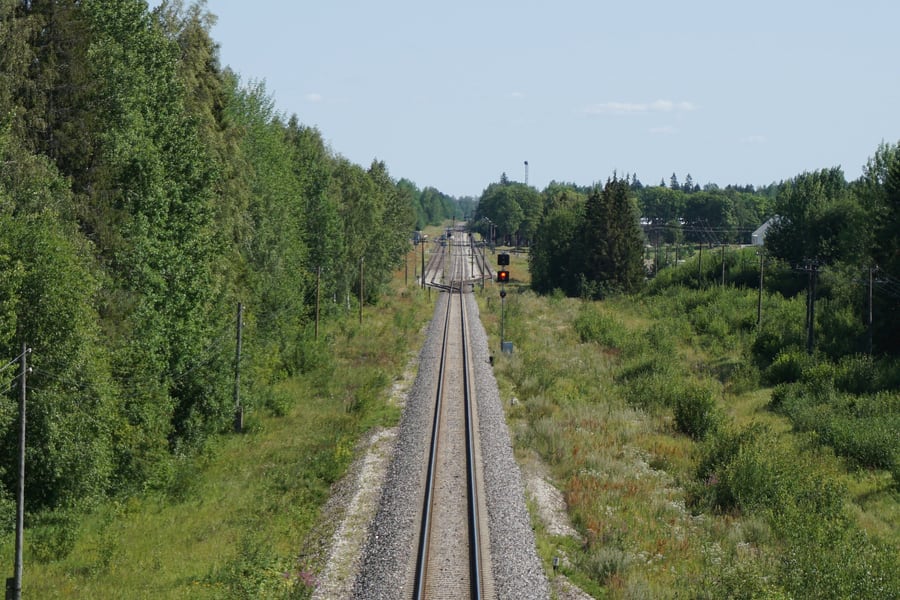 Tibukonn / Wikimedia Commons · CC BY-SA 4.0 · 2019 · cropped
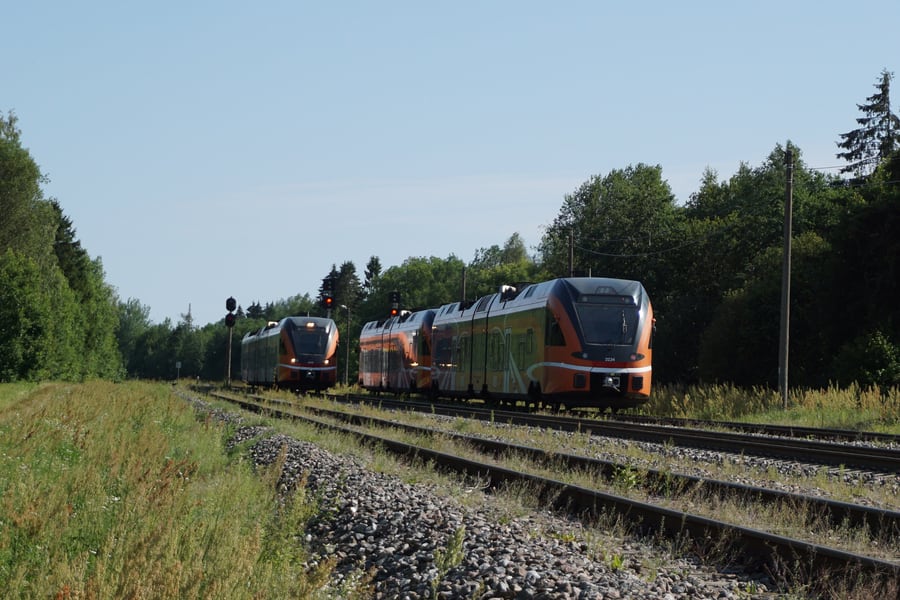
The wires reach Tamsalu
Overhead wires have run to Tapa since January 2026. On the night of 28 September Elron ran its first Škoda electric train beyond them, to Tamsalu, without passengers. The signalling south of Tamsalu is still being finished, and until it is, every Tartu train is a diesel.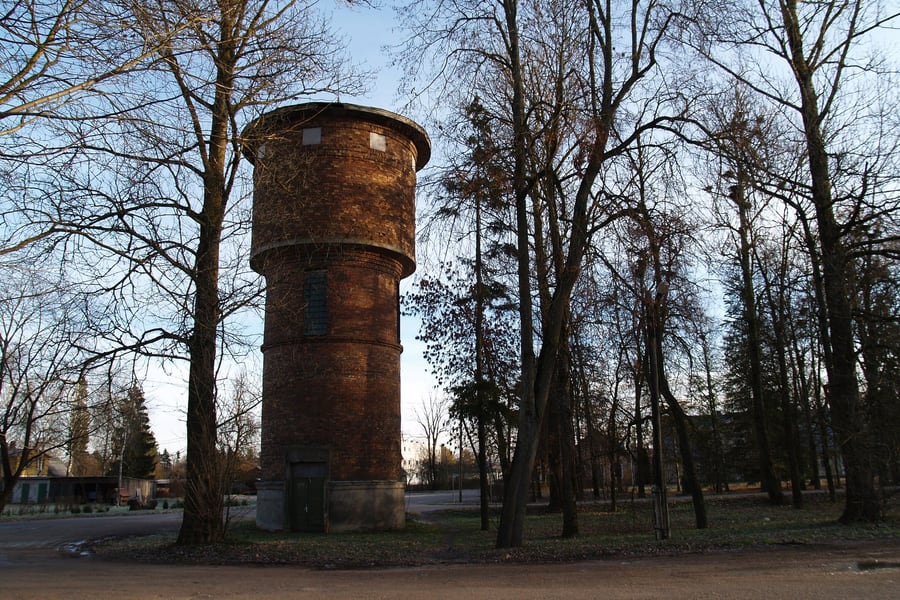 Ivo Kruusamägi / Wikimedia Commons · CC BY-SA 3.0 · 2012 · cropped
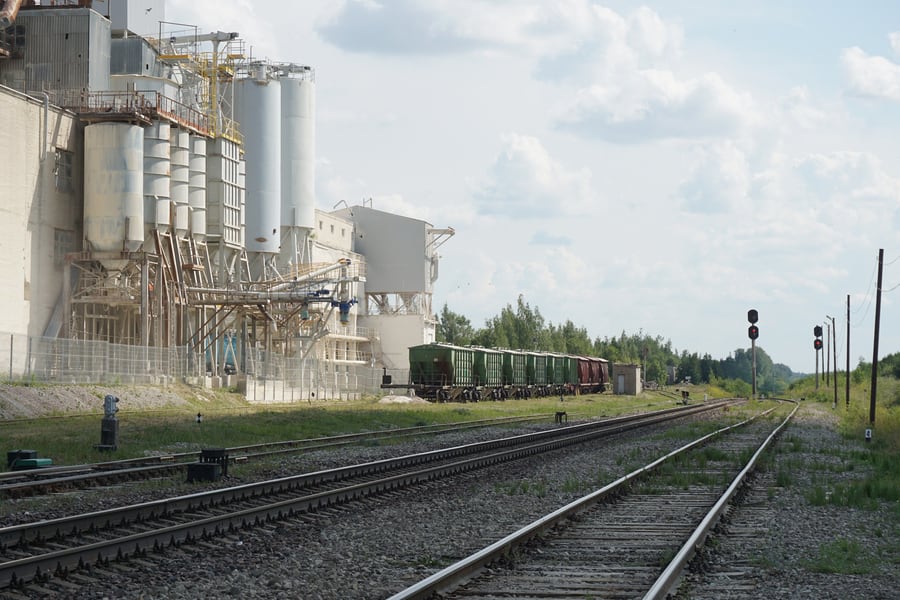
Laisholm becomes Jõgeva
The first train stopped here on 21 August 1876, when the place was called Laisholm. Grain, flax and livestock left through its station, some of it for Russia, and a town grew around the trade. The wooden station did not survive the Second World War.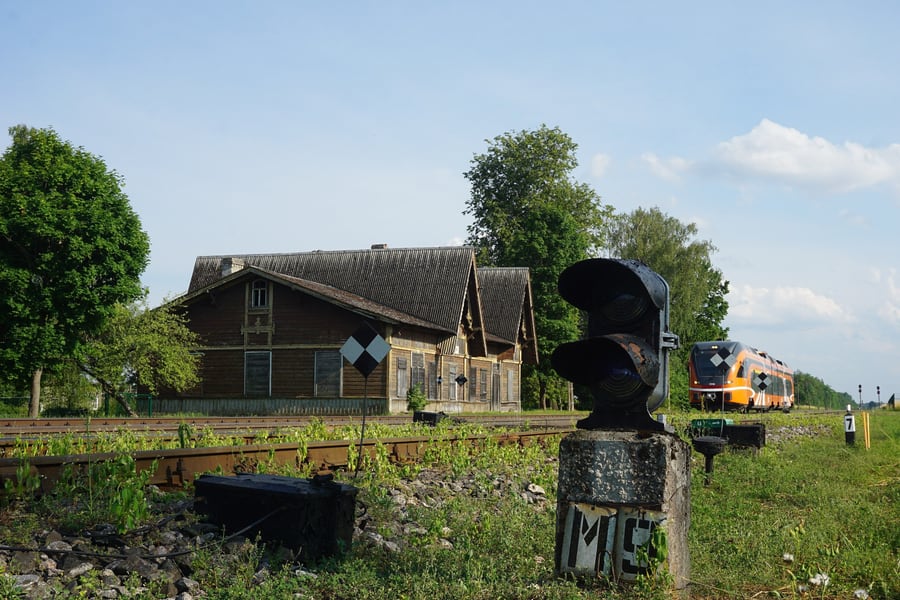 Tibukonn / Wikimedia Commons · CC BY-SA 4.0 · 2021 · cropped
A station for ten cents
Tabivere's station of 1877 broke the government pattern, with steep gables taken from old Russian wooden architecture. Tickets stopped being sold there in 1998. In 2024 the railway auctioned it from a starting price of ten cents, hoping someone would move it, and it was demolished in April 2025.A bit of history
Culture & experiences along the way
 Rauno Kalda / Wikimedia Commons · CC BY-SA 3.0 EE · 2011 · cropped
Spring, in the schoolroom
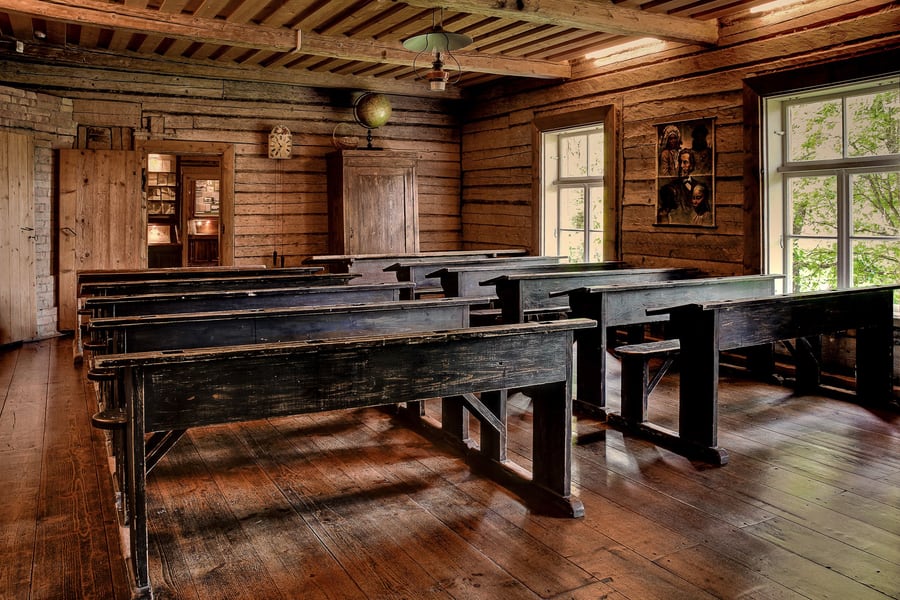
Oskar Luts was 25 when Kevade — Spring — was published, a story of his own schooldays that is still his best-known work. The parish school he wrote about is at Palamuse, about 12 km from Jõgeva, and its nineteenth-century classroom is now a museum, with exhibits in English. Allow an hour and a half.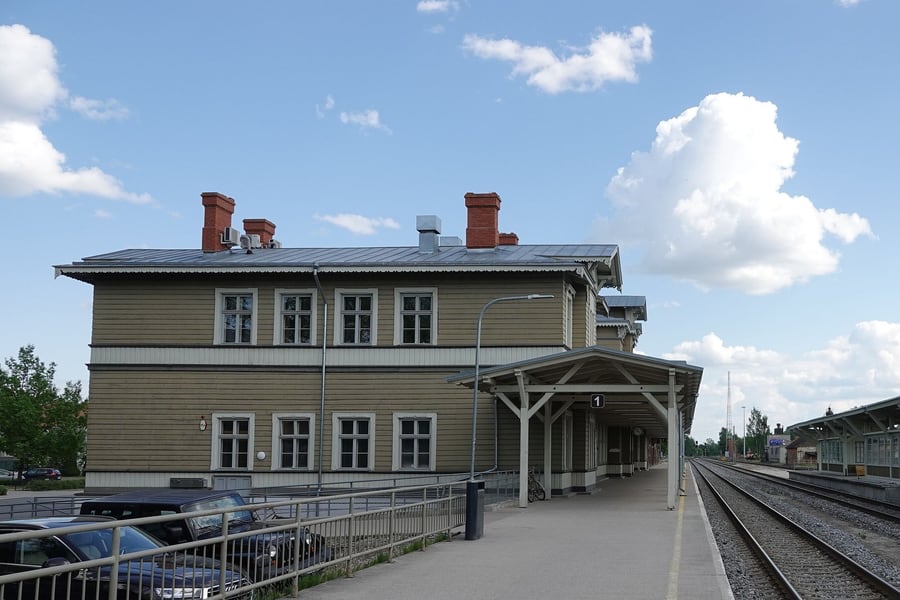 Nenea hartia / Wikimedia Commons · CC BY-SA 4.0 · 2023 · cropped
A wooden station from 1877
Tartu's station was built in 1875–77 on manor land outside the town, and it is listed as an outstanding example of nineteenth-century wooden architecture: carved timber, the platform canopy, the original rooms all kept. In Soviet years its restaurant went by the nickname Liiper — the railway sleeper.Timetables
Ten trains run from Tallinn to Tartu every day and eleven run back, with no weekend variation. Six each way are expresses, calling only at Kitseküla, Ülemiste, Tapa, Tamsalu and Jõgeva; the rest stop at every halt south of Tapa. None needs a change of train. The times below are Elron's east- and southbound timetable in force from 2 November 2026, read from the operator's sheet in October 2026.
⚠️ That sheet covers two weeks of engineering work at Ülemiste in Tallinn, and Elron has said the timetable will change again once the work ends on 16 November. Check the new times before travelling after that date.
Tallinn to Tartu
| Train | Tallinn | Tapa | Jõgeva | Tartu | Journey |
|---|---|---|---|---|---|
| 140/100 | 05:08 | 06:22 | 07:39 | 08:14 | 3 hr 6 |
| 10 · express | 07:15 | 08:02 | 09:10 | 09:39 | 2 hr 24 |
| 90 · express | 09:08 | 10:01 | 11:06 | 11:35 | 2 hr 27 |
| 012 · express | 10:22 | 11:09 | 12:26 | 12:54 | 2 hr 32 |
| 102 | 12:15 | 13:16 | 14:36 | 15:10 | 2 hr 55 |
| 14 · express | 13:27 | 14:14 | 15:19 | 15:46 | 2 hr 19 |
| 16 · express | 14:31 | 15:21 | 16:38 | 17:05 | 2 hr 34 |
| 144/104 | 17:05 | 18:15 | 19:29 | 20:02 | 2 hr 57 |
| 18 · express | 18:25 | 19:12 | 20:18 | 20:45 | 2 hr 20 |
| 106 | 20:34 | 21:33 | 22:49 | 23:22 | 2 hr 48 |
Train 16 continues from Tartu to Riga as a through service. On working days a short train, 190, also runs from Jõgeva at 07:07 into Tartu at 07:43.
Tartu to Tallinn
| Train | Tartu | Jõgeva | Tapa | Tallinn | Journey |
|---|---|---|---|---|---|
| 101 | 06:52 | 07:25 | 08:49 | 09:39 | 2 hr 47 |
| 11 · express | 08:20 | 08:47 | 09:59 | 10:47 | 2 hr 27 |
| 91 · express | 10:17 | 10:44 | 11:56 | 12:44 | 2 hr 27 |
| 13 · express | 11:36 | 12:03 | 13:14 | 14:02 | 2 hr 26 |
| 103 | 12:09 | 12:43 | 14:03 | 15:01 | 2 hr 52 |
| 15 · express | 14:21 | 14:54 | 16:08 | 16:56 | 2 hr 35 |
| 17 · express | 15:49 | 16:16 | 17:27 | 18:15 | 2 hr 26 |
| 109/447 | 16:21 | 16:55 | 18:10 | 19:21 | 3 hr 0 |
| 93 · express | 17:18 | 17:45 | 19:01 | 19:49 | 2 hr 31 |
| 105 | 19:42 | 20:18 | 21:32 | 22:30 | 2 hr 48 |
| 107/147 | 22:02 | 22:35 | 23:54 | 00:43 | 2 hr 41 |
Trains 13, 15 and 17 begin further south — 13 in Riga, 15 at Valga and 17 as a connection from Riga and Vilnius — and pick up at Tartu on the way north.
Making a day of it
The expresses make Tartu an easy day out from the capital. The 07:15 is in Tartu at 09:39, and the 17:18 back reaches Tallinn at 19:49, which leaves seven and a half hours for the old town, Toome Hill and the river. The 19:42 from Tartu, a stopping train that reaches Tallinn at 22:30, stretches it to ten hours.
Times are published by the operator: Elron · East- and Southbound timetable from 2 November 2026 (opens in a new tab).
Tickets
Tallinn to Tartu costs €12.90 online in standard class on a stopping train and €16.00 on an express. Elron prices tickets bought on board separately, and higher: €13.50 and €18.00, with first class at €16.00 and €21.50. Shorter journeys are charged by the pair of stations. Tickets are sold online, from machines and staff on the train, and at the Balti jaam and Tartu ticket offices.
⚠️ A standard-class ticket does not guarantee a seat, and Elron's own advice to anyone who wants one is to buy first class. Online sales close five minutes before departure for standard class and thirty minutes before the train leaves its first station for first. Checked against Elron, October 2026.
Book your tickets
Tallinn to Tartu, standard class
€12.90 online on a stopping train · €16.00 on an express
The whole line, although a standard-class ticket does not guarantee a seat.
Book Tickets (opens in a new tab, on elron.ee)via elron.eeTallinn to Tartu, first class
€16.00 on a stopping train · €21.50 on an express
A guaranteed seat, sold up to thirty minutes before the train leaves its first station.
Book Tickets (opens in a new tab, on elron.ee)via elron.eeFamily ticket
2.5 times the full fare, for one or two adults and up to four children
Reserves one of the two five-seat family areas on a diesel train, sold only on Elron's site.
Book Tickets (opens in a new tab, on elron.ee)via elron.eeRail Passes
A pass covers every train on this line, and for this journey alone it does not pay.
Interrail's table of the companies a pass is valid with in Estonia — checked in October 2026, when it carried a last updated 21 October 2026 stamp — lists Elron for both commuter and express trains, with seat reservations optional, except in first class, where one is needed. The Tallinn–Valga–Riga–Vilnius service is listed too, but a One Country Pass covers only its Estonian part.
The arithmetic is the problem. An adult Interrail Estonia Pass in second class costs €105 for three travel days within a month, €129 for four, €152 for five, €175 for six and €216 for eight; youth prices, for travellers aged 12 to 27, are €79, €97, €114, €131 and €162. A Tallinn–Tartu return is €25.80 online on the stopping trains and €32 on the expresses. Even the cheapest youth pass would need more than two such returns to break even, and Estonia's network is small enough that filling three travel days takes planning rather than travelling.
Where a pass earns its keep is on a longer Baltic run, with Tartu as the first stage south towards Valga, Riga and Vilnius — and there a Global Pass, not the Estonian one, is the pass to hold. On a trip that is only Estonia, ordinary tickets are cheaper.
Prices and conditions read on interrail.com (opens in a new tab) in October 2026.
Places to Visit
Everything below is reached from a platform on the line, and the times given are taken from the midday stopping train out of Tallinn — the 12:15, which is at Tapa by 13:16, Tabivere by 14:54 and Tartu by 15:10. Tapa and Tartu are a walk from the train; Lake Saadjärv is a short walk from Tabivere.
The four come in the order the railway meets them: the junction town, the lake, and then the hill at the heart of Tartu with its two landmarks.
 Ivar Leidus / Wikimedia Commons · CC BY-SA 3.0 EE · 2012 · cropped
Tapa
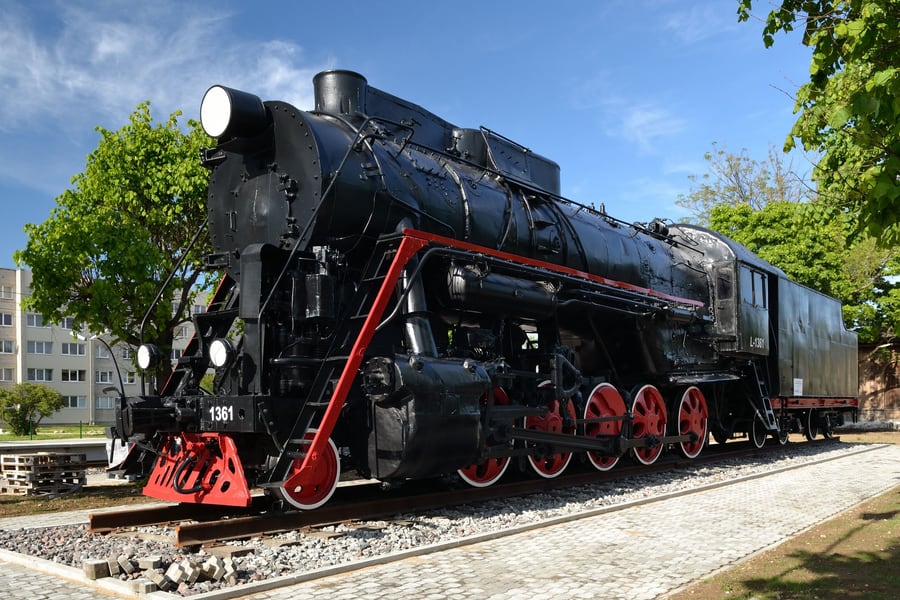
A railway town that exists because the Tartu branch was routed through it. The stone station between the platforms has a bronze plaque recording 9 January 1919, when Estonian armoured trains took the junction back from the Red Army in the War of Independence; it was removed under Soviet rule and put back in 1993. Beside the building stands L-1361, an L-class steam locomotive renovated and set up as a monument in 2011.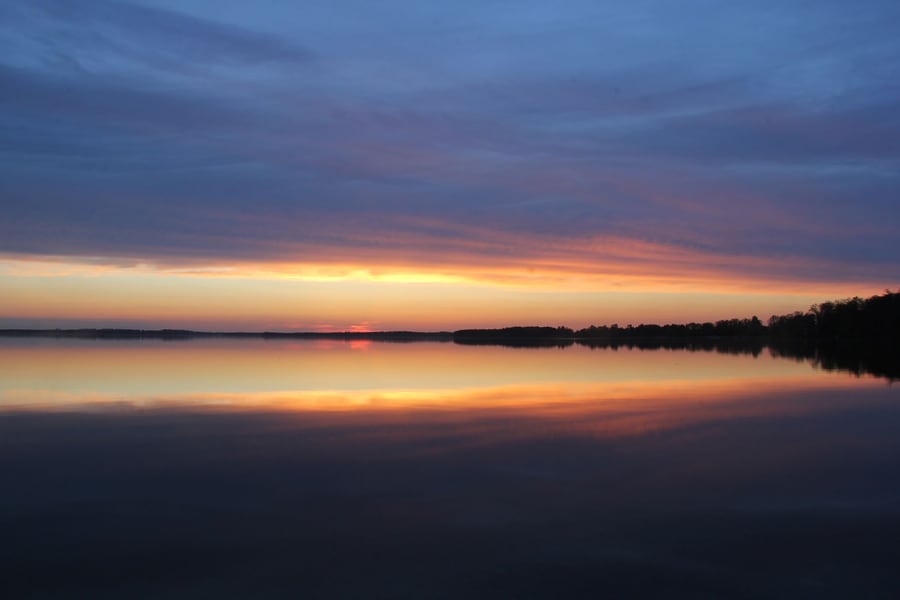 Tauri Pärna / Wikimedia Commons · CC BY-SA 4.0 · 2014 · cropped
Lake Saadjärv
The largest lake of Vooremaa, fifteen kilometres north of Tartu, and the only lake in Estonia on both the list of the ten largest and the ten deepest: 723 hectares and 25 metres at its deepest. Tabivere is on its shore. There are bathing beaches along it, and on a still evening the water holds the whole sky.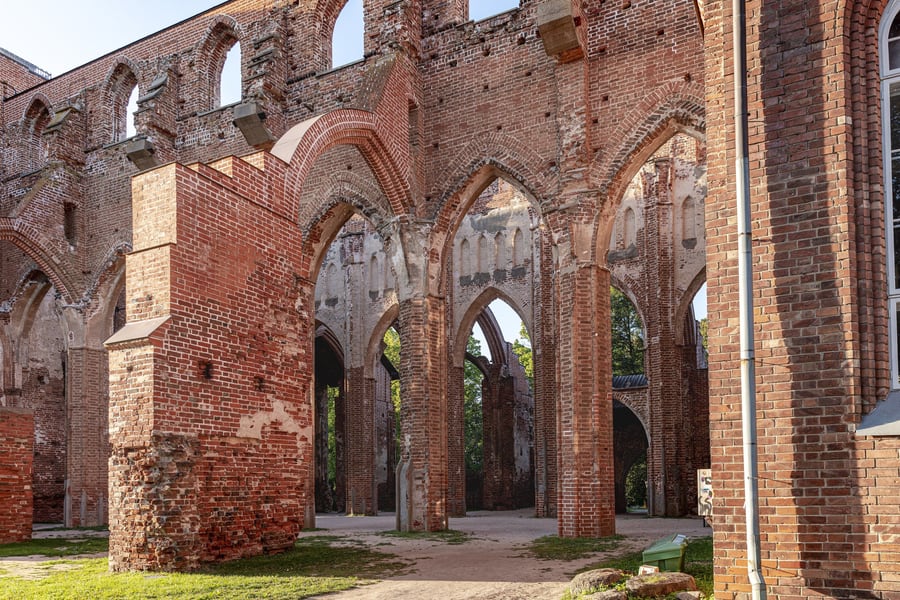 Ninara / Wikimedia Commons · CC BY 2.0 · 2024 · cropped
Toome Hill and the cathedral ruins
Tartu began on this hill, with a wooden stronghold on its east side by the seventh century and later a bishop's castle. The cathedral built here between the thirteenth and sixteenth centuries was wrecked by the Reformation and the Livonian War and has stood as a brick Gothic ruin ever since; its choir was roofed in 1804–07 for the university library and now holds the University of Tartu Museum.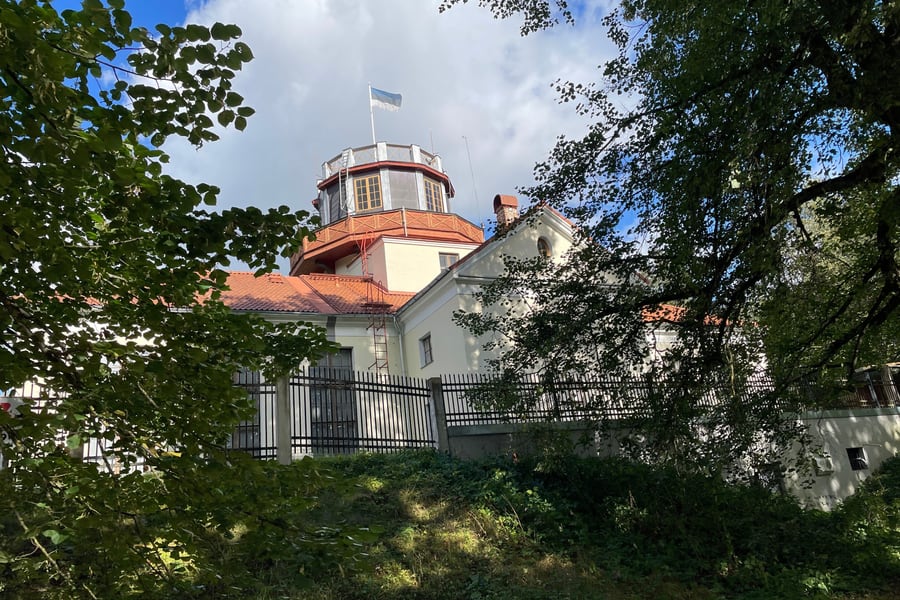 Ypsilon from Finland / Wikimedia Commons · CC0 · 2025 · cropped
The Old Observatory
Built in 1808–10 and working until 1964, now part of the university museum. Friedrich Georg Wilhelm von Struve directed it from 1820, measured the distance to Vega from here, and started the survey of the Earth's shape now called the Struve Geodetic Arc. The observatory is its first point, which is why it belongs to a UNESCO World Heritage Site stretching 2,820 km to the Black Sea.Where to Sleep
The journey is short enough to be a day return from Tallinn, so the three houses below are for staying in Tartu itself, all of them in or beside the old town. Everything described is what each says about itself on its own site, read in October 2026. No prices, grades or star counts appear here, because none have been verified.
Where to stay
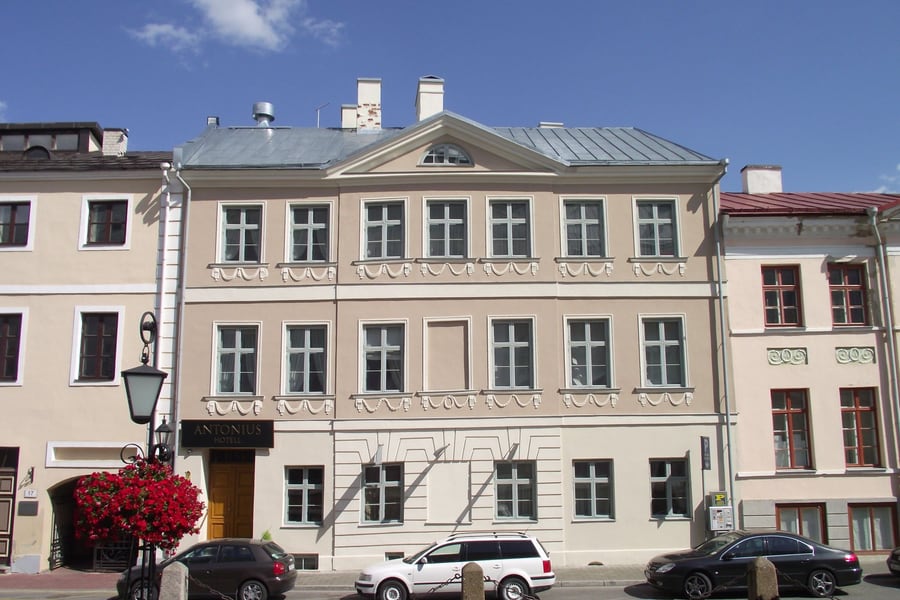 RobertRSMN / Wikimedia Commons · CC BY 3.0 · 2011 · cropped
Antonius Boutique Hotel
Ülikooli 15, opposite the university's main building
A boutique hotel opened in March 2009 in a protected building first recorded in the sixteenth century and completed in its present form in 1811. The rooms on Ülikooli Street look across at the six columns of the University of Tartu's main building; the others face the old town's roofs and a courtyard café in summer. Breakfast and dinner are served in a vaulted cellar, and there is a library with an open fire.
Check Availability (opens in a new tab, on hotelantonius.ee)via hotelantonius.eeLydia Hotel
On the slope of Toome Hill, behind Town Hall Square
An old-town hotel in a modern building, with a spa lounge of saunas and a pool, a fitness room and an event centre. Its restaurant, Hõlm, is recommended by the MICHELIN Guide 2026 and takes its inspiration from a cookbook of 1925–26 by Lydia Grünmann Holm.
Check Availability (opens in a new tab, on lydia.ee)via lydia.eeArt Hotel Pallas
Where the main street meets the pedestrian street
Sixty-two rooms on the top three floors of a city-centre building, decorated after the work of the Pallas art school, looking over the centre or a quiet courtyard. Breakfast is at the Humal bistro on the ground floor, and the hotel holds the Green Key eco-label.
Check Availability (opens in a new tab, on pallas.tartuhotels.ee)via pallas.tartuhotels.eeQuestions or corrections
Planning this trip and stuck on something, or spotted a time, fare or detail that has changed? Send us a message about Tallinn to Tartu — the university line. We read every one, and we update this page when something has changed.