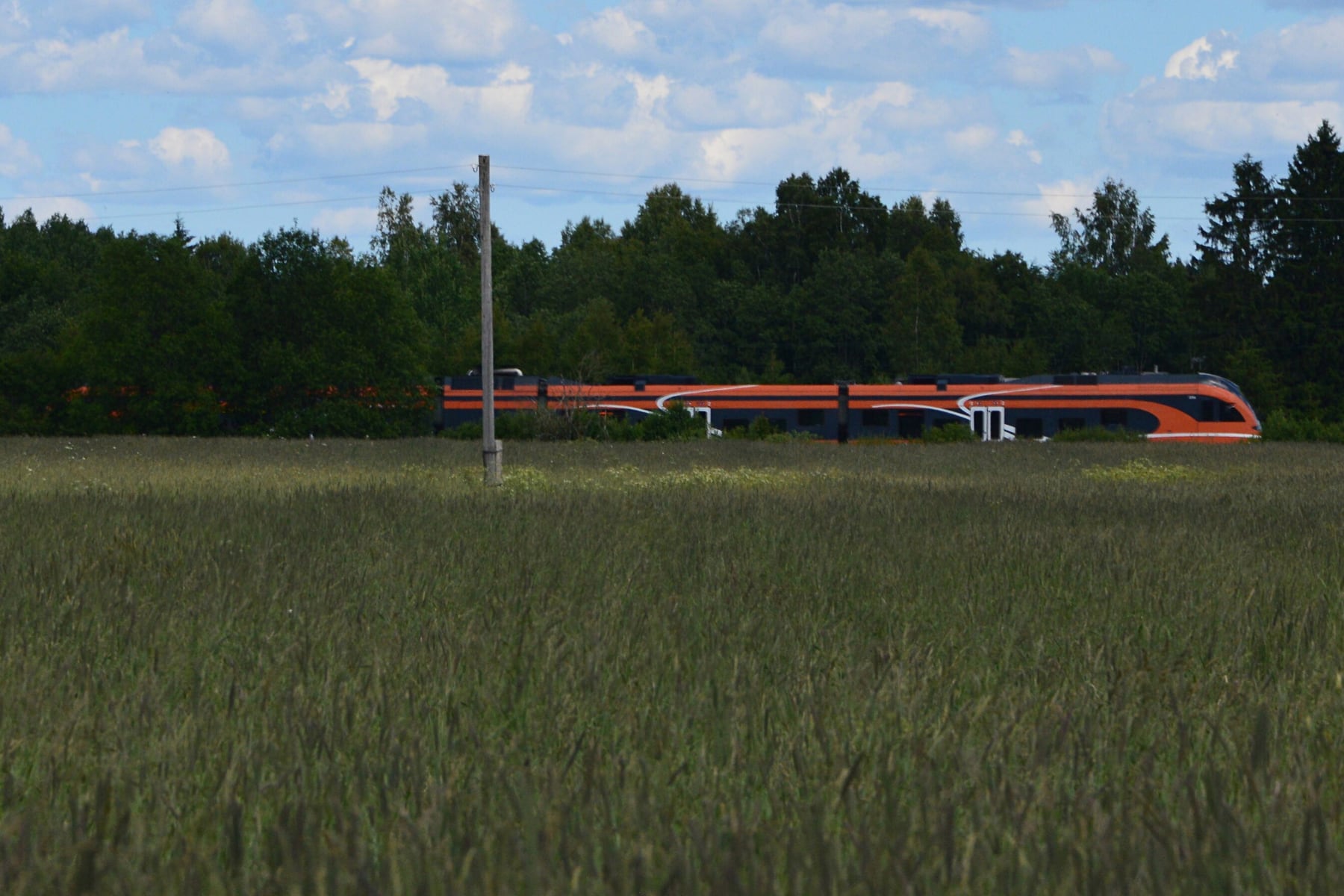
Tallinn to Viljandi — the last line south-west
Ivo Kruusamägi / Wikimedia Commons · CC BY 4.0 · 2017 · cropped
- Distance150.6 km · 1,520 mm gauge
- Duration1 hr 56 min (express) – 2 hr 15 min
- Best seasonSeven trains a day, all year
Introduction
Estonia's south-western railway was built narrow. The line from Tallinn reached Viljandi in 1901, four years after a narrow-gauge branch had come up to the town from Mõisaküla in the south, and for a quarter of a century it was the way to Pärnu as well: trains for the coast ran through Viljandi and Mõisaküla until a direct line opened from the junction at Lelle in 1928. The narrow gauge went in the early 1970s, the line was rebuilt to the 1,520 mm Russian gauge, and the first broad-gauge passenger train ran into Viljandi on 5 July 1974. Then, in December 2018, the Pärnu trains stopped. What is left of the south-western network for passengers is this line, 150.6 kilometres from the Baltic Station to the end of the track at Viljandi.
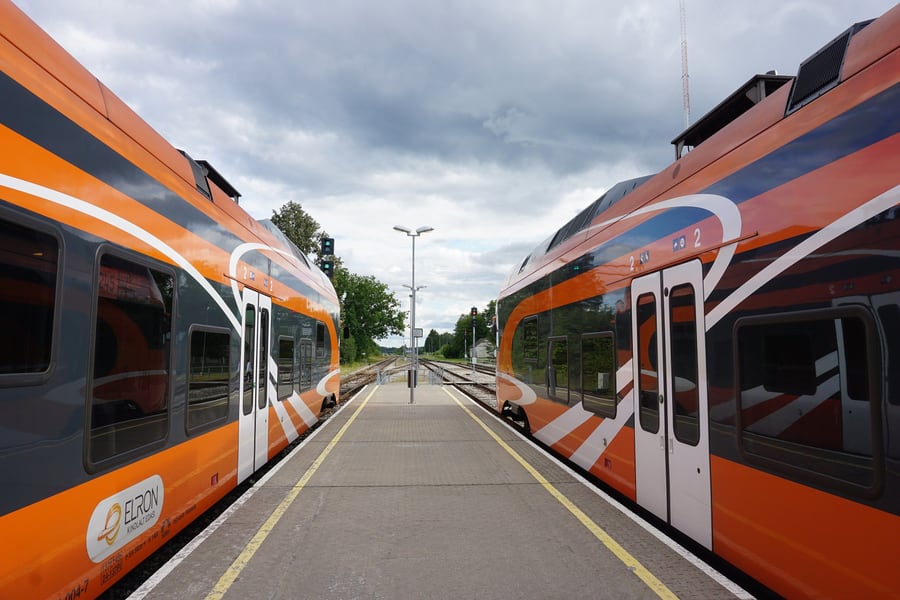
Elron runs seven trains a day each way, every day of the week, one of them an express; the journey takes about two hours. The country is quiet and low: the commuter towns south of Tallinn, then Rapla, then forest and farmland past small wooden stations of the narrow-gauge years, much of the way on track relaid since 2011, and the trains are orange Stadler FLIRT diesel units. At the end is Viljandi, a town of about 17,000 people called Fellin on the old maps, with the ruins of a castle of the Livonian Order on the hills above a long lake.
The Journey
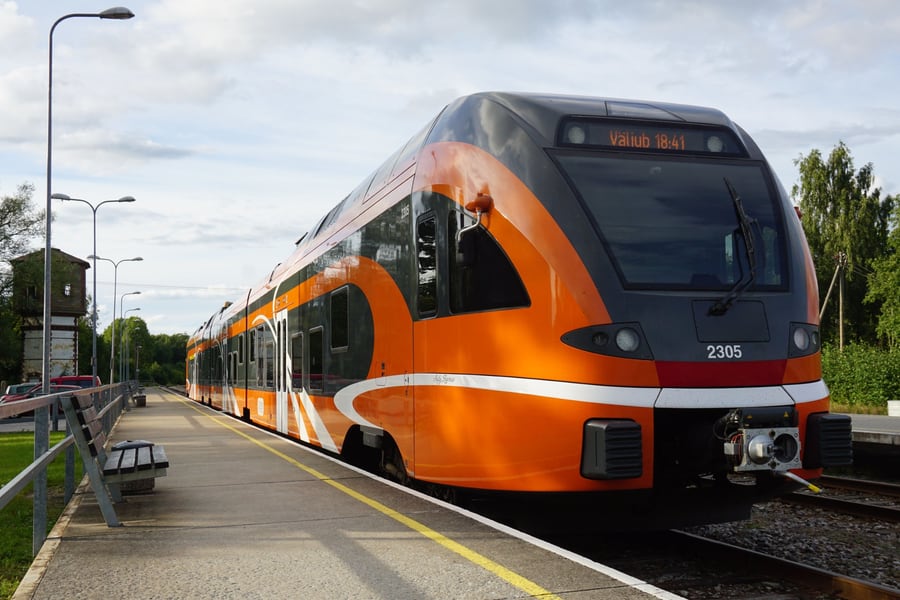
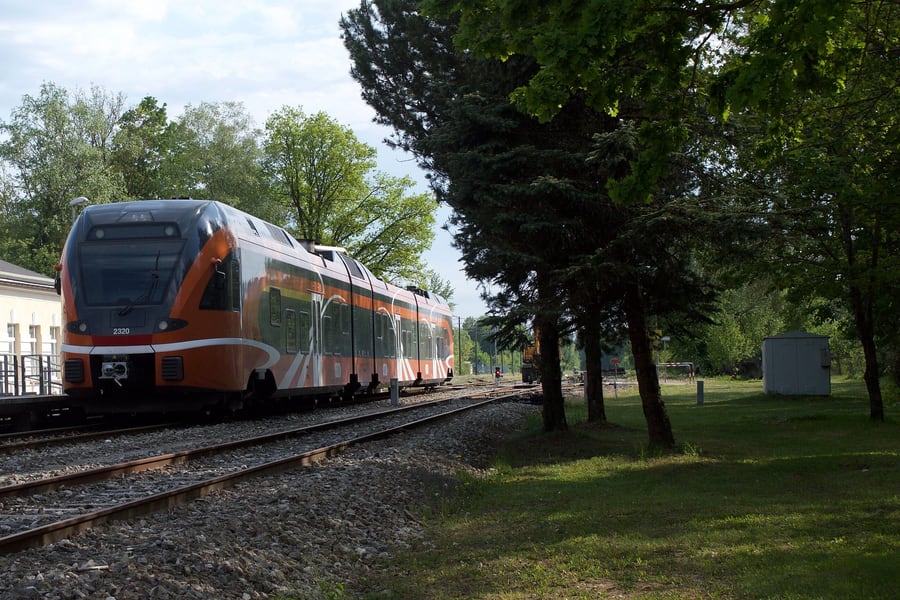
Almost every train on this line is a stopping train, and the difference between the slowest and the fastest is about twenty minutes. The express — the 16:28 from Tallinn and the 07:23 back — leaves out the small halts and covers the distance in just under two hours; the others take a little over two. Either way the train is an orange Stadler FLIRT diesel unit — the one waiting at Viljandi in the gallery, 2320, carries the name Luule.
Out of Tallinn
The Viljandi train leaves Balti jaam and calls first at Tallinn-Väike and Liiva on the edge of the city. South of it the commuter belt runs for half an hour: Saku, Kiisa, Kohila, a string of halts where some trains stop and others do not. The track between Kohila and Rapla is being rebuilt in 2026 by its owner, Edelaraudtee Infrastruktuuri, a private company rather than the state. Passenger trains were run by Edelaraudtee until the last of them set out on the Tallinn–Türi line at 22:16 on 31 December 2013; Elron has run them since 1 January 2014.
Rapla and Lelle
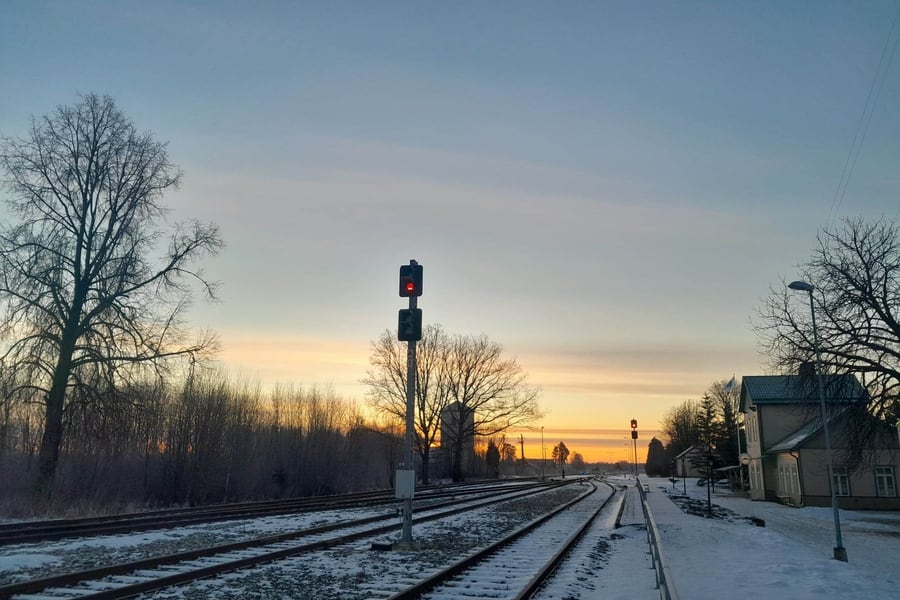
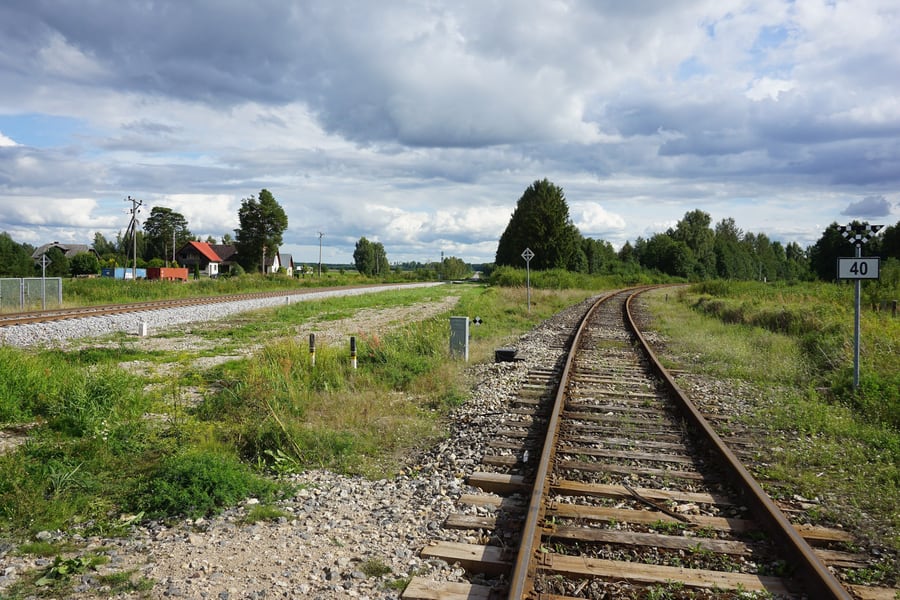
Rapla comes in under the hour. Beyond it, the 16 kilometres to Lelle were relaid in the autumn of 2023 on track fit for 160 km/h, and the train runs through Keava to the junction that gave the south-west its shape. Lelle became a junction in 1918, for a forest line to Eidapere; in 1928 that line was carried through to Pärnu, and for ninety years Lelle was where the Pärnu trains and the Viljandi trains parted. The Pärnu branch lost its passengers on 8 December 2018, after the government decided not to pay for its repair, and its last regular train left Pärnu at 17:44 with mourners at the stations along the way. The right-hand track at Lelle still goes there. The trains take the left.
Türi and the narrow-gauge country
Käru and then Türi. Its station was called Alliku until the 1920s, and a narrow-gauge line once left it for Paide and Tamsalu; that closed in 1972, the year the broad gauge reached Türi from Tallinn. Elron runs extra trains as far as Türi, and Edelaraudtee opened its traffic control centre here in 2021.
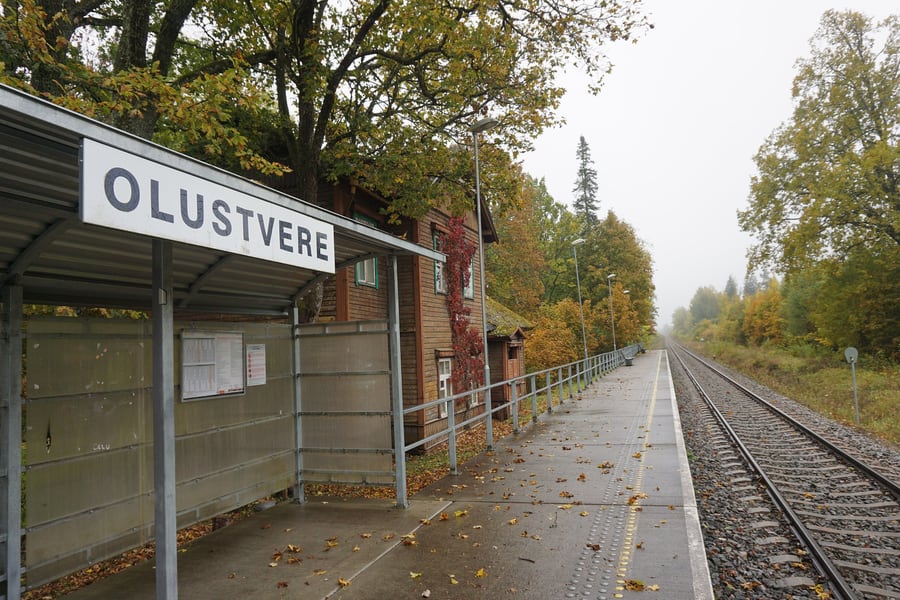
South of Türi the line was rebuilt in 2011 for 120 km/h, reopening on 30 December, and the stops become small: Taikse, Kärevere, Ollepa, where the platforms are short enough that passengers get off through the C-car only. Võhma and Olustvere keep wooden station buildings to the 1901 standard design that Lelle and Käru share, and the village of Olustvere has a manor of 1903 in its park. Then Sürgavere, and the descent to Viljandi.
Into Viljandi
The train stops at a single long platform, built in 2011 in front of the station building — a stone building of 1953, put up after the old one was destroyed in 1944. Beside it, a boulder and a stub of narrow-gauge track recall what came before. The rails go on only a little further. Until 1973 they continued south to Mõisaküla; now Viljandi is a terminus, and what the town has to show is up the hill — the old town, the castle ruins and, below them, the lake.
Along the route
 Tibukonn / Wikimedia Commons · CC BY-SA 4.0 · 2020 · cropped
Where the Pärnu line left
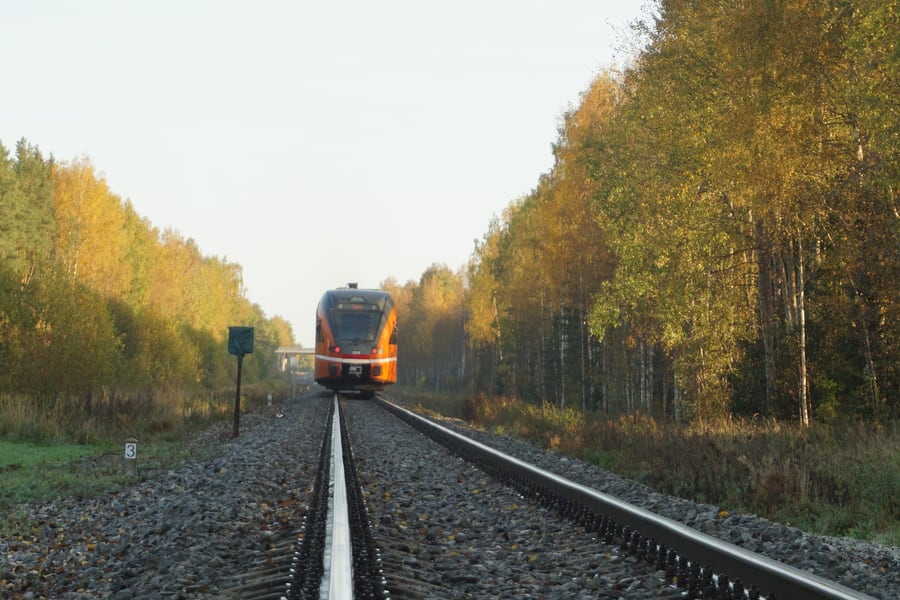
At Lelle the track divides: right for Pärnu, left for Viljandi. Pärnu's trains used the right-hand line from 1928 until 8 December 2018, when the government declined to pay for its repair. Only the occasional freight takes it now.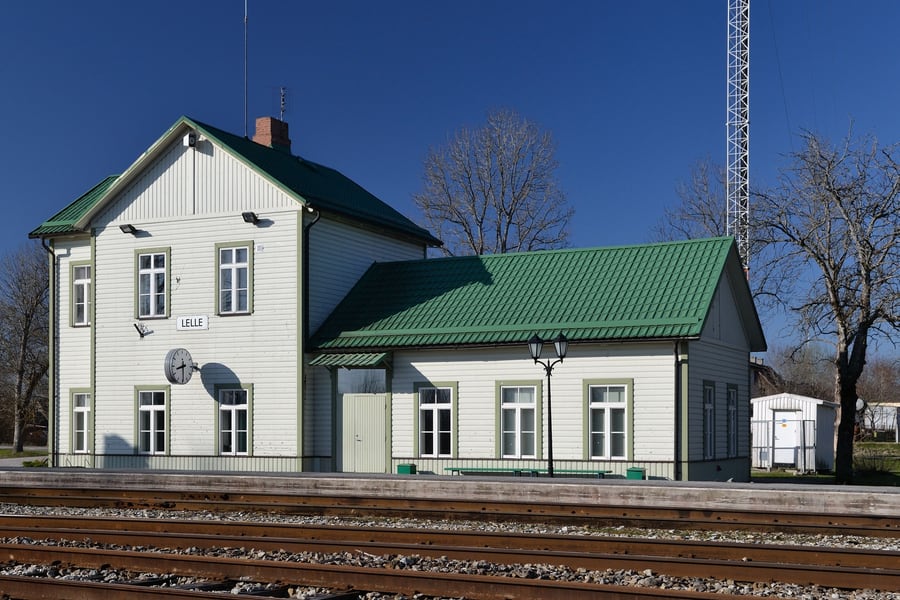 Iifar / Wikimedia Commons · CC BY-SA 3.0 · 2012 · cropped
A station from 1901
Lelle's wooden station was finished in 1901 to the same design as Käru, Võhma and Olustvere further down the line, with the stationmaster's flat upstairs. Passengers still wait in its single-storey wing.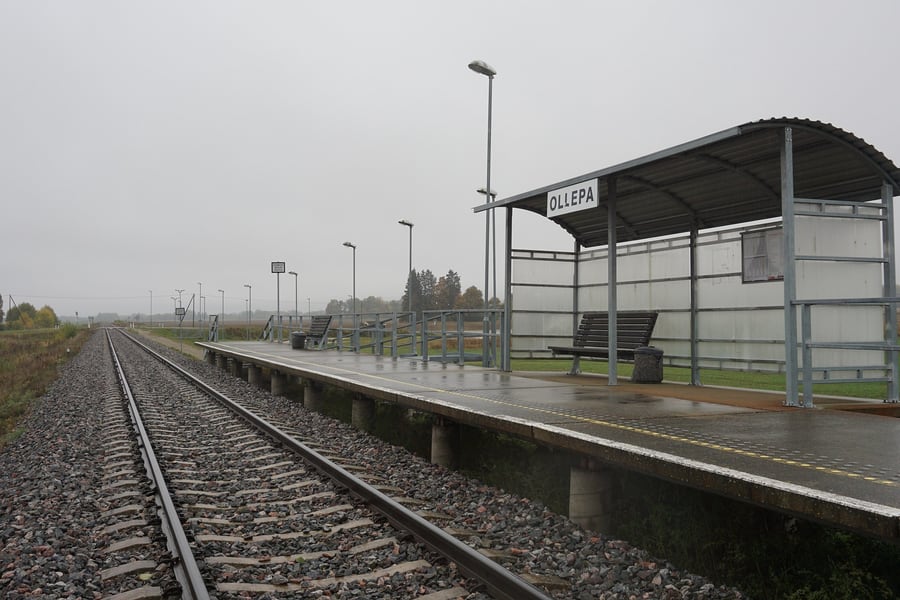 Tibukonn / Wikimedia Commons · CC BY-SA 4.0 · 2022 · cropped
Fifteen minutes faster
The Türi–Viljandi section was rebuilt in 2011 with new platforms, new level crossings and a line speed of 120 km/h. It reopened on 30 December 2011, and the work took a quarter of an hour off the run from Tallinn.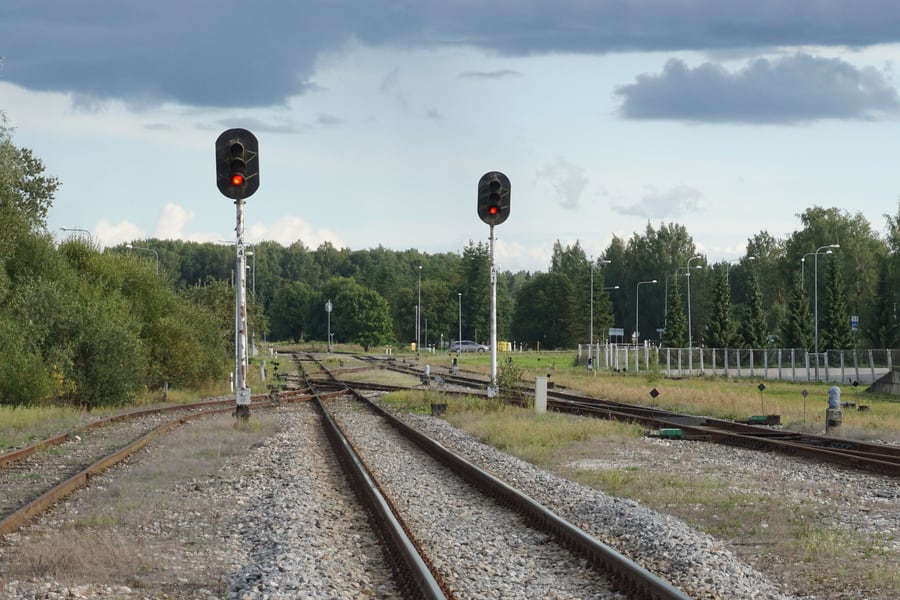 Tibukonn / Wikimedia Commons · CC BY-SA 4.0 · 2020 · cropped
New track to Rapla
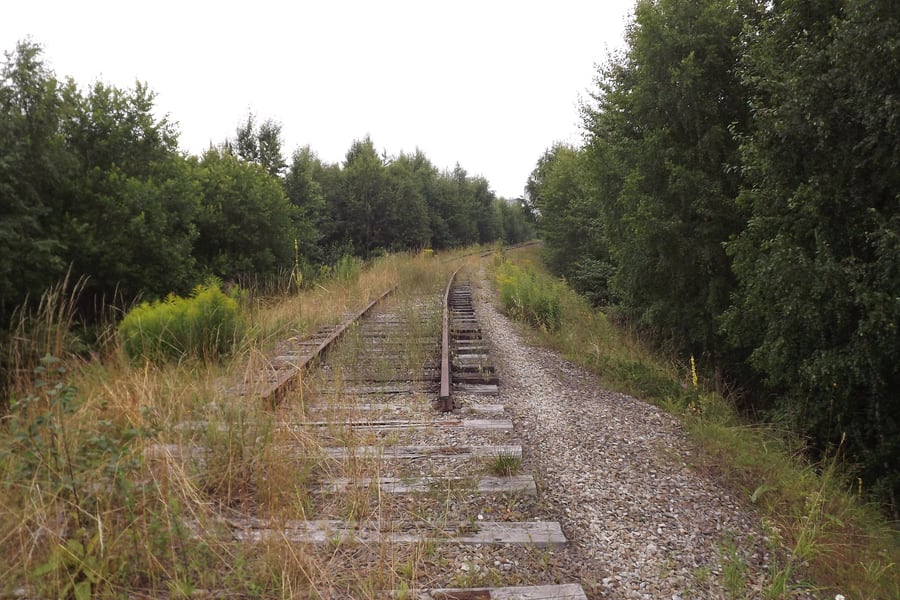
In autumn 2023 the 16 km from Lelle to Rapla were relaid, for a little over €30 million, on track fit for 160 km/h, while buses stood in for three weeks. In 2026 the work moved north, between Rapla and Kohila.A bit of history
Culture & experiences along the way
 Otoomet / Wikimedia Commons · Public domain · 2007 · cropped
Folk music in the castle hills
Every July the Viljandi Folk Music Festival takes over the castle hills and the town centre: four days, five outdoor stages and three indoor ones, about 20,000 visits. It began in 1993 with some 200 ticket-holders at the singing grounds; the Kaevumägi stage among the ruins followed in 1996. The 2026 festival ran 23–26 July.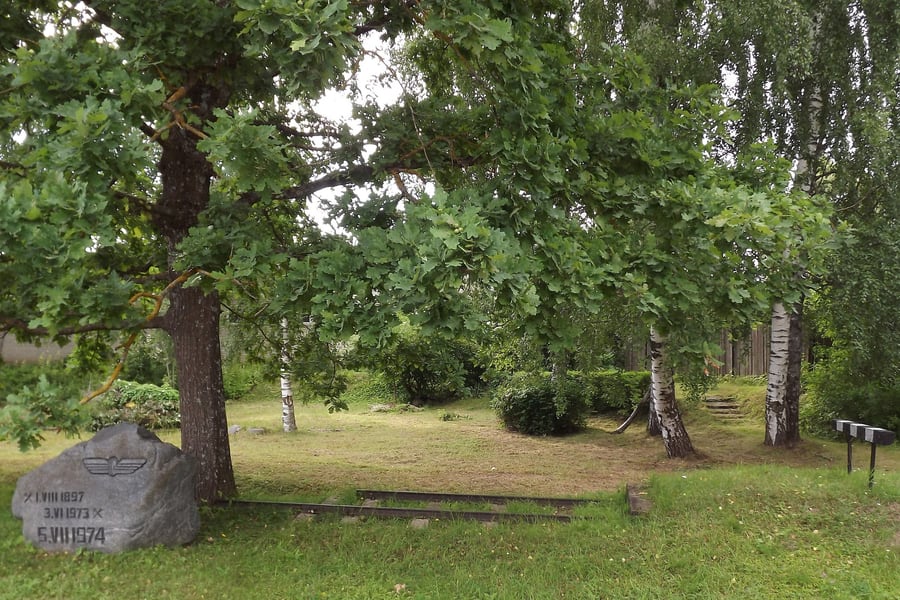 Tibukonn / Wikimedia Commons · CC BY-SA 3.0 · 2013 · cropped
The narrow-gauge stone
Beside Viljandi station a boulder and a short stub of narrow-gauge track remember the railway the town had first. Its narrow-gauge trains to Türi stopped in March 1972, and on 5 July 1974 the first broad-gauge passenger train arrived to a crowd with flowers and speeches.Timetables
Seven trains run from Tallinn to Viljandi every day and seven run back, with the same times at weekends. One each way is an express, missing the smaller halts; none needs a change of train. The times below are Elron's south-western timetable in force from 31 August 2026, read from the operator's sheet and checked against its booking engine in October 2026.
Tallinn to Viljandi
| Train | Tallinn | Rapla | Türi | Viljandi | Journey |
|---|---|---|---|---|---|
| 31 | 07:30 | 08:24 | 08:58 | 09:39 | 2 hr 9 |
| 33 | 09:59 | 10:50 | 11:24 | 12:05 | 2 hr 6 |
| 35 | 12:32 | 13:23 | 13:56 | 14:37 | 2 hr 5 |
| 301 | 14:17 | 15:18 | 15:51 | 16:23 | 2 hr 6 |
| 37 · express | 16:28 | 17:19 | 17:52 | 18:24 | 1 hr 56 |
| 303 | 17:24 | 18:25 | 18:58 | 19:39 | 2 hr 15 |
| 39 | 20:00 | 20:51 | 21:24 | 22:05 | 2 hr 5 |
Two more trains, 311 and 313, leave Tallinn at 18:54 and 22:25 and run only as far as Türi.
Viljandi to Tallinn
| Train | Viljandi | Türi | Rapla | Tallinn | Journey |
|---|---|---|---|---|---|
| 300 | 06:12 | 06:54 | 07:27 | 08:26 | 2 hr 14 |
| 30 · express | 07:23 | 07:56 | 08:25 | 09:15 | 1 hr 52 |
| 32 | 10:03 | 10:45 | 11:18 | 12:06 | 2 hr 3 |
| 34 | 12:35 | 13:17 | 13:51 | 14:41 | 2 hr 6 |
| 302 | 15:17 | 15:52 | 16:25 | 17:23 | 2 hr 6 |
| 36 | 16:31 | 17:13 | 17:47 | 18:37 | 2 hr 6 |
| 304 | 20:03 | 20:45 | 21:19 | 22:18 | 2 hr 15 |
The express from Viljandi does not call at Lelle, Keava or Käru.
Making a day of it
Viljandi is an easy day out from the capital. The 07:30 is there at 09:39, and the 20:03 back reaches Tallinn at 22:18 — more than ten hours for the old town, the castle hills and the lake. For a shorter day, the 16:31 is in Tallinn at 18:37.
Times are published by the operator: Elron · South-western timetable from 31 August 2026 (opens in a new tab).
Tickets
Tallinn to Viljandi costs €10.90 online in standard class on a stopping train and €13.00 on the express. Tickets bought on board are priced separately, and higher: €11.50 and €15.00, with first class at €14.00 and €18.00. Tickets are sold online, from machines and staff on the train, and at Elron's two ticket offices, at Balti jaam in Tallinn and in Tartu — not at Viljandi.
⚠️ A standard-class ticket does not guarantee a seat, and Elron's own advice to anyone who wants one is to buy first class. Online sales close five minutes before departure for standard class and thirty minutes before the train leaves its first station for first. Checked against Elron, October 2026.
Book your tickets
Tallinn to Viljandi, standard class
€10.90 online on a stopping train · €13.00 on the express
The whole line, although a standard-class ticket does not guarantee a seat.
Book Tickets (opens in a new tab, on elron.ee)via elron.eeTallinn to Viljandi, first class
€14.00 on a stopping train · €18.00 on the express
A guaranteed seat, sold online up to thirty minutes before the train leaves its first station.
Book Tickets (opens in a new tab, on elron.ee)via elron.eeFamily ticket
2.5 times the full fare
Reserves one of the train's limited family areas, and is sold only on Elron's site.
Book Tickets (opens in a new tab, on elron.ee)via elron.eeRail Passes
A pass covers every train on this line, and for this journey alone it does not pay.
Interrail's table of the companies a pass is valid with in Estonia — checked in October 2026, when it carried a last updated 21 October 2026 stamp — lists Elron for both commuter and express trains, with seat reservations optional, except in first class, where one is needed.
The arithmetic is the problem. An adult Interrail Estonia Pass in second class costs €105 for three travel days within a month, €129 for four, €152 for five, €175 for six and €216 for eight; youth prices, for travellers aged 12 to 27, are €79, €97, €114, €131 and €162. A Tallinn–Viljandi return is €21.80 online on the stopping trains and €26 on the express. Even the cheapest youth pass would need more than three such returns to break even.
A pass starts to earn its keep only when Viljandi is one day of several on a longer trip round the Baltic states. On a trip to Viljandi alone, ordinary tickets are cheaper.
Prices and conditions read on interrail.com (opens in a new tab) in October 2026.
Places to Visit
Everything below is reached from a platform on the line, and the times given are taken from the midday train out of Tallinn — the 12:32, which is at Türi by 13:56, Olustvere by 14:21 and Viljandi by 14:37.
The four come in the order the railway meets them: a medieval church in the spring capital, a manor in the country, and then the castle and the lake at the end of the line.
 Vaido Otsar / Wikimedia Commons · CC BY-SA 4.0 · 2020 · cropped
St Martin's Church, Türi
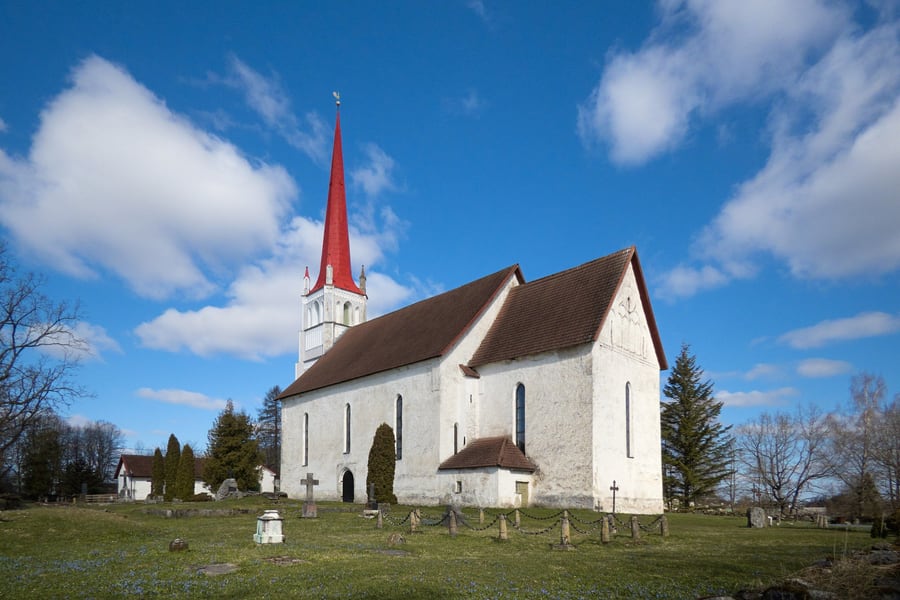
Built in the second half of the thirteenth century and vaulted in the fourteenth into a three-aisled hall church, St Martin's is one of the oldest and most distinctive churches in Järvamaa. Its neo-Gothic west tower was added in 1867, hit by a shell in 1944 and restored in 1960, and the rooster on top is said to be the only coloured one on any tower in Estonia. Türi has been known as Estonia's spring capital since 2000, for the flower fairs it has held since 1977.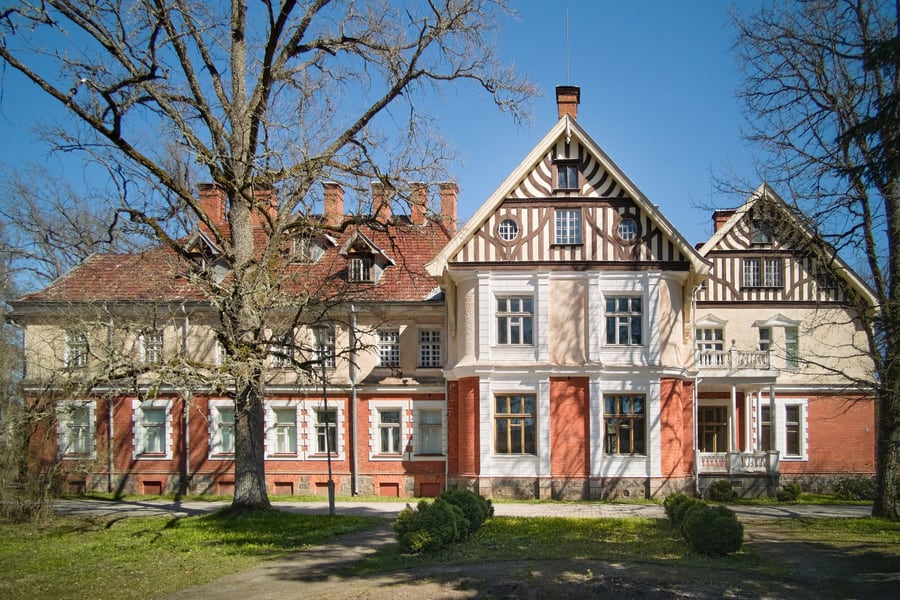 Vaido Otsar / Wikimedia Commons · CC BY-SA 4.0 · 2023 · cropped
Olustvere Manor
A manor house of 1903 in the style of an English country house, probably by the architect Archibald MacPherson, set among old trees and an English garden inside tall stone walls. Its buildings now hold a tourism centre and museum, collections of stuffed birds, wooden horses and antique furniture, and handicraft and wool rooms, a smithy, a ceramics workshop and a distillery. Open Monday to Saturday in summer, weekdays the rest of the year.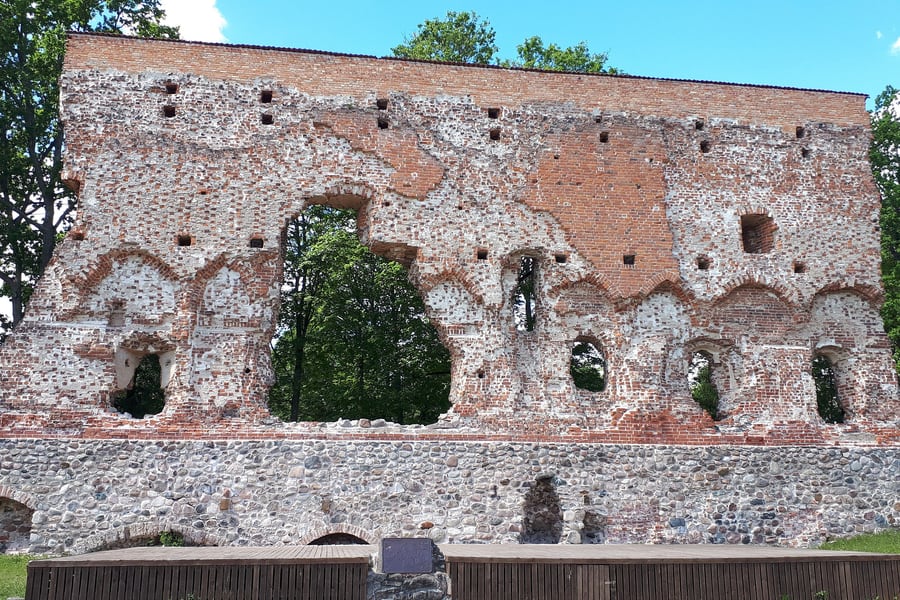 Klarqa / Wikimedia Commons · CC BY-SA 4.0 · 2019 · cropped
Viljandi Castle
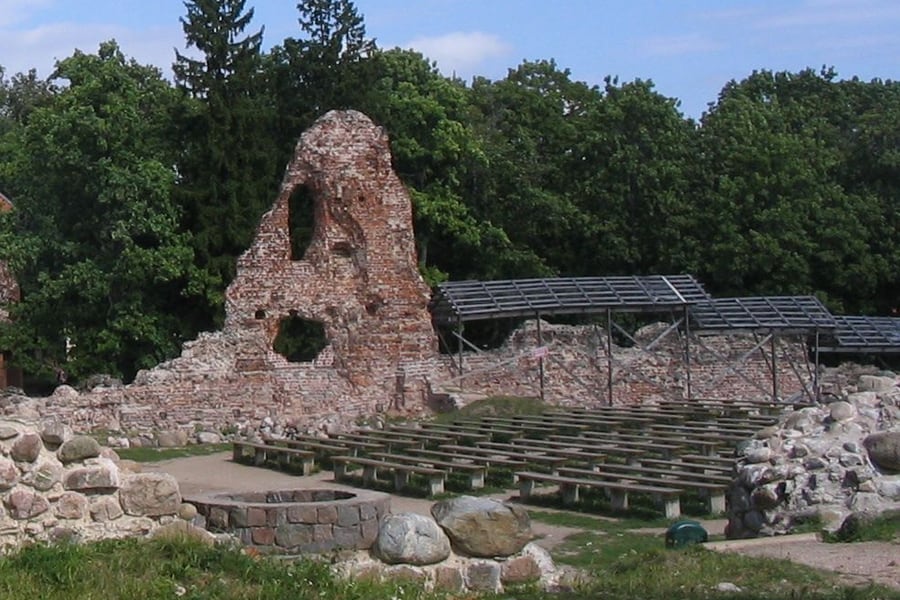
The Livonian Order began building here in 1224, on the site of an older hillfort, and the castle became one of the strongest in Livonia. It was destroyed in the Polish–Swedish wars of the early seventeenth century, and its ruins stand on the hills at the edge of the town centre, the standing wall of the convent building still rising above the grass.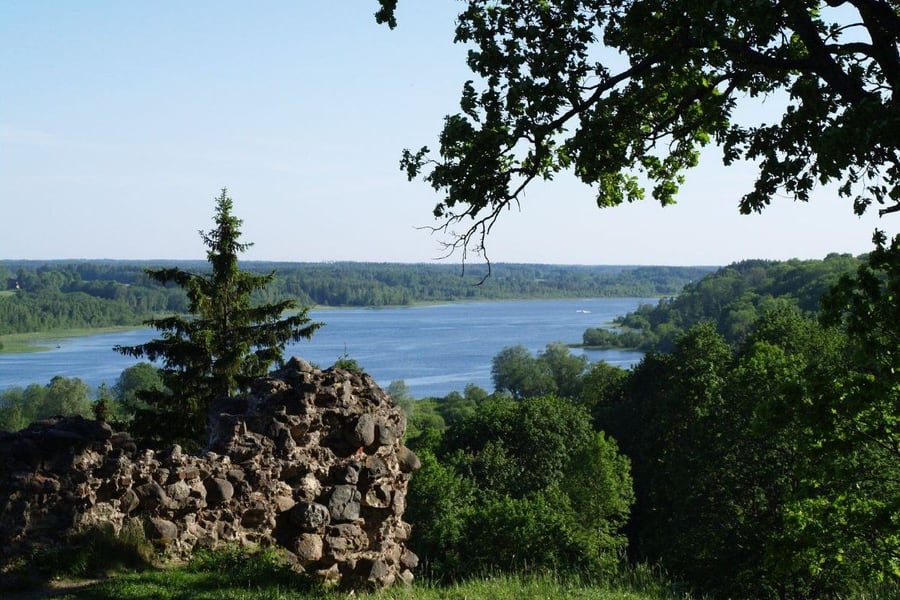 janne from Viljandi / Wikimedia Commons · CC BY-SA 2.0 · 2007 · cropped
Lake Viljandi
The lake lies in a deep valley under the town: 4.6 km long, about 400 metres wide and 11 metres at its deepest, fed by two creeks and a number of springs. The lake and its shores make up the Viljandi landscape protection area, and the castle ruins look straight down on it.Where to Sleep
The journey is short enough to be a day return from Tallinn, so the two houses below are for staying in Viljandi itself, both of them beside the old town and the castle hills. Everything described is what each says about itself on its own site, read in October 2026. No prices, grades or star counts appear here, because none have been verified.
Where to stay
 NOSSER / Wikimedia Commons · CC BY-SA 4.0 · 2021 · cropped
Schloss Fellin
Tasuja puiestee 4, in the old Viljandi manor
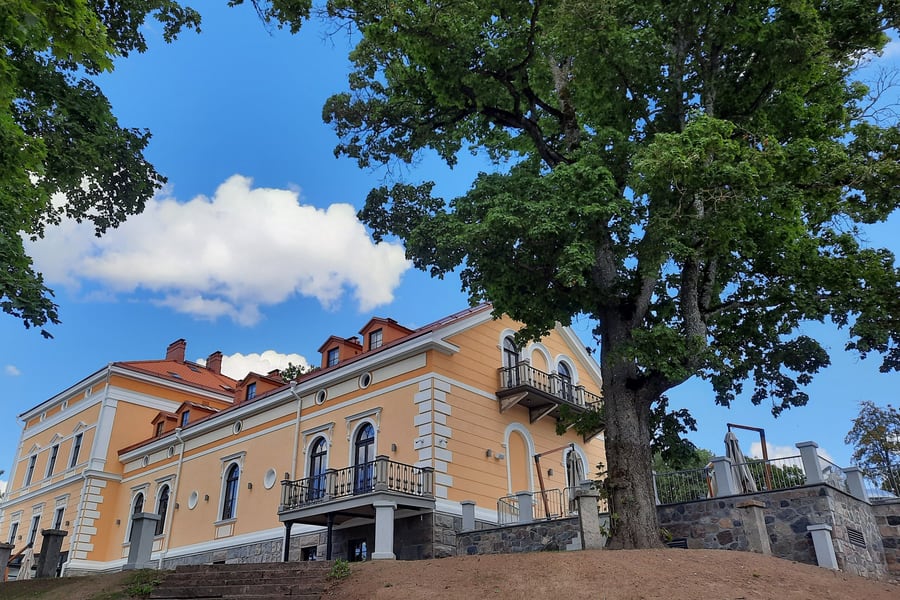
A boutique hotel opened in August 2021 in the neo-Renaissance stone house of Viljandi Manor, completed in 1880 to a design by Friedrich Ferdinand Modi and used by the police, and in Soviet years by the NKVD, until 1998. Seventeen rooms on three floors, five of them suites, look over the church, the Ugala theatre or the manor park; the Grand suite faces the castle hills. Guests have the hotel spa's relaxation pools and saunas, and breakfast is in the café on the ground floor.
Check Availability (opens in a new tab, on schlossfellin.ee)via schlossfellin.eePark Hotel Viljandi
Johan Laidoneri plats 8, on the edge of the old town
Thirty-seven rooms in a fully renovated landmark building of 1910, set between three parks at the edge of the old town, five minutes' walk from the castle hills and ten from the lake. Its restaurant, Ormisson, cooks Mediterranean food with a Scandinavian touch.
Check Availability (opens in a new tab, on parkhotelviljandi.ee)via parkhotelviljandi.eeQuestions or corrections
Planning this trip and stuck on something, or spotted a time, fare or detail that has changed? Send us a message about Tallinn to Viljandi — the last line south-west. We read every one, and we update this page when something has changed.