Tallinn to Turba — the line that came back
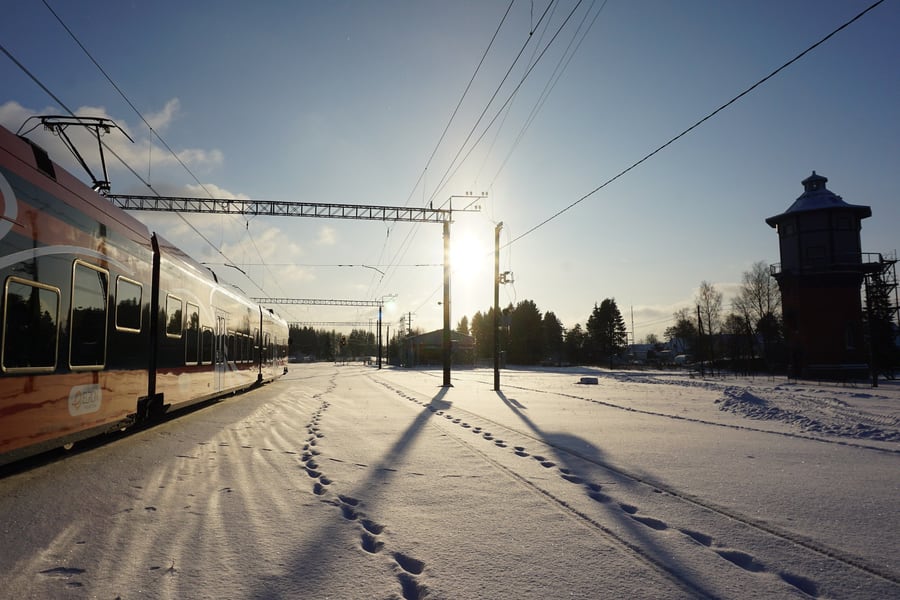
Tibukonn / Wikimedia Commons · CC BY-SA 4.0 · 2021 · cropped
- Distance58 km · 1,520 mm gauge · electric
- Duration56 min (express) – 1 h 5 min
- Best seasonHourly, all year
Introduction
The railway to Haapsalu opened in 1905, a single track west from Keila across the forests of Harju County to the spa town on the coast and the harbour at Rohuküla. It lasted ninety years. The track wore out, the last regular passenger train left Tallinn on 22 September 1995, and in 2004 the rails beyond Riisipere were taken up. The trackbed became a path for walkers and cyclists.
Then the railway came back — six and a half kilometres of it. Work began in January 2019, and on 8 December 2019 Elron's electric trains ran through Riisipere to Turba, on new track built for 140 km/h, the fastest stretch of railway in Estonia. It was meant as a first step: Risti next, then Haapsalu. In June 2022 the government declined to pay for the next section from the European recovery fund, and in spring 2026 the minister said nothing had yet been decided. So Turba is the end of the line, and the buffer stop faces a trackbed that still runs on towards the sea.
Today it is a commuter ride of about 58 kilometres and an hour, under the wires all the way, with a train from Tallinn's Baltic Station every hour. Beyond the suburbs and Keila it turns west on the old Haapsalu line, past a limestone manor at Vasalemma, a neo-Gothic castle at Laitse and a classical manor at Riisipere, to a peat-fired power station of 1923 beside the last platform.
The Journey
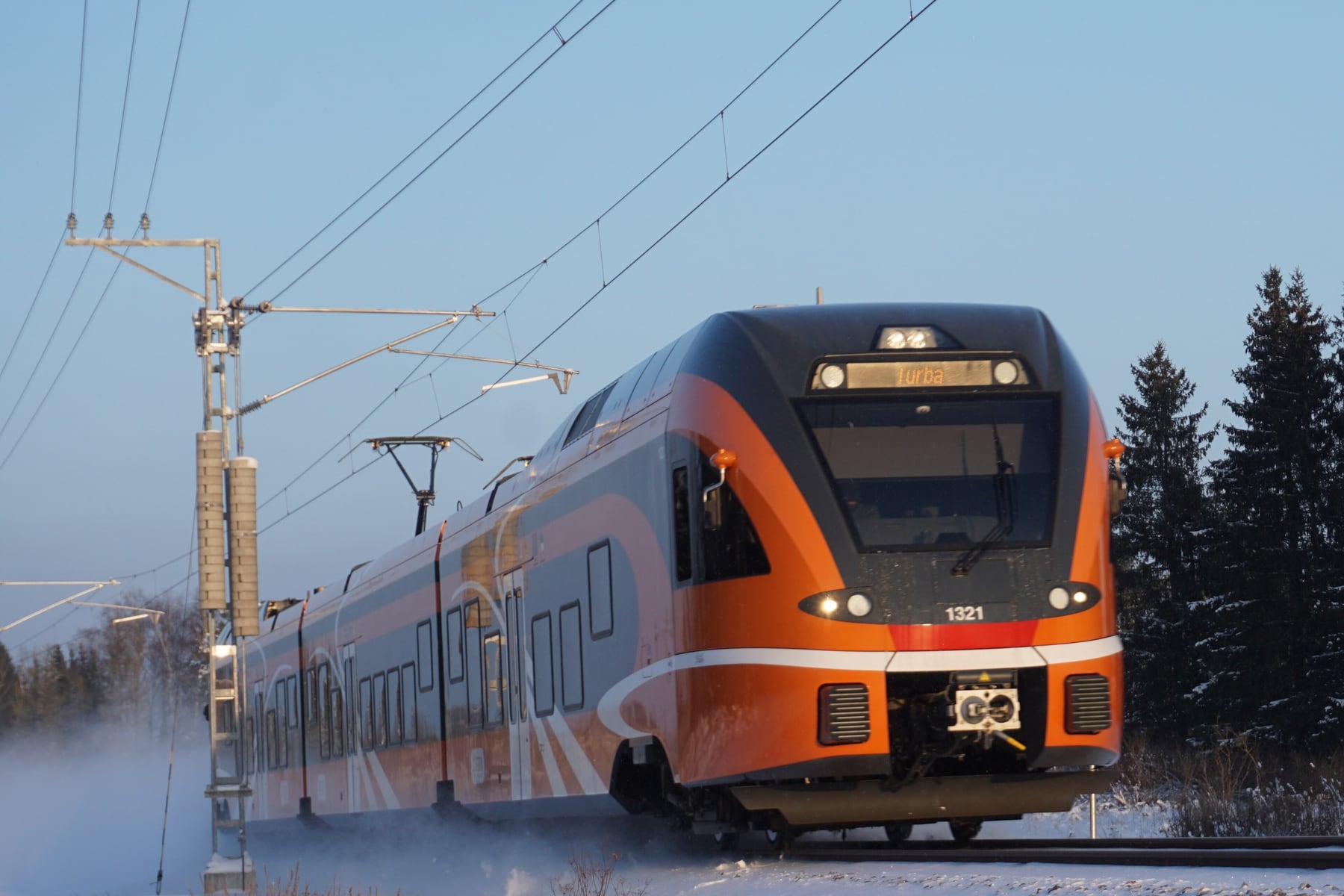
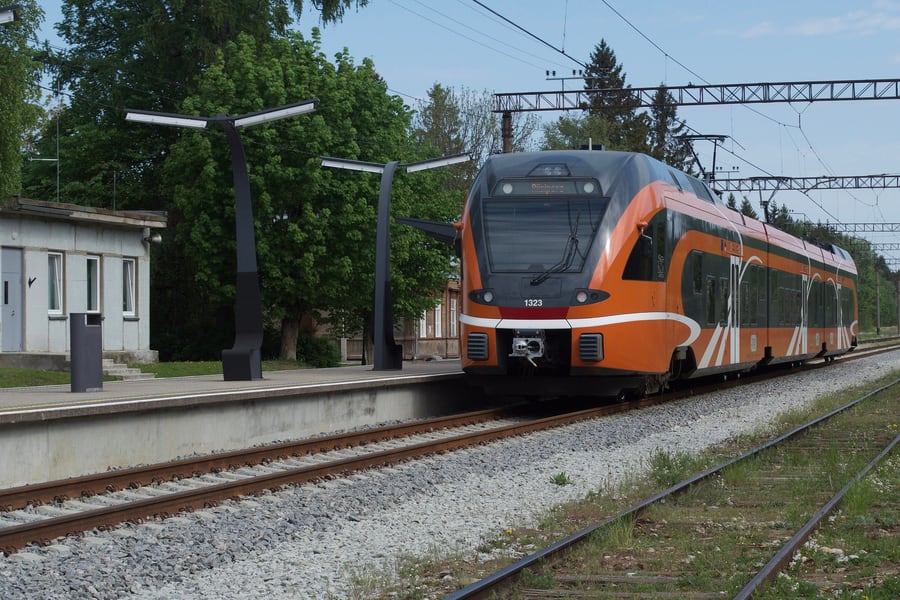
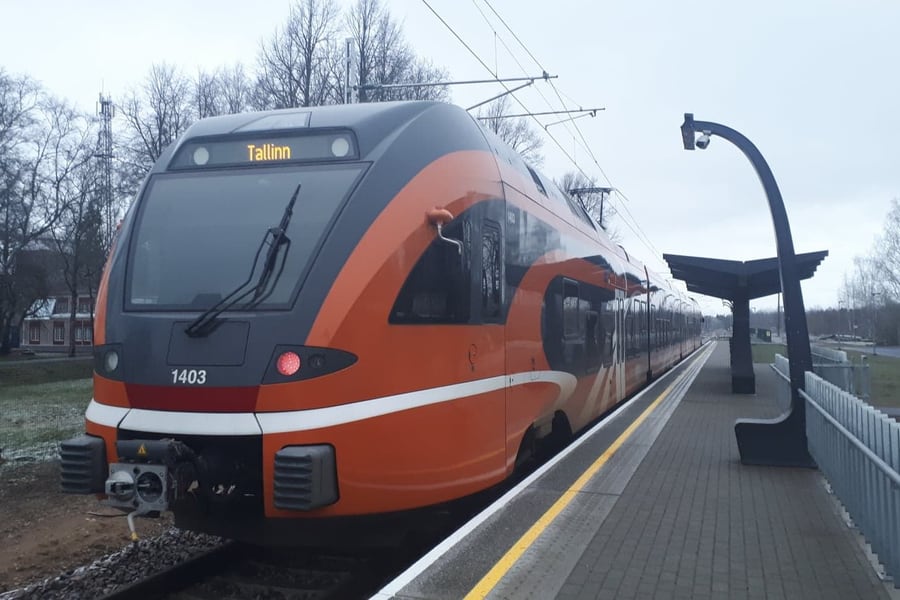
Every train on this line is one of Elron's orange Stadler FLIRT electric units, based at the depot at Pääsküla. They carry names on their flanks: the one in the header, on the rebuilt section in January 2021, is 1321, Päike, the Sun, and 1323, Tulihobune, the Firehorse, works the line too.
Out of Tallinn
The train leaves Balti jaam and runs through the city's own stops, two or three minutes apart — Lilleküla, Tondi, Järve, Rahumäe, Nõmme, Hiiu, Kivimäe — to Pääsküla, then Laagri, Urda, Padula, Saue and Valingu. Keila comes up 35 minutes out. The line is double track this far, and here it divides: Paldiski to the north-west, and the single track to Turba to the south-west.
The old Haapsalu line
This is the railway of 1905. Kulna is the first halt, and Vasalemma, 37.5 km from Tallinn, has the line's most unusual station: a two-storey wooden building of 1918, built to its own design, whose lattice framing is closer to Art Nouveau than to anything else on Estonia's railways. It stands empty now. A branch leads off to the limestone quarries that gave the village its stone, and the 820-kilometre RMK hiking trail from Peraküla to Ähijärve crosses the line here. Electric trains have reached Vasalemma since 15 July 1965.
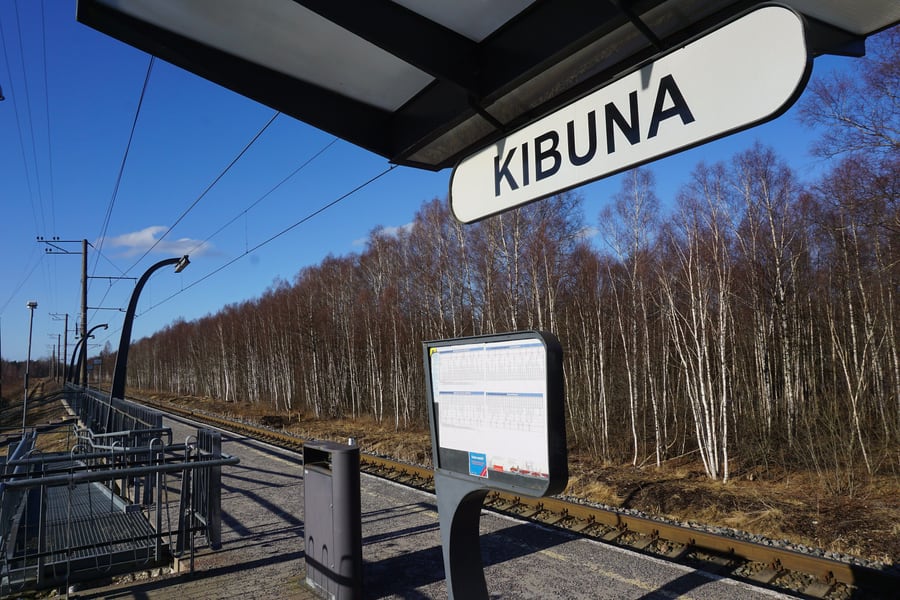
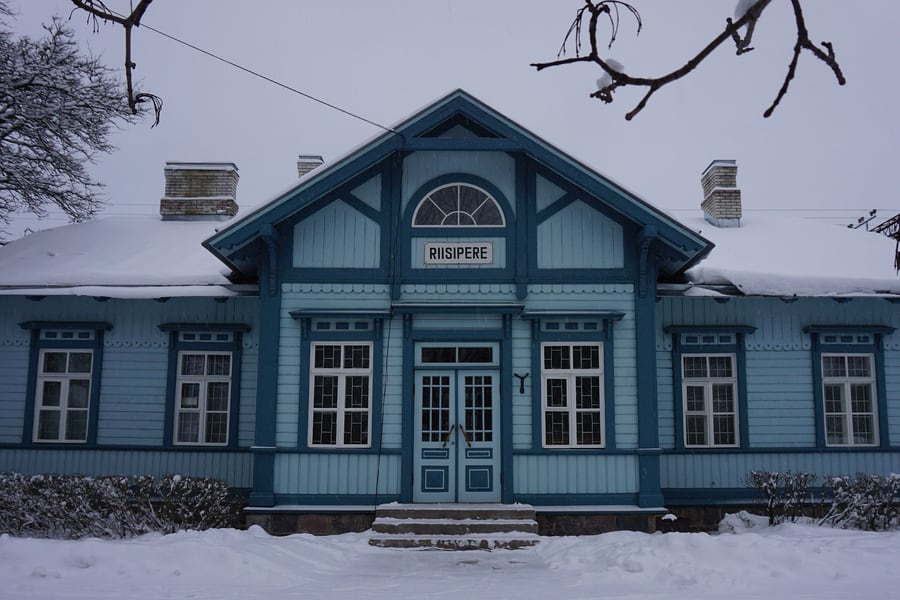
Kibuna, Laitse and Jaanika — once Ingu, and missed by some trains — follow through birch and pine. Then Riisipere, 51.3 km out, where the station building of 1904 is a standard design shared with Palivere and Risti further down the old line, kept with its outbuildings and its brick water tower. The wires reached here on 4 September 1981, and for almost forty years this was the last electrified line built in Estonia. After 1995 it was the end of the line as well.
The new six kilometres
Just past Riisipere the train crosses onto the track of 2019. Clearing began on 17 January, the rails reached Turba on 2 July, the first test train ran on 18 November, and the section opened on 8 December 2019 at a cost of €7.72 million. It is cleared for 140 km/h, faster than anywhere else on the network — though a stopping train has little room to show it.
Turba is a single platform. Its station was opened on 1 October 1924 as Sooniste, and renamed in 1934 because passengers bound for Ellamaa kept getting off here by mistake: they could see the power station from the train. That power station, built in 1922–23 to burn the local peat, still stands beside the platform. The wooden station building of 1924 is privately owned and renovated.
Before the war this was the line of the Lendav Läänlane, the Flying West-Lander, a diesel-electric railcar that from July 1935 ran to Haapsalu at up to 90 km/h. Past the buffer stop at Turba the trackbed runs on through the forest towards Ellamaa and Risti, as the Läänemaa Tervisetee — a path, for now.
Along the route
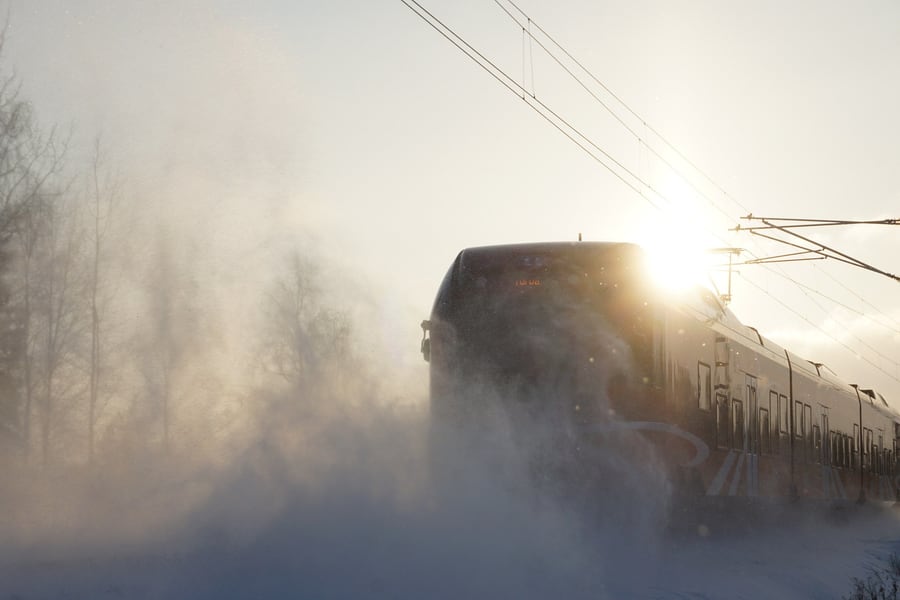 Tibukonn / Wikimedia Commons · CC BY-SA 4.0 · 2021 · cropped
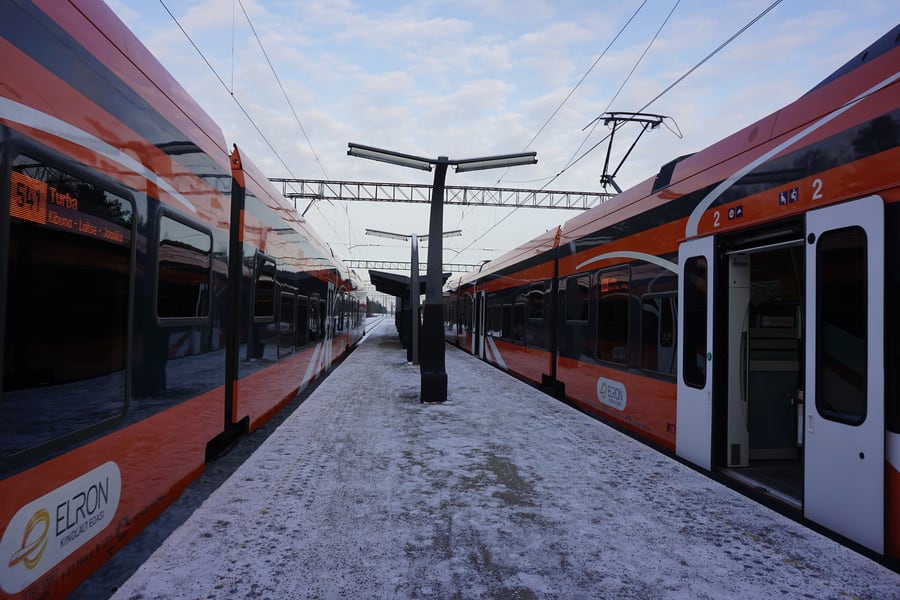
The fastest six kilometres
The Riisipere–Turba section opened on 8 December 2019, built in a year for €7.72 million on the old trackbed. It is cleared for 140 km/h, faster than any other stretch in Estonia — though a train stopping at both ends has little room to use it.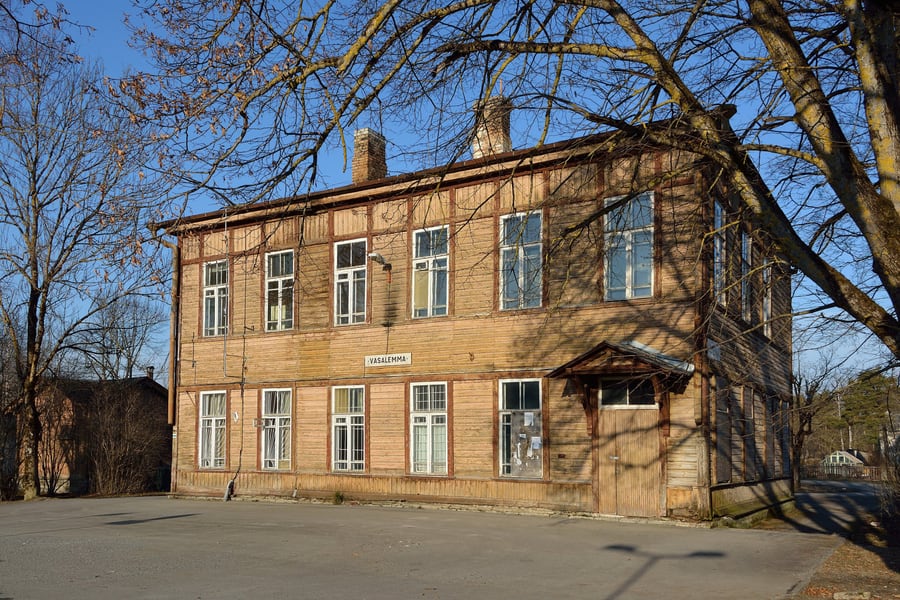 Ivar Leidus / Wikimedia Commons · CC BY-SA 3.0 · 2016 · cropped
A station of its own design
Riisipere, Palivere and Risti were built to one standard plan. Vasalemma's, finished in 1918, was not: a two-storey wooden building whose lattice framing reads as Art Nouveau, rare on Estonia's railways. It no longer serves the trains and stands empty.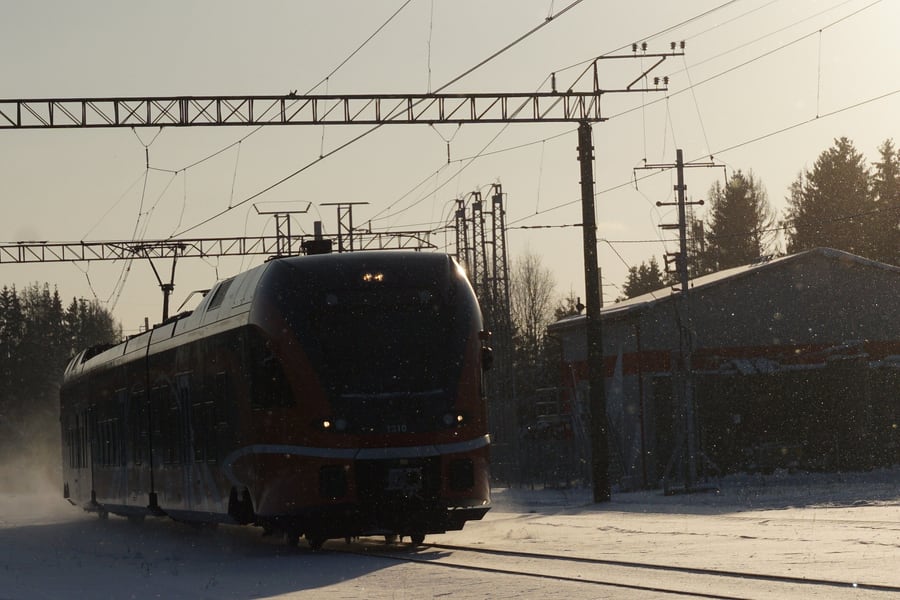 Tibukonn / Wikimedia Commons · CC BY-SA 4.0 · 2021 · cropped
Riisipere, end of the line
The wires reached Riisipere on 4 September 1981, and no other line in Estonia was electrified until 2019. After the last Haapsalu train in 1995 it was the terminus too, for twenty-four years, until the trains ran on to Turba.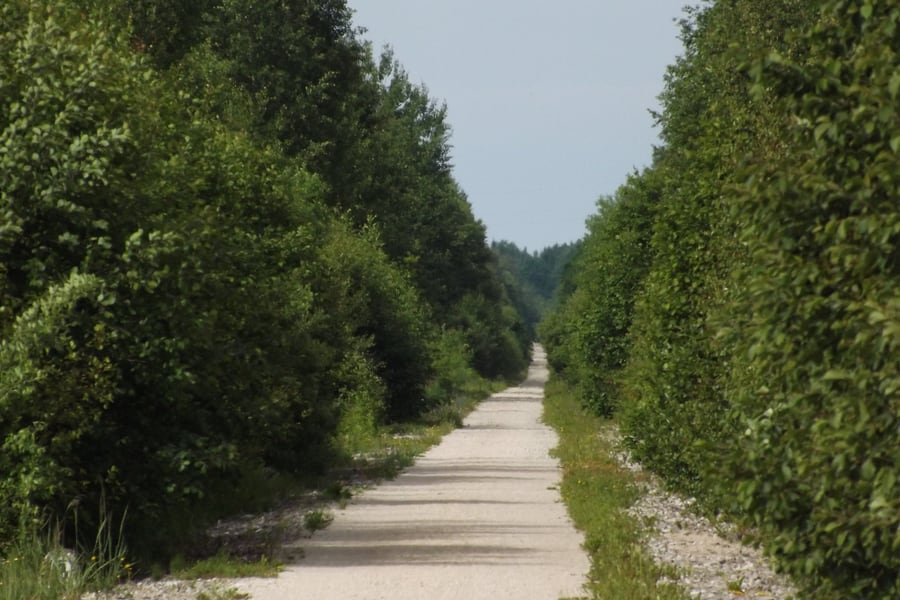 Tibukonn / Wikimedia Commons · CC BY-SA 3.0 · 2014 · cropped
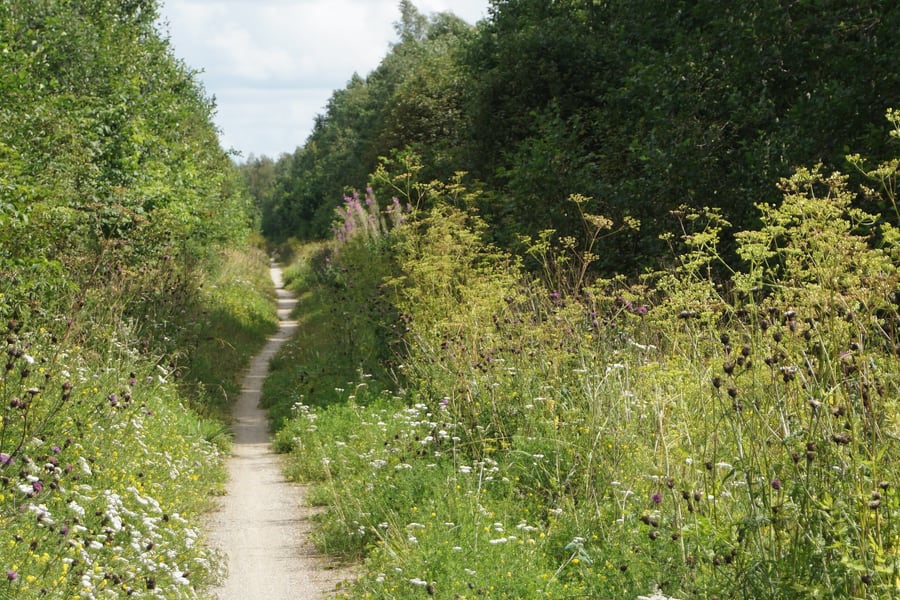
The trackbed that waits
Beyond Turba the old line runs on as the Läänemaa Tervisetee, a path. Risti, 13.5 km on, was due by 2024; in June 2022 the government declined to fund it from the recovery fund, and in April 2026 the minister said nothing had been decided.A bit of history
Timetables
Trains run from Tallinn to Turba every hour, every day, at five past the hour, and back from Turba at about half past. On weekdays an early train is added each way, and the first train out of Turba is an express. None needs a change of train. The times below are Elron's western timetable in force from 31 August 2026, read from the operator's sheet and checked against its booking engine in October 2026.
Tallinn to Turba
| Departs Tallinn | Keila | Riisipere | Turba | Runs |
|---|---|---|---|---|
| 06:15 | 06:53 | 07:15 | 07:20 | Weekdays |
| 07:05, then hourly at :05 to 18:05 | :40 | :02 or :03 | :07 or :08 | Daily |
| 19:15 | 20:18 | Daily | ||
| 20:15 | 21:15 | Daily | ||
| 21:15 | 22:18 | Daily | ||
| 22:15 | 23:14 | Daily |
Turba to Tallinn
| Departs Turba | Tallinn | Journey | Runs |
|---|---|---|---|
| 06:11 | 07:14 | 1 h 3 min | Daily |
| 06:46 · express 64 | 07:42 | 56 min | Weekdays |
| 07:32, then hourly at :32 to 18:32 | :34 | 1 h 2 min | Daily |
| 19:22 | 20:24 | 1 h 2 min | Daily |
| 20:24 | 21:24 | 1 h | Daily |
| 21:22 | 22:24 | 1 h 2 min | Daily |
That makes 17 trains each way on weekdays and 16 at weekends. The stopping trains call at every station; express 64 runs through Jaanika, Valingu, Urda, Kivimäe, Hiiu, Rahumäe and Järve.
Making a day of it
The 09:05 from Tallinn reaches Vasalemma at 09:49 and Turba at 10:08; Laitse is at 09:55 and Riisipere at 10:03. Back, the trains leave Turba at half past each hour, Riisipere five minutes later and Vasalemma at ten to — the 14:32 from Turba is in Tallinn at 15:34. The last train back is the 21:22.
Times are published by the operator: Elron · Western timetable from 31 August 2026 (opens in a new tab).
Tickets
Tallinn to Turba costs €5.40 online, and €6.00 on the weekday express from Turba; the discounted fare online is €3.80. Bought on the train, from the ticket machine or from staff, the same single is €5.50 — Turba is in the fifth of the fare zones around Tallinn. The electric trains carry standard class only, and bicycles need no ticket on them.
Tickets are sold online, on board, and at Elron's ticket office at Balti jaam, open 08:00–21:30 every day. Online sales close five minutes before the train leaves your station. A 24-hour ticket for all five zones, €11.00 from staff on board, covers the whole line and every stop along it for a day. Checked against Elron, October 2026.
Book your tickets
Tallinn to Turba
€5.40 online · €6.00 on the express
A standard-class single, the only class the electric trains carry.
Book Tickets (opens in a new tab, on elron.ee)via elron.ee24-hour ticket, five zones
€11.00 from staff on the train
Unlimited travel for a day on the whole line, enough to stop at Vasalemma, Laitse and Riisipere on the way to Turba.
Book Tickets (opens in a new tab, on elron.ee)via elron.eeRail Passes
A pass covers every train on this line, and for this journey it is not worth buying.
Interrail's table of the companies a pass is valid with in Estonia — checked in October 2026, when it carried a last updated 21 October 2026 stamp — lists Elron for both commuter and express trains, with seat reservations optional, except in first class, which these electric trains do not have.
An adult Interrail Estonia Pass in second class costs €105 for three travel days within a month, €129 for four, €152 for five, €175 for six and €216 for eight; youth prices, for travellers aged 12 to 27, are €79, €97, €114, €131 and €162. A Tallinn–Turba return is €10.80 online, and the 24-hour ticket for all five zones is €11.00. Even the cheapest pass costs about ten such days out.
A pass earns its keep only on a longer trip round Estonia or the Baltic states, with Turba as one short day among several. For this line alone, buy ordinary tickets.
Prices and conditions read on interrail.com (opens in a new tab) in October 2026.
Places to Visit
Everything below is reached from a platform on the line, between 44 minutes and an hour from Tallinn on the hourly train.
The four come in the order the railway meets them: a limestone manor at Vasalemma, a castle at Laitse, a classical manor at Riisipere, and the peat-fired power station beside the platform at Turba. All four are seen from outside: one is a school, one opens only for booked events, one is being restored and one stands empty.
 Liilia Moroz / Wikimedia Commons · CC BY-SA 4.0 · 2019 · cropped
Vasalemma manor
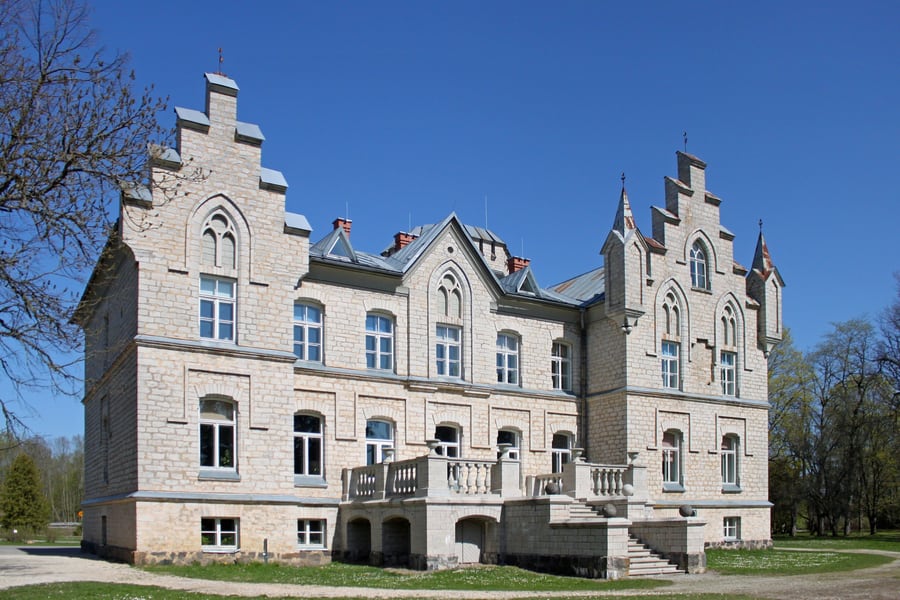
A few hundred metres from the station, a manor house of 1892–94 in the English Gothic Revival style, with stepped gables and pinnacles, built of the local limestone sold as Vasalemma marble. Its architect is not known. It has been a school since 1922 — today Vasalemma Põhikool — so it is a building to admire from outside.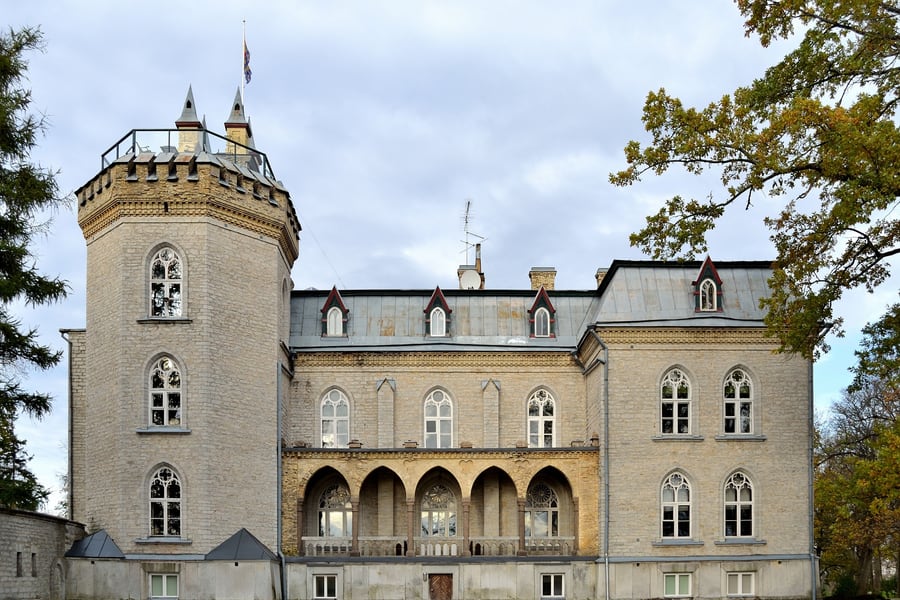 Ivar Leidus / Wikimedia Commons · CC BY-SA 3.0 EE · 2011 · cropped
Laitse castle
Laitse became a manor of its own in 1637, split off from Ruila. The present house, a neo-Gothic castle with a crenellated tower, was finished in 1892 for Woldemar von Uexküll beside the old manor centre. It is privately owned and opens only for booked events; a hedge labyrinth of just over a thousand trees has been planted beside it.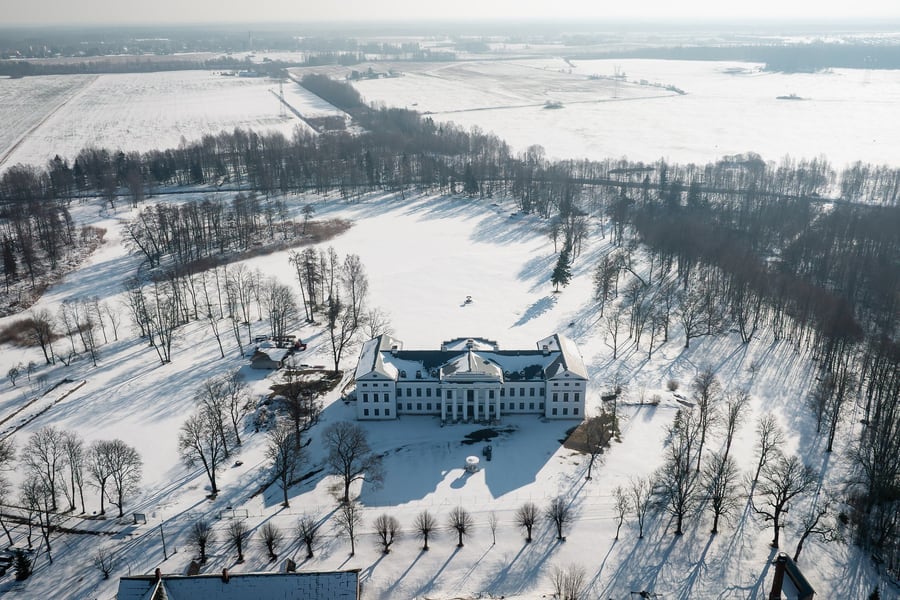 Olari Pilnik / Wikimedia Commons · CC BY-SA 4.0 · 2025 · cropped
Riisipere manor
A house of high classicism, finished in 1821 after Peter Gustav von Stackelberg moved the manor to a new site, with a portico of six columns facing the former pond and a park laid out around it. It was a children's home from 1921 to 1984, then stood empty and decayed; it is privately owned and being restored.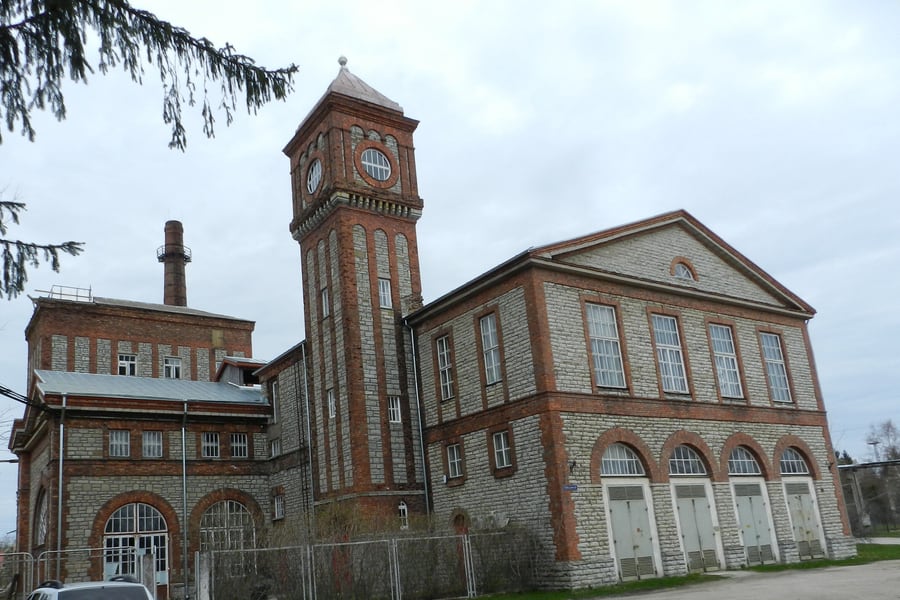 Neeme Sihv / Wikimedia Commons · CC BY-SA 4.0 · 2012 · cropped
Ellamaa power station
Built in 1922–23 to a design by Aleksander Vladovski, it burned the peat dug around it and sent power to Haapsalu from 1 November 1923 and to Tallinn from January 1924, growing to 8,500 kW by 1940. It stopped generating in 1966 and has been a protected monument since 2001. The motorsport museum that filled it from 2018 has closed.Where to Sleep
Turba is an hour from Tallinn, with a train back every hour until 21:22, and the line is a day out from the capital rather than a place to stay. No hotel within walking distance of a platform could be verified when this page was written, in October 2026, so none is listed here; Tallinn's hotels are the base, and Balti jaam is where every train starts.
Questions or corrections
Planning this trip and stuck on something, or spotted a time, fare or detail that has changed? Send us a message about Tallinn to Turba — the line that came back. We read every one, and we update this page when something has changed.