Tallinn to Paldiski — the once-closed port
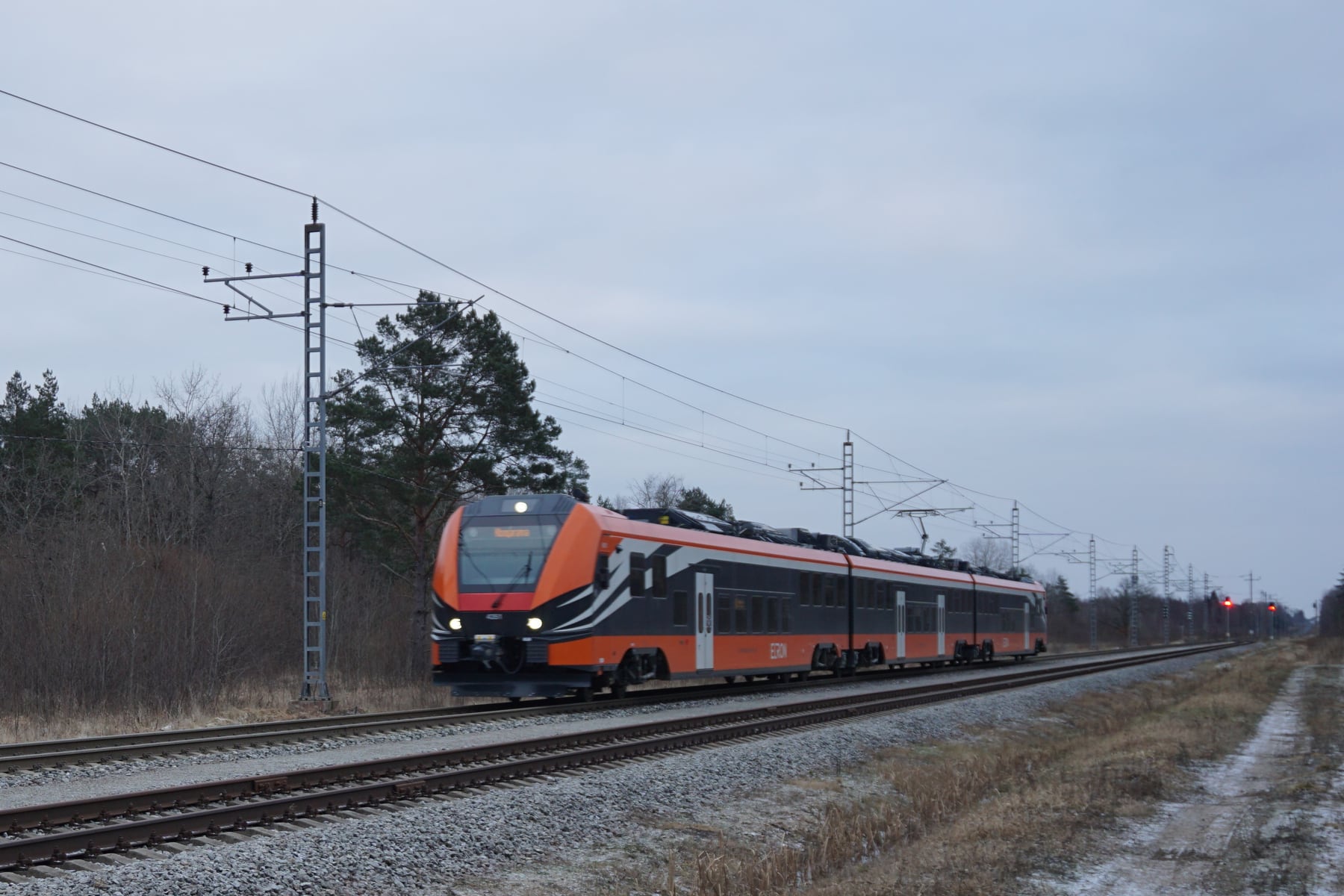
Tibukonn / Wikimedia Commons · CC0 · 2025 · cropped
- Distance48 km · 1,520 mm gauge · electric
- Duration43 min (express) – 55 min
- Best seasonHourly, all year
Introduction
The railway was built for Paldiski's harbour. Peter the Great began a naval port here in 1718, on water deep and almost free of ice, and when the Baltic Railway opened in 1870 it ran from this quay through Tallinn and Narva towards St Petersburg. Paldiski stayed a military town. The Soviet Union built a naval base here in 1939, a training centre for nuclear-submarine crews followed in 1962, and from 1968 the whole Pakri peninsula was a closed area: travellers on the train had their papers checked at Laoküla, the halt before the end of the line. The base was shut in 1994, when the last Russian forces left.
Today it is a commuter line, and one of the easiest railway trips out of Tallinn: 48 kilometres, under the wires all the way, with an Elron electric train from the Baltic Station every hour and two expresses on weekday evenings. It runs out through the suburbs to Keila, then into bog and pine forest. At Klooga a short branch turns off for Kloogaranna, a single platform in the pines a few steps from the sea. At the far end are Peter's fortress, the limestone cliff of Pakri and Estonia's tallest lighthouse.
The Journey
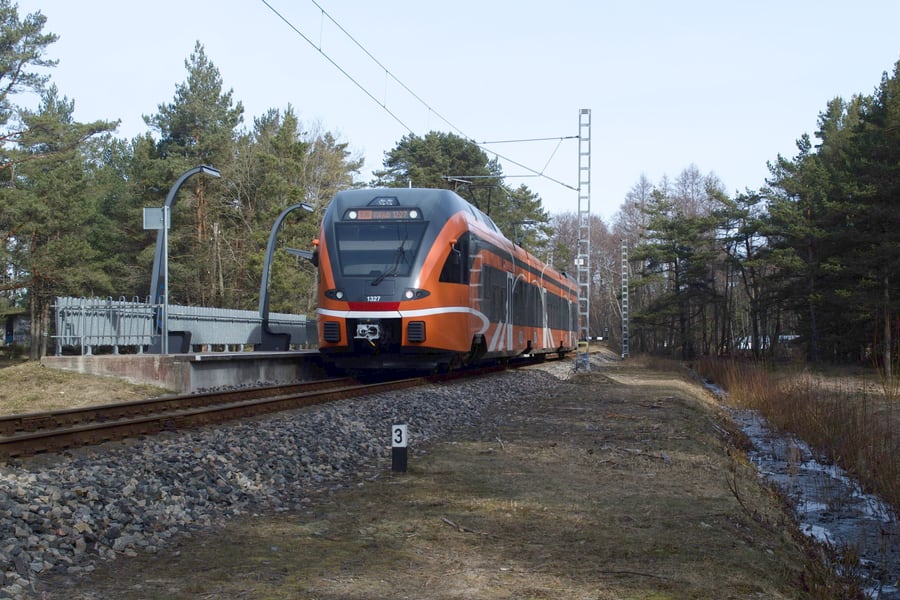
Every train on this line is electric, and the same orange Stadler FLIRT units work it all day — sets of three cars with 196 seats or four with 274. One of them, 1327, is named Elektra. Since 15 December 2025 they have been joined by Elron's new Škoda units — the one in the header is on the Kloogaranna line near Klooga that December: sixteen were ordered for €146.8 million, and the very first to carry passengers did so on this line, between Tallinn, Keila and Kloogaranna. The five commuter sets among them have 262 seats, room for 15 bicycles and a top speed of 160 km/h.
Out of Tallinn
The train leaves Balti jaam and runs through the city's own stations, a couple of minutes apart — Lilleküla, Tondi, Järve, Nõmme, Hiiu, Kivimäe — to Pääsküla, where the electric trains are based. Since April 2025 the line has run to a regular-interval timetable, with a train from Keila to Tallinn at least every twenty minutes. Laagri, Urda, Saue and Valingu follow, and Keila comes up about 35 minutes out. Its wooden station of 1870, enlarged in 1926, was rescued by the town and reopened in 2007 as a café called Kegel, the town's old name. Here the line divides, one track for Turba and one for Paldiski.
Bog and pine to Klooga
Past Niitvälja the train crosses the open bog and comes to Klooga, 35.9 km from Tallinn, where the single-storey wooden station of 1870 is the only one of its type in Estonia. Klooga is also where the Kloogaranna branch turns away north, 3.4 km through the forest to a platform near the shore of Lahepere Bay.
Three or four kilometres west of the station, beside the Klooga-Aedlinn halt, is the site of the Klooga concentration camp, set up by the German occupiers in September 1943. On 19 September 1944, days before Soviet troops arrived, some 2,000 prisoners, most of them Jews, were shot in the forest nearby. Memorial stones stand there now, and since 2013 an outdoor exhibition by the Estonian History Museum.
To the end at Paldiski
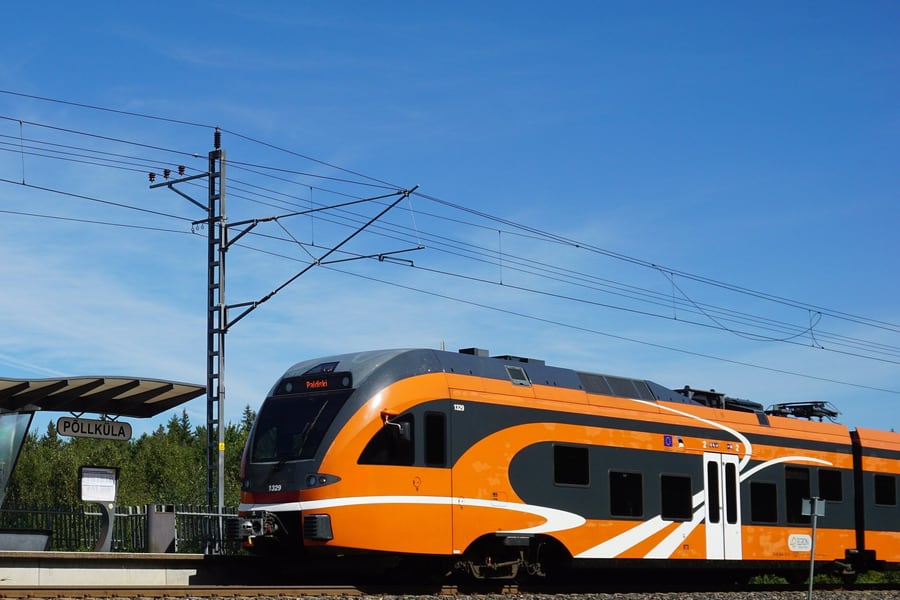
Põllküla and Laoküla take turns: most trains call at one or the other, a few at both. Both have short platforms, so passengers there — and at Kloogaranna — get off through the train's C-car only. Laoküla, 43.5 km out, is where documents were checked in Soviet times. Then the train reaches Paldiski, 48 km from Tallinn, at a single long platform opened in 2010 and lengthened in 2020.
The wooden station building beside it is the one the railway opened with in 1870, built for 20,000 roubles to the Baltic Railway's standard design. It has been privately owned since 1999 and is a protected monument; tickets are no longer sold in it. In September 1993 an 8.2 km branch was laid from here to the Soviet reactor site to carry away the navy's nuclear fuel; the fuel was gone by the autumn of 1994, and most of the branch has since been taken up. Paldiski is a town of about 4,000 people now, and the Pakri lighthouse is some five kilometres north of the station.
Along the route
 Ivar Leidus / Wikimedia Commons · CC BY-SA 3.0 · 2013 · cropped
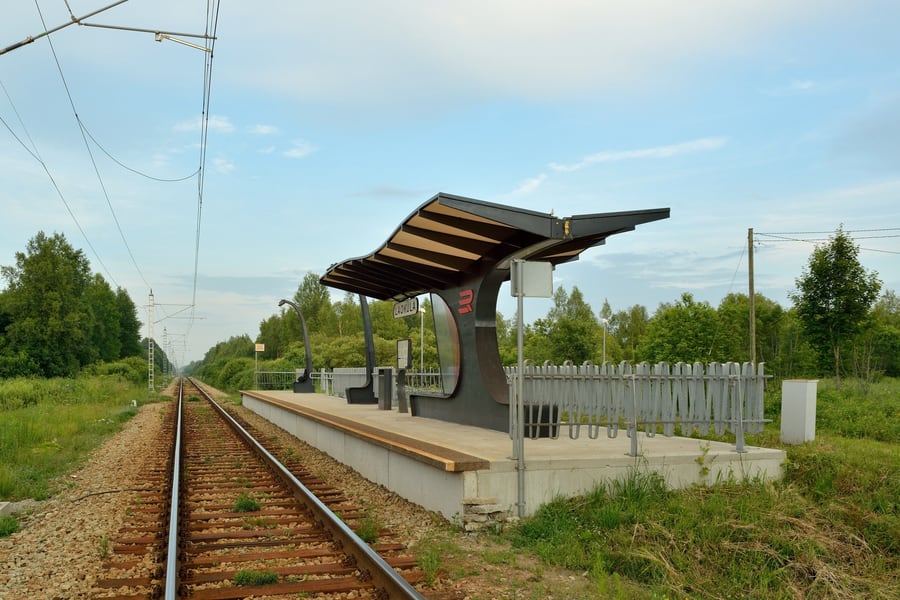
The checkpoint at Laoküla
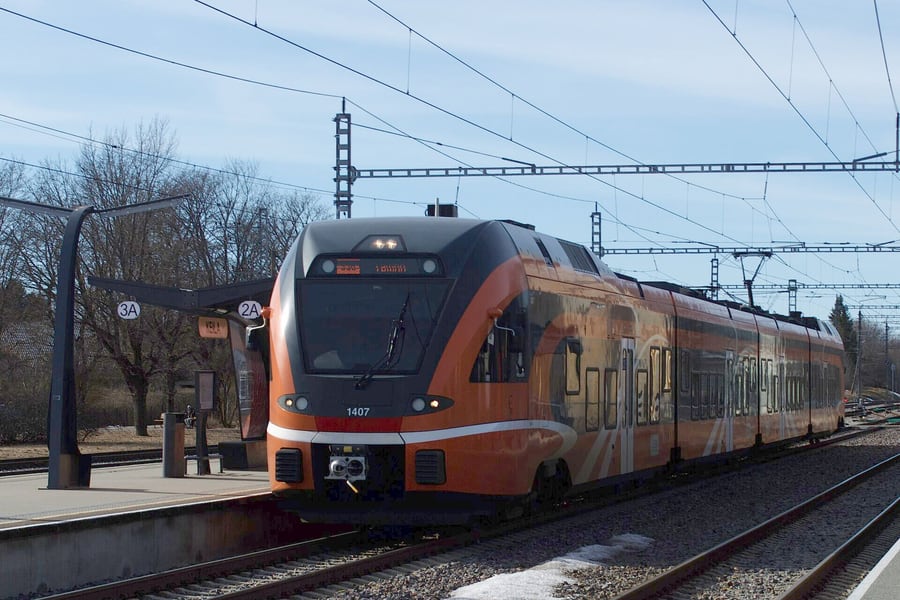
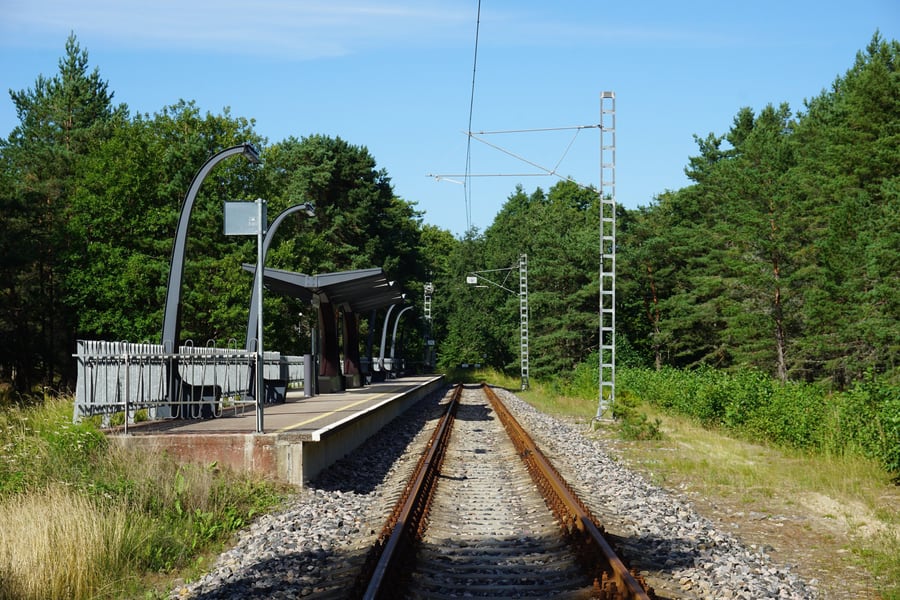
Laoküla halt opened in 1962. In Soviet times the Pakri peninsula was a closed area, and the papers of everyone travelling on to Paldiski were checked here. The post went when the Soviet forces left; today most trains call at either Laoküla or Põllküla, not both.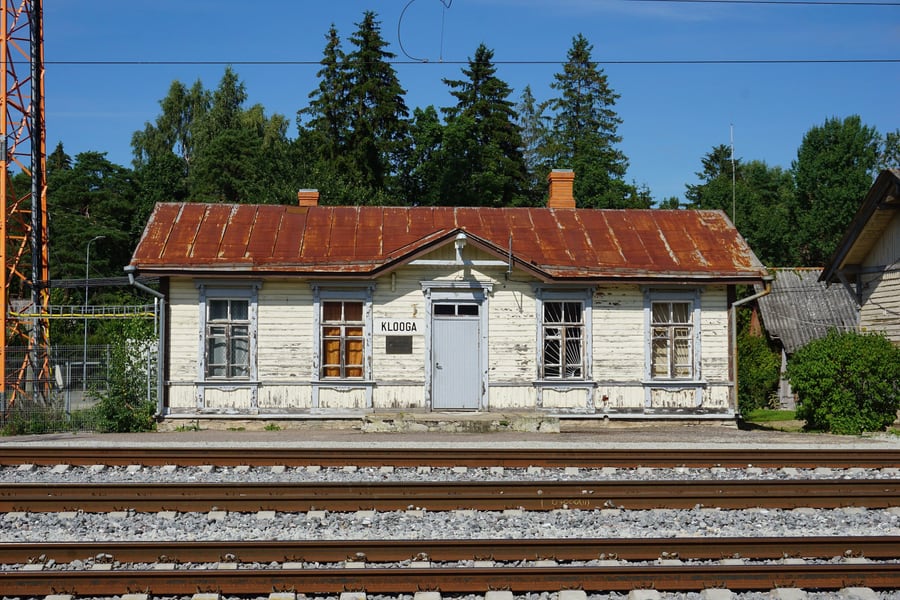 Tibukonn / Wikimedia Commons · CC BY-SA 4.0 · 2020 · cropped
The only one of its kind
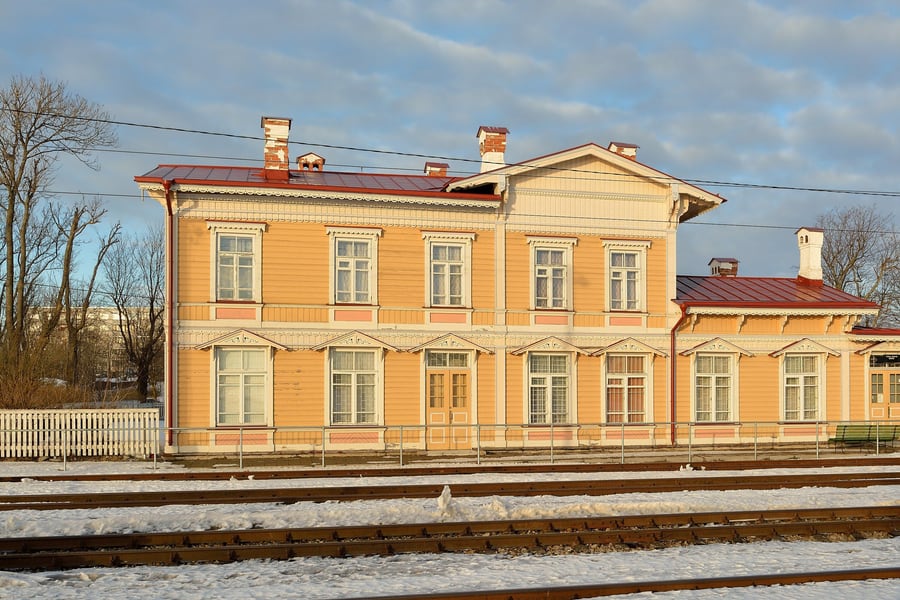
Klooga's station of 1870 is a single-storey wooden building, L-shaped, and the only one of its type in Estonia: no other station on the Paldiski–Tallinn–Narva line was built that small, and the one at Kadrina that shared its plan was given an upper floor.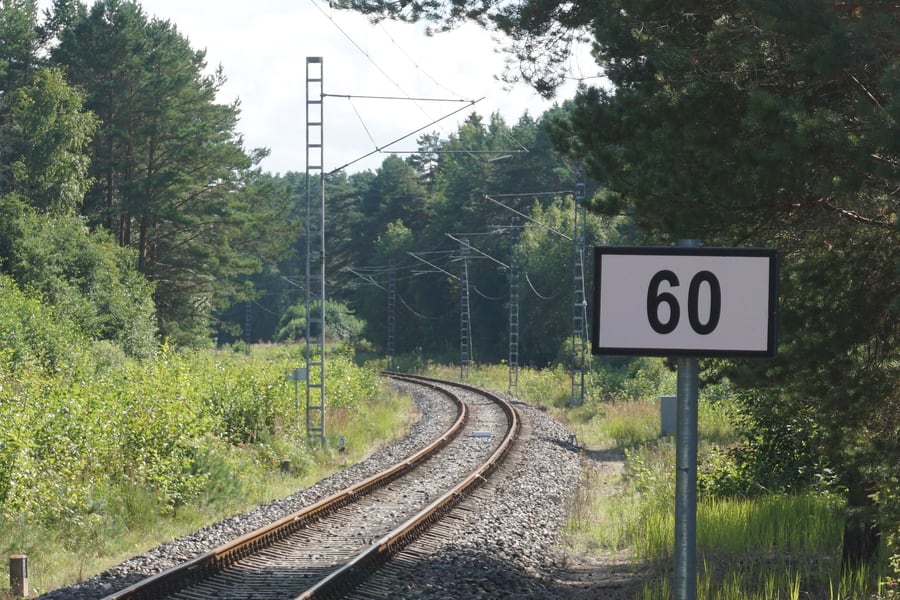 Tibukonn / Wikimedia Commons · CC BY-SA 4.0 · 2020 · cropped
A branch to the beach
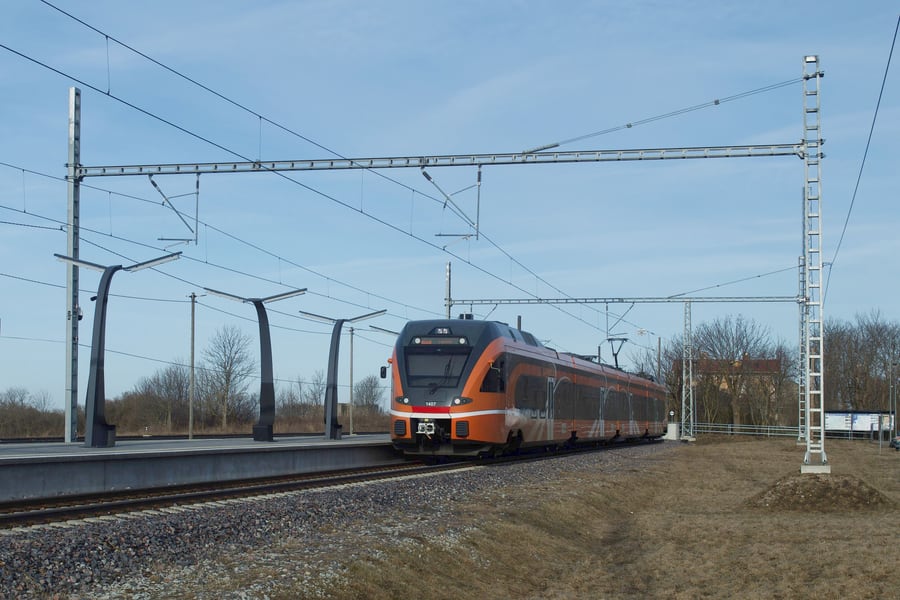
In 1960 an electrified branch of 3.4 km was laid from Klooga to the shore at Kloogaranna. The trains take it at no more than 60 km/h, through pine forest, to a single 100-metre platform about fifty metres from the bay.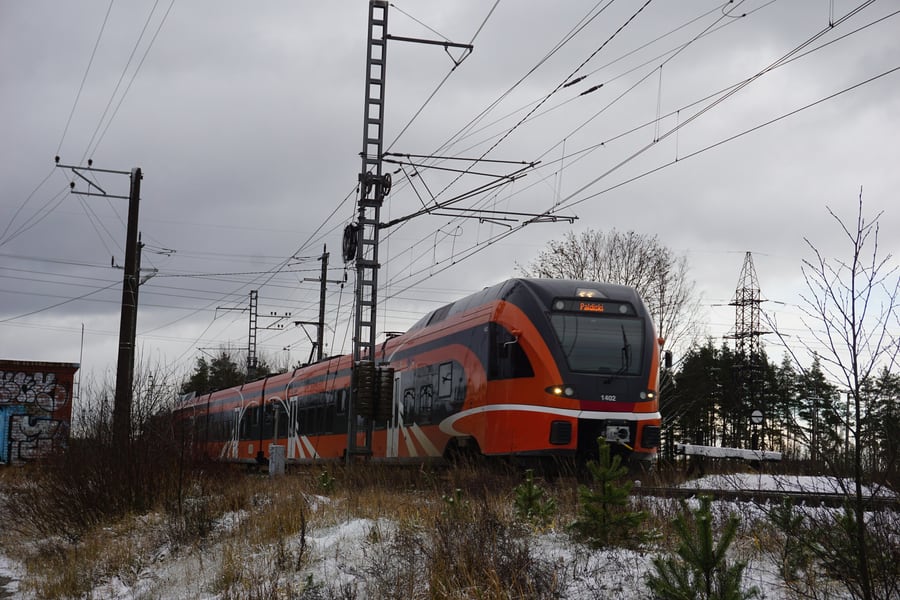 Tibukonn / Wikimedia Commons · CC BY-SA 4.0 · 2020 · cropped
Under the wires since 1958
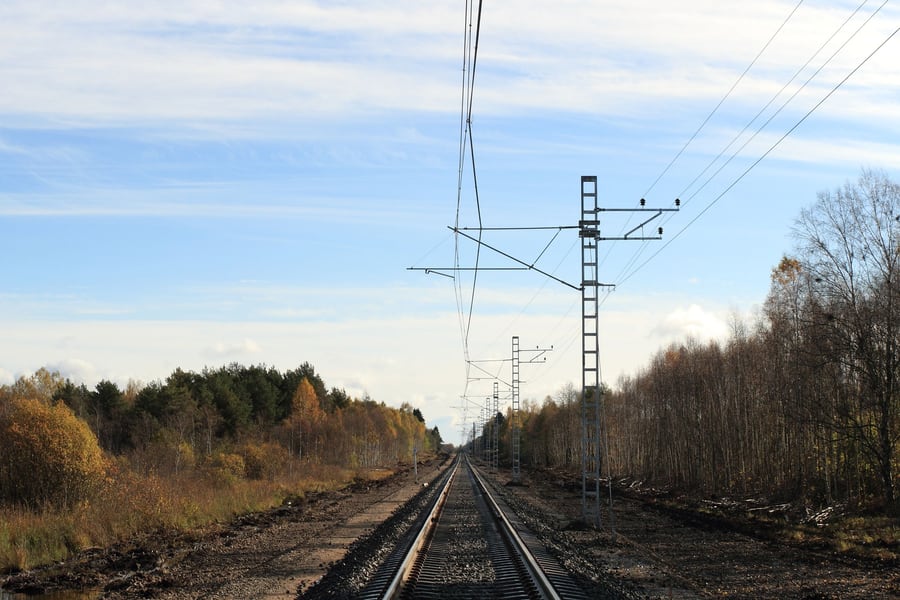
Electric trains reached Keila in July 1958 and Klooga that December; Paldiski followed on 4 November 1961. Elron works the line with electric Stadler FLIRTs of three and four cars, and since December 2025 with its first Škodas too.A bit of history
Timetables
Trains run from Tallinn to Paldiski every hour, every day, at a quarter to the hour, and back from Paldiski on the hour. On weekdays two expresses each way are added at the busy times, and four trains a day run down the branch to Kloogaranna. None needs a change of train. The times below are Elron's western timetable in force from 31 August 2026, read from the operator's sheet and checked against its booking engine in October 2026.
Tallinn to Paldiski
| Departs Tallinn | Keila | Paldiski | Journey | Runs |
|---|---|---|---|---|
| 05:45, 06:45 | :21 | 06:37, 07:37 | 52 min | Daily |
| 07:45, then hourly at :45 to 21:45 | :20 or :21 | :39 or :40 | 54–55 min | Daily |
| 16:16 · express 51 | 16:46 | 16:59 | 43 min | Weekdays |
| 17:16 · express 53 | 17:46 | 17:59 | 43 min | Weekdays |
The last train, the 21:45, reaches Paldiski at 22:39.
Paldiski to Tallinn
| Departs Paldiski | Tallinn | Journey | Runs |
|---|---|---|---|
| 06:00, then hourly on the hour to 22:00 | :54 | 54 min | Daily |
| 06:38 · express 50 | 07:22 | 44 min | Weekdays |
| 07:38 · express 52 | 08:22 | 44 min | Weekdays |
The Kloogaranna branch
| Tallinn | Kloogaranna | Kloogaranna | Tallinn | |
|---|---|---|---|---|
| 10:25 | 11:11 | 07:27 | 08:14 | |
| 13:25 | 14:11 | 11:27 | 12:14 | |
| 15:25 | 16:11 | 14:27 | 15:14 | |
| 17:25 | 18:11 | 16:27 | 17:14 | |
| 18:27 | 19:14 |
The branch trains run every day of the week and take 46 or 47 minutes.
Making a day of it
Paldiski is an easy half day: the 09:45 from Tallinn is there at 10:39, and the 14:00 back reaches Tallinn at 14:54. The beach makes a second outing the same afternoon — the 15:25 is at Kloogaranna by 16:11, and the 18:27 brings you back for 19:14. The last train from Paldiski is the 22:00, in Tallinn at 22:54.
Times are published by the operator: Elron · Western timetable from 31 August 2026 (opens in a new tab).
Tickets
Tallinn to Paldiski, or to Kloogaranna, costs €4.00 online and €5.00 on the weekday expresses. Bought on the train, from the ticket machine or from staff, the same single is €4.10. The electric trains carry standard class only, so there is no first-class seat to buy, and bicycles travel free.
Tickets are sold online, on board, and at Elron's ticket office at Balti jaam — not at Paldiski, whose station building is no longer the railway's. Online sales close five minutes before the train leaves. A 24-hour ticket for the zones around Tallinn, €8.20 from staff on board, covers both ends of the line in one day. Checked against Elron, October 2026.
Book your tickets
Tallinn to Paldiski or Kloogaranna
€4.00 online · €5.00 on the express
A standard-class single, the only class the electric trains carry.
Book Tickets (opens in a new tab, on elron.ee)via elron.ee24-hour ticket, four zones
€8.20 from staff on the train
Unlimited travel for a day in the zones around Tallinn, enough for Paldiski and Kloogaranna on one trip.
Book Tickets (opens in a new tab, on elron.ee)via elron.eeRail Passes
A pass covers every train on this line, and for this journey it is not worth buying.
Interrail's table of the companies a pass is valid with in Estonia — checked in October 2026, when it carried a last updated 21 October 2026 stamp — lists Elron for both commuter and express trains, with seat reservations optional, except in first class, which these electric trains do not have.
An adult Interrail Estonia Pass in second class costs €105 for three travel days within a month, €129 for four, €152 for five, €175 for six and €216 for eight; youth prices, for travellers aged 12 to 27, are €79, €97, €114, €131 and €162. A Tallinn–Paldiski return is €8.00 online, and the 24-hour zone ticket is €8.20. Even the cheapest pass costs about ten such days out.
A pass earns its keep only on a longer trip round Estonia or the Baltic states, with Paldiski as one short day among several. For Paldiski and Kloogaranna alone, buy ordinary tickets.
Prices and conditions read on interrail.com (opens in a new tab) in October 2026.
Places to Visit
Everything below is reached from a platform on the line: the first two from the Kloogaranna branch, 46 minutes from Tallinn, and the rest from Paldiski, 54 minutes out on the hourly train.
The five come in the order the railway meets them: a cascade and a bay at the end of the beach branch, then Peter the Great's fortress in the town, and the cliff and the lighthouse at the tip of the Pakri peninsula.
 Aleksandr Abrosimov / Wikimedia Commons · CC BY-SA 4.0 · 2015 · cropped
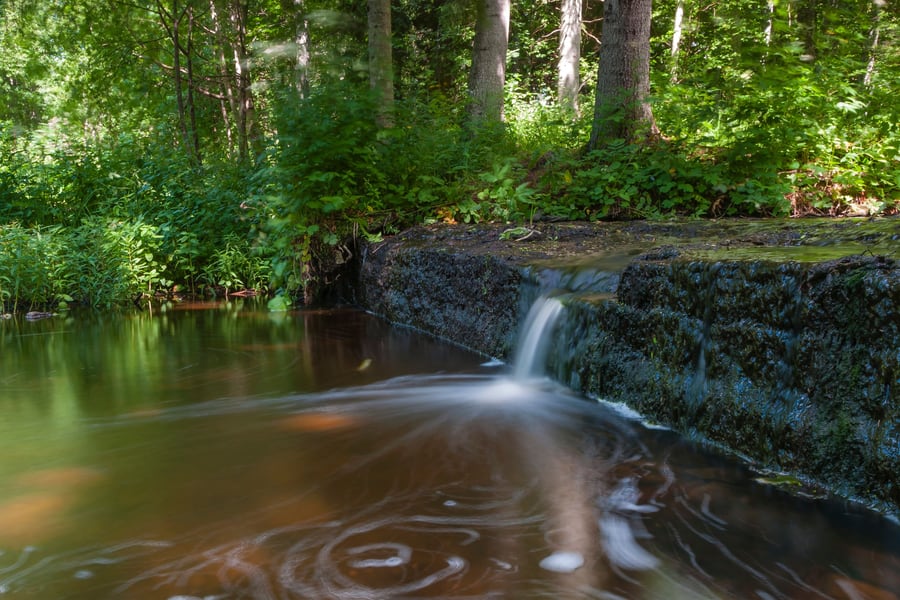
Treppoja cascade
Where the Treppoja runs down the slope of the limestone klint into Lahepere Bay, the stream, 5 to 15 metres wide, comes down six steps of 0.3 to 1.5 metres, 5.5 metres in all. The cascade is in Kloogaranna village, beside the coast road from Tallinn through Rannamõisa, and the stream reaches the sea at Kloogaranna.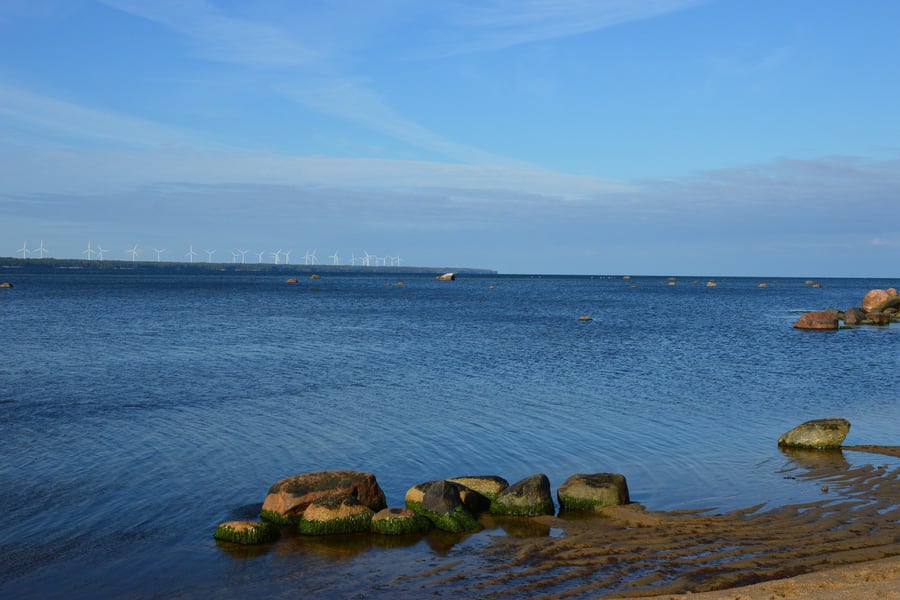 Ivo Kruusamägi / Wikimedia Commons · CC BY-SA 4.0 · 2021 · cropped
Lahepere Bay
An inlet of the Gulf of Finland between the Pakri peninsula to the west and Lohusalu to the east. Its north-western shore, sandy in places and backed by forest, is a well-loved place to swim, with Kloogaranna and Laulasmaa along it; the Kloogaranna platform is about fifty metres from the water. The wind turbines on the horizon stand on Pakri.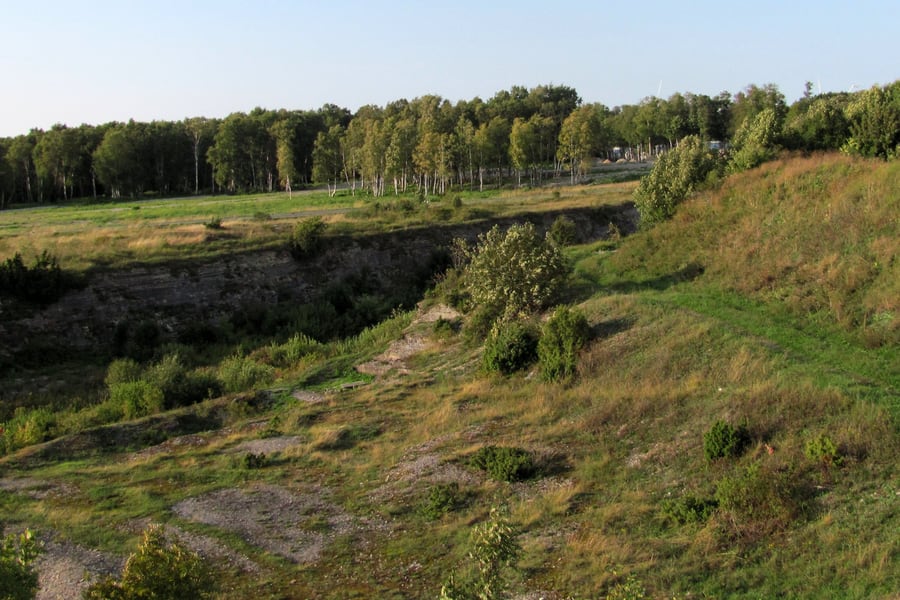 Athanasius Soter / Wikimedia Commons · CC BY-SA 3.0 EE · 2013 · cropped
Peter's fortress
Peter the Great began a fortified deep-water harbour here on 20 July 1718, and the work dragged on long after his death, until Catherine the Great ordered it stopped in 1768. What survives is Peetri kindlus, Peter's fortress: five bastions and a ditch hewn out of the limestone, of the Dutch type, designed — so the legend goes — by Peter himself. It is a protected monument, now grassed over.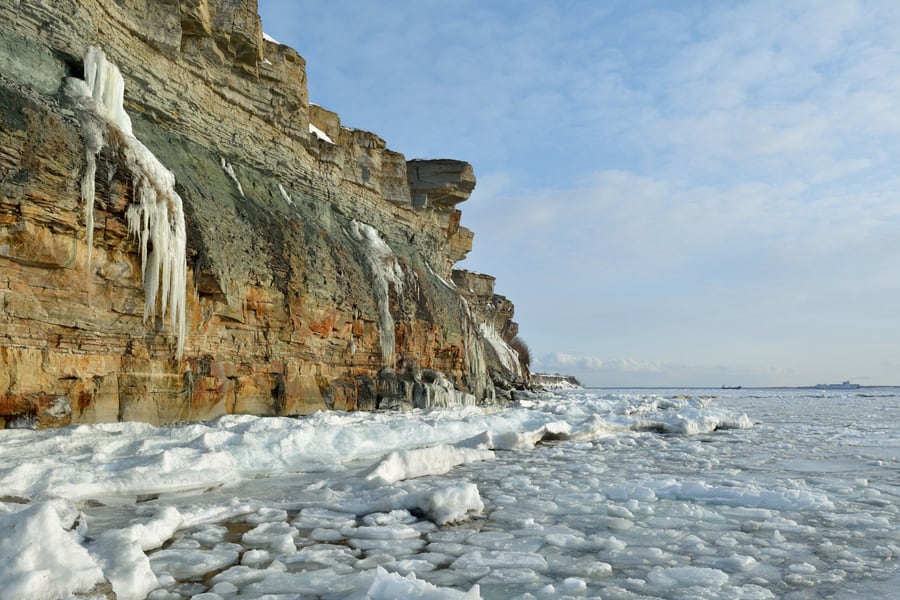 Ivar Leidus / Wikimedia Commons · CC BY-SA 3.0 · 2013 · cropped
Pakri cliff
The westernmost part of the Baltic Klint on mainland Estonia: a limestone wall 22 to 24 metres high, its edge jagged from vertical faults and prone to falls. Its layers run from the Lower Cambrian to the Ordovician, and the land began to rise from the sea about 4,000 years ago. At its eastern end the 5.8-metre Pakri waterfall drops over the edge.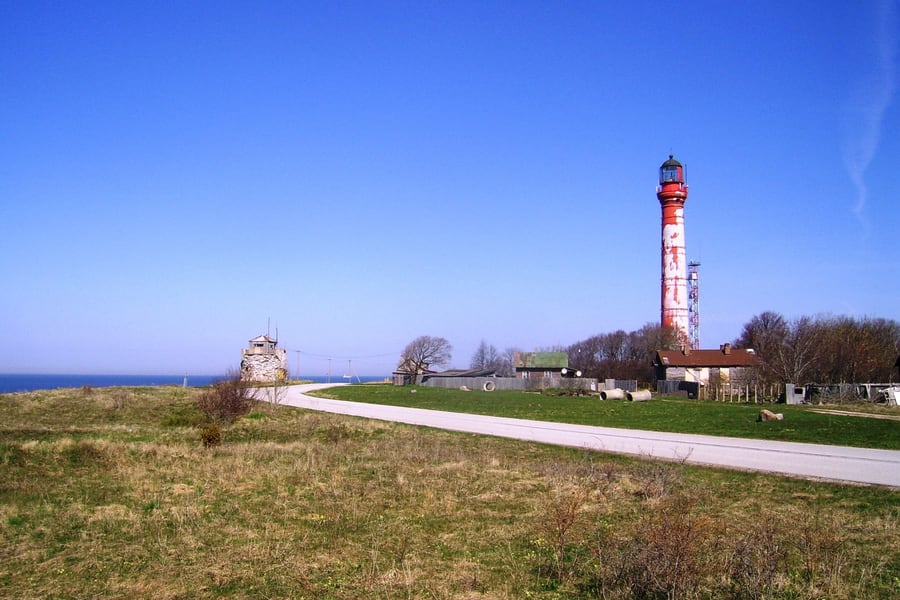 Radosław Botev / Wikimedia Commons · CC BY 3.0 PL · 2011 · cropped
Pakri lighthouse
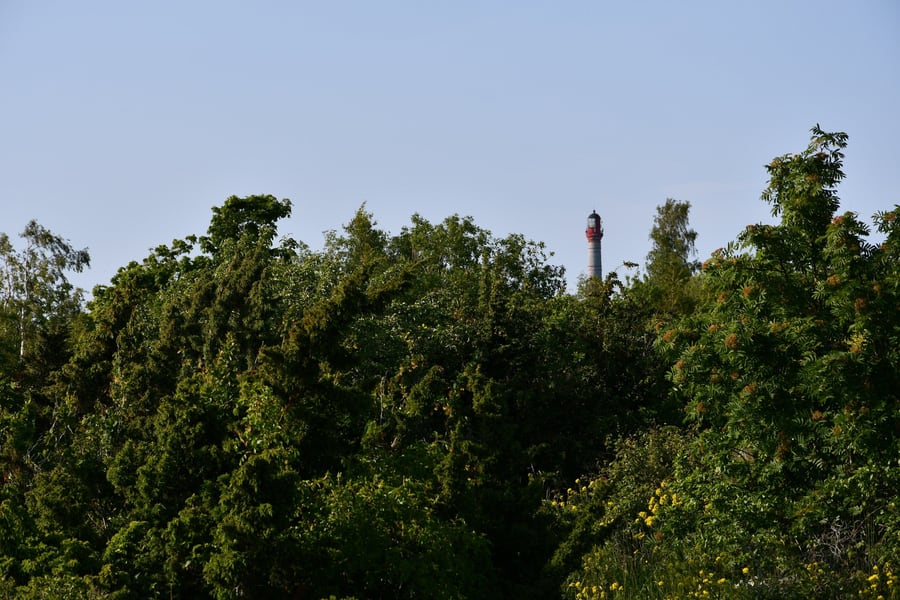
Estonia's tallest lighthouse, a red limestone tower of 1889 with a balcony and lantern, 52 metres from its foot, its light 73 metres above the sea. It was built back from the cliff because the crumbling edge had come too close to its predecessor, whose remains stand nearby. By the 1920s it had become a sight in its own right.Where to Sleep
Paldiski is under an hour from Tallinn, and most visitors go back the same evening. For a night by the sea, the house below stands at the tip of the Pakri peninsula beside the lighthouse, about five kilometres from the station. Everything described is what it says about itself, read in October 2026. No prices, grades or star counts appear here, because none have been verified.
Where to stay
 Ivo Kruusamägi / Wikimedia Commons · CC BY-SA 4.0 · 2025 · cropped
Pakri Parun
Majaka tee 43, by Pakri lighthouse
Rooms at the tip of the Pakri peninsula beside the lighthouse: suites with sea views and a shared kitchen in the main house, red and yellow bungalows near the lighthouse, a house for up to ten, and apartment rooms, some with a full kitchen. Heated all year, with free parking.
Check Availability (opens in a new tab, on pakri.eu)via pakri.euQuestions or corrections
Planning this trip and stuck on something, or spotted a time, fare or detail that has changed? Send us a message about Tallinn to Paldiski — the once-closed port. We read every one, and we update this page when something has changed.