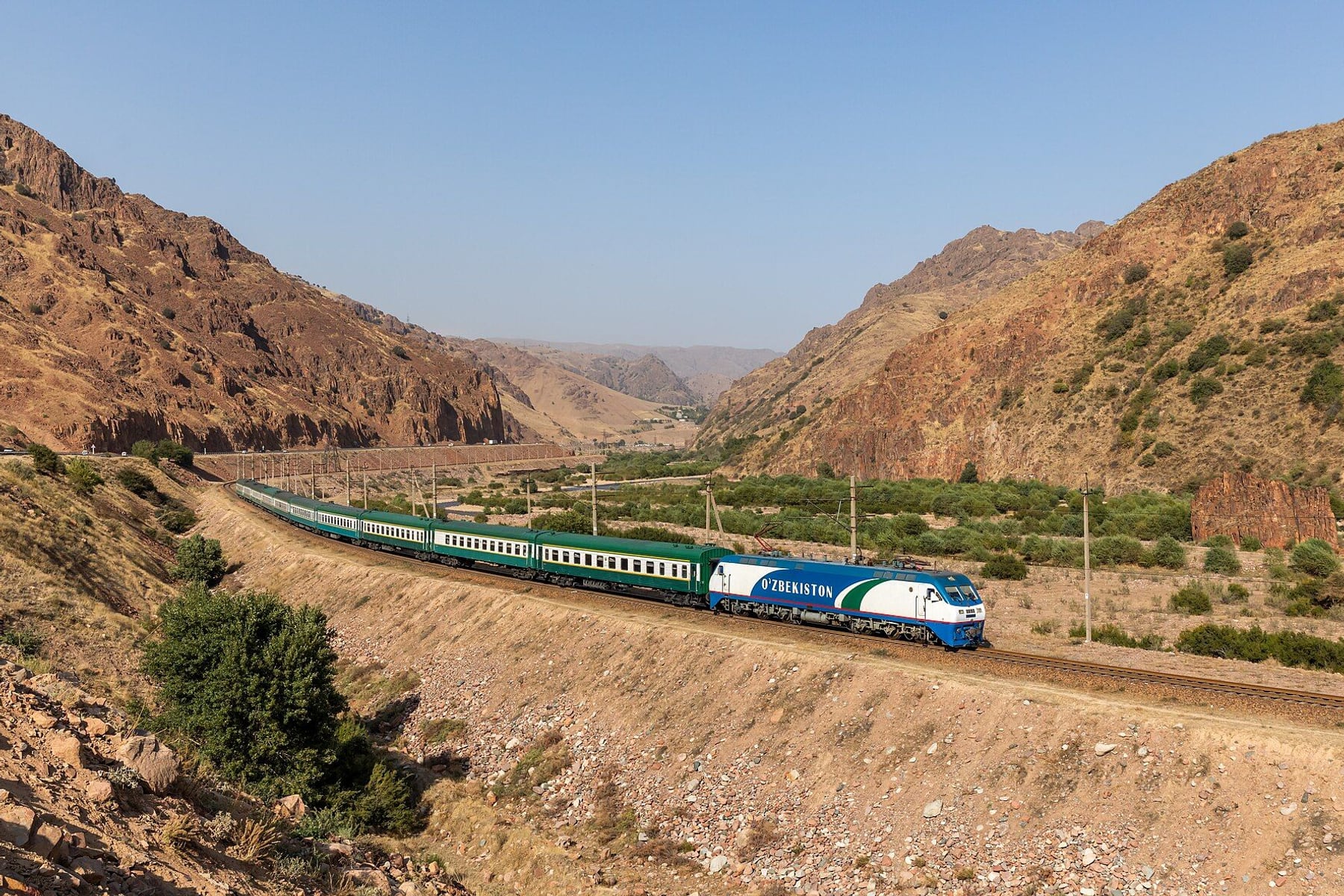
Through the Qamchiq Tunnel
Kabelleger / David Gubler / Wikimedia Commons · CC BY-SA 4.0 · 2024 · cropped
- DistanceAngren–Pap line 123 km · Qamchiq Tunnel 19.2 km
- Duration4 h 22 to 7 h 05, Tashkent to Andijan
- Best seasonAll year · three to five trains a day each way
Introduction
The road from Tashkent to the Fergana Valley goes over the Qamchiq Pass, also spelt Kamchik, climbing in hairpins to 2,268 metres. Somewhere between ten and fifteen thousand vehicles a day make that climb, and in winter the pass is often closed because of the risk of avalanches. The train does not climb it. It goes underneath, through a tunnel 19.2 kilometres long, the longest in Central Asia and in the former Soviet Union, and the longest broad-gauge railway tunnel in the world outside a metro.
The tunnel opened in 2016, on a new line from Angren to Pap, and since then every passenger train between the capital and the valley has used it. The valley is where about a third of Uzbekistan's people live, in cities such as Kokand, Margilan, Namangan and Andijan.
What the ride is actually like
It is an ordinary day out of Tashkent on Uzbekistan Railways. The fastest trains, a new Chinese-built electric train introduced in September 2026, reach Andijan in about four and a half hours, and an economy seat for the whole run cost 268,190 so'm when this page was written. Slower trains carry sleeper cars from as far away as Khiva and Termez and take up to seven hours. The first part runs up the Angren valley, then into the mountains, into the tunnel and out on the Fergana side, down to Pap and on across the valley floor to Kokand, Margilan and Andijan.
The Journey
The Fergana Valley sits behind a wall of mountains east of Tashkent. In Soviet times that did not matter for the railway: the line from Tashkent to the valley crossed what was then the Tajik republic. When the Soviet Union broke up, that stretch of track lay in another country. Uzbekistan's own trains to its most populous region now had to cross Tajikistan's Sughd Region, at a reported cost of some $25 million a year in transit fees, and the only all-Uzbek way in was the road over the pass.
A line under the mountains
In June 2013 the president of Uzbekistan ordered an electrified railway from Angren, at the end of the existing line up from Tashkent, to Pap on the Fergana side, 123 kilometres long. Its centrepiece was a tunnel under the Qamchiq Pass in the Qurama range, built by China Railway Tunnel Group with Uzbek contractors. The tunnel passes through seven geological faults. In January 2014 an avalanche buried its entrance under 78 metres of snow, and the two headings met on 27 February 2016. The line was opened at a ceremony on 22 June 2016, and passenger trains between Tashkent and Andijan were running through it by September.
The trains
The line is electrified, and the locomotive-hauled passenger trains photographed on it are worked by Uzbekistan Railways' O'Z-Y electrics: fifteen passenger engines built in China by Zhuzhou with Siemens equipment and delivered by 2011, the Y standing for yo'lovchi, passenger. Behind them run sleeper-car trains from Khiva, Urgench, Termez and Kungrad that cross half the country to reach Andijan, and Tashkent–Andijan trains of the same kind. Since 10 September 2026 the fastest service has been a four-car electric train built by CRRC Dalian, seating 357, which cut Tashkent–Andijan from six or seven hours to about four and a half.
Along the way
From Tashkent the line runs up the valley of the Angren river to Angren, a coal town created in 1946, and climbs into the mountains. On the far side of the tunnel it reaches Pap, where the new line meets the old railway from Kokand to Namangan. Some trains go on by Namangan; the fast ones turn for Kokand, the old khanate capital, half an hour away, then cross the valley floor to Margilan, the silk town, and Andijan, on the valley's eastern edge.
Along the route
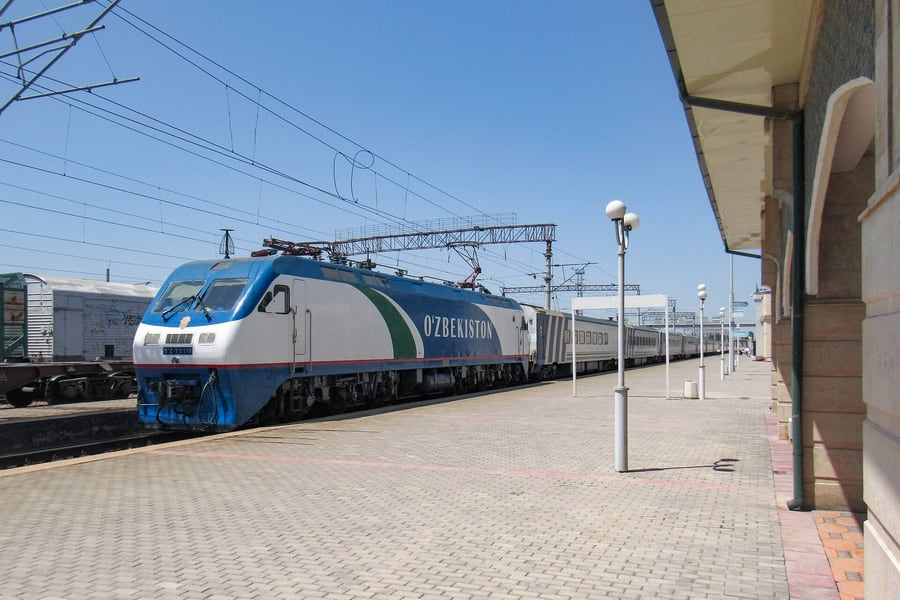
 Carpodacus / Wikimedia Commons · CC BY-SA 4.0 · cropped
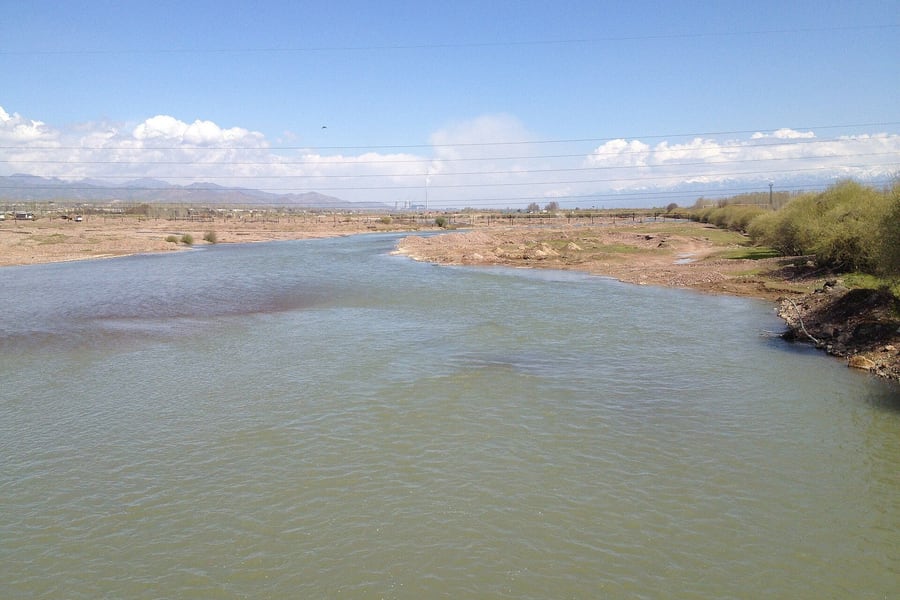
Up the Angren valley
From Tashkent the line heads east up the valley of the Angren river to the coal town of the same name, created in 1946 from villages on the coalfield. At Angren the old branch ends and the 2016 line begins its climb.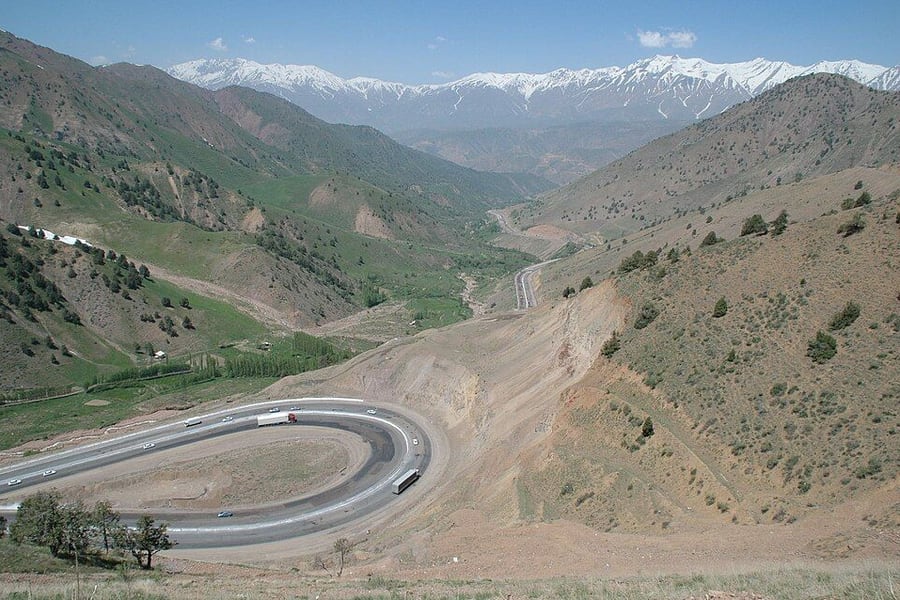 THORSTEN / Wikimedia Commons · CC BY-SA 4.0
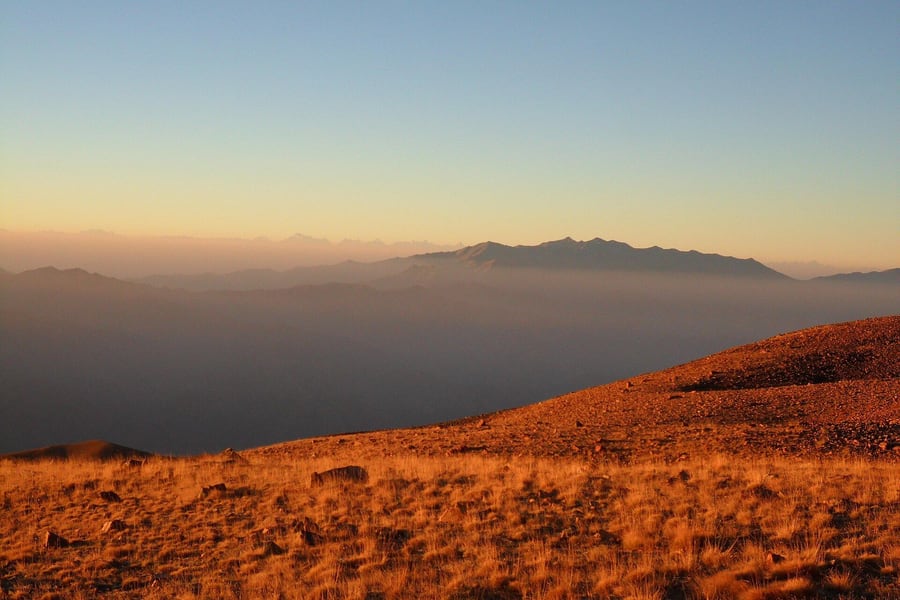
Under the Qamchiq Pass
The road to the valley climbs in hairpins to 2,268 metres and is often shut in winter by the risk of avalanches. The railway goes underneath, through 19.2 km of tunnel, the longest in Central Asia.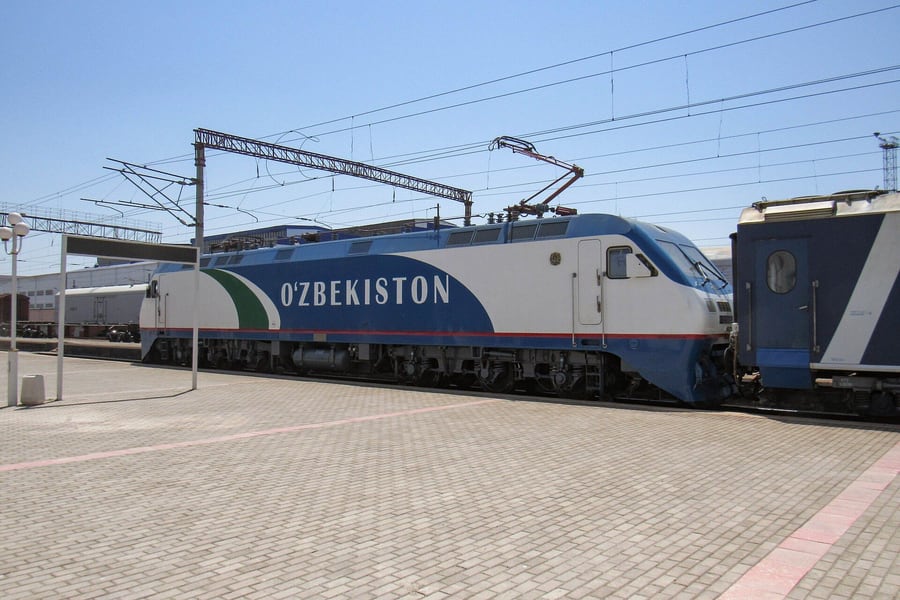 Nikolai Bulykin / Wikimedia Commons · CC BY-SA 4.0 · cropped
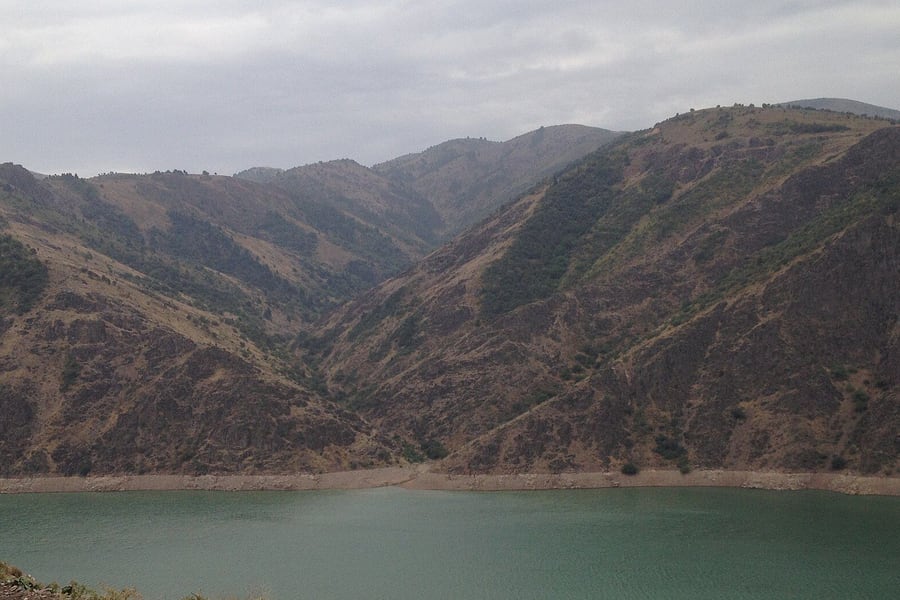
Pap, Kokand and the valley
At Pap the new line joins the old Kokand–Namangan railway. The fast trains call at Kokand, once the capital of a khanate, half an hour later, then at Margilan, and end at Andijan.A bit of history
Culture & experiences along the way
 Adam Jones from Kelowna, BC, Canada / Wikimedia Commons · CC BY-SA 2.0 · cropped
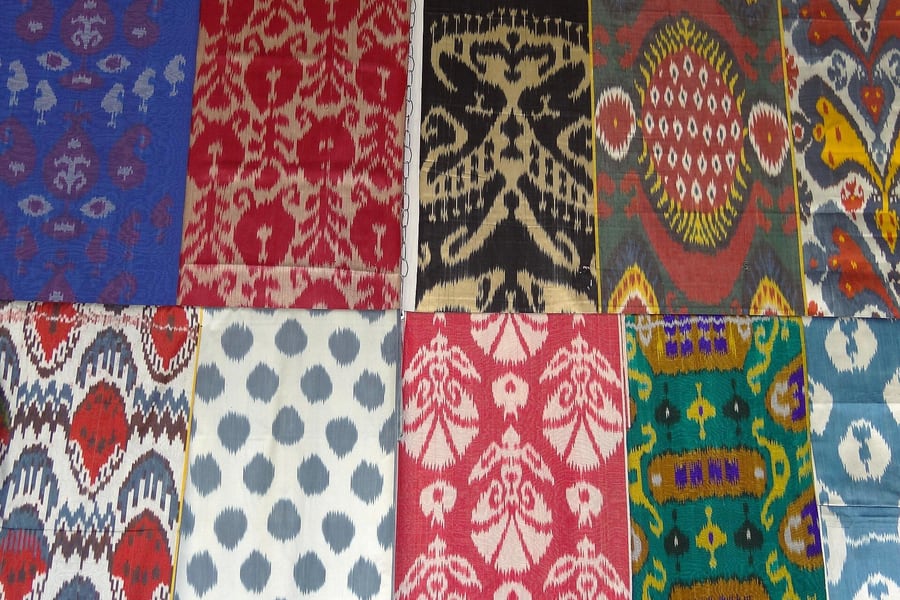
Atlas and adras, Margilan's silk
Margilan has been known for silk since at least the tenth century. Its two traditional cloths are atlas and adras, the second half silk and half cotton and dyed with natural colours. Making them in the old way, as the Margilan Crafts Development Centre does, went on UNESCO's intangible heritage list in 2017.Timetables
Every train below was read from Uzbekistan Railways' own booking site, eticket.uzrailpass.uz (opens in a new tab), on 23 November 2026, for travel between 26 November and 7 December 2026. All of them run through the Qamchiq Tunnel.
The fast electric trains
| Train | Tashkent | Pap | Kokand | Margilan | Andijan | Runs |
|---|---|---|---|---|---|---|
| 730 | 07:20 | 09:59 | 10:29 | 11:05 | 11:42 | Tue–Sun |
| 732 | 18:40 | 21:29 | 21:59 | 22:35 | 23:12 | Wed–Sat |
| Train | Andijan | Tashkent | Time | Runs |
|---|---|---|---|---|
| 731 | 07:20 | 12:12 | 4 h 52 | Thu–Sun |
| 729 | 15:33 | 19:55 | 4 h 22 | Tue–Sun |
Train 730/729 is the new CRRC Dalian electric train; 731 and 732 are sold under the same brand. All four leave from and arrive at Tashkent North.
The O'zbekiston express, by Namangan
734 leaves Tashkent at 17:50 on Tuesdays and Sundays and reaches Andijan at 00:29, by Namangan. 733 leaves Andijan at 06:03 on Mondays and Wednesdays and reaches Tashkent at 12:57.
The sleeper-car trains
These are the long-distance trains of open berths and four-berth compartments. Two of them run every day and two on most days:
- To Andijan: train 126, from Khiva or Urgench, leaves Tashkent at 06:18 and reaches Andijan at 12:59; train 130 from Termez leaves Tashkent at 08:10, arriving 14:39, on most days.
- From Andijan: train 125 to Khiva or Urgench at 15:50, in Tashkent at 21:58; train 129 to Termez at 16:34, in Tashkent at 22:38, on most days.
Other Tashkent–Andijan trains of the same kind run on particular days, including some that go by Namangan, taking up to 7 h 05.
Times as of November 2026. The booking site's search for a dated journey is the authority: its separate "train schedule" page still showed older times when this page was written.
Tickets
Every seat and berth is reserved for one train, and Uzbekistan Railways sells them on its own booking site and in its app. For the whole run from Tashkent to Andijan the booking site gave 268,190 so'm in economy on the fast electric trains, 215,650 in economy, 324,520 in business and 614,600 in VIP on the O'zbekiston express, and from 150,090 for an open berth or 199,740 for a compartment berth on the sleeper-car trains. Those prices were read on 23 November 2026 and can vary by train and date.
The fast trains have one class only. Shorter journeys cost less: Kokand to Andijan was 160,910 so'm on the same trains.
Book your tickets
Tashkent – Andijan by the new electric train
Trains 729 to 732, economy seats only
268,190 so'm for the whole run when this page was written, about four and a half hours and the fastest way through the tunnel.
Book Tickets (opens in a new tab, on Uzbekistan Railways)via Uzbekistan RailwaysThe O'zbekiston express
Trains 733 and 734, via Namangan
Economy 215,650, business 324,520 and VIP 614,600 so'm for Tashkent–Andijan, on two days a week in each direction.
Book Tickets (opens in a new tab, on Uzbekistan Railways)via Uzbekistan RailwaysSleeper-car trains
Open berths or four-berth compartments
Open berths from 150,090 and compartment berths from 199,740 so'm, on the through trains from Khiva, Urgench, Termez and Kungrad and on the Tashkent–Andijan ones.
Book Tickets (opens in a new tab, on Uzbekistan Railways)via Uzbekistan RailwaysRail Passes
No rail pass covers this journey. Uzbekistan Railways sells each trip as a ticket for one train, and at these fares a pass would have nothing to save.
Checked November 2026.
Places to Visit
The fast trains stop at the three old cities of the southern valley, an hour or less apart. Kokand has the khan's palace and the Friday mosque, Margilan its silk, and Andijan, at the end of the line, its great mosque complex.
 Petar Milošević / Wikimedia Commons · CC BY-SA 4.0 · cropped
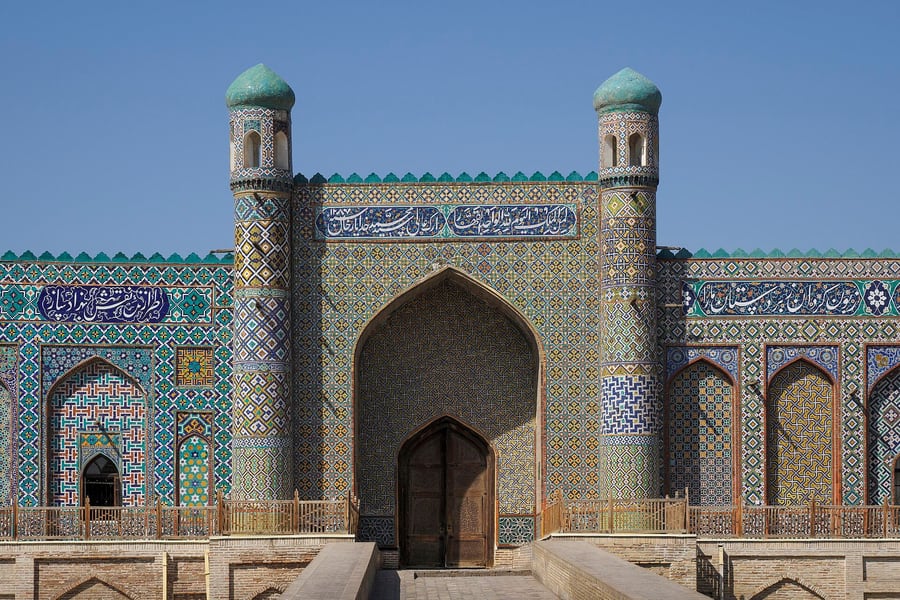
The Palace of Khudayar Khan
Built in the early 1870s for Khudayar Khan, the last ruler of the Kokand khanate, and the last of seven palaces, each grander than the one before. Its architect was Mir Ubaydullo. The Bolsheviks pulled most of it down in 1918, leaving 19 of nearly 120 rooms, and the tiled front in yellow and green, unusual in Uzbekistan, has held Kokand's local history museum since 1925.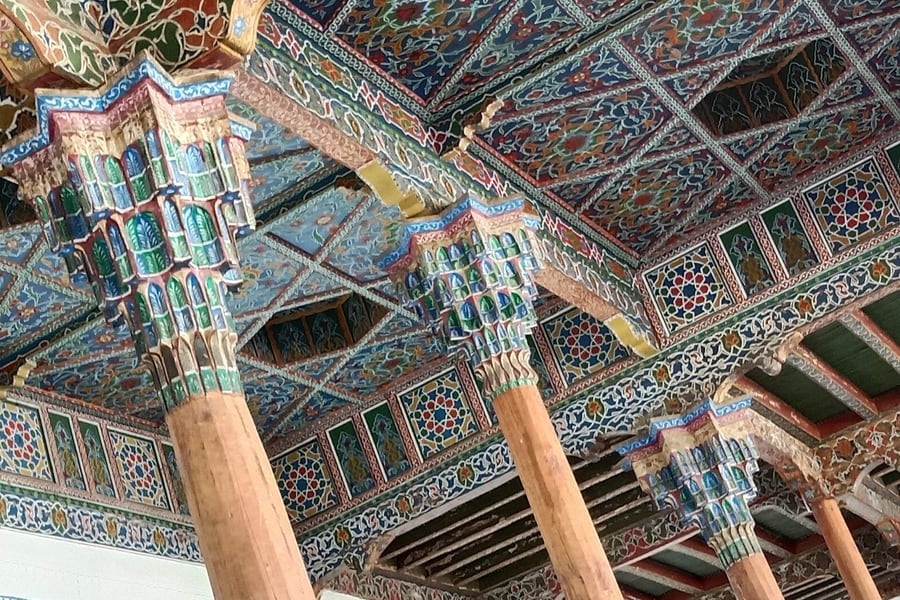 Ташова Ширин / Wikimedia Commons · CC BY-SA 4.0 · cropped
The Juma Mosque of Kokand
Kokand's Friday mosque was built between 1812 and 1818 by Muhammad Umar Khan. Its iwan is 100 metres long and stands on 98 carved red-wood columns brought from India, beside a 22-metre minaret. Shut for most of the twentieth century, it reopened in 1989 and now also holds a small museum of embroidery and ceramics.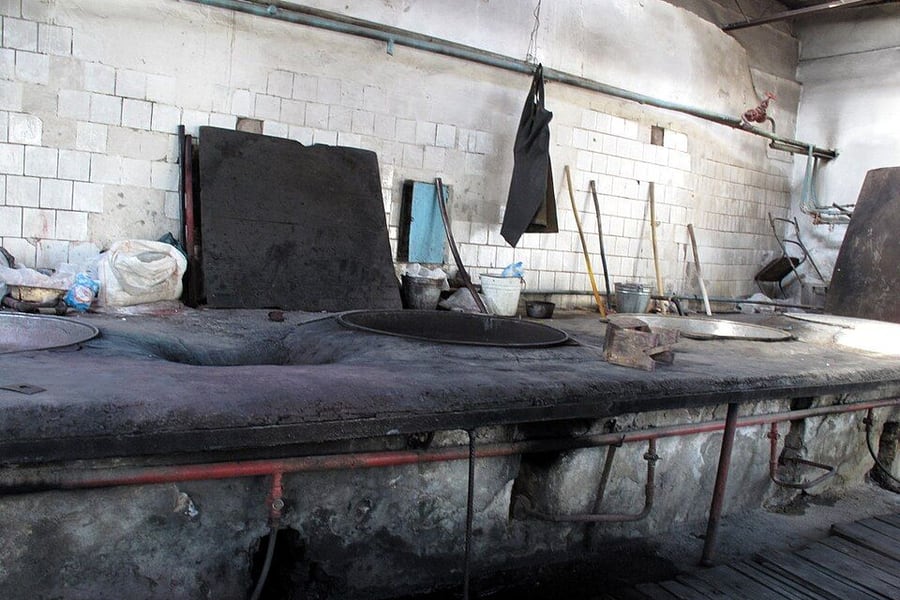 Peretz Partensky from San Francisco, USA / Wikimedia Commons · CC BY-SA 2.0 · cropped
The Yodgorlik silk factory
Set up in 1983 to keep traditional silk weaving alive as the industry mechanised, Yodgorlik does the whole job on one site: feeding the silkworms on mulberry leaves, dyeing the thread with natural mineral and plant dyes and weaving the cloth. Visitors can take a guided tour.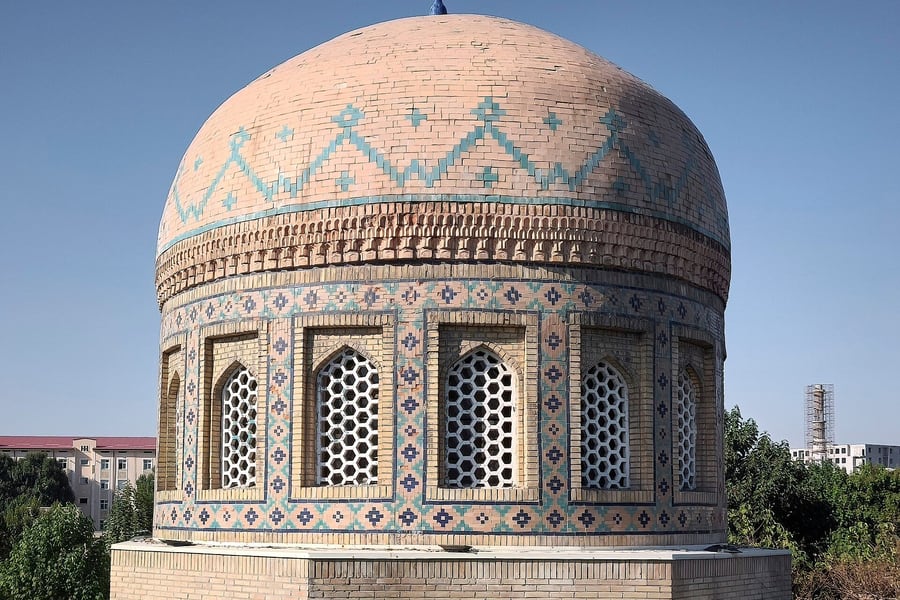 Petar Milošević / Wikimedia Commons · CC BY-SA 4.0 · cropped
The Jame Mosque complex of Andijan
A mosque, a madrasa and a minaret built between 1883 and 1890. The madrasa is 123 metres long, the mosque's front has 26 arches, and its 32-metre minaret is the tallest in the Fergana Valley. The complex also houses the Andijan region's literary and art museum.Where to Sleep
The two hotels below are in Kokand and Fergana. Neither is booked through this site: each card links to the hotel's own website, and no price, rating or star count appears on either, because none has been verified here.
Where to stay
Reikartz Grand Kokand
Kokand, 3 km from the station
A renovated 48-room hotel with a restaurant, a 60-seat conference hall and a reception open day and night.
Check Availability (opens in a new tab, on reikartz.com)via reikartz.comAsia Fergana
Fergana, in the centre of the city
On Alisher Navoi Street, with an indoor and an outdoor pool, a Finnish sauna and a breakfast buffet.
Check Availability (opens in a new tab, on fergana.asiahotels.uz)via fergana.asiahotels.uzQuestions or corrections
Planning this trip and stuck on something, or spotted a time, fare or detail that has changed? Send us a message about Through the Qamchiq Tunnel. We read every one, and we update this page when something has changed.