Poprad to Štrbské Pleso — the Tatra Electric Railway
Tomáš Mlynarčík / Wikimedia Commons · CC BY-SA 4.0 · 2021 · cropped
- Distance29.1 km
- Duration1 hr 9 min
- Best seasonAll year · hourly; the rack railway to Štrba is half-hourly through the summer season
Introduction
Poprad sits at 672 metres on the main line between Bratislava and Košice, and the High Tatras stand straight up out of the plain to the north of it — the highest range in the Carpathians, and close enough to the town that the peaks fill the end of the street. Getting up into them was the problem this railway was built to solve. Horses and omnibuses did the work first, and a trolleybus service ran from 1904 to 1906 and was found wanting; so in 1906 two Poprad businessmen, Matejka and Krieger, began building a metre-gauge electric railway instead. The royal ministry of trade refused to pass it for the announced opening of 1 July 1908, and trains finally ran on 20 December that year, as far as Starý Smokovec. The same day, the funicular from Starý Smokovec up to Hrebienok carried its first passengers.
The Tatranská elektrická železnica is now 35 kilometres of 1,000 mm track under 1,500 volts DC: 29.1 km from Poprad-Tatry through Starý Smokovec to Štrbské Pleso, and a 5.9 km branch from Starý Smokovec to Tatranská Lomnica. A train runs every hour on each, every day of the year. The main line climbs almost 700 metres on adhesion alone, at gradients reaching 65 in 1,000, and finishes at 1,350 metres — the highest station on the Slovak network — beside a mountain lake, under the ski jumps, where a rack railway drops away down the far side of the ridge to rejoin the main line at Štrba. It is the only way the resorts of the High Tatras are strung together, and it is the reason they are strung together at all.
The Journey
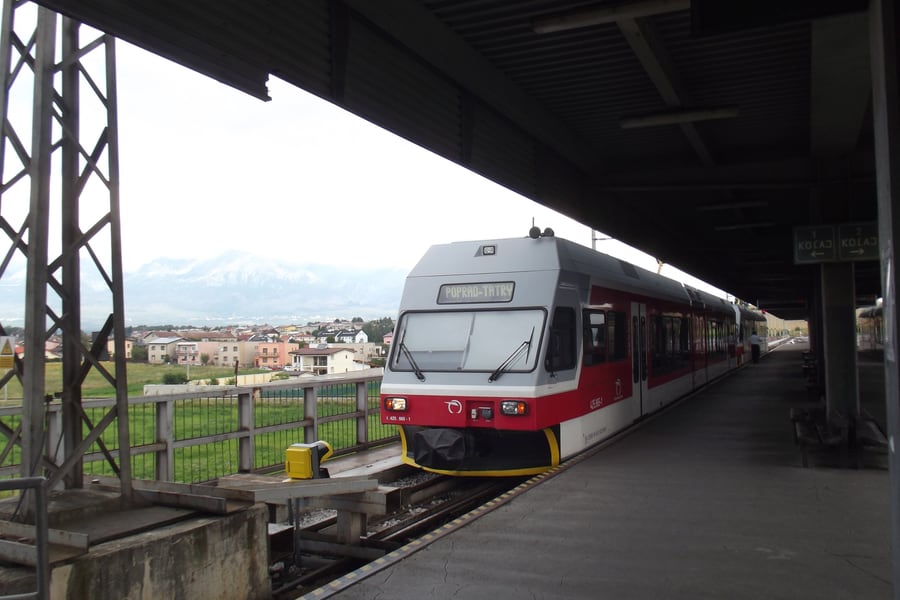
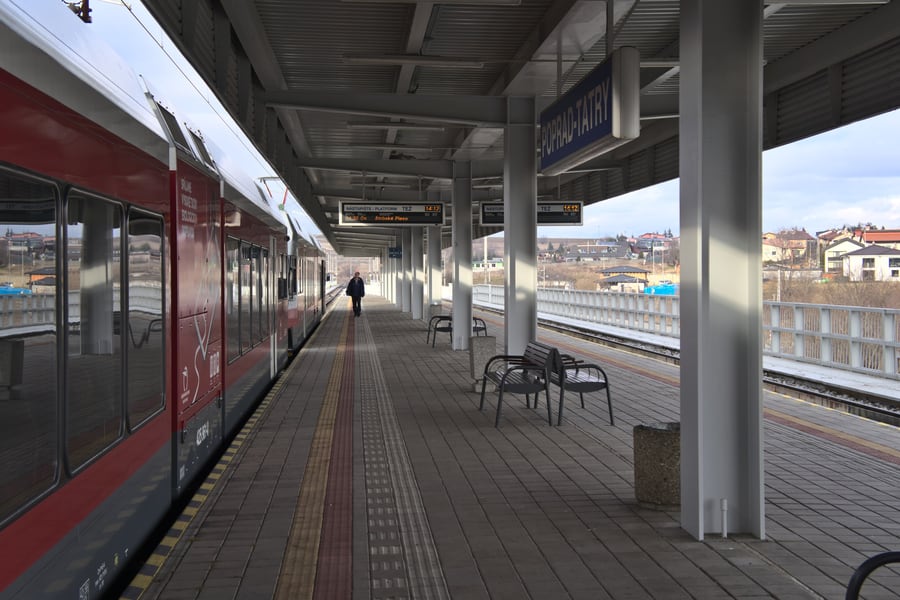
The narrow-gauge platforms at Poprad-Tatry are not part of the main station but a hall of their own, handed over in 1991, reached across the concourse of the standard-gauge station that replaced the old building between 1977 and 1982. A plaque on the station records what left from here on 25 March 1942: the first transport of Slovak Jews to Auschwitz-Birkenau, about a thousand girls and young women. It was put up in 2002.
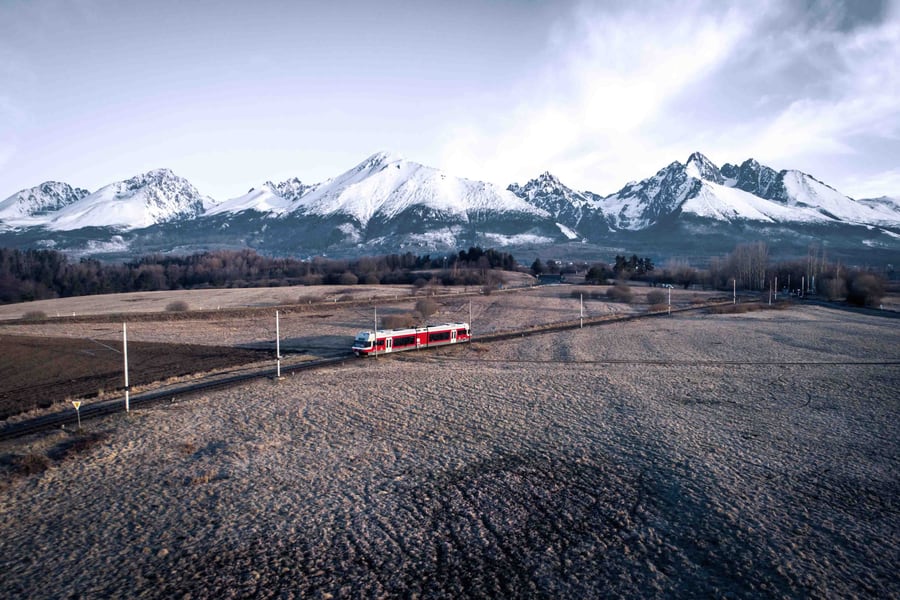
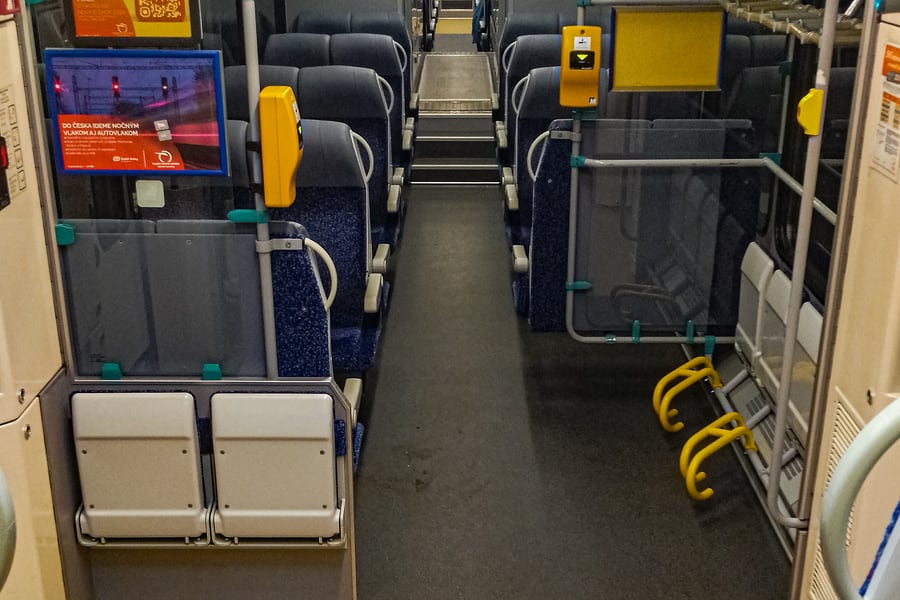
The train that waits at the metre-gauge platform is a red-and-white three-section articulated unit with a short power module in the middle and a cab at each end. It leaves at 36 minutes past the hour and takes 69 minutes to reach Štrbské Pleso, 29 kilometres away and almost 700 metres higher. Nothing about the first ten minutes suggests a mountain railway: the line runs out past the depot and across flat farmland to Veľký Slavkov and Nová Lesná, with the whole ridge filling the windscreen and getting no closer. Then the gradient starts, the forest closes in, and the train works up through Pod lesom and Dolný Smokovec to the junction.
Starý Smokovec, and what the fleet is called
Starý Smokovec is the hub, and the only place on the line where the train stands for four minutes. The settlement is the oldest resort in the Tatras: three wooden lodges and a chapel put up beside a mineral spring in 1797 by Count Štefan Csáky, which is the whole of its origin. The station is a few steps from the lower station of the Hrebienok funicular and from the Grandhotel, and the branch to Tatranská Lomnica leaves from here.
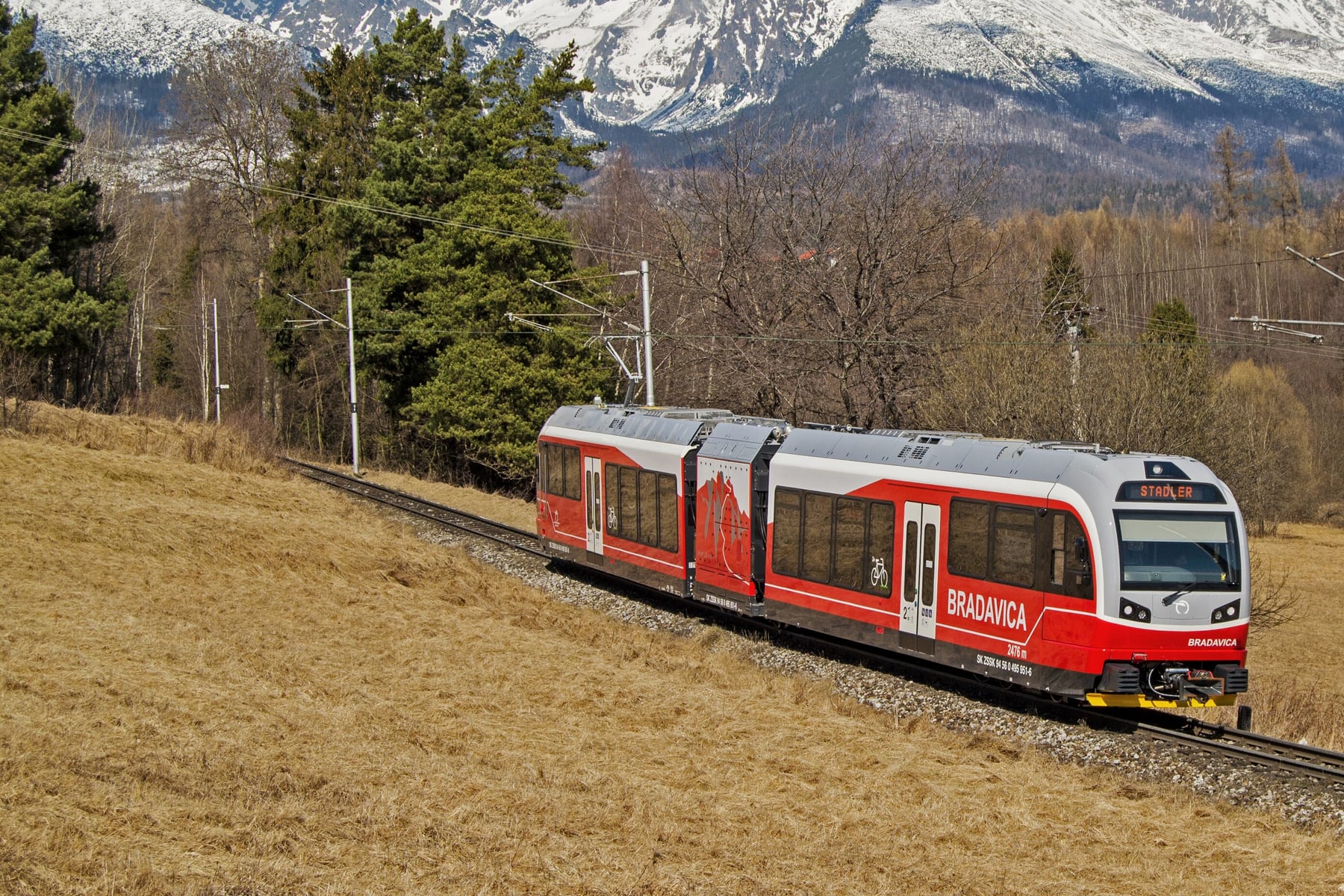
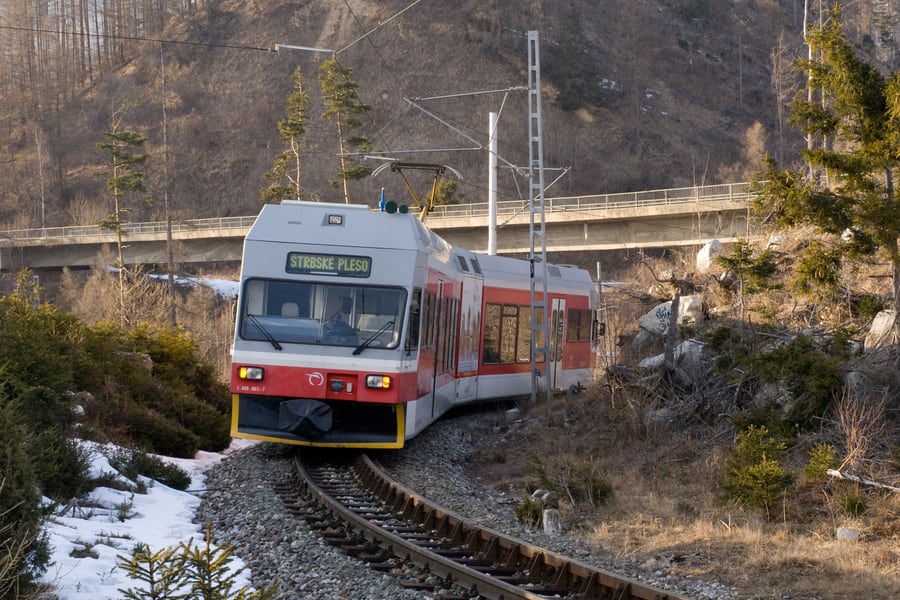
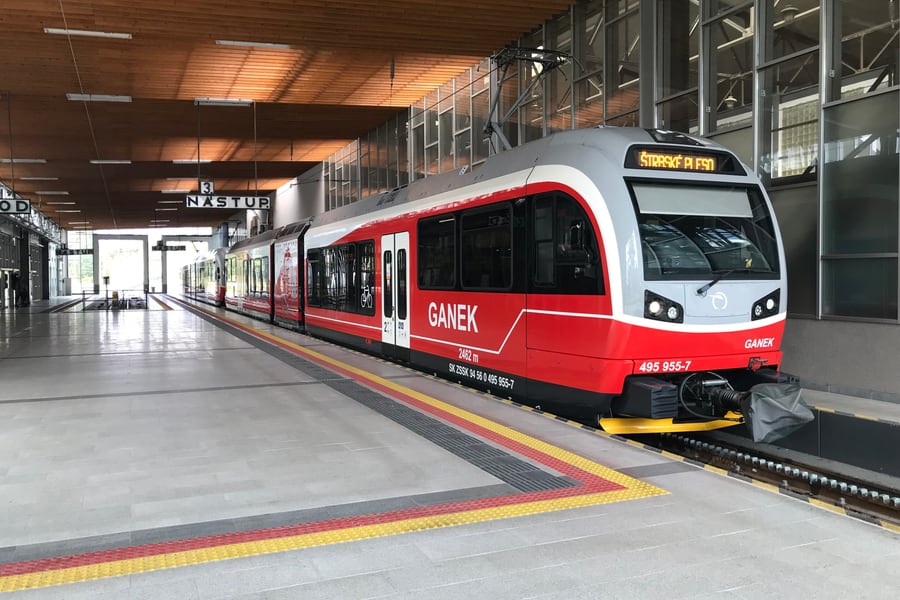
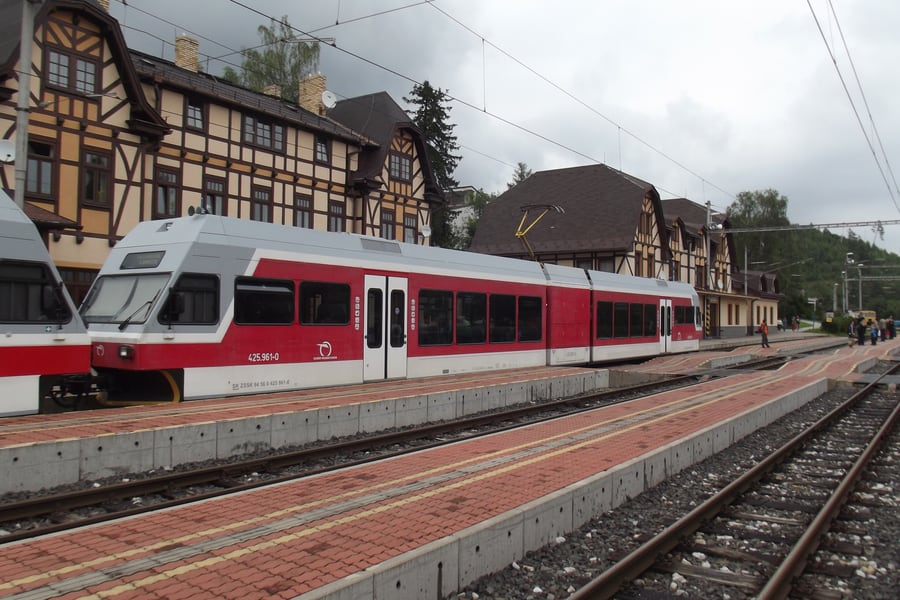
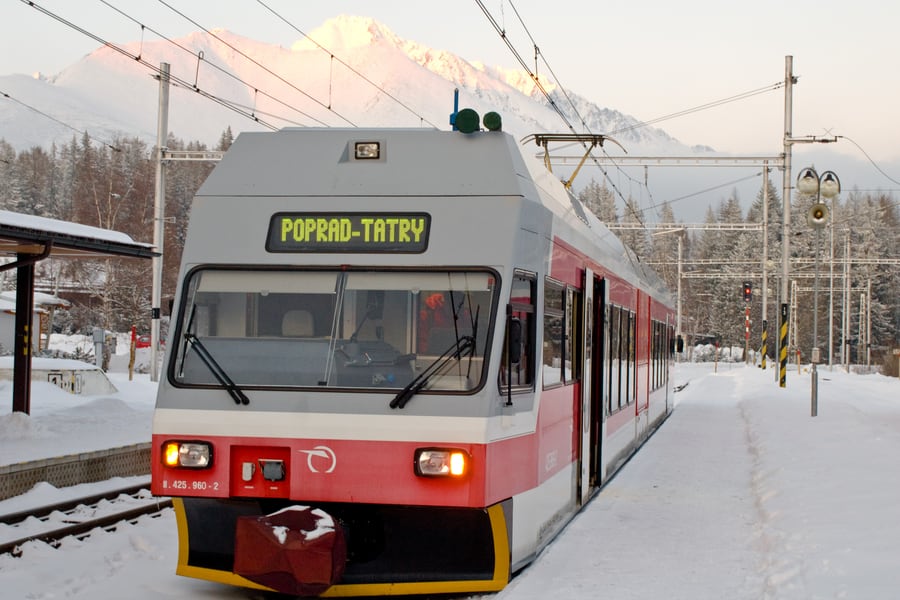
The trains are Stadler GTW 2/6 units. Fifteen of them, ZSSK class 425.95, were built at Vrútky under Swiss licence between 2000 and 2006 to replace the three-part ČKD sets of the 1960s. They are 32.9 metres long and rated at 320 kW and 80 km/h, which is more than the line's 60 km/h limit asks of them, and they are known to everybody in the Tatras as Tetrapaky — Tetrapaks — for their boxy shape and slanted cab fronts. Since 2021 five more GTW units, class 495.95, have worked here as well. Those are hybrids, able to run on plain adhesion track and on rack, and each carries the name and the profile of a lesser-known Tatra summit painted down its flank: Vysoká, Stredohrot, Kostolík, Bradavica, Ganek. The height of the peak is printed under the windows.
The upper line
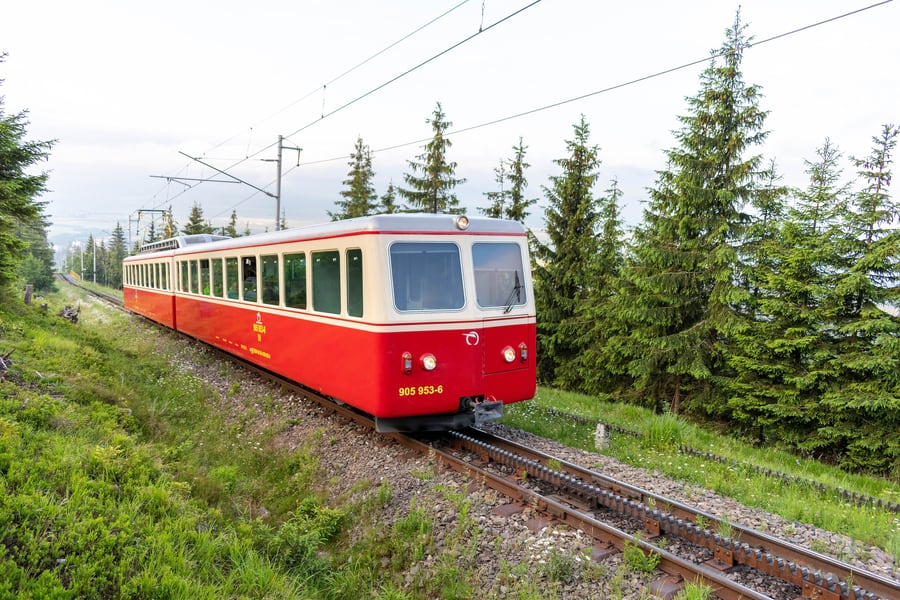
Above Starý Smokovec the railway becomes a tramway serving a chain of settlements laid out along one contour. Nový Smokovec, Sibír, Tatranské Zruby, Tatranská Polianka, Danielov dom, Nová Polianka, Vyšné Hágy, Popradské Pleso: eight stops in the sixteen kilometres to the terminus, most of them a shelter, a level crossing and a path going up into the trees. This is the stretch the line was built for. The settlements have no other public transport between them, and in winter the train is what keeps them connected — snowploughs let it work through the winter from the turn of 1923 into 1924, and it has done so ever since.
Past Vyšné Hágy the trees thin and the gradient stiffens for the last time, and the line runs out along the flank to Popradské Pleso and then to the terminus.
Štrbské Pleso
Štrbské Pleso stands at 1,350 metres, the highest station on the Slovak network, and the two railways that meet there are not the same railway. The electric line ends at one side of the station; from the other, the rack railway falls away down the far side of the ridge to Štrba, 4.75 kilometres at gradients reaching 15 per cent. It is the older of the two. Steam rack trains first climbed it on 28 July 1896, taking 37 minutes for the 4.74 kilometres, until the service was given up in the 1930s as uneconomic; the rebuilt electric rack railway opened on 12 February 1970, two days before the Nordic World Ski Championships began on the hills above the lake. Those same championships were why the electric railway was reconstructed between 1965 and 1969, and why it has carried nothing but passengers since 1970.
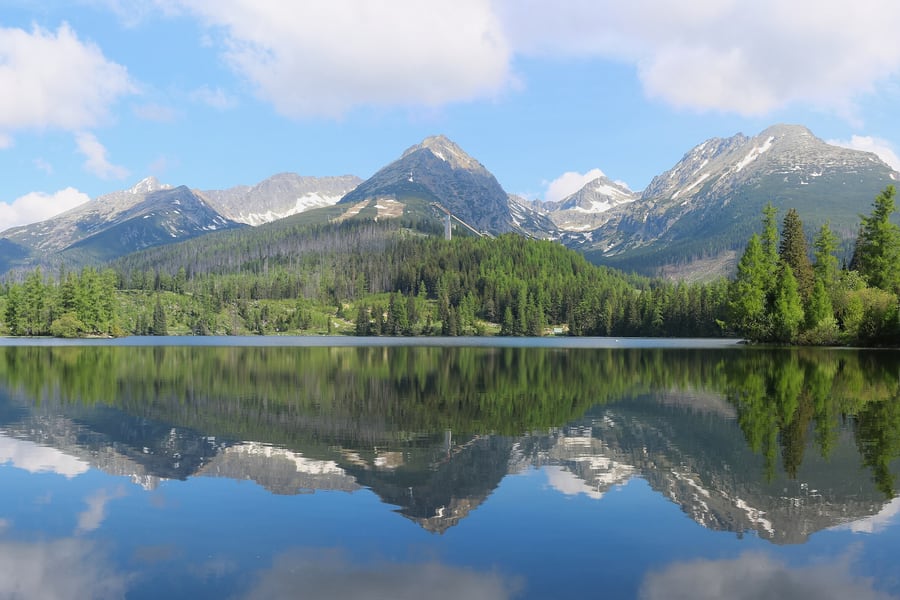
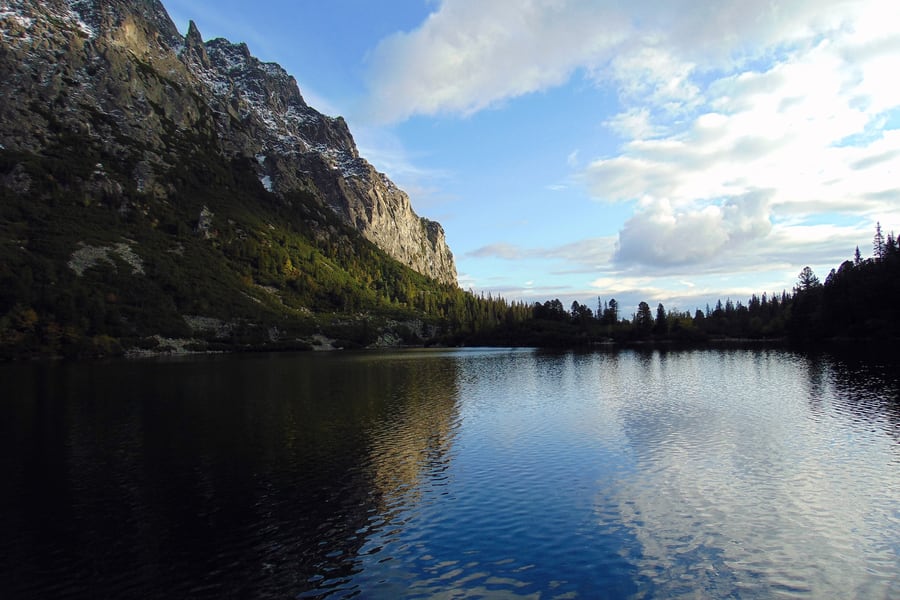
Outside, the lake sits in a bowl under the peaks, the ski jumps on one side and the hotels on the other, and the paths to Popradské pleso, to Kriváň and to Rysy leave from the same square. There is no way further up by train. From here the mountain is walked.
Along the route
 Honza Groh (Jagro) / Wikimedia Commons · CC BY-SA 3.0 · 2010 · cropped
The Tetrapaks
Fifteen articulated units have worked this railway since 2000 — Stadler GTW cars built at Vrútky under Swiss licence — and everybody in the Tatras calls them Tetrapaky, because the boxy body and slanted cab front look like a carton of milk.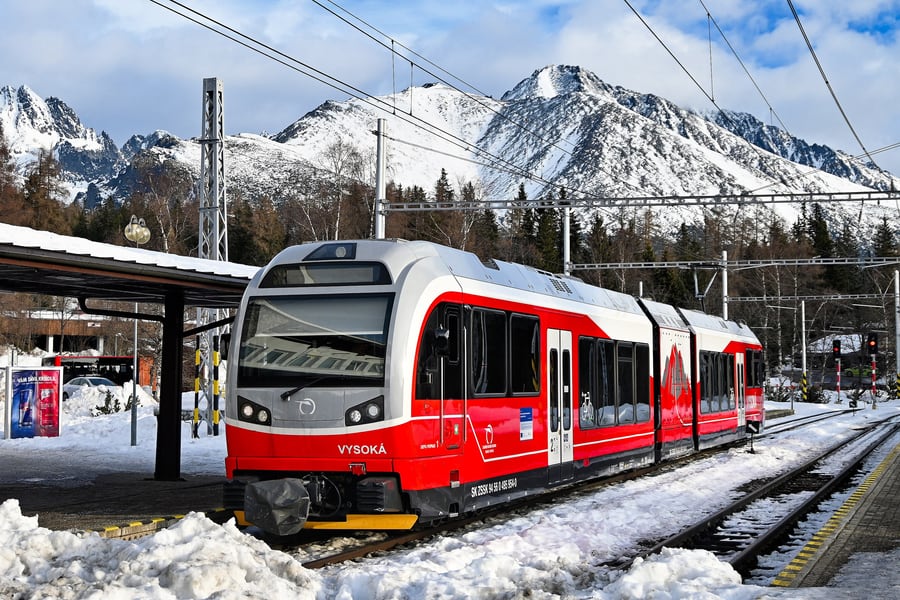 Oleksandr Dede / Wikimedia Commons · CC BY-SA 4.0 · 2023 · cropped
Five trains named after five peaks
The five hybrid units of 2021 work plain track and rack alike, and ZSSK had them painted with a mountaineering theme: each carries the name of a lesser-known Tatra summit, the profile of that peak and the line of the route up it, with the summit's height printed under the windows.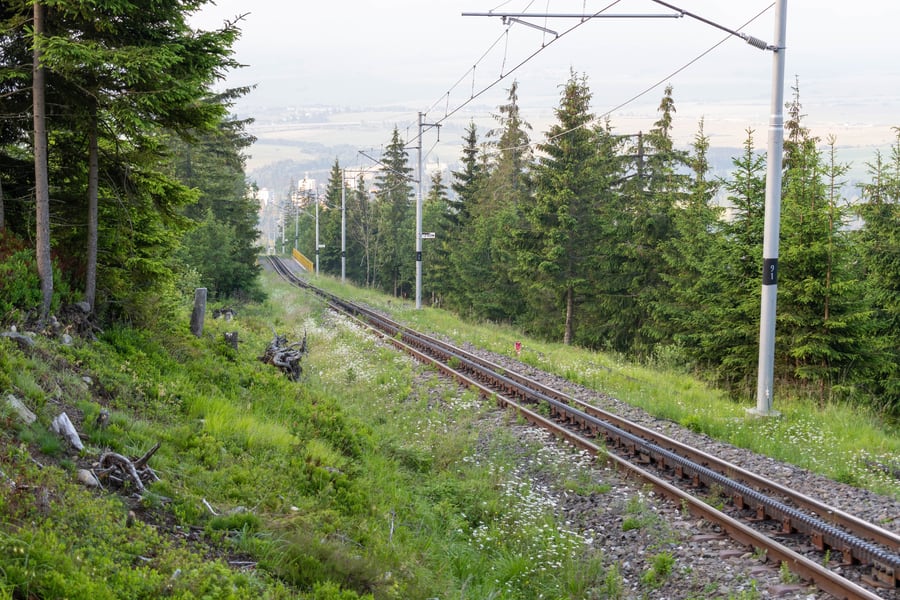 Michal Gregor / Wikimedia Commons · CC BY-SA 4.0 · 2020 · cropped
The railway that was here first
The rack railway from Štrba beat the electric line to Štrbské Pleso by twelve years, opening in 1896 with steam trains that took 37 minutes to cover 4.74 kilometres. It was given up as uneconomic in the 1930s and lifted; the rebuilt electric rack line opened in February 1970.A bit of history
Culture & experiences along the way
 Robert von Oliva (naruciakk) / Wikimedia Commons · CC0 · 2023 · cropped
One ticket for the whole mountain
The fare system here has nothing in common with the rest of Slovakia. Distance does not count: a single is €4.00 wherever you are going, and a 24-hour ticket covering all four Tatra lines — Poprad to Štrbské Pleso, the Tatranská Lomnica branch, the rack railway to Štrba and the standard-gauge line through Studený Potok — is €6.00, with a bicycle included. For anyone spending a day on the mountain that is the only ticket worth buying, and it costs less than a third of an Interrail travel day.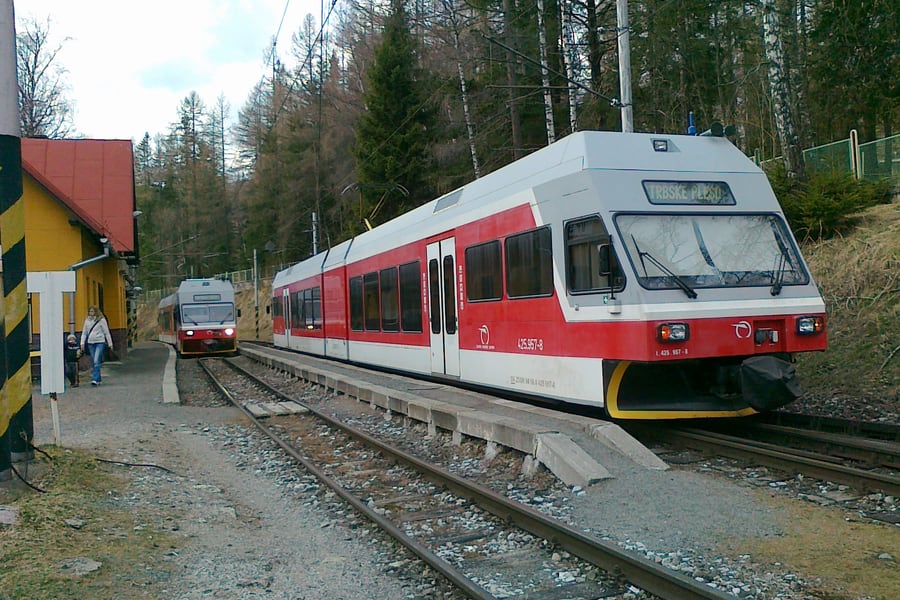 Midnight Runner / Wikimedia Commons · CC BY 3.0 · 2011 · cropped
A stop every kilometre and a half
Between Starý Smokovec and the terminus the railway has eight stops in sixteen kilometres, and it is doing the work of a tram: Nový Smokovec, Sibír, Tatranské Zruby, Tatranská Polianka, Danielov dom, Nová Polianka, Vyšné Hágy, Popradské Pleso. Most are a shelter, a level crossing and a footpath going up into the trees, and most of the settlements they serve have no other public transport between them. Get off anywhere and the next train is an hour behind.Timetables
The Tatra Electric Railway runs to a clock-face timetable, every day of the year: a train leaves Poprad-Tatry at 36 minutes past every hour from 04:36 to 22:36, and one leaves Štrbské Pleso at 16 minutes past from 04:16 to 22:16. The branch to Tatranská Lomnica works the same way, hourly at :06 out of Starý Smokovec and :42 out of Tatranská Lomnica. The times below are ZSSK tables 183, 184 and 182 from the book timetable valid from 1 September 2026, read in August 2026.
Poprad-Tatry to Štrbské Pleso — table 183
Every hour, at the same minutes past. Five of the eighteen daily departures are shown.
| Stop | km | |||||
|---|---|---|---|---|---|---|
| Poprad-Tatry | 0 | 04:36 | 08:36 | 12:36 | 16:36 | 20:36 |
| Veľký Slavkov | 5 | 04:44 | 08:44 | 12:44 | 16:44 | 20:44 |
| Nová Lesná | 8 | 04:49 | 08:49 | 12:49 | 16:49 | 20:49 |
| Pod lesom | 10 | 04:52 | 08:52 | 12:52 | 16:52 | 20:52 |
| Dolný Smokovec | 11 | 04:54 | 08:54 | 12:54 | 16:54 | 20:54 |
| Starý Smokovec arr | 13 | 05:01 | 09:01 | 13:01 | 17:01 | 21:01 |
| Starý Smokovec dep | 13 | 05:05 | 09:05 | 13:05 | 17:05 | 21:05 |
| Nový Smokovec | 14 | 05:06 | 09:06 | 13:06 | 17:06 | 21:06 |
| Sibír | 15 | 05:08 | 09:08 | 13:08 | 17:08 | 21:08 |
| Tatranské Zruby | 16 | 05:11 | 09:11 | 13:11 | 17:11 | 21:11 |
| Tatranská Polianka | 17 | 05:15 | 09:15 | 13:15 | 17:15 | 21:15 |
| Danielov dom | 19 | 05:19 | 09:19 | 13:19 | 17:19 | 21:19 |
| Nová Polianka | 20 | 05:23 | 09:23 | 13:23 | 17:23 | 21:23 |
| Vyšné Hágy | 22 | 05:31 | 09:31 | 13:31 | 17:31 | 21:31 |
| Popradské Pleso | 27 | 05:41 | 09:41 | 13:41 | 17:41 | 21:41 |
| Štrbské Pleso | 29 | 05:45 | 09:45 | 13:45 | 17:45 | 21:45 |
Sixty-nine minutes end to end, and the four-minute stand at Starý Smokovec is where the Tatranská Lomnica branch connects.
Štrbské Pleso to Poprad-Tatry — table 183
| Stop | km | |||||
|---|---|---|---|---|---|---|
| Štrbské Pleso | 0 | 04:16 | 08:16 | 12:16 | 16:16 | 20:16 |
| Popradské Pleso | 2 | 04:19 | 08:19 | 12:19 | 16:19 | 20:19 |
| Vyšné Hágy | 7 | 04:33 | 08:33 | 12:33 | 16:33 | 20:33 |
| Nová Polianka | 9 | 04:40 | 08:40 | 12:40 | 16:40 | 20:40 |
| Danielov dom | 10 | 04:42 | 08:42 | 12:42 | 16:42 | 20:42 |
| Tatranská Polianka | 12 | 04:48 | 08:48 | 12:48 | 16:48 | 20:48 |
| Tatranské Zruby | 13 | 04:52 | 08:52 | 12:52 | 16:52 | 20:52 |
| Sibír | 14 | 04:55 | 08:55 | 12:55 | 16:55 | 20:55 |
| Nový Smokovec | 15 | 04:56 | 08:56 | 12:56 | 16:56 | 20:56 |
| Starý Smokovec arr | 16 | 04:58 | 08:58 | 12:58 | 16:58 | 20:58 |
| Starý Smokovec dep | 16 | 05:02 | 09:02 | 13:02 | 17:02 | 21:02 |
| Dolný Smokovec | 18 | 05:07 | 09:07 | 13:07 | 17:07 | 21:07 |
| Pod lesom | 19 | 05:10 | 09:10 | 13:10 | 17:10 | 21:10 |
| Nová Lesná | 21 | 05:13 | 09:13 | 13:13 | 17:13 | 21:13 |
| Veľký Slavkov | 24 | 05:18 | 09:18 | 13:18 | 17:18 | 21:18 |
| Poprad-Tatry | 29 | 05:25 | 09:25 | 13:25 | 17:25 | 21:25 |
The branch and the rack railway
Starý Smokovec to Tatranská Lomnica — table 184. Hourly, 14 minutes, calling at Pekná Vyhliadka, Horný Smokovec, Tatranská Lesná and Stará Lesná. Departures leave Starý Smokovec at :06 from 05:06 to 23:06 and Tatranská Lomnica at :42 from 04:42 to 22:42. Tatranská Lomnica also has standard-gauge trains from Poprad-Tatry by way of Studený Potok, which take about 23 minutes against the 44 the narrow gauge needs with its change at Starý Smokovec.
Štrba to Štrbské Pleso — table 182. The rack railway climbs the 5 km in 13 minutes and comes down in 16, calling at Tatranský Lieskovec. The base service leaves Štrba at :26 from 04:26 to 22:26 and Štrbské Pleso at :47 from 04:47 to 22:47. Until 27 September 2026 a second train runs in each hour — Štrba at :18 between 07:18 and 19:18, Štrbské Pleso at :55 between 07:55 and 19:55 — which makes the middle of the day half-hourly. From 28 September it is hourly all day.
The two railways do not run through, and the connection is good in one direction only. The train up from Poprad reaches Štrbské Pleso at :45 and the rack train down to Štrba leaves at :47. Coming the other way, the rack train arrives at :39 and the electric train for Starý Smokovec and Poprad does not leave until :16 — a 37-minute wait, and the weakest link in the network.
Times are published by the operator: ZSSK · Cestovný poriadok 2025/2026 (opens in a new tab).
Tickets
Tatra fares are unlike anything else on the Slovak railway, and much simpler. A single is a flat €4.00, or €3.00 reduced, and the distance does not come into it — two stops or the whole 29 kilometres costs the same, and the price includes a bicycle or a piece of luggage. ⚠️ Tickets must be stamped in the machine on board before the first journey; one that has not been validated is not a ticket.
What most visitors actually want is a network ticket, valid on all four Tatra lines: €6.00 for 24 hours, €12.00 for three days, €16.00 for a week. The 24-hour one covers a bicycle as well. Anyone over 70 pays a flat €0.50 for the whole network for the day, changes included, and under-sixes travel free. Prices read from ZSSK, August 2026.
Book your tickets
A day on the whole Tatra network
€6.00 for 24 hours · €4.00 reduced
All four Tatra lines, with a bicycle or a piece of luggage included.
Book Tickets (opens in a new tab, on zssk.sk)via zssk.skA single, any distance
€4.00 · €3.00 reduced
Two stops or the full 29 kilometres, at the same flat fare, luggage included.
Book Tickets (opens in a new tab, on zssk.sk)via zssk.skThree days, or a week
€12.00 for three days · €16.00 for seven
Named to the holder, and a bicycle needs its own route ticket on the weekly.
Book Tickets (opens in a new tab, on zssk.sk)via zssk.skRail Passes
The Tatra lines are covered. Interrail's railway-companies table, updated on 28 August 2026, lists High Tatra Mountain trains among the ZSSK services an Interrail or Eurail pass is valid on, alongside the ordinary Os, REX, R, EX, IC and SC categories. What the Slovak entry excludes is a different set of railways altogether — the preserved forest and industrial lines, among them the Čiernohronská, the Oravská and Považská lesná železnica and the Trenčianska elektrická železnica, plus the private operators Arriva, RegioJet and Leo Express.
So a pass gets you onto the Poprad–Štrbské Pleso trains, the Tatranská Lomnica branch and the rack railway to Štrba with nothing extra to pay and no reservation needed.
Whether it is worth buying
For this journey on its own, no. An adult Interrail Slovakia One Country Pass, second class, costs €67 for 3 travel days within a month, €84 for 4, €100 for 5, €118 for 6 and €150 for 8 — about €19 to €22 a travel day, checked on interrail.com in August 2026. A 24-hour ticket covering the entire Tatra network, both railways and the branch, costs €6.00. There is no arithmetic that makes the pass the cheaper way to ride these lines.
The pass earns its price on the approach instead. Poprad-Tatry is on the Bratislava–Košice main line, four hours and eleven minutes from Bratislava hlavná stanica on a through express, hourly at a quarter past, and a pass day that carries you across Slovakia and then up into the mountains at the end of it is doing real work. Used that way, treat the Tatra network as a free extra on the day you arrive and buy the €6.00 network ticket for the days you spend based up there.
What a pass does not reach: the funicular from Starý Smokovec to Hrebienok and the cable cars to Skalnaté pleso and Lomnický štít are not ZSSK services and are sold separately.
Places to Visit
Almost everything worth stopping for on this line is within a few minutes' walk of a platform, because the settlements were laid out along the railway and have grown very little since. Four stops carry the weight: the town at the bottom, the junction in the middle, the branch terminus, and the lake at the top.
 Falk2 / Wikimedia Commons · CC BY-SA 4.0 · 2012 · cropped
Spišská Sobota, ten minutes from Poprad-Tatry
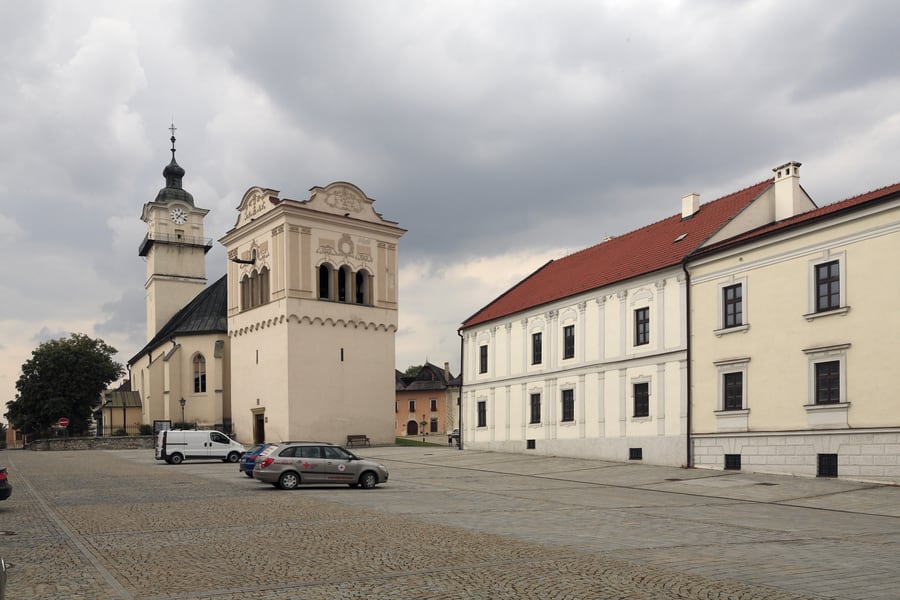
Poprad absorbed the older town of Spišská Sobota in 1946, and its square survived whole: Gothic, Renaissance and Baroque burgher houses around a long open space, a free-standing Renaissance bell tower of 1598, and the church of St George — late Romanesque of 1273, rebuilt in Gothic in 1464, with a main altar of 1516 from the workshop of Master Pavol of Levoča. The centre has been a protected urban conservation area since 1950.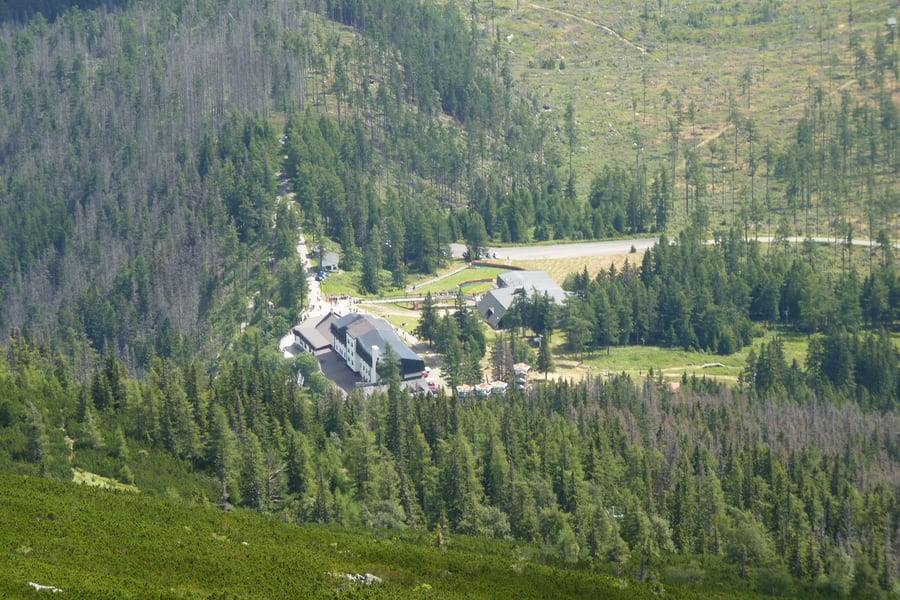 Michal Klajban / Wikimedia Commons · CC BY-SA 3.0 · 2011 · cropped
Hrebienok, up the funicular from Starý Smokovec
The funicular's lower station is beside the railway at Starý Smokovec, and it carried its first passengers on 20 December 1908 — the same day as the railway itself. It is 1,937 metres long, metre gauge like the trains, and lifts 247 metres to Hrebienok, where the paths into the Veľká and Malá Studená valleys begin. The Italian rebuilding of 1967 cut the ride from eleven minutes to seven; the cars now running were built by Garaventa and entered service in November 2007.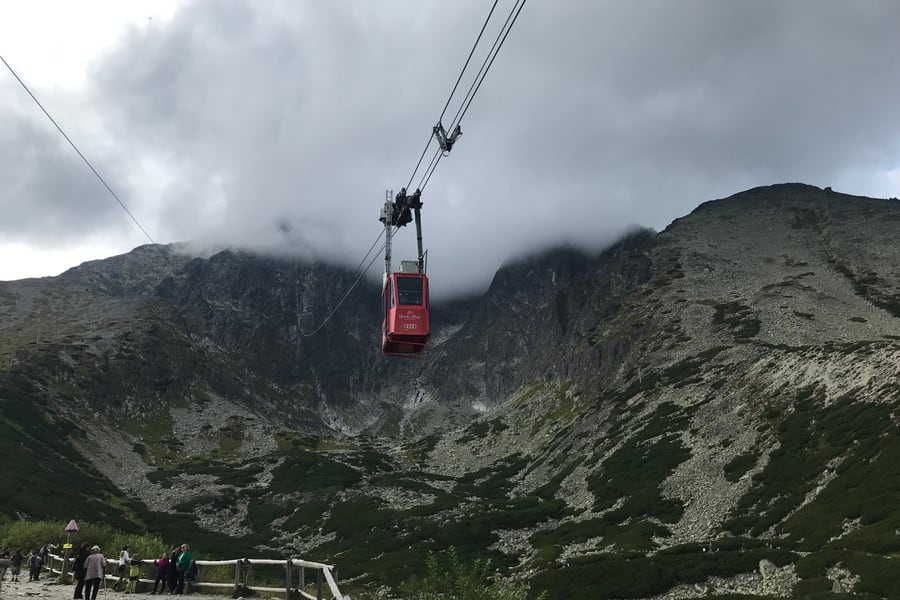 Antimuonium / Wikimedia Commons · CC BY-SA 4.0 · 2026 · cropped
Lomnický štít, from the branch terminus
The cable car from Tatranská Lomnica goes up by way of Skalnaté pleso to the summit of Lomnický štít, 2,634 metres, the second highest peak in the High Tatras. Tourists have been carried to the top since 1940 and are allowed fifty minutes on it before they have to come down again. A solar observatory and a weather station are staffed on the summit all year round. The cableway normally shuts for the whole of May for maintenance.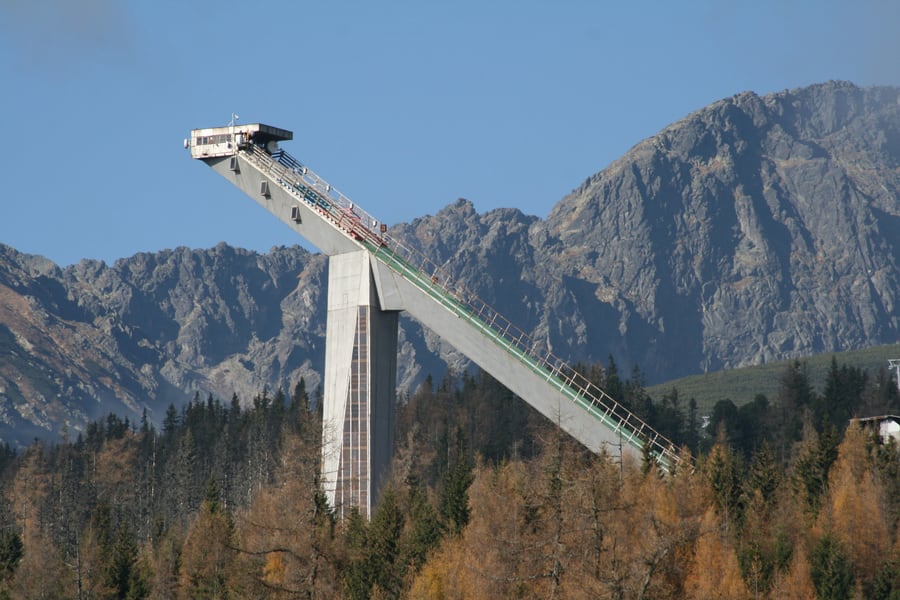 Jaro Nemčok / Wikimedia Commons · CC BY-SA 3.0 · 2013 · cropped
The ski jumps at Štrbské Pleso
The hills stand directly above the terminus, and they are the reason the modern Štrbské Pleso exists. Being chosen for the 1970 Nordic World Ski Championships brought a ski centre, the Hotel FIS, the Hotel Panoráma and the Hotel Patria on the lake shore, all built at once; the championships ran from 14 to 22 February 1970 and were the second held here after 1935. The same nomination is what paid for rebuilding both railways.Where to Sleep
The Tatra resorts were built as spa settlements and the grand hotels came with them, which is why three of the best-known places to stay in Slovakia sit within a few metres of a metre-gauge platform. Staying up on the line rather than down in Poprad also makes the network ticket work harder: at €6.00 for 24 hours it covers every train on the mountain, and the last one down from Štrbské Pleso does not leave until 22:16.
Where to stay
 Jozef Kotulič / Wikimedia Commons · CC BY-SA 4.0 · 2021 · cropped
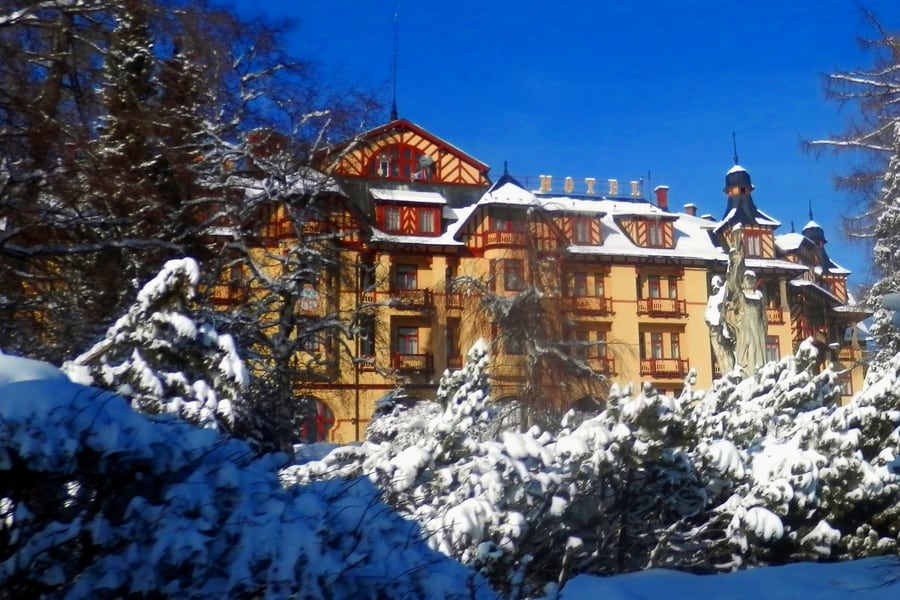
Grandhotel Starý Smokovec
At the junction, beside the funicular
The first large hotel in the Tatras, and still the building the resort is arranged around. The lower station of the Hrebienok funicular is next door and the railway station is a few steps away.
Check Availability (opens in a new tab, on tmrhotels.com)via tmrhotels.com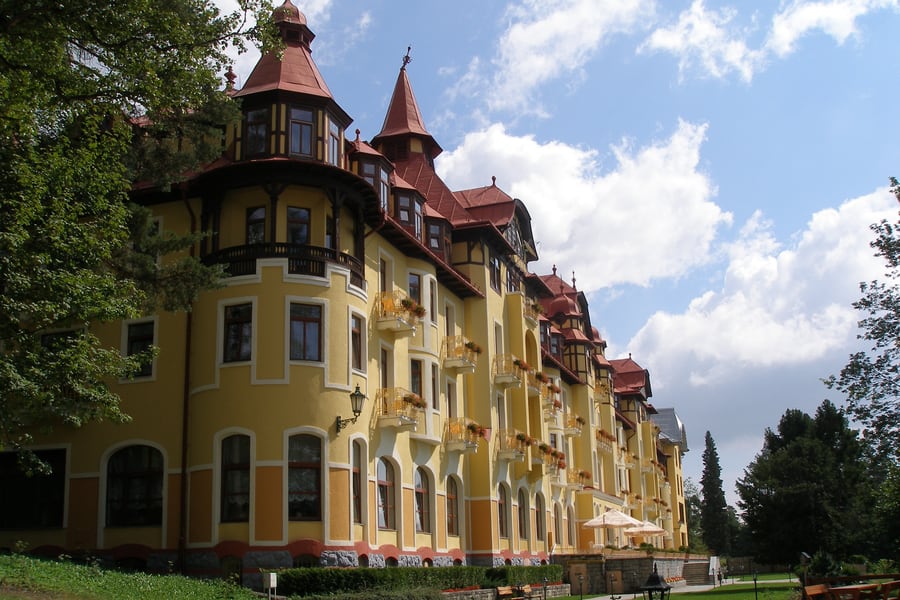 Jozef Kotulič / Wikimedia Commons · CC BY-SA 3.0 · 2007 · cropped
Grandhotel Praha
Art Nouveau, at the end of the branch
Open in Tatranská Lomnica since 1905 and built in Art Nouveau style, with 108 rooms and 15 suites. It is a national cultural monument, and the cable car station for Lomnický štít is a short walk from it.
Check Availability (opens in a new tab, on tmrhotels.com)via tmrhotels.com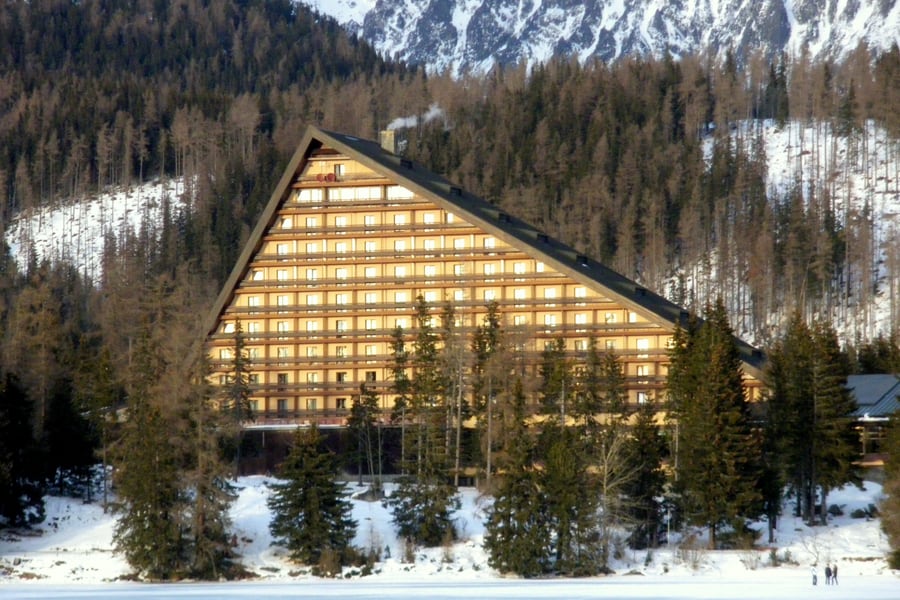 Bubamara / Wikimedia Commons · CC BY-SA 3.0 · 2012 · cropped
Hotel Patria
On the lake shore at the terminus
The A-frame on the shore of Štrbské pleso, built with the rest of the resort for the 1970 Nordic World Ski Championships. It is a few minutes' walk from the top station of both railways.
Check Availability (opens in a new tab, on hotelpatria.sk)via hotelpatria.skQuestions or corrections
Planning this trip and stuck on something, or spotted a time, fare or detail that has changed? Send us a message about Poprad to Štrbské Pleso — the Tatra Electric Railway. We read every one, and we update this page when something has changed.