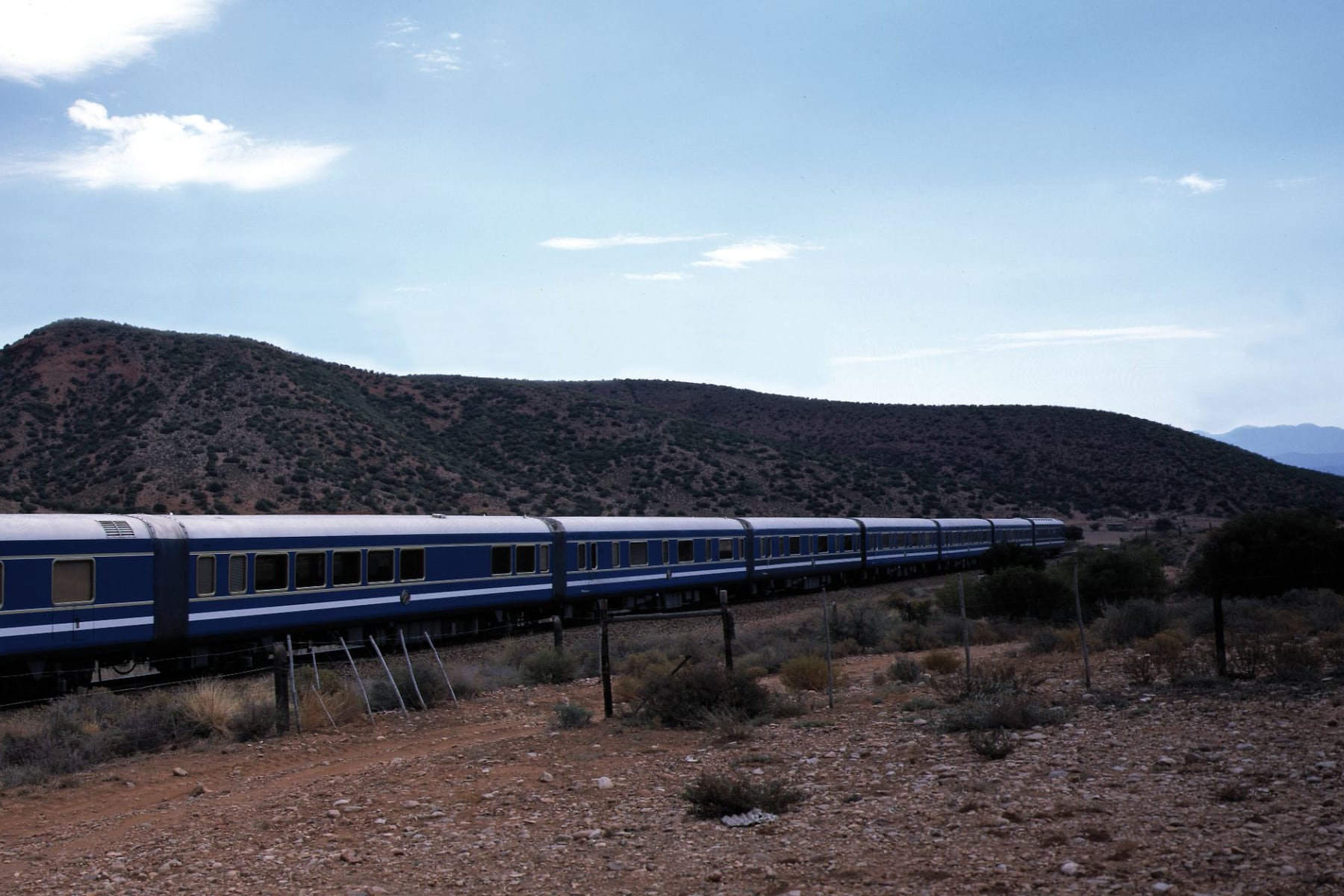
The Blue Train
Shine 2010 / Flickr · CC BY 2.0 · cropped
- DistanceAbout 1,600 km · 3 ft 6 in gauge
- DurationTwo nights, 13:00 on day one to 18:00 on day three
- Best seasonSet dates all year, none in June
Introduction
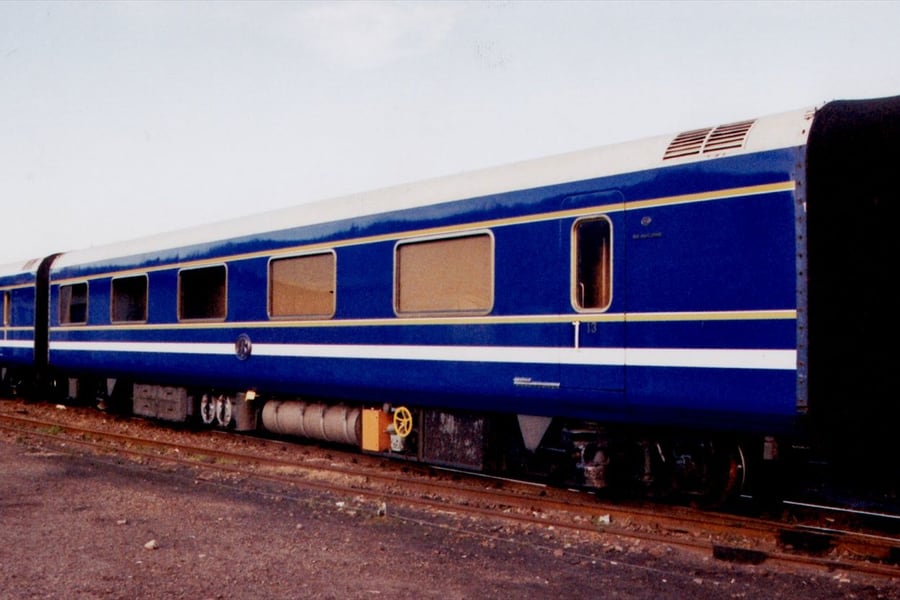
Nobody at the railway chose the name. In the 1920s South African Railways ran two expresses on the main line north from Cape Town, the Union Limited and the Union Express, carrying passengers from the mail ships in Cape Town harbour to the diamond mines of Kimberley and the goldfields of the Witwatersrand. In 1937 they were given steel carriages painted blue, and travellers started calling them the blue train. When the service came back after the Second World War, in 1946, the railway took their word for it: the nickname became the name.
The name has outlasted two new trains, the sets of 1972 and the train relaunched in 1997, and the train has stayed with the state railway. The Blue Train is run by Transnet Freight Rail, the state-owned freight railway, over about 1,600 kilometres of its main line between Pretoria and Cape Town.
The journey takes two nights, across the Highveld, the Great Karoo and the Hex River mountains, with a stop, when the schedule allows, for a tour at Kimberley or Matjiesfontein. Every suite has its own bathroom, and the fare covers the meals, the drinks and a butler for each coach.
The Journey
The train leaves the Pretoria end at 13:00, after check-in from 10:00 in the departure lounge, and runs south-west across the Highveld towards Kimberley, where the railway from Cape Town arrived in 1885 to serve the diamond fields. On some trips guests leave the train here for the diamond museum and the Big Hole, the mine dug by hand from 1871.
The Karoo
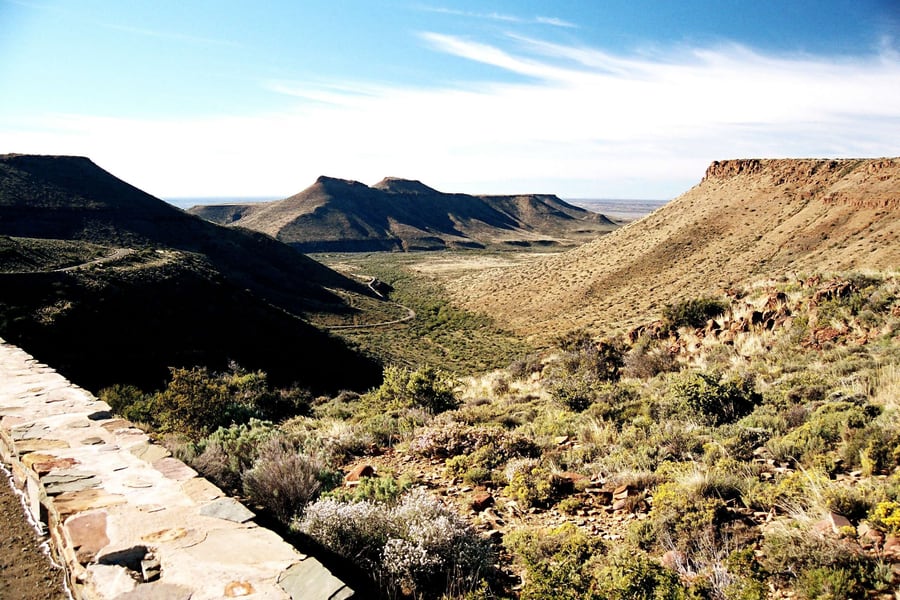
The second day belongs to the Great Karoo: a semi-desert plateau of scrub and distant hills, crossed on the line the Cape Government Railways drove north from 1872. At Matjiesfontein, a railway halt since 1878, James Logan ran the refreshment rooms from 1884, in the years before trains carried dining cars, and built a Victorian village round them. When the schedule and weather allow, the train stops for a tour of the village on a red London double-decker bus and a drink at the Lord Milner.
Down to the Cape
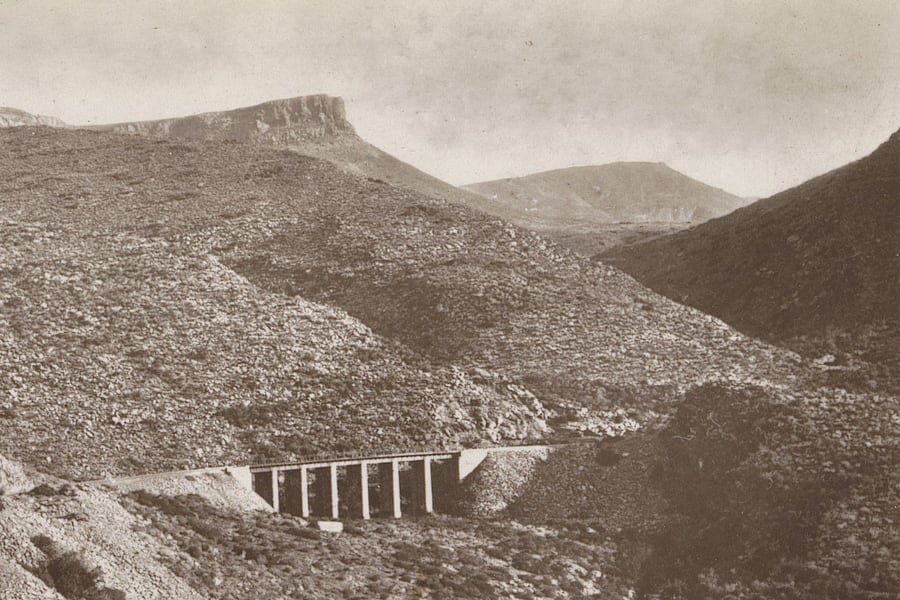
From Touws River the line leaves the Karoo through the Hex River tunnels, four bores and 16.8 kilometres of underground track, the longest tunnel 13.5 km. They opened in 1989 and closed the old rail pass, whose 1 in 40 grades had held the main line back for more than a century. Below lie the vineyards of the Hex River valley, then Worcester and Cape Town, where the train arrives at about 18:00 on the third day. In the other direction the timings are the same.
The train
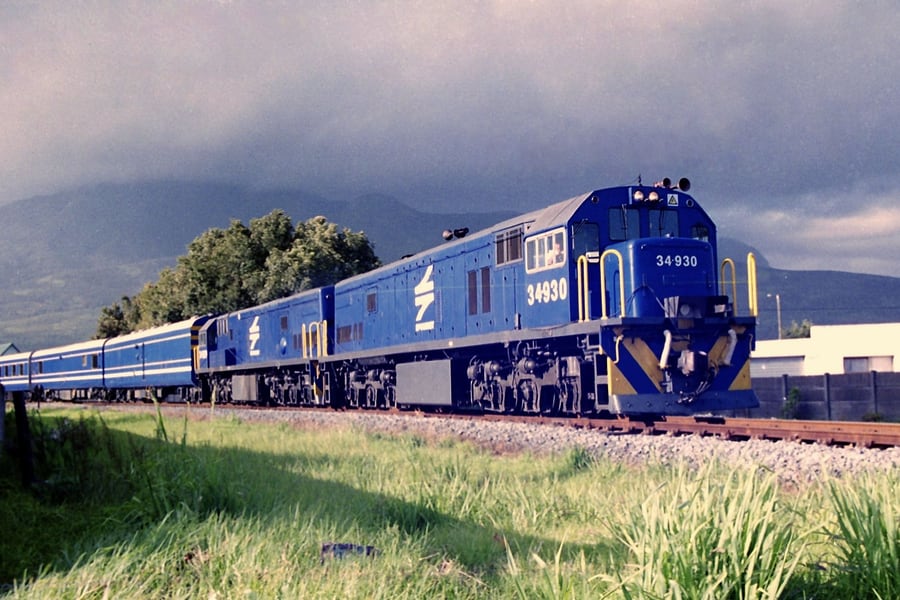
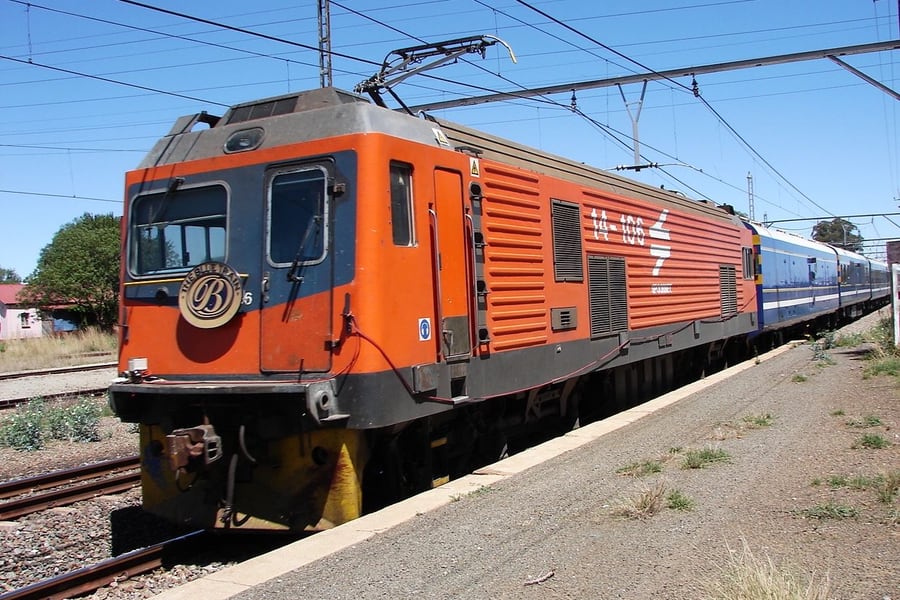
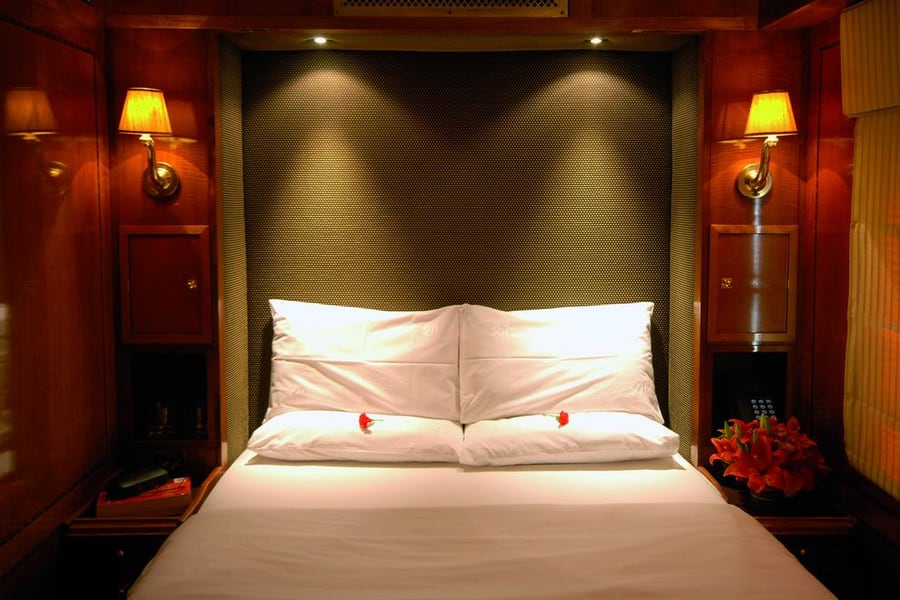
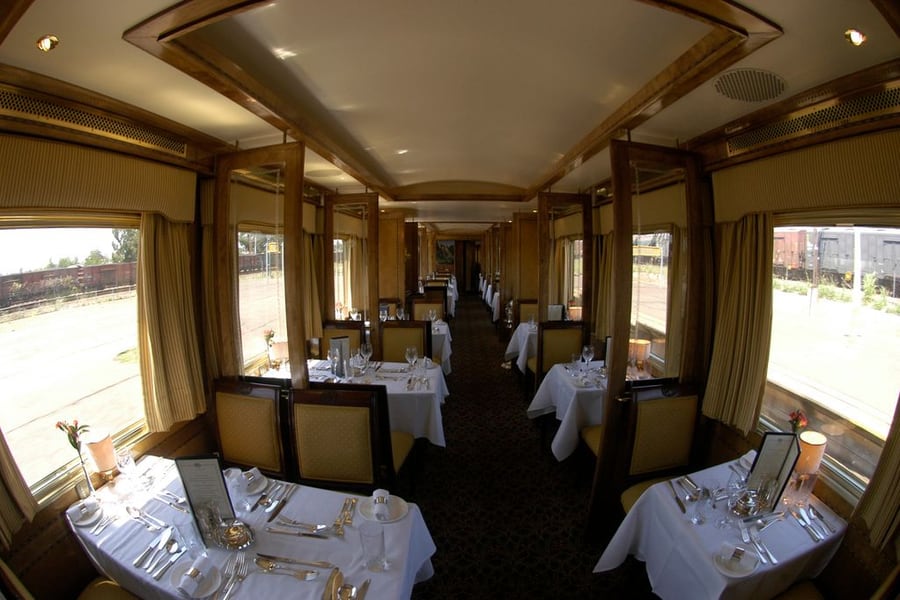
The coaches carry suites in two sizes, De Luxe and Luxury, each with its own bathroom and a bed that folds out of the daytime seat panel. A butler looks after each coach, round the clock. The dining car seats 42; there is a lounge car, an observation car with panoramic windows, and a wood-panelled Club Car behind the locomotives, the one place on the train where smoking is allowed. Wi-Fi runs off the mobile network and drops out in the remote stretches.
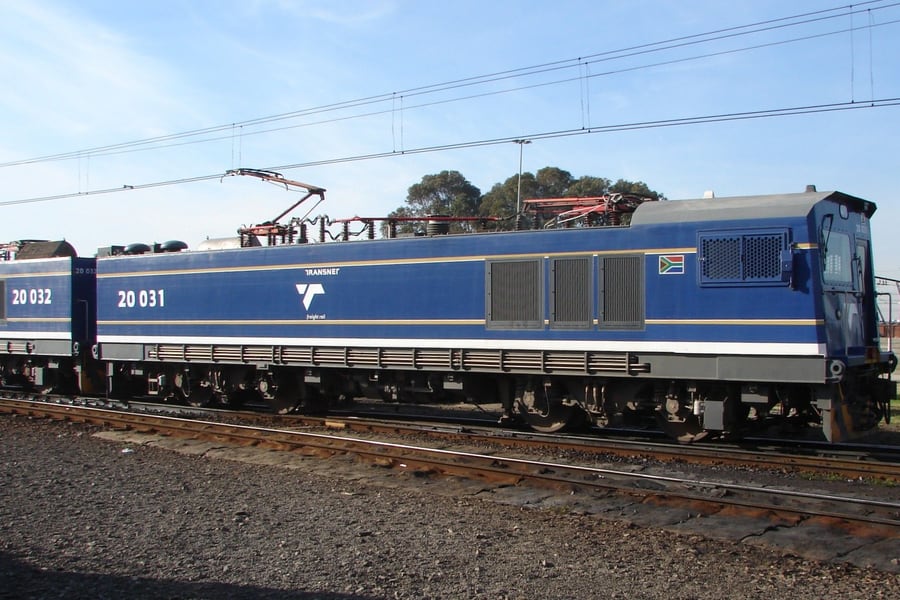
Since 2015 the train's own locomotives have been two electrics painted in its blue, 20-031 and 20-032, from the Class 20E of 95 engines that CSR Zhuzhou began delivering to Transnet in 2013, most of them assembled at Koedoespoort in Pretoria.
Along the route
 Col André Kritzinger / Wikimedia Commons · CC BY-SA 3.0 · cropped
Across the Highveld to Kimberley
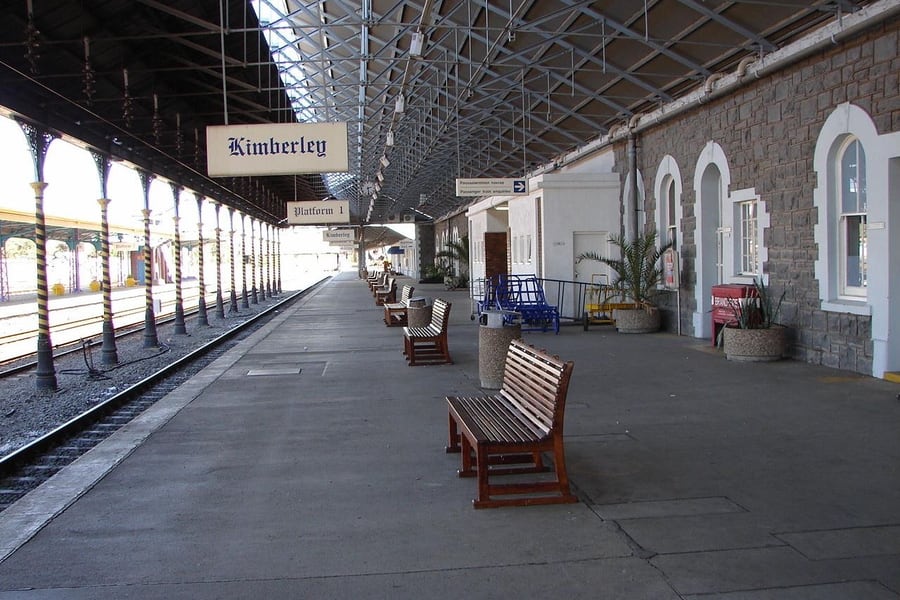
From Pretoria the train runs south-west across the Highveld to Kimberley, the town of the 1871 diamond rush. The line from Cape Town reached it in 1885. On some trips the train stops here for a tour of the Big Hole and its museum.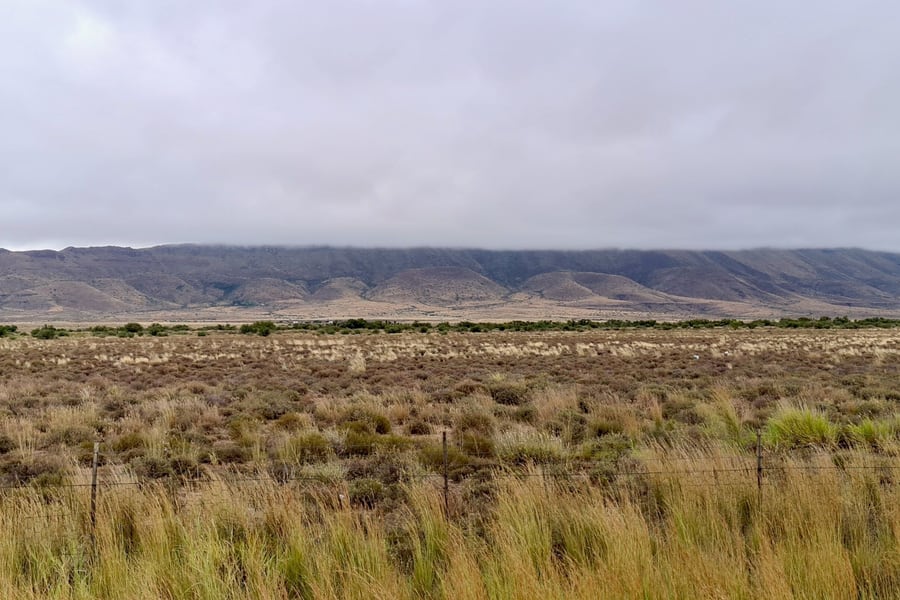 Bernard Dupont / Wikimedia Commons · CC BY-SA 2.0 · cropped
The Great Karoo
Much of the journey crosses the Great Karoo, a semi-desert plateau of about 400,000 square kilometres between the Great Escarpment and the Swartberg, with 100 to 400 mm of rain a year and a cover of hardy, drought-resistant shrubs.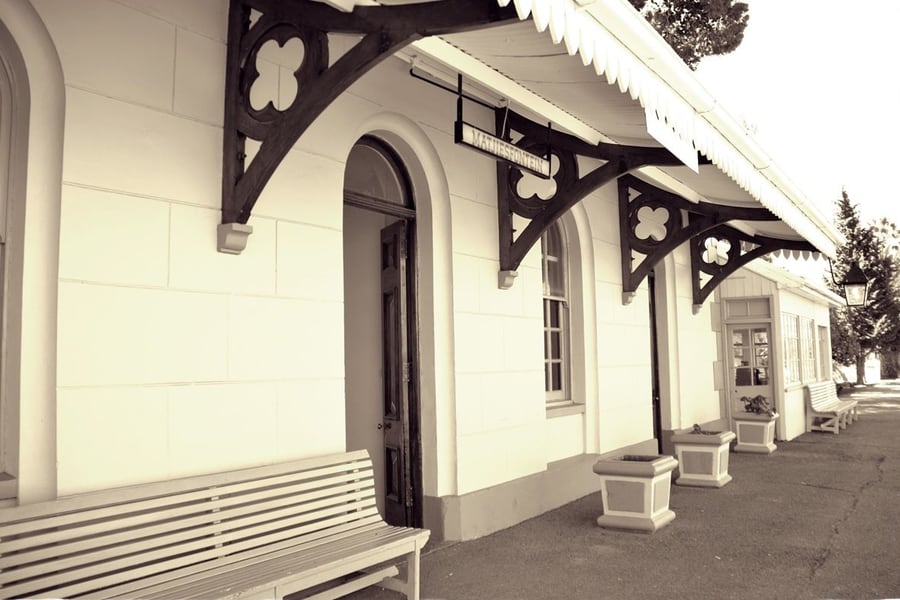 Suzi-k / Wikimedia Commons · CC BY-SA 3.0 · cropped
Matjiesfontein
James Logan opened refreshment rooms at this Karoo halt in 1884, before trains carried dining cars, and built a Victorian village round them. The station of 1890 still stands, and on some trips the train stops for a tour.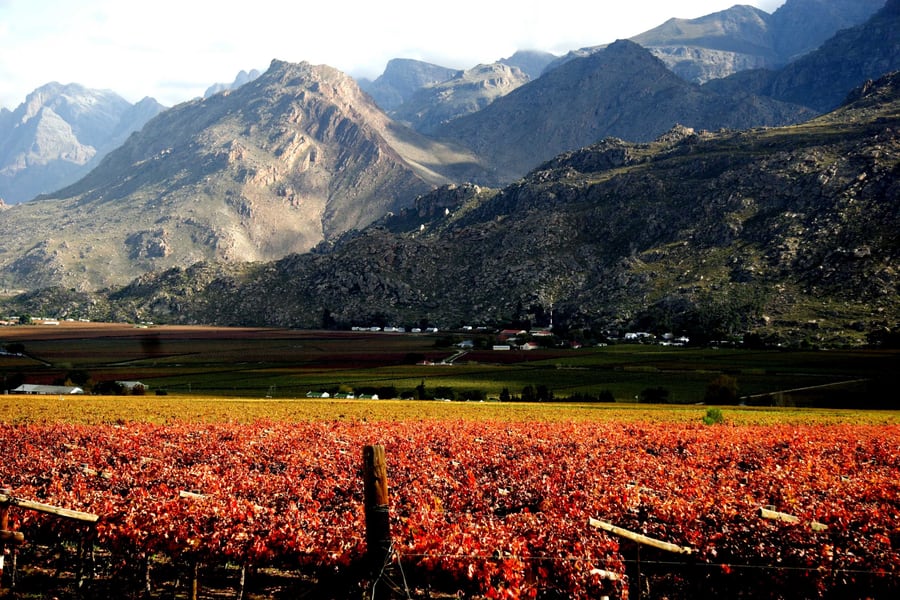 South African Tourism / Wikimedia Commons · CC BY 2.0
Through the Hex River mountains
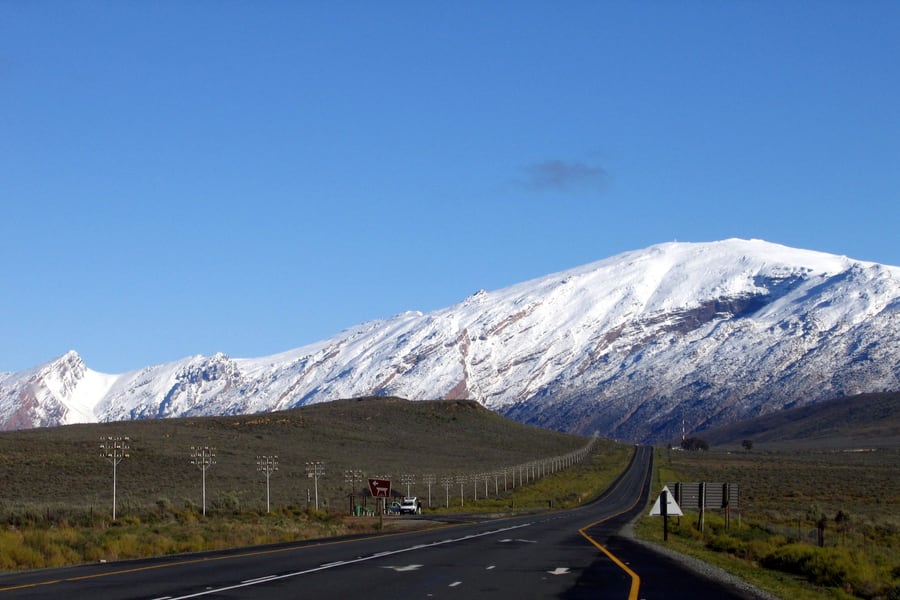
Off the Karoo the line drops through four tunnels, the longest 13.5 km, opened in 1989 to replace the old rail pass, and comes out among the table-grape vineyards of the Hex River valley on the way to Worcester and Cape Town.A bit of history
Culture & experiences along the way
 Luxury Train Consultancy / Flickr · CC BY-SA 2.0
Dinner, dressed for it
Dinner on board is formal: evening wear for women, a jacket or traditional dress for men. The dining car seats 42 at a sitting, and the menu runs to Knysna oysters, Karoo lamb, ostrich and venison with Cape wines. The fare covers it all, except caviar and French Champagne.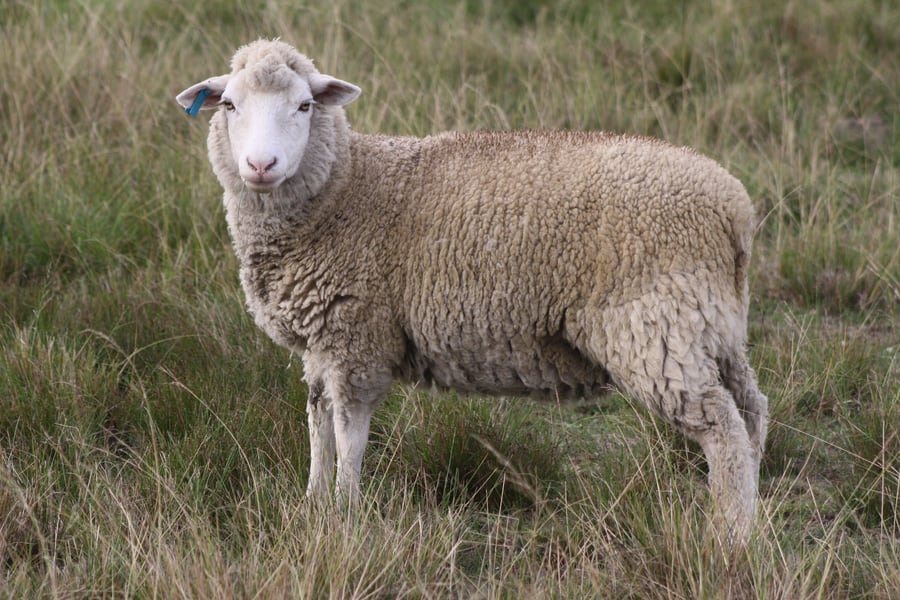 Bob Adams / Wikimedia Commons · CC BY-SA 2.0 · cropped
Karoo lamb
The Great Karoo is one of South Africa's main regions for Merino sheep and Angora goats, and Karoo lamb carries its name. It is one of the dishes the dining car serves, beside ostrich and venison, so the plateau outside the window turns up on the plate.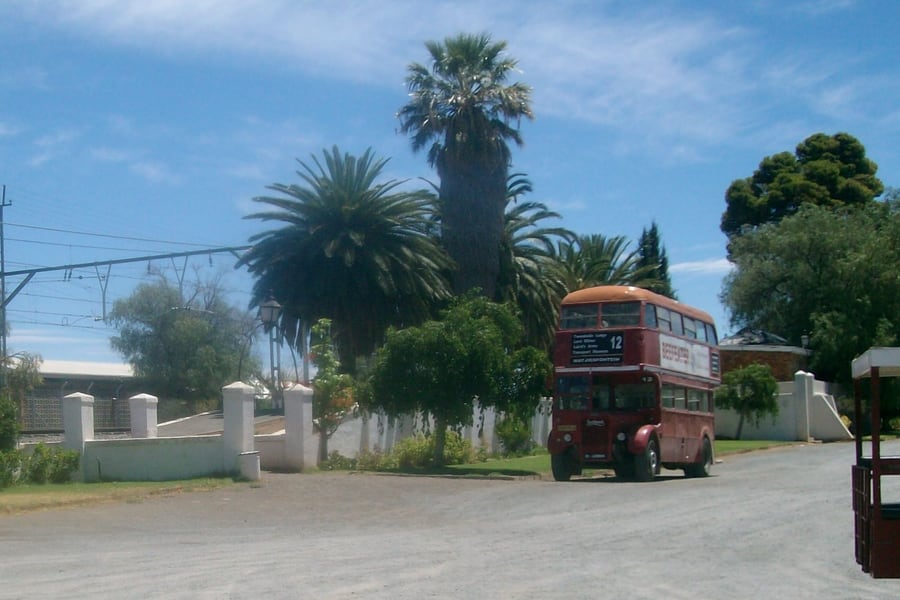 A3alb / Wikimedia Commons · CC BY-SA 3.0 · cropped
The red bus at Matjiesfontein
When the train stops at Matjiesfontein, guests tour the village on an old red London double-decker bus, then take a drink in the Lord Milner's pub. The village runs the same bus for its own visitors every evening at about 17:30, from the Laird's Arms.Timetables
The Blue Train runs on set dates, usually three or four a month in each direction: from Pretoria on Mondays and from Cape Town on Thursdays. Both leave at 13:00 and arrive at about 18:00 two days later, after two nights on board. Check-in opens at 10:00. There is no walk-up travel: every seat is a suite booked in advance.
Booking agents give the departure points as Irene station in Centurion, south of Pretoria, and Cape Town station; the operator confirms them with each booking.
Departures, October to December 2026
| Month | Pretoria → Cape Town (Mon) | Cape Town → Pretoria (Thu) |
|---|---|---|
| October 2026 | 26 | 22, 29 |
| November 2026 | 9, 16, 23, 30 | 12, 19, 26 |
| December 2026 | 7, 14 | 3, 10, 17 |
Booking agents show the departures of 9 and 16 November from Pretoria and 12 and 19 November from Cape Town as cancelled; check those dates before planning around them.
2027
The operator's own 2027 schedule is not yet on its website. Booking agents list departures from 11 January (Pretoria) and 14 January (Cape Town), again on Mondays and Thursdays, with none in June. In 2026 the separate Pretoria–Kruger trip ran once, on 25–27 June.
As of 19 October 2026, from the operator's 2026 schedule and its pre-departure page. Request dates on The Blue Train's booking page (opens in a new tab).
Tickets
The fare is per person sharing a suite, one way, and covers the suite, every meal, the drinks, the butler and the off-train excursion; only caviar, French Champagne and outside phone calls are extra. There are two suite types, and two seasons: 1 September to 15 November is high season. A single traveller pays 50% more.
Children up to 5 sharing their parents' suite travel free; ages 6 to 11 take their own suite at half the adult fare. Book through the operator's request form, which a reservations agent answers. The operator's 2026 rates, in South African rand, as of October 2026.
Book your tickets
De Luxe suite
R40,685 a person sharing · R50,220 from 1 September to 15 November
An 8 m² suite with its own shower or three-quarter bath, four to a coach.
Book Tickets (opens in a new tab, on The Blue Train)via The Blue TrainLuxury suite
R51,905 a person sharing · R63,420 from 1 September to 15 November
A 10.3 m² suite with a full-size bath and a separate lounge by day, three to a coach.
Book Tickets (opens in a new tab, on The Blue Train)via The Blue TrainRail Passes
No rail pass covers this train. It is a luxury service with its own all-inclusive fares, so every guest books a suite with the operator.
Places to Visit
The train's own stop is short, so the places worth a day of their own are at either end and along the Karoo between them.
 Paul Saad / Wikimedia Commons · CC BY-SA 4.0 · cropped
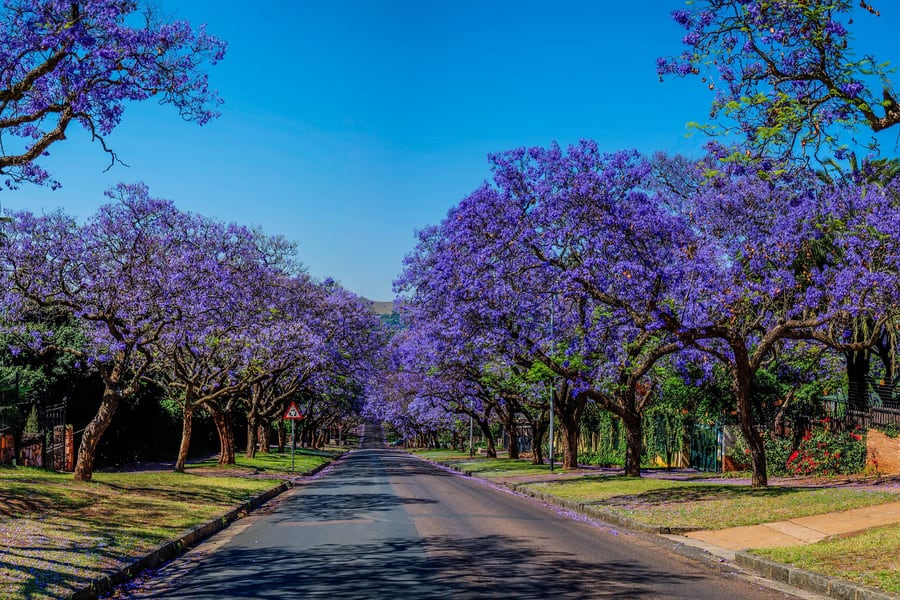
The jacarandas of Pretoria
Pretoria is called the Jacaranda City for the tens of thousands of jacaranda trees along its streets and in its parks. The trees come from tropical South America, and each October they turn whole avenues purple. The colour has stuck to the city: purple appears on council logos, on the A Re Yeng rapid buses and in the name of the local radio station, Jacaranda FM.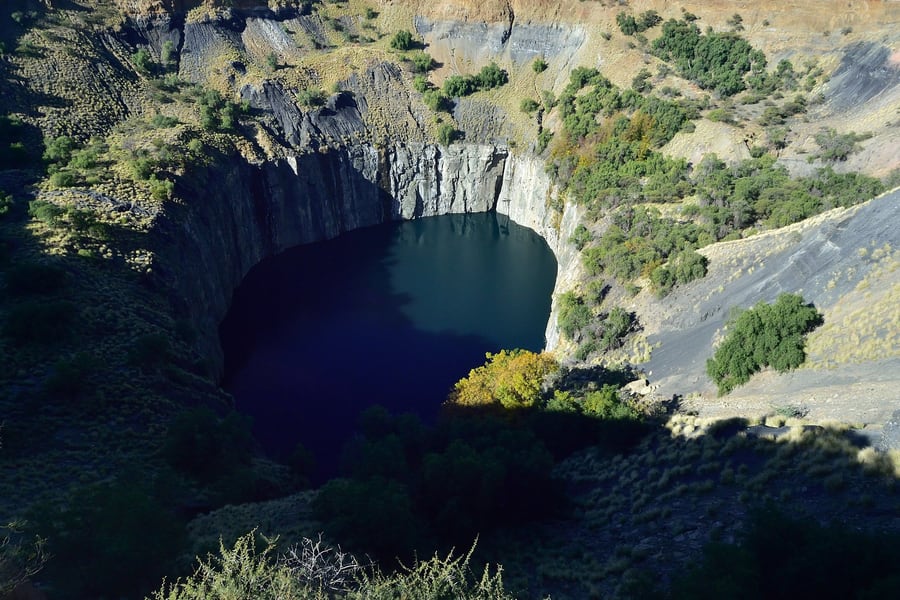 South African Tourism / Wikimedia Commons · CC BY 2.0 · cropped
The Big Hole
From 1871 to 1914 up to 50,000 miners dug this diamond mine by hand, with picks and shovels, taking out some 2,720 kg of diamonds. It is 463 metres across and was dug to 240 metres; water now fills the bottom, and about 175 metres of the pit are still visible. A mining museum stands beside it.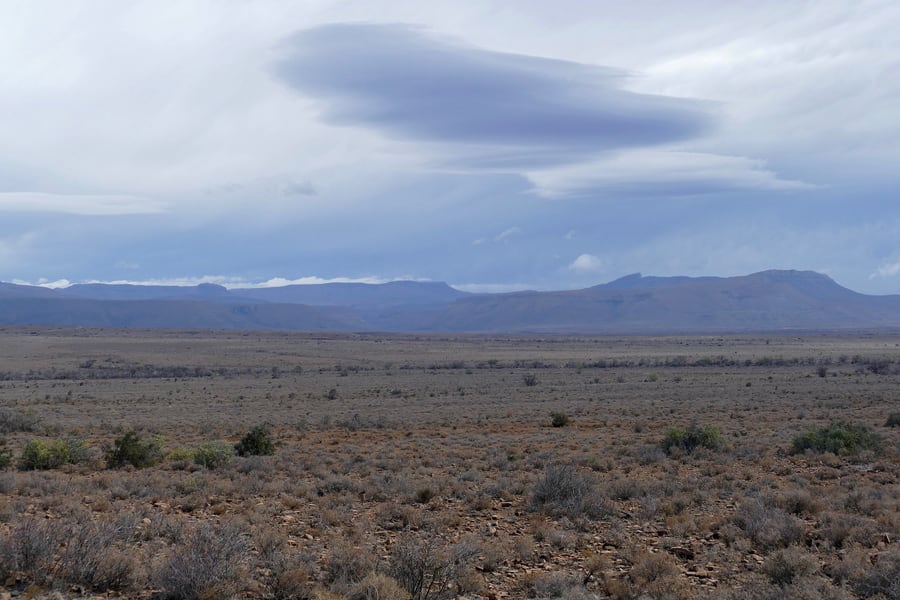 Bernard Dupont / Wikimedia Commons · CC BY-SA 2.0 · cropped
Karoo National Park
Just outside Beaufort West, the park protects 750 square kilometres of the Great Karoo, climbing from the plains at about 850 metres to the Nuweveld plateau at over 1,300. Its herds include springbok, gemsbok, Cape mountain zebra and black rhino, and the Klipspringer Pass drive climbs to a lookout over the plains.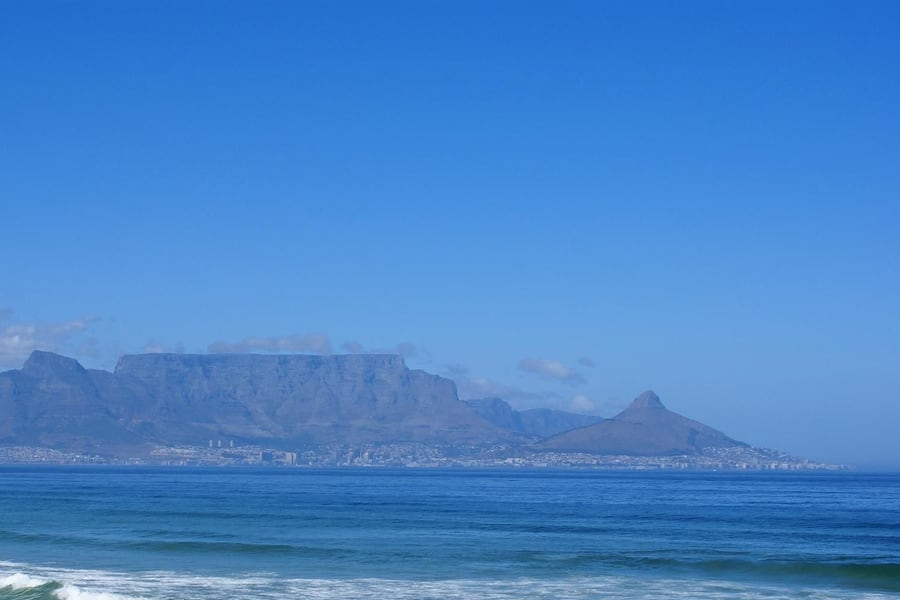 Danie van der Merwe / Wikimedia Commons · CC BY 2.0 · cropped
Table Mountain
The flat-topped mountain over Cape Town rises about 1,000 metres above the city, its plateau some three kilometres across between Devil's Peak and Lion's Head. It is reached by cableway or on foot, and its slopes hold some 2,285 plant species, most of them fynbos. Its Khoekhoe name, Huriǂoaxa, means "sea-emerging". The national park around it is the most visited in South Africa.Where to Sleep
Two nights are spent on board. To see the Karoo at ground level before or after the trip, Matjiesfontein's Victorian hotel is on the line itself, a stop for the train and a three-hour drive from Cape Town.
Where to stay
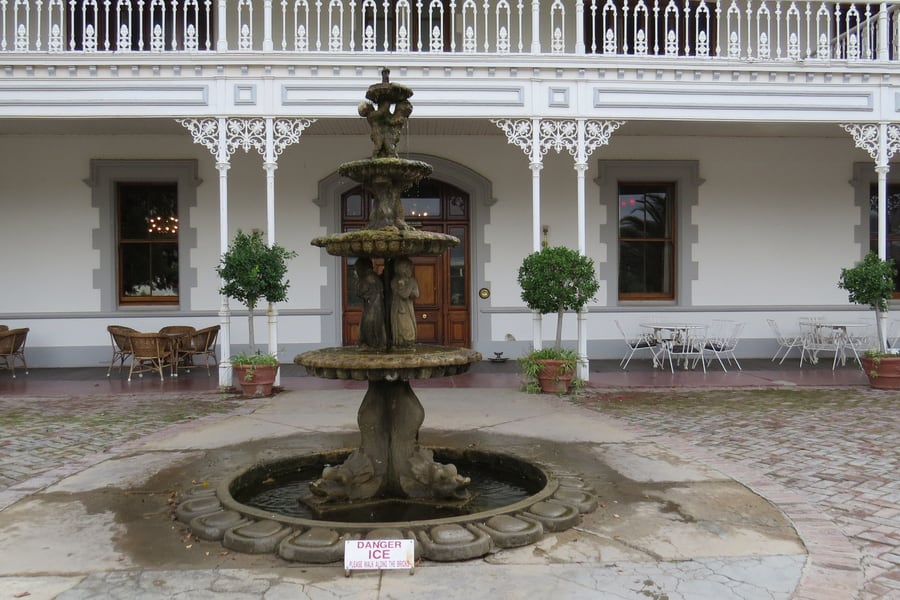 Sara Essop / Wikimedia Commons · CC BY-SA 3.0 · cropped
The Lord Milner Hotel
In Matjiesfontein, on the line through the Karoo
Completed in 1899 at the heart of James Logan's railway village, it has 15 historic rooms and is part of a village declared a national monument in 1975.
Check Availability (opens in a new tab, on matjiesfontein.com)via matjiesfontein.comQuestions or corrections
Planning this trip and stuck on something, or spotted a time, fare or detail that has changed? Send us a message about The Blue Train. We read every one, and we update this page when something has changed.