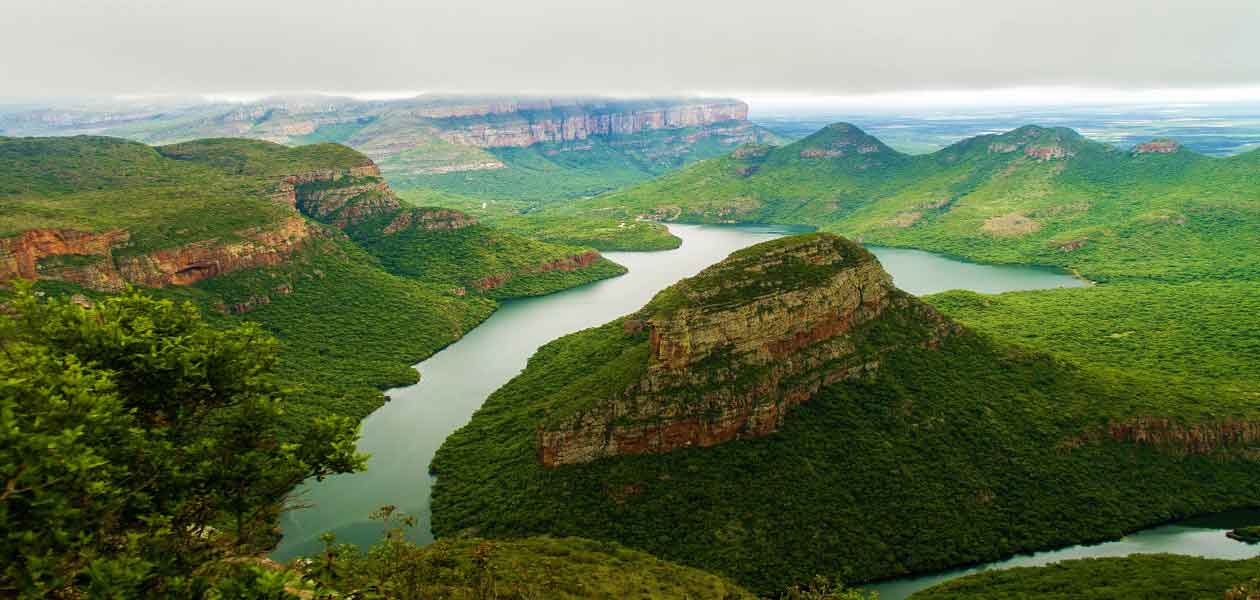
South Africa
Stefan Schäfer, Lich / Wikimedia Commons · CC BY-SA 3.0 · 2013 · cropped
South Africa has one of the largest rail networks in Africa — and, more famously, two of the most luxurious trains in the world. This is a country built for the long, slow, scenic journey: a land of high veld and semi-desert Karoo, diamond towns, mountain passes and winelands, ending at the sea beneath Table Mountain.
Gliding across it aboard the restored vintage carriages of Rovos Rail or the Blue Train is travel as it used to be — unhurried, elegant, and utterly memorable.
Rail journeys in South Africa
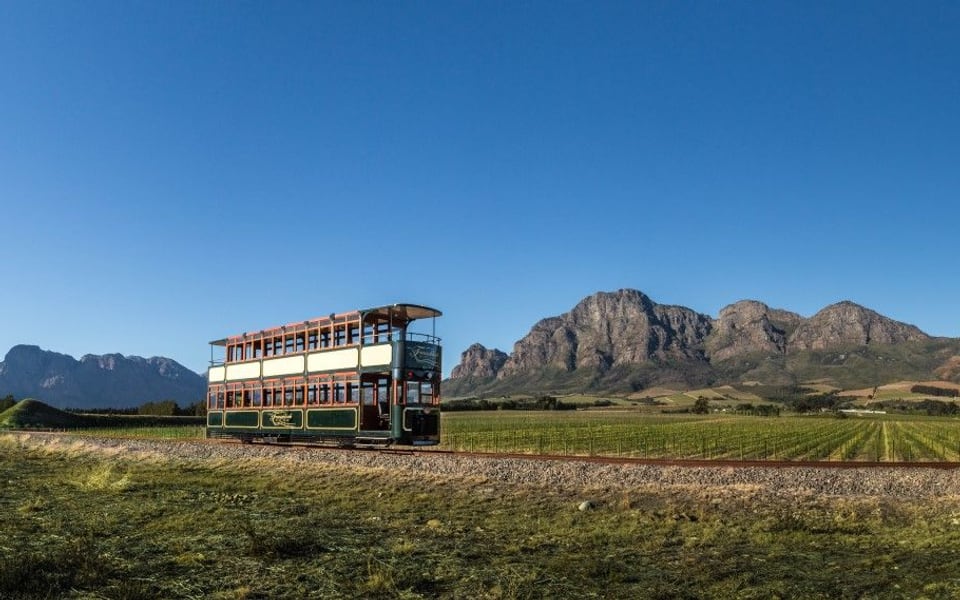
Franschhoek Wine Tram
A 1904 farm branch came back as a tram, but only at its two ends: double-deckers work each, and an open-air bus joins them across the Franschhoek vines.
View journey →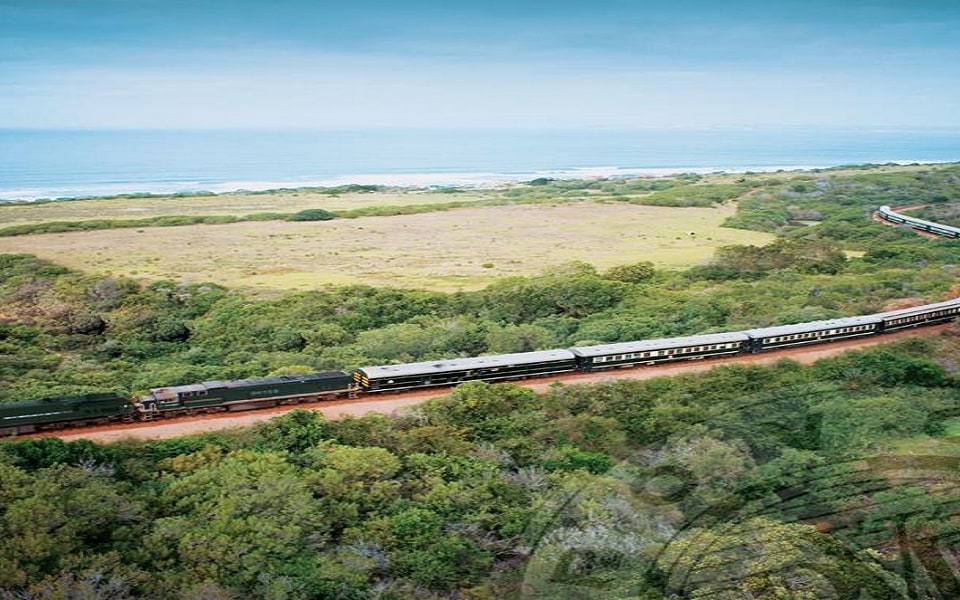
Rovos Rail
Styled the most luxurious train in the world — restored wood-panelled carriages from Pretoria to Cape Town over three unhurried days.
View journey →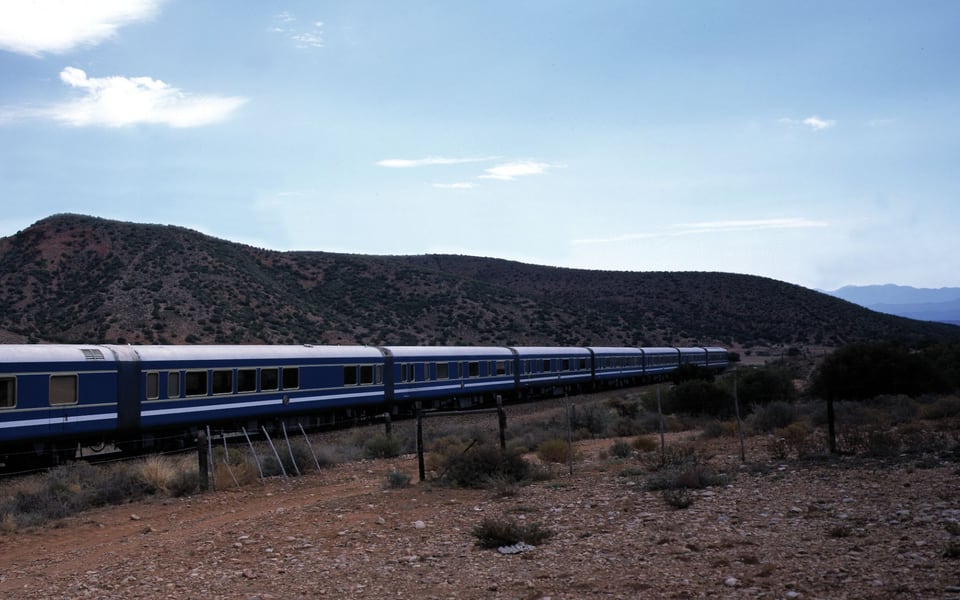
The Blue Train
In 1937 the Cape Town expresses got blue steel carriages, and travellers called them the blue train. In 1946 the railway took the nickname as its name.
View journey →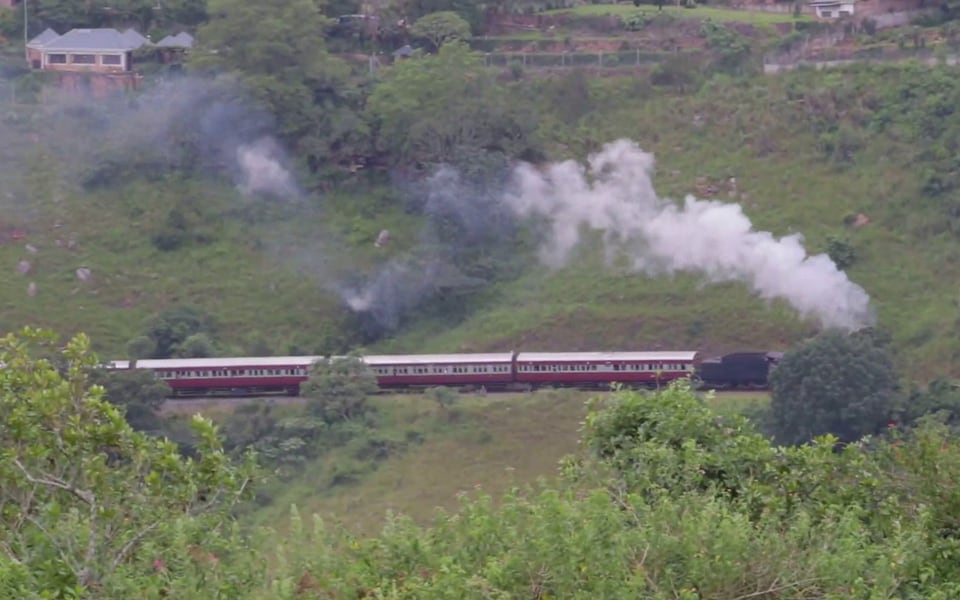
Umgeni Steam Railway
When the 2022 floods left its track hanging in the air, the volunteers who run this steam line asked the public for landfill, and rebuilt it.
View journey →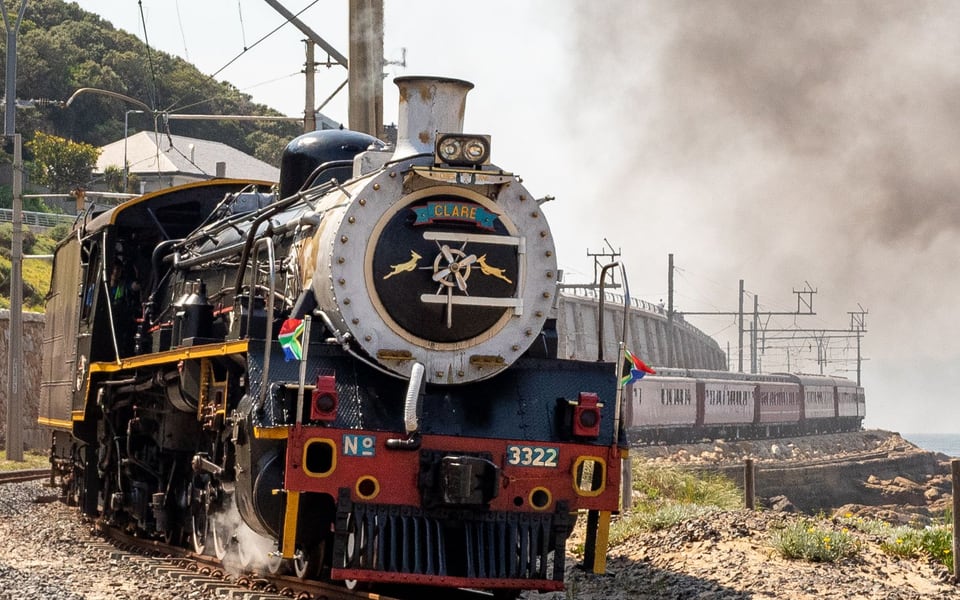
The Vintage Train to Elgin
For decades the line over Sir Lowry's Pass carried Elgin's apples down to Cape Town. Now its weekend train carries Cape Town up to the old apple shed.
View journey →Good to know
How do visitors travel South Africa by train?
The rail network is large, but scheduled long-distance passenger service is limited. For visitors, the train experiences that matter are the two super-luxury trains — Rovos Rail and the Blue Train — with the budget Shosholoza Meyl covering some intercity routes. Most trips combine rail with road, flights and safaris.
What are the luxury trains, and how do they differ?
Both Rovos Rail and the Blue Train run mainly between Pretoria and Cape Town over a couple of unhurried days. Rovos uses beautifully restored vintage wood-panelled carriages and old-world romance; the Blue Train is sleeker and more modern-luxe. Both are all-inclusive, with off-train excursions along the way.
When is the best time to visit South Africa?
The dry winter (June–August) is clear and excellent for game viewing; summer (November–March) is warm and green. Both work well for the trains, which run year-round and are climate- controlled throughout, so it comes down to what else you want from the trip.
How do I combine the train with a wider trip?
The Pretoria–Cape Town run pairs naturally with the big draws at either end — a Kruger or Karoo safari, and Cape Town with its winelands and Table Mountain. Bookend the rail journey with a few days on safari and by the sea for the classic South African trip.