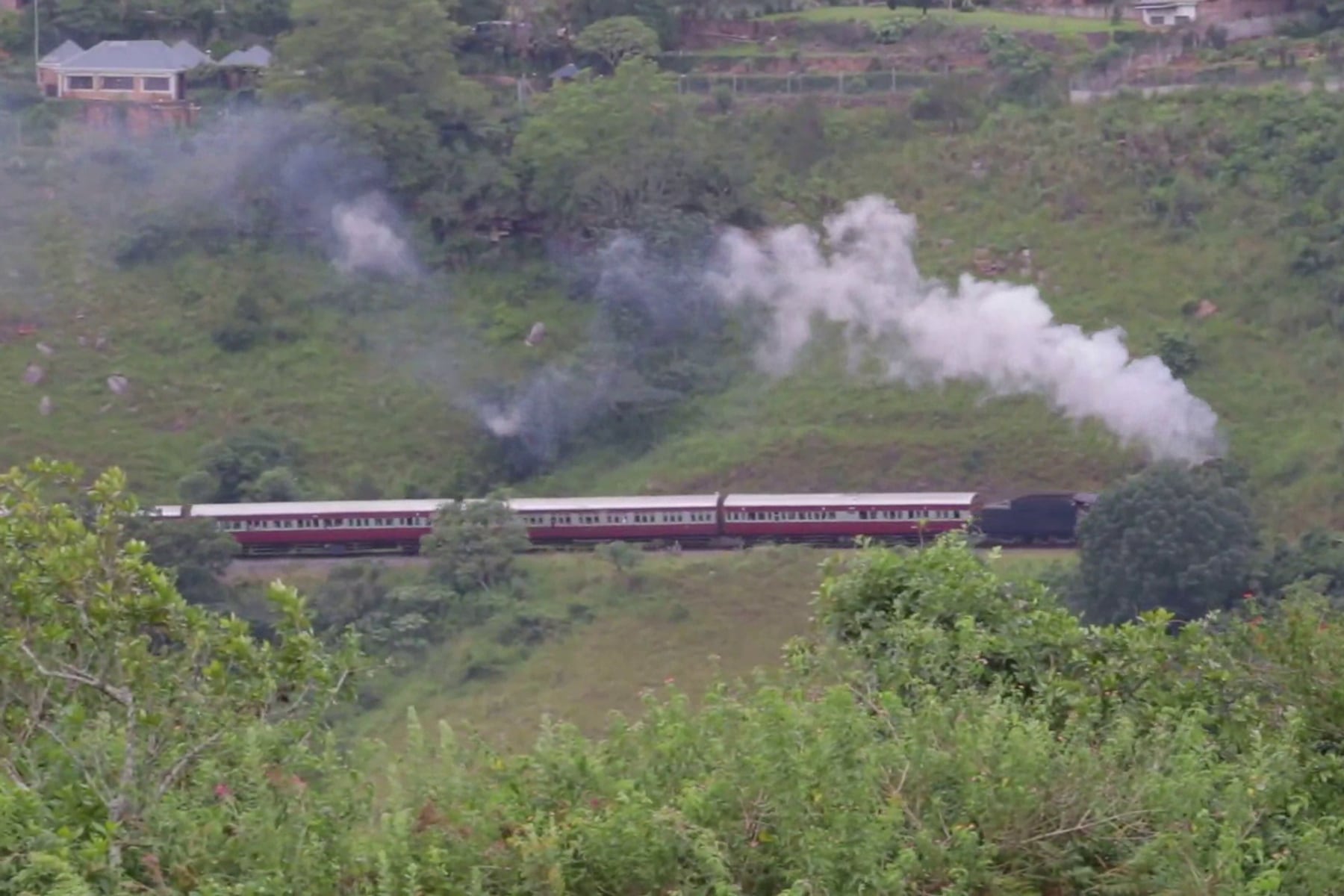
Umgeni Steam Railway
Train Spotted / Wikimedia Commons · CC BY 3.0 · video still, cropped
- DistanceInchanga to Botha's Hill and back · 3 ft 6 in gauge
- Duration75 minutes, non-stop
- Best seasonLast Sunday of the month, all year
Introduction
In April 2022 the floods in KwaZulu-Natal got under the old main line between Kloof and Inchanga. Landslides and sinkholes opened at four places, and where the foundation washed away the rails were left hanging in the air. The Umgeni Steam Railway is run entirely by volunteers, who look after the track as well as the trains, and the repair would cost more than a million rand. So they asked for the railway in kind: landfill, sand, rock and clean builders' rubble, delivered to Inchanga station, and the loan of a digger on the days the gangs were out. The first new retaining wall was built of second-hand sleepers.
While the line was mended, the railway's 1938 steam engine Wesley ran short trips out of Inchanga at R50 a ride to pay for the rest, and almost 2,000 people rode at the first open day. By 2024 the monthly trains were running again, and that October the 1912 engine Maureen steamed for the first time since 2012.
The train now starts at Inchanga, halfway between Durban and Pietermaritzburg, on the last Sunday of the month. It runs east along the Natal main line of 1880, through an 1878 tunnel and above the Valley of a Thousand Hills, turns at Botha's Hill and comes straight back: 75 minutes behind steam, in coaches built between 1928 and 1952.
The Journey
The train leaves from Inchanga station, on the hills about halfway between Durban and Pietermaritzburg. In main-line days this was a refreshment stop, with a restaurant on the upper floor; much of the original station was pulled down in 1936. On train days the platform fills with the Inchanga Station Craft Market, the old Station Master's house opens as the railway's museum, and the Railway Society of Southern Africa runs its library and model layouts at the station.
Inchanga to Botha's Hill
The line is the Natal Government Railway's main line from Durban to Pietermaritzburg, opened in December 1880 on the 3 ft 6 in gauge and laid with grades as steep as 1 in 30 and curves of 90 metres. Heading east, the train passes through the 53-metre tunnel at Drummond, cut in 1878 and probably the oldest tunnel still in use in the country, then runs along the edge of the Valley of a Thousand Hills. Between Padley's and Botha's Hill it works through a pass with almost sheer cliffs. At Botha's Hill it reverses and returns to Inchanga without a stop: about 75 minutes in all. Nobody gets off at the far end, and a seat is booked on one train for the whole trip.
The engines
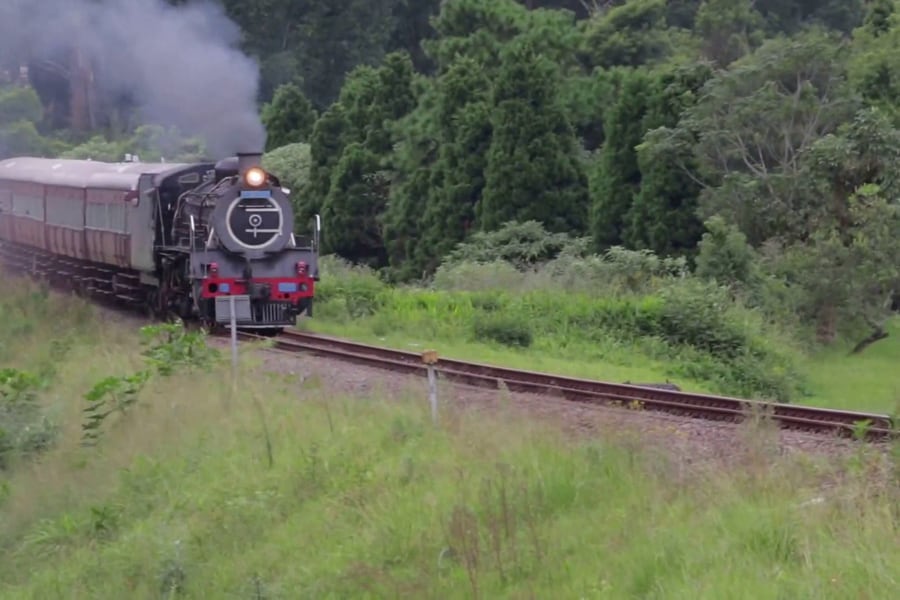
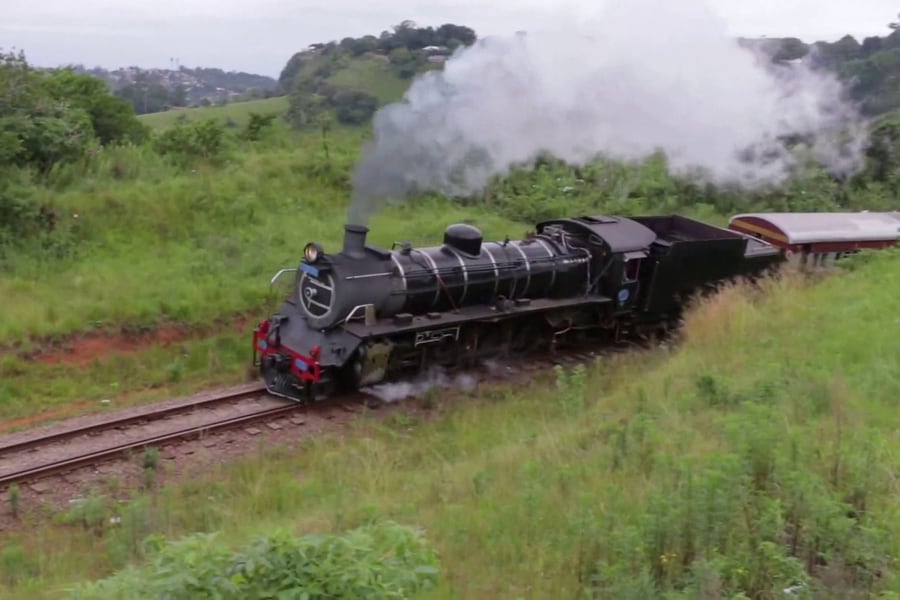
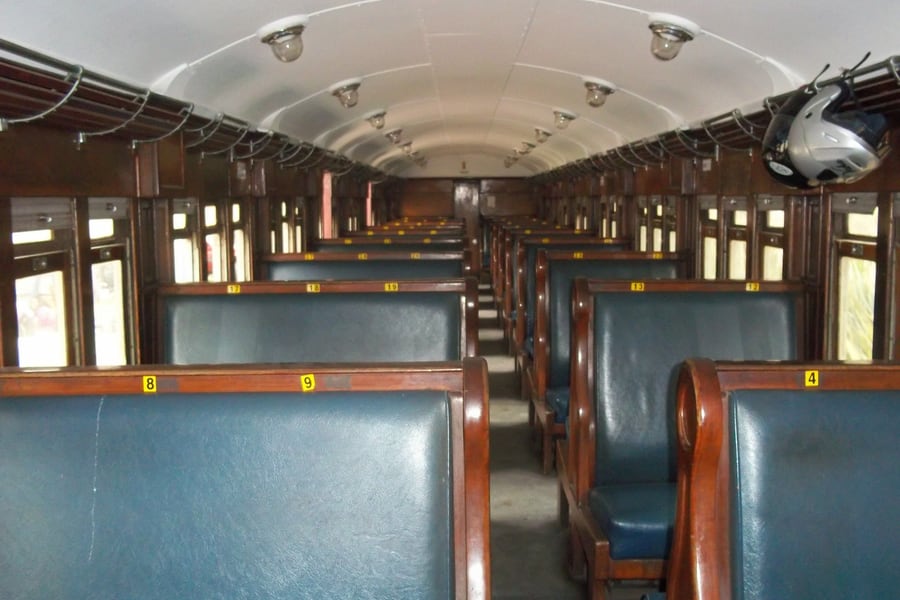
The regular engine is Wesley, South African Railways Class 19D no. 2685, a 4-8-2 built by Borsig in Berlin in 1938; the 19D was the most numerous steam type South Africa ever had. Back in service since 27 October 2024 is Maureen, Class 3BR no. 1486, built in 1912. The railway owns about ten locomotives and fifty coaches, many stored and waiting their turn; the coaches in service were built between 1928 and 1952, most of them in the South African Railways' own workshops.
On board
Refreshments are sold on the train, and passengers may bring their own food and drink. The coaches were not built for wheelchairs, though Inchanga station is accessible, with disabled parking and toilets, and there is space at the back of the train for prams and wheelchairs. Pets are welcome at the station and the market but not on the train.
Along the route
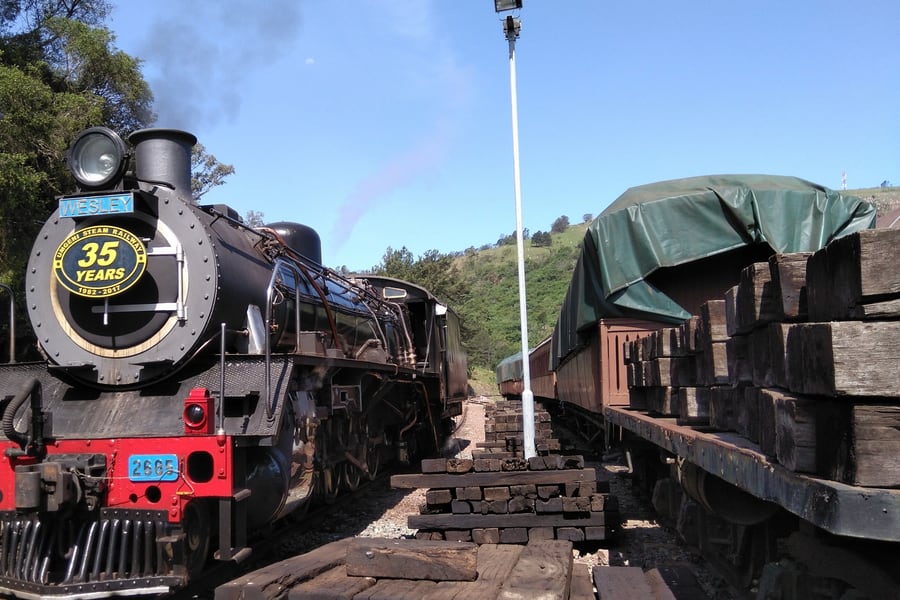 Sherwin / Wikimedia Commons · CC BY-SA 4.0 · cropped
Inchanga
The train is based at Inchanga, halfway between Durban and Pietermaritzburg, a refreshment stop in main-line days with a restaurant upstairs. On train days the station holds a craft market, a museum and the railway society's model layouts.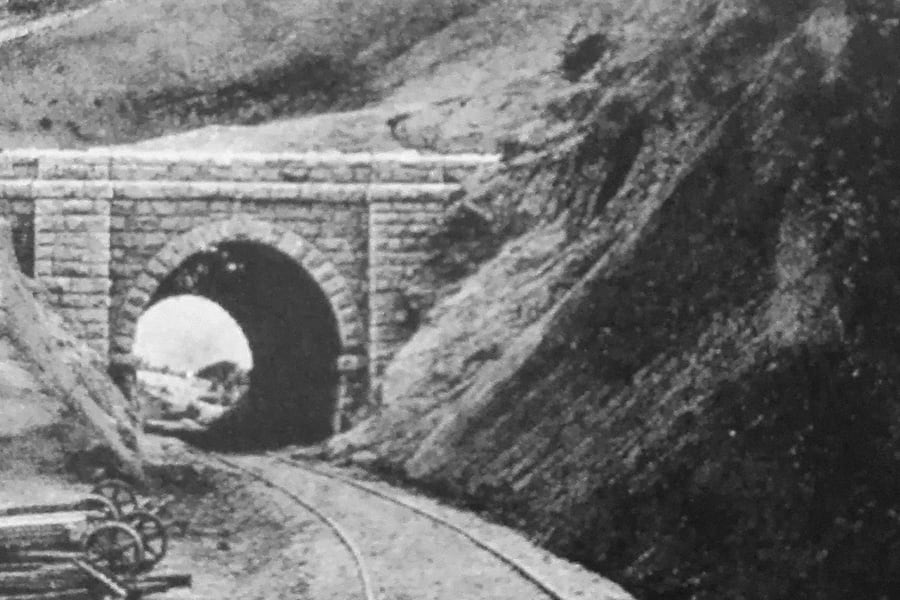 Unknown photographer, about 1880 / Wikimedia Commons · public domain · cropped
The tunnel at Drummond
East of Inchanga the line passes through a 53-metre tunnel at Drummond, cut in 1878 for the line to Pietermaritzburg and, the railway believes, probably the oldest tunnel still in use in South Africa.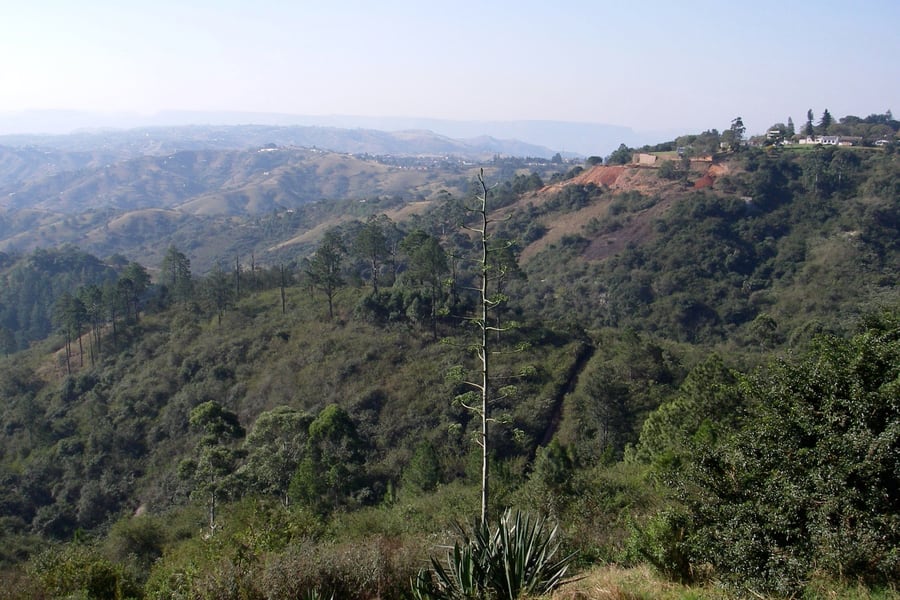 Jean & Nathalie / Wikimedia Commons · CC BY 2.0 · cropped
The Valley of a Thousand Hills
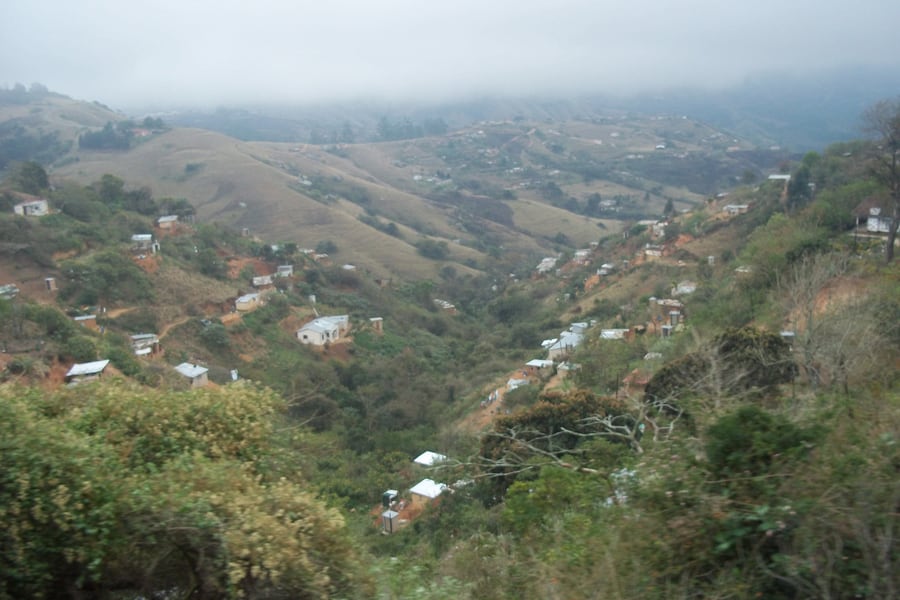
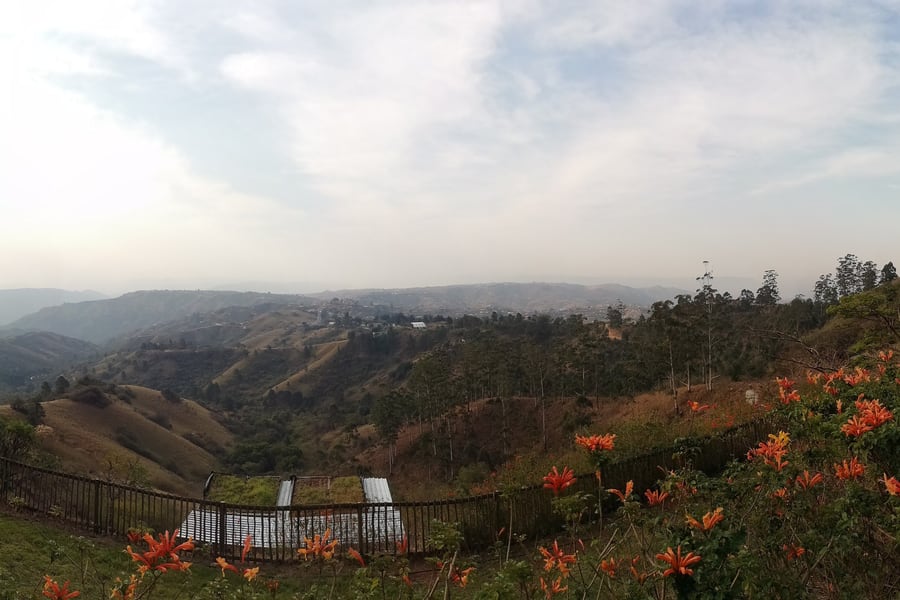
From the line the ground falls away north into the Valley of a Thousand Hills, the country of ridges and river valleys that stretches from Cato Ridge to Kloof, with the Umgeni at the bottom of it.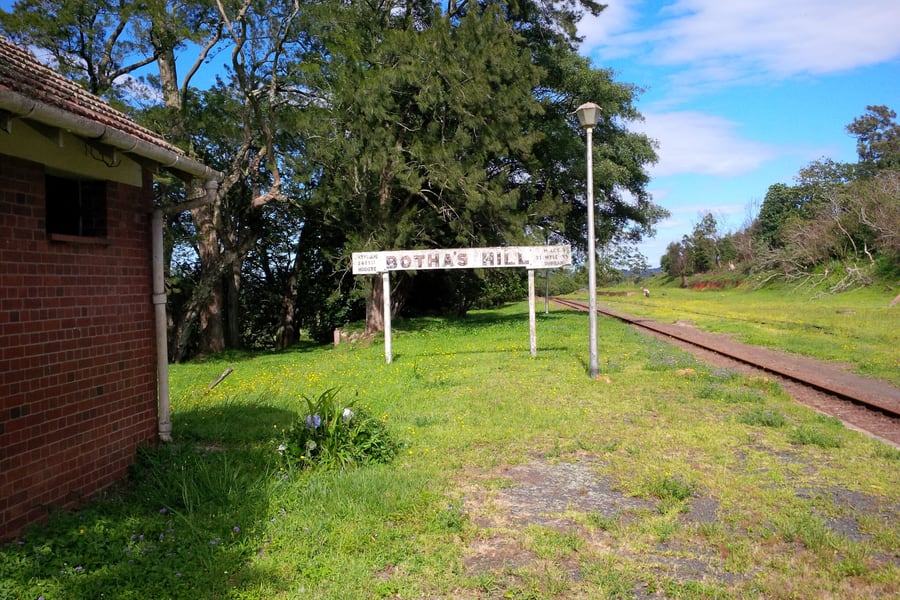 PeterDSr / Wikimedia Commons · CC BY-SA 4.0 · cropped
Botha's Hill
Beyond the near-sheer cliffs of the pass above Padley's, the train reaches Botha's Hill, the village on the old main road where Alan Paton lived until his death in 1988, and turns back without stopping.A bit of history
Culture & experiences along the way
 Unknown photographer, about 1880 / Wikimedia Commons · public domain · cropped
The Inchanga Railway Museum
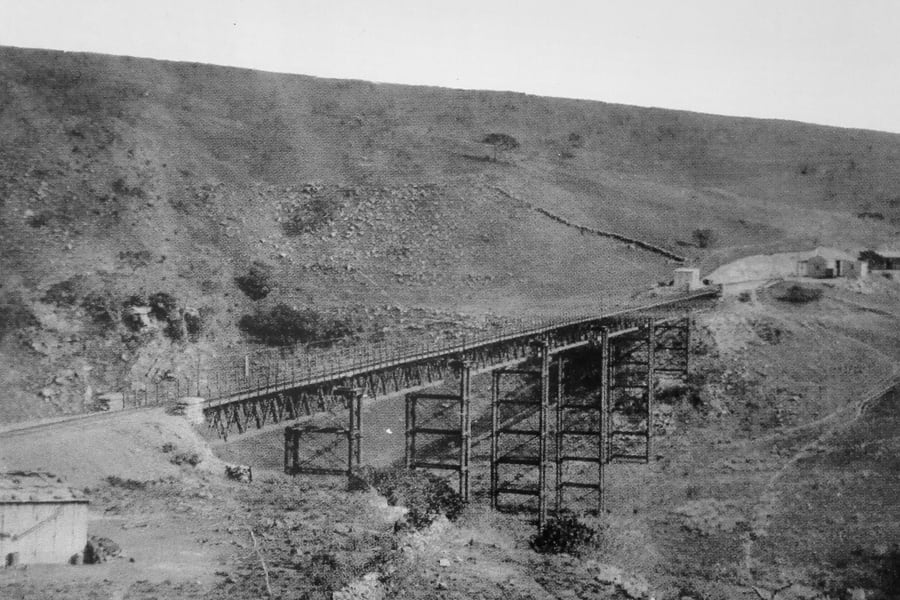
The old Station Master's house at Inchanga is the railway's museum, open only on train days. Among its photographs is the cast-iron viaduct of 1880 that swayed so badly in the wind that passengers were made to walk across ahead of the train, until a deviation bypassed it in 1892.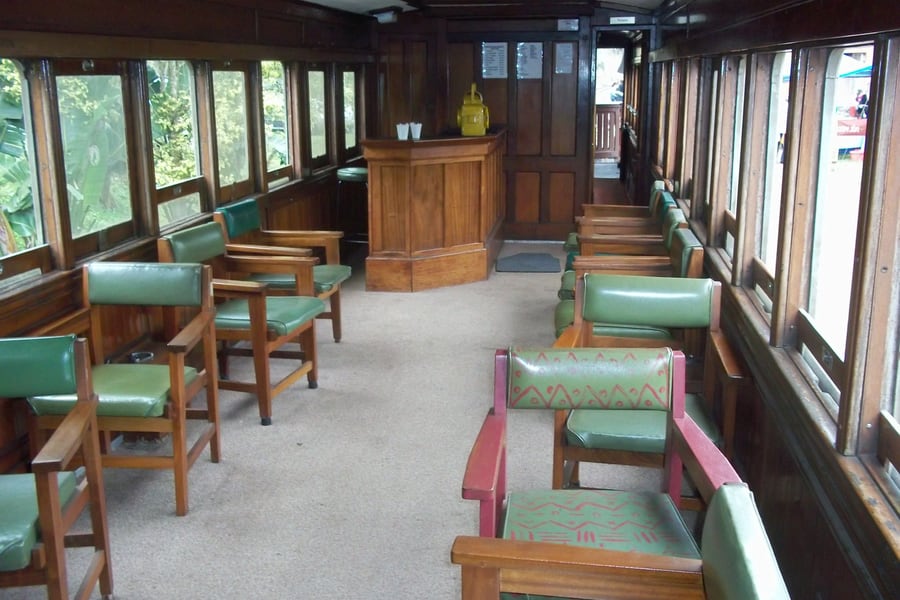 Nolween / Wikimedia Commons · CC BY-SA 3.0 · cropped
Tea in the saloon
Refreshments are sold on board, in panelled coaches built between 1928 and 1952, and the market at Inchanga sells food before and after the ride. Passengers may also bring their own food and drink onto the train.Timetables
The railway runs on the last Sunday of the month, with extra trains over the December holidays and at Easter. Each train day has three to five departures from Inchanga, and every train goes to Botha's Hill and back without stopping, returning 75 minutes after it leaves. It is booking only: seats are sold online and paying secures them. Be at Inchanga half an hour before your train.
Dates on sale, 2026–27
| Month | Train days |
|---|---|
| October 2026 | Sun 25 |
| November 2026 | Sun 29 |
| December 2026 | Wed 16 · Fri 18 · Sat 19 · Sun 20 · Sat 26 · Sun 27 |
| January 2027 | Sat 2 · Sun 3 · Sat 9 · Sun 10 · Sun 31 |
Departures
25 October; 16, 20, 26 and 27 December; 2 and 3 January — four trains:
| Train | Leaves Inchanga | Back at Inchanga |
|---|---|---|
| A | 09:00 | 10:15 |
| B | 11:00 | 12:15 |
| C | 13:00 | 14:15 |
| D | 15:00 | 16:15 |
18 and 19 December — the same four, plus a 17:00 train back at 18:15, sold as Carols by Candlelight.
29 November; 9, 10 and 31 January — three trains:
| Train | Leaves Inchanga | Back at Inchanga |
|---|---|---|
| A | 09:00 | 10:15 |
| B | 11:30 | 12:45 |
| C | 14:00 | 15:15 |
As of 19 October 2026, from the trains open for booking on the Umgeni Steam Railway's site (opens in a new tab). If a train is cancelled, passengers are contacted and can move to a later date or take a full refund.
Tickets
There is one ticket: a return ride from Inchanga to Botha's Hill and back on a named train, booked and paid for online. Adults pay one fare; children aged 2 to 12 and pensioners aged 60 and over pay a reduced one, and children under two ride free on a lap without a booking. Everyone booked together sits together, but a seat cannot be split between an outward and a return train.
Fares are kept as low as the costs of running the train allow, so there are no group discounts. Gift vouchers are sold on the same site. From the operator's booking pages, in South African rand, as of October 2026.
Book your tickets
Adult return
R250 · adults
Inchanga to Botha's Hill and back on one booked train, about 75 minutes.
Book Tickets (opens in a new tab, on Umgeni Steam Railway)via Umgeni Steam RailwayChildren and pensioners
R195 · ages 2 to 12, and 60 and over
The same return trip at the reduced fare; children under two ride free on a lap.
Book Tickets (opens in a new tab, on Umgeni Steam Railway)via Umgeni Steam RailwayRail Passes
No rail pass covers this train. It is a volunteer heritage railway with its own fares, so everyone books the return ride from the railway.
Places to Visit
The train is a short ride with no stops, so the places worth the rest of the day lie along the old main road between Kloof and Pietermaritzburg.
 JMK / Wikimedia Commons · CC BY-SA 3.0 · cropped
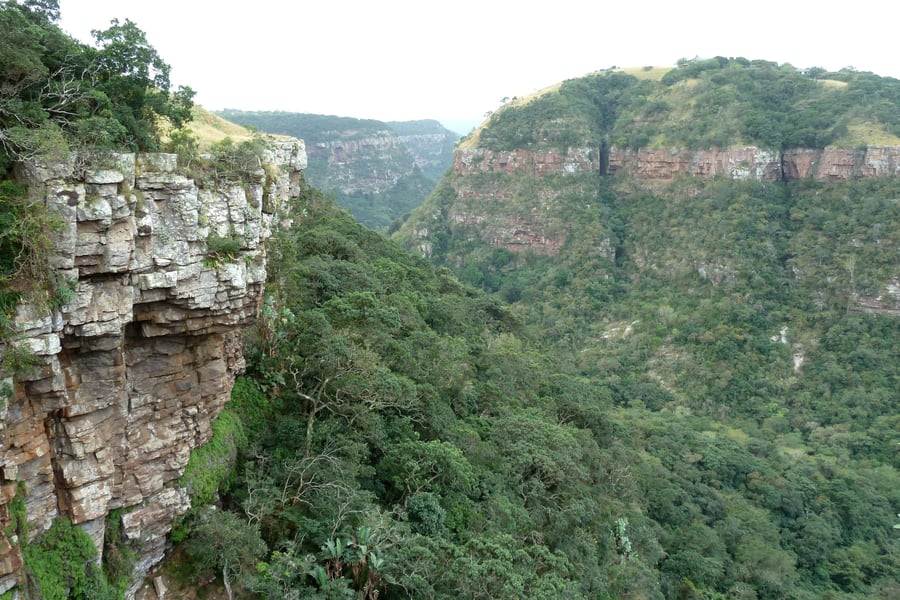
Krantzkloof Nature Reserve
At Kloof, where the excursions started before the floods, the Molweni and Nkutu rivers have cut gorges into the sandstone plateau, and 668 hectares of them have been a reserve since 1950. Trails run up and down the Molweni from the Kloof Falls picnic site; three pairs of crowned eagles nest in the reserve, and some 255 bird species have been recorded here.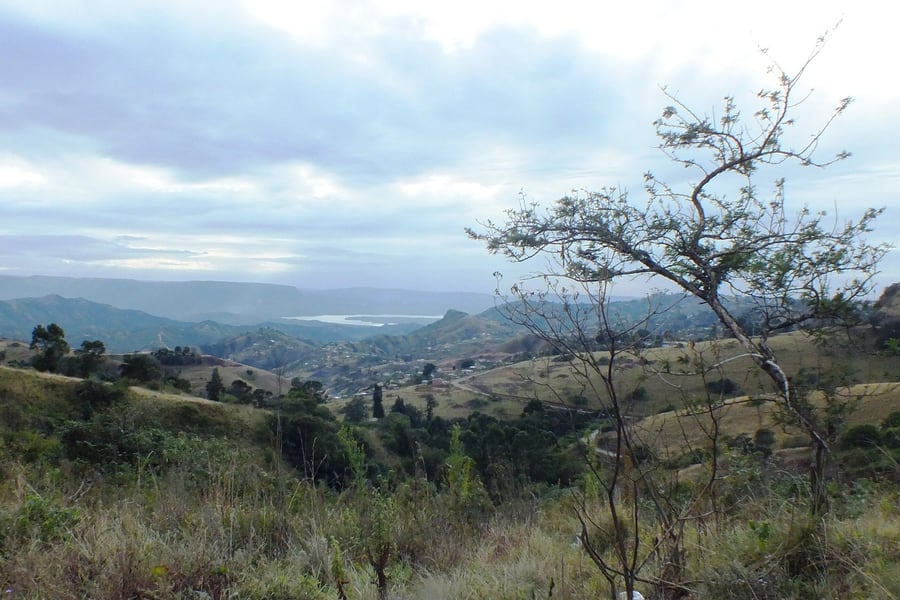 NRJ / Wikimedia Commons · CC BY-SA 3.0 · cropped
Inanda Dam
Below the hills north of the line, the Umgeni has been held back since 1989 by the earth-fill wall of Inanda Dam, which supplies water to homes and industry around Durban. The Umgeni meets its tributary the Msunduzi in the same valley, and from its ridges the reservoir shows as a pale ribbon between the hills.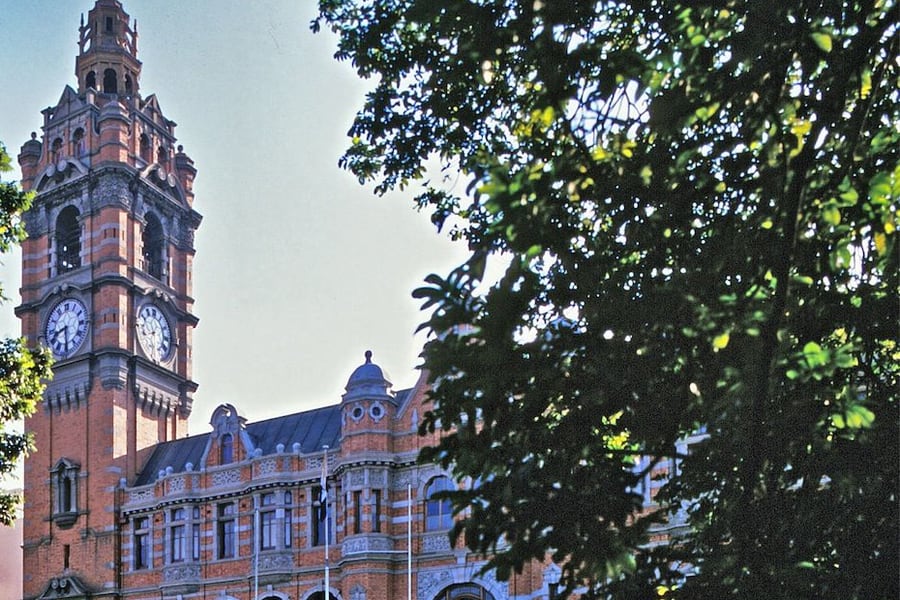 Janek Szymanowski / Wikimedia Commons · CC BY-SA 3.0 · cropped
Pietermaritzburg City Hall
Up the old main line from Inchanga, the provincial capital's city hall was built between 1899 and 1901 to replace an earlier one lost to fire: red brick in the Flemish Renaissance manner, with a 47-metre clock tower. In the south-western corner of the city centre is the railway station where, in 1893, Mohandas Gandhi was put off a train for riding in first class.Where to Sleep
Inchanga lies about halfway between Durban and Pietermaritzburg and the ride takes 75 minutes, so it fits into a day from either city. To stay in the hills instead, there are rooms at Botha's Hill, where the train turns back.
Where to stay
 Dickelbers / Wikimedia Commons · CC BY-SA 4.0 · cropped
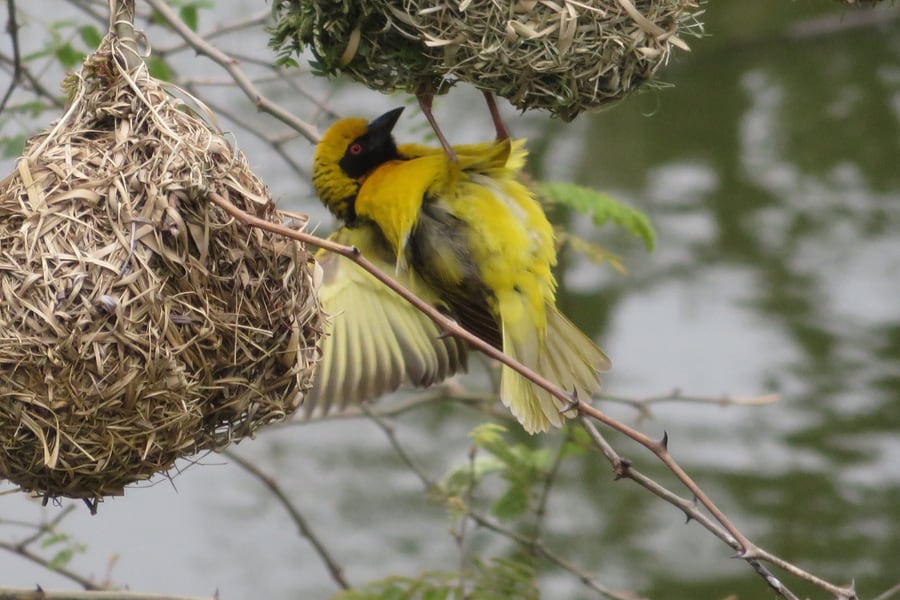
PheZulu Safari Park Lodge House
On the Old Main Road at Botha's Hill
Five bed-and-breakfast rooms and self-catering units inside the safari park, where the Gasa clan performs Zulu dances four times a day.
Check Availability (opens in a new tab, on phezulusafaripark.co.za)via phezulusafaripark.co.zaQuestions or corrections
Planning this trip and stuck on something, or spotted a time, fare or detail that has changed? Send us a message about Umgeni Steam Railway. We read every one, and we update this page when something has changed.