Rovos Rail
Rovos Rail
- Distance1,600 km
- Duration3 days · 2 nights
- Best seasonYear-round
Introduction
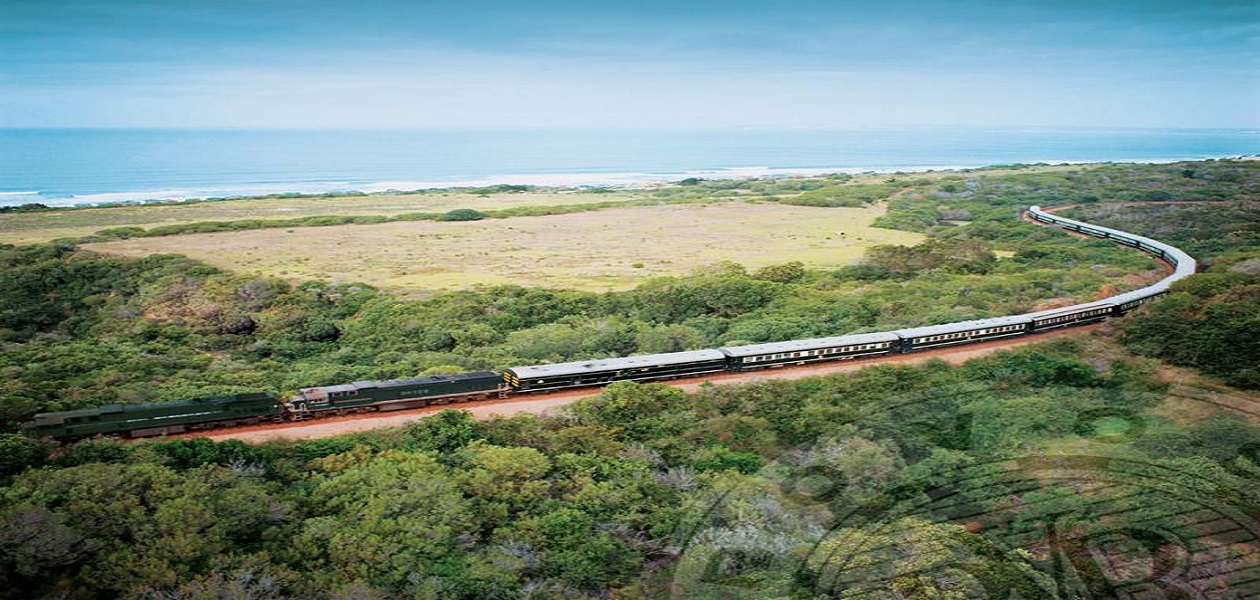
Rovos Rail calls itself, without much modesty, "the most luxurious train in the world" — and for once the marketing is hard to argue with. This is a private train of lovingly restored early-twentieth-century carriages, all teak panelling, brass and crisp white linen, that carries a couple of dozen guests across South Africa at a deliberately unhurried pace, with a butler's-worth of staff for every cabin.
The flagship run links Pretoria and Cape Town — some 1,600 kilometres over three days and two nights, across the high veld, the endless Karoo, and the mountains that guard the Cape. There are no televisions, no radios, no Wi-Fi in the suites; the entertainment is the window, the dining car, the observation lounge and its open balcony, and the slow unspooling of a continent.
Founded in 1989 by an enthusiast, Rohan Vos, who simply wanted to run his own restored coaches, it has become one of the world's great rail experiences — the golden age of train travel, revived and running to timetable.
The Journey
The classic journey runs between Pretoria and Cape Town — about 1,600 km over three days and two nights — and can be ridden in either direction. It begins at Rovos's own restored Capital Park station in Pretoria, where guests are welcomed on the platform and the train is sometimes eased out behind a steam locomotive.
The first day crosses the Highveld and the goldfields, rolling south-west through the night to Kimberley, where an off-train excursion visits the vast Big Hole — the hand-dug diamond mine that built a city. Beyond it the land empties out into the Great Karoo: a full day of semi-desert, red earth and flat-topped hills under an enormous sky, watched from the observation car with a gin and tonic to hand. A stop at the perfectly preserved Victorian village of Matjiesfontein breaks the afternoon.
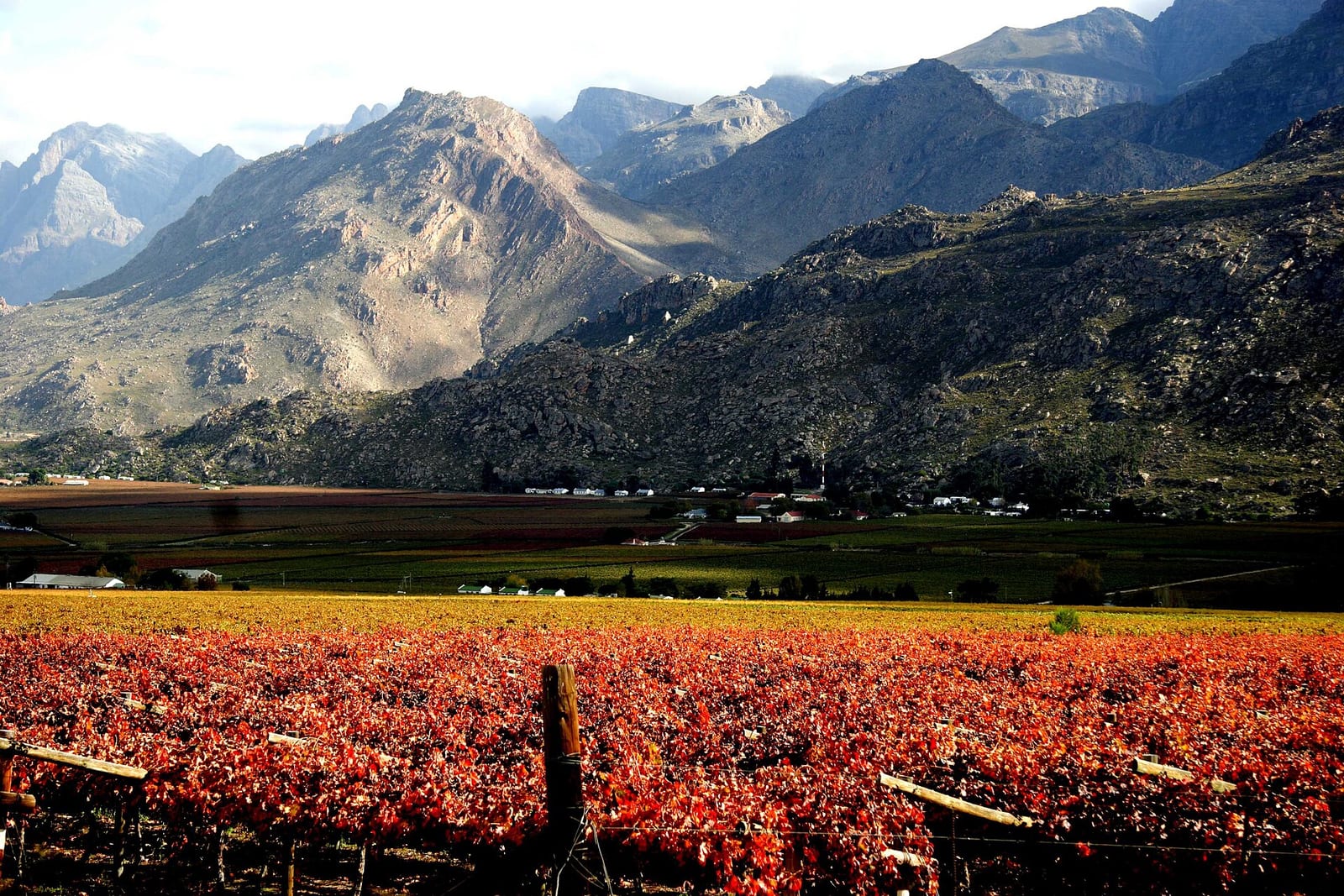
On the final morning the mountains close in and the line threads down through the Hex River Valley, a sudden green world of vineyards and orchards — the edge of the Cape winelands — before the last run into Cape Town, arriving beneath the grey rampart of Table Mountain where the land runs out into the sea.
Between the landmarks, the journey is really about the train: long lunches and black-tie dinners in the restored dining cars, afternoons in the lounge, and the profound, old-fashioned pleasure of having nowhere else to be.
Along the route
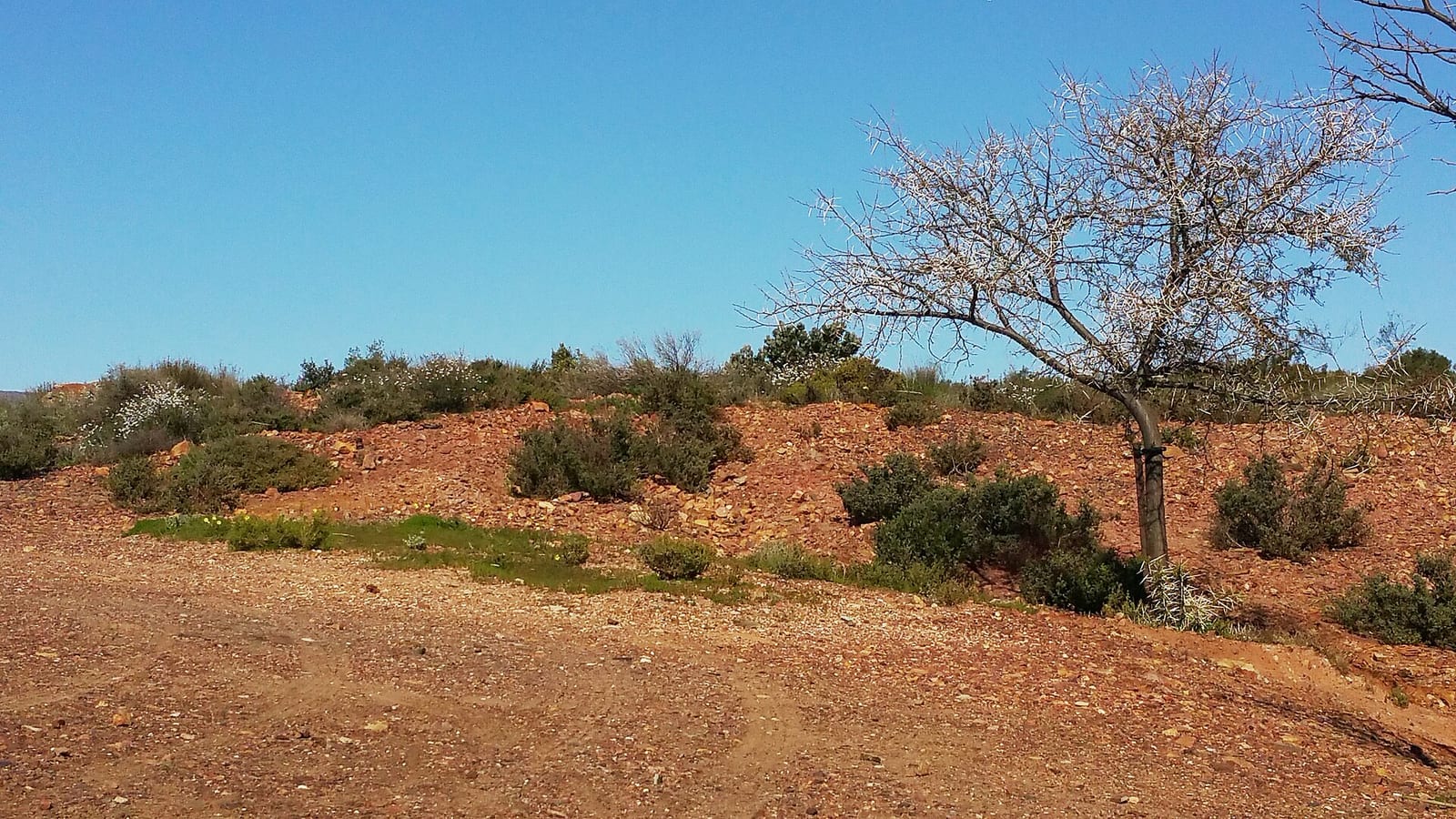
Deavmi / Wikimedia Commons · CC BY-SA 3.0The Great Karoo
For a full day the train crosses the Karoo — a vast, silent semi-desert of red earth, flat-topped koppies and impossibly wide skies, best watched with a drink from the open balcony of the observation car.South African Tourism / Wikimedia Commons · CC BY 2.0The Hex River Valley
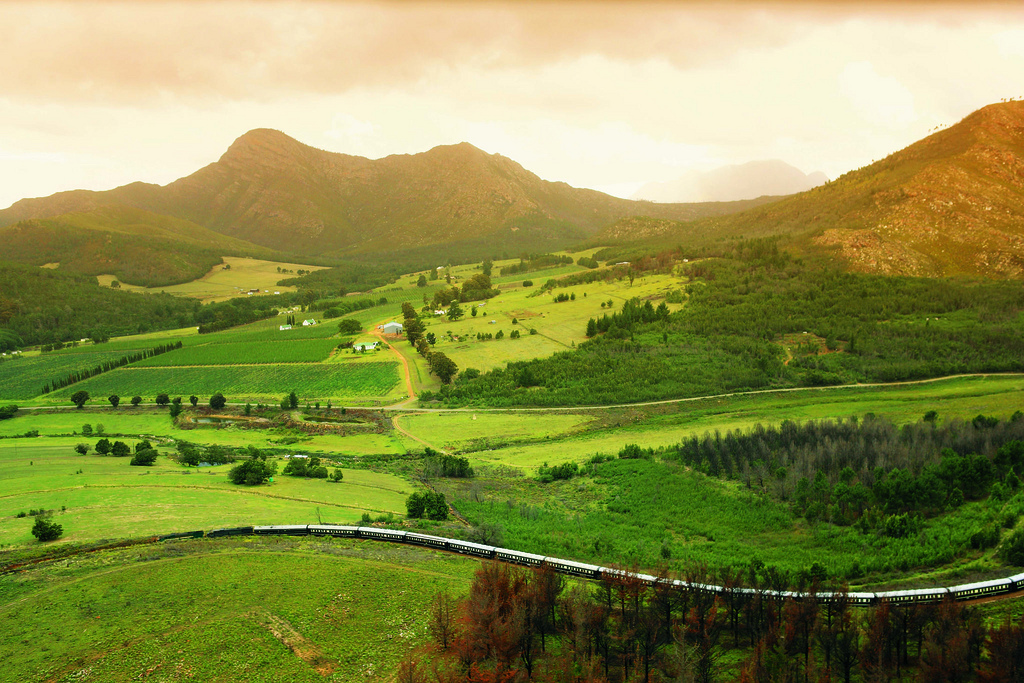
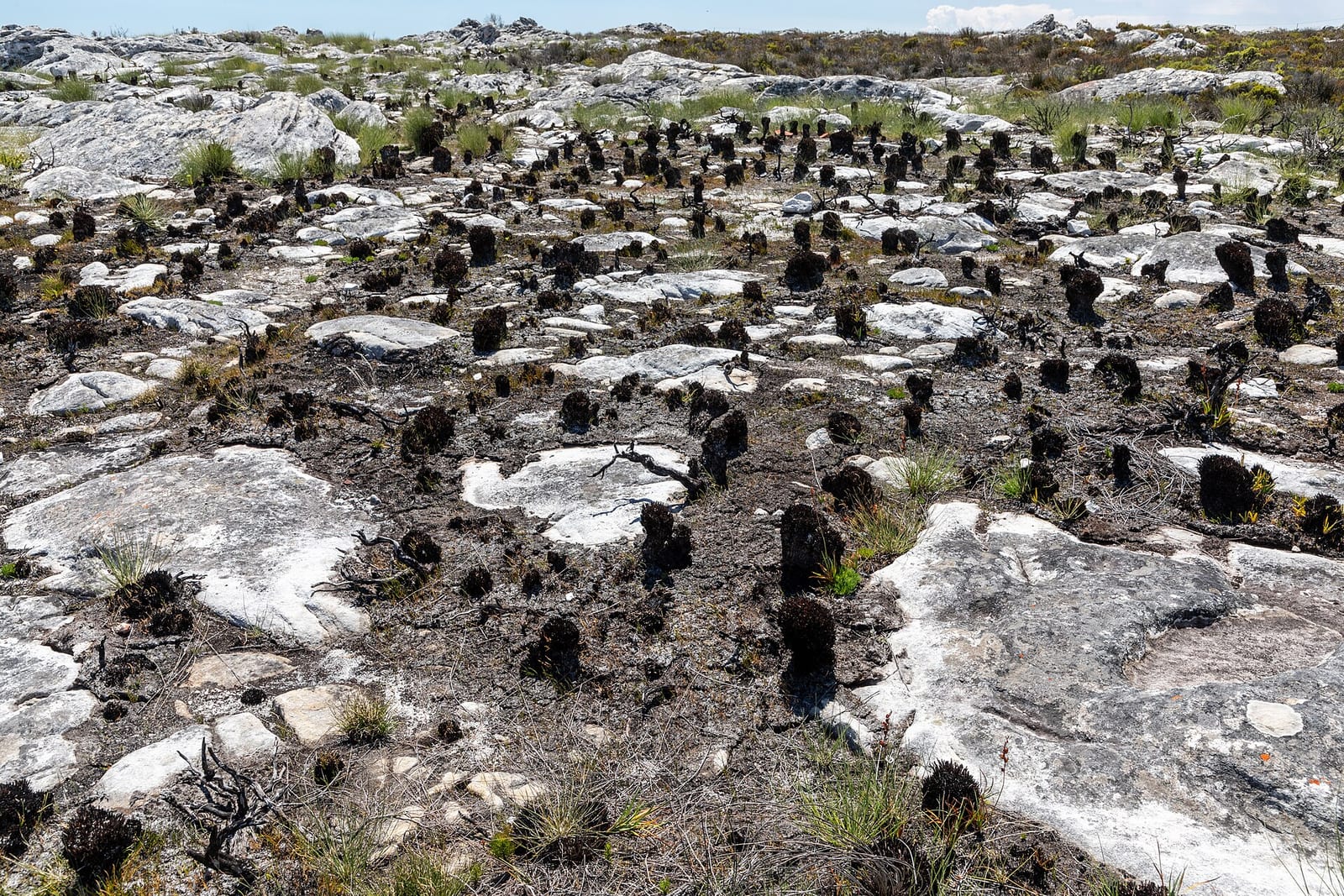
Near the end the line threads the mountains and drops through the Hex River Valley, a sudden green world of vineyards and orchards ringed by peaks — the gateway to the Cape winelands.Dietmar Rabich / Wikimedia Commons · CC BY-SA 4.0Cape Town & Table Mountain
The journey ends where Africa meets two oceans, rolling into Cape Town beneath the flat grey wall of Table Mountain — one of the great railway arrivals anywhere.A bit of history
Culture & experiences along the way
Bob Adams / Wikimedia Commons · CC BY-SA 2.0Dining in the grand manner
Two restored restaurant cars serve multi-course meals of South African cuisine and Cape wines, jacket-and-tie in the evening, with a pianist in the lounge and a smoking of good intentions — the golden age of rail, revived.Garyth / Wikimedia Commons · CC BY-SA 3.0A train from another era
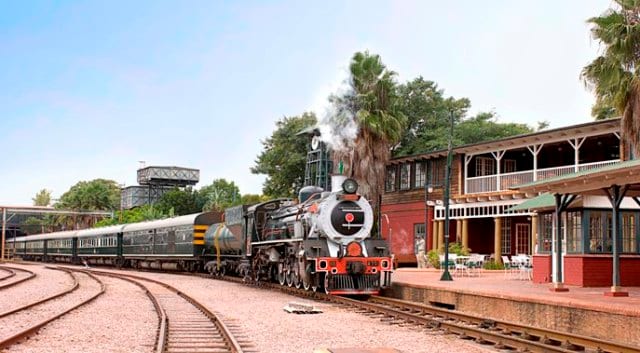
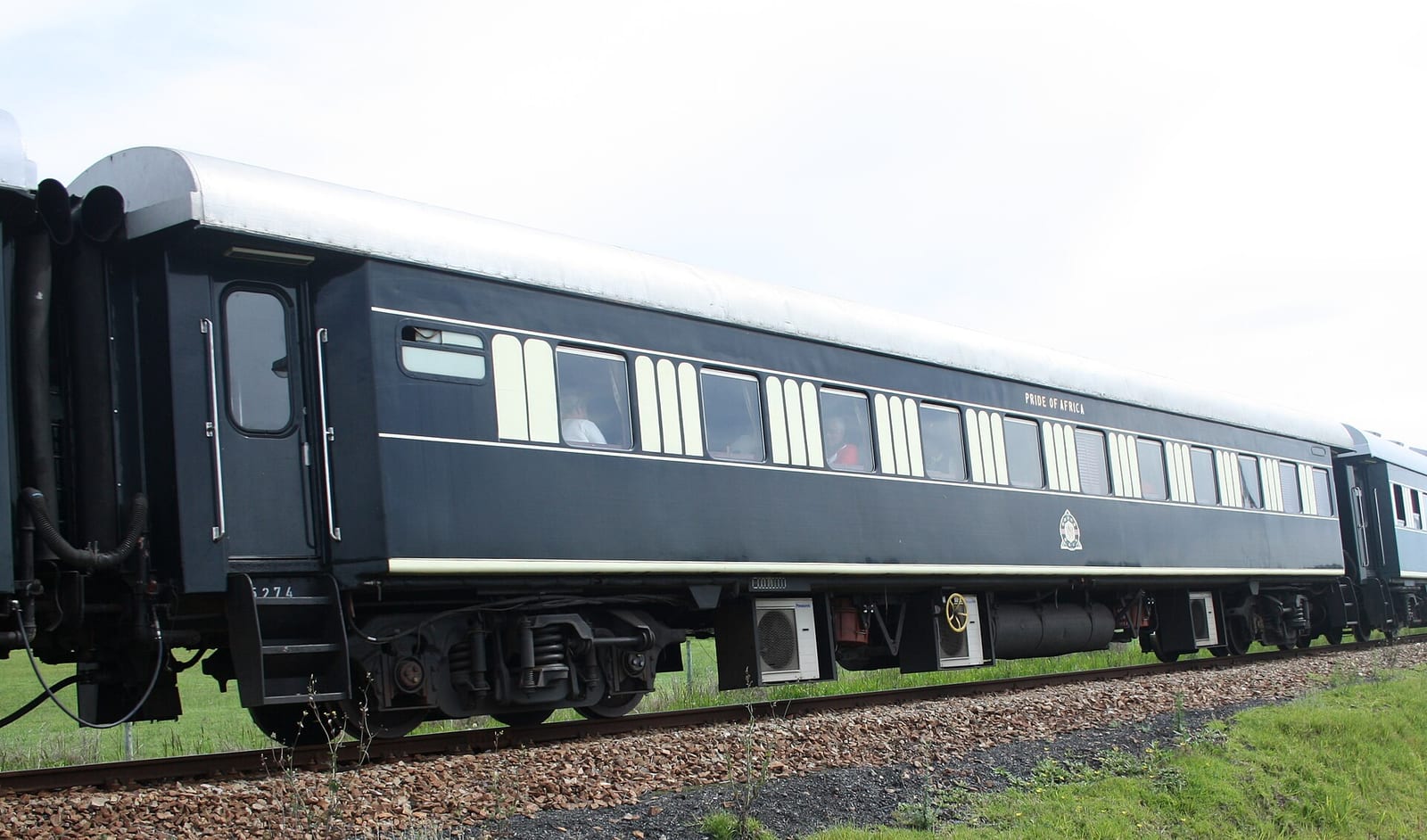
Rovos runs beautifully restored early-20th-century carriages, sometimes hauled out of Pretoria behind a steam locomotive — wood panelling, brass fittings and en-suite Victorian bathrooms.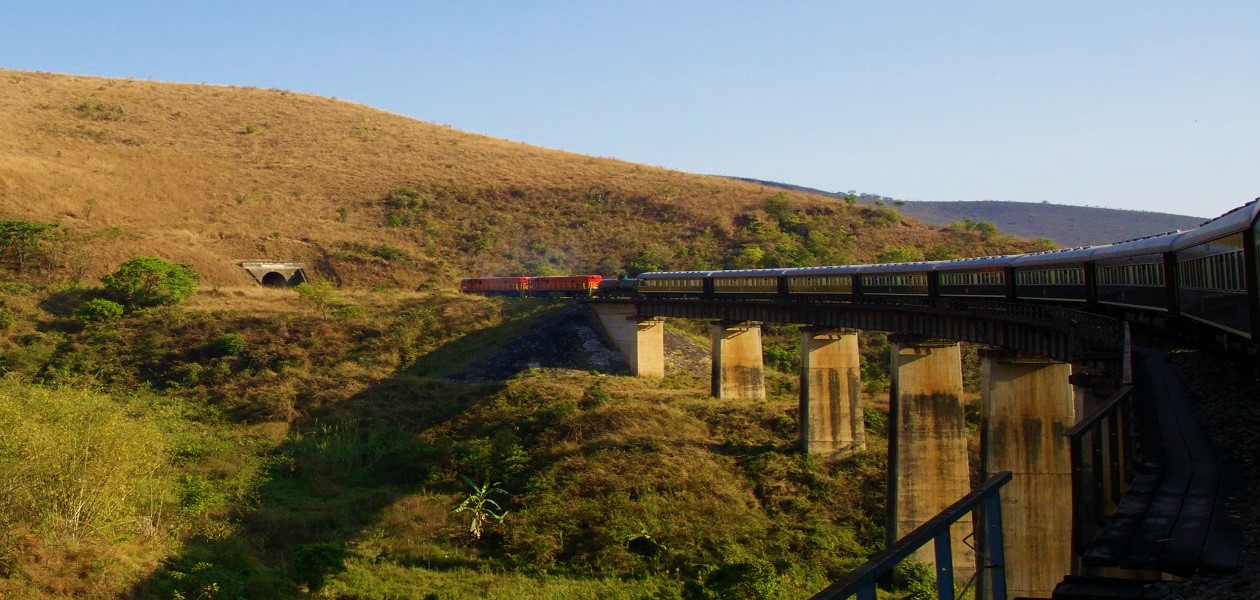 Rovos Rail
Nowhere to be, nothing to do
There are no televisions, radios or Wi-Fi in the suites — just a window onto Africa, off-train excursions to a diamond mine and a Karoo village, and the rare luxury of having absolutely nothing you must do.Timetables
Rovos Rail is a scheduled luxury service, not a daily train — departures run on set dates through the year (roughly weekly in the peak months), and the whole thing is sold as an all-inclusive package rather than a simple ticket.
The flagship Pretoria ⇄ Cape Town run (2026): the train departs Pretoria at 10:00 and arrives Cape Town around 15:00 on the third day — a leisurely 3 days / 2 nights over ~1,600 km, with off-train excursions (Kimberley's Big Hole, the Karoo) along the way.
Other signature journeys:
| Journey | Nights | Distance |
|---|---|---|
| Pretoria ⇄ Cape Town | 2 nights · 3 days | ~1,600 km |
| Pretoria ⇄ Victoria Falls | 3 nights | ~1,400 km |
| Pretoria ⇄ Durban | 2 nights | ~800 km |
| Cape Town → Dar es Salaam (African safari) | ~15 nights | ~5,530 km |
| Pretoria ⇄ Walvis Bay (Namibia) | ~11 nights | ~3,400 km |
Good to know:
- All-inclusive — the suite, all meals and drinks, and the off-train excursions.
- Book well ahead. Capacity is tiny (a few dozen guests) and popular dates go a year or more in advance.
- Dress code — smart-casual by day, jacket-and-tie for dinner.
- Either direction — the Cape Town and Pretoria ends both make a natural start or finish to a wider trip.
Times/dates as of the 2026 season (times are approximate and not guaranteed). Confirm the dated departure calendar with the operator — see the Tickets section below.
Tickets
Rovos Rail is a bucket-list experience, priced to match, and booked directly with the operator. Fares are all-inclusive — suite, all meals and drinks, and off-train excursions — and vary by journey, season and suite grade, so we point you to Rovos for a live quote rather than a figure that will date.
There are three grades of suite, all en-suite and all sharing the same dining, lounges and excursions:
- Pullman Suite — the classic: a compact but beautifully finished cabin of about 7 m², converting between lounge and bedroom.
- Deluxe Suite — larger (around 10 m²), with a permanent lounge area and more room to spread out.
- Royal Suite — the grand one: half a carriage (about 16 m²), with a separate lounge and a full Victorian bathtub.
A few pointers:
- Book far ahead — capacity is tiny and the best dates go a year or more in advance.
- Choose your journey first, suite second: the Cape Town run is the classic, but Victoria Falls and the epic Dar es Salaam safari are extraordinary.
- Everything's included once aboard, so beyond getting to Pretoria or Cape Town there's little to arrange.
Book your tickets
Pullman Suite
The classic suite
A compact but beautifully finished en-suite compartment (about 7 m²) — the entry to the Rovos experience, with the same dining, lounges and excursions as every guest.
Book Tickets (opens in a new tab, on Rovos Rail)via Rovos RailRoyal Suite
Half a carriage · Victorian bath
The grandest accommodation on the train — a suite filling half a carriage, with a lounge area and a full Victorian bathtub. The last word in railway luxury.
Book Tickets (opens in a new tab, on Rovos Rail)via Rovos RailRail Passes
No rail pass covers Rovos Rail. It is sold as an all-inclusive journey, suite, meals, drinks and excursions together. Interrail and Eurail are European schemes, and South Africa is not among the 33 countries in Interrail's list of covered railway companies (opens in a new tab).
Checked October 2026 against Interrail's list of covered railway companies (opens in a new tab).
Places to Visit
The Rovos flagship links two great cities, with classic stops in between — and either end is the springboard for far more of South Africa.
Two things the cards below leave to you. Johannesburg, an hour from Pretoria, is where the Apartheid Museum and the Soweto tours are, and no first visit to the country is complete without a day given over to them. And a safari is worth building in at either end rather than squeezing in: the Kruger is a long way north-east of Pretoria, but the private Karoo and Eastern Cape reserves are far closer to the line and malaria-free, which makes them the easier add-on to a train that already ends at the coast.
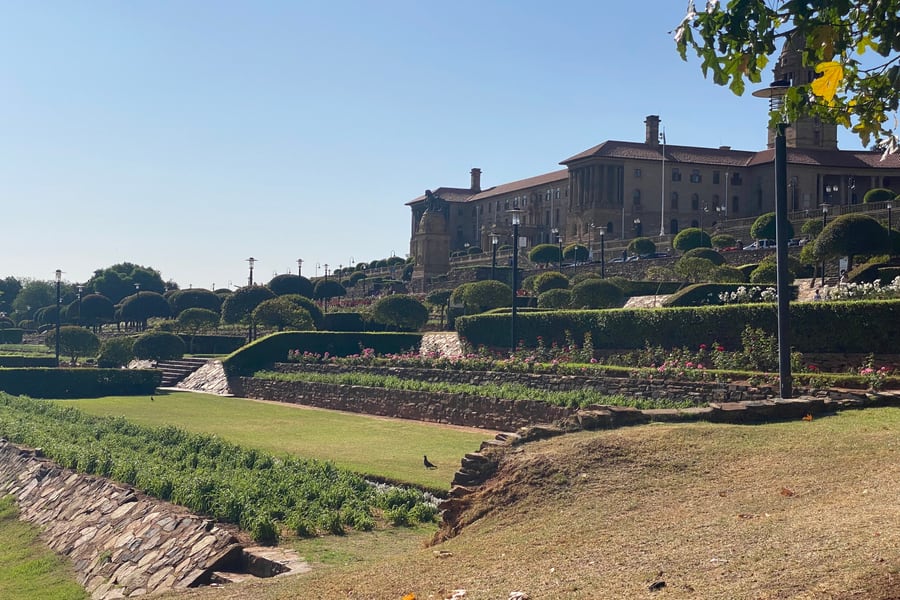 Ruby D-Brown / Wikimedia Commons · CC BY 4.0 · cropped
Pretoria
The train leaves from Rovos's own station here, so give the city a morning. Herbert Baker's Union Buildings went up between 1910 and 1913 in light sandstone, a 285-metre crescent whose two wings and twin domes stand for the country's two official languages of the day. Mandela was inaugurated on the terraces below on 10 May 1994 — and in 2024 they were inscribed as a UNESCO World Heritage Site for exactly that.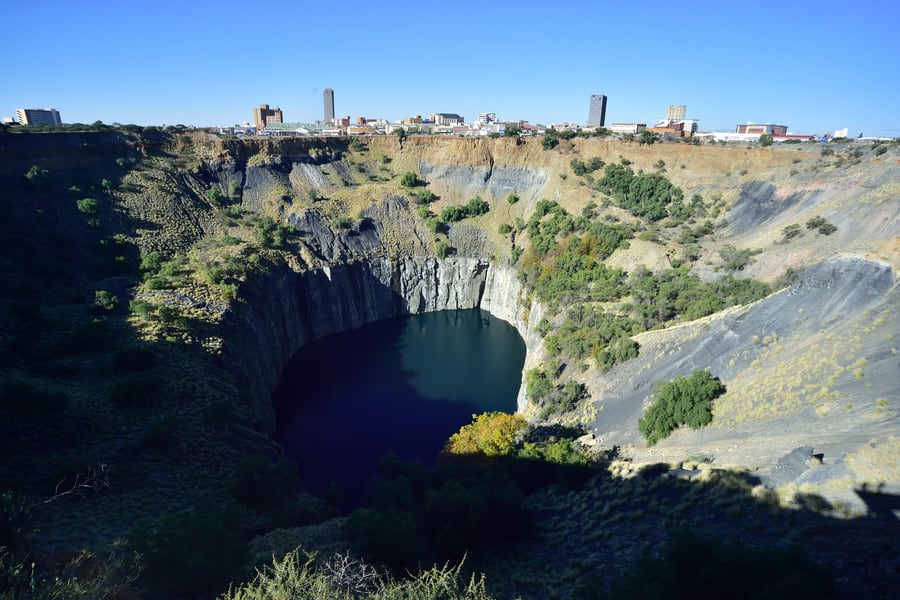 South African Tourism / Wikimedia Commons · CC BY 2.0 · cropped
Kimberley
The Big Hole is 463 m across and was dug to 240 m by up to 50,000 men with picks and shovels, from July 1871 until work stopped on 14 August 1914: 22 million tons of rock for 14.5 million carats of diamonds. It is often called the largest hand-dug excavation on earth, though a 2005 look at the records suggests Jagersfontein and Bultfontein may beat it. Either way it is a chasm in the middle of a working city.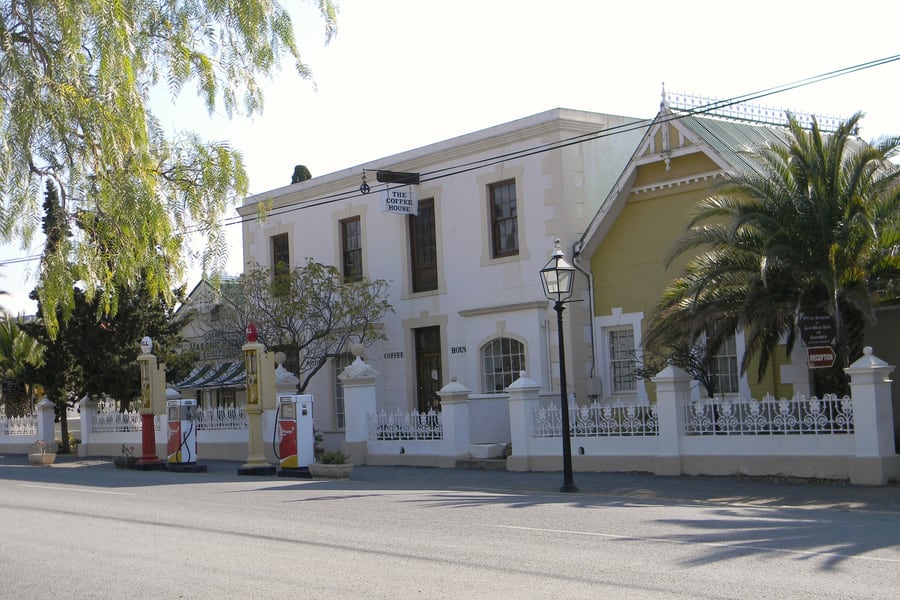 Tottelme / Wikimedia Commons · CC BY-SA 3.0 · cropped
Matjiesfontein
A Scot named James Logan opened a railway refreshment room at a siding here in the 1880s and built a Victorian spa village around it, on the theory that the dry Karoo air was good for weak lungs. It worked, and then it stopped, and the village simply never changed: the whole town was declared a National Monument on 12 September 1975 and fewer than 500 people live in it. An afternoon is exactly the right amount of time.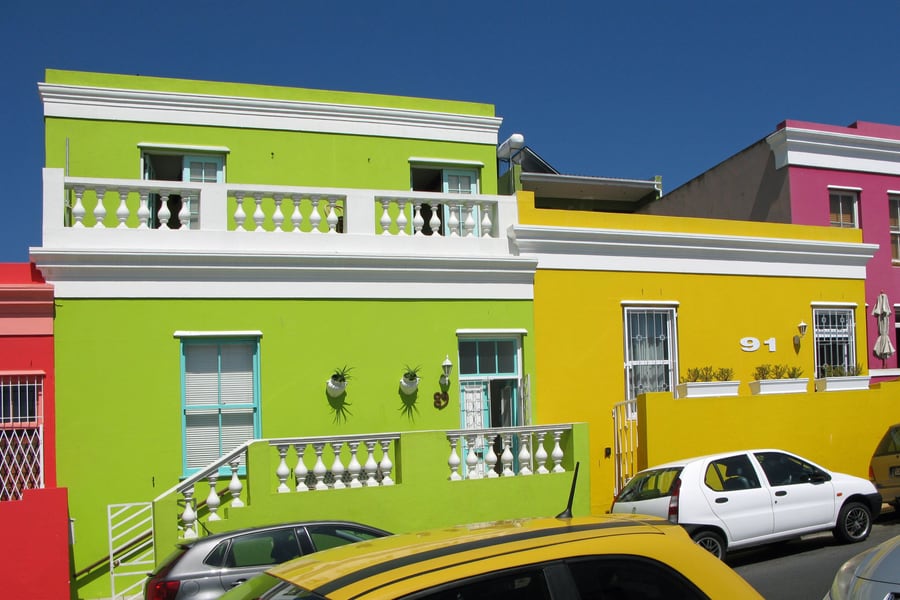 Kotivalo / Wikimedia Commons · CC BY-SA 4.0 · cropped
Bo-Kaap
The steep quarter under Signal Hill, laid out from 1763 as rental housing and now the heart of Cape Malay Cape Town; the Auwal Mosque on Dorp Street, of 1794, is the oldest in the country. About the famous colours: the story that freed tenants painted their white rented houses is lovely and probably not true — the bright facades are a late twentieth-century tradition. Nineteen sites here became National Heritage sites in 2019.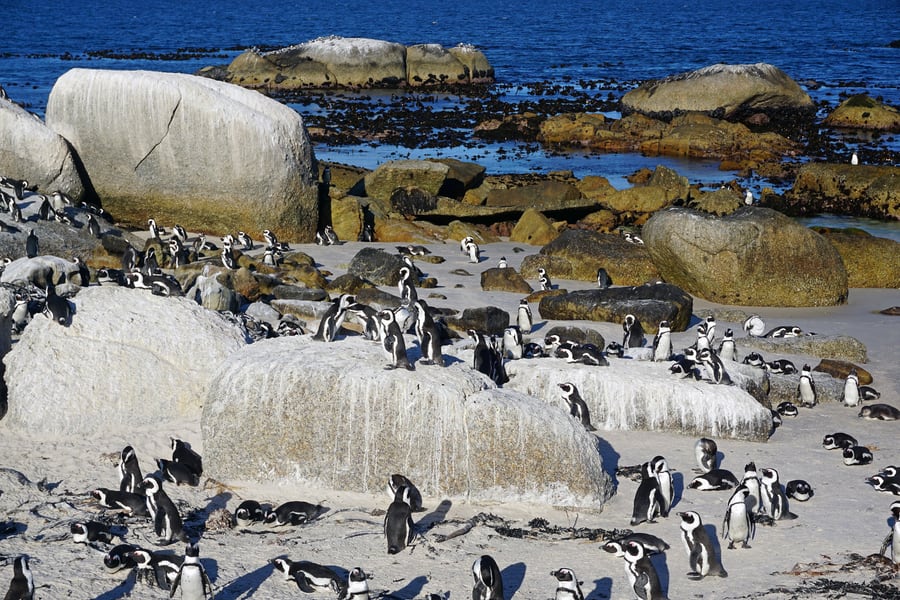 kallerna / Wikimedia Commons · CC BY-SA 4.0 · cropped
Boulders Beach
African penguins came ashore at Simon's Town in the 1980s and stayed, which is why you can stand on a boardwalk a few metres from a breeding colony. Go, but go knowing what you are looking at: the species was uplisted to Critically Endangered in 2024, breeding pairs fell below 10,000 in 2023, and the population is down some 95% from pre-industrial levels. This is one of the last places it is easy to see them.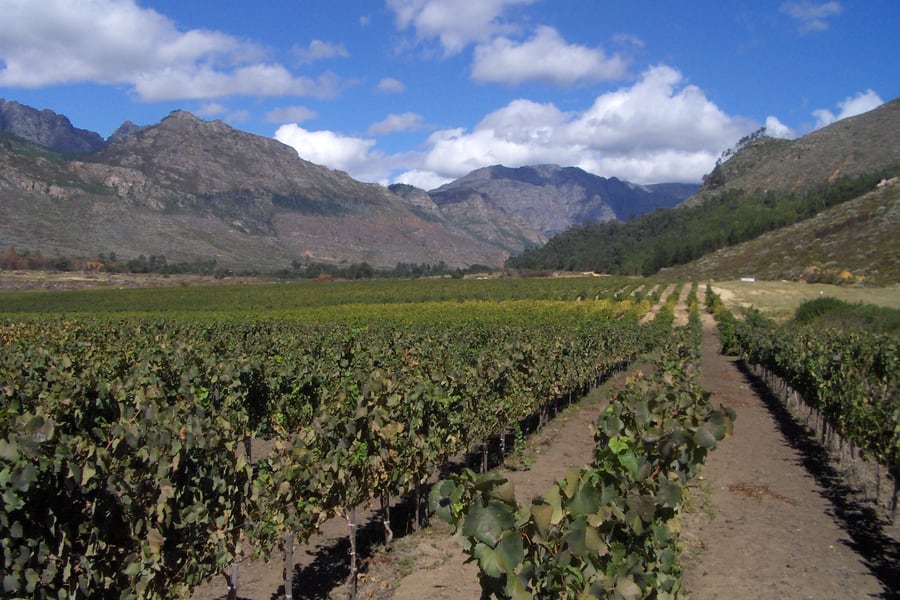 Sara Atkins / Wikimedia Commons · CC BY 2.0 · cropped
Franschhoek
An hour from Cape Town, a valley of vines closed at the far end by mountains, and the easiest possible add-on to a train that has just spent a morning skirting the wine country. The name means "French corner" and the farms still carry the names the Huguenot refugees gave them in the 1680s. Stellenbosch and Paarl are the other two points of the triangle; all three are doable without a car if you use the wine tram or a driver.Where to Sleep
On the journey itself, the train is the hotel — you sleep in your own en-suite suite (Pullman, Deluxe or Royal) as South Africa slides past the window, so there is nothing to arrange for the nights on board.
It's the nights before and after that reward a little planning:
- Pretoria / Johannesburg — a night at either end of the train: Pretoria is calmer and greener and close to Rovos's Capital Park station; Johannesburg has the wider choice of hotels and the big museums.
- Cape Town — very much worth several nights of its own, from grand hotels below Table Mountain to boutique stays around the V&A Waterfront and the beaches of Camps Bay.
- The Winelands — a night or two at a wine-estate hotel in Stellenbosch or Franschhoek makes a perfect, indulgent extension to the Cape end.
- A safari lodge — bookend the trip with a stay at a Big Five reserve for the other half of the classic South African experience.
Book Cape Town and the winelands ahead over the December–February summer peak, when the Cape is at its busiest.
Questions or corrections
Planning this trip and stuck on something, or spotted a time, fare or detail that has changed? Send us a message about Rovos Rail. We read every one, and we update this page when something has changed.