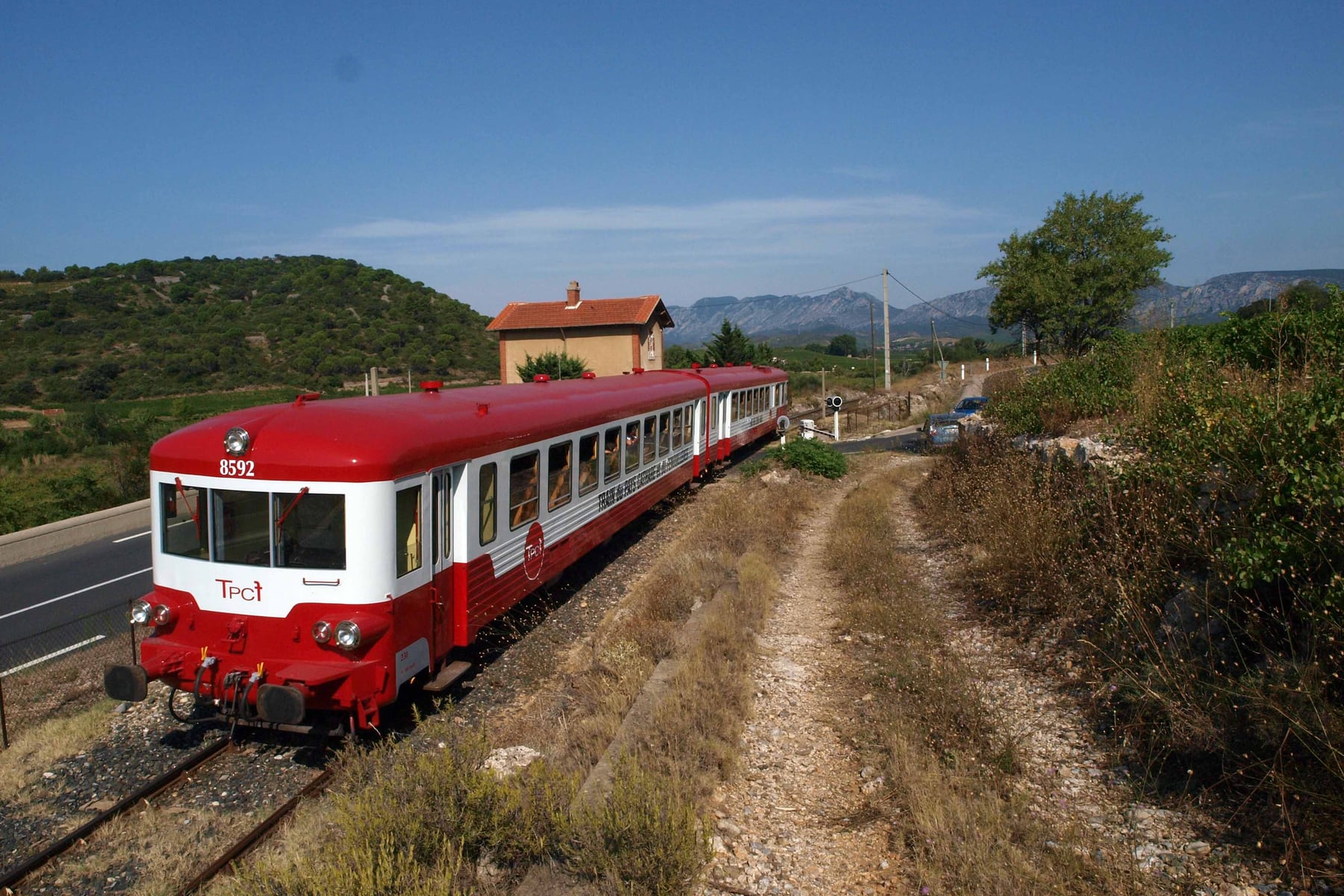
Train Rouge du Pays Cathare
Profburp / Wikimedia Commons · CC BY-SA 3.0 · cropped
- DistanceAbout 60 km · standard gauge
- Duration2 h 25 each way, Rivesaltes to Axat
- Best seasonJune–September for the open wagons
Introduction
From the vineyards on the edge of Perpignan to the gorge of the Aude, the Train Rouge climbs sixty kilometres into Cathar country on a railway that lost its passengers in 1939.
The line was opened by the Compagnie du Midi in two stages, from Rivesaltes to Saint-Paul-de-Fenouillet on 14 July 1901 and through the mountains to Quillan in May 1904. Its passenger trains were replaced by buses in April 1939, and for the rest of the century it carried freight. In 1992 a group of railway enthusiasts founded the association of the Train du Pays Cathare et du Fenouillèdes, cleared the overgrown track at the mountain end, and in September 2001 ran their first railcar. The first full tourist season followed in 2002.
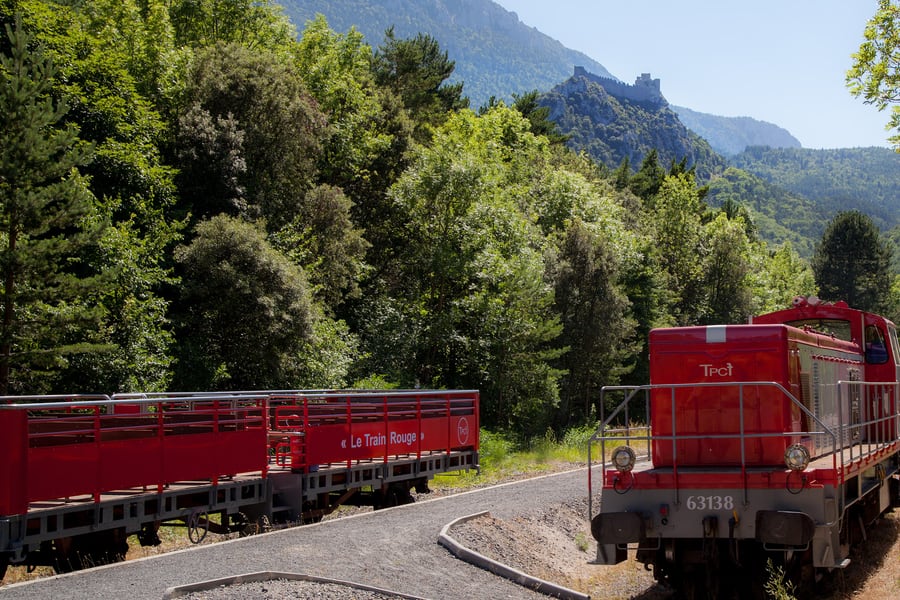
The train is red and white from end to end: a Caravelle railcar of the 1960s on the vineyard half, from Rivesaltes to Saint-Paul, and in summer a panoramic train of covered and open wagons from Saint-Paul up to Axat, over the viaducts below the castle of Puilaurens. The whole run, the Grand Parcours, takes about two and a half hours each way.
The Journey
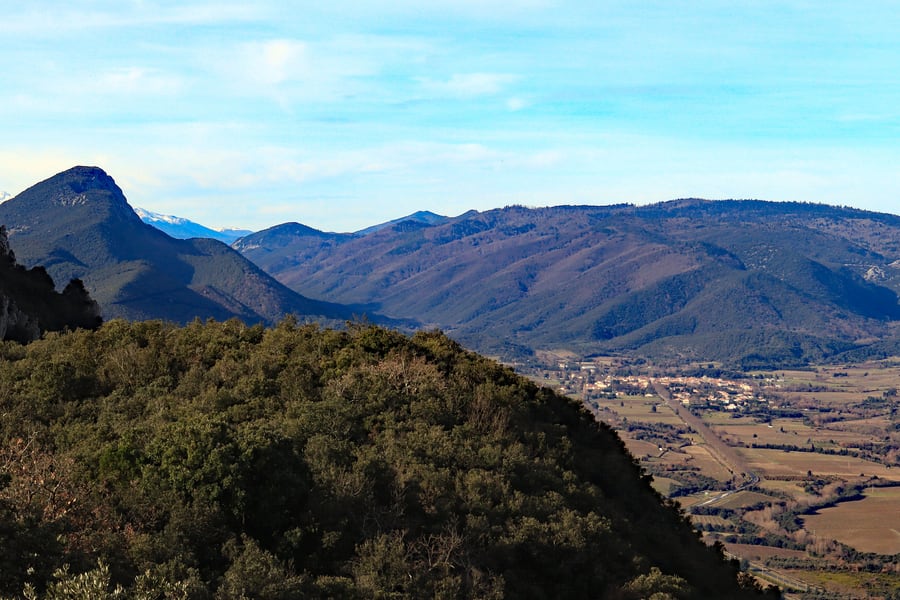
The train leaves from Rivesaltes, from track 4 of the SNCF station, reached by a footbridge over the main line. Westward it follows the valley of the Agly through Espira-de-l'Agly, Cases-de-Pène and Estagel, a wide plain of vines with the limestone cliffs of the Corbières closing in from the north. At Maury the castle of Quéribus appears on the crest above the village, and at Saint-Paul-de-Fenouillet, about halfway, the cliffs part to the north to show the Gorges de Galamus.
From June to September Saint-Paul is where the train changes. Passengers on the Grand Parcours leave the closed railcar and board the panoramic train for the mountain half, so the operator suggests using the toilets at Saint-Paul first: the panoramic train has none. Beyond Caudiès-de-Fenouillèdes the line climbs into deep forest, through tunnels and over viaducts, and at Lapradelle the train stops on the viaduct below the castle of Puilaurens. The arrival at Axat comes through a run of tunnels and over a high viaduct above the Gorges de Saint-Georges; the morning train runs on to Saint-Martin-Lys for passengers who have booked lunch at the restaurant by its old station.
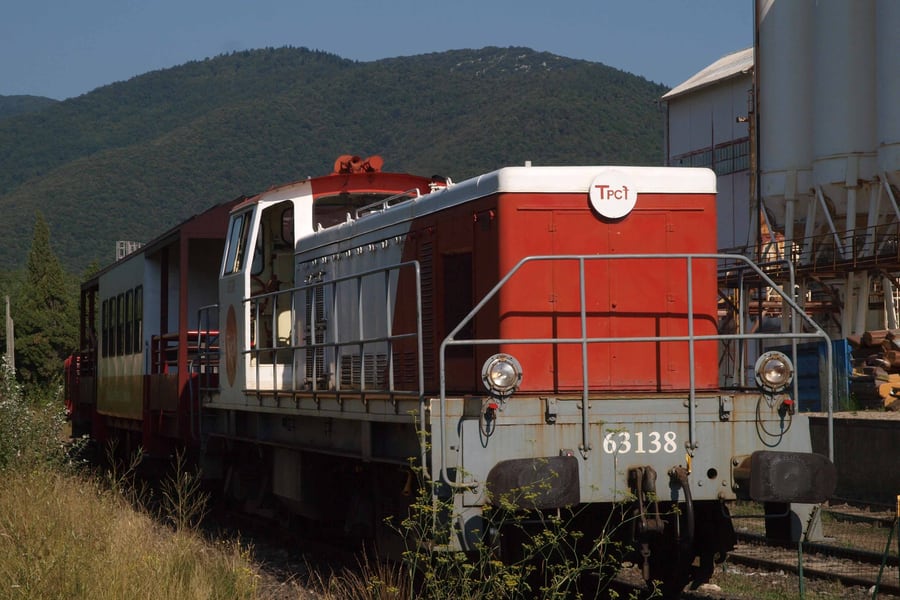
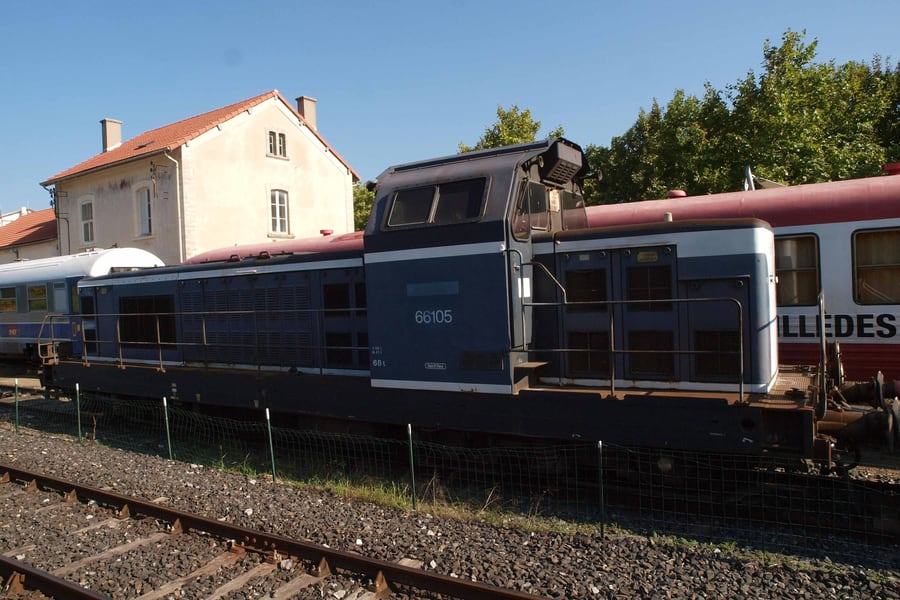
In April, May and October, and from the second half of September, the whole run is made in the closed train, which has toilets and a small bar selling coffee, cold drinks and regional produce. An agent on board gives a commentary along the way. The railcars are Caravelles, the SNCF's X 4500 family, kept in the line's own red and white, and the panoramic wagons are pulled by diesels that came from the SNCF, among them BB 63000s of the 1950s. Bicycles travel free and pushchairs have a space of their own, though the operator suggests joining at Espira-de-l'Agly with either, because of the footbridge at Rivesaltes.
Along the route
 Josep Renalias / Wikimedia Commons · CC BY-SA 3.0 · cropped
Out through the vines
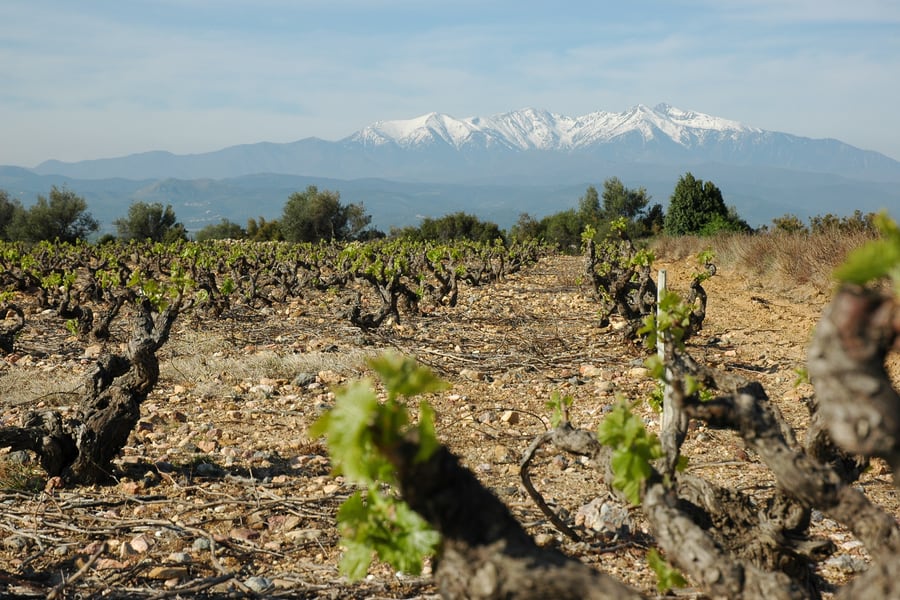
From Rivesaltes the train heads west up the Agly valley through Espira and Cases-de-Pène, across vineyards known for sweet fortified wine, with the snow of the Canigou on the skyline to the south-west.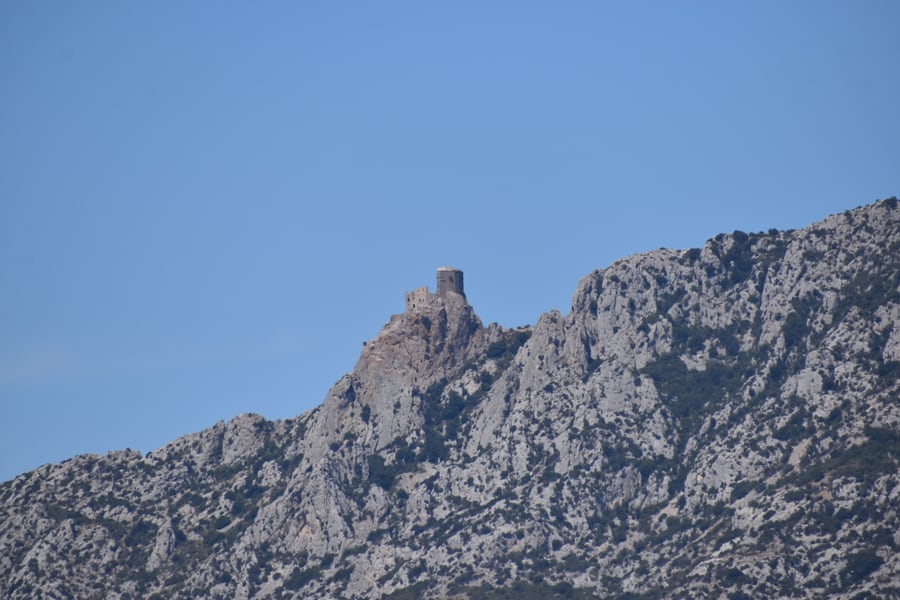 Tylwyth Eldar / Wikimedia Commons · CC BY-SA 4.0 · cropped
Maury and Quéribus
Past Estagel the valley narrows below the cliffs of the Corbières. Above Maury the keep of Quéribus sits on the highest crest, while an agent on board gives a running commentary on the line.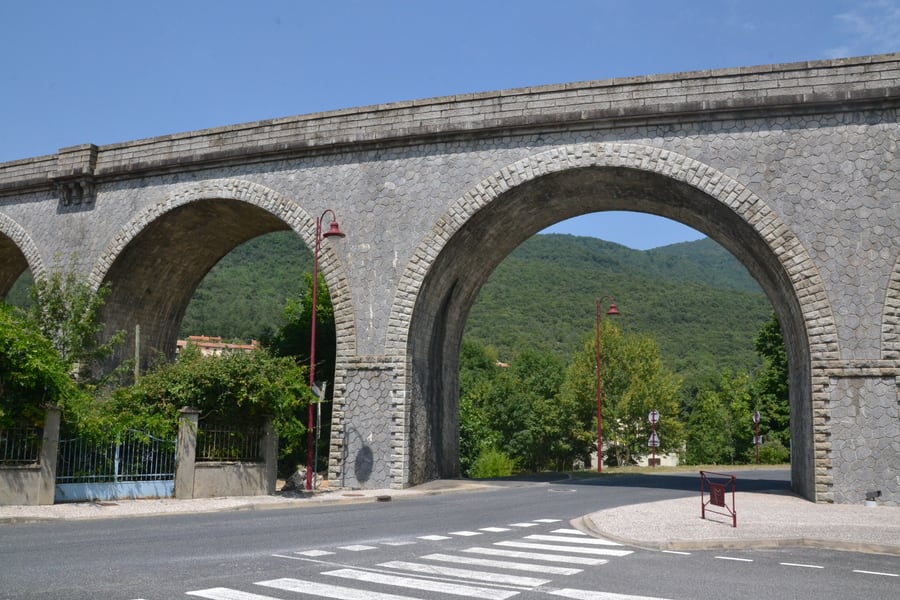 Lucas Destrem / Wikimedia Commons · CC BY-SA 4.0 · cropped
The viaducts of Lapradelle
Beyond Saint-Paul and Caudiès the line climbs into forest. At Lapradelle it runs on stone arches, and the train stops on the viaducts and below the castle of Puilaurens, high on its rock.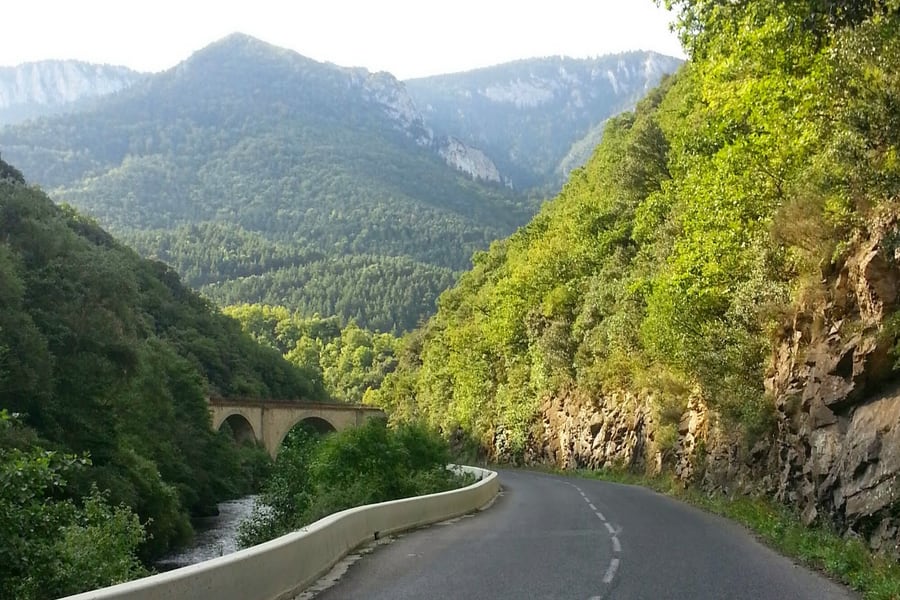 Gilles Guillamot / Wikimedia Commons · CC BY-SA 3.0 · cropped
Down to the Aude
The last stretch drops through a run of tunnels and over a high viaduct into Axat, in the gorge of the Aude. Past Axat the line runs on to Saint-Martin-Lys, playing hide and seek with the river's rapids.A bit of history
Culture & experiences along the way
 Tylwyth Eldar / Wikimedia Commons · CC BY-SA 4.0 · cropped
Maury's sweet red wine
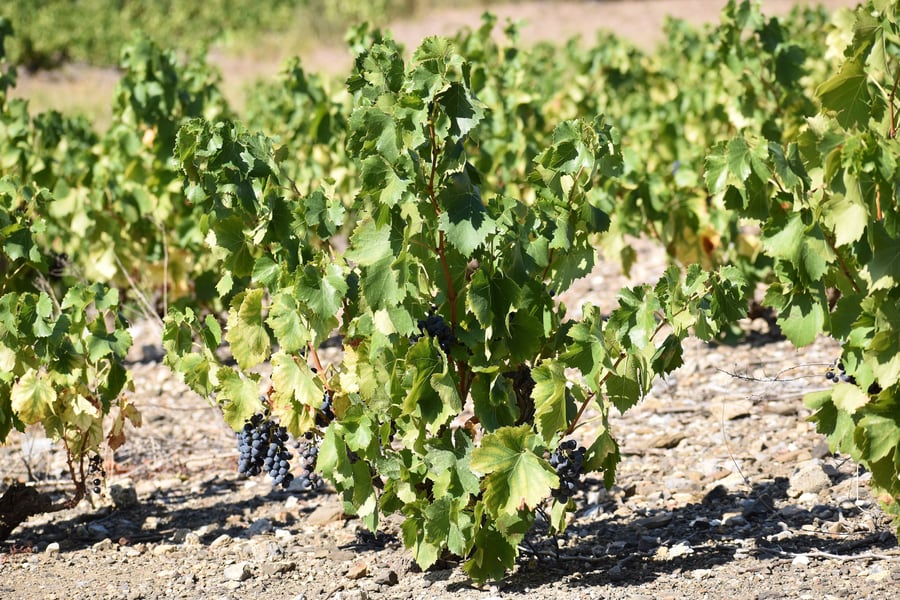
Maury, Rivesaltes and Saint-Paul all lie in the country of vin doux naturel, wine fortified with spirit during fermentation so that it keeps its sweetness. Maury's is made mostly from Grenache noir and is often aged for years; the estates around the village open their cellars for tastings.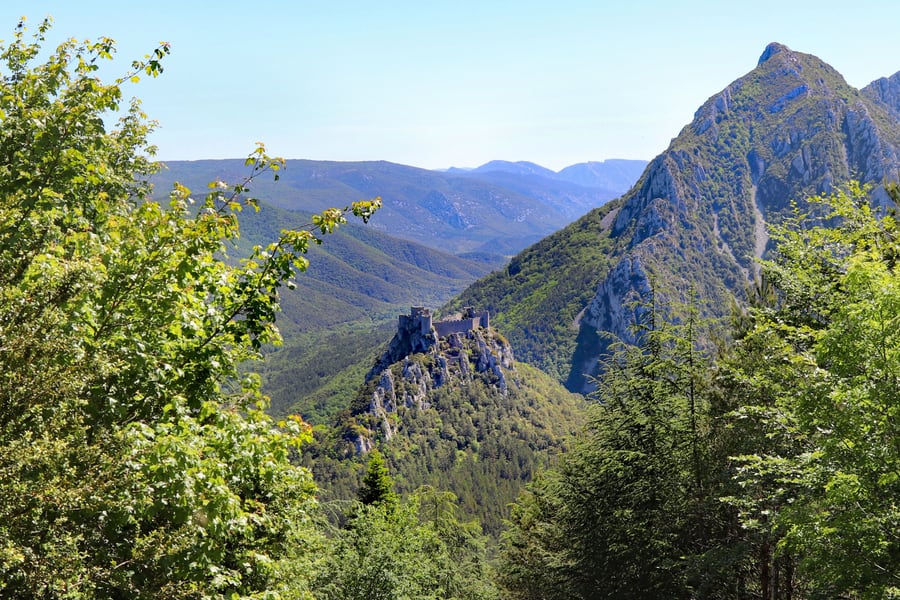 Jcb-caz-11 / Wikimedia Commons · CC BY-SA 4.0 · cropped
Train and castle
On summer days the operator sells a train ticket with a visit to Puilaurens: a free shuttle meets the train at Lapradelle at 11:48 and climbs to the castle, leaving time for a picnic and the ramparts before the bus back down at 15:30.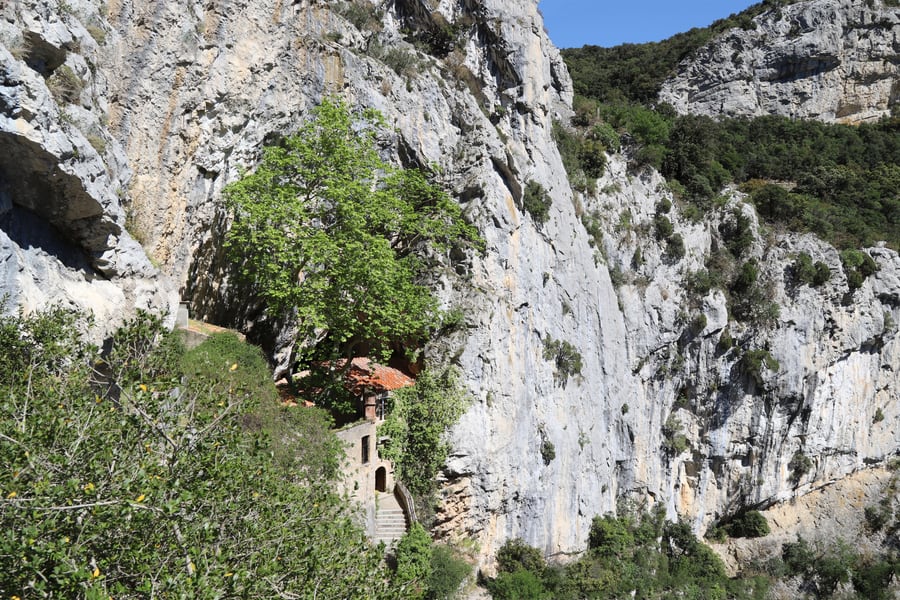 Jcb-caz-11 / Wikimedia Commons · CC BY-SA 4.0 · cropped
The hermitage in the cliff
North of Saint-Paul the Agly has cut the Gorges de Galamus, and halfway down the wall the hermitage of Saint-Antoine clings to the cliff. In July and August 2026 a €2 shuttle ran from Saint-Paul station to the gorges and back.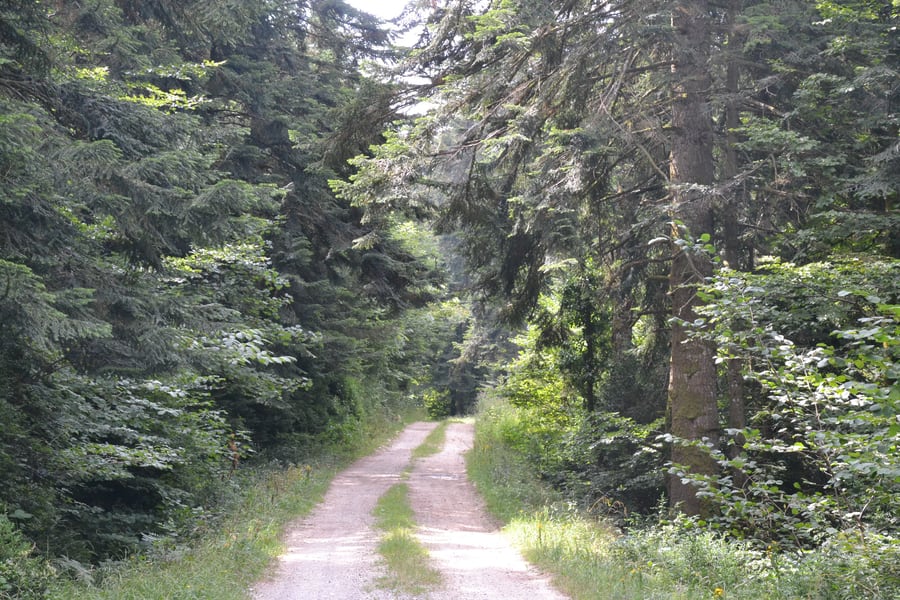 Lucas Destrem / Wikimedia Commons · CC BY-SA 4.0 · cropped
Colbert's forest
Beside Lapradelle, the Forêt des Fanges was a royal forest that supplied masts for the French navy under Colbert, and stones carved with the fleur-de-lys still mark it. Its shaded tracks are walked in summer and searched for mushrooms in autumn.Timetables
The 2026 season ran from April to the end of October, and the operator has not yet published dates for 2027. Christmas trains run on 6, 12 and 16 December and every day from 19 to 23 December 2026. Booking is compulsory in every season, and in October 2026 a train ran only if enough passengers had booked.
Grand Parcours — Rivesaltes to Axat and back
The last timetable of 2026, from 8 to 29 October, ran on Tuesdays, Thursdays and Sundays, all the way in the Caravelle railcar:
| Station | Out | Back |
|---|---|---|
| Rivesaltes | 09:45 | 17:35 |
| Espira-de-l'Agly | 09:53 | 17:15 |
| Cases-de-Pène | 10:06 | 17:05 |
| Estagel | 10:22 | 16:50 |
| Maury | 10:44 | 16:30 |
| Saint-Paul-de-Fenouillet | 11:02 | 16:15 |
| Caudiès-de-Fenouillèdes | 11:28 | 15:50 |
| Lapradelle | 11:43 | 15:35 |
| Axat | 12:10 | 15:15 |
That leaves three hours in Axat for lunch. From June to September the Grand Parcours changes at Saint-Paul into the panoramic train, and the times change with it: the operator publishes a separate sheet for each departure station and period.
From Axat — Parcours des Viaducs
The mountain half is also sold on its own from Axat, out over the viaducts to Caudiès or on to Saint-Paul and back, in the panoramic train in summer. In July and August 2026 it ran on Tuesdays, Wednesdays, Thursdays, Fridays and Sundays.
Getting there: Rivesaltes, ten kilometres from Perpignan, has an SNCF station, and the Train Rouge uses its track 4, across the footbridge. Axat has no mainline station; the nearest is Quillan, with a bus on from there. There is free parking opposite the stations at Rivesaltes and Axat.
Times as of November 2026, from the operator's timetable and fare sheets (opens in a new tab), which give the days and times for each departure station.
Tickets
Tickets are sold on the operator's website, by phone on 04 68 200 400, and at the stations in Rivesaltes and Axat. Booking is compulsory and a ticket guarantees a seat; with an online ticket you go straight to the train. Tickets are return unless you ask for a single.
Children aged 4 to 14 and passengers over 65 pay reduced fares, and there are family tickets for two adults with two or three children. Holders of a disability card get a reduced fare, booked by phone. Bicycles go free; a dog costs €2. On your birthday the ride on a scheduled train is free. Prices for the 2026 season, as of November 2026, from the operator's fare sheets.
Book your tickets
Grand Parcours
€30.30 adult · €27.10 over 65 · €18.90 aged 4–14 · return
The whole line from Rivesaltes to Axat and back in a day.
Book Tickets (opens in a new tab, on Le Train Rouge)via Le Train RougeParcours des Viaducs
€14.80 adult · €10.30 aged 4–14 · return
Axat to Caudiès and back over the viaducts, in the panoramic train in summer.
Book Tickets (opens in a new tab, on Le Train Rouge)via Le Train RougeRail Passes
Interrail passes are not valid on the Train Rouge. Interrail's table of railway companies does not list it: in France the pass covers SNCF trains, including the regional TER, and a few other operators, so it gets you to Rivesaltes, and you buy an ordinary ticket for the Train Rouge.
For this journey a pass is worth buying only if Rivesaltes is one stop on a longer trip by rail through France; for the Train Rouge itself, the return ticket is the whole cost.
Checked November 2026 against Interrail's table of railway companies (opens in a new tab).
Places to Visit
The line runs along the old frontier between France and Spain, so the stops on its way up are overlooked by castles, and the villages below them grow the grapes for the region's sweet wines. Several of the sights are a short ride from a station: the operator runs shuttles to Puilaurens, to Quéribus by way of Cucugnan, and to the Gorges de Galamus on some summer days.
 Moncle / Wikimedia Commons · CC BY-SA 4.0 · cropped
Château de Quéribus
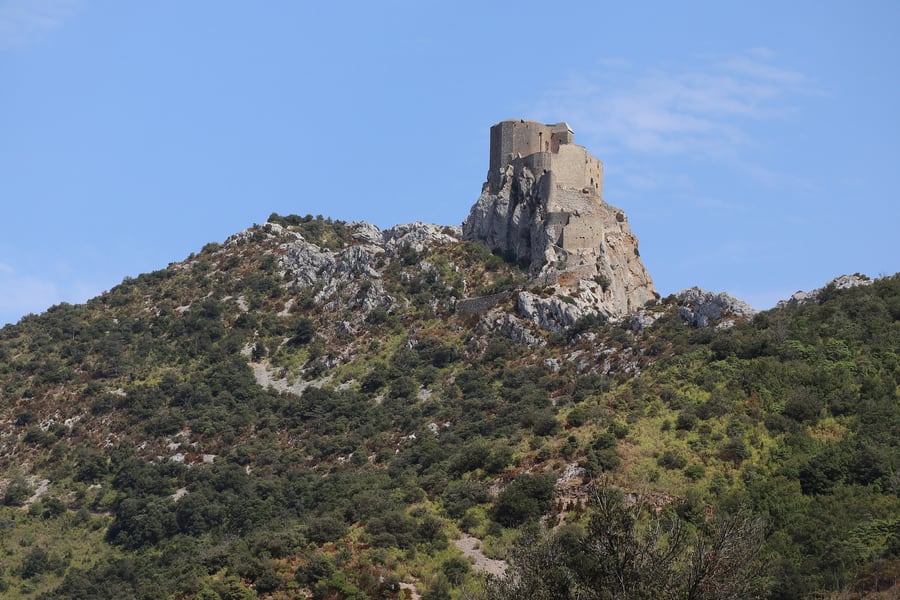
The castle stands at 728 metres on a spur of rock above Maury and is sometimes called the last Cathar stronghold: the Cathars gathered there after Montségur fell in 1244, and it surrendered without a fight in 1255. Since July 2026 it has been part of the UNESCO World Heritage Site of the Royal Capetian Fortresses of Languedoc.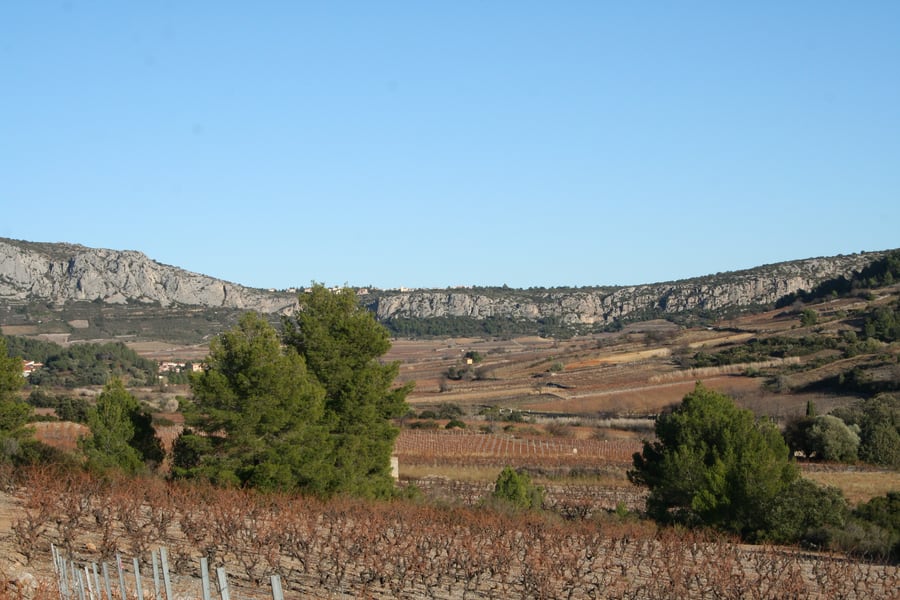 Christine und Hagen Graf / Wikimedia Commons · CC BY 2.0 · cropped
Tautavel
In the Caune de l'Arago, a cave 80 metres up a cliff above the river Verdouble at Tautavel, archaeologists found the remains of humans who lived there between about 550,000 and 400,000 years ago. The site has been studied since 1964, and the village's museum of prehistory grew out of it.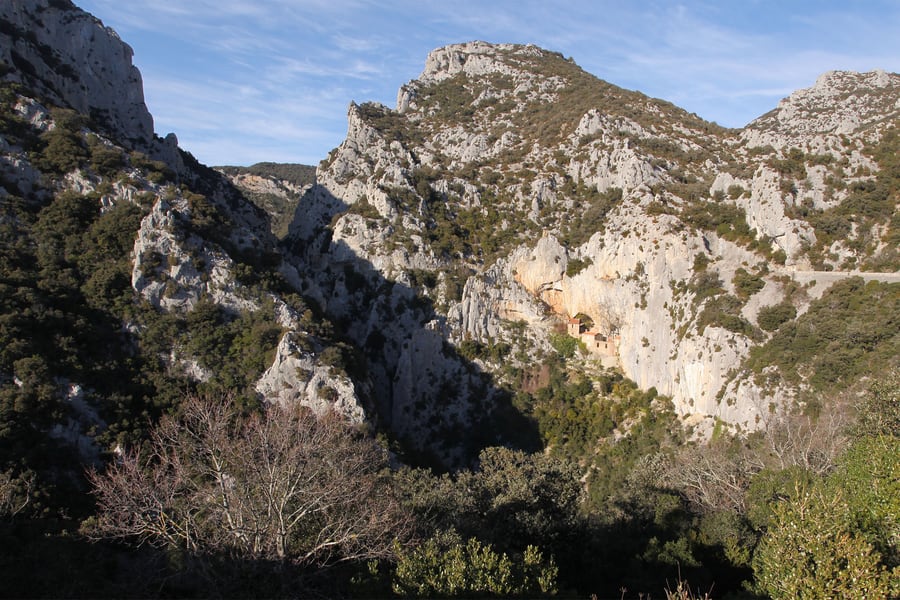 Jcb-caz-11 / Wikimedia Commons · CC BY-SA 4.0 · cropped
Gorges de Galamus
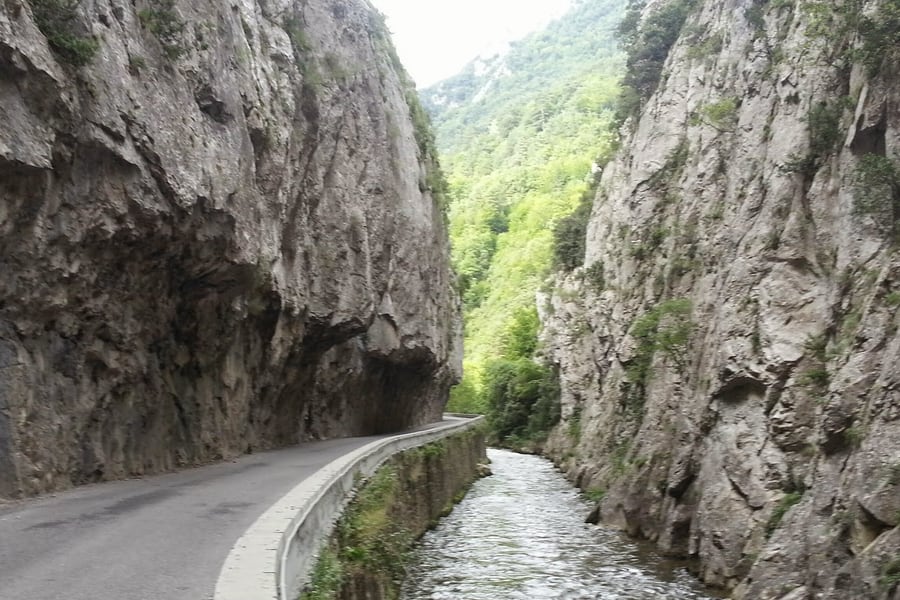
A narrow cut through the ridge north of Saint-Paul, carved by the Agly between the Aude and the Pyrénées-Orientales. A road ledge runs along one wall, and the hermitage of Saint-Antoine sits in the cliff opposite. It is a protected natural site, and a place for walking and canyoning, with clear water in the river below.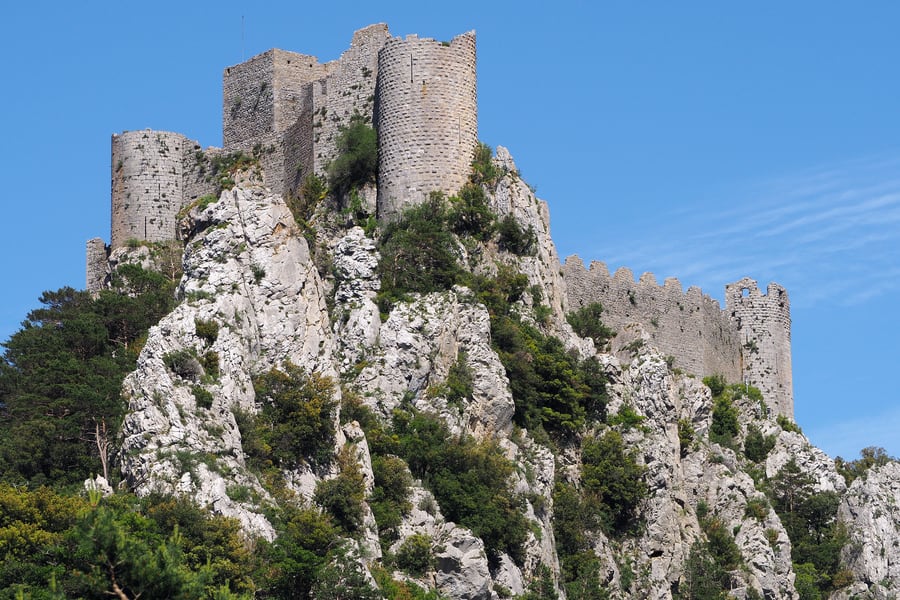 BlueBreezeWiki / Wikimedia Commons · CC BY-SA 3.0 · cropped
Château de Puilaurens
One of the "five sons of Carcassonne", the fortresses that guarded the frontier with Spain until 1659, Puilaurens stands on a ridge above the Boulzane valley at close to 700 metres. From the top the view runs over the Pyrenees and the Corbières. It has been a listed historic monument since 1902 and part of the UNESCO site since July 2026.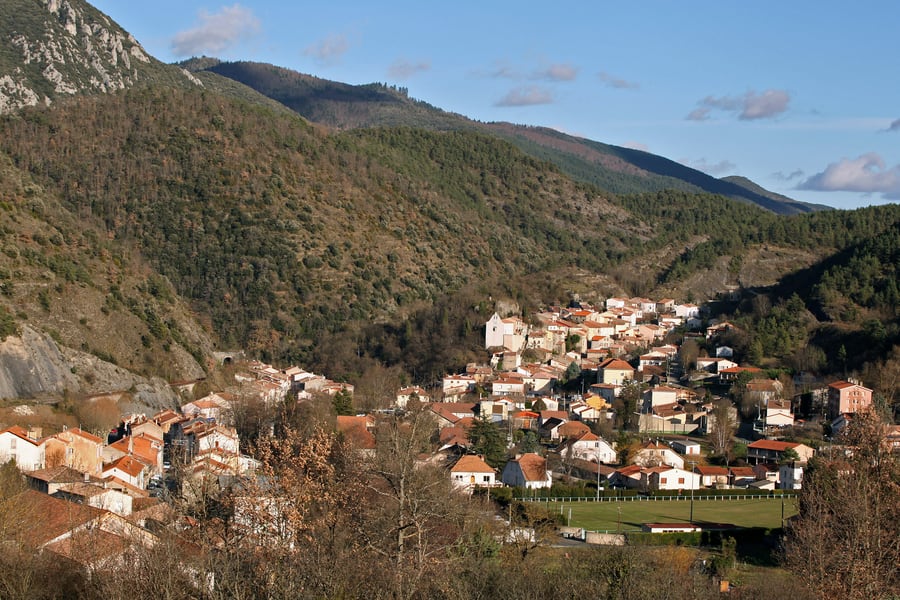 Jcb-caz-11 / Wikimedia Commons · CC BY-SA 4.0 · cropped
Axat
A village of some 480 people in the upper Aude valley, where the train turns round. The river makes it a centre for rafting and canoeing, marked trails climb into the forests around it, and the Gorges de Saint-Georges begin just upstream. The operator's station sells tickets for the train and its velorail.Where to Sleep
Rivesaltes, at the start of the line, is a short drive from Perpignan and its hotels. For a night in the hills, Saint-Paul-de-Fenouillet sits halfway along the line, within reach of Quéribus, Puilaurens and the Gorges de Galamus. For Axat, at the top, the operator sends visitors to the local tourist offices for rooms.
Where to stay
Novotel Perpignan Rivesaltes
On the edge of Rivesaltes
A hotel with a pool and a restaurant on the RN 9 at Rivesaltes, north of Perpignan.
Check Availability (opens in a new tab, on all.accor.com)via all.accor.comMas le Châtelet
In Saint-Paul-de-Fenouillet
A fifteen-room hotel of 1975 among the vines, with river-view rooms, a pool, a restaurant and a locked bicycle garage.
Check Availability (opens in a new tab, on hotel-lechatelet.com)via hotel-lechatelet.comQuestions or corrections
Planning this trip and stuck on something, or spotted a time, fare or detail that has changed? Send us a message about Train Rouge du Pays Cathare. We read every one, and we update this page when something has changed.