Train Suite Shiki-shima
Sachidon / Wikimedia Commons · CC BY-SA 2.5
- DistanceVaries by course · round trips from Ueno, Tokyo
- DurationTwo to four days
- Best seasonYear-round · set departures, sold by lottery
Introduction
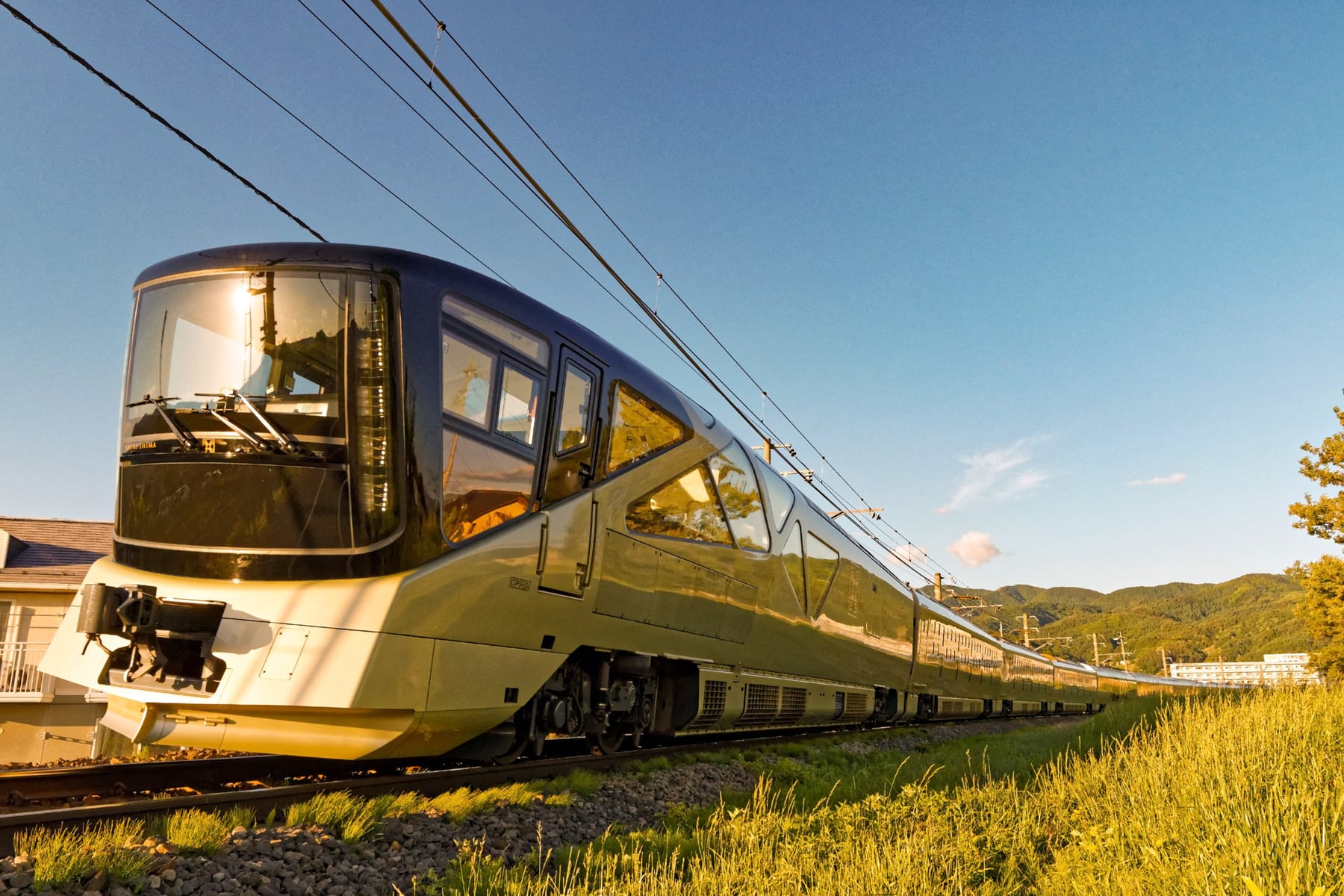
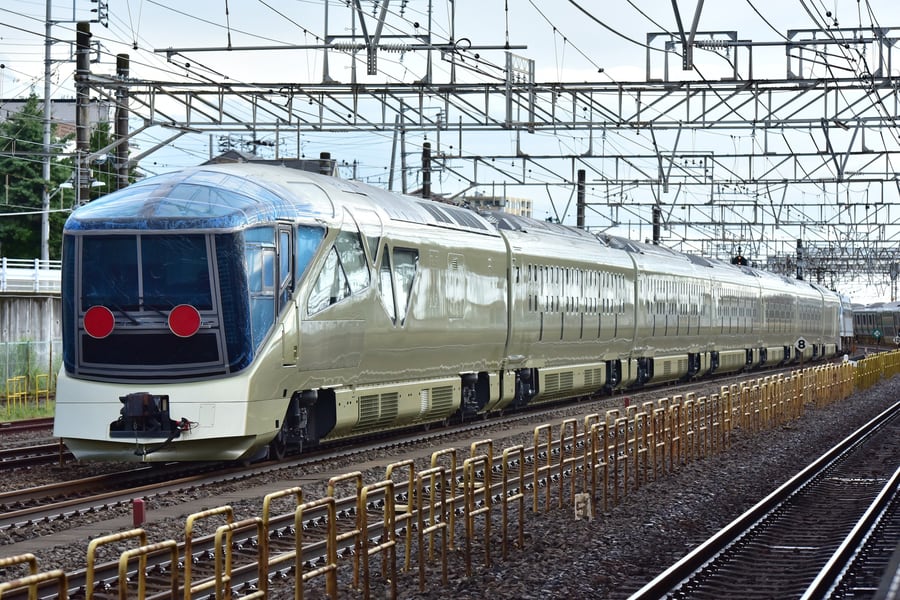
Train Suite Shiki-shima is JR East's cruise train: ten cars, seventeen suites and never more than 34 guests, on one-, two- and three-night round trips from Ueno in Tokyo into eastern Japan, with visits ashore along the way. Its name is an old poetic name for Japan, Shikishima, written with the characters for "four seasons", and every course is built around a season.
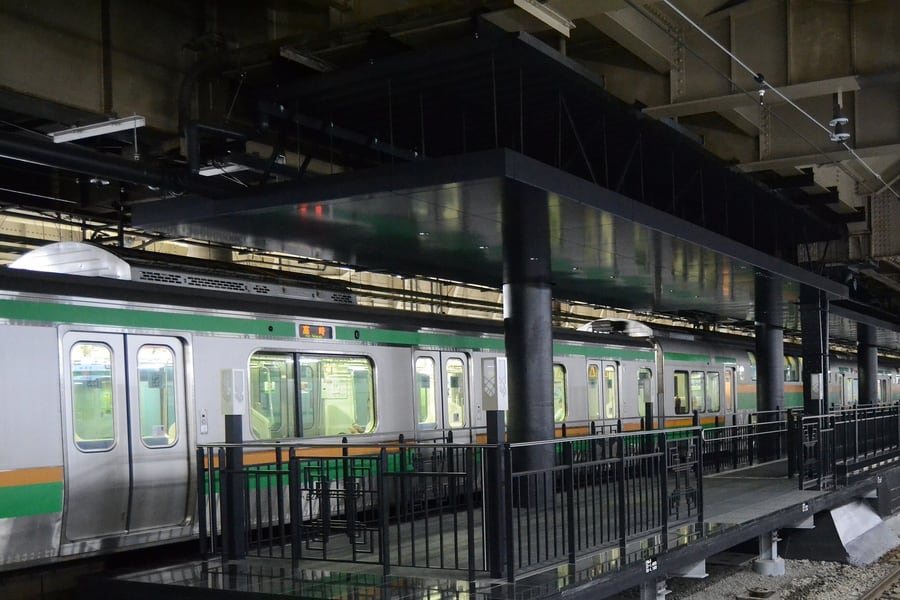
It leaves from a platform with half a number. Ueno was long the terminus for trains from the north, and between its platforms 13 and 14 JR East rebuilt an old luggage platform for this one train and called it Platform 13.5. Guests wait in the train's own lounge in the station, Prologue Shiki-shima, step out of its door onto the platform, and come back to the same room for a farewell party at the end.
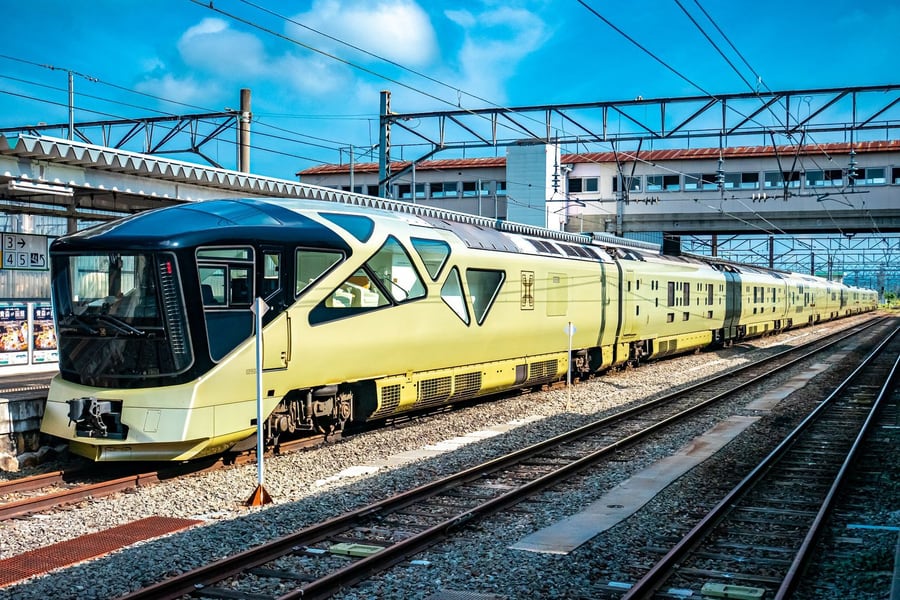
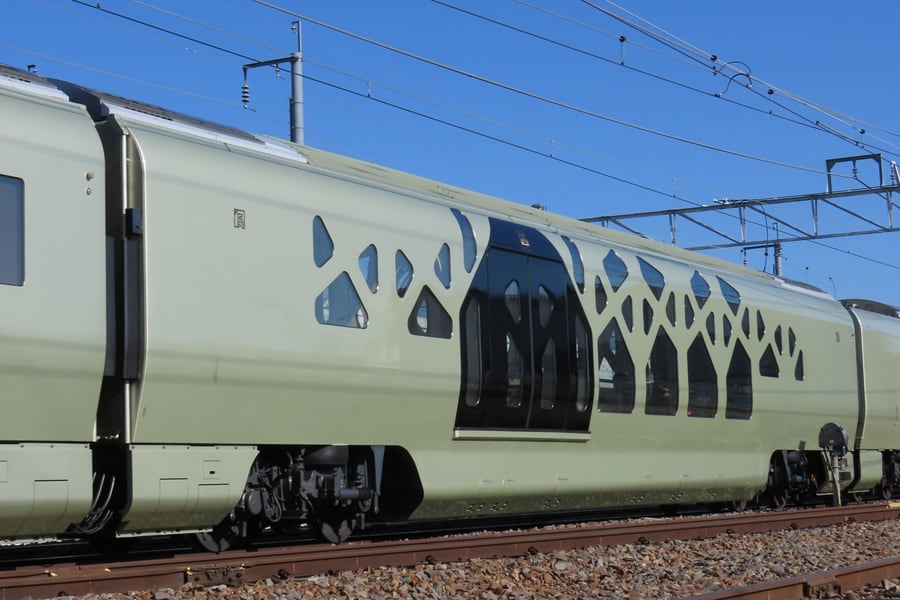
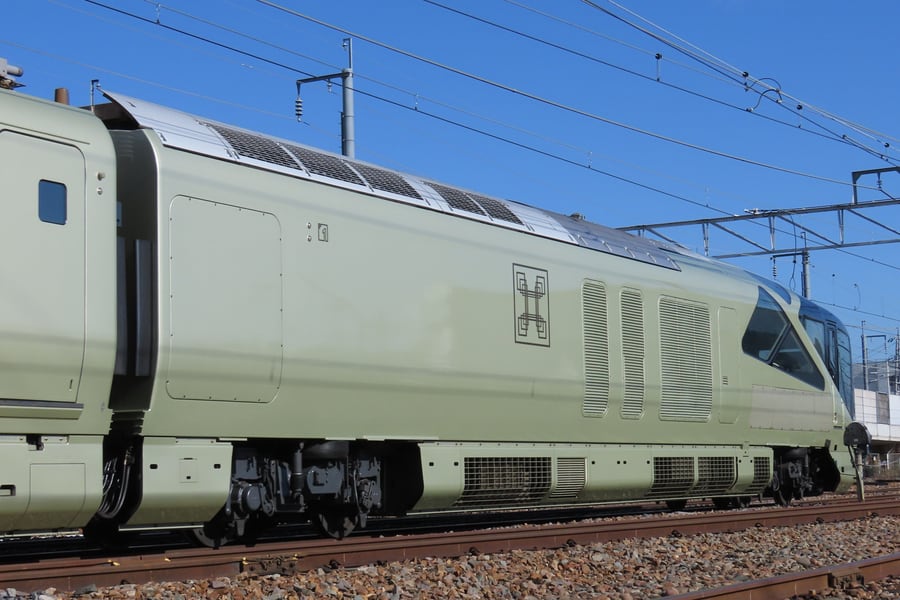
The train was styled by the industrial designer Ken Okuyama, who drew the Ferrari Enzo at Pininfarina: a gold-grey body, angled glass ends and a lounge whose windows are cut like the branches of a tree.
The Journey
There is no single route. JR East runs two courses at a time, changed with the season, and every one starts and ends at Ueno:
- Three days, two nights, in winter (December to March, Tuesdays): north to Mizusawa for the Oigen ironware foundry and dinner in Kitakami, overnight to Aomori, the Tsugaru Railway's stove train and craft workshops in Hirosaki, then overnight to Shiogama for its fish market and sushi on the way home.
- Two days, one night, in winter (Saturdays): Mashiko and the potter Shōji Hamada's collection, an evening under the stars at Kobuchizawa, and a sake brewery in Hakushū the next morning.
- Four days, three nights, from April to September 2027 (Mondays): Aizu-Wakamatsu, then overnight under the strait to Hakodate, a night in a hot-spring inn at Noboribetsu or Lake Shikotsu, back to Aomori or Kuroishi, and Murakami on the last morning.
- Two days, one night, from April to September 2027 (Saturdays): Matsumoto and its Meiji-era school, then the knife-makers of Tsubame-Sanjō.
The train
The Shiki-shima is JR East's E001 series. It is a hybrid: under the wires it runs as an electric train, and where there are none, diesel generators in the two end cars power its motors. Kawasaki Heavy Industries built cars 1 to 4 and 8 to 10 in Kobe; J-TREC built the three cars in the middle in Yokohama.
Cars 1 and 10 are the observation cars, View Terrace Kizashi and Ibuki, lined with contoured windows, with carpets woven by hand in Yamagata. Cars 2 to 4, 8 and 9 hold fifteen Suites, each with a shower and toilet, wall panels in Jōbōji lacquer from Iwate and sofas that become beds. Car 5 is the lounge, Komorebi, sunlight through leaves, with a fireplace, a piano and a bar that stays open except between midnight and five. Car 6 is the dining car, where the train's executive chef cooks French dinners and chefs from the regions come aboard for the other meals. Car 7 holds two rooms with cypress-wood baths: the split-level Shiki-shima Suite, with a tatami room upstairs, and the Deluxe Suite, with a fireplace and a high ceiling.
Along the route
 Breakover / Wikimedia Commons · CC BY-SA 3.0 · cropped
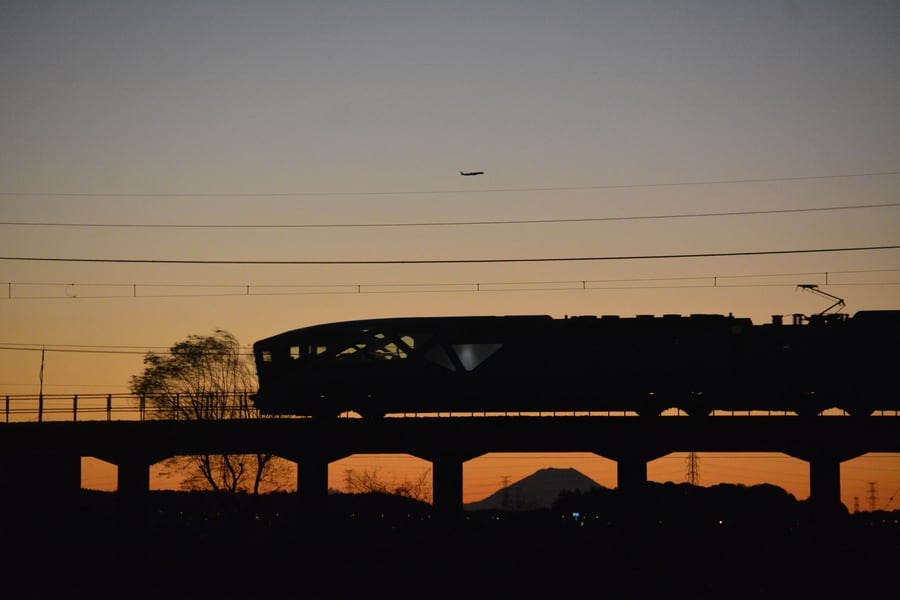
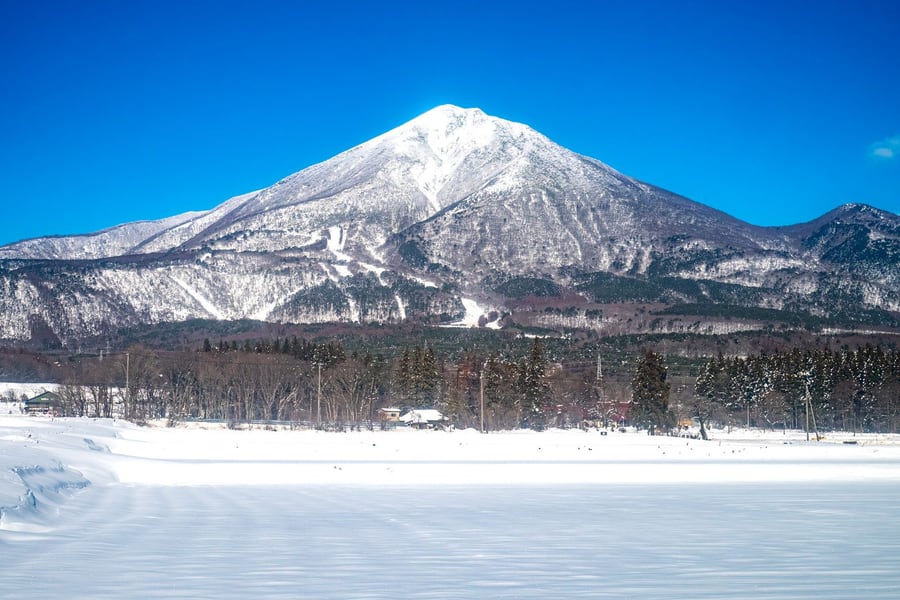
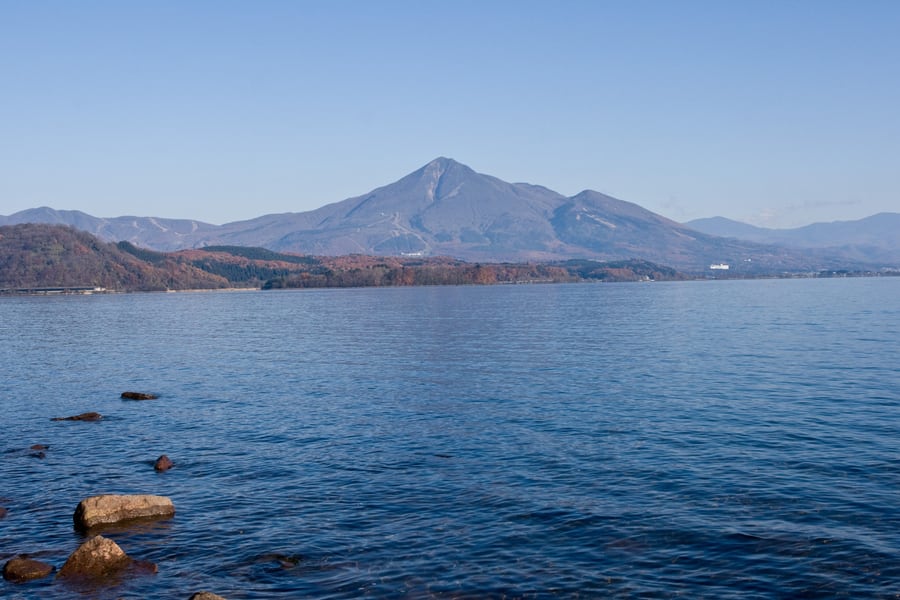
Mount Bandai
The four-day course runs to Aizu-Wakamatsu on the Ban'etsu West Line, and JR East pictures it between Kawageta and Inawashiro, under Mount Bandai, the volcano that stands north of Lake Inawashiro.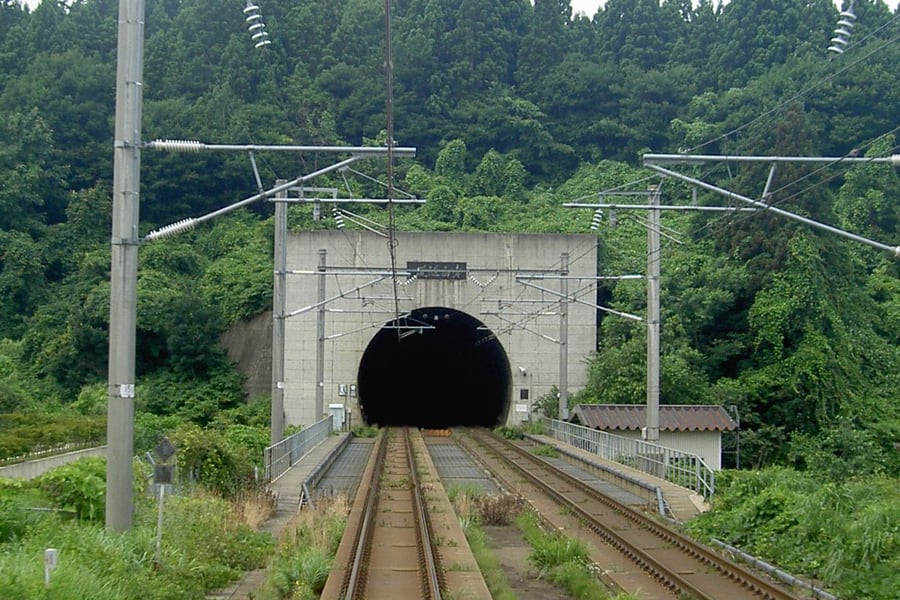 Ariake / Wikimedia Commons · CC BY-SA 3.0 · cropped
The Seikan Tunnel
Overnight, the four-day train crosses to Hokkaido through the Seikan Tunnel, 53.85 km long, 23.3 km of it under the seabed of the Tsugaru Strait. On day three one group rides back through it on the Shinkansen Hayabusa, the other on the Shiki-shima.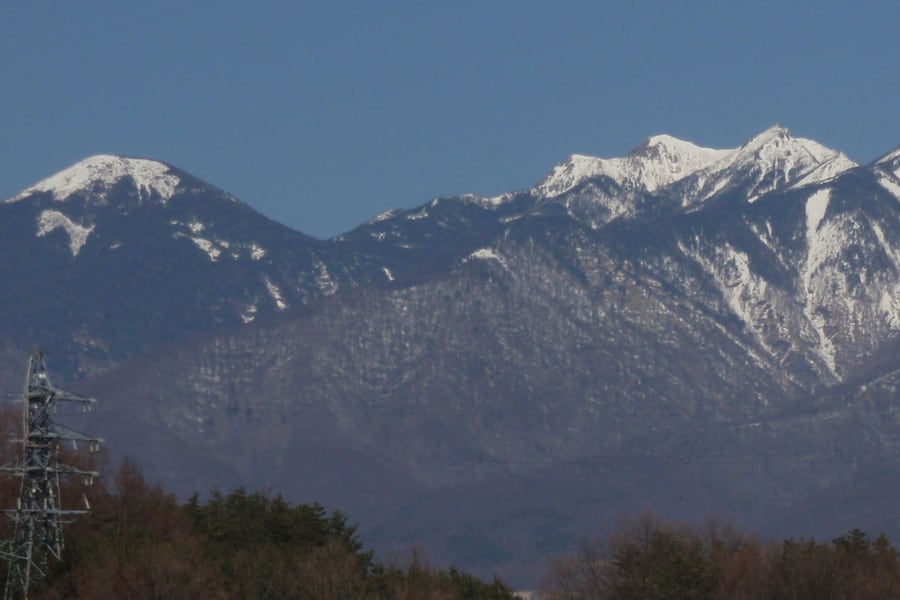 Cassiopeia sweet / Wikimedia Commons · Public domain · cropped
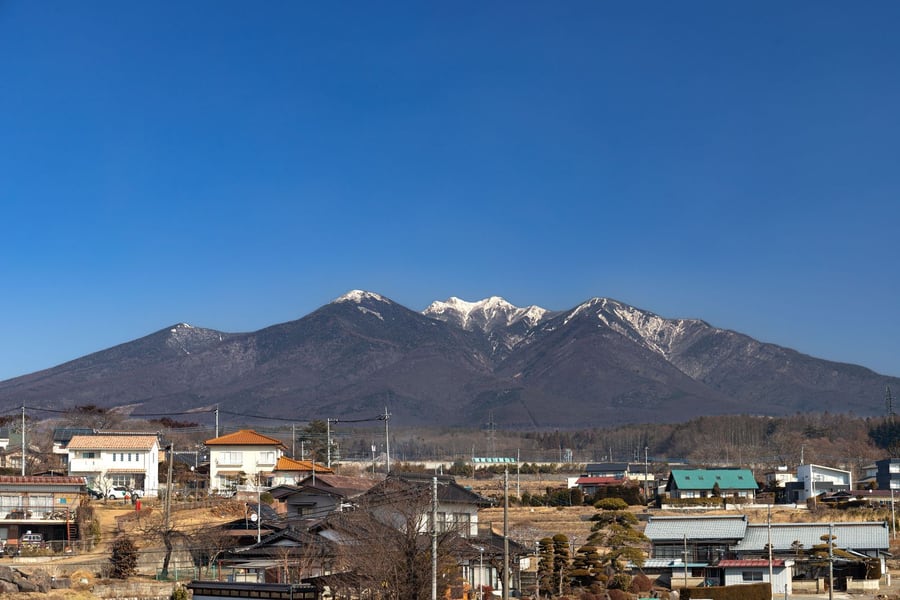
The Yatsugatake
Both two-day courses reach the Chūō Main Line. In summer JR East pictures the train between Kobuchizawa and Shinano-Sakai, below the Yatsugatake, the volcanic range on the Yamanashi–Nagano border; in winter it stops at Kobuchizawa at night for stargazing.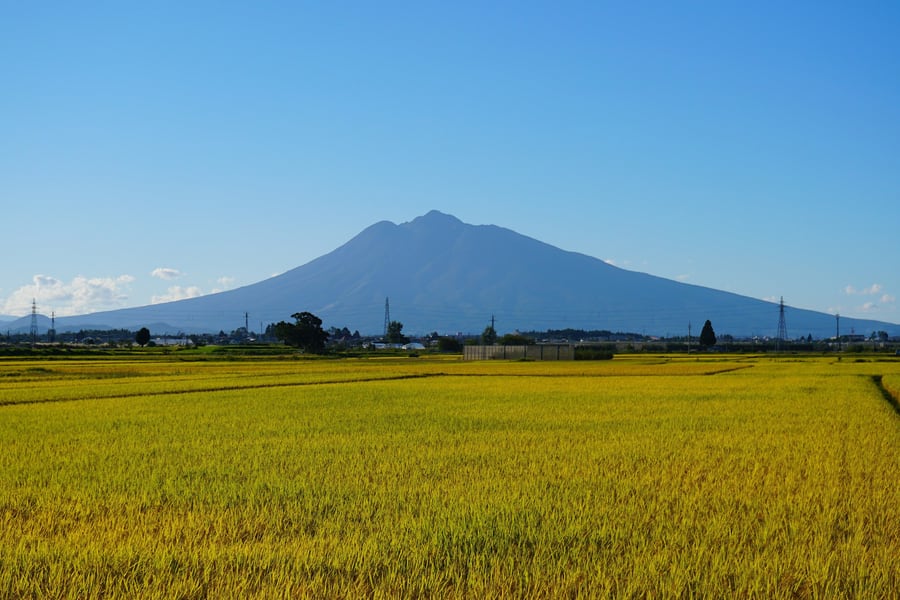 掬茶 / Wikimedia Commons · CC BY-SA 4.0 · cropped
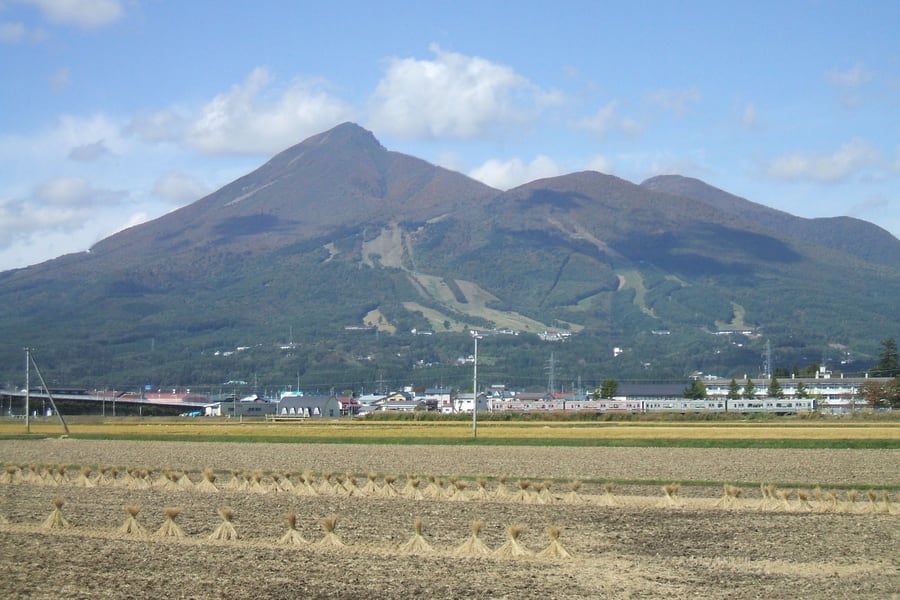
The Tsugaru plain
The winter three-day course spends its second day in Tsugaru, and JR East pictures it between Daishaka and Tsurugasaka on the Ōu Main Line. Mount Iwaki, the "Tsugaru Fuji" and at 1,625 metres the highest mountain in Aomori Prefecture, rises over the plain.A bit of history
Culture & experiences along the way
 Ippukucho / Wikimedia Commons · CC BY 3.0 · cropped
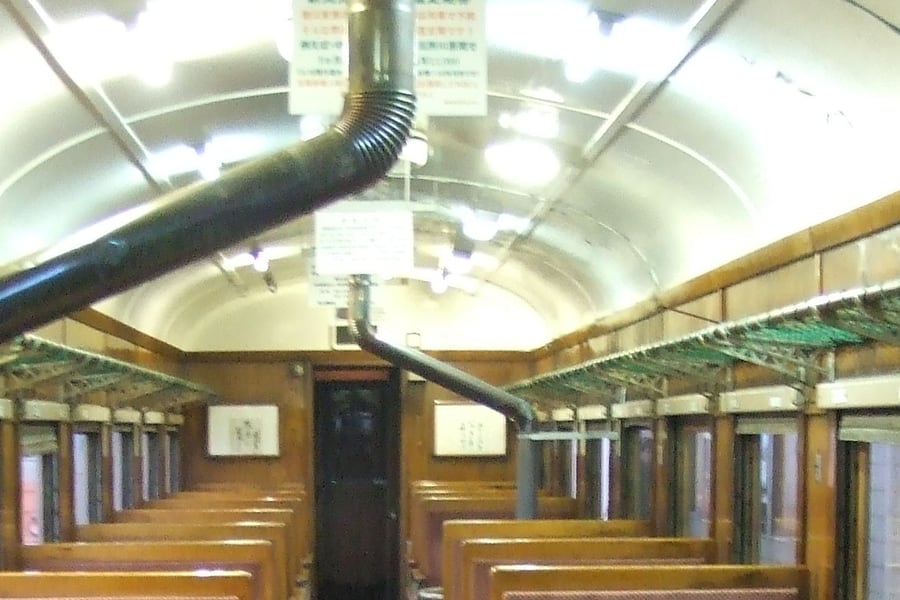
The stove train
On the winter three-day course guests leave the Shiki-shima for the Tsugaru Railway and ride its stove train from Tsugaru-Nakasato to Tsugaru-Goshogawara. The old coaches are heated by pot-bellied stoves, a fixture of winter in Tsugaru, and dried squid roasted on them is the snack on board.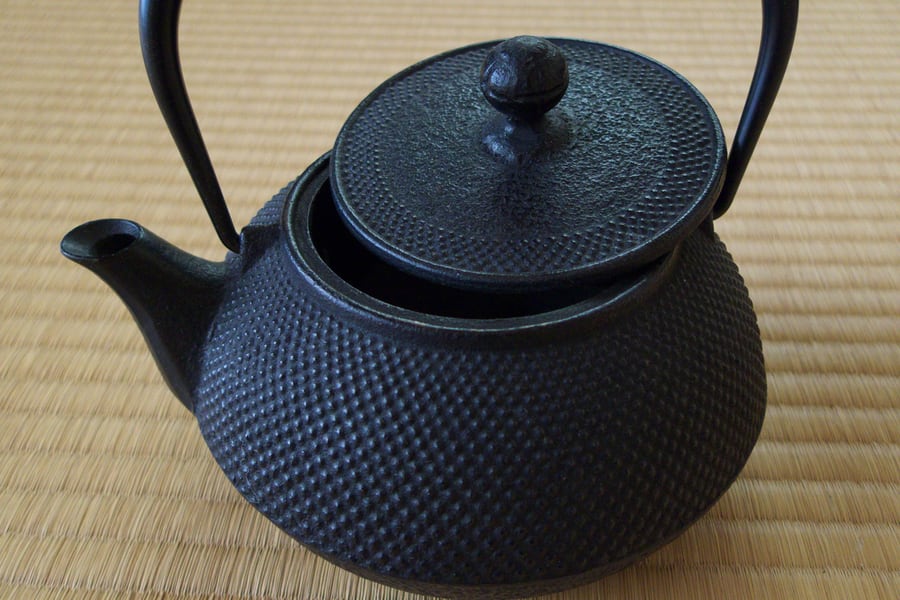 Misakubo / Wikimedia Commons · CC BY-SA 3.0 · cropped
Nambu ironware
The winter three-day course stops at Mizusawa in Iwate for Oigen, a foundry founded in 1852 in one of the two great centres of Nambu ironware, Iwate's traditional cast-iron craft. A guide takes guests through the works, its history and the artisans who keep it going.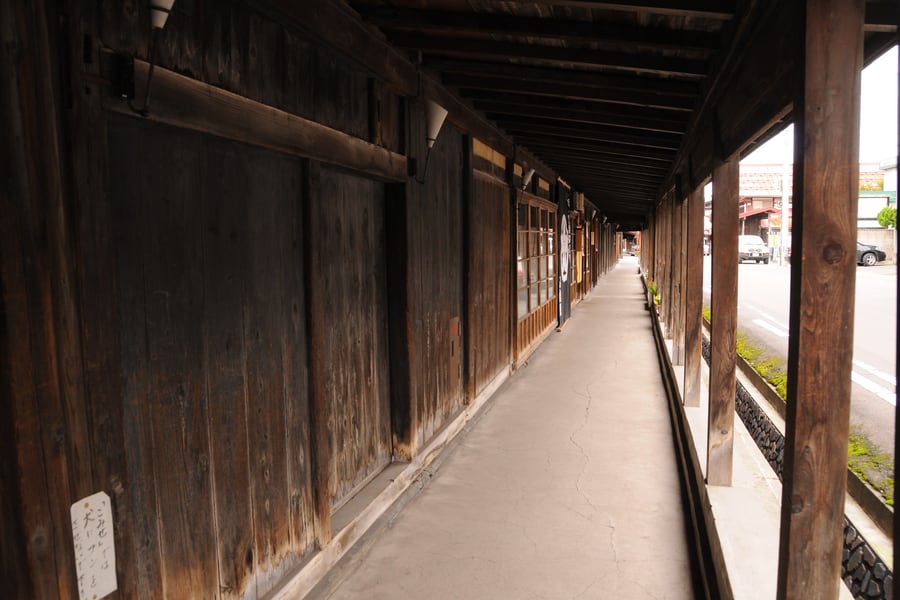 Isoyan / Wikimedia Commons · CC BY-SA 3.0
A neputa fan
On day three of the four-day course guests can choose Kuroishi, whose Nakamachi street has been sheltered from heavy snow by wooden arcades, komise, since the Edo period. Kuroishi has its own neputa tradition, known for vivid, delicate painting, and guests make an uchiwa fan cut from neputa art.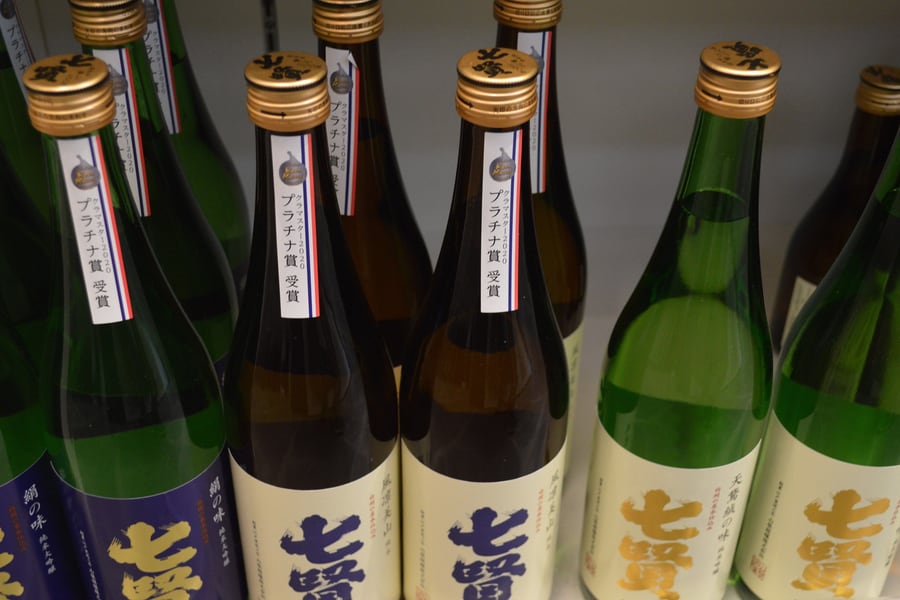 Asturio Cantabrio / Wikimedia Commons · CC BY-SA 4.0
Shichiken sake
On its second morning the winter two-day course goes to Hakushū, where Yamanashi Meijo has brewed sake since 1750 with the spring water of Mount Kaikoma. Guests are taken round the Shichiken brewery on a tour arranged for the train.Timetables
The Shiki-shima runs on set departure days, and every trip is sold as a tour. JR East publishes each season's departures months ahead and fills them by lottery. Departures from Ueno:
| Course | Leaves Ueno | Back at Ueno | Departures |
|---|---|---|---|
| Winter · 3 days | Tuesdays 09:20 | Day 3, 17:30 | 1, 8, 15 Dec 2026 · 12, 19 Jan · 2, 16 Feb · 2, 9 Mar 2027 |
| Winter · 2 days | Saturdays 09:50 | Day 2, 16:50 | 5, 12, 19 Dec 2026 · 9, 16, 23, 30 Jan · 6, 13, 20, 27 Feb · 6, 20, 27 Mar 2027 |
| Spring · 4 days | Mondays 10:50 | Day 4, 17:50 | 5, 12, 19 Apr · 10, 17, 24, 31 May · 14, 21, 28 Jun 2027 |
| Spring · 2 days | Saturdays 09:50 | Day 2, 17:20 | 3, 10, 17, 24 Apr · 8, 15, 22, 29 May · 5, 12, 19, 26 Jun 2027 |
| Summer · 4 days | Mondays 10:50 | Day 4, 17:50 | 5, 12, 26 Jul · 23 Aug · 6, 13, 27 Sep 2027 |
| Summer · 2 days | Saturdays 09:50 | Day 2, 17:20 | 3, 17, 24, 31 Jul · 7, 21, 28 Aug · 4, 11, 18, 25 Sep 2027 |
Good to know:
- The summer 2027 lottery is open until 18:00 on 14 December 2026, with results due in late January. The lotteries for winter and spring have closed.
- The night stops are part of the timetable. The winter three-day train leaves Kitakami at 21:10 and reaches Aomori at 08:30; the four-day train reaches Hakodate at 06:20, and guests leave it there for the day.
- Some departures are sold by other travel agencies, not by JR East's own tour company, and one winter date is offered first to JRE POINT premium members.
Departures as of November 2026, from JR East's press releases of 31 March (opens in a new tab), 22 July (opens in a new tab) and 7 October 2026 (opens in a new tab), and the times on the course pages (opens in a new tab). JR East notes that dates and times may change.
Tickets
Every journey is a tour, priced per person, tax included, with the suite, the meals and visits in the itinerary and, on the four-day course, the night in a hot-spring inn. Applications go in on the Shiki-shima website during each sale period; if there are more applicants than places, JR East draws lots and emails the results, and the fare is then paid by credit card.
A guest travelling alone pays about one and a half times the shared rate, and nearly twice it on the spring and summer courses. Fares from JR East's press releases for December 2026 to March 2027 and April to September 2027, read November 2026; Japanese yen.
Book your tickets
Suite
Per person, two sharing
One of fifteen rooms with a shower and toilet; ¥470,000 for two days in winter and ¥1,100,000 for four in spring or summer.
Book Tickets (opens in a new tab, on JR East)via JR EastDeluxe Suite
Per person, two sharing
The single-level suite in Car 7, with a fireplace and a cypress bath; ¥630,000 to ¥1,450,000 depending on the course.
Book Tickets (opens in a new tab, on JR East)via JR EastShiki-shima Suite
Per person, two sharing
The split-level suite in Car 7, with a tatami room upstairs and a cypress bath; ¥670,000 to ¥1,500,000 depending on the course.
Book Tickets (opens in a new tab, on JR East)via JR EastRail Passes
No rail pass covers the Shiki-shima. JR East sells every journey as a tour, and the Japan Rail Pass is valid on JR's scheduled Shinkansen, limited express, express, rapid and local trains, so there is nothing on the Shiki-shima for it to buy.
A pass can still bring you to Ueno. Every course begins and ends in Tokyo, so a Japan Rail Pass only earns its price on the rest of the trip: the Shinkansen to Tokyo, or the days after the tour. Bought for the Shiki-shima alone, it saves nothing.
Checked November 2026 against the Japan Rail Pass scope of validity (opens in a new tab) and JR East's trip application page (opens in a new tab).
Places to Visit
The visits ashore are part of the tour, with a guide and a coach waiting at the station, and some open rooms or workshops not normally open to visitors. Each course has its own; the places below are the ones the winter 2026–27 and 2027 courses call at.
 Abasaa / Wikimedia Commons · Public domain · cropped
Mashiko
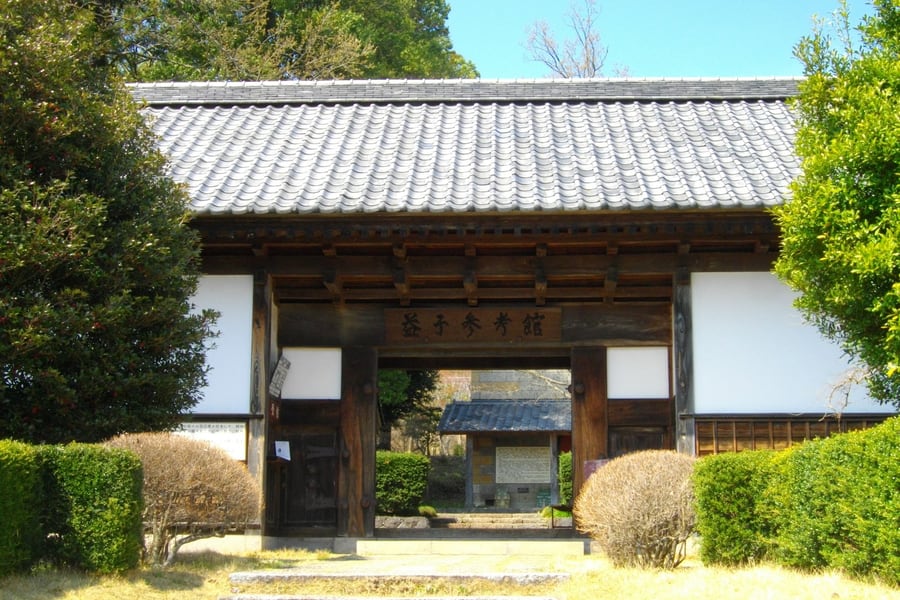
The winter two-day course stops at Iwase for Mashiko, the pottery town that Shōji Hamada, a leader of the mingei folk-craft movement and a Living National Treasure from 1955, made his home. The Shoji Hamada Memorial Mashiko Sankokan Museum opens part of his house to show the pieces he collected as references for his own work.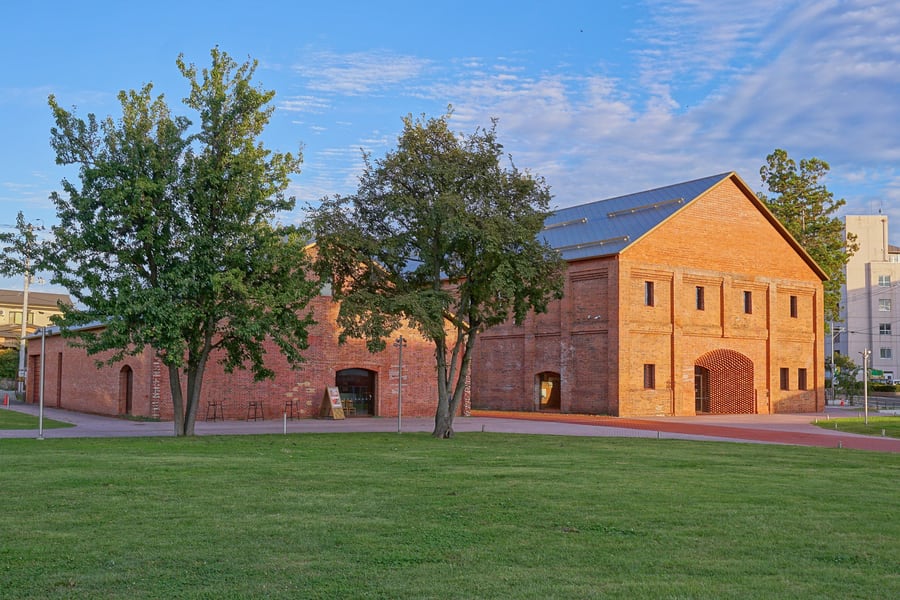 掬茶 / Wikimedia Commons · CC BY-SA 4.0 · cropped
Hirosaki
On the second day of the winter three-day course guests lunch in a Hirosaki restaurant founded in 1786, then go to the Hirosaki Museum of Contemporary Art, part of it the brick Yoshino-chō warehouse that was once a cider factory. There they make Tsugaru crafts: Wanimokko woodwork from Aomori timber, and BUNACO, coiled strips of beech.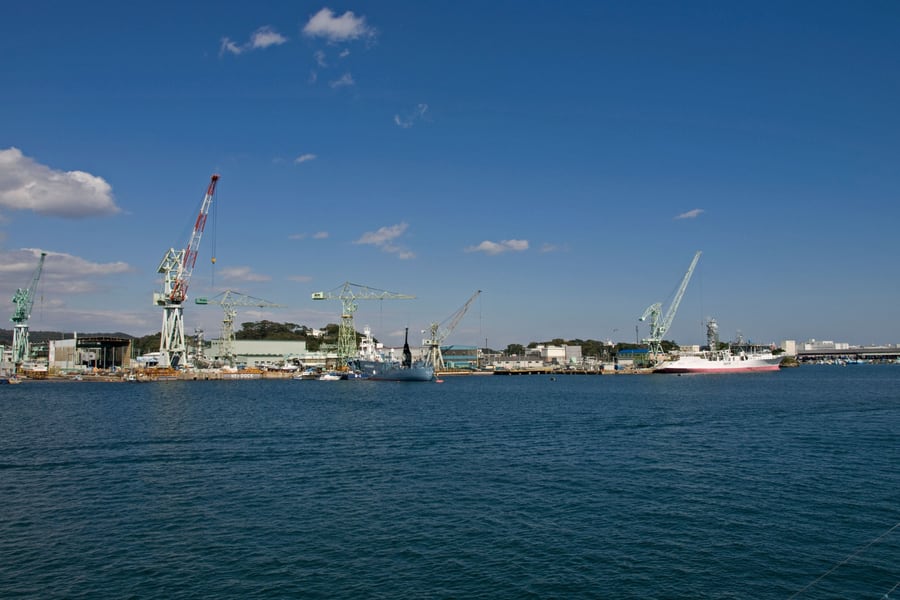 Ymblanter / Wikimedia Commons · CC BY-SA 4.0 · cropped
Shiogama
The winter three-day train arrives at Shiogama at 07:40 for breakfast and the Shiogama Fish Park, one of the largest markets in Tōhoku, in a port with a thriving seafood trade and one of the biggest catches of fresh tuna in Japan. On the way home, chefs from three Shiogama sushi restaurants board in turn to make lunch.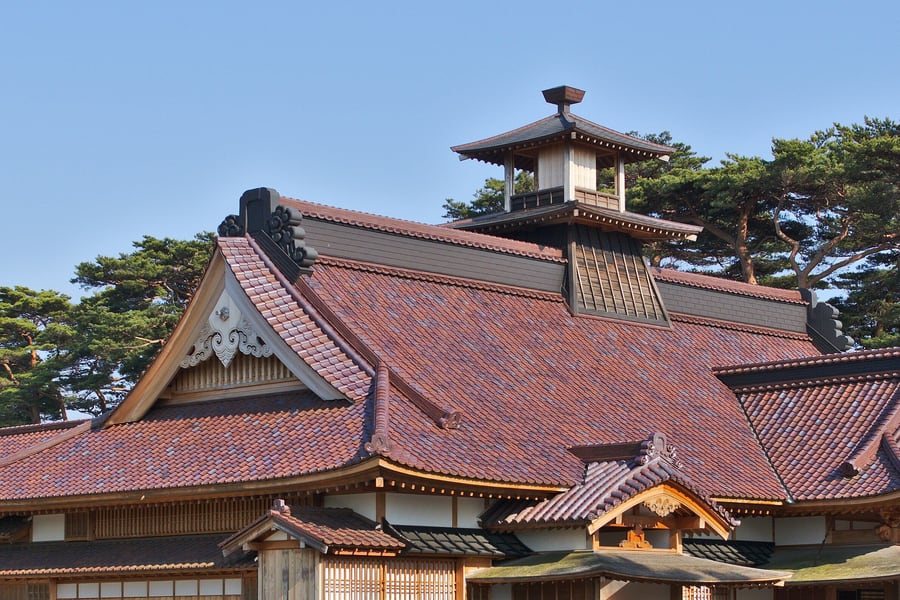 Alexander Klink / Wikimedia Commons · CC BY 4.0 · cropped
Hakodate
The four-day train reaches Hakodate at 06:20, in a port that grew into a centre of international trade after Commodore Perry arrived in 1853. Guests are shown the Hakodate Magistrate's Office in the park of Goryōkaku, the star fort completed in 1866, and ride a vintage tram, reserved for them, back to the station.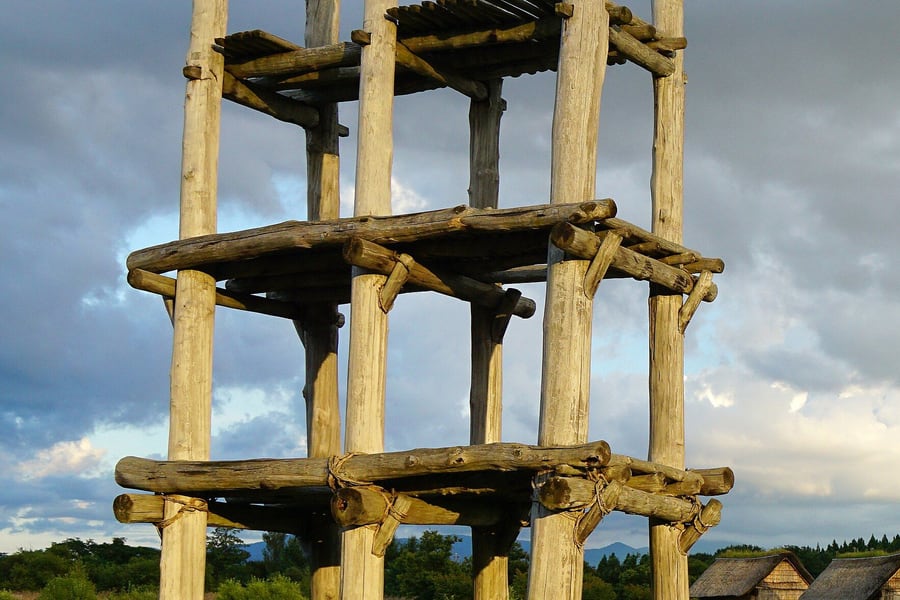 663highland / Wikimedia Commons · CC BY 2.5 · cropped
Aomori
The Sannai-Maruyama Site is a Jōmon settlement of about 40 hectares, found in 1992 when Aomori Prefecture surveyed the ground for a baseball stadium, and a World Heritage Site since 2021. Next door, the Aomori Museum of Art holds Yoshitomo Nara's Aomori-ken and Marc Chagall's stage backdrops for the ballet Aleko.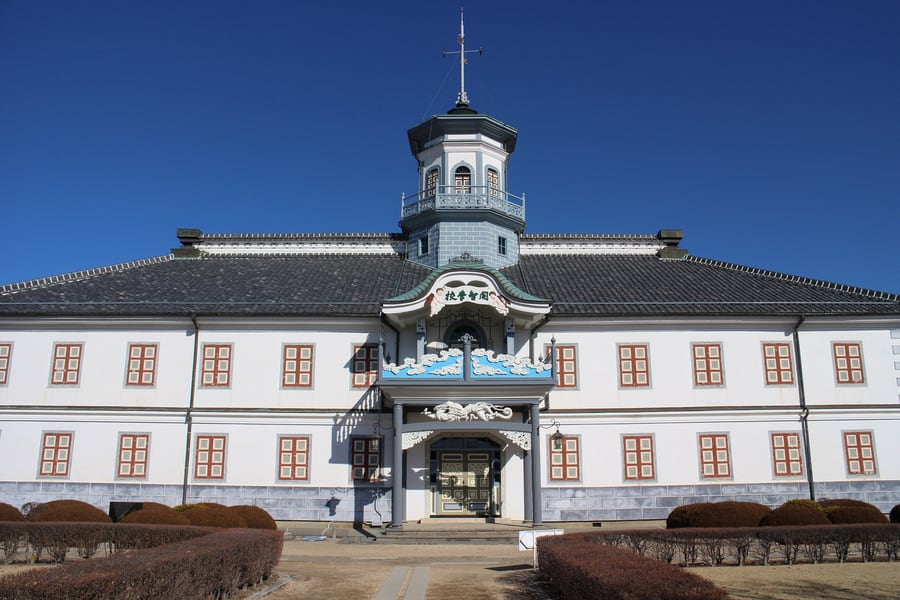 Suicasmo / Wikimedia Commons · CC BY-SA 4.0
Matsumoto
The 2027 two-day course spends its afternoon in Matsumoto, at the Former Kaichi School, built in 1876 by the Matsumoto master carpenter Seiju Tateishi in a blend of Japanese and Western styles. In 2019 it became the first modern school building to be named a National Treasure. Guests are also shown round Kappo Matsumotokan, a restaurant founded in 1890.Where to Sleep
The nights are spent on board, and on the four-day course in a hot-spring inn in Hokkaido. Every course starts and ends at Ueno in the morning and late afternoon, so a night in Tokyo at either end is the easy way to meet it.
Where to stay
Mitsui Garden Hotel Ueno
Ueno · by the station
A two-minute walk from the Asakusa Exit of JR Ueno Station, where every course begins and ends.
Check Availability (opens in a new tab, on gardenhotels.co.jp)via gardenhotels.co.jpHotel Metropolitan Edmont Tokyo
Iidabashi, central Tokyo
A hotel whose executive chef, Hitoshi Iwasaki, was the Shiki-shima's first.
Check Availability (opens in a new tab, on hotel-metropolitan.com)via hotel-metropolitan.comQuestions or corrections
Planning this trip and stuck on something, or spotted a time, fare or detail that has changed? Send us a message about Train Suite Shiki-shima. We read every one, and we update this page when something has changed.