Tramway du Mont-Blanc
Rémih / Wikimedia Commons · CC BY-SA 4.0 · cropped
- Distance12.7 km · metre-gauge rack railway
- DurationAbout 1 h 05 up to the Nid d'Aigle
- Best seasonMid-June to late September to the Nid d'Aigle · winter to Bellevue
Introduction
For 113 years the Tramway du Mont-Blanc ended at a stopgap. On 1 August 1913 the company, short of money, opened the line as far as the works had reached and put up a provisional platform and a refreshment stall there, 2,372 metres up, which it named the Nid d'Aigle, the eagle's nest. The plan was to carry on past the Aiguille du Goûter to the summit of Mont Blanc. A year later France mobilised for war, and the climb never went further.
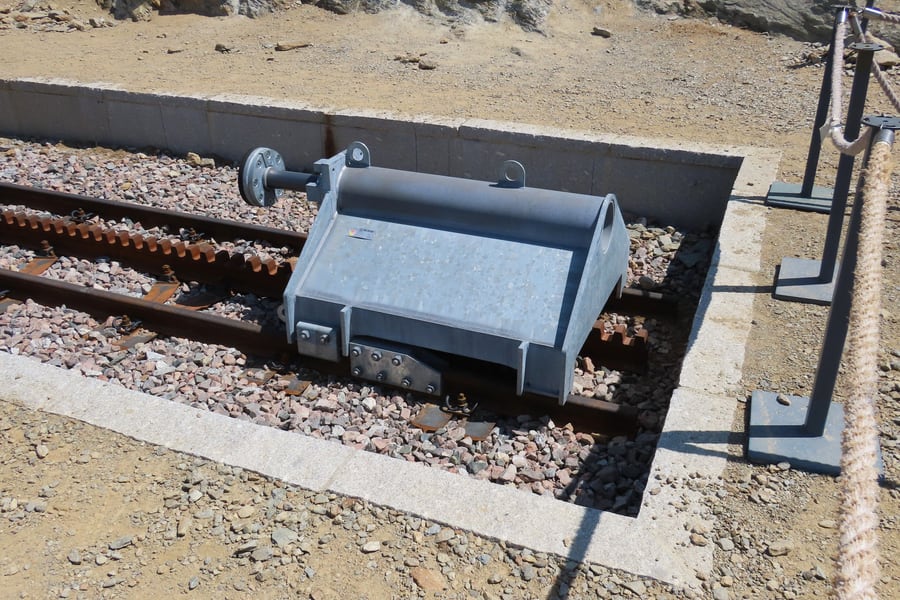
The temporary end of the line stayed in use for more than a century. Then, between 2023 and 2025, the Département de la Haute-Savoie laid 280 more metres of track, with a gallery to shield it from falling rock, to a level platform at the foot of the Nid d'Aigle refuge, 2,412 metres up. It opened on 27 June 2026, and with it the building of the line officially came to an end.
The tramway is France's highest rack railway: a metre-gauge line of 12.7 km that climbs 1,832 metres from Le Fayet, beside the main-line station of Saint-Gervais-les-Bains, in a little over an hour. In summer it runs to the Nid d'Aigle, the starting point of the normal route up Mont Blanc; in winter it stops at Bellevue, above the ski slopes of Les Houches. Since May 2026 it has been run directly by the Département, which owns it.
The Journey
The train sets off from Le Fayet, beside the main-line station, and runs along the street and over the Bon Nant on a road bridge before the rack begins in the woods. It climbs past the thermal park to Saint-Gervais, at 820 metres, then on through forest to Motivon, a hamlet that once had its own school; its teacher came up every day by tram.
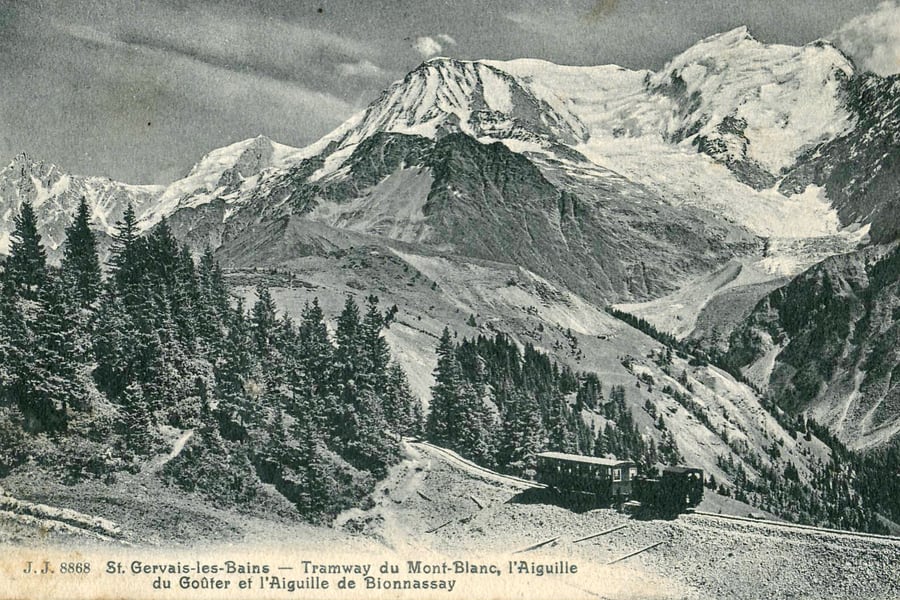
Above Motivon the trees thin out and the line reaches the Col de Voza, at 1,653 metres, the first terminus of 1909. From here it runs along the crest between the Chamonix valley and the Bionnassay valley to Bellevue, at 1,794 metres, where the cable car from Les Houches arrives. Winter trains turn back here.
Above the pastures
In summer the line carries on over the alpine meadows in a chain of S-bends to Mont Lachat, where the trains first stopped in 1911, then cuts across the scree under the Rognes, the steepest part of the climb. Two short tunnels lead to the new terminus at the Nid d'Aigle, with the Bionnassay glacier filling the valley alongside. The rack is the Strub type and covers about 85 % of the line.
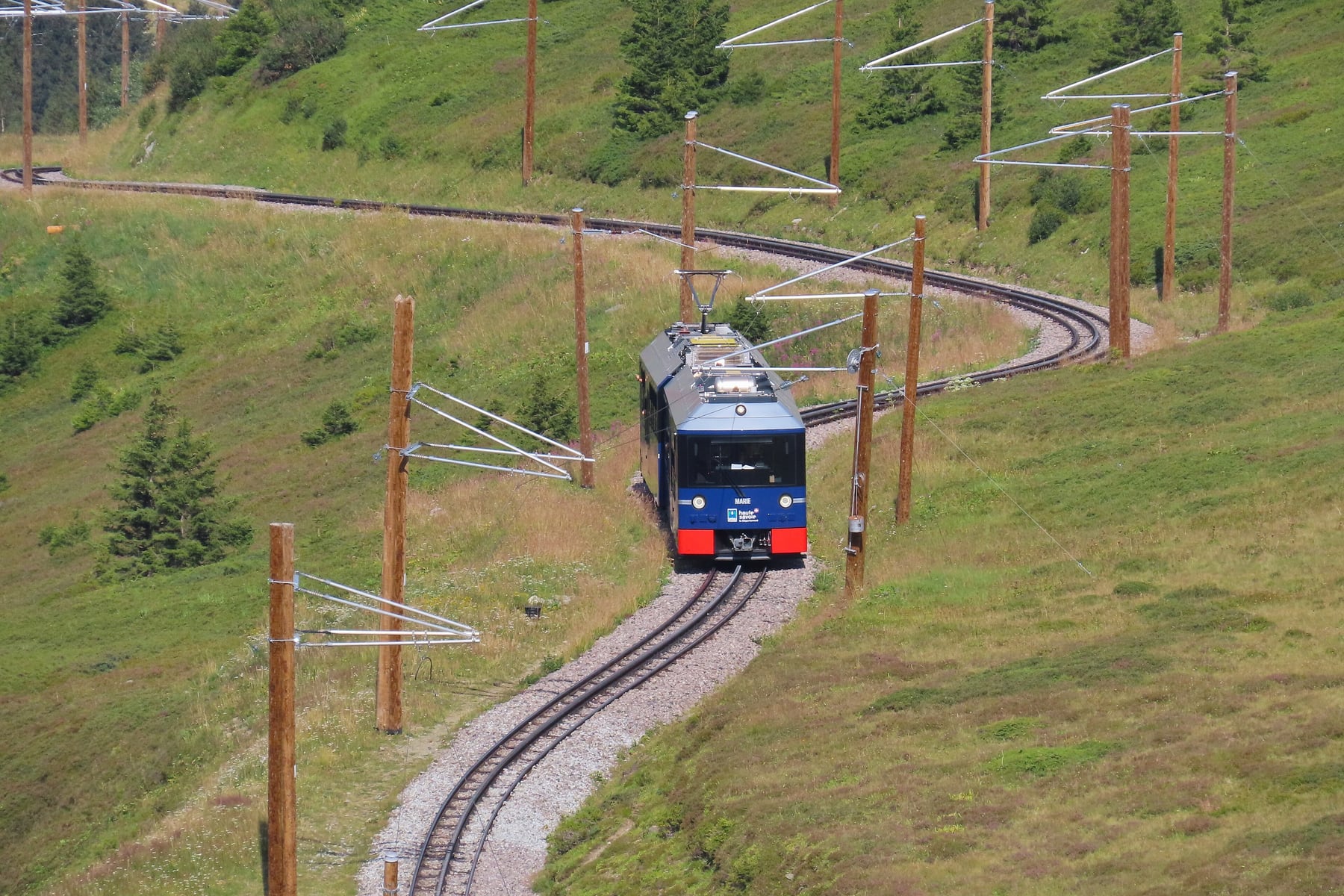
The trains are four rack railcars built by Stadler in Switzerland and delivered in 2022 and 2023, each 32 metres long and carrying up to 200 passengers at up to 20 km/h. They keep the names and colours of the three trains of 1957 they replaced, Marie in blue, Anne in green and Jeanne in red, and a fourth, Marguerite, wears the white and red of the Haute-Savoie. The names are those of daughters of Pierre Nourry, the industrialist who backed the line's electrification in the 1950s. Before that, for nearly fifty years, small steam locomotives bought for the building work had run the whole service.
Along the route
 Rémih / Wikimedia Commons · CC BY-SA 4.0 · cropped
Through Le Fayet
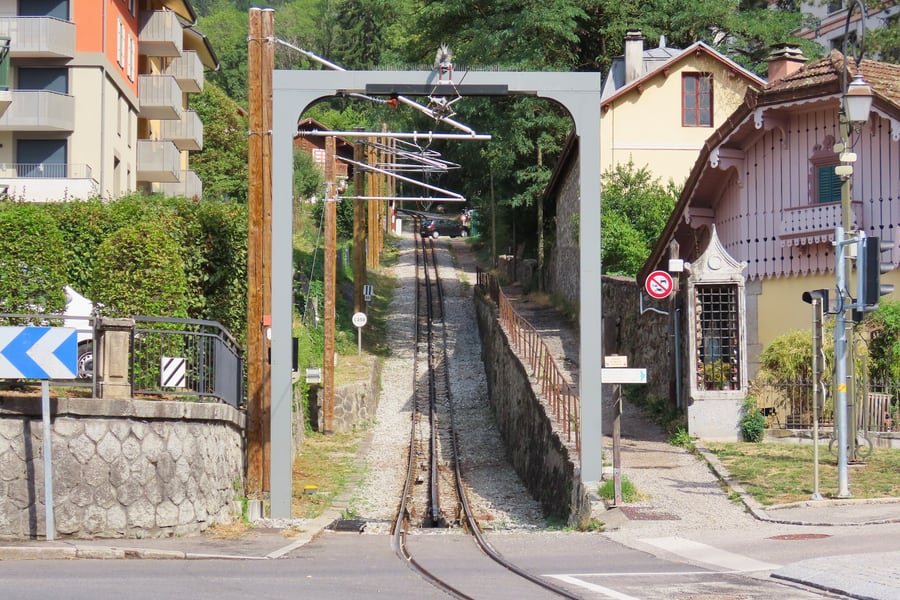
The train starts beside the main-line station at Le Fayet and runs along the street and over the Bon Nant on a road bridge before the rack begins in the woods. Saint-Gervais station, at 820 metres, comes about a quarter of an hour later.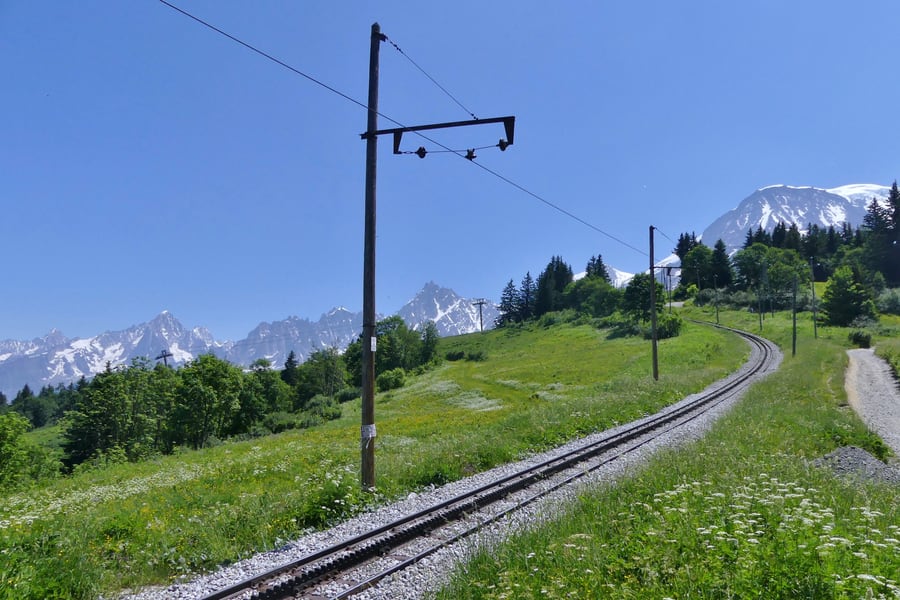 Florian Pépellin / Wikimedia Commons · CC BY-SA 4.0 · cropped
Motivon to Col de Voza
Above Saint-Gervais the line climbs through forest to Motivon, once a hamlet with its own school, and on to the Col de Voza at 1,653 metres, the first terminus in 1909. Beyond it the track runs out along the crest towards Mont Blanc.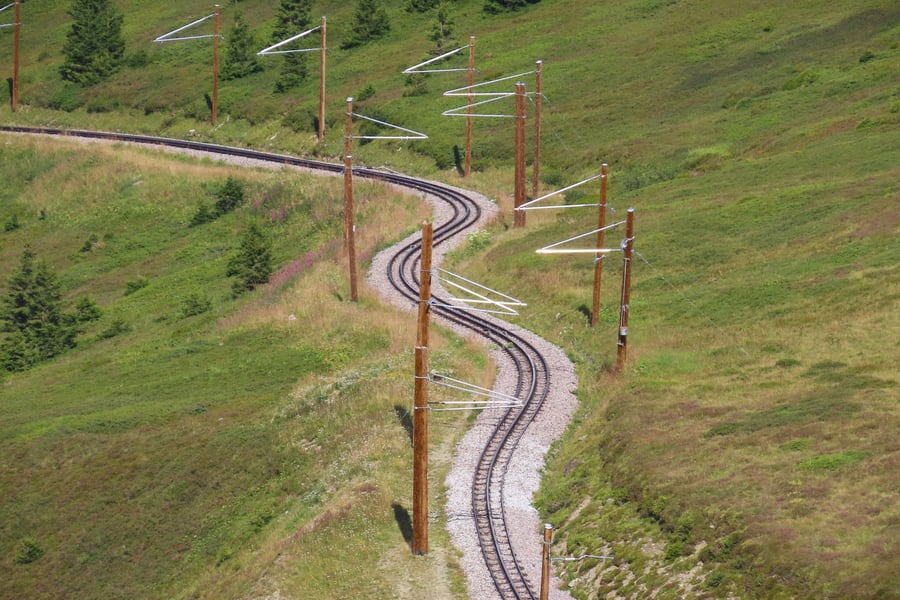 Rémih / Wikimedia Commons · CC BY-SA 4.0 · cropped
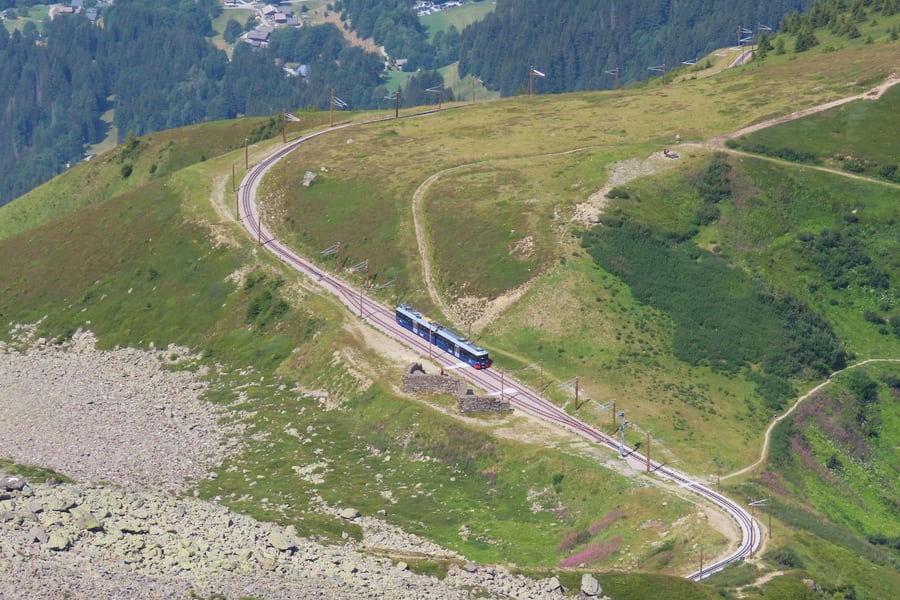
Bellevue and Mont Lachat
Bellevue, at 1,794 metres, is as far as the winter trains go. In summer the line carries on over the alpine pastures in a chain of S-bends to Mont Lachat, where the trains first stopped in 1911.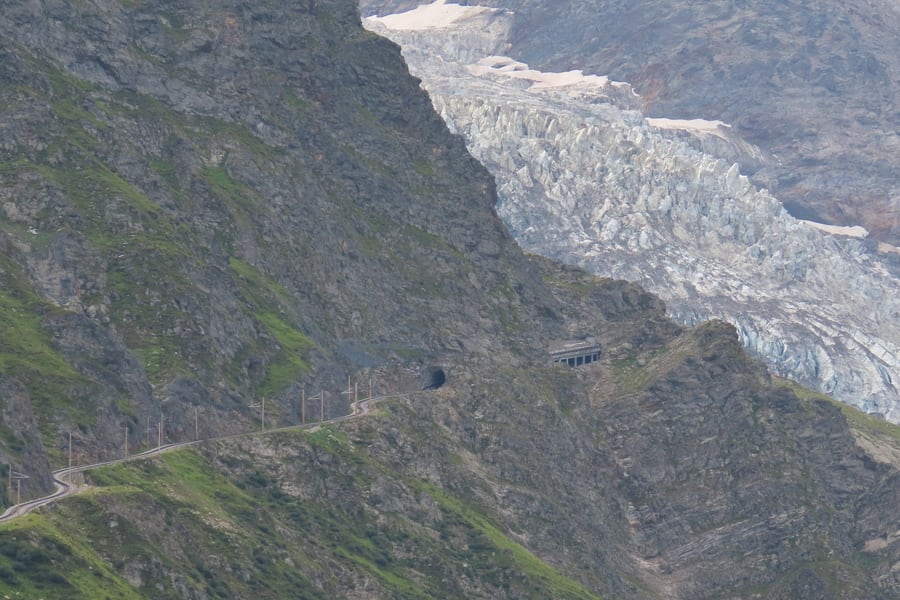 Rémih / Wikimedia Commons · CC BY-SA 4.0 · cropped
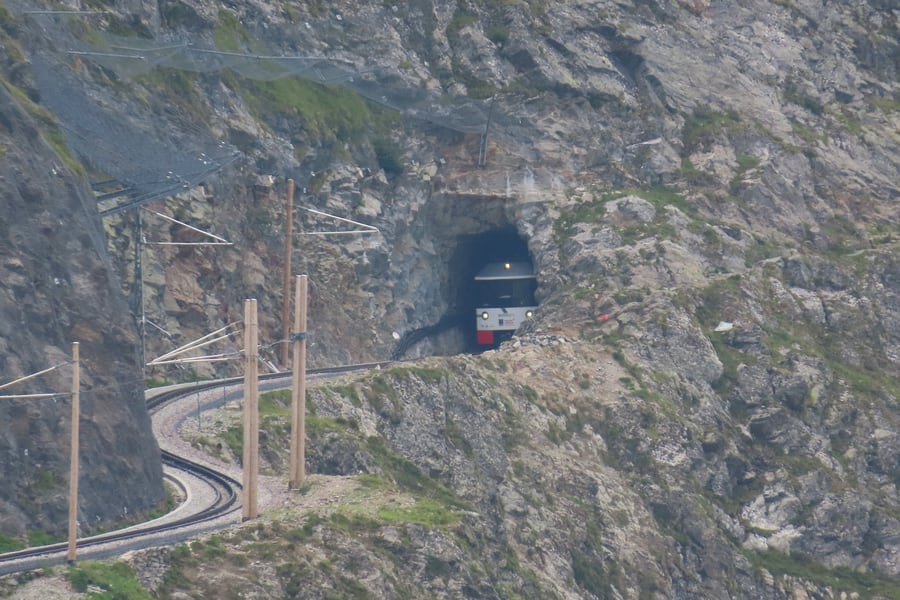
Under the Rognes
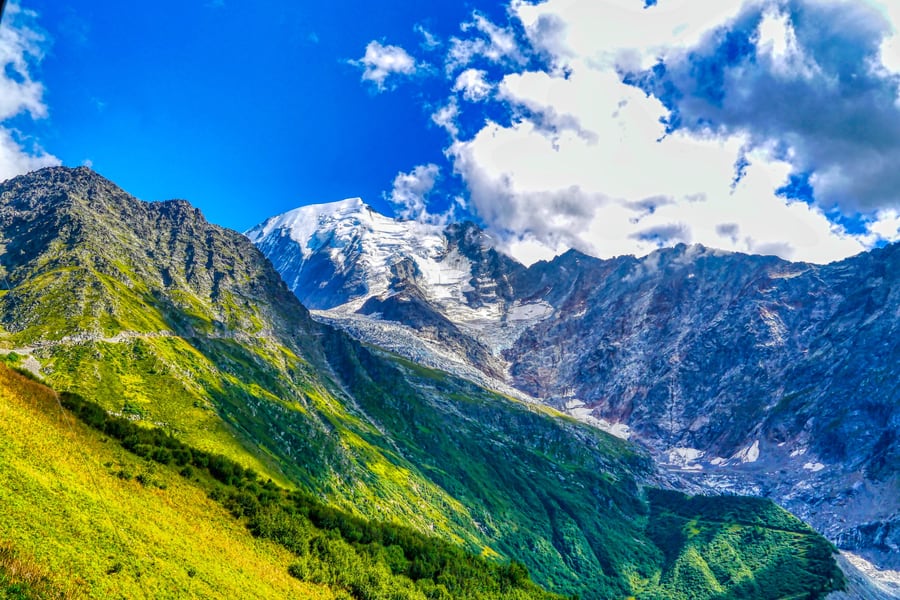
The last stretch cuts across the scree below the Rognes and through two short tunnels, with the Bionnassay glacier pouring down the far side of the valley, then ends at the platform laid in 2023–2025 at the foot of the Nid d'Aigle refuge.A bit of history
Culture & experiences along the way
 Tangopaso / Wikimedia Commons · Public domain · cropped
Mademoiselle d'Angeville
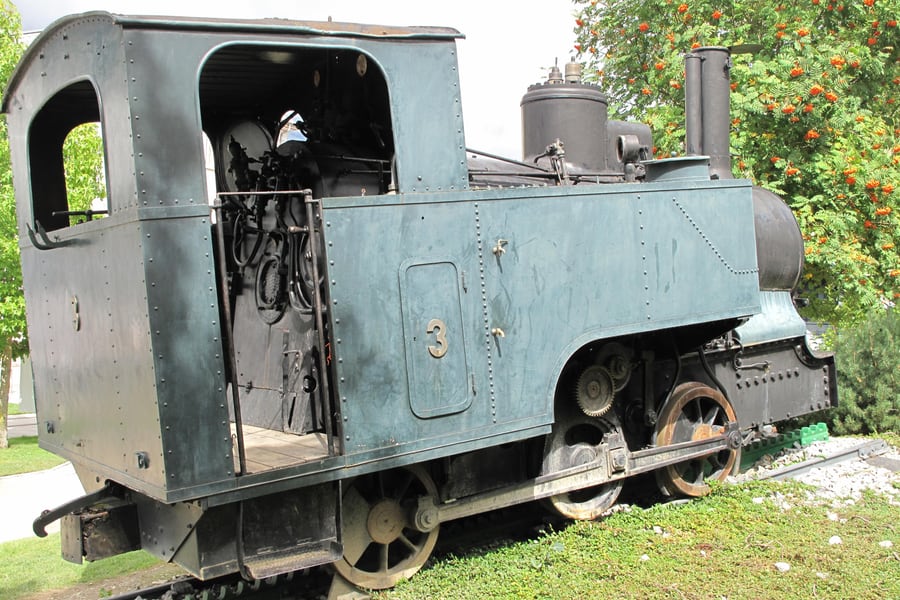
Steam locomotive No. 3, one of the line's first five, stands in the thermal park at Le Fayet. Four of the five were named after figures from the history of Mont Blanc, and this one honours Henriette d'Angeville, who in 1838 became the second woman to reach the summit, and the first to do it without being carried. Rémih / Wikimedia Commons · CC BY-SA 4.0 · cropped
The flood of 1892
On the night of 11 July 1892 a pocket of water trapped in the Tête-Rousse glacier, high above the line's terminus, burst. About 200,000 cubic metres of water broke out, and a torrent of mud, ice and rock swept down to the Arve plain, destroying hamlets and the baths and killing more than 175 people. The glacier has been watched ever since.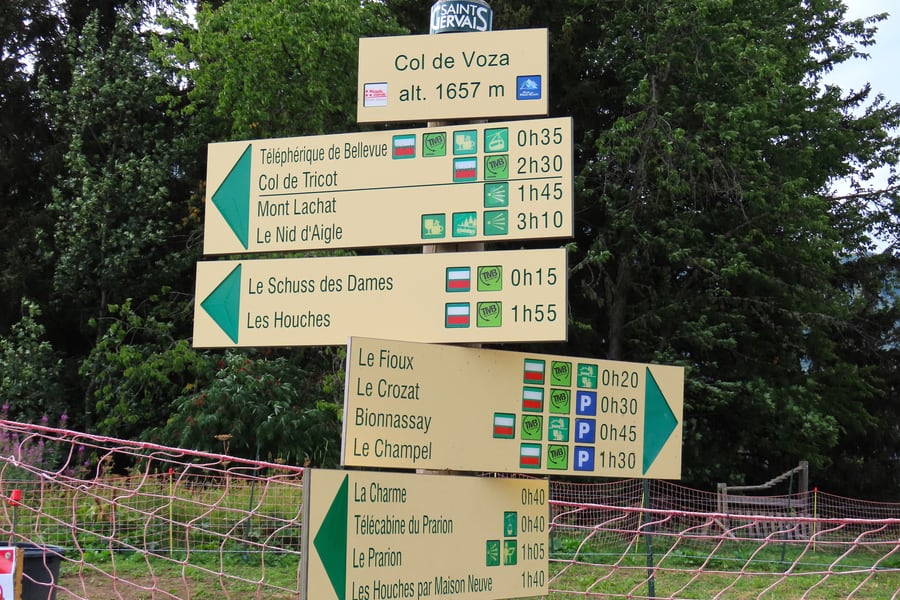 Rémih / Wikimedia Commons · CC BY-SA 4.0 · cropped
The Tour du Mont Blanc
The Col de Voza is a stop on the Tour du Mont Blanc, the trail of about 165 km that circles the massif through France, Italy and Switzerland in nine to fourteen days, and on the GR 5. The train lets walkers skip the climb from the valley, or ride down after a day on the paths.Timetables
The tramway is closed for the autumn until 11 December 2026. From 12 December 2026 to 29 March 2027 it runs daily as far as Bellevue, roughly hourly. The summer service to the Nid d'Aigle runs from mid-June to late September; the 2027 timetable is not yet published.
Winter: Le Fayet to Bellevue, 12 December 2026 – 29 March 2027
| Station | First up | Last up |
|---|---|---|
| Le Fayet | 09:00 | 16:00 |
| Saint-Gervais | 09:15 | 16:10 |
| Motivon | 09:31 | 16:21 |
| Col de Voza | 09:49 | 16:35 |
| Bellevue | 09:54 | 16:40 |
Trains leave Le Fayet every hour on the hour from 09:00 to 16:00. Coming down, they leave Bellevue every hour from 10:00 to 15:00, then at 15:55 and 16:45, the last, reaching Le Fayet at 17:35. On Saturdays an extra early train leaves the Col de Voza at 08:30.
Summer 2026: Le Fayet to the Nid d'Aigle, July and August
| Station | First up | Last up |
|---|---|---|
| Le Fayet | 07:00 | 16:00 |
| Saint-Gervais | 07:15 | 16:15 |
| Motivon | 07:27 | 16:27 |
| Col de Voza | 07:42 | 16:42 |
| Bellevue | 07:49 | 16:49 |
| Nid d'Aigle | 08:05 | 17:05 |
From 4 July to 30 August 2026 the trains ran hourly from 07:00 to 16:00, with three extra express trains at 10:30, 13:30 and 15:30 that skip the Col de Voza and Bellevue; the last train down left the Nid d'Aigle at 17:13. Before and after that, in June and September, there were eight trains a day each way, with the last train up at 15:00. In storms the terminus may be cut back to Bellevue.
The tramway is a mountain railway and weather can cancel or change trains. Its connection with the main-line trains at Le Fayet is not guaranteed, so leave a margin.
Winter times as of November 2026; summer times are the 2026 timetable, as the operator published it in July 2026. Check them on the Tramway du Mont-Blanc's timetable page (opens in a new tab) before you travel.
Tickets
Tickets are sold online and at the ticket offices at Le Fayet and Saint-Gervais. This winter an adult return from Le Fayet or Saint-Gervais to the Col de Voza or Bellevue costs €35.40, and €30.10 for ages 5–14 and over-65s; children under 5 travel free with proof of age, from the ticket office only. A family ticket for two adults and their children costs €109.80. In summer 2026 the return to the Nid d'Aigle cost €40 for an adult.
The time of the return train is booked at the station you arrive at. Disabled travellers and one companion get 50% off at the ticket office.
Fares as of November 2026, from the Tramway du Mont-Blanc's fare page (opens in a new tab).
Book your tickets
Return to Bellevue, winter
Adult €35.40 · ages 5–14 and 65+ €30.10 · family €109.80
The winter return from Le Fayet or Saint-Gervais to the Col de Voza or Bellevue, from 12 December 2026.
Book Tickets (opens in a new tab, on tramwaydumontblanc.fr)via tramwaydumontblanc.frReturn to the Nid d'Aigle, summer
Adult €40 online, seat reservation included · ages 5–14 and 65+ €34 in 2026
The full climb from Le Fayet or Saint-Gervais, for the summer season from mid-June to late September.
Book Tickets (opens in a new tab, on tramwaydumontblanc.fr)via tramwaydumontblanc.frRail Passes
Interrail passes are not valid on the Tramway du Mont-Blanc. Interrail's table of railway companies does not list it; the pass covers only the SNCF's regional trains that bring you to Saint-Gervais-les-Bains-Le Fayet, so pass holders buy an ordinary tramway ticket.
The passes that do include it are the Mont Blanc valley's lift passes sold by the Compagnie du Mont-Blanc: the MONT BLANC MultiPass in summer, from €95.60 for an adult for one day in 2026, and Mont Blanc Unlimited, on which the tramway must be booked. They pay only if you plan more than the tramway on the same days, such as the Aiguille du Midi or the Montenvers train; for the tramway alone, its own return ticket is cheaper.
Checked November 2026 against Interrail's table of railway companies (opens in a new tab) and the Compagnie du Mont-Blanc's MultiPass page (opens in a new tab).
Places to Visit
Every station on the line is a place to get off. By the operator's reckoning a trip to the Nid d'Aigle with stops along the way takes three to five hours, and in summer the paths from the Col de Voza and Bellevue are as much the point as the train.
 Rémih / Wikimedia Commons · CC BY-SA 4.0 · cropped
The thermal park at Le Fayet
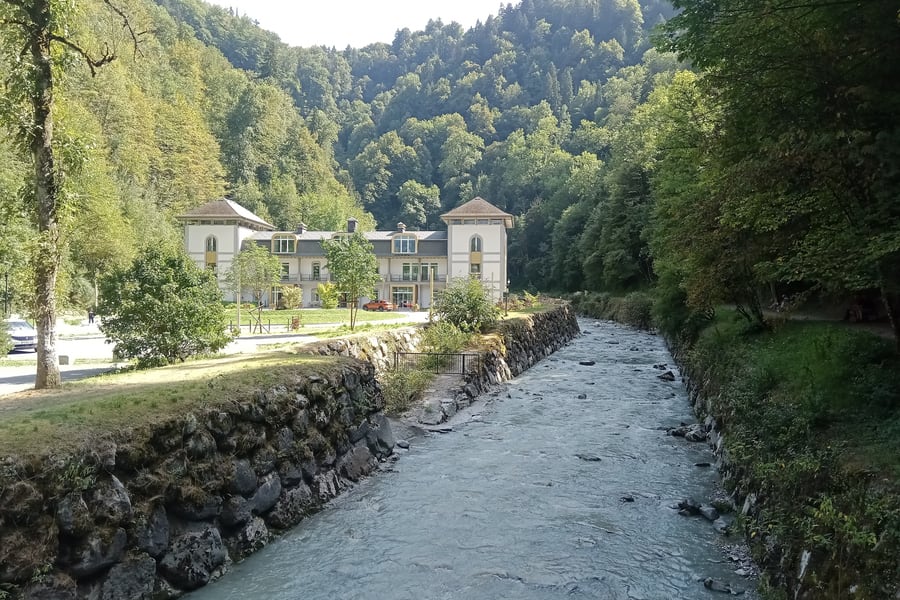
A notary, Joseph-Marie Gontard, opened the first baths over the hot springs of the Bon Nant gorge in 1806. The flood of 1892 destroyed them, and the establishment was rebuilt about a kilometre downstream, where its park now runs along the torrent a few minutes from the station. The tramway once had a halt at the park gate.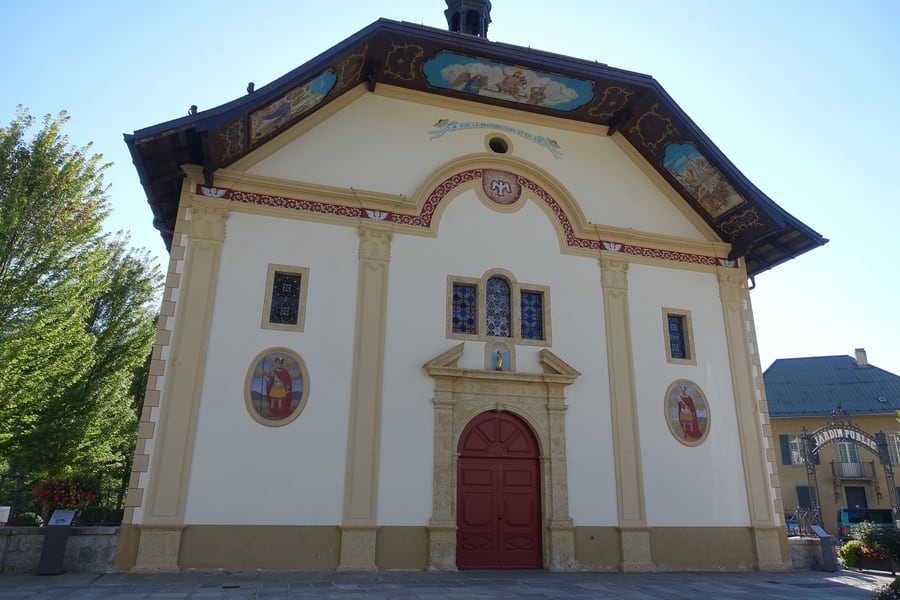 Guilhem Vellut / Wikimedia Commons · CC BY 2.0 · cropped
Saint-Gervais-les-Bains
The village church of Saint-Gervais-et-Saint-Protais was commissioned in 1696 and consecrated in 1702, in the Savoyard Baroque style, with painted eaves over its façade and a bulb belfry of 1819 on a medieval tower. Windows by the Korean-born artist Kim En Joong were added in 2016.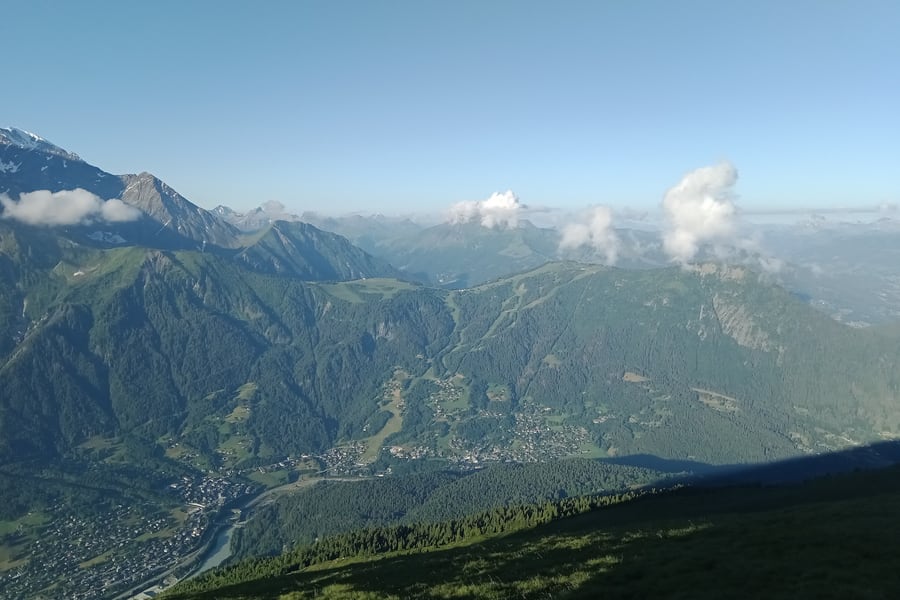 Rémih / Wikimedia Commons · CC BY-SA 4.0 · cropped
Col de Voza
The col sits on the ridge between the Chamonix valley and the Bionnassay valley, where paths from Les Houches and Bionnassay meet the Tour du Mont Blanc and the GR 5. In summer it is a starting point for walks; in winter ski runs pass through it.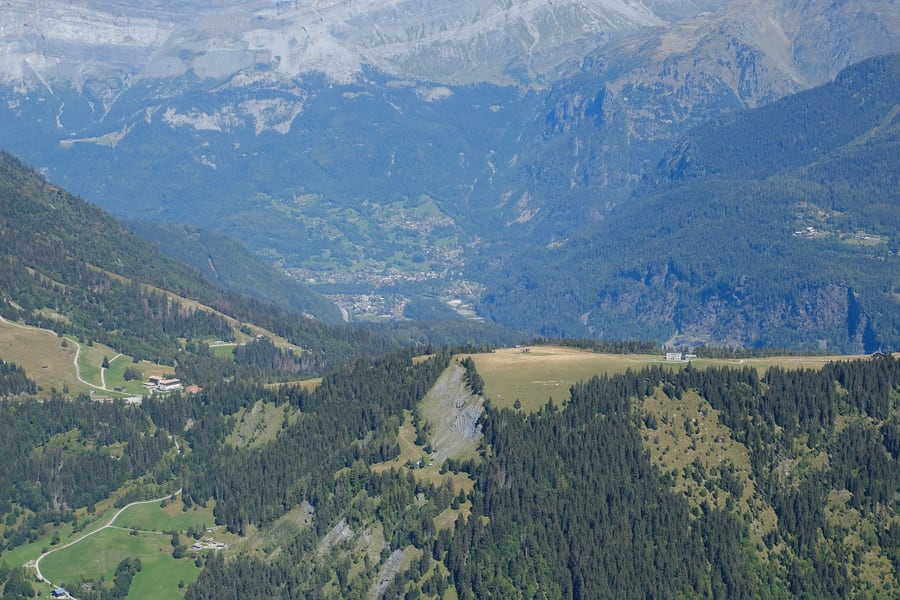 Guilhem Vellut / Wikimedia Commons · CC BY 2.0 · cropped
Bellevue
The high plateau of Bellevue, at 1,794 metres, stands on the ridge above Les Houches and the Chamonix valley. A cable car comes up from Les Houches, so it is possible to ride up by train and down the other side. In winter the trains stop here, for the Les Houches–Saint-Gervais ski area and snowshoe walks.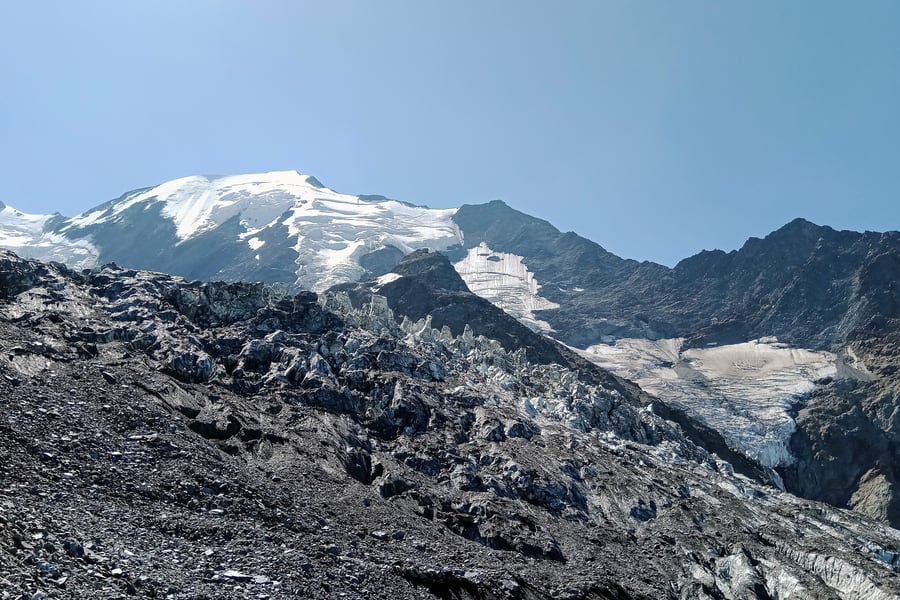 Rémih / Wikimedia Commons · CC BY-SA 4.0 · cropped
The Nid d'Aigle and the Bionnassay glacier
The terminus sits at the foot of the Nid d'Aigle refuge, rebuilt here in 2006 at 2,412 metres, the starting point of the normal route up Mont Blanc. Beside it the Bionnassay glacier falls from the Aiguille de Bionnassay and the Dôme du Goûter, and a viewing platform looks out over its seracs.Where to Sleep
The first train up leaves Le Fayet early, so a night beside the station puts it on your doorstep, along with the main-line trains to and from the rest of France. Saint-Gervais, one stop up the line, is the livelier base, with the old village around its church.
Where to stay
Hôtel des Deux Gares
Beside the station, Le Fayet
Rooms and apartments 50 metres from the main-line station and the tramway, a short walk from the thermal baths.
Check Availability (opens in a new tab, on hotel2gares.com)via hotel2gares.comSaint Gervais Hotel & Spa
On Rue du Mont Lachat, Saint-Gervais
A hotel of 75 rooms on the same street as the tramway's Saint-Gervais station, with a bar named after Marie Paradis, the first woman to climb Mont Blanc.
Check Availability (opens in a new tab, on all.accor.com)via all.accor.comQuestions or corrections
Planning this trip and stuck on something, or spotted a time, fare or detail that has changed? Send us a message about Tramway du Mont-Blanc. We read every one, and we update this page when something has changed.