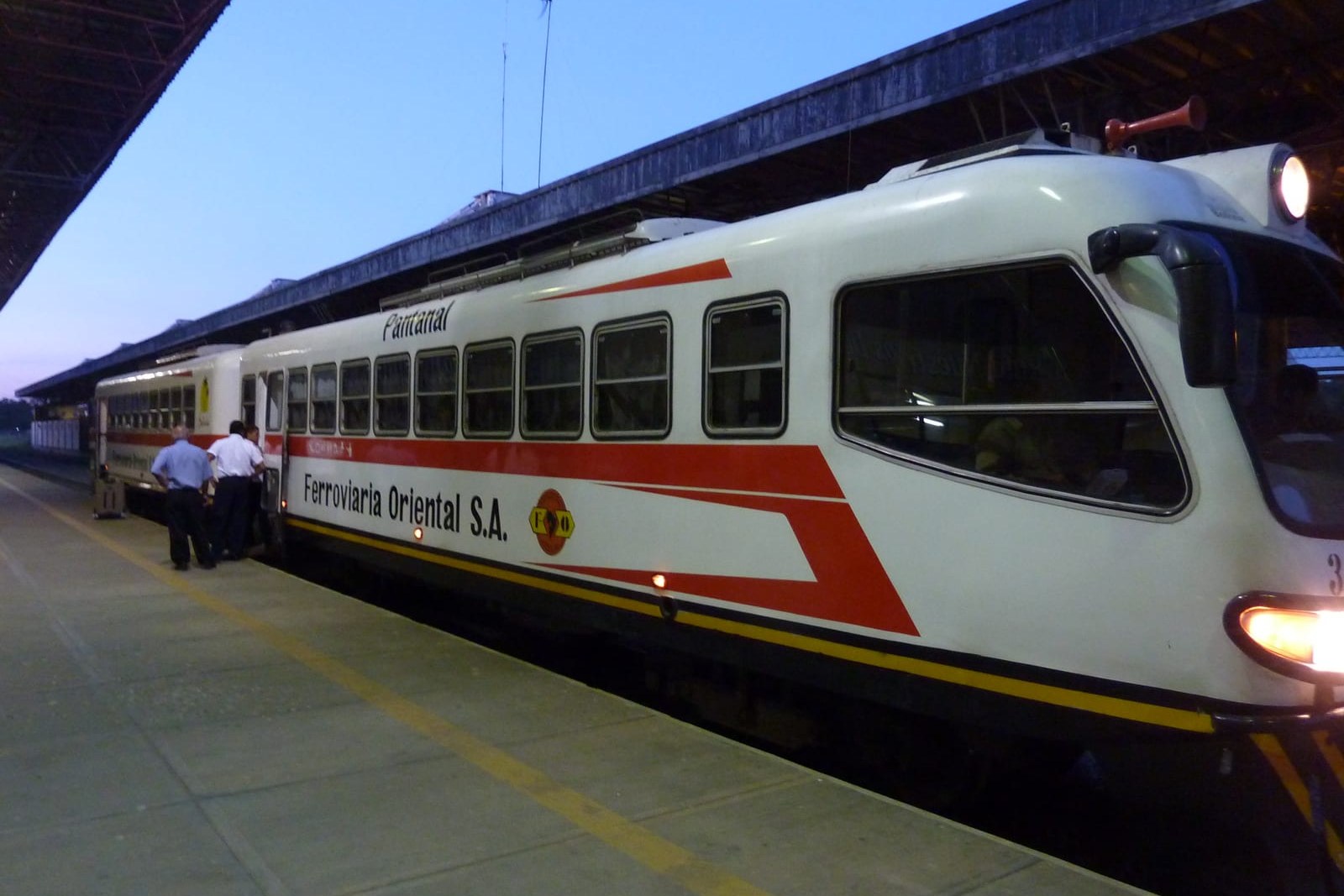
The Death Train (Tren de la Muerte)
Jim McIntosh / Wikimedia Commons · CC BY 2.0
- DistanceSanta Cruz–Puerto Quijarro · ~600 km
- DurationAbout 15–18 hours to the border
- Best seasonDry season May–September
Introduction
Bolivia's other great railway could hardly be more different from the cold, high line of the altiplano. It runs east out of Santa Cruz de la Sierra — the country's booming tropical lowland city — and strikes across some 600 kilometres of dry forest and savannah to Puerto Quijarro, on the frontier with Brazil at the edge of the Pantanal. Bolivians know it by a name that has stuck for the best part of a century: the Tren de la Muerte, the "Death Train".
The name is far more alarming than the journey. There are competing stories behind it — that it remembers the labourers who died of fever and malaria cutting the line through the lowland jungle in the 1940s and 50s, or that in the old days passengers rode on the roof to dodge the fare and tumbled off as the train swayed through the night. Whichever is true, today's traveller rides in air-conditioned comfort, in a reclining seat, watching one of the least-known and most beautiful landscapes in South America roll by.
For this line crosses the Chiquitania — a vast region of dry tropical forest, sudden red-rock escarpments and, threaded through it, the extraordinary Jesuit mission towns whose churches are a UNESCO World Heritage Site. It ends at the Pantanal, the largest wetland on earth. The "Death Train" is really nothing of the sort; it is simply one of the great overland adventures of the continent.
The Journey
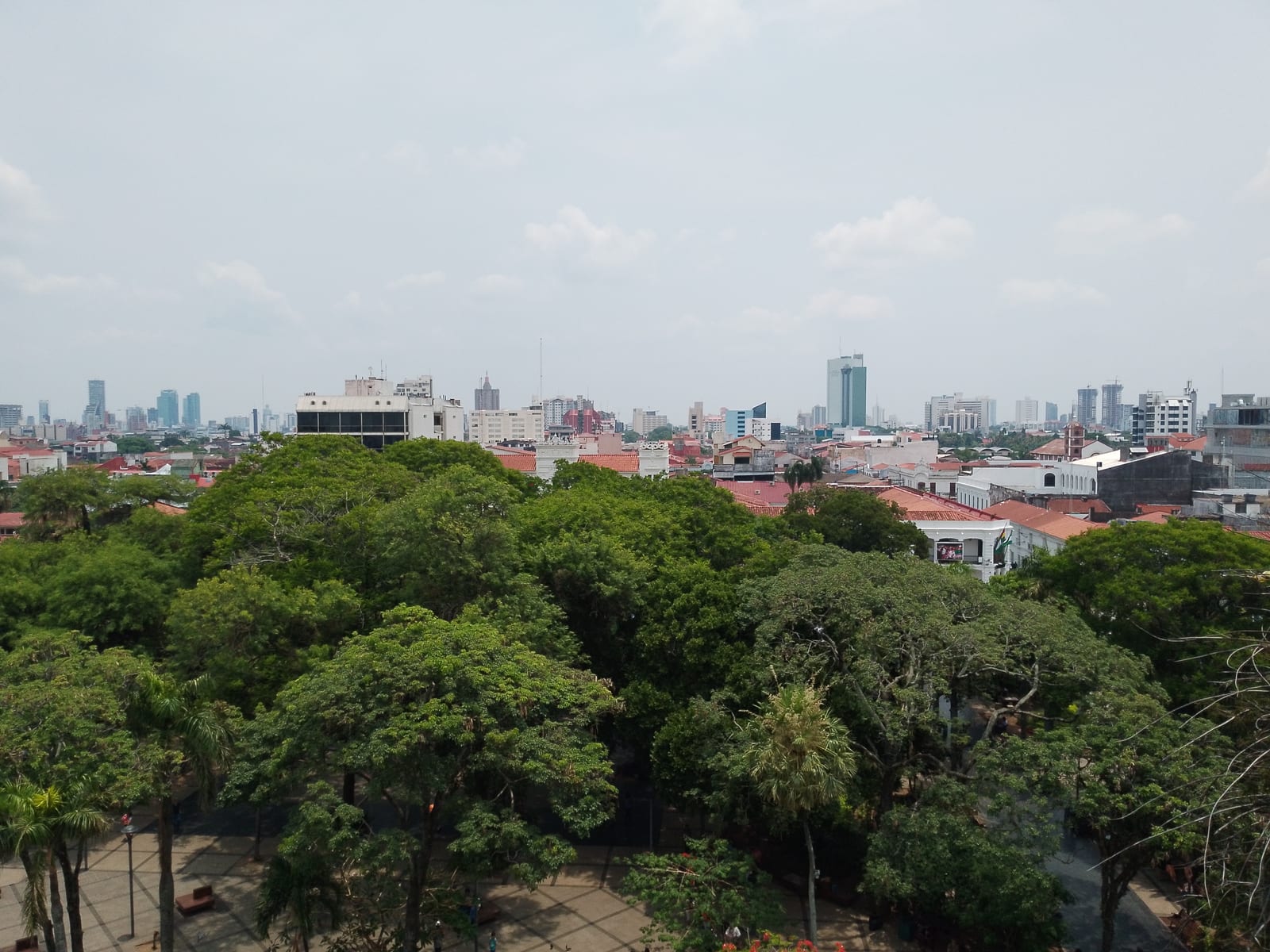
The journey starts at the Terminal Bimodal in Santa Cruz de la Sierra, the modern rail-and-bus station of a fast-growing city that feels a world away from Andean Bolivia — hot, green, low and humid, more Amazon than altiplano. The train pulls out eastward through the sprawl and the farmland around Cotoca and Pailón, and soon the country opens into the Chiquitania.
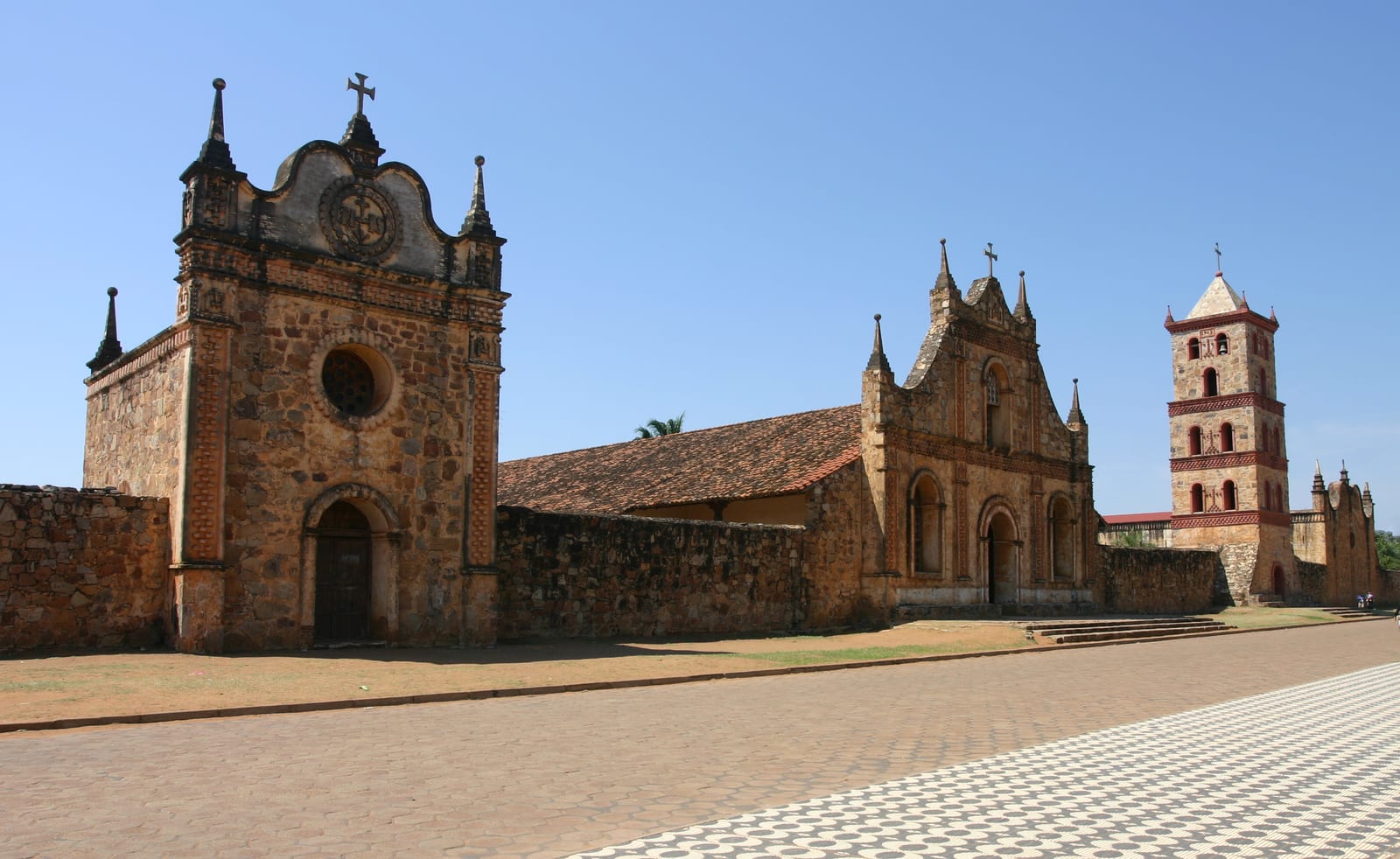
This is the heart of the ride: hour after hour of dry tropical forest and savannah, broken by ranching towns, cattle at the line-side and the occasional horseman. The first great landmark is San José de Chiquitos, one of the old Jesuit mission towns, whose fortress-like stone church — begun in the 18th century — is among the finest in the Americas and worth breaking the journey to see. Beyond it the land begins to buckle, and at Chochís the astonishing Torre de Chochís and the sheer wall of the Cerro rise straight out of the green, the most dramatic scenery on the whole line.
Deeper east the train reaches Roboré, a relaxed garrison town of hot springs, rivers and forest waterfalls — a fine place to pause in the humid lowlands. From here it runs on through Puerto Suárez to journey's end at Puerto Quijarro, hard on the Brazilian border. Step off the train and you are on the edge of the Pantanal, the greatest tropical wetland on the planet, with Brazil — and the wildlife-rich town of Corumbá — just across the frontier. It is a journey that carries you from a modern Andean-fringe city, through wild mission country, to one of the great natural crossroads of South America.
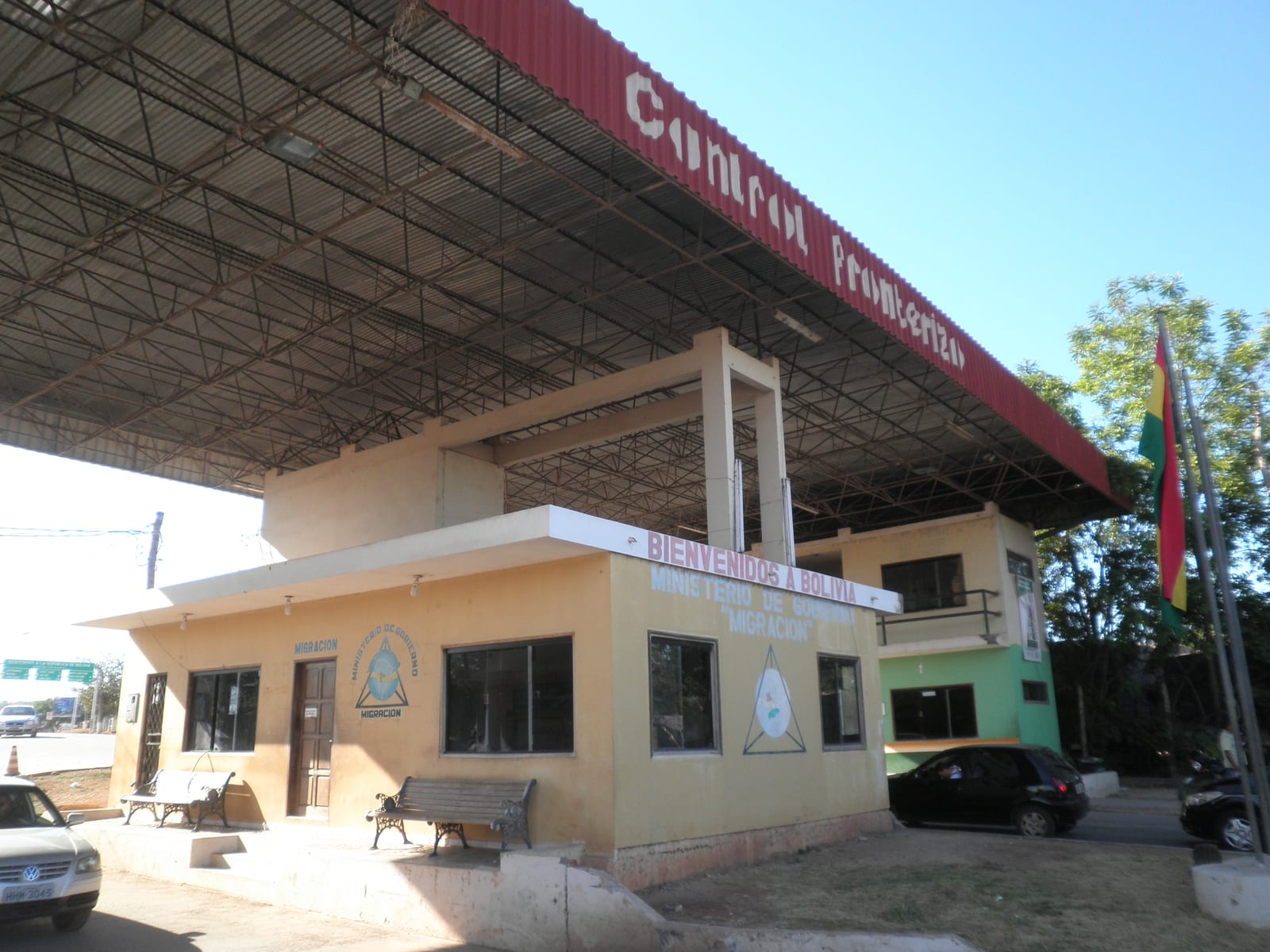
Along the route
Osireg / Wikimedia Commons · CC BY-SA 3.0The "Death Train"
The line owes its nickname to its history, not to any danger today: the labourers who died of fever building it across the lowland forest, and the mid-century passengers who rode on the roof to avoid the fare and fell from the moving train. Modern travellers ride in air-conditioned comfort.Jim McIntosh / Wikimedia Commons · CC BY 2.0 · croppedRed rock and the Chiquitania
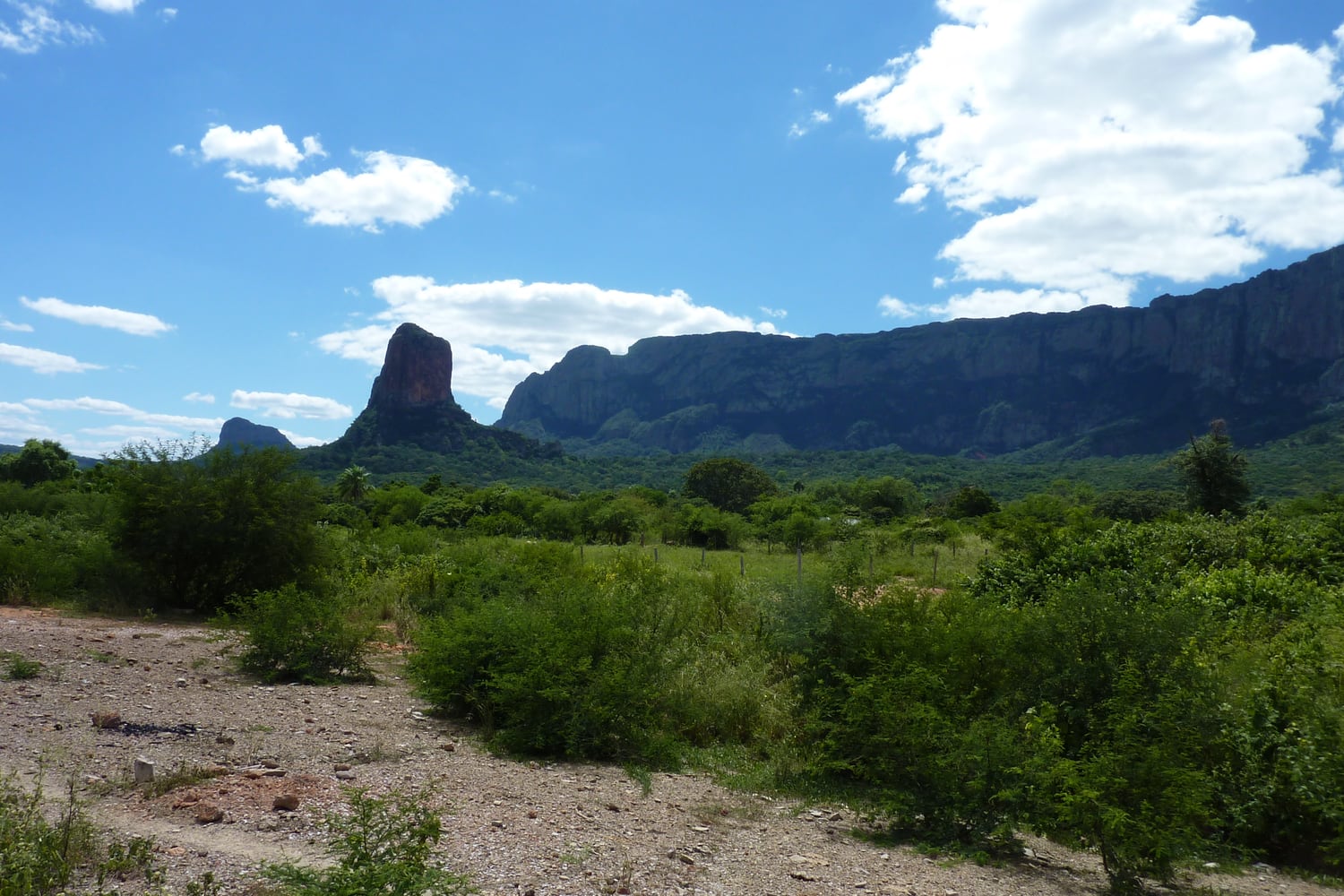
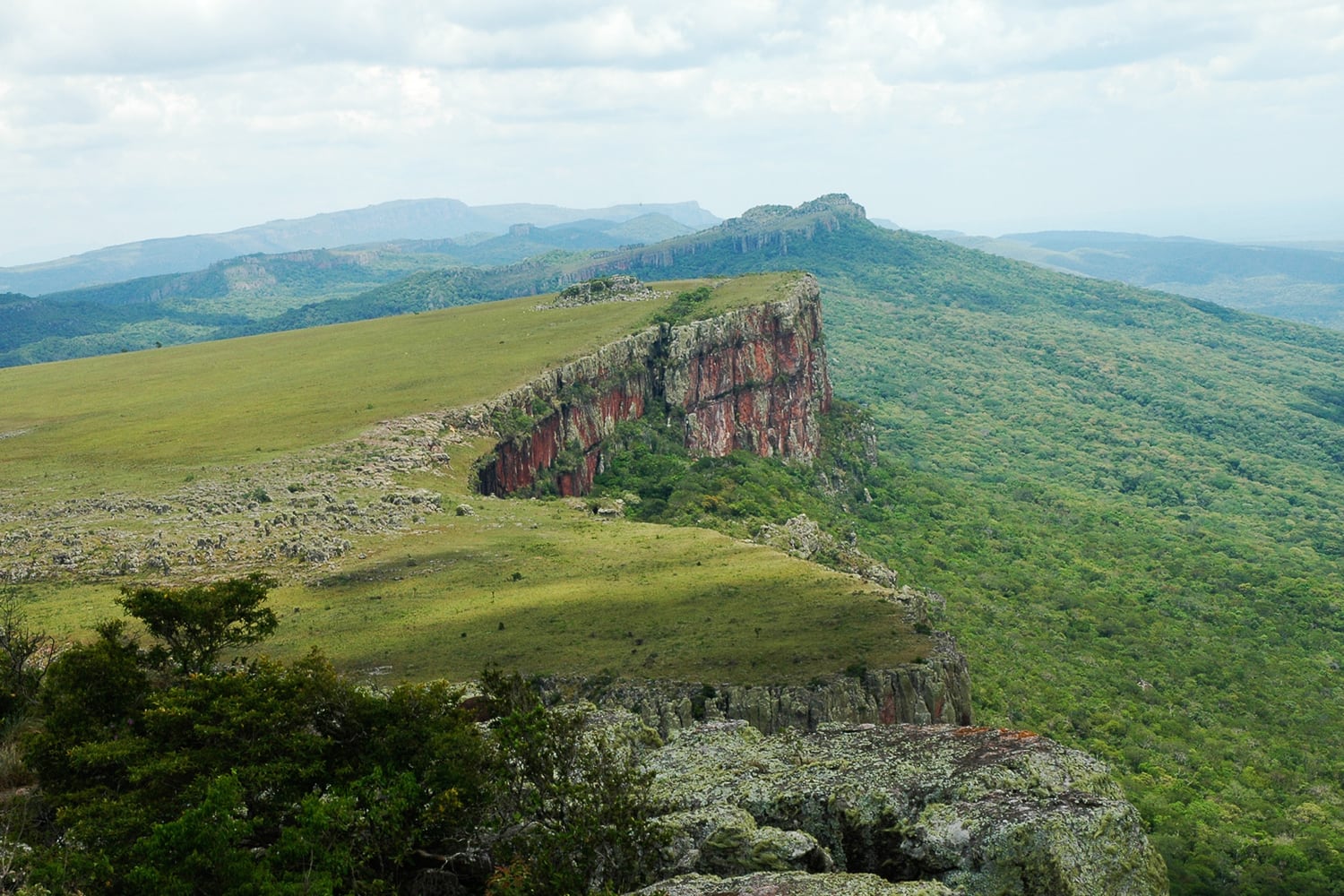
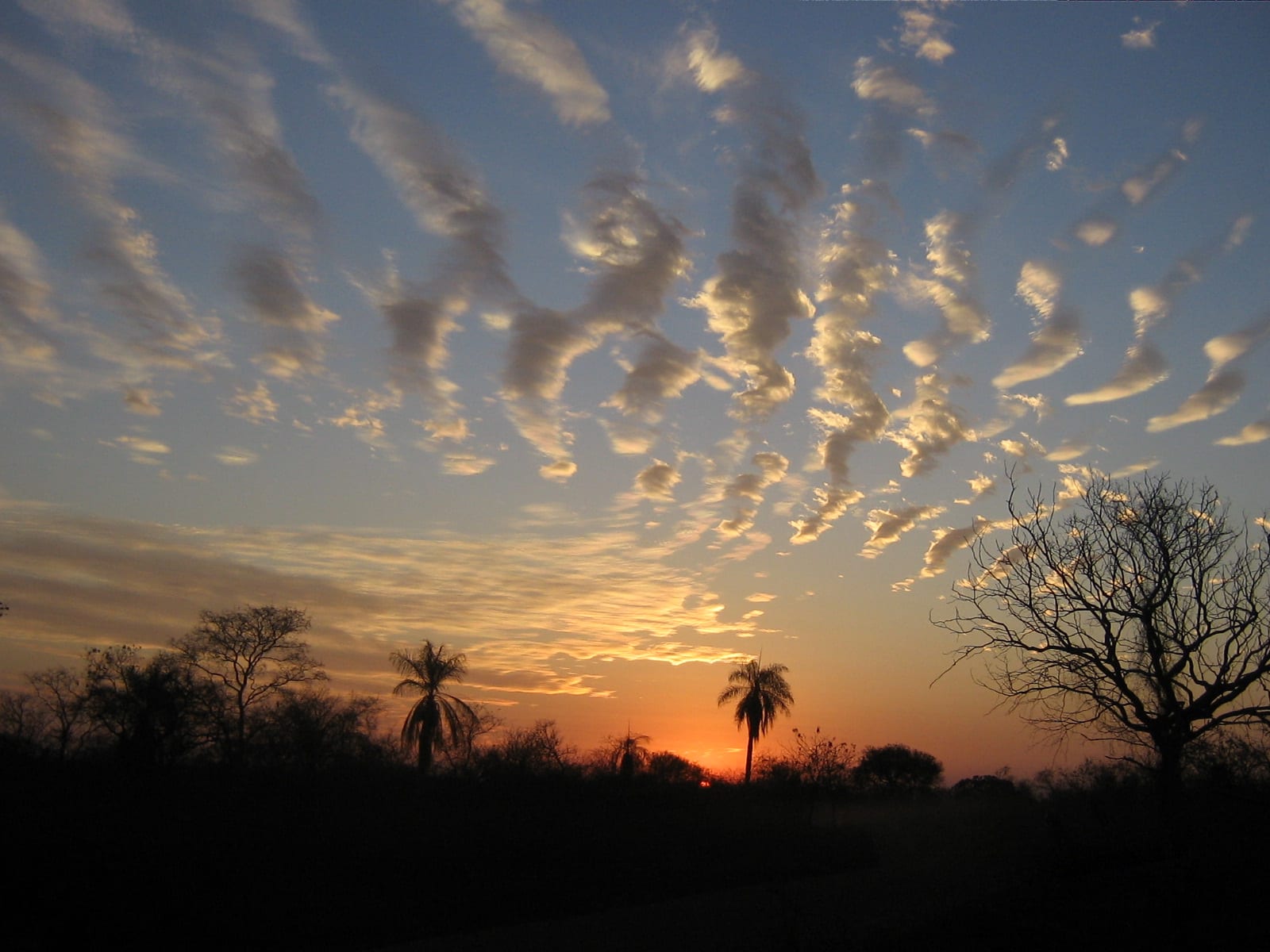
East of Santa Cruz the train crosses the Chiquitania, a huge, little-known landscape of dry tropical forest and sudden sandstone escarpments. The most dramatic is at Chochís, where the great cliff rears straight out of the green.Geoffrey Groesbeck / Wikimedia Commons · CC BY-SA 3.0The Jesuit Mission towns
The railway threads the country of the Chiquitos Jesuit Missions, six of whose wooden and adobe churches are a UNESCO World Heritage Site. San José de Chiquitos, a stop on the line, has one of the finest — a fortress-like carved stone façade unlike anything else in the Americas.A bit of history
Culture & experiences along the way
Stoni111121 / Wikimedia Commons · CC BY-SA 4.0The Expreso Oriental and the Ferrobús
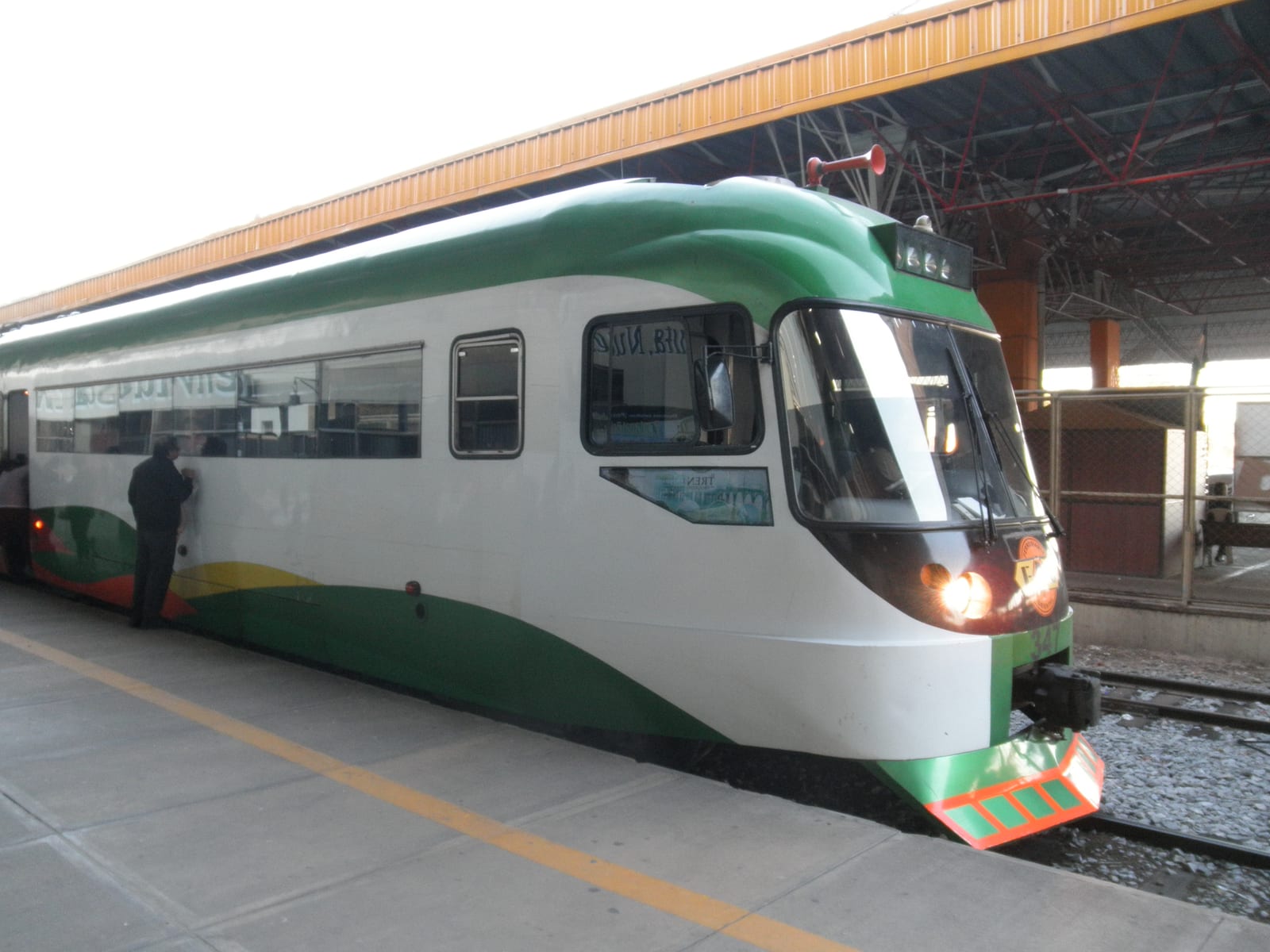
Ferroviaria Oriental runs two trains on the line. The Expreso Oriental is the daytime service, with reclining Super Pullman seats, a restaurant car and a snack car; the Ferrobús is a fast railcar with near-flat seats that runs largely by night. The ferrobús was brought back in February 2026 after years out of service — check which train runs on your day.Leogomezr / Wikimedia Commons · CC BY-SA 3.0 · croppedRoboré and the tropical lowlands
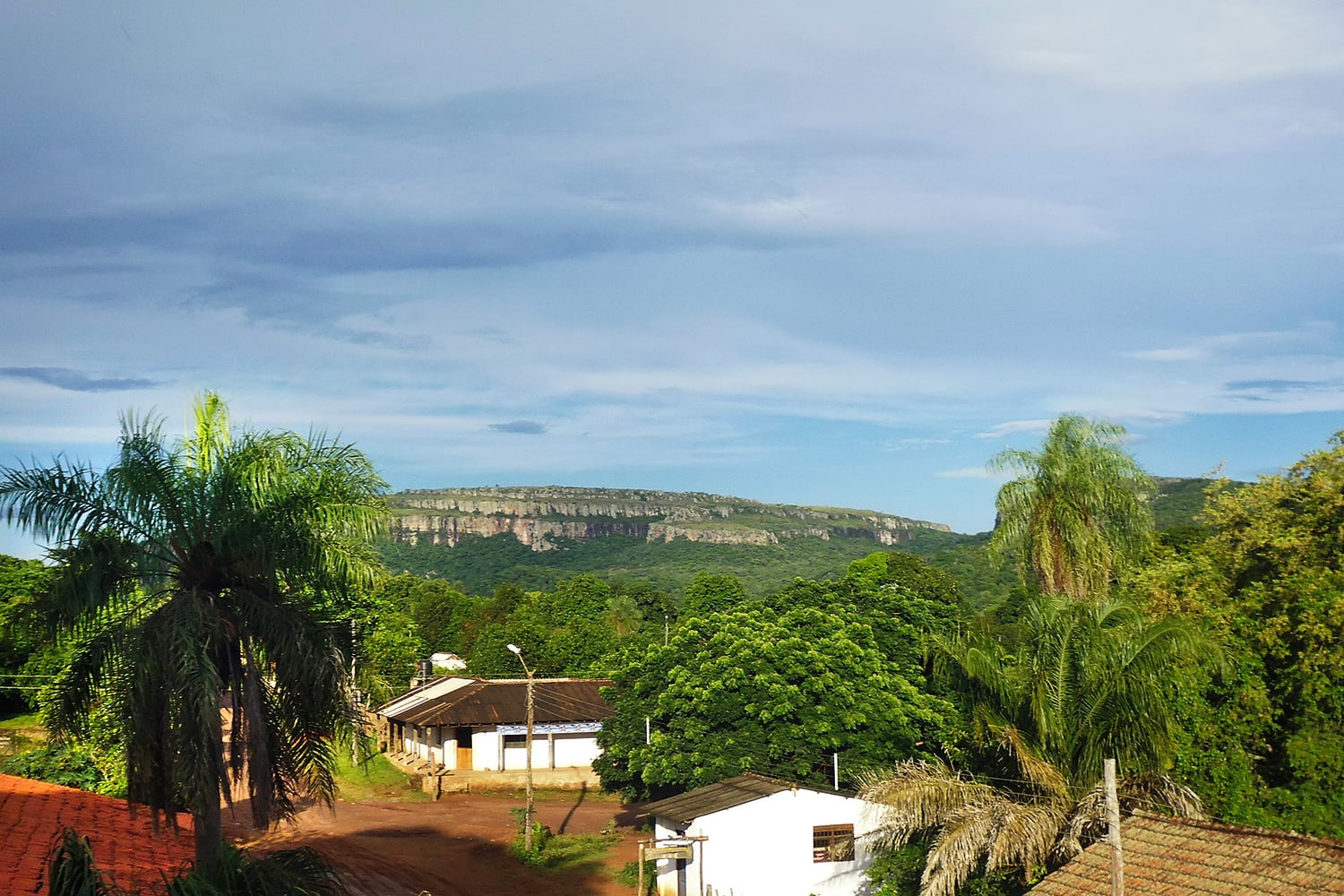
Break the journey at Roboré, a laid-back garrison town in the eastern hills with hot springs, rivers and waterfalls like the Chorro San Luis in the forest nearby. This is the humid, green, insect-loud Bolivia of the lowlands — a world away from the salt and thin air of the altiplano on the country's other great line.CivArmy / Wikimedia Commons · CC BY-SA 4.0The frontier and the Pantanal
The line ends at Puerto Quijarro, hard on the Brazilian border across from Corumbá, on the edge of the Pantanal — the largest tropical wetland on earth. Many travellers ride the train precisely to reach this crossing, stepping from Bolivia into Brazil and on into the greatest concentration of wildlife in South America.Timetables
The eastern line is run by Ferroviaria Oriental S.A., which operates two passenger trains between Santa Cruz and Puerto Quijarro: the daytime Expreso Oriental, with its reclining Super Pullman seats and restaurant car, and the faster Ferrobús, a railcar with near-flat seats that runs largely overnight.
Typical service, as of the 2026 timetable — confirm before travelling:
| Train | Santa Cruz → Puerto Quijarro | Puerto Quijarro → Santa Cruz |
|---|---|---|
| Expreso Oriental | Mon, Wed, Fri · dep 13:30 | Tue, Thu, Sun · dep 13:00 |
| Ferrobús | Tue, Thu, Sun · dep 18:00 | Mon, Wed, Fri · dep 18:00 |
The full run takes roughly 15 to 18 hours, so at least one leg is overnight either way.
Good to know:
- The Ferrobús is newly back. Ferroviaria Oriental reactivated the ferrobús in February 2026, after around six years suspended, and it has been restoring frequency since — so its exact days can change. Check the current schedule before you plan around it.
- Expreso Oriental for the daylight. If you want to see the Chiquitania and the Chochís rock formations, the daytime Expreso Oriental shows off far more of the scenery than the overnight ferrobús.
- Break it at San José or Roboré. Both are scheduled stops and make natural places to get off, spend a night, and pick up a later train onward.
- It's an international route. Puerto Quijarro is the crossing into Brazil (Corumbá); have your passport and any onward tickets ready.
Times as of the 2026 Ferroviaria Oriental timetable and subject to change. Confirm current days and departures with the operator before you travel — see the Tickets section below.
Tickets
Despite the fearsome name this is a comfortable and inexpensive train, and tickets are straightforward through Ferroviaria Oriental, sold on its website and at the Terminal Bimodal in Santa Cruz. The Expreso Oriental is the day service, with the fullest reclining Super Pullman seats, a restaurant car and a snack car; the Ferrobús is the fast air-conditioned railcar with near-flat seats that runs mostly by night. For scenery take the daytime train; for speed, the ferrobús.
Reserve ahead in the dry-season peak and carry your passport for the border. Bring bolivianos, insect repellent for the humid lowlands, and water. A popular plan is to ride the Expreso Oriental by day, break at San José de Chiquitos or Roboré, then continue to Puerto Quijarro and cross into Brazil for the Pantanal.
Book your tickets
Expreso Oriental · Santa Cruz–Puerto Quijarro
The daytime Super Pullman
Ferroviaria Oriental's comfortable day train — reclining Super Pullman seats, a restaurant car and a snack car — running Santa Cruz to Puerto Quijarro on Mondays, Wednesdays and Fridays, and back on Tuesdays, Thursdays and Sundays. Buy through the operator's passenger site; confirm current days and times before you travel.
Book Tickets (opens in a new tab, on Ferroviaria Oriental)via Ferroviaria OrientalFerrobús · the overnight railcar
Near-flat seats, back since 2026
The fast ferrobús, with air conditioning and seats that recline almost flat, running largely overnight between Santa Cruz and Puerto Quijarro. Reactivated in February 2026 after several years suspended, its frequency is still settling — check the operator's site for the current schedule.
Book Tickets (opens in a new tab, on Ferroviaria Oriental)via Ferroviaria OrientalRail Passes
No rail pass covers this line. Interrail and Eurail are European schemes, and Bolivia is not among the 33 countries in Interrail's list of covered railway companies. Ferroviaria Oriental sells each journey as a ticket, online or at the Terminal Bimodal in Santa Cruz.
Checked October 2026 against Interrail's list of railway companies (opens in a new tab).
Places to Visit
The "Death Train" is really a line through one of South America's great undiscovered regions, and it rewards getting off along the way. The Jesuit mission towns are the cultural highlight, and the wetlands at the far end are the reason many people come at all.
San José de Chiquitos sits right on the railway and is the one mission you can reach without leaving the line — a fortress-like stone church quite unlike the timber-and-adobe churches of the circuit further north, and a good half-day if you are not driving the loop. Roboré makes a fine lowland base, a warm, easygoing town surrounded by rivers, hot springs at nearby Aguas Calientes, and forest waterfalls such as the Chorro San Luis — a good place to feel the tropical, green Bolivia of the east.
Beyond Puerto Quijarro the border town of Corumbá, in Brazil, is the usual gateway to the wetlands, and where most Pantanal trips are arranged.
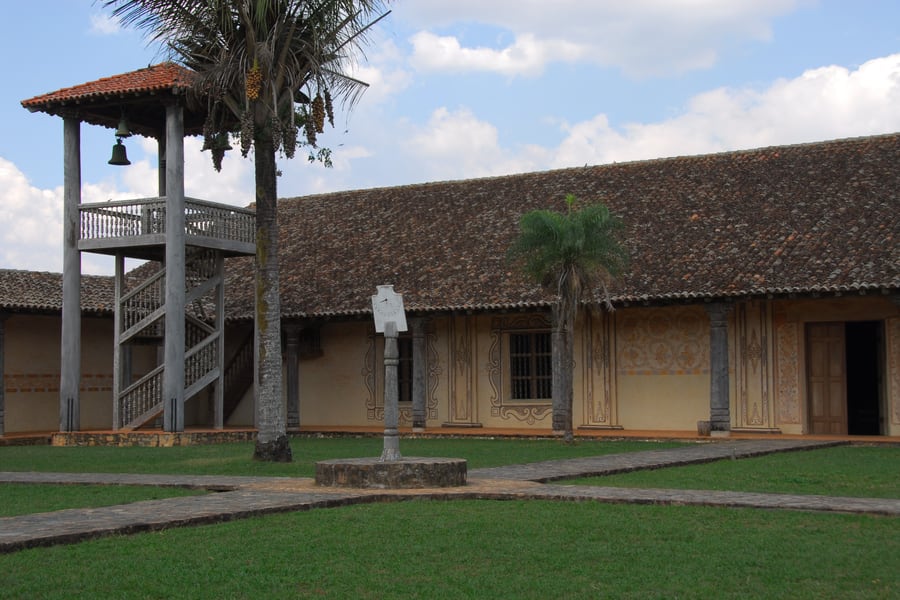 Bamse / Wikimedia Commons · CC BY-SA 2.5 · cropped
San Javier
Founded in 1691, the oldest of the Chiquitos missions, and the place the whole extraordinary experiment began. The church was built between 1749 and 1752 by Fr. Martin Schmid, a Swiss Jesuit who was architect, carpenter and composer at once — the carved spiral columns and painted walls are his. Restored between 1987 and 1993, it is the natural first stop on the mission circuit north of the railway.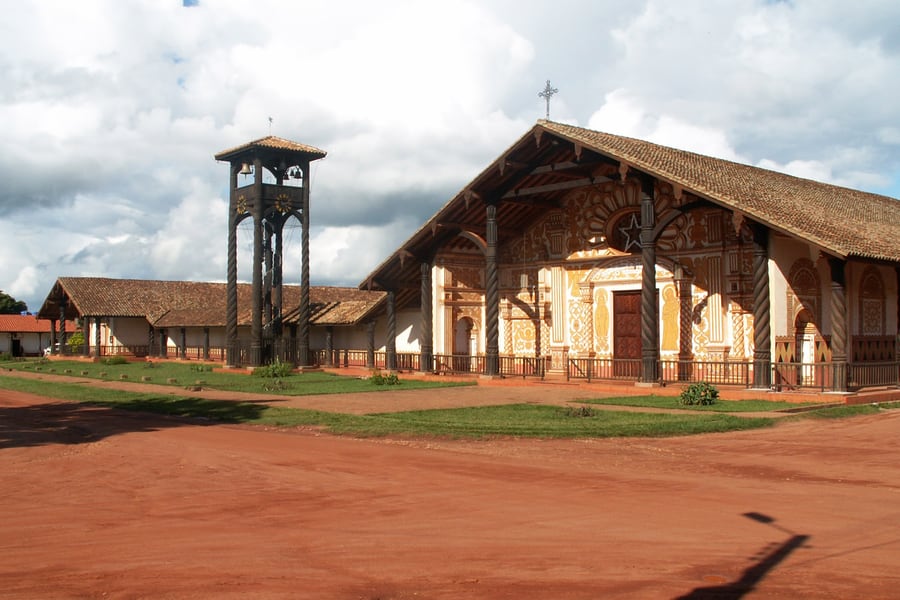 Daan / Wikimedia Commons · CC BY-SA 3.0 · cropped
Concepción
Founded in 1699, and its church — built 1752–56, again by Martin Schmid, this time with Fr. Johann Messner — is the most spectacular of the six. A vast timber roof on carved columns, a painted façade, and a free-standing bell tower across a plain of red earth. Its restoration ran from 1975 to 1996 and set the standard for all the others. The six missions were inscribed by UNESCO in 1990.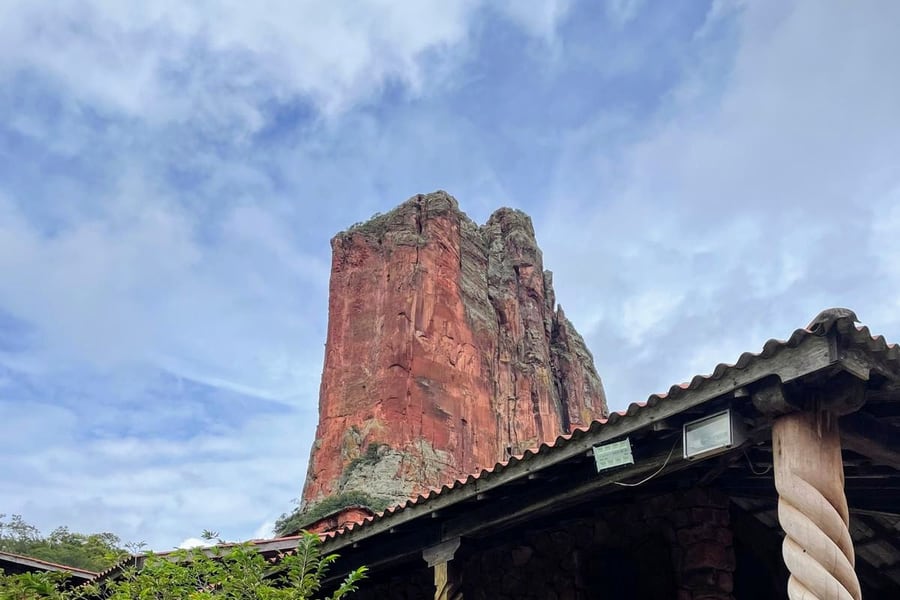 Aldrihe / Wikimedia Commons · CC BY-SA 4.0 · cropped
Santuario de Chochís
Built in 1988 under Hans Roth, the Swiss architect who spent from 1972 until his death in 1999 rebuilding the Chiquitos missions — and one of the very few buildings where he was designing rather than restoring. It stands at the foot of the red Torre de Chochís, and it commemorates sixteen people killed in the El Portón flood of January 1979. The carved pillars inside run to parrots, toucans and anteaters alongside the apostles.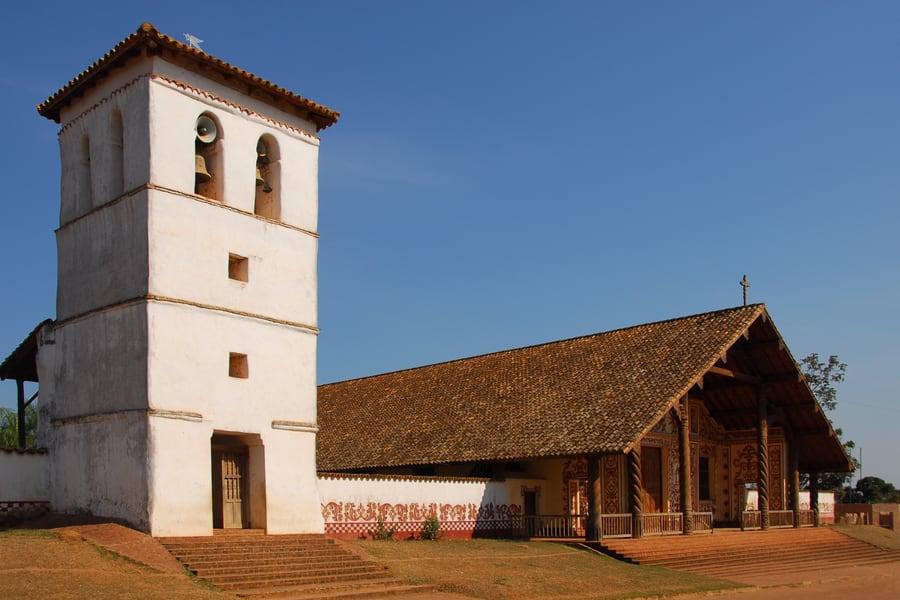 Bamse / Wikimedia Commons · CC BY-SA 2.5 · cropped
San Miguel de Velasco
Deeper into the Velasco province and, for many people, the loveliest of the mission churches: a whitewashed free-standing bell tower, a long sweep of tiled roof, and walls banded with painted ornament in ochre and red. It is one of the six on the UNESCO list, and because the circuit is a loop rather than a line, it pairs naturally with Concepción and San Rafael on a two- or three-day drive out of Santa Cruz.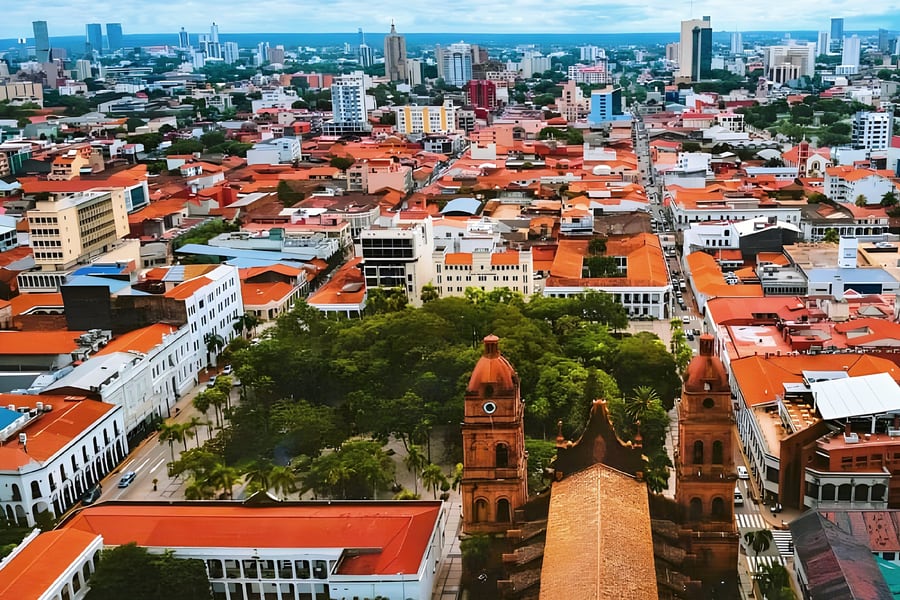 Parallelepiped09 / Wikimedia Commons · CC BY-SA 4.0 · cropped
Santa Cruz de la Sierra
Founded on 26 February 1561 by Ñuflo de Chávez, and now comfortably Bolivia's largest city — over 1.6 million people, at only 400 m above sea level, which is why it feels tropical rather than Andean. The Plaza 24 de Septiembre is still the centre of things, with the cathedral of San Lorenzo on one side and low arcaded streets running off it, and glass towers a few blocks beyond.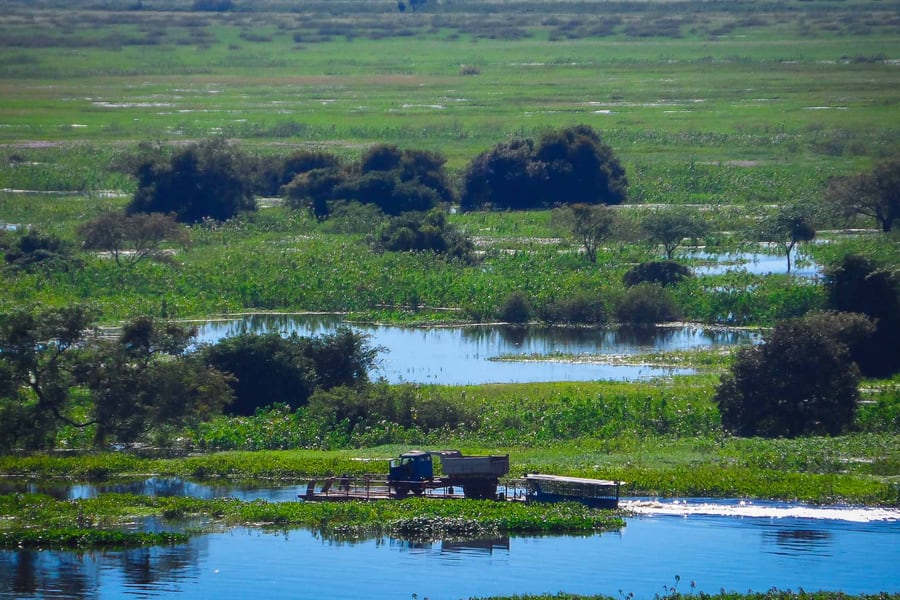 Wilson Brito7 / Wikimedia Commons · CC BY-SA 3.0 · cropped
The Pantanal
Across the border from Puerto Quijarro lies the largest tropical wetland on earth — somewhere between 140,000 and 195,000 km² spread over Brazil, Bolivia and Paraguay. It holds one of the healthiest jaguar populations anywhere, along with 463 bird species, capybara and caiman in absurd numbers. Going from a train seat in Santa Cruz to a boat in the Pantanal inside two days is the whole point of this line.Where to Sleep
Where you stay along the "Death Train" depends on how much of the Chiquitania you want to explore, but the line offers natural places to break the night.
In Santa Cruz de la Sierra, at the western end, is the widest choice — everything from backpacker hostels to comfortable business hotels in a lively, tropical city. It is the obvious place to spend a night before an early-afternoon departure.
In San José de Chiquitos, on the line, are simple hotels and guesthouses around the mission plaza — the ideal base for seeing the Jesuit church and the wider mission circuit, and a gentle, atmospheric overnight stop.
In Roboré, deeper east, you will find relaxed small hotels geared to travellers heading for the hot springs, rivers and waterfalls of the surrounding hills — a good place to pause in the humid lowlands before the run to the border.
In Puerto Quijarro or across the border in Corumbá (Brazil) are practical frontier lodgings and, on the Brazilian side, the lodges and tour operators of the Pantanal — where most travellers spend their real nights, out among the wildlife of the wetland.
As with all our journeys, we point to the shape of the stay rather than specific bookings: a night in Santa Cruz for the departure, a mission-town room in San José, a lowland stop in Roboré, and a Pantanal lodge beyond the border — with the long ride across the Chiquitania linking them together. Pack for heat and insects; this is a very different Bolivia from the cold of the altiplano.
Questions or corrections
Planning this trip and stuck on something, or spotted a time, fare or detail that has changed? Send us a message about The Death Train (Tren de la Muerte). We read every one, and we update this page when something has changed.