Tren del Ciment · the cement railway that stops for Gaudí
Jordi Domènech i Arnau / Flickr · CC BY-SA 2.0 · cropped
- DistanceLa Pobla de Lillet–Museu del Ciment · 3.5 km · 4 stations
- Duration20 minutes each way
- Best seasonWeekends, late March to 1 November · daily in August
Introduction
In 1905 Antoni Gaudí came up the Llobregat valley to La Pobla de Lillet on a commission from his patron, Eusebi Güell: a chalet in the Serra del Catllaràs for the engineers of the coal mines that fed Güell's new Asland cement works. He stayed two days in the house of a local textile maker, Joan Artigas, and as thanks for the hospitality he sketched him a garden by the river. Masons from the Parc Güell came up to build it.
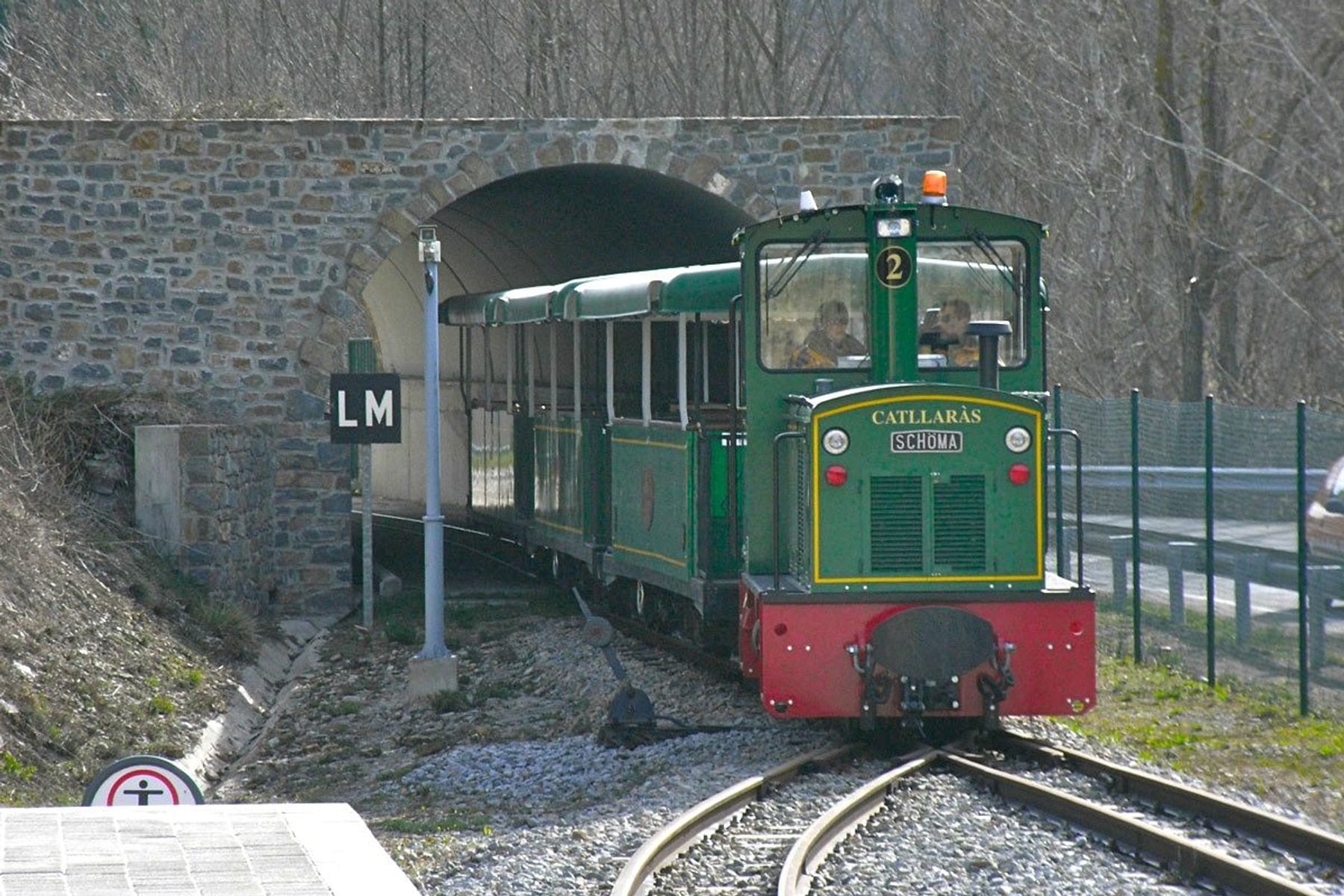
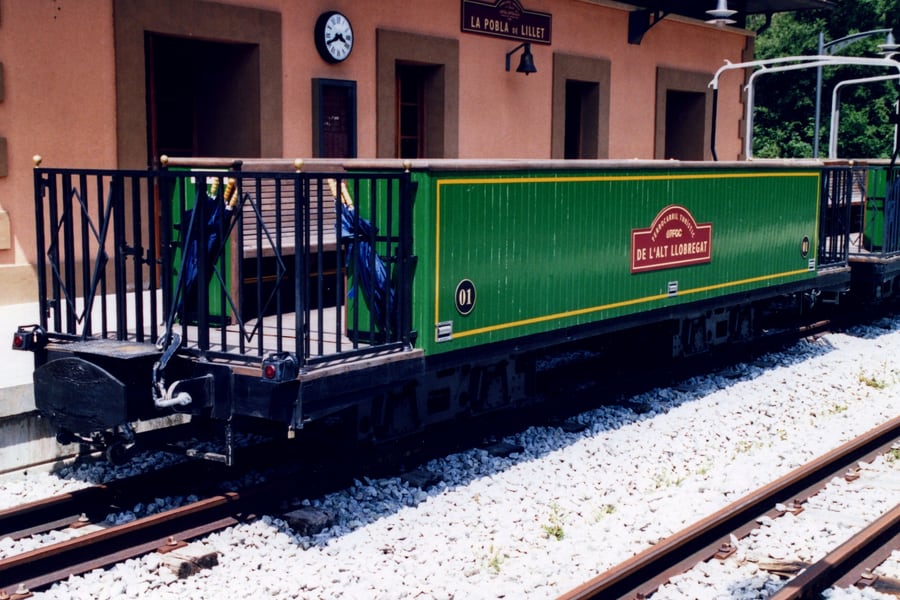
The garden is now a station. The Tren del Ciment runs on the 600 mm railway that Asland built to carry its cement down the valley, and of its four stops between La Pobla de Lillet and the old works at the Clot del Moro, one is Jardins Artigas. The ride is 3.5 kilometres and takes twenty minutes, behind a small green diesel and four carriages.
A year for Gaudí
2026 marks a hundred years since Gaudí's death. FGC, which runs the train, lengthened the season's timetable for the centenary, expecting crowds at the garden, and the train carried 29,190 passengers between 28 March and 1 November.
The Journey
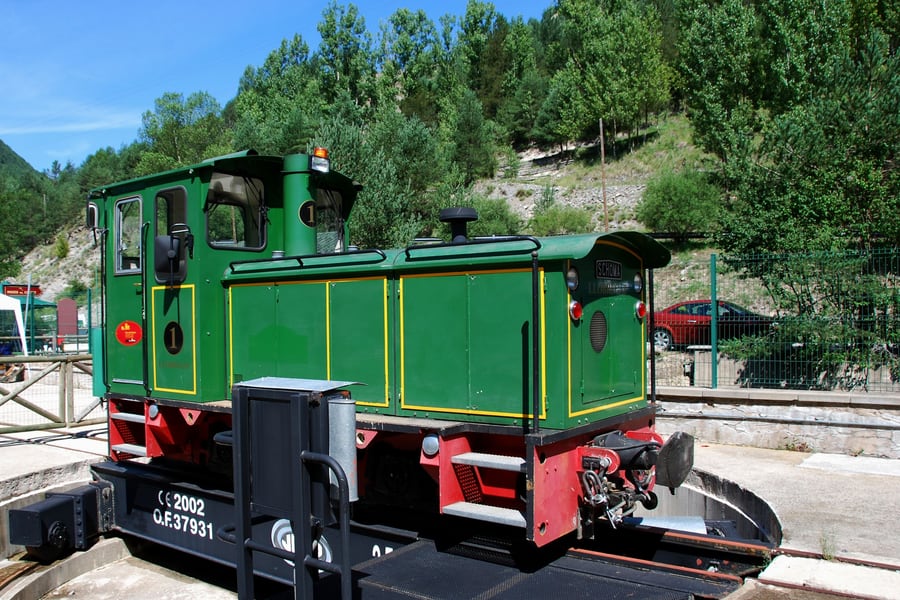
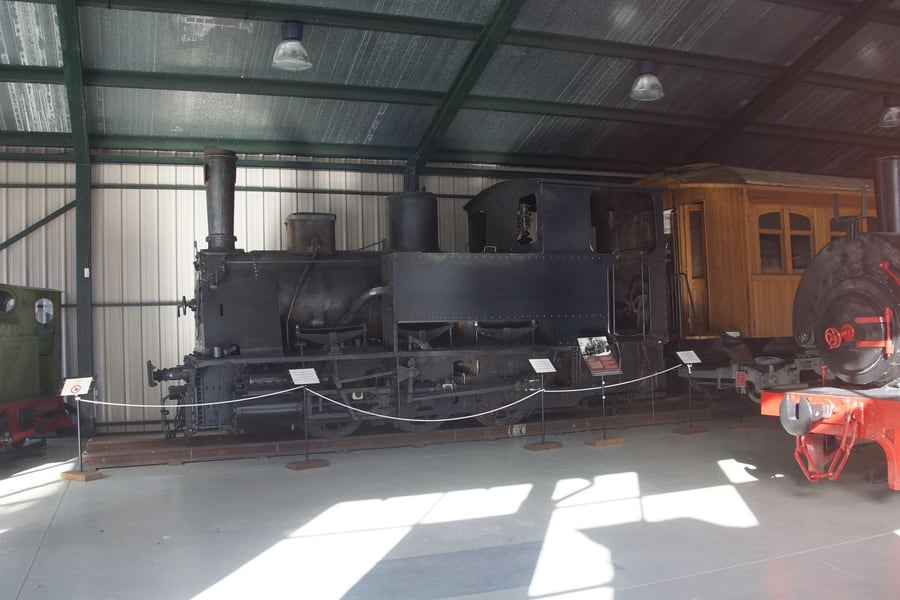
The train leaves from La Pobla de Lillet station on the edge of the town, where a shed beside the platform holds an exhibition of the narrow-gauge industrial railways of the Llobregat valley. The engines are small SCHÖMA diesels in green and red, with names on their noses: Catllaràs is locomotive 2.
Through the town
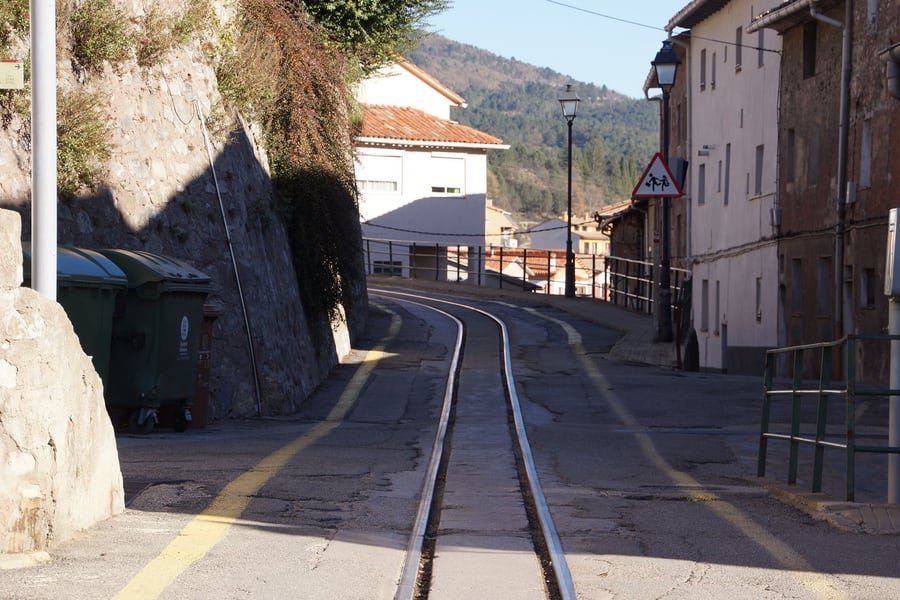
The line goes straight into a tunnel, then runs on a concrete strip shared with road traffic and in among the houses like a tramway. La Pobla Centre, seven minutes out, is the stop for the old town and the Pont Vell. Beyond it the train crosses the Llobregat on a steel bridge and passes a cardboard factory and a few cuttings to reach Jardins Artigas, fourteen minutes out.
Up to the Clot del Moro
From the garden the track is back on ballast, winding up the narrowing valley to the Clot del Moro and the terminus at the Museu del Ciment, under the stepped walls of the cement works. Trains turn back from the top after ten minutes.
A railway built because another refused
Asland opened its works here on 25 July 1904, Catalonia's first industrial cement plant, in a gorge with nothing but dirt tracks. The narrow-gauge line from Manresa reached Guardiola de Berguedà that year, but its company refused to carry it on to the works, so Asland built its own railway, 600 mm wide. King Alfonso XIII rode an early train in 1908, in goods wagons fitted out for the day, and the full line from Guardiola opened on 1 August 1914. Its best year was 1929, when demand for the Barcelona International Exhibition sent 137,191 tonnes down the valley.
The line closed in 1962 and part of its bed went under the widened road. The works shut in 1975. What survived between La Pobla and the Clot del Moro reopened for visitors, run by FGC, on 1 July 2005.
Along the route
 NearEMPTiness / Wikimedia Commons · CC BY-SA 4.0 · cropped
Down the main street
Out of the tunnel beyond La Pobla de Lillet station, the narrow track runs on a concrete strip shared with cars and then between the houses of the town, like a tramway, to the halt at La Pobla Centre.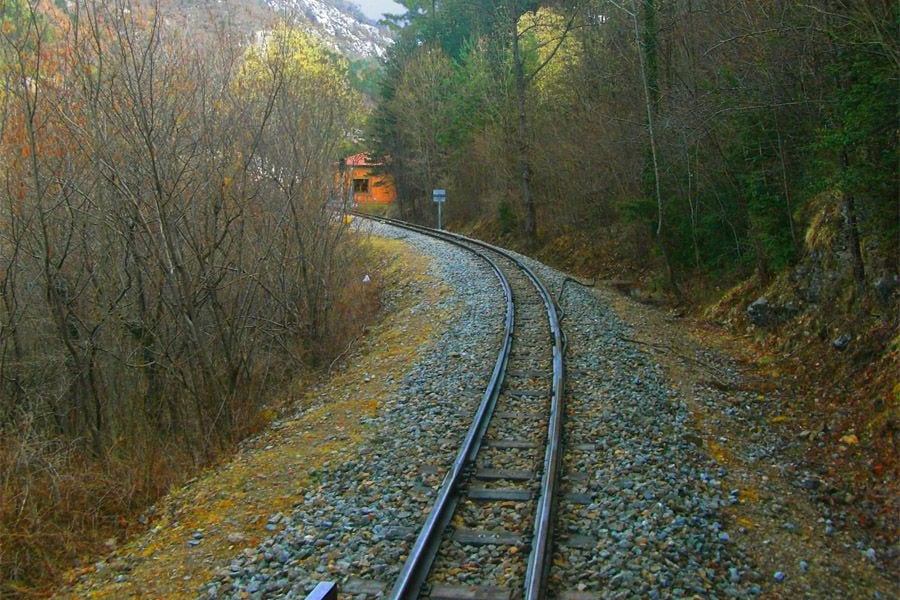 Jordi Domènech i Arnau / Flickr · CC BY-SA 2.0 · cropped
Up the valley on ballast
Past the Jardins Artigas stop the track is back on ballast and winds up the valley of the Llobregat to the Clot del Moro, the way the cement wagons came down for nearly fifty years.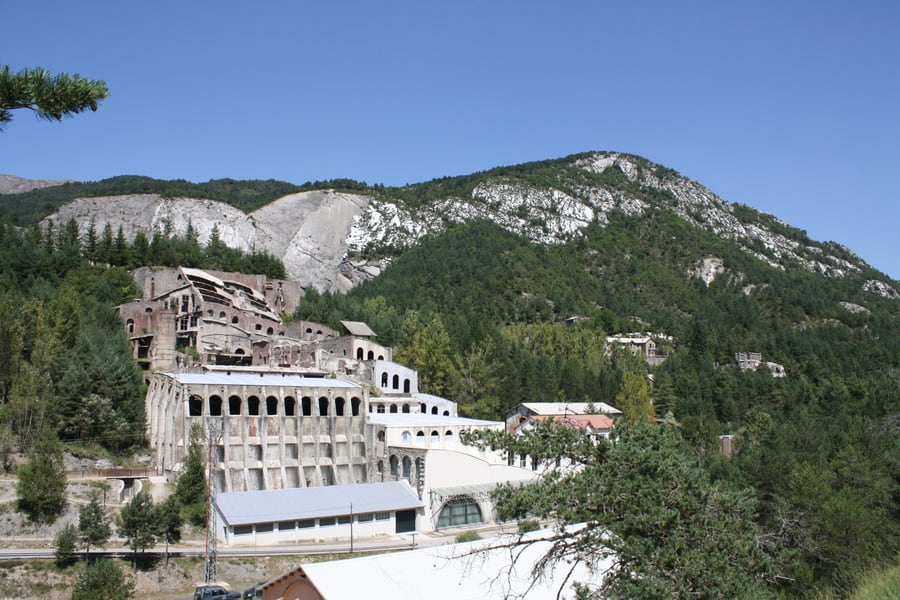 Enric Juan / Wikimedia Commons · CC BY-SA 3.0 · cropped
The works on thirteen levels
The terminus lies under the Asland works, built down the hillside on 13 levels, from the quarry at the top to the stores and loading sidings at the bottom, so that the slope did the work of moving the stone.A bit of history
Culture & experiences along the way
 Jordiferrer / Wikimedia Commons · CC BY-SA 3.0 · cropped
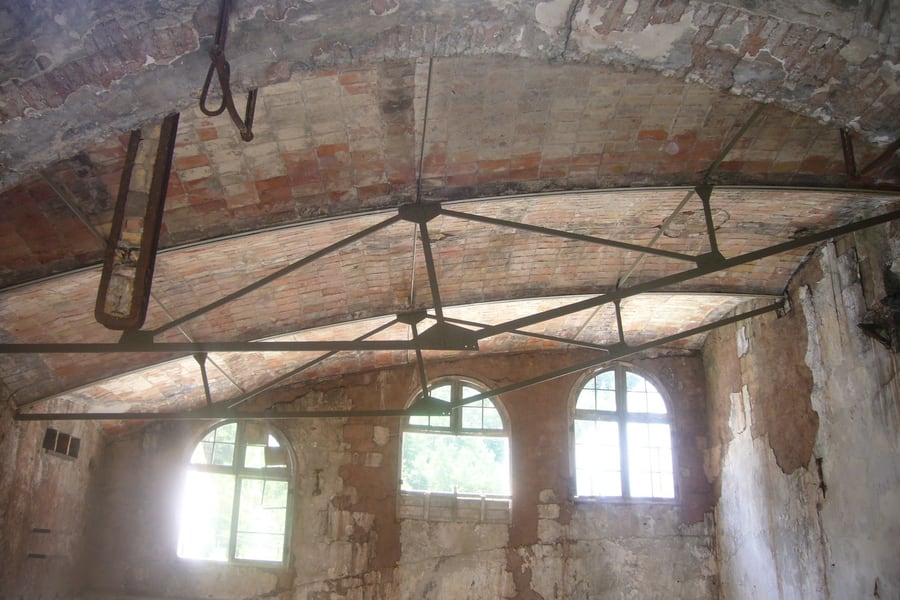
The vaults Guastavino advised on
Every roof of the Asland works is a Catalan tile vault, thin brick laid flat in two or three layers on slender iron frames. The builders consulted Rafael Guastavino, who was then making the technique famous in the United States. The museum walks you through the surviving halls.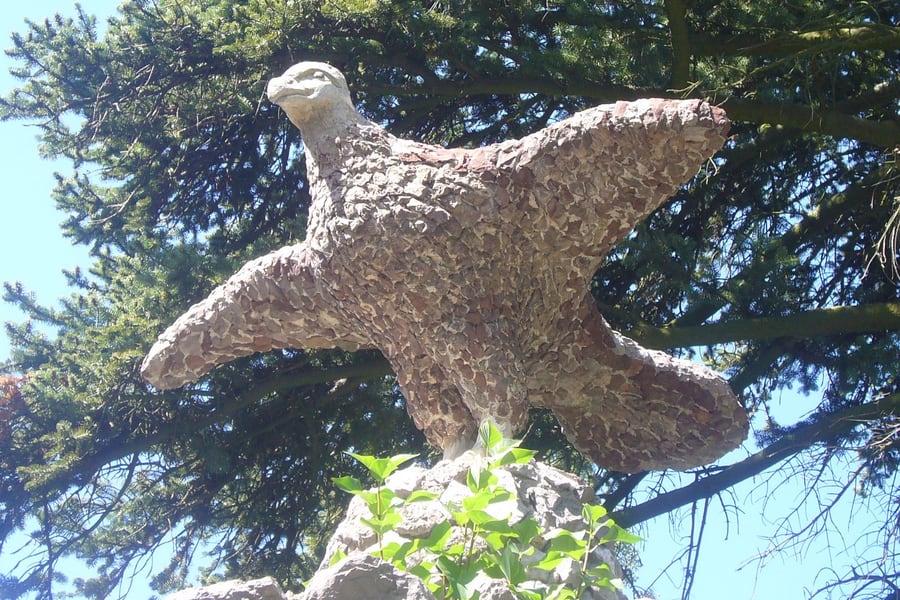 Jordiferrer / Wikimedia Commons · CC BY-SA 3.0 · cropped
Four evangelists in a garden
Gaudí hid the symbols of the four evangelists along the paths of the Jardins Artigas: the eagle of St John at the bridge over the river, the lion at the pergola and the ox at the Font del Bou. The angel of the cascade has been lost. Find the three that remain.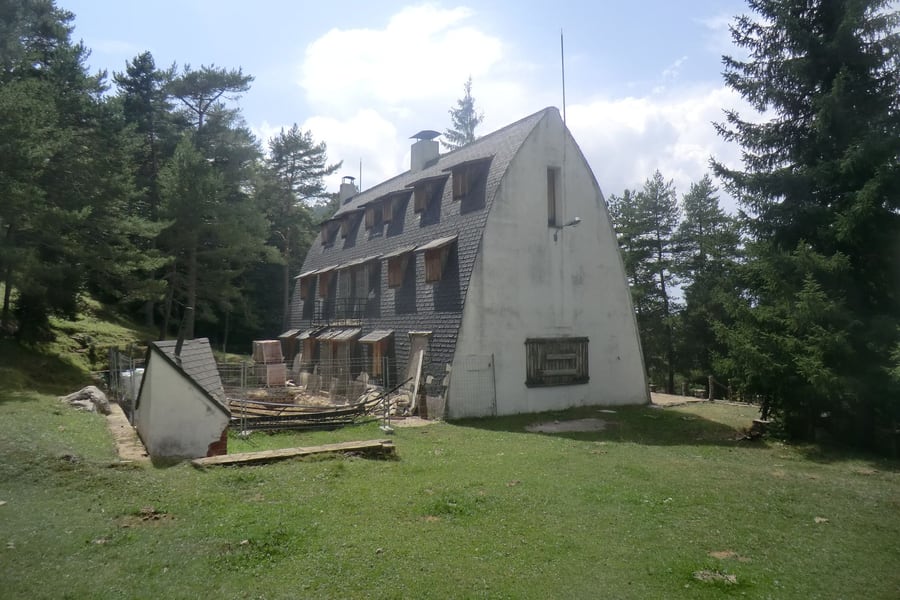 Pcm / Wikimedia Commons · CC BY-SA 4.0 · cropped
The chalet that brought Gaudí here
High in the Serra del Catllaràs stands the chalet Gaudí designed in 1905 as a mountain refuge for the engineers of the coal mines that fed the cement works. It was the job that brought him to La Pobla, and so to the Artigas garden.Timetables
The Tren del Ciment is a seasonal train. In 2026 it ran every Saturday and Sunday from 28 March to 1 November, every day in August, and on extra weekdays around Easter, 1 May, Midsummer, late July, early September and 12 October. On other weekdays it ran only on request. The 2027 calendar has not yet been published.
Trains leave every hour. How late the last one runs depends on the date: until 17:30 or 18:30 on most days, with a lunchtime gap (no 14:30 up from La Pobla, no 14:00 down from the museum). The service runs without the gap until 18:30 on Saturdays in July, every day in August and 5, 11 and 12 September, and until 17:30 on Sundays in July and 6 and 13 September.
La Pobla de Lillet to the Museu del Ciment
| La Pobla de Lillet | La Pobla Centre | Jardins Artigas | Museu del Ciment |
|---|---|---|---|
| 10:30 | 10:37 | 10:44 | 10:50 |
| 11:30 | 11:37 | 11:44 | 11:50 |
| 12:30 | 12:37 | 12:44 | 12:50 |
| 13:30 | 13:37 | 13:44 | 13:50 |
| 15:30 | 15:37 | 15:44 | 15:50 |
| 16:30 | 16:37 | 16:44 | 16:50 |
| 17:30 | 17:37 | 17:44 | 17:50 |
| 18:30 | 18:37 | 18:44 | 18:50 |
Museu del Ciment to La Pobla de Lillet
| Museu del Ciment | Jardins Artigas | La Pobla Centre | La Pobla de Lillet |
|---|---|---|---|
| 11:00 | 11:07 | 11:14 | 11:20 |
| 12:00 | 12:07 | 12:14 | 12:20 |
| 13:00 | 13:07 | 13:14 | 13:20 |
| 15:00 | 15:07 | 15:14 | 15:20 |
| 16:00 | 16:07 | 16:14 | 16:20 |
| 17:00 | 17:07 | 17:14 | 17:20 |
| 18:00 | 18:07 | 18:14 | 18:20 |
The 18:30 and the 18:00 run only on the later dates. On the non-stop days the 14:30 up and the 14:00 down run too.
Operator: FGC, as Turistren — the dated calendar is in the 2026 timetable leaflet (opens in a new tab) and on turistren.cat (opens in a new tab). Times above as of November 2026, for the 2026 season.
Tickets
Tickets are sold by Turistren in its online shop, which lets you skip the queue and board with the ticket on your phone. In 2026 a return from La Pobla de Lillet to the Museu del Ciment cost €13 for ages 14 to 64, €11 over 65 and €8 for children aged 4 to 13; under-4s travel free. A single is €8, or €5 for a child.
The ticket most visitors want is the pack: the return trip with entry to the Jardins Artigas and the Museu del Ciment, about three hours in all, at €20.50 for ages 16 and over. Groups of twenty or more book ahead by phone on 932 041 041, with one free place for every twenty. 2027 fares have not yet been published.
Book your tickets
The STB / Flickr · CC BY-SA 2.0 · croppedReturn, La Pobla de Lillet to the Museu del Ciment
€13 · ages 14 to 64
Up to the Museu del Ciment and back; €8 for ages 4 to 13 and €11 for over-65s; under-4s ride free.
Book Tickets (opens in a new tab, on turistren.cat)via turistren.cat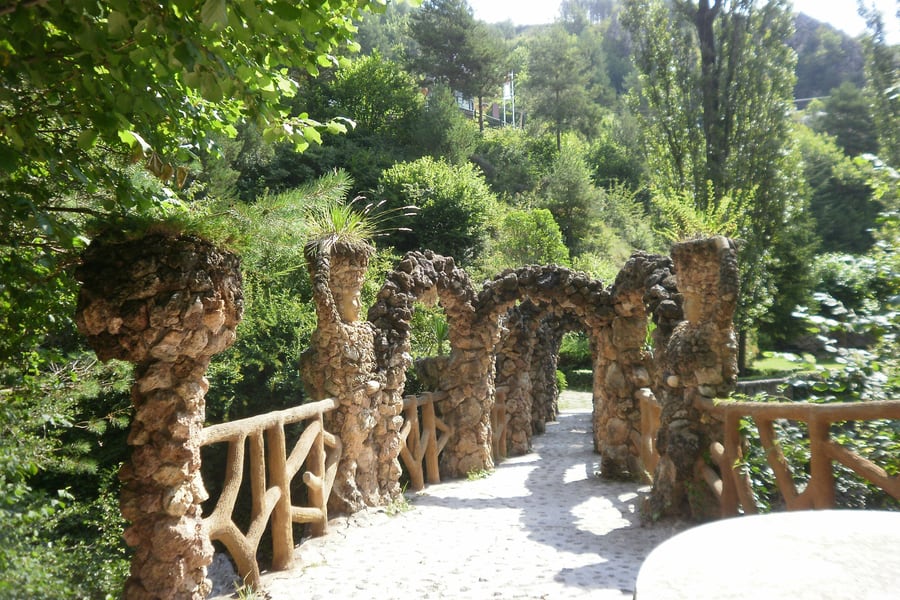 MontseRoma / Flickr · CC BY 2.0 · cropped
Train, garden and museum pack
€20.50 · ages 16 and over
The return trip with entry to the Jardins Artigas and the Museu del Ciment, about three hours in all.
Book Tickets (opens in a new tab, on turistren.cat)via turistren.catNearEMPTiness / Wikimedia Commons · CC BY-SA 4.0 · croppedSingle journey
€8 · ages 14 and over
One way only, for walking the other half of the valley; €5 for ages 4 to 13.
Book Tickets (opens in a new tab, on turistren.cat)via turistren.catRail Passes
No rail pass covers this train. Interrail and Eurail publish, for Spain, a list of the operators their passes do not cover, and Ferrocarrils de la Generalitat de Catalunya, which runs the Tren del Ciment, is on it. So are RENFE's own tourist trains, as a category.
A pass is not worth carrying for this trip in any case: the return fare is €13, and no railway runs to La Pobla de Lillet to use one on.
Worth knowing
- The pack. At €20.50 it puts the train, the Jardins Artigas and the Museu del Ciment on one ticket, for about three hours of visiting.
- The Turistren Passport. FGC's free digital passport covers the Tren del Ciment, the Tren dels Llacs and the rack railways of Montserrat and Núria. Register by email, buy a return in Turistren's online shop, and scan the QR code at the line to stamp your trip; each stamp unlocks a discount of up to 20% on one of the other three.
Checked against Interrail's list of railway companies, last updated 21 October 2026, and FGC's Turistren site in November 2026.
Places to Visit
With a train every hour, the line is easy to ride in pieces: get off at Jardins Artigas for the garden, go on to the museum, and stop at La Pobla Centre on the way back for the old town and the Pont Vell. Castellar de n'Hug and the source of the Llobregat are a short drive further up the valley.
 pep_tf / Flickr · CC BY-SA 2.0 · cropped
La Pobla de Lillet
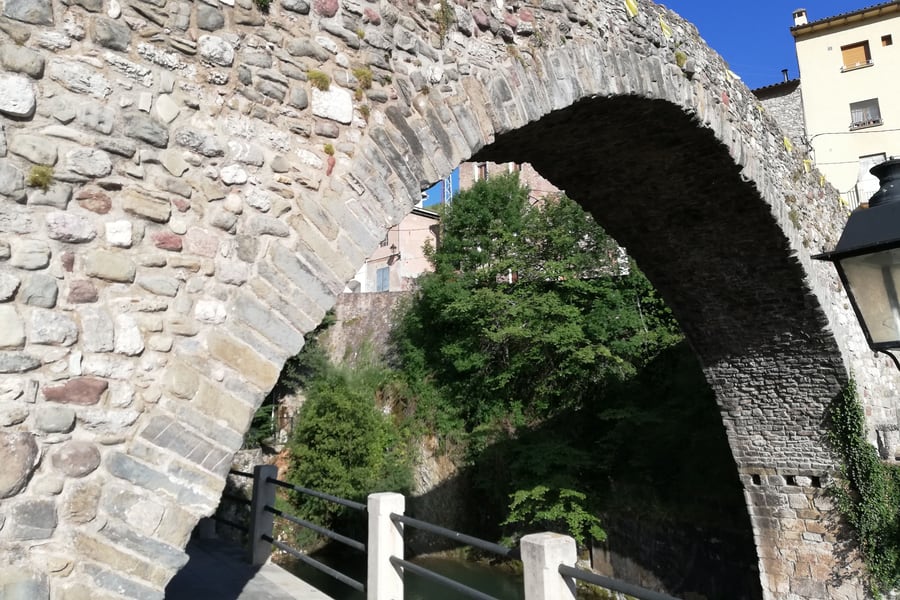
The town grew around a castle from 1297 and later on its sawmills and textile mills. Its Pont Vell, a single pointed arch over the Llobregat, was being built in the fourteenth century on the old road to the Cerdanya. The station is on the edge of town, with free parking beside it.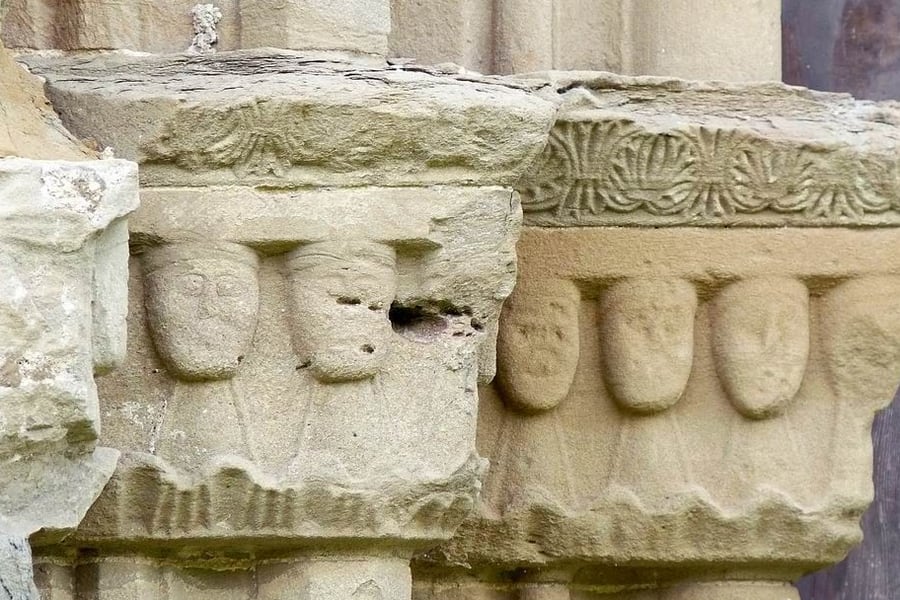 PCB75 / Flickr · CC BY-SA 2.0 · cropped
Santa Maria de Lillet
The old monastery of the valley, home to Augustinian canons for centuries and now a listed monument of national interest. Its Romanesque church dates from the eleventh century, and the Gothic north door is carved with half-length human figures. The cloister is fifteenth-century.MontseRoma / Flickr · CC BY 2.0 · croppedJardins Artigas
The garden Gaudí sketched in 1905 for Joan Artigas, built by masons who had worked on the Parc Güell, in local stone, along both banks of the Llobregat beside a grotto, cascades and arched bridges. Abandoned in the 1950s, it was recognised as Gaudí's in 1971 and restored in 1992.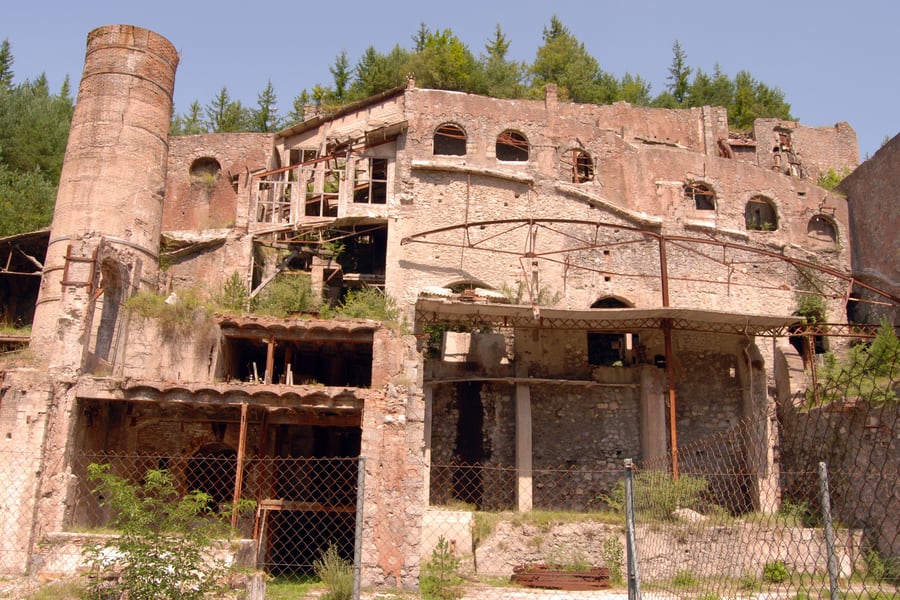 Margavela / Flickr · CC BY-SA 2.0 · cropped
Museu del Ciment Asland
Eusebi Güell's cement works, opened in 1904 as the first industrial cement plant in Catalonia, worked until 1975. Part of it is now a museum of the Museu de la Ciència i de la Tècnica de Catalunya, open since 1992, with guided visits through the clinker galleries and kiln halls.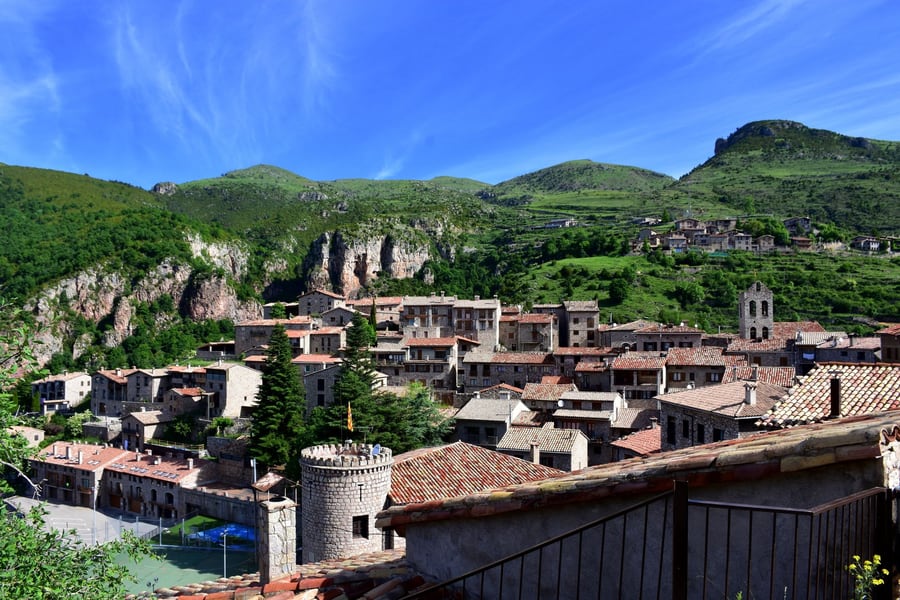 Angela Llop / Wikimedia Commons · CC BY-SA 2.0 · cropped
Castellar de n'Hug
The village that owns the Clot del Moro sits higher up the valley on the edge of the Ripollès, with the Romanesque church of Santa Maria and its four-storey bell tower above the stone houses. The cement works lie inside its boundary, which is why the museum carries its name.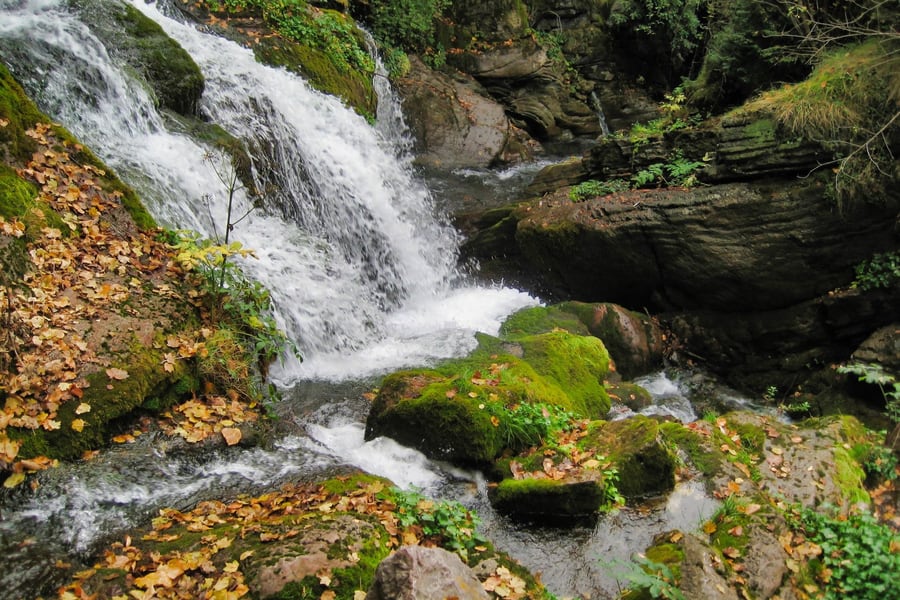 Lluís Ferrer / Wikimedia Commons · CC0 · cropped
Fonts del Llobregat
The river the train follows rises here, at 1,295 metres, bursting from the limestone cliffs below the village as a waterfall of about four cubic metres a second. It is at its finest after snowmelt and rain.Where to Sleep
No railway reaches La Pobla de Lillet any more — the narrow-gauge line from Manresa ran its last train to Guardiola in 1972 — so most visitors come by road and park free at the station. Staying a night leaves time for the garden, the museum and the source of the Llobregat in one visit.
La Pobla de Lillet
The start of the line, with the old town, the Pont Vell and the monastery of Santa Maria close by.
Castellar de n'Hug
The village above the Clot del Moro, a short drive from the museum and the source of the river.
Where to stay
Hostal Cal Pericas
La Pobla de Lillet, by the Pont Vell
Eight rooms over three floors, all with views, breakfast included, and a space on the Llobregat looking at the town's two old bridges, the Pont Vell and the Pont de la Petita.
Check Availability (opens in a new tab, on hostalcalpericas.com)via hostalcalpericas.comHostal La Muntanya
In the village of Castellar de n'Hug
A family-run hostal with rooms, apartments and its own restaurant, in the village above the cement works.
Check Availability (opens in a new tab, on hostallamuntanya.cat)via hostallamuntanya.catHostal Les Fonts
Beside the Llobregat, 800 metres from its source
Fourteen rooms in a building on the river that began as an ironworks, La Farga Vella, opened to guests in 1962 and run by the same family since 1984, with a restaurant of local produce.
Check Availability (opens in a new tab, on hostallesfonts.com)via hostallesfonts.comQuestions or corrections
Planning this trip and stuck on something, or spotted a time, fare or detail that has changed? Send us a message about Tren del Ciment · the cement railway that stops for Gaudí. We read every one, and we update this page when something has changed.