Tunis to Kalâa Khasba
Phil Richards / Wikimedia Commons · CC BY-SA 2.0 · cropped
- DistanceTunis Ville–Kalâa Khasba · 25 stops in between
- Duration5 hours 18 minutes outbound · 5 hours 17 minutes back
- Best seasonAll year · one through train a day each way, outside the month of Ramadan
Introduction
At five to six every morning, a train leaves Tunis for the high plateau.
It is the only train that goes all the way. Train 6/51 runs south-west out of the capital past Pont du Fahs, across the wheat plain at Bou Arada, up the valley of the Oued Siliana to Gaâfour, through Le Sers and Dahmani on the high plateau of the Tell, and stops at Kalâa Khasba, close to the Algerian border, at 11:13. Twenty-five stations in between, five hours and eighteen minutes, one train a day. At a quarter past one it turns round and goes back.
A railway built for ore
The line was built for the mines. It reached Pont du Fahs in 1897 and pushed on into the interior until, in 1906, it arrived at Kalâa Djerda, as Kalâa Khasba was then called, where a phosphate mine had opened a few years before. A branch went to the iron mine at Jérissa a year later, and in 1930 the line was joined to the Algerian network at Aïn Karma. Gaâfour, halfway along, was founded by the railway company itself to house the men who kept the trains running.
The mine at Kalâa Khasba closed in October 1992, after ninety years. The trains did not stop.
What kind of journey this is
A slow, ordinary country train that calls at almost everything: farm halts, junctions and small towns whose stations all wear the same blue and white. It is not the way to reach Le Kef, the region's capital, which sits on a branch of its own and has its own evening express from Tunis.
What it gives you is the climb from the coast into the High Tell, the cereal country of the north-west, and an end of the line within reach of two of the strangest places in Tunisia: the flat-topped mesa of Jugurtha's Table and the Roman frontier town of Haïdra.
The Journey
Train 6/51 leaves Tunis Ville at 05:55 and calls at nearly every station on the way. The first hour is the edge of the capital and the farmland south of it: Jbel Jelloud, Bir Kassaa, Naassen, then Oudna at 06:48, named for the Roman town of Uthina nearby, and Cheylus and Depeinne.
Pont du Fahs and the plain
Pont du Fahs at 07:32, where the line first arrived in 1897. The Roman town of Thuburbo Majus lies on a hillside near El Fahs, and the morning train puts you there early enough for a full day.
Bou Arada at 07:54 sits where the mountains of the Dorsale open into a wide plain of cereals, fought over in the Tunisian campaign of 1942–43. El Aroussa follows at 08:10.
Up to Gaâfour and Le Sers
Gaâfour at 08:33, at 265 metres in the valley of the Oued Siliana. The village was laid out by the Bône-Guelma railway company around its station, for the men who maintained the rolling stock of the ore line. From here the train climbs through El Akhouat, El Krib and Sidi Bou Rouis into the High Tell; on Sundays and Wednesdays it also stops at Trika.
Le Sers at 09:37, a cereal town at the foot of Djebel Maïza, 887 metres, with the Numidian megaliths of Ellès sixteen kilometres to the south.
Les Salines and Dahmani
Seven minutes on, Les Salines is the junction for Le Kef. The express trains from Tunis turn off here for the branch; the Kalâa Khasba train carries straight on through Les Zouarines to Dahmani at 10:06, a wheat town at 625 metres once called Ebba Ksour, and the end of the line for the afternoon train from Tunis.
The last hour
Beyond Dahmani the train runs alone. Aïn Mesria, then Fej et Tameur at 10:32, where a freight branch leaves for the iron mine at Jérissa — SNCFT lists Jrissa among the line's towns, but no passenger train goes there. Then Gouraia, Oued Sarrath, and Kalâa Khasba at 11:13.
Kalâa Khasba was Kalâa Djerda until it was renamed, and for ninety years it was a phosphate town. The mine closed in October 1992; 2,558 people lived here at the 2014 census. The line goes on south towards Haïdra and Kasserine, and in 1930 it was joined to the Algerian network, but passenger trains end here.
The train
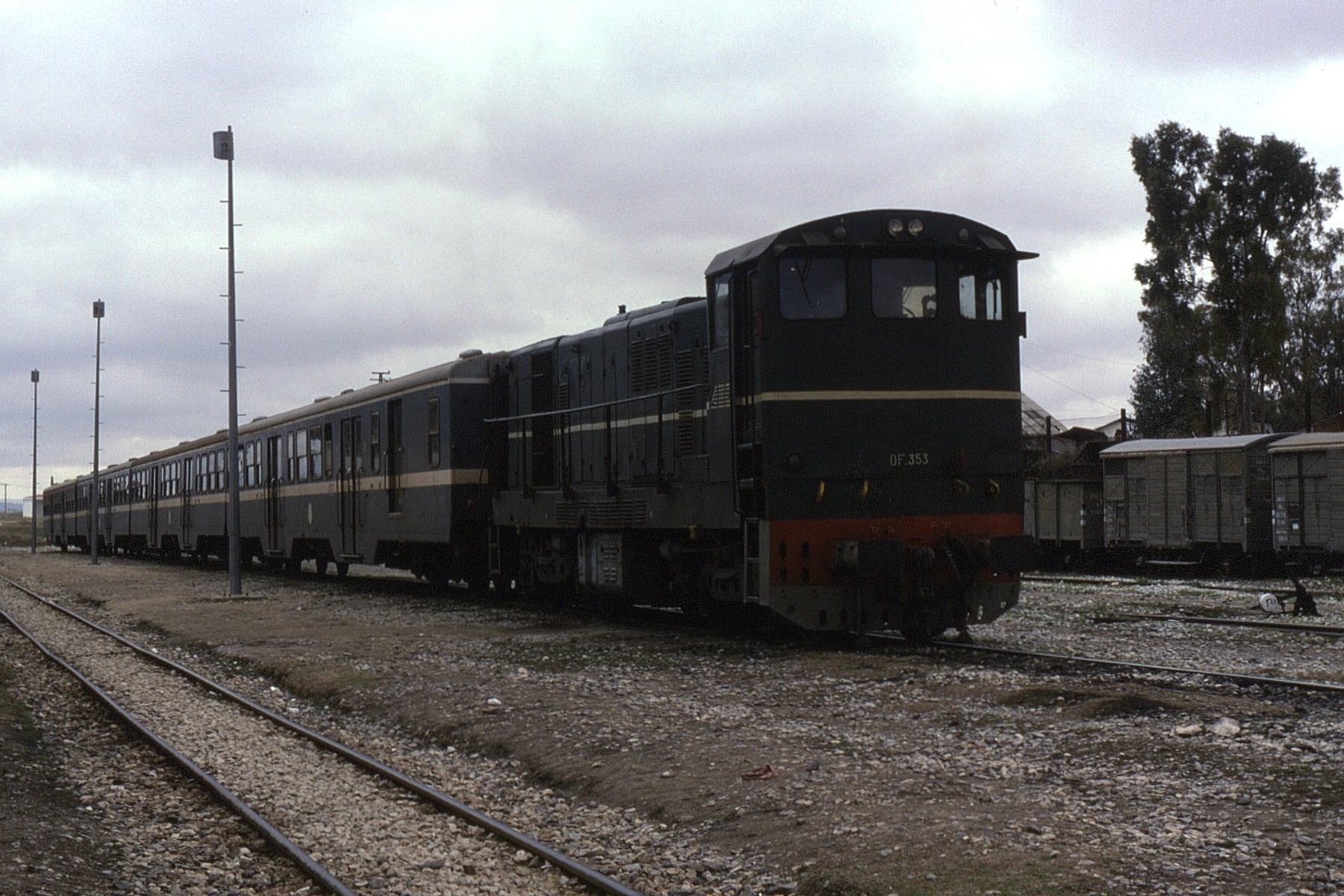
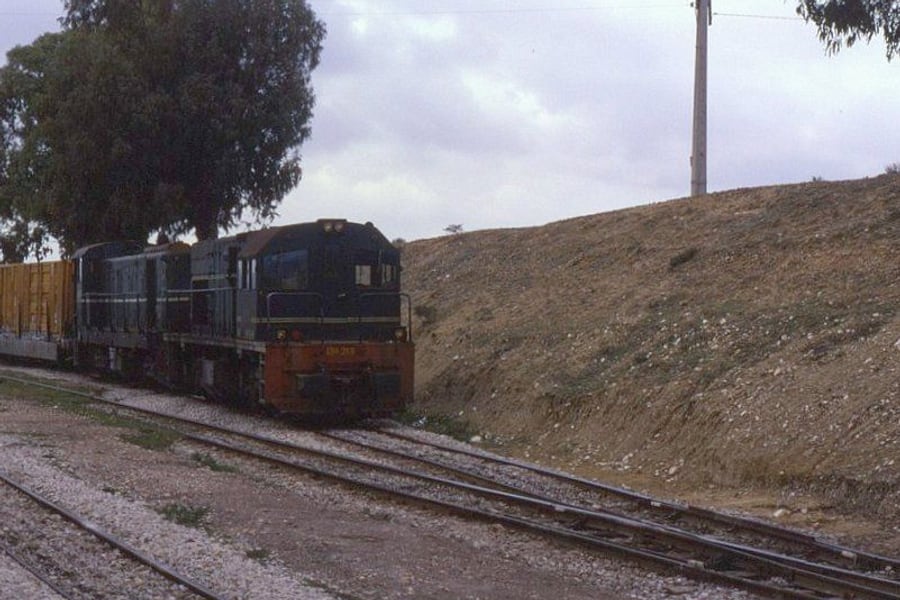
No published source names the locomotives that work the line today. In February 1999 the Kalâa Khasba train was hauled by 040-DF-353, the diesel in the photograph at the top of this page, and a freight passed on the way was worked by a 040-DM and a 040-DF together.
Practical notes for the ride
- The return leaves at 13:15. Train 6/76 gets back to Tunis Ville at 18:32, so a day out to the end of the line and back is possible, with two hours at Kalâa Khasba.
- Take food and water. Nothing published says the train carries catering.
- For Le Kef, take the express, not this train: it leaves Tunis at 17:30, or 16:05 on Sundays and holidays.
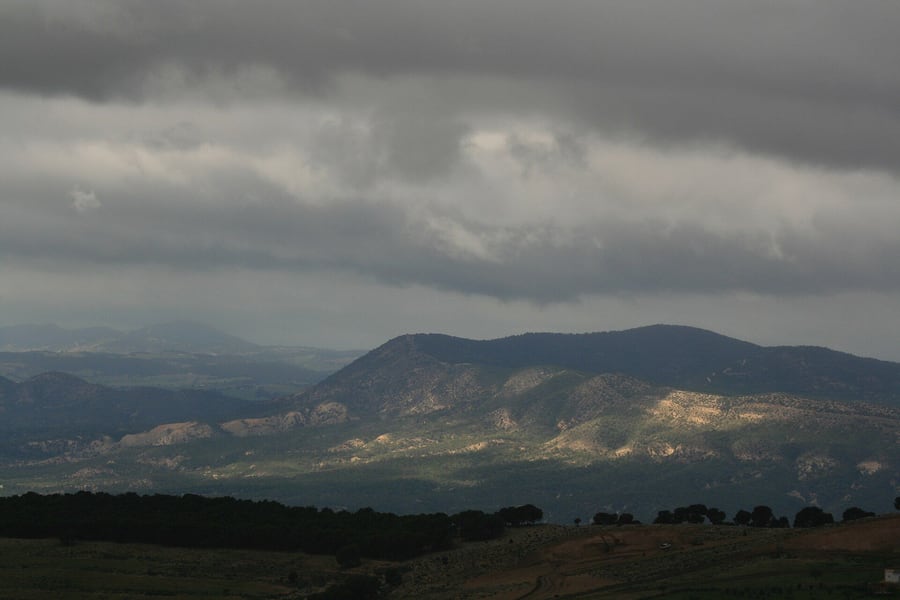
Along the route
 Camille56 / Wikimedia Commons · CC BY 4.0 · cropped
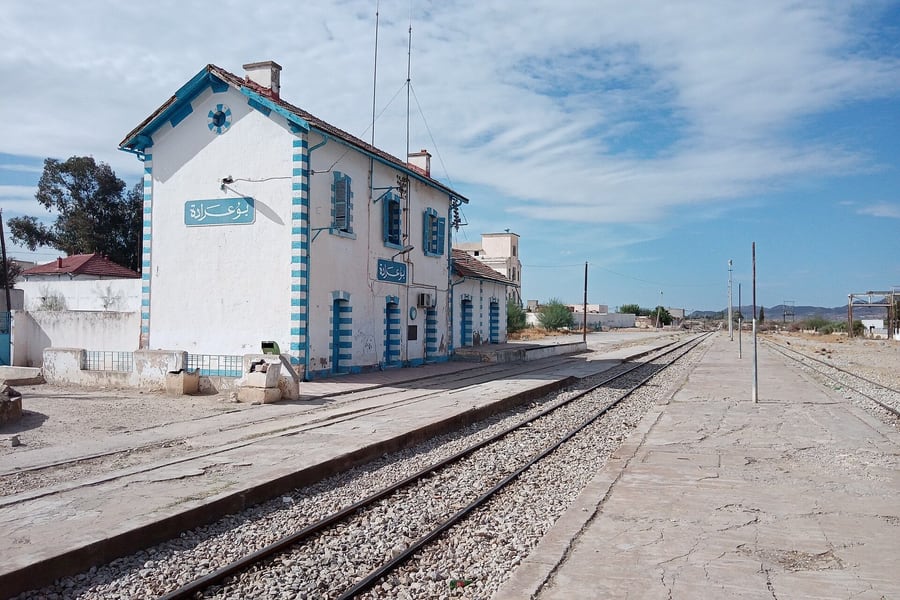
Bou Arada and the wheat plain
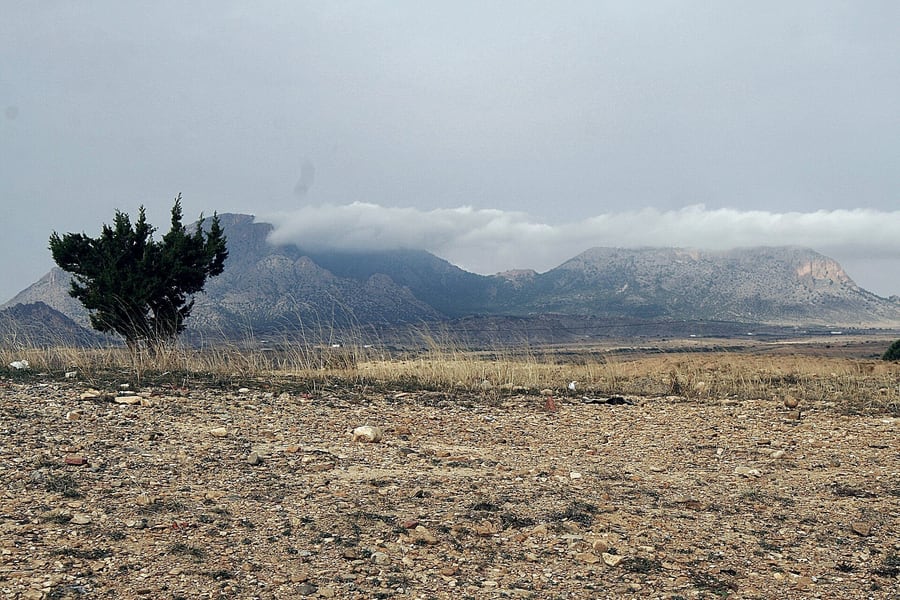
Seventy kilometres out, where the mountains of the Dorsale open out, Bou Arada stands in the middle of a wide plain given over to cereals. It was fought over in the Tunisian campaign of 1942–43. The morning train calls at 07:54.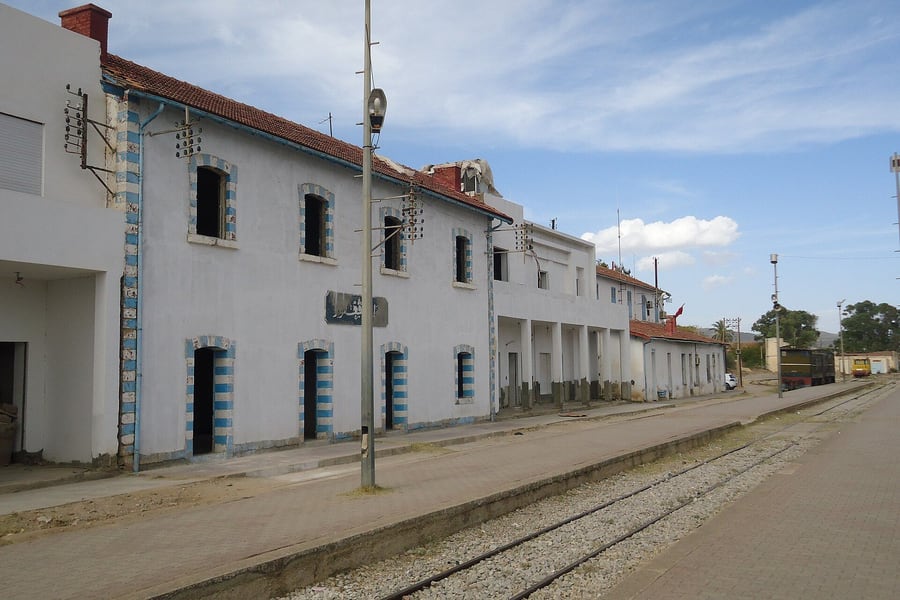 Camille56 / Wikimedia Commons · CC BY 4.0 · cropped
Gaâfour, a village built by the railway
The Bône-Guelma company founded Gaâfour at the end of the nineteenth century around its station, to house the railwaymen who kept the line's rolling stock running: this was the route the ore of the western mines took to the coast.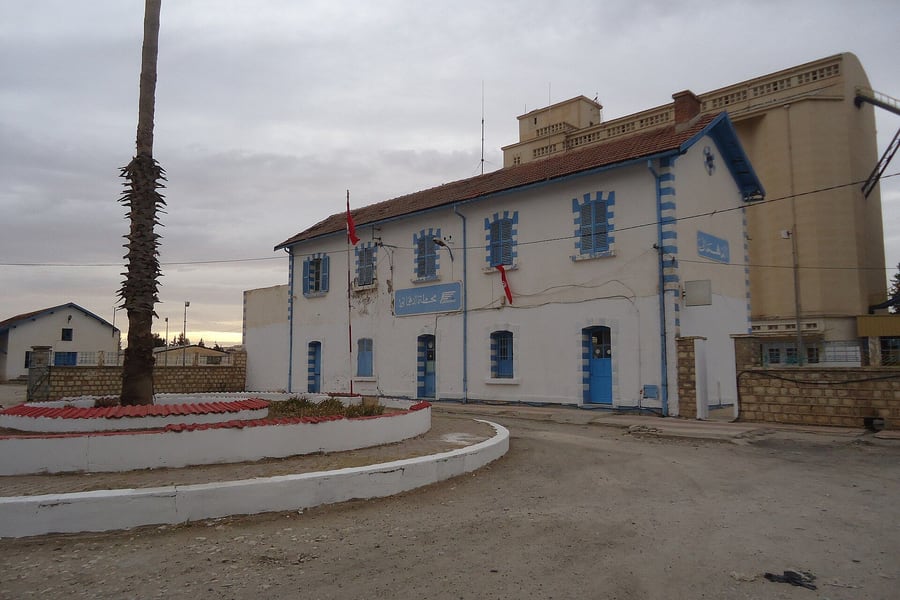 Camille56 / Wikimedia Commons · CC BY 4.0 · cropped
Dahmani, once Ebba Ksour
A wheat town at 625 metres in the hills of the Dorsale. It is the end of the line for the afternoon train from Tunis, and the start of the 03:00 train back, which reaches the capital at seven.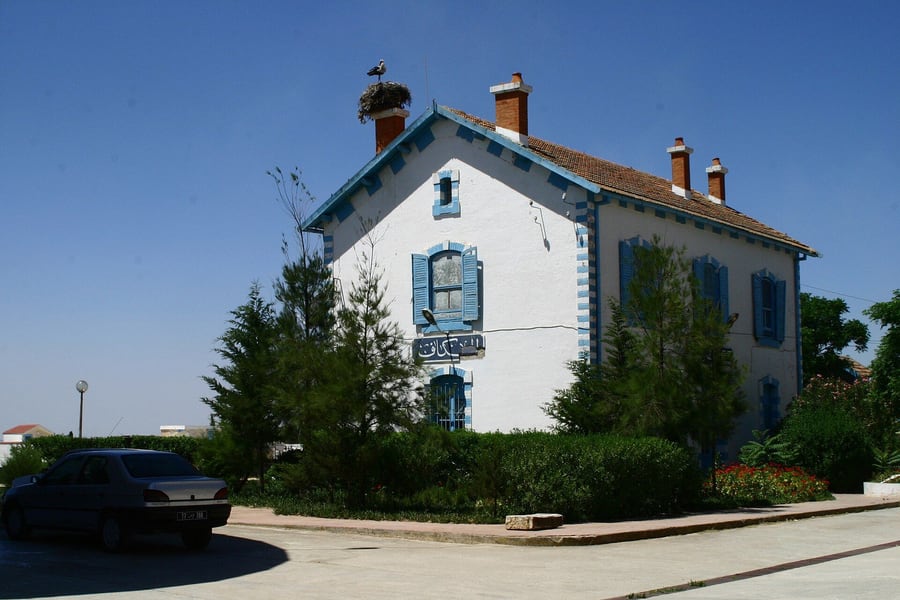 Camille56 / Wikimedia Commons · CC BY-SA 4.0 · cropped
The branch to Le Kef
Le Kef is not on the through line. Its station is at the end of a branch from Les Salines, served by the evening express from Tunis and the 05:00 express back; the Kalâa Khasba train passes the junction without turning off.A bit of history
Culture & experiences along the way
 Smailtn / Wikimedia Commons · CC0 · cropped
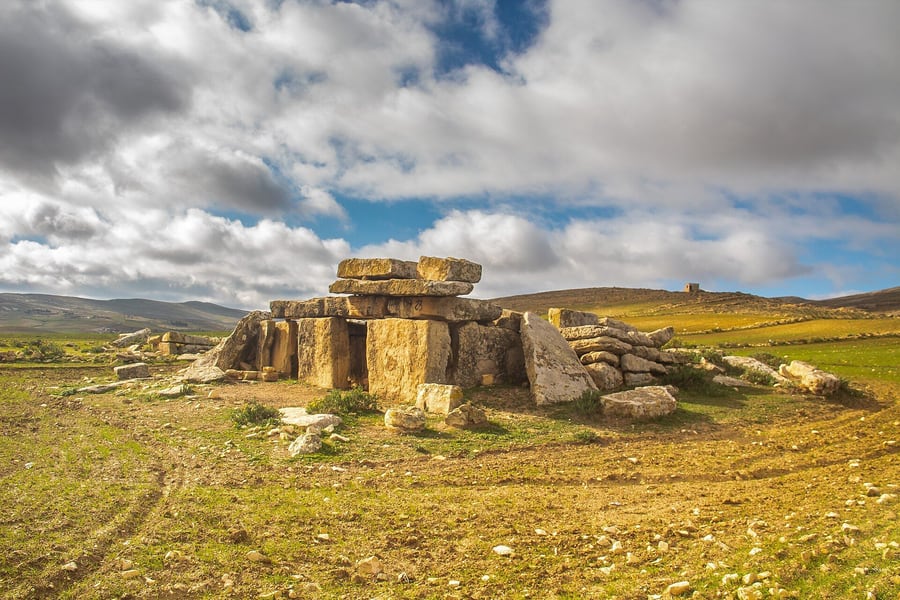
The megaliths of Ellès
Sixteen kilometres south of Le Sers, about seventy-four Numidian tombs stand in the hills around the village of Ellès, built before the Phoenicians traded on the coast. Each is a long box of upright slabs, with a single corridor serving seven chambers, three on each side and one at the end.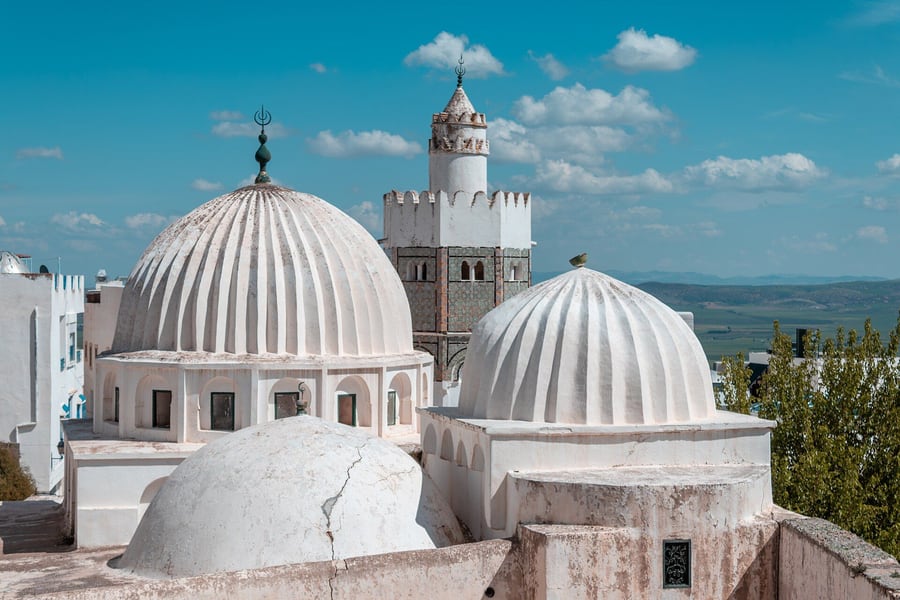 Tunisia.with.my.eyes / Wikimedia Commons · CC BY-SA 4.0 · cropped
The zaouïa of Sidi Bou Makhlouf
Under the kasbah walls of Le Kef, the fluted domes of Sidi Bou Makhlouf, the city's patron saint, cover a shrine begun in the seventeenth century. It is still the meeting place of the Aïssawa Sufi brotherhood, and was long the town's school of malouf and Sufi song. The town holds a festival in his name every July.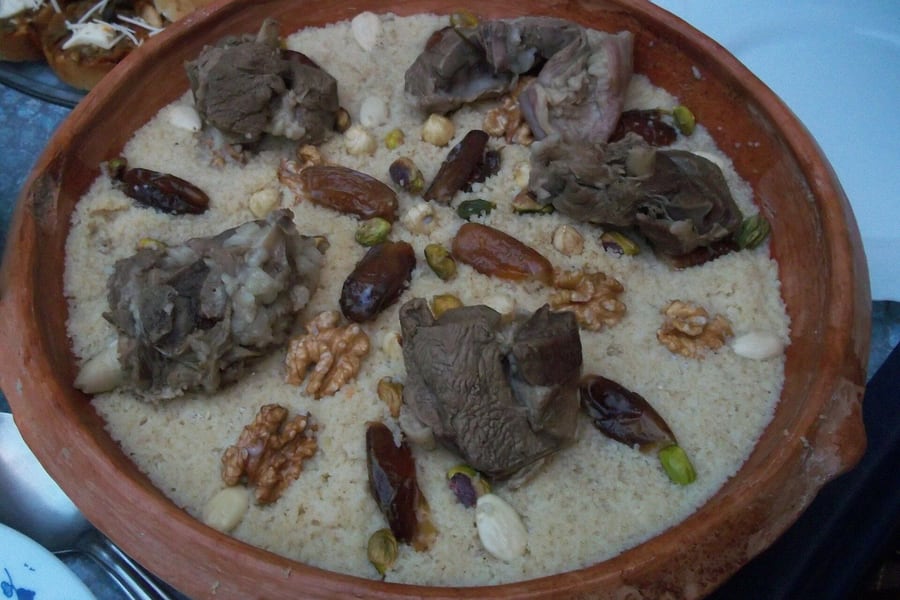 Fares Rjeibi / Wikimedia Commons · CC BY-SA 4.0 · cropped
Borzgane, the couscous of Le Kef
Le Kef has a couscous of its own: borzgane, lightly sweet, built up in layers of dried fruit, dates and lamb. It is the dish of the Mayou festival, a ritual that Le Kef alone still keeps.Timetables
The times below are SNCFT's own, from its "Horaires des trains grandes lignes" poster for 1 September 2026 to 30 June 2027, which applies outside the month of Ramadan. One train a day runs the whole line in each direction; two more go part of the way, and an express serves the branch to Le Kef.
Tunis to Kalâa Khasba — train 6/51, daily
| Station | |
|---|---|
| Tunis Ville | 05:55 |
| Oudna | 06:48 |
| Pont du Fahs | 07:32 |
| Bou Arada | 07:54 |
| El Aroussa | 08:10 |
| Gaâfour | 08:33 |
| Sidi Bou Rouis | 09:10 |
| Trika (Sundays and Wednesdays only) | 09:21 |
| Le Sers | 09:37 |
| Les Salines | 09:44 |
| Dahmani | 10:06 |
| Fej et Tameur | 10:32 |
| Kalâa Khasba | 11:13 |
5 hours 18 minutes, with 25 stops between the termini; the smaller halts are left out of this table.
Kalâa Khasba to Tunis — train 6/76, daily
| Station | |
|---|---|
| Kalâa Khasba | 13:15 |
| Fej et Tameur | 13:57 |
| Dahmani | 14:23 |
| Le Sers | 14:52 |
| Trika (Sundays and Wednesdays only) | 15:08 |
| Gaâfour | 15:57 |
| Bou Arada | 16:41 |
| Pont du Fahs | 17:03 |
| Oudna | 17:46 |
| Tunis Ville | 18:32 |
5 hours 17 minutes.
Part of the way — Tunis and Dahmani
Train 6/65 leaves Tunis Ville at 14:15 and reaches Gaâfour at 16:47, Le Sers at 17:51 and Dahmani at 18:19. Train 6/50 leaves Dahmani at 03:00 and arrives in Tunis at 06:59.
The branch to Le Kef
| Train | Runs | Tunis Ville | Gaâfour | Le Sers | Le Kef |
|---|---|---|---|---|---|
| 6-8/69 | Daily except Sundays and holidays | 17:30 | 19:37 | 20:24 | 21:00 |
| 6-8/67 | Sundays and holidays | 16:05 | 18:19 | 19:06 | 19:42 |
| 8-6/54 | Daily, towards Tunis | 08:18 (arr.) | 06:26 | 05:37 | 05:00 (dep.) |
The expresses skip Dahmani: they leave the main line at Les Salines for the branch.
Practical
- There is one through train each way. Miss the 05:55 and the next chance is the following morning.
- The poster does not apply during Ramadan. Check SNCFT's announcements for that month.
Operator: SNCFT — timetables at sncft.com.tn (opens in a new tab). Times above as of November 2026.
Tickets
Tickets are sold by SNCFT at station windows, in Tunisian dinars. SNCFT prices its fares by distance, class and type of train and publishes only an indicative table — 12 dinars in first class and 9 in second for the 140 kilometres from Tunis to Sousse — with no figure for this line, so ask at the window. Fares are low either way.
There is one train back a day, at 13:15 from Kalâa Khasba. The Tunisian dinar is a closed currency, so change money before you leave Tunis.
Book your tickets
Tunis to Kalâa Khasba · train 6/51
Every day, the one through train
Leaves Tunis Ville at 05:55 and reaches Kalâa Khasba at 11:13; train 6/76 returns at 13:15 and is in Tunis at 18:32.
Book Tickets (opens in a new tab, on SNCFT)via SNCFTTunis to Le Kef · the evening express
Daily, faster, on the branch
Leaves Tunis Ville at 17:30 (16:05 on Sundays and holidays) and reaches Le Kef in about three and a half hours.
Book Tickets (opens in a new tab, on SNCFT)via SNCFTRail Passes
No rail pass covers this journey. SNCFT sells point-to-point tickets at its stations, and the fares are low.
Checked November 2026.
Places to Visit
Four places are worth the trip, two on the line and two beyond its end. Thuburbo Majus suits the morning train out; Le Kef needs the evening express and a night; Jugurtha's Table and Haïdra are reached by road from Kalâa Khasba, which leaves too little time before the 13:15 back, so plan a night in the region for them.
 Hn Khaoula / Wikimedia Commons · CC BY-SA 4.0 · cropped
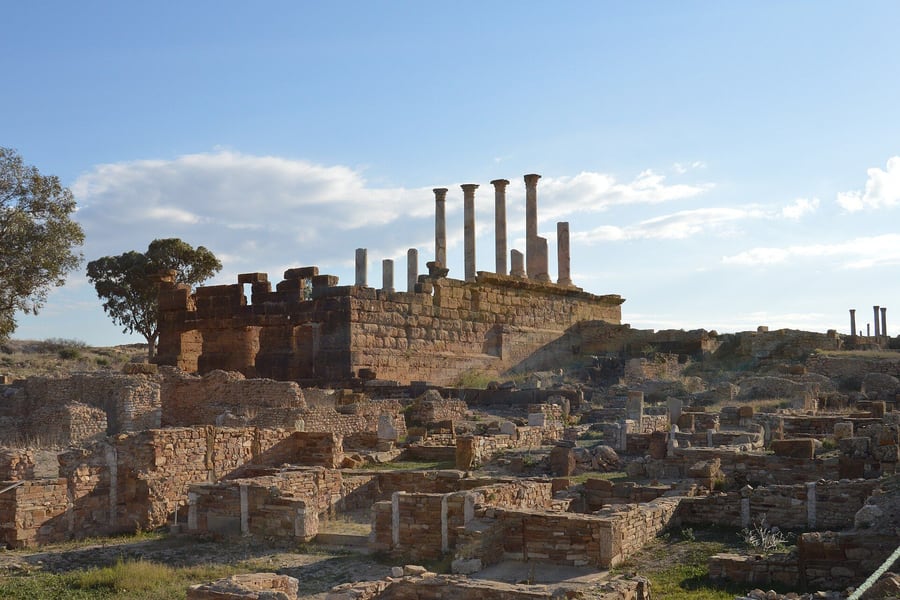
Thuburbo Majus
A large Roman town about sixty kilometres south-west of Tunis, near El Fahs, on a hillside between the old Bagradas and the Oued Miliane, in rich grain country at a crossroads of trade routes. Its Capitol still stands over forty hectares of ruins, much of them never excavated; the mosaics found here and the pieces of a colossal Jupiter are in the Bardo.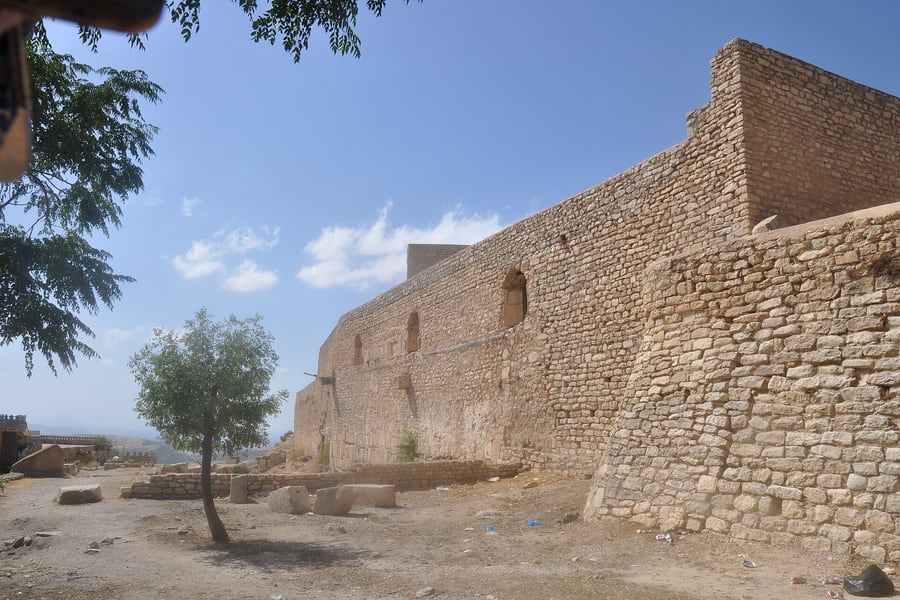 Noomen9 / Wikimedia Commons · CC BY-SA 4.0 · cropped
Le Kef and its kasbah
Sicca Veneria to the Romans, Le Kef is the highest of Tunisia's large towns, its old quarter built against the cliff of the table-top Jebel Dyr, 175 kilometres west of Tunis. The kasbah above it began as a fort in 1600 and took its ramparts around 1740; from the town you can see Jugurtha's Table on the horizon.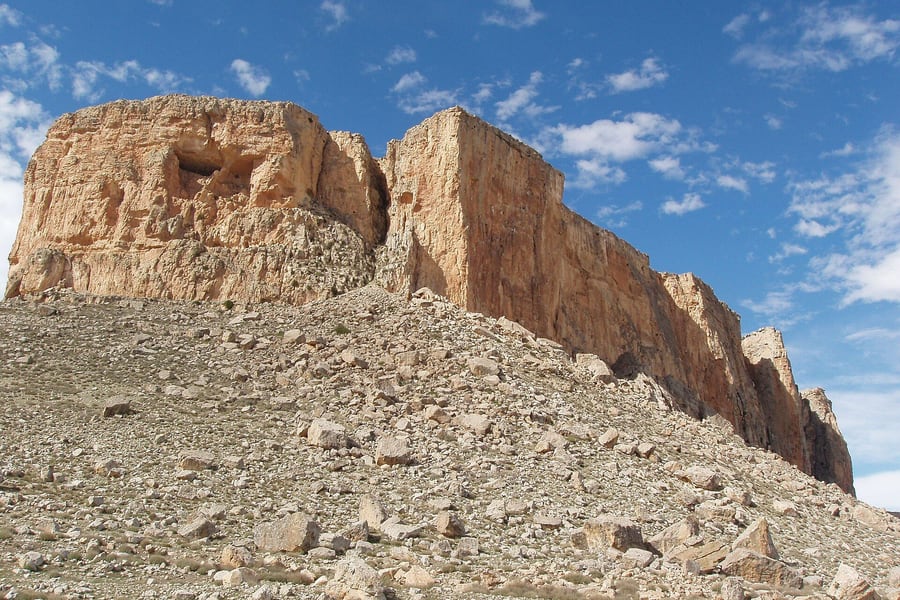 Camille56 / Wikimedia Commons · CC BY-SA 4.0 · cropped
Jugurtha's Table
West of Kalâa Khasba, near Kalaat Senan, a limestone mesa rises 600 metres above the plain to 1,271 metres, its top a bare platform of more than eighty hectares. The only way up is a stair of 136 steps on the north side, guarded by a tower; on top are cisterns, ruins and the mosque of Sidi Abdel Jaoued. Tunisia proposed it for World Heritage in 2017.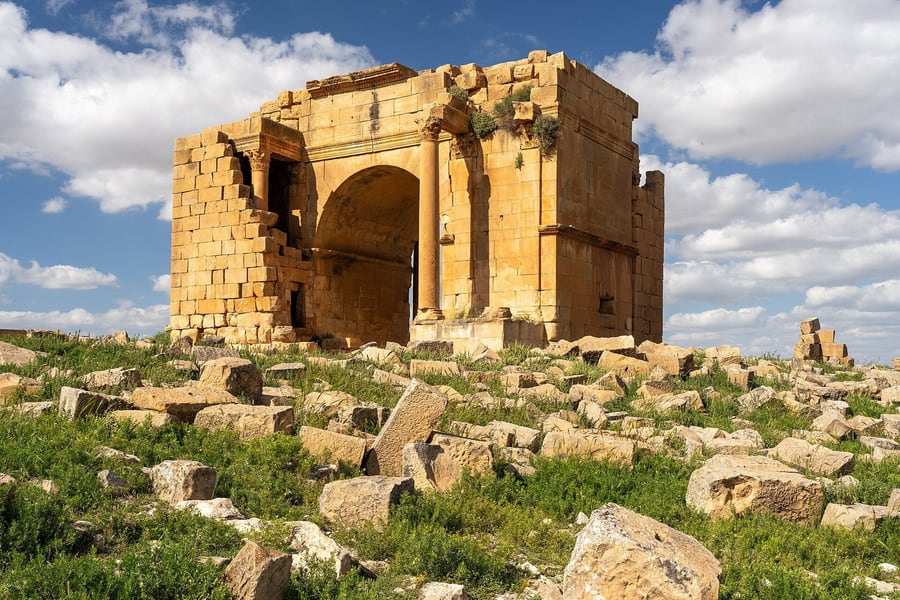 Skander zarrad / Wikimedia Commons · CC BY-SA 4.0 · cropped
Haïdra, ancient Ammaedara
One of the oldest Roman towns in Africa, close to the Algerian border south-west of Kalâa Khasba. The Third Augustan Legion was based here before it moved to Theveste, and veterans made it a colony in 75 AD. Its arch of Septimius Severus, finished in 195, survives because the Byzantines walled it into their citadel.Where to Sleep
The timetable decides where you sleep: the through train leaves Tunis before six, and its return gives you two hours at the far end.
Tunis
Start here. Hotels along the Avenue Habib Bourguiba and around the Place de Barcelone are a short walk from Tunis Ville, which matters for a 05:55 departure.
Le Kef
The base for the north-west, and the town to sleep in if you want Jugurtha's Table, Haïdra or the megaliths of Ellès. The express arrives at 21:00 (19:42 on Sundays), so book ahead, and the 05:00 express takes you back to Tunis by 08:18.
Questions or corrections
Planning this trip and stuck on something, or spotted a time, fare or detail that has changed? Send us a message about Tunis to Kalâa Khasba. We read every one, and we update this page when something has changed.