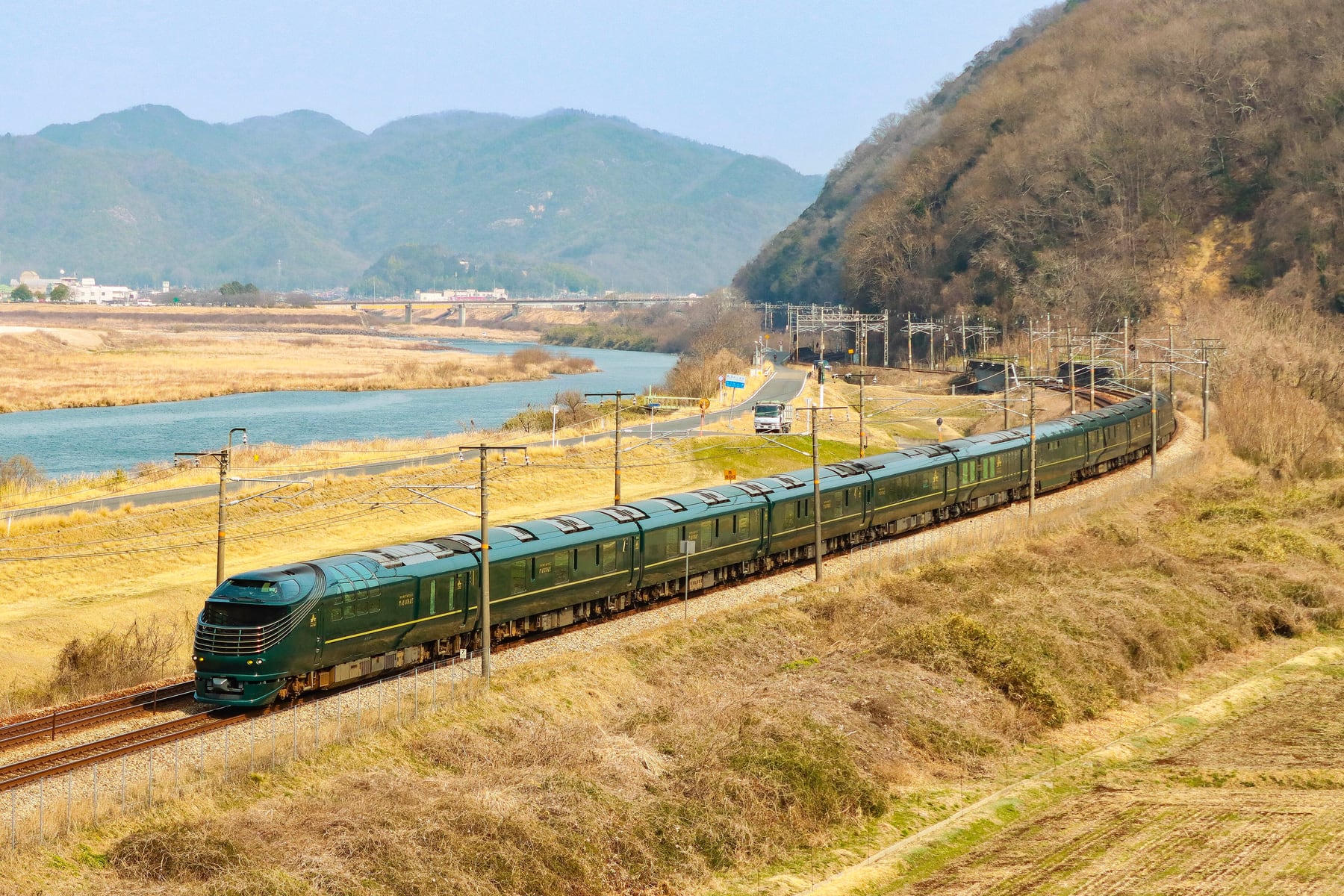
Twilight Express Mizukaze
SHEN WEI YOU / Wikimedia Commons · CC BY-SA 4.0
- DistanceVaries by course · Kyoto to Shimonoseki and round trips
- DurationOne night or two nights
- Best seasonYear-round · set departures, sold by lottery
Introduction
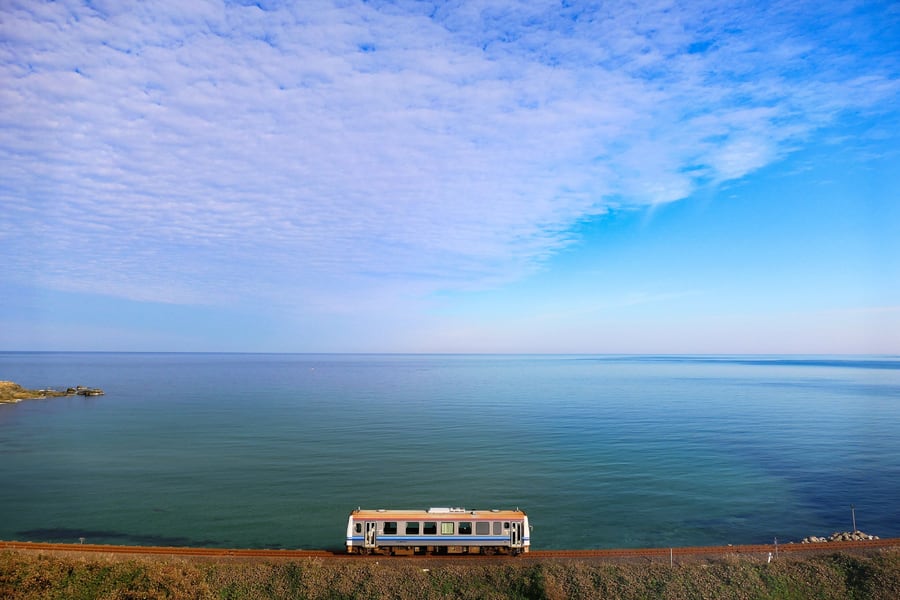
Twilight Express Mizukaze is JR West's cruise train: ten cars, sixteen rooms and never more than 34 guests, on one- and two-night journeys out of Kyoto or Shimonoseki. It runs along the Sea of Japan on the San'in Main Line, beside the Seto Inland Sea on the Sanyō Main Line, and, since March 2026, around Lake Biwa, stopping once a day for a visit ashore.
Its name was handed down. The first Twilight Express was a locomotive-hauled sleeper between Osaka and Sapporo, and in 26 years, from 1989 until March 2015, it carried about 1,160,000 passengers. When it ended, JR West kept its name as a subtitle, its deep green for the paint and the angels of its emblem for the new logo, and gave them to a train that never leaves JR West's own lines in western Japan.
The new train is built to let the outside in. The rooms have windows that open, the one suite has a balcony of its own, and the rear car ends in an open-air deck where guests can stand in the wind while the train runs.
The Journey
There is no single route. JR West sells five courses, each with one visit ashore a day, made in the train's own green bus:
- San'in Course, Shimonoseki-bound (one night, from Kyoto on Saturdays): up the San'in Main Line to the Sea of Japan, a stop at Kinosaki Onsen from March to September or at Daijō-ji in Kasumi from October to February, then Hagi the next morning.
- San'in Course, Kyoto-bound (one night, from Shimonoseki on Mondays): past the white sand of the Orii coast, a walk through Ōmori in the Iwami Ginzan silver-mine district, then Tottori.
- Lake Biwa Loop / Setouchi Course (one night, either way): round Lake Biwa by the Kosei and Biwako lines, with Nagahama or Ōmi-Hachiman, and along the Inland Sea to Iwakuni or Hōfu.
- Setouchi / San'in Course (two nights, a round trip from Kyoto on Wednesdays): out along the Inland Sea, a day in Unnan and Matsue, and home by Tottori and the coast.
Courses that end at Shimonoseki carry guests on by bus to Kokura, across the strait in Kyushu.
What passes the window
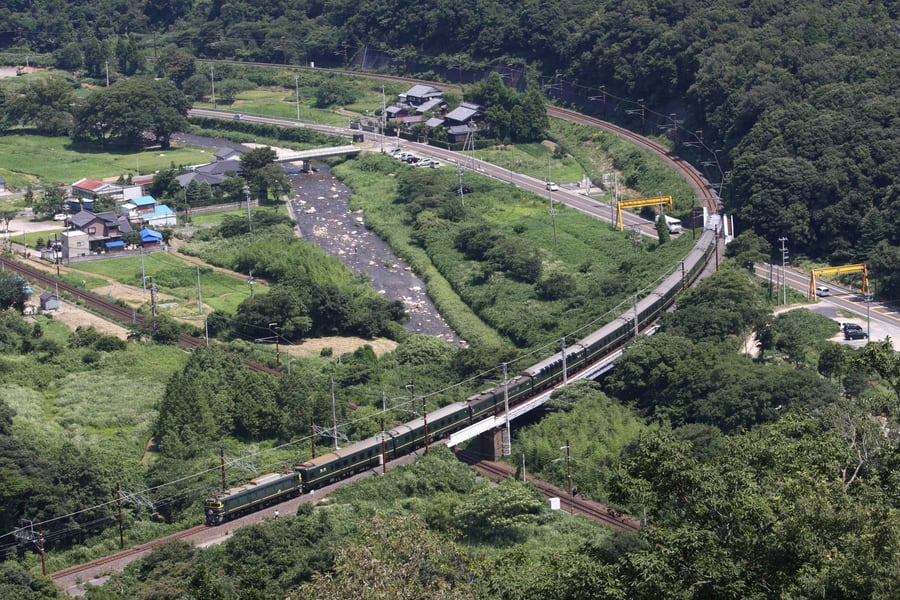
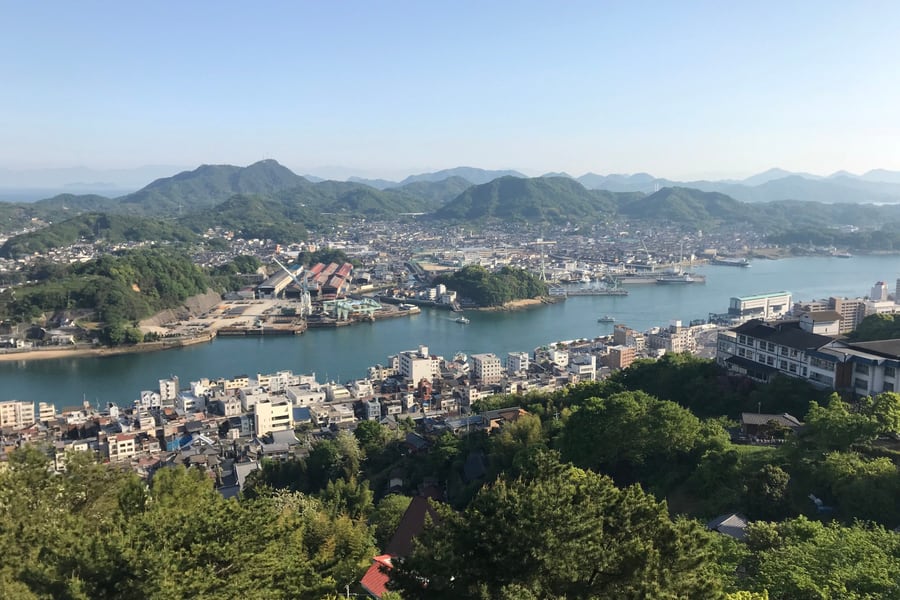
On the Sanyō side the train runs under the Akashi Kaikyō Bridge between Tarumi and Maiko, through the countryside of Wake in Okayama, and beside the Onomichi Channel, where ferries cross to Mukaishima between the shipyards. On the Sea of Japan it crosses the Amarube Viaduct, about 40 metres above the town of Kami; departures for Shimonoseki between October and February do not pass over it.
The train
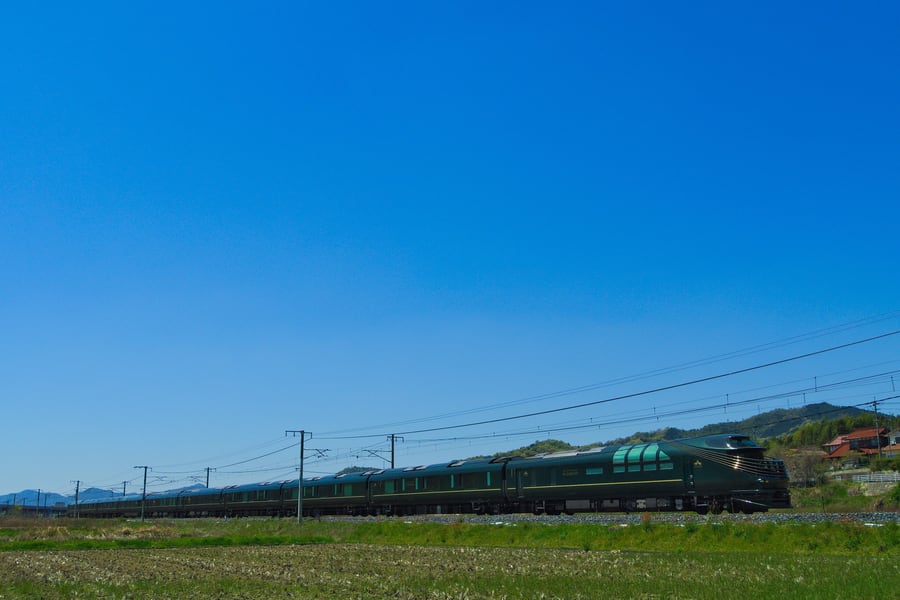
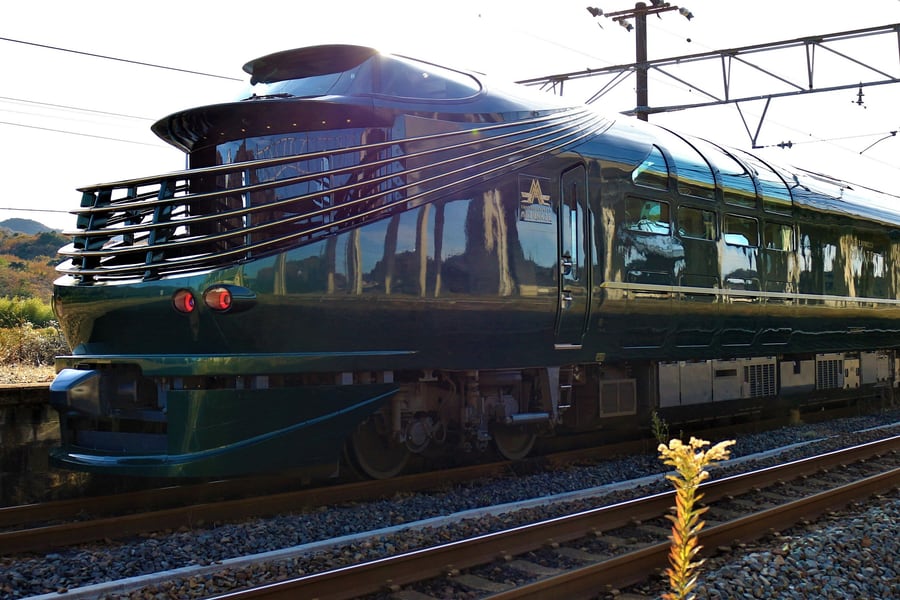
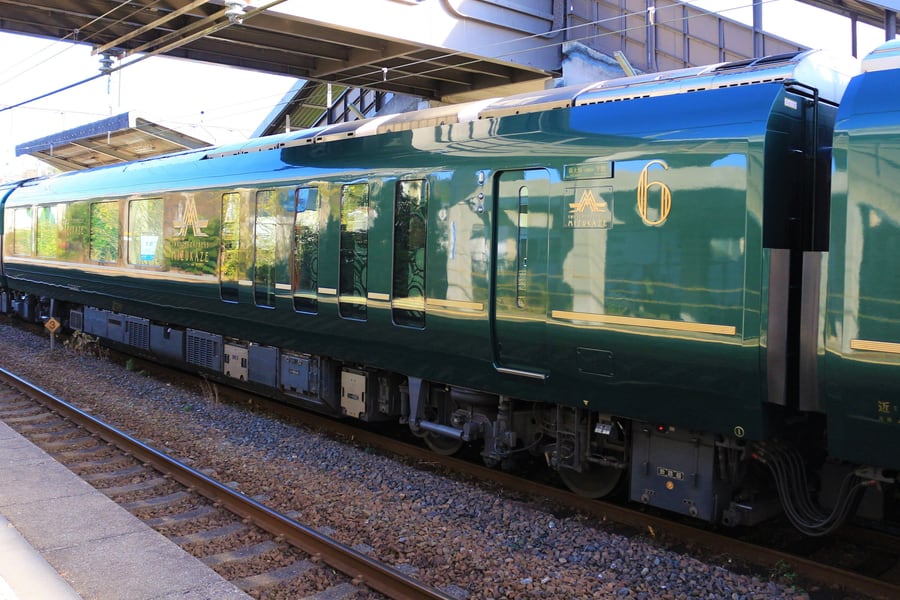
The Mizukaze is a ten-car 87 series hybrid: diesel engines drive generators, batteries assist, and electric motors turn the wheels. The architect Kazuya Ura and the industrial designer Tetsuo Fukuda, who also drew the Sunrise Izumo and Sunrise Seto, styled it nostalgic modern: an Art Deco interior, and at each end a streamlined observation car with round headlamps, a high cab like an old bonnet locomotive's and five lines sweeping back along its sides.
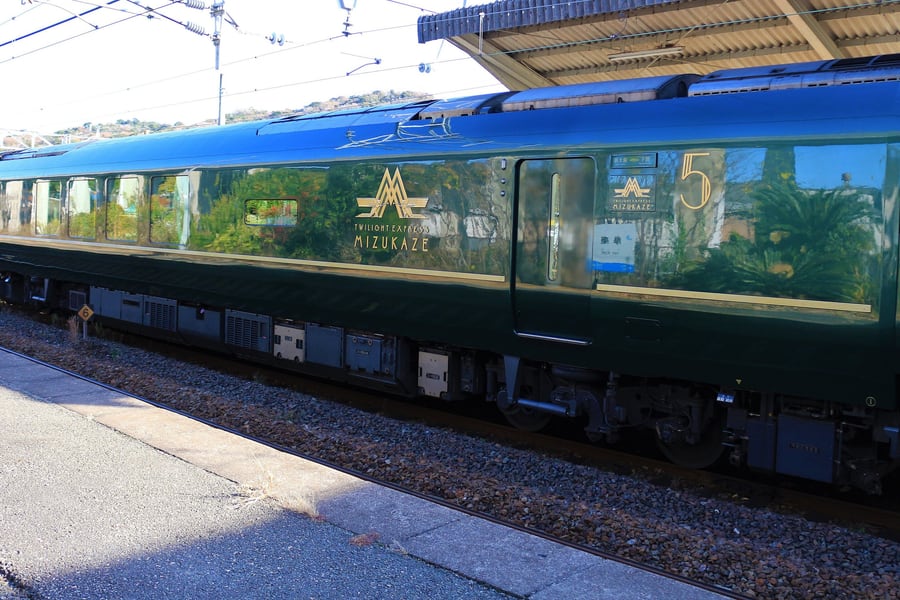
Cars 2, 3, 4, 8 and 9 hold the Royal Twin and Royal Single rooms, each with a shower and toilet, large windows, some of which open, and doors in wood from the five prefectures of the Chūgoku region. Car 5 is the lounge, Salon de l'Ouest, with a bar, a table for the tea ceremony and a shop. Car 6 is the dining car, Diner Pleiades, with an open kitchen; menus are overseen by Yoshihiro Murata of the Kyoto restaurant Kikunoi and Hajime Yoneda of Hajime in Osaka, and drinks are included. Car 7 is one room: The Suite, about 35 square metres, with a living room, a bedroom, a bath with a tub and a private balcony.
Along the route
 baggio4ever / Wikimedia Commons · CC BY 3.0 · cropped
Lake Biwa
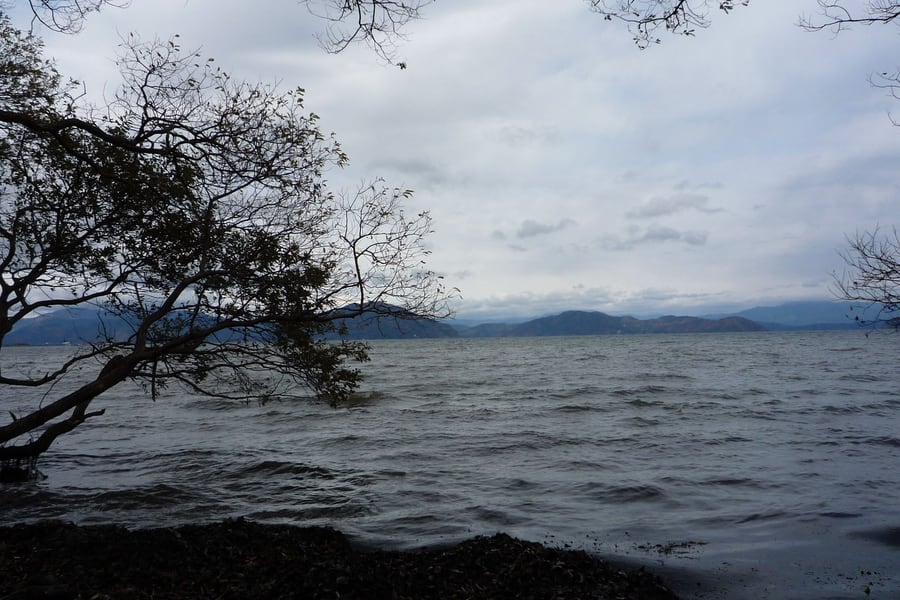
On the Lake Biwa Loop the train runs up the western shore on the Kosei Line. Between Ōmi-Takashima and Kita-Komatsu, Japan's largest freshwater lake fills the window; it covers about a sixth of Shiga Prefecture.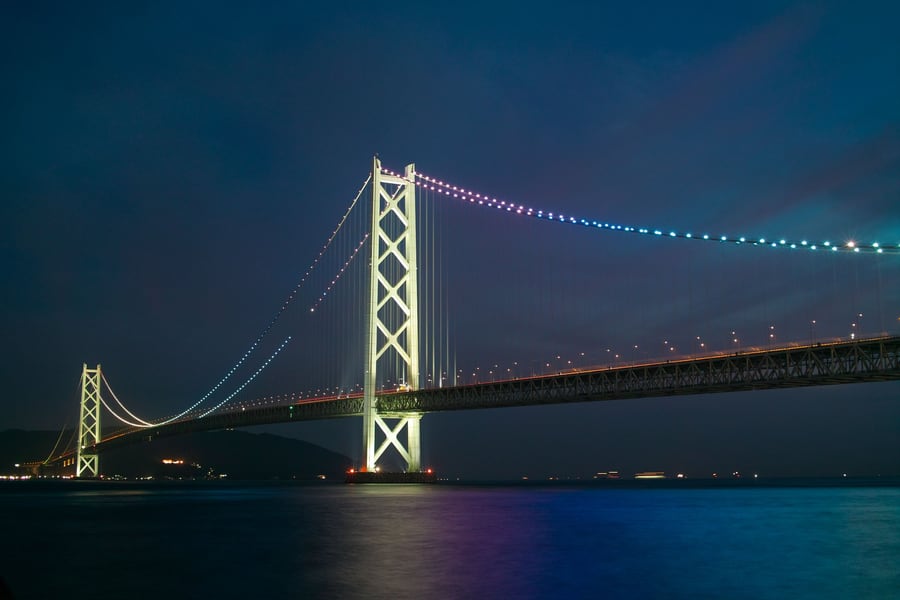 clear_and_sunny / Wikimedia Commons · CC BY 3.0
The Akashi Kaikyō Bridge
On the two-night course the train runs along the shore between Tarumi and Maiko, under the Akashi Kaikyō Bridge, 3,911 metres from Kobe across the strait to Awaji Island.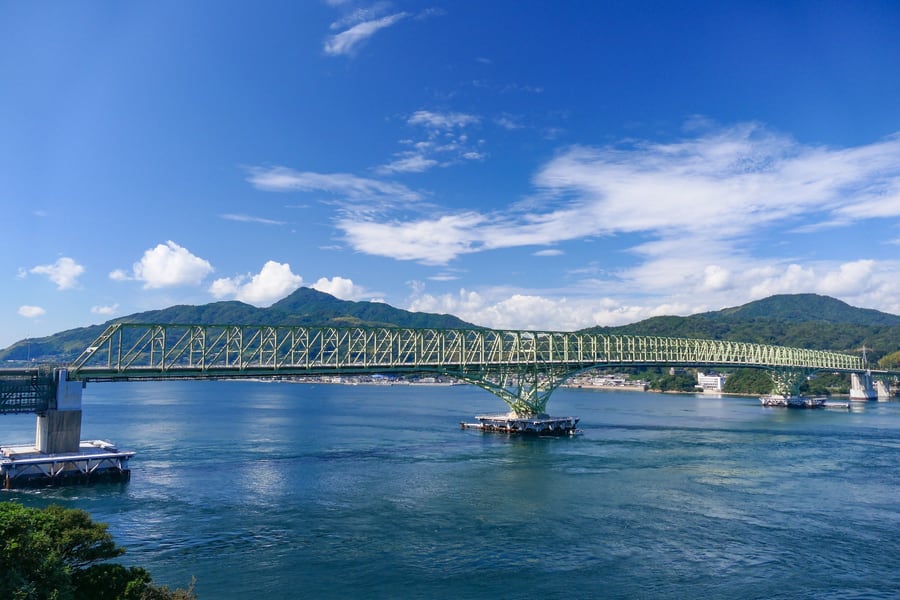 MaedaAkihiko / Wikimedia Commons · CC BY-SA 4.0
The Obatake Strait
Between Obatake and Yanai the Lake Biwa course follows the strait to Suō-Ōshima, whose tidal stream is counted among the three fastest in Japan, under the long truss of the Ōshima Bridge.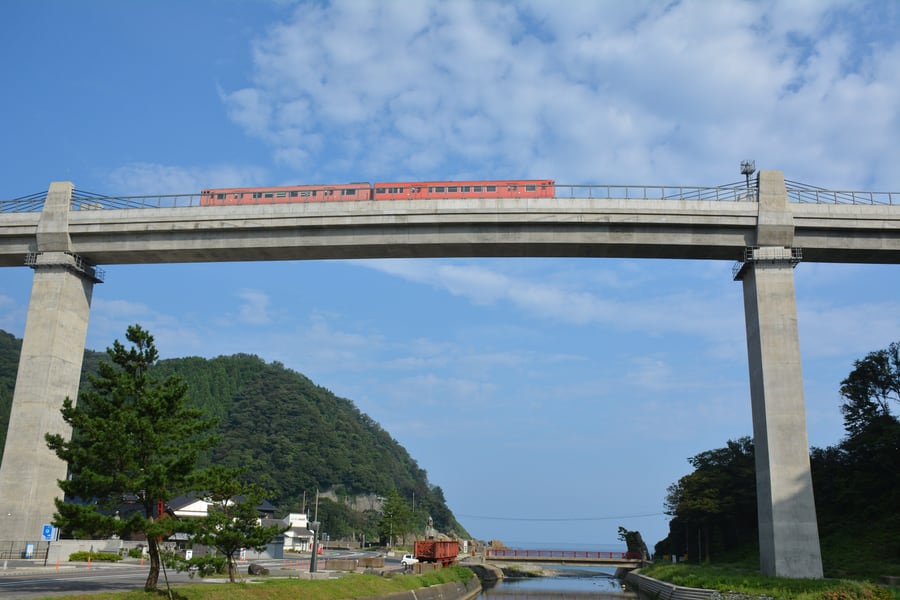 Cheng-en Cheng / Wikimedia Commons · CC BY-SA 2.0
The Amarube Viaduct
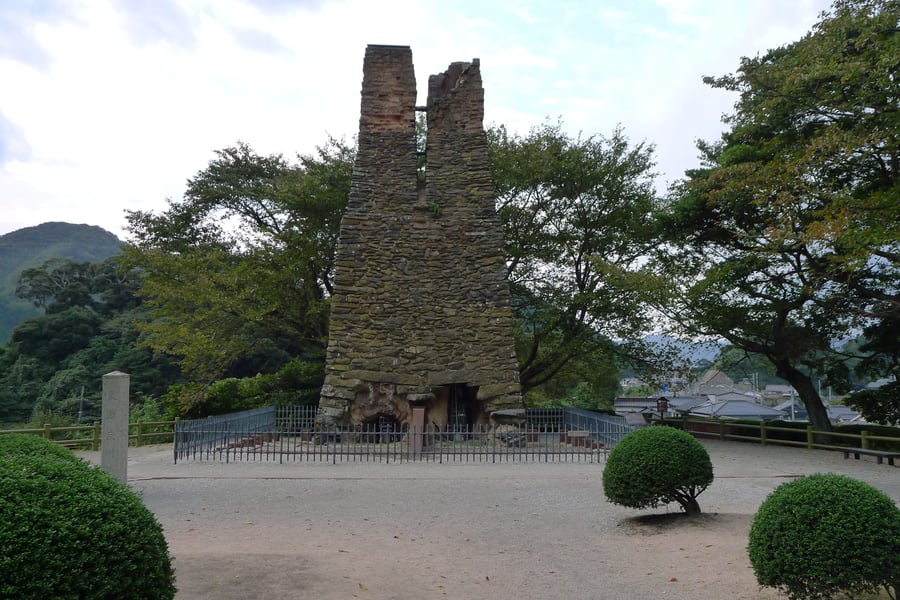
Between Yoroi and Amarube the San'in line crosses the valley at Kami about 40 metres up, with the Sea of Japan at the end of it. The concrete viaduct replaced a steel trestle of 1912 in August 2010.A bit of history
Culture & experiences along the way
 663highland / Wikimedia Commons · CC BY 2.5
Tea at Meimei-an
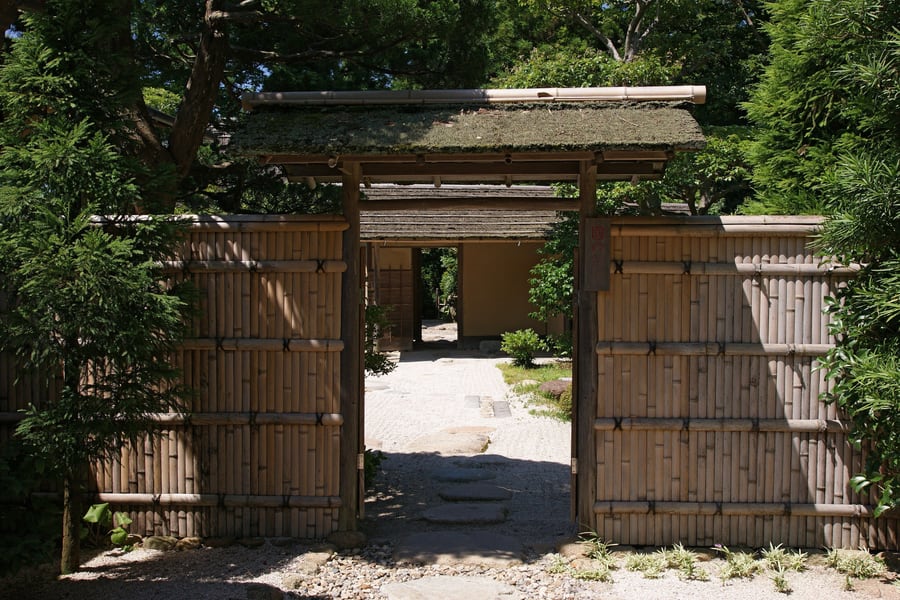
On the two-night course, guests in Matsue take green tea at Meimei-an, a teahouse built in 1779 for the daimyō Matsudaira Harusato, whose nickname gave the Fumai school of tea its name. On board, the lounge car holds its own tea ceremony at a table, with a kettle by one of Kyoto's hereditary makers of tea utensils.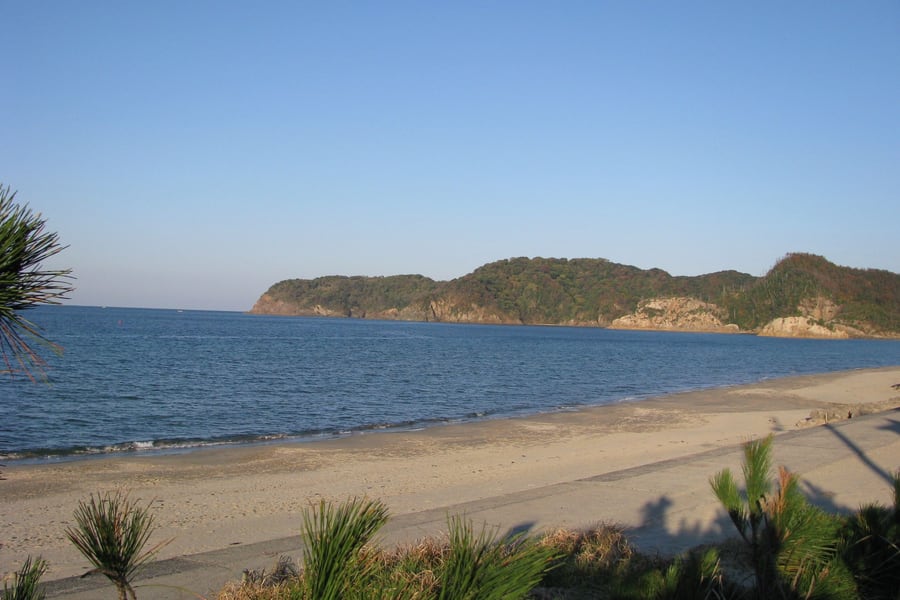 Aimaimyi / Wikimedia Commons · CC BY-SA 3.0 · cropped
Jibiki-ami
From April to September the two-night course stops at Higashihama in Iwami, Tottori, where guests haul a net in from the Sea of Japan by hand, the old beach-seine fishing called jibiki-ami. There is no time to cook the catch, and in bad weather the visit moves to the Tottori dunes.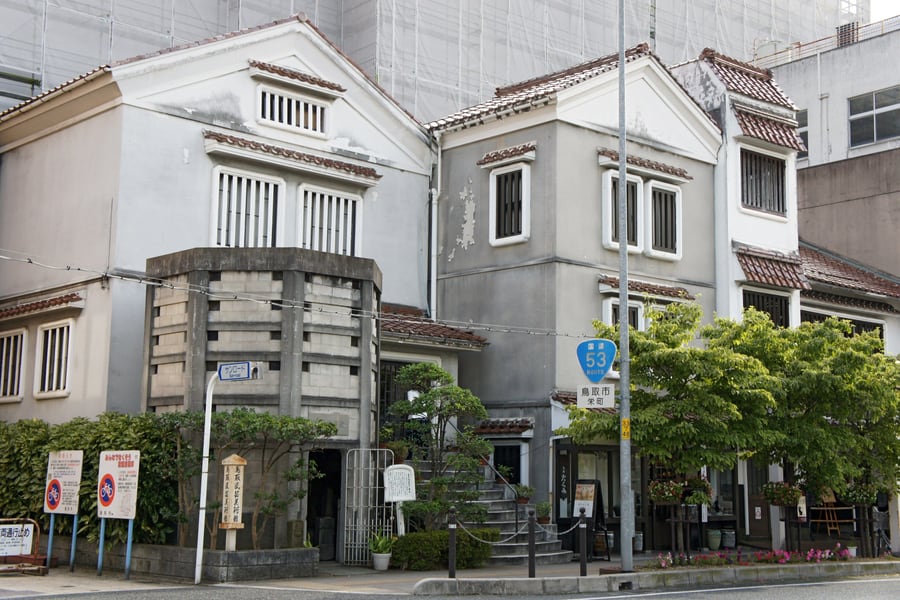 663highland / Wikimedia Commons · CC BY 2.5
Tottori folk crafts
From December to April the Tottori visit goes to the Tottori Folk Crafts Museum, built on the collection of Shōya Yoshida, the father of Tottori's folk-craft movement, and to the former Yoshida Clinic, not normally open to the public. Pottery from Tottori's Nakai kiln is used on the train.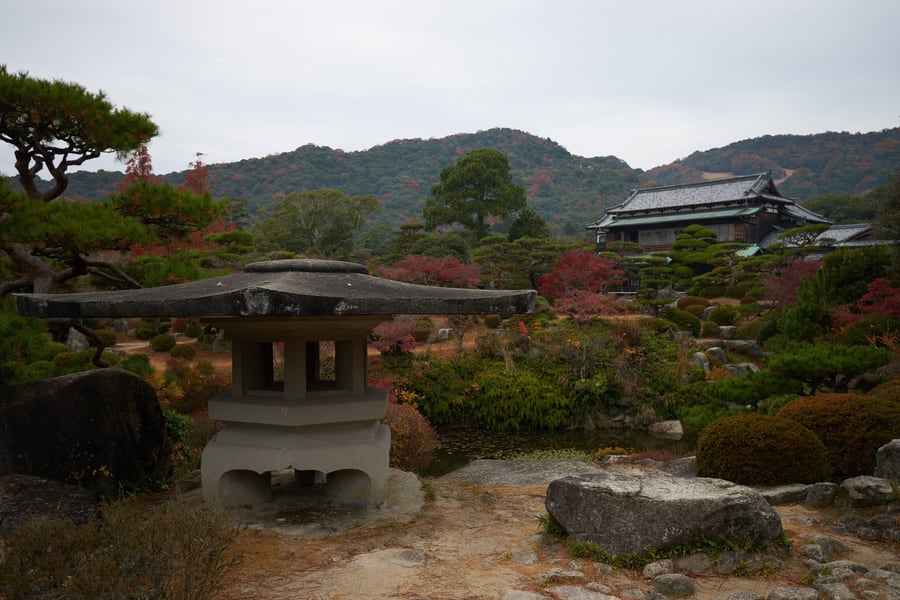 Thomas Au / Wikimedia Commons · CC BY 2.0
The three arrows
The Kyoto-bound Lake Biwa course stops at Hōfu, where the Mōri Museum keeps the heirlooms of the lords of Chōshū. Guests hear the story of Mōri Motonari's letter to his three sons, the source of the parable of the three arrows, see a replica of it, and walk in the Mōri Garden, a Place of Scenic Beauty.Timetables
The Mizukaze runs on set departure days, not to a daily timetable, and every trip is sold as a tour. JR West publishes the season's departures in batches, each sold by lottery months ahead. The departures sold so far:
| Course | Days | Leaves | Departures, Dec 2026 – Jun 2027 |
|---|---|---|---|
| San'in, Shimonoseki-bound · 1 night | Saturdays | Kyoto | 19 Dec · 23 Jan · 20, 27 Feb · 13 Mar · 17 Apr · 15 May · 12 Jun |
| San'in, Kyoto-bound · 1 night | Mondays | Shimonoseki | 21 Dec · 25 Jan · 22 Feb · 8, 15 Mar · 19 Apr · 17 May · 14 Jun |
| Lake Biwa Loop / Setouchi, Shimonoseki-bound · 1 night | Saturdays | Kyoto | 5, 12 Dec · 9, 16, 30 Jan · 6 Feb · 10, 24 Apr · 22, 29 May · 5, 26 Jun |
| Lake Biwa Loop / Setouchi, Kyoto-bound · 1 night | Mondays | Shimonoseki | 11 Jan · 29 Mar · 26 Apr · 31 May · 21 Jun |
| Setouchi / San'in · 2 nights | Wednesdays | Kyoto | 9, 16 Dec · 20, 27 Jan · 3, 24 Feb · 10, 24 Mar · 14 Apr · 26 May · 2, 16, 23 Jun |
Good to know:
- Applications have closed for all of these. The lottery for departures up to February 2027 closed on 31 July 2026, with results in early September; the March to June 2027 lottery closed on 30 October 2026, with results due in early December. JR West has not yet announced the next batch.
- Some dates are sold only through travel agencies, not the Mizukaze tour desk; among them 9 December, 11 January, 22 February and several in April to June.
- JR West publishes no clock times. Its course pages give the route and the visits ashore; times come with the tour documents.
- Weather stops it. JR West cancelled departures for heavy snow in January 2026 and for a typhoon in June 2026.
Departures as of November 2026, from JR West's sale notices for December 2026 to February 2027 (opens in a new tab) and March to June 2027 (opens in a new tab), and the course pages (opens in a new tab).
Tickets
Every journey is a tour, priced per person, tax included, with the room, meals, drinks and the visits ashore. Applications go in through the Mizukaze website or by post from the brochure during each sale period, at most two rooms and four people at a time; places are drawn by lottery, not first come, and JR West weights the draw in favour of people who have applied before without success.
Departures from March to May 2027 cost more: ¥30,000 a person on the one-night courses and ¥50,000 on the two-night. Some dates are sold abroad through JR West's appointed agencies, for the two-night course only. Fares from JR West's sale notices and its tour desk, Nippon Travel Agency, read November 2026; Japanese yen.
Book your tickets
Royal Twin
Per person, two sharing · Dec 2026 – Feb 2027
A room of about 10 square metres with a shower and toilet; ¥435,000 Kyoto to Shimonoseki, ¥660,000 for two nights.
Book Tickets (opens in a new tab, on JR West)via JR WestRoyal Single
Per person, one guest · Dec 2026 – Feb 2027
One of two rooms of about 7 square metres; ¥515,000 Kyoto to Shimonoseki, ¥800,000 for two nights.
Book Tickets (opens in a new tab, on JR West)via JR WestThe Suite
Per person, two sharing · Dec 2026 – Feb 2027
The whole of Car 7, with a balcony and a bath; ¥975,000 Kyoto to Shimonoseki, ¥1,440,000 for two nights.
Book Tickets (opens in a new tab, on JR West)via JR WestRail Passes
No rail pass covers the Mizukaze. JR West sells every journey as a tour, and the Japan Rail Pass is valid on JR's scheduled Shinkansen, limited express, express, rapid and local trains, so there is nothing on the Mizukaze for it to buy.
A pass can still bring you to the start. The Japan Rail Pass covers the Tōkaidō and Sanyō Shinkansen to Kyoto on Hikari and Kodama trains, and to Shin-Shimonoseki on Hikari, Sakura and Kodama; a Nozomi or Mizuho needs the separate ticket JR sells to pass holders. Whether that is worth a pass depends on the rest of the trip, not on the Mizukaze.
Checked November 2026 against the Japan Rail Pass scope of validity (opens in a new tab) and JR West's sale notice (opens in a new tab).
Places to Visit
The visits ashore are part of the tour: a guide, the train's own bus, and sometimes a room or a garden not normally open to the public. Each course has its own, and some change with the season. The places below are the ones JR West's courses call at in 2026 and 2027.
 Asturio Cantabrio / Wikimedia Commons · CC BY-SA 4.0
Kinosaki Onsen
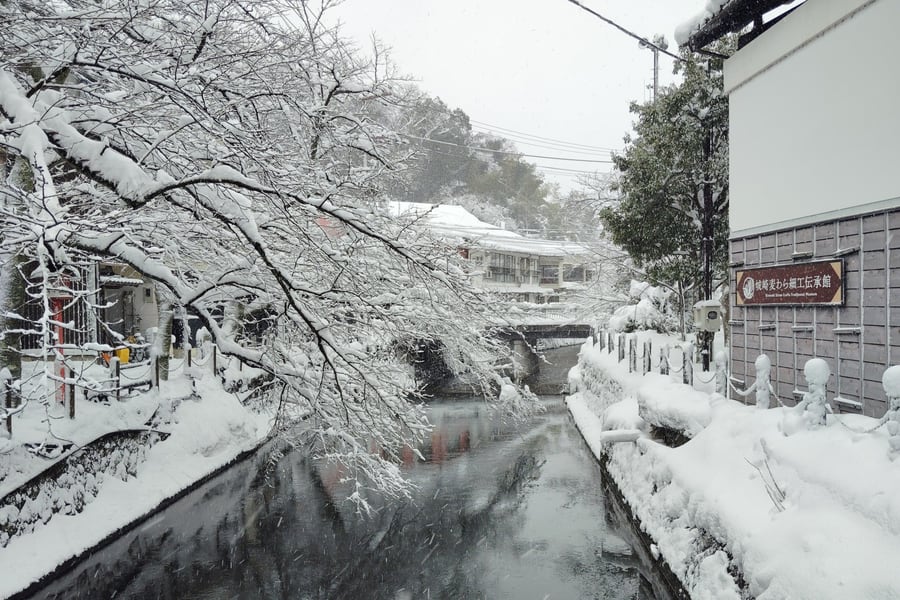
A spa town of about 1,300 years on the Ōtani River, founded, JR West says, by the monk Dōchi Shōnin. The Shimonoseki-bound San'in course calls from March to September: a talk by the head priest at the Yakushi-an hall of Onsen-ji, then free time in a town of seven public bathhouses, where visitors walk between them in yukata.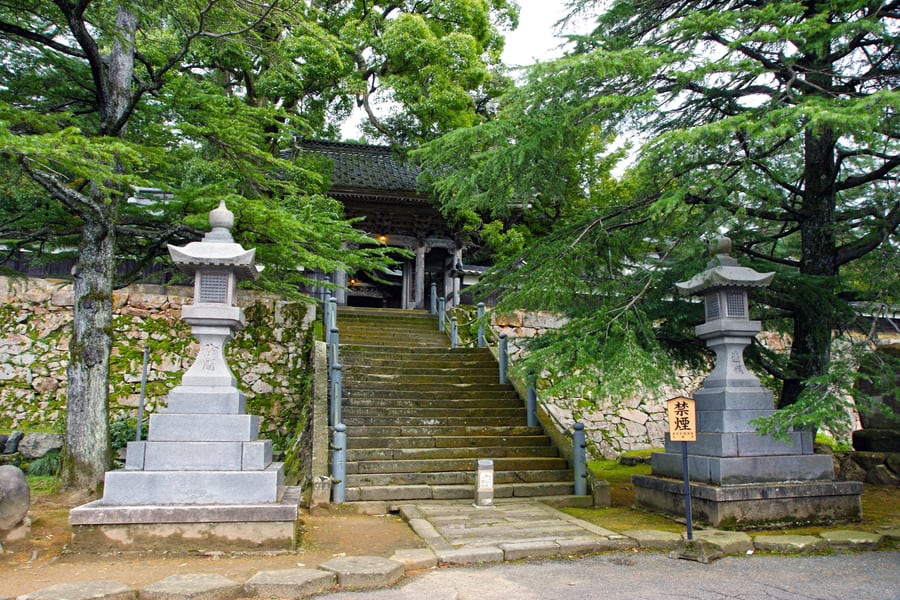 663highland / Wikimedia Commons · CC BY 2.5
Kasumi
In the colder months the same course stops instead at Daijō-ji, a temple in Kami whose 165 works by the Kyoto master Maruyama Ōkyo and his pupils are Important Cultural Properties. Their painted sliding doors turn the rooms into a three-dimensional mandala, and the deputy chief priest gives the commentary.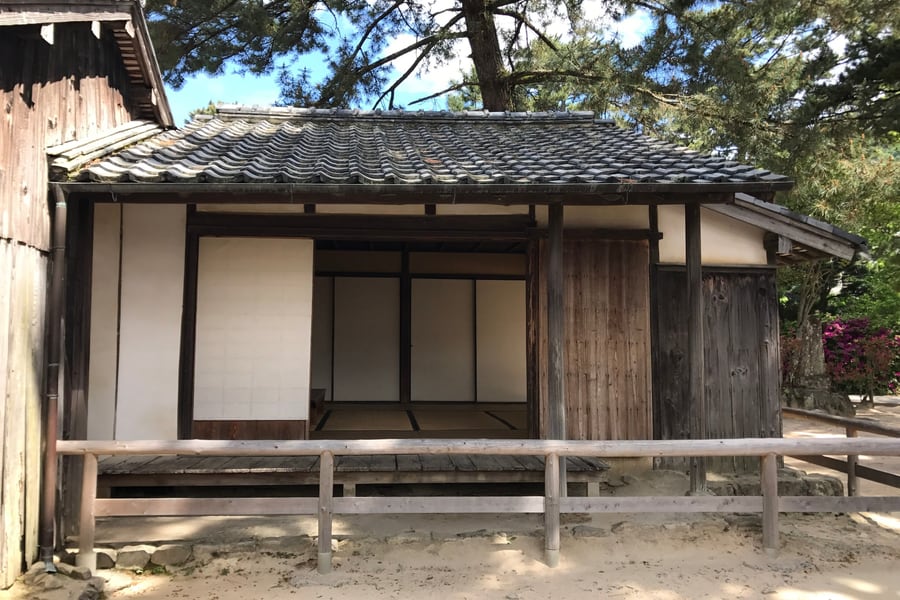 そらみみ / Wikimedia Commons · CC BY-SA 4.0 · cropped
Hagi
In Hagi the guests visit Shōin Shrine and the Shōka Sonjuku, the small wooden school where Yoshida Shōin taught many of the men behind the Meiji Restoration; it is part of a World Heritage Site. The morning also takes in the Kikuya family residence and its garden, and breakfast in the town.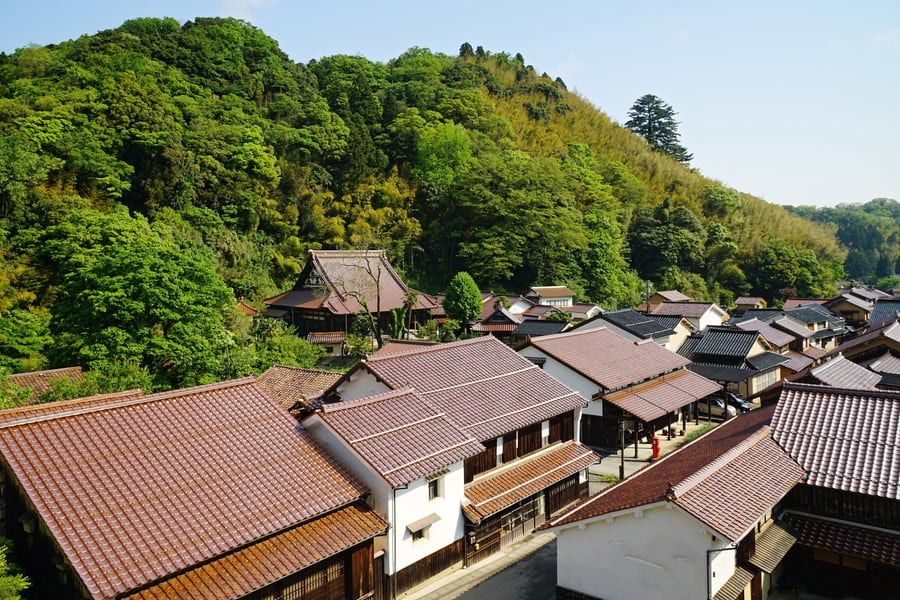 663highland / Wikimedia Commons · CC BY-SA 4.0
Ōmori
Ōmori was the administrative and merchant town of the Iwami Ginzan silver mine, the largest in Japan's history, worked from 1526 to 1923 and a World Heritage Site since 2007. Samurai houses and magistrates' offices line its old street; the Kyoto-bound guests visit the Kumagai House, home of one of the town's richest merchant families.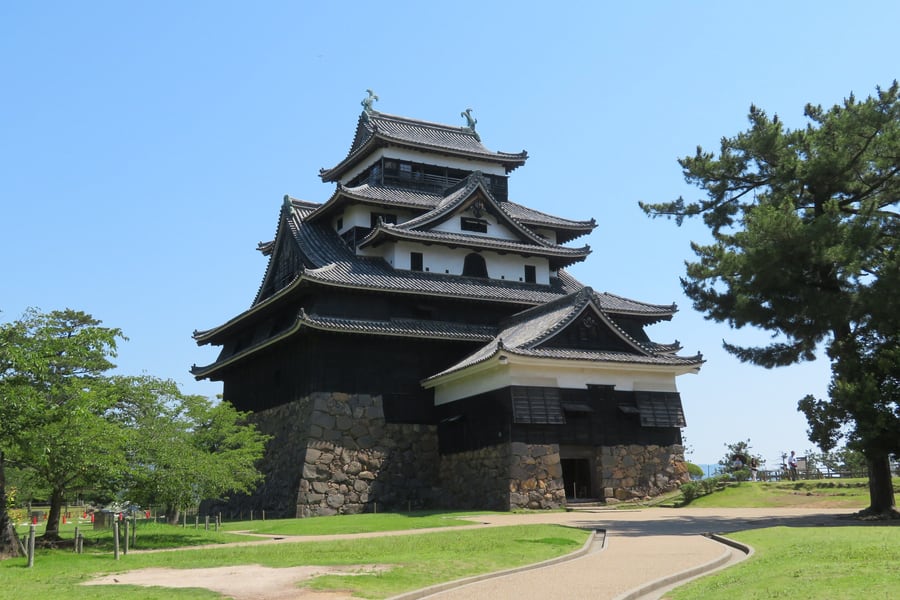 KishujiRapid / Wikimedia Commons · CC BY-SA 4.0 · cropped
Matsue
Matsue Castle, built from 1607 to 1611 on the shore of Lake Shinji, is one of the few in Japan whose keep survives in its original wood. The two-night course spends its second day in Matsue and neighbouring Unnan, at the Sugaya tatara, Japan's only surviving tatara furnace, with a performance of Izumo kagura.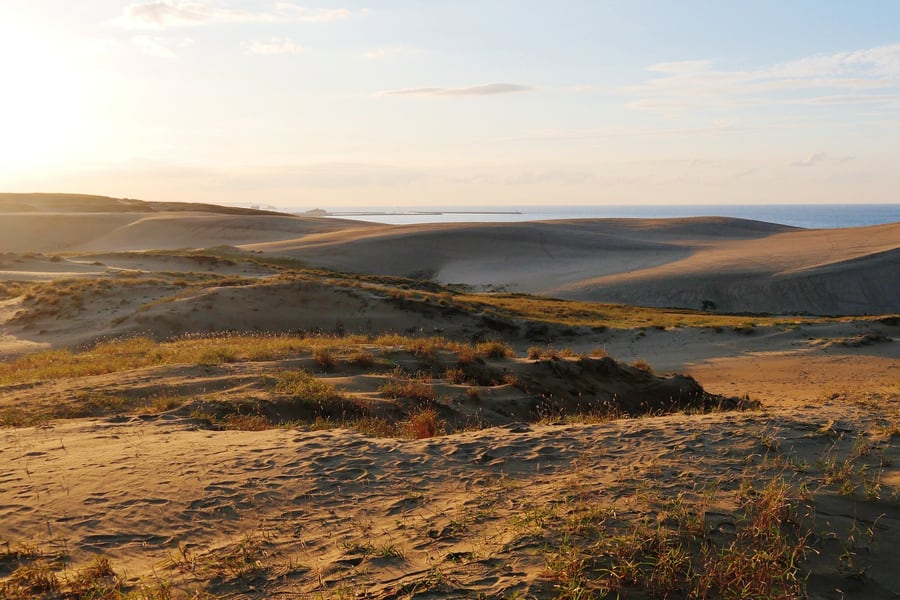 Zairon / Wikimedia Commons · CC BY 4.0 · cropped
Tottori
The largest dunes in Japan run about 14 km along the coast, shaped by the wind from sand the Sendai River brought down from the Chūgoku Mountains, and are part of the San'in Kaigan Geopark. In the warmer months the guests walk on them and visit The Sand Museum.Where to Sleep
The nights are spent on board. Before a departure from Kyoto, a hotel inside the station puts the train a lift ride away; at the other end, the courses bound for Shimonoseki finish with the bus to Kokura, where a hotel stands over the station.
Where to stay
Hotel Granvia Kyoto
Kyoto · inside Kyoto Station
A JR West hotel directly connected to the station that three of the five courses leave from.
Check Availability (opens in a new tab, on jrwest-hotels.jp)via jrwest-hotels.jpJR Kyushu Station Hotel Kokura
Kokura · at Kokura Station
Directly connected to Kokura Station, where the bus from Shimonoseki ends.
Check Availability (opens in a new tab, on station-hotel.com)via station-hotel.comQuestions or corrections
Planning this trip and stuck on something, or spotted a time, fare or detail that has changed? Send us a message about Twilight Express Mizukaze. We read every one, and we update this page when something has changed.