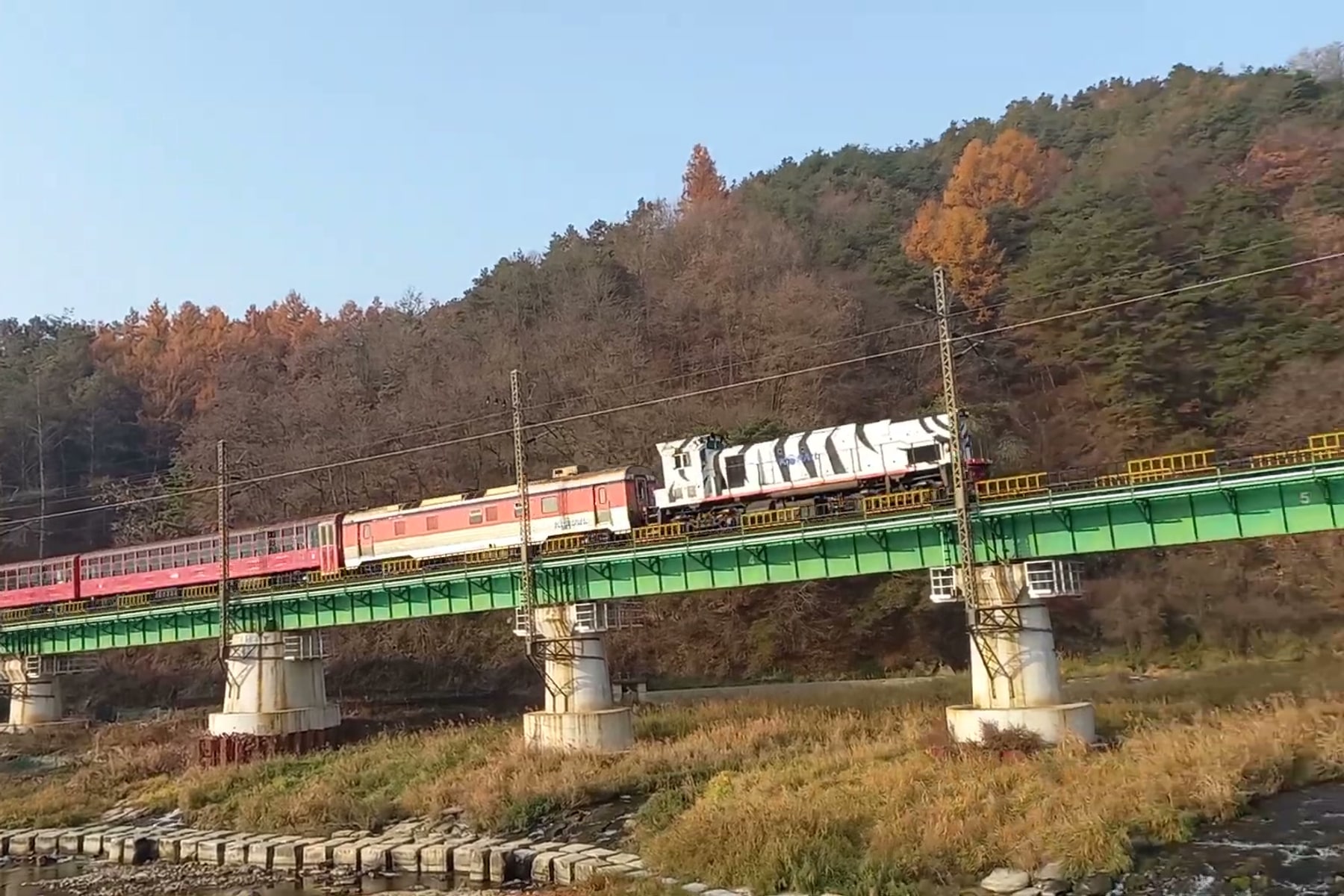
The Baekdudaegan Canyon Train
기찻길Railroad / YouTube · CC BY 3.0 · 2022 · video frame, cropped
- Distance27.7 km Buncheon–Cheoram · 87.1 km from Yeongju
- DurationAbout 1 hr 5 min Buncheon–Cheoram · 2 hr 35 min from Yeongju
- Best seasonAll year, Thursday to Monday
Introduction
The Baekdudaegan is the mountain spine that runs the length of the Korean peninsula, and in the north-east of North Gyeongsang the upper Nakdong River has cut a gorge through it. A railway follows the river: the old Yeongam Line, finished in 1956 to bring coal and timber out of the mountains. For decades it carried coal, and the stations in the gorge saw a few passengers a day.
The V-Train was built for this stretch. Korail, which also runs the KTX at 300 km/h, launched it in April 2013 as a train meant to go slowly: three carriages with big windows, painted with the stripes of a white tiger, that take a little over an hour for the 27.7 kilometres between Buncheon and Cheoram. Through the gorge it keeps to about 30 km/h with the windows open, and waits at the small stations long enough to get off. The V stands for the valley and for its shape.
It runs Thursday to Monday, twice a day each way. The first train of the day starts at Yeongju, on the main line from Seoul, and the last one ends there.
The Journey
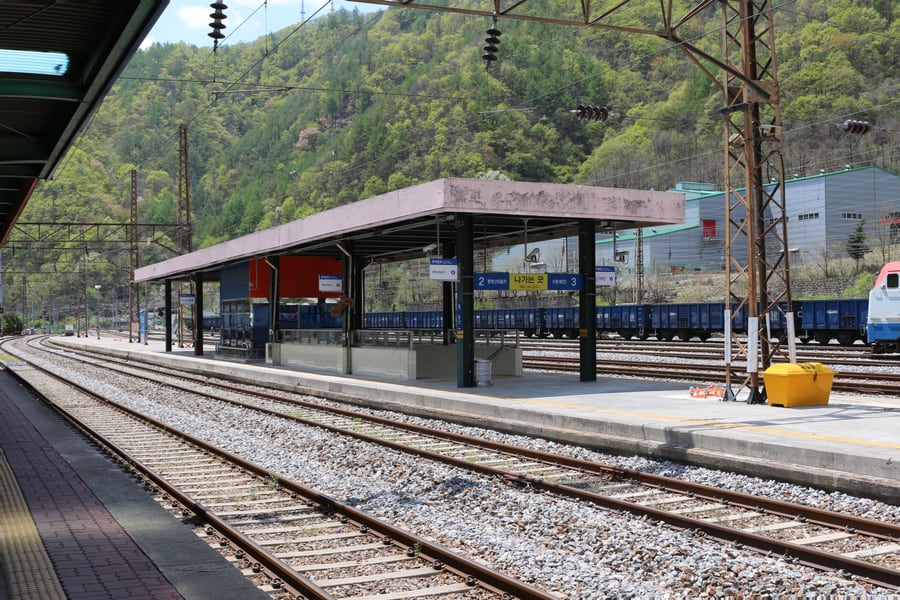
The morning train leaves Yeongju at 08:30. For the first hour it is an ordinary run up the Yeongdong Line through Bonghwa county, stopping at Bonghwa and Chunyang, and at 09:38 it reaches Buncheon, where it waits twenty minutes. The afternoon train starts here.
Buncheon
Buncheon was a country station with about ten passengers a day until the V-Train came. In its first year the figure went to nearly nine hundred, and the villagers opened restaurants by the station. Since 2014 Korail, the province and Bonghwa county have dressed the village up as a Santa Village every winter, and the station has been twinned with Zermatt since May 2013.
Into the gorge
North of Buncheon the line enters the gorge. The train runs at 30 km/h with the windows open, and the crew talk the passengers through the view. It passes the forest halt of Bidong, where it stopped for walkers until 2022, and pulls into Yangwon, the platform that two halves of a village built themselves in 1988. The next stop is Seungbu, with fifteen minutes on the platform among the villagers' stalls.
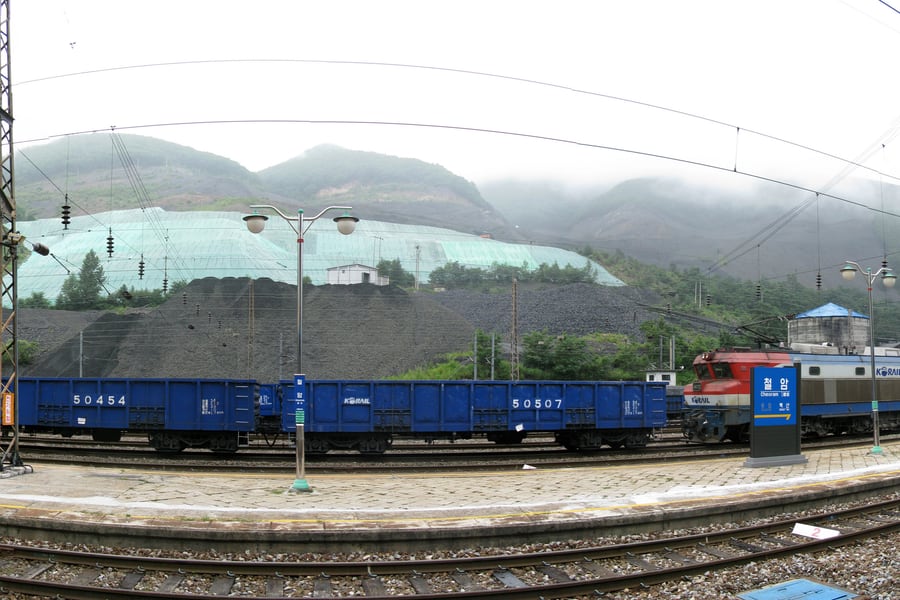
Beyond Seungbu the train runs through Seokpo without stopping and goes back to an ordinary 60 km/h for the last stretch. At 11:05 it is in Cheoram, under the spoil heaps and the old coal washery.
The train
The V-Train is three carriages and a diesel locomotive. The carriages were rebuilt from old Mugunghwa parcel vans, with windows that open, and they seat 158: two observation cars of 56 seats and a café car of 48 between them. There are no toilets on board, so use the station before setting off or at Seungbu. The locomotives are two class 4400 diesels, 4459 and 4460, painted with the same white-tiger stripes as the carriages. Korail's own name for the train is agi baekho, the baby white tiger.
The carriages were built without air-conditioning. After the heatwave of August 2018 Korail added air-conditioners and a generator car, and on days above 35°C the train does not run.
Cheoram
Cheoram opened in 1940 and for decades sent coal from the Taebaek mines all over the country. The washery over the tracks dates from 1935, the first in Korea for anthracite, and the state mine that fed it closed in June 2024. Nearby, the shops of the old mining town, built out over the Cheoram stream on stilts, now make up the Cheoram Coal Mine History Village.
The train turns round after half an hour. The 11:35 runs back down the gorge to Buncheon, and the last train of the day, the 15:48, goes all the way to Yeongju, arriving at 18:03.
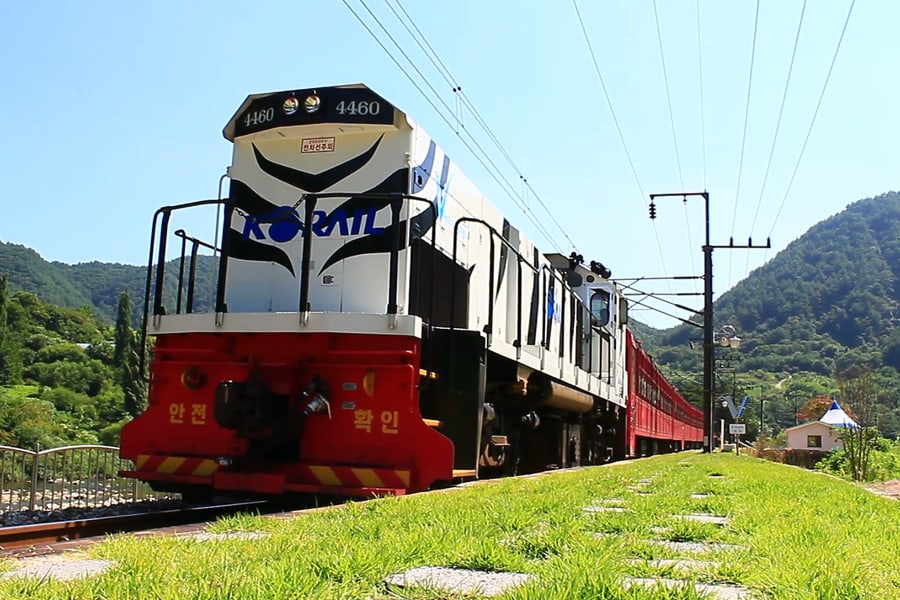
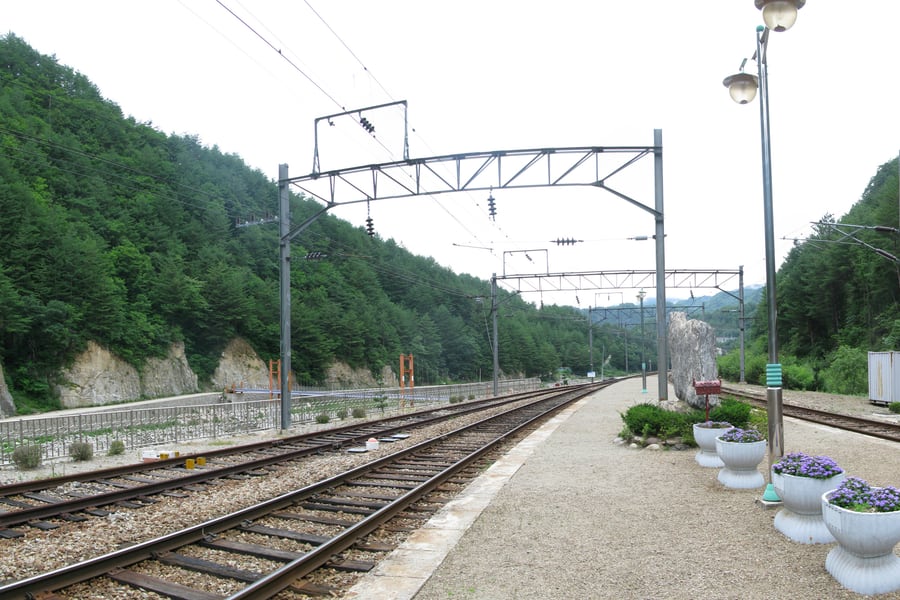
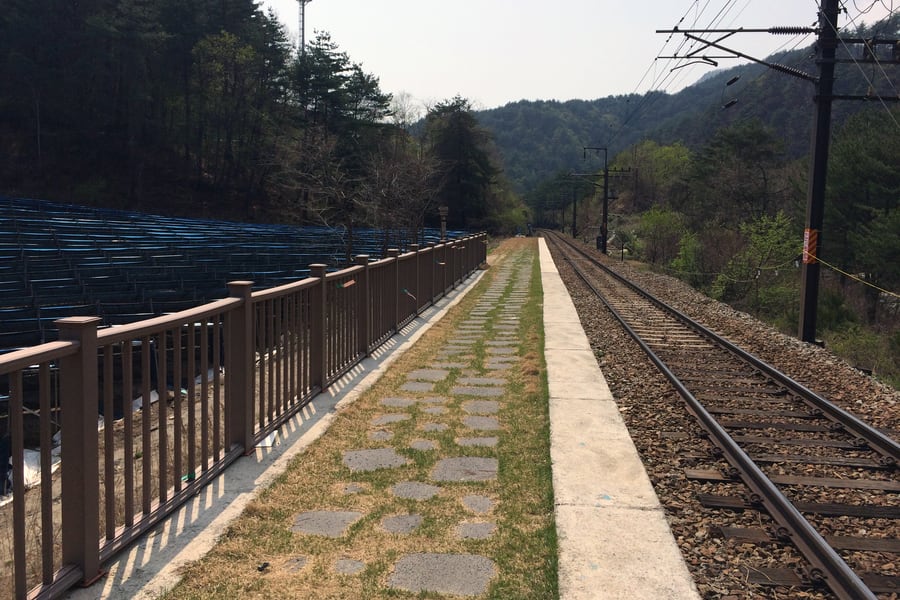
Along the route
 G43 / Wikimedia Commons · CC BY-SA 3.0 · 2007 · cropped
The station the villagers built
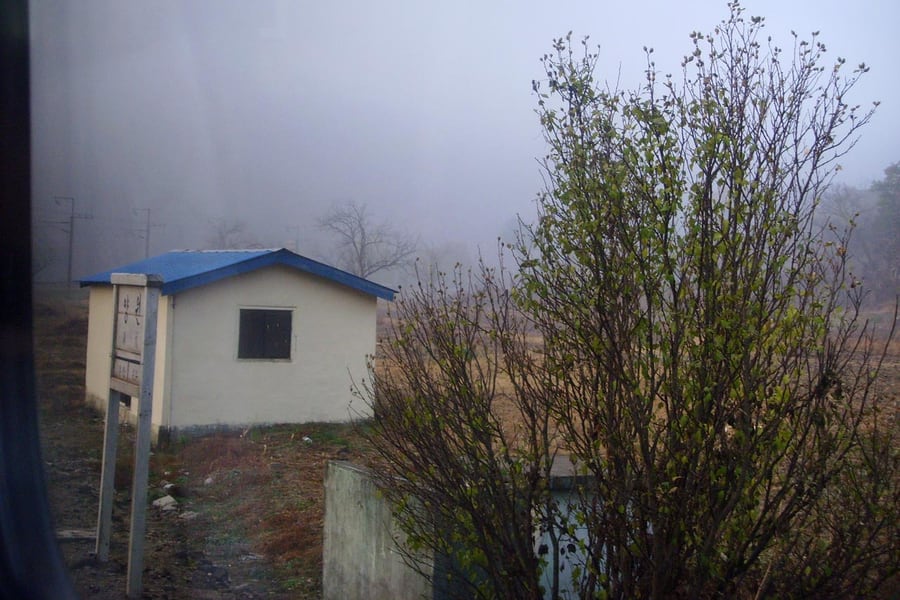
The two halves of Wongok village face each other across the Nakdong, with no transport but the railway. In 1988 the villagers built themselves a platform, Yangwon, and the 2021 film Miracle was based on their story.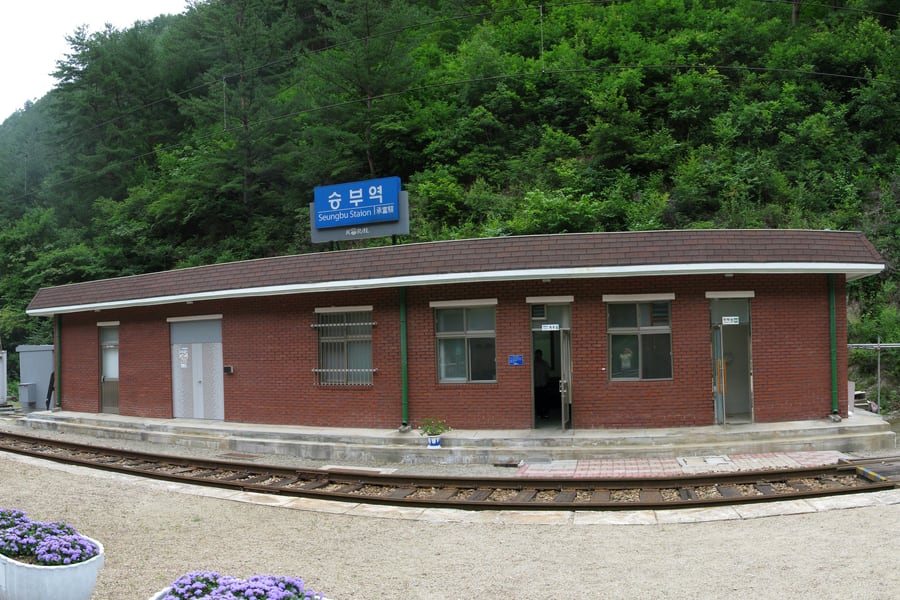 G43 / Wikimedia Commons · CC BY 3.0 · 2009 · cropped
Three pyeong of sky
A poem cut into a rock at Seungbu says the sky here is three pyeong, about ten square metres, and so is the flowerbed. The train waits a quarter of an hour, and villagers sell produce on the platform: bring cash.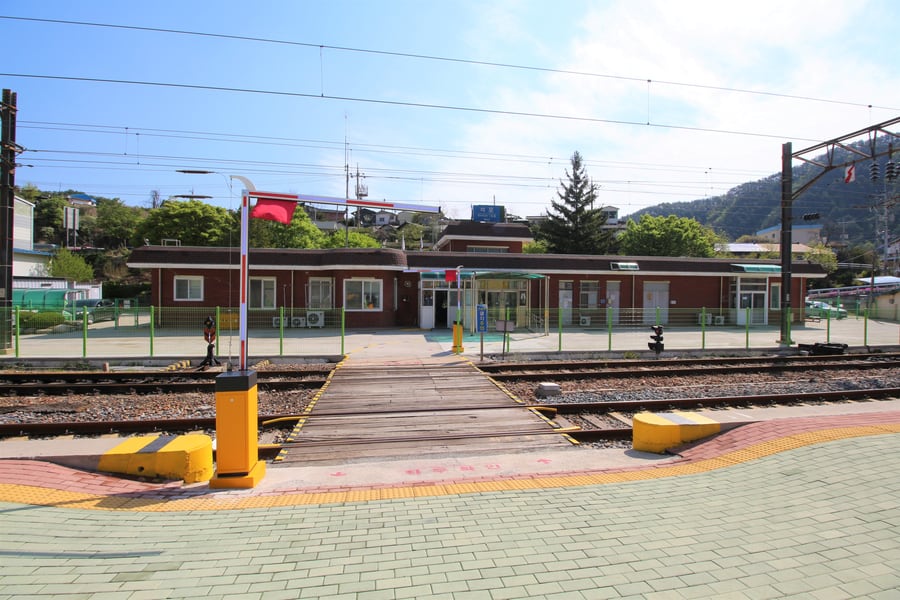 Rsa / Wikimedia Commons · CC BY-SA 3.0 · 2023 · cropped
Back up to speed
The slow running ends at Seokpo. From Buncheon the train has kept to 30 km/h with the windows open and the crew talking through the view; beyond Seokpo it goes back to an ordinary 60 km/h, and the carriages start to shake.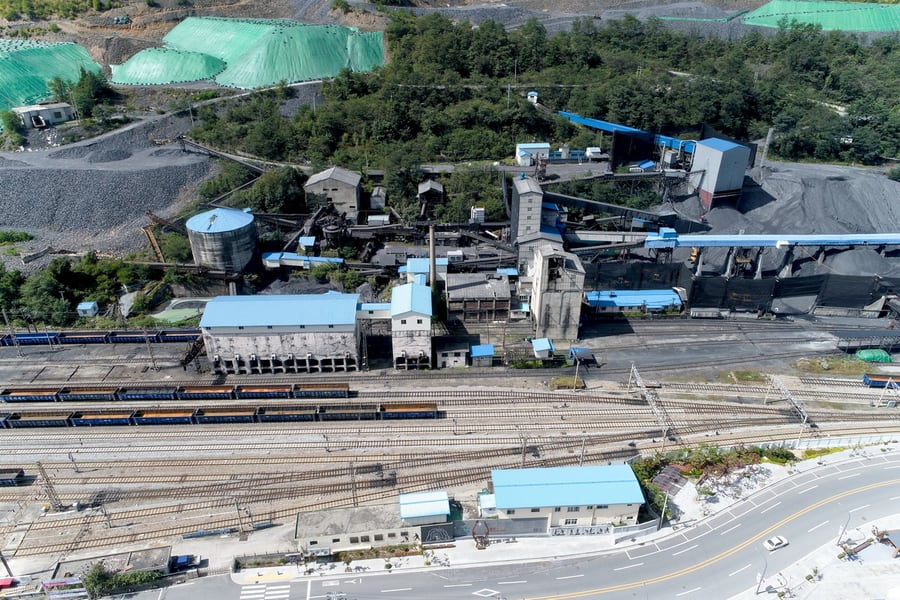 Gangwon Province / Wikimedia Commons · KOGL Type 1 · 2018
The first coal washery
Over the tracks at Cheoram stands Korea's first anthracite washery, built in 1935 and listed as cultural heritage in 2002. The state mine that fed it, Jangseong, closed in June 2024.A bit of history
Timetables
The V-Train makes two round trips a day, Thursday to Monday. Tuesdays and Wednesdays are its regular days off, and it does not run when the temperature passes 35°C. The morning train starts at Yeongju and the last train of the day runs back there; the middle two stay in the gorge.
Northbound, to Cheoram
| Station | 2511 | 2513 |
|---|---|---|
| Yeongju | 08:30 | |
| Bonghwa | 08:47 | |
| Chunyang | 09:15 | |
| Buncheon | 09:59 | 14:22 |
| Yangwon | 10:16 | 14:37 |
| Seungbu | 10:39 | 15:00 |
| Cheoram | 11:05 | 15:27 |
Southbound, from Cheoram
| Station | 2512 | 2514 |
|---|---|---|
| Cheoram | 11:35 | 15:48 |
| Seungbu | 12:15 | 16:28 |
| Yangwon | 12:28 | 16:40 |
| Buncheon | 12:39 | 16:52 |
| Chunyang | 17:22 | |
| Bonghwa | 17:47 | |
| Yeongju | 18:03 |
Times are departures, except at the ends of each run. The train waits about twenty minutes at Buncheon on the way up, five minutes at Yangwon and fifteen at Seungbu. Every seat is reserved, and Korail opens booking a month ahead, at 07:00.
As of October 2026, for the timetable in force from 1 September 2026. Korail publishes the times on its Baekdudaegan Canyon Train page (opens in a new tab).
Tickets
The V-Train is an ordinary Korail train with a seat reservation, so it is booked like any other: on korail.com, in the Korail Talk app or at a station. A one-way ticket between Buncheon and Cheoram costs ₩8,400; from Yeongju it costs more, by distance. Buy a return, or a ticket to Cheoram and another back from there.
Seats are numbered, some are turned to face the windows, and there are places for wheelchairs. There are no toilets on board, and at Seungbu the villagers' stalls take cash more readily than cards.
Book your tickets
V-Train, Buncheon to Cheoram
One way, a reserved seat
Sold by Korail like any other train ticket, on korail.com and the Korail Talk app.
Book Tickets (opens in a new tab, on korail.com)via korail.comRail Passes
The KORAIL PASS, sold to foreign visitors, is valid on Korail's "regular tourist trains" but not on its "special tourist trains", and Korail's pass terms do not say which of the two the V-Train counts as. Ask at a station before relying on it. Either way, a ₩8,400 ride is not worth a day of a pass on its own; the pass pays only if the same day includes a long KTX journey, such as Seoul to Yeongju.
Checked October 2026 against Korail's KORAIL PASS details (opens in a new tab).
Places to Visit
Yeongju, where the morning train starts, has two of South Korea's World Heritage sites in its countryside. At the other end, the gorge at Gumunso lies about two kilometres south of Cheoram station.
 Bernard Gagnon / Wikimedia Commons · CC0 · 2022 · cropped
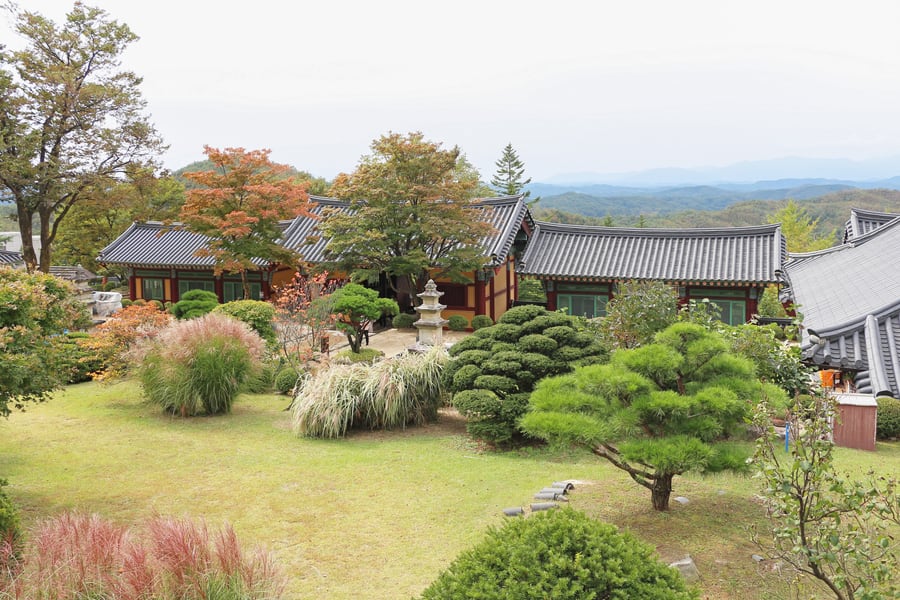
Buseoksa
A mountain temple founded in 676 by the monk Uisang. Its main hall, Muryangsujeon, was rebuilt in 1376 and is the second-oldest wooden building standing in South Korea. Beside it lies the "floating stone" that gives the temple its name: by the legend, a dragon held it in the air over those who tried to stop the building. Buseoksa is one of the seven mountain temples on UNESCO's World Heritage List.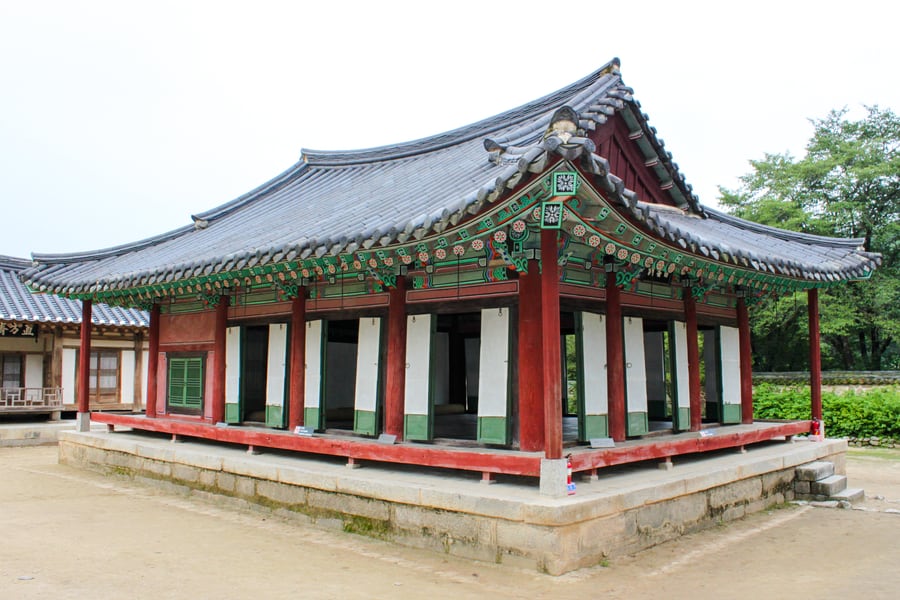 Kwkhh / Wikimedia Commons · CC BY-SA 4.0 · 2012 · cropped
Sosu Seowon
The oldest surviving seowon, the private Confucian academies that trained Joseon's officials. The magistrate Chu Sebung founded it in 1542 as Baegundong Seowon; in 1550 it became the first to be given a name board by the king. It was one of 47 academies spared when the regent closed the rest in 1871, and in 2019 one of nine listed by UNESCO.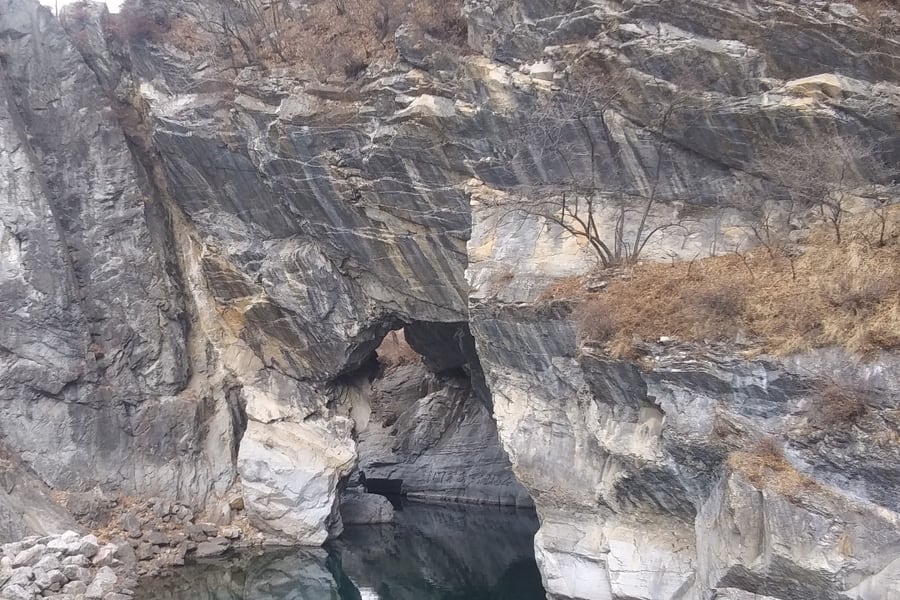 Dittwjfsdgkvkdjg / Wikimedia Commons · CC BY-SA 3.0 · 2021 · cropped
Gumunso
Here the Hwangji stream has cut straight through a limestone ridge where it meets the Cheoram stream, leaving a stone arch over a deep pool. The rock is about 500 million years old, laid down in a shallow sea, and the place has been a natural monument since 2000. A fifteenth-century gazetteer already called it the river that goes through.Where to Sleep
The 08:30 from Yeongju is the only train that runs the whole line in the morning, so the easiest plan is a night in Yeongju before it. At the other end, Cheoram has forest cabins run by the city of Taebaek.
Where to stay
Taebaek Highland Natural Recreation Forest
153 Meorigol-gil, Cheoram-dong
Forest cabins run by Taebaek City at about 700 metres, in the district around Cheoram station, booked through the national recreation-forest site.
Check Availability (opens in a new tab, on foresttrip.go.kr)via foresttrip.go.krQuestions or corrections
Planning this trip and stuck on something, or spotted a time, fare or detail that has changed? Send us a message about The Baekdudaegan Canyon Train. We read every one, and we update this page when something has changed.