Venice Simplon-Orient-Express
Kabelleger / David Gubler / Wikimedia Commons · CC BY-SA 3.0 · cropped
- DistanceParis to Venice, across the Swiss Alps
- Duration1 night · about 25½ hours
- Best seasonMarch to December
Introduction
In 1977 the last Direct Orient Express left Paris for Istanbul, and the Wagons-Lits company let its carriages go. That year James Sherwood, an American businessman, bought two of them at an auction. Over the next few years he spent some US$16 million on 35 sleeping, dining and Pullman cars, most of them built in the 1920s and 1930s, had them restored, and on 25 May 1982 the Venice Simplon-Orient-Express made its first run from London to Venice. Belmond runs it today.
The continental train is eighteen carriages long: twelve sleeping cars, three dining cars, a bar car and two cars for the crew. Each car has its own past, written up on a panel at the end of it, and the cabins come in three kinds: Historic Cabins with a banquette by day and berths by night, Suites with a marble bathroom, and six Grand Suites with a separate lounge. A whole carriage, L'Observatoire, was redesigned by the artist JR.
This page rides Belmond's flagship route, Paris to Venice: one night, from Gare de l'Est in the afternoon, through the Swiss Alps in the morning, down into Italy by Verona, and across the lagoon into Santa Lucia late the next afternoon. Dinner, breakfast, lunch and tea are served on board, and the cabin steward is on call around the clock.
The Journey
The train leaves Gare de l'Est at about four in the afternoon. Luggage that is not needed on board goes into the baggage car at check-in and is not seen again until Venice, so the cabin holds only a small case and a suit carrier. The first evening is the long one: a four-course dinner in one of the dining cars, then the bar car, where the resident pianist plays on into the night.
By breakfast, served in the cabin, the train is in Switzerland, among mountains and glacial lakes. The way across the Alps is not fixed. From 1984 the Venice train ran through Zürich, the Arlberg and the Brenner; since the late 2010s it has gone back to the classic Simplon route going east, or sometimes the Gotthard, and keeps the Brenner and the Arlberg for the return to Paris, when Belmond serves lunch as the Dolomites go by. Either way it calls at Verona, after a three-course lunch. The last hours are for the cabin, with a French goûter of pastries and tea, until the train runs out across the Venetian Lagoon on the viaduct of 1846 and stops at Santa Lucia, on the Grand Canal, at about half past five.
Belmond calls every time approximate: the train is subject to the national railways' constraints, and its times can change at the last minute.
The train and its engines
The carriages are the stars, and Belmond tells their stories. Sleeping car 3425 is the one Belmond links to King Carol, who escaped from Romania aboard the train in 1940. 3544 carried passengers on Le Train Bleu, served as a brothel in the war, and carried Michael Palin on the first leg of Around the World in 80 Days in 1988. The Côte d'Azur dining car of 1929, with its René Lalique glass, spent twenty years in a Wagons-Lits store at Villeneuve before it was rescued in 1981. The Bar Car 3674 began as a dining car.
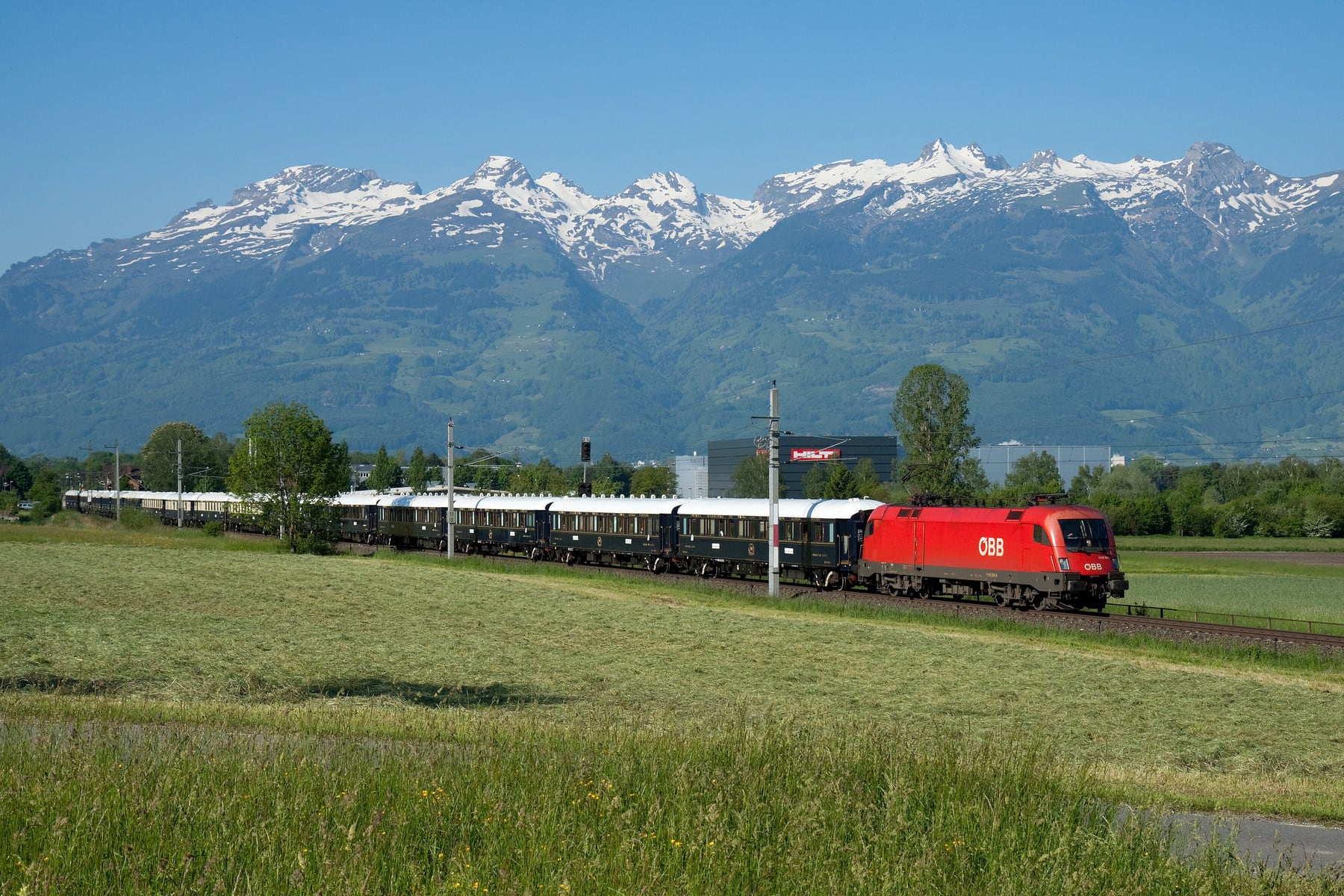
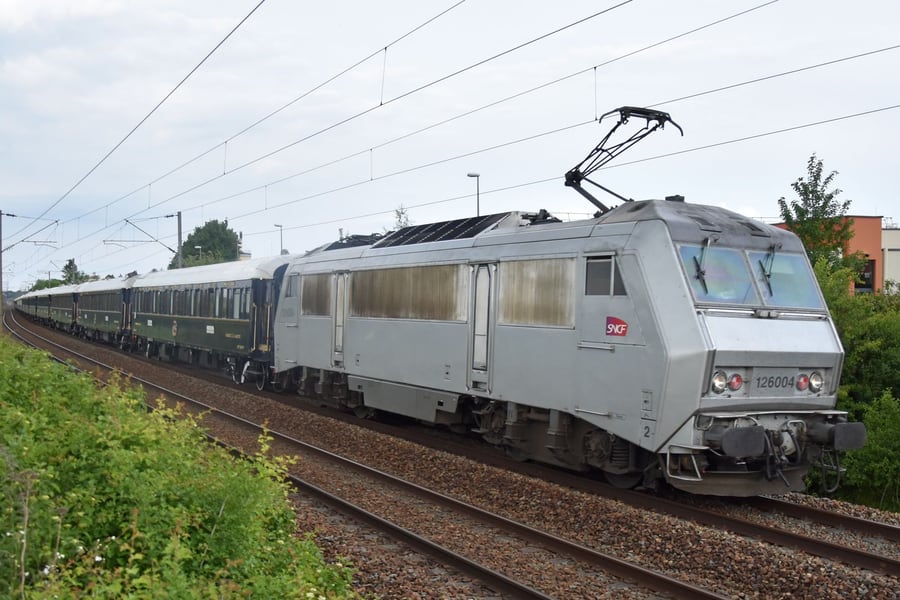
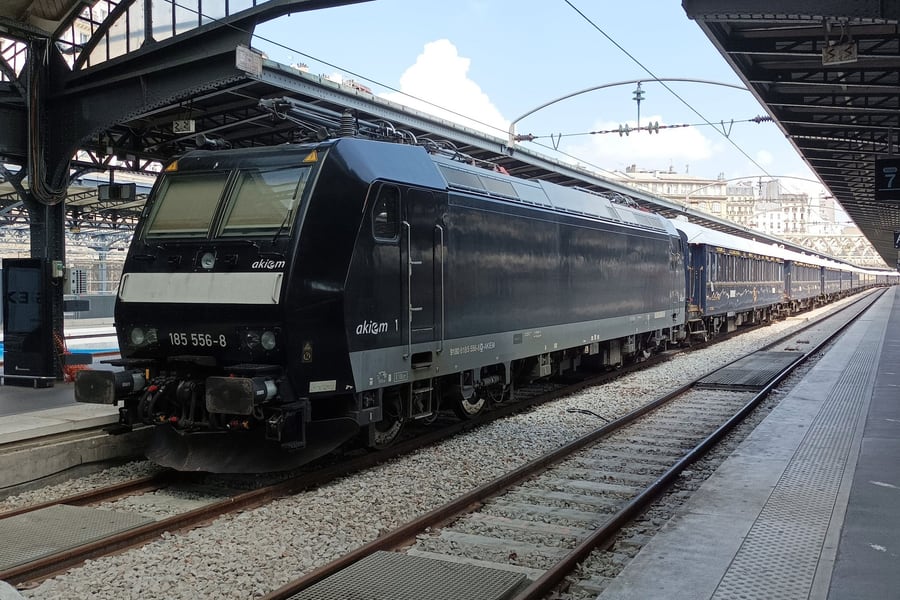
What pulls them changes at every border, because the train owns no locomotives. In France it is usually an SNCF BB 26000, two of them, 26005 and 26009, painted dark blue for special trains; in Switzerland SBB engines; in Austria hired Vectrons, and in years past ÖBB's red Taurus, class 1116; and in Italy, since FS Treni Turistici Italiani took the train on in 2023, its E.402s in a livery that looks back to the old days. In the mid-2000s the cars were given new bogies so that they can run at 160 km/h.
Other journeys on the same train
Paris to Venice is the core of the timetable, and Venice to Paris its return. The same departures also sell Paris to Verona and Verona to Paris, for guests who join or leave at Verona Porta Nuova. Around them Belmond runs one-off journeys: to Florence, Vienna, Budapest, Prague, Cannes and Monaco, from Brussels and Amsterdam, and once a year five nights to or from Istanbul.
In 2027 there is also a single departure from Paris to the Amalfi Coast, on 22 April. It is one night on the train, through France and down Italy, ending at Pompeii at about half past three the next afternoon with a guided visit to the ruins; the guests then go on by car to Belmond's Caruso hotel at Ravello for two nights, with a boat trip to Positano or a painting lesson on the third day.
Along the route
 Eric Salard / Wikimedia Commons · CC BY-SA 2.0
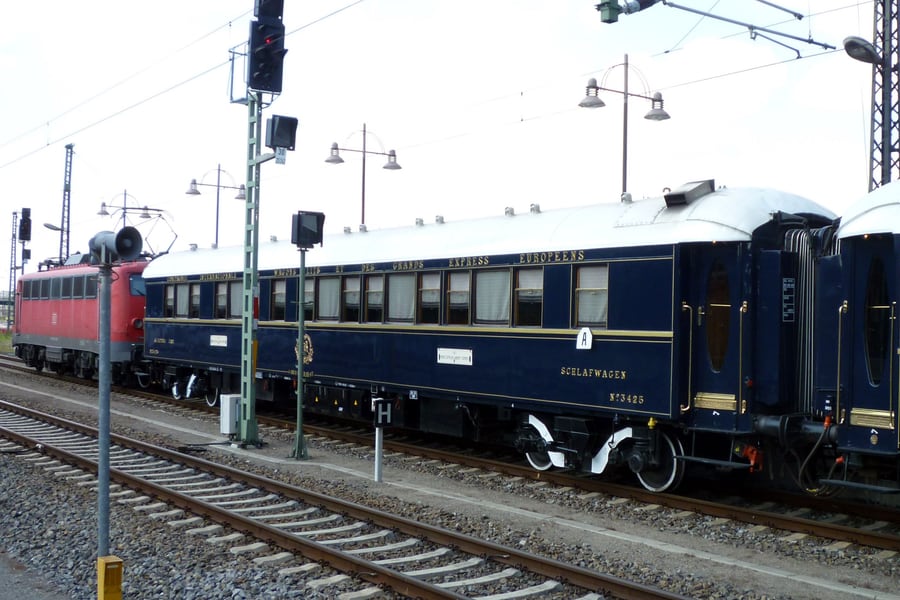
Gare de l'Est at four
The train leaves Gare de l'Est at about 16:00, from the station where the first direct train to Constantinople left in 1889. Belmond drives guests there from their Paris hotel. The train has no engines of its own: each country's railway hauls it.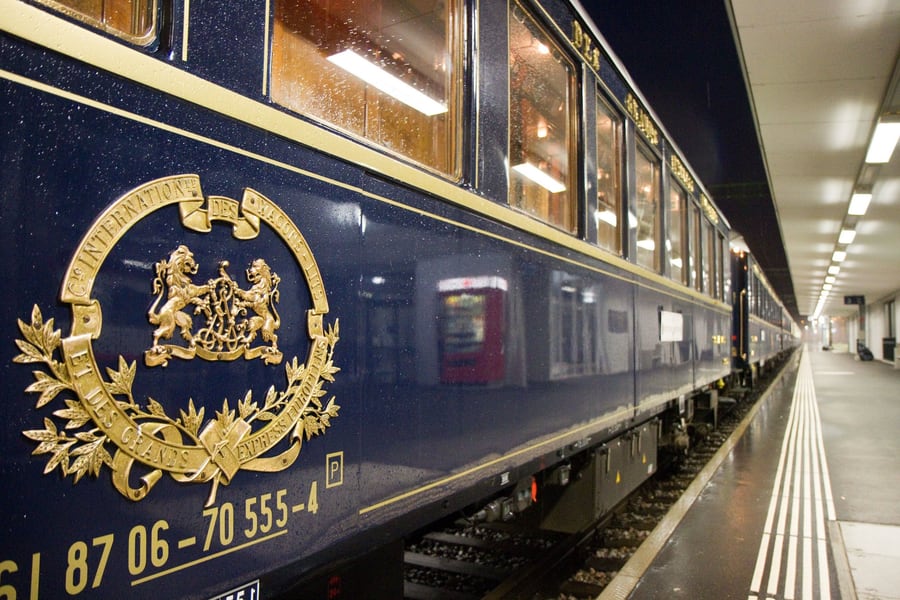 Murdockcrc / Wikimedia Commons · CC BY-SA 4.0
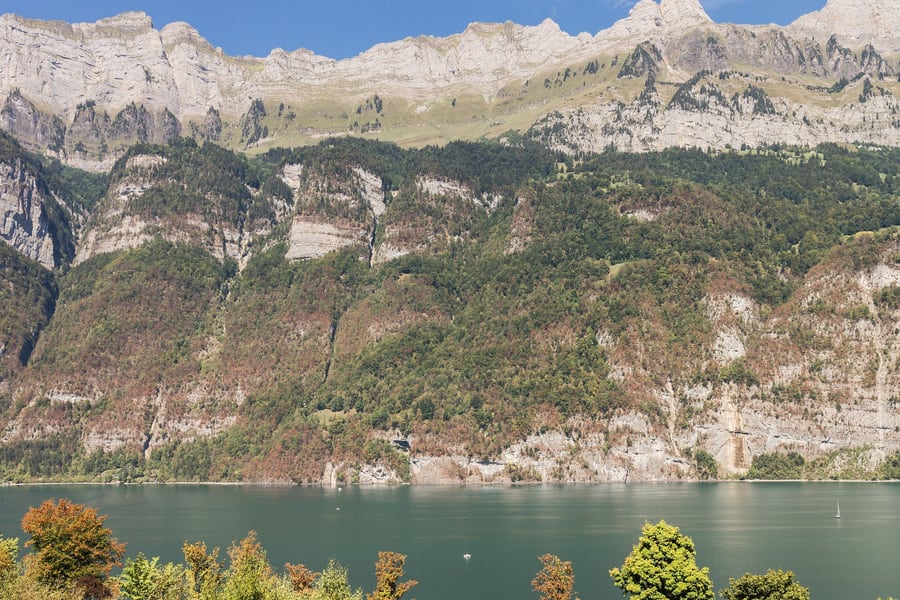
Switzerland at breakfast
Breakfast comes to the cabin as the train crosses Switzerland, with mountains and glacial lakes outside, on its way through the Alps to Italy. The coaches still wear the crest of the Compagnie Internationale des Wagons-Lits.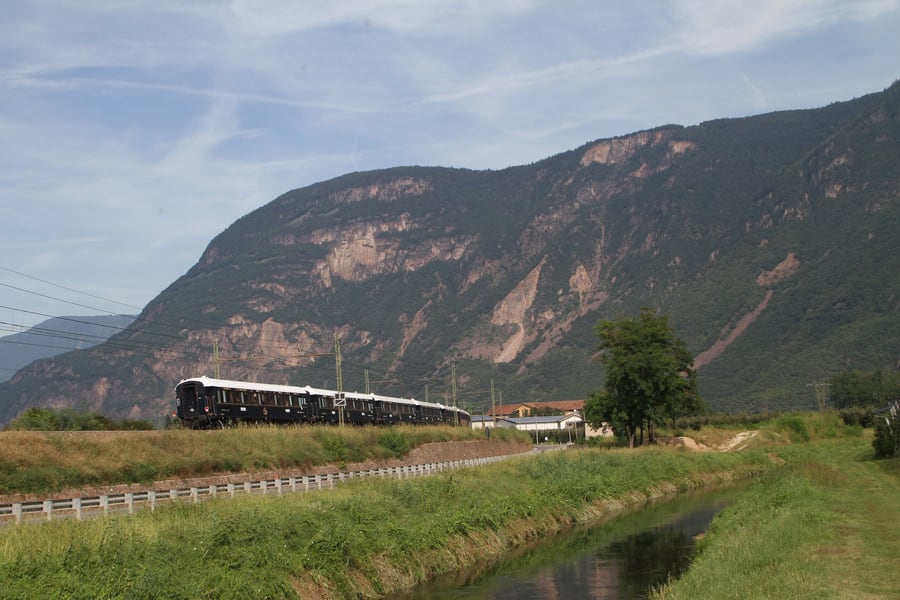 HaSt / Wikimedia Commons · CC BY-SA 4.0 · cropped
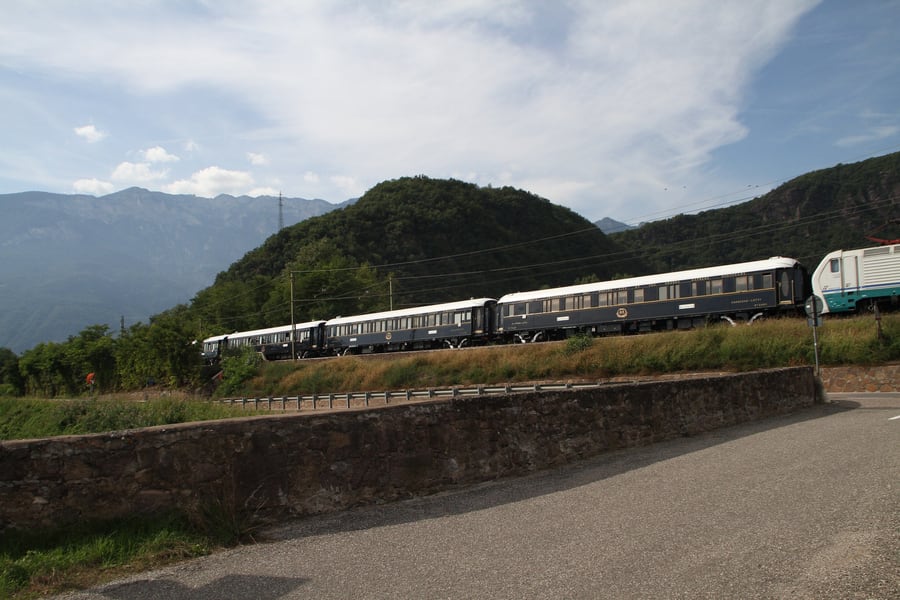
The way back, by the Brenner
Going back to Paris the train leaves Venice at about 11:00 and heads north up the Adige valley past Trento and Bolzano, over the Brenner and the Arlberg, the route it has taken since 1984. Belmond serves lunch as the Dolomites go by.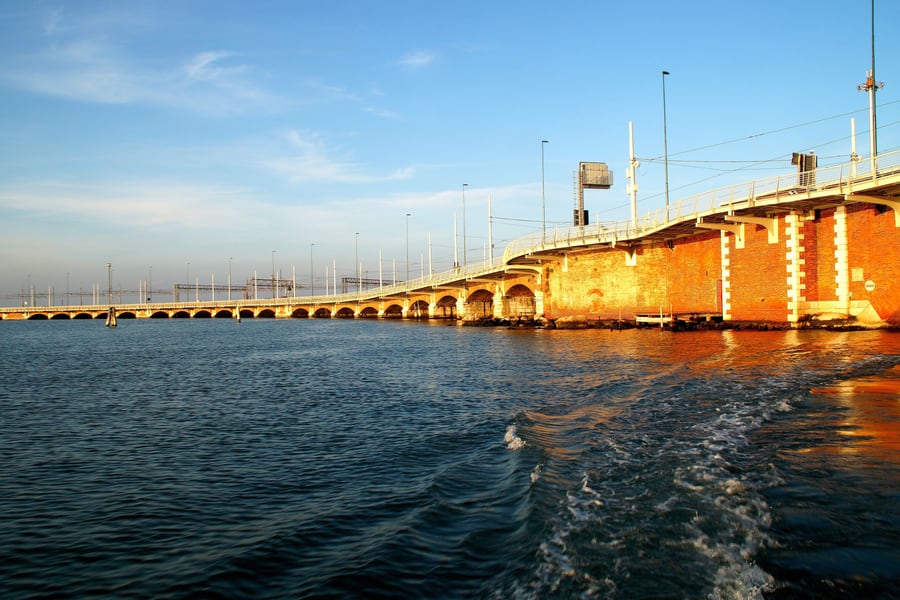 TheRunnerUp / Wikimedia Commons · CC BY-SA 4.0
Across the lagoon
After a French goûter in the cabin, the train crosses the Venetian Lagoon on the railway viaduct of 1846, beside the road bridge of 1933, and ends at Santa Lucia at about 17:30, on the Grand Canal.A bit of history
Culture & experiences along the way
 Epistola8 / Wikimedia Commons · CC BY-SA 4.0
Dinner in a 1920s dining car
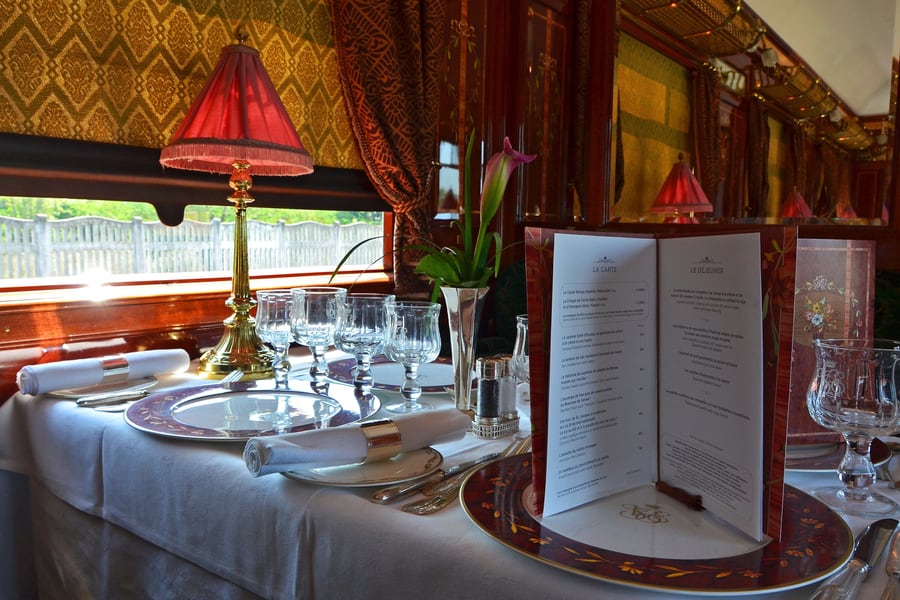
Dinner is four courses with the sommelier's wines, from foie gras to lobster, with Petrossian caviar as an extra. The Côte d'Azur car of 1929 has René Lalique's glass panels; the Étoile du Nord of 1926 its marquetry. Belmond asks for formal evening wear, and many guests dress in black tie.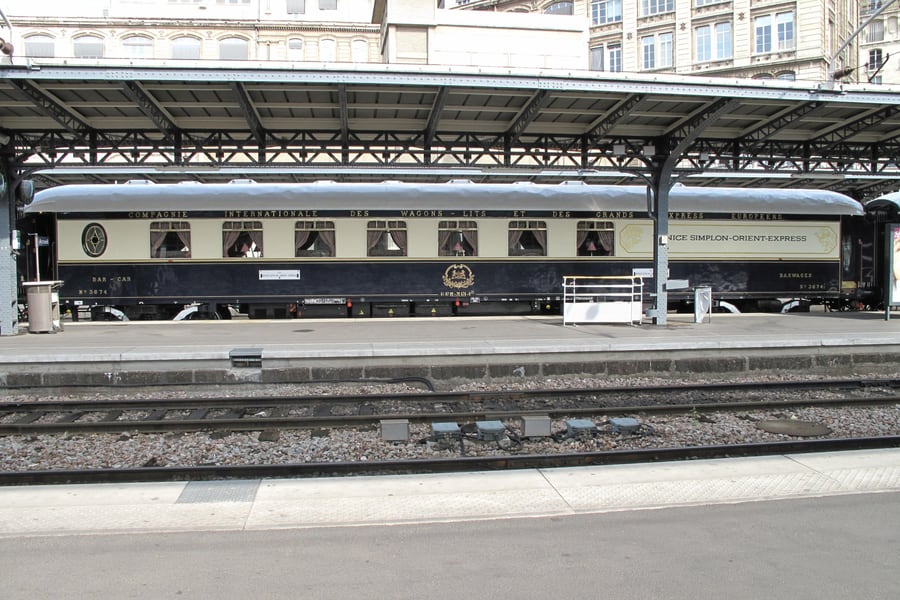 Tangopaso / Wikimedia Commons · CC BY-SA 3.0 · cropped
The piano in Bar Car 3674
The train's social heart is Bar Car 3674, rebuilt from a dining car by Gérard Gallet in Art Nouveau style, with a mahogany bar, etched mirrors and brass. A resident pianist plays the grand piano while the barmen shake cocktails, and the evening ends with a midnight brunch.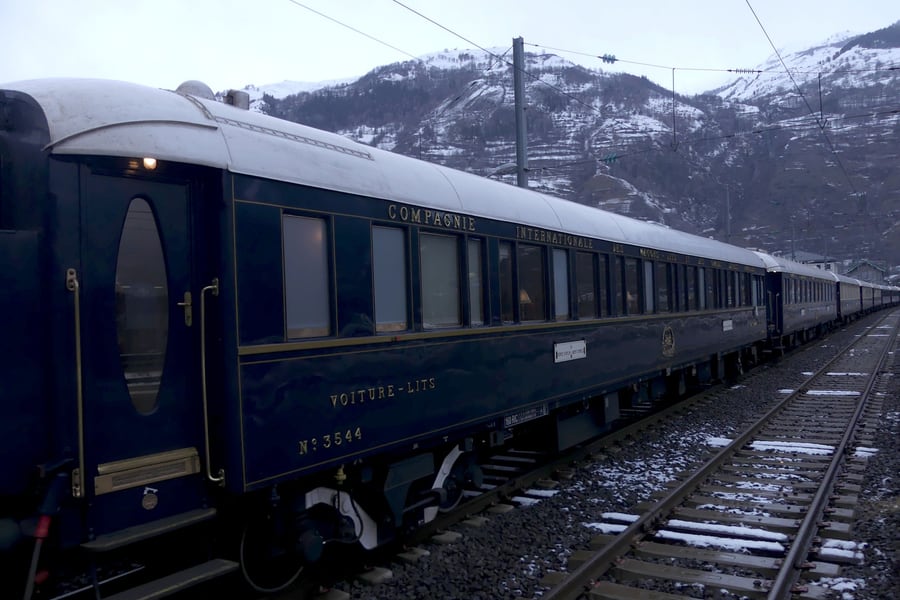 Florian Pépellin / Wikimedia Commons · CC BY-SA 4.0 · cropped
Read the end of the car
A panel at the end of each carriage tells its story. Car 3544 ran on Le Train Bleu and served as a wartime brothel; Michael Palin slept in it in 1988. Belmond says 3309, now a Grand Suite, was marooned in a snowdrift in 1929, the winter that gave Agatha Christie her plot.Timetables
The Venice Simplon-Orient-Express runs on fixed dates, about once a week each way from March to December, with no departures in January and February. Every journey is one night, and Belmond gives the times as estimates: the train runs as a special over the national railways and can be retimed at the last minute.
| Direction | Leaves | Arrives, next day |
|---|---|---|
| Paris → Venice | Paris Gare de l'Est, about 16:00 | Venezia Santa Lucia, about 17:30 |
| Venice → Paris | Venezia Santa Lucia, about 11:00 | Paris Gare de l'Est, about 13:00 |
The same trains also call at Verona Porta Nuova, and Belmond sells Paris to Verona and Verona to Paris on every date below.
Departures to the end of 2027
Days of the month each train leaves.
| Month | Paris → Venice | Venice → Paris |
|---|---|---|
| November 2026 | 19*, 28 | 17, 26 |
| December 2026 | 20 | 12 |
| March 2027 | 11, 21, 25 | 9, 23, 30 |
| April 2027 | 1, 12, 18, 27 | 5, 16, 20, 25 |
| May 2027 | 5, 15, 20 | 3, 13, 18, 22, 29 |
| June 2027 | 14*, 20, 24, 30 | 18*, 28* |
| July 2027 | 9*, 15, 29 | 13, 27 |
| August 2027 | 24*, 30 | 17*, 28 |
| September 2027 | 9, 13, 23 | 2, 7, 17, 21, 28 |
| October 2027 | 14, 25, 30* | 19*, 28 |
| November 2027 | 4, 11, 18 | 2, 9, 15, 26 |
| December 2027 | 6, 22 | 4, 11 |
* Sold out in November 2026.
The booking calendar already runs to October 2028. Other dates carry the train on special routes, by Florence, Cannes and Monaco, or Brussels and Amsterdam, and those are sold as separate journeys.
Dates and times as of November 2026, from Belmond's list of all departures (opens in a new tab).
Tickets
Every journey is sold by Belmond, online or through its reservations team, and priced per person. The price covers the cabin, a four-course dinner with the sommelier's wines, breakfast, lunch, the steward and a car between your hotel and the station. The lowest published fare for 2027 is €4,510 in a Historic Cabin; Suites and Grand Suites, which add a private marble bathroom, cost more. Drinks in the bar are paid in euros on board, and tips are at your discretion.
Dress up: Belmond asks for formal evening wear at dinner, smart clothes by day, and jeans at no time. Bring one suitcase for the baggage car, plus a small bag and a suit carrier for the cabin. Children are welcome, and infants under two travel free. Prices as of November 2026.
Book your tickets
Paris to Venice
1 night · Paris about 16:00, Venice about 17:30 the next day
The journey on this page, with dinner, breakfast, lunch and goûter on board.
Book Tickets (opens in a new tab, on Belmond)via BelmondVenice to Paris
1 night · Venice about 11:00, Paris about 13:00 the next day
The same train the other way, by the Dolomites and the Arlberg.
Book Tickets (opens in a new tab, on Belmond)via BelmondParis to the Amalfi Coast and Caruso
3 nights · one on the train, two at Caruso, Ravello · 22 April 2027
A single departure that leaves the train at Pompeii and goes on by car to Ravello.
Book Tickets (opens in a new tab, on Belmond)via BelmondRail Passes
No rail pass covers the Venice Simplon-Orient-Express. It is sold only by Belmond, as a cabin with every meal included, so there is no seat for a pass to buy, and it does not appear in Interrail's table of covered railway companies.
A pass can still be useful around it. Interrail and Eurail cover SNCF's TGVs into Paris and Trenitalia's Frecce, Intercity and regional trains out of Venice, so a traveller arriving in Paris by train, or going on from Santa Lucia across Italy, can use one for those legs.
Checked November 2026 against Interrail's table of railway companies (opens in a new tab).
Places to Visit
The train arrives in Venice late in the afternoon, so the evening and the next day are for the city; in Paris, the stations of the east and north sit side by side, a short walk from the Canal Saint-Martin.
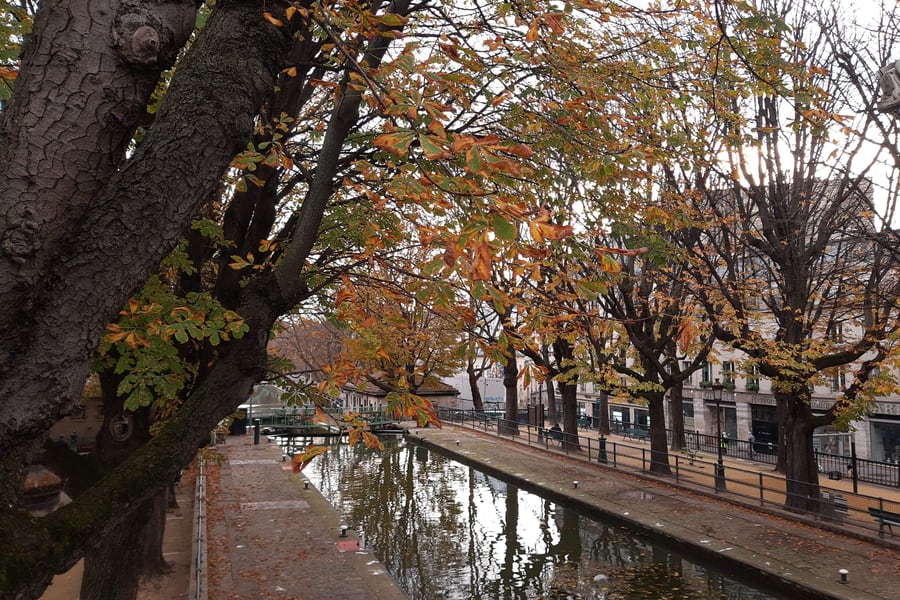 Gerda Arendt / Wikimedia Commons · CC0
The Canal Saint-Martin
A 4.6-kilometre canal from the Canal de l'Ourcq to the Seine, ordered by Napoleon in 1802 and paid for with a new tax on wine. Its double locks, about 500 metres east of Gare de l'Est, are where Amélie skips stones in the 2001 film. Nearly half its length was covered over in the 19th century and runs under the boulevards towards the Bastille.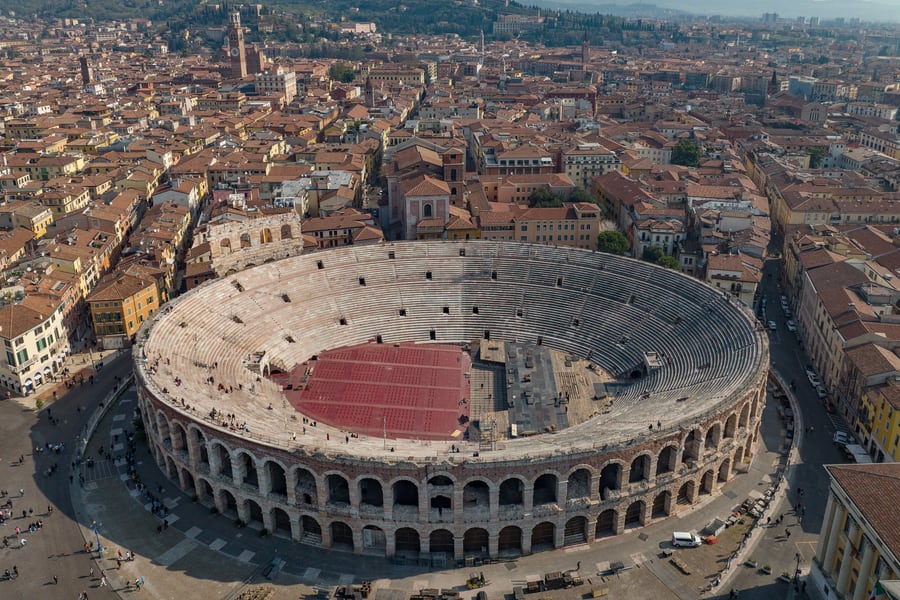 Arne Müseler / Wikimedia Commons · public domain
The Verona Arena
A Roman amphitheatre, probably finished around 30 AD, and among the best preserved anywhere. It survived the earthquakes of 1116 and 1117, and its arches of red ammonitic limestone still stand three tiers high. Opera has filled it every summer since 1913, wars aside: the world's largest open-air opera venue, for some 22,000 people a night.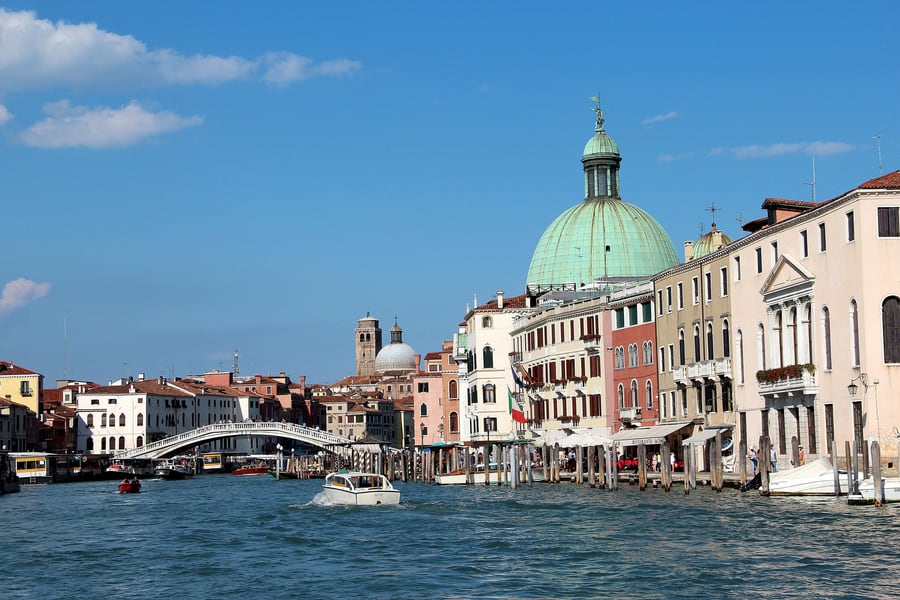 Jean-Pol GRANDMONT / Wikimedia Commons · CC BY 4.0
The Grand Canal
Venice's main waterway starts at the steps of Santa Lucia station and winds 3.8 kilometres in a reverse S to the basin of San Marco, 30 to 90 metres wide, lined with palaces. The green dome across the water is San Simeone Piccolo, the church that faces the station where most visitors first arrive in the city.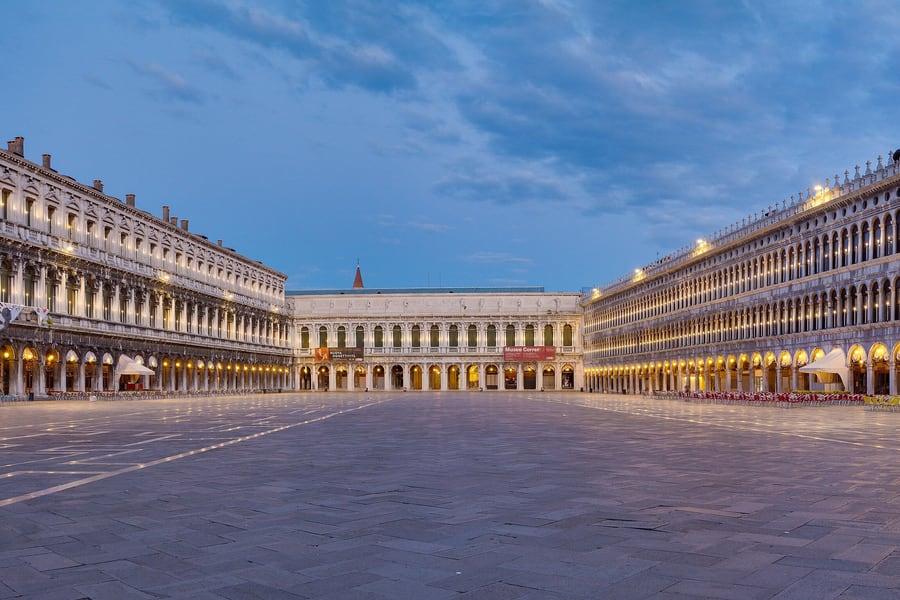 Benh LIEU SONG / Wikimedia Commons · CC BY-SA 2.0 · cropped
Piazza San Marco
The principal square of Venice, known simply as la Piazza, which with the Piazzetta running down to the basin forms the city's social, religious and political centre. The remark that calls it "the drawing room of Europe" is usually put in Napoleon's mouth, though nobody has proved he said it. At dawn it is almost empty.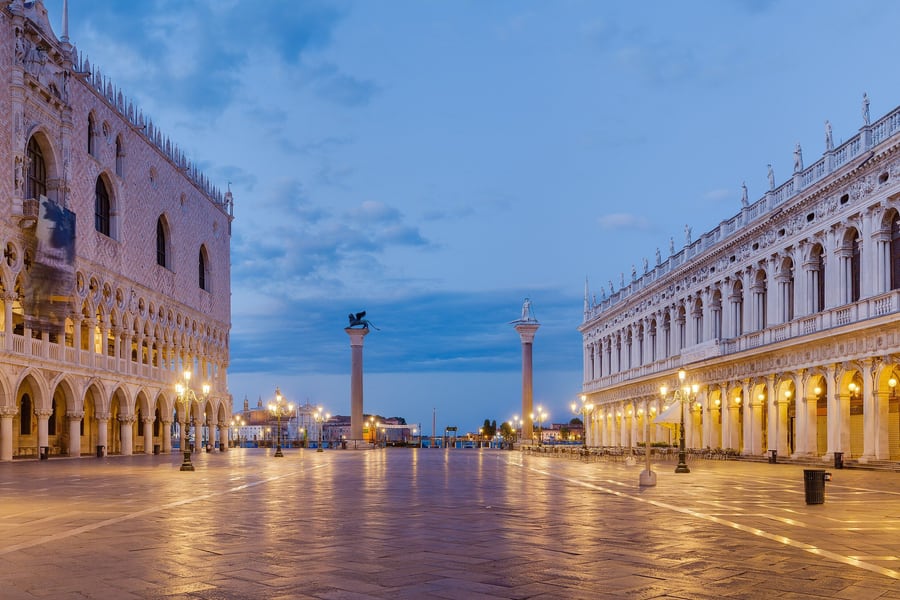 Benh LIEU SONG / Wikimedia Commons · CC BY-SA 2.0 · cropped
The Doge's Palace
The Venetian Gothic palace of the Republic's elected Doge, which held his residence, the government's offices and a jail. First built in 810 and rebuilt from 1340, it has been a museum since 1923. It stands on the Piazzetta, the extension of the square towards the basin of San Marco.Where to Sleep
Belmond drives guests from their Paris hotel to Gare de l'Est and, at the other end, from Santa Lucia to their hotel in Venice, so the hotel can be anywhere in either city.
Where to stay
 Wolfgang Jung / Wikimedia Commons · CC BY-SA 2.0
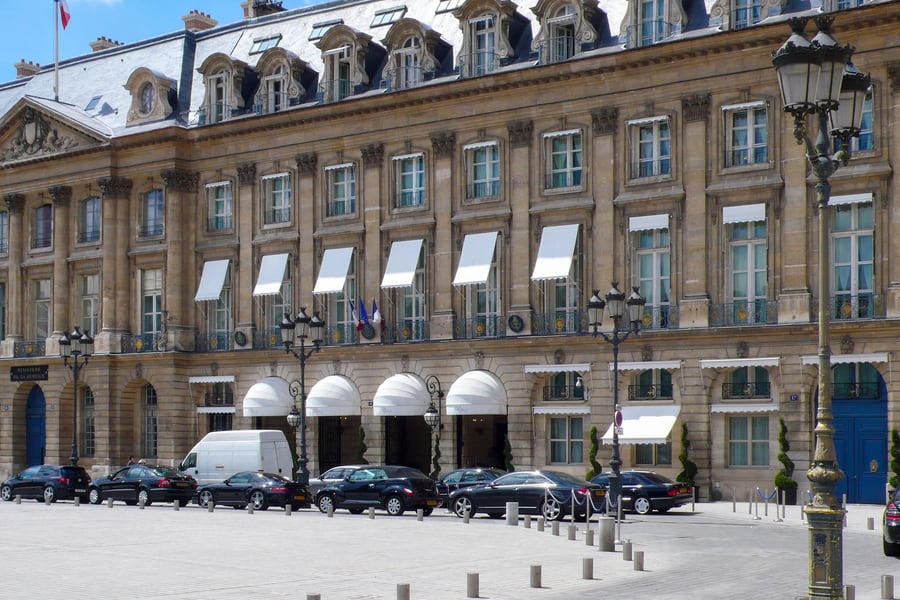
Ritz Paris
Place Vendôme, Paris
Founded in 1898 by César Ritz with the chef Auguste Escoffier, behind the façade of an 18th-century town house on the Place Vendôme.
Check Availability (opens in a new tab, on ritzparis.com)via ritzparis.com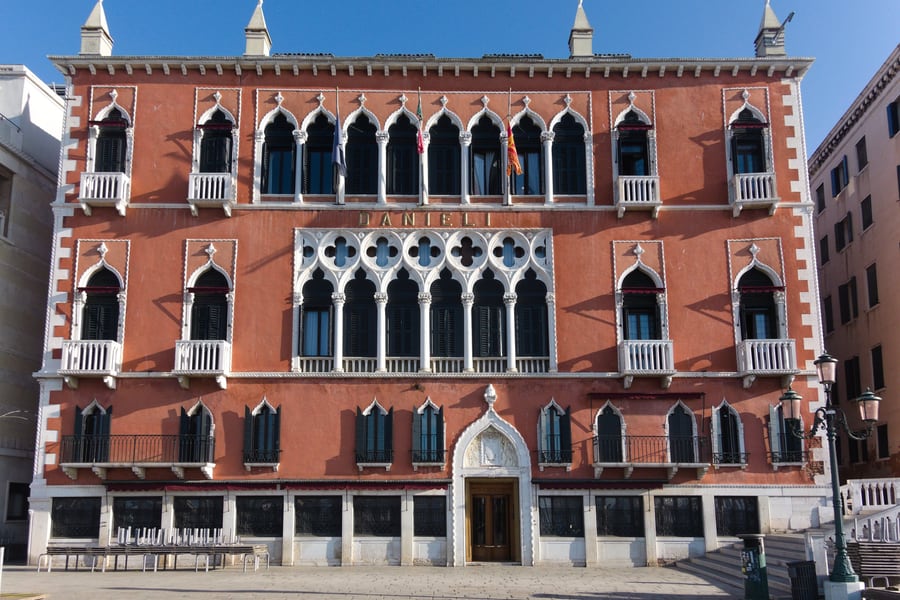 Lusi Lindwurm / Wikimedia Commons · CC BY-SA 4.0 · cropped
Danieli, Venezia
Riva degli Schiavoni, Venice
A 14th-century palace of the Dandolo family, a hotel since 1822 and run by Four Seasons since July 2026, steps from Piazza San Marco.
Check Availability (opens in a new tab, on fourseasons.com)via fourseasons.comQuestions or corrections
Planning this trip and stuck on something, or spotted a time, fare or detail that has changed? Send us a message about Venice Simplon-Orient-Express. We read every one, and we update this page when something has changed.