The Wałbrzych–Kłodzko Railway
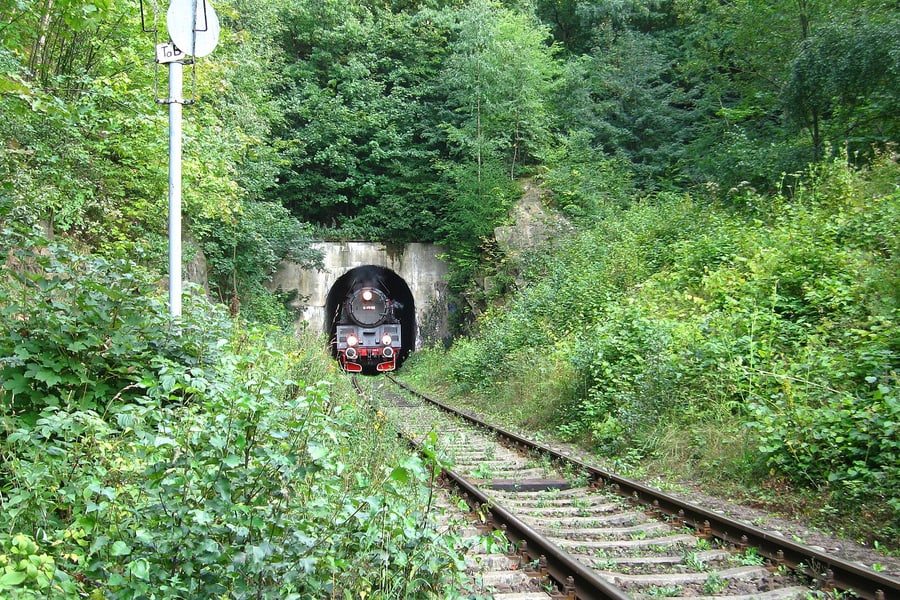
MOs810 / Wikimedia Commons · CC BY-SA 4.0 · cropped
- Distance52 km · part double track, part single
- DurationAbout 1 hour 10 minutes
- Best seasonAll year
Introduction
On 8 May 1945, the day Germany surrendered, retreating German troops blew up the longest viaduct on the railway from Wałbrzych to Kłodzko, where it crosses Zatorze in Nowa Ruda. That same week, a few kilometres up the line at Ludwikowice Kłodzkie, two signalmen took the charges off the next great bridge themselves.
The difference between those two bridges is still in the track. The line has two tracks as far as the viaduct the signalmen saved, and just beyond it they become one. The destroyed viaduct came back with steel spans for a single track, and the second was never put back.
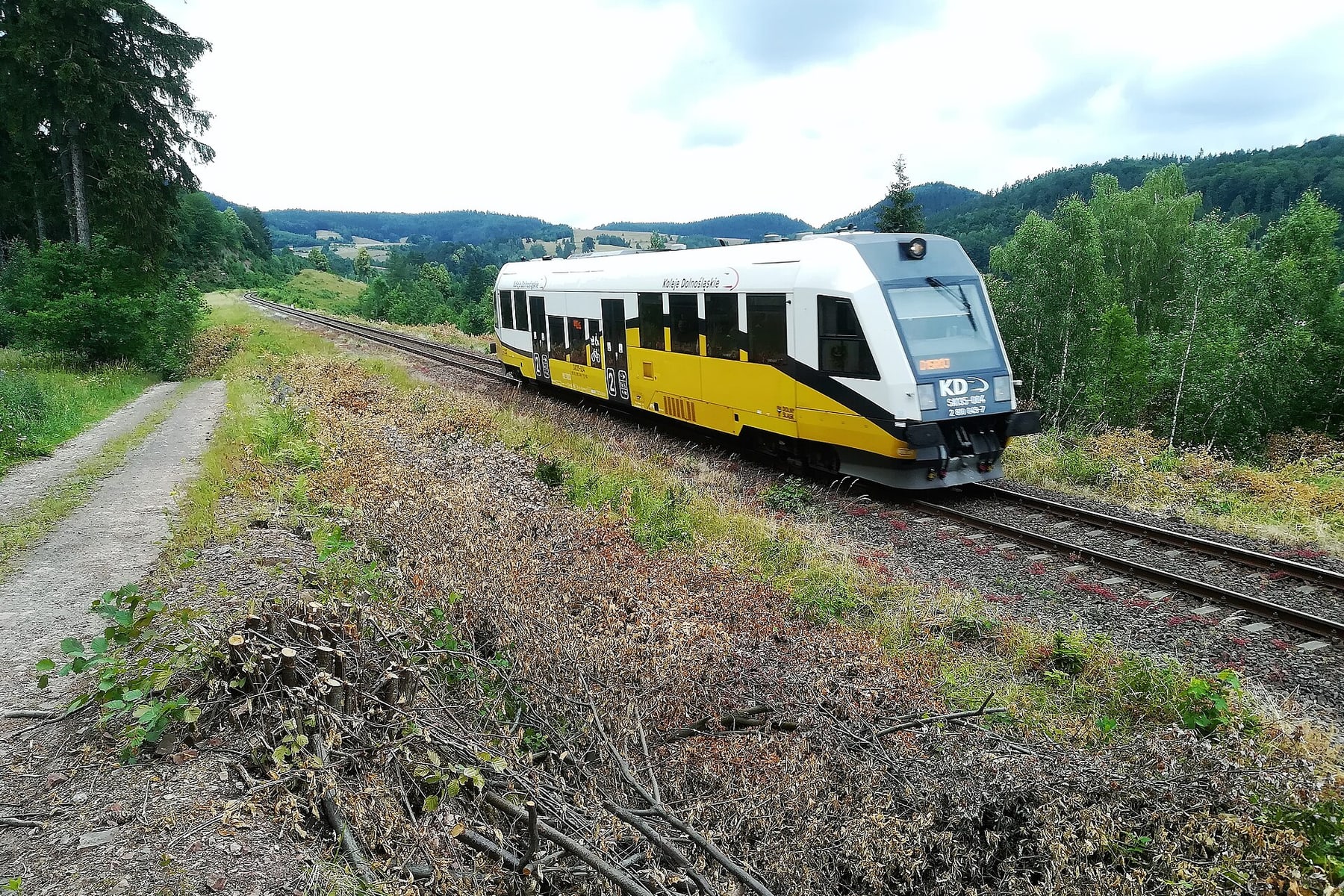
The railway is 52 kilometres long. The Prussian state built it between 1876 and 1880 as part of a route from Berlin to Vienna about 120 kilometres shorter than the way through Dresden and Prague, and getting it across the Central Sudetes took three tunnels, nine large bridges and 45 viaducts. The new frontier of 1945 ended the through traffic. Today it is a quiet regional line, worked by diesel railcars with seven through trains a day each way, and the journey takes a little over an hour.
The Journey
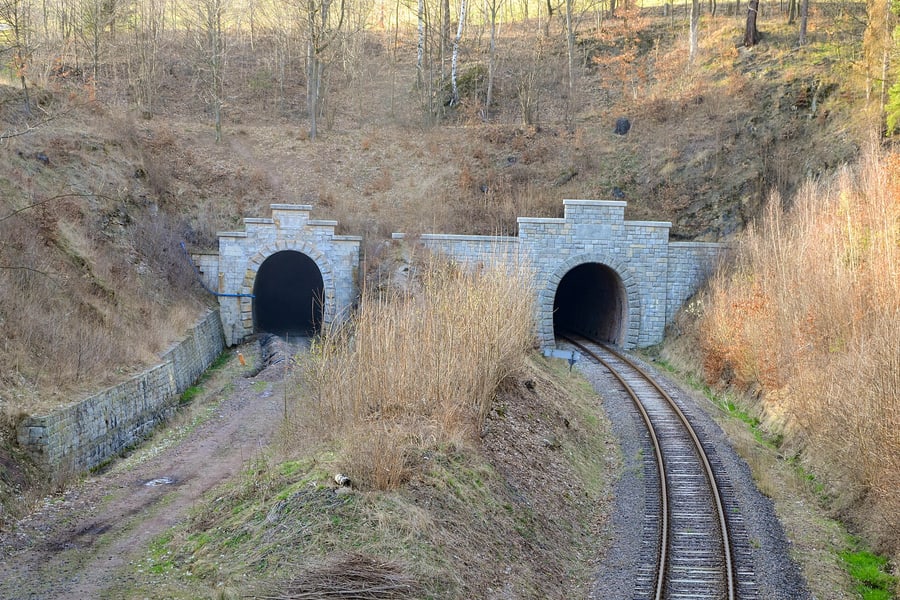
Wałbrzych Główny stands at 507 metres, in a former coal city. Within minutes of leaving, the train crosses a viaduct 148 metres long and almost 30 metres high and enters the tunnel under Mały Wołowiec, about 1,600 metres long and the longest on the line. Each of the three tunnels has a twin alongside it, bored when a second track was added between 1909 and 1913.
Through Jedlina-Zdrój, a small spa town, and a 377-metre tunnel under Sajdak, the line reaches Głuszyca in its valley, then climbs again to the summit at Bartnica, 537 metres above the sea. A 1,186-metre tunnel under Świerkowa Kopa carries it from the Stone Mountains into the Owl Mountains. For all this, the average gradient is only 4.3 per thousand: the Prussian engineers bought an easy climb with embankments, cuttings and bridges.
Two bridges in one week of May
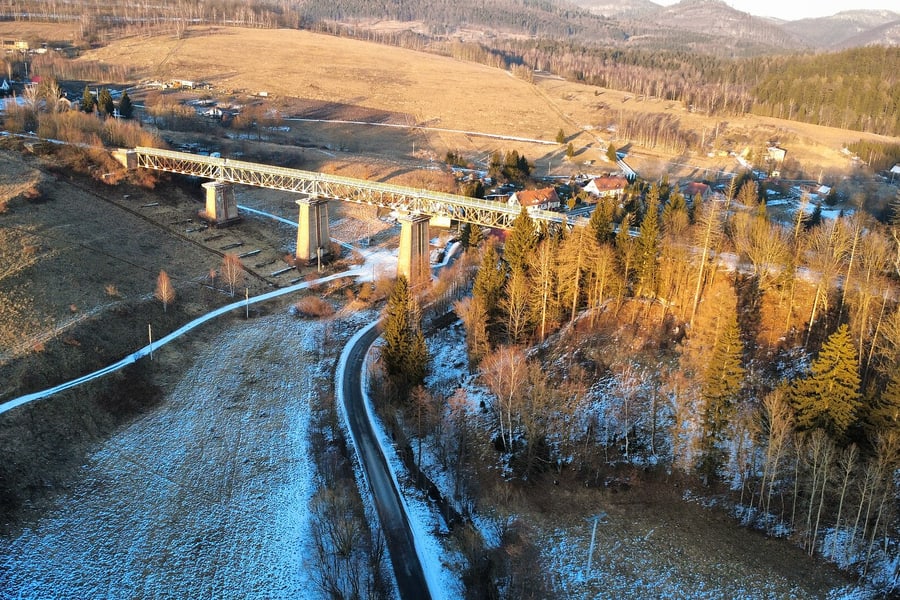
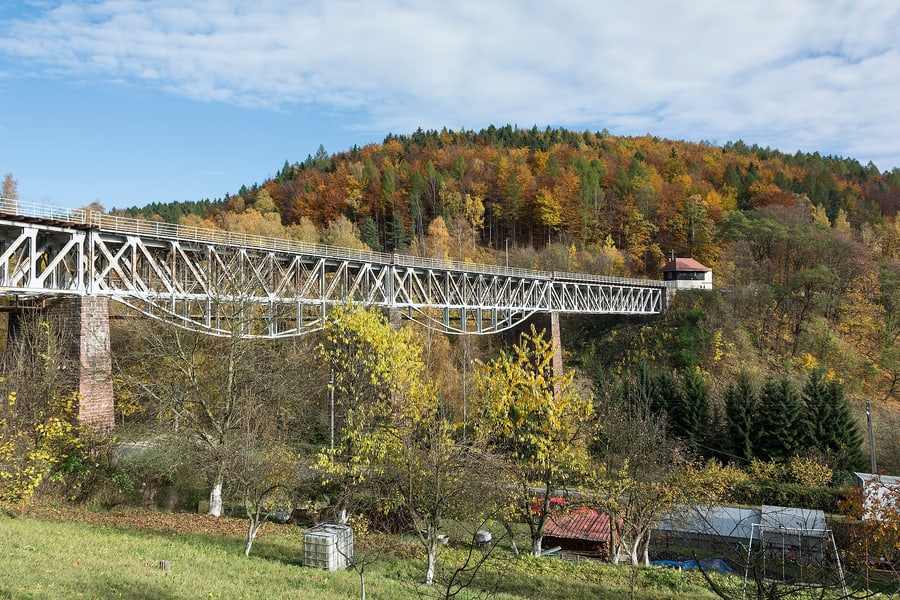
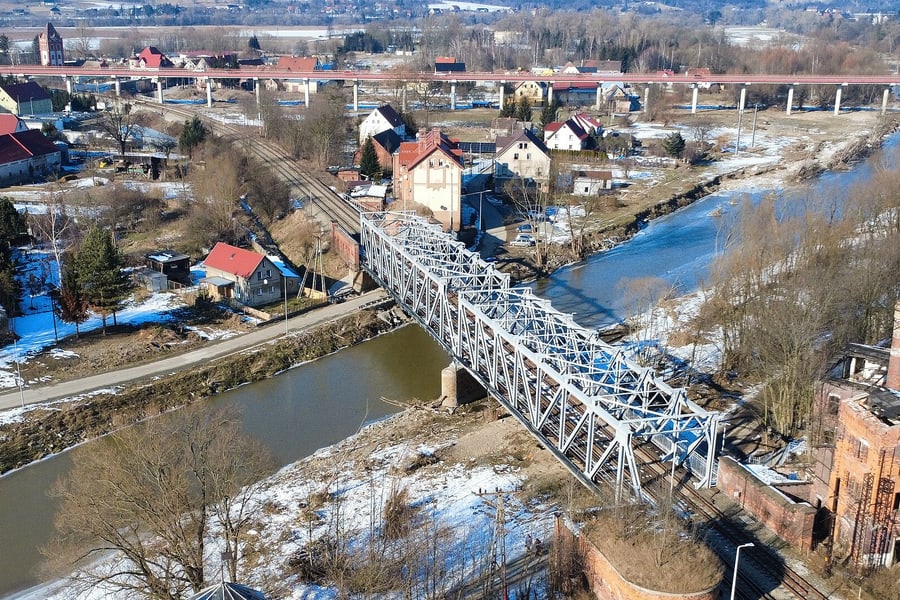
Ludwikowice Kłodzkie has the second-longest bridge on the line, 165 metres long and 31 high, with steel spans on stone piers. In the first days of May 1945 the Wehrmacht prepared to destroy it. Local people are said to have protested, and two station signalmen, Fritz Ansorge and Alfred Hilbig, took the charges off themselves. Both tracks still cross it, and on the far side the line narrows to one.
Next comes the Zdrojowisko viaduct, and then the one that did not survive. On 8 May 1945, around eight in the evening, the 185-metre viaduct over Zatorze was blown up with aerial mines, not all of which went off. The line could no longer be worked as one railway. A timber span by the engineer Ptaszyński opened in 1946, and its creaking earned it the name most na zapałkach, the bridge on matchsticks. Accounts differ on the crossing: Lower Silesia's heritage route records how it frightened passengers aboard, while a local history site and a 2024 National Geographic Traveler article say the trains crossed empty and people boarded again on the far side. Concrete piers and steel spans for one track replaced it at the end of the 1940s.
The last of the series, just before Nowa Ruda, is the Black Bridge over the Woliborka, 149.5 metres long and 35 metres above the water, thought to be the highest viaduct in Prussia when it was built. It now carries one track too.
From Nowa Ruda the second track resumes, and the line runs down the valleys of the Włodzica and the Ścinawka, crosses the Nysa Kłodzka and ends at Kłodzko Główne, 220 metres above the sea.
The trains
Koleje Dolnośląskie, the Lower Silesian regional operator, has run the passenger service since 5 January 2009. It uses Pesa diesel railcars of classes SA134 and SA135, painted yellow, white and black, with some SA139 units. Stone from the quarries along the route also leaves by rail, and steam specials appear from time to time.
A line on the reserve list
Passenger trains stopped on 31 March 2006 and came back in January 2009. In November 2025 the Ministry of Infrastructure told parliament that one of the two tracks between Kłodzko Główne and Ścinawka Średnia is closed by order of the rail regulator until 30 June 2029. Maintenance is pencilled in for 2027, and a project to upgrade the whole line sits on a reserve list with no money behind it.
Along the route
 Mateusz Małkowski / Wikimedia Commons · CC BY 4.0 · cropped
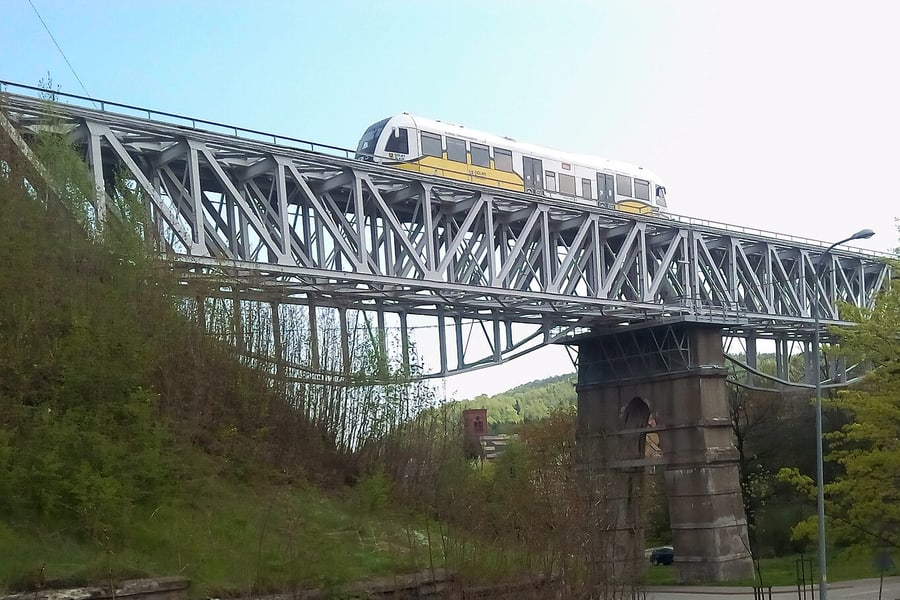
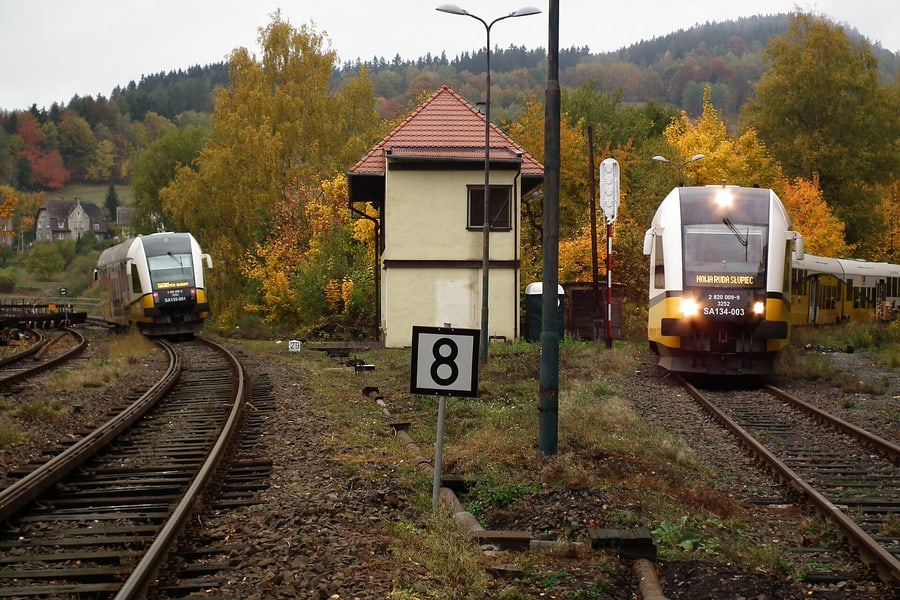
The Mały Wołowiec tunnel
Minutes out of Wałbrzych the line goes under Mały Wołowiec for about 1.6 kilometres. Two portals stand side by side here, the second bored when a second track was added early in the twentieth century.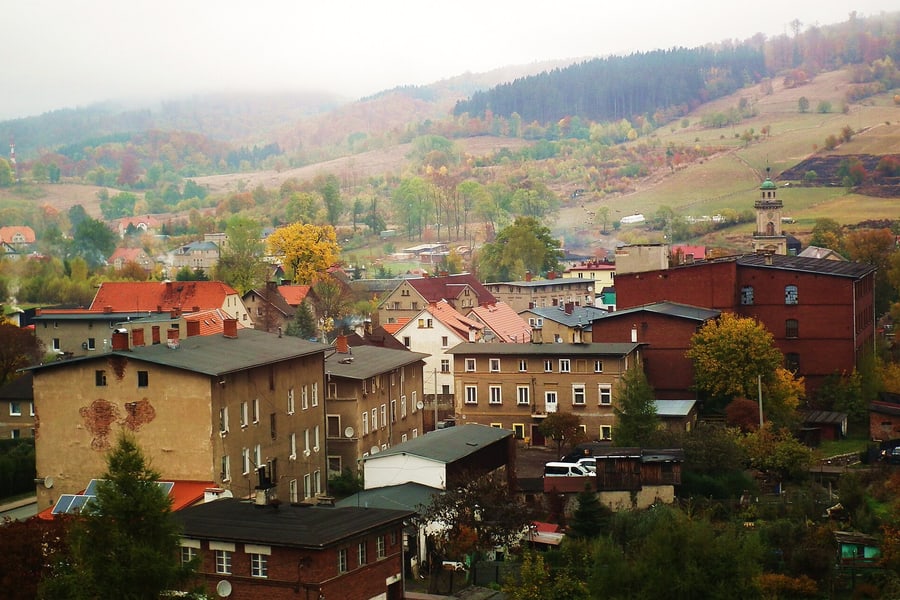 MOs810 / Wikimedia Commons · CC BY-SA 4.0 · cropped
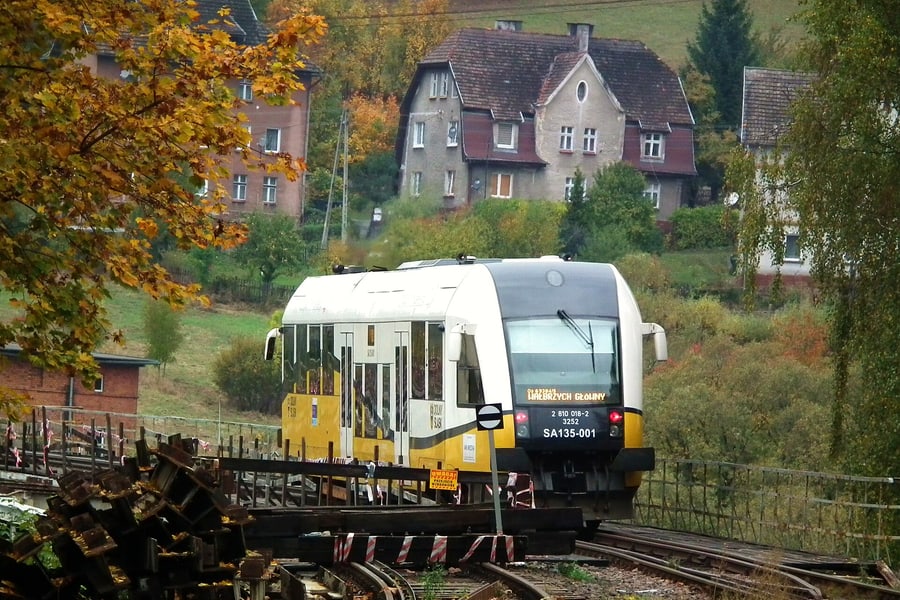
Głuszyca
A small town in a valley at 485 metres, seen here from the train. From its station the line climbs again to the summit of the route at Bartnica, 537 metres above the sea.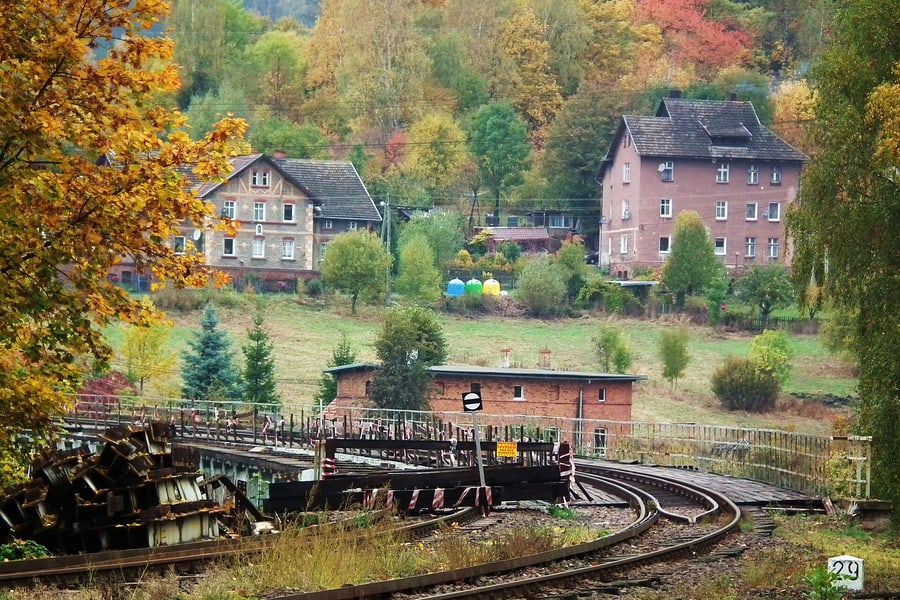 MOs810 / Wikimedia Commons · CC BY-SA 4.0 · cropped
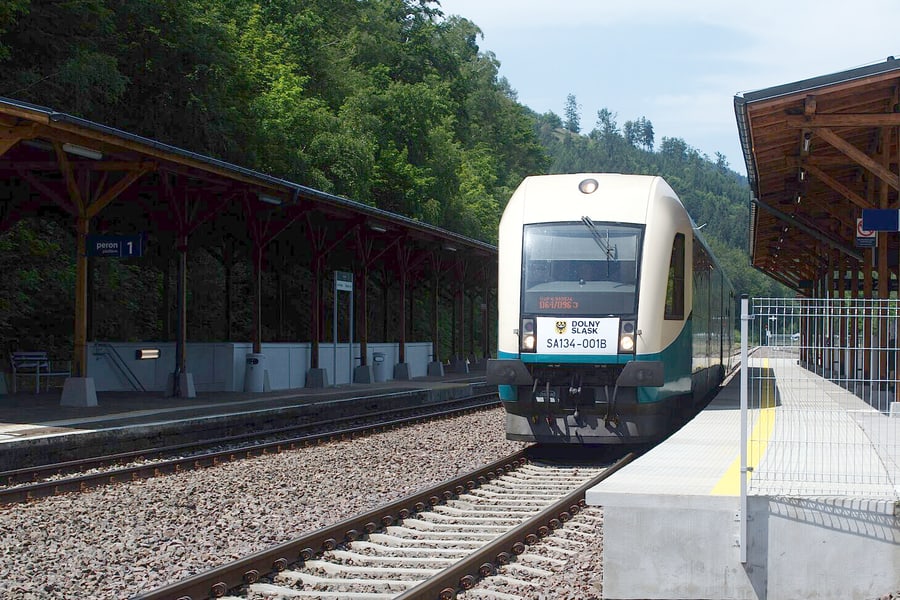
Ludwikowice Kłodzkie
Trains cross the viaduct that two signalmen saved in 1945 and stop beside it. Just beyond the station the double track gives way to a single one for the run into Nowa Ruda.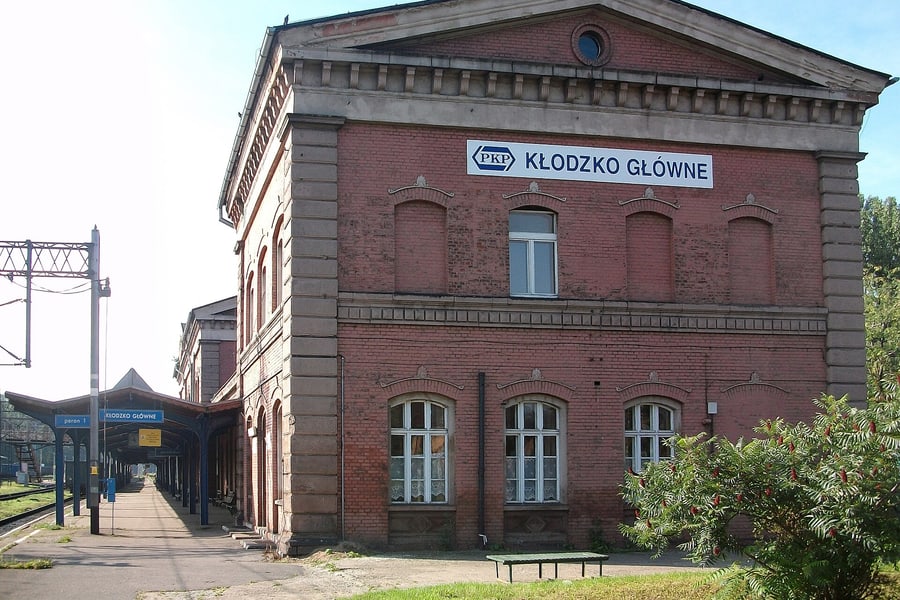 Daniel Denys / Wikimedia Commons · CC BY-SA 3.0 · cropped
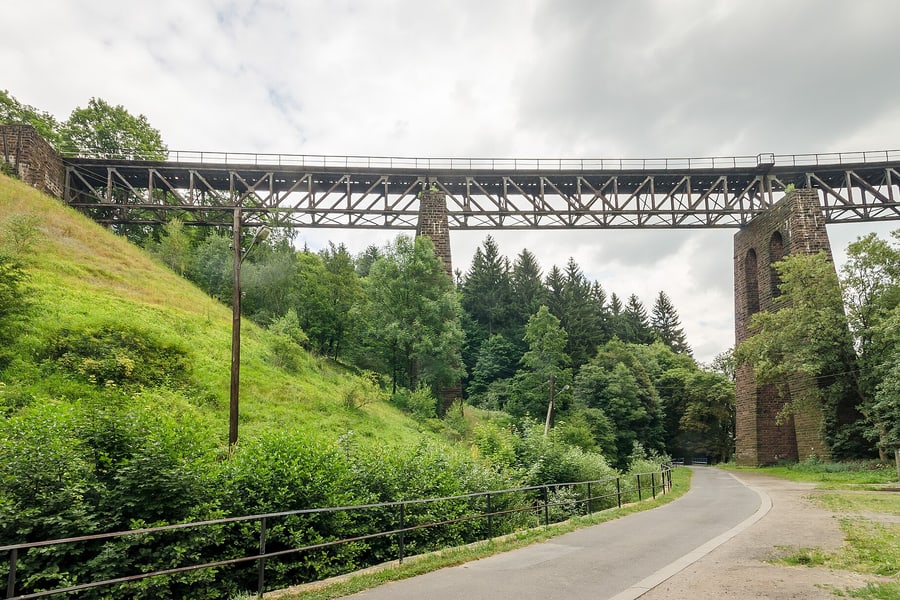
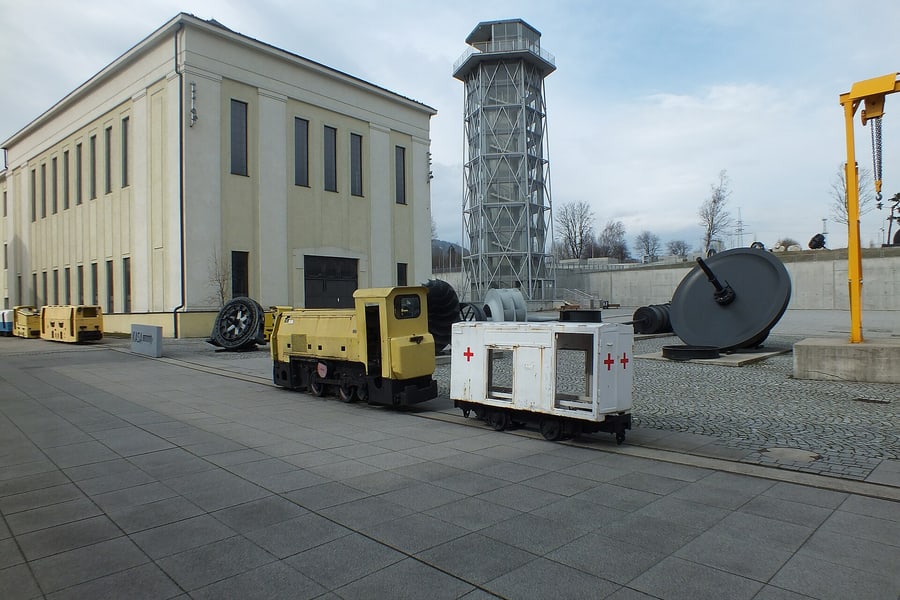
Kłodzko Główne
The end of the line at 220 metres, 287 metres below Wałbrzych Główny. The large brick station is also on the main line from Wrocław towards the Czech border at Międzylesie.A bit of history
Culture & experiences along the way
 Aw58 / Wikimedia Commons · CC BY-SA 4.0 · cropped
The Old Mine at Wałbrzych
The Julia coal mine, whose main shaft reaches 611 metres, reopened in November 2014 as a centre for science, culture and art. Visitors can walk through the lamp room and the winding-engine house, climb to the headframe and look over the mine locomotives standing in the yard.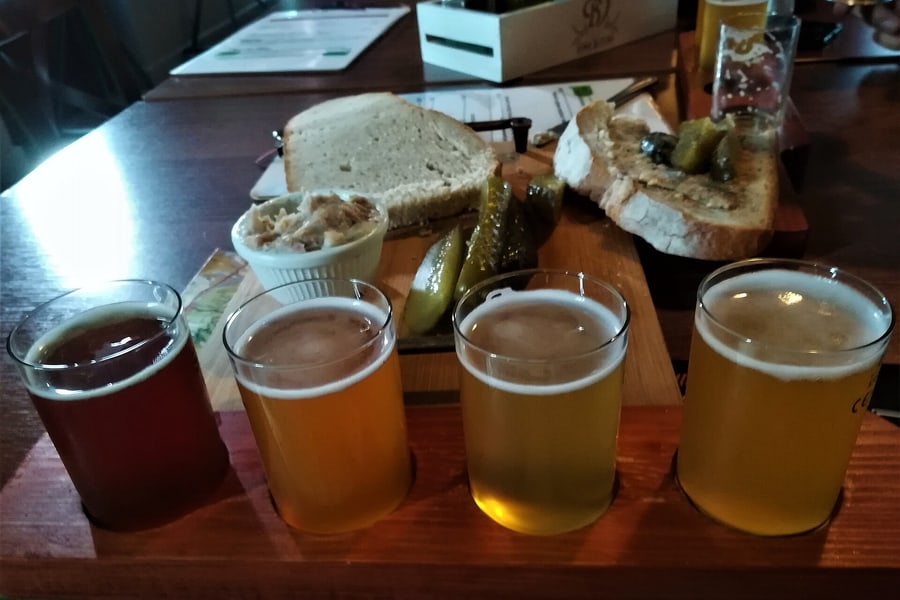 MOs810 / Wikimedia Commons · CC BY-SA 4.0 · cropped
Browar Jedlinka
Since 2014 a brewery has worked in one of the buildings of the palace estate at Jedlina-Zdrój. Its restaurant serves its own craft beers with pizza from a wood-fired oven, burgers and small plates, a short way from the park and the palace museum.Timetables
Koleje Dolnośląskie runs seven through trains a day each way on line D96, taking between 1 hour 4 minutes and 1 hour 17 minutes. Seats are not reserved.
25 October to 12 December 2026
| Wałbrzych Główny | Kłodzko Główne | Kłodzko Główne | Wałbrzych Główny | |
|---|---|---|---|---|
| 06:23 | 07:33 | 05:36 | 06:52 | |
| 08:50 | 09:54 | 07:55 | 09:10 | |
| 10:43 | 11:50 | 12:09 | 13:19 | |
| 13:26 | 14:31 | 14:43 | 16:00 | |
| 16:41 | 17:47 | 17:09 | 18:21 | |
| 18:55 | 20:00 | 18:08 | 19:23 | |
| 22:03 | 23:08 | 20:20 | 21:29 |
Trains run daily. The KD Sprinter trains printed in the same timetable take other routes and do not use this line. Several trains continue beyond Kłodzko towards Kudowa-Zdrój, with a replacement bus between Polanica-Zdrój and Kudowa until 12 December 2026. The next timetable starts on 13 December 2026.
As of November 2026, from Koleje Dolnośląskie's D96 timetable (opens in a new tab), updated 3 November 2026.
Tickets
Koleje Dolnośląskie prices its tickets by distance, and seats are not reserved. The full trip falls in the 48 to 53 kilometre band. A bicycle costs 8.50 zł for one journey and a dog 5.50 zł.
For a day out at weekends the Lower Silesian weekend ticket costs less than three single fares, and it can also be used on POLREGIO's regional trains in the province. From Koleje Dolnośląskie's price list in force from 1 September 2026, as of November 2026.
Book your tickets
Wałbrzych to Kłodzko, single
20.50 zł · regional train, second class
Koleje Dolnośląskie's ordinary distance fare for a one-way trip along the whole line.
Book Tickets (opens in a new tab, on Koleje Dolnośląskie)via Koleje DolnośląskieLower Silesian weekend ticket
59 zł · Friday 18:00 to Monday 06:00
Unlimited journeys on regional trains of Koleje Dolnośląskie and POLREGIO across Lower Silesia.
Book Tickets (opens in a new tab, on Koleje Dolnośląskie)via Koleje DolnośląskieSenior 60+
25% off single tickets
Open to anyone aged 60 or over with proof of age, on single tickets only.
Book Tickets (opens in a new tab, on Koleje Dolnośląskie)via Koleje DolnośląskieRail Passes
Interrail and Eurail passes are valid on these trains, on a Global Pass or a Poland Pass, and they need no reservation. Interrail's table of railway companies lists Koleje Dolnośląskie's regional (Os) and semi-fast (OsP) trains as covered, and excludes only its Premium and KD Specjal services. The trains on this line are ordinary regional services.
For this trip alone a pass is not worth buying: the single fare is 20.50 zł. It pays only when the line is one stop on a longer journey through Poland.
Checked November 2026 against Interrail's table of railway companies (opens in a new tab), last updated 21 October 2026.
Places to Visit
The line links two towns with a full day's sightseeing in each, and the smaller stops between them lead to palaces, castles and the wartime tunnels of the Owl Mountains.
 Marie Čcheidzeová / Wikimedia Commons · CC BY-SA 4.0 · cropped
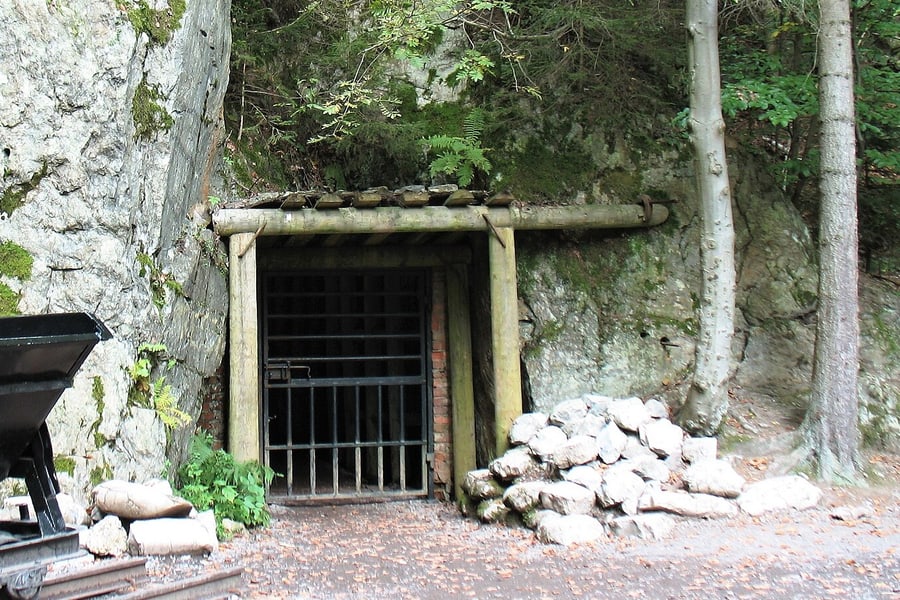
The Osówka underground complex
Work on these tunnels in the Owl Mountains began in 1943, one site of the Nazi Riese project, and was carried out by forced labourers and concentration-camp prisoners, many of whom died. It was never finished, and its purpose was never recorded. Guided routes run all year above Sierpnica, and a memorial path tells the prisoners' story.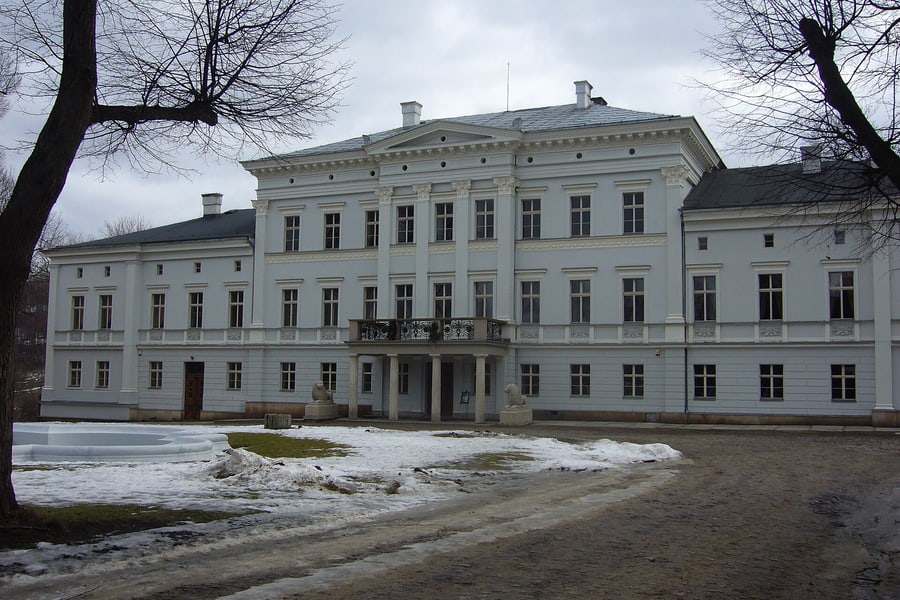 Adamek47 / Wikimedia Commons · CC BY-SA 3.0 PL · cropped
Jedlinka Palace
A neoclassical palace in its present form, built up from a seventeenth-century manor and used in 1944 and 1945 as a design office of the Organisation Todt. After the war it became part of a state farm, and hay was stored inside. Restored rooms are opening gradually, with guided tours at weekends in winter and from Tuesday to Sunday in high summer.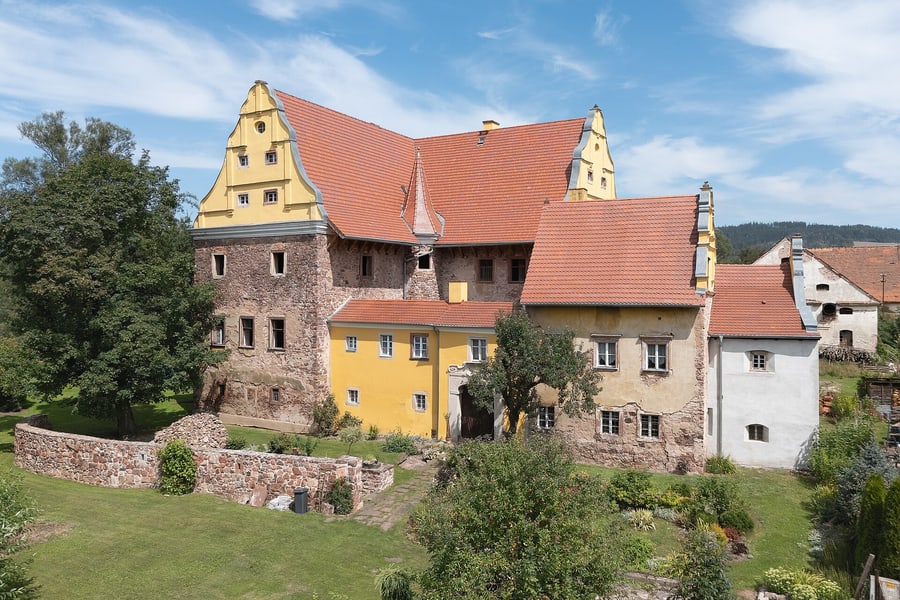 Jacek Halicki / Wikimedia Commons · CC BY-SA 4.0 · cropped
Kapitanowo Castle
A fortified residence in the village, grown around a residential tower completed in 1360 for the von Czechau family and enlarged in the Renaissance with stepped gables and an enclosed courtyard. It was lived in until the 1990s and then left to decay, and a private owner is now repairing it, admitting visitors by arrangement.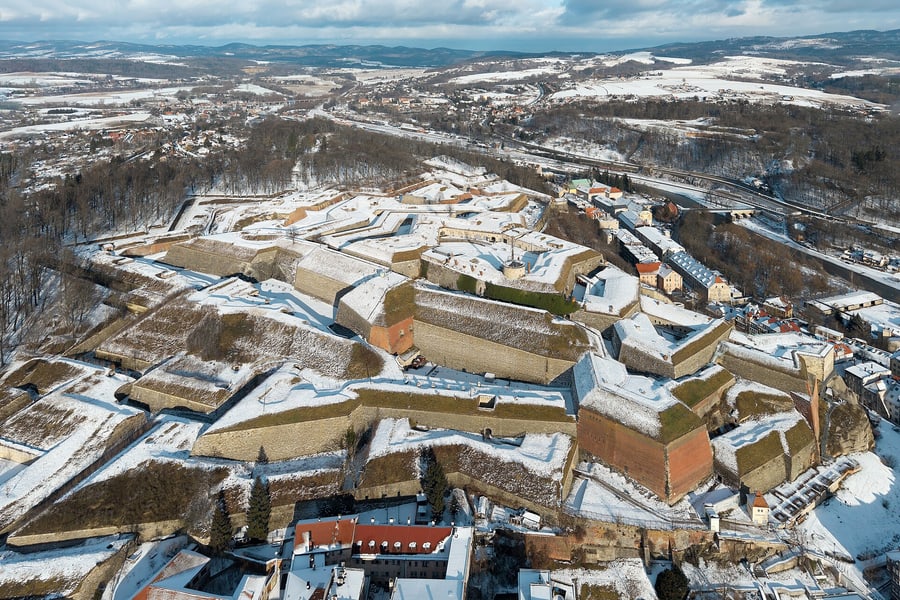 Jacek Halicki / Wikimedia Commons · CC BY-SA 4.0 · cropped
Kłodzko Fortress
More than 30 hectares of bastions and ramparts on the hill above the town, on a site recorded as a stronghold by the chronicler Cosmas. Visitors take a 2.5 km upper route and can go underground into the countermine galleries, a guided labyrinth of 1.2 km where the temperature stays at 8 to 10 degrees.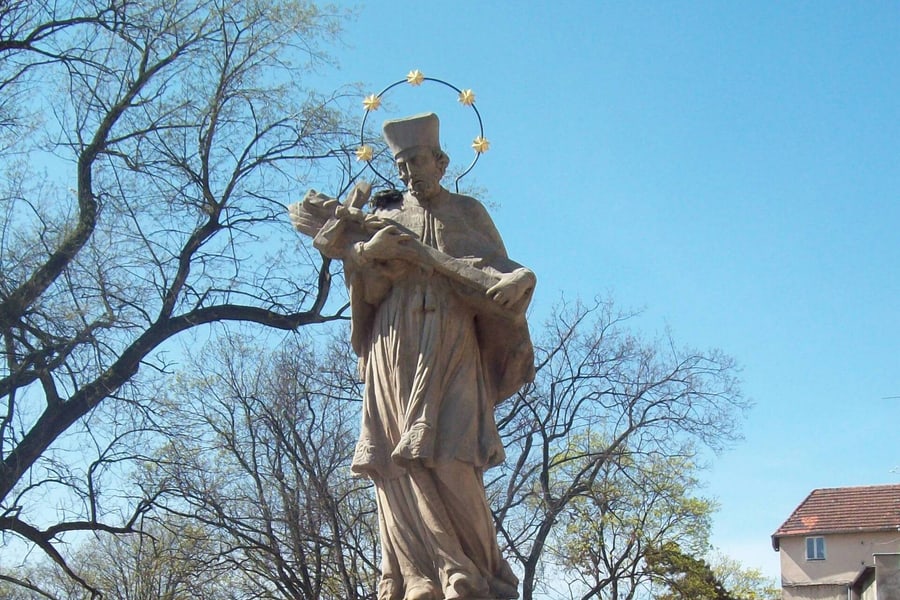 Łukasz Kuchta / Wikimedia Commons · Public domain · cropped
The stone bridge
A Gothic bridge of the fourteenth century over the Młynówka canal, closed to traffic and often compared with Prague's Charles Bridge. Six groups of stone figures stand along its parapets, most of them added in the eighteenth century by the town and its landowners, and beneath the old town a 700-metre tourist route runs through medieval cellars.Where to Sleep
Kłodzko, at the southern end of the line, is the natural base. Jedlina-Zdrój suits a stay among the hills at the northern end.
Where to stay
Hotel Restauracja Korona
Kłodzko
A hotel and restaurant at Noworudzka 1, serving Polish and European food, run by the same business for 28 years.
Check Availability (opens in a new tab, on hotel-korona.pl)via hotel-korona.plResort Jedlinka
Jedlina-Zdrój, in the palace park
Rooms and apartments in woodland on the palace estate at ul. Zamkowa 2, with a brewery restaurant and bicycle hire.
Check Availability (opens in a new tab, on jedlinka.pl)via jedlinka.plQuestions or corrections
Planning this trip and stuck on something, or spotted a time, fare or detail that has changed? Send us a message about The Wałbrzych–Kłodzko Railway. We read every one, and we update this page when something has changed.