The Zubačka
PetrS. / Wikimedia Commons · CC BY-SA 3.0
- DistanceTanvald–Harrachov · 235 m of climb in 7 km
- DurationAbout 30 minutes
- Best seasonWinter for the ski trains · summer for the cycling
Introduction
The Czech Republic has exactly one rack railway, and it climbs the steepest gradient on the national network: 58 per mille, one in seventeen, up out of Tanvald into the Jizera mountains.
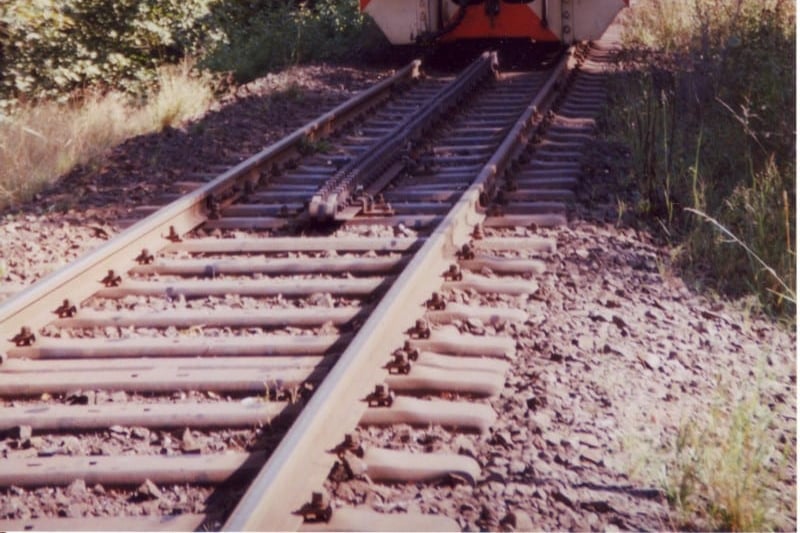
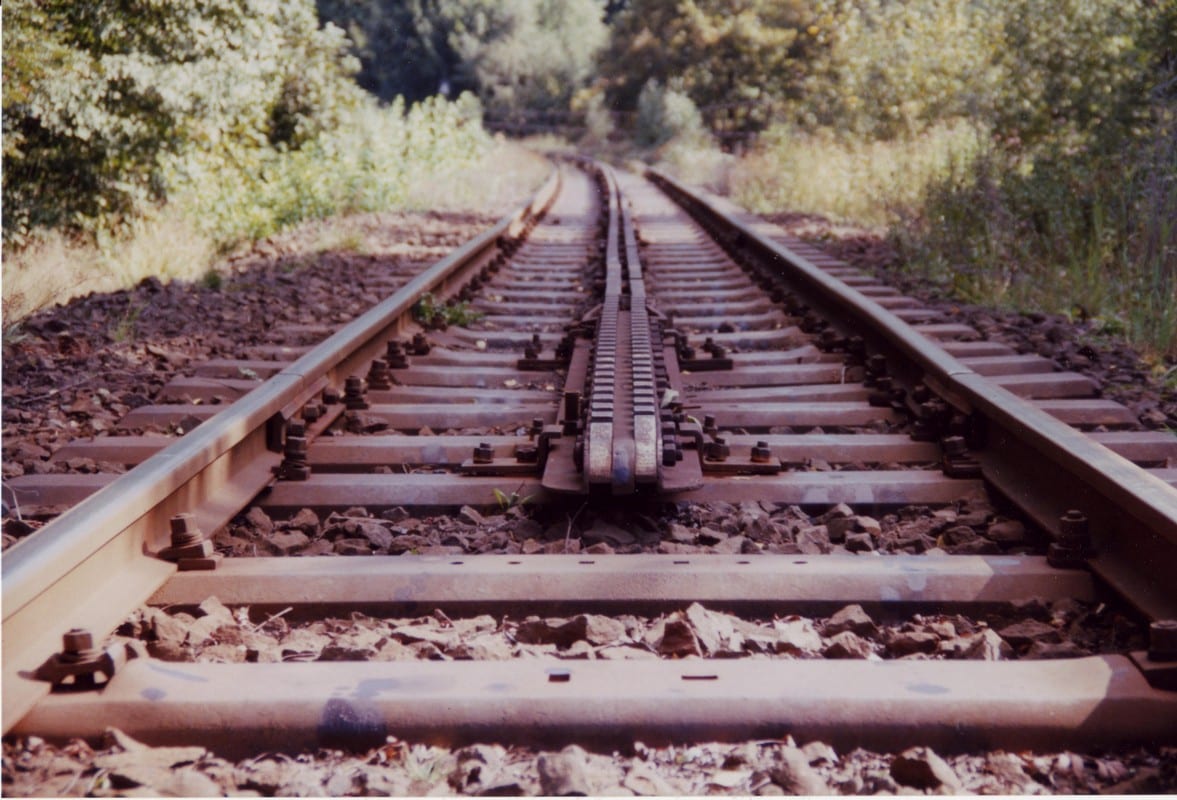
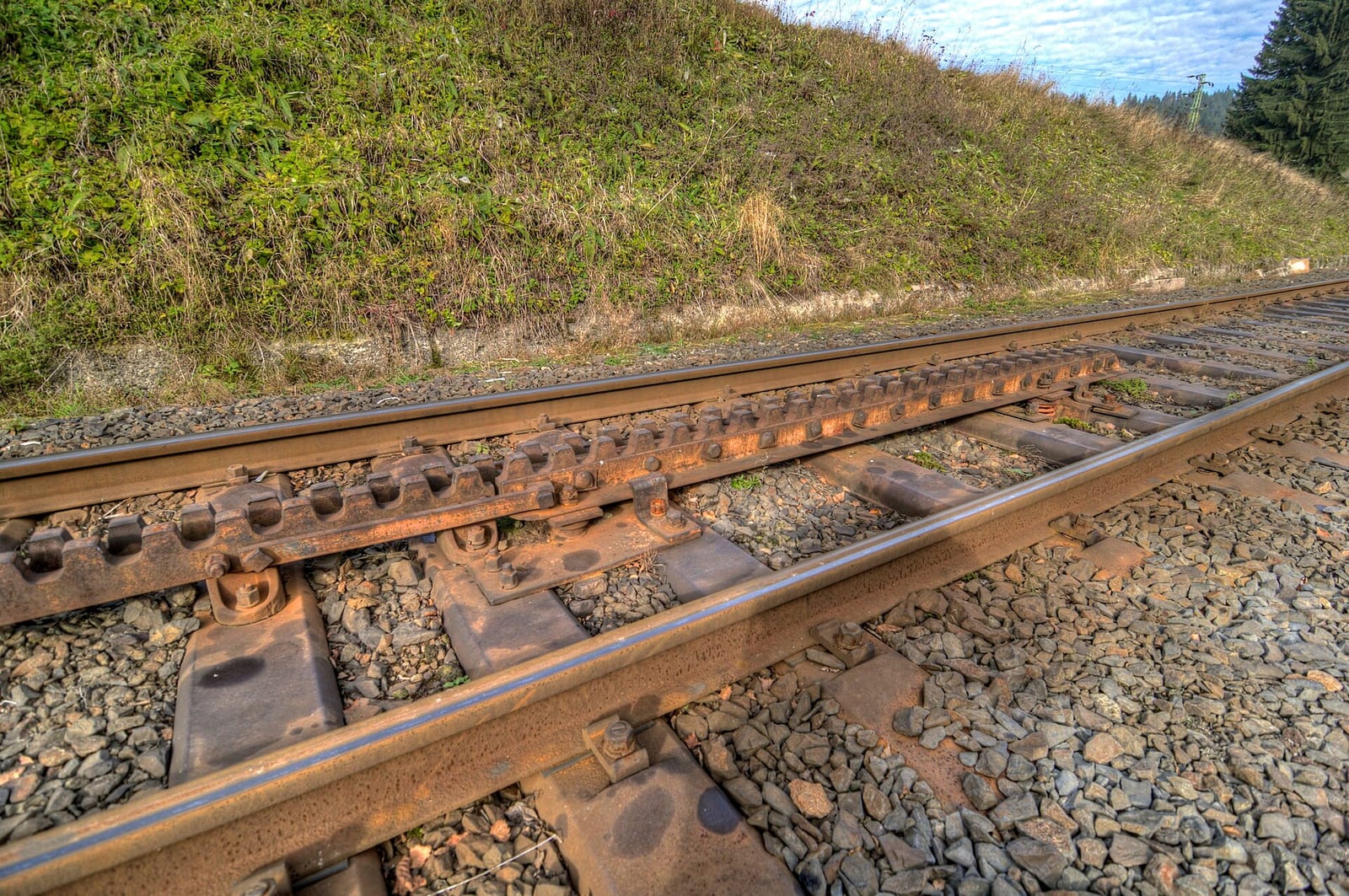
It is called the Zubačka — the toothed one — and there is a two-set Abt rack in the track, in two sections, 4,744 metres of toothed rail in all, still there and still maintained.
It has not been used for regular traction since 1988.
That is the honest headline, and it is better to have it up front than to discover it on the platform. Today's scheduled trains climb the same 58 per mille by adhesion — no rack, no pinion, just wheels on rails and a lot of noise. The rack locomotives come out for special workings only.
Why the line exists
Not for tourists. It opened in 1902 for a piece of imperial railway politics: to join the Bohemian line from Liberec and Jablonec to Tanvald with the Zackenbahn coming up from Jelenia Góra on the other side of the mountains — and so to connect Austria-Hungary with Prussia.
The mountains in the way required the rack. The builders laid 235 metres of climb into about seven kilometres.
Then the twentieth century happened to it. After 1945 Silesia became Polish and the cross-border traffic was simply abolished; the line became a stub. A subsequent exchange of border territory between Czechoslovakia and Poland let the Czech section be extended to Harrachov, which became the new terminus.
There was a one-day celebration for the centenary in 2002. And then, on 2 July 2010 — sixty-five years after it stopped — cross-border traffic was restored. The section on to Szklarska Poręba has been reconstructed and carries regular trains again.
The Rakušanky
The locomotives that worked the rack deserve their own paragraph.
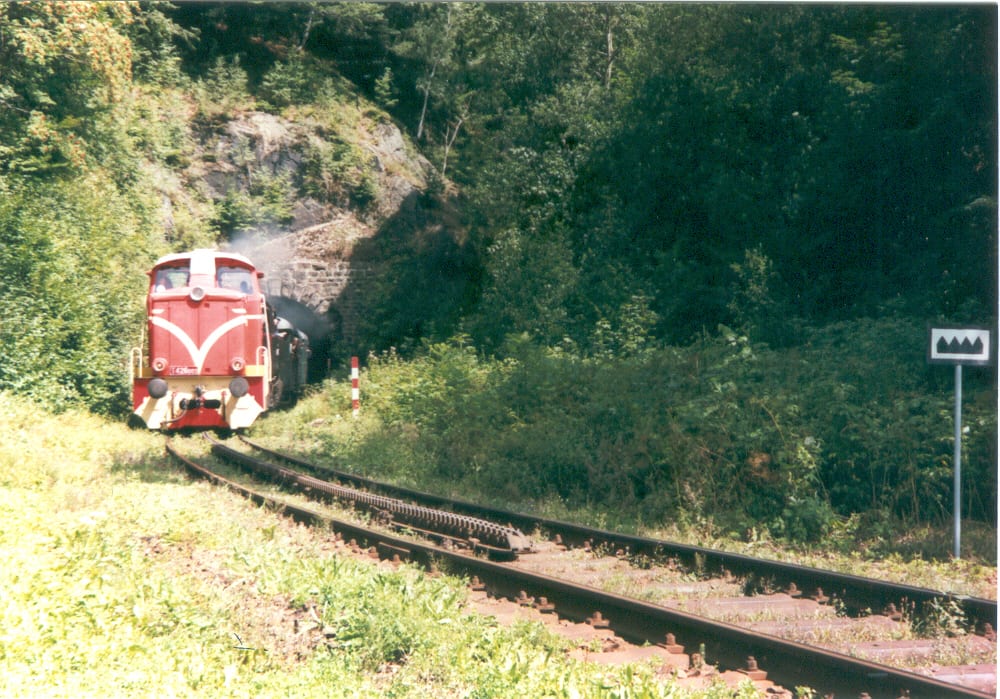
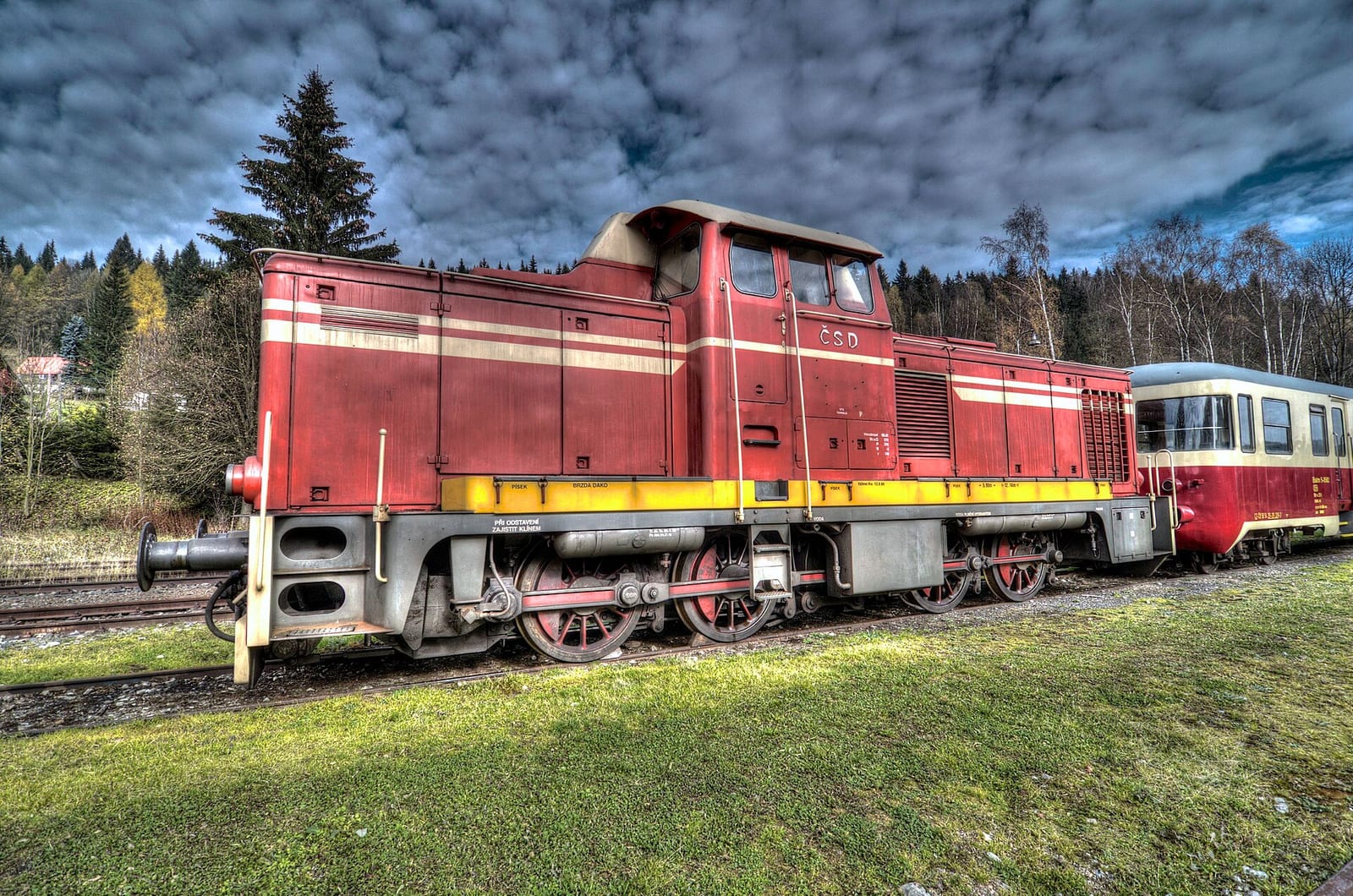
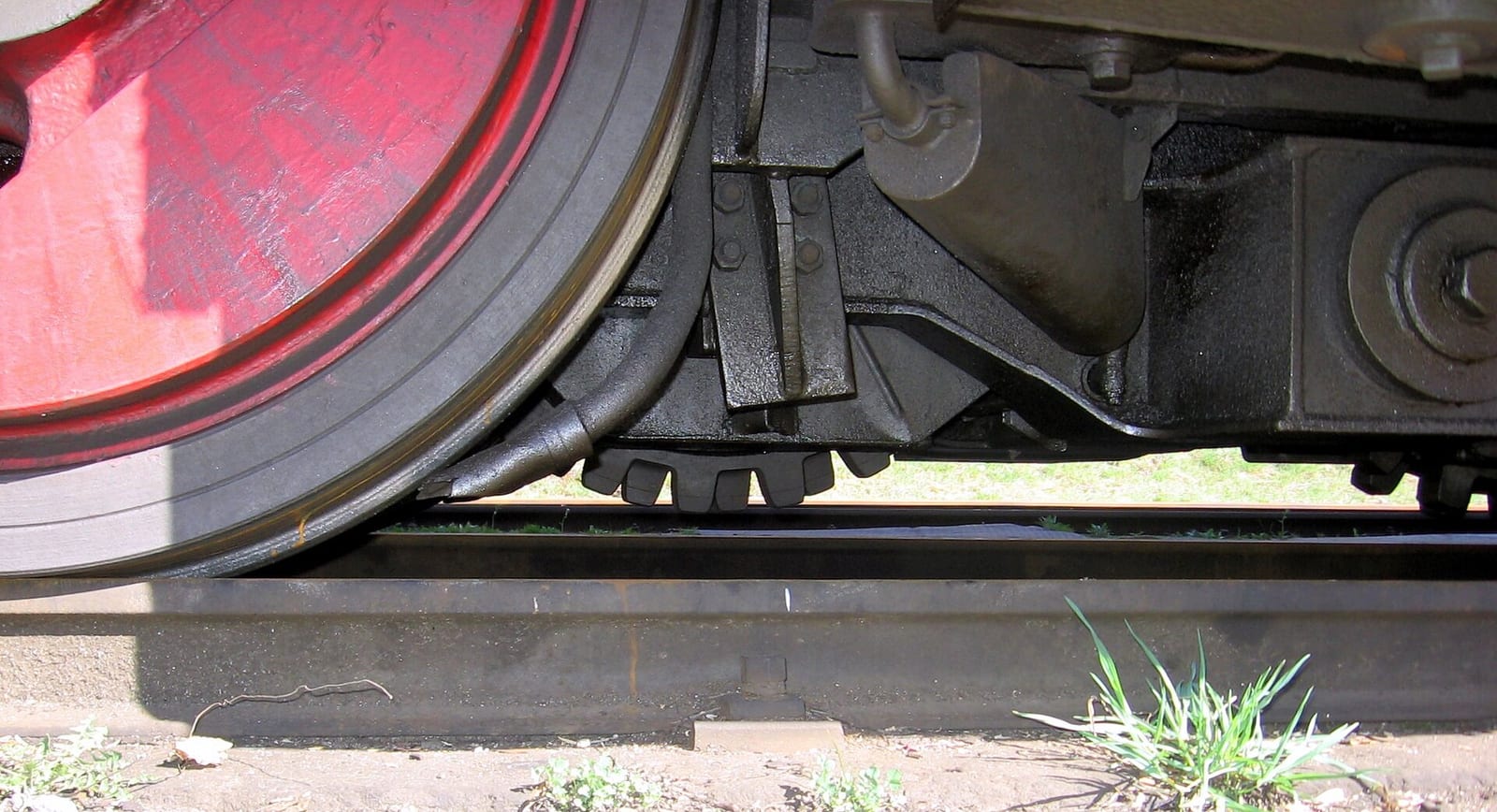
They were T426.0 machines, built in 1961 by SGP Floridsdorf in Vienna — four supplied to Czechoslovak State Railways out of seven built — and Czech railwaymen called them Rakušanky, "the Austrian girls". They worked the toothed rail from the 1960s until 1988, when new class 743 diesels took over and simply climbed the hill by adhesion instead.
Two Rakušanky survive, T426.001 and T426.003. Both are still operational and both are kept at Tanvald, and they are turned out for special excursion trains — the only occasions on which the rack is used for what it was built for.
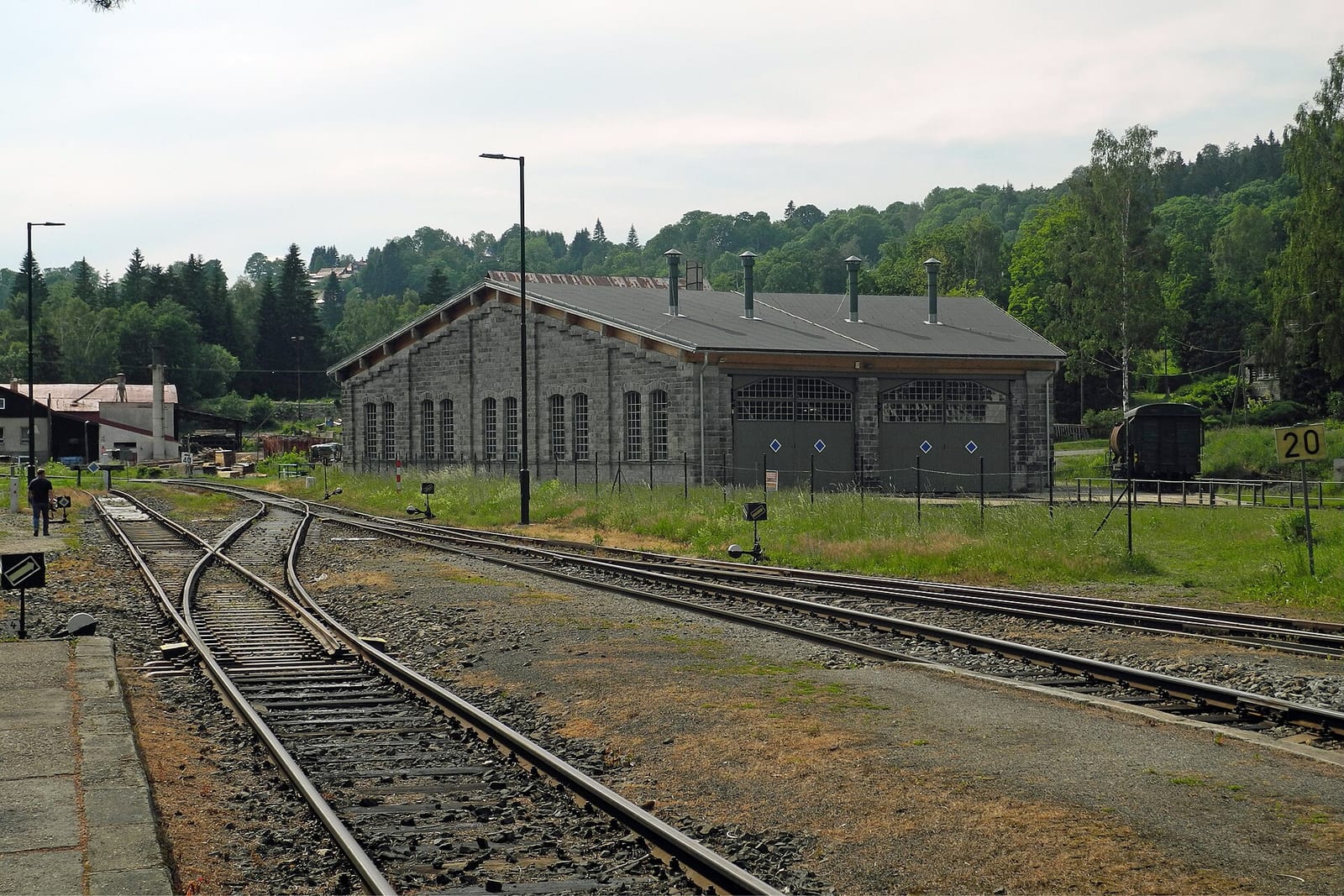
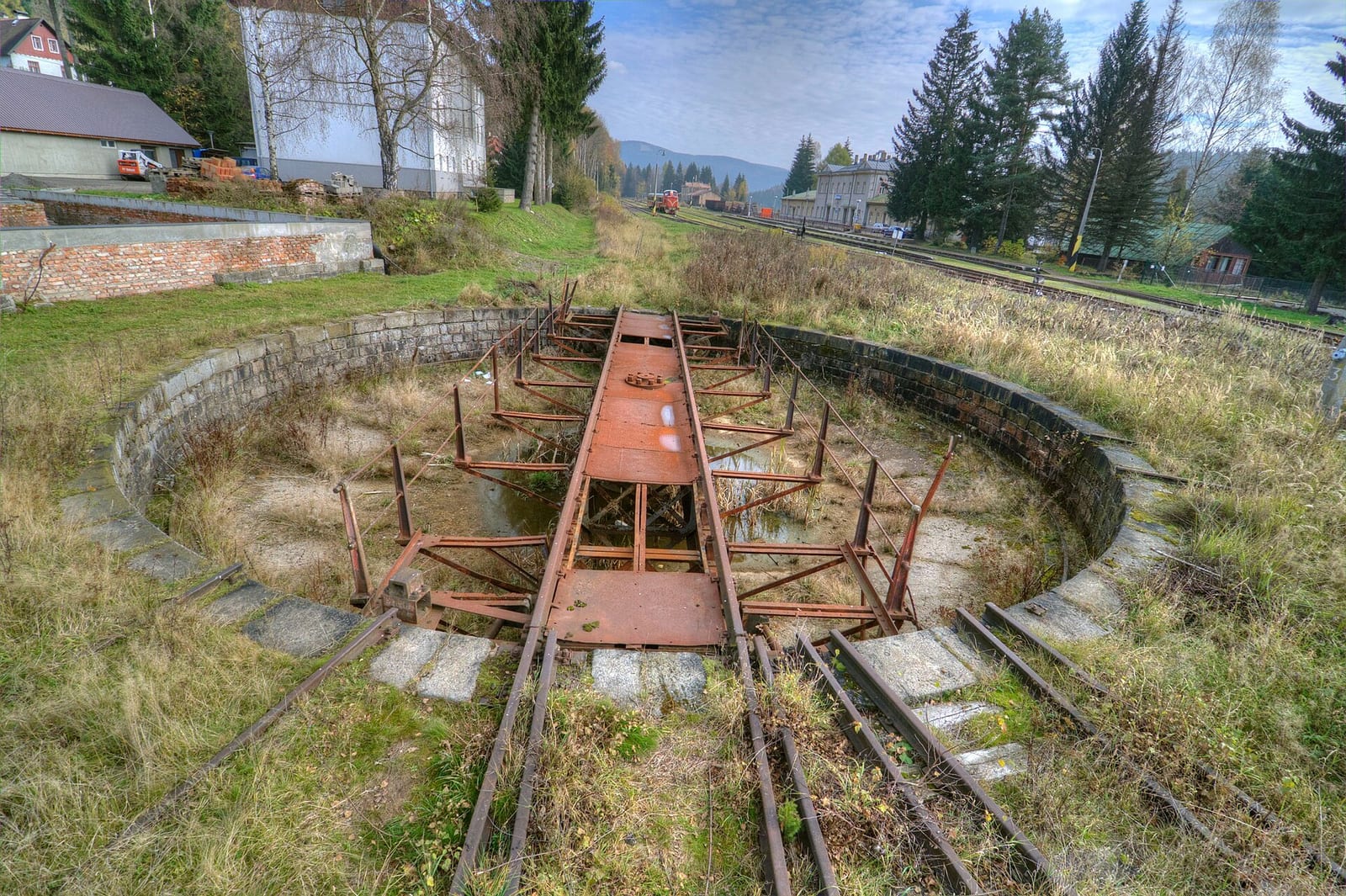
At Kořenov the former engine shed is now the Rack Railway Museum, with a Rakušanka in it and a disused turntable outside.
Why it is still worth doing
Because it is a real mountain railway doing a real job, and the job is winter sport.
On a winter morning the trains up from Tanvald are full of cross-country skiers, who use the railway to gain the height and then ski onward from Kořenov — toward Jizerka, back down to Jablonec or Liberec, or across the frontier to Orle in Poland. In summer the same trains carry cyclists. And because the expresses from Prague and Dresden terminate at Tanvald, the connection is easy — which is precisely why earlier plans to close the line were dropped.
So: not a rack railway in the sense the name promises. But the steepest railway in the country, over a border that was shut for two generations, with the rack still bolted down in the four-foot and two Viennese locomotives in the shed at the bottom that can still use it.
The Journey
Tanvald is a mill town in the Jizera valley in northern Bohemia, and it is the interchange for everything: the expresses from Prague and Dresden terminate here, and the little trains up the mountain go on from the same platforms.
Take one of the little trains.
Out of Tanvald
The line leaves along the valley and reaches Desná, and then the ground begins to go up sharply.
This is where the rack starts — or rather, where the rack is. You can see it: a toothed rail bolted down in the middle of the track between the running rails, in two separate sections totalling 4,744 metres. Your train will roll straight over it without engaging, because scheduled services have climbed this by adhesion since 1988.
The gradient reaches 58 per mille — the steepest on the Czech network — and you can hear the engine working. In a modern regional unit the sensation is mostly noise and a slightly odd angle to the floor; on a wet autumn morning with leaves down, it is also noticeably careful.
Up to Kořenov
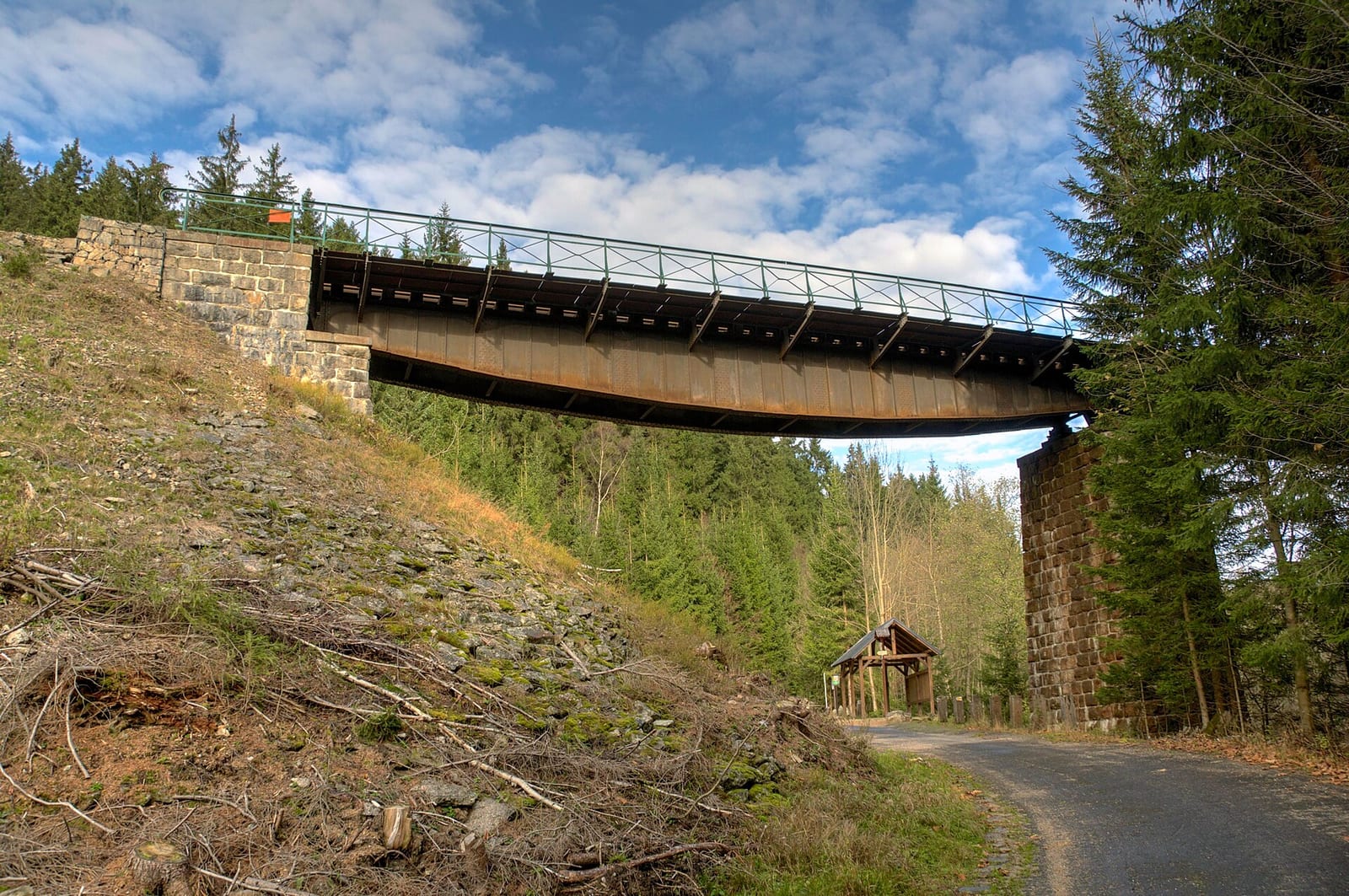
The railway climbs through spruce forest, crosses the Jizera on a girder bridge, and passes Dolní Polubný. There are short tunnels — the Žďárský, Desenský and Polubenský bores — and glimpses back down the valley.
Kořenov is the summit and the point of the whole thing. It sits at the top of the climb, 235 metres above where you started, and it is a strange place: an oversized station for a small settlement, because it used to be a frontier post — first between Austria-Hungary and Prussia, then between Czechoslovakia and Poland, then a dead end for sixty-five years.
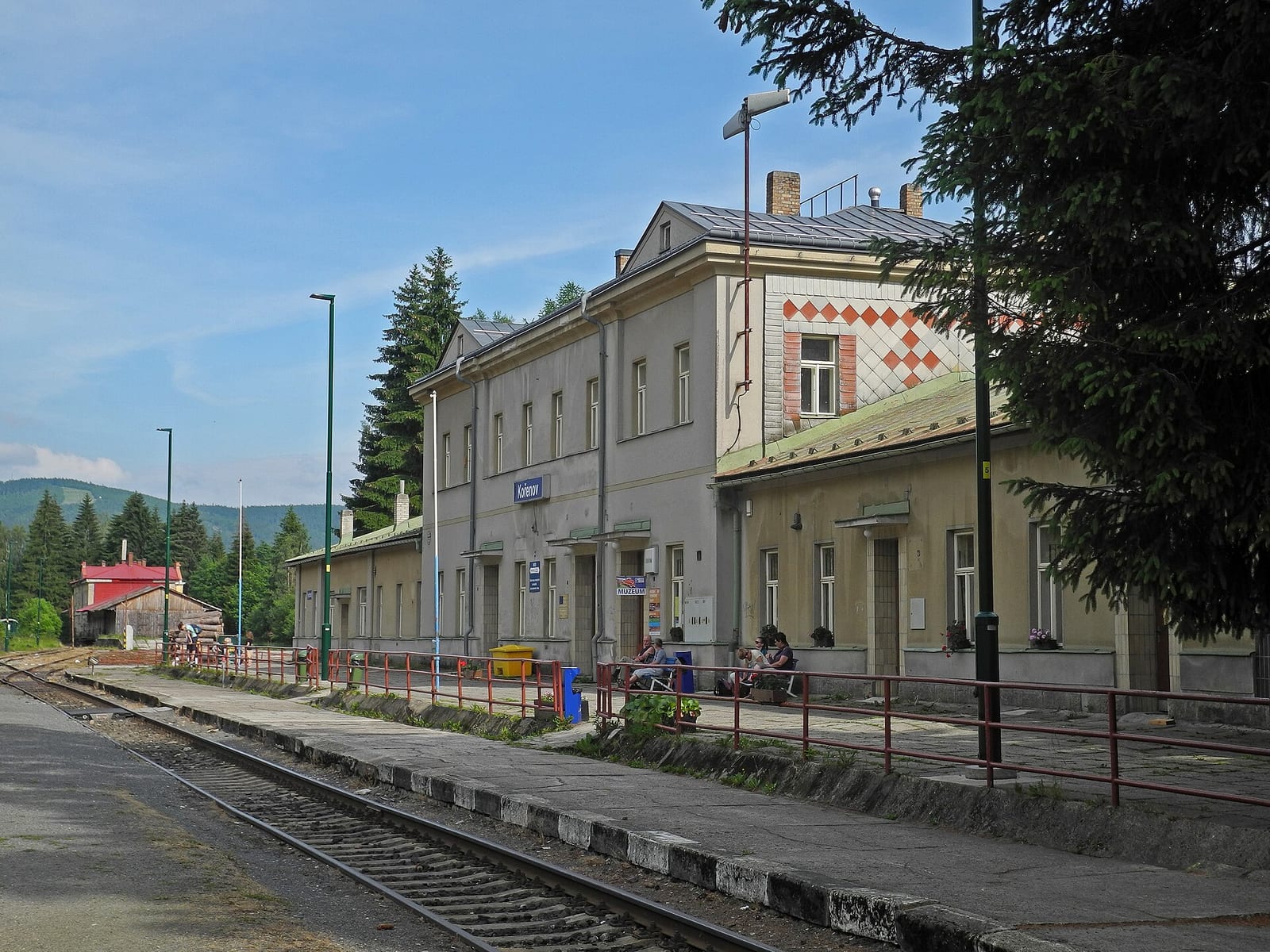
The evidence is all around: long platforms, sidings, a turntable rusting in the grass, and a substantial engine shed which now houses the Rack Railway Museum — the Muzeum ozubnicové dráhy — with one of the two surviving T426.0 Rakušanky in it.
On to Harrachov and Poland
Beyond Kořenov the line runs to Harrachov, a ski resort on the edge of the Krkonoše with a famous ski-flying hill and a glassworks that has been going since 1712.
And beyond Harrachov it crosses into Poland to Szklarska Poręba. That section was rebuilt and reopened on 2 July 2010, restoring a through route that had been closed since 1945, and it carries regular trains. Proposals to push the Czech line into the centre of Harrachov were rejected, but the international connection works.
Riding up the steepest gradient in Czechia and out over a frontier that was shut for two generations is a satisfying morning's work.
If you want the rack actually used
You need a special. The two surviving T426.0 locomotives are kept at Tanvald, both operational, and they are rostered for excursion trains on published dates — that is the only time the toothed rail does any work. If riding a genuine rack railway is the object, check zubacka.cz (opens in a new tab) for the calendar before choosing your day.
Practical notes
- Sit on the valley side going up for the views back down toward Tanvald.
- Winter is the best time — and the busiest. The morning trains fill with cross-country skiers.
- Bicycles in summer; the Jizera mountains are good cycling and much of the traffic is riders going up to come down.
- It is an ordinary České dráhy regional train. Ordinary tickets, no reservation, and Czech-only announcements.
- Tanvald connects to the expresses, so this fits neatly onto a Prague or Dresden trip.
Along the route
SchiDD / Wikimedia Commons · CC BY-SA 4.0Built to join two empires
The line opened in 1902 to connect the Bohemian railway at Tanvald with the Zackenbahn from Jelenia Góra, joining Austria-Hungary to Prussia across the Jizera mountains. After 1945 Silesia became Polish and the through traffic stopped. ⭐ Cross-border trains returned only in 2010, after sixty-five years.Rolf-Dresden / Wikimedia Commons · CC BY-SA 3.0The steepest gradient in the country
Two hundred and thirty-five metres of climb in about seven kilometres, at a maximum of 58 per mille — the steepest gradient on the Czech network. To manage it the builders laid 4,744 metres of two-set Abt rack. It is still in the track, and still maintained.Lukáš Kalista / Wikimedia Commons · CC BY-SA 4.0But the rack stopped being used in 1988
Be clear about this. Regular rack working ended in 1988, when the Austrian-built Rakušanky were replaced by diesels climbing the same gradient by adhesion, without touching the rack. Two survive at Tanvald, both serviceable, and they come out only for special trains.A bit of history
Culture & experiences along the way
Wikimedia Commons · CC BY-SA 3.0 · croppedRide it with the skiers
The best time is a winter morning, when the trains up from Tanvald are packed with cross-country skiers who use the railway's height gain and then ski onward from Kořenov — toward Jizerka, down to Jablonec or Liberec, or over the border to Orle in Poland. It is a working mountain railway doing exactly what a mountain railway should, and it is why the line survived.SchiDD / Wikimedia Commons · CC BY-SA 4.0The museum in the old shed
At Kořenov, the former engine shed houses the Rack Railway Museum, with a T426.0 Rakušanka among its preserved vehicles and the history of the line laid out. Outside is the disused turntable. This was a frontier station between two empires and then between two states, and the scale of what is left is out of all proportion to the traffic it sees now.Lukáš Kalista / Wikimedia Commons · CC BY-SA 4.0Cross into Poland
Beyond Kořenov the line runs to Harrachov, and the section on to Szklarska Poręba in Poland has been rebuilt and carries regular trains again — the through route reopened in 2010 after sixty-five years closed. It makes a genuinely satisfying crossing: up the steepest gradient in Czechia, over a border that was shut for two generations, and down into the Polish Karkonosze.Timetables
This is a scheduled České dráhy regional line, not a heritage operation, so it runs to the national timetable and needs no booking.
The service
| Route | Tanvald – Desná – Dolní Polubný – Kořenov – Harrachov |
| Onward | Harrachov – Szklarska Poręba (Poland) |
| Climb | 235 m in about 7 km |
| Maximum gradient | 58 ‰ — the steepest on the Czech network |
| Journey time | Roughly half an hour Tanvald to Harrachov |
| Traction | Adhesion. The rack has not been used in regular service since 1988 |
| Operator | České dráhy |
Trains run through the day, several times daily, all year. We are not printing departure times: this is an ordinary national-timetable branch line whose times change at each timetable change, and the reliable source is the operator's planner rather than a snapshot here.
Check cd.cz (opens in a new tab) or the Czech national planner IDOS for your date.
Connections
The expresses from Prague and Dresden terminate at Tanvald, which makes this an easy add-on rather than an expedition — and is the reason earlier proposals to close the line were dropped.
At the far end, the Harrachov–Szklarska Poręba section reopened on 2 July 2010 after sixty-five years, and carries regular cross-border trains into Poland.
When to go
- Winter is the line's real season. The morning trains up from Tanvald fill with cross-country skiers, who use the height gain and then ski on from Kořenov toward Jizerka, down to Jablonec or Liberec, or over the border to Orle.
- Summer brings cyclists, in numbers.
- Autumn is quiet and the forest is worth it.
If you want the rack used
The toothed rail is only worked on special excursion trains, hauled by one of the two surviving T426.0 "Rakušanka" locomotives — built by SGP Floridsdorf in Vienna in 1961, and both kept at Tanvald in operational condition.
Regular rack working ended in 1988, when class 743 diesels took over and climbed the gradient by adhesion instead.
Dates for the specials are published by the preservation group at zubacka.cz (opens in a new tab). If riding an actual rack railway is the point of the trip, plan around those dates — on any other day you will ride over the rack rather than on it.
The museum
The former engine shed at Kořenov houses the Muzeum ozubnicové dráhy — the Rack Railway Museum — with a Rakušanka and other preserved vehicles, and the disused turntable outside. Check its opening times separately; it is not open every day that trains run.
Operator: České dráhy — cd.cz (opens in a new tab). Heritage operations and special trains — zubacka.cz (opens in a new tab). Position as of July 2026.
Tickets
Nothing to book. It is an ordinary Czech regional train, so a České dráhy ticket from a machine, a window, the app or on board covers it — no reservation, no supplement, and fares on a seven-kilometre branch are trivial. If you are travelling from Prague or Dresden, buy through to Harrachov rather than separately, since the expresses terminate at Tanvald and the connection is part of the same journey. ⚠️ A Czech domestic ticket will not cover the Polish section beyond Harrachov.
The part to plan is the rack. Regular rack working ended in 1988, and the toothed rail is now used only by special excursion trains hauled by one of the two surviving Rakušanka locomotives, ticketed separately and with dates published in advance. On any other day you will roll over the rack without engaging it — worth knowing before travelling a long way.
Book your tickets
Tanvald to Harrachov
An ordinary regional train
A scheduled České dráhy regional service, climbing 235 metres in about seven kilometres — by adhesion, not on the rack. Ordinary tickets, no reservation. Express trains from Prague and Dresden terminate at Tanvald, so the connection is easy.
Book Tickets (opens in a new tab, on České dráhy)via České dráhyA special with a Rakušanka
When the rack is actually used
The two surviving T426.0 rack locomotives are kept at Tanvald and turned out for special workings — the only occasions on which the toothed rail is used for traction. If riding an actual rack railway is the point, this is the train to look for, and the dates are published in advance.
Book Tickets (opens in a new tab, on Zubačka)via ZubačkaRail Passes
Interrail passes are valid. Interrail's table of railway companies lists České dráhy's regional trains as included in Czechia, so Tanvald to Harrachov is covered by an Interrail Czechia Pass or a Global Pass, with no reservation.
The line continues into Poland beyond Harrachov. A One Country Pass covers one country only, so the Polish section needs a Global Pass or a separate ticket.
For this journey alone, a pass is not worth buying. The fare on a seven-kilometre branch is trivial.
Checked October 2026 against interrail.com (opens in a new tab) and Interrail's Czechia page (opens in a new tab).
Places to Visit
The line runs up into the Jizera mountains on the edge of the Krkonoše — the Giant Mountains — which between them make up the best walking and cross-country skiing country in the Czech Republic.
At the summit of the climb, in the former engine shed at Kořenov, the Muzeum ozubnicové dráhy holds one of the two surviving T426.0 Rakušanka rack locomotives, with a disused turntable in the grass outside and a station built for a frontier that no longer exists.
Beyond the six places carded here, the Jizerská magistrála is the main ski route and one of the great Nordic skiing systems in central Europe, and Jizerka — a tiny settlement in a high valley reachable from Kořenov — is one of the coldest inhabited places in the country. Orle, over the border in Poland, is essentially a mountain hut in the middle of the Izera bogs; the fact that people ski there from a Czech railway station is the sort of detail that makes this line worth writing about.
Down in the valley, Tanvald and Desná are working textile towns, which is what this region was for before it was for tourism. Jablonec nad Nisou was the world centre of glass jewellery and costume beads, with a museum to prove it. The Bohemian Paradise — Český ráj — with its sandstone towers and rock towns, is an hour south, and Prague about two hours by train from Tanvald.
 Bartłomiej Derski / Wikimedia Commons · CC BY-SA 4.0 · cropped
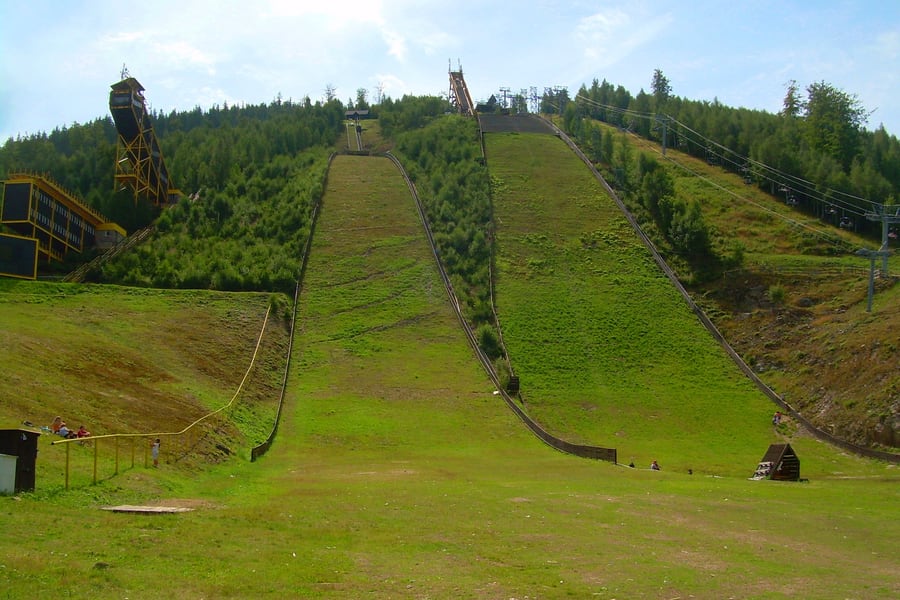
The Harrachov ski-flying hill
One of only five ski flying hills in the world, built in 1979 and opened in 1980, with room for a crowd of about 50,000 on the slopes either side. Two world records were set here in the 1980s, and a run of horrific accidents followed. You can visit out of season and stand at the top of the inrun, which is genuinely alarming even with nothing strapped to your feet.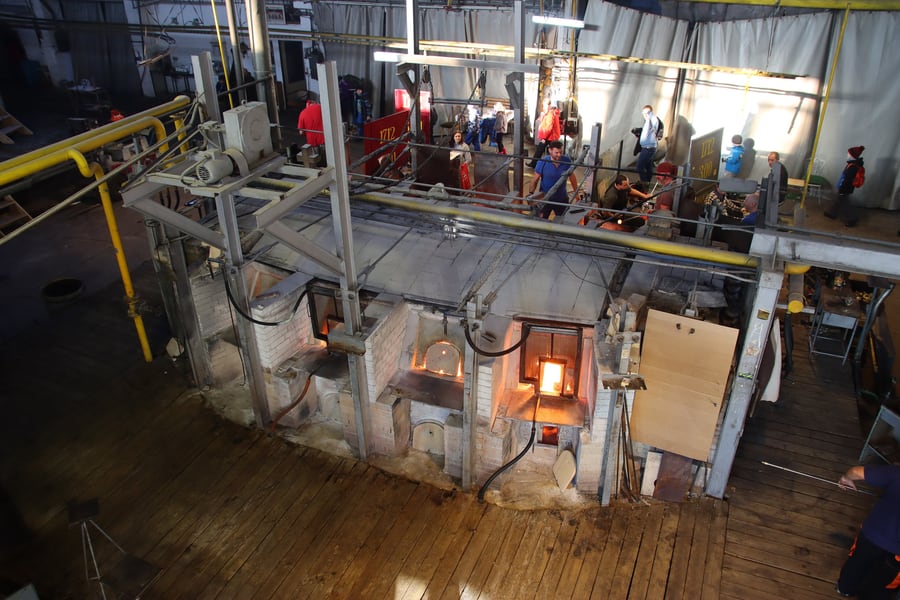 Draceane / Wikimedia Commons · CC BY-SA 4.0 · cropped
The Harrachov glassworks
Harrachov began as a village of glassmakers, and the factory founded in 1712 is one of the longest-running glassworks in Bohemia — still blowing, with a museum and a brewery attached and its grinding plant protected as a national cultural monument. This is a genuine Bohemian tradition rather than a souvenir invention, and you can stand close enough to the furnaces to feel them.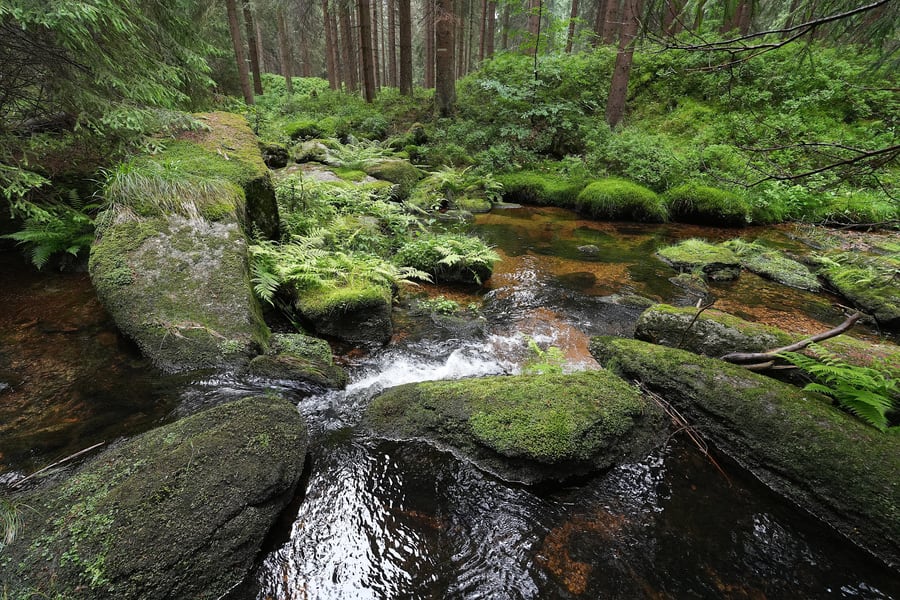 RobbieIanMorrison / Wikimedia Commons · CC BY 4.0 · cropped
The Jizera mountains
Part of the Western Sudetes, straddling the Czech–Polish border and named for the Jizera, which rises at the southern foot of the Smrk massif. Rounded granite hills, peat bogs and an enormous network of marked trails and cross-country tracks. The beech forests here are inscribed on UNESCO's Ancient and Primeval Beech Forests list for how completely they have survived since the last ice age.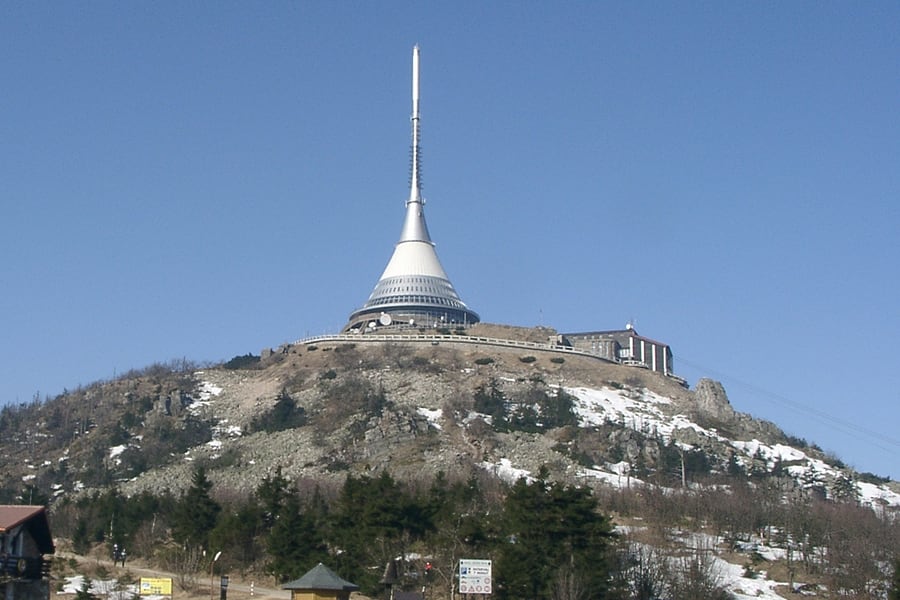 Bernd Gutte / Wikimedia Commons · CC BY-SA 3.0 · cropped
Ještěd
Down the line at Liberec, a 94-metre reinforced-concrete hyperboloid that continues the silhouette of the hill it stands on — part television transmitter, part hotel and restaurant. Karel Hubáček designed it with Zdeněk Patrman on the statics and Otakar Binar on the interiors; the design took 1963–66 and the build 1966–73. A Czech cultural monument since 1998, and reachable by cable car.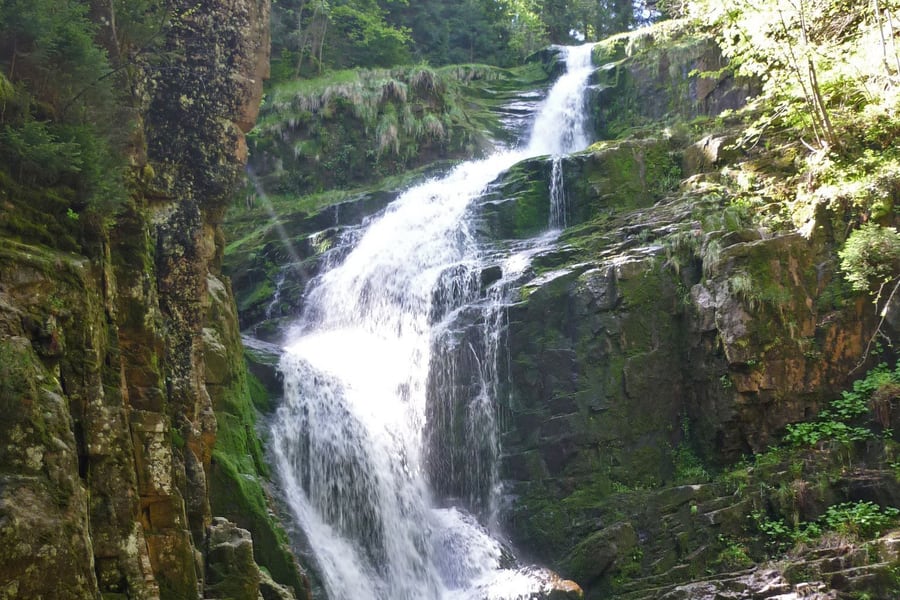 SchiDD / Wikimedia Commons · CC BY-SA 3.0 · cropped
Wodospad Kamieńczyka
At the Polish end of the reopened cross-border route, the highest waterfall in the Polish Sudetes — three cascades dropping 27 metres into a hundred-metre gorge, at 846 m above sea level on the path from Szklarska Poręba up to the main Karkonosze ridge. Behind the middle cascade is the Złota Jama, a small cave hacked out by prospectors who found amethyst here. It is now a strict-protection zone of the national park.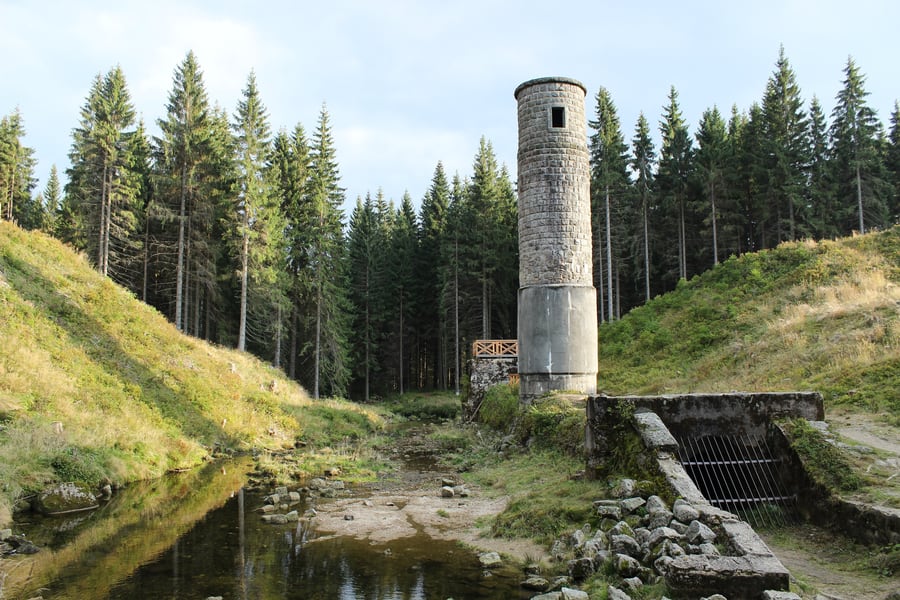 Jan Polák / Wikimedia Commons · CC BY-SA 3.0 · cropped
The burst dam at Desná
Above Desná in the valley stand the ruins of a dam that lasted ten months. Given final approval on 18 November 1915, it began leaking on the afternoon of 18 September 1916; the keeper ordered it drained, the flow kept rising, and at 4.15 pm it gave way and sent 250,000 cubic metres of water through the town below. Sixty-seven people died. The valve tower and the breach are still there, in the trees.Where to Sleep
This is a half-day trip, and most people do it from a base in the mountains rather than from a city.
Harrachov
The obvious choice, and at the end of the line. A resort town with hotels, penziony and apartments at every price, busy in the ski season and much quieter in summer. You can walk to the ski-flying hill and the glassworks, and you are on the railway for the ride down.
Book ahead for January to March and over the New Year.
Kořenov
Right at the top of the climb, small and quiet, with a handful of guesthouses and mountain chalupy. The best base if you are cross-country skiing, because the tracks start more or less at the station, and the cheapest of the mountain options.
Tanvald and the valley
At the bottom: working towns rather than resorts, with modest hotels and considerably lower prices. Practical if you are arriving by express from Prague or Dresden and want to ride up in the morning, and fine if you do not mind that the surroundings are mills rather than meadows.
Jizerka
A tiny high settlement in the Jizera mountains, reachable from Kořenov, with a few guesthouses and one of the coldest climates in the country. Genuinely remote-feeling, and a good place to stay if the point of the trip is the mountains rather than the railway.
Szklarska Poręba, Poland
Over the reopened border. A larger resort than anything on the Czech side, below the Karkonosze, with plenty of accommodation and a chairlift up Szrenica. Staying here and riding into Czechia reverses the journey nicely, and Polish prices are usually lower.
Liberec
The regional capital, forty minutes down the valley, with full city choice including the Ještěd hotel — a concrete hyperboloid on a mountain summit reached by cable car, and one of the more remarkable buildings you can sleep in anywhere.
When to come
- January to March — the line at its best and busiest, full of cross-country skiers using it exactly as intended.
- September and October — quiet, clear, the forest turning, and the easiest time to get a room.
- July and August — cyclists, families, and warm weather in the hills.
- Check the special-train dates at zubacka.cz if you want the rack locomotive, because that is the only time the toothed rail is used.
Questions or corrections
Planning this trip and stuck on something, or spotted a time, fare or detail that has changed? Send us a message about The Zubačka. We read every one, and we update this page when something has changed.