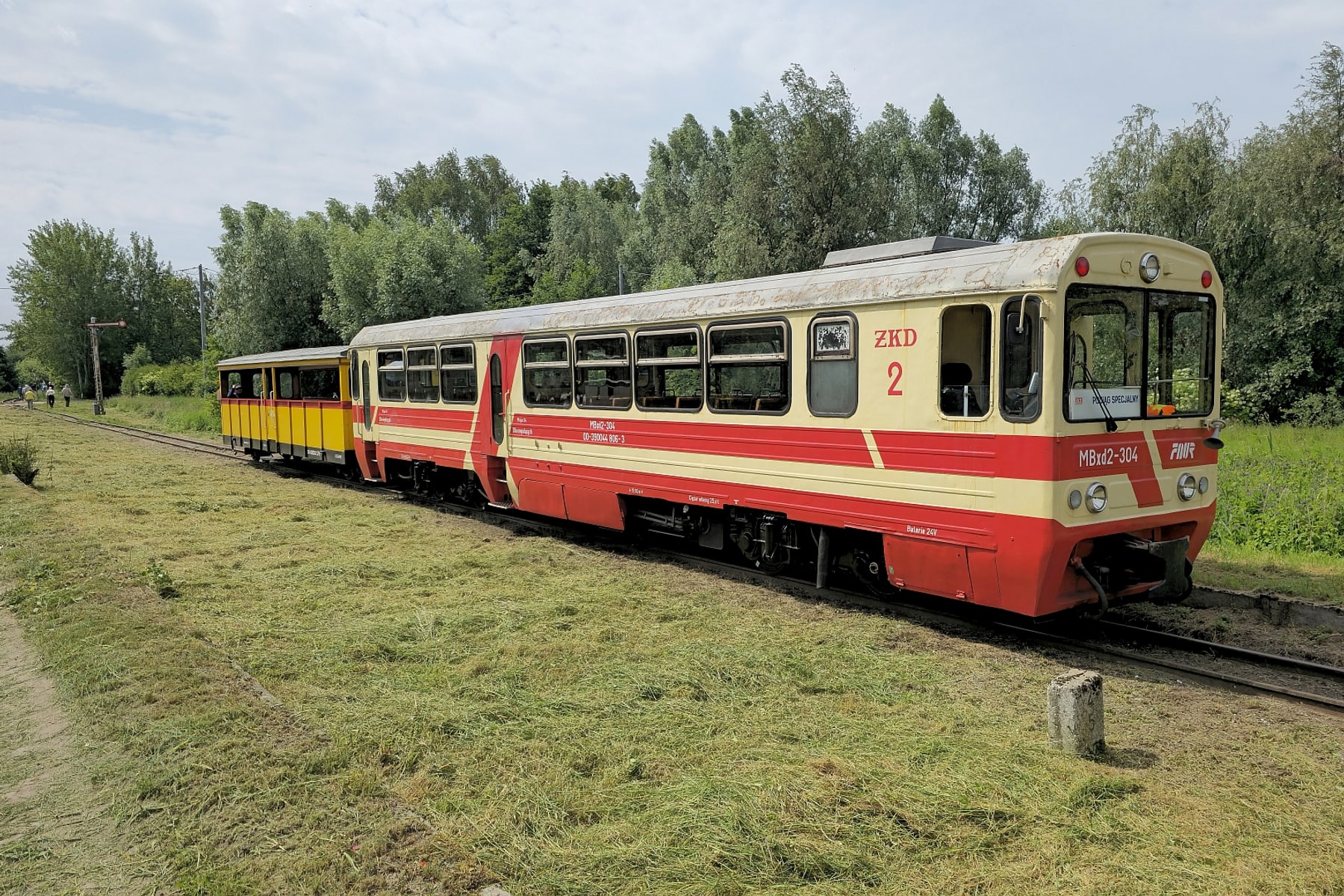
The Żuławy Narrow Gauge Railway
Joachim Lutz / Wikimedia Commons · CC BY-SA 4.0 · cropped
- DistanceAbout 30 km · 750 mm gauge
- Duration50 minutes Nowy Dwór to Stegna; 1 hour 10 to Sztutowo
- Best seasonJune to August daily; selected days in May and September weekends
Introduction
The Żuławy Narrow Gauge Railway publishes opening hours for one of its own bridges, and they are written for sailors. On a summer weekday in 2026 the swing bridge over the River Szkarpawa at Rybina stood open to boats from 18:50 until 09:05 and again from 09:50 until 18:10. The other 85 minutes belonged to the railway, and those are the minutes in which its trains crossed.
It was once the other way round. While the Polish state railways ran the line, the bridge stayed set for trains, and two pointsmen posted there in the sailing season swung it aside for any vessel too tall to pass underneath. Today the boats have it by default. In July 2025, after requests from sailors, the railway opened it more often and cut ten minutes from every closure. Summer weekends bring six closures a day, and the bridge is still turned by two people with a large key.
The bridge is the centrepiece of about 30 kilometres of 750-millimetre track that survive from a network of more than 330, built across the drained delta of the Vistula to carry sugar beet. The state stopped the last passenger trains on 8 September 1996. Volunteers ran the first train back on 15 August 2002, and in 2025 the railway carried 81,197 people to the Baltic beaches, on 117 days of the year.
The Journey
Trains start at Nowy Dwór Gdański, known as the capital of the Żuławy, whose depot is the railway's base. They leave northwards over the River Tuga at Żelichowo, on a fixed bridge of 1950 that replaced a second swing bridge. The ramp up to it is steep for a narrow-gauge line: the track was raised after the war so that larger boats could pass underneath.
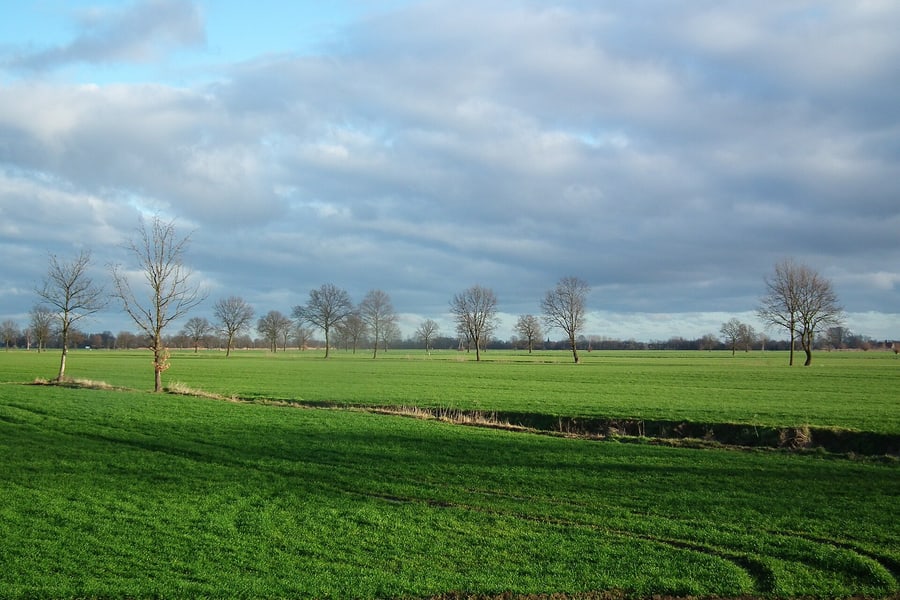
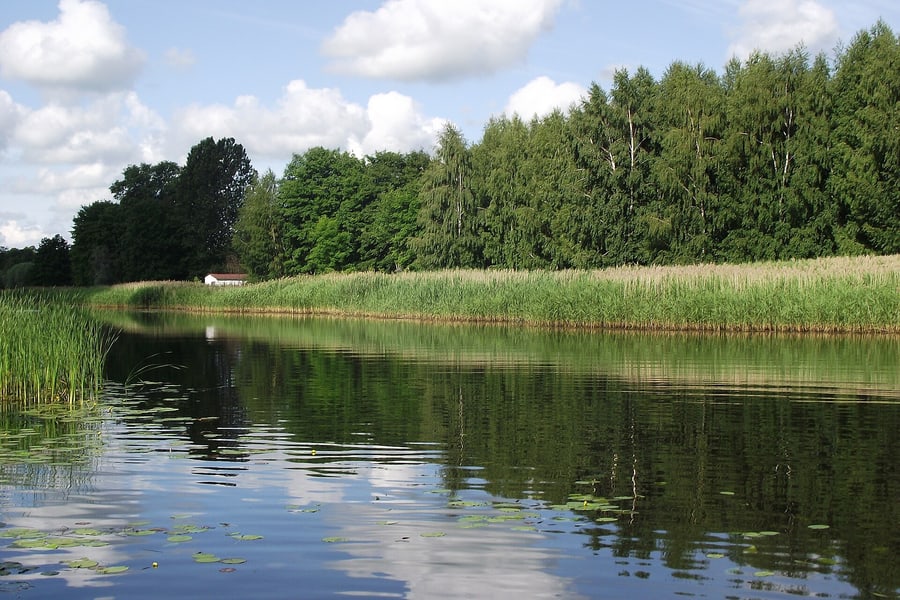
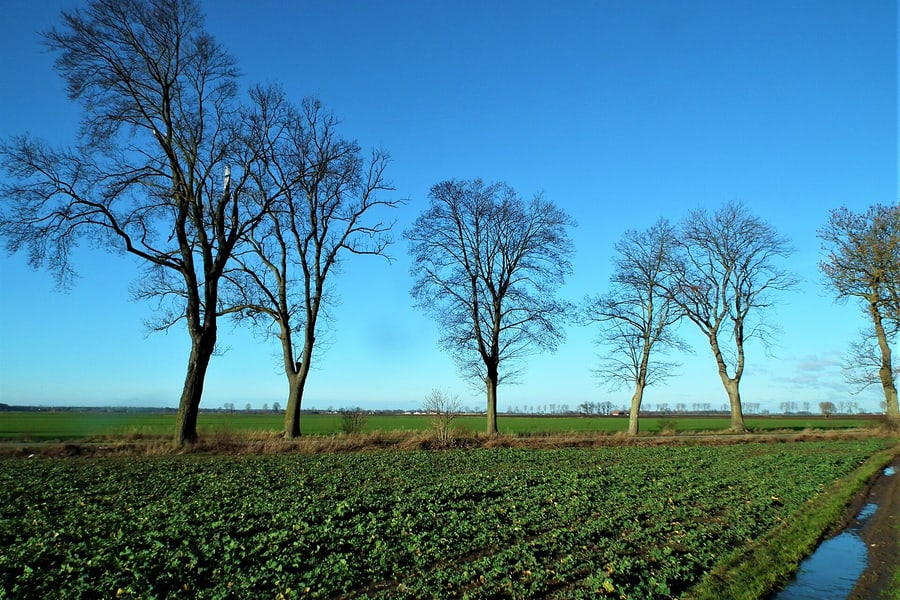
Beyond Cyganek and Tujsk the country is as flat as a table and lies as much as two metres below the level of the sea. A second big bridge crosses the Linawa canal beside the pumping stations at Chłodniewo, which keep this land dry.
The bridge at Rybina
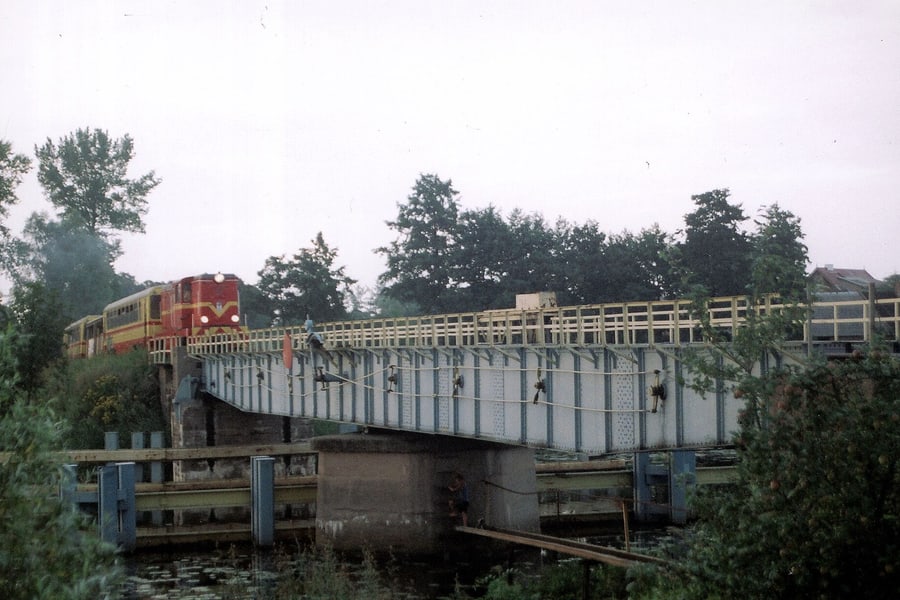
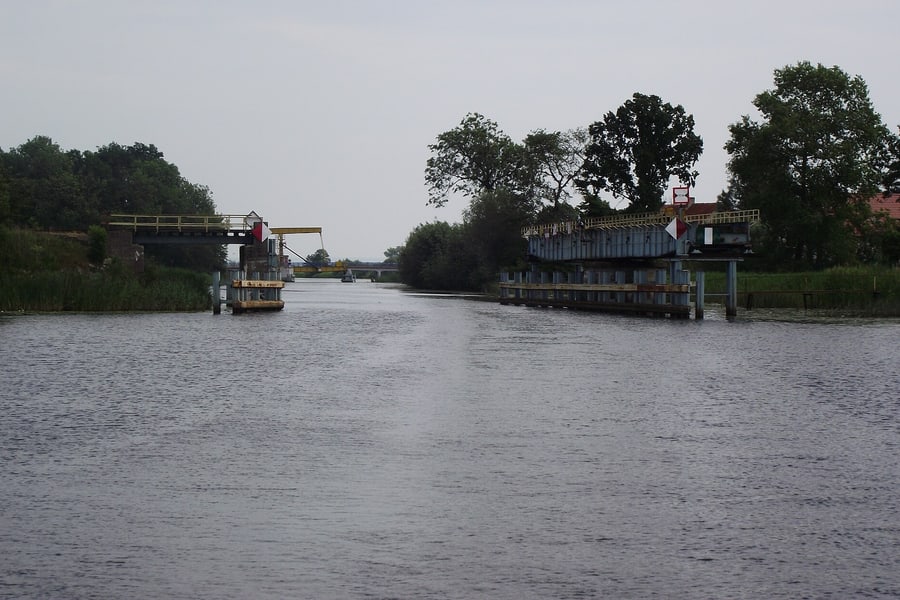
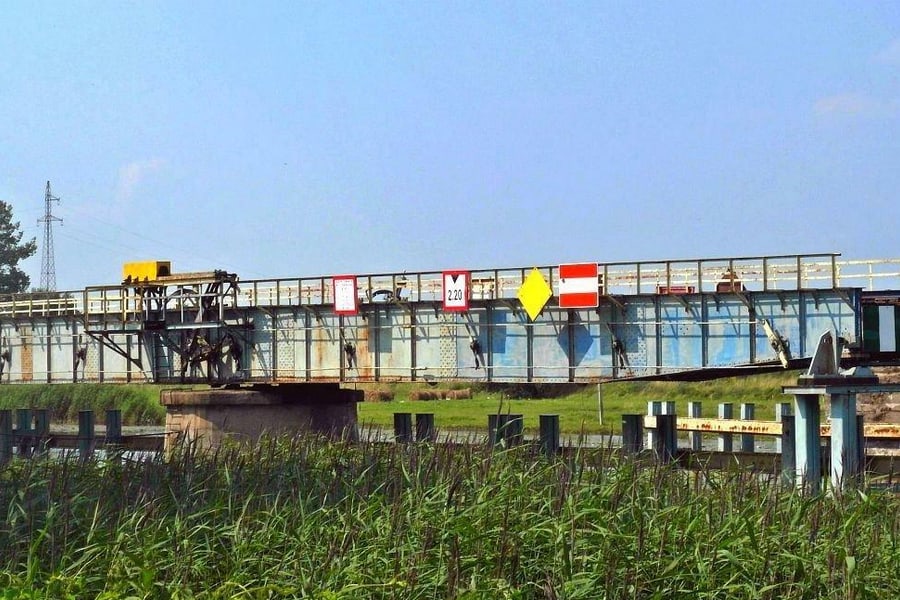
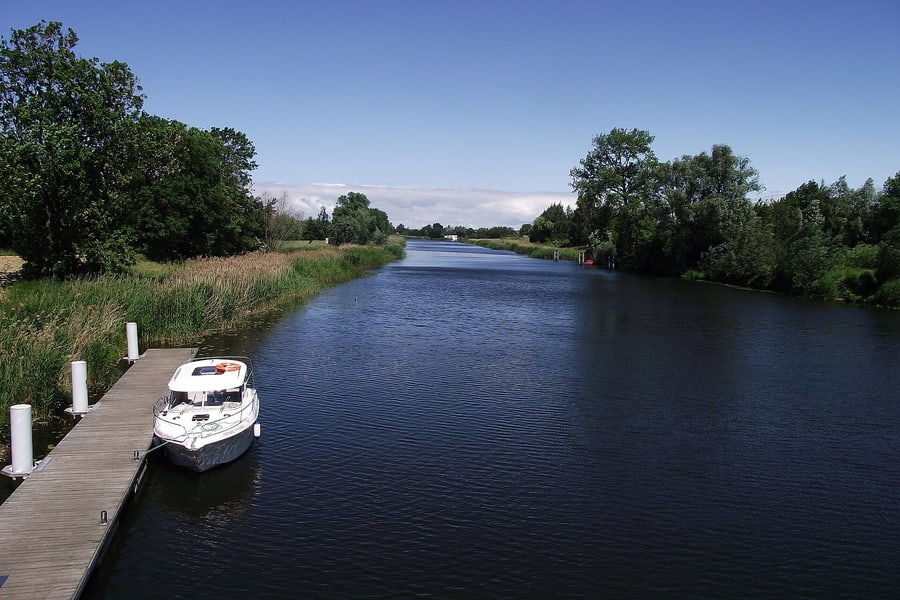
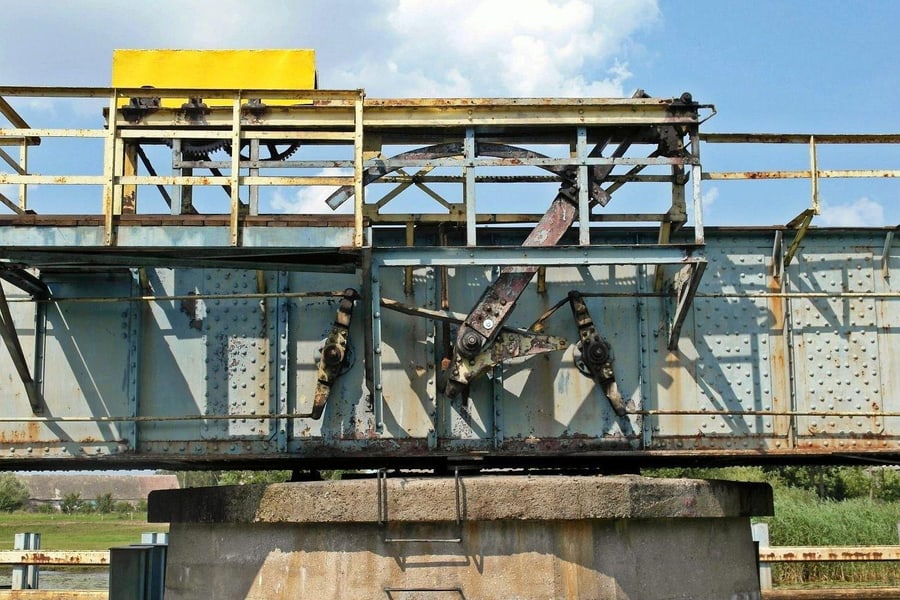
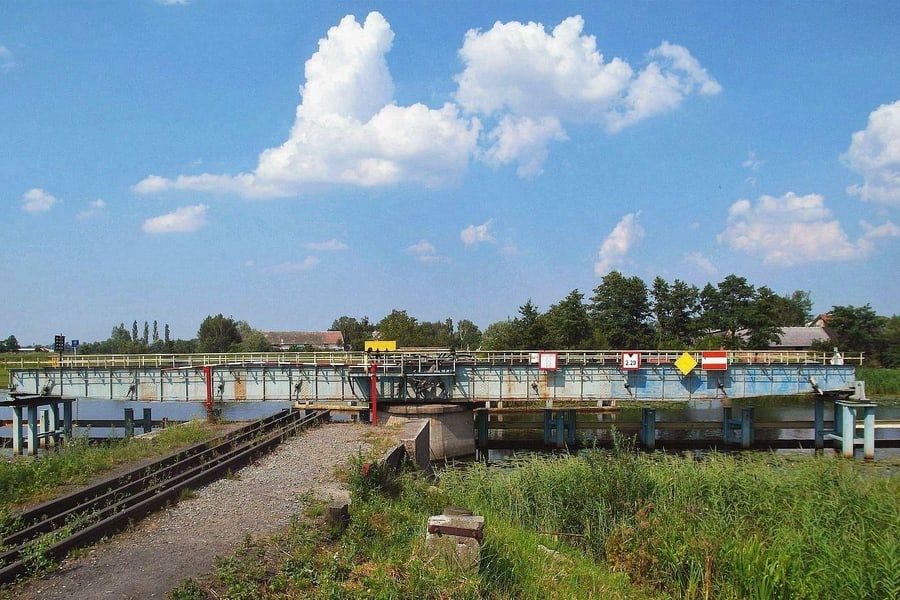
At Rybina a long ramp lifts the track from below sea level to the top of the Szkarpawa's flood banks. The bridge, built by 1906, has a swing span of 37.5 metres on a central pier and a shorter fixed span, 43.5 metres in all. Boats lower than 2.20 metres can pass beneath it when it is shut. For anything taller, the span is lowered off its bearing pads onto a single king bearing, and two pointsmen walk it round with a great key: twelve turns.
The precautions have a history. In the beet season of 1943 a train from Sztutowo ran into the Szkarpawa because the crew had not finished turning and bolting the span. Since then, keys held in locks on the bridge control the points on either side, and those points send a train into a buffer stop unless the bridge is fully secured. The bridge came through the closure of 1996 without serious damage and was overhauled in 2021–23, when the Nowy Dwór–Stegna section shut for the work. The railway describes it as the only working narrow-gauge swing bridge in Europe.
Onto the spit
After Popowo the track climbs again, off the delta and onto the sandy Vistula Spit, and reaches Stegna Gdańska, a junction laid out as a triangle. One line turns east through the middle of Stegna, squeezing between houses and holiday centres, to Sztutowo Muzeum, a halt at the gate of the former Stutthof concentration camp, now a state museum. The line ends a kilometre and a half further on at Sztutowo, another triangle, on which the whole train can be turned without uncoupling the engine. One arm of it once pointed towards Krynica Morska.
The other line turns west through pine forest. Jantar has three stops, and Jantar Port, the closest to the sea, is where most beachgoers get off. The train goes on past Mikoszewo to the end of the line, under the Vistula's flood bank.
A station named after a riverbank
That terminus is called Prawy Brzeg Wisły, the Right Bank of the Vistula, and its name and its track both remember what used to happen next. From 1905 the line began in Gdańsk, and between the two banks the train crossed on a ferry, the Aegir, carrying a locomotive and several wagons at a time. The engine topped up its water from the river during the crossing. The ferry stopped in the winter of 1955–56, and the station was moved behind the flood bank. The kilometre posts on this line still do not begin at zero, because they are counted from the far side of the water. The road ferry still runs, and the remains of the railway's quay can be seen from the bank.
Railcars and summer coaches
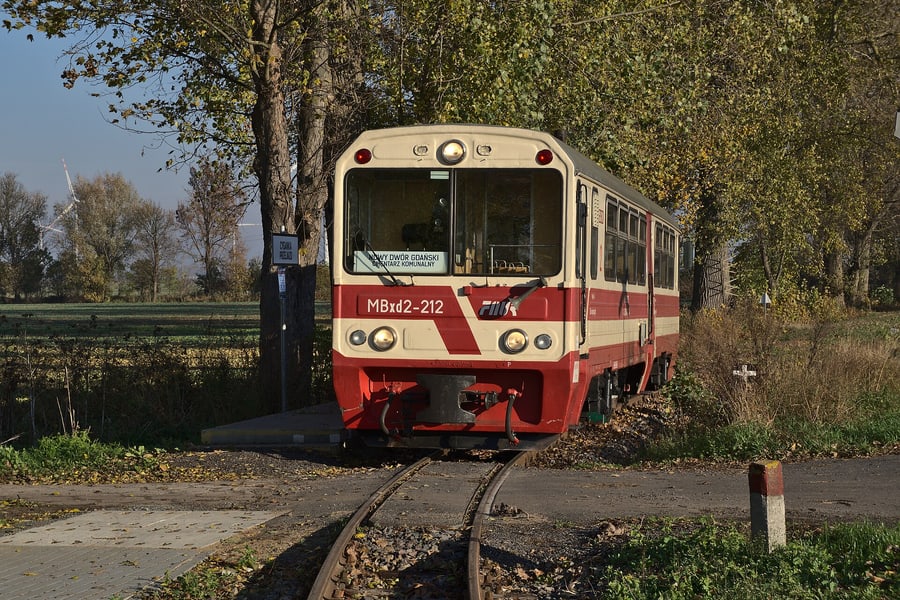
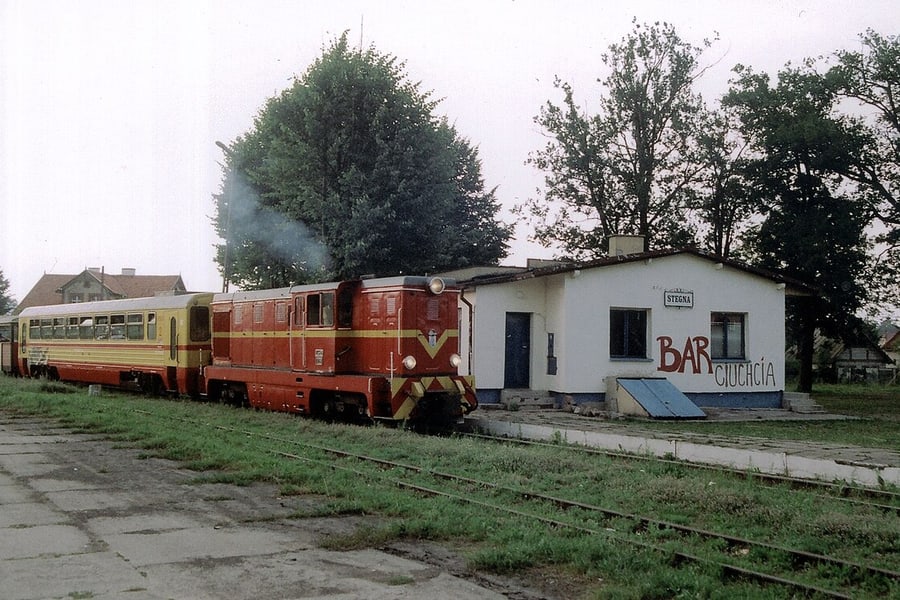
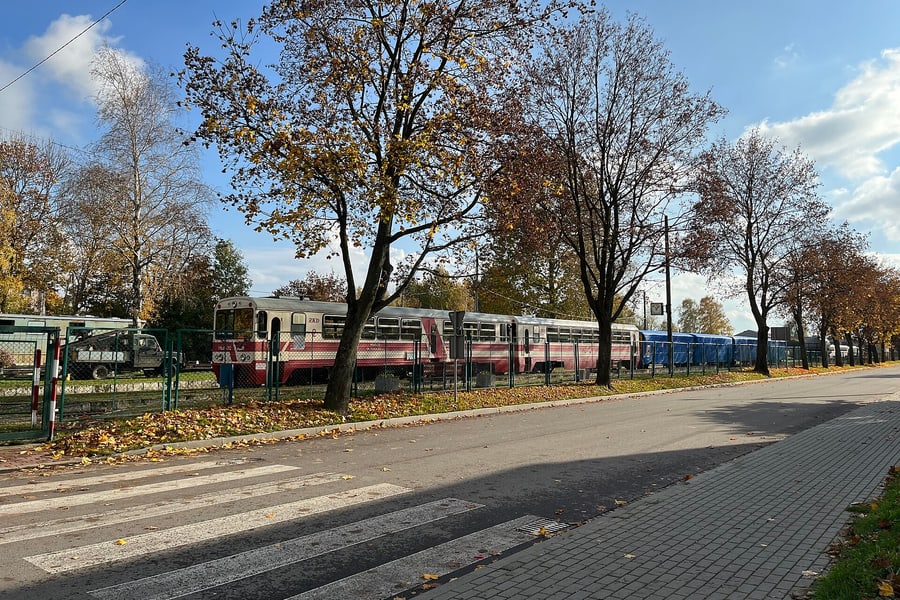
Daily services are mostly worked by a MBxd2 railcar, a Romanian FAUR design of the 1980s in red and cream. MBxd2-212 was built in 1986, worked here under the state railways, and was bought back from Ełk in 2004; 304 began life on 1,000-millimetre track and has run here since 2016.
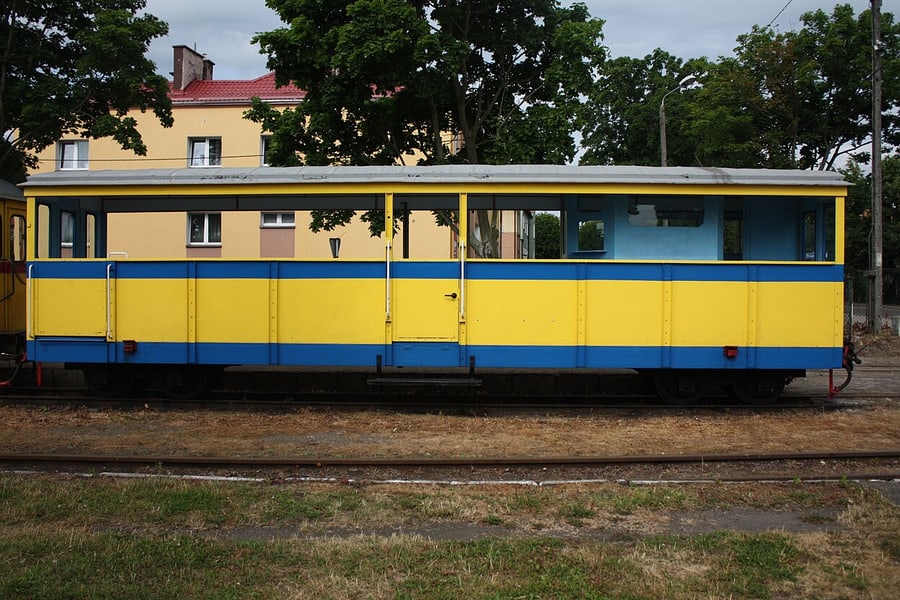
Heavier trains get an Lxd2, a Romanian diesel of a type built from 1968, which took over the heavy beet trains to the Nowy Staw sugar factory from steam around 1980. Behind them run the letniaki, open coaches with 25 seats, made from covered goods wagons in a programme begun at the Lisewo workshops in the 1970s.
Along the route
 MOs810 / Wikimedia Commons · CC BY-SA 4.0 · cropped
Below sea level
South of the bridge the line crosses fields as much as two metres below the sea, kept dry by canals and by the pumping stations at Chłodniewo, which the train passes on a bridge over the Linawa.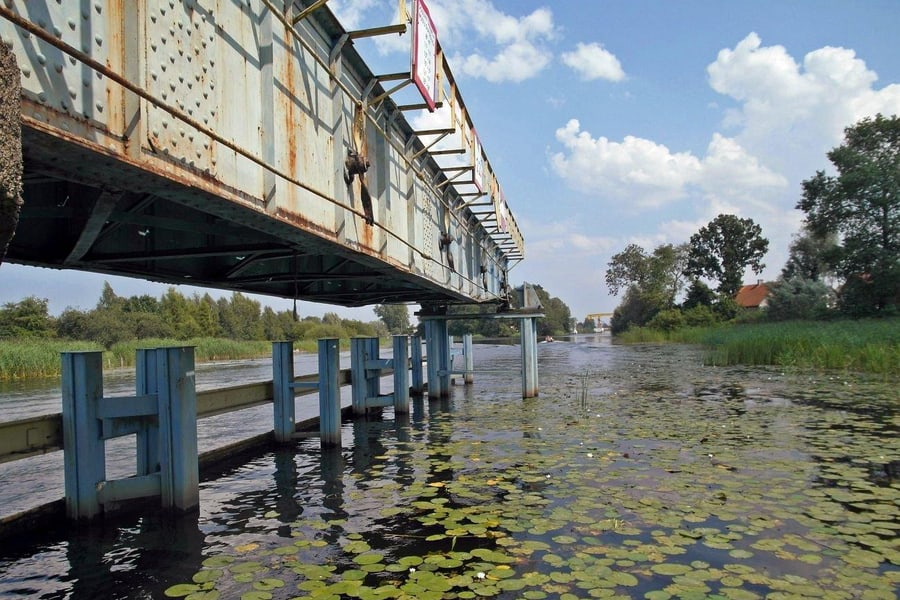 Yanek / fotopolska.eu / Wikimedia Commons · CC BY-SA 3.0 · cropped
Rybina
Long ramps carry the track up to the flood banks and onto the swing span. A protecting signal post stands on the approach, and the points before the bridge lead to a buffer stop until the span is locked.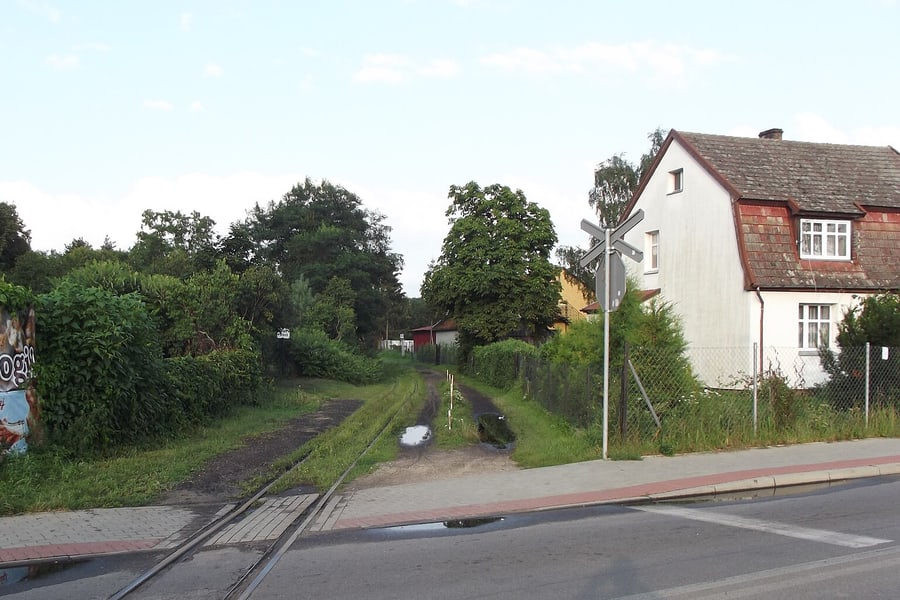 Tomasz Józefczak / Wikimedia Commons · CC BY-SA 3.0 · cropped
Stegna
A triangular junction where the lines to Sztutowo, the Vistula and Nowy Dwór meet. Three stops serve the town, and the track runs across its streets between houses and holiday centres.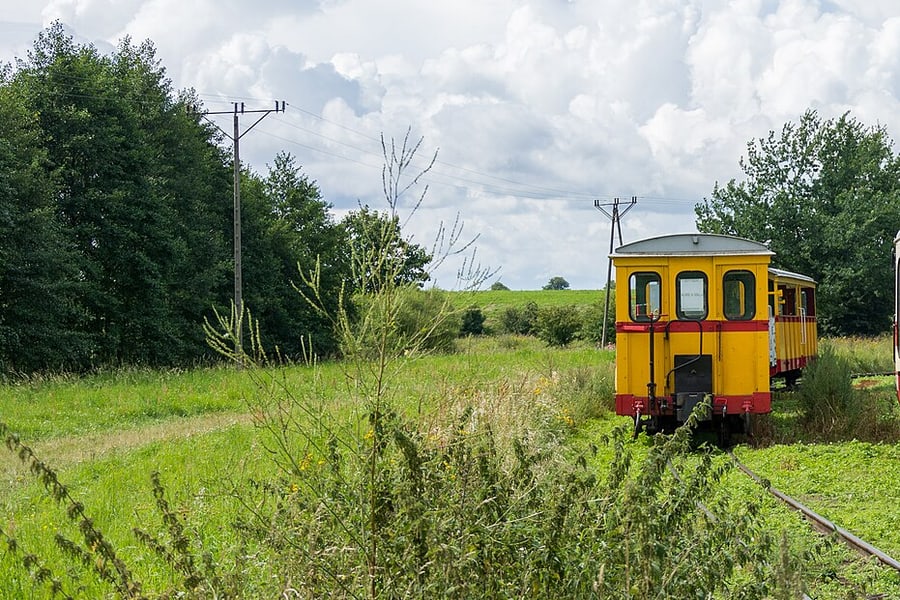 Karol Szapsza / Wikimedia Commons · CC BY-SA 4.0 · cropped
Prawy Brzeg Wisły
The end of the line, behind the Vistula's flood bank. Trains once went on across the river by ferry; today a short climb up the bank shows the river, the road ferry and what is left of the railway's quay.A bit of history
Culture & experiences along the way
 Yanek / fotopolska.eu / Wikimedia Commons · CC BY-SA 3.0 · cropped
Watch the bridge turn
On running days in 2026 the railway said the span could be watched turning at about 09:00 and 18:30, closing for the first train of the day and the last. Groups can charter a special train with a demonstration of the bridge arranged for them.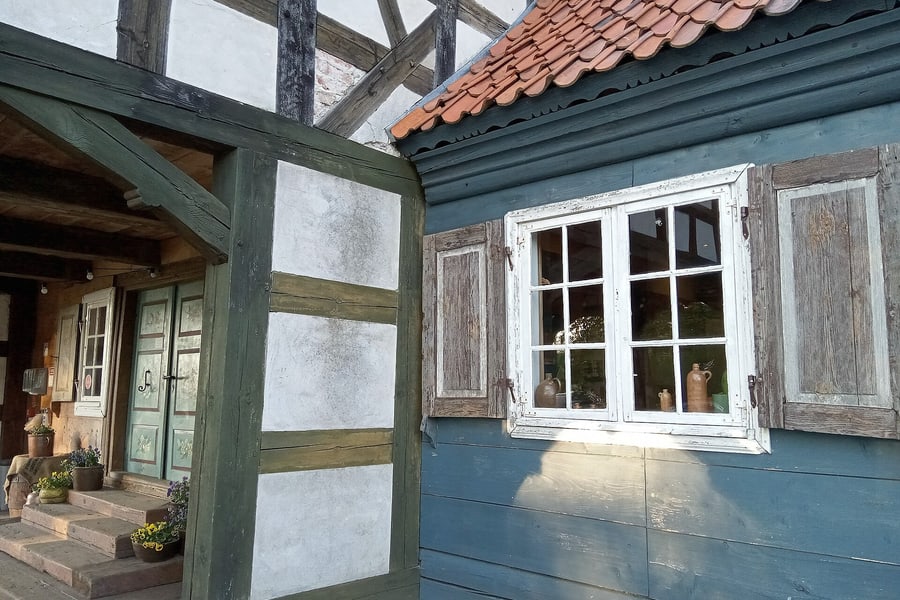 Klarqa / Wikimedia Commons · CC BY-SA 4.0 · cropped
Żuławy cooking at Cyganek
Gospoda Mały Holender is a 300-year-old arcaded house, moved from Jelonki to the bend of the Tuga from 2003. It serves the region's recreated Werderkäse cheese and Königsberg meatballs, and runs cheese-making workshops. It is close to Cyganek, the first stop out of Nowy Dwór.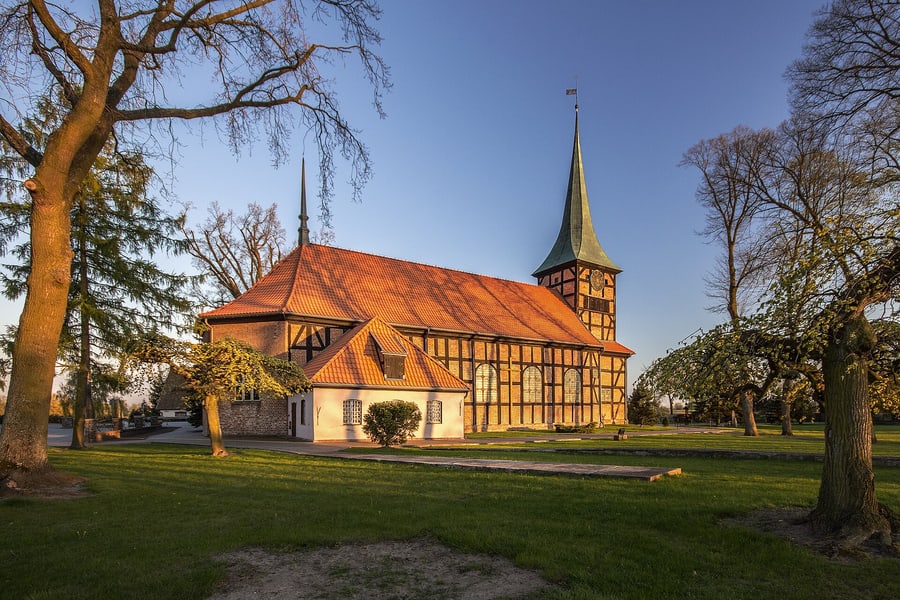 Sławomir Milejski / Wikimedia Commons · CC BY-SA 4.0 · cropped
Organ evenings at Stegna
Stegna's half-timbered church of 1681–83, nearest the Stegna Morska stop, once served Protestants and Catholics alike. Its baroque interior has a painted ceiling and a hanging model warship, and its organ is played at evening concerts in summer.Timetables
The 2026 season ran on 1–3 and 30–31 May, every day from 1 June to 30 August, and at weekends in September. The first train of the day leaves Nowy Dwór Gdański at 09:00 and works the whole system in one sweep: on to Sztutowo, across to Prawy Brzeg Wisły, and back and forth along the coast until it returns to Nowy Dwór at 19:10.
Nowy Dwór Gdański to Stegna, across the bridge
| Train | Nowy Dwór Gd. | Cyganek | Rybina | Stegna Gd. |
|---|---|---|---|---|
| 300 daily | 09:00 | 09:14 | 09:35 | 09:50 |
| 302 summer weekends | 11:00 | 11:14 | 11:35 | 11:50 |
| 304 summer weekends | 14:30 | 14:44 | 15:05 | 15:20 |
| Train | Stegna Gd. | Rybina | Cyganek | Nowy Dwór Gd. |
|---|---|---|---|---|
| 303 summer weekends | 12:20 | 12:35 | 12:56 | 13:10 |
| 305 summer weekends | 15:50 | 16:05 | 16:26 | 16:40 |
| 301 daily | 18:20 | 18:35 | 18:56 | 19:10 |
Summer weekends means Saturdays and Sundays from 27 June to 30 August. Train 300 runs on from Stegna at 09:52 and reaches Sztutowo at 10:10. Train 301 starts at Sztutowo at 18:00.
Along the coast
| Train | Sztutowo | Stegna Gd. | Jantar | Prawy Brzeg Wisły |
|---|---|---|---|---|
| 200 | 10:15 | 10:35 | 10:58 | 11:15 |
| 202 | 12:50 | 13:10 | 13:33 | 13:50 |
| 204 | 15:25 | 15:45 | 16:08 | 16:25 |
| Train | Prawy Brzeg Wisły | Jantar | Stegna Gd. | Sztutowo |
|---|---|---|---|---|
| 201 | 11:35 | 11:53 | 12:17 | 12:35 |
| 203 | 14:10 | 14:28 | 14:52 | 15:10 |
| 205 | 16:45 | 17:03 | 17:27 | 17:45 |
Stops at Stegna PKS, Stegna Morska, Sztutowo Muzeum, Junoszyno, Jantar Młyn, Jantar Port, Jantar Leśniczówka and Mikoszewo are on every coastal train.
From the operator's published 2026 timetable, as of November 2026. The summer season has ended and the 2027 timetable (opens in a new tab) is not yet published. Festive trains run on 6 and 26 December 2026 from Nowy Dwór Gdański at 10:00, 13:00 and 16:00 to Jantar. The railway answers on +48 722 239 569.
Getting there
The railway's own advice is that its stops are about half an hour by road from Elbląg, Malbork and the Tri-City of Gdańsk, Gdynia and Sopot. PKS line 870 runs from Gdańsk to Sztutowo Muzeum, and PKS Elbląg's Krynica Morska route also stops there.
Tickets
Sit down and the conductor comes to you: tickets are sold on board, by cash or card, as well as through the moBILET app and online. There is no reservation for ordinary trains. The fare depends on how far you go: 19 zł for a short hop along the coast, 24 zł for a longer one, and 14 zł from Nowy Dwór Gdański to Stegna, which is promotional. Children under 4 travel free, and all the statutory Polish reductions apply. A bicycle is 15 zł and a dog 7 zł.
Return tickets are sold only online, at twice the single fare and valid on the return all day. From the operator's fare table in force from 1 April 2026, as of November 2026.
Book your tickets
Nowy Dwór to Stegna
Across the Rybina bridge · 14 zł one way
A promotional fare on the section with the swing bridge, sold on board or online.
via Żuławska Kolej DojazdowaAlong the coast
Stegna to Jantar or Sztutowo · 19 zł one way
The shorter coastal hops, sold on board or online.
via Żuławska Kolej DojazdowaEnd to end on the coast
Sztutowo to Prawy Brzeg Wisły · 24 zł one way
The longest single journey on the coastal line, sold on board or online.
via Żuławska Kolej DojazdowaDay ticket
Every train on the system, for the whole day · 120 zł
A named ticket for all lines, sold online only, at half price for pupils and students.
Book Tickets (opens in a new tab, on Żuławska Kolej Dojazdowa)via Żuławska Kolej DojazdowaRail Passes
No rail pass covers this railway. Interrail's table of railway companies lists PKP Intercity, POLREGIO and the regional operators for Poland, and no narrow-gauge line. Everyone pays the ordinary fare.
A pass can help you reach the region: POLREGIO's regional trains need no reservation, and a Global Pass or a Poland Pass covers them. The railway's stops are then about half an hour by road from Elbląg, Malbork or the Tri-City.
For this trip alone a pass is not worth buying, since the longest single fare is 24 zł and a day ticket for the whole system 120 zł.
Checked November 2026 against Interrail's table of railway companies (opens in a new tab), last updated 21 October 2026, and the railway's fares (opens in a new tab).
Places to Visit
The line runs between the delta and the sea, and the stops either side of Stegna reach very different places: a working bridge, a museum of the people who drained the land, the Baltic, the mouth of the Vistula, and a memorial.
Yanek / fotopolska.eu / Wikimedia Commons · CC BY-SA 3.0 · croppedThe Rybina swing bridge
A listed monument since 1997 and, the railway says, the only working narrow-gauge swing bridge in Europe, built in 1905–06 and overhauled in 2021–23, when its steelwork was repainted in colours close to the original. A mooring pier on the Drewnica side holds boats waiting for it to open, and signal lights at each end of the span now tell them when it will.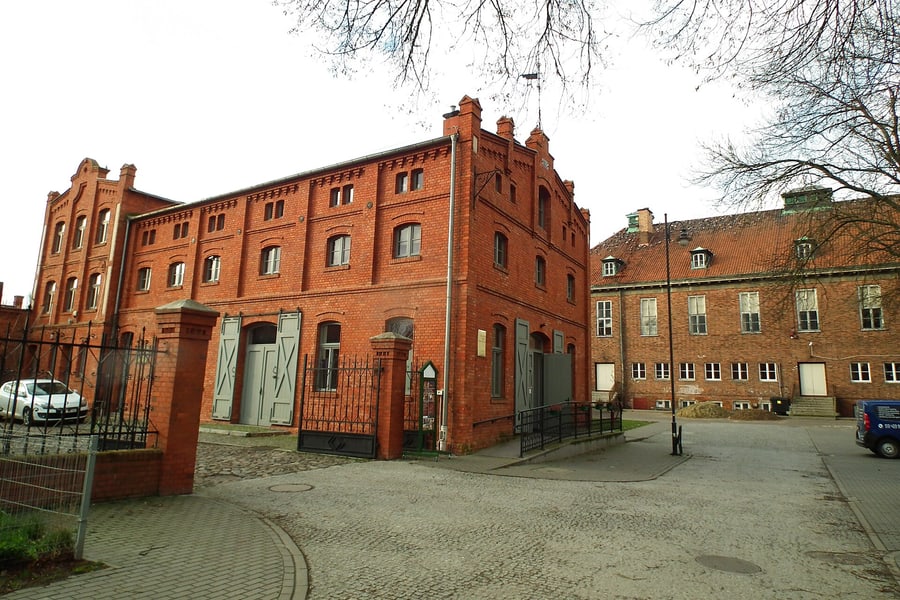 MOs810 / Wikimedia Commons · CC BY-SA 4.0 · cropped
The Żuławy Historical Park
Renovated brick buildings in the town hold the Żuławy Museum, with a model of Nowy Dwór as it was before the war, Poland's last drainage windmill, an exhibition on the Mennonite settlers from the Netherlands, and a loft of curiosities. The railway suggests it as a walk from the station between trains.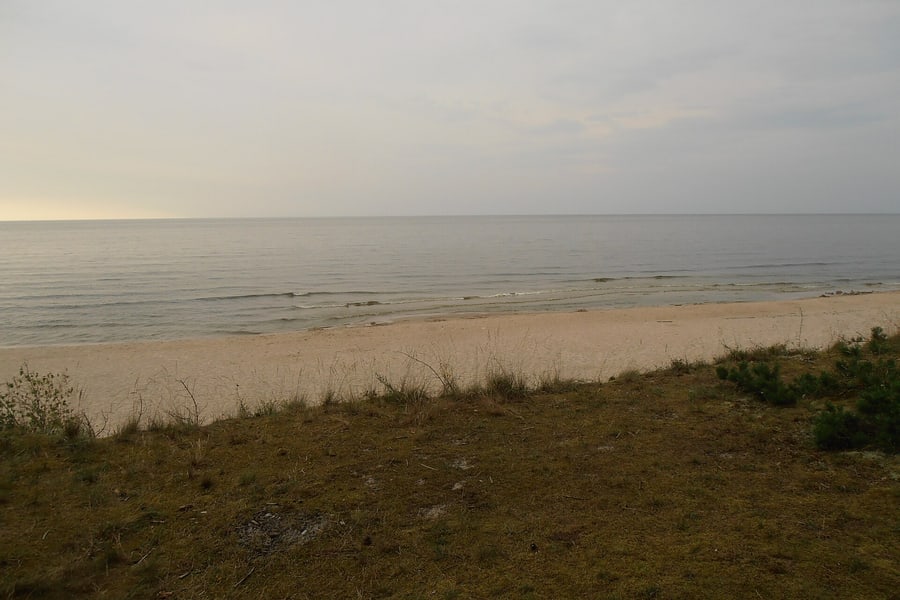 Grzegorz W. Tężycki / Wikimedia Commons · CC BY-SA 4.0 · cropped
The Baltic at Stegna
The coastal line runs through the forest of the Vistula Spit a short walk from this sand. The railway says Jantar is the easiest place along the shore to find amber washed up, and from Jantar Port the road leads to the beach and to the harbour, where with luck you can buy fish straight from the boat.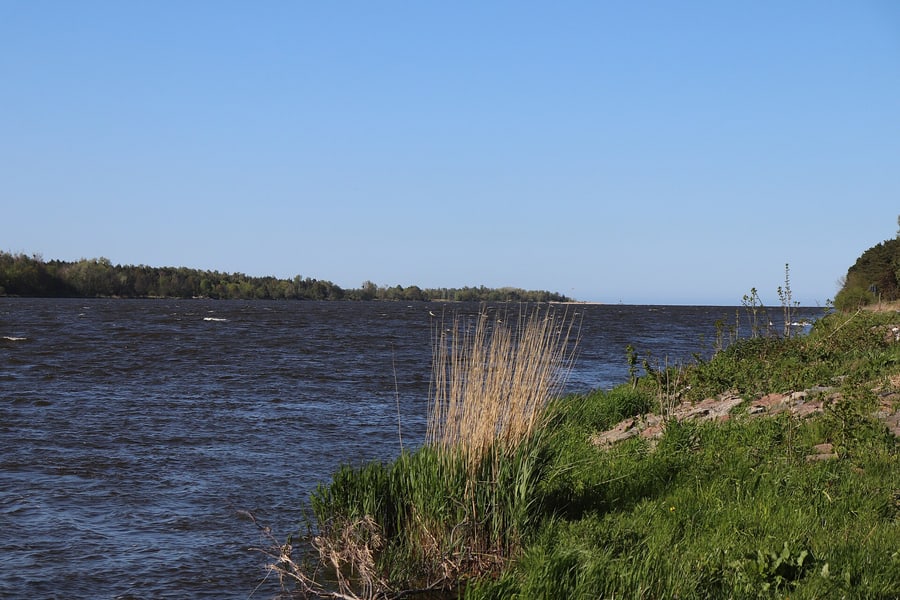 Andrzej Otrębski / Wikimedia Commons · CC BY-SA 4.0 · cropped
The Vistula Cut
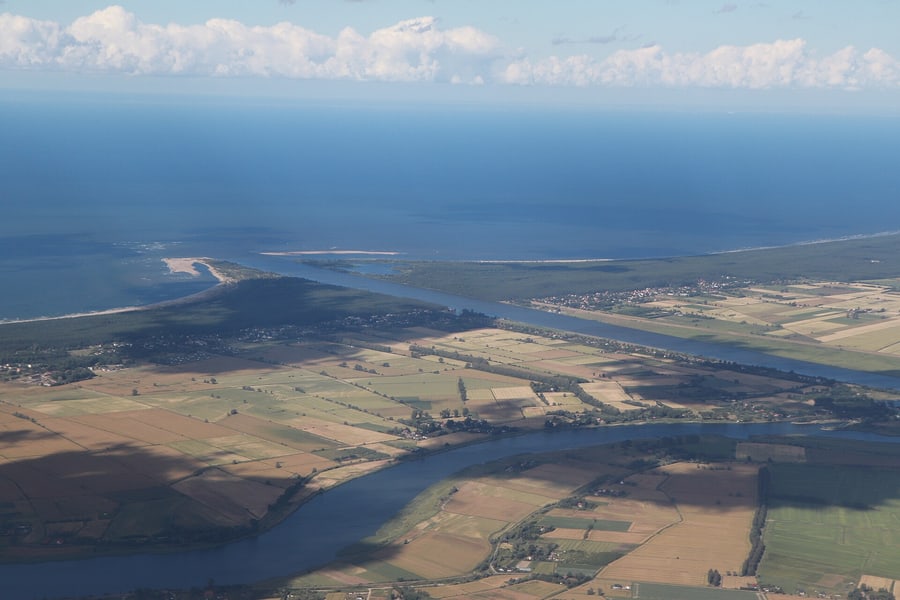
To tame the river's floods, Prussian engineers dug through the spit between Świbno and Mikoszewo, and since 1895 the Vistula has reached the Baltic here. The cut runs right past the end of the line, and the railway's ferry crossed it until 1956. From the top of the flood bank you can see the road ferry and what remains of the railway's quay.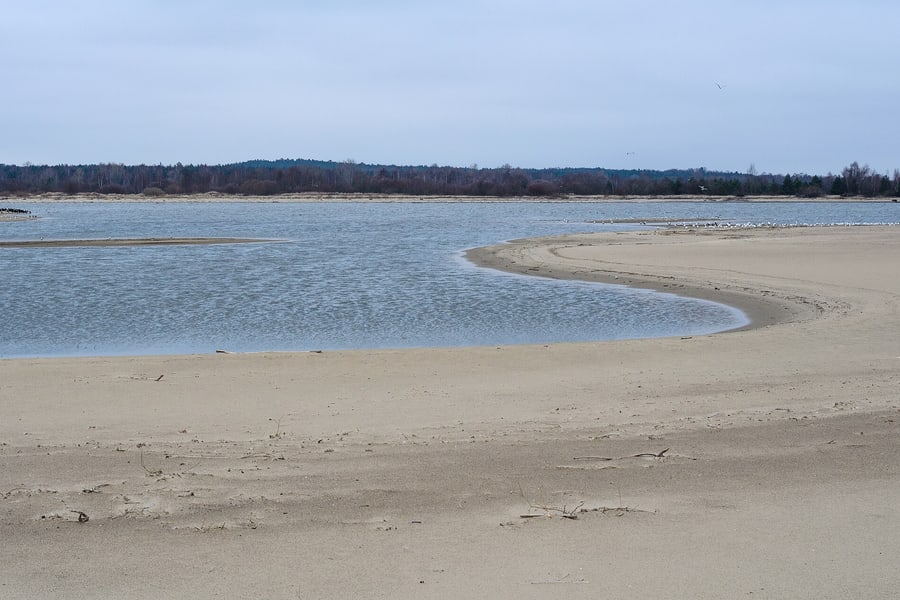 Marta Reszka / Wikimedia Commons · CC BY-SA 3.0 · cropped
Mewia Łacha
At the river's mouth sandbars built up by the current hold a nature reserve where thousands of birds nest in summer. Grey seals have returned to the Baltic and come ashore here, and the railway reports almost a hundred at once on a temporary island of sand. The walk along the bank from the station is one the railway recommends for spring and summer.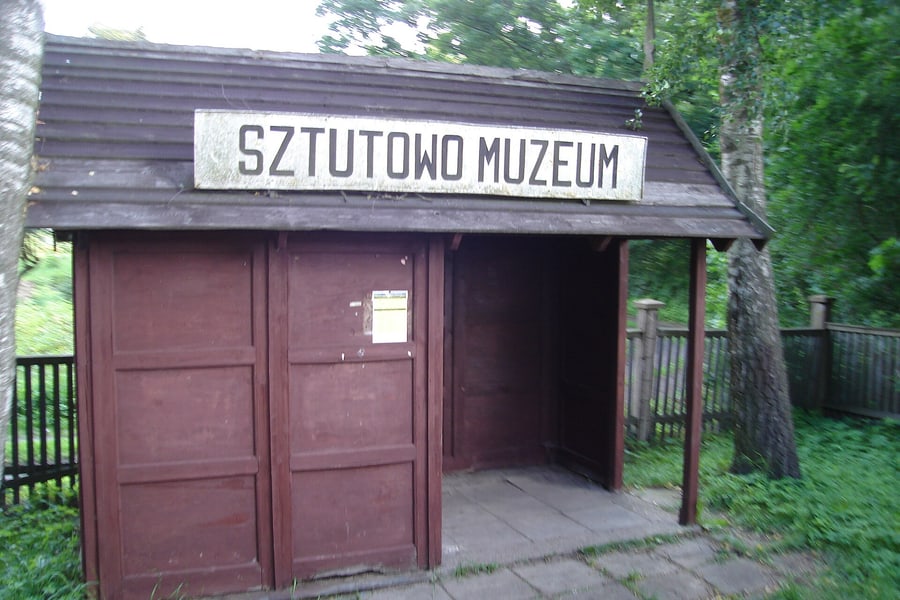 Duży Bartek / Wikimedia Commons · CC BY-SA 3.0 · cropped
Stutthof Museum
The site of the German Nazi concentration camp opened on 2 September 1939 and liberated on 9 May 1945; some 63,000 to 65,000 prisoners died. The state museum here is free and opens daily, from 9:00 to 18:00 in summer and 8:00 to 15:00 from October, and a visit takes about two hours. Children under 13 must be accompanied by an adult, and the museum asks visitors for seriousness and suitable dress.Where to Sleep
Stegna puts you at the junction and within walking distance of the beach; Nowy Dwór Gdański suits the first train across the bridge.
Where to stay
Bursztynowe Resort & SPA
Among the pines at Stegna
A resort in the pine woods fifteen minutes on foot from the beach, with a restaurant, two bars and a spa.
Check Availability (opens in a new tab, on bursztynowe-resort.pl)via bursztynowe-resort.plWilla Joker
Sienkiewicza 2, Nowy Dwór Gdański
Thirteen rooms in a historic villa in the town centre, with a restaurant serving regional dishes.
Check Availability (opens in a new tab, on willajoker.pl)via willajoker.plQuestions or corrections
Planning this trip and stuck on something, or spotted a time, fare or detail that has changed? Send us a message about The Żuławy Narrow Gauge Railway. We read every one, and we update this page when something has changed.