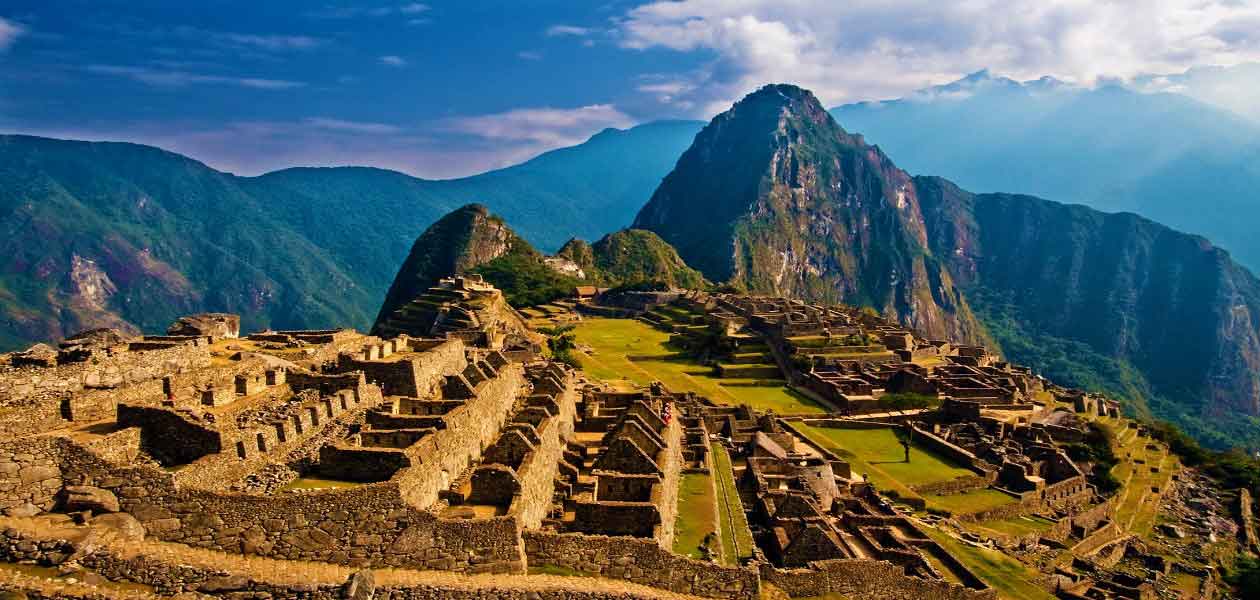
Peru

Peru covers 1.28 million square kilometres of western South America — the third-largest country on the continent — and holds about 34 million people, with Ecuador, Colombia, Brazil, Bolivia and Chile around it and the Pacific down its whole western side. Lima, on that coast, is the capital and largest city. The country comes in three strips: arid coastal plain, the Andes running the length of it, and Amazon rainforest beyond.
The middle strip is what makes Peru a railway country. Its mountains are so high, and the ways over them so hard, that the lines built to cross them became feats of engineering people travelled to see — including the second-highest railway on earth. What runs today is a small number of separate routes rather than a network, some of them everyday narrow-gauge services and some five-star tourist trains. All of them climb high enough that the altitude, rather than the timetable, is the thing to plan around: acclimatise first, and take the first day at height gently.
Rail journeys in Peru
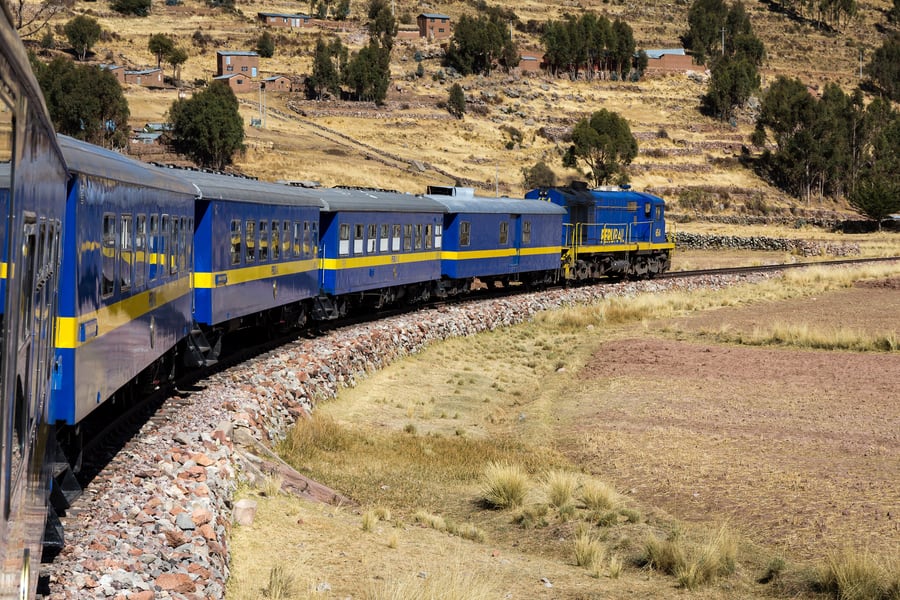
Belmond Andean Explorer
South America's first luxury sleeper — a rolling hotel across the Peruvian altiplano from Cusco to Lake Titicaca and Arequipa, over passes above 4,300 metres.
View journey →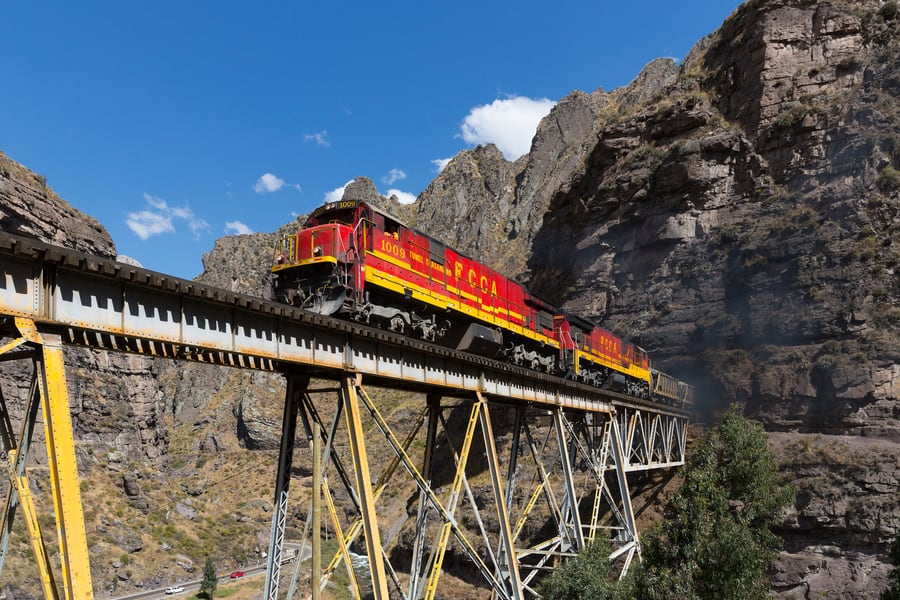
Ferrocarril Central Andino
The second-highest railway on earth — Lima to Huancayo over a 4,783 m tunnel, on 69 tunnels, 58 bridges and a staircase of 1870s switchbacks.
View journey →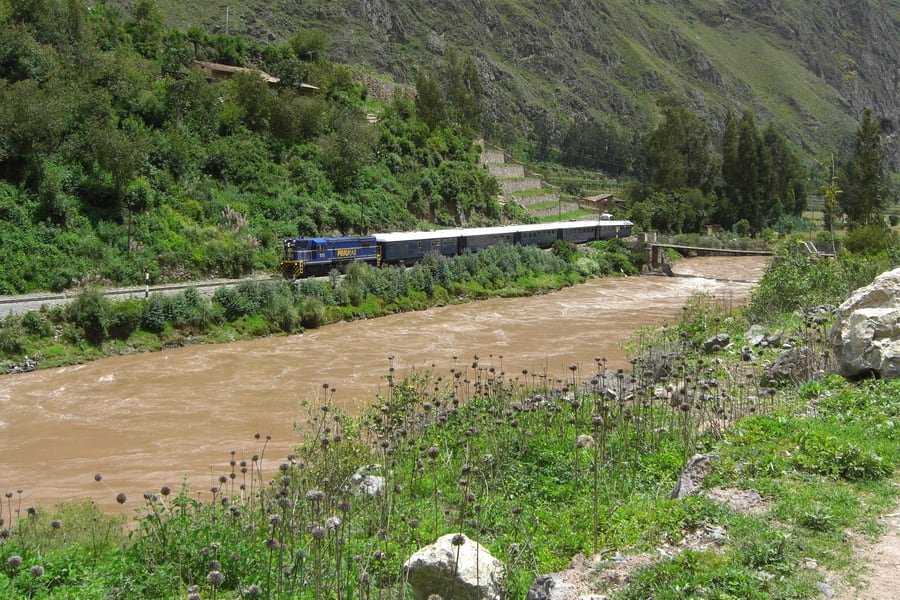
Machu Picchu Train
The only way in — a narrow-gauge line down the Urubamba gorge on glass-roofed trains through cloud forest, because no road reaches Machu Picchu.
View journey →Good to know
What are Peru's best rail journeys?
Three, and they could hardly be more different. The Machu Picchu train is the essential one — the only way to reach the citadel bar the Inca Trail. The Belmond Andean Explorer is South America's first luxury sleeper, crossing the altiplano to Lake Titicaca and Arequipa. And the Ferrocarril Central Andino is the second-highest railway on earth, Lima to Huancayo over a 4,783 m tunnel.
How do I reach Machu Picchu by train?
Take the Machu Picchu train from the Cusco region — usually from Ollantaytambo in the Sacred Valley, sometimes from Cusco itself — down to Aguas Calientes below the ruins, run by PeruRail and Inca Rail. There is no road, so the train (or the multi-day Inca Trail) is the only way in. Seats and Machu Picchu entry tickets both sell out in the dry season, so book well ahead.
How high do Peru's railways climb, and should I worry?
Very high — Peru has some of the highest railways in the world, crossing Andean passes well above 4,000 m; the Central Andino tops 4,780 m. Take altitude seriously: acclimatise for a day or two (ideally in the lower Sacred Valley before Cusco), go easy on your first day at height, drink water, and use the oxygen the high trains carry if you need it.
When is the best time to travel?
The dry season, roughly May to September, gives the clearest skies and most reliable conditions in the high Andes. The wetter months can bring cloud and landslides that disrupt mountain services. Book the popular trains — above all to Machu Picchu — months ahead for the dry season.