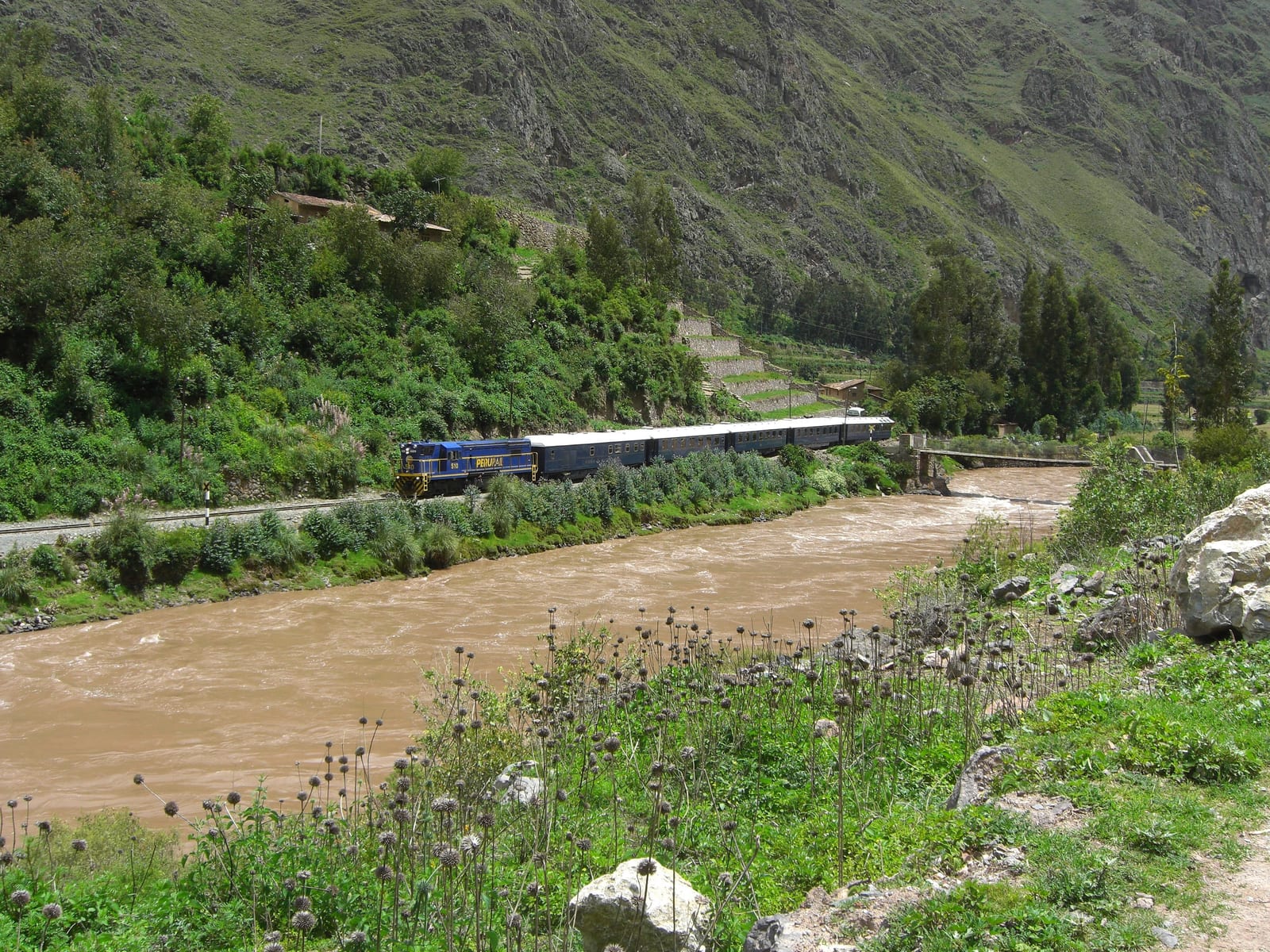
Machu Picchu Train
Jason Hollinger / Wikimedia Commons · CC BY 2.0
- DistanceCusco / Ollantaytambo → Aguas Calientes · 914 mm
- Duration1h45 from Ollantaytambo · 3h30 from Cusco
- Best seasonMay–Oct (dry) · book far ahead
Introduction
Here is the thing most people don't realise until they start planning a trip to Machu Picchu: you cannot drive there. There is no road. The town at the foot of the ruins, Aguas Calientes, is connected to the rest of Peru by exactly two things — a railway, and a footpath. Either you take the train, or you walk the multi-day Inca Trail.
That is why this modest narrow-gauge line is one of the most famous railways on earth. It isn't the highest, or the longest, or the grandest. It is simply the only way in to the most visited place in South America, and that turns a two-hour ride into a pilgrimage.
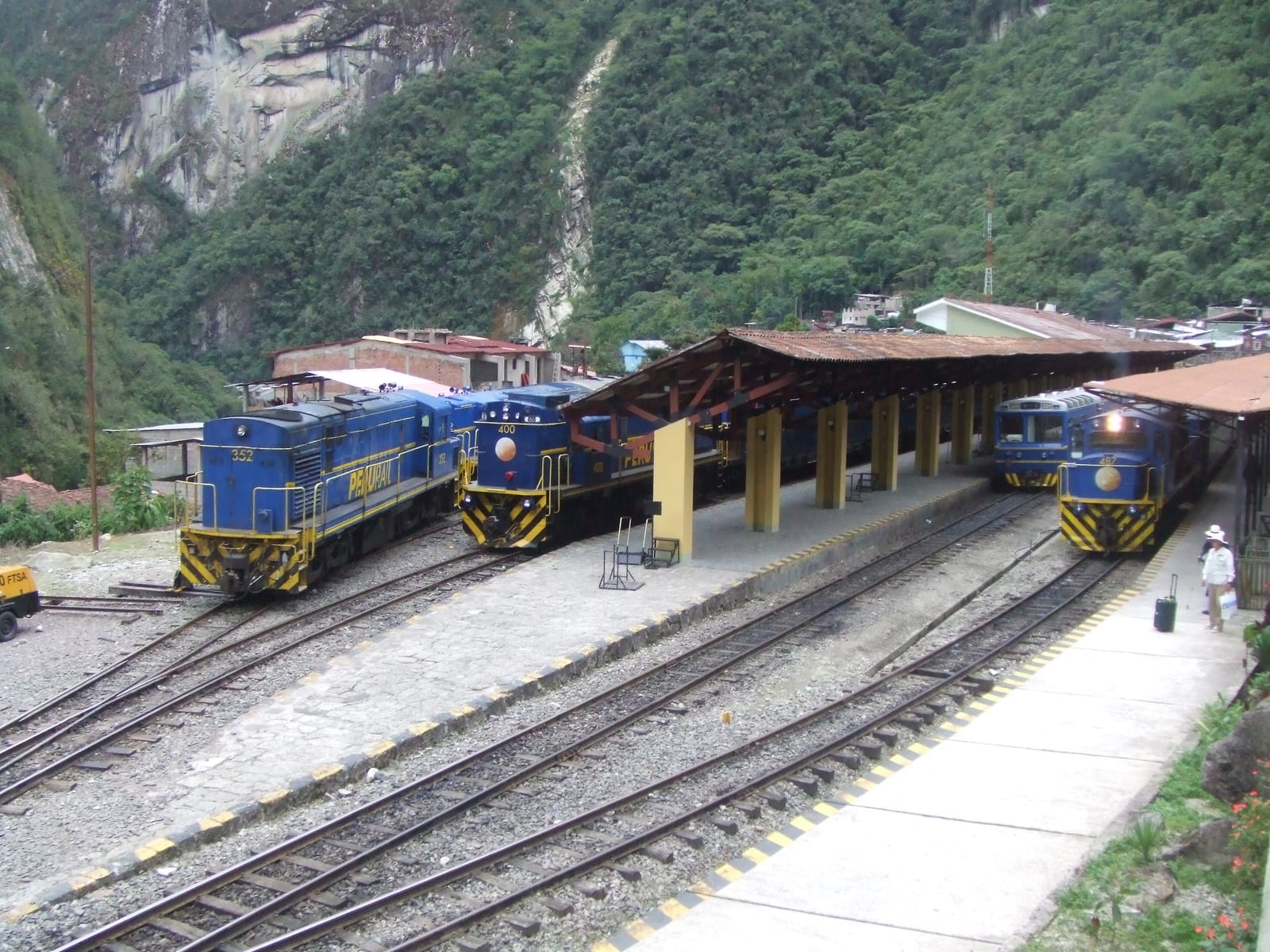
The line runs on 914-millimetre track — narrower than the standard-gauge southern line the Andean Explorer uses — from the Cusco region down to Aguas Calientes, following the Urubamba river as it cuts down through the mountains. Two companies work it, PeruRail and Inca Rail, and between them they run a steady stream of trains through the day, because a great many people want to get to the same place.
Most travellers don't start in Cusco itself. They join the train at Ollantaytambo, a magnificent Inca town deep in the Sacred Valley, for the roughly hour-and-three-quarters run to Aguas Calientes. Boarding higher up, at Cusco, takes about three and a half hours and adds a slow climb out of the city — scenic, but most people skip it.
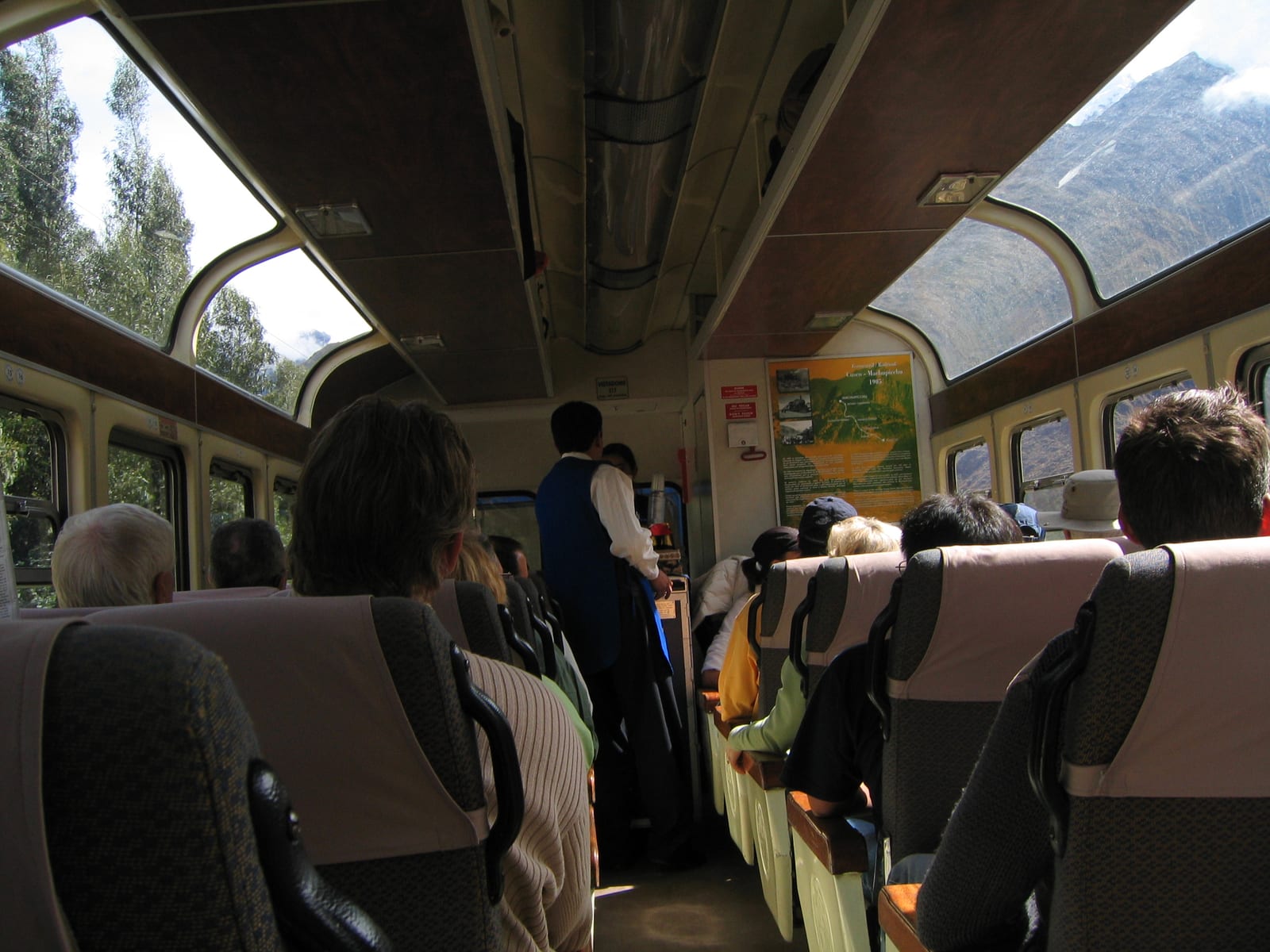
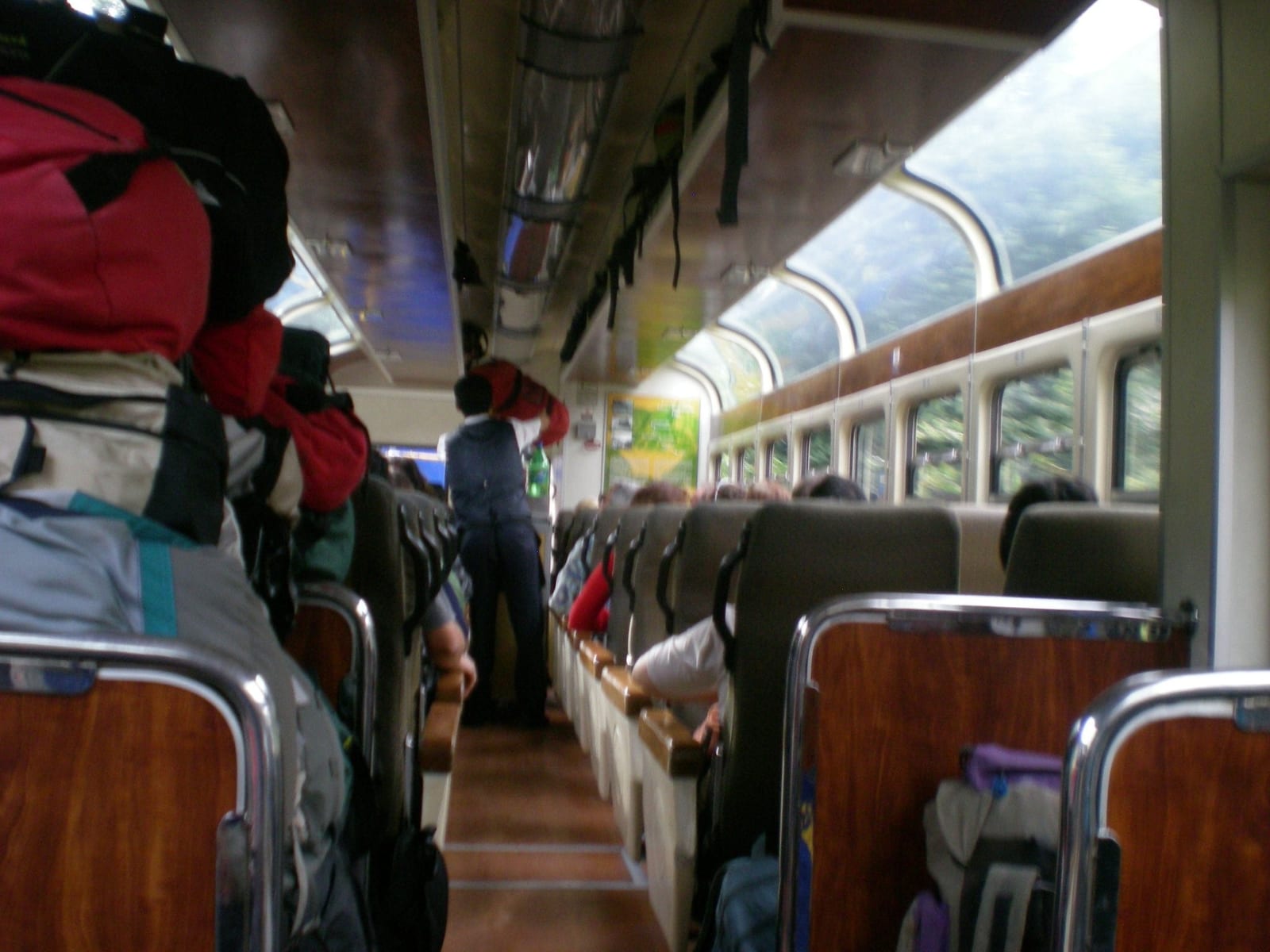
What makes the ride itself special is the transformation. You start in the dry, high, Andean world — thin air, brown hills, big sky — and over the course of a couple of hours the train drops into cloud forest: the gorge deepens, the air warms and thickens, and the mountainsides turn to orchids, ferns and dripping green. The Vistadome trains are built for exactly this, with glass roofs as well as big windows, because in a gorge this steep the best scenery is directly overhead.
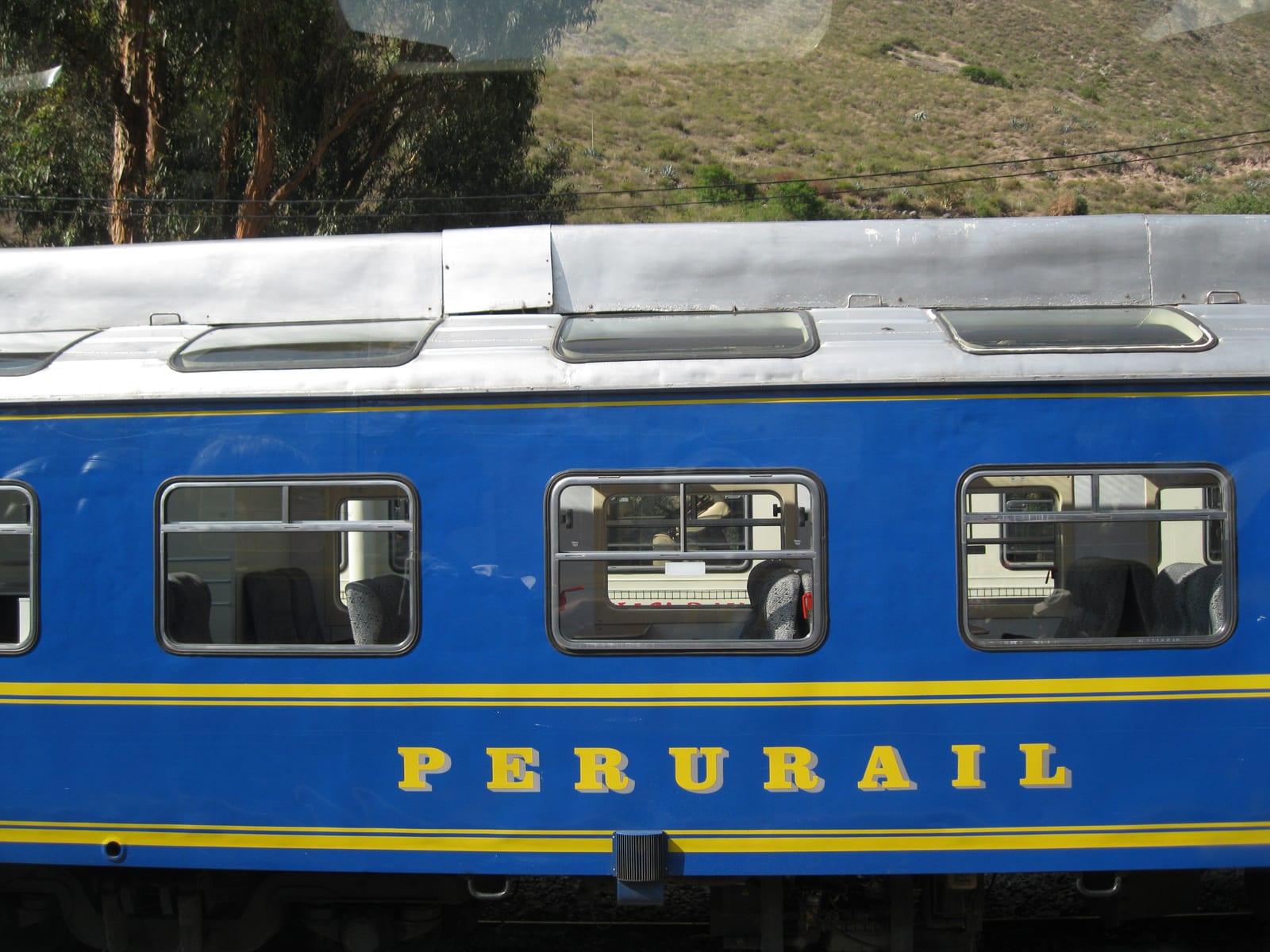
You can do it cheaply on the plain Expedition service, comfortably on the Vistadome, or in outright luxury on the Belmond Hiram Bingham, a 1920s-Pullman train that includes your bus up to the ruins and your entry ticket. Same gorge, same river, wildly different price.
However you ride it, the train delivers you to Aguas Calientes, and from there a bus climbs the last switchbacks to the gates of Machu Picchu. It is the busiest railway in this book, and the least about the railway — but without it, the wonder at the end simply couldn't be reached.
The Journey
Most journeys to Machu Picchu begin not in Cusco but in the Sacred Valley, at Ollantaytambo — and that's no hardship, because Ollantaytambo is one of the great Inca towns, a living grid of stone streets beneath enormous terraced ruins. You board here, at around 2,800 metres, and the train sets off down the valley.
(You can start higher, in Cusco, where the line climbs out of the city before descending — a longer, three-and-a-half-hour ride. But the frequent, straightforward trains run from Ollantaytambo, and that's where the crowds and the schedule point you.)
From Ollantaytambo the railway follows the Urubamba river — the sacred Vilcanota — downstream, and the journey becomes a steady descent into a different world. The valley starts wide and agricultural, patched with maize fields and eucalyptus, the river braided and shallow. But the mountains close in as you go, the gradient steepens, and the Urubamba changes from a valley river into a torrent, white and loud, hammering through a narrowing gorge.
And the vegetation changes with it. This is the edge of the Amazon watershed, and the train is descending into cloud forest: the dry Andean scrub gives way to green, then to dense green, then to orchids and bromeliads and ferns hanging off the rock, with the peaks vanishing into cloud above. It happens fast — an hour or so — and it is the loveliest part of the ride. On the Vistadome trains, with their glass-domed roofs, you can tip your head back and watch the gorge walls rise sheer overhead, which in this terrain is where half the drama is.
After about an hour and three-quarters the train slows into Aguas Calientes — officially Machu Picchu Pueblo — a small, steep, hectic town crammed into the bottom of the gorge, the river thundering through the middle of it and cloud-forest peaks straight up on every side. There is no road out; the railway is the high street. It's chaotic, a little overwhelming, and unmistakably the threshold of somewhere extraordinary.
From here, the train's work is done. A fleet of buses grinds up the switchback road above the town to the gates of Machu Picchu, 400-odd metres higher, on its ridge between the peaks — or you can walk it, steeply, if your legs and the altitude agree.
It is, in railway terms, a short and modest trip: a couple of hours on a narrow-gauge line down a river. But it is also the only train in the world whose entire reason for existing is to carry people to a single, unreachable wonder — and riding it, packed in with everyone else making the same pilgrimage, is a genuine part of the experience of getting to Machu Picchu at all.
Along the route
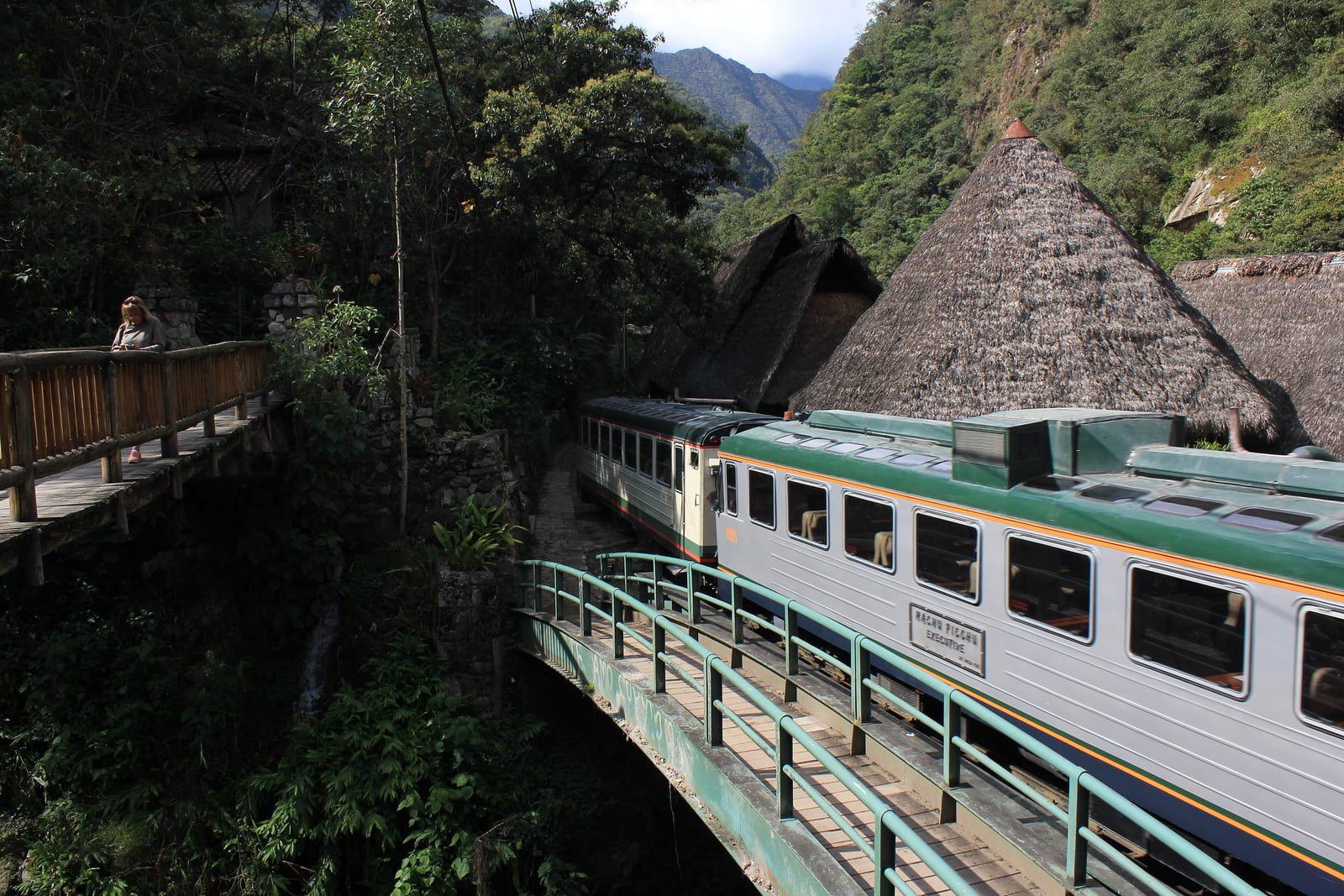
Hugh Llewelyn / Wikimedia Commons · CC BY-SA 2.0There is no road
You cannot drive to Machu Picchu. Aguas Calientes, the town at its foot, has no road to the outside world — the train is the only way in, short of walking the multi-day Inca Trail. That single fact is why this modest narrow-gauge line is one of the most famous railways on earth.Laslovarga / Wikimedia Commons · CC BY-SA 4.0Down into the cloud forest
The line drops from the dry highlands into the cloud forest, following the Urubamba river as the gorge deepens and the vegetation thickens — from Andean scrub to orchids, ferns and hanging green in the space of a couple of hours. The change is extraordinary.egroj / Wikimedia Commons · CC BY 2.0Glass roofs by design
The Vistadome trains have panoramic windows and glass-dome ceilings, and they are not a gimmick: in a gorge this steep, the interesting scenery is straight up. It is one of the few trains where the view through the roof matters as much as the one through the window.A bit of history
Culture & experiences along the way
PeruRail passengers / Wikimedia Commons · CC BY 2.0Boarding at Ollantaytambo
Most people join the train at Ollantaytambo, deep in the Sacred Valley — a spectacular Inca town in its own right — for the ~1h45 run to Aguas Calientes. It's the shortest, most frequent way, and it skips the slow climb out of Cusco.Rodrigo.Argenton / Wikimedia Commons · CC BY-SA 3.0The three ways to ride
Take your pick: Expedition for the plain, affordable ride; Vistadome for the glass roofs and a bit of ceremony; or the Belmond Hiram Bingham, a 1920s-Pullman luxury train with dinner, a guide and the citadel entry all included. Same gorge, three very different trips.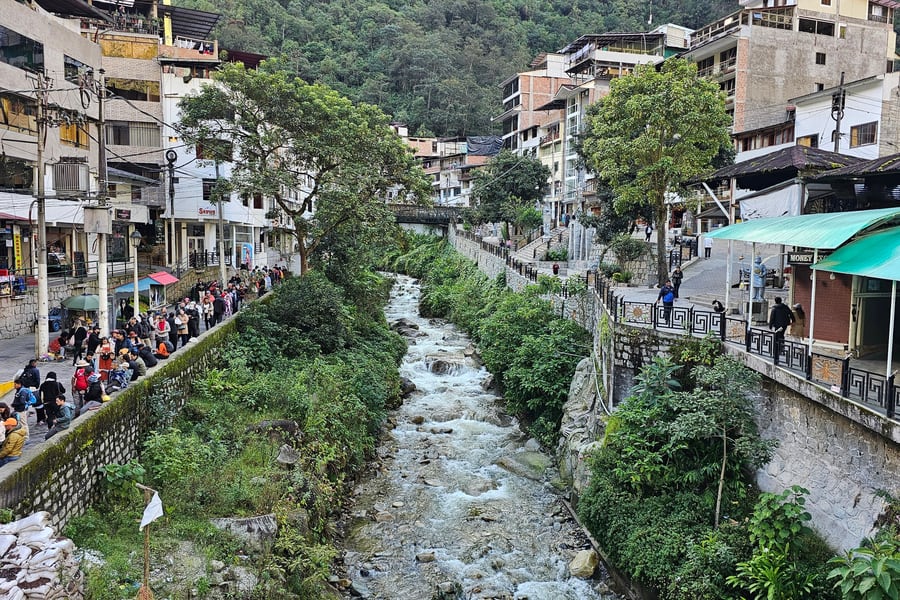 Jorge Castro Ruso / Wikimedia Commons · CC BY-SA 2.0 · cropped
Arriving at Aguas Calientes
The train ends at Aguas Calientes — a small, steep, slightly frantic town wedged into the gorge below the ruins, with the river roaring through it. From here a bus (or a stiff walk) climbs the last switchbacks to the gates of Machu Picchu itself.Timetables
Unlike Peru's other great trains, this one runs many times a day, every day — it has to, given how many people need to reach Machu Picchu. Trains run through the day, roughly from before dawn to mid-evening. The timetable is easy; booking is not.
Journey times to Aguas Calientes (Machu Picchu Pueblo):
| From | Duration | Notes |
|---|---|---|
| Ollantaytambo | ~1 h 45 m | the main hub; most frequent all year |
| Cusco (Poroy / San Pedro) | ~3 h 30 m | fewer services, seasonal |
| Urubamba | shorter | some premium services |
Both PeruRail and Inca Rail run the line, with similar routes and tiers (Expedition/Voyager for budget, Vistadome/360° for glass-roofed scenery, the Hiram Bingham for luxury).
Good to know:
- ⚠️ Rainy-season "bimodal" service. From 1 January to 30 April each year, departures from Cusco run bus-then-train (bus to Ollantaytambo or Pachar, then rail) rather than straight through — plan for the change.
- Ollantaytambo is the practical start — the most frequent departures all year, skipping the slow climb out of Cusco. Get to the Sacred Valley the day before and board there.
- Your train ticket is only part of it. Machu Picchu needs a separate, timed entry ticket (and usually the bus up from Aguas Calientes), which also sell out — book the citadel entry at the same time as the train, and match your return to the entry slot.
- Dry season (May–October) is the reliable window; the wet months can bring landslides that disrupt the line.
Journey times and the bimodal season as of 2026; exact departure times vary by operator and season. Confirm current schedules with the operators — see the Tickets section below.
Tickets
Tickets come from PeruRail and Inca Rail, and booking is the whole game — the trains are easy to find and hard to get a seat on. Expedition is the affordable, perfectly comfortable standard that most people ride; Vistadome adds panoramic windows and glass-dome ceilings, and is the sweet spot for the gorge; the Belmond Hiram Bingham is a 1920s-Pullman occasion at a different order of price, with the bus and the citadel entry included.
Two things to plan together. You need a separate, timed Machu Picchu entry ticket except on the Hiram Bingham, so buy it in step with the train and match your return to the entry slot — treat the whole thing as one booking problem, not two. The bus up is extra as well, unless you plan to walk the steep hour from Aguas Calientes. Compare both operators: availability on your date decides it.
Book your tickets
Expedition & Vistadome
PeruRail's everyday trains
The two mainstream services: Expedition is the affordable, comfortable standard; Vistadome adds panoramic windows, glass-dome ceilings and light onboard entertainment. Both run Ollantaytambo (and Cusco) to Aguas Calientes. Inca Rail offers similar tiers.
Book Tickets (opens in a new tab, on PeruRail / Inca Rail)via PeruRail / Inca RailBelmond Hiram Bingham
The luxury option
The 1920s-Pullman luxury train, ~3h40, with brunch or dinner, live music, a bar car, a guide, and — included — the bus up to the citadel and your Machu Picchu entry. The grand way to arrive, at a grand price.
Book Tickets (opens in a new tab, on PeruRail (Belmond))via PeruRail (Belmond)Rail Passes
No rail pass covers the Machu Picchu trains. Interrail and Eurail are European schemes, and Peru is not among the 33 countries in Interrail's list of covered railway companies. PeruRail and Inca Rail each sell their own seats on named trains, and the Machu Picchu entry ticket is a separate purchase.
Checked October 2026 against Interrail's list of railway companies (opens in a new tab).
Places to Visit
The train is a means to an end — but the end, and nearly everything on the way to it, is as good as travel gets. The whole Sacred Valley sits between Cusco and the citadel, and none of it is a detour.
Get the order right and the altitude looks after itself. Cusco is the highest thing in the itinerary, so a good many people now fly in, go straight down to the valley for their first two nights, and come back up to the city at the end rather than the beginning. Ollantaytambo is the natural base either way: it is the main boarding point for the train, and being on the platform ten minutes from your bed beats a pre-dawn drive from Cusco.
Two practical things. Entry to Machu Picchu is by timed ticket on a fixed circuit: three circuits between them carry ten named routes, and you commit to one when you buy. The two climbs are routes in their own right — Waynapicchu sits in Circuit 3, Montaña Machupicchu in Circuit 1 — so if you want either, that decision comes before the ticket, and both go early. And if you have longer, the region keeps giving: Choquequirao, a hard multi-day trek and far quieter for it; the weaving villages above Cusco; and the drop east towards the Amazon at Manú or Tambopata, which is where the cloud forest outside the train window is heading.
 Diego Delso, delso.photo, License CC BY-SA · Wikimedia Commons · cropped
Cusco
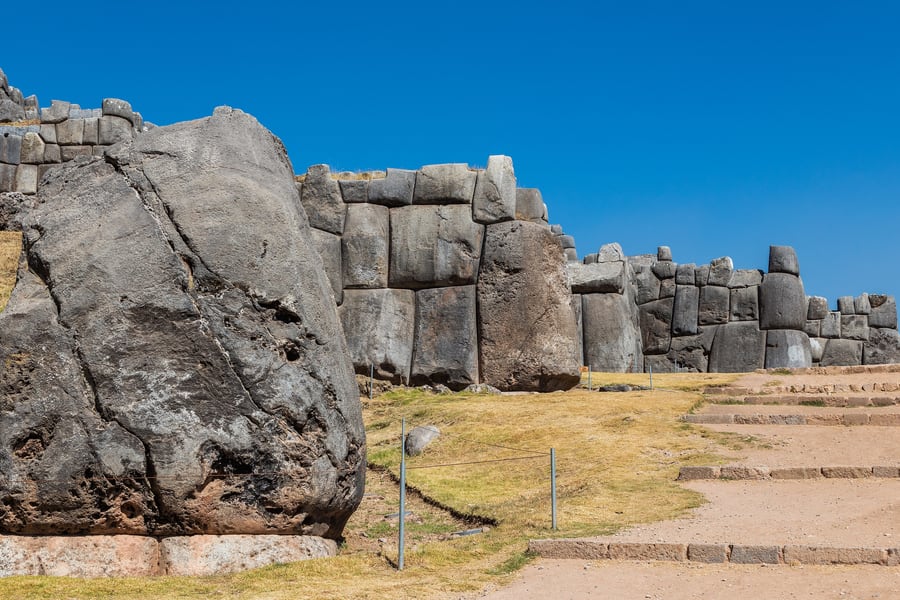
The old Inca capital, and where nearly everyone starts. Colonial churches sit on Inca walls that were too well built to demolish, the Plaza de Armas is one of the great squares of the Americas, and the food is superb. At 3,400 m it is higher than Machu Picchu, so give it several days. Sacsayhuamán, on the ridge above, was begun around 1100 and expanded by the Incas.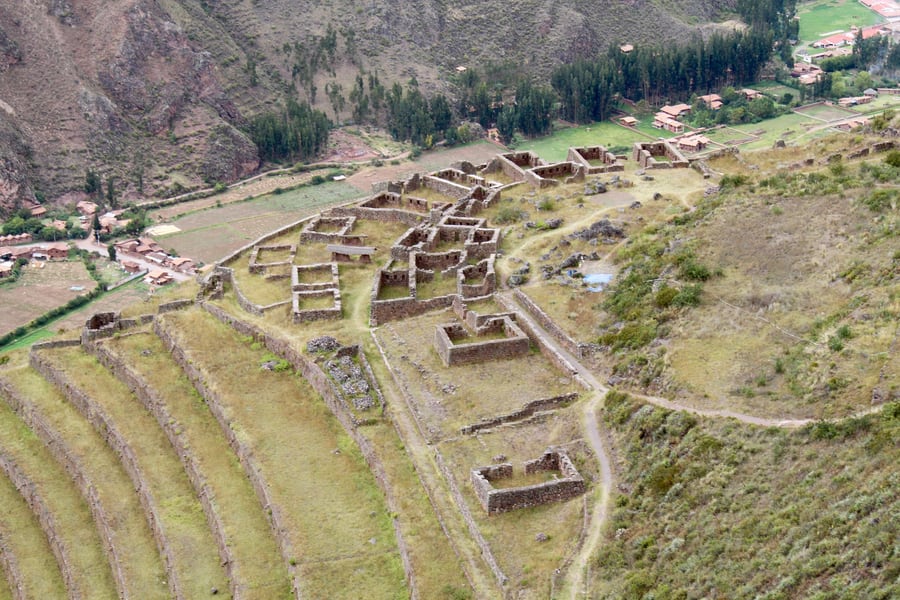 TeshTesh / Wikimedia Commons · CC BY-SA 4.0 · cropped
Pisac
The first of the great Sacred Valley sites, an hour out of Cusco — a citadel strung along a ridge above the Urubamba, terraces dropping away beneath it, and a cliff face opposite honeycombed with tombs. The market in the town below is the other reason to come, and the two together make an easy first day out while you are still getting used to the altitude.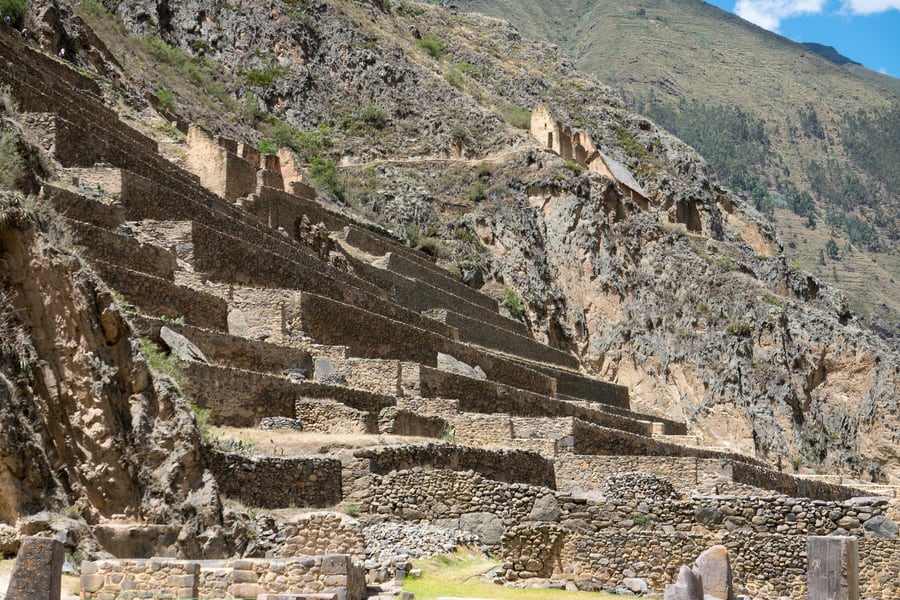 PsamatheM / Wikimedia Commons · CC BY-SA 4.0 · cropped
Ollantaytambo
The main boarding point for the train, and worth a night in its own right — one of the very few places where people still live in Inca buildings on the original street plan. Above the town, Temple Hill climbs in a staircase of terraces to an unfinished ceremonial site. It was Pachacuti's royal estate, and where Manco Inca held off the Spanish. Altitude 2,792 m.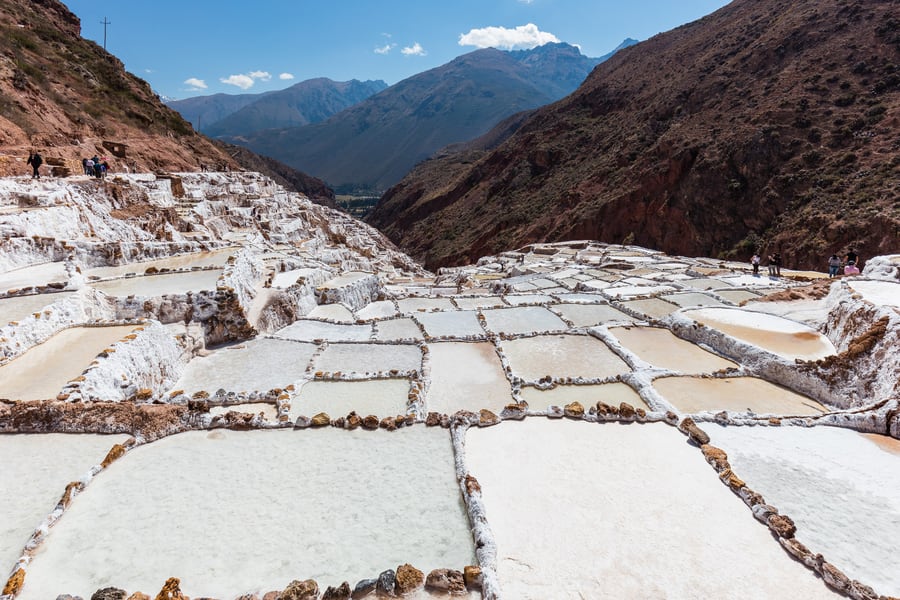 Diego Delso, delso.photo, License CC BY-SA · Wikimedia Commons · cropped
Maras and Moray
Two oddities on the plateau west of the valley. At Maras, more than 5,000 shallow salt ponds step down a canyon side, fed by a saline spring and worked since Inca times. At Moray, a few kilometres on, concentric terraced bowls sink up to 30 m into the ground — and the difference between the top ring and the bottom can reach 15 °C, which is why they are usually read as an agricultural laboratory.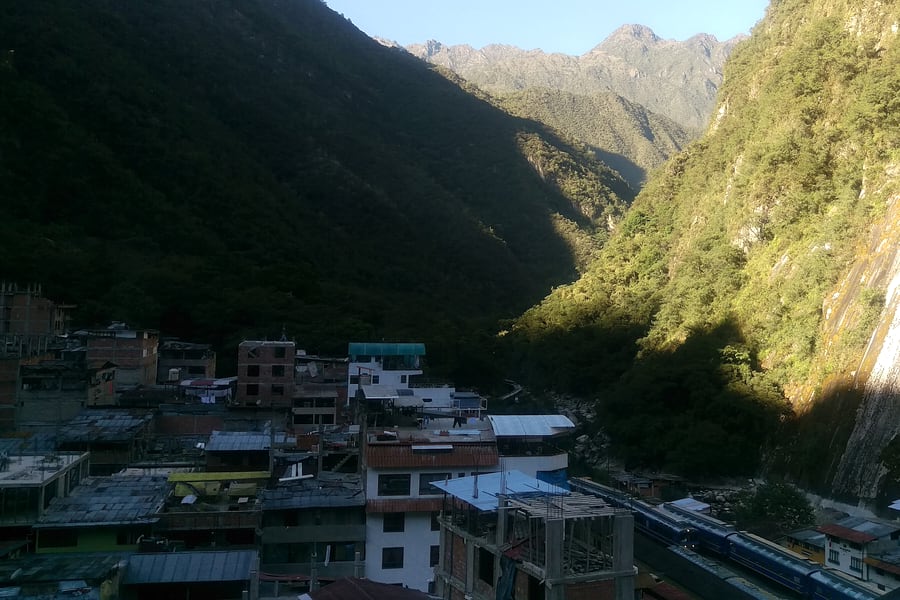 Danteleonidas / Wikimedia Commons · CC BY-SA 4.0 · cropped
Aguas Calientes
The end of the line, properly Machupicchu Pueblo — steep, loud and given over entirely to visitors, with the river roaring through the middle of it and the hot springs that gave it its nickname up at the top of the town. It did not exist before the railway reached here in 1931. Nobody comes for the town, but everybody sleeps in it, and the buses leave from here.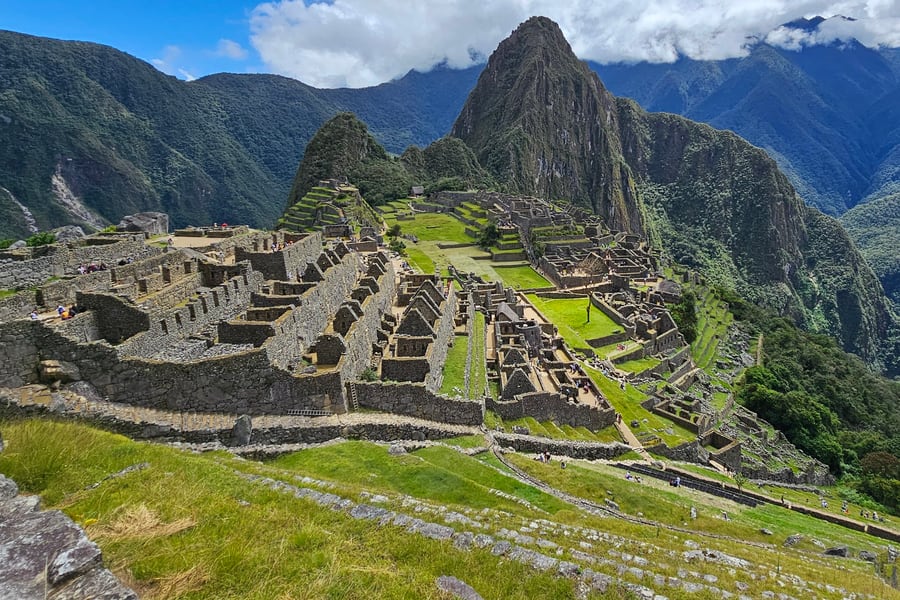 Jorge Castro Ruso / Wikimedia Commons · CC BY-SA 2.0 · cropped
Machu Picchu
The 15th-century Inca estate on its ridge at 2,430 m, built around 1450 for the emperor Pachacuti and abandoned roughly a century later. Local people knew it all along; Hiram Bingham brought it to the world's attention in 1911, UNESCO listed it in 1983, and it now takes more than 1.5 million visitors a year. Book a timed entry and take a guide.Where to Sleep
This is a day train, not a sleeper, so where you sleep is about staging the trip around it — and getting that right matters more here than almost anywhere, because of altitude, timing and how quickly everything sells out.
The three bases:
- The Sacred Valley (Urubamba, Ollantaytambo) — the best place to start. At around 2,800–2,900 metres it's several hundred metres lower than Cusco, so it's kinder on arrival, and Ollantaytambo is where the frequent trains leave from. Staying here the night before your train means a relaxed morning rather than a pre-dawn dash. Hotels range from simple hostels to serious luxury.
- Cusco — the obvious hub, and where most people spend the bulk of their nights, but at 3,400 metres it's the highest and hardest to arrive into. Great to base in for the region; just don't fly in and rush straight to the train.
- Aguas Calientes — the town at the foot of the ruins. Staying a night here lets you be at the Machu Picchu gates early, before the day-trippers arrive on the morning trains — which is the single best thing you can do for the experience. Rooms run from backpacker to the very expensive lodge beside the citadel.
Two planning rules that matter more than the hotel itself:
- Acclimatise before you go up high, not after. Land into the Sacred Valley or spend easy first days there rather than hitting Cusco's altitude at a run. Then Cusco, then the train.
- Book the bed, the train and the citadel together. All three sell out in season, and they have to line up: your Machu Picchu entry slot dictates your return train, which dictates where you sleep the night before. Sort them as one puzzle, early, and the trip is a joy. Leave it late and you'll be scrambling for whatever's left.
Questions or corrections
Planning this trip and stuck on something, or spotted a time, fare or detail that has changed? Send us a message about Machu Picchu Train. We read every one, and we update this page when something has changed.