Belmond Andean Explorer
Gerry Zambonini / Wikimedia Commons · CC BY-SA 2.0
- DistanceCusco–Puno–Arequipa · the southern line
- Duration1 or 2 nights aboard
- Best seasonMay–Sep (the dry season)
Introduction
In May 2017, a train pulled out of Cusco that South America had never had before: a luxury sleeper, a rolling hotel with en-suite cabins, two dining cars, a bar, a spa and an open observation deck — the first of its kind on the continent. It is the Belmond Andean Explorer, and it crosses some of the highest inhabited country on earth in a style that borders on the absurd, and is all the better for it.
The route is the draw. From Cusco, the old Inca capital at 3,400 metres, the train climbs south across the altiplano — the vast high plain of the southern Andes — to Puno on the shore of Lake Titicaca, and, on the longer trip, on to Arequipa beneath its volcanoes. One night aboard, or two.
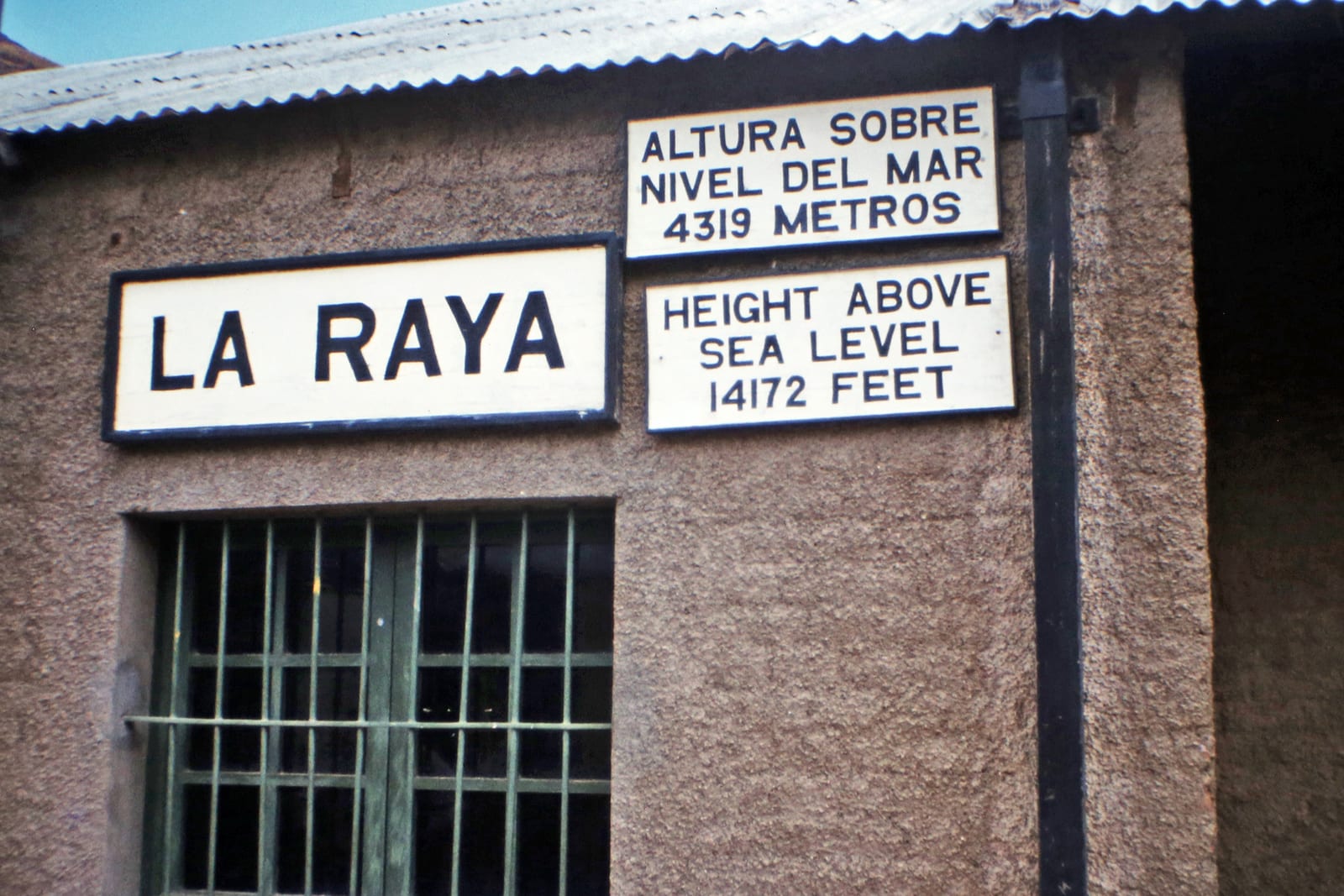
What makes it unlike the great sleeper trains of Europe or Africa is the altitude. This is not luxury through pleasant countryside; it is luxury at the edge of where people can comfortably breathe. The line crosses the La Raya pass at 4,319 metres — there is a station sign that tells you so — and climbs to around 4,800 metres out on the open plain. At those heights the comfort stops being indulgence and starts being sensible: warm cabins, oxygen if you need it, and somewhere soft to lie down while your body deals with the thin air.
And the country it crosses is extraordinary. The altiplano is a landscape of huge skies, golden grass, grazing alpaca, distant snow peaks and adobe villages, running for hours with almost nothing in it. Titicaca, at 3,800 metres, is the highest navigable lake in the world, and the train delivers you to its shore at dusk. Arequipa, at the far end, is a white-stone colonial city sitting under a ring of volcanoes.
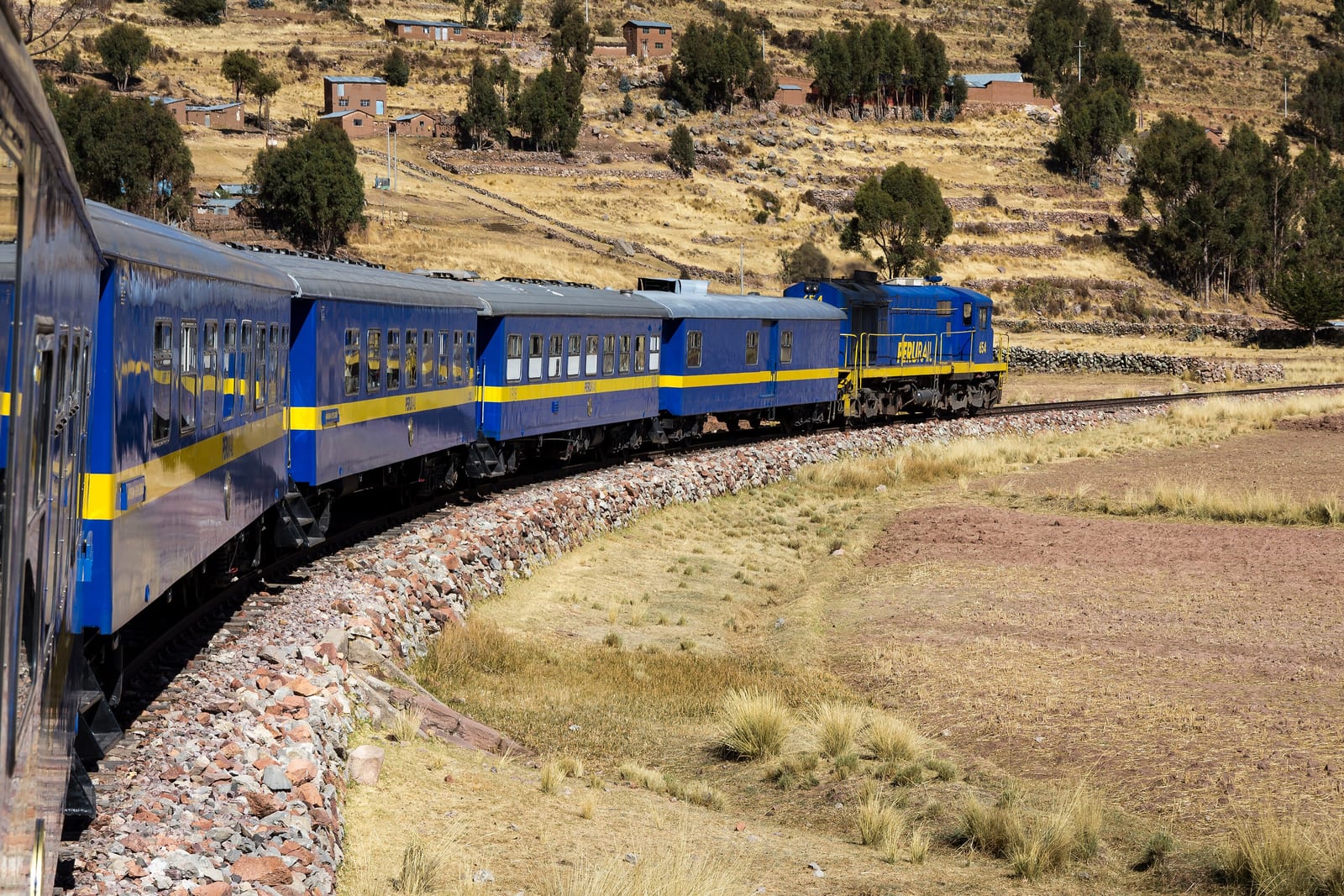
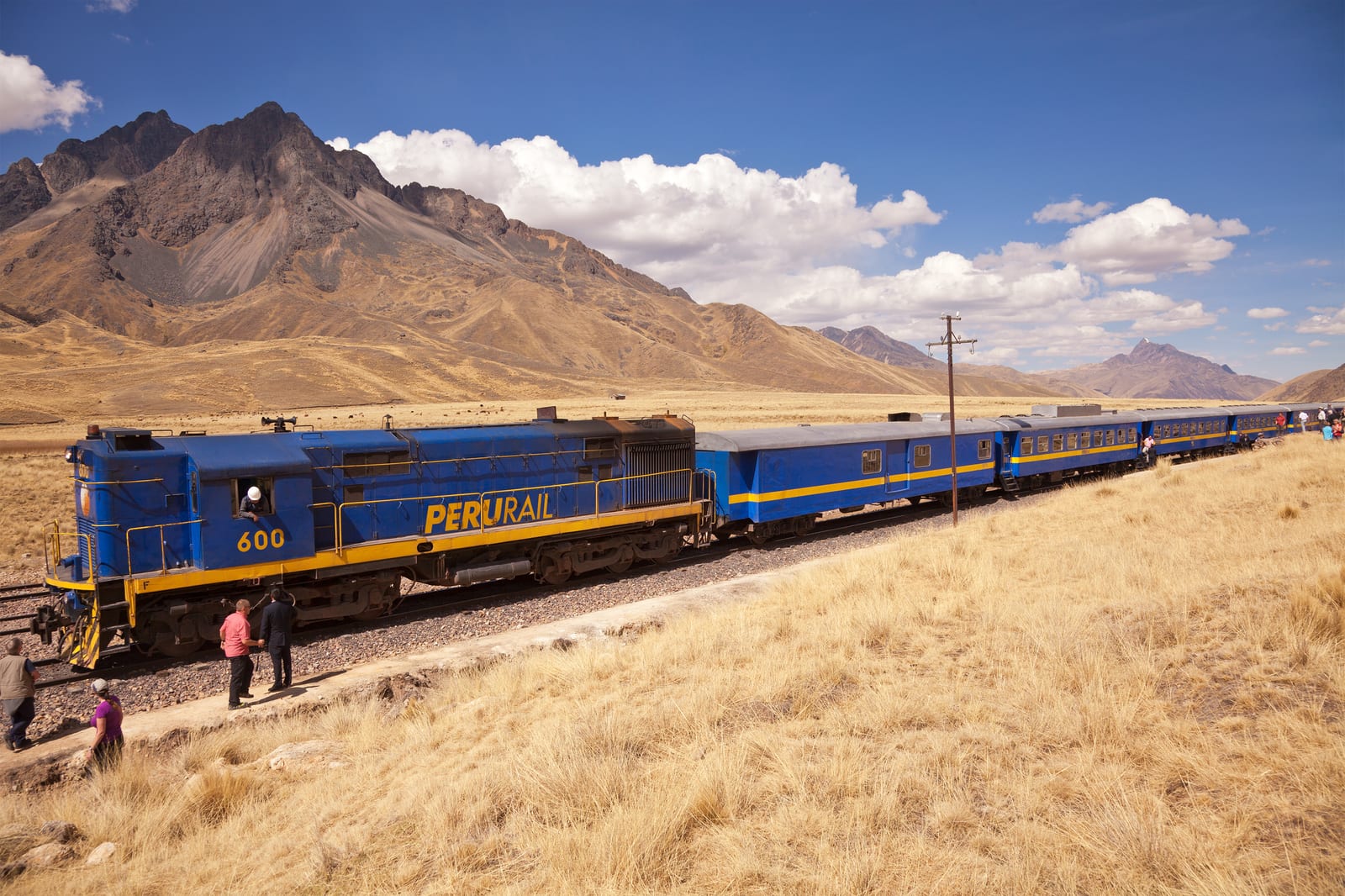
A note on what you'll see in the pictures, because we'd rather be straight: good photographs of the actual cream-liveried Andean Explorer sleeper are genuinely hard to come by, so some of the images here show PeruRail trains on the same southern line — the route the Explorer follows — rather than the luxury train itself. The journey is the same; the carriages in a few of the shots are its humbler cousins.
It is expensive, and it is a bucket-list train — the kind of thing you do once, for a landmark birthday or a long-saved trip. But there is nowhere else that crosses this much of the high Andes with a bed, a bar and a window, and that is worth a great deal.
The Journey
It begins in Cusco, already at 3,400 metres — so the journey starts with a warning: you should have spent a day or two here acclimatising before you board, because the train only goes up from here.
Out of Cusco the line climbs south, and Peru opens out. The tight green valleys around the old capital give way to the altiplano — the high plain — and the change is total. Suddenly there is space in every direction: golden ichu grass, herds of alpaca and llama, mud-brick villages, women in bowler hats and bright skirts, and a sky so big and so close it feels like weather is happening at eye level.
The high point of this stretch is La Raya, at 4,319 metres, the watershed where the rivers stop draining towards Cusco and start draining towards Titicaca. There is a little station, a sign announcing the altitude, and usually a cluster of stalls selling alpaca knitwear. The train pauses. You get out, briefly, into air that has half the oxygen you're used to, and you feel it.
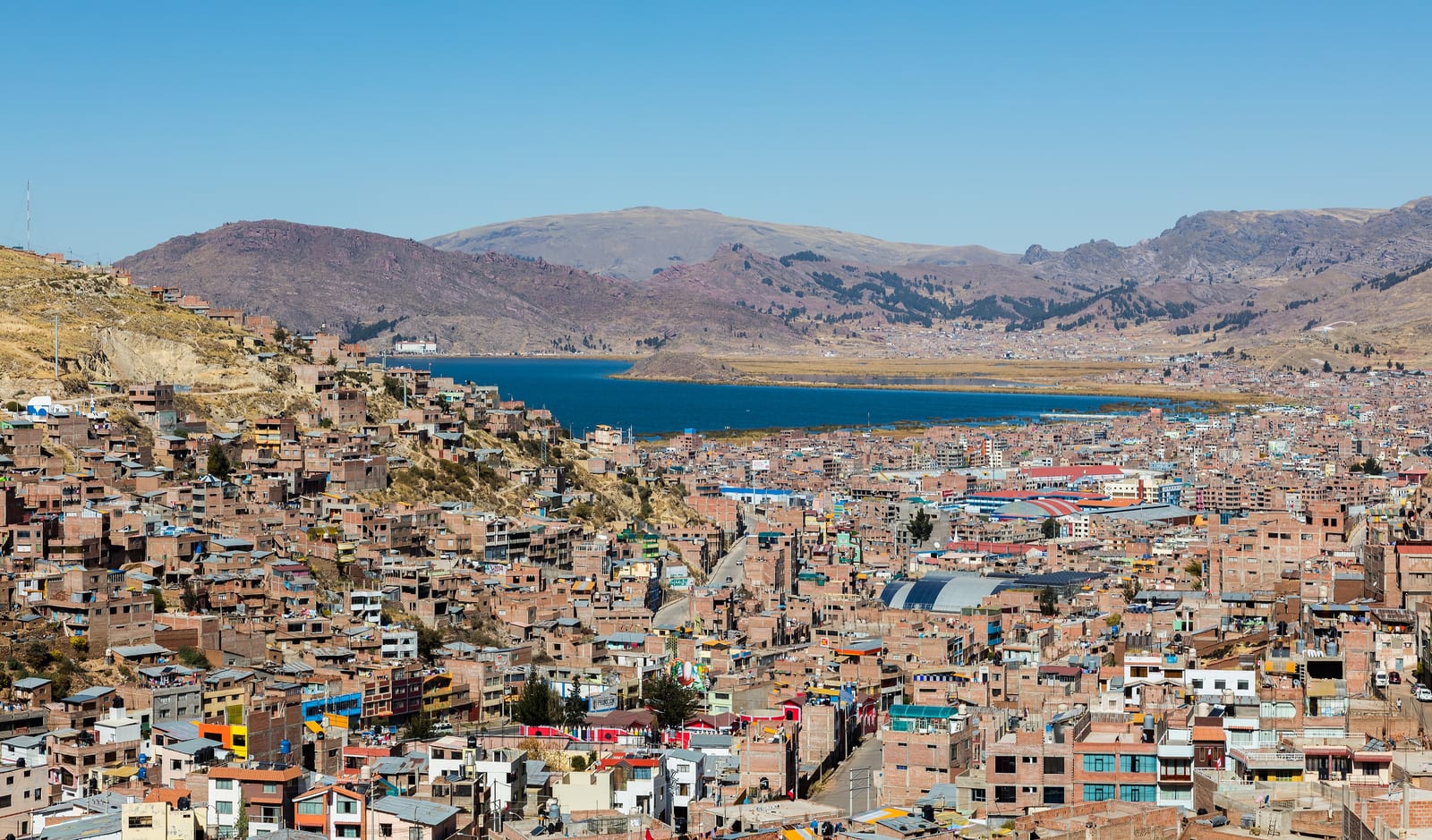
Then down — gently — onto the Titicaca basin, and by evening the train reaches Puno, on the shore of the great lake. Lake Titicaca is the highest navigable lake in the world, an inland sea at 3,800 metres, shared with Bolivia, dotted with the reed islands of the Uros people. The one-night trip ends here; the two-night trip stops over, and there is time to go out onto the water before the train moves on.
For those going the whole way, the second leg crosses more altiplano — higher still, up towards 4,800 metres in places — and then begins the long descent to Arequipa. And Arequipa is a fine place to end: Peru's second city, built almost entirely of white volcanic sillar stone, sitting in the shadow of the perfect cone of El Misti and two other volcanoes. Some itineraries add an excursion towards the Colca Canyon, one of the deepest in the world and a place to watch condors ride the morning thermals.
Onboard, the rhythm is the rhythm of every great sleeper train, adjusted for the height. You dress for dinner. You drink in the bar car, cautiously, because alcohol hits hard at altitude. And above all you spend the daylight hours on the open observation deck at the back — cold, wind-scoured, thin-aired, and the best seat on the train — watching the roof of the Andes unspool behind you.
It is, in the end, a short journey made enormous by where it goes. A night or two, a few hundred kilometres, and the highest, strangest, most luminous country a train can take you through.
Along the route
Gerry Zambonini / Wikimedia Commons · CC BY-SA 2.0South America's first sleeper
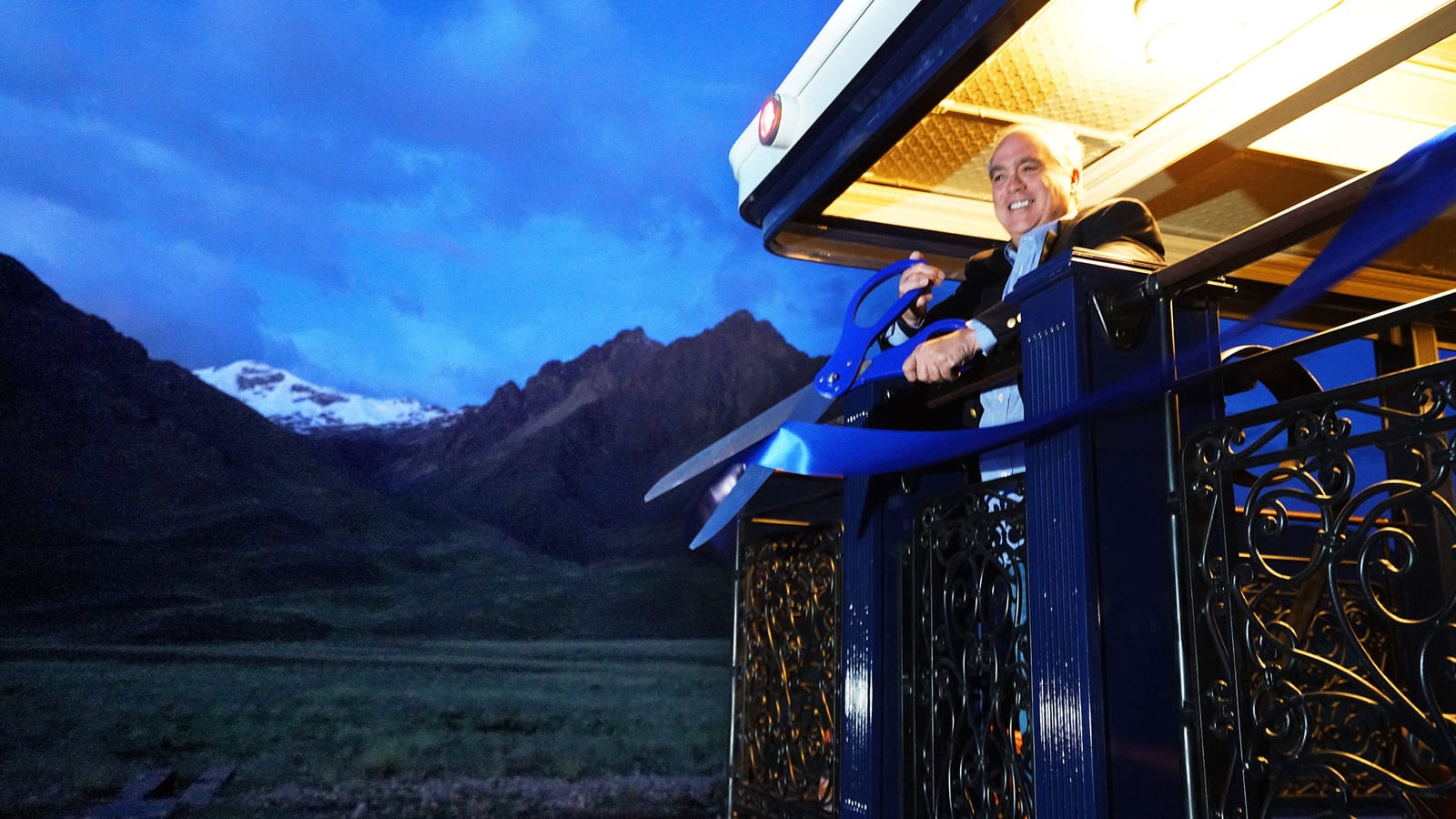
When it launched in May 2017, the Belmond Andean Explorer was the first luxury sleeper train in South America — a rolling hotel of cabins, two dining cars, a bar, a spa and an open observation deck, crossing some of the highest inhabited country on the continent.W. Bulach / Wikimedia Commons · CC BY-SA 4.0A very high line
This is luxury at altitude. The train crosses the La Raya pass at 4,319 metres and climbs to around 4,800 metres on the open altiplano — high enough that the comfort is not indulgence so much as sense. You sleep, eat and watch the roof of the Andes go past.Diego Delso, delso.photo, License CC BY-SA · Wikimedia CommonsTiticaca and the altiplano
The journey strings together the great sights of the southern Andes: Cusco, the altiplano grasslands, Lake Titicaca at Puno — the highest navigable lake on earth — and Arequipa under its volcanoes. Few trains connect so much at such height.A bit of history
Culture & experiences along the way
Joaosnr / Wikimedia Commons · CC BY-SA 4.0The observation car
An open-air deck at the back of a train crossing the altiplano at four thousand metres — cold, thin-aired, and unforgettable. This is where you spend the light hours, wrapped up, watching the grasslands and the herds and the snow peaks slide past.Diego Delso, delso.photo, License CC BY-SA · Wikimedia CommonsA night at Titicaca
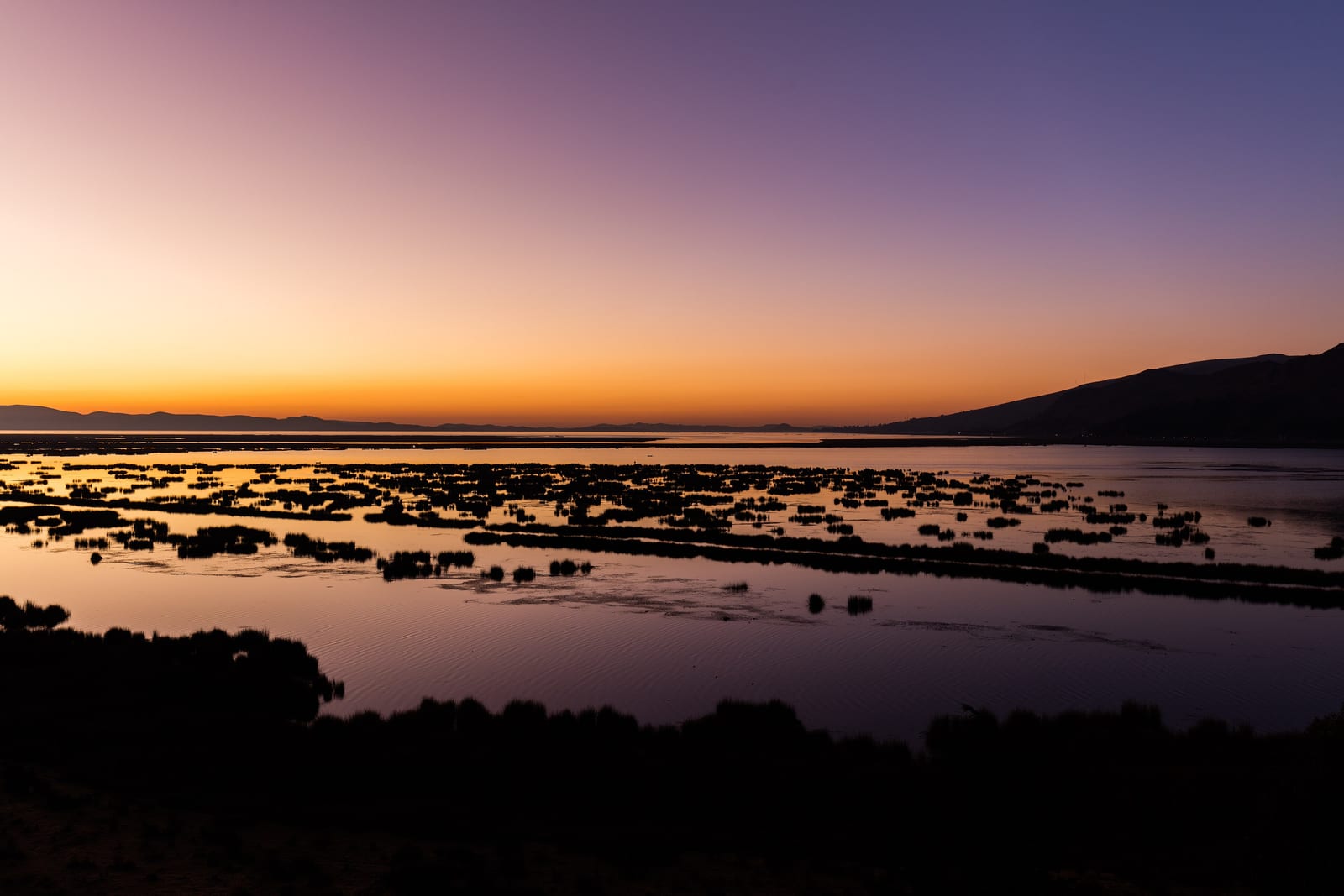
The one-night itinerary runs Cusco to Puno on the shore of Lake Titicaca; the two-night version carries on to Arequipa. Either way you wake beside the great lake, at 3,800 metres, with the light coming up over the water.Unukorno / Wikimedia Commons · CC BY 3.0The southern line itself
The rails the Andean Explorer runs on are a spectacle in their own right — Peru's standard-gauge southern line, climbing from the Sacred Valley over the watershed and out onto the high plain. Ordinary trains have run this route for over a century.Timetables
This is a scheduled luxury departure, not a turn-up-and-go service — it runs on set dates through the season (a few departures a month), rather than daily. Book it as the centrepiece of a trip, not a way of getting from A to B.
| Detail | What to expect |
|---|---|
| The route | Cusco → Puno (Lake Titicaca) → Arequipa · the southern line |
| High point | La Raya · 4,319 m, climbing to ~4,800 m on the altiplano |
| Itineraries | One night (Cusco–Puno) or two nights (on to Arequipa) |
| Operator | PeruRail, with Belmond |
| Season | Peak in the Andean dry season, roughly May to September |
Good to know:
- Acclimatise before you board. Cusco is at 3,400 m and the train climbs from there — spend two or three days in the region first. This is not optional advice at these heights.
- It runs on scheduled dates, not daily. Departures are limited; check the Belmond/PeruRail calendar well ahead and build your itinerary around the date.
- Choose your length honestly. One night gets you Cusco to Titicaca; two nights adds Arequipa and the descent. If you've come this far, the longer trip is the fuller experience.
- The dry season is the season — May to September brings clear, cold, bright days; the wetter months can bring cloud and disruption to the high line.
- Days are warm, nights freezing — the altiplano swings from strong sun to hard frost; pack for both, with serious sun protection.
Season and cadence as of 2026; exact dates vary. Confirm the dated departure calendar with the operator — see the Tickets section below.
Tickets
The Belmond Andean Explorer is an all-inclusive luxury product, booked through Belmond or PeruRail and priced accordingly — a special-occasion train, not everyday transport. There are two itineraries: one night across the altiplano from Cusco to Puno on Lake Titicaca, or two nights on the full crossing of the southern highlands ending under the volcanoes of Arequipa. Cabins are double, twin or bunk, all en-suite, and the fare covers meals, drinks and everything on board.
Fares change, so Belmond holds the live price; expect a figure in keeping with the world's high-end sleepers. Book months ahead — departures are limited and the good cabins go early. And sort the altitude, not just the ticket: a good booking includes time to acclimatise in Cusco first, rather than stepping off a plane and onto this train.
Book your tickets
Cusco – Puno
The one-night journey
The shorter itinerary: Cusco across the altiplano to Puno on Lake Titicaca, one night aboard in an en-suite cabin, with dinner, the bar and the observation car. An all-inclusive luxury product, booked through Belmond / PeruRail.
Book Tickets (opens in a new tab, on PeruRail (Belmond))via PeruRail (Belmond)Cusco – Puno – Arequipa
The two-night journey
The full crossing of the southern highlands, two nights aboard, ending in Arequipa beneath its volcanoes, often with an excursion towards the Colca Canyon. The grander of the two, and the more complete.
Book Tickets (opens in a new tab, on PeruRail (Belmond))via PeruRail (Belmond)Rail Passes
No rail pass covers the Andean Explorer. It is an all-inclusive package sold by Belmond and PeruRail, so there is nothing for a pass to buy. Interrail and Eurail are European schemes, and Peru is not among the 33 countries in Interrail's list of covered railway companies.
Checked October 2026 against Interrail's list of railway companies (opens in a new tab).
Places to Visit
The Andean Explorer strings together the great sights of southern Peru, and both ends deserve proper time on either side of the train. The one thing to plan around is altitude: Cusco is at about 3,400 m and Puno higher still, so build in a couple of easy days before you start climbing, and take the first of them very gently.
The obvious addition at the Cusco end is the Sacred Valley — Pisac, Ollantaytambo, the salt pans at Maras — which is spectacular in its own right and, lying lower than Cusco, a kinder place to spend your first nights. From there, Machu Picchu is not on this line at all but is reached by its own famous train; almost everyone riding the Andean Explorer does both, and the two trips fit together naturally.
At the far end, Arequipa is the easiest place in the whole itinerary to breathe — a real city rather than a stop, and several hundred metres lower than anywhere else on the route. It is also the jumping-off point for the Colca Canyon, which is better done as an overnight than as a day trip if you want to be at the condor viewpoint early.
 Diego Delso, delso.photo, License CC BY-SA · Wikimedia Commons · cropped
Cusco
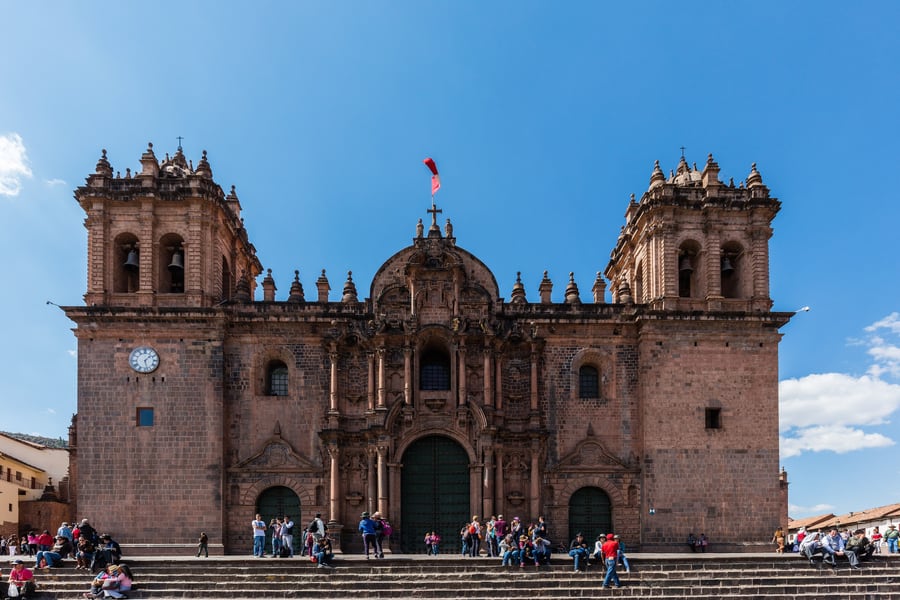
The capital of the Inca empire, and from 1534 a Spanish city built straight on top of it — which is why so many colonial walls in the centre stand on Inca stonework that was simply too well made to pull down. It sits at around 3,400 m, high enough that most people give it two or three days before going anywhere higher. UNESCO listed the whole city in 1983.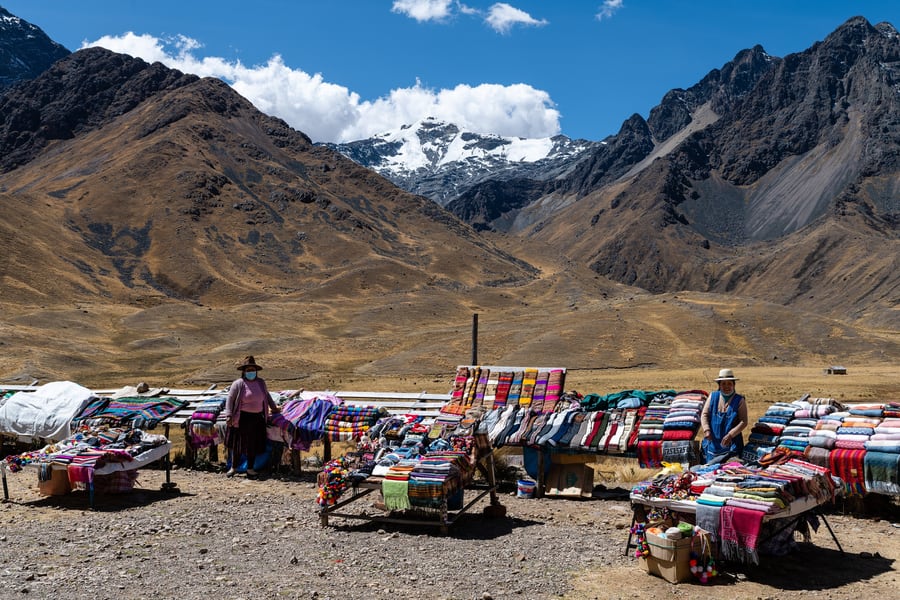 Christoph Strässler / Wikimedia Commons · CC BY-SA 2.0 · cropped
La Raya
The watershed between the Cusco valley and the altiplano, and the high point of the run — the station sign reads 4,319 metres. The train pauses, you step out into air with roughly half the oxygen you are used to, and there is usually a line of stalls selling alpaca knitwear against a wall of snow peaks. Ten minutes is plenty. Move slowly while you are out.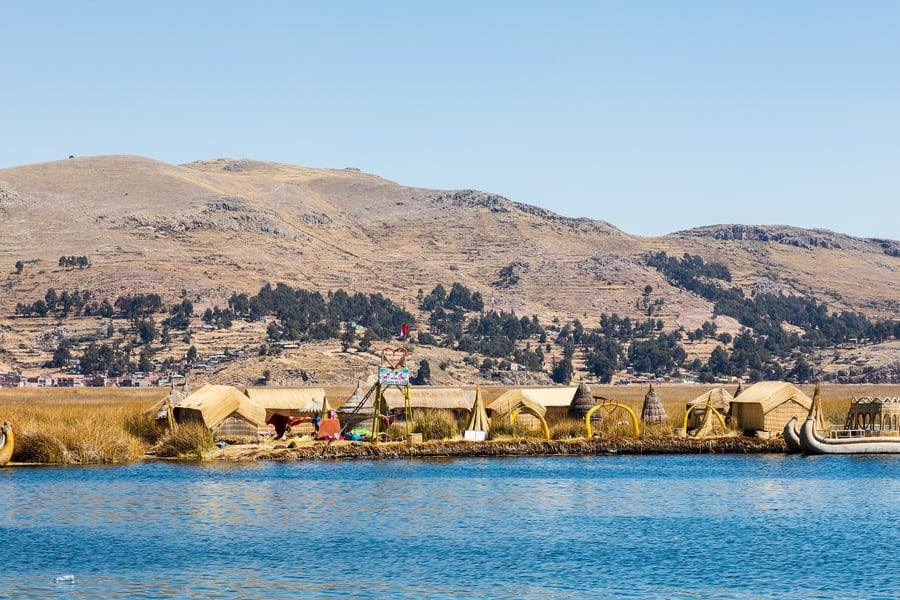 Diego Delso, delso.photo, License CC BY-SA · Wikimedia Commons · cropped
Lake Titicaca and the Uros
The overnight stop is Puno, on the shore of the highest navigable lake in the world — 3,812 m, shared with Bolivia, and the largest lake in South America by both surface and volume. Boats run out to the Uros, who live on some 120 floating islands they build and rebuild from totora reed, and on to Taquile, where the weaving is the reason to go.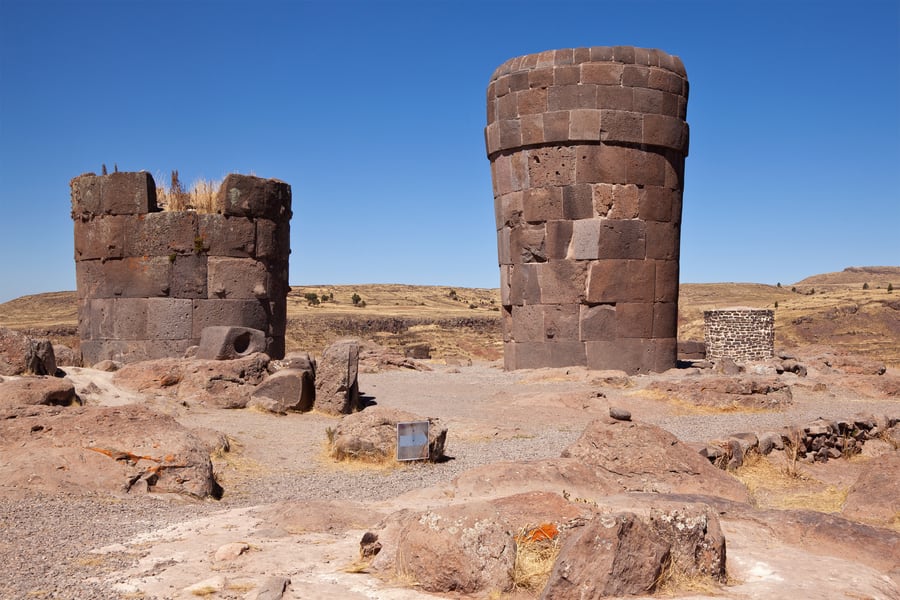 Unukorno / Wikimedia Commons · CC BY 3.0 · cropped
Sillustani
Thirty-odd kilometres from Puno, on a peninsula above Lake Umayo, stand the chullpas — cylindrical funerary towers raised by the Colla lords and later by the Incas, some finished to a standard that stands comparison with Cusco. The official inventory counts 91 towers across about 60 hectares, with terraces, stairways and standing stones between them.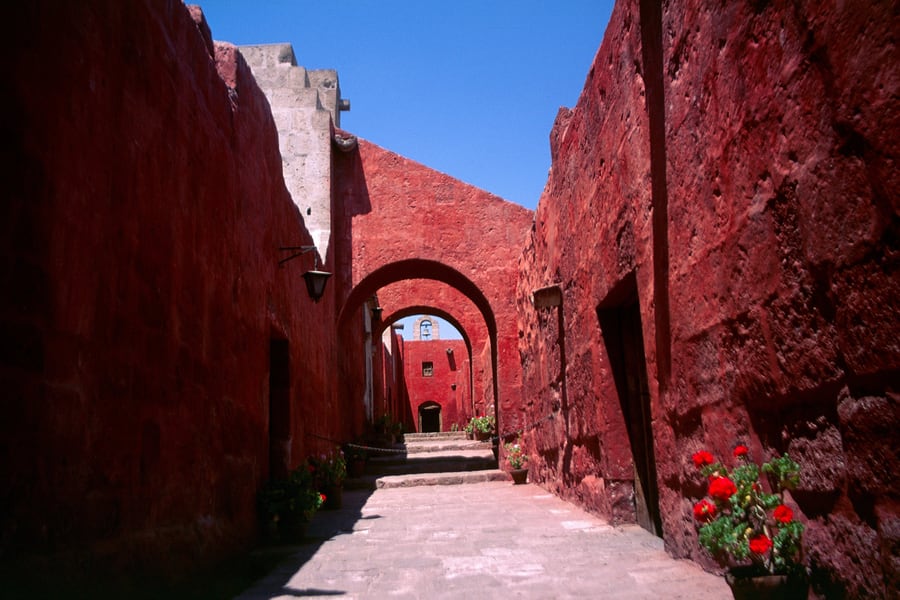 Colegota / Wikimedia Commons · CC BY-SA 2.5 ES · cropped
Arequipa and Santa Catalina
Built of pale volcanic sillar beneath the cone of El Misti, Arequipa is the elegant end of the two-night run. The Monastery of Santa Catalina, consecrated in 1579, is the thing to see — a walled quarter of the city in its own right, its lanes painted ox-blood red and cobalt blue, closed to outsiders for close to three centuries. The centre is UNESCO-listed.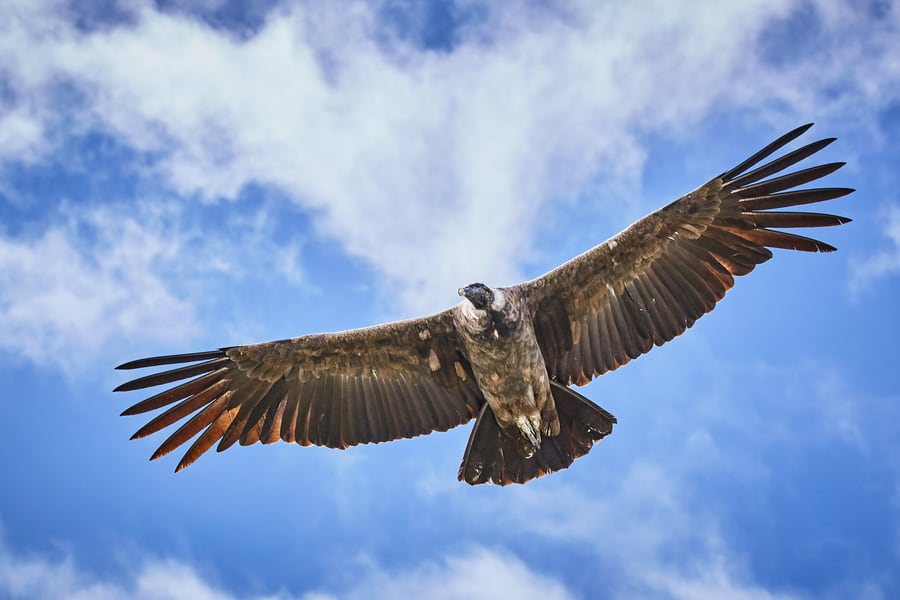 Thomas Fuhrmann / Wikimedia Commons · CC BY-SA 4.0 · cropped
Colca Canyon
About 160 km north-west of Arequipa and some 3,270 metres deep — one of the deepest canyons on earth, and often bolted onto the two-night itinerary as an excursion. People come for the Andean condors, which ride the morning thermals up out of the gorge past the Cruz del Cóndor viewpoint, so go early. The terraces on the valley sides are pre-Inca and still worked.Where to Sleep
On the train, your cabin is your bed — one or two nights of it — and it is the whole point: en-suite, warm, and comfortable in a way that matters when you're sleeping above 3,800 metres. The choice is between double, twin and bunk cabins; pick by who you're travelling with, and book early for the larger ones.
The more important sleeping decision, though, is what you do before you board.
- Cusco (3,400 m) is where you acclimatise, and you must. Arriving off a flight and straight onto a train that climbs to 4,800 metres is asking for trouble. Spend at least two nights in Cusco — or, gentler still, in the Sacred Valley (Urubamba, Ollantaytambo), which sits several hundred metres lower and is the kinder place to land. Cusco has hotels at every level, from restored colonial mansions to backpacker hostels.
- Puno, on the overnight itinerary, is handled by the trip — but if you're extending, its lakeside hotels let you get out onto Titicaca properly.
- Arequipa, at the far end, is a lovely place to stay on rather than dash through: the old centre has beautiful hotels in sillar-stone courtyards, and at 2,300 metres it's a relief to lungs that have spent days up high.
Two practical notes. First, altitude beats luxury: the finest suite in Cusco is still at 3,400 metres, so go slowly, drink water, skip the alcohol the first night, and consider the coca tea everyone offers you. Second, plan the trip around acclimatisation — Sacred Valley first, then Cusco, then the train — rather than treating the height as something to power through. Do it in the right order and the Andes are a joy; do it wrong and you'll spend the best train in South America with a splitting headache.
Questions or corrections
Planning this trip and stuck on something, or spotted a time, fare or detail that has changed? Send us a message about Belmond Andean Explorer. We read every one, and we update this page when something has changed.